




Abstract
Without creativity in design, there is no potential for innovation. This article investigates the role of contradictions in enhancing creativity in product design. Based on the inventive principles of the Theory of Inventive Problem Solving, this article presents a novel design method by integrating technical and physical contradiction analysis methods into the conceptual design activities of new product development. Although the importance of innovative design is widely recognised, there is a lack of systematic and effective design-thinking processes that can cover all conceptual design activities. To address this gap, this study presents a clear problem-solving model to aid innovative product design based on the contradiction-oriented concept. A case study is employed to illustrate the proposed method, and the results demonstrate that it can help designers produce more creative outcomes in product design.
Keywords
Introduction
When studying the complexity, constraints, and contradictions inherent in product design projects, it may seem miraculous to observers that designers can even work in such environments, let alone produce quality, creative outcomes. While the important roles of conflicts and constraints in design have been well-studied,1,2 the relationship between contradictions and creativity seems to be relatively unexplored, not only within the field of design but also in the creativity literature in general. While Sternberg and Kaufman 3 highlight the effects of contradictions on creativity in their recent work, the engineering design literature seems to pay less attention to such issues, although this domain is recognised as being especially constraint-based4,5 and one in which creativity plays a particularly important role.6,7 The term ‘constraints’ often implies restrictions on freedom and creativity, 8 but numerous researchers note that without conflicts and constraints, there can be no creativity.9–11 Indeed, not only can contradictions enhance creativity, they are key elements for all creative activities. 12 While some types of contradictions can be highly limiting for creativity, 13 without contradictions and constraints, there are no problems to resolve and thus no potential for creativity. If contradictions are seen as important drivers for creative design, then it becomes both important and interesting to study how contradictions arising in the design process affect creativity. Seeking to explore this relationship in product design, this article proposed a creative design-thinking approach based on the concept of technical and physical contradictions. This study focuses on three main areas as follows: (1) how contradictions can be created and managed to give the best possible space for innovation, (2) how designers work with contradictions as part of their creative process, and (3) the creative role of contradictions and their level of abstraction. Creativity and contradictions are inevitably related, and understanding this complex relationship is not only important with regard to enhancing creativity in product design but is also essential to support real-world design activities. Finally, it is anticipated that the results of this work can help to increase both the understanding and practice of creativity in product design.
Contradiction management in creative design
A number of conflicts and constraints exist in any design project based on limitations or contradictions regarding what can or cannot be done in the design process and the aims that the design should fulfil.11,14 Product design is typically severely constrained, requiring designers to meet a multitude of often conflicting requirements both during conceptual design and when resolving problems. However, situations that are genuinely over-constrained, in which hard constraints are in conflict, are less common than situations in which conflicting constraints can be prioritised and relaxed. When developing an understanding of a problem, the related contradictions should be explored because many conflicting constraints are not pairwise in contradiction but instead have complex interactions. The importance of conflicting constraints to creativity in engineering is widely recognised in the literature and in practice. For instance, Pahl et al. 15 presented a model of creative design as resolving a sequence of contradictions. Meeting conflicting requirements in the best manner possible involves two distinct but integrated operations: relaxing constraints and finding solutions. Weak contradictions and constraints can be relaxed to allow less ideal but more feasible design solutions. In contrast, strongly conflicting constraints, which must be met and relaxed, may make the problem impossible. Design problems are constrained both by explicitly formulated requirements and contradictions and by implicit assumptions about the form of the solution. ‘Creativity loves constraint’ is one of Google’s nine innovation principles,10,16 and Apple’s design chief Jonathan Ive 17 has stressed continuous focus on utilising material constraints as a core part of designing the iPhone 4. Moreover, creativity is only possible with ill-structured problems, 9 and the contradictions and constraints related to a problem determine whether it is well-defined or not, 18 with design problems generally seen as ill-structured.19,20 Creativity and contradictions have a dual relationship, as contradictions can be both limiting and enabling in creative processes.8,21 This duality might appear as counterintuitive, 22 and the focus of the creativity literature seems to be on freedom rather than on constraints. Joyce 11 reported that there has been relatively little empirical work on the effects of conflicting constraints on creative behaviour, with some notable exceptions.23–26 Joyce 11 noted that some researchers stated that problems defined too vaguely can lead to confusion, while other authors claimed that contradictions can help focus creative efforts27,28 and lead to creative breakthroughs. 9 Other researchers have examined how the correct use of contradictions and constraints can enhance creativity.11,26
Creative thinking in design methodology
Engineers are routinely trained to be aware of the possible solutions to particular classes of problems, enabling them to recognise problem classes, retrieve matching solution approaches, and then refine the details to fit a specific case. However, the problem representations that trigger the recall of these semi-abstract solution classes will include inappropriate assumptions, and designers may fixate on recent or salient solution types, even when they know they are inappropriate. 29 What is often needed is to reformulate the contradictions and constraints in a more abstract and general form to eliminate assumptions implicit in the designer’s initial formulation of the problem. Cross 30 argued that creative designers deliberately define tasks so that they are problematic by deliberately treating them as ill-defined and, therefore, harder than the same problems envisaged by novice designers. As a result, designers shake up their assumptions about what a solution will look like. Although this is valuable for provoking innovation, it is most likely inappropriate for situations in which minimising novelty is desirable. However, as Kim et al. 31 noted, there are significant individual differences in how designers approach creative problem-solving as well as the effects of the corporate design strategy. 32 Legardeur et al. 33 proposed an innovation development and diffusion (ID2) tool geared towards coordinating the development of new solutions during the early phases of design projects. Robert et al. 34 noted the importance of understanding the processes that lead to innovation and the need to create tools that generate step changes in function in an orderly and repetitious manner. Methods such as axiomatic design 35 deliberately force designers to start from scratch and explore the relationship between functions and their embodiment afresh. Because the form and function of the design are refined in a bootstrapping manner, all contradictions must be eliminated before a greater level of detail can be approached. The Theory of Inventive Problem Solving (TRIZ) methodology for engineering creativity 36 is based on resolving the pairwise contradictions that may exist between requirements by identifying a new solution principle for an often well-known problem. Altshuller 37 viewed invention as the discovery and removal of contradictions and defined five levels of invention, where higher levels are associated with increasing degrees of difficulty and increasing degrees of change with regard to an object and its environment. Altshuller’s 38 approach is based on the analysis of thousands of registered patents, and the insights gained from this process led to the formulation of the TRIZ, which is an algorithmic approach to solving technical problems.
TRIZ has been widely applied to various fields. Mansor et al. 39 proposed the conceptual design of a kenaf fibre polymer composite automotive parking brake lever using an integration of the TRIZ, morphological chart, and analytic hierarchy process (AHP) methods. Based on the TRIZ contradiction matrix and 40 inventive principles, five innovative design concepts of the component were produced, and the AHP method was finally utilised to select the best one. Yang and Chen 40 presented a forecasting novel model to acquire innovative ideas more easily when designing environmentally friendly products by integrating TRIZ evolution patterns with case-based reasoning (CBR) and simple life cycle assessment (LCA) methods. A novel eco-innovation concept for a cell phone was also presented to demonstrate the effectiveness of the proposed model. Finally, a simple LCA was applied to determine whether the proposed solution was better for the environment than the currently available ones. The use of TRIZ in concurrent engineering projects for product development purposes is being reported in an increasing number of studies. As reported by Chen et al., 41 among these is the integration of TRIZ with AHP to develop an environmentally friendly bottle casing product. In their study, three new design concepts for the bottle casing were produced using the TRIZ method, and the best one of these was selected using the AHP method based on the eco-efficiency requirements defined by the World Business Council for Sustainable Development (WBCSD), such as reducing the material intensity in producing the product as well as enhancing the recyclability of the material selected. The TRIZ method was also applied by combining it with a four-phase quality function deployment (QFD) method in developing a new notebook casing product. 42 Using the QFD method, customer needs were translated into the required design attributes, components, modules, process operations, and production processes; within all four QFD stages, the TRIZ inventive principles were applied to satisfy the related needs as well as to achieve the goal of producing an environmentally friendly and energy-efficient solution. Mayda and Borklu 43 established an innovative conceptual design process model by systematically incorporating TRIZ and QFD into Pahl and Beitz’s conceptual design approach. The applicability of the proposed model was demonstrated through a case study of a paper punch system, which showed that this approach enabled designers to easily find innovative and customer-centred solutions. Palaniappan and Mohamed 44 presented a new automated physiotherapy device for knee rehabilitation (APK). The new design was improved using TRIZ as a systematic innovation tool, where the focus was to reduce the weight and size of the existing product. The final prototype of the new design was successfully created using six solutions identified by TRIZ.
TRIZ is very powerful because it can provide various tools, including Technical Contradiction, Physical Contradiction, and Substance-Field (Su-field) Analysis.37,38 Among these, the conflict matrix of Technical Contradiction is adopted most often, although not all problems can be resolved when only this approach is used. In certain cases, the separation principle of Physical Contradiction or Su-field analysis is needed, and sometimes, two or more TRIZ tools should be used together. However, if appropriate TRIZ tools are used for different design problems, then almost all the problems can be solved. Therefore, this article attempted to provide a new application of TRIZ tools by combining the concepts of technical and physical contradictions. It can provide engineers and designers with more useful tools to solve design problems. This study also proposed a creative design-thinking model that can provide insights into the core problems of a design project based on physical contradictions and the principles of TRIZ.
The rest of the article is organised as follows. The ‘Conceptual framework’ section describes the framework of the proposed method. The ‘Methodology’ section presents details of the technical and physical contradictions used. The ‘Case study’ section presents an example to verify the proposed method, and then, the ‘Conclusion’ section provides some concluding remarks.
Conceptual framework
A problem-solving approach is developed in this work to help engineers and designers control and generate innovative concepts for new product development (NPD) in the design process.
A new design-thinking approach is created in this work for developing innovative products by combining the technical and physical contradiction methods based on the inventive principles of TRIZ. 38 The proposed approach is a creative method that provides the structure of a design problem-solving process, with the integration of a set of problem definition and resolution tools that were developed for contradiction analysis of a product.
As shown in Figure 1, the conceptual framework comprises three main phases, which basically follow the technical and physical contradictions relaxing process. The initial input to the entire process is a list of identified problems, based on the user’s requirements. In the first phase, these original problems are defined in a design-thinking semantics format to obtain useful information for further problem-solving and to clarify the design objectives. After problem definition, the problems are structured using a technical contradiction analysis process based on TRIZ’s 39 engineering parameters, 40 inventive principles, and a conflict matrix in the second phase. In the third phase, the physical contradiction relaxing process is used to optimise the innovative concept of a product, and a new product design can then be created based on this. The three phases will be described in more detail in the following sections.
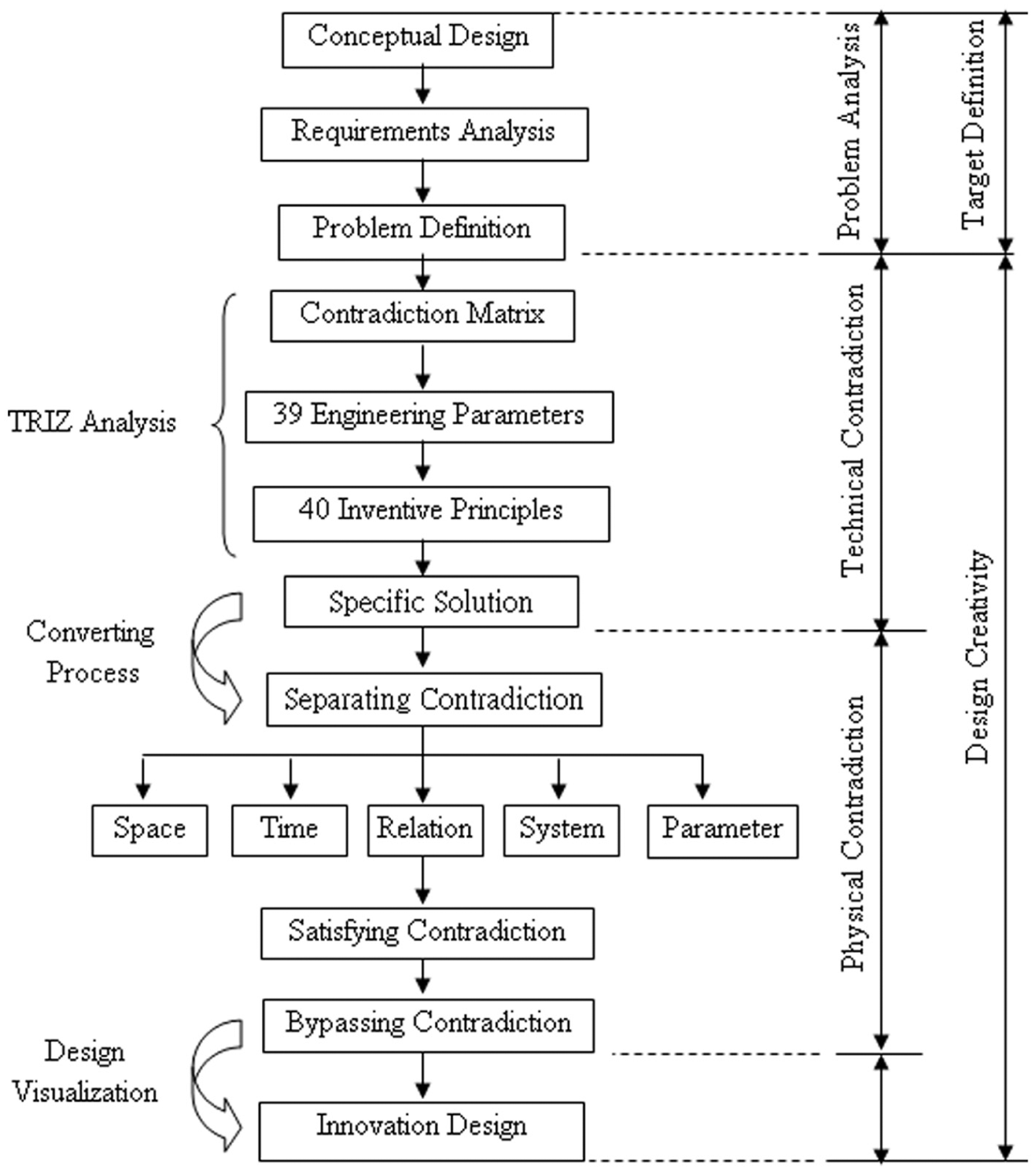
The contradiction-oriented design process for product innovation.
Methodology
Technical contradiction
The core concept of TRIZ is engineering contradictions. An engineering contradiction is a situation in which an attempt to improve one parameter of an engineering system leads to the worsening of another. Engineering contradictions are also known as technical contradictions. Altshuller’s Matrix is a problem-solving tool that recommends inventive principles for solving engineering contradictions. Altshuller studied engineering problems and their resolutions by analysing thousands of patent documents in Russia. He concluded that 39 parameters are involved in most engineering contradictions, such as the length of a stationary object, weight of a stationary object, and so on. Typical solutions to typical contradictions seem to be successful in most situations. He generalised these solutions and called them ‘Inventive Principles’, with 40 of these included in TRIZ. 38
Altshuller’s Matrix
The use of engineering contradictions alone cannot help designers to develop novel ideas. Instead, Altshuller’s Matrix (Figure 2) must be used to identify the improving and worsening parameters to derive the related inventive principles. Altshuller’s Matrix is also known as the TRIZ Matrix. The first step in using it is to transform a specific technical contradiction into a typical one, which is done using the 39 universal technical parameters from the TRIZ Matrix. Next, the recommended principles from the matrix are identified and applied, and this results in a set of general recommendations for resolving the focal contradiction. Finally, those general recommendations must be translated into specific technical ideas that can solve the initial contradiction.
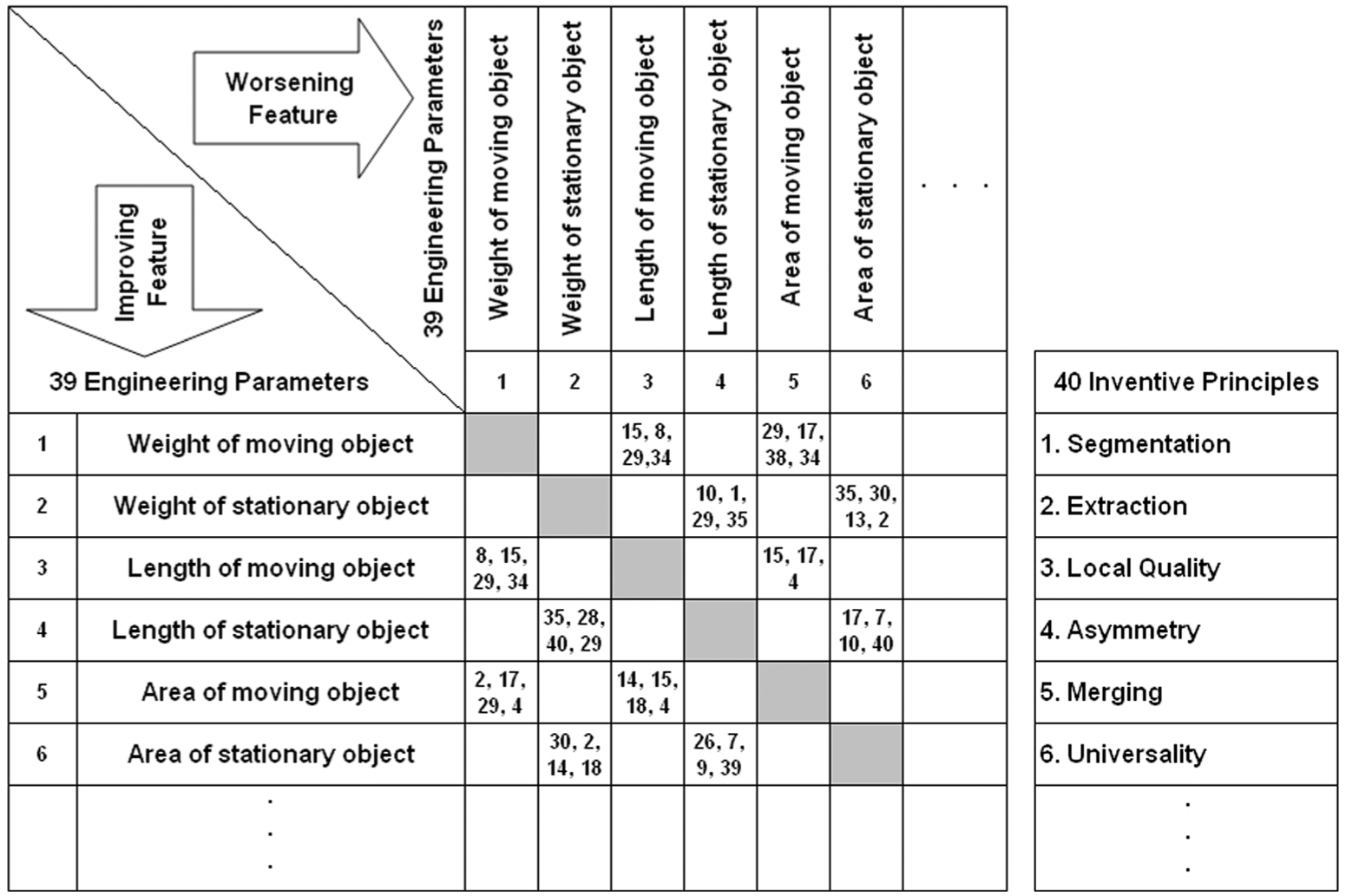
Typical Altshuller Matrix.
Process of resolving technical contradictions
Inventive problems are written in the form of ‘If-then-but’, and the following procedure is used to solve technical contradictions:
Identify the specific parameters.
Identify the parameters in the engineering contradiction.
Identify the typical parameters.
Identify the typical parameters from Altshuller’s list that are similar in meaning to the specific parameters or are a derivative of them.
There are six processes in the algorithm of obtaining inventive principles based on engineering contradiction. They are describing the problem, defining the engineering contradiction, identifying the typical improving and worsening parameters, and producing the inventive principles for specific solutions.
Physical contradiction
A physical contradiction is two opposite requirements placed upon a single physical parameter of an object. These requirements are caused by the conflicting requirements of an engineering or technical contradiction. A physical contradiction analysis is more powerful and distinctive than an engineering contradiction analysis. Engineering contradictions are formulated for the technical parameters of the engineering system, and physical contradictions represent the next step of abstraction. Physical contradictions are formulated for physical parameters, which can be resolved in terms of time, space, affiliation, and system hierarchy. This allows the TRIZ inventive principles to be used more effectively. Physical contradictions present a sharper and more fundamental model of problem-solving than traditional TRIZ engineering contradictions, thereby enabling more powerful solutions.
The steps used in the physical contradiction analysis are as follows:
Formulate two contradictory requirements for one of the parameters of the engineering system or its components.
Determine what typical approaches are applicable to the physical contradiction at hand.
Identify the inventive principles related to the chosen approach. These can be applied to produce ideas that solve the initial physical contradiction.
A physical contradiction is a situation in which an engineering system demands contradictory values from the same parameter. For example, to improve the quality of nail penetration, the contradiction is that the hammer should be made heavier, but to improve its handling, it should be made lighter. The design-thinking process is as follows:
To (achieve goal 1), (the subject parameter) should be (+A);
To (achieve goal 2), (the subject parameter) should be (−A).
The system requirements are based on the following definitions:
The demand parameter;
Goal 1 and requirement 1; goal 2 and requirement 2.
There are three ways to solve physical contradictions:
Separating contradictory demands;
Satisfying contradictory demands;
Bypassing contradictory demands (system transition).
Separating contradictory demands
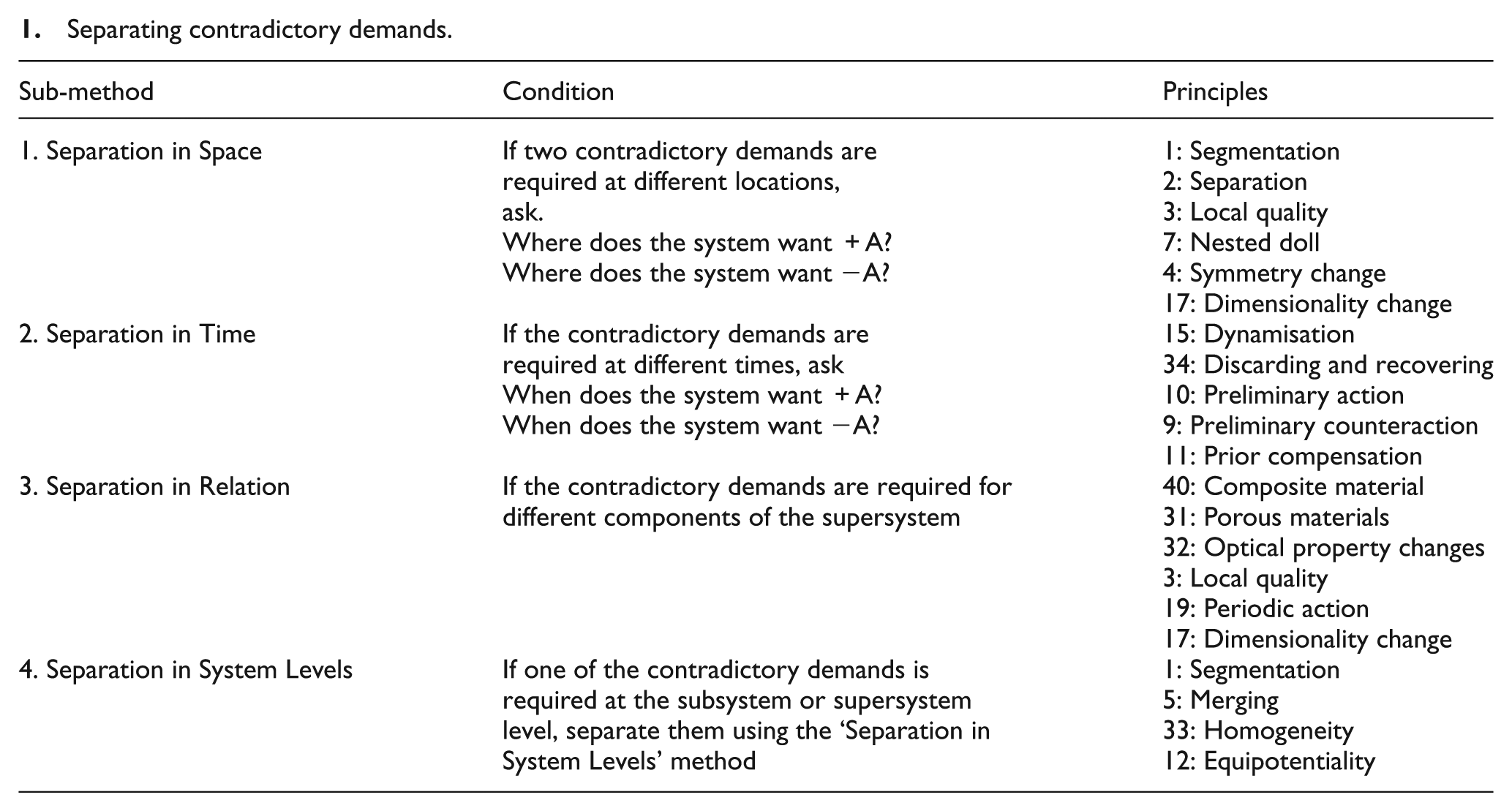
Five methods of separating contradictory demands are proposed: (1) Separation in Space, (2) Separation in Time, (3) Separation in Relation, (4) Separation in System Levels, and (5) Separation between Parameters.
Separation removes the contradiction and enables each demand to be met. The designers can obtain the initial solutions for design problems using these five separation methods.
Satisfying contradictory demands
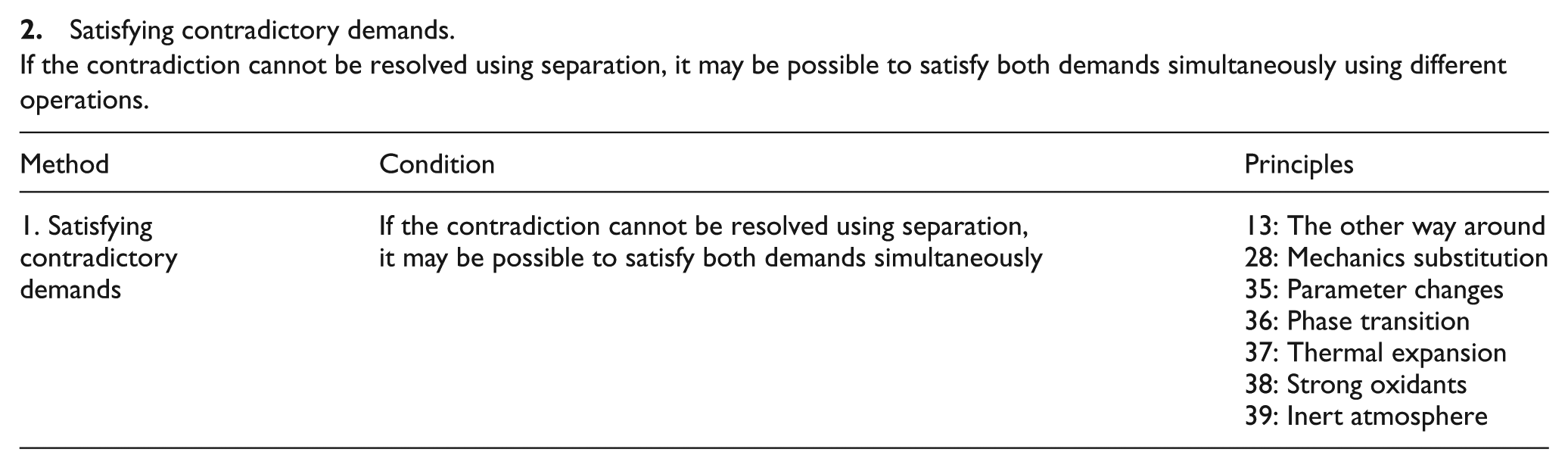
If a contradiction cannot be resolved using separation, it may be possible to satisfy both demands simultaneously. For instance, with regard to a training pool for long-distance swimmers, the design problem is that the swimming lane should be long to avoid frequent turns but should also be short so that the structure is a reasonable size. The following seven inventive principles are proposed to satisfy contradictory demands: 13 – The other way around, 28 – Mechanics substitution, 35 – Parameter changes, 36 – Phase transition, 37 – Thermal expansion, 38 – Strong oxidants, and 39 – Inert atmosphere. The designers can use inventive principle 13 – The other way around – to resolve the design problem. This principle means the following:
Invert the actions used to solve the problem (e.g. instead of cooling an object, heat it).
Make movable parts (or the external environment) fixed and fixed parts movable.
Turn the object (or process) ‘upside down’.
The final solution is that, analogous to a treadmill, the water is moved against the swimmer, and thus, the athlete can swim long distances without actually moving forward.
Bypassing contradictory demands
If the contradiction cannot be resolved using separation or satisfying both demands, it may be possible to bypass the contradictory demands with new solutions that make the contradiction irrelevant. There are four sub-methods proposed for bypassing contradictory demands: (1) transition to a subsystem, (2) transition to a supersystem, (3) transition to an alternative system, and (4) transition to an inverse system. For example, the design problem with a novel boat may be that it should be thin to move fast but wide for balance. The designers can adopt the ‘transition to an alternative system’ method to resolve the design problem; the final solution could be to use the concept of a hovercraft to design the innovative boat.
Algorithm for resolving physical contradictions
The following procedures are suggested when applying these proposed methods to resolve physical contradictions. The first step is to identify the value of the parameter that must be satisfied. Next, select the opposite value of the parameter. Finally, analyse if this opposite state is required to improve the engineering system. If the opposite value is not required, solve the problem by addressing the single parameter. If the opposite value is required, solve the problem by using the method to resolve physical contradictions. A summary of the various methods proposed to resolve physical contradictions is shown below:
Separating contradictory demands.
Satisfying contradictory demands.
If the contradiction cannot be resolved using separation, it may be possible to satisfy both demands simultaneously using different operations.
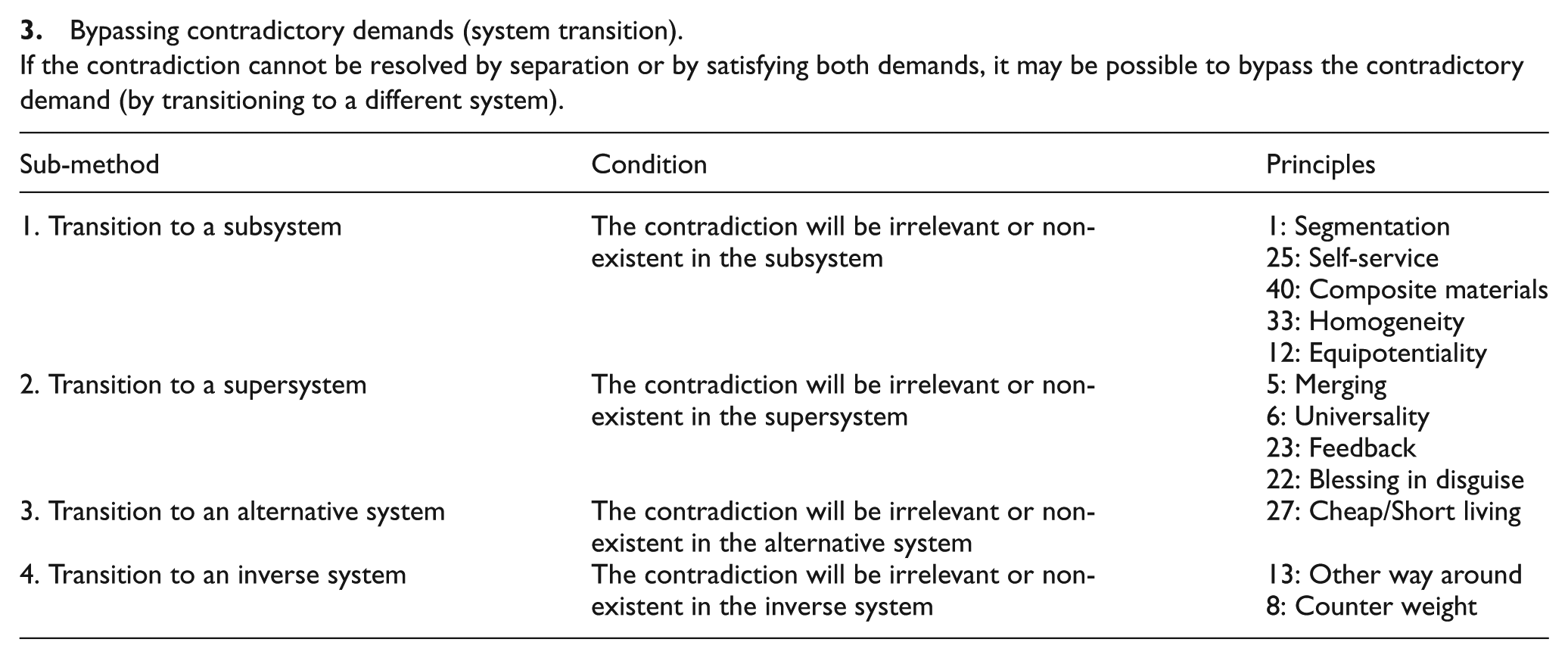
Bypassing contradictory demands (system transition).
If the contradiction cannot be resolved by separation or by satisfying both demands, it may be possible to bypass the contradictory demand (by transitioning to a different system).
The algorithm of resolving physical contradictions is shown in Figure 3.
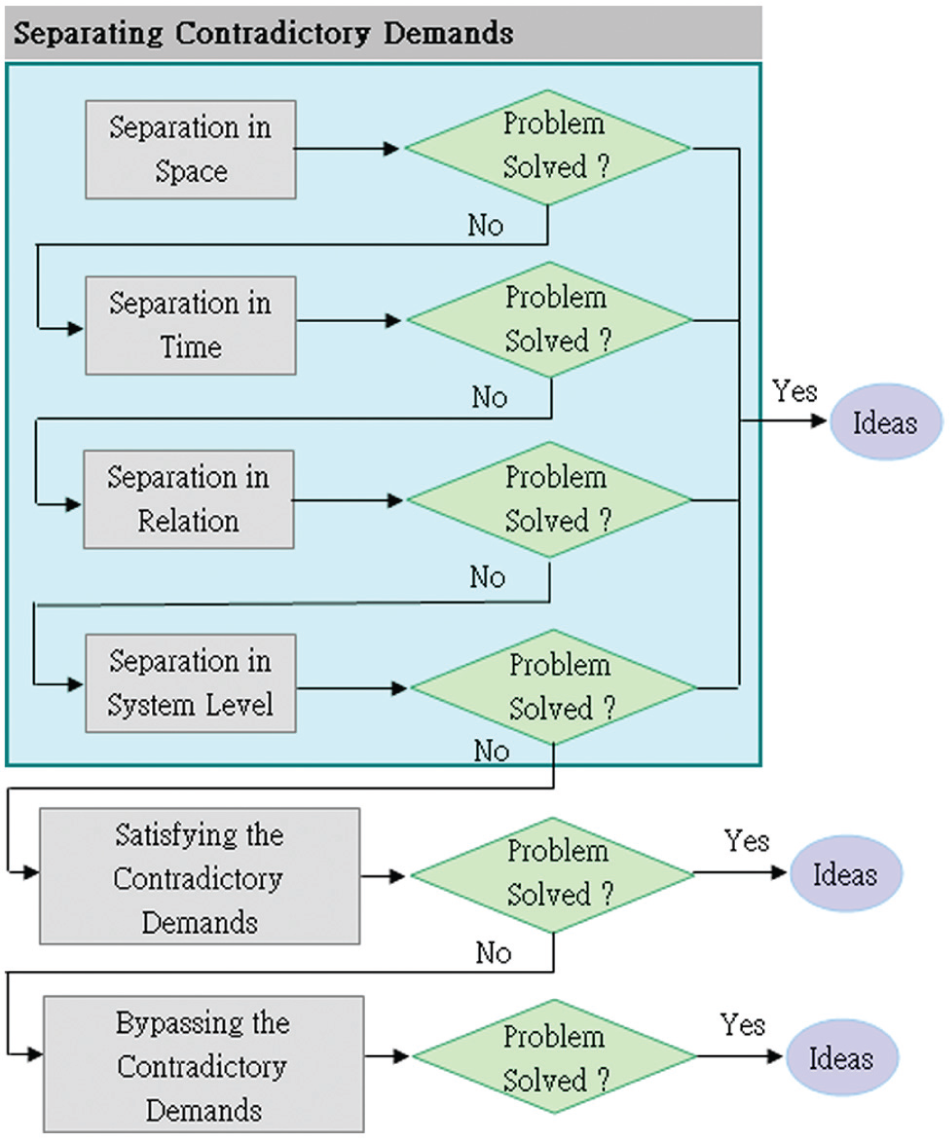
The algorithm of resolving physical contradictions.
Convert technical contradictions to physical contradictions
When two parameters are functions of the same parameter, a technical contradiction can be converted to a physical contradiction, which means that we have located a fundamental parameter. In general, converting a technical contradiction to a physical contradiction makes the case more inventive because we are solving a more important problem, so the solution is usually ‘stronger’. The relationships between technical and physical contradictions are presented in Figure 4. Design problems can be resolved by the two ways of considering technical and physical contradictions, and there are four paths for resolving the conflicts that may occur among these:
Resolve technical contradiction (conflict 1) between improved and worsened parameters (parameters 1 and 2).
Resolve physical contradiction (conflict 2) between physical parameters +A and −A.
Resolve technical contradiction and physical contradiction (conflict 3) between the improved parameter and physical parameter +A.
Resolve technical contradiction and physical contradiction (conflict 4) between the worsened parameter and physical parameter −A.
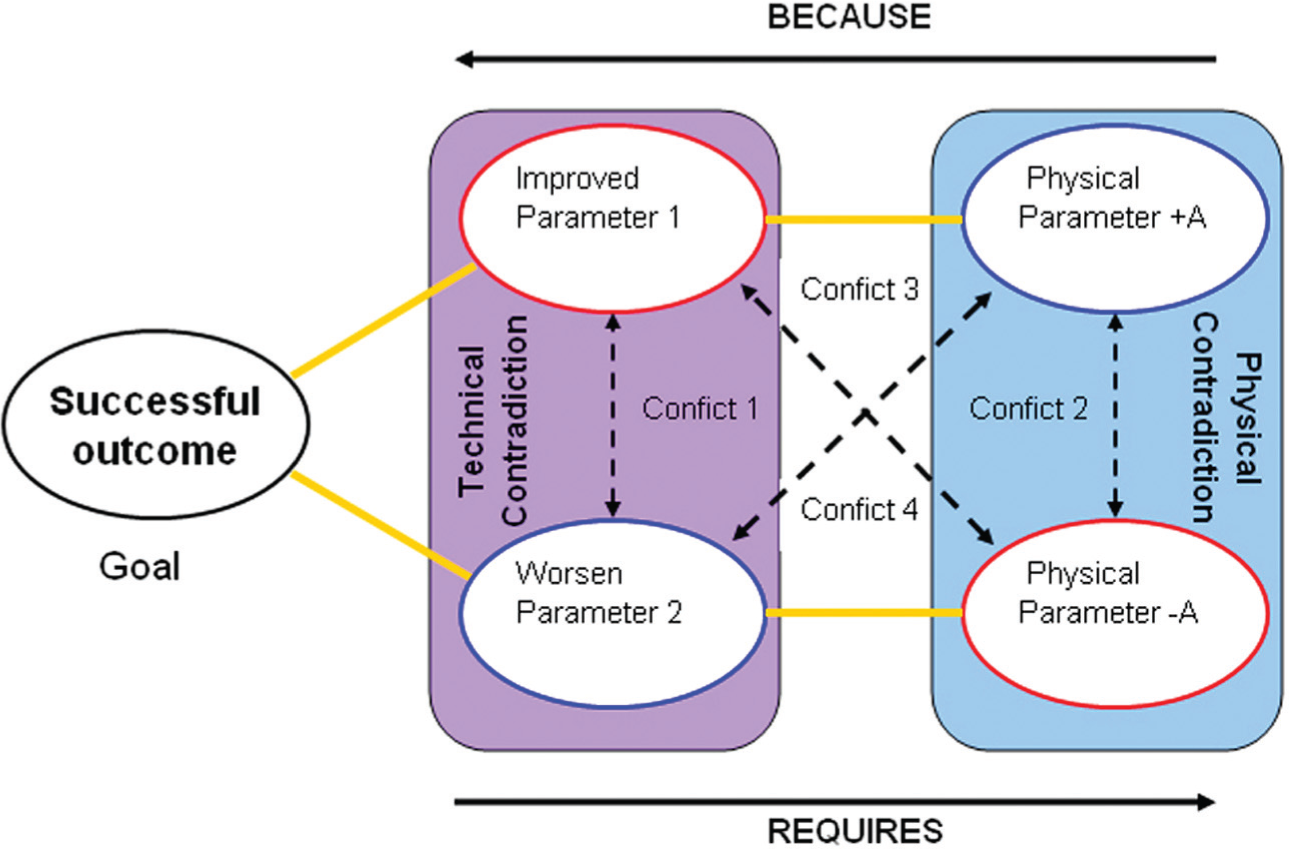
Identify a technical contradiction and corresponding physical contradiction.
The contradiction matrix and inventive principles of TRIZ can be used to resolve conflicts 1, 3, and 4. The related algorithm for resolving physical contradictions, as discussed above, can be used to resolve conflict 2.
A case study
The process of developing an innovative screwdriver, using both technical and physical contradictions, is presented as an example in this case study. The function of a screwdriver is to turn screws, and the problem of insufficient torque may arise when driving bigger screws. Moreover, a screwdriver will be less efficient when driving longer screws. The innovative goal of this screwdriver design is to thus improve both the torque and efficiency.
Mechanical principles
To achieve the innovative design goal, we studied the related mechanical principles and found that the principle of gears can be applied in this case. Gears are an important part of a transmission mechanism and can be seen as an application of lever theory. A gear can change the strength and direction of power, as well as the rotation speed, of another gear in a mechanical system. We can obtain the torque and rotation speed of gears by calculating the parameters of the drive ratio formula as follows 45

where
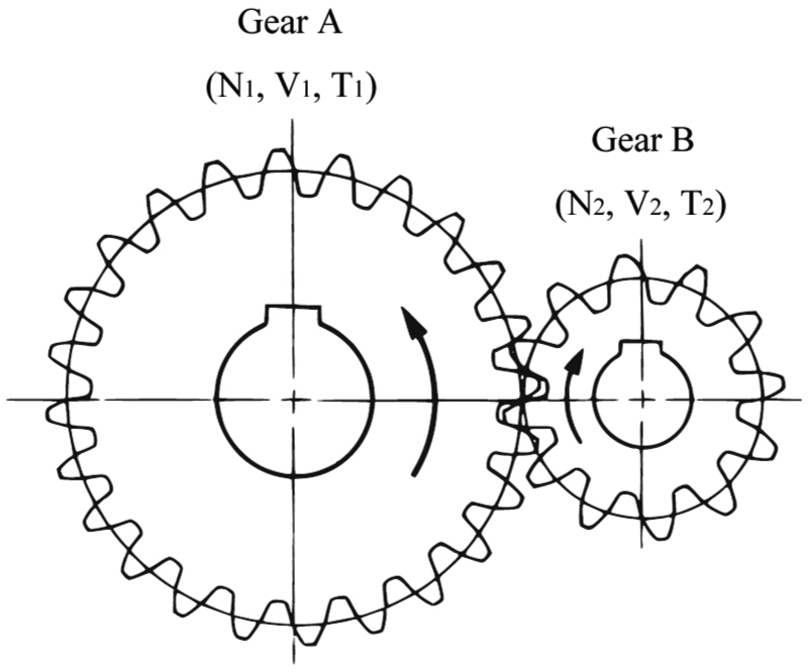
A spur gear system.
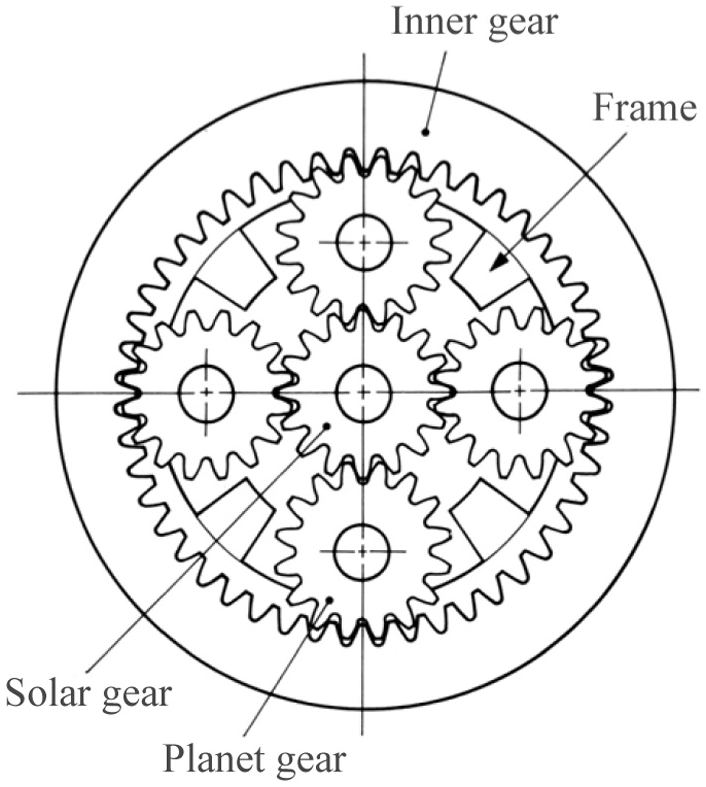
A planet gear system.
Identify the contradiction of the system
The contradiction of the system can be found based on the design goal of the screwdriver. The contradiction is that when we drive a screw with a high rotation speed, this will lower the operation torque. Thus, the two conflicting parameters are ‘operation efficiency’ and ‘operation torque’. The improving technical parameter is ‘9 – Speed’, and the worsening technical parameter is ‘10 – Force’. After identifying the contradictions, the conflict matrix is used to analyse the design problem and to solve the technical contradictions. The related inventive principles are obtained from the contradiction matrix. Based on the 39 technical parameters and 40 inventive principles of TRIZ, the design solution trigger and specific solution can be obtained as follows: 13 – The other way around, 15 – Dynamisation, 19 – Periodic, and 28 – Mechanics substitution.
Convert a technical contradiction into a physical contradiction
To produce more creative outcomes, we must convert the technical contradiction to a physical one for shaper and more advanced design solutions. There are two conflicting technical parameters in the design problem. When the screwdriver drives a longer screw, it needs a greater rotation speed to increase the operation efficiency. In contrast, when the screwdriver drives a bigger screw, it needs a lower rotation speed to increase the operation torque. Thus, the physical contradiction is that the screwdriver design demands contradictory values from the same parameter, ‘Rotation Speed’. Therefore, the technical contradiction can be converted to a physical contradiction, as shown in Figure 7.
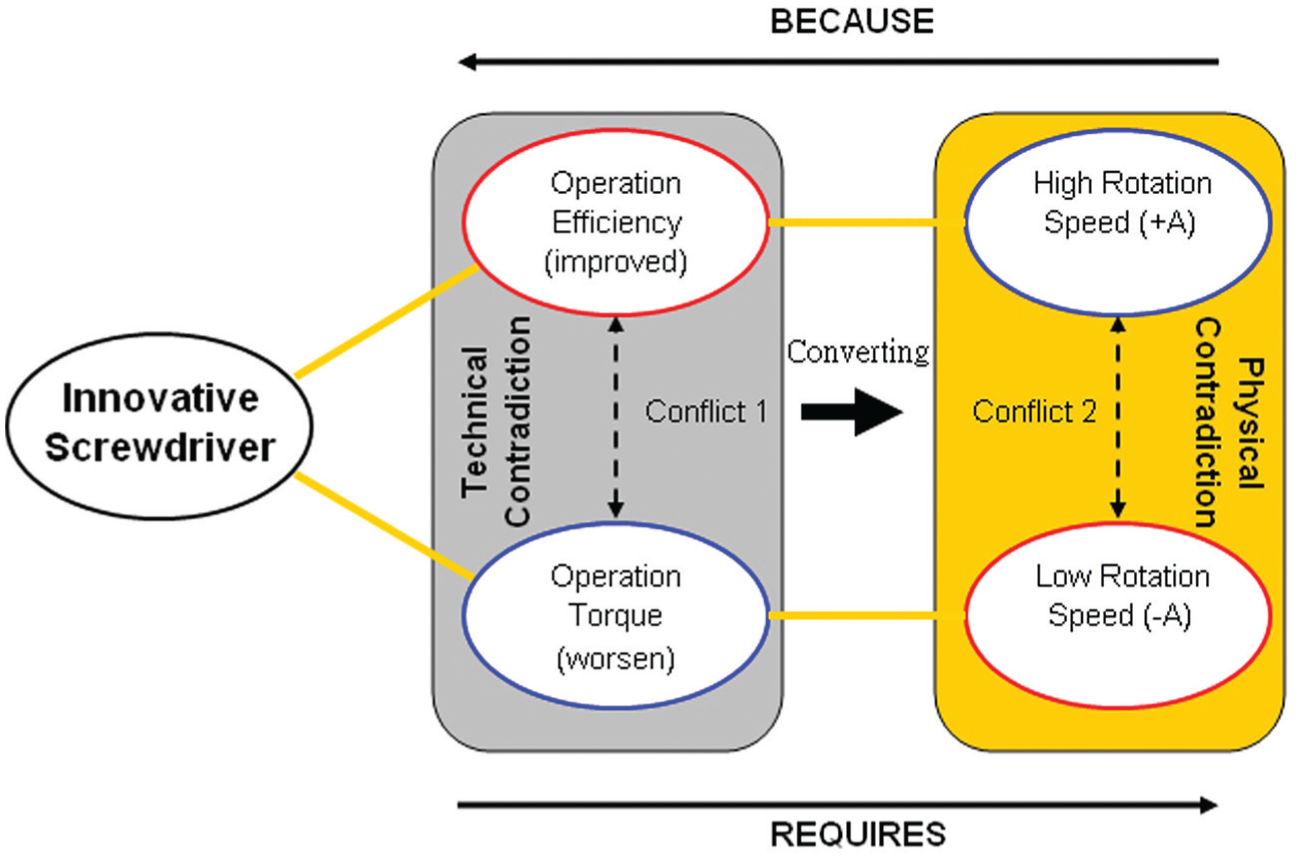
The process of converting the technical contradiction parameter to a physical contradiction parameter.
The physical contradiction parameter ‘rotation speed’ can be produced from the analysis of the above conversion process. The condition meets the following design-thinking semantics (Table 1):
To improve the operation efficiency requires higher rotation speed;
To improve the operation torque requires lower rotation speed.
Design-thinking semantics.
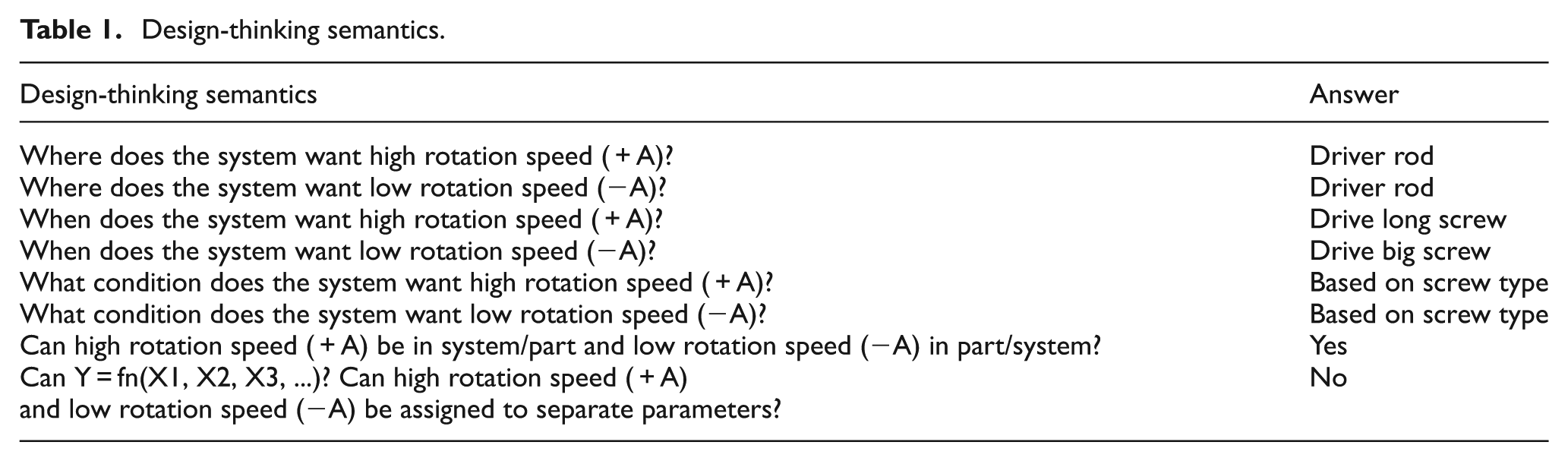
The Separation in Time can be applied to resolve the design contradictions from Table 1.
Transition to a different system
The transition principles can also be adopted to resolve a design problem if the separation principles are not appropriate. The design-thinking semantics can be as follows (Table 2):
+A: high rotation speed;
−A: low rotation speed.
Transition principles of an innovative screwdriver.
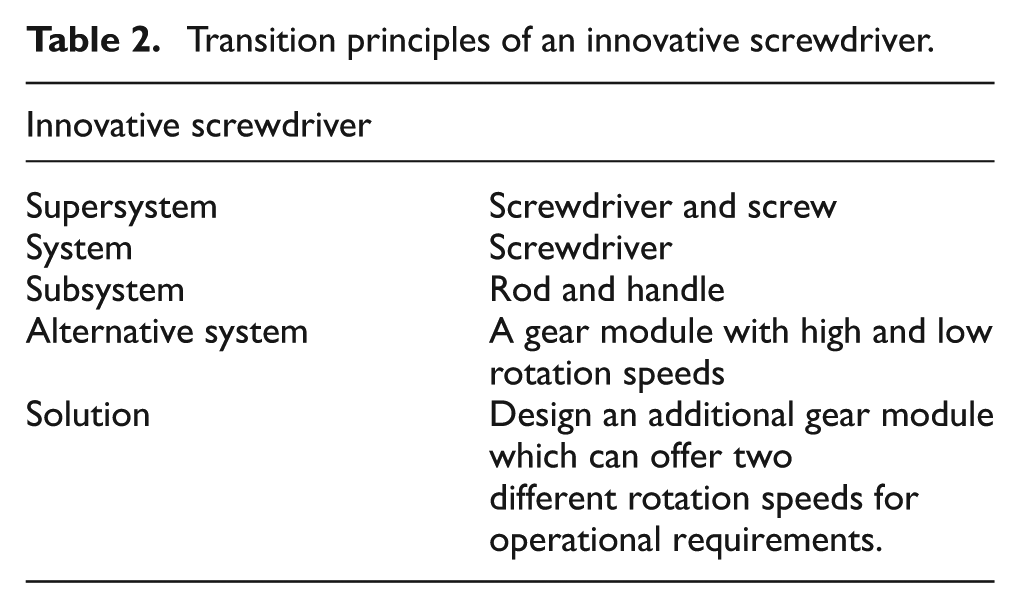
Can a high rotation speed (+A) and a low rotation speed (−A) be transferred to another system? The answer is affirmative. Therefore, it is necessary to establish a new gear module system that can offer different rotation speeds to resolve this design problem.
Visualise the design concept
The design concept for the innovative driver is shown in Figure 8, based on the analysis of the technical and physical contradictions.
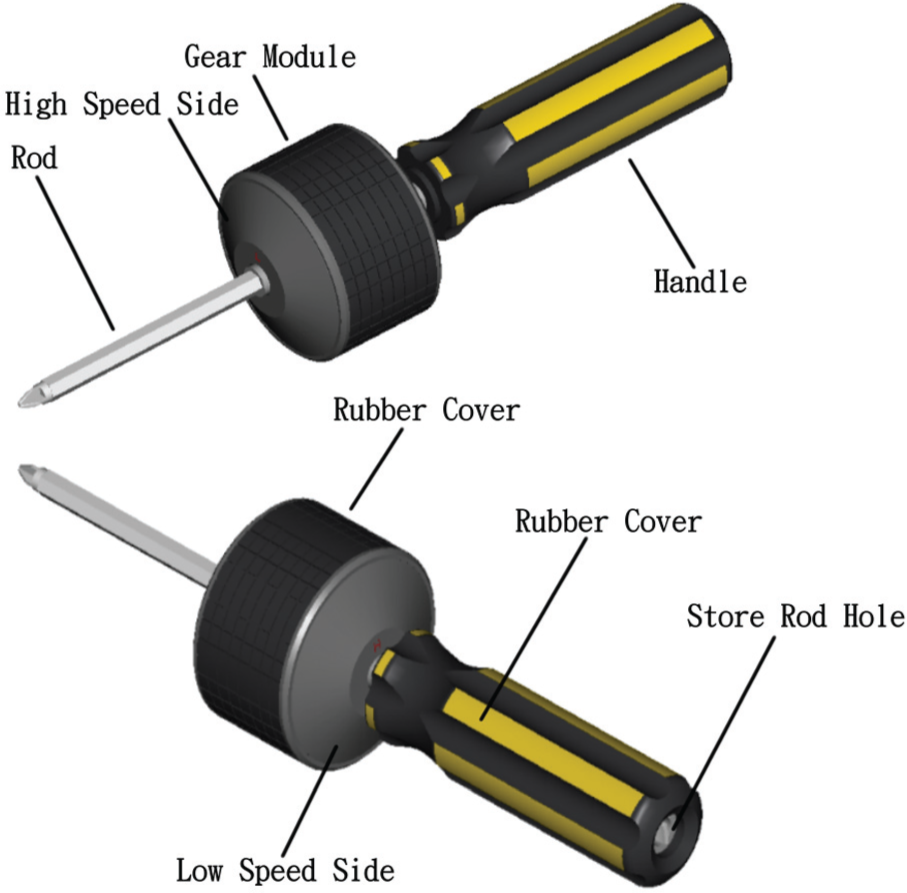
The final innovative screwdriver design.
An additional gear module with a set of planet gears is created to offer different rotation speeds. The gear module can be used in reverse to provide two different operations. One is a high rotation speed for more efficiency; the other is a low rotation speed for greater torque. The inner structure of the new gear module is shown in Figure 9.
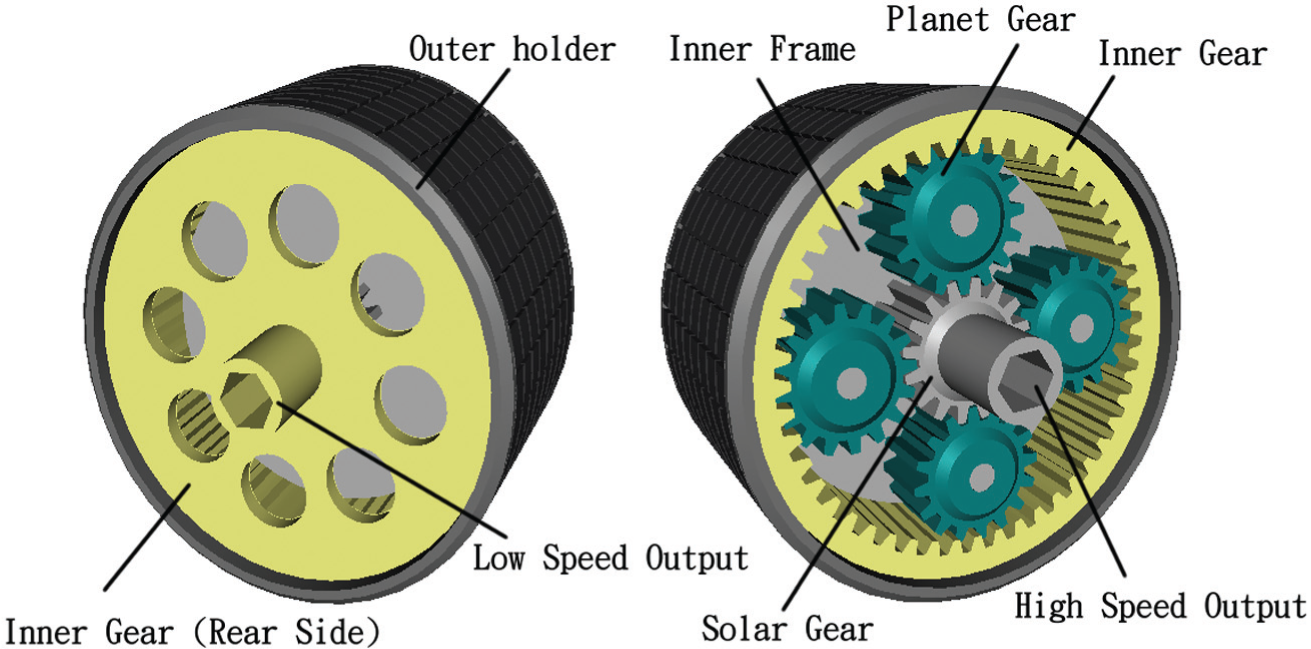
The structure of the new gear module for different operations.
Finally, the characteristics of the final innovative screwdriver are shown in Figure 10.
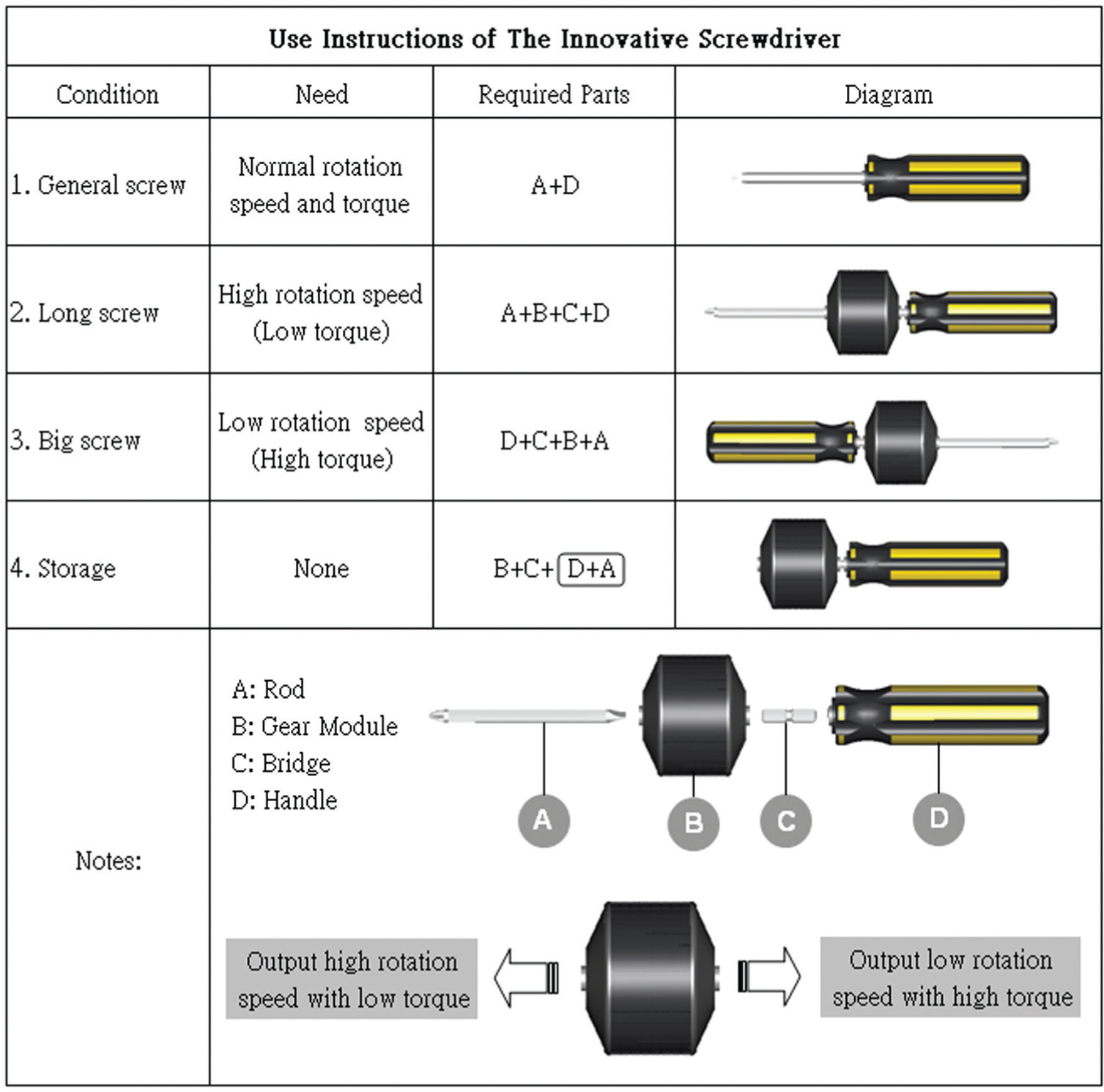
The features of the new gear module for different conditions.
Conclusions
Various methods have been proposed to increase creativity in conceptual design; which ones are better at producing more creative outcomes in certain contexts is thus an important practical problem. Creativity is an integral and essential part of the product design process. Without creativity, there is no potential for innovation, which is when creative ideas are actually implemented and transformed into commercial value. Contradictions are also required in design, as without these, there would be no need for novel ideas. This study, thus, does not consider contradictions as fixed, single entities that can each be understood and solved in isolation but as complex, dynamic, and interdependent sets of contradictions. Based on the TRIZ concept, this article presents a novel design-thinking approach by integrating technical and physical contradiction analysis methods into the conceptual design activities of NPD. The proposed method can help designers create novel ideas for new products, as demonstrated by the case study. Meanwhile, by employing a multidimensional understanding through exploring the concept of contradictions beyond binary typologies and singular dimensions, the proposed method can offer a more realistic and relevant starting point for both researchers and practitioners seeking to stimulate creativity through contradictions. There are usually five phases that occur at the start of NPD, namely, product planning, conceptual design, detailed design, prototype making, and design verification. After generating an innovative conceptual design of an innovative screwdriver in this work, the next step is to complete the detailed design. Our future works will focus on mechanical design for the functional requirements, industrial design for the aesthetics, and ergonomics for the product operation.
Footnotes
Acknowledgements
The authors appreciate the assistance of the R&D division of King Tony Corporation in developing the examples presented in this article.
Declaration of conflicting interests
The authors declare that there is no conflict of interest.
Funding
This work was supported in part by the National Science Council of Taiwan by grant NSC 102-2622-E-029-008-CC3 and the GREEnS Project of Tunghai University by grant 102GREEnS004-4.