




Abstract
This article examines the use of cinematic microanalysis to capture, decompose, and interpret mother–infant interaction in the decades following the Second World War. Focusing on the films and writings of Margaret Mead, Ray Birdwhistell, René Spitz, and Sylvia Brody, it examines the intellectual culture, and visual methodologies, that transformed ‘pathogenic’ mothering into an observable process. In turn, it argues that the significance assigned to the ‘small behaviours’ of mothers provided an epistemological foundation for the nascent discipline of infant psychiatry. This research draws attention to two new areas of enquiry within the history of emotions and the history of psychiatry in the post-war period: preoccupation with emotional absence and affectlessness, and their personal and cultural meanings; and the empirical search for the origin point, and early chronology, of mental illness.
Introduction
How much or how little does it take to be definitively changed or irretrievably damaged in the formative period of infancy? How does the presence, absence, or confusion of maternal emotions, as expressed in facial expressions, gestures, and holding patterns, affect this change? And how much weight, epistemologically and socially, can be brought to bear upon changes that occur at a barely perceptible, micro level of analysis? These are questions that preoccupied many British and American psychiatrists during the post-war period, as psychoanalytic, environmental, and interactionist theories came to replace racial and genetic concepts in the search for the aetiology of mental illness. Many of these therapists and their associates in allied disciplines turned to the impassive eye of the film camera in order to generate an evidential base for their research. New advances in film technology, particularly its increased portability, enabled child psychiatrists and analysts to enter into the very interstices of the mother–child relationship, and to interrogate the constituent elements of mother love itself. By examining these films frame by frame, the micro-expressions and gestures that were deemed to inflict damage – at an almost subliminal speed – could be identified and potentially corrected.
In his 1959 pamphlet Can I Leave My Baby?, British child psychiatrist and attachment theorist John Bowlby advised anxious mothers to avoid absences from their infants of more than two days, and to keep these occasions to a minimum, in order to prevent psychological harm to their children. Bowlby and his colleague James Robertson also produced a series of films of young children experiencing temporary separation, which were among the first visual documents to systematically explore the phenomenology of preverbal experience. 1 Both the pamphlet and the films stress that Mother’s physical presence, or that of a female proxy, is required for the healthy development of young children, but elide a more subtle question that was preoccupying anthropologists and psychiatrists in this period. This was the problem of emotional presence, or more precisely, sympathetic identification. The question of maternal ‘presence’ in this sense became an ontological question for post-war social science; it explained how individual subjectivity came into being, and how societies reproduced their idiosyncratic ‘structures of feeling’. In the new model of causality and change that emerged in this period, Mother’s ‘small behaviours’ – her style of looking, feeding, holding, and touching – formed the tip of an inverted pyramid that bore the weight of not just the child’s future personality and mental health, but their social, political, and cultural dispositions. Film became the handmaiden of this form of social and psychological analysis, in which causes were hugely contracted and intensified. Only film could capture the small behaviours that constituted mothering; small in terms of both their duration and the triviality and obscurity in which they had once been held. Film could place mothering ‘in the frame’ by generating a compositional model of self in which Mother was responsible for giving form – at every moment – to Baby’s incipient emotions. This line of enquiry led to a new, technologically driven form of maternalism, which both fetishised and strictly domesticised the formative powers of Mothers. Maternalist thinkers of the post-war period used the camera to seek out, and potentially repair, pauses, fissures, and fades in mother love. Their studies were driven by a utopian ideal in which film acted as the finest of nets for the smallest of emotional quanta, and the qualitative dimension of maternal feeling could be weighed and calibrated.
The post-war preoccupation with familial aetiologies for mental illness has begun to be carefully historicised in recent years, beginning with Deborah Weinstein’s 2013 book The Pathological Family, an analysis of family therapy and its associate technologies in post-war America. In a 2016 article on post-war mother-blaming, Anne Harrington argues that the category of the ‘schizophrenogenic mother’ fell from favour only in the 1980s, when psychiatric deinstitutionalisation forced psychiatric patients back into maternal care (Harrington, 2016). Bernard Geoghegan’s notions of the ‘cybernetic family’, and ‘psy-bernetics’, in which mental illness is described as ambulatory, travelling between family members, offer new and important formulations of the influence of cybernetic theory on psychiatry, particularly in its use of cinematic microanalysis to trace communicative structures. Geoghegan claims that ‘psyberneticians’ used film to chart iterative actions or ‘depthless codes’, thereby placing themselves in opposition to psychoanalysis and its emphasis on singular, traumatic events (Geoghegan, 2017: 79). However, this argument obscures the fact that psychoanalytic theory was itself reshaped in this period by microanalysis. Lisa Cartwright, for example, in a series of essays on James Robertson and René Spitz, has highlighted the importance of film in constructing a new visual epistemology for post-war child psychoanalysis (Cartwright, 2004, 2010). Both Geoghegan and Cartwright’s forms of intra-disciplinary analysis in fact overlook the pervasive culture of ‘small behaviours’ that conditioned Anglo-American psychiatric research as a whole in the post-war period. As we shall see, in the field of infant psychiatry, cybernetic and psychoanalytic models of mind were underpinned by a shared vision of ‘cumulative trauma’ (Khan, 1963).
Through an exploration of the visual data generated by the micro-observation of mothering, this article deepens Harrington’s broad historicisation of 20th-century mother-blaming. It also puts flesh on the bones of Nikolas Rose’s account of the post-war fascination with ‘the minutiae of mothering’ in Governing the Soul (Rose, 1999: 168). My claim is that research in this area was theoretically varied and nuanced, generating lasting, albeit contentious, insights into the nature of preverbal experience. By examining how mother love was not just idealised in this period, but ‘weighed and measured’, I aim also to recover the hybrid origins of contemporary microanalytic practice within the social and psychological sciences. In this period, mother love became a new scientific object, subject to new forms of description and empirical analysis. This ongoing quest to rationalise the arational is of particular relevance to the complex histories of observation and objectivity (Daston and Galison, 2007; Daston and Lunbeck, 2011).
Today, video microanalysis is used in a large number of fields, including legal judgements, education, human–computer interaction, and child cognitive assessment. There is also a growing literature on the historical use of microanalysis within the natural and social sciences (Canales, 2009; Landecker, 2006; Lempert, 2019). A centrepiece of Jimena Canales’ study A Tenth of a Second is the discovery, in the mid 19th century, of the precise speed of human thought, or ‘a perceptual moment’. At work in my case studies are related attempts to marry epistemology with ontology, or methodology with model of mind. My protagonists understood early developmental time to be causally loaded or ‘dense’, and therefore congruent with a methodology that lent explanatory power to the smallest units of experience. Film provided researchers with a medium for both narrating and deconstructing the process of infant development, via classical cinematic narratives of irreversible change, and in the capture of ‘decisive moments’. 2
In foregrounding a culture of ‘small behaviours’, I therefore seek to understand the intellectual culture, and specific visual methodologies, that transformed mothering into an observable process, subject to forensic examination and perpetual doubt. My focus is on the period 1945–67, and on four American post-war theorists of the maternal for whom microanalysis was central: the anthropologists Margaret Mead and Ray Birdwhistell, the psychoanalyst René Spitz, and the psychologist Sylvia Brody. These four figures were influential actors in an interdisciplinary Anglo-American research network that was in search of an evidential basis for the personal and cultural effects of impoverished ‘emotional climates’. A series of conferences during the late 1940s, led by the World Health Organization, sought to base post-war reconstruction in the West on a deeper understanding of how maternal deprivation and repressive child-rearing could damage the empathic capacities of a whole generation. 3 This concern with the ontological significance of maternal emotion overflowed disciplinary and methodological boundaries, as illustrated by a 1954 symposium, and subsequent publication, Expression of the Emotions in Man, to which Mead, Birdwhistell, Spitz, Gregory Bateson, and psychologist Harry Harlow all contributed. The overriding preoccupations of this volume were the significance of non-verbal communication and sign systems, the relationship between emotional range and mental pathology, and the possibilities that cine-analysis offered researchers for capturing emotional ‘data’ (Knapp, 1963).
Another transition that took place during this period concerned the emotional dimension of mental illness, which was no longer characterised by an excess of emotion but by affectlessness. During the 19th century, pioneering psychiatric studies by Hugh Diamond, Jean-Martin Charcot, and Charles Darwin had constructed aetiological theories and classification schemes of madness by using photography to capture static emotional ‘specimens’. 4 In these schemes and images, madness had most often been characterised by an inability to control emotion, or a regression to wild, uncontrolled forms of expression. As the historian Sander Gilman argues in Disease and Representation, Darwin relied on the psychiatrist Henry Maudsley’s concept of ‘genetic reversion’, in which individuals lost the protective structure that prevented them from expressing exaggerated feeling, to interpret the photographs of psychiatric patients discussed in The Expression of the Emotions in Man and Animals (2009[1872]). In this sense, madness was understood as a de-civilising process (Gilman, 1988: 135). During the 1930s and 1940s, descriptions of the mad as excessively irrational were eclipsed by a concern with two pathological groups who failed to feel: the institutionalised schizophrenic, whose absent eyes and ‘waxy flexibility’ Bateson and Mead invoked throughout their Balinese Character (1942), and the ‘affectless’ young delinquent that Bowlby described in his early work Forty-Four Juvenile Thieves (1946[1944]). As the capacity for sympathetic identification became a political issue, figures such as Theodor Adorno (both in his study of American youth, The Authoritarian Personality (1950), and in more personal works such as Minima Moralia (2005[1951])) and Melanie Klein, in her influential model of infant emotion, advanced melancholic realism – characterised by its openness to the failings of others – as an affective ideal. The absence of fellow feeling, particularly the ways in which an emotional deficit passed from mother to child, and then set the tone for entire political cultures, became a concern that united psychiatrists and cultural anthropologists.
Infant psychiatry therefore emerged as a discipline that could cut nature at its joints. As the old static, hereditary and racial, models of mind were shelved after the war, mothering became a modern origin myth that could be interpreted in vivo, a dynamic, evolving system of two. The prospect of giving structure, meaning, and tempo to the wordless zone of existence that Freud had described as the ‘prehistory’ of life, and that Hannah Arendt prized as ‘vegetative darkness’, was based in large part on the visual interrogation of what became known in the 1950s as the mother–child dyad. In many cinematic studies, this boiled down to a triangulation of the faces of mother and child, and either the feeding breast or the manipulating hand; to the wordless signals travelling between these three points. From this intense contraction of space, this microclimate captured on celluloid, a number of important theories of the self found an epistemological basis. 5 The most enduring and productive of these are object relations theory and attachment theory, fields in which film continues to be an important clinical tool. 6
This new behavioural science of mothering emerged from a broader change in post-war American social science that, during the 1950s in particular, came to privilege the microanalysis of social relations: a culture of the temporal fragment and spatial detail. In his seminal study of fin-de-siecle Europe, The Culture of Space and Time, Stephen Kern argues that new technologies such as the telephone, the railway, and the bicycle, as well as the catastrophic events of the First World War, generated new topological and temporal realities, such as the flattening of spatial hierarchies and an awareness of simultaneity. Kern also discusses the perceptual changes brought about by the early cinema in this period, and how this new technology increased the density of lived experience: ‘The cinema thickened the present – any moment could be pried open and expanded at will: the “now” became 16 frames per second.…The sense of the present was therefore distinctively new, thickened temporally with retentions and protentions of the past and future’ (Kern, 2003: 81, 314). This prefigures film theorist Laura Mulvey’s argument in Death 24x a Second, where she describes how the stilling and stalling of film in the digital age allows the viewer to seek out uncanny and obscure messages within superficially conventional narratives (Mulvey, 2006). In both these studies, time and space are revealed to be historical constructs, reformatted by new technologies. One of my contentions in this article is that the new culture of space and time – one of ‘small behaviours’ – generated by cinematic microanalysis produced the aetiological model upon which infant psychiatry staked its disciplinary authority. It also rendered the ‘pathogenic mother’ into a scientific object.
Interest in the explanatory content of the smallest particles of human interaction – the barely perceptible movements of eyes, mouths, and anxious limbs – was not confined to the embryonic discipline of infant psychiatry, although mothering provided this new way of seeing with an ontological and epistemological focus. This forensic structure of attention was shaped not only by the introduction of portable, fully mechanised 16 mm film cameras into academic settings during the interwar period, but also by new forms of observational practice within disciplines as diverse as linguistics, musicology, ethology, and psychoanalysis, which took a psychosomatic turn between the 1930s and 1950s, exploring Freud’s concept of the original body ego and its distortions in both child and adult patients (Deutsch, 1947; Mittelmann, 1954; Schilder, 1935). 7 Social scientists operating in explicit opposition to psychoanalysis, such as Birdwhistell and Erving Goffman, were to draw heavily on this literature. 8 Goffman created a new frame of analysis upon which a generation of students at the University of Chicago would base their research. As he stated in a late work, Interaction Ritual, ‘the ultimate behavioural materials are…glances, gestures, positionings’, and the reading lists in his archived teaching materials describe very well the microanalytic culture that he was instrumental in generating (Goffman, 1967: 1). 9
The post-war search for a unified behavioural science, driven in part by a newly polarised politics, also generated an explosion of interest in non-verbal languages. 10 Photography and film were themselves promoted in such terms, recording for comparison universal facial expressions of suffering and joy. The most significant example of this was Edward Steichen’s 1955 exhibition The Family of Man, which argued for a pan-national visual language of the emotions. Other influential examples were Edward Hall’s (1969) CIA-funded research into ‘proxemics’, Jurgen Ruesch and Weldon Kees’ photographic primer Nonverbal Communication (1972), and the work of environmental psychologists such as Roger Barker (1963) and Robert Sommer. The psychiatrist Harry Wilmer used film to bypass verbal statements by tracking the minute eye movements of schizophrenic patients and their therapists, recordings that were then used diagnostically and curatively (Wilmer, 1967, 1968). That so many of these research projects were based in asylums or other psychiatric settings reveals how enmeshed the fields of social anthropology and psychiatry had become in this period, in their search for the origins of human emotions and their impoverished or pathological forms. A shared somatic imagination – specifically an interest in how the camera could act as witness to unconscious, yet culturally specific body movements – united these now estranged disciplines.
In the visual analysis of infants, form and content therefore compounded one another. The results of this microanalytic research came to show not only that film contracted and intensified time, but also that this temporal warping was inherent to the lived experience of infancy. That the ‘thickened’ time of early childhood was unique, possessing discernible rhythms and intensities of experience, progress, and change, was one of the most significant developmental concepts to have been discovered within infant psychology. As with attachment theory and object relations theory more generally, it was a product of the filmic analysis both of mothers ‘at work’ and of spectral, absent mothers. Spitz, among others, showed conclusively that the child’s psyche could not unfold without a continuous physical and emotional presence, and that the loss of a mother literally caused time to go backwards, and the complexity of the infant’s ego and its developing emotional range to contract and disintegrate. Mother therefore became the prime mover in new theories both of causality and of the temporal structure of early experience. Maternalist thinking suggested that the ideal act of mothering was ontological (a static source of emotional plenitude), compositional and iterative (generating the child’s subjectivity out of minute but consistent actions), and timely (alive to developmental crises and transitions). In reality, mothers were often out of time: emotionally rigid, unpredictable, or self-preoccupied pathogenic forces in danger of derailing development. These reflections on the temporal structure of infant trauma also add a new dimension to recent discussions in this journal on the relationship between mental illness and the experience of time (Fryxell, 2019).
That motherhood might also possess unique temporalities and structures of attention was less easy to universalise, and continues to present itself as a social conundrum, the essentialist knot at the heart of all childcare and child-rearing discourse. Meanwhile, the phenomenology of the maternal has become a thriving area of academic enquiry. 11 This article concludes at the point at which post-war interest in ‘mothercraft’ became eclipsed by the second-wave feminist critiques of institutionalised motherhood. As Sylvia Brody was preparing her study of mothering styles in the mid 1950s, the critique of ‘the motherhood myth’ was already taking form. In the following decades, writers such as Betty Friedan (2010[1963](, Adrienne Rich (1995), and Hannah Gavron (1976) suggested that the ‘time’ of mothering was not one of plenitude, but of potential emptiness and dehumanisation; that the life of the ordinary (rather than pathological) mother was characterised by emotional ambivalence, not constancy, and that the notion of the symbiotic ideal between mother and child was emotionally stunting for both parties.
Margaret Mead observing ‘schizoid’ mothers in Bali
The visual study of mother–infant interaction, and pathogenic mothering in turn, has its roots in American social anthropology of the 1930s, and its ambitious attempts to understand how Culture – primarily child-rearing styles and sexual mores – shaped Personality. Many anthropologists of this generation hoped their studies of intact ‘primitive’ cultures might throw light on the origins of mental illness within increasingly heterogenous and deracinated Western societies (Mandler, 2013; Stocking, 1986). The ‘culture and personality’ school drew deeply on psychoanalysis, while also contributing to new cybernetic theories of mind. The work of Margaret Mead and Geoffrey Bateson in Bali during this period has become an important reference point for historians tracing the roots of post-war psychiatric discourse to early cybernetic theory, particularly Bateson’s concepts of schismogenesis and the double bind. 12 In Balinese Character, the volume of thematically arranged photographs that summarised three years of research in Bajoeng Gede, Bateson famously described Balinese culture as ‘schizoid’. Like the ‘affectless’ psychotic, the typical Balinese possessed a weak ego, lack of ambition, and a distaste for satisfying (‘climactic’) interpersonal relations. Mead in particular was interested in how cultural outlooks or modes could be read through the body. From her first visit to Bali in 1936, Mead was convinced that there were morphological analogies to be drawn between the body of the psychologically ‘healthy’ member of Balinese society and his most obviously sick counterpart in the West, the institutionalised schizophrenic, who was becoming an increasingly visible and burdensome problem for US society. The Balinese research was partially funded by the Committee for the Study of Dementia Praecox (the pre-war term for schizophrenia), as was Mead’s later reworking of the same photographic material in her 1951 book on comparative child-rearing, Growth and Culture, illustrating the extent to which the somatic imagination gripped the ‘psy’ professions at this time. Mead and Bateson had discovered film and photography’s analytic dimension accidentally, while using it to verify the content of written notes. However, they soon realised that film could capture gestures and postures outside of both the observed and the observer’s conscious awareness, and trained the camera mainly on babies and the bodily training of babies, in search of the formative physical movements that generated psychic structure. Between 1936 and 1938, they produced 25,000 Leica stills and 22,000 feet of Movikon 16 mm film.
For Mead, the close study of infants pointed to a marriage between psychoanalytic and cybernetic models of the mind in which, during the formation of the ego, the iterative rather than the singular traumatic event was foregrounded. The idiosyncrasies of Balinese life also provided Mead with a unique fulfilment of her analogic and microanalytic approach to culture because, in her analysis, the Balinese valued physical plasticity, ‘kinaesthetic learning’, and an atomistic attitude to the body: If the child if held, what is the nature of the holding?…Experiences of being moved or of moving?…Comparative exploration of the cultural experiences of movement – especially in cultures in which movement is crucial, as it is in Bali as plastic rhythmic adaptation, as it is in America as control and autonomy, should give us much greater understanding of what is happening to our children. A hastily out-flung arm, throwing the whole being out of kilter, may be the beginning of a new phase of development, may be the sign of severe emotional disturbance; it is necessary to know.…These [photographic plates] should give a new awareness of what the relationship between one finger and another may and can mean. (Mead and Macgregor, 1951: 33–5) The oblique empathic approach of the Balinese, the lack of focus and goal orientation, are all congruent with the emphasis on the ulnar rather than radial grasp.…Peripheral responsiveness predominates over grasping behaviour or purposeful holding on. (Mead and Macgregor, 1951: 150)
Mead and Bateson were the first to put ‘mothering in the frame’ by publishing close-up shots of breastfeeding mothers for theoretical and didactic purposes. Their early analyses of the mother–infant dyad were closer to art historian Aby Warburg’s ‘language of gestures’ than to any quantifiable or codified measurement of pathogenesis.
14
They were rooted in a search for aesthetic and kinaesthetic pattern, emerging from collation and juxtaposition. Nevertheless, these images encouraged the reader to interrogate, via comparative visual analysis, different mothers’ styles of feeding, and to consider the minute movements and expressions between mother and infant in socially reproductive, compositional terms. Throughout Balinese Character, Growth and Culture, and films such as Bathing Babies in Three Different Cultures (Mead and Bateson, 1954), Mead emphasised the emotional emptiness of the Balinese mother and the ways in which her refusal of reciprocity was expressed in patterns of holding and suckling, in ‘a series of broken sequences, of unreached climaxes’ (Bateson and Mead, 1942: 32). A pivotal sequence of nine stills in Balinese Character entitled ‘Stimulation and Frustration’ describes affective absence ‘in action’ between a mother, Men Goenoeng, and her infant son, Raoeh. The camera appears to follow their misaligned arcs of attention as the baby seeks the breast, arcs that can be sketched to form an incomplete circle, rather than a feedback loop of mutual identification. Mead glosses the images as follows: In this sequence the mother’s gesture in Figures 1 and 2 was in response to the child’s fretting, but when he responds with affection, her attention is away. Immediately after his advance, her face goes completely blank (Figure 3) and later she laughs at some unrecorded outside stimulus (Figure 4). (ibid.: 148–9)
The forensic quality of Mead’s attention – her interest in small units of the body (particularly digits, mouths, and eyes), fleeting detail, and the unique emotional climates created by individual mothers – made her work foundational not only for social and visual anthropology during the 1940s and 1950s, but also for infant psychiatry. Through her use of photography and film, Mead emphasised that the first, and most formative, human language was a submerged, iterative language of the body, which left lasting, and literal, impressions on the future adult. Her work in Bali, and beyond, specifically foregrounded the problem of emotional absence and its relationship to ‘timeliness’ in child development. Balinese mothers were timely in a perverse manner, in the predictable ways in which they broke off affective union. But Mead was also concerned that Western mothers shake off the emotionally hygienic child-rearing fashions of the early 20th century, and learn to respond to the idiosyncratic, internal time of the individual child. This unceasing ‘readiness’ was the essence of good mothering in the post-war period, in which the mother–infant dyad was an intercommunicating, self-sufficient system. 15 As she argued in the conclusion to Expression of the Emotions, film was an indispensable tool in its capacity to provide temporal precision for the analysis of this relationship (Knapp, 1963: 319). Mead and other proponents of the culture and personality school traversed both cybernetic and psychoanalytic theory in their research. It was left to others in these fields to systematically explore the clinical significance of Mother’s split-second messages.
Ray Birdwhistell and mother’s ‘minimal responses’
Ray Birdwhistell became interested in the structure of non-verbal communication during anthropological fieldwork for his doctorate in British Columbia during the 1940s. During the following decade, he went on to collaborate with Mead and Bateson, as well as Goffman (who was initially his student at the University of Toronto), on a series of group projects on the language of gestures, posture, and other body movements (kinesics), including the Macy Conferences on Group Processes and the decade-long microanalytic study The Natural History of an Interview. 16 As Senior Research Scientist at the Eastern Pennsylvanian Psychiatric Institute (EPPI), he set up a cinematic laboratory that allowed his research group to both produce and interpret – through a slow-motion analyser – films of everyday actions such as lighting a cigarette, changing a nappy, walking through a zoo, or gossiping on a street corner. Birdwhistell subjected each frame of these films to an extraordinary degree of interrogation, convinced that both a classification of body movements and a structural, syntactical analysis of their emergence between actors in any given scene would provide epistemological certainty for a new, compositional and interpersonal model of subjectivity. In this model, person and environment (or ‘context’) bled into one plane of analysis, with questions of both ‘figure’ and ‘ground’, and communicative content and form, bracketed off. Every particle of movement inside the film-maker’s frame, however innocuous, was therefore potentially pathogenic. At EPPI, Birdwhistell had observed the bodies, and micro-topologies, of psychiatric patients, particularly schizophrenics, in clinical and therapeutic settings. Like Mead and Bateson, he was convinced that the psychotic body was the product of disrupted communication patterns in infancy (Birdwhistell, 1970: 24–5). Moreover, his aim was to translate ‘analog’ communication – the elusive atmospheres or moods created by particular mothers or mothering cultures, so elegantly described by Mead – into a ‘digital’ kinaesthetic code: a complex but finite set of possible values.
The Natural History of an Interview – a paralinguistic and kinesic analysis of a mother and child being interviewed by Bateson, expanded upon psychoanalytic interest in the body ego by transforming what Bateson described as an ‘instinctive’ method into a quasi-scientific one: not just noting the significance of body movement, but classifying it into discrete units and syntactical patterns. In this context, we can compare the dreamlike films of children made by psychoanalyst Bela Mittelmann, such as
Motility in Parent-Child Relationships (1950), which merely suggest at the formative effects of touch and movement, and the minute temporal and spatial splicing of footage undertaken by Birdwhistell in The Natural History. Kinesics claimed to outwit the ‘talking cure’ by providing direct access to unconscious, unverbalised desires. If, according to cybernetic theory, sanity was defined as patterned, predictable communication, psychosis was both the product and the expression of ‘chaotic and fragmented’ behaviour, which, in principle, had travelled from the mother’s body to that of the child. In the cybernetic model of the psyche, there were no mad individuals, only mad forms of communication: We may find ourselves in a position which makes less conscionable any isolation of disease and particularly mental disease within man’s epidermic frontiers, and the violence we commit when we act as though we are dealing with a preformed and plastic personality shaped by isolated traumatic events. (Birdwhistell, 1970: 5)
If this attempt to quantify affect appears eccentric today, it is worth remembering that Birdwhistell was not alone in his attempt to provide a notation for the emotions. During the 1940s, the environmental psychologist Kurt Lewin (1944) had recast psychological experience – particularly the capacity for personal agency – in mathematical and topological terms, mapping emotions onto an interpersonal energy field. Several years later, his student Roger Barker (1963) made his own attempt to break down ‘the stream of behaviour’ into natural, discrete, and measurable units, the analysis of which could generate a general ecology of human actions. Both men’s research was focused on small children, for whom questions of free and frustrated activity were particularly relevant. During the early 1950s, Birdwhistell worked alongside psychiatrist Robert Pittenger and linguistician Charles Hockett, whose paralingual analysis of the opening five minutes of a psychotherapeutic session, published as The First Five Minutes, became a significant case study among psychiatrists. Using only a tape recorder, the authors attempted to record the contextual ‘noise’ that was usually excluded from verbal transcriptions, such as pauses, changes in tone and speed, lip-smacking, and hems and haws. In their discussion of the experiment, Hockett and Pittenger posited that an ideal recording would have included not just the session’s visual and kinetic dimension, but ‘an olfactory track, a taste track, and a touch track’, a total, reproducible sensorium of affective experience (Lempert, 2019; Pittenger and Hockett, 1960: 6).
Birdwhistell’s theory was undoubtedly the most baroque, and the most scientistic, expression of environmental aetiologies for mental illness in the post-war period. Seth Watter has recently brought Birdwhistell’s research to the attention of historians of science and cinema, describing the ‘hermeneutic hypertrophy’ inherent to his method, in which the datum under analysis was eventually subsumed under the weight of interpretation (Watter, 2017: 38). For our purposes, what is particularly relevant here is the fact that mothers, particularly emotionally absent mothers, formed the ontological, and social, backdrop to his research. Mothers were often interchangeable with the notion of ‘context’ itself, being literally ‘prime movers’. Birdwhistell’s three central case studies in Kinesics and Context were of three suburban housewives who failed to feel, and whose lack of appropriate affect could be measured in terms of fleeting instances of physical withdrawal or dissembling. In the first instance, this was part of an explicit attempt to provide notational proof of Bateson’s ‘double bind’ theory and Frieda Fromm-Reichmann’s concept of the schizophrenogenic mother: defining how, at the level of the ‘kine’, the mother communicated contradictory, and ultimately pathogenic, signals to her infant. Birdwhistell employed an early form of ‘thin slicing’, in which the structure of long-term relationships are extrapolated from micro-patterns of behaviour. 17
In the chapter of Kinesics entitled ‘The Age of a Baby’, the mother of a ‘seriously disturbed, possibly psychotic’ child was observed changing the nappy of her new baby. The quality of her presence was in question before the analysis began: ‘We originally studied the mother as an ideal type for what we were calling self-containment – that is she had minimal responses to the messages being sent to her by others in her family’ (Birdwhistell, 1970: 18). The essay was illustrated with a diagrammatic sketch showing the opposing emotional vectors at work, the direction of travel of the mother’s hands over the baby’s body as she held and cleaned him. Mother’s psyche was without content or meaningful context here – she was pure ontological mechanism: Pictures twelve and thirteen are critical. She now sends both messages at once: neither of the messages can be obeyed without obeying the other.… When one thinks how many 1 ¾ seconds of interaction there are in the socialisation process of this or any other infant, it is clear that by the time babies become children they are very old indeed. If, as we suspect from the observation of extended contact between this mother and this infant, this 1 ¾ seconds contains a micro-pattern which is duplicated many times in a scope of minutes, hours and weeks, we have come close to the problem, or at least near certain problems, of the relationship between human learning and human health. (ibid.: 22–3)
This unexamined hinterland pointed to an structural problem within all microanalytic practice: how to remain sensitive to the social and economic environment within which ‘pathogenic’ or dysfunctional interactions took place, as well as to the ways in which maternal and intergenerational trauma cascaded ‘vertically’ onto the infant. As we shall see in the following section, microanalysis has been used to explore both these axes: horizontal webs of communication and the increasing complexity, or disintegration, of the infant’s private world.
René Spitz and the institutionalised infant
Spitz was an Austrian psychoanalyst who trained with Ferenczi and then Freud in the years prior to the First World War. Spitz was unique in his interest in the ontology, rather than simply the operations, of the tripartite Freudian model of the mind, and his determination to create an epistemological basis for his theories of preverbal experience. He and his colleague Katherine Wolf emigrated to the United States in 1939, and continued the work they had begun in Europe into the effects of long-term care in sterile hospital wards upon the psyches of infants and young children. During the 1940s, Spitz and Wolf spent long periods in Casa de Cuna, a Mexican orphanage, researching, and recording cinematically, the phenomenon of infant wasting known as ‘hospitalism’. Despite the scrupulous standards of hygiene and nutrition in such institutions, infants placed in these environments were likely to have severe developmental problems, to suffer a range of physical diseases, and to die within the first two years of life. Their seminal article ‘Hospitalism’ (Spitz, 1945) compared the outcomes for infants cared for en masse in the foundling home and those for infants looked after by their delinquent mothers in a penal institution. The latter children were found to be developing relatively normally, whereas the foundling home children had ‘deteriorated spectacularly’ to the level of ‘imbeciles’ by their second year. Spitz was keen to point out here the vital issue of the quantity of maternal attention a child received; a foundling home nurse shared between eight children was far below the threshold for adequate emotional input. However, he was also highly critical of the excessive libidinal investment and ‘over-mothering’ taking place among the incarcerated mothers in the penal nursery. The calibration of both the quantity and quality of mothering became central to Spitz’s ideal vision of ‘mothercraft’.
In an unpublished essay, ‘Environment versus Race’ (1952), Spitz discussed a follow-up research project in which 265 institutionalised white and black babies were observed over the course of a year; the significant developmental discrepancies lay with those babies who had been separated from their mothers, regardless of their genetic background. 18 These accounts reversed decades of thinking on the relative roles of environment and inheritance in child development. They also placed into question the institution’s function as ‘tabula rasa’: a blank backdrop of affective neutrality that would cast abnormal traits into relief. Like the psychiatric hospital, the orphanage or foundling home was instead recast in the post-war period as a site of emotional deprivation and psychological sterilisation. Spitz’s research, which ran parallel with James and Joyce Robertson’s campaign to change restrictive visiting policies in hospitals in the UK, was hugely successful in transforming attitudes towards the institutional care of children throughout the West. 19 This was largely because Spitz, like the Robertsons, had become a master of the visual essay throughout the 1940s, constructing convincing narratives of psychological decline from montages of film clips taken from thousands of feet of footage, his camera trained on the same cohort of children over many months. These films described, in contracted form, the emergence of pathological expressions and postures at increasingly extended durations of maternal deprivation. Spitz was the first to understand, for example, the regressive significance of the ‘marasmic’ smile and the head-shaking or ‘rooting’ exhibited by motherless babies.
During the 1950s, Spitz was a close reader of both Mead’s and Birdwhistell’s writings, collaborating with Mead on a study of early childhood experience in primitive cultures. 20 He had also immersed himself in the growing psychoanalytic literature on psychosomatic illness, of which Paul Schilder’s The Image and Appearance of the Human Body and Felix Deutsch’s ‘Analytic Posturology’ were particularly significant. 21 Many of these studies began with clinical observations of the expressions and gestures of the psychotic subject and worked backwards in a ‘layer by layer demolishing of adult functions’ to approach, by deduction, the putative deformative events of infancy. 22 From an early stage in his research, Spitz had been keen to reverse this analysis and to stress the hermeneutic necessity of studying the infant’s seemingly arbitrary or innocuous body movements. While the anthropologist-cyberneticians were developing microanalysis for their own ends, Spitz was already making films of his own; first, like Mead, to verify ‘written observational protocols’, but subsequently to explore the diagnostic value of what he called ‘screen-analysis’ and ‘visual diacritics’: the content and grammar of preverbal, somatic communication. Spitz was also convinced that the impassive eye of the camera shielded the observer from the strength of his own emotions, and from his own desire for precipitate moral action. Through screen analysis he therefore addressed himself both to the urgent plight of institutionalised infants and to his desire to create an epistemological basis for the emergence of the ego in late infancy as a discrete, psychological (rather than purely somatic) entity, an internally differentiated structure composed of complex emotional states.
With the aid of the film camera, Spitz was able to show that this process of differentiation within the ego had a predictable temporality: that infancy was defined by critical periods and perceptual thresholds that were triggered by emotional stimuli in the environment. By comparing the micro-movements of a large number of children of the same age, Spitz pinpointed the relationship of the developing ego both to time and to the quality and consistency of ‘the emotional surround’ provided by mothers. Spitz argued that the child’s first self, the body ego, was ‘a non-differentiated totality’, in which ‘traumata in the somatic sector overlap into the psychic sector’ (Spitz, 1965: 5) The infant was a ‘sensing system’ who was shaped by the emotional climate expressed in the mother’s idiosyncratic holding and feeding patterns: Signs and signals that reach and are received by the infant in the first months of life belong to the following categories: equilibrium, tension (muscular or otherwise), posture, temperature, vibration, skin and body contact, rhythm, tempo, duration, pitch, tone, resonance, clang, and probably a number of others of which the adult is hardly aware and which he certainly cannot verbalise. (ibid.: 135)
Although in The First Year of Life (1965), Spitz claimed not to grasp cybernetic theory, there was a clear overlap in their account of formative processes: The normally raised infant and his surround form what we might call a ‘closed system’ which consists of two components only, namely the mother and the child. Therefore a psychiatric exploration of infancy has to investigate the pattern of the dynamics and of the fabric of this closed system. I cannot emphasise sufficiently how small a role traumatic events play in this development – the cumulative principle, iterative experiences and stimuli are what count. (Spitz, 1965: 13, 139)
Grief: A Peril in Infancy (1947) is perhaps the most disturbing of his cinematic works, moving beyond Bowlby’s concept of ‘infant mourning’ to depict the even more damaging phenomenon of ‘anaclitic depression’, in which the very permanence of the infant ego was imperilled. Spitz’s films, which in most cases last no more than 20 minutes, become more troubling as the minutes tick by; alone and immured, haunted by the absent mother; the child itself becomes a progressively unreal and spectral being. However uncontrived the camerawork appears at first sight, Spitz’s cinematic skill lay in focusing entirely on the child’s frame of reference: we never see the institution or staff members beyond. In most of the footage, the camera’s frame is mapped on to the hard outline of the cot itself, reproducing the impoverished horizon of the child’s emotional and imaginative world. In an archival note from this intensive period of screen analysis, Spitz described the infant itself as an empty frame, bounded by its genetic limitations, but waiting to be filled by content from the environment. 23
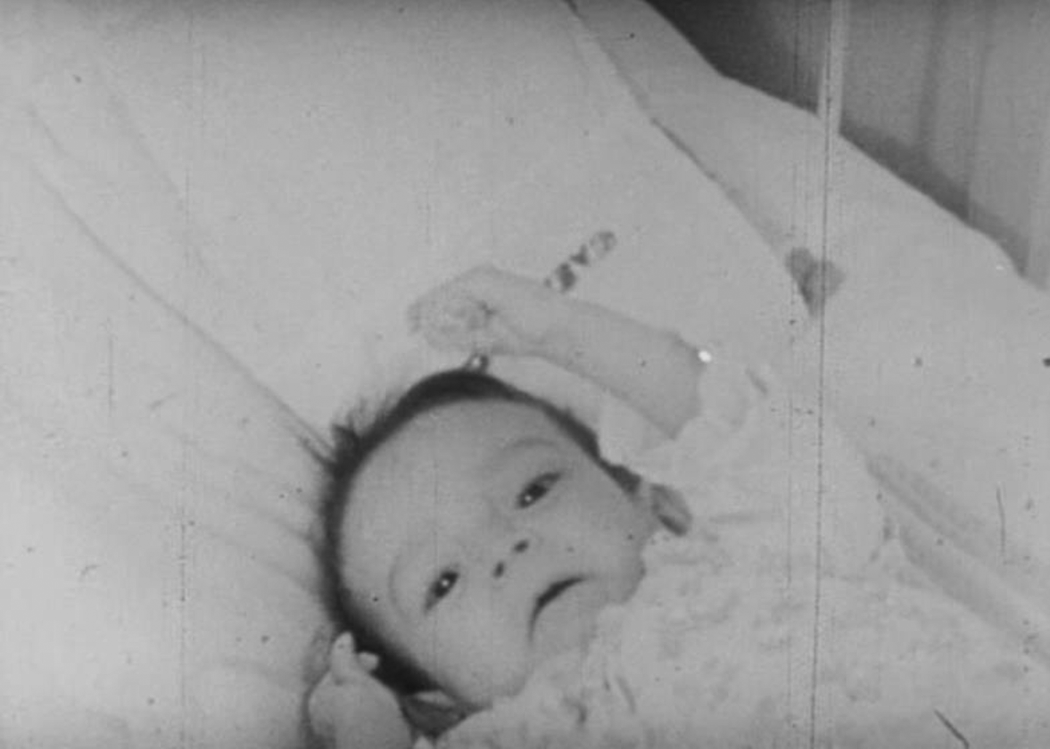
Still from Grief: A Peril in Infancy (Spitz, 1947).
Although Spitz frequently used frame analysis in his research, to identify the emergence and aetiological significance of babies’ ‘small behaviours’, the public versions of his films described the qualitative effects of duration rather than the parsing of discrete moments. In contrast to his contemporary, psychologist Arnold Gesell, who used research film to generate ladders of developmental progress, Spitz explored the temporal relationship between the absent mother and regression. He was interested in the shape of developmental time, and the location of critical moments or tipping points, after which psychological development, or damage, was irreversible. Spitz induced an agony of endurance in the viewers, forcing them to experience the intolerable ‘dead time’ of these infants’ solitary confinement. 24
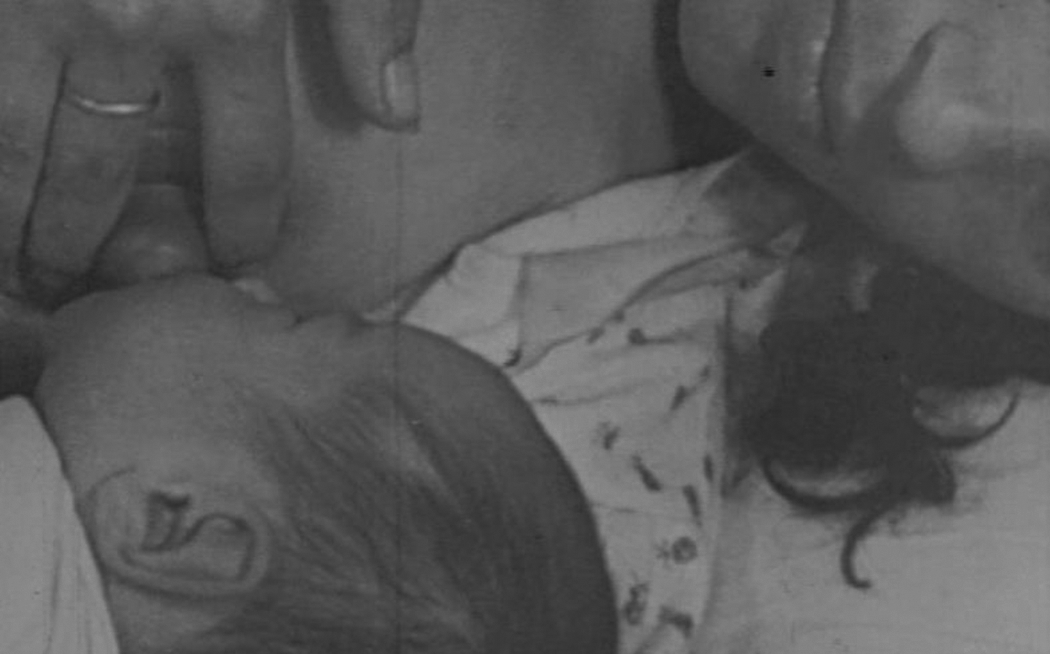
Still from Shaping the Personality (Spitz, 1953).
Like Mead and Birdwhistell, Spitz was troubled by the problem of maternal affect and its relationship to urbanisation and the disorientating pace of modernity. Spitz’s films were among the first visual documents to recognise the meaningful sufferings of infancy, but his intellectual projects were yoked to a social conservatism and nostalgia for a pre-industrial culture in which ‘mothercraft’ was a natural fact. In the film Shaping the Personality (1953), Spitz made an explicit comparison between deficits in the quantity and the quality of maternal presence. The first half of the film shows close-ups of new mothers attempting to breastfeed their babies. It is a challenge to read these sequences productively: The mothers appear tired or anxious, the babies inept at sucking. Spitz, through the use of pre-emptive intertitles, encourages us to seek out evidence of affective absence, to appraise the angles between the child and the breast, to weigh her glances and proddings. He reminds the viewer that these ‘“psychotoxic” diseases, in which the wrong kind of relation acts as a toxin’ – in other words, diseases of the quality of presence – are the first danger to face infants; ‘emotional deficiency’ diseases, in which ‘inadequate emotional supplies’ or the quantity of maternal emotion available is at issue, are the second danger. Bereft of a strategy for deconstructing these dyadic images, Spitz’s research was weakest when appraising the ambiguities of maternal presence rather than the stark effects of maternal absence.
Sylvia Brody’s typologies of mother love
The work of Sylvia Brody was the most methodologically rigorous, and the least socially and culturally speculative, of the maternalist projects under discussion. Her work represents the transition to a new era in statistical, laboratory-based analysis of mother–infant interaction, yet has been forgotten, largely because she worked outside Bowlby and Ainsworth’s ascendant attachment paradigm. Brody combined quantitative methods drawn from her training in psychology with the focus on idiosyncratic detail that was central to the psychoanalytic case study to create a series of typologies of mothering that were akin to a psychiatric classification scheme. In doing this, she converted what appeared to be an indivisible process – an individual woman’s style of mothering – into a quantitative measurement. She then used these measurements (alongside those of the child’s emotional, intellectual, and physical development) to strengthen a maternal ideal in which quality of presence – particularly the capacity for sympathetic identification – was contrasted with mere quantity of presence, or the quantity and complexity of acts. Indeed, while Brody was decomposing and calibrating mothers’ behaviour, she observed that those mothers who were themselves preoccupied with quantity and mechanism (how much milk the baby had drunk, how many times they were burped), and whose movements were jerky or faltering – in other words, those women who were most self-conscious or most like machines – were the most likely to be dysfunctional. Brody’s quantification of maternal love – which expressed itself at a methodological level as a Taylorism of Mothering – therefore turned full circle to become a justification of the instinctive and submerged maternal qualities that she admired in her primary observations of the nursing couple.
Brody used films made behind one-way mirrors to both analyse and decompose motion into units that could be measured and tabulated, usually some weeks after her original interviews had taken place, and to organise and promote her typology of mothers, as seen in the 1967 film Mother-Infant Interaction. As was the case for Spitz, the film-editing process allowed her to group together, and to test out at a causal level, the emergence of similar movement patterns within different mother–child dyads. It then became possible to examine these movements statistically, and from there to create a convincing typology of mothering styles, a level of analysis that Spitz had not broached.
During her doctorate at New York University, Brody specialised in psychological research methods while becoming increasingly wedded to psychoanalytic theory. During the 1940s, she worked as an editorial assistant on the new journal The Psychoanalytic Study of the Child, in which Spitz published several of his groundbreaking articles, and then took up an internship on the Infant Research Project at the Menninger Clinic in Topeka, Kansas, led by Sybille Escalona and Mary Leitch. Brody’s work there examined the minute interactions between mother and child during the first year, and during this time she became familiar with the cinematic analysis of behaviour.
25
Her research was later published as Patterns of Mothering (1956), whose title suggests that a causal model based on the small and iterative formative act was becoming central to mainstream psychological and psychoanalytic, as well as cybernetic, accounts of child development and pathology. Brody used film to examine the micro-behaviour of feeding in particular, which, following Mead, she considered to be a ‘nuclear’ process, whose style was linked to every other aspect of mothering. Her central thesis, which built upon Spitz’s and Mead’s visual analyses of behaviour within the dyad, was that a close examination of the feeding process during the first year was predictive of the future relationship between mother and child, and of the child’s future mental health: I undertook to examine the behaviour of thirty-two mothers…in the hope that a method might be evolved for a clinical classification of overt maternal behaviour.…This research was intended primarily to test one hypothesis about maternal behaviour: that in the mother-infant interaction feeding takes a central position in that most things that a mother does with her infant, however unrelated in style they may be to each other, are related to her style of feeding behaviour with him. (Brody, 1970: 24)
Patterns of Mothering was based on the study of 32 mother–infant couples, drawn from the Kansas area, during the first six months of life. Using both written notes and cinematic recordings, Brody decomposed hour-long feeding sessions into ‘behaviour units’, classified as feeding, cleaning, moving, touching, offering objects, speaking, smiling, or looking. By evaluating the degree of empathy expressed in each of these micro-actions according to a five-point Scale of Maternal Response, Brody advanced an ideal of emotional calibration that could be made visible by film. An action on point 1 of the scale was delayed or perfunctory; at point 5 it was smothering and oppressive. Point 3 represented a proportionate and affectionate response, described by Brody as ‘optimal sensitivity’. ‘T4’, for example, was notation for an act of touching that was ‘mildly restricting, in keeping with mother’s own tension or concern’ (Brody, 1970: 243). Combining scores from this scale with measurement of the frequency of acts and consistency of response (some mothers’ levels of affection oscillated wildly) allowed her to generate a statistical model that grouped mothers into four distinct categories. Group A were ideal mothers, ‘sensitive, consistent and attentive’; Group B were adequate, but less sensitive than Group A; Group C were insufficiently sensitive but adequately attentive, and Group D were hypersensitive, inconsistent, and hyperactive (ibid.: 265–6).
Although she was unable to follow the fates of these particular infants into later childhood, Brody predicted that children mothered by types C and D would fare worse in the long term. Expanding upon Freud’s concept of maternal identification, she also speculated that a mother’s feeding style would determine both the psychic structure and the motor behaviour of the child as she developed, and that even in adolescence the child would embody the relaxed and confident, cold and mechanical, or rushed and anxious maternal modes of types A, B, C, and D.
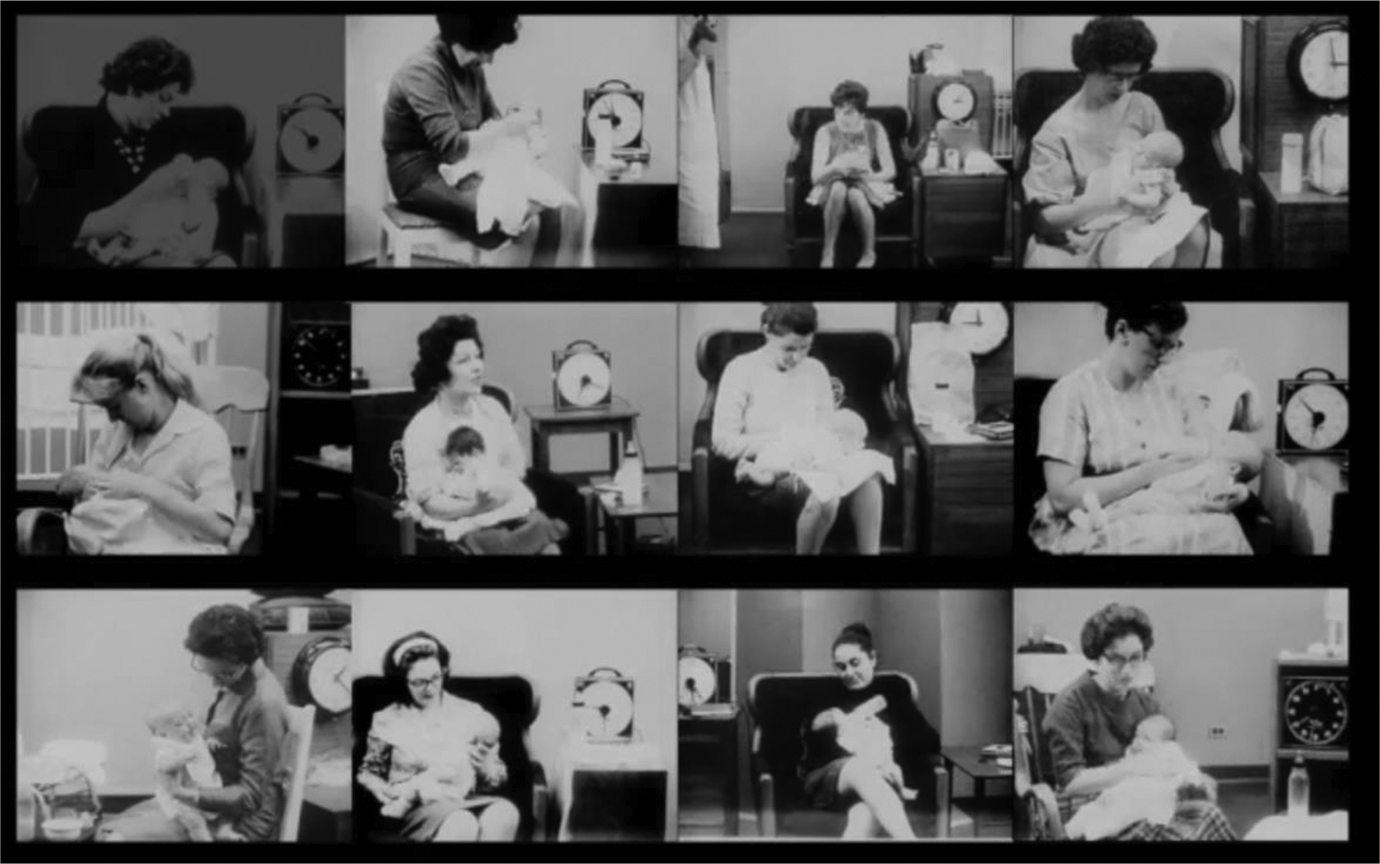
Composite stills from Mother-Infant Interaction (Brody, 1967).
Brody resumed her search for an adequate typology of maternal emotion during the 1960s, when she and her husband, the social psychologist Sidney Axelrad, embarked on a new longitudinal study of 131 infants and their mothers in metropolitan New York. It was during this time that she made her film Mother-Infant Interaction, which described a new and more complex classification of maternal behaviour – arranged here in seven types. She also altered her measurables, defined now as empathy, efficiency, and control. The film, spliced together from over 100 recordings of feeding mothers in early infancy and at the interval of a year, shot in a seemingly bare room with only a timer visible, is extraordinarily reminiscent of Gilbreth and Taylor’s cinematic time-motion and efficiency studies, filmed during the first decade of the century. In these films, body movements were measured and calibrated in order to economise energies and increase production; in Brody’s film, empathy generally begets efficiency, and natural affect begets technique. The point to underline here is that ‘mothercraft’ may be a form of labour, but it is not one that can be fully reconstructed from its constituent actions or behaviour units. Type 1, the highest type of mother, is in synchronous union with her child, and Axelrad narrates as follows: ‘Her main visual attention is the baby.…They approach each other smoothly, with no loss of composure.…The baby is free to discover his cheek.…They are engrossed and relaxed’. As we descend the typological ladder from 1 to 7, narcissistic and mechanical forces creep in to transform supple instinct into dissonant forms of contact: ‘She remains impassive.…They feed as though the babies are alien to them.…The relationship is frozen.…They are withdrawn, detached and protected by routine’. These unfortunate babies are the appendages not of mothers, but of mere maternal machines.
Brody’s body of work was a deeply personal creation; despite her collaboration with Axelrad, throughout the Kansas and New York studies she relied solely on her own capacity to evaluate the quality of affect within the mother–infant dyad. She attempted to enlist others to the task of measuring maternal responses, but found their emotional stamina to be poor and their judgements erratic. As she explained in the introduction to her final volume of the New York study, The Evolution of Character (1992), the film camera alone enabled her to create a near-objective standard of evaluation: ‘Self-reliability was then established by repeated viewings of each film in motion, at variable intervals and in variable sequences’ (Brody and Siegel, 1992: xix). Brody went on to study this cohort at age 7 (latency), 11 (puberty), and 18 (maturity), concluding that ‘86% of the original sample, had at age 18, developed in keeping with their experiences at the hands of their mothers in the first years of their life’ (ibid.: 494). She restricted her judgements to individual, rather than social or cultural, outcomes, but succeeded in moving beyond Spitz’s concept of psychotoxic diseases or Mead’s notion of maternal ‘vacancy’ to develop something close to a quantitative measure of maternal affect. Brody’s science of mothering relied on a limitless and irreducible core of sympathetic identification within both the ideal subject and her female observer, ratified by the camera. Without these ontological sources of emotional plenitude, deficient mothering could not be set in relief.
Conclusion
In the post-war period, maternalist thinkers such as Mead, Birdwhistell, Spitz, and Brody used film technology to decompose mother love into its active, constituent elements, and to consider in turn how persons were composed and conditioned by the absence or presence of emotion. The pathogenic or absent mother became a new focus of psychiatric aetiology, and infant psychiatry a new discipline to which a close network of anthropologists, psychoanalysts, and psychologists all contributed (mutually influential) theoretical insights. Margaret Mead’s experiments in visual anthropology were foundational for both cybernetic and psychoanalytic research into mother–infant interaction. This research evolved along several routes, from Mead’s lyrical and inconclusive ‘language of gestures’, through Birdwhistell’s painstaking ‘thin slicing’ and Spitz’s analysis of pathological expression, to the psychoanalytically informed, but increasingly codified, model of pathogenesis developed by Brody. A further chapter in this history would focus on the coding systems and visual practices developed after the 1960s, by psychologists such as Mary Ainsworth, Daniel Stern, and Beatrice Beebe.
In its search for Mother’s hidden messages, film therefore played a new moral role in this period. Having been described throughout its history as alternately a deceiver of minds and an indefatigable source of objective truth, film was positioned here as an arbiter of authenticity itself, capturing at source the composite elements of emotional sincerity and artifice. As new insights were gained into the vulnerabilities of the infant mind, mothers were both reified – as the mediators of infant experience – and placed under new scrutiny. Moreover, microanalysis recast the practical necessities of mothering into a perilous form of affective labour in which errors were viewed as definitively deformative. Cinematic microanalysis suggested that mothering was a unique form of labour that could be quantified and calibrated, yet failed to define the relationship of this form of labour to the wider public sphere. This has inevitably generated accusations of mother-blaming and scientistic surveillance from several generations of feminist critics and historians, from Betty Friedan (2010[1963]) to Denise Riley, Nikolas Rose, and Anne Harrington.
My approach to the ongoing debate on the relationship between madness and mothering is cautiously revisionist, in that I present these studies in maternal influence as a historical counterpoint to the ongoing ‘biological turn’ (see Fonagy et al., 2004), and to the reduction of mothering to a neutral, or crypto-capitalist, discourse of childcare. This type of fine-grained historical research can reopen debates, beyond the clinical sphere, on the idiosyncratic nature of developmental time, the plasticity of the preverbal mind, and the ontological significance of the first relationship (Stern, 1977), while acknowledging the apoliticism that accompanies any ‘scaling down’ of our causal models to this degree (Riley, 1983; Summerson Carr and Lempert, 2016). Also of new interest here to both historians of emotion and practitioners of microanalytic techniques today are the ontological and methodological issues that emerge from the attempt to capture and analyse blank or negative states, where emotion is absent and where emergent subjectivity fails. Psychologists and psychoanalysts continue to use film to explore the long-term effects of affective absence on the developing mind, for which there is a growing body of compelling evidence. 26
During the 1970s and 1980s, as women’s social roles became more unpredictable and dynamic, the concept of the mother–child dyad as an ideal, discrete entity lost its potency. As far as the infant was concerned, the field of vision gradually enlarged to include not only fathers, but a range of other forms of childcare, notwithstanding the disfavour into which full-time institutional care had fallen. Yet even today, post-maternalist discourses of ‘childcare’ and ‘parenting’ belie not only the practical reality in which women labour hardest to raise young children, but also the economic imperatives – and Taylorist influences – that shape the particular forms that childcare provision takes outside the home. 27 The problem of how to ensure quality and continuity of ‘presence’ in the context of emergent subjectivity continues to demand clinical and political scrutiny, at all scales of analysis.
Footnotes
Declaration of conflicting interests
The author declared no potential conflicts of interest with respect to the research, authorship, and/or publication of this article.
Funding
The author disclosed receipt of the following financial support for the research, authorship and/or publication of this article: This research was funded by the Wellcome Trust, grant 103344/Z/13/Z.
