



Abstract
This article examines cinematographic observational studies of infants conducted by a loosely connected group of female psychologists and physicians in the USA from the 1930s to the 1960s. Largely forgotten today, these practitioners realized detailed and carefully planned research projects about infant behavior in a variety of settings—from the laboratory to the well-baby clinic. Although their studies were in conversation with better-known works, such as John Bowlby's research on attachment and René Spitz's films on institutionalized infants, they differed in a close examination of individual characteristics of babies and a critical attitude toward contemporary notions of ‘pathological mothering’. In closely following the work of several researchers, including but not limited to pediatrician Margaret Fries (1898–1987), the clinical psychologist Sibylle Escalona (1915–96) and her team members—child psychiatrist Mary Leitch (1914–?) and avant-garde photographer Ellen Auerbach (1906–2004)—and psychologist Anneliese Korner (1918–2010), I argue that their cinematographic works shed a more nuanced light on the landscape of infant research and child psychiatry in the mid 20th century, and open a way for alternative readings of gender, psychoanalysis, and scientific observation at that time.
Introduction
The history of psychoanalysis and gender is usually told as a story of psychoanalysis gone wrong. Broadly speaking, the story runs like this. The initial psychoanalytic engagement with motherhood and family life by practitioners such as Helene Deutsch, Melanie Klein, Anna Freud, and Karen Horney was well intended. It grew out of a genuine interest in the psychology, sexuality, and subjectivity of women (Buhle, 1998; Plant, 2010; Sayers, 1991; Zaretsky, 2004: 193–216). In the child guidance clinics of the 1930s, their ideas were partly taken up to provide emotional support for families. Even though most child guidance teams linked behavioral problems in children to parental and, in particular, maternal attitudes, they often treated them as a private matter to be negotiated between the therapeutic team and the family (Horn, 1989; Jones, 1998, 1999). During and immediately after the Second World War, however, the growing influence of psychoanalytic ideas contributed to an almost exclusive connection between the etiology of mental pathology and dysfunctional mother–child relationships. An often cited witness is the psychiatrist and former president of the American Psychiatric Association, Edward Strecker. In 1945, Strecker drew on Philip Wylie's misogynistic best-selling book Generation of Vipers (1942) to warn against ‘immature, selfish “moms”’ who made children dependent, hindered their emotional maturation, and produced ‘sons and daughters who usually are not capable of making more than an indifferent economic return and almost always are incapable of more than a futile social gesture’ (Harrington, 2016; Jones, 1999; Strecker, 1945: 595–6, 604–5; Vicedo, 2013: 15–36). Inadequate mothering, Strecker believed, was responsible for almost all mental and social ills, ranging from schizophrenia to the demise of American democracy. Even if Strecker's caustic warnings were an extreme case, he was far from alone. Pathological mothering became a widespread concern in psychiatric and psychoanalytic literature, giving rise to conceptions such as the ‘overprotective’, the ‘rejecting’, the ‘domineering’, the ‘ambivalent’, and the ‘schizophrenogenic’ mother. Resistance had to come from the outside and included new scientific findings; the invention of pharmacological treatments for psychoses; feminist critiques; the effects of deinstitutionalization; and, as the historians Kathleen Jones, Anne Harrington, and Margo Vicedo have pointed out, resistance from mothers beginning in the late 1960s and early 1970s (Harrington, 2016; Jones, 1998, 1999; Vicedo, 2021).
‘Mother-blaming’ was certainly predominant in mid-century America, and it remains an issue of political, social, and cultural relevance today (Ladd-Taylor and Umansky, 1998). However, this article argues that the historiographical focus on mother-blaming has obscured the fact that resistance to an exclusive emphasis on mothering came not only from without but also from within the psychiatric and psychological professions. Joining recent calls for a ‘cautiously revisionist’ history of child psychiatry, I draw attention to cinematographic studies of infants undertaken by a loosely connected group of female psychologists and physicians in the USA from the 1930s to the 1960s (Hirshbein, 2021; Joice, 2020: 125). Specifically, I focus on the work of pediatrician Margaret Fries (1896–1987), the clinical psychologist Sibylle Escalona (1915–96) and her team members—child psychiatrist Mary Leitch (1914–?) and avant-garde photographer Ellen Auerbach (1906–2004)—and psychologist Anneliese Korner (1918–2010). Largely overlooked in the current historiography, these women undertook detailed and carefully planned research projects investigating infant behavior in a variety of settings—from the laboratory to the well-baby clinic. Although their studies were in conversation with better-known works, such as René Spitz's films on institutionalized infants and John Bowlby's research on attachment, they differed in their close examination of the individual characteristics of babies and their critical attitude toward contemporary notions of ‘pathological mothering’. Their observational studies, I suggest, shed a more nuanced light on the landscape of infant and child psychiatry in the mid 20th century, opening up alternative readings of gender, psychoanalysis, and scientific observation at that time.
All these practitioners drew on cinematographic evidence to articulate their positions. This article begins in the 1930s, an era in which cinematography was already widely adopted as a research and educational tool in a number of scientific and medical disciplines, ranging from anthropology and psychology to neurology, ophthalmology, and surgery. The concrete functions of the technology differed from case to case, but often drew on its ability to document events, temporally manipulate observations, and appeal to various audiences (researchers, students, lay audiences; Beck, 1938; Curtis, 2015: 26–31; Michaelis, 1955; Ostherr, 2013: 48–80). While we will encounter these aspects in the works of Fries, Escalona, Korner, and their colleagues, my main emphasis will be on how these infant researchers employed motion picture to forge a specific observational attitude and promote an alternative ‘expert mode of viewing’ infants. 1 I argue that film technology provided them with an instrument to redirect scientific attention from the mother to the infant. Film enabled these researchers to articulate an observational attitude that scrutinized individual behavior and stage infant development as individual, varied, and less dependent on parental attitudes than the contemporary focus on mothering suggested.
The material discussed in this article spans a period of major transformation in American child psychiatry. In the 1930s, child psychiatry did not yet exist as a board-certified medical specialty. Behavioral problems fell into occupational fields of a variety of professional groups, including psychiatrists, pediatricians, psychologists, social workers, and educators, and it was an open question who spoke for the ‘maladjusted’ child (Brennemann, 1933; Halpern, 1988: 80–109; Jones, 1999: 113–16). Clinical approaches to mental illness were also in flux in this period. The mental hygiene and child guidance movements participated in a broader shift of psychiatry from institutional care to preventive activities, and from the mental hospital to community settings (Grob, 2019[1983]; Trent, 1994). While diagnostic and therapeutic approaches were initially eclectic, including an assessment of hereditary factors, psychometric tests, family interviews, and behavioral intervention, psychodynamic approaches—often blending the psychobiological theories of Adolf Meyer with Freudian psychoanalysis—became prominent in the 1930s. Psychodynamic theories allowed practitioners to position ‘emotionally disturbed’ and ‘troublesome’ children and their family environments as a new site of mental health intervention (Doroshow, 2019; Horn, 1989; Jones, 1999; Smuts, 2006: 103–16, 207–25). During and immediately after the Second World War, new psychoanalytic ideas were central to the emergent field of child psychiatry. Most important was the rise of American ego psychology. Ego psychology shifted attention from libidinal drives to ego functions (such as perception, memory, and motor control), bound to an effort at making psychoanalytic theory more ‘scientific’ and empirically testable. This included a focus on early childhood experiences and maternal care (Hale, 1995: 231–4; Zaretsky, 2004: 276–86). Observational studies in particular emphasized psychoanalytic models of personality development and the mother–child relationship, often using longitudinal designs with a clinical perspective (Fearnley, 2014; Hirshbein, 2021; Kagan, 1964; Mayes and Lassonde, 2014; Stone and Cochrane Onqué, 1959). 2
The trajectories of Fries, Escalona, and Korner provide important glimpses into these major shifts in child psychiatry, particularly the ways in which female practitioners could mobilize words and images to challenge gendered conceptions of psychopathology. The first two sections of this article focus on Margaret Fries’ observational studies of infants in the 1930s and 1940s. A pediatrician with psychoanalytic training, Fries actively participated in the field's shift from behavioral to psychodynamic approaches, but her research maintained a focus on the ‘inherited constitution’. As I will detail in the first section, such a consideration of the interplay between nature and nurture was not uncommon among psychiatrists and pediatricians in the 1930s. However, as psychodynamic and modified psychoanalytic approaches gained traction, Fries’ emphasis on constitutional factors and her rather broad notion of the environment provided the basis for a larger consideration of individual characteristics during maturation. Especially in the postwar period, Fries increasingly highlighted the importance of ‘congenital activity types’ as opposed to an exclusive focus on maternal influences. While none of Fries’ films have been preserved, I argue that her written records and photographic materials point to a cinematographic approach to infant observation that was both psychoanalytically informed and sensitive to individual and congenital aspects of behavior.
In the 1940s and 1950s, psychologist Sibylle Escalona and her team drew directly on Fries’ work to explore ‘the range and variability of normal infant behavior during the first seven months of life’ (Escalona and Leitch, 1952: 21). Escalona and her photographer, Ellen Auerbach, worked in the research department of psychoanalytic psychologist David Rapaport—an important figure in the rise of American ego psychology. Against the background of an increasing emphasis on early maternal care in contemporary psychoanalytic theory, they argued, similarly to Fries, that any claims about parental influences needed to account for individual modes of infant behavior. After situating Escalona in the landscape of infant research in the 1940s (Section 3), I show (in Section 4) how Escalona, Leitch, and Auerbach's films crafted a visual language that enacted this focus on the individual infant.
In the final section, I turn to Anneliese Korner. A former classmate of Escalona, she embarked on infant research in the early 1960s. At that time, various practitioners had already voiced public criticisms against the tendency to ‘blame the parents’ for the behavioral and emotional problems of their children. Korner joined this critique in both popular and professional publications. Furthermore, she established a cinematographic research project intended to furnish observational evidence concerning the individual infant's contribution to the mother–child relationship.
I conclude this article by reflecting on the significance of the work of Fries, Escalona, and Korner for the historiography of child psychiatry and the function of the cinematographic archive more generally. I suggest that we can read the films of Fries, Escalona, and Korner as efforts not only to draw attention to individual ways of behaving but also to forge an observational attitude of close looking that opposed any one-sided constructions of developmental pathologies. From this perspective, the films provided an argument about standards of evidence that was informed by a critical attitude against prevalent cultural currents. Finally, I point out that the fact that the work of Fries, Escalona, and Korner is little known and almost all of their films are lost reinforces a gendered conception of psychoanalytic infant research in the postwar period.
Margaret Fries, child guidance, and the ‘inherited constitution’
When Margaret Fries embarked on cinematographic studies in the mid 1930s, she had already been deeply involved in mental hygiene and child guidance for over a decade. Born to a wealthy but, in her own terms, ‘joyless’ Jewish family in New York City in 1898, Fries attended high school in the city and went on to obtain a BA degree at Barnard's College and an MD at Cornell University. Educational opportunities for women were limited, and Fries states in her recollections that they were not ‘greeted too well’ in medical school. 3 Internships were equally difficult to find and Fries was directed, as many female physicians of her generation, to pediatrics (Halpern, 1988). She trained at Bellevue Hospital and, following research on metabolism, specialized in psychological problems in children. 4
In order to understand Fries’ use of cinematographic evidence, it is important to briefly discuss her position within the shifting landscape of mental hygiene. Fries initially approached the field from a pediatric position that included both disciplinary and theoretical commitments. In her early writings, she strongly argued for an involvement of pediatrics in the psychological care of children. Fries and other pediatricians considered such as involvement as an integral part of ‘preventive medicine’, emphasizing that the pediatrician was in a prime position to detect behavioral problems early due to his or her close relationship with the family and the infant (Brennemann, 1933; Fries, 1928: 653). Putting her propositions into practice, she opened both a well-baby and a child guidance clinic at the New York Infirmary for Women and Children. Her theoretical approach was inspired by the work of Ira Wile (1877–1943), who had established the first child guidance clinic attached to a pediatric service at the Mount Sinai hospital in New York City in 1920 (‘Presidents of the Association’, 1939). A later president of the American Association for Orthopsychiatry, Wile had been active in educational reform and mental hygiene in various capacities and promoted, similarly to other early child guiders, an eclectic approach to child mental health, considering a child's problem to be the result of a disturbance of ‘life forces’ that included physical, mental, emotional, and social aspects (Fries, 1928; Groves, 1926; Horn, 1989; Wile, 1933).
As mentioned in the introduction, psychodynamic approaches gained popularity in child guidance clinics in the 1930s, contributing to a stronger clinical focus on parenting and the mother–child relationship in particular. To an extent, Fries’ career followed this path: in the early 1930s, she traveled to Vienna to train in child analysis and undergo a personal analysis with Anna Freud. She subsequently completed her analytic training at the New York Psychoanalytic Society. 5 Her publications simultaneously drew upon psychodynamic concepts and approaches, calling attention to behavioral problems relating to psychosexual development and ‘feelings of guilt’ (Fries, 1935: 1551). While she took into consideration various environmental factors (including both parents as well as socioeconomic aspects), she highlighted, as she put it in 1944, the ‘emotional adjustment of the mother’ as the ‘single most important factor’ (Fries, 1944: 161).
Yet Fries sought to balance the focus on the (maternal) environment with an empirical investigation of constitutional factors. A study of the ‘inherited constitution’ was not unusual in the mid 1930s (Fries, 1937: 142). In his 1935 textbook on child psychiatry, Leo Kanner highlighted that ‘we know from common sense experience that every individual's personality’ is influenced by ‘constitutional, endogenic, and exogenic factors, all of which must be taken into consideration’ (Kanner, 1935: 82). Similarly, the popular pediatric textbook Holt's Diseases of Infancy and Childhood stated that behavior problems could be due to ‘faulty heredity or faulty environment’ or, most commonly, a mix of the two (Holt, 1936: 759). Even if increasingly criticized, hereditary theories of mental illness intersected with racial ideology and biological theories of racial difference (Doyle, 2010; Dwyer, 2006; Gambino, 2008; Klineberg, 1935: 241–52; Weizmann, 2010). In her publications, Fries did not engage with hereditarian or racialist thought but used a broad notion of constitution based on assessments of physical condition, nervous development, and infant behavior. She drew eclectically upon the works of various pediatricians and developmentalists, including, among others, Harry Bakwin, Arnold Gesell, and Myrtle McGraw (Bakwin and Bakwin, 1931; Fries, 1937). In this regard, her initial call for considering constitutional factors can be seen as a continuation of her early work in child guidance and her commitment to a comprehensive concept of mental health.
To explore ‘all of life's factors’ that shaped the ‘character in the making’, Fries embarked on two longitudinal observational studies that included motion picture recording (Fries, 1937: 142). The first involved interviewing and observing selected parents during pregnancy and delivery and following their babies from birth through early infancy. The second study followed the development of 47 children from birth to adolescence (Fries, 1937). The broader context of the studies and Fries’ engagement with cinematography were linked to concerns about the status and nature of observational evidence in both mental hygiene and psychoanalysis. While child-rearing advice by ‘experts’ boomed in contemporary women's magazines, radio broadcasts, and baby books (Golden, 2018: 141–65; Hulbert, 2003: 97–190), many physicians criticized the ‘confused’ nature of that advice (Brennemann, 1933: 23). A report of the subcommittee on psychology and psychiatry in pediatrics of the White House Conference on Childhood in 1933 thus cautioned that ‘the technique of propaganda and instruction is decidedly faulty’, asking that ‘restraint’ become ‘a routine virtue as the science of psychiatry grows in maturity’ (Anderson, 1930; Brennemann, 1933: 25; Crothers, 1932). According to the authors, this problem also included the practical application of psychoanalytic knowledge because concepts such as ‘sex tensions’ and ‘primary instincts’ lent themselves badly to parenting advice (Brennemann, 1933: 8). Fries’ longitudinal studies sought to address these concerns by providing direct observational evidence of multiple ‘interrelated factors’ of development, hoping that such an assessment would eventually provide a more solid basis for pediatric advice and psychotherapeutic intervention (Fries, 1937).
The need for further firsthand evidence of child development was also felt in the psychoanalytic community. Already in 1927, Anna Freud stressed that ‘direct observation’ of children was necessary for ‘fresh conclusions and supplementary conceptions’ for both child and adult analysis (Freud, 1927; Makari, 2008: 425). Throughout the 1930s and 1940s, the question of the status and nature of observational evidence was a central point of contention in both the European and the American psychoanalytic movements. In Europe, it figured prominently in the controversial discussions between ‘Kleinians’ and ‘Anna Freudians’. While the followers of Melanie Klein held that analytic observations of young children (play, utterances, drawings) allowed to trace unconscious conflicts back to the first year of life, Anna Freud's adherents dismissed such theories as speculative projections based on too scarce a body of evidence (Evans, 2017: 92–134; King and Riach, 1992; Wälder, 1937). In the USA, the New York Psychoanalytic Society was particularly eager to make psychoanalysis more ‘scientific’. This included engagements with behaviorism, anthropology, and child psychology. Efforts ranged from the verification of psychoanalytic concepts with experimental laboratory studies to demands to underpin insights gained from analytic interviews of adults with cross-cultural studies and the systematic observation of young children (Hale, 1995: 135–56, 231–44; Hartmann and Kris, 1945; Makari, 2012; Sears, 1944).
Fries was familiar with these developments from her involvement in both mental hygiene and psychoanalysis. Even if she initially refrained from psychoanalytic theorization, her studies sought to deliver observational evidence for, what she considered, a more nuanced understanding of child development. In this context, she specifically emphasized the importance of carefully studying the ‘interrelationships’ of the ‘inherited constitution’ and ‘sociological, physical, mental and emotional’ factors (Fries, 1937: 167). Fries’ effort was characterized by an attempt to bring an attention to the interplay of nature and nurture, first to child guidance and later to psychoanalytic theories of infant development (Fries, 1944).
Fries’ moving pictures: A ‘different way of thinking’ about infant development
Motion pictures were an integral part of this effort. As mentioned above, cinematography was embraced as a research and educational tool in a number of scientific and medical disciplines in the 1930s. In child psychology, motion picture technology was also gaining traction, mostly, but not exclusively, as an aid to direct observation. Well known already at that time were Arnold Gesell's cinematographic records of infant behavior. But there were various experts employing the new technology for the exploration of child psychology in Europe and the USA, including John B. Watson, Charlotte Bühler, Kurt Lewin, and Myrtle McGraw (Beck, 1938; Curtis, 2011, 2015: 26–31; Michaelis, 1955; Ossmer, 2020). Fries’ justification of motion picture both followed contemporary tenets and mirrored her particular approach to infant observation. On the one hand, she stated that cinematography could furnish a ‘substantiation or refutation of the written observations’ (Fries, 1937: 171). For Fries, this meant that motion pictures permitted studying and eventually improving the ‘technique’ or methodology of her team (ibid.). It also pointed to the technology's potential to provide an empirical ‘check’ or test of theories about the ‘psychic development of infants’ (Fries, Brokaw, and Murray, 1935: 28). On the other hand, Fries emphasized a heuristic function of motion picture: to furnish ‘a permanent, reliable record of overt behavior which is indicative of attitudes’ (Fries, 1937: 171). Film's ‘permanence’ and ‘reliability’ were commonly evoked in scientific legitimations and informed its documentary and educational uses. More specific was Fries’ reference to attitudes: the idea that the behavioral record could reveal feelings and emotional states. Cinematography promised both empirical check and heuristic revelation.
Fries’ case studies provide a window into how this double function of cinematography translated into her effort at balancing a focus on the infant's constitution with an assessment of parental and maternal attitudes. I will illustrate this by analyzing Fries’ case study of ‘Mary’. Fries published several papers about Mary in the late 1930s and early 1940s, and subsequently turned her case into a film. While none of her films have been preserved—a point to which I will return in the last section—written records and published photographs of ‘Mary’ show how Fries activated cinematography to forge, as she would put it later, a different ‘way of thinking’ about infants (Fries, 1954: 207).
Fries recruited Mary's parents for her observational studies in the early 1930s, when the mother was pregnant with her. Her studies included detailed assessments of the parents’ life histories, socioeconomic situation, and emotional reactions. At first glance, a focus on maternal attitudes loomed large in the assessments. Fries emphasized that the mother had ‘compulsive character traits’ manifesting in her relationship with tidiness, routine, and time. When Mary was born, her attitude to the baby was deeply ambivalent, moving between ‘feelings of guilt’, ‘anxiety’, and ‘rejection’ (Fries, 1937: 148). Postnatally, this expressed most clearly during feeding, when, for example, the mother ‘displayed marked annoyance on the fifth day, slapped the baby for not nursing immediately, and then quickly petted her’ (ibid.: 155). Mary presented feeding and sleeping problems postnatally that Fries directly related to the ambivalent attitude of her mother.
However, Fries not only carefully situated the mother's emotional difficulties in her own family's history (such as maternal rejection and unresolved oedipal complex), but also discussed the role of the father, the grandparents, the parents’ living situation, and the ‘inherited constitution’ of Mary. For example, Fries revealed that the parents were ‘so angry’ about frequent and unannounced visits of the maternal grandfather that ‘they would like to spank him but, not daring to show their true feelings to him, they misdirected their hostility’ to the baby (Fries, 1937: 164). As for the girl's constitution, Fries noted that she was ‘hyper-active’, helping her to cope with the mental and physical ‘over-stimulation’ and expectations of her parents. Fries approach thus tried to find a balance between various factors influencing the child's development, even if she considered the mother's attitude as the most important one.
The attempt to consider the interplay of various factors in child development also characterized the photographic material that accompanied Fries’ first and most comprehensive paper on Mary. The paper was originally presented with a research film at the annual meeting of the American Orthopsychiatric Association in 1937. The published version contained three illustrative stills. Surprisingly, the stills were not directly discussed in the main text but accompanied the case study as a sort of visual comment, provided only with very brief captions. The description of the mother's ambivalence toward her child was interrupted by a photo (Figure 1) of her breast-feeding Mary with the ‘typical position of the mother's hand showing her tension’ (Fries, 1937: 160). The strut hand in the still figured as a metonym of the mother's emotional attitude. However, as much as Fries saw the photographic image as revealing of maternal feelings, she also considered it indicative of the child's ‘constitution’. Mary's ‘hyper-activity’ and ‘precocious development’ were underlined with a still of Mary ‘at 8 months of age’, on which the reader could see her sitting and glaring into the camera (ibid.: 166; see Figure 2). The visual comment on the paper reinforced Fries’ theoretical emphasis on a double focus on both parental attitudes and the infant's constitution (primarily understood as her ‘degree of activity’; ibid.: 167).
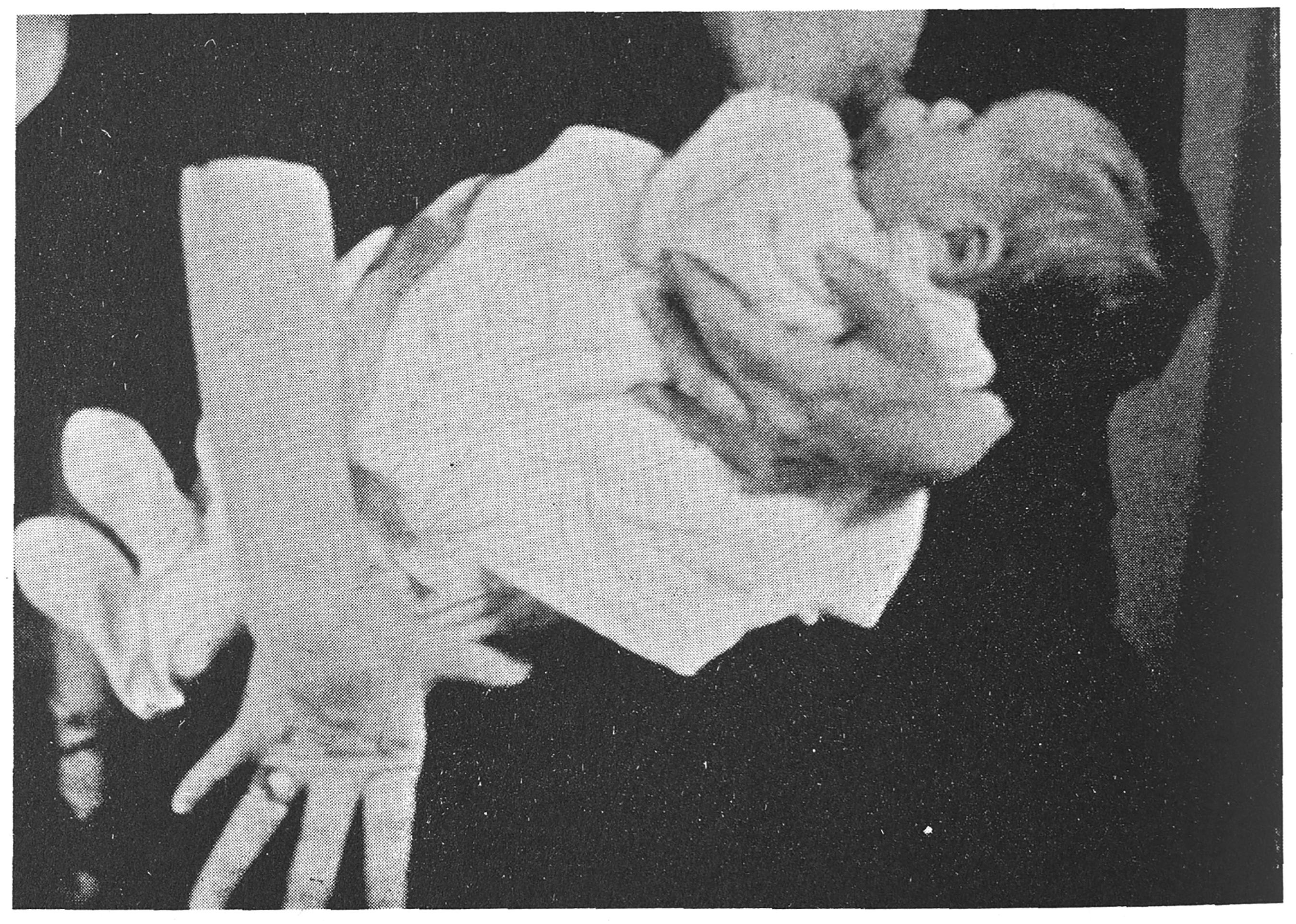
Mother's hand revealing emotional ‘tension’ (Fries, 1937: 160). © 1937, Global Alliance for Behavioral Health and Social Justice. Reproduced with permission.
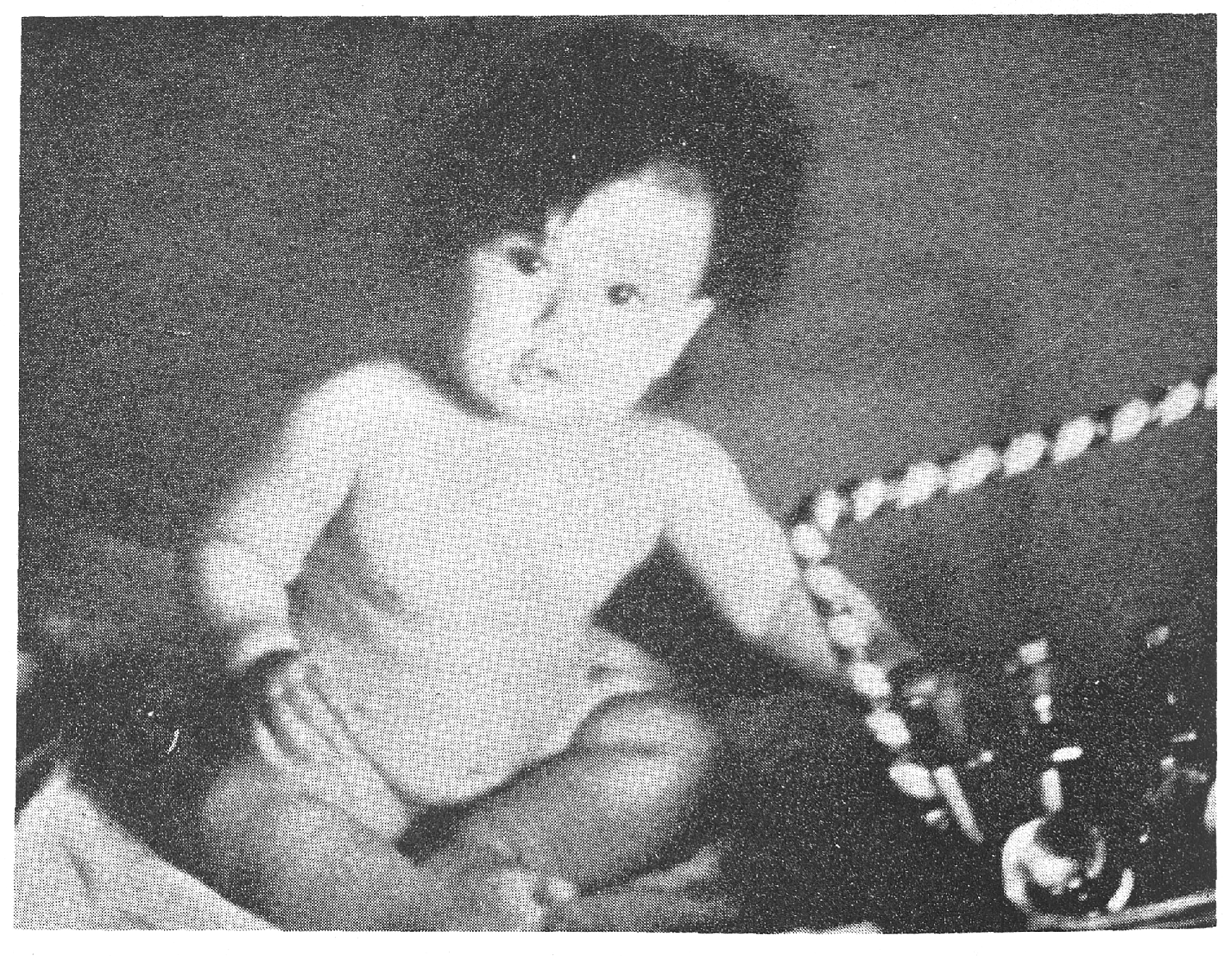
Mary's ‘hyper-activity’ as indicative of her constitution (Fries, 1937: 166). © 1937, Global Alliance for Behavioral Health and Social Justice. Reproduced with permission.
This double focus would run through Fries’ entire work in the following years. In 1939 Fries married the photographer and psychiatric social worker Paul J. Woolf, and together they assembled Fries’ research footing into seven films, distributed by the New York University Film Library from the late 1940s through the 1970s. Four of the films focused on case histories, partly following children (including Mary) from birth to adolescence. One was an ethnographic study of ‘family life of the Navaho Indians’, and the remaining two focused on clinical aspects of behavior using a comparative approach. 6 Preserved descriptions of the films suggest that they continued to seek a balance between considerations of ‘biological capacity’ and ‘environment’, now targeting a broad professional audience. For example, one of the clinical films, entitled Two Children (ca. 1947), focused on ‘differences in the way two children establish homeostatic equilibrium in the lying-in period, and the influence of the congenital activity type in predisposing to … a certain development sequence from birth to eight years’. In contrast, the film Some Basic Differences in Newborn Infants During the Lying-in Period (ca. 1947) was supposed to illustrate ‘the importance … of the mother's emotional adjustment to the newborn child’. 7 Similarly, the cinematographic case histories of Anna N. and Mary can be considered a pair: while each case study highlighted the interaction between ‘hereditary endowment’ and ‘environment’, the film of Anna N. put comparatively more emphasis on the persistence of ‘inborn mobility patterns’ (notably, a sequence of arm movements in stressful situations) and the story of Mary stressed the development of ‘neurosis’ due to parental (and especially maternal) influences. 8
The aesthetics and visual language of the films of Anna N. and Mary were appreciated in longer contemporary reviews. The most comprehensive discussion can be found in Adolf Nichtenhauser's guide to ‘films in psychiatry, psychology, and mental health’, published by the Audio-Visual Institute of the American Association of Medical Colleges in 1953. According to the guide, the films were spliced together from research footage and ‘filmed under the adverse conditions of the clinic’. Due to these circumstances of production, they were ‘cinematically naïve’, had uneven lighting, and thus occupied a ‘position between the written report and the film report’ (Nichtenhauser, Coleman, and Ruhe, 1953: 76, 202). The result of this closeness to the raw footage was an interpretative abstinence compared to other child psychiatric instructional films at that time. The guide commented with regards to the film of Anna's development: ‘Audiences accustomed to the post-facto, reconstructed case-history approach may fail to appreciate this study by an author who has had the courage not to structure her film in terms of hindsight, but who has allowed material to flow sequentially, just as it was obtained’ (ibid.: 76).
While one might question the extent to which the films were ‘just’ showing the material ‘as it was obtained’, the interpretative stance did contrast to contemporary films in infant psychiatry and mental health. Widely known films on maternal deprivation, such as René Spitz’s Grief: A Peril in Infancy (1947) and John Bowlby and James Robertson's A Two-Year-Old Goes to Hospital (1952), not only worked with strong interpretative voices (through intertitles and voice-overs, respectively) but also employed cinematographic techniques of dramatization, such as carefully constructed close-ups and zoom-in effects. For instance, Spitz’s Grief transmitted the importance of ‘motherly love’ through a direct ‘appeal to the emotions’ (Nichtenhauser, Coleman, and Ruhe, 1953: 146): following a classic narrative line of problem, crisis, and resolution, the film contrasted disturbing close-ups of distraught institutionalized babies with joyful scenes of social play after ‘mother's return’. 9 John Bowlby differed in theoretical approach from Spitz, but A Two-Year Old Goes to Hospital similarly mobilized a strong narrative frame and emotionally charged close-ups (of a weeping and distressed girl) to provide ‘evidence’ of ‘emotional disturbances’ in a young child due to ‘separation’ from her mother (Bowlby and Robertson, 1953: 425; Van der Horst, Rosmalen, and Van der Veer, 2019; Van der Horst and Van der Veer, 2009). In Fries’ films, these techniques of narrative and visual dramatization were used only sparsely, if at all.
Fries and Woolf's aesthetic and stylistic choices can be related to Fries’ objective to contribute to a different ‘way of thinking’ about infants, rooted in Fries’ work in pediatric child guidance (Fries, 1954: 207). In the 1940s and early 1950s, when theories of pathological mothering were reaching a high point, Fries’ work increasingly moved toward a theory of how the child's constitution affected the mother–child relationship and influenced later development. In arguing the case, her films played an important role. Fries’ most comprehensive exposition of her theory took place in a presentation during the 18th International Psychoanalytic Congress in London on 29 July 1953. Instead of reading a lengthy paper, Fries presented a brief theoretical statement and dedicated the time to showing her film Two Children (Fries, 1954). In paper and film, Fries argued that newborns belonged to different ‘congenital activity types’ that could roughly be divided into quiet, moderately active, and active. According to her, these types influenced how parents reacted to the baby: For example, a quiet child, because it cries and moves less than an active child, may give the parent a feeling of security as to its well-being.… The active baby, on the other hand, may create anxiety, because of crying and activity during the day, but, since it nurses more readily, in may be considered on that score the ‘good’ baby. (Fries, 1944: 159)
While the ‘congenital activity type’ generated paternal reactions, these reactions and other environmental factors subsequently contributed to the establishment of a lasting ‘congenital activity pattern’ (Fries, 1954: 206). The pattern would persist throughout life (even if modifications were possible) and influence the child's development, including ‘ego development, ‘defense mechanisms’, and ‘predisposition to pathology’ (ibid.: 207; Fries and Wolff, 1953). In this context, Fries’ cinematographic exposition of ‘material, just as it was obtained’ and her emphasis on ‘constitutional’ aspects not only conveyed the film's evidential status, but also guided the psychoanalytic viewer to consider both constitution and environment in infant development.
Sibylle Escalona: Individuality and early phases of development
Sibylle Escalona took up Fries’ call for a closer attention to the infant's constitution against a different biographical, professional, and intellectual background. Twenty years younger than Fries, Escalona was born to a left-wing intellectual family in Berlin, Germany. Her father, Karl Korsch, was an influential Marxist and communist member of parliament; her mother a proponent of the reform educational movement of the Weimar Republic (Goode, 2015; Korsch, 2008; Pozzoli, 1973). After the rise of National Socialism, the parents had to quickly get out of Germany, but Escalona remained in Berlin to graduate from high school (the German Gymnasium) and obtain a diploma from a reform nursery. In 1934, she emigrated via Britain to the USA, joining the psychologist and lifelong friend of Escalona's family, Kurt Lewin, in Ithaca. While taking care of Lewin's children, she studied psychology at Cornell University and later, after the Lewins’ moved to Iowa in 1936, at the Child Welfare Station. At the station, she obtained both her BA and MA degrees and embarked upon research for a PhD in experimental psychology. 10 According to her own recollections, her interest in infants was sparked around 1940, when she was working for a couple of years at the baby ward of the women's reformatory in Framingham, Massachusetts. In 1943, through the mediation of Lewin, Escalona got a junior position in the research department of the psychoanalytic psychologist David Rapaport at the Menninger Foundation in Topeka, where she specialized in infant development. 11
The Menninger Foundation was a thriving center of psychoanalytic research. Founded as a private neuropsychiatric clinic in the early 1920s, the facility had gradually extended its therapeutic, educational, and scientific activities to become a nationally leading center of psychoanalytic-oriented psychiatry during the Second World War (Friedman, 1990; Hale, 1995). The extension of the foundation's activities included the creation of David Rapaport's research department in 1941. A philosophically trained refugee psychologist from Budapest, Rapaport had been engaged in an enduring effort to systemize Freudian metapsychology, and his department quickly rose to the forefront of both psychoanalytic psychiatry and clinical psychology (Hale, 1995: 237–43). Clinical psychology had developed as a testing specialty in the 1920s but became increasingly involved in therapeutic work in the 1930s and 1940s, mostly following Freudian tenets. Moreover, the psychological profession included a relatively high percentage of women, many of them engaged in child psychology (Capshew, 1999: 71–90; Furumoto, 1989; Herman, 1995; Smuts, 2006: 168). Rapaport's group mirrored both the gender composition and psychoanalytic bent of child psychology. Escalona's group on infancy was exclusively female, including Escalona and the psychiatrist Mary Leitch as primary investigators, and various researchers who each joined the project for a couple of years, including Anna Kulka, Margaret McFarland, Sylvia Brody, Grace Heider, and Irene Hollingsworth. Broadly speaking, research at Rapaport's department sought to combine psychometric examinations with psychoanalytic theory, and to link psychological findings to personality development (Escalona and Leitch, 1952: iii–iv; Friedman, 1990: 224–56). It joined the broader shift to observational evidence in the psychoanalytic movement, mentioned above.
Escalona's infancy project was in tune with the effort at combining fresh empirical evidence with psychoanalytic theory. Escalona and Leitch had conducted preliminary work for the project since May 1944 and made their first successful grant application to the National Institute of Health in 1946. From the outset, the project took a cautiously critical stance toward the existing bodies of both psychological and psychoanalytic scholarship. On the one hand, Escalona and Leitch distanced their approach from ‘normative studies of infant development’ such as those conducted by the American child study scholar Arnold Gesell and the pediatrician Myrtle McGraw. 12 While these practitioners were preoccupied with determining ‘statistical regularity’ of behavior sequences, Escalona and Leitch sought to systematically study the ‘varieties of behavior’ of which an infant was capable (Escalona and Leitch, 1952: 3). 13 In other words, the quite ambitious objective was to conceptualize behavior as an outcome of an individual path of development, rather than a sequence of standardized milestones or stages.
On the other hand, the approach was not entirely free of normative assumptions. Drawing on recent psychodynamic scholarship (including the work of Fries), Escalona and Leitch hypothesized that the population of infants could be divided into different ‘behavioral syndromes’ or ‘behavioral patterns’. For example, infants could exhibit different activity types (hyperactive or low activity levels) that could be found across various areas of behavior (e.g. frustration tolerance, digestive functioning, social responsiveness). 14 One object of the study was to further describe these behavioral patterns and assess their stability over time.
If analysis of individual ‘modes of behavior’ was one pillar of the project, the assessment of environmental conditions was another. 15 It was in this context that Escalona and Leitch engaged with psychoanalytic scholarship on mothering. While they acknowledged that recent studies, such as those by psychoanalyst Margaret Ribble, pointed to the fact that ‘infant behavior may be significantly modified by the kind of mothering the child receives’, their study was to assess whether these ‘hypotheses’ could be empirically confirmed. 16 Criticism was most explicit toward contemporary parental advice. For example, in a grant application in 1949, Escalona and Leitch emphasized that ‘certain child-rearing practices are advocated as beneficial’ or harmful on the basis of ‘partially speculative dynamic personality theory’. Yet their ‘effectiveness’ had never been ‘subjected to empirical check’. Especially ‘those engaged in preventive psychiatry and mental hygiene’ were ‘in dire need of established facts about behavior adaption normally to be expected from young children under a great variety of conditions’. 17 Similarly, in an address at the 57th convention of the American Psychological Association in the same year, Escalona emphasized the potentially harmful influence of advice given by well-baby clinics, casework agencies, and public health departments. These ‘interpreters’ of psychological insights had ‘created a philosophy which by and large makes it seem as though contentment and even normal development for the child can be attained only at a cost of great self-denial on the part of the parents. The mother, especially, must subordinate her need for sleep, for recreation, for getting the housework done or for pursuing non-domestic interests at all times. Moreover, she is expected to do so with a sense of deep satisfaction and happiness’ (Escalona, 1949: 160). For Escalona, these pressures were a cultural phenomenon that produced guilty parents and proved counterproductive for child development in the long run.
Accordingly, Escalona's team framed its investigation as a broad assessment of a range of environmental conditions on the influence on behavior. These included socioeconomic status, mode of infant-rearing, breast- versus bottle-feeding, position among siblings, maternal attitudes, and involvement of the father.
18
Throughout the 1940s and early 1950s, the explorations focused on individuality and variability of infant behavior. Escalona and Leitch's stance was rarely polemic against mother-blaming, but their emphasis on observational evidence and careful scrutiny of individual differences in babies provided a pronounced counterpoint to any exclusive focus on mothering. In a monograph summing up the results of the study in 1952, they put it in the following way: While our study cannot ‘prove’ or ‘disprove’ the assumptions that underlie much of the advice currently given to parents, it is thought that exploration of the relationship between the infant's mode of functioning and child-rearing practices may affect the level of confidence with which some techniques of child-rearing can be advocated or discouraged. (Escalona and Leitch, 1952: 22)
Toward an observational attitude of close looking
Escalona's films can be read as a continuation and pronunciation of the critical stance of the team's observational approach. Cinematography entered the project early. The photographer was the avant-garde artist Ellen Auerbach (formerly Ellen Rosenberg). In many regards, Auerbach was made to participate in a project that challenged conventional ways of looking at infants and mothers. Like Escalona, she was a Jewish immigrant from Germany with both leftist and emancipatory inclinations and an interest in children: In the interwar years, she had been active in the liberal modernist art scene of Berlin and had run the world's first female-run photographic business. Her photographic work had consciously challenged bourgeois norms, drawing on witty and subtle techniques of interruption, surprise, irony, and humor (Otto, 2020). After the rise of National Socialism, she first moved to Palestine, opening a studio for children's portraits, and then emigrated to the United States, where she continued her artistic work and later worked as an educational therapist with disabled children (Ingelmann, 2006). Escalona's publications and statements suggest that Auerbach joined her team as a volunteer in 1944, driven by her own interest in infants (Escalona and Leitch, 1952: 8).
Auerbach's cinematographic work quickly became an integral part of the project, influencing the ways the research team observed and understood infants. After Auerbach joined Escalona's team, the examination room was refurnished to accommodate high-quality photography. Among other things, photographic lights were attached to the ceiling and ‘mounted on inverted tripods’, so that they could ‘easily [be] lowered while movies were taken’ (Escalona and Leitch, 1952: 60). Cinematography amounted to one-fifth of the budget. 19 It also transformed research practice: according to Escalona and Leitch, the team spent ‘long hours looking at movies and discussing what we saw’. As a result, the team became ‘increasingly visual-minded’ and ‘when looking at actual infant behavior … we found that we saw many details of which we had not previously been aware’ (ibid.: 9).
Cinematography was not only important for research practice but also became part of a broader effort to reshape disciplinary ways of seeing infants. In the early 1950s, Escalona, Leitch, and Auerbach spliced their research footing into two educational black-and-white silent motion pictures (16 mm). Like Fries’ productions, the films were distributed by the New York University Film Library. The target audience were students and child health professionals. The titles of the films indicated the focus on the individuality of infant behavior. They were called Eight Infants: Tension Manifestations in Response to Perceptual Stimuli (1950) and Some Observations Concerning the Phenomenology of Oral Behavior in Small Infants (1951; see ‘Recent Motion Picture Releases’, 1951). 20 Only Some Observations has been preserved and is now visible at the National Institutes of Health (Escalona and Leitch, 1951). I will discuss the movie in some detail to illustrate the mode of infant observation and the corresponding focus on the infant's individual path of development advanced by Escalona's team.
Film style and visual language of Some Observations were noninterventionist, fitting the title's statement of a ‘phenomenology’ of behavior: the film was almost exclusively composed of full shots and medium close-ups of the babies, focusing on their faces and upper bodies (Figure 3). Viewpoint and perspective were uniform, shots did not include zooms or pans. The camera work was abstaining and observing. The didactic intertitles, too, were economically used, describing rather than interpreting. For example, the first of the three parts of the film was simply introduced with a card stating ‘changes in oral behavior with developing central nervous system’. The first minutes then traced how infant movements of mouthing became more coordinated between the ages of 8 weeks and 21 weeks, evolving from ‘spontaneous mouth movements’ to ‘increased coordination’. The second part stressed variability and ‘individual modifications’ of oral behaviors. In a sequence of seven minutes, lingering shots explored different ways of putting ‘finger in mouth’, ‘mouth to object and object to mouth’, ‘drooling’, ‘moving tongue’, and ‘opening mouth widely’. The viewer's attention was exclusively drawn to ‘chomping’, ‘mouthing’, ‘drooling’, and ‘licking’ babies. Infant behavior emerged as a variable function of biological age, individual character, and the baby's emotional state, made visible by carefully attending to the infant's discrete behavioral manifestations.
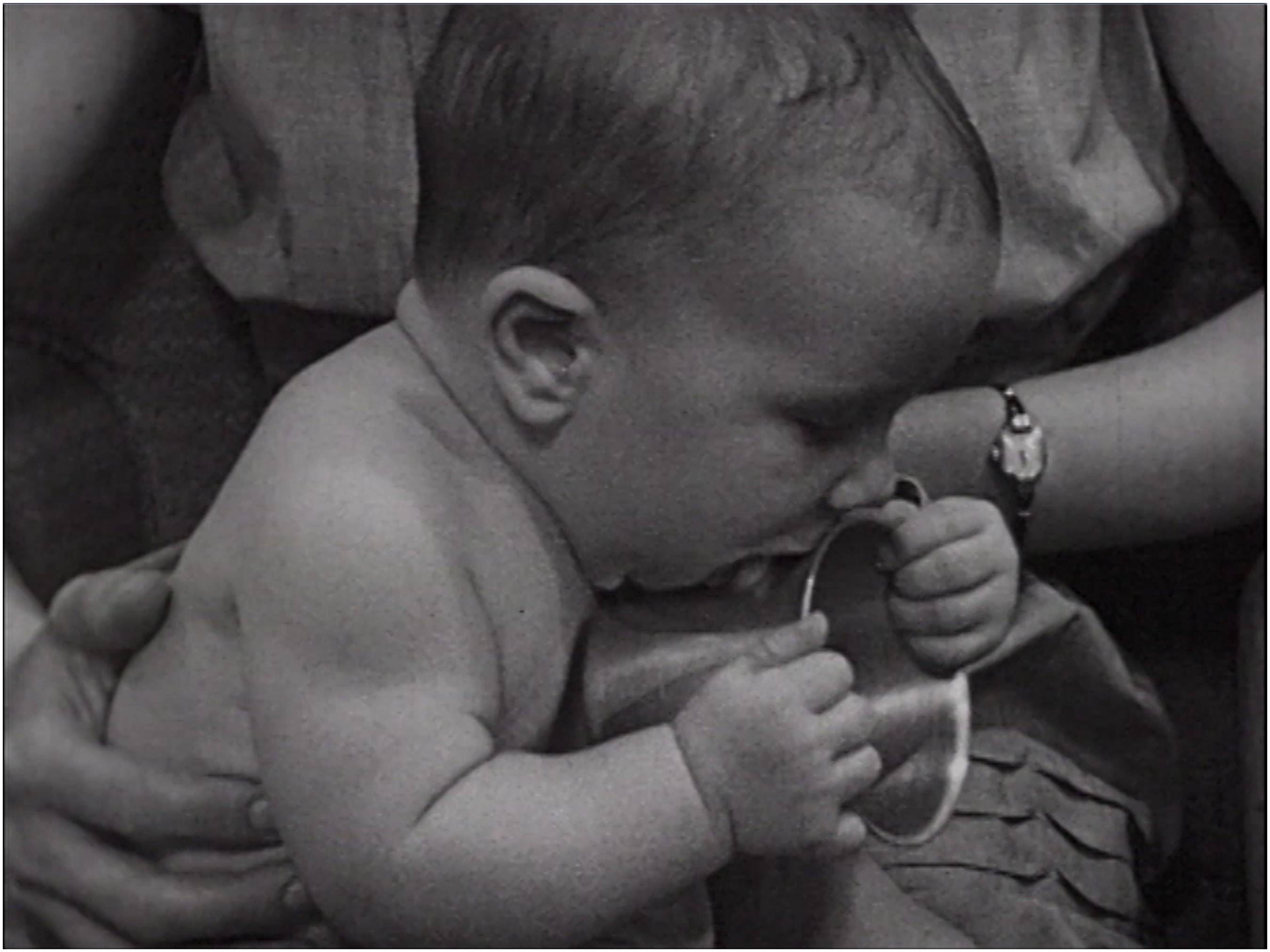
Still of baby licking cup from Some Observations (1951). Source: US National Library of Medicine.
The mother was almost absent from the film. In about half of the images, the infant was lying naked in a cot; in the other half, he or she was seated on the lap of (assumingly) his or her mother. In these cases, the mother's body was in the background, constituting a mere extension of the cinematographic frame (Figure 3). The mother's face was almost never captured. Instead, the framing exclusively focused on the individual and variable mimics and movements of the infants. This conscious reframing of development as pertaining to the individual infant was most explicit in the section entitled ‘mouth activity as part of social response’. While the title almost imposed an exploration of the mother–child relationship, the shots lingered on medium close-ups of baby faces (Figure 4). The human partner interacting and socially stimulating the child was not shown. ‘Social response’ was presented as an active act of a 20-week-old baby, and not a result of mothering.
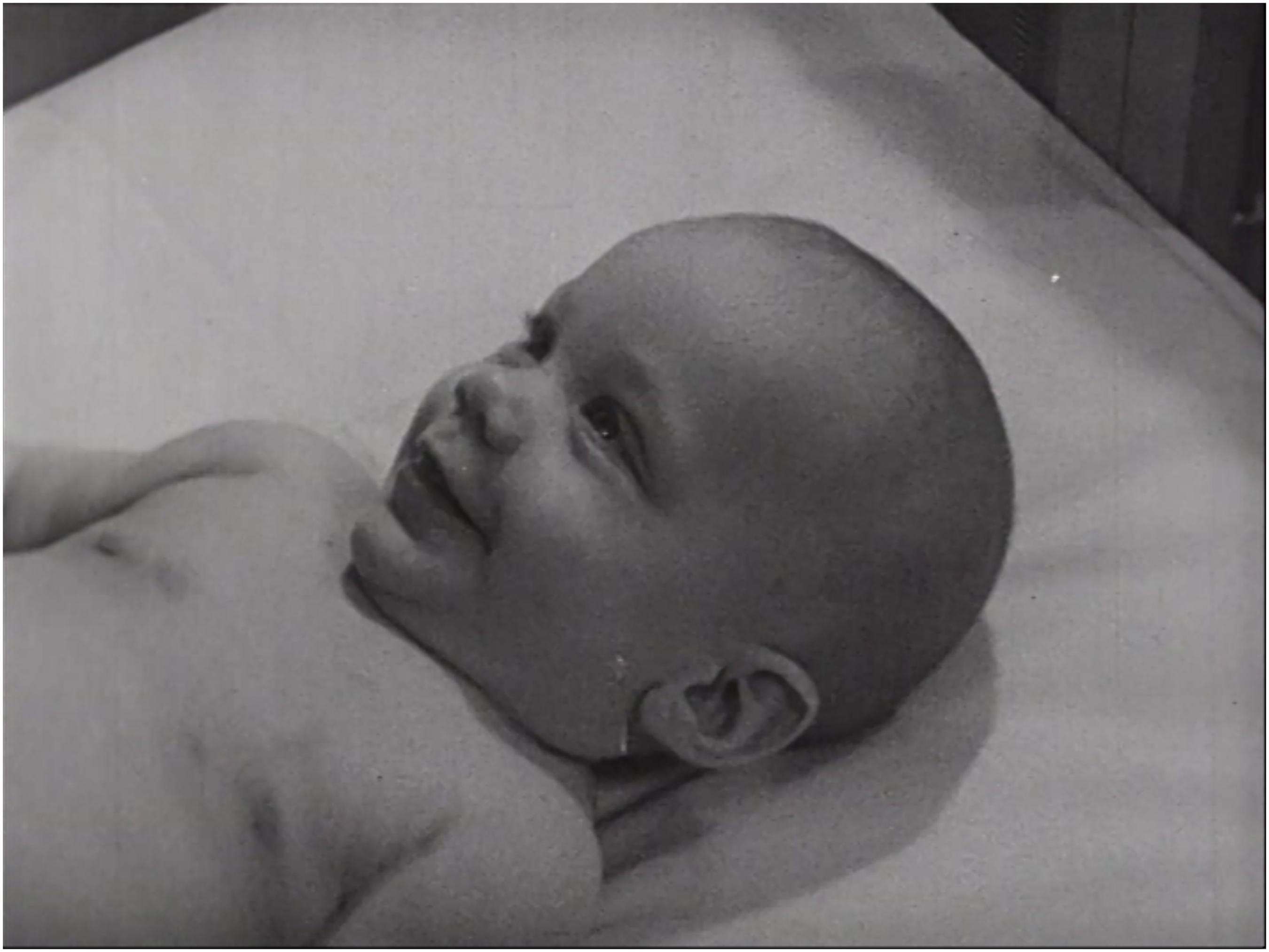
Still of social response from Some Observations (1951). Source: US National Library of Medicine.
Style and focus were carefully crafted. Reminiscent of Auerbach's modernist photographic practice, this crafting was not completely hidden but could constitute an integral part of the composition of the images. In many instances, the viewers could see how the responses of the infants were actively solicited. Observers introduced objects (such as a cube or a ring) to the babies and encouraged them to engage. In some sequences, the scenes resembled test situations, for example, the experimenters would stimulate the infants with the sound of a bell. Yet here as well, the framing positioned the interventions at the periphery, only briefly showing intervening hands in the margins of the images and centering on the babies’ upper bodies and faces. The crafting appeared as a discrete way to reveal the infants’ variable reactions and behaviors. Even the technical apparatus found manifestations in the images, expressing pars pro toto the relationship between infant and environment advanced in the team's work: the camera and the photographic lights were reflected in the children's eyes (Figure 5). The infant reflected the environmental conditions but reacted all by him- or herself, perceivable through attentive but self-conscious observation.
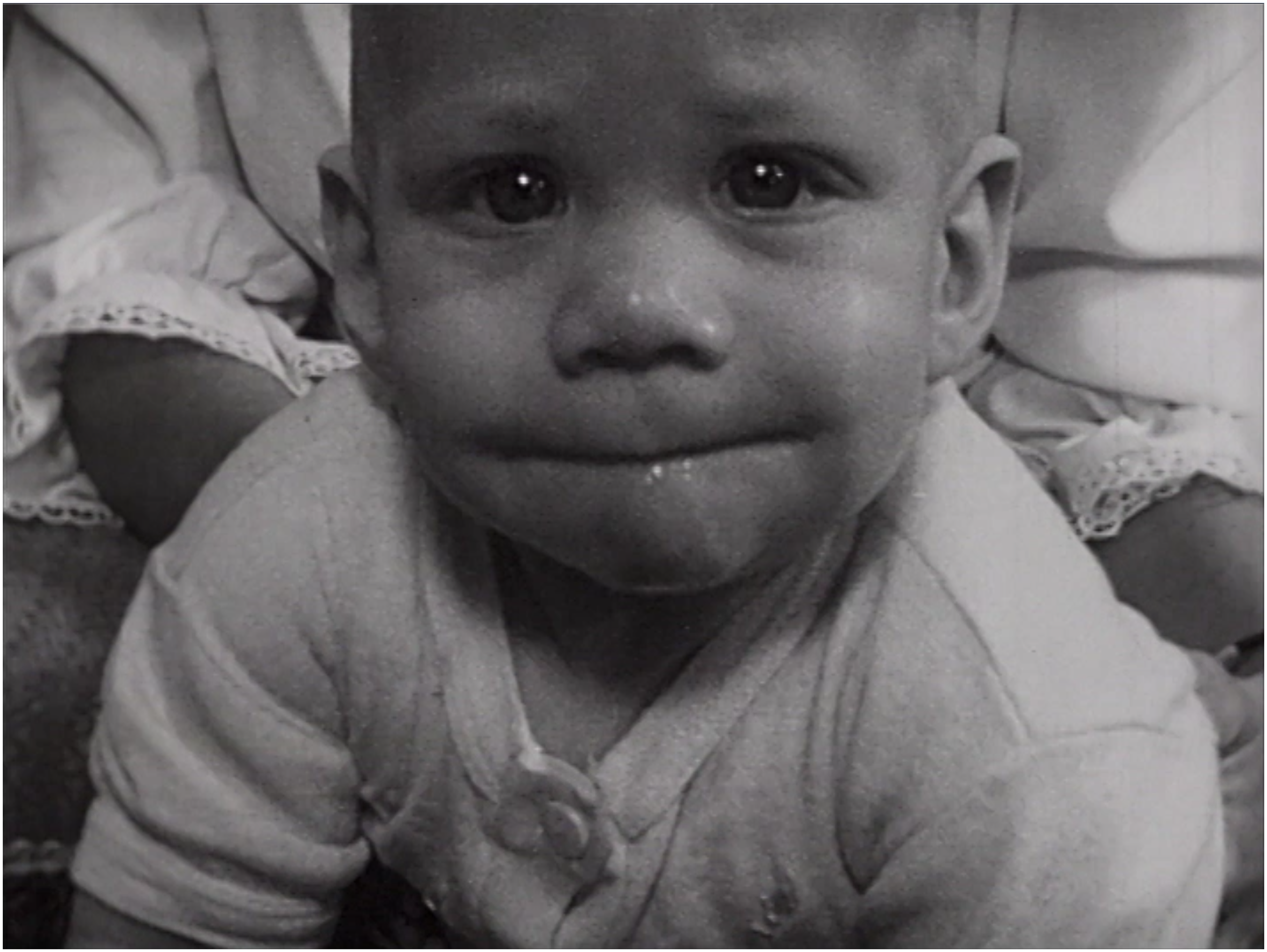
Still showing reflection of photographic lights from Some Observations (1951). Source: US National Library of Medicine.
Even more explicitly than Fries’ cinematographic material, Some Observations formulated its thesis and argument through an ‘observational’ film style that contrasted the more expository and didactic style of other contemporary films in psychiatry and mental health (Nichols, 1991: 38–44). This contrast was of importance. The film articulated a clear statement about observational standards and attitudes. It foregrounded an observational attitude of close looking in place of theorizing, attending in place of interpreting. 21 And yet, the film provided a direct engagement with contemporary psychoanalysis, readable for an informed viewer and explicitly stated in Escalona and Leitch's publications. The very topic of oral behavior was a prime site of psychoanalytic theory. Since Sigmund Freud's Three Essays on the Theory of Sexuality (2016[1905]), the ‘oral phase’ had been discussed as a crucial stage in psychosexual development. The role of the oral phase for character formation was a privileged topic in analytic theory of the 1940s and 1950s. Best known was, perhaps, Erich Erikson's discussion of different modes of oral discharge that he linked to the formation of cultural habits and identities in his best-selling book Childhood and Society in 1950 (Erikson, 1993[1950]; Friedman, 1999). Escalona and Leitch were not necessarily hostile to psychoanalytic theory, but their cinematographic work refrained from any broad generalizations about character development and parenting. Instead, it emphasized the importance of careful observation of individuality and variability of infant behavior. As a result, mothering appeared in a different light. As a contemporary review summarized, mothers were praised for their ‘remarkable ingenuity and flexibility … in rearing children. The “blame-the-parent” school of experts [got] no support from the finding of the Topeka study’ (Deutsch, 1953).
Mother-blaming under attack: Anneliese Korner's styles of development 22
If Escalona, Leitch, and Auerbach articulated a cautious visual criticism of child-rearing advice, Anneliese Korner outspokenly attacked the ‘new syndrome’ that might be called ‘“the parent takes the blame”’ (Korner, 1961). Korner had been a classmate of Escalona in psychology at Columbia University. 23 Like Escalona, she was a German emigré. She was born to a German-Jewish family in Munich in 1918 and fled to Switzerland in the early 1930s. After graduating from high school, she studied child psychology with Jean Piaget and Richard Meili in Geneva, before following the diaspora of Jewish intellectuals to the USA in 1940. Following her PhD in psychology at Columbia University, Korner underwent psychoanalytic training, and eventually joined a new force of postwar clinical psychologists, first at the University of Chicago Medical School and then at the Mount Zion Psychiatric Clinic in San Francisco. 24 After several years of clinical work, she obtained a small grant to explore infant research at Harvard University in 1961, where she collaborated with leading scholars in the field, including child psychiatrists Eleanor Pavenstedt and Peter Wolff at the Judge Baker Guidance Center. 25 Familiar with clinical practice, contemporary developmental psychology, and psychoanalysis, she was able to obtain a major grant from the Institute for Child Health and Human Development to initiate a study of individual differences in newborns at Stanford University. 26
Korner set her study in direct relationship to the contemporary culture of mother-blaming. In a 1961 article in the journal Social Casework, she noticed that ‘mental hygiene research and clinical practice had accumulated an increasing body of evidence that pointed to the tremendous influence of the parents’ personality and child-rearing techniques on the child's development’. While Korner saw this principally as a good development, she critically observed that ‘as a consequence, many parents have become self-conscious and unsure about themselves’, considering ‘themselves the sole cause of their child's problems’. Alarmingly, experts in psychiatry, psychology, and social work had played a pivotal role in creating this ‘“new syndrome” which one might call “the parent takes the blame”’ due to an oversimplified application of ‘psychiatric clichés’ to the mother–child relationship (Korner, 1961: 339, 341). Korner's article joined and accentuated criticisms of mother-blaming simultaneously voiced by other practitioners, such as the psychiatrists Stella Chess and Jerome D. Frank (Chess, 1959: 26–8, 39–44; 1964; Frank, 1957; Herman, 1995, Chapter 10; Hirshbein, 2021; Rietmann, 2018: 72–80). Korner highlighted that this was not exclusively a problem of child-rearing advice and medical practice but also of scientific research. Similarly to Escalona, she argued that child psychological research was missing an appraisal of the ‘individual differences among children’. She urged that advice and care had to take into account the particularities and mental capacities of each individual infant, allowing for an informed view of the mother–child relationship, which she described as a ‘two-way street’ (Korner, 1961: 342; 1965).
Korner's approach to the problem directly drew on Fries and Escalona's research but added a theoretical framework explicitly referring to ego psychology. Based on Heinz Hartmann's work, Korner hypothesized that ‘innate ego and drive variations’ contributed to an infants’ individual temperament and, by extension, the particular relationship between infant and mother. Consequently, a comprehensive etiological understanding of behavioral problems in childhood required a systematic exploration of the ‘significance of primary ego and drive endowment for later development’ (Korner, 1964: 58–9). For example, if an infant was hyperactive, was this due to an inherently active personality, or because he was dealing with a neurotic conflict such as a ‘frantic fear of passivity and of castration anxiety’? While neurotic conflicts might be related to problems of parenting, Korner stressed that a clear etiological statement demanded a better evaluation and understanding of innate variations in personality type and ‘style of development’ (ibid.: 60, 62).
Her cinematographic research project sought to measure and classify different styles of development by studying neonates at the nursery immediately after birth, assumingly before the influence of the environment. As I have detailed elsewhere, Korner's experimental approach relied on the recording and counting of discrete behavioral variables during the first postnatal days, such as alertness, reaction to external stimuli, sensory responsiveness, and preference of certain organ zones for libidinal discharges (e.g. number of penile erections or mouthings; Rietmann, 2018: 72–80). To register these behavioral events, she installed a camera above an infant's bassinet and filmed the baby at various intervals over several hours. 27 On the cinematographic record, Korner then counted and compared behavioral events to see how they formed patterns that she thought demarcated individual styles of development. These styles of development, she further hypothesized, were formative for the evolving relationship dynamics of the individual baby and her mother. 28
Figure 6 provides an example of Korner's cinematographic method and way of reasoning. The figure showed ‘Baby Girl 13’ exhibiting a reflex smile. Korner noticed that while ‘Baby Girl 5 did not reflex smile a single time during a three-hour observation period, Baby Girl 13 was seen to do this eleven times in the same period, and she smiled so broadly that she bared her gums’ (Korner and Grobstein, 1967: 684). For Korner, this difference was important. She argued that ‘even though a reflex smile is not a social smile, it definitely evokes a social response’. Korner further reasoned that this had implications for mothering: ‘A mother who happens to have a baby given to a great deal of reflex smiling may, from the start, socially interact with her infant on more numerous occasions, socially stimulating the infant in turn’ (ibid.). Korner's analyses and publications included similar case studies for differences in ‘visual alertness’, ‘soothability’, ‘mouthing’, and ‘penile erections’, usually discussed in psychoanalytic terms. For example, noting differences in ‘ego and drive endowment’ (measured in frequency of penile erections and mouthing) between two boys, Korner speculated that ‘Baby 15 may engender pride, alarm, awe or aversion, while Baby 9 may please his mother with his skills or disappoint her for depriving her of gratifying him’ (ibid.: 687).
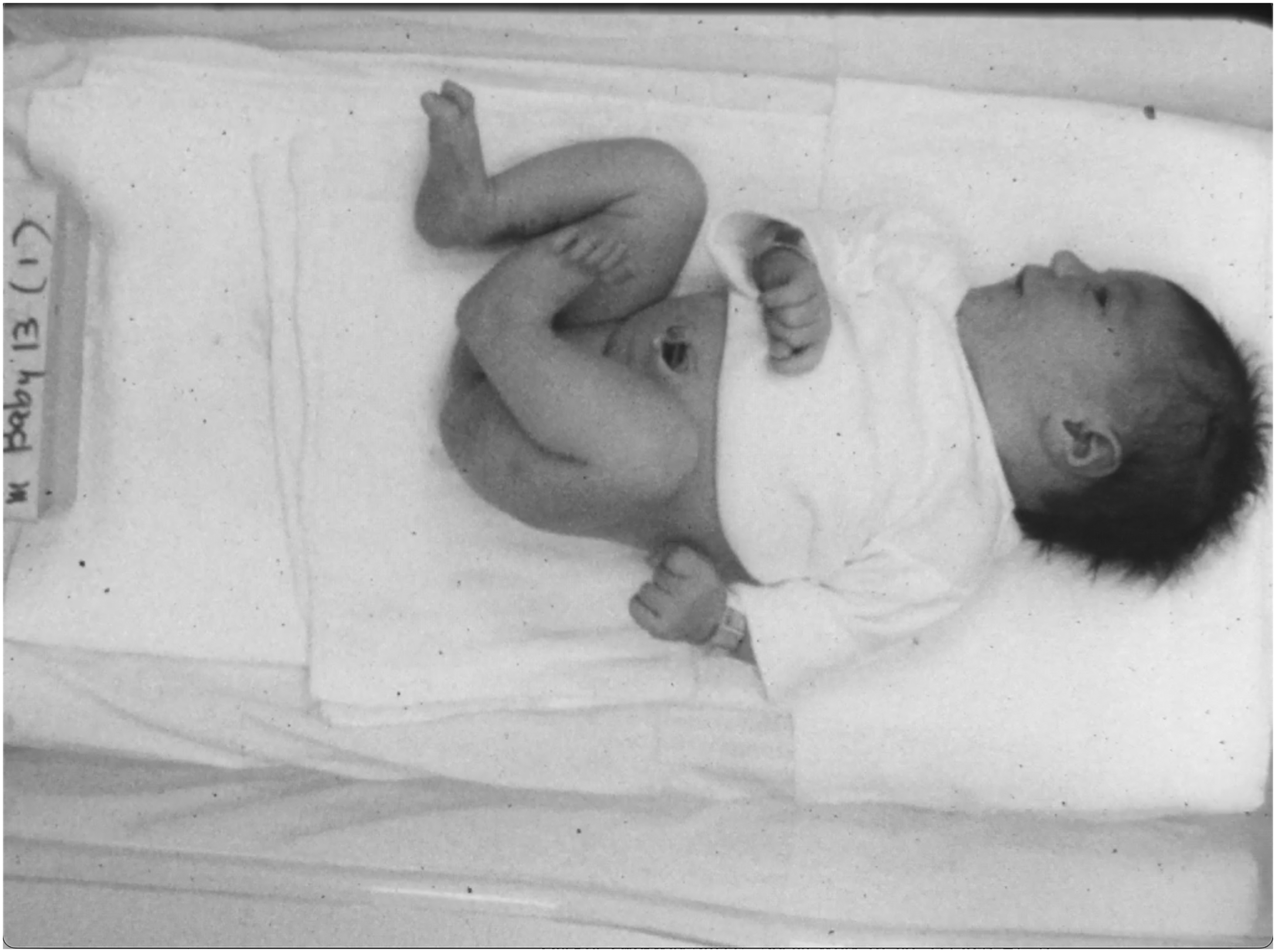
Still of reflex smile in neonate. Source: Anneliese Korner Research Film CDF 5409, University of Akron, Drs. Nicholas and Dorothy Cummings Center for the History of Psychology, Archives of the History of American Psychology, Moving Images collection. Reproduced with permission.
Korner's films were solely produced for research purposes and their analysis relied on a sophisticated method of counting, coding, and statistical comparison. Yet the very process of filming and framing exhibited a ‘family resemblance’ to the attitude of close looking advanced by Fries and Escalona's films. The behavioral events emerged only through seeing and reseeing the films and attending to the tiny stirrings of the infants, be it the reflex smiles of Baby 13 or the penile erections of Baby 15. Film scholars have highlighted the magnifying effect of such a hermeneutic of detailed scrutiny and repeated viewing (Lempert, 2019; Watter, 2017). In Korner's case, it provided a basis to recalibrate professional visions of the mother–child relationship. In 1967, Korner could refer to her growing body of research films and publications to postulate: It is not only the mother’s conscious and unconscious attitudes, her style, and her child-rearing practices which may shape the mother-infant relationship, but also the infant's own maturational rates, his particular styles of perceiving, and experiencing, and what these evoke in maternal response. (Korner and Grobstein, 1967: 677)
Conclusion: Gender, historiography, and the cinematographic archive
When Anneliese Korner published her cinematographic studies of individual ‘styles of development’, the landscape of infant research was slowly undergoing a transformation. In the early 1970s, infant psychiatry emerged as a subfield in its own right, increasingly conceptualizing the infant not simply as a victim of maternal influences but as ‘a source of the formation, regulation, and indeed even the malevolent distortion of the caregiver's behavior’, as an early textbook put it (Lewis and Rosenblum, 1974: ix; original emphasis). Histories of infant psychiatry usually situate this new attention to the infant in ‘the beginnings of [a] confrontation between the psychoanalysts and the … infant observers’ that arose during the 1970s (Osofsky, 2016; Stern, 2012: 1106; Trout, 1980). According to these accounts, this confrontation contributed to a professional shift from blaming to a supportive attitude toward mothers, joining the attack on theories of pathological mothering on various fronts beyond psychiatry (Buhle, 1998: 206–39; Harrington, 2016; Herman, 1995: 277–304; Jones, 1998, 1999; Vicedo, 2021: 95–114).
In this article, I have argued that mother-blaming never reigned unchallenged. I have pointed out that the work of Fries, Escalona, and Korner advanced alternative ways of seeing infants and conceptualizing the mother–child relationship in the heyday of ‘mal de mère’ (Chess, 1964; Jones, 1999: 213). Taken together, their written and filmic works suggest the possibility of a different account of psychoanalysis and gender during the formative years of American child psychiatry. The research of Margaret Fries demonstrates that the focus on maternal pathologies was not the only path that psychodynamic child guidance could have taken in the 1930s and 1940s. Her emphasis on ‘congenital activity types’ and the importance that she attributed to individual differences in infant development provided a counterpoint to any exclusive focus on bad parenting. Working in a leading department of American ego psychology during and immediately after the Second World War, Sibylle Escalona's research group similarly countered ideas of pathological mothering with an attentive scrutiny of infant behavior. The cinematographic work of her research group intentionally enacted a mode of infant observation that foregrounded varieties of behavior in babies as decisive factor in early development. Finally, in the early 1960s, Anneliese Korner designed a psychoanalytic research project with the aim of showing that the mother–child relationship was a ‘two-way street’. Though later intersecting with it, her early work predated a broader cultural turn against mother-blaming, demonstrating that this turn came not only from without but also from within the mental health professions.
Importantly, Fries, Escalona, and Korner were not alone in challenging predominant sexist tropes and practices within the field. Historians Laura Hirshbein and Katie Joice have recently pointed to similarly critical approaches to contemporary ideas about mothering in the work of psychiatrist Stella Chess and psychologist Sylvia Brody (Hirshbein, 2021: 803; Joice, 2020). There is also evidence of personal networks between these individuals: Brody began her career in Escalona’s team, Escalona was a teacher of psychiatrist Daniel N. Stern, and Korner and Escalona were former classmates and had epistolary exchanges. 29 Moreover, the work of Fries, Escalona, and Korner informed the early theories of mother–infant reciprocity that appeared in the 1970s and further challenged the focus on ‘failures of mothering’ (Brazelton, Koslowski, and Main, 1974: 56). In other words, criticism of pathologies of mothering was both more common and more influential than the historiography of child and infant psychiatry has previously suggested.
The filmic archive provides an exciting entry point for revisiting historical accounts of child psychiatry. I have argued that Fries, Escalona, and Korner's films not only contributed to psychiatric theory but also intervened in ‘expert ways of seeing’ (Curtis, 2015). They can be read as efforts to forge an observational attitude of close looking in both child psychiatric research and practice. As research documents, they participated in an ongoing negotiation of standards of evidence; as educational films, they challenged gendered codes of evaluating the mother–child relationship. Yet any historical study of filmic evidence in child psychiatry necessarily runs into the fragmentary nature of the archival record. Here as well, the study of the work of Fries, Escalona, and Korner is informative: Escalona and Korner shared with an entire generation of emigré psychoanalysts the experience of Weimar youth and subsequent exile. As art historian Benjamin Buchloh has recently pointed out, the experience of exile intersected with practices of gendered cultural reception and the almost complete omission of many avant-garde female photographers, including Escalona's cinematographer, Ellen Auerbach (Buchloh, 2020). The motion pictures discussed in this article circulated in venues other than art photography, but their archival record is similarly scattered; I have not been able to detail their contemporary distribution and cultural reception. With the dissolution of the New York University Film Library, the films seem to have mostly disappeared from circulation and institutional memory. 30 From this perspective, the history of medical film parallels the history of art photography, and their fates point to similarly gendered omissions in archival practice and medical historical scholarship. 31 It remains the task of future scholarship to recover and reevaluate the historical record and to thereby provide further nuance to our accounts of gender, psychoanalysis, and scientific observation in mid-20th-century child psychiatry.
Footnotes
Declaration of conflicting interests
The author declared no potential conflicts of interest with respect to the research, authorship, and/or publication of this article.
