




Abstract
This article explores the circulation of ‘anti-psychiatry’ in British film and television during the long 1960s, focusing on the controversial BBC television play In Two Minds (1967) and its cinema remake Family Life (1971). These films were inspired by R. D. Laing's ideas on the aetiology of schizophrenia, and were understood as uniting the personal and political motivations of progressive film-makers (Ken Loach, Tony Garnett, David Mercer) and progressive psychiatrists (Laing, David Cooper, Aaron Esterson). Drawing upon practitioner interviews with producer Garnett and director Loach, and extensive archival research on the production and reception of these films, this article contests previous scholarship on the popular circulation of anti-psychiatry and the movement's perceived polarisation from mainstream British psychiatry. While the reception of In Two Minds and Family Life did intensify an adversarial relationship between ‘rebel’ anti-psychiatrists and hard-line behaviourists such as William Sargant, the wider psychiatric field largely welcomed the films' contributions to mental health awareness and used the publicity to counter the idea of a ‘battle’ within the profession. This included leading UK mental health organisation the National Association for Mental Health looking to Loach and Laing as models for engaging contemporary audiences as it rebranded to MIND in 1972. This article contributes to historical understandings of the complex interactions between the fields of media and mental health, as well as recent scholarship challenging the idea of a clear split between anti-psychiatry and British medical orthodoxy.
Introduction
The work of radical filmmakers spreads the ideas of radical psychologists. (Bates, 1972)
This tagline from a 1972 Guardian article emphasised the clinical underpinnings of recent British film Family Life (1971), which was inspired by R. D. Laing's ideas on the aetiology of schizophrenia. Family Life was a ‘big-screen’ reworking of the 1967 BBC television play In Two Minds (1967; see KenLoachFilms, 2014), made by the same production team of producer Tony Garnett, director Ken Loach, and screenwriter David Mercer, in consultation with progressive psychiatrists Laing, Aaron Esterson, and David Cooper. However, Bates' portrayal of a unidirectional influence from the pages of psychiatric texts to the screen misapprehends the complex critical and creative interactions of psychiatric and media professionals that shaped the co-production and circulation of these two films. In Two Minds and Family Life emerged from the film-makers and psychiatrists' converging professional and political convictions that the well-being of individuals and society was being hindered rather than helped by ‘orthodox’ psychiatric practices and the media forms that perpetuated their power. As this article will explain, In Two Minds and its source text, Laing and Esterson's Sanity, Madness and the Family (1964), subvert the expectations of the BBC's factual medical programming and the psychiatric case history genre to undermine the ideological surety of these dominant genres within their fields. These ‘radical’ films must be understood in the context of the wider contestations and cross-pollinations within and between the fields of mental health and media in Britain and America during the defining ‘long Sixties’ (Marwick, 2005). Specifically, In Two Minds represents a confluence of what Crossley (2006) defines as the ‘field of psychiatric contention’ – which included ‘anti-psychiatry’, but also the post-war mental hygiene movement and the emergent user/survivor and parent advocacy groups of the early 1970s – and an analogous field of media contention, driven not by commercial or even creative imperatives, but primarily by political ones.
This article draws upon practitioner interviews conducted with producer Tony Garnett and director Ken Loach, as well as archival research conducted at the BFI National Archives, the BBC Written Archives, the R. D. Laing Archive at the University of Glasgow, the British Board of Film Classification Archive, and the Wellcome Collection. 1 It employs these sources in a diachronic analysis of the production, mediation, and reception of In Two Minds and Family Life that explores their circulation within shifting clinical, media, and political contexts as the ‘rebel’ (Hornsby, 1967) ideas within the films became increasingly mainstream. Can we even consider the ideas of Laing, ‘the Mick Jagger of psychiatrists’ (‘NY Film Fest’, 1972), as ‘radical’ by 1972? The first half of the article challenges previous research on the production of In Two Minds (Hill, 2011; Wilson, 2012) through its foregrounding of the vital, hands-on contributions of Cooper and Esterson, who are often elided in the emphasis on Laing's roles. In doing so, it contributes to a recent revisionist drive to rewrite their contributions into histories of ‘anti-psychiatry’ (Chapman, 2016; Wall, 2015). The second half of the article contributes to recent scholarship that questions the idea of a polarisation between anti-psychiatry and psychiatric ‘orthodoxy’ (Marks, 2017; Staub, 2011; Toms, 2020; Wall, 2017) by approaching this issue from a media perspective. While the popular press reception of In Two Minds and Family Life did intensify an adversarial relationship between ‘rebel’ anti-psychiatrists and hard-line behaviourists such as William Sargant, the wider mental health field largely welcomed the films' contributions to mental health awareness and sought to use their publicity to counter the idea of a ‘battle’ within British psychiatry. This includes leading UK mental health organisation the National Association for Mental Health (NAMH) looking to Loach and Laing as models for engaging contemporary audiences as it rebranded to MIND in 1972. This article contributes to historical understandings of the complex interactions between the fields of media and mental health, as well as recent scholarship that challenges the idea of a clear split between anti-psychiatry and mainstream psychiatry.
Healing hurt minds: British psychiatric culture in the long 1960s
Sociologist Nick Crossley's Contesting Psychiatry (2006) offers a history of the changing landscape of the mental health field in post-war Britain, and the social movements whose resistance to psychiatric orthodoxy provoked these changes. This sociological study is useful in mapping the interactions of competing mental health organisations and advocacy groups ‘who converge around common areas of concern (whether in agreement or disagreement)’ and the diffuse currents of discourse and demands they circulated during the post-war period in Britain (ibid.: 29). At the centre of this field of contention in the long 1960s period, for Crossley, is the struggle between psychiatric orthodoxy, which is seen as having favoured biomedical models of understanding and treating mental illness, and the emergent ‘anti-psychiatry’ movement, associated with progressive/radical psychiatrists such as Laing and Cooper, who advocated for psychotherapeutic approaches and deinstitutionalisation of treatment. 2 The anti-psychiatry movement originated in the late 1950s as a series of challenges to dangerous and coercive physical treatments like electroconvulsive therapy (ECT) and psychosurgery (e.g. lobotomies), but by the early 1960s, according to Crossley (1998a: 878), it sought to challenge the ‘very basis of psychiatry itself; its purpose, its foundational concept of mental illness and the very distinction between madness and sanity’.
Recent scholarship has sought to challenge the idea of a clear break between mainstream psychiatry and the anti-psychiatry movement, characterising it as a ‘journey away from the psychiatric hospital, but not necessarily away from psychiatry itself’ (Wall, 2017: 2). Oisín Wall highlights how the British anti-psychiatric group, which formed around Laing, Cooper, and Esterson, amalgamated and extended existing post-war trends within the mainstream psychiatric milieu – therapeutic communities, psychodynamic therapy, social psychiatry, deinstitutionalisation, and institutional reform – rather than initiating them. For example, the experimental therapeutic communities developed in the 1960s by the anti-psychiatrists ‘took their lead from well-respected and established “mainstream” psychiatric practitioners like [T. P.] Rees, [Maxwell] Jones, and [Joshua] Bierer’, who developed working models for therapeutic communities, both in and outside the hospital, in the 1940s and 1950s (ibid.: 52). The key innovations of David Cooper's ‘anti-hospital’ within hospital Villa 21 (1962–6) and the Philadelphia Association's more famous alternative community Kingsley Hall (1965–70) was in the politicisation of these post-war models through their inculcation of anti-institutional and countercultural discourses. From the mid 1960s, Laing, Cooper, and Esterson were united in their belief that the precondition for mental well-being was a conjoined personal and social liberation ‘from the alienating and oppressive power of social institutions’, including those of ‘the family’. They argued that the ‘structures of the family were repressive and destructive and … that these structures were mapped onto the authoritarian society and state’ (ibid.: 165). In this way, their work intersected and resonated with both New Left and countercultural discourses and audiences.
It was this bridging of psychiatric, political, and countercultural concerns that brought anti-psychiatry into public discourse. In the late 1960s, the ‘star’ of this movement in the UK was Laing, and as Crossley (2006: 101) explains, ‘It was Laing whose books were bestsellers.… It was Laing whose ideas were turned into television plays and stage plays, … who appeared regularly on British television and radio, even on such mainstream interview formats as the Parkinson Show’. Laing became a go-to media spokesperson for anti-psychiatry – despite his ambivalence about the term – gaining him a significant counterculture following and a level of public awareness (Miller, 2017). 3 This concentration on the charismatic Laing as the ‘poster boy’ for anti-psychiatry and, by the early 1970s, as a talismanic countercultural ‘guru’ has been cemented in subsequent academic and media discourse; this includes the recent British drama Mad to Be Normal (2017), starring David Tennant. This has contributed to a corresponding minimising of Cooper and Esterson's important and distinctive roles in the ideas and interventions that came to be known as anti-psychiatry. This article seeks to contribute to a recent drive to ‘re-Cooper’ (Chapman, 2016) but also ‘re-Esterson’ the history of anti-psychiatry by foregrounding their fundamental roles in the making of these two films. This includes the vital roles Cooper and Villa 21 played in the research, production, and staging of the films, and Esterson's centrality to the film-makers' understanding and staging of the family dynamic.
In Crossley's account, anti-psychiatry emerged in the early 1960s to contest the biomedical understandings and treatments of mental illness that were favoured by the British psychiatric establishment. The key organisation he identifies as seeking to maintain the status quo in advocating for psychiatric orthodoxy in the mid 1950s to the mid 1960s was the NAMH, known as ‘the Association’ within the mental health field. While the NAMH was formed in the immediate post-war era with the reformist agenda of thinking about mental health more holistically (as an issue that affected all and that should be addressed through social policy and education as well as medicine), when the psychiatric establishment came under attack in the 1960s, the NAMH was seen to adopt the role of defenders of both orthodox psychiatric methods and government policy (Crossley, 2006: 97–8). The NAMH was formed in 1946 out of a merger of three interwar voluntary groups that, while having different focuses, were all driven by the rationale of the ‘mental hygiene movement’, which advocated for a medical understanding of mental illness. 4 This formalisation must be understood in the context of the post-war development of the welfare state, with mental health and parliamentary fields converging through their complementary interests and concerns (ibid.: 82). By the start of the 1960s, the NAMH had become closely aligned with the psychiatric establishment, working closely with and being funded by government to advise upon and advocate for established approaches to mental health. Key elements of the mental hygiene movement's reformist agenda were reconciled with the NAMH's more conservative turn in the long 1960s period. This included its ongoing support for the British post-war therapeutic community experiments and their innovators, including Rees and D. H. Clark, who were ‘closely involved with the NAMH’ (Toms, 2020: 634), as well as NAMH/MIND committee member Dr Richard Fox, a consultant psychiatrist at Severalls Hospital in Colchester, whose ‘Group Home’ experiment from 1964 – where older women patients were moved into shared rented housing – predates Kingsley Hall (‘A Home of Their Own’, 1966). 5
In its ‘conservative’ capacity as staunch defenders against internal and external critiques of psychiatric expertise, the NAMH adopted a paternalistic and censorial approach to educating the public (and particularly the working classes) about mental health, and saw television and cinema as the key media for spreading information and, more importantly, misinformation about psychiatric practices. The NAMH had always been interested (and worried) about film. In 1947, it formed the Film Visiting Committee, with the purpose of protecting against misrepresentation of the psychiatric professions and practices. Through this body, the NAMH reviewed films that dealt with mental health or represented psychiatric practices for its in-house journal Mental Health, judging them for clinical accuracy and influence on audiences rather than on dramatic or aesthetic terms. In 1963, the NAMH formalised its ongoing collaboration with members of the British Film Academy to form the Mental Health Film Council (MHFC). In forming this new organisation, which sat within and shared membership with the Public Information Committee, the NAMH expanded its remit to include film production, and organised courses to train members to make films countering misinformation spread within mainstream cinema. Some of these hygiene films were even screened in cinemas as supporting features (Crossley, 2006: 80). With this shift into production, the NAMH became a direct actor within the cinematic field rather than merely converging with it through consultation and comment.
In the mid 1950s, the NAMH became attuned to the importance of television in spreading psychiatric information. In 1956, it launched and sought BBC representation on its Public Information Committee, with the primary agenda ‘to spread a knowledge of the principles of mental hygiene among the general public’. 6 It made a high-profile appointment in Mary Adams, former head of talks and current affairs (1945–54) and current assistant to controller of television (1954–8). In this capacity, Adams initiated the innovative BBC medical series Matters of Life and Death (1948–) and Your Life in Their Hands (1958–), and was a staunch advocate of the value of medical and science programming. Adams was on the Public Information Committee from its first meeting in 1957 until the end of the 1960s. On her retirement from the BBC in 1958, the NAMH approached Huw Wheldon – a producer in the Television Talks department and presenter of flagship arts and culture programme Monitor (1958–65) – in the hope of gaining up-to-date representation from someone influential within the BBC. Wheldon declined the invitation, recommending Grace Wyndham Goldie, assistant head of Television Talks and Features at the time. In 1963, Doreen Gorsky (née Stephens), feminist activist, innovator of women's programming, and then head of family programmes at the BBC, was appointed chairwoman of the Public Information Committee and remained in this role until the early 1970s. These appointments of pioneering female broadcasters and, in Gorsky's case, feminist campaigners to its committees challenge (or perhaps indicate underlying gender politics of) the NAMH's ‘staid image as a “twin-set-and-pearls” establishment organisation’ by the 1960s (Toms, 2020: 622).
The NAMH's most ambitious intervention into television was its collaboration with the BBC on the development and production of the five-part mental health series The Hurt Mind (1957). This was intended to present a comprehensive account of contemporary thinking on the causes and treatment of mental health, featuring discrete episodes on physical and psychotherapeutic approaches. The series was presented by MP Christopher Mayhew and featured a number of publicly recognised psychiatrists and psychologists, including T. P. Rees, Lionel Penrose, John Bowlby, and William Sargant. The Hurt Mind was developed from preliminary BBC research into public attitudes to mental health, but was also used to conduct post-broadcast research to measure its ‘effects’. Despite the desire to represent a balanced view of mental health provision, biomedical treatments featured more prominently across the series due to the agendas of some key actors. As NAMH minutes suggest, producer Andrew Miller-Jones intended the series to advocate for ‘physical treatments including the new method of ECT’, presenting it with an ‘un-alarming look’ that would have ‘a reassuring effect on the public’. 7 The fourth episode focused on physical treatment and featured a presentation of a staged ECT procedure. This was studio-based, but edited and set-designed to give the impression of an outside broadcast (OB) from a hospital. A doctor in mid shot introduces the procedure – edited to show a few close-ups of the equipment being used – and begins by administering a muscle relaxant, foregrounded as the ‘most important advance that has been made in this treatment’, which ‘has in fact taken the convulsion out of convulsive treatment’. He then simulates sending a ‘carefully measured dose’ of current through the patient twice, doing this a second time so viewers can ‘watch his toes’, stressing this subtle reaction is ‘as much as you’ll see’. The scene's mundane staging of the treatment and matter-of-fact exposition (the doctor introduces the scene as ‘going through the motions of having ECT’) have close equivalences to the corresponding scene in In Two Minds, as discussed below.
The post-broadcast audience research conducted by the BBC's senior psychologist highlighted ‘the most striking’ change as a ‘large increase in viewers’ confidence in electric shock treatment (45% were confident before and 65% after) and a corresponding increase in approval of it as method of treatment'. 8 The series' chief advisor, controversial biological psychiatrist William Sargant (1958), saw this almost 50% increase in confidence in ECT and other psychical treatments as an important balancing of the media's historical bias towards ‘talking cures’, stressing that ‘previous film and radio publicity had already raised public approval of the use of psychotherapy and psychoanalysis as acceptable treatments’. This was corroborated by the audience research, which reported, ‘The series produced a more equal balance, increasing the reference to psychical treatment and reducing reference to psychological treatment’. 9 A number of psychiatric organisations and clinicians contacted the BBC to express appreciation for the programme's advocacy for medical approaches, but it also received some high-profile criticism. The British Medical Journal criticised the programme's depiction of ECT for ‘increas[ing] the hypochondria and neurosis’ of the British public, stating that ‘a very large number of persons, we were given to understand, as a result got into [sic] touch with their own doctors asking whether they could have electric shock treatment’. The author added provocatively, ‘It may be doubted whether those organising the programme thought this a desirable result’ (‘Disease Education by the BBC’, 1958: 389).
The NAMH used its role as publicity for the organisation, co-producing a pamphlet titled Mind Out of Balance with the BBC to promote the series and circulating it in conjunction with the Ministry of Health. 10 It heavily advocated for a proposed follow-up series of The Hurt Mind, but this did not materialise. The NAMH and its members (Stafford-Clark and Sargant in particular) continued to advise upon and appear in a range of BBC Talk and Documentary programmes in the late 1950s to mid 1960s, including Lifeline (1957–62) and Brain and Behaviour (1964). In the early 1960s, mental health conditions and practices became the subject of individual and serial dramas too, most notably the ABC series for ITV The Human Jungle (1963–4), which followed a detective show-style structure of discrete weekly cases solved by British psychiatrist Dr Corder (Herbert Lom). Corder employed mostly psychoanalytic and psychotherapeutic methods of diagnosis and treatment, and his ‘maverick ad-hoc approach’ has been understood in the context of Laing's growing influence (Duguid, n.d.). The show's generic and clinical underpinnings raised issues for the NAMH, who discussed whether to take ‘further action’ on this programme at a Public Information Committee meeting in June 1963. 11 While The Human Jungle and the BBC comedy play A Suitable Case for Treatment (1962) have subsequently been interpreted in the context of Laing and anti-psychiatry, In Two Minds was the first ‘drama’ to explicitly draw upon his writings and expertise.
The BBC in two minds: Media and psychiatric contention on British television
In Two Minds must be understood in the context of wider contention within the BBC in the 1960s. It was one of the BBC's Wednesday Plays (1964–70), a series of one-off television dramas introduced by BBC head of drama Sydney Newman (1962–7). The Wednesday Plays gained a reputation for being socially engaged and formally innovative, provoking public debate and, on occasion, media controversy, including within the BBC (MacMurraugh-Kavanagh, 1997). The best known and most critically acclaimed of these was Garnett and Loach's Cathy Come Home (1966), the story of a homeless couple whose children are taken into authority care, which was shot in an observational documentary style. This drama mobilised public and media debate, prompted discussion in Parliament, and triggered the formation of the homeless charity Crisis in 1967. Cathy Come Home's generic innovation of the ‘drama-documentary’ triggered concern within the BBC, where it was felt, particularly by former head of talks and current affairs Grace Wyndham Goldie, that the ‘play’ should have been produced by the Documentary rather than the Drama department. 12 This was a battle not just about generic boundaries but also about politics, in that ‘incorporation of documentary elements into drama could offer the means for evading institutional controls regarding political partisanship’ that were applied to all factual programming (Hill, 2011: 62). Garnett and Loach have proffered that they used the relative ‘openness’ of the Wednesday Play format to express contrary political views to the ‘official’ BBC line, but saw the BBC's documentary and current affairs programmes as far from apolitical, unbiased, and objective. Garnett criticised the BBC for its ‘hypocritical and tendentious pretence of objectivity’ (Garnett, quoted in ibid.: 63) and for making programmes that were ‘public relations jobs for establishment institutions’ (Levin, 1971: 106).
The Wednesday Plays can be seen, therefore, as part of a wider momentum, referred to herein as a field of media contention, which, like ‘anti-psychiatry’, was motivated by a convergence of socialist politics with field-specific movements to ‘transform both conceptions and practices’ within the media and mental health systems (Crossley, 2006: 1). It was these political confluences that brought together – both ideologically and psychically – the clinical-creative alliances that produced In Two Minds. In Two Minds was Garnett and Loach's subsequent collaboration for the Wednesday Play series, a ‘drama-documentary’ shot entirely on location that tells the story of a young woman who ‘suffers from a diagnosis of schizophrenia’. 13 The play was simultaneously a personal and an intellectual project for Garnett, who explained that the film ‘emerged from a terrible rage’ and confusion he felt after his wife Topsy Jane, an actor best known for her role in The Loneliness of the Long Distance Runner (1962), was rendered ‘unrecognisable’ through treatment with drugs and ECT. When she was taken ‘ill’ during the production of Billy Liar (1963),
her mother sent her to the GP, and the GP sent her to the local ‘bin’, and they immediately plugged her into the mains. And fed her up with all those psychotropic drugs, that were even cruder than they are now, and she just got worse and stayed in that state until she died a few years ago. 14
At the same time, Garnett, who had a degree in psychology and a lasting ‘intellectual interest’ in Freud, encountered and was, ‘like many people of my generation’, inspired by the writings of Laing. 15
Laing's The Divided Self (1965[1960]) and Laing and Esterson's Sanity, Madness and the Family (1964) were key influences on and sources for the script, and were recommended to scriptwriter Mercer by Garnett. 16 Mercer had received acclaim for a previous BBC television play exploring the idea of madness as a strategy of revolt in A Suitable Case for Treatment, but stated that he had not read any of the anti-psychiatry literature in researching the play or subsequent film adaptation, Morgan (1965). During our interview, Garnett explained that the ‘spark’ for the film's script was the case study of ‘Julie’ at the end of The Divided Self, particularly her ‘delusion’ that a child had been murdered. While the ideas within The Divided Self and the ‘Julie’ case study were contentious, the structure of the latter follows the conventional form of the ‘psychiatric case history’ (Berkenkotter, 2008) in plotting a narrative of a patient's history and treatment alongside the clinician's interpretations. This genre had adapted well to popular media forms, and particularly Hollywood films, including Spellbound (1945), The Three Face of Eve (1957), and John Huston's biopic Freud: The Secret Passion (1962).
Formally, Laing and Esterson's Sanity, Madness and the Family is more unconventional in presenting the near-full transcripts of its interviews with 11 families ‘with very few interpretations, whether existential or psychoanalytic’ (Laing and Esterson, 1964: 25) and offering few conclusions on causes or cures. The book's formal and ideological challenge to the conventions of the psychiatric case history genre – in refusing to offer an explanation ‘why’ – was the book's overriding ‘problem’ for the reviewer of the NAMH's Mental Health journal (Post, 1965: 179). In Two Minds' formal inventiveness takes inspiration from Sanity, Madness and the Family, structuring its first half around the ethnographic semi-structured interviews conducted with a young woman diagnosed as schizophrenic, Kate Winter (Anna Cropper), and her family by an unseen psychiatrist (Brian Phelan). As with Laing and Esterson's book, the play's generic innovation in presenting psychiatric material was also questioned for its boundary breaking. Laing, Esterson, and Cooper's roles in the conceptualisation and production of the play were far more extensive than merely providing source material, with Cooper in particular central to the inception of the project prior to Loach's involvement and even prior to Mercer's agreement to write it.
Tony Garnett approached Cooper and Laing in January 1966 to ask the psychiatrists to meet up with himself, scriptwriter Mercer, and Ken Battersby, the original choice for director, to discuss ideas for a ‘a film about some people who suffer from the diagnosis Schizophrenia’. 17 Laing was initially reluctant, but Cooper attended this meeting at Mercer's home, during which the scriptwriter, following a ‘useful discussion with Dr Cooper’, agreed to write the screenplay. This meeting seems to have also consolidated the idea of drawing on material gathered for Sanity, Madness and the Family, specifically the interview tapes with Ruth Gold and her family. 18 In late February, Garnett wrote to Laing and Esterson seeking permission to use their research with the Golds for the film, and to seek their advice ‘at all stages’ of the production. 19 The three psychiatrists agreed to act as advisors, with Cooper and Laing taking up the roles of chief technical advisors (each were paid £100). Laing subsequently contacted the Golds to ask if he could bring Mercer to meet them, ‘in order to enable him to learn, first hand from you, what some of the problems are’. 20 Garnett did not remember this meeting with the Golds happening, but much of Ruth's experiences of a ‘feeling of unreality’ and the Golds' negating family dynamic and contradictory communication corresponds with the characterisation of the Winters; this includes the dialogue oscillating between the poles that Ruth/Kate drinks too much and that she does not drink at all. 21
While Laing and Esterson's writings were vital, Cooper arguably provided the most significant and consistent contribution: advising during pre-production, consulting on ‘procedures of referral and treatment’ for Mercer's script, reading and commenting on draft scripts (with Laing), advising on and providing access to locations, appearing on set to provide technical advice, and advocating for the film in the press following broadcast. In our interview, Ken Loach identified Cooper as the most useful to him as director, working directly together on location as well as introducing him to ideas and people at Villa 21. Loach explained, ‘We knew him better than Ronnie Laing, or at least I did. And he was very helpful. And very interesting to talk to about his ideas’. 22 Following their initial discussions, Cooper arranged for Garnett and Mercer to spend a day at Villa 21 and at other clinical settings, including its sister hospital Harperbury, which were used to provide research material for the script and as locations for shooting. Cooper was on-set at some of these locations, most notably advising on the clinical language and conduct of the training for the film's final contentious scene, shot at the Middlesex Hospital medical school, and the ECT scene, shot on location on the ECT ward of Cooper's own Shenley Hospital. 23 It was arranged for the crew to watch an actual ECT treatment prior to shooting the scene with actor Anna Cropper, and Garnett requested to shoot some close-up footage of the real patient being injected with the relaxant. The hospital refused to allow the close-ups with a real patient, because, as Garnett explained, the hospital administration and many of the doctors were suspicious of Cooper and his experimental ward and, therefore, of the intention of the film. 24
Laing was also ‘very generous with his time’, providing advice to Garnett and Mercer during pre-production and scriptwriting at a couple of (drunken) lunch and dinner meetings and at Kingsley Hall, the residential treatment centre where Laing (sometimes) lived and worked. Mercer and Garnett also visited Esterson at his private practice in Hampstead. Garnett highlighted Esterson's involvement as ‘actually central to the film’ and crucial to getting ‘under the skin of the thing’. ‘I made up my mind to follow Aaron's idea, which we we’re not in the business of blaming anybody, we’re in the business of understanding a family dynamic’. Garnett highlighted Esterson as a ‘very different personality’, as ‘very quiet, unpretentious, there was no performer in him’, which perhaps in part accounts for the underestimating of his contributions in histories of anti-psychiatry as well as production histories of In Two Minds (Hill, 2011; Wilson, 2012). Esterson also provided Mercer and Garnett with recordings of the interviews that were compiled in Sanity, Madness and the Family. 25
The first half of In Two Minds is structured around interviews with Kate and members of her family, with dialogue that draws upon Laing and Esterson's interview recordings and transcripts for Sanity, Madness and the Family, and combines an intimate televisual interviewing style and a fly-on-the-wall aesthetic reminiscent of then-recent ‘human interest’ documentary programmes such as Man Alive (1965–9). The play begins with a close-up of a young woman being interviewed about her conflict with her mother (see Figure 1). Her audio fades and an expository voice-over, paraphrasing the opening line of Sanity, Madness and the Family, explains over footage of the increasingly agitated interviewee:
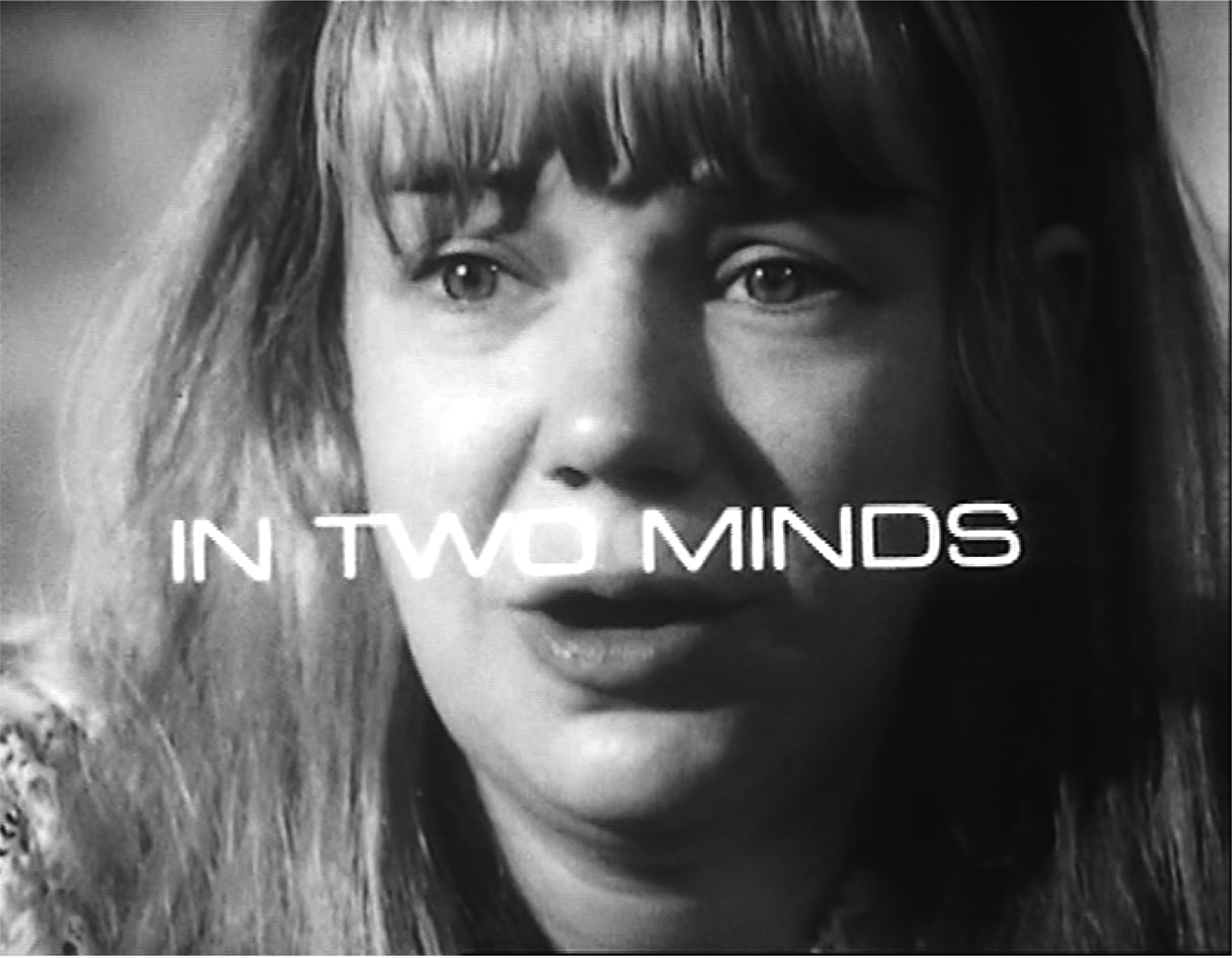
In Two Minds' opening extreme close-up of Kate Winter (Ann Cropper) being interviewed by an off-screen therapist.
For some time I’ve been studying the families of schizophrenic patients. What you will see is extracts from interviews with the family of one of these patients, Kate Winter. When Kate re-entered hospital my research into her case had of necessity to cease. 26
At this moment, Kate's audio returns and she screams. Through the first half of the play, the doctor interviewing the Winters remains off-screen, with the viewer experiencing him only as a disembodied voice. The camera position oscillates between the unseen doctor's point of view and the more observationally ‘neutral’ position of the imaginary documentary film crew.
The second half of the play is more formally experimental, drawing upon contemporary European ‘art cinema’ techniques, with Kate's readmission to hospital triggering a shift ‘from “objective” observation to “subjective” perception’ (Hill, 2011: 69) as the viewer experiences her inner mental world. The camera adopts Kate's point of view, and the viewer hears her inner monologue expressing an internalisation of her parents' negative view of her ‘bad self’. The film's final scene offers a further perceptual shift in adopting the tropes of BBC's factual medical programmes. In doing so, the play's conclusion offers a converging critique of ‘orthodox’ psychiatry and the media apparatuses that sustain it, as Kate is presented as an object of clinical observation paraded in front of medical students. Garnett pointed out in discussion that Sidney Newman objected to this pessimistic structure:
He said he didn't like the film because it gave people no hope. And couldn't we have done the two sequences the other way round. So she started off being treated by orthodox psychiatry and then afterwards by what he called ‘the good guys’ and then she'd feel better.
Garnett insisted, drawing from his wife's experience, that if act one had been with the orthodox psychiatrists, then ‘there’d have been nothing left of her to get better, and in any case it wasn't the point we were trying to make'. 27 For Garnett, the film was about protesting against the use of physical psychiatric interventions, not about advocating for psychotherapeutic approaches.
In Two Minds’ final scene – upon which audiences and critical reception almost universally focused – offers a converging critique of biomedical approaches to mental health and the media forms that perpetuated their dominance. BBC's Documentary and Talk formats dominated medical programming in the 1950s and 1960s (Boon, 2008: 209–32) and, despite their claims to be objective and apolitical, until the late 1960s promoted a very deterministic view of science and medicine as a positive trajectory towards ‘progress and prosperity [for] the world at large’ (Boon and Gouyon, 2014: 477). In Two Minds offers a challenge to this positivist view in revealing the damage caused by ‘modern’ biomedical treatments such as ECT and highlighting the ideological underpinnings of their matter-of-fact presentation in programmes such as The Hurt Mind and Your Life in Their Hands. It is interesting in this regard that the BBC pressured Garnett to contact the NAMH to take up its offer to serve as a technical advisor on In Two Minds, but he ignored the request. 28
The final scene fades from a disorienting montage of Kate's simultaneously mundane and distressing experiences on the ward to a medium close-up of her hunched over as a consultant asks, ‘Kate, how are you this morning?’ As Kate responds ‘incomprehensively’, the camera zooms out to a medium long shot, revealing that Kate and the consultant are in a lecture theatre and she is being presented as a ‘fairly typical case history’ to an audience of medical students. 29 The scene is reminiscent of a Television Talk, a principal genre employed by the BBC for presenting scientific and medical information that was derived from radio, in which, quoting contemporary BBC documentary producer Robert Barr, ‘expert opinion or information is conveyed directly from the authority to the viewer’ (Boon, 2008: 195). The consultant recounts Kate's case history, the ‘double narrative’ of the patient's history and psychiatrists' interpretation (Sealey, 2011), explaining that there is no causal link between Kate's behaviours and her ‘family history’, in fact ‘no detectable relationship between her various symptoms and her environment’. The contentious ‘hopeless’ structure of the play serves a clear ideological function in provoking the viewer to question the psychiatric authority that the ‘clinical picture is a fairly clear one’. After the viewer has witnessed Kate's family dynamic, and the ‘double binds’ (see Bateson et al., 1956) that she has been subjected to, her ‘delusions of persecution, for example, that her mother was killing her and killed her aborted child’, as the consultant interprets it, seem more grounded in the material reality of a schizophrenogenic home environment than the consultant's claims of purely psychical causes within Kate. On completing his narrative of Kate's case history, the consultant opens the floor to the medical students to offer their opinions on diagnosis and treatment.
When a student asks the consultant a question about whether ECT ‘does anything more than simply shake the patient up?’, the editing cross-cuts to footage of an ECT treatment being administered to Kate, but with the dialogue from the consultant in the lecture theatre continuing to create a synchresis between the two medical contexts (see Figure 2). The consultant talks through the on-screen procedure as the relaxant is injected into Kate's arm, and he explains indifferently, ‘Now something between the teeth, that's to stop dislocation of the jaw. Notice how the electrodes are placed.’ Close-ups show Kate's reactions – her hands clenching, her feet jolting – as the detached doctor administering the treatment jokes about a forthcoming job interview. The consultant's voice-over from the lecture theatre continues:
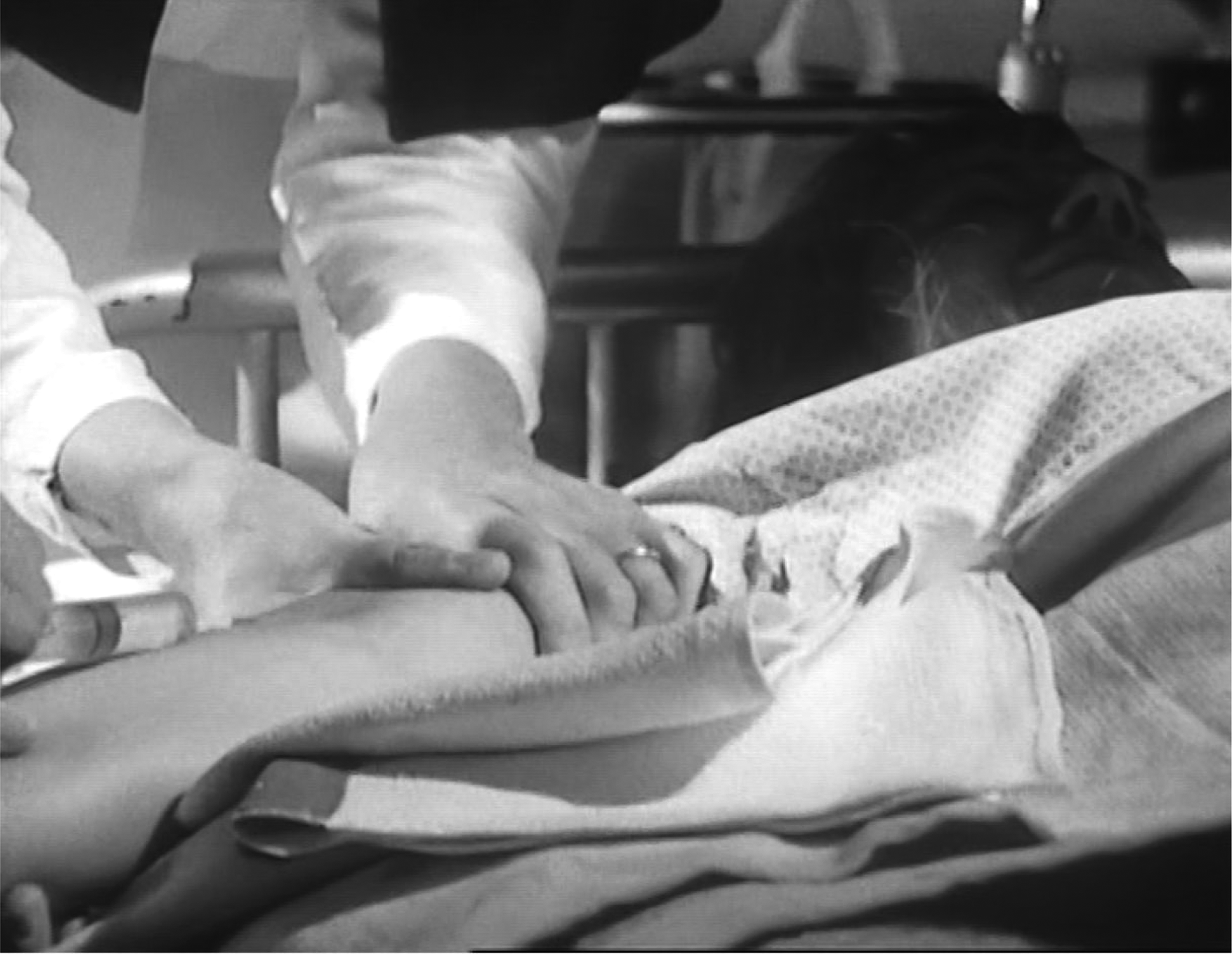
At the conclusion of In Two Minds, the editing cross-cuts to Kate's ECT treatment, with a close-up of a muscle relaxant being injected into her arm.
Of course we don't know how it works, all we know is that it does work quite remarkably. Do you know how this treatment originated? Yes, yes it was pigs. More or less an accident really. Naples I think. My God if we wait to find out why these things work we'd be waiting a long time.
Cutting back to the lecture theatre setting, the students start to pose some more challenging questions, concluding the film with one male student's provocation: ‘With all due respect sir, you seem to be studiously avoiding any environmental factors.… Surely both before as a cause of her illness and after as a means of treatment, one's got to take into account her home background?’
The ‘mundane’ presentation of ECT in In Two Minds is in stark contrast to Hollywood's dominant aesthetic of ‘violent convulsion’ following delivery in unmodified form (without anaesthesia, muscle relaxant, or oxygen), bemoaned by psychiatrists and pro-ECT medical historians in contemporary films such as Shock Corridor (1963), Shock Treatment (1964), and One Flew Over the Cuckoo's Nest (1975; McDonald and Walter, 2009: 202; Shorter and Healy, 2007: 9). Rather, this scene's oscillation from ‘live’ Talk to pre-recorded documentary footage is in keeping with innovations in British factual scientific and medical programming at the time. As Boon (2008: 215) explains, by the late 1950s advances in outside-broadcast equipment meant scientific and medical Television Talks no longer had to be studio-based, so a new genre of ‘built OB’ programmes such as Your Life in Their Hands emerged that made use of real venues, such as hospitals, to lend authenticity to the productions, but which might combine live OB with telecine film inserts. The ECT scene in particular is highly reminiscent of the corresponding one in the ‘Physical Treatments’ episode of The Hurt Mind, which cuts from a studio-based talk format, in which expert guest William Sargant advocates for ECT as ‘the most important of these new methods’, into what appears to be live OB of a ‘staged’ treatment. The In Two Minds sequence presents and narrates the procedure almost shot for shot and word for word as in the earlier programme. This is not to suggest that the scene was a direct recreation of or response to The Hurt Mind, but that in exploiting the audience's familiarity with BBC Talks and Documentary programmes like it, the film was able to expose and undermine the illusion that medics and the media formats that perpetuated their power operated outside ideology.
The BBC Audience Research Report for In Two Minds (dated 29 March 1967) estimates that the 1 March broadcast was seen by 18.1% of the population, representing an audience of almost 10 million. Questionnaires conducted with a representative sample of 335 audience members recorded ‘appreciative response of well over half the reporting sample’, who praised its authenticity, immediacy, and grounding in research, suggesting that it offered ‘new insights’ into important issues ‘we usually choose to ignore’. A number of responses identified this positive mental health awareness function, with one medical social worker commending, ‘A brilliant documentary. I am sure many more people now understand what schizophrenia is all about’. This respondent's interesting generic misrecognition is not discussed in the report, though genre is raised as a key problem for some other respondents. Highlighting the hegemony of factual formats of medical programming, negative responses stated that it should have been ‘a straight documentary’ or a ‘talk by an expert’, while another respondent, designated as ‘housewife’, explained, ‘I know not enough is known about mental illness, but to make a play about it is horrible’. 30 Here the perception of appropriate genres overrides the necessary mental health awareness function.
The production team likely welcomed the fact that the play ‘aroused some misgivings (not shared by all the sample, however) as to whether treatment in mental hospital is as good as it should be’, with some interpreting it as ‘an awful indictment of the mental hospital’. Viewers were said to be ‘particularly disturbed by the final scene in which a psychiatrist discussed Kate's case history with a group of students, in her presence’, which was seen to be ‘distressing to people of nervous disposition’ and ‘those connected with the mentally sick’. Like Sidney Newman, some bemoaned that the play's conclusion offered ‘little hope’, while others were simply confused or put off by some of the play's more experimental narrative and formal techniques, stating that it was ‘disjointed’, bitty', and ‘difficult to follow’ and disorienting in its use of ‘extreme, close-ups’. While responses varied widely in terms of positive or negative views, they were unanimous with regard to viewers reporting feeling unease at the play's conclusion.
Following the broadcast, a special edition of BBC2's Late Night Line-Up set up a discussion between screenwriter Mercer, Laing, and psychiatrist Sargant. Sargant's attack on the play focused on diagnostic accuracy (was Kate a schizophrenic?) and the documentary style misleading the public, rather than the ideological implications of psychiatric labelling. Sargant followed up his appearance on Late Night Line-Up with a letter to the Times bemoaning that the BBC had not offered orthodox psychiatry an equal platform to advocate for its methods. He complained that it was not until 11:45 on BBC2, ‘when there was comparatively few viewers, that a psychiatrist was able to reassure what must have been millions of frightened and anxious people wondering … whether modern psychiatric treatment and conditions in mental hospitals were really as they were portrayed’ in this prime-time BBC1 play (Sargant, 1967a). Sargant's letter promoted a flurry of responses from clinicians, a former patient, and Mercer restating the argument of his screenplay (ibid.). A consulting physician from St Thomas', where Sargant worked, attacked his ‘ill-founded over-confidence’ in psychiatry's modern diagnostic and treatment methods (Yellowless, 1967), while an ex-patient attacked ‘all the learned doctors and psychiatrists’ who had been so ‘righteous recently in the newspapers, and on television, about the cures for mental disorders’. She wrote of her own experience, ‘We have accepted, at the moments of least resistance, their appalling wires attached to our heads; we have accepted the continuing after effects of loss of memory.… We survive, perhaps. But cured – No’ (Dalison, 1967). Sargant's response to this patient's emotive letter was dismissive, restating his statistics on the success of ECT and using it as an opportunity to state that it was not the ‘function’ of (anti)psychiatrists ‘to “change” radically’ or ‘“indoctrinate” patients’ (Sargant, 1967b).
The NAMH's journal, Mental Health, had provided extremely limited space for discussion of the ideas of or comments by anti-psychiatrists up to this point, excepting ambivalent reviews of some of their books (Crossley, 2006: 133). 31 Following In Two Minds' broadcast, however, it offered screenwriter David Mercer a two-page article to ‘answer the critics of his television play’, particularly Sargant, and explain Laing's ‘controversial contention’ that behaviour labelled by orthodox psychiatry as schizophrenic was a ‘special strategy that a person invents to live in an unliveable situation’. More than half of the article is devoted to introducing Laing and his contemporaries' ideas, employing but not directly quoting Laingian language and metaphors, rather than to discussing the play itself. This includes contextualising issues of psychiatric labelling in relation to military behaviour deemed appropriate, even heroic, within the context of the Vietnam War, situating, like Laing (and Cooper) in this period, psychiatric contentions in relation to wider New Left and countercultural arguments. 32 It is interesting, therefore, that the journal's first real engagement with the anti-psychiatry group's ideas was mediated by a BBC screenwriter reflecting on his interpretations of them. When Mercer turns two-thirds into the article to justifying his adaptation, he explains that ‘the play was in no sense an attack on the humanity of those who had to deal with her, but a questioning of their assumptions about madness and sanity’. Mercer moves on to discuss his argument on Late Night Line-Up, challenging Sargant's distinction between the field of mental health and the ‘province of politicians’ by stating that the logic and practices of psychiatry ‘is insidiously entangled with the rationale of our society’ (Mercer, 1967a: 26). In addition to this article, the journal's ‘Mental Health Scene’ section led with the contention triggered by the play, described as ‘a semi-documentary based on case histories described by Dr. Laing’, reporting Sargant's letter advocating for ‘modern physical methods’ in the Times and the reposts it provoked. It went on to praise the ‘informative features’ in the mainstream press, discussed below, which, it contended, countered Sargant's fears that ‘the public might be alarmed and misled’ (‘Mental Health Scene’, 1967). The NAMH sought to offer some advocacy for the value of the play and reconciliation between the two camps.
The mainstream press reception for In Two Minds was on the whole very positive – irrespective of format or political leaning – praising the play for being both ‘dramatically and clinically persuasive’ (Black, 1967). Many of the reviews, like the audience responses, focused on the film's final scene and the unease and uncertainty the ending provoked. The Sun newspaper's review, for example, focused entirely on the play's final five minutes and concluded, ‘A shocking play. Liable, like electric shock treatment, to dislocate the jaw’ (Banks-Smith, 1967). Other reviewers commended the producer's generic innovation of the ‘play-documentary’ (Reynolds, 1967) with its ‘device of presenting the play as a series of interviews’ (Black, 1967). The reviewers felt that this allowed for a sense of enhanced realism and expository probing of ‘little understood shock treatment’ (Eastlaugh, 1967) beyond what was achievable in ‘real documentaries’ (Reynolds, 1967). However, others saw its generic-hybridity (‘the new television genre of talking point plays’) as a cause of dramatic failure, with the Telegraph stating, ‘It was too much of a medical report to be a satisfying drama’ (Clayton, 1967).
The tabloid newspapers in particular used the play as an opportunity to foreground (even escalate) polarisation within the mental health field: ‘Psychiatry in Great Britain is in an uneasy state. The rift between orthodox psychiatry and its opponents is continually widening.’ The Express article continued that In Two Minds put across the views of a ‘rebel group of people interested in mental health’ who ‘totally oppose the old view, the orthodox view, of how to treat “mad” people’. The article introduced the ideas of ‘Dr Ronald Laing, one of the rebels’ and ‘one of Dr. Laing's strongest supporters’, David Cooper, who ‘believes that if you use electro-shocks or operate on the brain, you lessen people as personalities, something you have no right to do’. The article also gave voice to the ‘orthodox’ opinion of psychology professor Hans Eysenck, working within the Institute of Psychiatry at the Maudsley Hospital, who castigated ‘people like Laing and Cooper’ as ‘anarchists’ who ‘do not back up their views with any scientific evidence’ (Hornsby, 1967). While Laing was becoming a familiar figure within educated and countercultural circles (Miller, 2015), both the Express and Mail articles used the play as a way to introduce his ‘rebel’ ideas to their readership; the other reviews made no reference to Laing or his contemporaries by name. This reception challenges the oft-made but exaggerated claim that ‘R.D. Laing's cultural authority and influence in the 1960s cannot be overstated’ (Wilson, 2012: 152). In Two Minds' reception highlights a lack of mainstream awareness of his work, and therefore the importance of the play in bringing these ideas into the public sphere.
In addition to highlighting In Two Minds as introducing the television public to ‘the heart of [the] current argument’ (Hornsby, 1967) within the field of psychiatric contention, the play's reception also identified its ‘propagandist-documentary style of treatment’ (Wiggin, 1967) as a trigger for contention within the media field. Following the play's broadcast, the Express reported that ‘a new battle is blowing up’ at the BBC between producers of documentary and drama regarding the effects of blurring of boundaries between the two generic forms. It reported the ‘open anxiety’ of the documentary department that these ‘new forms of so-called dramas’ were ‘leaving the public in doubt about whether they are watching truth or fantasy and exposing them to a new and potentially alarming method of propaganda’. This provocation of audience uncertainty was identified as explicitly political. The journalist suggested that the drama department were not subject to the same demands on fact checking and bias, and highlighted In Two Minds' inaccuracy in displaying the symptoms and effective treatment of schizophrenia, ‘in the opinion of most psychiatrists’, as testament to this (Thomas, 1967). Writing for the BBC's The Listener, Anthony Burgess also expressed serious concerns about In Two Minds being a ‘dangerous hybrid’ of forms. While seeing it as ‘superbly done’, his vitriolic review railed that ‘In Two Minds was worse than pornography, for pornography offers, if not discharge in itself, at least a signpost pointing to discharge’ (Burgess, 1967).
While In Two Minds prompted some psychiatrists to write to the BBC to bemoan its twin deception in presenting, as Dr M. E. Ward suggested, a ‘fundamental psychiatric error … as though it were a documentary’, others saw the film as an important and engaging intervention into understanding schizophrenia. 33 Mercer's response to Ward's letter claimed he had received ‘sixty or so letters’ from ‘general practitioners, psychiatrists, child psychologists and mental nurses’ commending and corroborating the play's clinical underpinnings, while the medical school in Glamorgan and sociology department at the University of Edinburgh contacted the BBC to ask if they could have a copy of the film to screen to their students. 34 Laing also contacted the BBC to arrange for the play to be screened at an international conference on ‘The Origins of Schizophrenia’ at the University of Rochester (US), at which he was presenting in late March 1967. As the space given over to Mercer suggests, the NAMH were beginning to see the necessity of engaging with and understanding the increasingly publicly circulated anti-psychiatric ideas and its charismatic personalities. In 1968, the NAMH's MHFC invited Laing to participate in an October 1968 meeting called ‘Psychiatry and the Communicators’. The meeting brought together leading television executives, film-makers, journalists, politicians, and clinicians to discuss the ways in which psychiatry was and might be presented in the media. Laing accepted the invitation to attend and participate in the discussion with invited delegates including BBC's new head of drama, Michael Bakewell; Penelope Mortimer, author of the recently adapted novel The Pumpkin Eater (1962); and a number of the people involved in The Hurt Mind, including Sargant. 35 This attempt to reconcile, even incorporate elements of anti-psychiatry into their advocacy rather than defend against it indicates the emergence of a discursive shift that would culminate in the MIND rebrand.
Expanding minds: The diffusion of ‘anti-psychiatry’ into the mainstream
From 1963, R. D. Laing made appearances on a number of Television Talk programmes discussing mental health issues, but after In Two Minds he was, according to his son and biographer Adrian Laing, entering a ‘new, unchartered league of fame. People wanted to know his opinion on everything – drugs, madness, religion, politics, childbirth, Vietnam, love and violence’ (Laing, 1994: 139). These prime-time appearances talking on a range of topics, as well as press reports on controversies such as the banning of a 1967 documentary on LSD he made for ITV arts programme Tempo, broadened public awareness of Laing and his work, but also sowed the seeds of media caricature of him and his association with the ‘counterculture’. For example, in the bawdy British film comedy The Bliss of Mrs. Blossom (1968), Bob Monkhouse plays the ‘unorthodox’ Harley Street psychiatrist Dr Taylor as a caricature of Laing. With a Scottish accent, long sideburns, and countercultural dress, the media-obsessed Taylor charges erratically around his psychedelic office before launching himself at his client and promising, ‘You’re not lost now, I’m with you from now on, except when I'm on television’.
The production and reception of the 1971 feature film remake of In Two Minds, retitled as Family Life, has to be understood in this context, as Laing's increasing celebrity fed into the shifting landscape for the fields of mental health and psychiatric contention. Garnett saw revisiting the themes of the earlier play within commercial cinema as a way to bring these personal and intellectual provocations to a wider and more international audience. He persuaded the reluctant Loach and Mercer to team up with him again, and following the commercial and critical success of his and Loach's first feature film Kes (1969), was able to secure co-financing of the £175,000 film from Anglo-EMI and the National Film Finance Corporation. The film is more conventional in its style and narrative structure than In Two Minds, maintaining a more distanced observational mode that is more recognisable as Loach's social realist oeuvre. The key narrative shift for the purpose of this article is with regard to the enlarged role and on-screen presence of the progressive psychiatrist Dr Donaldson, within one-to-one psychotherapy sessions shown in flashback, and newly introduced scenes set in an experimental ward within an NHS hospital. The script explains that this ward is ‘run on similar lines to Villa 21 at Shenley’ with ‘daubs and paintings on the walls, pieces of paper – no “order” in the conventional sense’ (see Figure 3). 36 The protagonist Janice (Sandy Ratcliff) is voluntarily admitted to this therapeutic community which Donaldson oversees, and starts to respond well to the treatment. However the ward becomes, like Villa 21, a ‘political battleground’ that reveals the limits of institutional reform (Wall, 2017: 80) and is closed down by hospital authorities. Janice has to return to the conventional psychiatric wards and to biomedical treatments, including ECT. She is momentarily ‘liberated’ when boyfriend Tim rescues her from the hospital, but this is curtailed when her parents agree to have her involuntarily committed, and the film concludes, like In Two Minds, with the lecture theatre scene in which the consultant exhibits her to students as a ‘typical case history’.
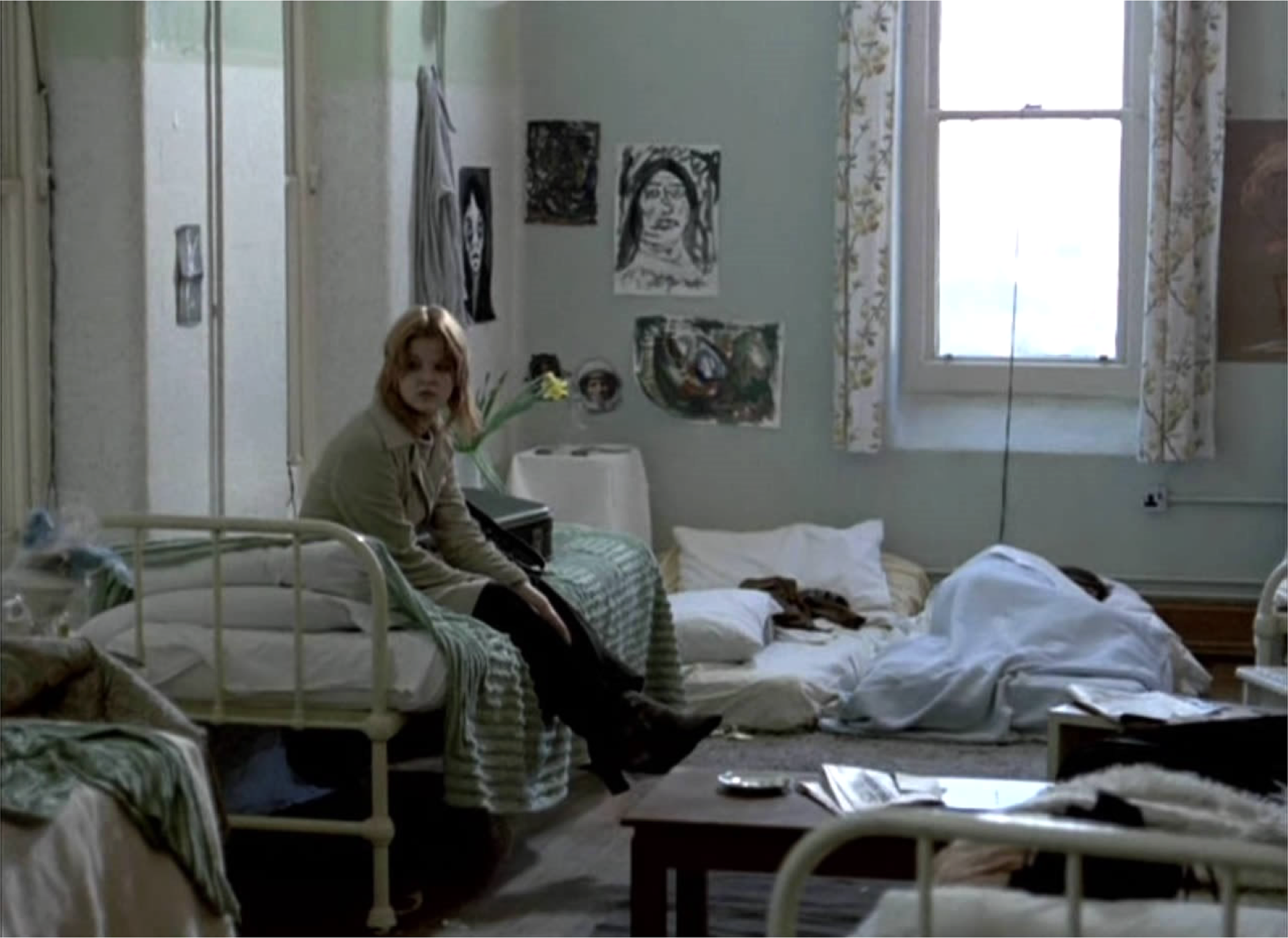
Janice settles in to the Villa 21-inspired experimental ward with ‘daubs and paintings on the walls, pieces of paper – no “order” in the conventional sense’.
Dr Donaldson was played by a real doctor, Dr Mike Riddall, who worked as a psychotherapist in private practice ‘but had spent some years in National Health hospitals’. 37 The extensive use of the scenes of the therapy sessions (rather than interviews) conducted by Donaldson/Riddall with ‘schizophrenic’ Janice and her parents, and the group therapy sessions he conducts within the experimental ward, allows for much more exploration of the approach and value of the psychotherapeutic method. Loach highlights Riddall's role as lending more than medical authenticity, in his use of psychotherapeutic skills in bringing forward an emotional truth in individual performances and in the dynamics between the actors/characters. Loach explains:
Obviously, the family in the film is a fictional family, but Mike was very subtle and clever at exploring the real personalities of the people we brought in to play the other characters. In a way what emerged was almost a documentary about the people in the film. (Loach, quoted in Fuller, 1998: 44–5)
In addition to this influential on-screen role, Riddall provided ‘day to day advice’ on set regarding hospital routine, medical procedures, and bureaucracy; persistent annotations on the shooting script to ‘ask Mike’ attest to this daily role. This everyday advice was in addition to Laing's reappointment as uncredited technical advisor. The decision to remove Laing's name from the film's titles and from any UK publicity – a blow for the producers given Laing's degree of celebrity by the early 1970s – was motivated by concerns raised by Laing and his union, the Medical Defence Union (MDU), regarding possible litigation. Following lengthy correspondence between Kestrel Films, Laing's secretary, the MDU, and the British Medical Association Central Ethical Committee, executive producer Irving Teitelbaum sent ‘confirmation that Laing's name should not be included nor should reference be made to his writings in the film production thereby reducing the risk of Laing being charged before the General Medical Council’. 38
Mercer's script revisions highlight some significant inputs from Laing, however, including the complete rethinking of the meeting of the General Management Committee where it is decided not to renew Dr Donaldson's contract and, therefore, to close the experimental ward. The original scene featured heated allegations of ‘very disturbing and irregular’ goings on – including ‘dark suggestions of sexual goings on between staff and patients’ within the ward as justification for its closing, which chimes with Cooper's Villa 21 recollections of a ‘fantasy existing in the minds of many staff outside the unit that rape, sexual orgies and murder [were] daily occurrences in the unit’ (Wall, 2017: 65). However, Mercer explained, ‘Laing has made it clear to me that none of the “undercover” or unconscious, or half-conscious alignments of staff which might exist against Donaldson would be revealed’. 39 Therefore, despite converging clinical, political, and economic objections to the ward and Donaldson, the superintendent insists, ‘As far as this committee meeting is concerned it is an administrative matter’.
The scene cuts to Janice and a number of other women being marched down a drab hospital corridor, then a curtain being pulled back as she is invited by a nurse into a white ECT treatment room. The placement of this scene following the sacking of Donaldson and the closing of the experimental ward, sets up a clear causal logic and converging economic and political motivations for (Janice's) ECT treatment. The scene is shot largely in mid shot from the foot of the bed, observing delivery of the modified treatment in a similar fashion to The Hurt Mind and In Two Minds' sequences. In this scene, however, we do not hear an authoritative commentary; rather, we hear Janice's repeated weak and pitiful protests: ‘I don't want it’, ‘I don't want an injection’, ‘I don't want to go to sleep’, and ‘Ouch, ouch’. After the treatment, Janice is wheeled into the corridor and placed in line with nine other patients in recovery position following the same treatment, confirming the economic logic and conveyor-belt approach to ECT. The film cuts to the consultant Carswell explaining to Janice's parents that ‘our first objective is to get people in Janice's condition out of hospital and back to normal life’, then a subsequent scene of Janice back in factory work, further reinforcing the role of converging social institutions – the hospital, the family – in serving the economic system at the cost of mental well-being.
The studio publicity for the film anticipated, even courted, contention within and between the medical and media fields, with the ‘Exploitips’ section of the pressbook explaining that ‘Family Life has created vast controversy with those members of the psychiatric world who have seen the film’. It continued that ‘members of psychiatric departments of the local hospital were invited’ to press screenings, and it was ‘generally found that there is considerable difference of opinion both with the press and the medical profession’ (Anglo-EMI, 1972). As with In Two Minds, Family Life mostly received positive reviews from across the spectrum of the popular press, in specialist film publications, and even in some medical journals. The reception also demonstrated much more awareness and acceptance of the clinical and political convergences of anti-psychiatry underpinning the film. The mainstream press reception of Family Life almost universally used the terms ‘Laingian analyst’ (Walker, 1972), ‘Laingian therapist’ (Malcolm, 1972), or ‘Laingite psychiatrist’ (Connolly, 1971) as a shorthand for Riddall's character, highlighting the increased popular awareness of Laing by the early 1970s. The reviewers aligned more with the ideas of Laing and anti-psychiatry, even within right-wing publications such as the Daily Mail and the Times, which commended the ‘progressive psycho-therapy based on R.D. Laing's ideas’ while condemning the ‘production line methods of drugs and shock therapy’ (Robinson, 1972). Though In Two Minds' basis in ‘rebel’ Laing's ideas were considered radical and contentious, by Family Life's release it was orthodox psychiatry's use of ‘lock ’em and shock ’em’ treatments that were the subject of media controversy and disgust. This represents a significant shift in media discourse on anti-psychiatry that was part of a wider transformation in the field of mental health. Correspondingly, some medical journals included reviews of Family Life (which was unusual), and were supportive of its psychiatric critique. This included a lengthy article in General Practitioner, which consulted psychotherapist and former Kingsley Hall resident Joseph Berke for his professional view on the film (Illman, 1972), and a positive review in the in-house NHS journal the British Hospital Journal of Social Service Review. The NHS journal, like a number of newspapers, stressed that the producers were ‘not attacking the health service but the acceptance by many of its workers of the categories within the system’ (‘Adolescent Identity Crisis on Film’, 1972).
The reception of Family Life should be understood in the context of ‘a variety of different reactions’ within the field of psychiatric contention in the late 1960s and early 1970s, which ‘carried some of the energy and controversy of antipsychiatry, but had their own effects’ (Crossley, 2006: 126). These include: a clinical, cultural and media terrain that was more aware and understanding of anti-psychiatry's (and particularly Laing's) demands for psychiatric revolution; the ‘radical transformation’ of the NAMH into MIND as it adopted a civil rights approach that, in certain respects, aligned with anti-psychiatry discourses (Toms, 2020); and the emergence of new mental health networks and social movement organisations that sought to address anti-psychiatry's limitations. By the time of Family Life's release in December 1971, the NAMH had launched its MIND campaign that led to the organisation's rebranding in 1972. The reorientation to MIND – with its focus on advocating for patients rather than the profession – was in part a response to the media's damage to the public image of orthodox psychiatry. 40 The rebranded MIND journal published a laudatory seven-page review of Family Life that hailed it ‘the most important film on a mental health subject to appear for many years, perhaps the most important, full stop’. 41 While the same publication's article on In Two Minds in 1967 had characterised Mercer's screenplay as giving voice to Laing's ‘controversial contentions’ regarding schizophrenia, conversely MIND characterised Family Life as about ‘the controversy surrounding methods of treatment in psychiatry’ such as ECT (Fox and Payne, 1972: 34).
The MIND film reviewer, John Payne, positioned himself in opposition to ‘the psychiatrists who are bent on administering drugs and ECTs’, and sympathetic to ‘both Laing and David Mercer … questioning … the basic idea that there are mad people and sane people and mad people must be cured i.e. the philosophy of psychiatry’ (Payne, 1971: 13). He foregrounds the ECT scene as ‘a deeply disturbing sequence this, hinting at wide and indiscriminate use of “shock treatment”’; Janice’s experience is not an isolated case caused by one over-zealous ‘shock ‘em and drug em [sic]’ psychiatrist, but an expose of a wider failing in institutional mental health care that prioritises economic imperatives at ‘the expense of the individual patient’ (ibid.: 13). While Payne suggests that the film ‘will un-doubtedly be disturbing, even to the best-adjusted cinema-goer’, he hopes it reaches the ‘wide audience it deserves’ (ibid.: 16). There is a clear discursive shift away from the NAMH's paternalistic approach to protecting the public and the profession from negative depictions of psychiatry, to advocating for the rights of individual patients. This was in line with MIND's emergent civil rights agenda, campaigning on behalf of patients in respect of issues such as involuntary ‘sectioning’ and the coercive use of ECT (both appearing in Family Life).
In the subsequent issue of MIND, Family Life prompted a further five-page article discussing the film in relation to the wider concern that ‘mass media seems to be polarising psychiatry artificially’ (Fox and Payne, 1972: 34). The article, based on an interview between MIND colleagues Payne and Dr Richard Fox (pioneer of ‘Group Homes’ at Severalls), sought to play down the idea of a fundamental split within an increasingly integrated mental health field, instead highlighting popular media, and television in particular, as the source of contention. Fox states that Television Talks and Documentaries seek a ‘good old studio punch up’ between ‘extremes who go down well in television, one extreme being Dr William Sargant’ and the other, Laing, as ‘good “meat” for dramatic material’ (ibid.: 35). While the NAMH had sought to use these television formats, and divisive figures like Sargant, to bring psychiatry into public view, in the MIND article Fox concluded, ‘I’m developing the feeling that we are seeing too much psychiatry on television' (ibid.: 38). 42 For MIND, television's polarising approach to mental health is in stark contrast to Loach's film with its ‘halting pace’ and narrative ‘packed with subtleties and nuances’. Extending his commendation beyond Loach to the whole production team, in his review Payne continues that ‘the direction has the sensitivity which is becoming Kestrel's hall-mark’ (Payne, 1971: 16). Following Family Life, MIND's MHFC collaborated with Kestrel Films (Loach and Garnett's production company) and the Spastics Society (now Scope) on Like Other People (1972), a documentary film about a Down syndrome couple, Margaret and Willie, who live in a mixed-sex hostel, which revealed the moral policing of sexual relationships of disabled people in the early 1970s. MIND's publicity for the film positioned it as a ‘plea for the rights of all handicapped people – the right to emotional and sexual fulfilment, the right to relationships, the right to marry’ (‘Like Other People’, 1972: 12). The film, directed by Paul Morrison and produced by Irving Teitelbaum (the associate producer on Family Life), won the first Grierson Award for documentary and was later screened as part of BBC's Man Alive (1965–81), with a subsequent live discussion hosted by Desmond Morris.
If the reception of Family Life in one respect demonstrates the hegemonic incorporation of elements of anti-psychiatry discourse into the transforming field of mental health – and the emergence of MIND in particular – in other respects it anticipates the evolution of nascent mental health advocacy and social movements arising to address anti-psychiatry's limitations. A lengthy article in the countercultural International Times demonstrated the timeliness and authenticity of the film by amalgamating their review of the film with testimony from ex-patients received both directly to the magazine and via the mental health network, People, Not Psychiatry, the formation of which David Cooper was involved in. These letters exposed ‘examples of the dehumanisation’ experienced by people sectioned and treated with physical methods, highlighted cases in which ‘the treatment enjoyed by [the respondents] is, if possible, rather worse than that shown even in Family Life (and that is pretty bad)’. As a result, the film was applauded as ‘an invaluable primer for anyone attempting to understand … the way in which the psychiatric system acts as an agent of social control’ (‘Death in the Family’, 1971). At the other extreme, parent groups drew on accounts of family members to promote an anti-anti-psychiatry perspective that was becoming consolidated in groups like the Schizophrenia Association, who lobbied the British Board of Film Censors in 1973 – with the reluctant support of the Ministry of Health – to reverse their classification decision on the film. The Schizophrenia Association castigated Family Life as ‘New Left’ propaganda that represented a ‘grossly exaggerated picture of the effects of electroconvulsive treatment’ and ‘presents psychiatrists as tricksters and half-wits’. 43
Family Life was not commercially successful at the UK box office, despite near universal praise by critics, many of whom attributed its artistic merits and authenticity to the fact it ‘totally ignores the demands of commercially successful film making’ (Palmer, 1972). Other critics blamed distribution and promotional issues, including the film's release in the run-up to Christmas and the ban on making links to Laing's involvement in UK press and publicity (Billington, 1971). 44 The film was far more successful in the US and France, where much was made of ‘the Mick Jagger of psychiatrists’ Laing's connections to the film. In October 1972, Variety reported a ‘windfall’ for the US premiere of the film (released in America as Wednesday's Child) on a two-week run in New York, citing Laing's nightly post-screening panel appearances as the reason for this box office success. This, it reported, had prompted the film's distributor to revise its release strategy to ‘slot pics [sic] openings around the country with a national tour which Dr. Laing is about to undertake’ (‘NY Film Fest’, 1972: 20). In France, the film was ‘an instant hit’, as ‘Ronnie [Laing] had just been translated into French and the French intelligentsia were just getting onto him. So they loved the idea of the film’. 45 The film was heavily promoted and discussed in relation to Laing's ideas and celebrity rather that the relatively unknown film-makers. Accordingly, this ‘made Ken's [Loach] reputation in France, which has kept him going ever since’. 46
Conclusion
During the process of writing this article, I was sad to learn that Tony Garnett had died following a short illness. 47 Garnett was a pioneering television and film producer who, as his friend and collaborator Ken Loach explained, ‘understood the basic conflict at the heart of society, between those with power who exploit and those who are exploited’, and harnessed the familiarity of popular media genres to provoke public awareness and agitation at these power imbalances (Loach, quoted in ‘Tony Garnett: Tributes’, 2020). In Two Minds has been characterised as ‘very much Tony's project’ (Loach, quoted in Fuller, 1998: 25), but as this article has demonstrated, the play's production was an inherently dialogic process motivated by converging political motivations to unmask the ideologies operating within and across the social institutions (healthcare, the media, the family) in which the producers were enmeshed. In Crossley’s (2006) terms, this represents a synergistic alliance between actors from the fields of psychiatric contention and a corresponding field of media contention, but also resonates with more recent revisionist histories of anti-psychiatry that seek to challenge the idea of a clear split between anti-psychiatry and British medical ‘orthodoxy’. The reception of In Two Minds highlights the television play's key role in introducing and circulating the actors and ideas comprising the ‘anti-psychiatry group’ (Wall, 2017) into popular discourse – challenging assumptions of Laing's ubiquity at this time – but also the simplification of a polarisation of British psychiatry into two opposing camps as predominantly a media contrivance. Five years on, Family Life was produced and circulated in a context in which awareness and appreciation of ‘anti-psychiatry’ was more integrated into converging clinical, media, and cultural terrains. This included the UK's leading mental health organisation, the NAMH/MIND, looking to both Laing's ‘guru image’ (Laing, 1994: 161) and Garnett and Loach's Kestrel Films as models for successful public communication, as it shifted its attention from advocating for the profession to protecting patients' rights. From The Hurt Mind to In Two Minds to MIND, understanding these media interventions into mental health through their influence upon both institutional practice and popular discourse demonstrates the significant historical role of popular media in not only circulating but also corroborating and contesting medical knowledge.
Footnotes
Declaration of conflicting interests
The author declared no potential conflicts of interest with respect to the research, authorship, and/or publication of this article.
Funding
The author disclosed receipt of the following financial support for the research, authorship, and/or publication of this article: This work was supported by the Arts and Humanities Research Council (grant number AH/P005136/1).
