




Abstract
With the rise of the Sustainable Development Goals (SDGs), green entrepreneurship has emerged as a key strategy for advancing sustainable economic development. Although interest in entrepreneurial intentions is on the rise, research focusing specifically on green entrepreneurial intention among Malaysian university students remains limited. Therefore, this study aims to examine the role of green curriculum exposure, sustainability awareness, and self-efficacy in green entrepreneurial intention among university students based on the Social Cognitive Theory (SCT) and the Theory of Planned Behavior (TPB). A total of 302 respondents were collected from undergraduate students studying in public and private universities in Malaysia using a purposive sampling technique. Partial Least Squares Structural Equation Modeling (PLS-SEM) was employed for assessing measurement and structural models. The results revealed that green curriculum exposure and sustainability awareness positively impact self-efficacy. Additionally, green curriculum exposure positively impacts sustainability awareness, and self-efficacy positively impacts green entrepreneurial intention, which has been confirmed. Similarly, the mediating role of self-efficacy between green curriculum exposure, sustainability awareness, and green entrepreneurial intention was supported. The findings contribute to the theoretical and practical implications of green entrepreneurship by providing empirical evidence within the Malaysian context. The Ministry of Higher Education and relevant stakeholders can design targeted green education to foster sustainability-driven entrepreneurship among university students.
Keywords
Introduction
With the rise of global economic development, human activities have led to various environmental and ecological problems, prompting the Sustainable Development Goals (SDGs) to gain significant attention worldwide. Numerous studies including Sharma et al. (2024), Al-Azab and Zaki (2024), and Agu et al. (2021) have highlighted that entrepreneurship has evolved to align with the SDGs, expanding its focus beyond economic growth, but also focusing on the drivers of green entrepreneurial intentions, especially from an educational perspective. Nowadays, humankind is concerned about how to ensure that development occurs to satisfy present needs without compromising the ecosystem. This shift in mindset has spurred the emergence of green entrepreneurship among future entrepreneurs, particularly the young generations. As Ramayah et al. (2022) highlighted, green entrepreneurship is a business that integrates environmental awareness with entrepreneurial actions into a more sustainable business model. Building greener entrepreneurship is not only a responsibility for organizations but also for higher education institutions. For instance, green education has emerged as a crucial national framework for equipping future leaders to drive sustainable progress in entrepreneurship. It helps students become aware of natural, historical, and socio-aesthetic values in discovering alternatives to environmental problems. This concept has been further explained by Adnyana et al. (2023) as an environmental conservation principle integrated into their academic syllabus. Students can foster their sustainability awareness through active participatory learning by empowering them to engage in green entrepreneurship (Akinsemolu and Onyeaka, 2025). Academicians can no longer rely solely on textbooks or conventional teaching approaches to deliver their classes, which may reduce students’ interest in learning green concepts. In contrast, academicians can actively adopt hands-on activities or problem-based learning to enhance their critical thinking (Phan and Phan, 2024). For instance, Phan and Ninh (2025) highlighted that integrating traditional lectures and guest speaker sessions can significantly enhance participation’s verbal communication and promote green practices. In the meantime, company field trips are also considered as an effective initiative to increase students’ sustainability awareness through corporate social responsibility-related content (Phan and Ninh, 2024). Throughout the learning process, students can improve their fundamental green knowledge and stimulate their intention to become green entrepreneurs in the future. Without a doubt, university students become key actors in green entrepreneurship, which will significantly contribute to their nation’s economy through green entrepreneurship education in the future.
Although research on green entrepreneurial intention is expanding, particularly among university students (Mawardi et al., 2025), limited attention has been given to the role of green education and sustainability awareness in contributing to this intention. For instance, previous studies have primarily focused on personality traits or individual dimensions related to green entrepreneurship intentions, including Dude and Mulyani (2024), Qazi et al. (2020), and Amponsah et al. (2024). In addition, environmental factors on green entrepreneurship intentions have also been studied by Yasir et al. (2023) and Le et al. (2023). In comparison, relatively few studies have examined the influence of green curricular exposure on students’ intentions to engage in green entrepreneurship, leaving a noticeable gap in the literature. This notion is also further supported by Mawardi et al. (2025) and Rahayu (2024); future research should incorporate green curricula and sustainability awareness to better understand the drivers behind green entrepreneurial behavioral intention. In addition, Akinsemolu and Onyeaka (2025) also noted that although higher education institutions have increasingly adopted green curriculum initiatives, there is limited empirical evidence on their role in enhancing students’ sustainability awareness. This hinders the critical role of the green curriculum in enhancing students’ sustainability awareness throughout the learning process. As a result, the collective past studies leave a critical gap concerning the process through which green entrepreneurial intentions are developed. Therefore, this study aims to examine the effect of green curriculum exposure and sustainability awareness on university students’ self-efficacy and their intentions to engage in green entrepreneurship.
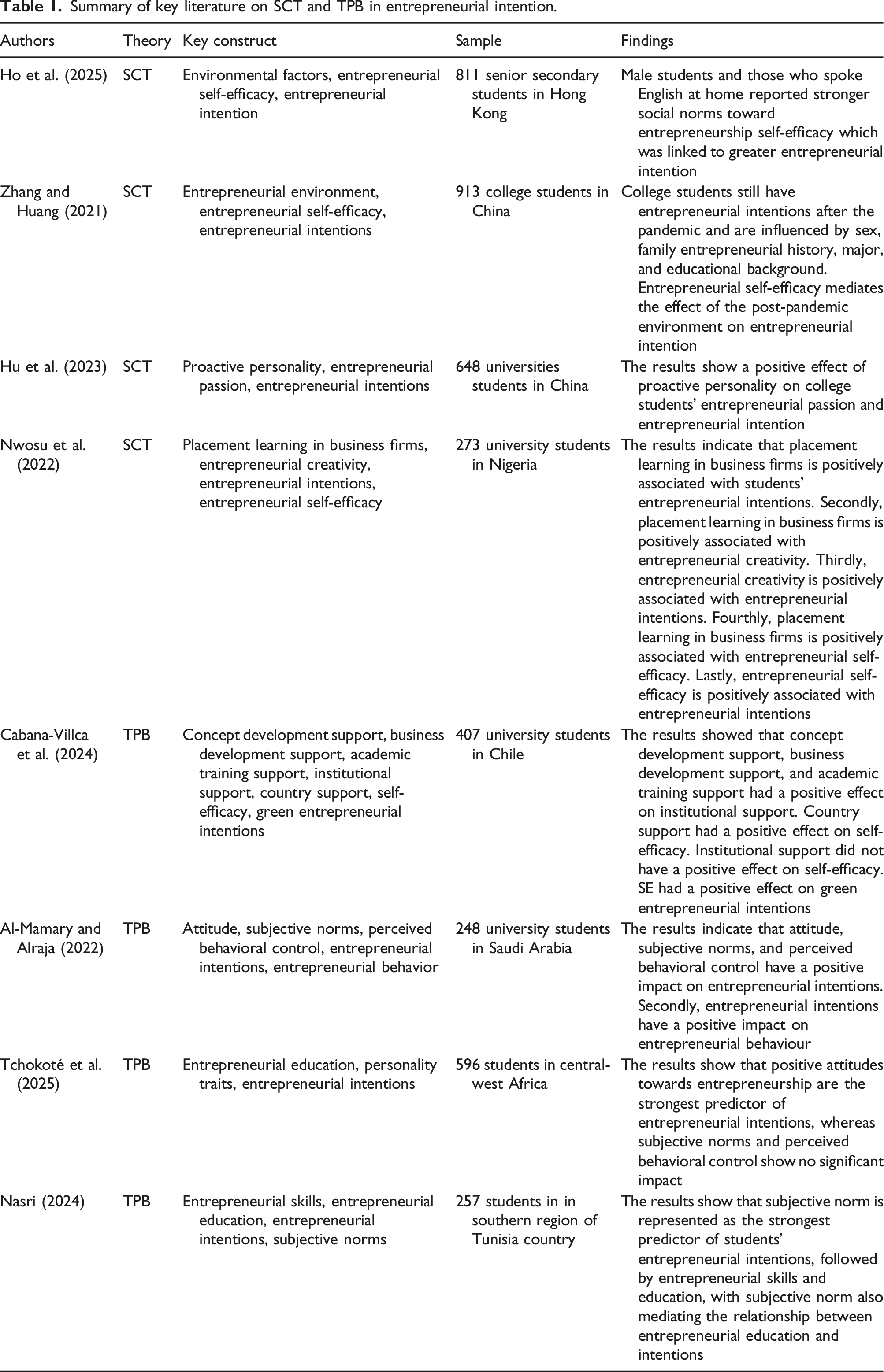
In addition, the present study integrated the social cognitive theory (SCT) and theory of planned behavior (TPB) to examine the antecedents of green entrepreneurial intention. According to the SCT, people can learn in a social context through a dynamic reciprocal interaction among the individual, environment, and behavior (Bandura, 1977). This implies that people’s actions are not only shaped by their internal cognition but also by the external environment. For instance, external factors, such as family and university support, may influence their self-efficacy during the entrepreneurship journey. Although SCT has been widely applied to multiple environmental and personal factors on entrepreneurial intentions, including those studied by Nwosu et al. (2022), Hu et al. (2023), and Boutaky and Sahib Eddine (2023). The pathway from educational curriculum and sustainability awareness to self-efficacy remains underexplored, particularly in Malaysia as an emerging country. Hence, drawing on the principles of SCT, this study examines how green education exposure and sustainability awareness influence their self-efficacy. In parallel, the TPB provides a well-established framework for understanding how students tend to form their behavior based on three main constructs: attitude, subjective norms, and perceived behavioral control (Romero-Colmenares and Reyes-Rodríguez, 2022). In the context of green entrepreneurial intention, perceived behavioral control plays a crucial role, as it reflects an individual’s evaluation of how easy or difficult it is to perform the behavior. However, prior studies, such as those by Li et al. (2023), Tchokoté et al. (2025), and Nasri (2024), have consistently found that attitude and subjective norms have a stronger effect on entrepreneurial behavior compared to perceived behavioral control. The varied results of behavioral control can be explained as varying across different countries, educational contexts, and population segments (Chin et al., 2024), suggesting that self-efficacy, as perceived behavioral control, can be included in future studies to examine students’ entrepreneurial behavioral intentions. Responding to the call from Chin et al. (2024), self-efficacy was included in this study to gain a more comprehensive understanding of how these factors influence green entrepreneurial intention in the Malaysian young generation context. Consequently, this study can contribute to the entrepreneurial literature on students’ intentions to become green entrepreneurs, underpinned by SCT and TPB. In the meantime, the present findings provide comprehensive insight for educational institutions and policymakers to promote graduates’ involvement in starting green businesses.
Underpinned theories
SCT posits that behavioral outcomes are represented as a three-way reciprocal interaction among personal inputs, environmental factors, and one’s past experiences (Maheshwari et al., 2023). It sheds light on the fact that individuals can learn by observing the behaviors and results of others. Particularly in entrepreneurship studies, SCT has been widely applied to understand how entrepreneurs can thrive in today’s business environment through observation and learning from others. For instance, Ho et al. (2025) and Zhang and Huang (2021) underpinned the SCT to examine the role of environmental factors in cultivating an individual’s intention to become an entrepreneur. This implies that the external environment can serve as a resource pool for individuals to enhance their knowledge, thereby heightening their intention to engage in entrepreneurial behavior. Similar to Hu et al. (2023) and Nwosu et al. (2022), who shed light on the role of psychological and personality factors in influencing entrepreneurial intention, thereby contributing to the growing body of knowledge on entrepreneurship. However, within the SCT framework, the role of green curriculum exposure and sustainability awareness in self-efficacy remains underexplored. As Rahayu (2024) stated, the role of green curriculum exposure and sustainability awareness cannot be overlooked, which is important for examining green entrepreneurial intentions. To narrow the gap, this present study conceptualized green curriculum exposure as the environmental factor, sustainability awareness as a personal factor, and self-efficacy as the individual’s cognitive knowledge in pursuing green entrepreneurship.
Summary of key literature on SCT and TPB in entrepreneurial intention.
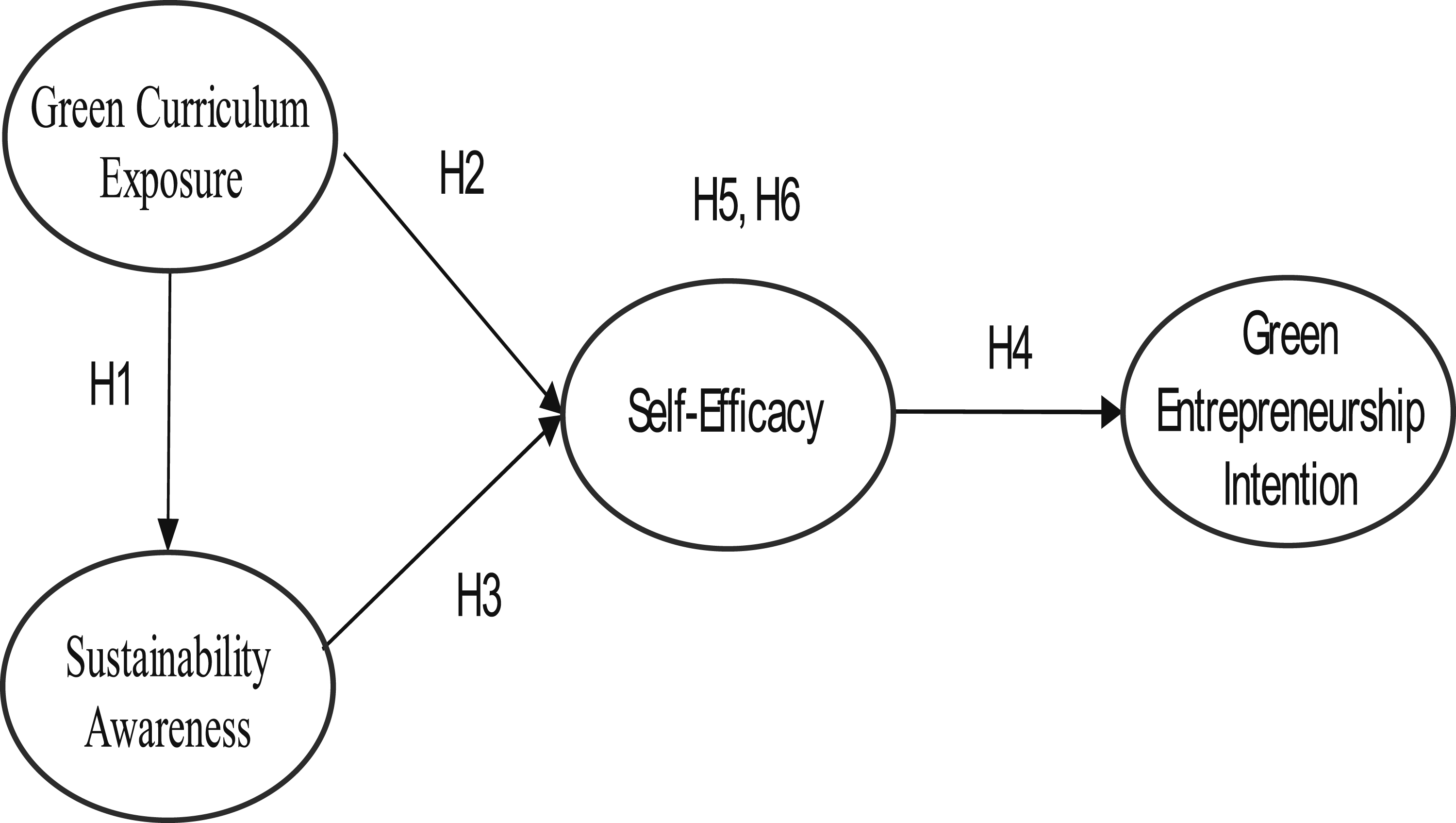
Research framework.
Green curriculum exposure and sustainability awareness
There is a general consensus that green education plays a crucial role in breaking the cycle of intergenerational poverty and protecting the environment, ensuring continued sustainability for both present and future generations (Akinsemolu and Onyeaka, 2025). As explained by Chen et al. (2025), green education is an instructional approach that focuses on educating individuals about environmental issues, ecological principles, and sustainable practices. This is because an individual’s green behavior is not solely based on their personal characteristics but also influenced by their educational experience. For instance, Koulougliotis et al. (2021) applied green chemistry principles in two context-based high school projects to investigate their student’ awareness. The results showed that a green curriculum has a significant impact on students’ awareness of how chemistry is connected to the society in which they live. Likewise, Curdt-Christiansen (2021) revealed that textbooks incorporating environmental information not only provide students with opportunities to participate in environmental protection. In the meantime, the researchers also found that students’ awareness of environmental ecosystem issues will significantly develop through the reading process. This notion has been further supported by Chan et al. (2025), Khalili et al. (2024), and Sahabuddin and Dirawan (2022). Leveraging green syllabi or classroom initiatives acts as a motivator to encourage both teachers and students to be more concerned about the environment in which they live. This is due to the fact that educational support in the form of green curricula can impact their environmental awareness of the ecosystem. To achieve sustainable development goals, Akinsemolu and Onyeaka (2025) further claimed that applied green education through a participatory approach can significantly enhance students’ sustainability awareness. This is because students who are actively engaged in the classroom can effectively internalize sustainability principles by fostering a deeper understanding of sustainable practices. Hence, the following hypothesis is proposed:
Green curriculum exposure has a significant positive effect on sustainability awareness among Malaysian university students.
Green curriculum exposure and self-efficacy
Without a doubt, green education benefits from incorporating environmentally focused syllabi into the learning process. Its goal is to help individuals become more aware of social, environmental, and economic issues by encouraging them to actively explore potential solutions to environmental problems (Küçükaydın and Ulum, 2023). For instance, green educational programs can be implemented across the lifespan, targeting young adolescents, who may be especially important. This is because the young generation could be the country’s future pillars and crucial agents for sustainable change. In addition, a green curriculum not only creates awareness among the public but also enhances their self-efficacy level in addressing these environmental issues. For example, Mambali et al. (2024) demonstrated that entrepreneurial education has a significantly positive effect on green self-efficacy among Tanzanian respondents. Students who receive entrepreneurial education, particularly with a focus on sustainability, are able to develop greater confidence to engage in sustainable business practices. Likewise, Soomro and Shah (2022) found that the acquisition of entrepreneurship knowledge positively predicts entrepreneurial self-efficacy among Pakistani commerce students. These results suggest that student exposure to entrepreneurial courses enhances their self-efficacy in addressing the dynamic challenges associated with pursuing entrepreneurial ventures. In addition, Hoang et al. (2020) and Wardana et al. (2020) have also found a significant role of curriculum in self-efficacy, highlighting that individuals with sustainability knowledge can bolster their confidence level in navigating the complexities of business. These findings align with those of Rahmanto et al. (2024), who found that entrepreneurship education has a significant impact on students’ self-efficacy in pursuing an entrepreneurial journey. Effective entrepreneurship education can effectively cultivate students’ motivation towards entrepreneurial careers and help them recognize and develop their entrepreneurial potential, which they may not be aware of. Therefore, the following hypothesis is proposed:
Green curriculum exposure has a significant positive effect on self-efficacy among Malaysian university students.
Sustainability awareness and self-efficacy
With the alarming impact of environmental problems on humans, individuals are increasingly becoming aware of ecological issues. This growing concern about ecology is gradually leading people to participate in environmentally friendly activities (Guiao and Lacap, 2022). For instance, Zheng et al. (2023) highlighted that consumer competitive awareness has a significant impact on respondents’ green self-efficacy in China. Individuals who perceive environmental issues as a competitive challenge may experience a change in their confidence to engage in sustainable behaviors. A similar notion has been proved by Dude and Mulyani (2024), who found that self-awareness has a positive impact on self-efficacy. Individuals with higher self-awareness are more likely to believe in their ability to make responsible decisions. In the context of the students, STEM career awareness had a positive impact on self-efficacy among high school students from both eastern and western regions of China. Students’ learning experiences related to STEM careers can enhance their understanding of the prospects in STEM professions, thereby strengthening their self-efficacy in STEM courses. Likewise, Koyuncuoğlu (2023) also shared a similar stance, indicating that metacognitive awareness has a positive effect on self-efficacy among university students in Konya. This implies that students with high metacognitive awareness will be experts in planning, implementing, and evaluating, which can enhance their autonomy in the learning process, thereby improving academic outcomes. Further, Kwak et al. (2022) found that the influence of artificial intelligence (AI) ethics awareness significantly affects nursing students’ self-efficacy in Korea. Students who demonstrate a higher awareness of AI ethics tend to exhibit greater confidence in their ability to apply ethical principles in clinical and technological contexts. Aligned with Farliana et al. (2023), environmental awareness had a significant effect on self-efficacy among students in Indonesia. This implies that awareness of ethical and environmental issues can positively influence students’ confidence in their actions and decision-making. Therefore, the following hypothesis is proposed:
Sustainability awareness has a significant positive effect on self-efficacy among Malaysian university students.
Self-efficacy and green entrepreneurship intention
Self-efficacy was conceptualized by Bandura in 1986 and refers to an individual’s confidence in their ability to achieve desired outcomes through their own actions (Bandura, 1997). In entrepreneurship research, self-efficacy plays a crucial role in determining whether an individual undertakes entrepreneurial endeavors. When individuals believe they possess the necessary skills to engage in entrepreneurial activities, their intention to be entrepreneurial will increase. This notion has been supported by Amani et al. (2024); students who believe in their ability to succeed as entrepreneurs have stronger intentions to start a business. This is because students with higher self-efficacy are more confident in initiating and sustaining entrepreneurial ventures in the future. In addition, Ghouse et al. (2024) and Newman et al. (2019) also claimed that self-efficacy plays a significant role in entrepreneurial intention. Entrepreneurs who possess a strong belief in their capabilities are able to navigate complex business landscapes while developing sustainable business solutions. To enhance self-efficacy levels, future entrepreneurs can acquire the necessary knowledge through formal education, thereby improving their intention to initiate a business (Liu and Peng, 2025). Furthermore, Alshebami (2023) emphasizes that entrepreneurs with high self-efficacy are more agile in responding to rapidly changing environments, particularly in terms of product and service development. Entrepreneurs believe in their ability to initiate businesses while simultaneously embracing environmental responsibility in their operations (Guo, 2022; Jena, 2020). These results align with Rahayu (2024), who found that self-efficacy has a positive effect on sustainable entrepreneurial intention among female entrepreneurs in Indonesia. Entrepreneurs with high self-efficacy are more likely to exhibit a strong inclination toward entrepreneurship. Therefore, the following hypothesis is proposed:
Self-efficacy has a significant positive effect on green entrepreneurship intention among Malaysian university students.
Self-efficacy as a mediator
Self-efficacy is a crucial precursor to individual entrepreneurial endeavor and is recognized as an internal factor that identifies whether potential entrepreneurs invest in entrepreneurial activities. As Tantono et al. (2022) explained, educational experiences provide individuals with high self-efficacy, which makes them more likely to express their intrinsic interest in entrepreneurial behaviors. Throughout the study, the researchers confirmed that self-efficacy mediated the effect of entrepreneurship education towards entrepreneurial intention among university students in Indonesia. This result is consistent with Mambali et al. (2024), who found that self-efficacy plays a mediating role between entrepreneurship education and green entrepreneurial intention among Tanzanian students. These results imply that university students who have been exposed to structured environmental education exhibit higher levels of green self-efficacy, which ultimately drives their entrepreneurial intention. Apart from green education, Abdelwahed et al. (2025) found that self-efficacy plays a crucial mediating role in transforming green knowledge acquisition into entrepreneurial intention in Saudi Arabia’s top small and medium enterprise managers. This result confirmed that managers with green knowledge acquisition and awareness tend to enhance their confidence level in addressing multifaceted circumstances and tend to involve themselves as entrepreneurs in the future. A similar stance was claimed by Elnadi and Gheith (2021) in the higher education context, where entrepreneurial self-efficacy mediated the relationship between entrepreneurial ecosystem and entrepreneurial intention among business students enrolled at a public university in Saudi Arabia. In other words, students who hold a positive perception or awareness of the environmental and contextual factors will enhance their self-efficacy to start a new business. Thus, the following hypotheses are proposed.
Self-efficacy mediates the effect between green curriculum exposure and green entrepreneurship intention among Malaysian university students.
Self-efficacy mediates the effect between sustainability awareness and green entrepreneurship intention among Malaysian university students.
Methodology
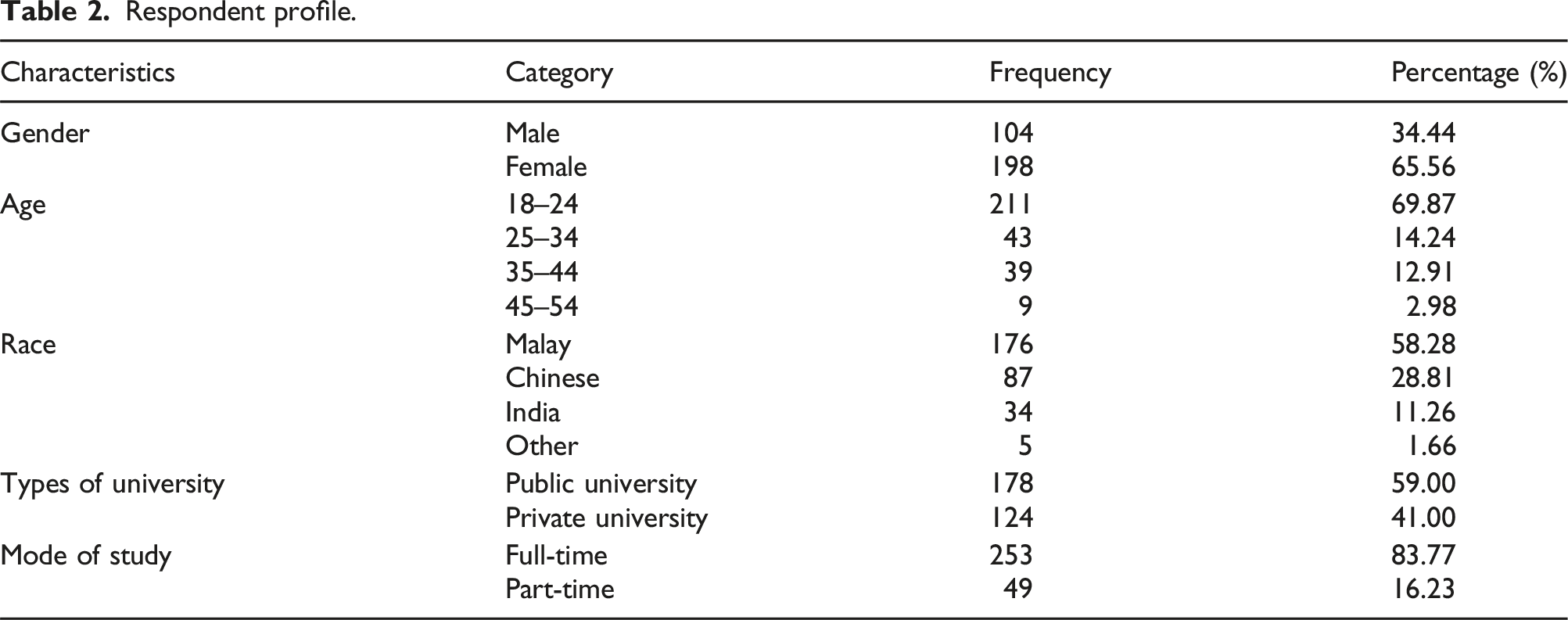
Sample and procedure
Respondent profile.
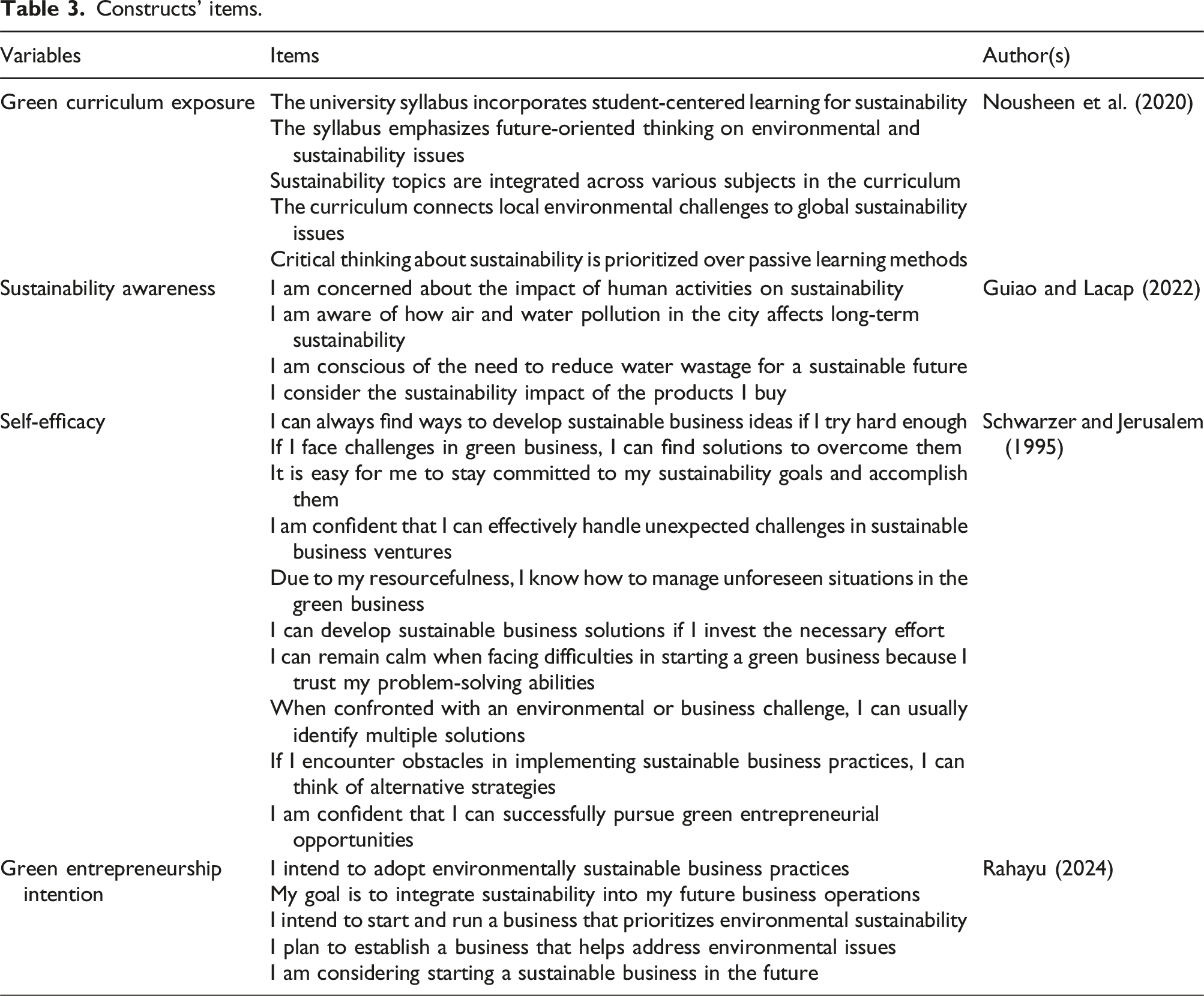
Measurement
Constructs’ items.
Data analysis
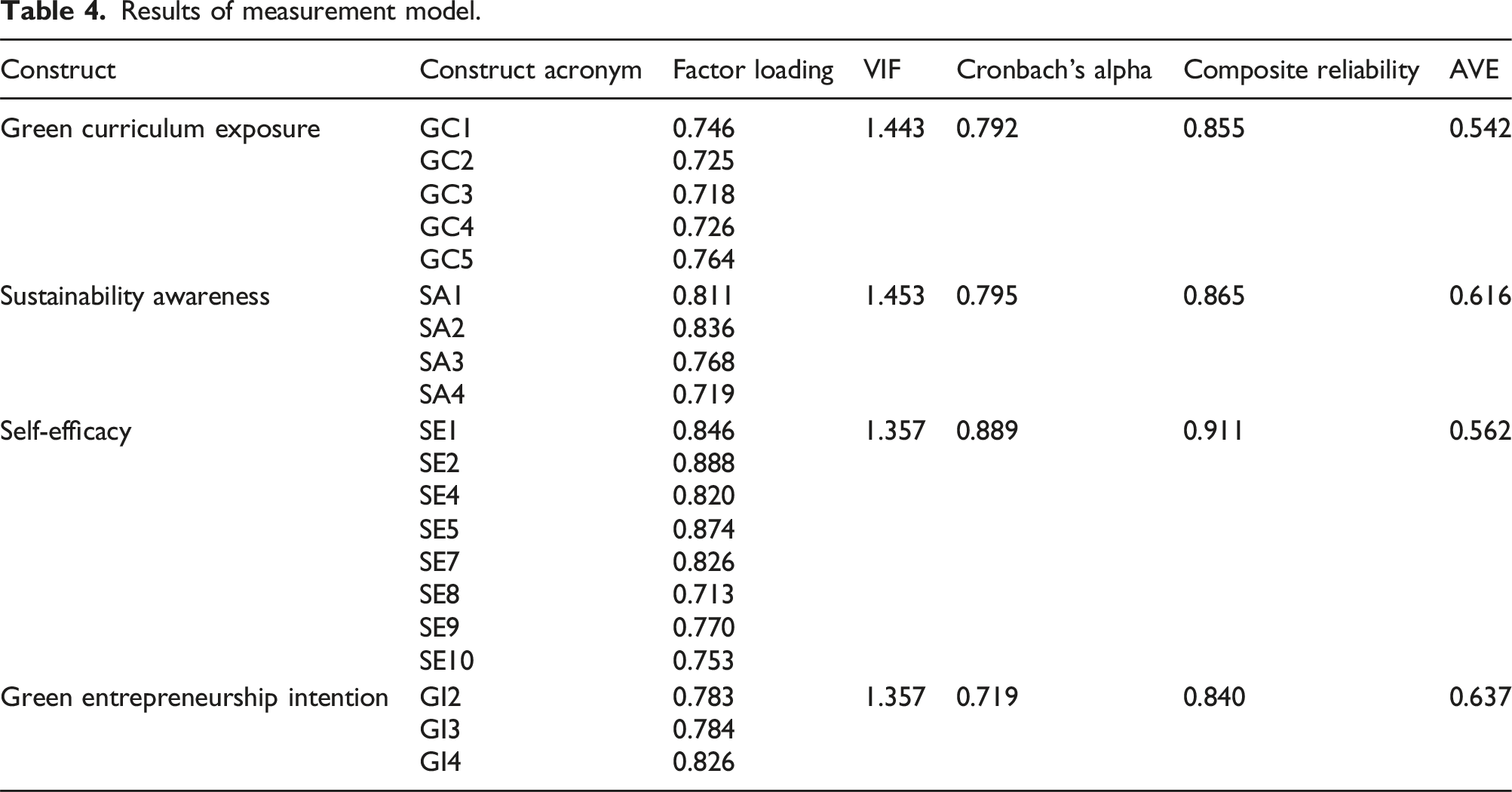
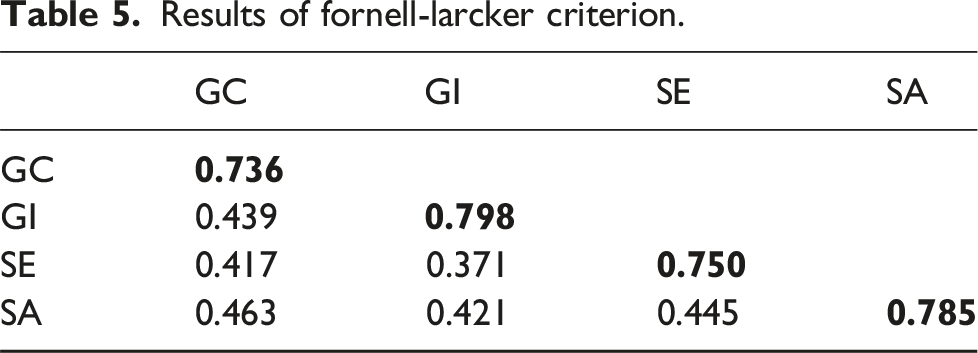
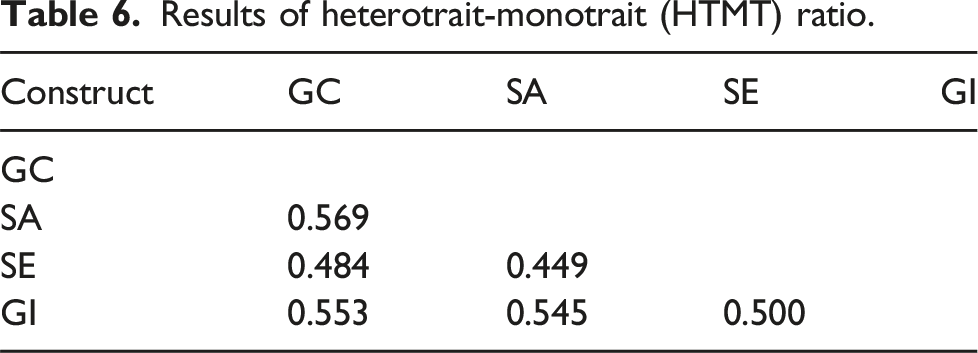
The present study utilized SPSS v25 software to analyze descriptive statistics and conduct preliminary analyses, including tests for normality and common method bias (Sekaran and Bougie, 2016). To assess normality, the skewness and kurtosis values for all items in the measured constructs were examined. The results indicated that the data follow a normal distribution with values within the ±3 range (Kim, 2013). As the data were collected in a cross-sectional survey, the common method may pose a potential threat. Hence, Harman’s single-factor analysis was tested, revealing that the first factor accounted for only 28.29% of the variance. As a result, the common method bias was not a significant concern in this study (Kock and Dow, 2025). Following measurement and structural model assessment, Partial Least Squares Structural Equation Modeling (PLS-SEM) was employed. The evaluation of the measurement model began with an assessment of construct reliability and validity. This process involved analyzing variance inflation factor (VIF) for multicollinearity issue, Cronbach’s alpha and composite reliability for internal consistency, convergent validity through average variance extracted (AVE), and discriminant validity using approaches such as the Fornell-Larcker criterion and Heterotrait-Monotrait ratio of correlations (HTMT) (Chan et al., 2024). Additionally, the structural model assessment involved evaluating the strength and significance of the relationships between independent and dependent variables using path coefficients. To determine the extent to which independent variables influenced changes in the dependent variables, the R-squared (R2) value was examined.
Results
Measurement model evaluation
Results of measurement model.
Results of fornell-larcker criterion.
Results of heterotrait-monotrait (HTMT) ratio.
Structural model evaluation
The path coefficients and p-values were obtained through bootstrap resampling, which is a technique used to estimate standard errors and confidence intervals for various statistical measures. Following the recommendation of Salleh et al. (2021), the bootstrapping analysis was conducted with a sample of 5000. As shown in Figure 2, H1, H2, H3, and H4 were supported. The results (see Table 7) showed that green curriculum exposure has a significant positive effect on sustainability awareness (β = 0.463, t-statistics = 10.534, p < .05), green curriculum exposure has a significant positive effect on self-efficacy (β = 0.268, t-statistics = 4.413, p < .05), sustainability awareness has a significant positive effect on self-efficacy (β = 0.321, t-statistics = 5.556, p < .05), self-efficacy has a significant positive effect on green entrepreneurship intention (β = 0.371, t-statistics = 7.337, p < .05). PLS output graph. Results of direct and indirect effects.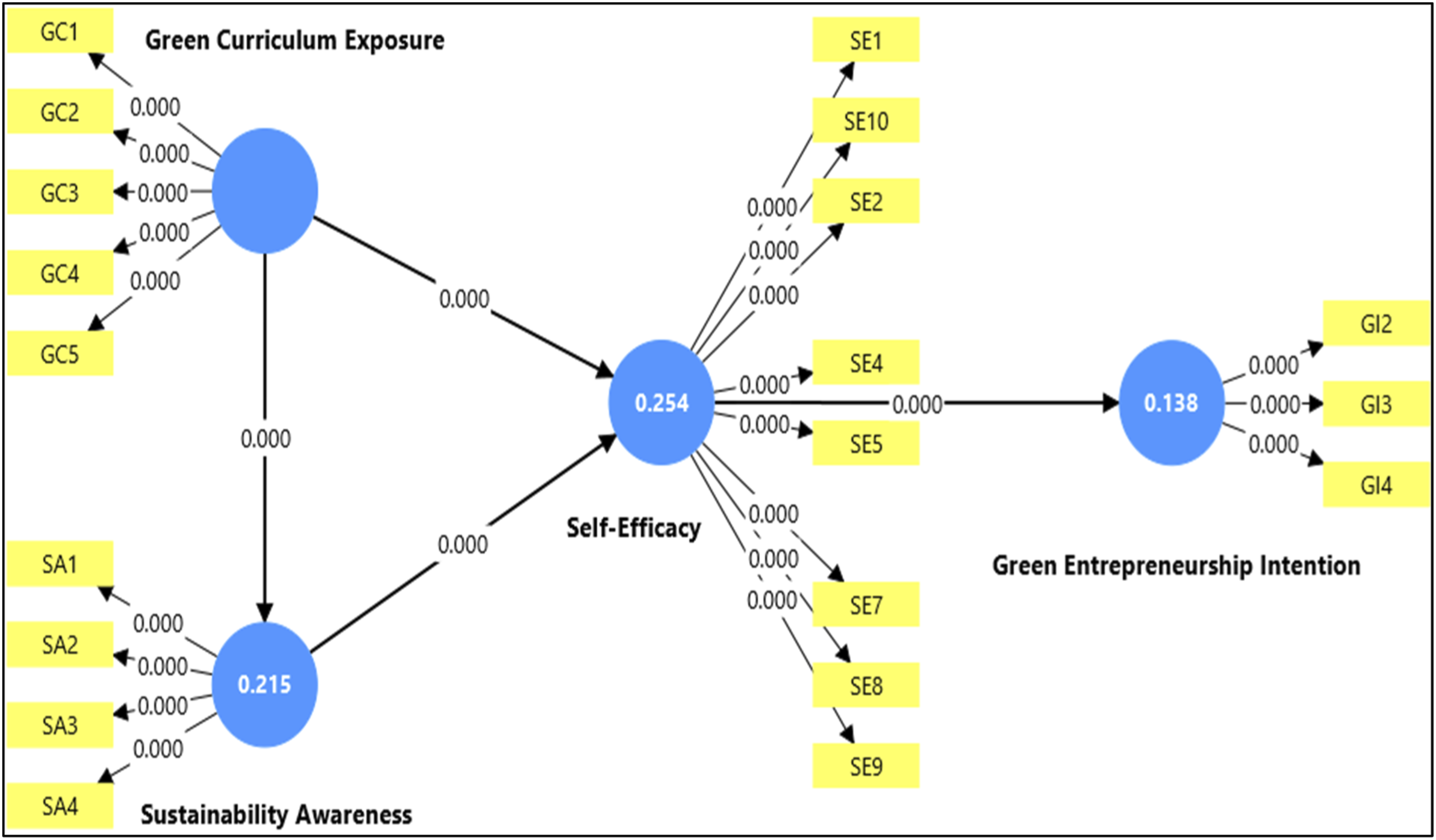
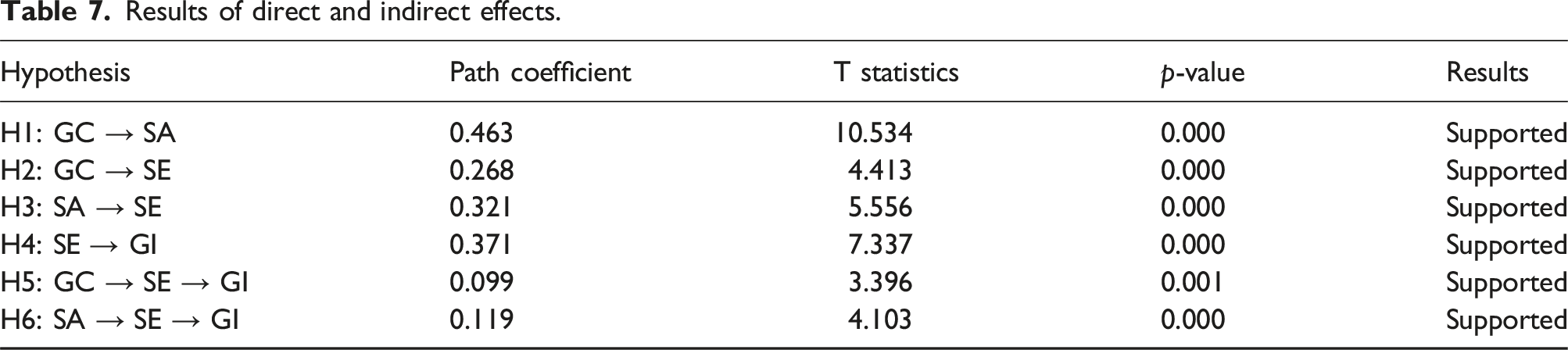
After assessing the direct effects of green curriculum exposure, sustainability awareness, self-efficacy, and green entrepreneurship intention, the mediating role of self-efficacy was examined. More specifically, self-efficacy was found to mediate the effect of green curriculum exposure on green entrepreneurship intention among Malaysian university students (β = 0.099, t-statistics = 3.396, p < .05), and self-efficacy also mediated the effect of sustainability awareness on green entrepreneurship intention among Malaysian university students (β = 0.119, t-statistics = 4.103, p < .05). Hence, a summary of the hypothesis testing results is shown in Table 7.
To understand the predictive functions for the constructs’ relationships, the variance accounted for (R2) is obtained. As reported in Figure 2, self-efficacy explains 13.8% of the variation in green entrepreneurship intention. Additionally, exposure to a green curriculum and sustainability awareness collectively account for 25.4% of the variation in self-efficacy. Lastly, green curriculum exposure explains 21.5% of the variation in sustainability awareness.
Discussion
Green entrepreneurship is recognized as an effective initiative responding to ecological and social problems. Given the long-term global trend, green entrepreneurship serves as a conduit to save the environment from degradation and contributes to achieving the Sustainable Development Goals by 2030. With this intention, this study examined the relationship between green curriculum exposure, sustainability awareness, self-efficacy, and green entrepreneurial intentions among undergraduate students in Malaysia. Thus, this study has achieved its objective and confirmed all the aforementioned hypotheses. More specifically, research has confirmed that green curriculum exposure has a significant positive effect on environmental awareness. This result was consistent with the study by Koulougliotis et al. (2021) and Curdt-Christiansen (2021). When students are exposed to a green curriculum, they are more likely to adopt sustainable practices due to strong environmental awareness. This is because a green education curriculum can provide them with fundamental knowledge by increasing their awareness of sustainability issues. Additionally, green curriculum exposure has a significant impact on self-efficacy among Malaysian university students. These results align with those of Soomro and Shah (2022), Hoang et al. (2020), and Wardana et al. (2020). Students’ exposure to green knowledge can enhance their self-efficacy levels in pursuing green entrepreneurship in the future. This is due to the fact that students can develop their skills in syllabus settings, where they are reinforced in their capabilities through educational support. For instance, guest entrepreneur seminars related to green education can help them improve their self-efficacy level, which in turn shapes their perception of sustainable business ventures.
Similar to Dude and Mulyani (2024), Koyuncuoğlu (2023) and Zheng et al. (2023) confirmed that sustainability awareness has a significant positive effect on self-efficacy among Malaysian university students. When students realize the seriousness of environmental issues, they will be more likely to take the self-initiative to address sustainability challenges. This is because their environmental awareness provides early warning signals that influence students’ behavior by prompting them to engage in environmental protection practices. Furthermore, this study confirms that self-efficacy has a positive effect on green entrepreneurship intentions, aligning with the findings of Alshebami (2024), Guo (2022), and Jena (2020). From an entrepreneurial intention perspective, self-efficacy can be understood as an individual’s belief in their ability to perform tasks and roles that lead to achieving green entrepreneurial outcomes, particularly when individuals with strong self-efficacy are more confident in their ability to create green businesses, even in the face of multifaceted barriers. These can significantly boost their intrinsic motivation by encouraging them to pursue environmentally responsible business practices. Furthermore, this study contributes to the literature on green entrepreneurial intention by demonstrating the mediating role of self-efficacy. These results are consistent with Elnadi and Gheith (2021), Abdelwahed et al. (2025), Tantono et al. (2022), and Mambali et al. (2024). Undergraduate students who are exposed to green syllabi and environmental awareness tend to develop greater self-efficacy, thereby enhancing their intention to engage in green entrepreneurship through participation in sustainable activities.
Implications
Theoretical implications
This study contributes to the burgeoning literature on the green entrepreneurship context by providing empirical evidence of the various antecedents influencing green entrepreneurship intention among Malaysian university students. More specifically, the importance of green curriculum exposure, environmental awareness, and self-efficacy has been confirmed and represented as critical drivers of improved students’ green entrepreneurial intention. In response to most prior studies of Hu et al. (2023) and Nwosu et al. (2022), which examined green entrepreneurship intention based on personality traits or individual factors, this study further enriches the empirical findings grounded in SCT and TPB by demonstrating the relationship between education factors, psychological factors, and entrepreneurial aspirations. In addition, the mediating role of self-efficacy has been confirmed in explaining how students’ confidence in their abilities serves as a bridge between various antecedents and their likelihood of pursuing green entrepreneurship. Through the literature review and the theoretical underpinnings, self-efficacy has been identified as a crucial psychological mechanism that enhances students’ beliefs in their capabilities and shapes their pursuit of sustainability-driven business goals. Consequently, this study provides further empirical evidence on the relationship between the aforementioned antecedents and green entrepreneurship aspirations, especially in the Malaysian context. Lastly, by emphasizing green entrepreneurial intention in the context of sustainable development goals, this research not only addresses theoretical gaps but also carves out a unique perspective on how green entrepreneurial intention can be cultivated through targeted educational and psychological interventions to foster a green economy in the future.
Practical implications
In addition, the results of this study not only provide theoretical implications for subsequent scholars but also practical implications for policymakers and the Ministry of Higher Education. Preparing future generations for the uncertain and challenging environmental issues is becoming increasingly important. This led the Ministry of Higher Education to develop and implement educational settings that equip students with the knowledge of sustainability to become future green entrepreneurs. For instance, integrating sustainability-focused curricula and activities in the national education plan can effectively foster green entrepreneurial mindsets among students. Moreover, business incubator programmes and guest industry speakers can be applied in the classroom setting, which significantly increases their sustainability awareness. All collective initiatives should not only spark green entrepreneurial intentions but also provide the tools required to enact passion successfully. In the meantime, these results also suggest that green education should aim to foster students’ sustainability awareness and convey a sense of environmental self-efficacy. It is essential to frame grand socioecological challenges not as insurmountable, but as approachable and solvable. Based on the significant role of self-efficacy, the findings provide insight for policymakers to formulate policies that enhance students’ self-efficacy in addressing environmental challenges through green entrepreneurship. Additionally, policymakers need to examine how different values interact with one another and how potential contradictions can be addressed to provide a realistic perspective on environmental entrepreneurship, particularly for the younger generation. Based on this study, such initiatives can empower them to pursue sustainable business ventures with the knowledge gained from these institutions.
Limitations
Despite the contributions of this study, some limitations have been acknowledged for future research. A significant constraint is the target population’s emphasize on undergraduate students in Malaysia, as examined through the green curriculum’s exposure, sustainability awareness, and self-efficacy about green entrepreneurial intention. However, future studies can consider postgraduate students due to their advanced academic exposure and professional experiences, which may offer deeper insights into green entrepreneurial intentions. Further research should replicate this study in other countries or regions with similar cultural and economic characteristics to evaluate the model’s applicability across diverse settings. This would strengthen both internal and external validity while offering deeper insights into green entrepreneurship across different contexts. Together with comparative studies, this could further enhance understanding by identifying regional variations and commonalities in sustainability-driven entrepreneurial intentions. Lastly, there is also a limitation to the variables used in the conceptual model. However, the integration of the aforementioned antecedents presents another new theoretical implication. Further research can also build on this framework by integrating other antecedents, such as educational support, cultural dimensions, and personal factors, which may significantly impact a student’s intention to become a green entrepreneur in the future.
Conclusion
The Sustainable Development Goals are gaining worldwide recognition, positioning green entrepreneurship as a key initiative for countries to address environmental challenges. To support this, the present study provides empirical insights into how green curriculum exposure, sustainability awareness, and self-efficacy influence green entrepreneurial intention among undergraduate students in Malaysian universities. Notably, the present findings support all hypotheses where potential antecedents affect students’ self-efficacy levels, thereby enhancing their confidence in engaging in green entrepreneurship. Furthermore, the mediator role of self-efficacy between green curriculum, sustainability awareness, and green entrepreneurial intention has been confirmed, which enriches the literature on SCT and TPB. These findings provide valuable insights for the Ministry of Higher Education and related policymakers in designing more effective educational plans and policy measures that foster future young entrepreneurs with the necessary green entrepreneurial skills. When students are equipped with solid fundamental skills and knowledge through green education, it bolsters their own confidence in their abilities, thereby empowering them to pursue a journey of green entrepreneurship. In conclusion, future research can enhance the proposed framework by applying it to various regions and populations or by integrating it with other potential factors that may influence green entrepreneurial intention, thereby contributing to the achievement of related sustainability objectives.
Footnotes
Declaration of conflicting interests
The author(s) declared no potential conflicts of interest with respect to the research, authorship, and/or publication of this article.
Funding
The author(s) received no financial support for the research, authorship, and/or publication of this article.
