




Abstract
The aim of this study is to examine the viewpoint of charities, as to how receptive they might be to having a university student on their board of trustees. A questionnaire was sent to charities in the South-West of England. 154 responses were received. 63% of respondents currently have vacancies for trustees. There is a heightened awareness among respondents of the importance of diversity of boards and a high level of interest in exploring whether, and how, students could be recruited as trustees. This paper extends previous work in exploring whether charities would be receptive to having a university student on their boards and raises awareness of one possible route that charities might pursue to increase the number and diversity of trustees.
Introduction
Effective trusteeship is crucial to the successful management of charitable organisations (Kelly, 2023). This has been particularly evident in recent times, having to navigate their respective charities through the prevailing economic environment of funding cuts, increased demand for services and spiralling costs (Charities Aid Foundation, 2024). According to the Charities Act 2011, section 177, trustees are, “persons having the general control and management of the administration of a charity”. As a board member, trustees ensure that the charity is legally compliant, achieves its purpose and plan and manages charitable resources towards this end (Charity Commission, 2018). In setting the strategic direction of the charity, establishing an appropriate organisational culture, ensuring resources are efficiently managed and achieving charitable objectives, requires trustees to establish a system of effective governance (Charity Excellence Framework, 2016). This governance system provides a framework for managing organisations (Corporate Governance Institute, 2021) encompassing all processes of governing and organisational practices (Thomas, 2021), and providing for accountability and reporting of actions (Cornforth, 2003; NCVO, 2022). Ensuring accountability and reporting is especially important for charities, in raising trust and public confidence (Langford and Anderson, 2022; Peate, 2015) since this could lead to increased donations (Blevins et al., 2022). Trustee boards and how they effectively manage, are therefore vital to charities’ viability.
However, charities struggle to recruit trustees. Allen (2021) highlighted that 74% of UK charities had difficulties in recruiting trustees, amounting to 100,000 vacancies. This is not a recent problem for charities, with Berry (2005) observing the same issue. Nonetheless, the inability for charities to recruit trustees does seem to be worsening. Ecclesiastical (2022) in a sample of 250 UK charities found that 60% had commented that it was increasingly difficult and that 37% had experienced an increase in trustee resignations over the previous year. As Wilder (2023) notes, trustee position is voluntary, and therefore, seen as secondary to individuals’ main employment.
Alongside the trustee recruitment problem, Thorne (2021) highlights the significant issue of lack of diversity on charity boards. Harris (2014) finds that diverse boards can improve charity performance. While Hakovirta et al. (2020) find that increased diversity on boards can help organisational innovation, which is important for example, in developing new ways of charitable funding. Diverse charity boards can bring a range of perspectives which can enhance decision-making (Kopic, 2022). Similarly, Creary et al. (2019) find that board diversity improves board culture and also strengthens governance. NCVO (2022) warns that a lack of board diversity can result in a charity becoming divorced from its service user and Mukuta (2021) warns that homogeneous boards can lead to Groupthink. Yet as Whitehead (2023) notes, 29% of charity boards of high-income charities are all-white. In addition, Getting on Board (2022) highlight that the average age of a trustee is 61 and 0.5% of trustees are 18-24, despite making up 12% of the population. Correspondingly, The Young Trustees Movement (2024) states that currently, less than 3% of charity trustees are under 30 despite 18 to 29 year olds making up approximately 13% of the UK’s population. Under 30s are therefore, underrepresented on boards. Furthermore, research by Reach Volunteering (Thorne, 2021) identifies that younger people are less likely to be appointed to charity boards, with the 55 - 64 age group are 80% more likely to be appointed than the 18 - 34 age group. The situation is not aided by charities’ trustee recruitment practices (Thorne, 2021), particularly the continued reliance on existing networks, personal contacts and word of mouth (Ricketts, 2017).
As a potential solution, Evans and Jackson (2023) undertook an observational analysis of charity trustee positions and matched them to business degree award benchmark standards to support their proposition that business undergraduate students could be recruited by charities to be trustees. Their suggestion potentially yields a range of benefits for involved stakeholders. Charities would benefit from an increase in board members and help to develop diversity, especially in respect of age, of trustees. Moreover, business students will possess a broad range of business-relevant knowledge and skills such as marketing, finance, and HR, all areas that are useful to managing a charity enterprise.
Conversely, for students, Sparkes (2017) argues that trusteeship can provide an opportunity to learn new skills and enhance networks which could help support students’ future career aspirations. One of the key reasons emerging from the works on students’ motivations for volunteering, has been the desire to improve career prospects (Barton et al., 2019; Gevorgyan et al., 2016; Holdsworth, 2010). Volunteering has been seen by students to support their development of softer skills, such as communication (Khasanzyanova, 2017; Williamson, 2018) and leadership qualities (Ghose and Kassam, 2014).
It is the development of softer skills that are particularly important to students, since they are sought by employers (Ellis, 2014; Garner et al., 2015). However, employers still feel graduates are generally lacking interpersonal skills (CMI, 2018) and need further skill development in team working, problem solving and critical thinking (CMI, 2021). Employers are concerned that graduates are not work-ready (Baska, 2019; Harsha, 2023). Consequently, criticisms have been directed at universities in failing to address work needs (Rhew et al., 2019) by equipping students with the skills they need to contribute to the contemporary work arena (Young, 2023), especially developed soft skills (Prikshat et al., 2019). This has led to industry to demand that universities develop appropriate curriculum to drive work readiness (Ritter et al., 2018), increase collaboration (Winterton and Turmner, 2019) and establish more robust methods of assessing graduates’ capabilities (Caballero and Walker, 2010). While universities grapple to meet those demands, Owen (2001) recognises the value of extra-curricular activities for students to develop and demonstrate job-relevant skills. In particular, some form of work experience is invaluable to university students (High Fliers, 2019). Here, universities have increased placement and internship opportunities (Karapareliotis et al., 2019). However, work placements are not compulsory in many degree programmes, and where they are available, Divan et al. (2022) find inequality in students accessing those placement opportunities, while Yagoubzar (2023) finds internships are increasingly competitive.
A high proportion of UK university students typically work part-time alongside their degree studies, mostly to fund their studies and lifestyle (Crockford et al., 2015; Neves and Stephenson, 2023). Yet, part-time work is also deemed to be useful to students, in helping to develop transferable skills to support the subsequent venture into their graduate career (Evans et al., 2014). University students will tend to work part-time in jobs that provide flexibility around their degree timetables, and these will largely comprise positions in retail and hospitality (Mosse, 2024). These will tend to be lower-level, customer servicing jobs, and while they can provide an opportunity to develop soft skills such as communication. Evans and Jackson (2023) therefore, argue, being a charity trustee, as a form of volunteering, will expose a university student to working at a strategic level in an organisation, producing long-term plans, allocating resources and leading projects, all of which not only yields an opportunity to apply theoretical classroom-based knowledge to practice, but could enhance their employability credentials through developing managerial and transferable skills.
Nonetheless, the work of Evans and Jackson (2023) can be deemed an initial viewpoint piece. The aim in this work, is to extend that paper by assessing their proposed solution through examining the viewpoint of charities as to how receptive they might be to having university students on their boards. The study objectives are to: 1. Assess the current needs of charities in respect of trustees, 2. Evaluate current trustee recruitment practices. 3. Explore the level of interest in recruiting university students as trustees.
Research approach
Number of questionnaires distributed to charities by area (n = 898).
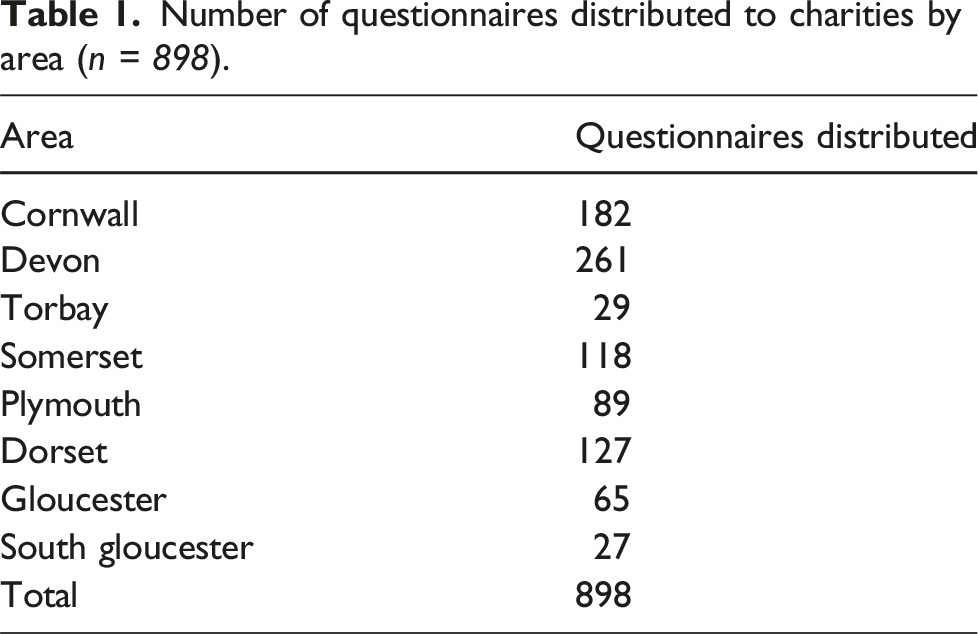
The sample was identified using two publicly available datasets. The researchers identified those charities whose Head Office was in the target county or urban area. Only charities with a minimum of £50,000 income per annum were selected, as these were deemed, more likely to have a structured and established trustee board. Religious charities including churches or similar, and schools, were not included in the sample.
Given the research purpose was to examine the viewpoint of charities as to how receptive they might be to having students on their boards, and therefore, it was felt categorical rather than numerical questions were more appropriate. The questionnaire comprised twenty-five questions, divided into five sections: Details about the respondent/charity; nature of their Trustees; Trustee Recruitment; Diversity policy/training; students as trustees (see appendix 1). Twenty-four of the questions were closed with options to select, though most had an ‘Other’ category. One question was Open, which asked for other comments which received 60 responses.
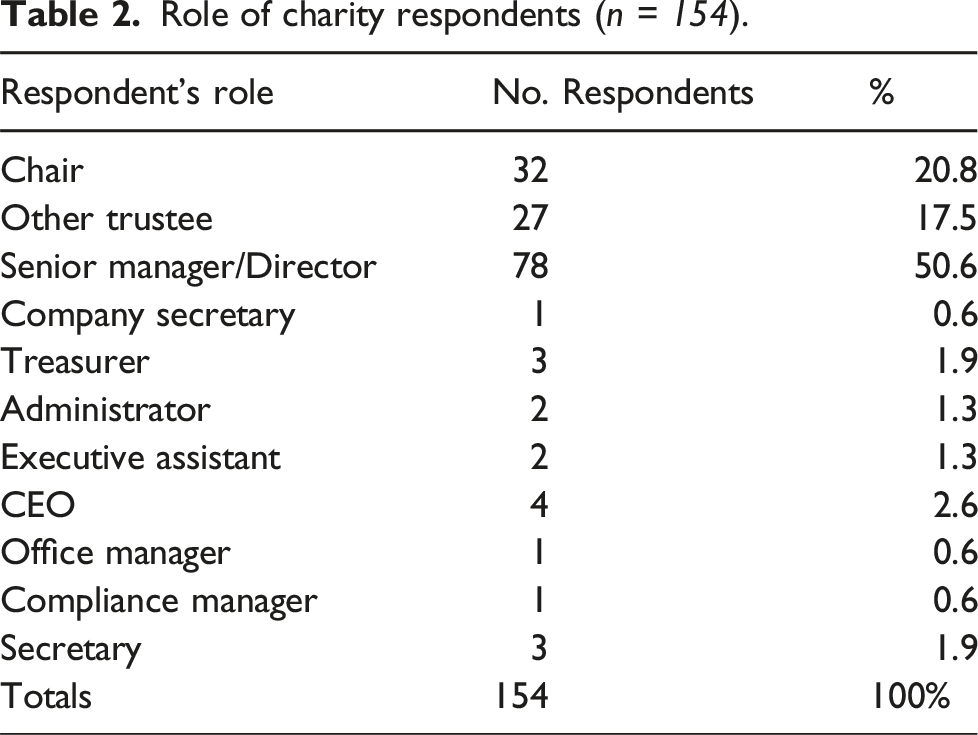
Role of charity respondents (n = 154).
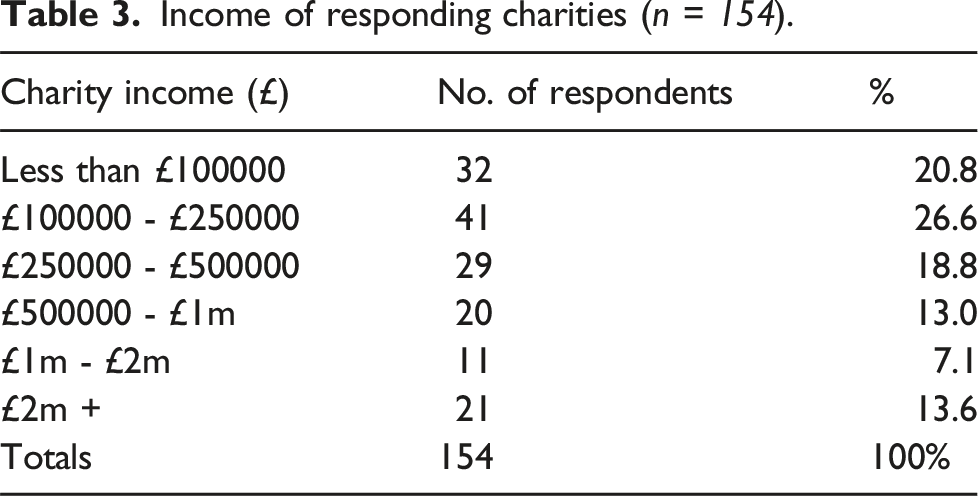
Income of responding charities (n = 154).
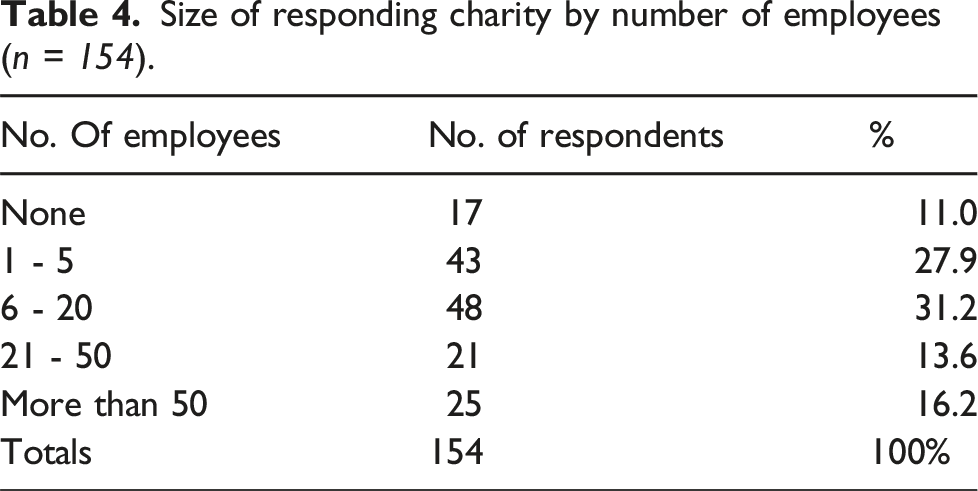
Size of responding charity by number of employees (n = 154).
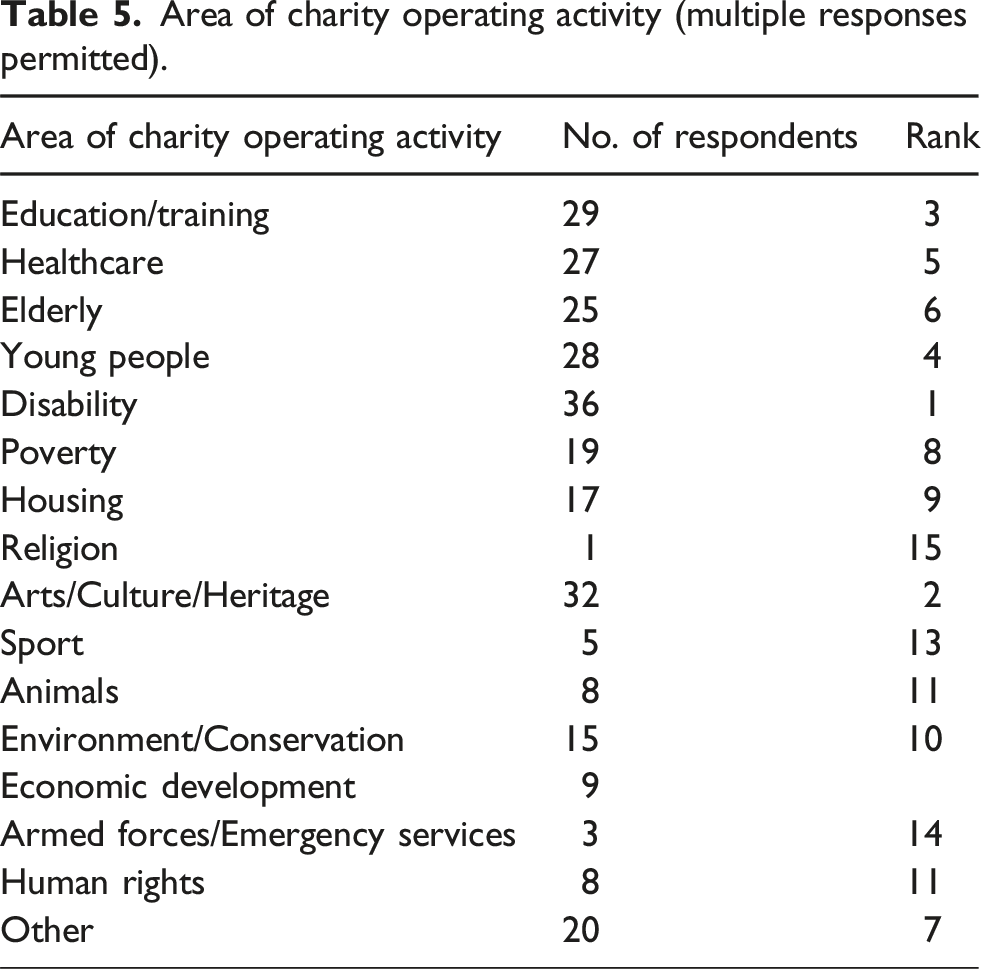
Area of charity operating activity (multiple responses permitted).
A Chi-Square test is used in this research to analyse data, because it allows the assessment of how likely it is that the two variables are independent (Saunders et al., 2019). Alongside the Chi-square test, the Cramer’s V will be used if there is an association between the two variables is stated. Here, Q1 to Q7 on the questionnaire are examined as a whole in order to understand the association between Q13, Q14, Q22, Q23 and Q24 individually.
Findings and discussion
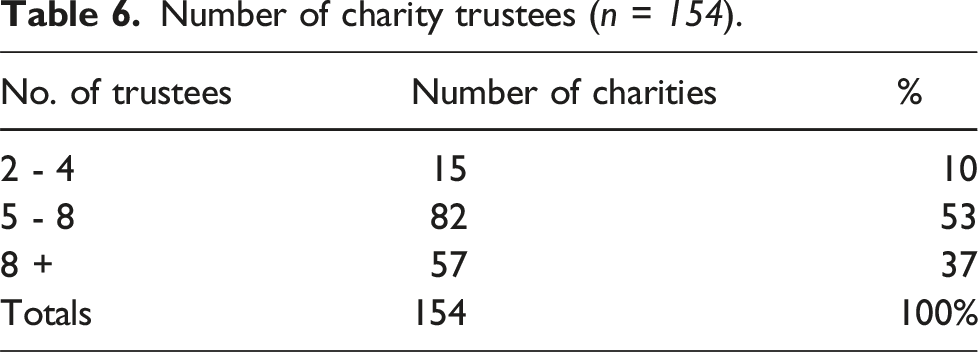
Number of charity trustees (n = 154).
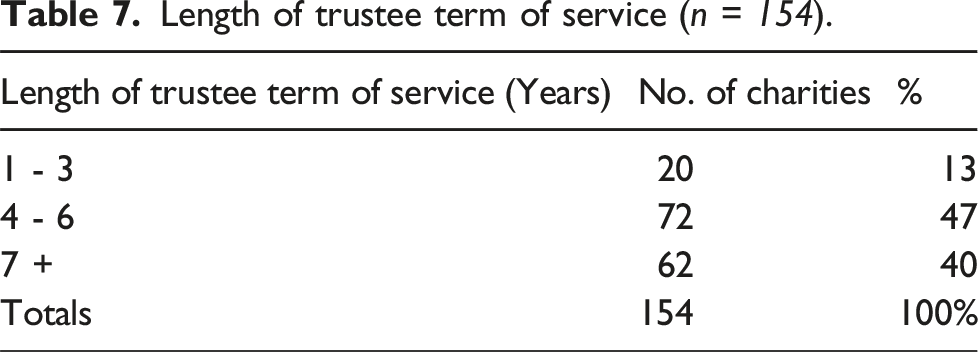
Length of trustee term of service (n = 154).
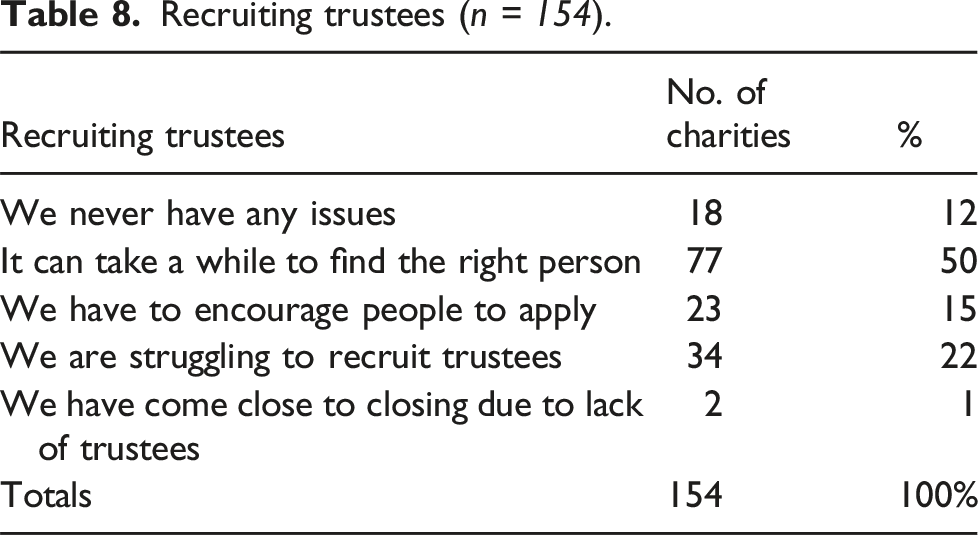
Recruiting trustees (n = 154).
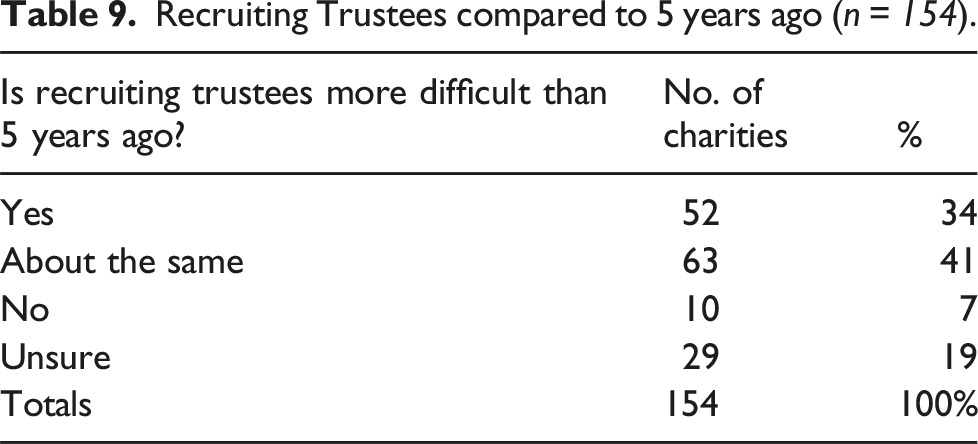
Recruiting Trustees compared to 5 years ago (n = 154).
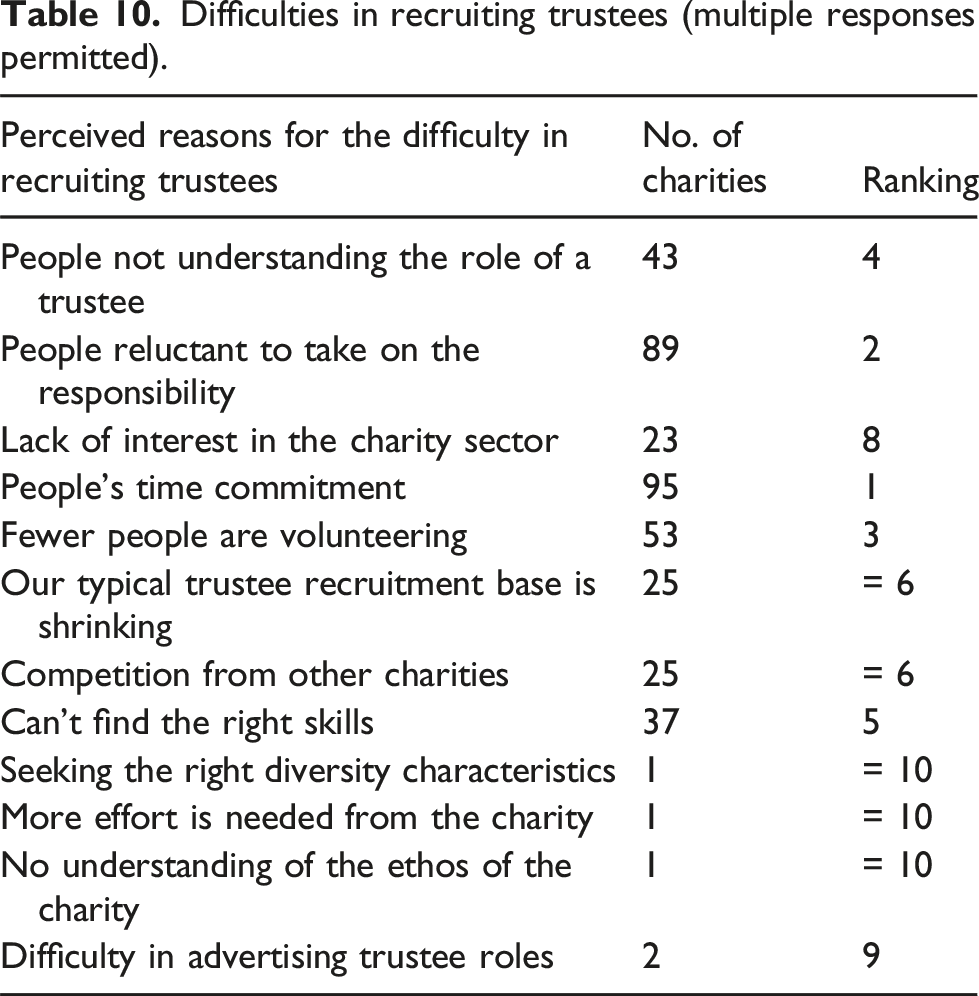
Difficulties in recruiting trustees (multiple responses permitted).
Statistical results – Cramer’s V tests between Q4-7 and Q14.

Recruiting new trustees (multiple responses permitted).
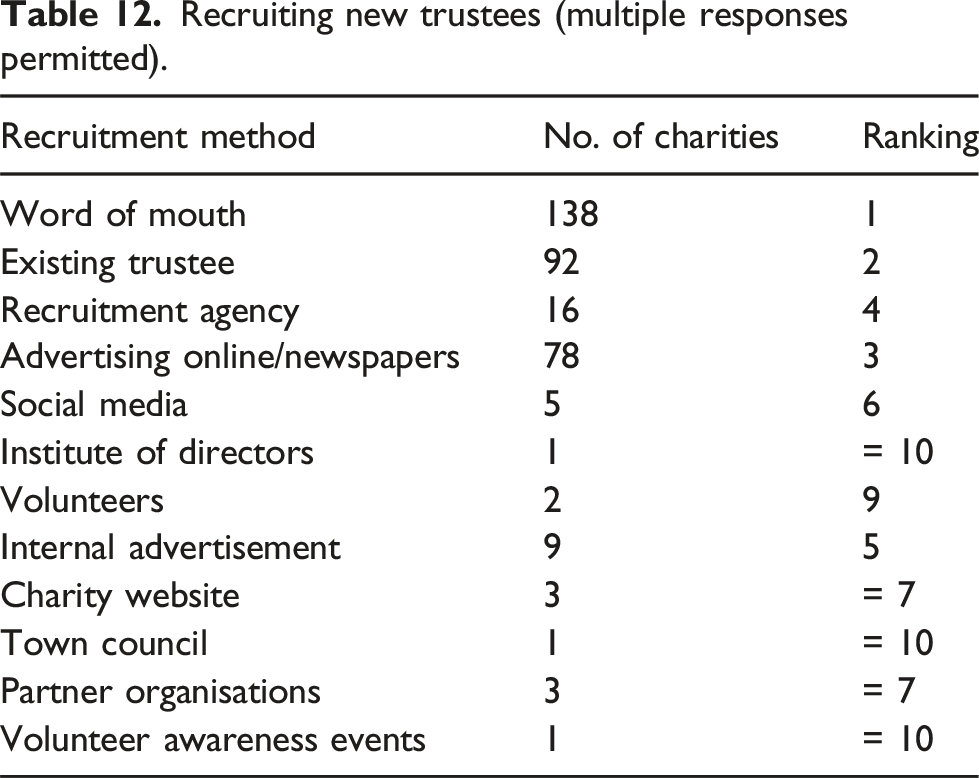
With both these mechanisms they are very likely to focus on/target people, already known to the charity trustees and therefore, potentially similar to them in terms of age, ethnicity, background, life experiences and outlook. One charity commented, “We do not look for trustees from external sources as our constitution requires them to be existing members of our organisation. We still struggle to find trustees as it is an additional role.” Yet, one charity puts emphasis on existing networks to recruit new trustees, “It would be good if trustees used their networks more to attract new trustees to a charity, in particular when they are nearing the end of their tenure.” Advertising is only the third most popular channel, with 78 respondents (Table 12), which could limit charities reach to those individuals from different backgrounds, demographic or experience.
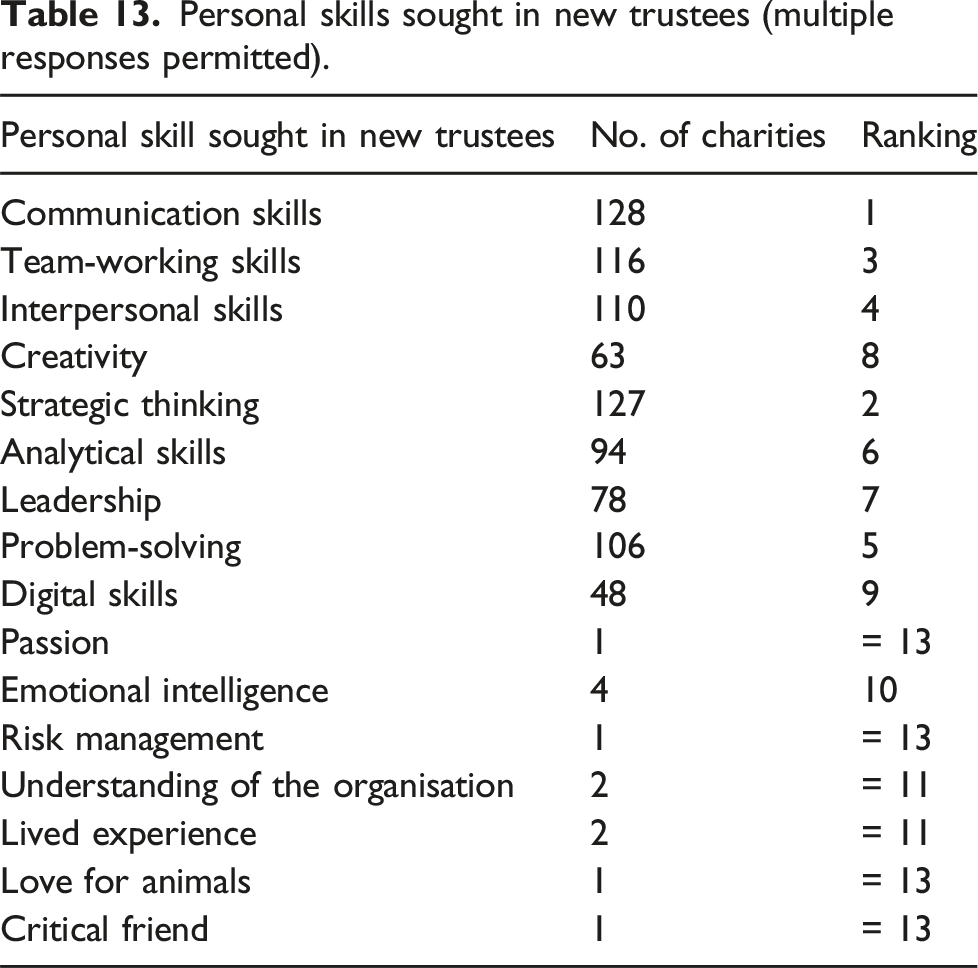
Personal skills sought in new trustees (multiple responses permitted).
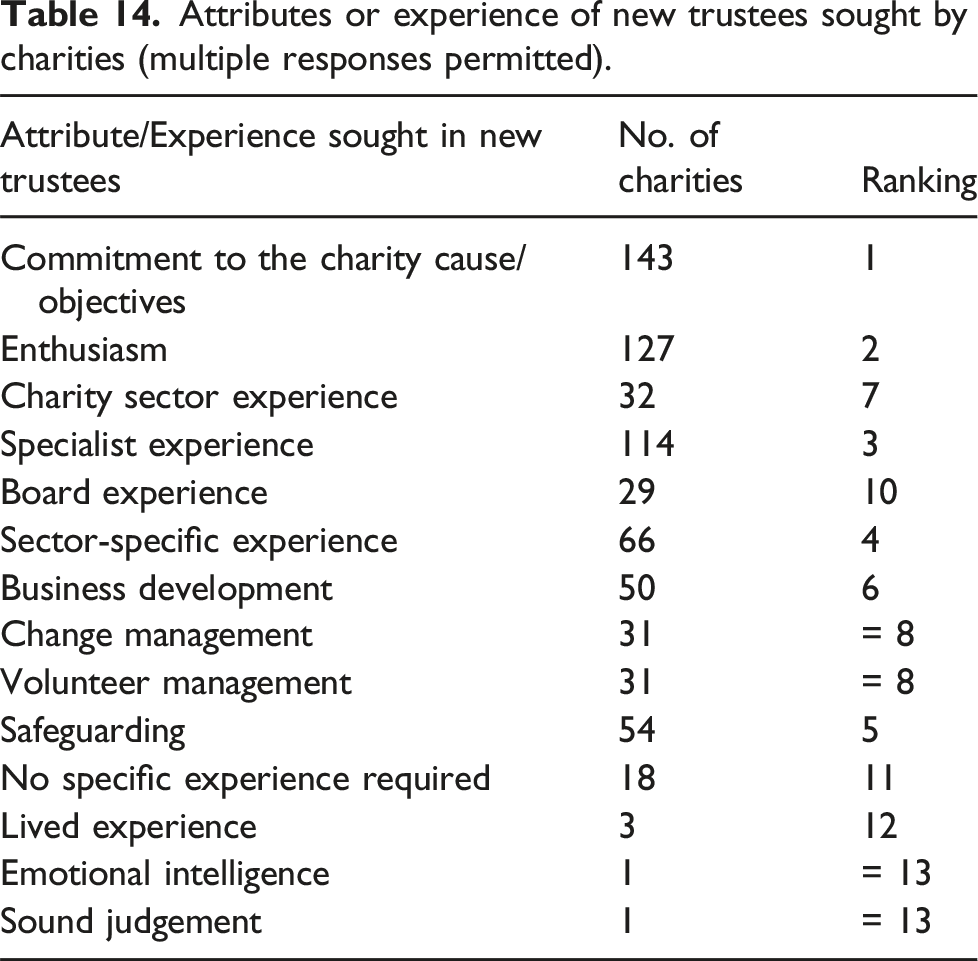
Attributes or experience of new trustees sought by charities (multiple responses permitted).
A number of recent sources suggest that charities need to be more diverse in the membership and composition of their Boards (Getting on Board, 2022; Thorne, 2021; Whitehead, 2023). Consequently, charities were asked questions to ascertain how diverse they thought they were in recruiting Trustees, and what policies they endorsed to encourage Trustee diversity.
Recruiting a diverse board of trustees (n = 154).
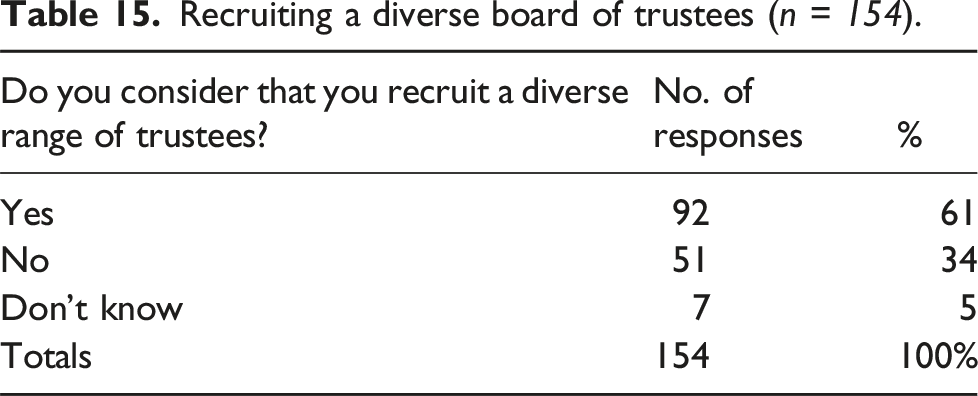
However, while the data above suggests that most charities are aware of the need to have a diversity of trustees, the evidence in Table 12 suggests that they are primarily recruiting from a pool of people similar to themselves and that this pool is getting harder to recruit from (Table 9). One charity commented, “A lot of our trustees are identified within networks of current Trustees”, while another stated, “All of our current trustees are over the age of 65, it would be good to have a younger representative.” Similarly, another charity commented, “The main problem is diversity. Majority of our trustees are middle class or upper middle class white men. No diversity or inclusion whatsoever. It is very difficult for them to understand the challenges that staff are going through. We operate in social care sector and most of our employees are going through financial hardship, but our trustees cannot understand the profile of our workforce. Recently they started to make comments that we do not have enough female trustees, but I really believe the situation is much more drastic. We need trustees from different ethnic groups/class/age...diversity is key.” Widening the trustee base is not just a desirable ethical recruitment policy, for many charities it is operationally important so they can function effectively. For these charities a diverse body of trustees is crucial to effective decision making.
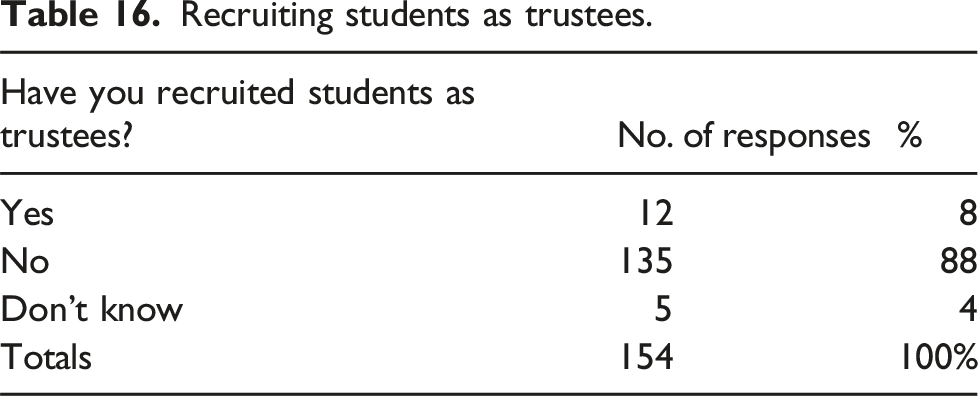
Recruiting students as trustees.
Statistical results – Chi-Square tests between Q2 and Q23.
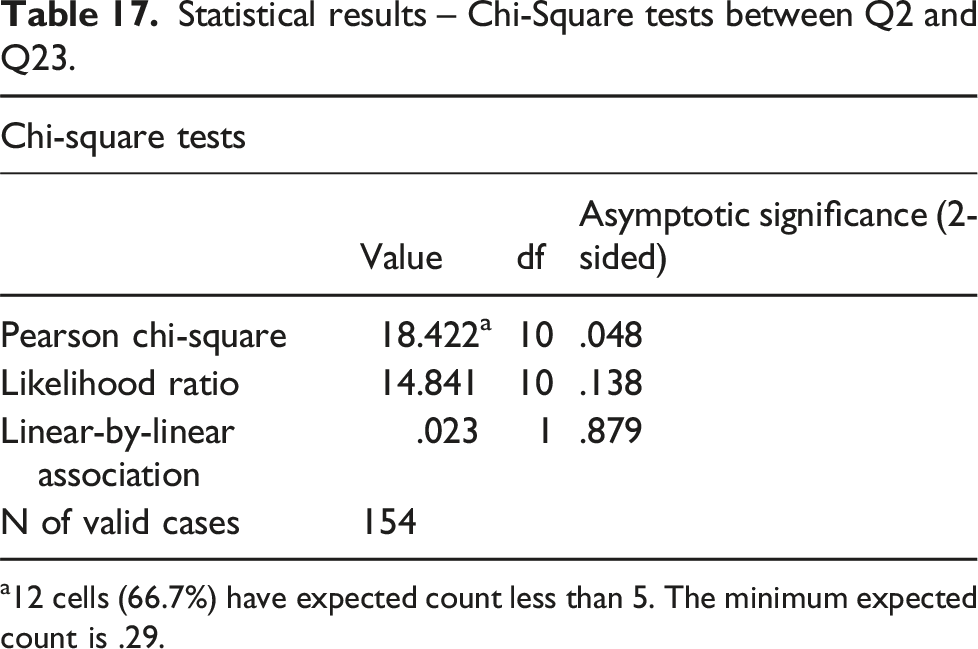
a12 cells (66.7%) have expected count less than 5. The minimum expected count is .29.
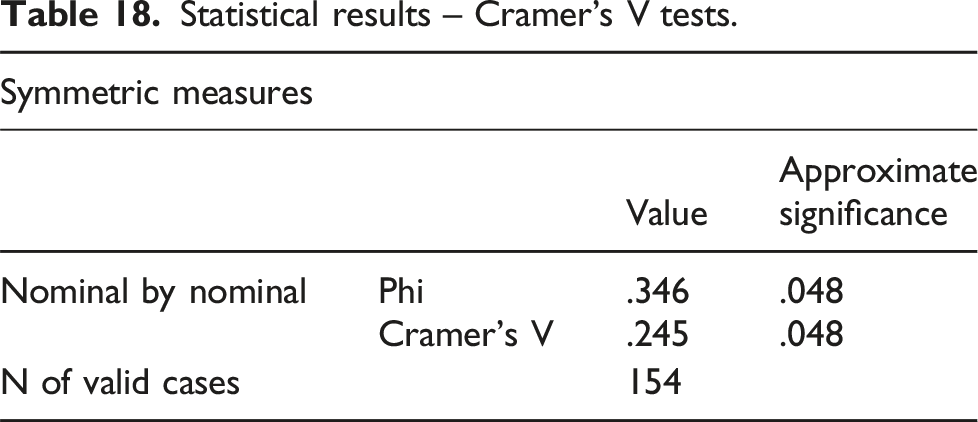
Statistical results – Cramer’s V tests.
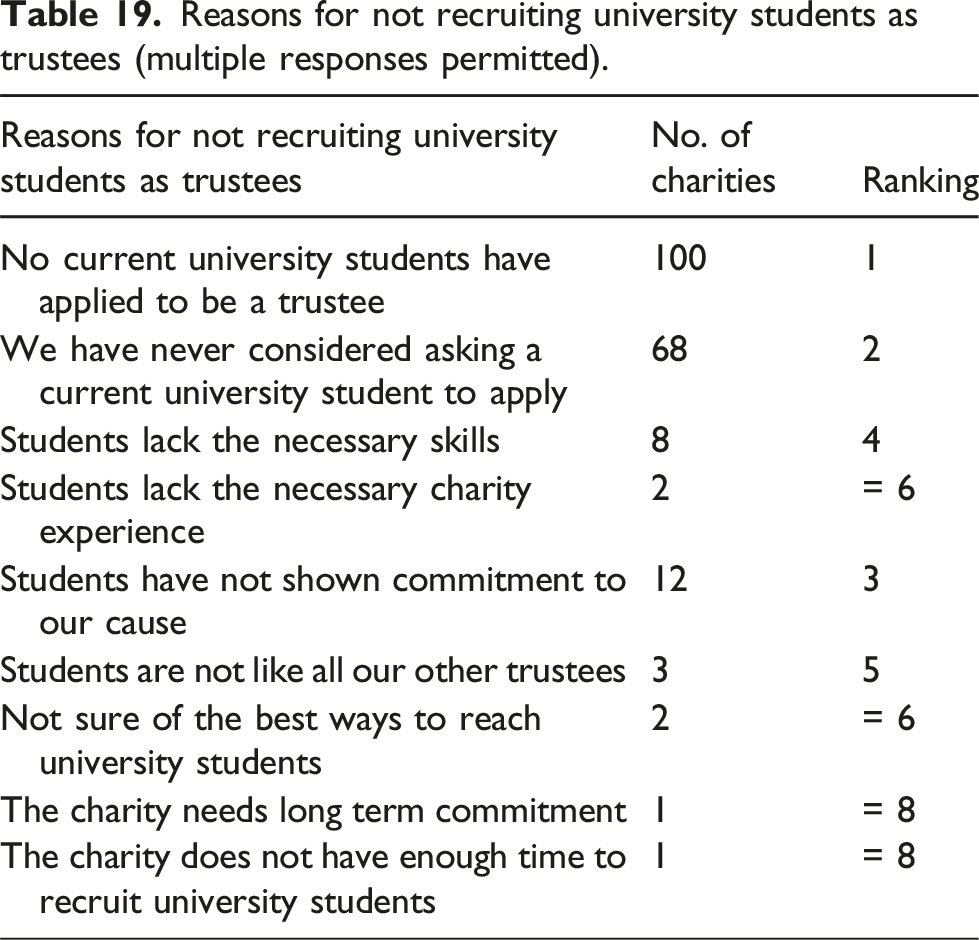
Reasons for not recruiting university students as trustees (multiple responses permitted).
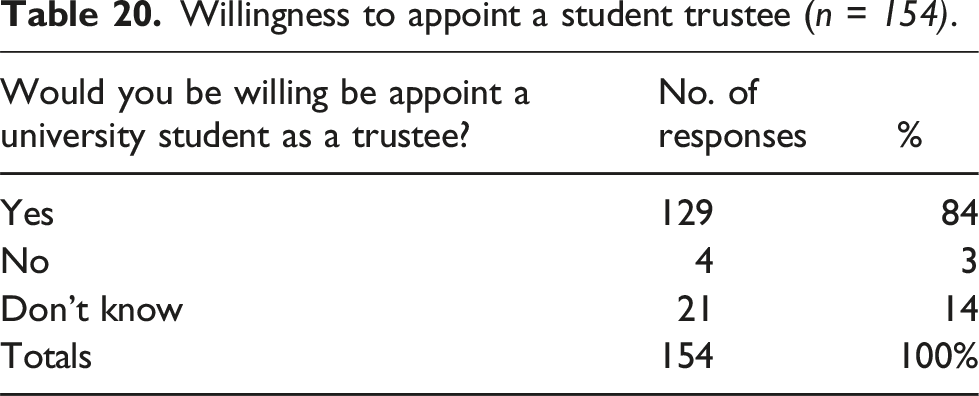
Willingness to appoint a student trustee (n = 154).
Conclusion
This preliminary research assessed three areas, namely the landscape regarding Charity trustees, their current practice for recruiting trustees and how receptive they are to having a university student on their Board. The needs of charities in respect of trustees there is a clear message that recruiting trustees is an issue. Currently, 63% of respondents have vacancies for trustees, which suggests that the size of the issue of recruiting trustees is consistent with previous research (Allen 2021; Berry 2005; Ecclesiastical 2022). There is a long-standing situation where it has been recognised that charities struggle to recruit new trustees. However, recruiting trustees appears to be getting more difficult for over a third of respondents (34%). For a significant minority of charities, the problem of recruiting trustees appears to be getting more acute, and this could have implications on their future functioning.
There appears to be a downward spiral in terms of the size of the existing pool of potential trustees. Respondents identified three main interrelated reasons for why it was harder to recruit trustees: time commitments; reluctance to take on the responsibility; and fewer people volunteer. These are wider social and economic changes which effect civic engagement and might be beyond the capacity of individual charities or the charitable sector to address. The solution that many charities appear to offer to this shrinking cohort, is that trustees appear to stay with charities a long time. For example, 40% of respondents have trustees who are on their Boards for seven or more years. Nonetheless, if the pool of possible trustee recruits is shrinking, then by lengthening the time trustees spend on a Board may address short term recruitment problems, but could have long term negative impacts on governance, fundraising and decision making. It is also likely to encourage group think and lessen the likelihood of innovative ideas and better decision making.
The second objective sought to evaluate current trustee recruitment. How charities try to recruit trustees may partially explain why some struggle to ‘bring in new blood’. There are three main channels used to recruiting new trustees: word of mouth; existing trustees; advertising. The first two are the most popularly used, and yet it is advertising which is most likely to reach new audiences. This finding is consistent with Ricketts (2017) view of recruitment practices. In particular, the data suggests that very few respondents use social media or their own websites, which is potentially a key vehicle for young people to find information and communicate.
It does not appear that the identified skills and characteristics are a major barrier to recruiting a wider range of trustees, especially a younger audience. The findings are of what skills and characteristics respondents are looking for are consistent with those identified by Evans and Jackson (2023). While some will because of their nature have precise and specific requirements, there do not appear to be major stumbling blocks preventing the requitement of higher education students. While employers (CMI 2018; CMI 2021) may criticise the exact level of these skills students learn, those identified in the findings are the ones that higher education institutions seek to enhance, both within the curricula and through extra-curricula activities.
Charities appear aware of the importance of diversity, with 61% believing that they do recruit a diverse range of trustees. The literature suggests that generally the sector needs to do more to encourage diversity, especially age and ethnicity (Getting on Board, 2022; Thorne, 2021; Whitehead, 2023). Moreover, findings suggest that respondents are recruiting from a narrow, and getting smaller, pool of people. Encouraging diversity in Boards should not just be viewed as a desirable equal opportunities policy to increase numbers of trustees, more fundamentally, a broader range of decision makers should increase the breadth of ideas and information that help shape better decisions.
Whilst recognising the need to recruit more trustees, and to enhance their diversity, very few charities appear to have sought out higher education students as a potential solution. Only 8% have recruited a student, though the quality feedback from one respondent suggested that this had a transformative impact for their charity. There are two main reasons why more students have not been recruited as trustees: no students have applied; and they did not consider specifically asking students. Very few respondents suggested that students do not have the necessary skills, experience, and characteristics to become trustees. The issue, therefore, does not appear to be one of suitability for most charities but of communication. Charities do not appear to actively seek out, contact and ask students to become trustees. Recruiting student trustees is unlikely to be a panacea, and there will be specific issues, however it could open a new and valuable source of trustees that has a positive impact on decision making.
The third objective sought to explore the level of interest amongst charities for recruiting students as trustees. It is suggested that there is an issue currently with recruiting new trustees especially younger and more culturally diverse people. Evans and Jackson (2023) proposed that higher education students could be a possible partial solution to recruiting new people. However, this idea is predicated on the agreement from charities that this would be a desirable course of action. The evidence is that there is a very strong desire to consider students as possible trustees with 84% of respondents saying that they would be interested in this option. Those who currently find it hard to recruit new trustees, such as smaller charities, were especially interested in considering students as Board members, although, this was based on students meeting their wider skill, characteristics and other requirements. There is clearly a high level of interest in exploring whether and how students could be recruited as trustees.
Recruiting students as trustees cannot completely solve the recruitment issues. However, it could be a helpful means of addressing the shortfall and enhancing the knowledge of boards. In moving forward, it is recommended that charities should now: • Assess how students’ unique skills and experience can enhance charity governance; • Engage with the organisations students are to be found, such as Student Unions; • Consider asking students to consider becoming trustees; • Use the channels younger people gain information and communicate, so add Word of Mouse to Word of Mouth; • Consider how they can induct and support students as trustees.
One limitation of this research has been the sample size, being based primarily on charities in counties and cities in one region of the UK. Moreover, this region is one where the charities tend to be local rather than national HQs and smaller as a result. A wider national based project would ascertain the insight of not just more charities, but a wider range in terms of size and type of charity. In addition, we only have the viewpoint of the charities. The literature suggests that volunteering or being a charity trustee should be beneficial for students in terms of developing their skills, knowledge and experience at a Board level and enhancing their C.V.s (Gevorgyan et al., 2016; Sparkes 2017; Barton et al., 2019). However, it is not known at this time whether students would be interested in becoming a charity trustee, and if so with what support they would require making this practicable? In recent years, increasing numbers of university students are working part-time, driven by the cost-of-living crisis (Brown, 2022). This could negate the desire to be unpaid, charity trustee. However, if students are able to view the scenario strategically, then the skills that would potentially be developed working at the highest level of an organisation, would surely benefit their graduate careers in the long-term. Consequently, further research could ask students if they are interested in becoming a charity trustee, and if so, what is the best way of making this happen.
Supplemental Material
Supplemental Material - Exploring the possibility of university students as charity trustees
Supplemental Material for Exploring the possibility of university students as charity trustees by Carl Evans, Nigel Jackson, Nicole Shrives and Huilan Chen in Industry and Higher Education
Footnotes
Declaration of conflicting interests
The author(s) declared no potential conflicts of interest with respect to the research, authorship, and/or publication of this article.
Funding
The author(s) received no financial support for the research, authorship, and/or publication of this article.

Supplemental Material
Supplemental material for this article is available online.
References
Supplementary Material
Please find the following supplemental material available below.
For Open Access articles published under a Creative Commons License, all supplemental material carries the same license as the article it is associated with.
For non-Open Access articles published, all supplemental material carries a non-exclusive license, and permission requests for re-use of supplemental material or any part of supplemental material shall be sent directly to the copyright owner as specified in the copyright notice associated with the article.
