




Abstract
This paper reflects on the systematic interconnections between creative workers and higher education institutions (HEIs). Despite the latter representing key intermediaries in creative industries’ development and creative workers’ career trajectories, the relationship between the two has rarely been framed in a relational and systemic framework. To do so, we chose the UK theatre sector as the case study and adopted a mixed methodology: UK Higher Education Statistical Agency quantitative data, which informed us on the employment state of workers 6 months after graduation, were combined with 21 semi-structured interviews with actors and actresses to understand the complexity of their relationship with HEIs. HEIs emerge as the initial door to paid jobs and professional networks for graduates and as employers for those in the later stages of their careers: the lack of formal ways to access jobs and the precarious working conditions for performers make hence HEIs a crucial force in shaping workers’ careers. Furthermore, HE remains throughout the career of theatre workers an important part of their portfolio, providing reliable income and more stable working patterns when needed. The paper concludes with the findings’ policy implications and the future role of HEIs in creative and cultural ecosystems.
Introduction
The challenges faced by creative and cultural workers (CCWs) have made headlines in the past years globally, especially in the aftermath of the COVID-19 pandemic (Comunian and England, 2020; Salvador and Navarrete, 2022; Tanghetti et al., 2022). The challenges faced by the sector and its irregular and unregulated employment dynamics have made access and participation often unsustainable (Dent et al., 2020), resulting in a lack of inclusivity: individuals with other income or financial backing are able to work while others are pushed out by the inability to make a sustainable living in the sector.
However, there has recently been a call to consider creative careers within an ecological (i.e. as part of an interconnected ecosystem, cf. Benghozi and Salvador, 2014) and capability framework (Comunian et al., 2023; Dent et al., 2022), rethinking strategies and modes of working within the sector and how they connect across other sectors of the economy and local creative and cultural ecosystems (De Bernard et al., 2021).
In this paper, we consider how higher education (HE) shapes and influences the latter and how it connects with opportunities and barriers to the sustainability of creative careers. In general, scholars highlighted education as pivotal in various contexts: one can mention, among others, the role of specific education programmes in supporting small firms' growth (Bureau et al., 2012) or cultural entrepreneurship (Naudin, 2018).
Specifically, this paper seeks to answer two key questions: how does HE shape the career trajectories (and employability) of creative graduates? How does education contribute to the careers’ portfolio of CCWs? To illustrate and investigate these arguments, we focus specifically on a subsector of the creative and cultural industries (CCIs) as defined by DCMS (1998), the theatre sector within the geographical context of the United Kingdom. Using quantitative and qualitative data, we question how creative careers in theatre are formed and shaped in connection to HE considering precisely two moments in time: training and accessing the labour market and teaching as a component of portfolio careers in performers' life. Moreover, the paper aims to demonstrate the benefits of framing the empirical knowledge within an ecological and capability framework.
To tackle such questions appears especially urgent, not only considering the consequences of the COVID-19 pandemic (Salvador and Navarrete, 2022) but also in light of the recent protests and resounding resignations that crossed the country’s most venerable theatre HE institutions. The backlashes precisely questioned their equity of access and teaching (Thorpe, 2021), disputing their impact in the industry.
The paper is structured in four main parts. Firstly, we review the literature on CCWs and, when possible, theatre specifically. We consider the initial career trajectories of creative graduates after graduation and the challenges they face accessing HE and creative jobs.
Framed within an ecological understanding of CCIs and careers (De Bernard et al., 2021), which gives prominence to the two’s essential and structural relationality, we present a model to help us consider the systematic connections between HE and creative careers in theatre and clarify which relations the paper and data will focus on.
Secondly, we present the project methodology that employs HESA (Higher Education Statistical Agency) data that surveys graduates 6 months after graduation and qualitative data from 21 interviews with people currently working as performers in the theatre sector in London. In the third part, we discuss our findings, explicitly questioning the career trajectory of young drama and theatre graduates and the challenge of entering the performing arts jobs. We consider how education becomes pathways in relation to further training (at HE level) and employment. While HESA data can only provide a short-term view, interviews with established performers working in London provide insights into how education work is balanced and used to make a sustainable living in theatre. Finally, the discussion and concluding remarks reflect further on how an ecological perspective on creative careers can enable a more sophisticated understanding of education’s contribution to initial career trajectories and sustainable livelihoods in the long term.
The role of education in creative work sustainability: From supply to labour market dynamics
The supply side: Creative HE, career trajectory, sustainability and inclusivity
In the United Kingdom, HE is acknowledged as a critical initial component of CCWs' identity and training. In 2015 DCMS reported that ‘more than half (58.8%) of jobs in the Creative Economy in 2014 were filled by people with at least a degree or equivalent compared to 31.8 per cent of all jobs in the UK’ (DCMS, 2015: p.6). While Comunian et al. (2010) highlight a potential comparable level of demand and supply in the CCIs, they also found a high level of mismatch, with many creative graduates not able to secure a creative occupation and even unable to secure a graduate-level job. Similar research across Europe (Comunian et al., 2023) highlights that while creative graduates might not have as strong employment outcomes as other graduates, they are much more engaged in society and contributing to political and social agendas than others. Further investigations using HESA data highlight that in specific sectors, such as in the case of music, the institution from which the student graduates greatly influences his or her employment outcome (Comunian & Faggian, 2014).
In response to reported difficulties of creative graduates in accessing graduate level jobs, employability has become a keyword for all creative degree courses, engaging with embedding more enterprise education in curricula (Dobson & Walmsley, 2021).
Similarly, geography has been acknowledged as playing an essential role in terming creative graduates' employability, with creative graduates working in creative occupations being twice as likely in London as non-creative graduates working in non-creative occupations (Comunian et al., 2010). Furthermore, significant differences emerge in career outcomes of the creative male and female graduates, as highlighted from data both from UK and Australia (Brook et al., 2022). Migration and movements towards London remain, therefore, very important to career outcomes, especially for female graduates (Comunian et al., 2017).
However, research on creative HE has also considered the often-restrictive nature of the courses and careers (Caizley, 2020). This is of particular concern in relation to the socio-economic diversity of graduates (Connor et al., 2004) in the UK but also potential barriers to diversity in the industry itself (Carey et.al., 2020). Recently Higdon (2018) put forward the concept of ‘complexability’ to refer to the need for students to be able to navigate the complexity of uncertainty in the sector and its labour market, especially as highlighted, in a labour market that requires not only skills but access and networks that are not equally available to all.
Beyond career outcomes, in the last decade, research has shown the importance of HE in contributing more broadly to the creative economy (Comunian & Gilmore, 2016; Atkinson & Easthope, 2008). Creative HE institutions can contribute to supporting local creative and cultural ecosystems by attracting and retaining graduates in a specific locality and by developing local networks that foster career opportunities (England & Comunian, 2016); furthermore, collaborative knowledge across CCIs and HE can connect with local innovation but also with strengthening community participation and engagement (Comunian & Gilmore, 2016).
Demand side: Intermittent work and portfolio careers
The artificial representation of creative workers pictured by policy discourse at the start of the millennium, influenced by Florida’s (2002) protagonism, has been adjusted through the years toward a sharper image of workers' reality (De Peuter, 2011; Morgan & Nelligan, 2018). Comunian & England (2020) highlighted the main features of creative workers' conditions and patterns: the prominent presence of short-term contracts and freelancing (Cohen 2015), the fragmented nature and the bulimic patterns of work (Conor 2015, Pratt, 2002), the lack of any protective policy terms (Banks & Hesmondhalgh, 2009; Comunian & Conor 2017) and the inadequate fees and wages (Siebert & Wilson, 2013) that result in one defining and fundamental precarity.
It is thus no surprise that creative workers often resort to ‘day’ or ‘income jobs’, namely, non-creative jobs in other industries, to overcome the low pay and the irregularity of creative jobs (Throsby & Zednik, 2011). Within this large category, one strand of research focused on creative graduates employed in education (Brook et al., 2020; Comunian & Faggian, 2014; Goldsmith & Bridgstock, 2015). Authors highlighted how, although satisfaction rates fluctuate among graduates (Throsby & Zednik, 2011), there is often a shared push towards teaching positions which is often to be found in the harshness of the creative labour market.
Theatre, as a case study for this paper, is an excellent example of the trends identified by the more general literature on the creative sector as a whole. Whilst theatre has not seen the same sustained interest as film, television, music, or visual arts industries, several studies have examined career trajectories, working conditions, and (lack of) diversity and inclusion. Friedman et al. (2017), Friedman and O'Brien (2017) and Friedman and Laurison (2020) used the case study of actors to illustrate a range of class-based inequalities that shape careers in theatre. These class-based inequalities intersect with other demographic axes of exclusion, including race and gender, meaning there is, in British theatre, a distinctive ‘somatic norm’ (Puwar, 2001, Friedman & O'Brien, 2017) for those most likely to find career success.
There are clear and substantive ethnic inequalities in British theatre (Saha, 2017), and American research finds similar issues in theatre and performing arts (Stein, 2019; Cuyler, 2022). In Ireland, the Waking the Feminists movement gave rise to detailed studies of gender inequalities in the Irish theatre industry and work (Donohue et al., 2017; O’Toole, 2011), highlighting, as with film and TV industries (Dent, 2020; Berridge 2019), the impact of motherhood on performance careers (Tartiere 2020).
Many of the tensions between poor working conditions and unequal labour markets are tightly intertwined with the vocation of art and performance. Kuric Kardelis (2022) has illustrated how aesthetics and labour market demands are inscribed upon performers' bodies, which in turn shape their access to roles and thus careers.
Eikhof and Haunschild (2009), in a study of German theatre, noted the paradox that the economic demands on organisations may ‘crowd out’ artistic activities and thus threaten economic success that is based on artistic and aesthetic quality. Whilst this research was in the context of organisational studies, it reinforces many of the critiques of inequalities in the theatre and performance labour market found in the sociology, theatre and performance, and cultural studies literature.
As reported by Salvador and Navarrete, 2022; Tanghetti et al., 2022 and also by England et al. (2022), theatre and performing artists workers were some of the CCWs most affected by the COVID-19 pandemic and had to rethink their own careers and often abandoned the sector because of the unsustainable nature of contracts and social security offered by the sector.
In this context, the question of routes into theatre careers is crucial. The core sociological work (Friedman et al., 2017) and the literature in theatre and performance studies (e.g. Tomlin, 2020) make clear the impact of early years, education, and subsequent networks and cultural fit with the industry. With those aspects of the career life course in mind, understanding how capabilities are developed in connection with HE in career development is vital.
Ecological and capability thinking and sustainable creative careers?
Dent et al. (2022) recently proposed the need to consider individuals' capability (Sen, 1990) to engage in sustainable creative and cultural work through life and career stages. The capability to achieve sustainable creative careers depends indeed on a range of other interconnected capabilities: the capability to develop creative and cultural skills, through informal or formal education, to enter creative or artistic work, and to aspire to it through the experiencing of culture and creativity, as presented in Figure 1. Complex ecology of capabilities needs for sustaining creative and cultural work. Source: authors, adapted from Dent et al., (2022).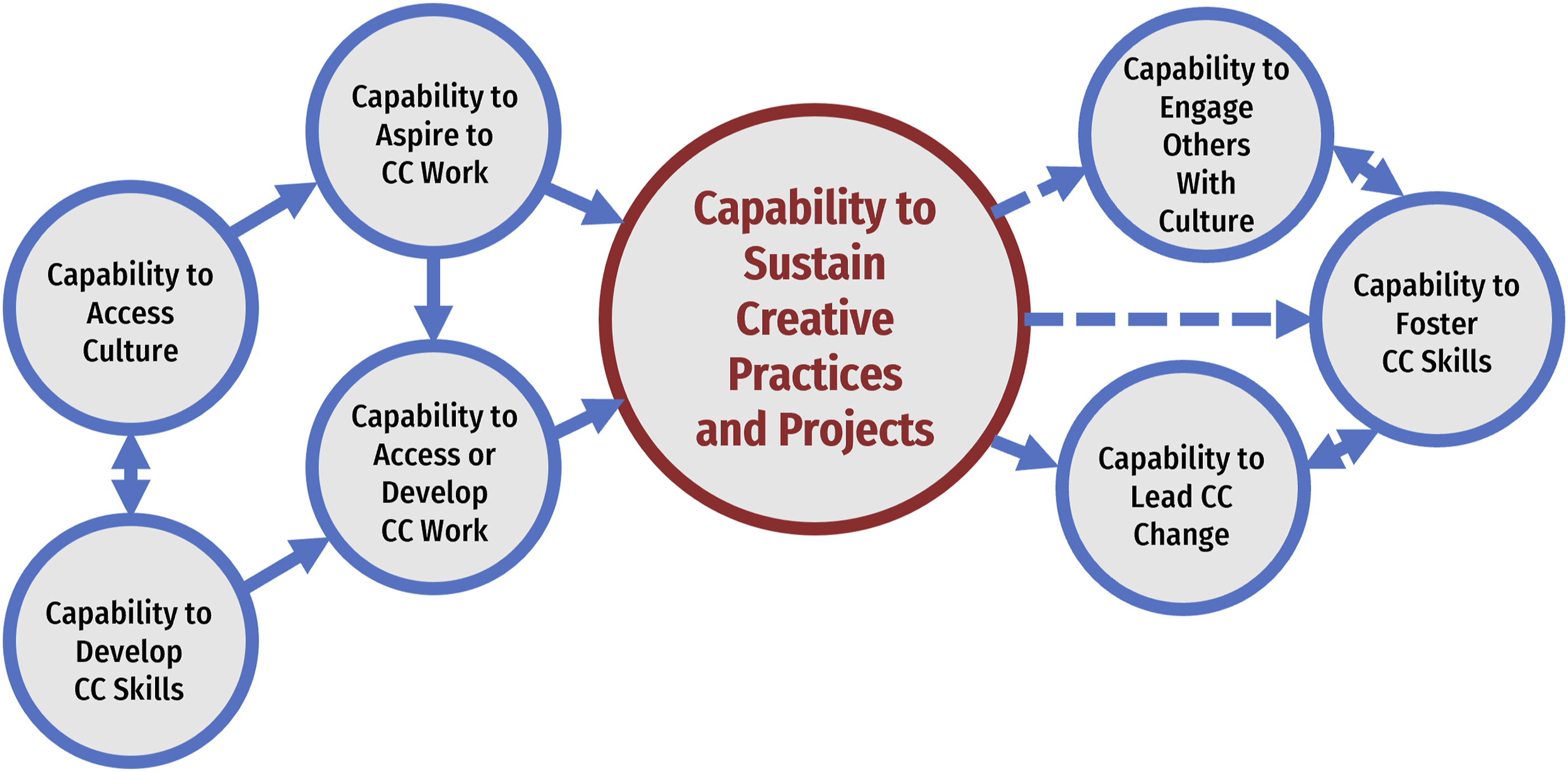
We believe that framing creative and cultural careers within the capabilities approach connects otherwise punctual findings and their implications in the much broader scope of individuals' lifespans, highlighting the interconnectedness among each of their life stages' capabilities. Moreover, doing so stresses that, in turn, these stages' duration and trajectories profoundly depend on all the complex interactions that individuals are able to exercise within their range to support the corresponding capability (Comunian et al., 2023). In other words, as the workers' capabilities are connected, so are the institutions and policies behind their growth.
This builds also on de Bernard et al.'s, (2021) call for an ecological understanding of CCWs’ dynamics, which cannot be grasped without the accountancy of these complex interdependencies. In other words, adopting an ecological approach, implies recognising the workers, institutions, policies and interconnections all as part of an ecosystem, guided by complexity theory principles (Comunian, 2019) and therefore to be studied not in isolation but in a relational and continuously evolving dynamic. Following the work of Moore (1996), the ecosystem concept has gained more and more interest in the academic literature: concerning businesses, it has been applied by Benghozi and Salvador (2014) to research spin-offs, suggesting an alternative to traditional industrial partnerships that should instead be conceived in the form of a set of industrial relations between research spin-offs themselves (i.e. the structure and embeddedness in a business ecosystem).
Following a similar logic, this embeddedness and functioning are here applied to CCWs’ dynamics in theatre.
Methodology
The paper uses a mixed-method data approach. Firstly, we use quantitative data to gain some insight into the patterns of study of British-domiciled first-degree graduates in drama and theatre (D&T) in the UK and their trajectory of employment. Secondly, we use qualitative interviews with current theatre workers to explore their transition experience from HE to work and their work in education as part of their portfolio career. Mixed methods approaches to the creative economy are now a well-established means of studying cultural and creative workers and workforces (e.g. Brook et al., 2020). Mixed methods now sit alongside a rich qualitative tradition (e.g. Hesmondhalgh and Baker, 2011), theoretical work advocating new forms of secondary data collection and analysis (McRobbie, 2016), and quantitative approaches (e.g. Taylor and O’ Brien, 2017; Campbell et al., 2019) to understanding labour in this part of the economy.
Concerning quantitative analysis, we make use of Higher Education Statistical Data (HESA). We use data from the 2015/16 and 2016/17 Destinations of Leavers from Higher Education (DLHE) undergraduate cohorts surveyed 6 months after graduation in January 2017 and 2018, respectively. These were the last two DLHE cohorts before the switch to the Graduate Outcomes survey (where respondents are surveyed 15 months after graduation). We focus on British-domiciled first-degree graduates who responded to the DLHE survey (excluding those who responded with an explicit refusal) with a sample size of 248,655 and 254,495 for the 2015/16 and 2016/17 cohorts, respectively. 1 Amongst the overall graduate cohorts, we focus on drama and theatre (D&T) graduates, defined as those graduating in subjects with the Joint Academic Coding System (JACS) code of W4, and separate the remaining graduates into other creative and non-creative graduates. We define other creative graduates based on definitions in previous work, which include all other JACS codes starting with a W (Arts and Design), media graduates: P (Mass communication and design), N561 (Advertising) and other creative graduates linked to technology and architecture (see Comunian et al., 2011 for a detailed listing of subjects). Among joint honour students, we define theatre and performance graduates as those with at least 50% of their degree in theatre and performance subjects (and likewise for other creative subjects, at least 50% of their degree in other creative subjects). In exploring the transition from study to work, we defined ‘performance occupations’ as those with a four-digit SOC2010 code of 3413, and other creative occupations were those non-performance occupations among the creative occupations as adopted in previous papers (Faggian et al., 2013). Educational occupations, more specifically, were defined as those four-digit SOC2010 codes starting with 231. We split non-creative occupations into graduate and non-graduate levels using the typology of Elias and Purcell (2013).
Quantitative data is complemented by in-depth semi-structured qualitative interviews conducted online between December 2021 and November 2022 to gain a more detailed insight into the experience of people currently working in the sector. The qualitative sample is composed of 21 theatre actors and actresses 2 we reached through different means: four of them through snowballing (from three different interviewees), the contacts of 15 of them were found through online searches (in particular on Mandy, one LinkedIn-like platform for TV and film and theatre workers), two of them expressed the interest of being interviewed over one RSVP we shared through our personal social networks' contacts.
Informed by the capability framework, we asked the performers to retrace their whole careers from their first interest and contact with theatre to their current working arrangements, getting an insight into HE’s echo throughout multiple professional life stages, focussing specifically on the transition into the labour market and to later career stages. Then, after conventional inductive coding (Patton, 2015), we extrapolated data specifically connected to educational jobs and institutions to understand the reasons and modalities through which they got in touch with HE settings.
Studying drama and theatre (D&T) in the UK and employment outcomes
Labour market outcomes (%).
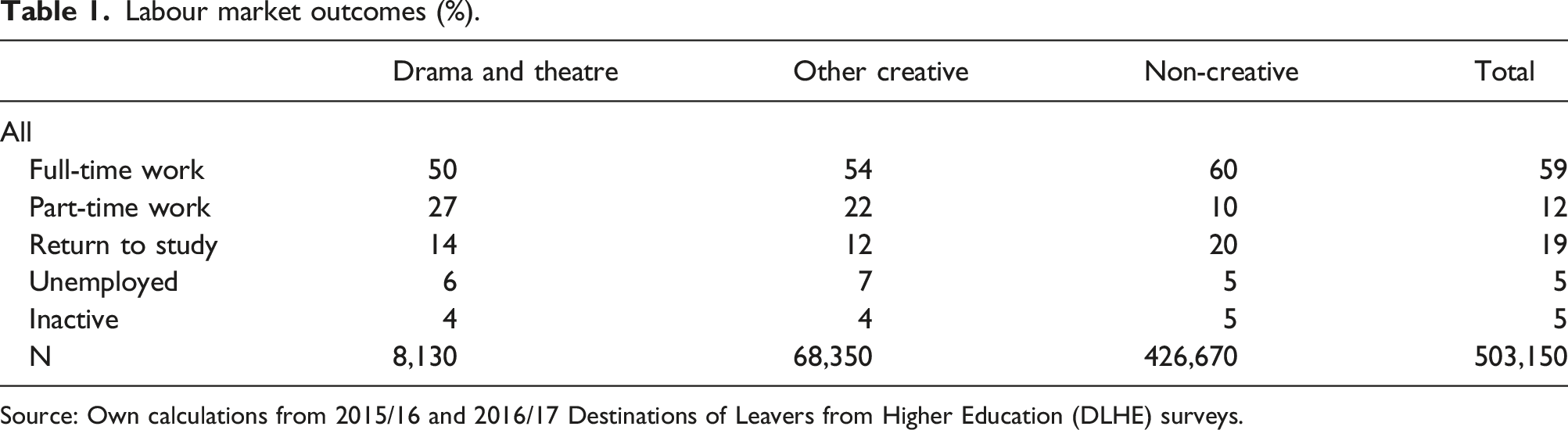
Source: Own calculations from 2015/16 and 2016/17 Destinations of Leavers from Higher Education (DLHE) surveys.
Occupation type (%).
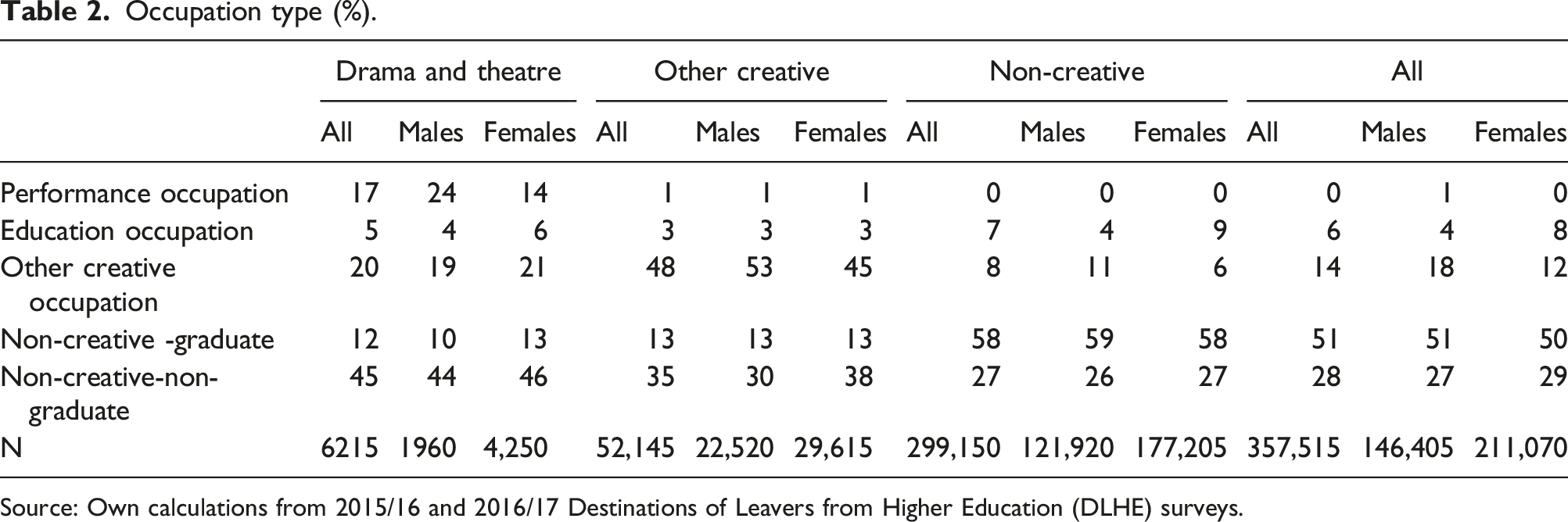
Source: Own calculations from 2015/16 and 2016/17 Destinations of Leavers from Higher Education (DLHE) surveys.
While the data highlight the challenges of transitioning from study to work, in the accounts of many graduates, drama schools often acted as the first performers' professional network, easing their way into the industry. Overall, HE can be essential in facilitating the transition (Higdon & Chapman, 2020). Often teachers, or as for Actor 1 in the following comments, the principal himself, recommended the performer to someone in their network. The connection with the industry teachers provided often was not always meaningful careerwise, but still meant financial support and initial exposure to the industry: ‘The first job came from the principal of our college at the time […] he was friends with the guy that was the artistic director at the [theatre] [….] and I went in and auditioned and got the job’ Actor 1 (White, Upper-middle class background, Mid-to-established career). ‘When we were at drama school, I sort of teamed up with two other people, […] we teamed up for a love of comedy, and we decided to do a dissertation […] which was a comedy show, and we sort of got known by the principal for doing comedy […], I think they must have had jobs come through at drama school, and so we quickly got to do a commercial video […] then we got paid to do pharmaceutical comedy sketches for a pharmaceutical company’ Actress 1 (White, Upper-middle class background, Mid-to-established career).
The push for D&T courses to expand and include a wider range of entrepreneurial and professional practices has been far-reaching (Evans, 2010), and opportunities for students to engage with the industry are included in almost all courses. However, there is an awareness that occasions for students to experience performance and become visible are keys to their first paid jobs in the industry.
As acknowledged from the previous quotes, networks – and networks developed within educational settings specifically – are also important stepping stones for accessing potential job opportunities. They build on social connections and social capital developed within the educational setting (Lee, 2013). As Actor 2 highlighted: ‘I met them at uni, and they put me in shows, and I got to keep doing shows with them and gain experience of the fringe with them […] and doing all of that I was able to apply for a Spotlight
3
account’ Actor 2 (White, Middle class background, Early career).
The importance of these networks and being in the right place at the right time is acknowledged further to be something that also emerges later in someone’s career (cf the following comments from Actor 3). However, this aspect is highly dependent on social capital and often social class. In fact, as highlighted in other sectors of creative labour studies, the fact that opportunities or jobs are not transparently advertised but are dependent on networks can create exclusionary processes (Christopherson, 2009). ‘I knew him when he just started out […] through a friend of mine at university. […] and I was in little short films that they came up to do at university. Then they did really well, and they got asked to do this series. […] I was around a friend's house and met their friends for dinner, and one of them was […] like, “oh yeah, by the way, I'm doing this sitcom, would you be able to play?”’ Actor 3 (White, Middle class background, Mid-to-established career).
Connected to the issue of social capital and class is also the recognition that not all degrees and institutions attended are the same, as specific institutions offer different ‘signalling’ (Becker, 1993) in relation to the human capital provided. Furthermore, geographical elements also play an important role in institutions and graduates in London (Comunian & Faggian, 2014). As recognised by the research participants, different drama schools provide not only access to different networks but also different levels of credits: ‘Where you train matters as well, you know, because we all know that [drama school A] and [drama school B] are considered somewhat different to everywhere else, you know, and you see the number of named actors that come out of them, […] they really become “where you trained, who your agent is, and then what you've done”’ Actor 4 (White, Middle class background, Mid-to-established career). ‘Yeah, but also the reputation of where you go to school. If somebody sees [drama school A], they'll say “great,” and it's like, it's not as great as [drama school C], somebody says you've been to [drama school A] “oh [drama school A], oh my God!”’ Actress 2 (White, Middle class background, Mid-to-established career).
Teaching as career backup or further qualification
Subject of further study (%).
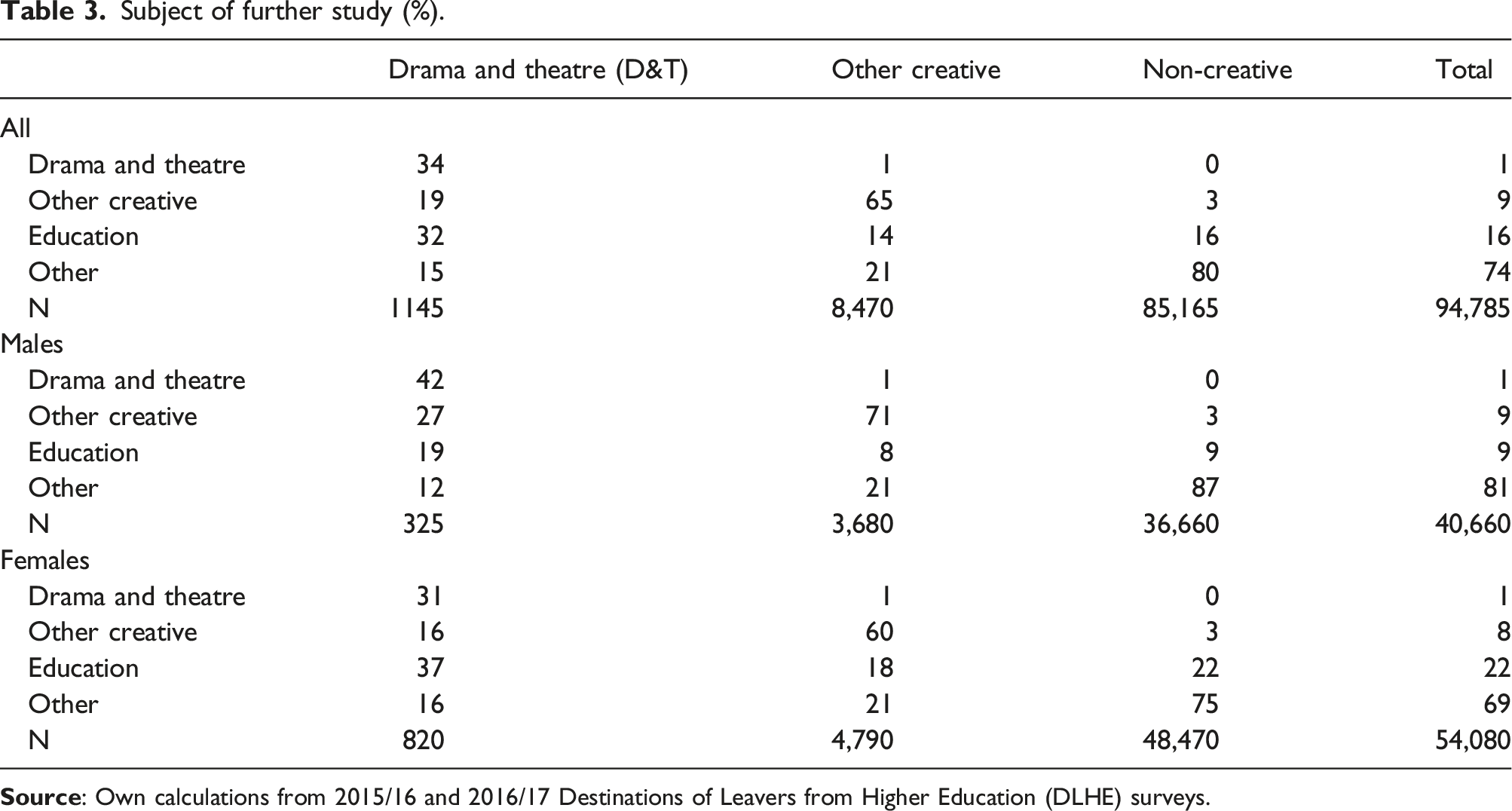
We can see that whilst D&T is the preferred further study subject for D&T graduates, with 34% choosing these subjects, 32% go on to study education which is much higher than for other creative and non-creative graduates. We can also see clear gender differences, with male drama and theatre graduates more likely to choose drama and theatre or creative subjects, whilst female drama and theatre graduates are more likely to choose education. In general, females are more likely to go on to study education than males, but this is particularly striking within the D&T field.
Sustaining a living: Theatre and education
HESA DLHE data can only provide a snapshot after a short period from graduation (6 months). Therefore, to discuss the importance of education (and education-related work) to the capability of theatre workers to make a living, we focus on qualitative interviews, which include practitioners that have been in the sector for a number of years. Education often emerged in the interviews as part of a portfolio career. Actors mentioned drama teaching jobs often in a list of all the jobs ‘they had to do’ to financially float in such a hostile, unpaid-jobs-full industry that is theatre: ‘But as I realised that acting was a difficult industry, I wasn’t necessarily gonna make much money out of it and it was going to be very precarious […] I started looking for other things that I could do to fill in the gap […] and now I do promotional work, I do temp jobs, I do theatre in education, work drama workshops in school, I do corporate role-play work […] I do a whole range of different things to keep money coming in. It’s not just about money coming in as well. I think it’s also about not liking sitting around waiting’ Actress 3 (White, Upper-middle class background, Early career).
Education is undoubtedly a critical component of the portfolio of jobs that D&T graduates can take on. However, the specific work and opportunities offered by ‘theatre in education’ (TIE) jobs as a route to start or continue theatre work within an educational setting, in addition to conventional teaching opportunities, as part of individual performance jobs and theatre work is one that put D&T in an advantageous position compared to graduates in other disciplines (Cadman, 2017). Education is also seen as an opportunity for more sustainable income and regular working hours, especially when individuals consider other family commitments: ‘But predominantly, the reason I gave up touring and performing full time is because I had the family, and the two are not compatible really, and my husband is a musician, so we were both out all the time touring, doing work, and someone had to be at home. So that’s why I took up teaching. […] It was beginning to feel like, “oh, I’d like something a bit more stable,” which is why the teaching’ Actress 4 (White, Middle class background, Mid-to-established career).
The quotes echo other scholars’ findings regarding the pull factors of ‘teachers-practitioners’ among off-stage professionals in theatre (Zezulka, 2020), in other CCIs (Ashton, 2015; Mateer, 2019) and among pracademics more broadly (Dickinson et al., 2022). While teaching was recognised as a stable form of income, it was not prioritised or favoured by everyone. For instance, the routine nature and demanding schedule it imposed may be a deal-breaker for some: ‘I don’t particularly enjoy regular teaching. I actually enjoy going and being a guest and directing something or doing workshops and stuff. I think I did some regular teaching this year, and it nearly killed me. Yeah, it was really hard’ Actor 1 (White, Upper-middle class background, Mid-to-established career).
Therefore, even if teaching can offer advantages, it was not free of challenges: ‘The only time I had a steadily – a salary job, you know, where you get paid, and you pay your PAYE, you know, Pay As You Earn, was – I worked for two years as head of Drama as a drama school […] I did that for two years and that was a salary job, but I hated it’ Actress 2 (White, Middle class background, Mid-to-established career).
But also that the job demands were taking away time, energy and opportunities to be a performer: ‘I realised what I was doing, with all those days of working and everything, it was too much. I love teaching […], but it was too much. So I stopped doing that job. I was frightened because it was a regular salary […] I was doing too much teaching, and although I love it, it was taking away from me as a performer and having the energy as a performer’ Actress 1 (White, Upper-middle class background, Mid-to-established career).
So often, the success of the balancing act – between teaching and performance jobs – was in taking advantage of stable income and teaching, but also being more oriented towards flexible hours or masterclasses rather than full-time demanding roles. Finding the right balance and flexibility resulted in some being able to marry acting and teaching and finding value also in connecting in the classroom: ‘I’m not afraid to sort of get my hands dirty. I’ll do what I have to do, but obviously I do prefer to work in the industry. Obviously, I do prefer to work in it, and I think it’s really important that actors aren’t afraid to teach and not afraid of classrooms. I think you learn a lot from that’ Actor 1 (White, Upper-middle class background, Mid-to-established career).
Interviewees also acknowledged that teaching was also influential in reference to a broader contribution to the sector. The presence of professionals within teaching also confirmed the opportunity for more work to be offered to students, complementing the discussion on the importance of professional opportunities and encounters in HE settings, as highlighted by the experience of a recent graduate: ‘I got into that [extra work] because there was a professor in university who also worked as a casting director’ Actor 2 (White, Middle class background, Early career).
Beyond teaching, performers often interact with universities and drama schools (when not doing proper teaching in education in primary and secondary schools). The interaction at this level – which connects to the development of new knowledge and skills both for professionals and students – can be part of new knowledge exchanges (Comunian & Gilmore, 2016) that benefit not only the individuals but research and knowledge development between academia and the creative and cultural sector: ‘It was [university] doing a master in collaborative theatre-making […], and as part of that course, there was a month sort of residency, if you like, at the [theatre]. So the students would collaborate with professional actors and [theatre company] themselves, and they would create work in that, be graded on their creation of that work in the process and stuff’ Actor 5 (White, Middle class background, Mid-to-established career).
Discussion and concluding remarks
The present paper focused on the interactions between CCWs and HE in the British theatre sector. Interviews and quantitative data pointed at the latter to be an important ingredient to making a sustainable career in the sector possible, from the very start to more established phases. The theoretical framework informed the methodology covering the multiple phases of participants’ professional arc, as that allowed us to cover training institutions’ impact throughout their career life stages and frame their relationship beyond their punctual exchanges. Creative workers’ careers are thus severely shaped by the nature of their relationship with HE, in terms of trajectory and sustainability, well beyond its natural role as training institutions, especially in theatre. As quotes in the paper made clear – reinforcing the findings of Friedman et al., (2017) and Friedman and Laurison (2020) in other sectors – education is a crucial site for the cultivation and further development of the social and cultural capital necessary for entry and success in the theatre industry, as well as a welcomed source of reliable employment in a precarious portfolio career on the other hand.
Building on the capability framework (see Figure 1 from Dent et al., 2022) we find that for theatre workers, in the pre-work phase (although occasionally study and work might overlap) the capability to access specialised training and the type of institution and courses attended influence the capability of becoming theatre workers (see Figure 2). It opens up networks, introduces work-related opportunities to students and graduates, and provides signalling (Becker, 1993) and social capital (Lee, 2013) in the longer term. Theatre workers connections with higher education pre-work and in work. Source: authors’ own elaboration.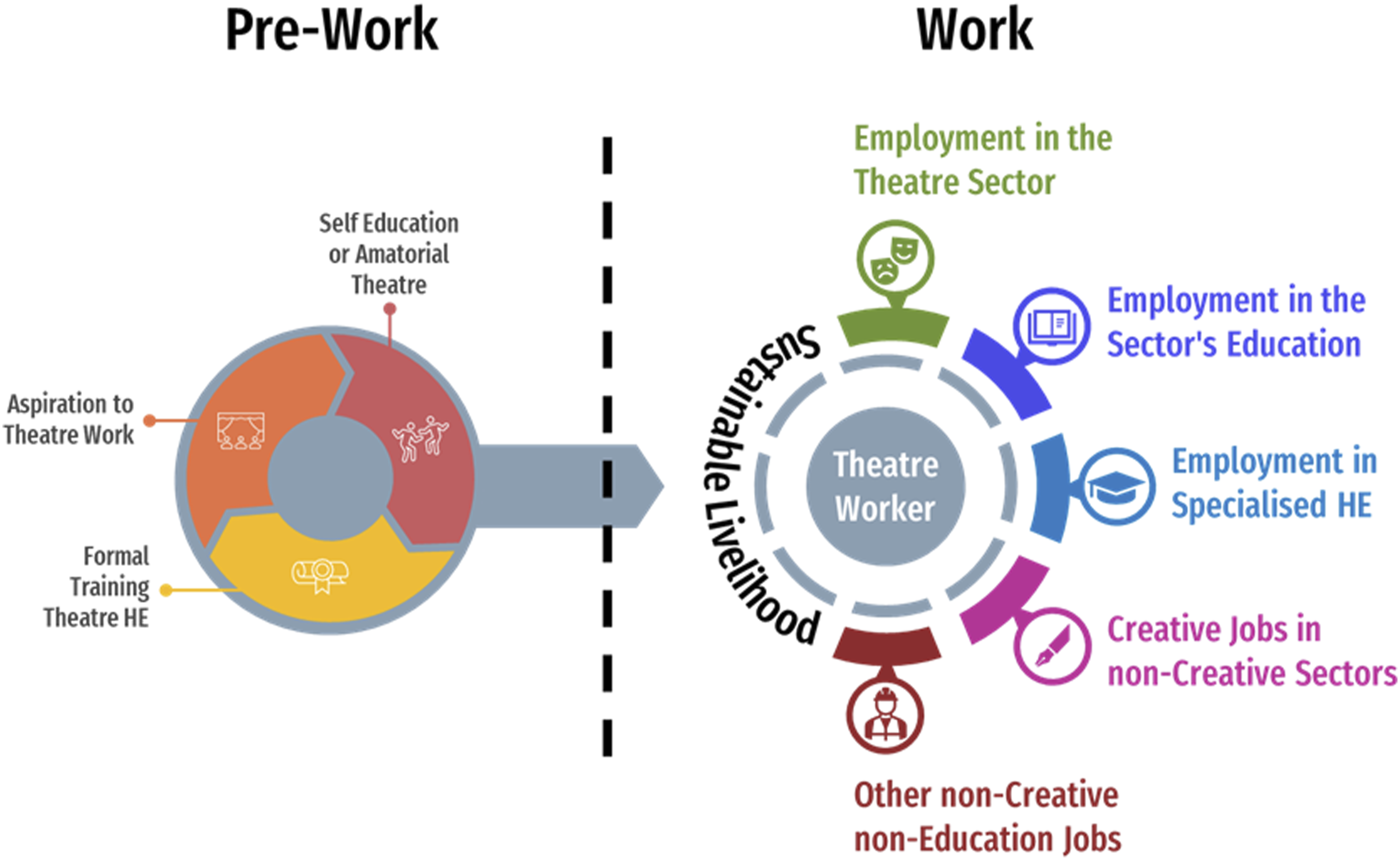
Secondly, the capability of making a sustainable living as a theatre worker often depends on the second range of capabilities to secure work outside of the theatre sector in a precarious portfolio career, among which employment in HEIs emerges as a key component. As several participants in the interviews mentioned, teaching firstly represents one stable income that most of their creative jobs could not guarantee and, secondly, a non-creative occupation in which they can leverage their skills and experience as creative workers.
Building on these considerations, and considering the ecosystem perspective (De Bernard et al., 2021; Benghozi, Salvador, 2014), we contend that understanding creative careers as a series of interlinked capabilities effectively frames HE as a crucial pole of capability development and support for the CCWs and a central component of any creative and cultural ecosystem, especially within the theatre sector.
As word of mouth indeed dominates the assignment of jobs, often strong enough to ignore traditional casting processes, workers are left with few-to-none formal ways to get in touch with those in charge of employment, for example, casting directors. Consequently, drama schools are charged with a quasi-monopoly over the labour market’s doors. Joining a drama school is thus embedded in shaping the possibility of conceiving a career in the industry, as the first contact with any professional network is made possible by teachers or schoolmates, which may manifest later in the performer’s career, leading to further employment; agents, who are among the most relevant intermediaries in the sector, are systematically in contact with education institutions for promising students to represent and with more recognised HEIs and, as we mentioned above, teaching contracts provide incomes consistent enough to sustain performers’ career enough to keep staying in the sector. Such a position not only assumingly contributes to the height of their fees, but it is hardly replicated in non-creative industries, which do present more diversified means for such tasks, for example, employment offices, digital platforms, publicly sponsored open positions, ‘work with us’ sections in firms’ websites among others, creating a more balanced distribution of power.
Yet critically, although drama schools might increase the chances of getting paid jobs at a decent pace, the precarity of theatre workers remains uncontested. Creative HEIs sit in the weird position of sharing exclusivity with their non-creative counterparts without granting a large portion of their graduates a sustainable career.
We thus argue that HE institutions are so deeply intertwined with and often define the creatives’ work life that they should receive more extensive attention in creative economy research and policymaking. Any elaboration on the industry’s future should thus problematise both drama schools’ quasi-monopolistic gatekeeping as well as the quality of work behind their doors.
Limitations and future research
The collected data regard years before the strike of COVID-19, future research could investigate if it had a sizeable impact on HE and CCWs’ dynamics. The last 3 years of the pandemic have indeed shown that the precarious working conditions of CCWs and performing artists in particular (Comunian & England, 2020) need to be addressed more broadly by the policy and educational ecosystem in order to rethink possibly more sustainable futures for work in the sector (England et al., 2022).
Furthermore, we recognise the number of interviews to be limited. Nonetheless, given the difficulty in undertaking direct interviews with theatre performers – as evidenced by the paucity of research works in the sector – our analysis can be considered a helpful first step for inspiring further research in the area.
Notwithstanding these limitations, we believe they offer a solid base for future enquiries.
Firstly, the research problematises HE institutions’ monopolistic stance at one macro-level that we believe may have concrete implications at the micro-level of the individual teacher’s decisional power in affecting students’ future careers. Furthermore, especially in light of documented bias in casting (Brook et al., 2020) and the homogeneity of teaching staff identity (Snow, 2017), it may further perpetuate the underrepresentation of women and ethnic minorities.
Secondly, it would be very important to consider timing of data collection and the value of longitudinal research. HESA data present a very quick snapshot soon after graduation and we know creative careers might take longer to develop. Furthermore, capturing the voice of people who drop-out or leave the sector soon after entering the world of creative work might offer insight in the real barriers and struggles, specifically of under-represented groups.
Finally, we support Alacovska’s and Gill (2019) call to challenge the very axioms of academic understanding of creative labour and industries as profoundly tied to Western empirical knowledge. Thus, in addition to stressing the need for caution in extending the present findings beyond Western contexts, we anticipate a series of significant differences in the latter regarding the unfolding of HE’s role in CCWs’ careers that are more than worth dedicated research.
Footnotes
Acknowledgements
A preliminary version of this paper was presented at the European Academy of Management (EURAM) 2023 Conference, Trinity Business School, Dublin, Ireland, 14–16 June, and at the British Academy of Management (BAM) 2023 Conference, University of Sussex Business School, Brighton, UK, 4–6 September. We are deeply thankful to the interviewees, who generously shared their time and experience with us, and whose participation made the project possible. Finally, we acknowledge the PhD Research Visiting period (May 2023) of the co-author M. de Bernard at ESSCA School of Management, France: we advanced on revisions, and we finalized the paper during face-to-face exchanges and work meetings at ESSCA School of Management Paris Campus.
Declaration of conflicting interests
The author(s) declared no potential conflicts of interest with respect to the research, authorship, and/or publication of this article.
Funding
The author(s) disclosed receipt of the following financial support for the research, authorship, and/or publication of this article: This work was supported by AHRC Collaborative Doctoral Award (Project reference 2240711).
