




Abstract
This article examines how remote and hybrid work reshape the spatio-temporal organisation of labour through the dynamics of intensification and extensification. Drawing on three waves of survey data, each with over 1000 participants during and after the COVID-19 pandemic, alongside longitudinal interviews with 90 participants, the analysis shows that information and communication technology (ICT)-driven intensification undermines wellbeing by generating work–life conflict. Extensification – the temporal, spatial and psychological diffusion of work – both enables and is reinforced by intensification. Gendered differences emerge, especially for women with care roles who experience greater cumulative burdens once hybrid work becomes established. Material resources, such as housing and digital infrastructure, can also stratify experiences. The article concludes that ICT-enabled hybrid work produces a new spatio-temporal regime in which intensification and extensification interact to deepen inequalities.
Introduction
The COVID-19 pandemic marked a turning point in remote working, prompting a large-scale shift to digitally mediated labour. While platforms such as Zoom and Microsoft Teams enabled this transition, the sheer speed of the transition left little room for strategic design, training or attention to wellbeing (Papagiannidis et al., 2020). What began as an emergency response has become a lasting transformation. In the UK, home-based working rose from 12% in 2019 to 49% in early 2020, stabilising at around 40% by 2023 (Office for National Statistics [ONS], 2023). Remote working has facilitated hybrid practices across many sectors, underpinned by worker demand for flexibility (Orr and Savage, 2021).
Digital technologies have redrawn the temporal and spatial boundaries of work, offering flexibility but also intensification, technostress and uncertainty over sustainability (Lunde et al., 2022). Workers report fatigue, overload and difficulty disconnecting, often linked to extended use of platforms such as Zoom and Slack (Nadler, 2020). These signs expose structural tensions often framed through the flexibility paradox (Chung, 2022; Kelliher and Anderson, 2010), where autonomy in flexible work simultaneously fosters intensification and erodes boundaries. The nature of these processes, the specific mechanisms of labour effort and its spatio-temporal organisation are not fully understood.
This article focuses on two interrelated processes: intensification and extensification. Intensification refers to heightened effort and task density within bounded timeframes (Green, 2004; Green et al., 2022). Extensification, once understood as lengthening the working day, increasingly concerns the spread of work into evenings and weekends, but also homes and other non-traditional spaces (Perrons, 2003; Rubery et al., 2005). While intensification is relatively well theorised and often measured quantitatively, extensification remains under-theorised, particularly in digital contexts. The emphasis on intensification has obscured how information and communication technology (ICT) reshapes the rhythm and geography of work, producing boundary collapse.
Beyond Hassard and Morris (2022), who examine extensification through labour geography and managerial control, few studies develop it as a concept or explore how it interacts with intensification. Yet, these dynamics are intertwined – technology accelerates tasks while dispersing them across time and space, creating conditions where intensification flourishes. This intensification–extensification dynamic offers a novel framework for analysing the long-term consequences of ICT-enabled remote work, including stress, fatigue and work–life conflict (WLC).
This study draws on three large-scale surveys (2021–2023) to examine links between ICT-enabled intensification and wellbeing. The quantitative data illustrate how technology/platform use relate to wellbeing and work–family conflict. Qualitative data build upon the quantitative insights through longitudinal interviews with 90 workers, tracing how individuals navigate extensification, the relationship between extensification and intensification and how these experiences are shaped by gendered domestic arrangements. While remote work is often presented as empowering, it frequently reproduces or intensifies inequalities in domestic labour, caregiving and expectations of availability. Extensification may fall more heavily on women, who often combine paid and unpaid labour in the same space (Craig and Churchill, 2021). The intensification–extensification dynamic thus provides a critical lens to understand how ICT reshapes the scope and intensity of labour, with implications for equity and wellbeing in the digital workplace.
Work intensification and ICT-enabled remote working
In his discussion of the forms of time in Capital, Tombazos (2014: 13) re-translates Marx as stating that ‘every economy is in the end an economy of time’. Time is central to Marx’s analysis, including the struggle over the length of the working day. Later commentators highlight how linear, clock time became vital to industrialisation (Thompson, 1967), with Mumford (1934, cited in Hassard, 1989) suggesting that the clock was more decisive than the steam engine in shaping industrial life. The disciplining of work through the clock not only coordinated labour but also laid the foundation for concern with the density of effort within regulated hours.
Marx (1976: 533) observed that once the length of the working day was constrained, the ‘intensification of labour develops into a phenomenon of decisive importance’. Distinct from productivity, intensity refers to how much labour is expended in each time (p.474). Green (2001: 56) defines work intensity as the ‘rate of physical and/or mental input to work tasks during the working day’, a concept extended by Green et al. (2022: 460) to encompass task performance rates, cognitive and emotional demands, simultaneity, interruptions and gaps between tasks.
Importantly, work intensification has been shown to increase internationally over the past three decades, driven by global, organisational and individual-level changes (Paškvan and Kubicek, 2017). Many of these dynamics deepened during lockdown, where ‘techno-stress’ (Tarafdar et al., 2007) became particularly salient. Yet, as Borle et al. (2021) argue, it is not technology per se but how it is deployed that matters. Barley et al. (2011), for example, found that rapid email responders gained symbolic recognition, intensifying work through cultural expectations. ICTs also fuel distraction and interruption (Farivar et al., 2022), amplify strain when work is highly ICT-mediated (Chesley, 2014) and erode temporal and spatial boundaries, enabling multitasking across contexts (Kenyon, 2008).
These observations resonate with the flexibility paradox (Chung, 2022; Kelliher and Anderson, 2010), which highlights how autonomy in flexible work, while potentially beneficial, can also reproduce or heighten work pressures. However, the paradox tends to foreground autonomy and control, while offering less insight into the specific mechanisms of labour effort and its temporal organisation. Here, the concept of work intensification provides a sharper conceptual resource by directing attention to how ICT restructures the rate, density and organisation of labour within and beyond bounded timeframes, deepening understanding of how flexible arrangements translate into heightened demands.
In digitally mediated environments, intensification often takes the form of rapid task-switching, information overload and multi-channel communication (Mazmanian et al., 2013). While multitasking during meetings may appear productive, it can also cause stress (Appelbaum et al., 2008). Technostress – stress arising from ICT use – has emerged as a central concern in organisational and occupational health research (Tarafdar et al., 2007). It encompasses stressors such as connectivity, overload, platform switching and blurred boundaries, which generate cognitive strain, emotional exhaustion and feelings of being overwhelmed. These dynamics intensified during the COVID-19 shift to remote work: UK surveys found higher levels of mental distress among remote workers than those on-site, linked to heavier digital workloads and an ‘always-on’ culture fostered by Slack, Teams and Zoom (Chung et al., 2020; Trades Union Congress [TUC], 2022). Such findings resonate with the flexibility paradox (Chung, 2022; Kelliher and Anderson, 2010), where the autonomy promised by flexible work simultaneously reproduces pressure and erodes boundaries.
Intensification in professional and managerial roles often encompasses not only task speed and demand but also relational work, coordination and sustained visibility – activities essential to organisational functioning yet rarely recognised in metrics (Richardson and Kelliher, 2015; Emslie and Hunt, 2009). The expectation of constant digital availability compounds these pressures, particularly where professional responsibilities intersect with domestic obligations. Such dynamics may be experienced differently by men and women, given persistent gendered patterns in work and care (Chung, 2022).
Against this backdrop, this article poses three initial research questions, each of which will be examined with attention to gender differences:
Technology-enabled work extensification
While much recent debate has centred on the intensification of work, it is also vital to consider extensification as technology stretches the working day beyond its formal boundaries. Marx (1976: 526) identified extensification – the ‘prolongation of the working day’ – as a fundamental feature of capitalism. Once an employer has purchased labour power, surplus value can be increased by lengthening the day, a practice that gave rise to historic struggles over regulation. These struggles underscored the central role of technology in shaping time: for Marx (1976), machinery was the ‘most powerful means of lengthening the workday beyond all natural limits’.
Understood in terms of linear clock time, extensification appears as a matter of hours. Yet, as Hassard (1989) argues, time must also be understood qualitatively – that is, in terms of how people experience duration, order events and collectively attach meaning to rhythms. Working life operates through multiple temporalities, from commuting and supply chains to the uneven passing of time during monotonous or absorbing tasks. Studies extend this view by conceptualising extensification as the expansion of labour across both temporal and spatial dimensions (Hassard and Morris, 2022; Perrons, 2003; Rubery et al., 2005). Rather than intensifying effort within fixed hours, work diffuses into evenings and weekends, but also domestic settings and mobile contexts. This reflects the erosion of boundaries between work and non-work (Chesley, 2005; Hislop and Axtell, 2007), signalling not just longer hours but the potential for work to occur at any time and place (Rubery et al., 2005).
This contextual shift makes time and space central to contemporary work. Under industrial capitalism, disciplinary time was segmented into predictable blocks – shifts, rotas, 9-to-5 schedules – anchored in fixed workplaces that functioned as spatial technologies of discipline (Hassard, 1990; Thompson, 1967). Today, untethered from the office, work extends into kitchens, bedrooms, cars, trains and virtual environments – spaces once reserved for rest, care and leisure (Hislop and Axtell, 2007; Wapshott and Mallett, 2012). The workplace, once geographically bounded, is dispersed across infrastructures and routines, creating what Mazmanian et al. (2013) call the ambient presence of work. This spatio-temporal extensification collapses boundaries between private and professional life, reshaping the atmosphere of everyday environments (Perrons, 2003).
Extensification overlaps with but is distinct from boundary blurring or role permeability. Boundary theory (Ashforth et al., 2000; Clark, 2000) considers how individuals manage transitions, often framing responsibility as psychological. Extensification, in contrast, refers to structural and technological processes that relocate work. Mobile devices, cloud platforms and algorithmic scheduling decouple labour from physical offices and linear schedules, extending what Derks et al. (2016) call ‘boundary permeability’. Tools such as Slack, Teams and Zoom do more than connect, they collapse distance, bypass thresholds like the office door and enable continuous visibility (Gregg, 2011).
The COVID-19 pandemic sharply accelerated these dynamics. As homes became de facto workplaces, boundaries between paid and unpaid labour eroded (Felstead and Reuschke, 2020; Kossek et al., 2012). Shirmohammadi et al. (2022), reviewing 40 studies, found remote work consistently associated with longer hours, elevated stress and disruption to household routines. The home was reconstituted from a site of intimacy and retreat into one of labour, surveillance and productivity. These shifts were, however, uneven, shaped by housing, caregiving and digital infrastructure. Even before the pandemic, Schlachter et al. (2018) identified that quantitative evidence on the voluntary use of ICTs after hours found that it contributed to stress, sickness absences and WLC. However, they highlight the paradoxical nature of these forms of ICT use – such as where qualitative evidence reflected workers’ belief that the autonomy gained benefited their wellbeing.
Despite its growing relevance – particularly under hybrid work – extensification remains under-theorised. Except for Hassard and Morris (2022), extensification is often treated as a side effect or folded into boundary blurring. This article addresses that gap by conceptualising the intensification–extensification dynamic as a recursive mechanism. This dynamic extends debates framed by the flexibility paradox (Chung, 2022; Kelliher and Anderson, 2010), which highlights how autonomy paradoxically generates pressure, but often under-theorises the temporal and spatial reorganisation of work. Extensification expands the reach of labour, creating scope for intensification, whereas intensification accelerates effort and responsiveness, making extensification more likely. The intensification–extensification dynamic reconfigures time, space and labour under digital capitalism. Hence, the final two exploratory research questions:
Methodology
Work intensification has been relatively well-theorised and operationalised in the literature (Niazi et al., 2024). Survey scales such as the Intensification of Job Demands Scale (Kubicek et al., 2015) are widely used to measure facets of intensification. By contrast, developing conceptualisations of work extensification are less amenable to standardised measurement and remain comparatively under-theorised. Extensification involves subjective experiences of boundary erosion, spatial displacement and temporal fragmentation, which are highly contextual, relational and interpretive. The relationship between intensification and extensification is complex and mediated by cultural norms, technological affordances and domestic arrangements. As such, extensification, and the ways in which it is interrelated with intensification, is best investigated through qualitative methods that can capture the nuanced, situated ways people make sense of where and when work happens. Accordingly, RQs 1–3 draw on quantitative data, while RQs 4–5 are explored through qualitative inquiry.
All aspects of the study were conducted in line with recognised ethical standards. Participation in both surveys and interviews was voluntary, and informed consent was obtained in all cases. Confidentiality and anonymity were assured, and ethical approval was granted by the relevant university research ethics committee.
Quantitative data
The quantitative data are derived from three online surveys of the UK population. The surveys were all part of a broader study looking at Covid and Post-Covid adaptation to remote working. The first survey, collected between late 2021 and early 2022, included remote, office-based and hybrid workers (Survey 1). The subsequent two surveys, conducted in mid-2023, targeted hybrid workers (Survey 2a) and office-based workers (Survey 2b). Details of all three surveys are presented in Table 1.
Demographic data for the surveys.
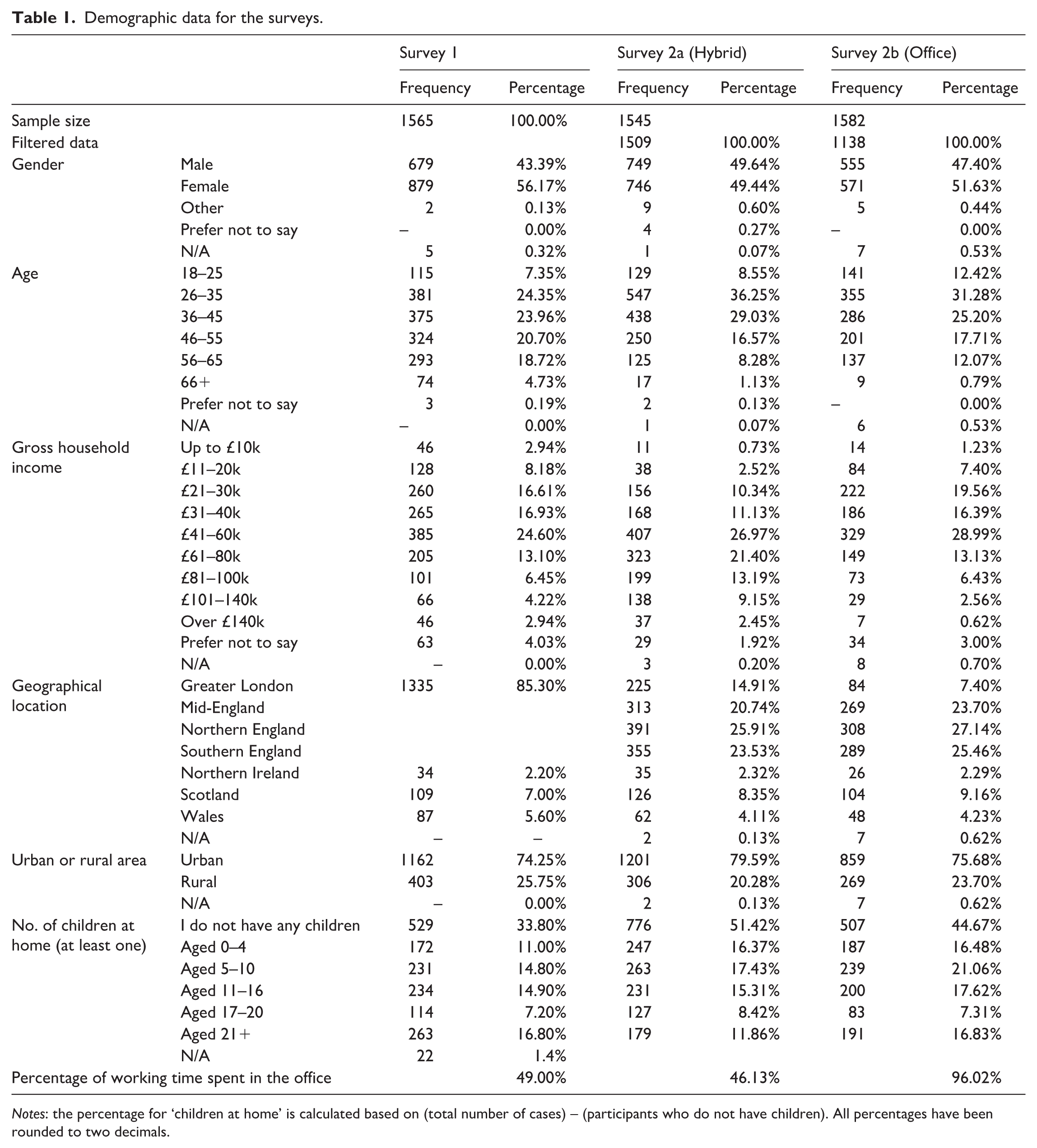
Notes: the percentage for ‘children at home’ is calculated based on (total number of cases) – (participants who do not have children). All percentages have been rounded to two decimals.
Survey 1 was delivered via Qualtrics, which offers advanced design and data management features suitable for capturing broad post-pandemic working practices. Surveys 2a and 2b used Prolific, recognised for rapid, high-quality responses and targeted recruitment (Palan and Schitter, 2018; Peer et al., 2017). Across both platforms, demographic filtering and pre-screening ensured participants met eligibility criteria: being UK-based, in paid employment and working either from home, in a hybrid pattern or on-site. Using both Qualtrics and Prolific provided complementary strengths – breadth of coverage and depth of targeted recruitment – while online data collection aligned with the digital contexts under study, reduced geographic and temporal barriers, and supported inclusion of a socio-demographically diverse UK workforce. Each survey targeted samples of approximately 1500 UK workers. Recruitment employed soft quotas to enhance coverage across key dimensions while avoiding overconstraint. Completions were monitored by geography (UK nations and English regions), gender (inclusive categories), socio-economic position (NS-SEC bands) and job role (SOC major groups). Although the surveys are not probability samples, the use of high-quality online panels enables inclusion of groups that may be difficult to reach through traditional household survey methods.
The quantitative element of this article examines three constructs: technology-based intensification, work–family conflict and wellbeing. Intensification was measured using an adapted version of Tarafdar et al.’s (2007) technostress scale, reworded to focus on collaborative and videoconferencing software. Whereas technostress typically captures psychological strain from adapting to or being overloaded by technology (Ayyagari et al., 2011), here the emphasis was altered to focus on technology-based intensification – the ways digital tools increase pace, workload and pressure. Example items, rated on a seven-point Likert scale, include: ‘This software forces me to work faster than I am used to’, ‘It has increased my workload’ and ‘It makes me feel as if my personal life is being invaded’. Unlike typical intensification measures, such as the ‘Intensification of Job Demands Scale’ (Kubicek et al., 2015), this adapted measure highlights the ICT-specific mechanisms – information overload, constant connectivity and digital interruptions – through which work intensification is experienced in hybrid and remote contexts.
Work–family conflict was assessed using Carlson et al.’s (2000) scale, which distinguishes three dimensions: time-based conflict arises when work time prevents engagement in family life; strain-based conflict occurs when pressures at work spill over into home life; and behaviour-based conflict appears when behaviours required at work are incompatible with those expected at home.
Wellbeing, the primary dependent variable, was measured using the General Health Questionnaire, 12-item version (GHQ-12) (Goldberg, 1972), a validated tool frequently applied in workplace settings to screen for psychological distress (e.g. Hardy et al., 2003). The GHQ-12 is sensitive to the mental health consequences of high work demands, making it appropriate for assessing the effects of intensification and work–family conflict. The GHQ-12 is widely validated across occupational samples, sensitive to stress-related outcomes and offers comparability with other work-related studies. To ensure consistency across the three surveys, the same core measures of intensification, work–family conflict and wellbeing were included in all waves, with only limited adaptations to reflect working arrangement (remote, hybrid or office-based).
Factor reliability was tested using Cronbach’s alpha and composite reliability; convergent validity, which examines the extent to which the construct converges to explain the variance in its items, was measured using the average variance extracted (AVE) criterion (Fornell and Larcker, 1981). The results for each of the three measurement models are presented in Table 2. The three latent variable constructs evidenced excellent reliability for all populations, with values ranging from 0.90 to 0.94. The value of the composite reliability measure may be higher because it is weighted on construct indicators’ own loadings, which is not the case in Cronbach’s alpha, although the difference between the two measures is usually negligible (Peterson and Kim, 2013).
Composite reliability and average variance extracted.
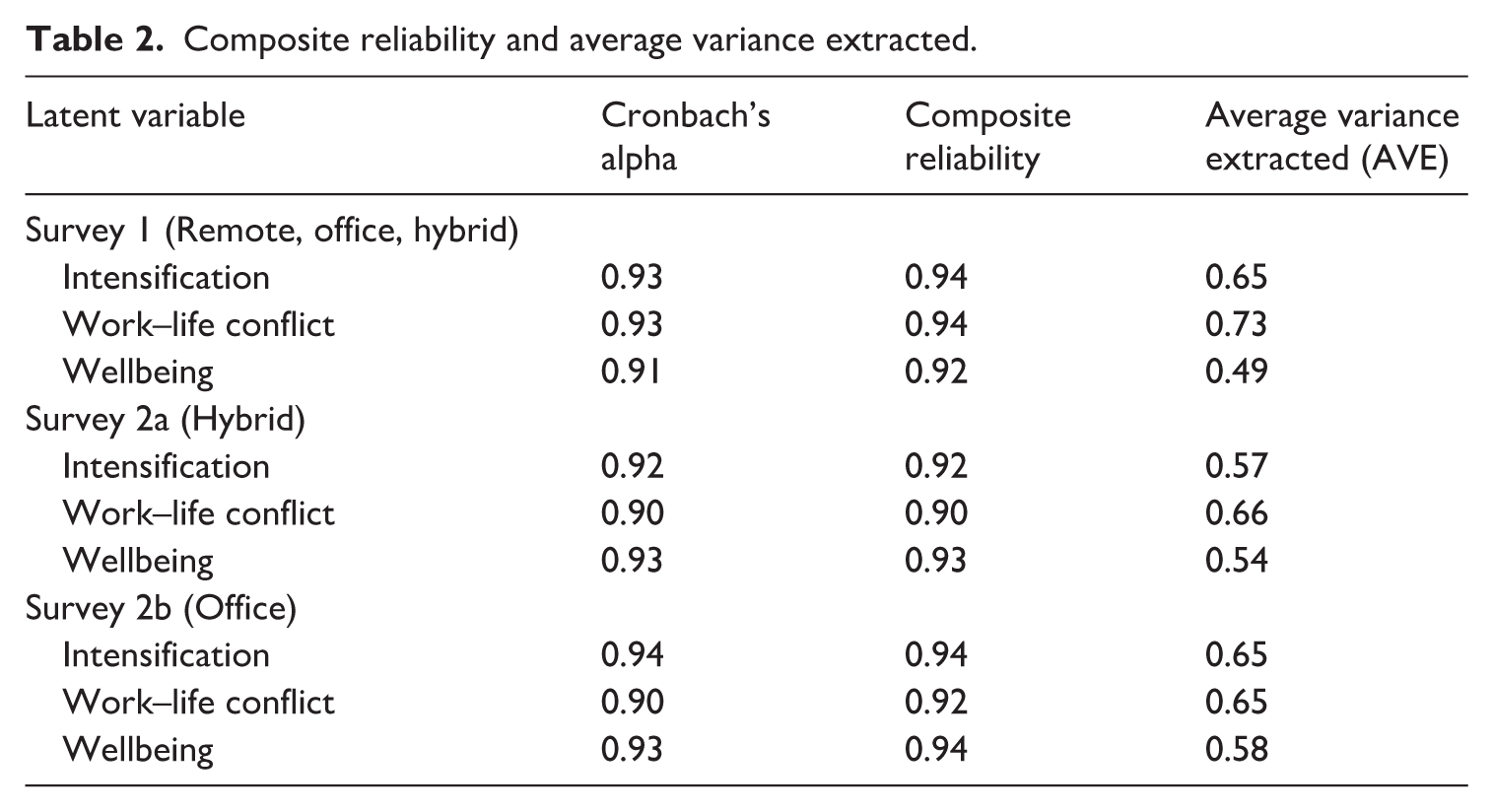
In terms of AVE, technology-based intensification and WLC exceeded the commonly accepted threshold of 0.50, with values ranging from 0.57 to 0.73. The AVE value for wellbeing in Survey 1 fell just below this level at 0.49, suggesting that the indicators did not fully capture a uniform construct. However, in Surveys 2a and 2b, the AVE values were above the threshold at 0.54 for 2a and 0.58 for 2b. As Fornell and Larcker (1981) note, because AVE is a conservative measure, values slightly below 0.50 can be considered acceptable when composite reliability is adequate. Given the high reliability estimates and the absence of concerns about discriminant validity (discussed below), wellbeing was retained.
There were no serious concerns about multicollinearity. All but one variance inflation factor (VIF) value was below 5 and most were below 3 (Hair et al., 2019). Only one item (WLC2) showed elevated VIF values in Survey 2a (5.73) and Survey 2b (5.71) due to high correlations with WLC1 and WLC3 (all r = 0.86). As these values remained below the commonly accepted threshold of 10, no further steps were taken.
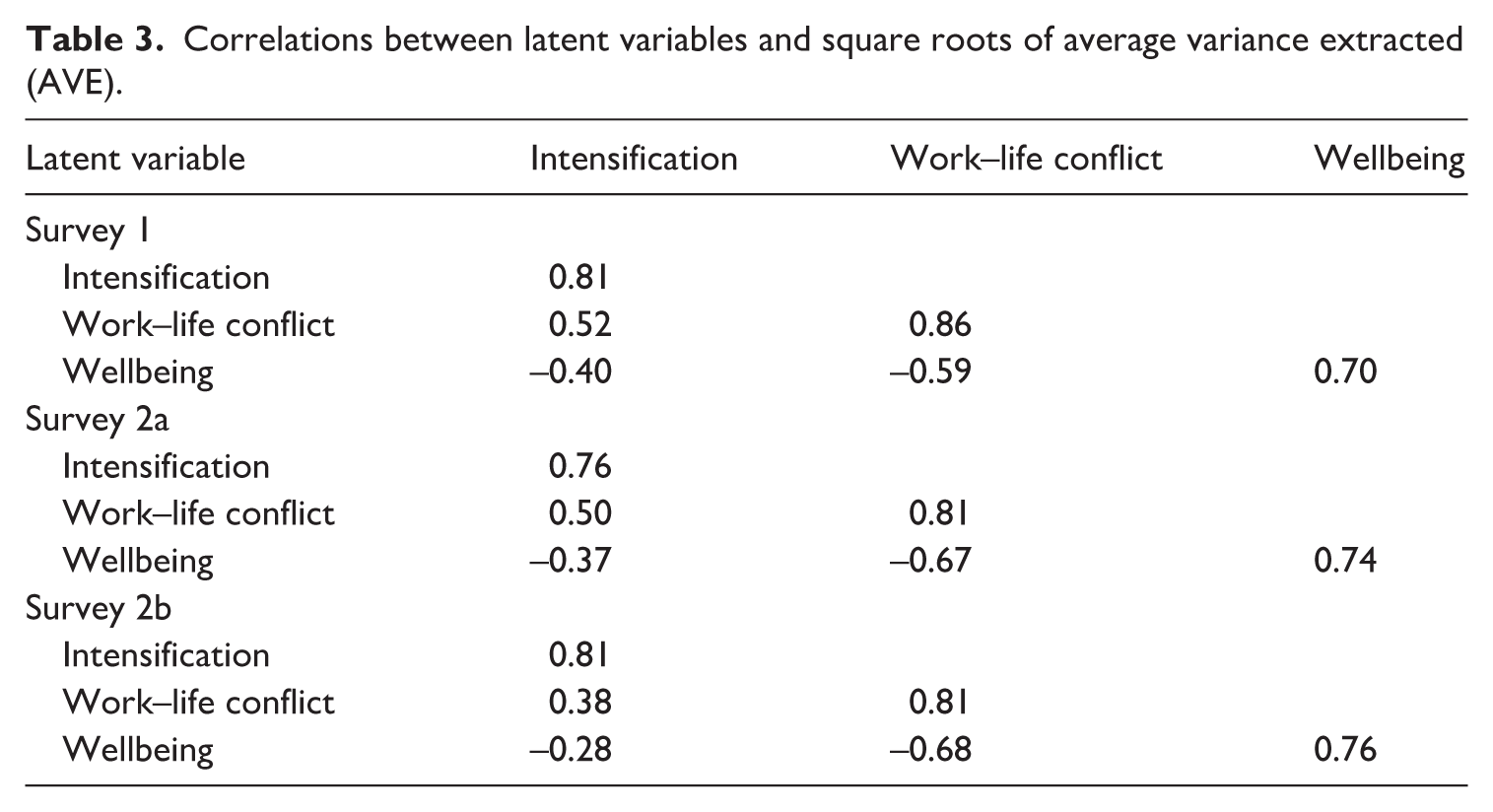
Discriminant validity was assessed using the Fornell and Larcker criterion. The square roots of AVE and correlations between latent variables are presented in Table 3. In each case, the diagonal values (square root of AVE) were greater than the corresponding correlation values, establishing discriminant validity. This indicates that the latent variables are sufficiently distinct and are not capturing the same construct.
Correlations between latent variables and square roots of average variance extracted (AVE).
The data were analysed using straightforward structural equation modelling (SEM) in RStudio to assess whether the relationship between intensification and wellbeing is direct or mediated by WLC. SEM is particularly appropriate for studies involving latent variables such as wellbeing and work intensification, as it explicitly models measurement error and estimates the relationships between constructs using multiple observed indicators. Model fit was evaluated using standard goodness-of-fit indices (CFI, TLI, RMSEA, SRMR), which together indicate the extent to which the proposed theoretical structure reflects the observed data. Establishing acceptable fit provided confidence in the validity of the model. This model captures the specific relationships examined in the quantitative analysis.
Several limitations should be noted. In particular, the AVE scores of wellbeing were somewhat low and, in one instance, even below the commonly accepted threshold of 0.5. This is surprising, as the GHQ12 is an established measure of wellbeing. AVE scores were higher for Surveys 2a and 2b, but still below 0.6, suggesting that the measure was not an entirely uniform assessment of wellbeing. In terms of model fit, the normed fit index (NFI) also fell below commonly accepted thresholds. However, as pointed out in the Results section, the NFI is an incremental fit index, which returns higher values with an increasing number of parameters in the model. With the three-variable model in the present study, more importance was therefore attributed to the standardised root mean square residual (SRMR) fit measure, which is not an incremental but an absolute fit index and was within commonly accepted thresholds (< 0.08), thus indicating good model fit. A further concern arose from the participant sample. Despite using fixed pre-screening criteria from the online panel provider, almost a third of respondents in the office survey, in particular, indicated hybrid working patterns and thus were not considered as belonging to the population of office workers. Since the pre-screening criteria question was not repeated word for word in the survey, no resampling was performed by the online panel provider. Further, it should be noted that this article did not take an explicitly intersectional approach because, while it examined gender (qualitative and quantitative) and some socio-economic differences (qualitative), the surveys were not large enough to allow systematic analysis across race, disability and class. Extensification is addressed in the qualitative phase of the study, which builds on the survey findings to explore the mechanisms through which digital work is reshaped.
Qualitative data
Five rounds of semi-structured interviews were conducted with UK workers between spring 2020 and summer 2022. The first four rounds (90 participants) traced experiences during the pandemic, while a fifth round in 2022 followed up with a subgroup of 20 from the original panel engaged in hybrid work post-COVID. Participants were recruited by convenience through local newspapers, social media and word of mouth.
Interviews were conducted remotely via Teams, Zoom or telephone, enabling inclusion of participants across England, Scotland, Wales and Northern Ireland and reflecting the digital environments in which many were working. The semi-structured format covered workspace, technology, wellbeing, WLC and productivity, while allowing participants to raise issues of personal importance. The analysis in this article focuses on the hybrid working discussed with 70 participants in round four and 20 in round five, with conversations lasting between 35 minutes and two hours (average 50 minutes).
The sample was diverse in sector, region and personal circumstance. Participants were drawn from occupations including IT, teaching, social work, public health, finance, academia, retail and the voluntary sector, with some self-employed or moving between roles during the study. Ages ranged from 20s to 60s; women made up around 55% of the sample and men 45%. Self-identified ethnic diversity included White British, Polish, Greek, Indian, Nigerian, mixed-race, Black British and Asian American participants, although the largest group were White British. About two-thirds had caring responsibilities, most often childcare, but also eldercare, sometimes combined with line management roles. Attrition occurred, but most participants completed three or four interview waves. This longitudinal design provided both depth and breadth, capturing continuity and change as participants moved from home working through to the establishment of hybrid work post-COVID.
All interviews were professionally transcribed and systematically coded by multiple researchers to ensure inter-coder reliability. An inductive content analysis approach was adopted (Elo and Kyngäs, 2008), supported by a structured coding scheme to ensure consistency across the large, evolving dataset. The coding process began with the identification of instances of intensification and extensification, which were then examined in terms of their effects and interrelations. Additional thematic coding captured contextual factors such as wellbeing, WLC and gendered or material differences. The process combined deductive attention to the research questions with iterative refinement of codes in response to the data. Thematic comparisons across time periods identified key patterns such as early enthusiasm for homeworking giving way to frustration linked to intensification and extensification as digital tools became embedded. This analysis was used to build from the quantitative findings on intensification to explore the lived experiences of intensification, extensification and, crucially, their interrelationship.
Results
Quantitative data
Before testing the structural model, the data were cleaned and mean comparisons were conducted using independent sample t-tests to assess gender differences on key dependent and independent variables (Table 4). In Survey 1, listwise exclusion for missing data on core variables reduced the usable sample by 314 cases (20%), leaving 1251 respondents for the SEM analysis. In Survey 2b (Office), 444 respondents (28%) reported working five or more hours from home, despite pre-screening criteria, and were excluded from the office worker subsample. A further seven respondents did not report information on their gender and were therefore also excluded, reducing the final office worker sample to 1131 respondents. Gender comparisons showed that in Surveys 1 and 2a, males reported significantly higher levels of work intensification than females, while also reporting significantly higher overall wellbeing in Surveys 1 and 2b. In contrast, females reported significantly higher intensification than males in Survey 2b. Please note that for the SEM analysis, respondents who answered “Other” to the gender question, were grouped with female respondents.
Gender differences on key variables (excluding respondents who selected “Other” due to insufficient size for comparisons).
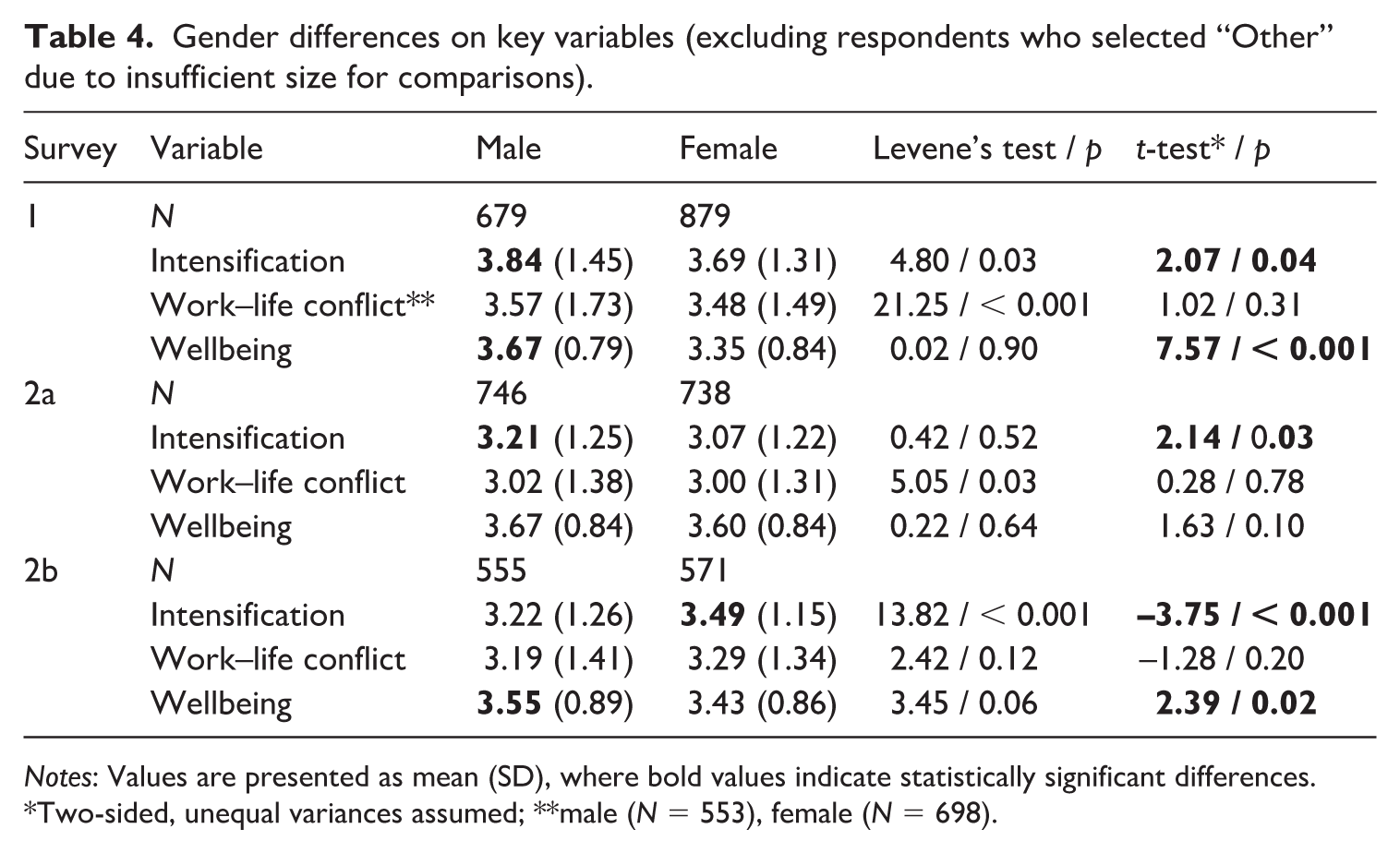
Notes: Values are presented as mean (SD), where bold values indicate statistically significant differences. *Two-sided, unequal variances assumed; **male (N = 553), female (N = 698).
Path/structural model
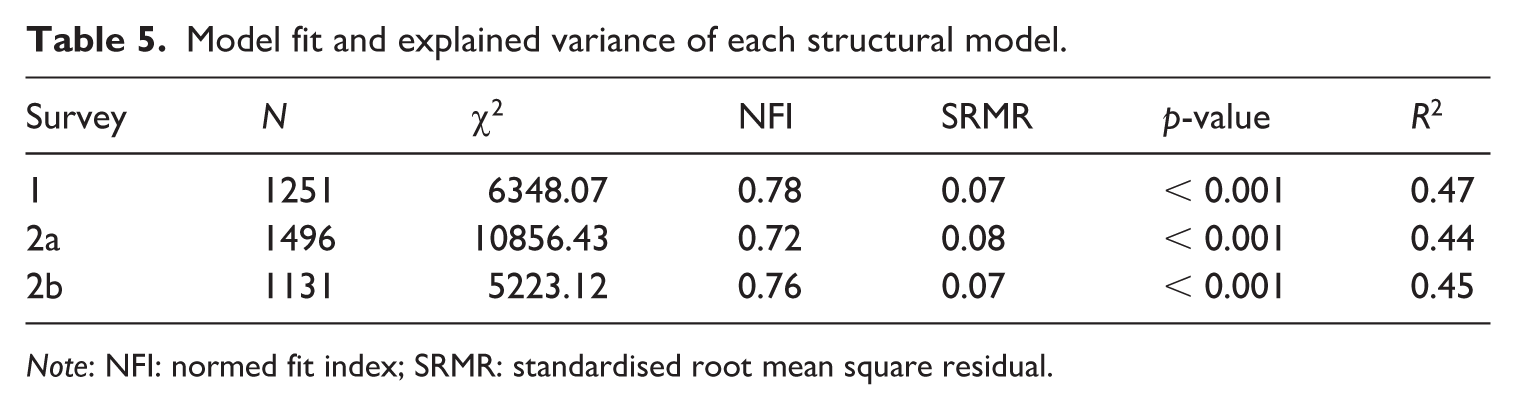
For each survey, a structural equation model was estimated in RStudio using 5000 bootstrap samples. Bootstrapping, a non-parametric resampling procedure, assesses the variability of estimates without assuming parametric distributions (Efron and Tibshirani, 1994; Streukens and Leroi-Werelds, 2016). The model tested the hypothesised relationships among latent variables, including both direct and indirect effects. Overall model fit and explained variance in wellbeing are reported in Table 5.
Model fit and explained variance of each structural model.
Note: NFI: normed fit index; SRMR: standardised root mean square residual.
The NFI values were below the conventional 0.90 threshold in all three models. As an incremental fit index, NFI is sensitive to model parsimony, so additional indices were consulted. SRMR values fell below the 0.10 threshold in all models, indicating acceptable fit. R2 values showed that the models explained 44–47% of the variance in wellbeing. Intensification accounted for 13–36% of the variance in WLC, with the strongest effect observed in Survey 1 (lockdown period).
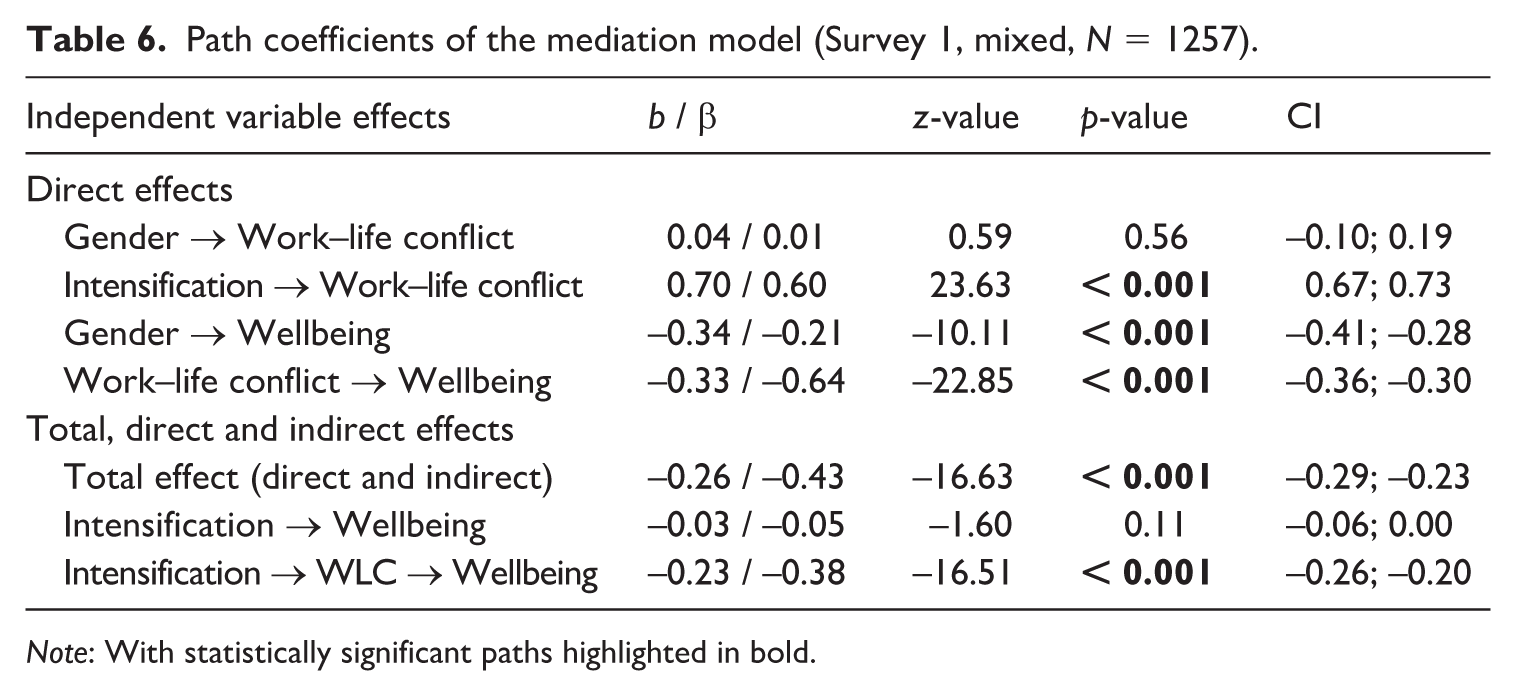
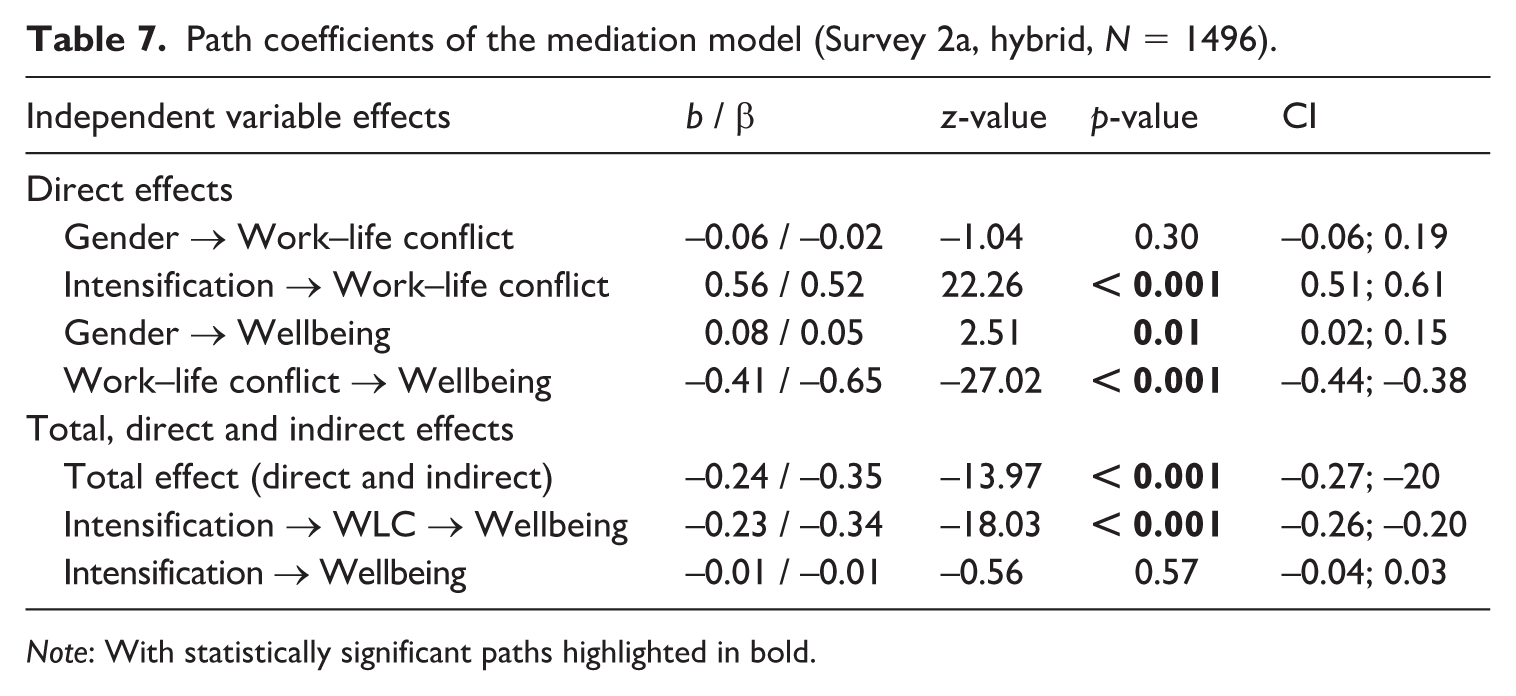
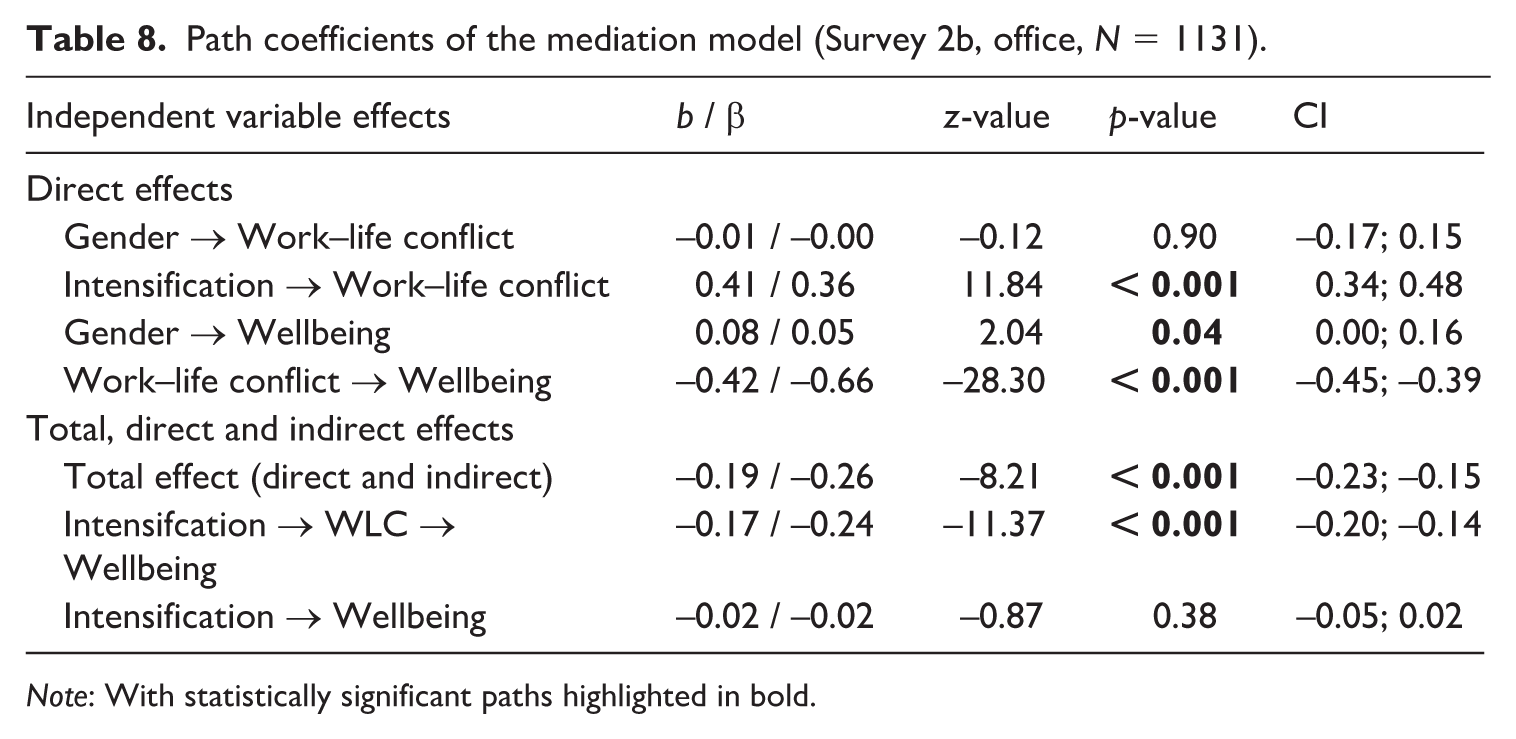
Results in Tables 6 to 8 indicate that most hypothesised relationships were supported at the 99% confidence level. Intensification significantly increased WLC (Survey 1: β = 0.60, p < 0.001; Survey 2a/2b: β = 0.52/0.36, p < 0.001), which in turn exerted a consistently negative effect on wellbeing (Survey 1: β = −0.64, p < 0.001; Survey 2a/2b: β = −0.65/–0.66, p < 0.001). The direct effect of intensification on wellbeing was non-significant in all models, indicating full mediation by WLC. Indirect effects via WLC were significant across surveys (Survey 1: β = −0.38, p < 0.001; Survey 2a/2b: β = −0.34/–0.24, p < 0.001), confirming complete mediation of the relationship between technology-induced intensification and wellbeing. Gender exerted a significant direct effect on wellbeing (Survey 1: β = −0.21, p < 0.001; Survey 2a/2b: β = 0.05/0.05, p = 0.01/0.04). The effect was strongest in Survey 1, consistent with the larger gender gap in wellbeing observed during lockdown (Table 3). The data demonstrate that technology-enabled intensification undermines wellbeing by fuelling WLC, with women particularly affected during lockdown. Hybrid work may ease some extreme effects but does not remove the mechanism in that intensification translates into poorer wellbeing because it systematically erodes the boundary between work and life.
Path coefficients of the mediation model (Survey 1, mixed, N = 1257).
Note: With statistically significant paths highlighted in bold.
Path coefficients of the mediation model (Survey 2a, hybrid, N = 1496).
Note: With statistically significant paths highlighted in bold.
Path coefficients of the mediation model (Survey 2b, office, N = 1131).
Note: With statistically significant paths highlighted in bold.
Qualitative findings
ICT-enabled remote working and work extensification
The quantitative data clearly indicate signs of technology-based intensification; the interviews reinforce this by showing how workers experience the demand for constant connectivity. One programme support officer vividly described the deluge of interruptions created by Teams: There is just stuff coming at you, messages all the time because we are collaborating via Teams and people want to get a message to you and I do it all the time, have you looked at this and you forget they’re in a meeting. Because you are in meetings and you’ll see them think, oh shit, that’s come in and then they will get distracted and it’s like, oh god, I’ve got to do that . . . you’re constantly just interrupted with other stuff that’s going on by all these pop-ups . . . it’s just constant bombardment. (Female, Programme Support Officer, Welsh Borders, hybrid, 50s)
This participant’s account demonstrates how ICT multiplies interruptions, producing a fragmented working day where attention is constantly diverted. This is not an isolated inconvenience but a structural form of intensification, a reorganisation of labour where efficiency is achieved by breaking down the worker’s focus into endlessly redirected micro-demands. The result is not just faster work but heightened expectations of availability. A London-based freelancer described this as a form of exploitation, reflecting that: People seem to be working harder than they’ve ever worked at the moment. [. . .] I think a lot of businesses have done really well out of this. If you’re measuring productivity in relation to wellbeing and whether people have got the ability to maintain that, I think there’s some real worries from a burnout perspective. [. . .] I think I’m on the verges of that burnout point. (Male, Freelancer, London, hybrid, 40s)
Here, the discourse of productivity masks a transfer of costs. While employers reap gains, workers absorb the risks of exhaustion and burnout. What is framed as flexible, digital collaboration is revealed as a form of intensified control, where workers internalise the demand to accept more than they should. As another participant notes: I think working from home is great, you know, it’s a great opportunity, a great tool [the technology], it gives you so much freedom and flexibility . . . But for myself, for a lot of people I speak to at work, my colleagues – we had mental health week at last week and people talked about this to be quite a lot. (Male, Production Technologist, Scotland, mainly remote, 30s)
Taken together, these accounts indicate that intensification is not simply a by-product of ICT, but ICT is used to afford a systematic reconfiguration of power within the employment relationship – one that privileges organisational output over individual wellbeing. These accounts resonate with the quantitative evidence that intensification undermines wellbeing via WLC, showing how digital infrastructures make this pressure tangible in workers’ daily lives: I’ve got more minor back complaints than I ever had and, I’ve suddenly realised, I’ve been sitting at the bloody screen for 8 hours, you know, which I would have never have done in a work environment, in an office, sorry, environment. So, there’s an element there about dry eyes, tired eyes, switching off and, you know, those sort of elements. (Male, Part-Time Charity Worker, Scotland, remote, 60s)
ICT-enabled remote working and work extensification
While intensification was a recurring theme, the interviews also revealed how ICT enables the extension of the working day. Crucially, this extensification was not always interpreted negatively. One international sales director framed late-night calls as evidence of progress: We communicate or work with clients all over the world so you might be on a call at nine o’clock at night, for instance, or first thing in the morning. So, the world’s changed and the virtual world has enabled us to do that. Relationships developing. You’re not writing a letter or a telegram to someone. You’re face-to-face with people, so I think we do have to change to become more efficient. (Male, Sales Director, NW England, hybrid, 50s)
This quote reveals the normalisation of extensification, the idea that a longer, less bounded day is simply the price of global competitiveness. Yet other participants were less celebratory. A business change specialist explained: I can work 12 hours straight . . . However, what I have noticed, . . . by the third day, I’m like the walking dead. I cannot tell in some meetings I will understand half of it and I cannot produce any work. (Female, Business Change Specialist, London, hybrid, 20s)
This participant’s exhaustion demonstrates the physiological limits of extensification. Longer hours do not simply extend productivity; they erode it, replacing sustained focus with diminishing returns. Remote workers often linked extensification to the collapse of temporal boundaries between professional and personal life. An IT worker admitted that working from home made her more accepting of early and late calls, rationalising that finishing later ‘didn’t matter’ when no commute was required: I’ve not minded working later or earlier because I’ve been there . . . So, yes I’ve been more open to having earlier and late calls because I’m at home, so it doesn’t matter if I finish at 18:30, 19:00, because I’m here. (Female, IT, NW England, homeworking, 50s)
Here, ICT reshapes not only work practices but also workers’ perceptions of time: later hours become acceptable because the boundaries between work and home are already blurred.
Spatial boundaries were similarly eroded. One advisor caring for a child with special needs described how she worked from multiple locations within her home, partly due to constrained space, illustrating how extensification colonises many areas of domestic space: I usually just go downstairs, I can actually be anywhere, . . . so I just, I take my laptop anywhere and whenever, I can email in my bed to be honest, . . . or I go downstairs, out to the kitchen if I want a cup of tea and I just stay in the kitchen with my laptop. (Female, Advisor, Northern England, homeworking, 30s)
This participant’s experience makes clear that extensification is not only temporal but spatial, reconfiguring the home into an always-available workplace. The consequences for workers are apparent in terms of reduced energy and productivity: I think the work from home flexibility has been used as an excuse to force people to do more because the boundary between working life and personal life does not exist anymore. So you’re always expected to be available in some respects, and you’re always expected to deliver on certain things that in the past were clear cut, you know, impossible, unachievable, we cannot do them within working hours and you need extra resources – but now, there has been this paradigm shift that if people are more productive at home, they can afford to get more done at home because they have less meetings and they have less responsibilities, but the reality is something else entirely. It’s exhausting. (Male, Production Technologist, Scotland, mainly remote, 30s)
Extensification thus emerges as a key mechanism through which ICT reorganises labour, stretching work into time and spaces once reserved for recovery. Extensification became an even more pressing problem for workers who had little space and had desks that were also dining tables or dressing tables and, at the extreme, ironing boards in the garage. This supports Hassard and Morris’s (2022) argument that digitalisation extends the reach of work, blurring the spatio-temporal boundaries necessary for wellbeing.
The intensification–extensification dynamic
One of the most striking themes to emerge from the interview data is the interrelation between intensification and extensification. Rather than discrete processes, the two feed into one another. Digital platforms not only accelerate the pace of work but also enable its spread across the day. One participant explained that colleagues routinely booked meetings into any visible gap in her diary, leaving no time for task completion: an issue has just been that you’re always available and that it’s quite easy just to put a meeting in because you’re working from home you’ve got no commute . . . I think there’s just that expectation that, oh, well, you’re working from home and you can have that meeting and you’ve got a gap in your diary, . . . you never have the time to follow up on that because you’re in another meeting, and another meeting and another meeting. (Female, Administration, Northern England, homeworking, 30s)
This account demonstrates how intensification through back-to-back meetings directly produces extensification, as unfinished tasks are displaced into evenings or weekends. Workers find themselves trapped in a cycle where the demand for constant availability erodes the natural pauses once provided by commuting or informal office rhythms. The interviews suggested that this dynamic of intensification and extensification also contributes to cognitive depletion as, for example, video calls fill the day without space for recovery.
Participants also reflected on how the days they spend in the office give them a cognitive advantage: I do think that I switch off more, I think just because I have those 45 minutes on the tube where I like to read my book and I don’t think about anything else. Then I almost forget that I have a job when I get home. It’s almost like when I go on vacation and I’m offline. I literally forget that I work, I do try to switch off in the evenings when I work from home, but not as much as I do when I go to the office . . . at home I have the tendency be like, oh well, I’m not commuting so I might as well do whatever for that extra half an hour that I would have been wasting on the tube anyway. (Male, Senior Practitioner, Midlands, hybrid, 30s)
At the same time, workers recognised that these pressures were inseparable from the autonomy they valued. A business analyst emphasised how homeworking allowed her to maintain a healthier balance, even in the face of extensification: Genuinely, I love that and I think this job is so busy it’s really, really easy to fall into the not having a lunch break and all that and being at home with my dog, no matter how busy I am, she needs to go for a walk, end of, and that is really, really good . . . it’s kind of like so good for me and my kind of work–life balance. (Female, Business Analyst, SE England, homeworking, 40s)
This tension reflects Chung’s (2022) ‘flexibility paradox’: the same technologies that facilitate balance can also drive self-exploitation. A project manager articulated this clearly when describing her willingness to work late evenings and even on days off: When you are at home you can work a bit later because, again, it doesn’t impact the children because they are in the house. You can start dinner and then quickly finish an email whereas that is much harder to do in the office space. I might work a couple of hours on a Friday (day off) if I need to get back on track. I don’t ever tell anyone else that I am working, it’s purely more for me if I am worrying about what I need to get done on the Monday. (Female, Project Manager, NW England, hybrid, 40s)
Here, extensification is rationalised as ‘choice’, but the language of guilt (worrying about what I need to get done) suggests compulsion. ICT-enabled flexibility thus appears less as genuine autonomy than as an internalisation of productivity norms. Indeed, such productivity norms extend in other forms of time, including sick time. The volume of work (intensification) also moves into periods of illness (extensification): If I felt ill, for example, just a bit under the weather, so if you had to go into an office you’d think, ‘Oh, I can’t get into the office today, I feel dreadful’. But you can stay at home and sort of sit in bed with your laptop, you know, you can keep going. Which probably isn’t the way to do it. But I quite like that because you don’t feel like you’ve had a lot of absence from the office. (Female, Communications, NW England, hybrid, 50s)
Workers celebrate autonomy while absorbing costs, producing a fragile equilibrium that may be untenable over the long term.
Discussion
This article demonstrates that intensification and extensification interrelate in ways that constitute a new spatio-temporal regime of hybrid work, simultaneously shifting responsibility for sustainability onto the individual. Workers celebrate autonomy while absorbing costs, producing a fragile equilibrium that may be untenable over the long term. Quantitative analyses confirm that ICT-driven intensification undermines wellbeing through its effects on work–life conflict, while qualitative accounts reveal how extensification – work spilling into evenings, weekends and domestic spaces – both enables and is enabled by intensification. Their interplay represents the central novelty of the framework advanced here.
Research has long documented the detrimental effects of intensification on wellbeing (Green, 2004; Paškvan and Kubicek, 2017), but extensification has typically been treated as synonymous with long hours. The findings presented here suggest something more complex. ICTs diffuse work into non-traditional times and spaces, eroding temporal boundaries and colonising domestic environments. Hybrid workers did not simply work longer, they worked differently: fragmented, always available and dispersed across homes, transitional spaces and global time zones. This spillover was often legitimised through a discourse of flexibility, which framed availability as choice even when it reflected compulsion.
In developing the intensification–extensification dynamic, the study advances understanding of the flexibility paradox (Chung, 2022; Kelliher and Anderson, 2010). The paradox is often framed as a trade-off in which autonomy fosters intensification, yet the findings here show that extensification is integral to the process. Impenetrable working days push tasks into evenings, weekends and even periods of sickness or leave, while this spillover in turn legitimises denser and faster work during core hours. It is not just temporal boundaries that are eroded but spatial ones too as work, facilitated by ICT, extends into new spaces and creates new forms of intensification, such as for those juggling work and care roles. Intensification and extensification therefore feed one another, creating a cycle of acceleration and expansion. Hybrid work is not a simple balance between autonomy and control but a reconfiguration in which autonomy itself becomes a mechanism of compulsion.
The survey results provide robust evidence of the harmful effects of intensification on wellbeing, mediated through work–life conflict, but they also highlight important gendered differences. In the general (remote, office-based and hybrid workers – Survey 1) and hybrid worker (2a) surveys, men reported significantly higher intensification than women. In the survey of office-based workers (2b), women reported significantly higher intensification. In the general and office-based surveys, men reported significantly better wellbeing (there were no significant differences in the hybrid worker survey). This would appear to suggest that there are important gender differences, but these may relate to self-report bias or other factors, and we cannot draw clear conclusions from our quantitative data. We therefore explored these issues further in our qualitative data.
Qualitative data found many women described performing paid and unpaid labour simultaneously, taking calls during childcare or working late at night after completing domestic tasks. Hybrid work layered rather than alleviated the second shift (Hochschild, 1989). Several men, by contrast, described extensification in more positive terms, emphasising flexibility or control over their schedules. These accounts suggest that gender differences in wellbeing reflect both the simultaneity of care and paid labour for women and the cultural legitimacy men may feel in claiming flexibility. Hybrid work thus risks reproducing, and in some cases intensifying, long-standing gender inequalities in the organisation of time.
Other inequalities could be evidenced. Workers with cramped housing or poor digital infrastructure found extensification disruptive and stressful, while those with dedicated home offices and reliable broadband integrated it more easily. As Felstead and Reuschke (2020) argue, the ability to homework effectively is stratified by material resources. Extensification into the home therefore redistributed strain in ways that mirrored existing socio-economic divides.
The study also contributes to debates on technostress by situating stress within these structural dynamics. Workers did not experience stress solely because digital tools were demanding but because those tools mediated intensification and extensification. Collaboration platforms, videoconferencing and presence indicators encoded expectations of acceleration and availability. Technostress should therefore be understood not as an individual-level strain but as an expression of the spatio-temporal regime created by digitally mediated labour.
Conclusion
This article makes three key contributions. First, it develops and empirically grounds the concept of extensification, showing that it is not simply a matter of additional hours, but a distinctive process of temporal and spatial diffusion facilitated by ICTs. Second, it advances a new framework of an intensification–extensification dynamic, demonstrating how these processes are interrelated and thereby advance understanding of the flexibility paradox. Third, it demonstrates how these dynamics are stratified – most clearly by gender but also by material resources – embedding hybrid work within wider inequalities of labour and life.
These contributions carry implications for both practice and policy. Organisational debates on hybrid work often focus on productivity, yet this study shows that wellbeing and equity must also be central concerns. Digital flexibility should be managed not only as a question of scheduling but as one of spatio-temporal discipline and fairness. Employers should establish clearer norms on availability and recovery, while policymakers should recognise that the organisation of time and space is a matter of equity as well as efficiency. Without safeguards, hybrid work risks intensifying demands, extending labour into personal domains and amplifying inequalities.
While the findings are significant, they also highlight that there is a lot that is still unknown and suggest an important agenda for future research. The surveys were large and diverse, but the numbers were not sufficient to allow robust disaggregation by race, disability or class or to shed clear light on gendered differences. This matters because hybrid work is likely to intersect with structural inequalities including, but also beyond, gender. Racialised workers and those with disabilities may encounter distinctive challenges in negotiating intensified and extended working patterns, yet the present study was not able to examine these systematically. Future work should therefore more explicitly adopt intersectional designs, incorporating race, disability and socio-economic status, to capture how the intensification–extensification dynamic is experienced and reinforced across different groups.
Hybrid work reveals both continuity and change in the politics of time and space. Quantitative evidence confirms the negative effects of intensification on wellbeing, with gender differences highlighting the uneven burden of digitally mediated labour. Qualitative accounts demonstrate how extensification interrelates with intensification, producing a distinctive spatio-temporal regime. These findings highlight the ambivalence of digital flexibility: experienced as autonomy yet functioning as a new form of control. The central contribution of this article is to foreground the intensification–extensification dynamic as a key mechanism of hybrid work, reframing the flexibility paradox and demonstrating that struggles over the density, duration and distribution of labour remain fundamental to contemporary capitalism.
Footnotes
Author’s Note
Gustav Bösehans is now affiliated to Newcastle University, UK.
Funding
The authors disclosed receipt of the following financial support for the research, authorship, and/or publication of this article: This research was funded by UK Research and Innovation, Economic and Social Research Council (ES/V003976/2).
