




Abstract
This research examines the role of intraorganisational boundary-spanners, as mechanisms of workplace control, through an ethnographic study of a Chinese-run garment factory in Myanmar. The findings demonstrate how these intermediaries, rather than facilitating open communication, exerted a restraining influence on their cross-cultural workplace by identifying, dissolving and suppressing the expression of grievances. Wielding relationship-based informal power and position-based formal power, these intermediaries employed various means of persuasion and communication manipulation and disciplinary measures to contain dissatisfaction and maintain stability, whereby workers were directed to abandon their demands and align their expectations with management interests. Merging the literature on labour and management control with that on boundary-spanning in cross-cultural contexts, this article challenges the view that boundary-spanners enhance communication and promote consensus across boundaries, spotlighting the need to examine their activities in light of the profound influence of power dynamics in organisations.
Introduction
Boundary-spanners, as defined by Ernst and Chrobot-Mason (2011) and Williams (2002), are individuals with the unique ability to foster collaborative exchanges across boundaries to achieve organisational goals. In any international organisation, the presence of boundary-spanners is critical, because boundaries, as ubiquitous and powerful forces of classification and collective representation, give rise to profound social differences that are reflected in both connecting and distancing behaviours (Lamont and Molnár, 2002; Wimmer, 2013). There has been long-standing interest in how boundary-spanners bridge different perspectives, enhance trust, foster understanding and promote open communication (Richter et al., 2006; Søderberg and Romani, 2017; Yagi and Kleinberg, 2011). While much of the research has focused on their enabling function, it is important to recognise that this represents only one facet of their impact.
This article provides an in-depth examination of boundary-spanners as crucial control mechanisms in cross-cultural work situations. Previous research has predominantly focused on how boundary-spanners facilitate collaboration through their position-based functions. However, adopting a process-oriented perspective allows for a more nuanced understanding of the ways in which boundary spanners’ functions, which extend beyond their role descriptions, manifest in their daily interactions that influence organisational activities, as well as reinforce existing structures (Andersen and Kragh, 2015). By navigating boundaries, boundary-spanners encounter a complex interplay of expectations, knowledge repertoires and cultural identities. As they navigate these competing influences, they exercise discretion and power, which may be perceived differently by in-group and out-group members (Kellogg et al., 2006; Mäkelä et al., 2019; Perrone et al., 2003; Yagi and Kleinberg, 2011). Therefore, exerting control and transforming intergroup relations are at the very core of boundary-spanners’ activities.
The aim of this study is to advance the current understanding of workplace control and labour process perspectives by investigating the important yet understudied restraining function of boundary-spanners in a cross-cultural setting. Prior research on workplace control has largely highlighted the overt and coercive mechanisms of formal authority (Burawoy, 1979; Kras et al., 2017; Sewell, 1998). Such mechanisms, however, are often complemented by the use of informal power and noncoercive tactics to foster workplace relationships and motivate individuals. Drawing on ethnographic fieldwork in a Chinese-run garment factory in Myanmar, this study explores the dynamics of a cross-cultural workplace, using insights into actual behaviour. This approach does not proceed from assumptions about the role of boundary-spanners; rather, it provides an interaction-oriented account of the lived experiences, revealing the subtle yet crucial ways in which boundary-spanning activities enable workplace control through a strategic use of both formal and informal power.
This article begins with a literature review. It then describes the ethnographic case study site and the characteristics of boundary-spanners in this setting. Next, it discusses the findings regarding how boundary-spanners build relationships with both management and workers and employ tactics to restrain the communication of grievances across boundaries.
Literature review
Boundary-spanners
In this article, boundary-spanners are defined as actors who bridge boundaries – reticulists, interpreters and communicators who facilitate and cultivate understanding, coordinate activities, and maintain relationships via trust, empathy, negotiation and conflict resolution (Williams, 2002, 2011). Given the presence of various organisational, physical and cultural boundaries in cross-cultural workplaces, boundary-spanners wield considerable power and influence. Employing different power sources, they can frame understandings and control information flows (Schotter and Beamish, 2011; Williams, 2011). Bicultural and bilingual individuals, as boundary-spanners, are highly regarded by scholars for their presumed capacity to acquire, process and deliver information in unique ways (Brannen and Thomas, 2010). Scholars suggest that by participating in and representing different groups, these individuals develop a repertoire of cultural identities that shape group values and reduce intergroup conflict (Hong, 2016; Kane and Levina, 2017).
Boundary-spanners are typically known for their facilitative and mediating abilities (Barner-Rasmussen et al., 2014; Schotter and Beamish, 2011; Søderberg and Romani, 2017). Their work experience, linguistic proficiency and social capital make them valuable human resources for nurturing trust and mediating relationships (Furusawa and Brewster, 2018). However, studies seldom discuss how boundary-spanners engage in power relations, even though their actions are shaped by organisational structures and processes (Mäkelä et al., 2019). As boundary-spanners become embedded in organisational hierarchies, they also become part of the control mechanisms to elicit desired behaviour. Inevitably, management establishes control over workers to make them conform to profit-driven capitalist production expectations. Wexler (2009) contends that strategic communication ambiguity promotes agreements that incorporate multiple viewpoints, while boundary-spanning activities involve raising awareness among individuals outside of an organisation’s language and values regarding its culture, as well as enforcing conformity to its values and routines. In fact, research on workplace dynamics suggests that boundary-spanners may hinder rather than facilitate communication. By employing a labour process-oriented approach that scrutinises the actions of management in the context of capital-labour relations driven by employers’ efforts to exert control and ensure production stability (Braverman, 1974; Tassinari and Maccarrone, 2020), we can delve into the minutiae of daily work life and assess the role of boundary-spanners as mechanisms of control.
Workplace control
In disciplines that examine management-labour dynamics, workplace control, especially how interaction drives workers to exert themselves without explicit coercion, occupies a central role (Siu, 2020). Gramsci (1971) argues that workers are persuaded to tolerate and consent to managerial hegemony through their lived experiences. For Bourdieu (1977), a worker’s propensity to obey is a result of inculcated habitus, whereby the worker submits to management, and prompts the adjustment of expectations in conflict-filled situations. Burawoy’s analysis of labour processes reveals that strategies of consent are more effective than those of coercion; employees are more likely to collaborate with management when they perceive their interests to be aligned with those of the organisation (Burawoy, 1979, 1983; Burawoy and Wright, 1990). To protect management’s prerogative, collective agreements and grievance mechanisms are implemented to limit conflict (Burawoy, 2013). It has been observed that contemporary organisations have shifted from bureaucratic to post-bureaucratic modes of operation, which increasingly manipulate employees’ emotional responses to their work and alter their perceptions of freedom, with the aim of fostering consenting individuals who are work-oriented, productive and self-organised (Hughes, 2005; Maravelias, 2007).
In addition to work-related factors, informal relations research provides valuable insights into the social and cultural factors that influence control and consent in factories. Expanding managerialism and the ceaseless drive for profitability and efficiency to the individual level entails the regulation of identity. In this setting, identity becomes a crucial tool for controlling workers: Ngai (1999) observes the creation of subordinate identities among rural workers in China, while Lee (1995) examines discourses that promote hard work as a means for workers to fulfil their familial duties (Alvesson and Willmott, 2002; Costea et al., 2008). Further, personal relations can sometimes displace the class-based nature of management-labour tensions (Siu, 2017). The forms of consent and resistance that employees adopt are influenced by the way in which they resolve personal concerns and conflicting demands (Ayaz et al., 2019). Hence, referencing scholarship on the influence of sociocultural factors such as self-identity and personal relations on control and consent, this study reveals the restraining role of boundary-spanners by focusing on their use of relational power as a means of workplace control.
Research setting
The organisation studied was Myanmar New Era, 1 a medium-sized Chinese-owned garment factory in Pakokku, one of the largest cities in central Myanmar. Akin to many garment factories in Asia, this factory specialises in producing underwear and nightwear for export under contract. As Figure 1 shows, this factory is a typical example of batch work conducted in a manner that has not overly changed since the nineteenth century.
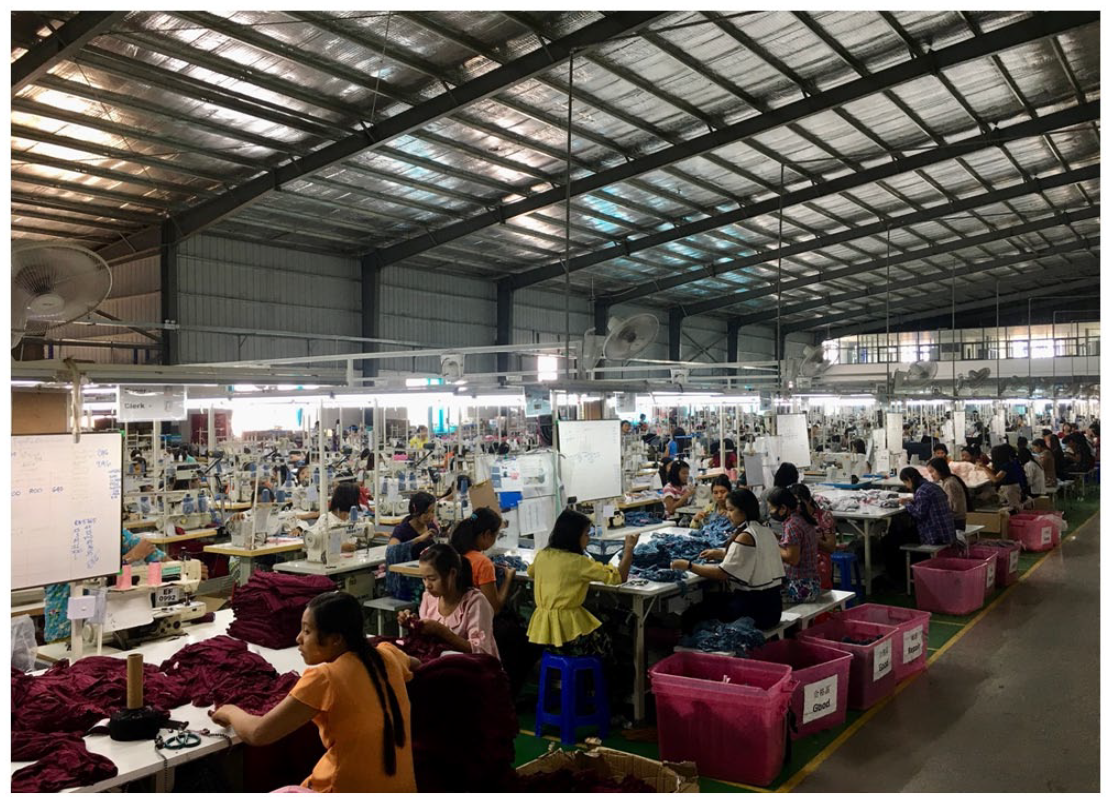
Interior view of the sewing department and workers during work hours.
The fieldwork was conducted in 2020. At that time, the factory had cutting, sewing, packing, maintenance and administrative departments. The cutting department prepared garment panels for the sewing department, where they were trimmed and sewn. Afterwards, garments were packed in the packing department for shipping. The maintenance department maintained and adjusted sewing machines for production tasks, and the administrative department handled supporting functions such as human resources, accounting and compliance. The factory had over one thousand employees; only twelve were Chinese expatriate managers. Most of the staff were Burmese (including Chinese-Burmese). The workplace was thus a cross-cultural environment where people with disparate work values, ethical concerns and expectations were in close contact (Fatima and Saidalavi, 2012). Like most garment factories, this factory had many rules. Lunch hours were designated, and mobile phone use was prohibited. Overtime pay, leave entitlements and workplace safety were stipulated by the factory. Moreover, the defining characteristic of this workplace was a three-tiered hierarchical management system and an ethnically based division of labour. Owing to this arrangement, Burmese workers at the bottom reported to Burmese supervisors in the middle, who in turn reported to Chinese managers at the top, with Chinese-Burmese interpreters assisting communication throughout the organisation.
There were approximately 40 supervisors. They were local to Pakokku and considered more proficient than others and were, therefore, promoted. Granted some decision-making and task-management authority, their responsibilities included instructing, supervising, disciplining workers and resolving minor operational issues. Their role could be seen as connecting groups, stimulating collaboration and coordinating efforts between top-level managers and operation-level workers (Shi et al., 2009). The Chinese managers met regularly with the supervisors to discuss production targets and identify issues, and the supervisors in turn met with workers to represent management and evaluate shop floor performance. During working hours, supervisors could be found on the production lines, updating whiteboards, monitoring workers, correcting mistakes and solving issues. Despite being native Burmese speakers, supervisors could speak a few Mandarin words when communicating with Chinese managers. Figure 2 depicts a Chinese manager providing guidance to a Burmese supervisor.
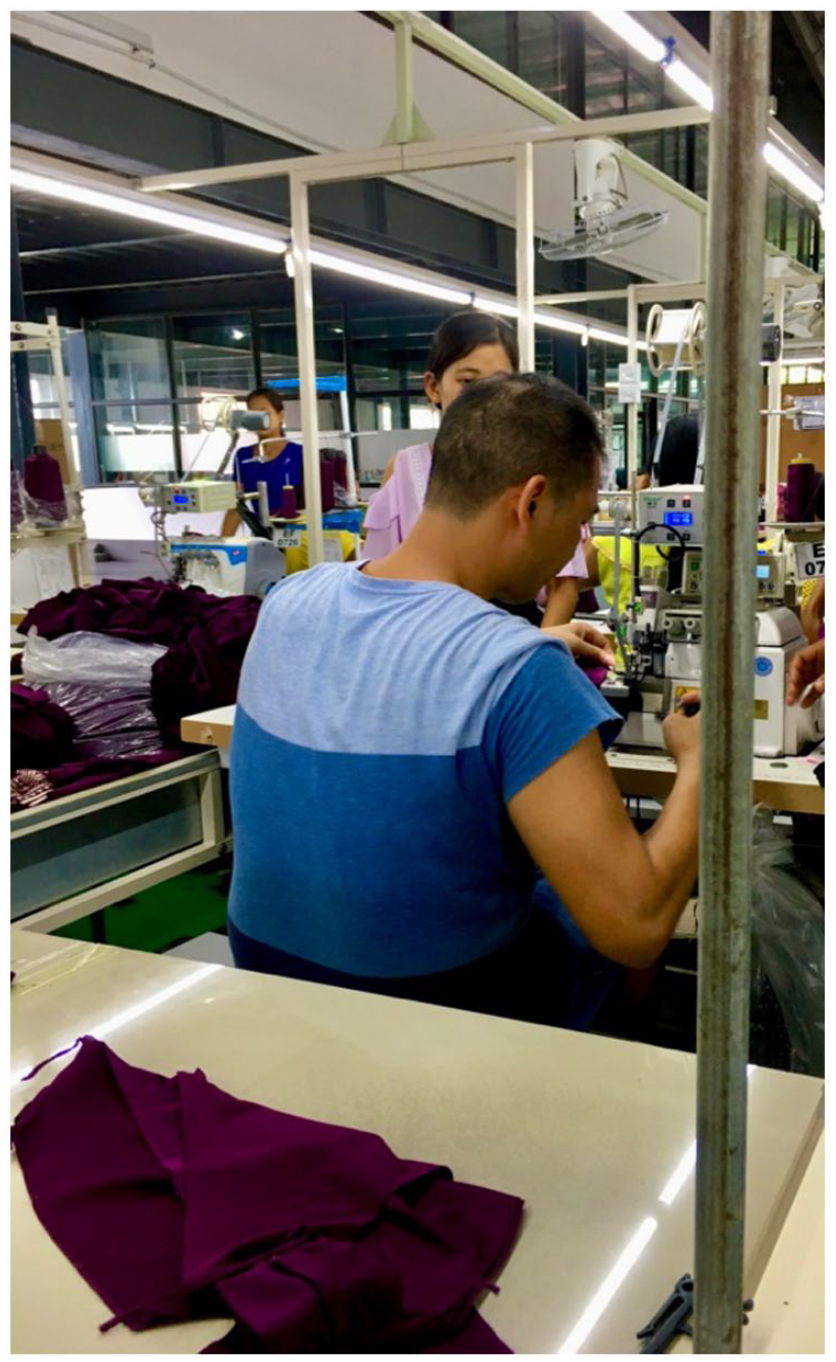
A Chinese manager instructing and demonstrating before a Burmese frontline supervisor.
The Chinese-Burmese interpreters were fluent in both Mandarin and Burmese. As individuals born to Chinese-Burmese parents and holding Burmese nationality, they worked as translators across the Chinese-Burmese boundaries to facilitate work communication. With years of experience in the factory, they knew most production-related terms. They assisted the Chinese in delivering lengthy instructions and the Burmese in reporting complex problems. It was particularly important for interpreters to be present during long, complex meetings. When they observed noncompliance, they could also discipline workers.
Supervisors and interpreters were not explicitly required to address intergroup differences by applying cultural knowledge. However, they served as boundary-spanners because they bridged the cultural, organisational and communication divide between Chinese managers and Burmese workers. While facilitating productive exchanges, they also used their power to exert control over the workplace. Following Blau and Scott, the dominant trend in organisational scholarship suggests that power is derived from either formal hierarchical structures or informal interpersonal networks (Blau, 1964; Blau and Scott, 2004). Nevertheless, some scholars advocate the inherent interplay between formal and informal elements due to their common basis of interaction within an organisation (McEvily et al., 2014). In this study, boundary-spanners wielded both role-based formal power and relationship-based informal power, indicating the intertwining thereof. In any organisation, formal and informal elements often complement each other, as informal structures support formal procedures (Gulati and Puranam, 2009; Young-Hyman and Kleinbaum, 2020). Furthermore, consent is closely linked to coercion, as both can help maintain workplace stability by leveraging rules and sanctioning deviance (Burawoy and Wright, 1990).
Methods
This study is based on the workplace relations in a Chinese-managed cross-cultural workplace. While Myanmar New Era was typical in its resemblance to the operations of Chinese factories in Myanmar, it was a deviant case in the realm of global foreign investment due to the absence of a shared language among managers and staff, which necessitated the reliance on bicultural boundary-spanners for communication. A case of this nature, which was atypical but critical, and involved more actors and basic mechanisms, held strategic importance in revealing additional information about boundary-spanners (Flyvbjerg, 2006). Using an ethnographic approach based on detailed descriptions, the author collected data through participant observations and semi-structured interviews. Between September 2019 and March 2020, the author lived in the same building as the interpreters and managers. Using personal networks and face-to-face contacts with a Myanmar garment manufacturers’ trade association, the author gained site access. The factory owner allowed the author to stay at the site in exchange for voluntary service: teaching English to Chinese managers and Burmese workers. Months were spent learning Burmese for basic conversations with the workers, but the author recognised the need for advanced language proficiency and cultural understanding to analyse cross-cultural dynamics. Therefore, a Burmese-speaking research interpreter was invited to assist with interviews.
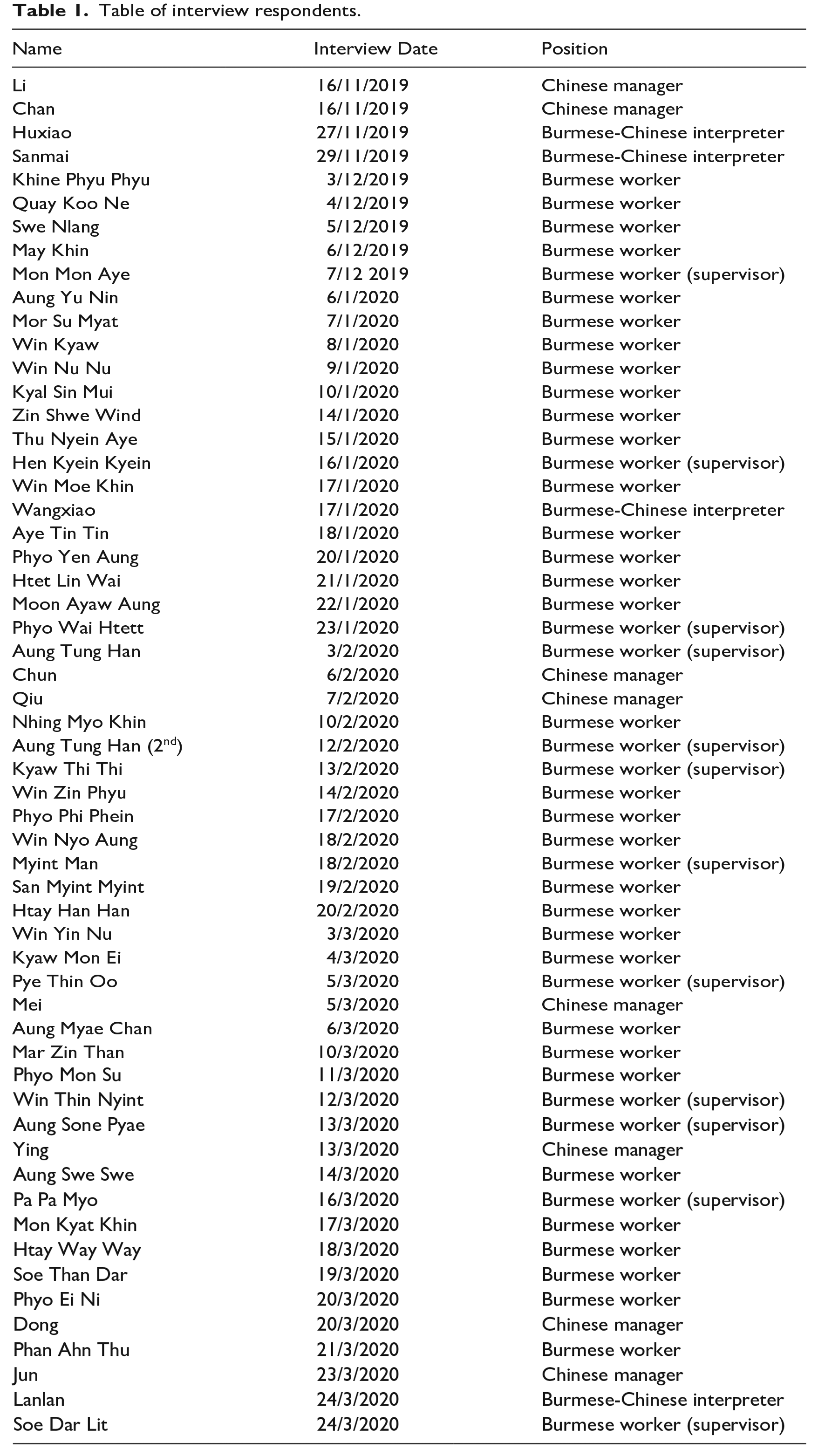
On site, the author participated in regular production meetings, observed factory practices in different departments and shadowed factory members in almost all aspects of their work. Factory employees were invited to share their workplace experiences in casual conversations both within and outside the workplace. Commonplace in ethnographic inquiry, the author conducted participant observations for a few weeks before starting the interviews. This ‘observation-first’ approach facilitated the author’s familiarisation with the site and identification of real-life themes in participants’ everyday experiences, inspiring the development of interview questions (Holstein and Gubrium, 1995). A total of 57 interviews were conducted: 33 with Burmese workers, 12 with Burmese supervisors, four with Chinese-Burmese interpreters, and eight with Chinese managers (Table 1). Audio recordings of interviews were fully transcribed, as were the fieldnotes taken during participant observation. All data were imported into a software program for analysis. Informed by the grounded theory approach, this study was not guided by preconceived conceptual frameworks or predetermined variables. From the outset of the fieldwork, the analysis focused on interpreting the meanings of textual data and identifying novel concepts. Over time, additional concepts surfaced, including themes related to boundary-spanners. These concepts were utilised to stimulate thinking and enhance sensitivity to nuances. The author compared and contrasted interpretations with occurrences in the data until no new themes emerged to elaborate pre-existing knowledge and extant theories. This interactive construction and rendering of data facilitated the development of the research process and the refinement of the analytical framework (Bryant and Charmaz, 2007), steering the research in a focused direction.
Table of interview respondents.
During fieldwork, the author, an ethnic Chinese researcher, had to overcome cultural assumptions to ensure analysis quality. Gender issues were also considered, as most workers and supervisors were women. To establish equitable relationships and increase acceptance, the author downplayed his ‘researcher’ status, shared personal information, dressed like a local and presented himself casually. Regular meetings with research interpreters were held to evaluate the fieldwork and assess participant interactions. By exploring participants’ perspectives as insiders and emphasising their categories and meanings, the author balanced the outsider perspective with an exploratory mindset to reveal subtle dynamics in this cross-cultural context beyond superficial biases (Harris, 1976; Morey and Luthans, 1984). At times, the author had to remind interpreters to prioritise their primary duty of providing precise elaborations, as they could become emotionally influenced by participants and offer their own explanations.
Findings
As mentioned above, Myanmar New Era had implemented a strategy of staff localisation involving locally recruited boundary-spanners, i.e., Burmese frontline supervisors and Chinese-Burmese interpreters, who played a central role in facilitating collaboration and transmitting information across boundaries. Workers viewed them as friendly and helpful, and the boundary-spanners saw themselves as a bridge. However, this study also discovered that they played a constraining role. In their role as representatives of management, they wielded power and influence to prevent grievances and ensure that workers accommodated management’s needs.
This article thus examines how these boundary-spanners used their ability to establish close working relationships with both Burmese workers and Chinese managers to accumulate power and influence. Notably, this article suggests that these boundary-spanners were acutely aware of their subordinate positions as representatives of management. Next, the article demonstrates how they exploited their informal power, derived from relationships, to persuade workers to abandon their demands and align their attitudes with management’s goals. The following subsection shows how the boundary-spanners employed tactics to manipulate and influence communication across boundaries, acting as gatekeepers to prevent grievances from being expressed. Finally, the article explores how management utilised the factory’s collective bargaining arrangement, via the participation of the boundary-spanners, to secure workers’ consent rather than allowing them to influence management.
As brothers and sisters: Building relationships with Burmese workers
The Burmese frontline supervisors and Chinese-Burmese interpreters, as boundary-spanners at the factory, served as the de facto engine of this cross-cultural environment, seamlessly moving among different locations and individuals to facilitate communication, coordinate activities and establish relationships. During the observations, the boundary-spanners maintained a people-oriented approach towards the workers. Generally, the atmosphere among the supervisors and workers on the shop floor was relaxed, and there was much conversation and laughter. A supervisor in the packing department, Pye Thin Oo, described the workers as his friends; he cracked jokes with them to lighten the mood during work hours and occasionally spent time with them on holiday weekends (Fieldnotes, interview with Pye Thin Oo). Several workers also described their supervisors as pleasant individuals who treated them as friends. The following is a description of Kyal Sin Mui’s relationship with her supervisor:
It is like a close friendship between the supervisor and us. She invites us to her house and makes us delicious food. Together, we have so much fun. (Interview with Kyal Sin Mui, sewing department worker)
Workers also described the interpreters as friendly and helpful. According to Aye Tin Tin, another sewing department worker,
Our relationship is like a friendship. [Chinese-Burmese interpreter] is easy going and good natured, and we often hang out and travel together. (Interview with Aye Tin Tin)
Furthermore, the boundary-spanners offered individualised consideration to the workers by providing emotional support, e.g., by listening and caring. They would contact an absent worker and inquire about her condition; if the worker was unwell, they would arrange for her to be taken to a nearby hospital for treatment. Some boundary-spanners and workers viewed their relationships as familial. Nhing Myo Khin, a cutting department worker, described the supervisors and interpreters as her ‘brothers and sisters’. Interpreter Wangxiao described himself and the workers as brothers who had each other’s backs. Interpreter Sanmai was viewed by some workers as a motherly figure; one sewing department worker, Zin Shwe Wind, described how Sanmai had guided her through work procedures as if she were her daughter (Fieldnotes).
Since the boundary-spanners were more experienced and more attentive than Chinese managers in addressing workers’ concerns, the workers trusted and relied on them, and they could exert considerable influence. Boundary-spanners were often consulted by workers regarding work-related issues. Typically, workers voiced their concerns to boundary-spanners first; as Win Thin Nyint, a supervisor in the packing department, pointed out, the workers respected him very much and followed his advice (Fieldnotes).
The work of the Chinese-Burmese interpreters as boundary-spanners was informed by their bicultural identity. Lanlan, a young female interpreter born and raised in Myanmar, was educated in Chinese schools, i.e., she, like the other interpreters, had a bicultural and bilingual upbringing. She celebrated Chinese festivals and embraced her Chinese heritage. Nevertheless, her ethnic Chinese background did not hinder her integration into Burmese society. She worked various jobs, most of her friends were Bamar, and her husband was also Bamar. 2 Perhaps unsurprisingly, Lanlan and the interpreters related well with the workers. Their Burmeseness was not questioned, as illustrated by one worker’s description of Lanlan: ‘She is like a blend of China and Myanmar but has the same attitudes and behaviours as Burmese people’ (Fieldnotes).
This does not imply, however, that supervisors were always kind to workers. Several workers noted that some supervisors were overly concerned with production targets, while rumours that certain supervisors engaged in usury, taking advantage of workers who were in dire need of money, often due to familial reasons, circulated. Nonetheless, supervisors generally maintained close relationships with workers to help coordinate activities and ensure smooth operations. These personal connections and influence levels allowed supervisors to gain significant informal power and effectively control the workplace.
As loyal subordinates: Building relationships with Chinese managers
Conversely, the boundary-spanners also maintained close working relationships with Chinese managers. In accommodating work expectations, they communicated regularly with Chinese managers, adopted some of management’s work practices and demonstrated their ability to influence people across boundaries. When addressing competing expectations, the interpreters had an advantage, possessing unique cultural knowledge. Many Burmese workers would request a day off before a Buddhist festival to travel to distant Buddhist temples to worship. While nonreligious Chinese managers found such requests difficult to accept, the interpreters, who were familiar with Burmese culture, defended workers’ requests, explaining that Burmese people are ‘very religious by nature’ (Fieldnotes).
The interpreters’ feelings towards the Chinese managers were complicated by their consciousness of their bicultural identity. As ethnic Chinese, they benefitted from the increased job opportunities provided by Chinese investors and admired China’s development, although this did not translate into a strong sense of Chineseness at the workplace. Occasionally, the Chinese managers attempted to invoke a transnational Chinese identity by declaring, e.g., ‘You are also Chinese’ or ‘You belong to China.’ However, the interpreters were seemingly unmoved by such statements. They all self-identified as Burmese or Chinese-Burmese rather than Chinese (Fieldnotes). This is illustrated by Lanlan’s disdain for the Chinese managers’ condescending attitudes towards Myanmar:
I found it offensive when [Chinese managers] asked, ‘Is there anything good about Myanmar at all?’ Also, they littered. I told them, ‘Siya (Teacher), you shouldn’t litter.’ But they ignored me, saying, ‘Myanmar is dirty anyway! Go criticise someone else!’ (Interview with Lanlan)
Despite minor frictions with Chinese managers on cultural issues, the interpreters’ expertise was heavily relied upon by the largely monolingual Chinese managers. Each interpreter’s boundary-spanning activities surpassed mere interpretation. For instance, Chinese managers brought Wangxiao and another interpreter, Huxiao, to a meeting with representatives from a nearby village to complete a land purchase wherein the interpreters actively participated.
Unlike the interpreters, the frontline supervisors did not possess a cultural identity that made them relatable to Chinese managers. However, their power and influence were evidenced by their close relationships with their superiors and the treatment they received as a result. Chinese managers invited supervisors to social events such as dinners and karaoke sessions as gestures of appreciation for their trusted ‘henchman’ (‘qinxin’) (Fieldnotes). Typically, supervisors who did not meet expectations were immediately criticised because they were responsible for production output. However, unlike ordinary workers, they rarely faced disciplinary actions, suggesting that Chinese managers were changing their approach and shifting from using rules to control workplace behaviour. Chinese managers also showed the supervisors a greater level of care; for example, Ying, the manager of the sewing department, comforted her supervisors when they were criticised. Several Chinese managers also said that they paid close attention to the emotions of the supervisors (Fieldnotes).
Although they maintained close work relationships with Chinese managers, the boundary-spanners remained aware of their subordinate status and behaved according to their superiors’ expectations. They addressed the Chinese managers as ‘siya’, teacher, and they considered it necessary to demonstrate respect for their ‘teachers’, which usually required obedience. One supervisor described how she would behave respectfully when rebuked by Chinese managers:
Despite probably a bad look on my face, I wouldn’t do anything. I’m working under Chinese people now; that’s my job, I must respect the boss, although I want to talk back. (Fieldnotes)
The boundary-spanners, who liked and identified with both Burmese workers and Chinese managers and had knowledge of issues related to organisational success, had access to distinct networks and possessed different power bases, as suggested by Hinds et al. (2014). However, while their relationships and expertise gave them considerable influence, the boundary-spanners remained aware of their subordinate position in the workplace hierarchy and behaved accordingly. Recognising their status as management’s representatives, they had a strong sense of duty and worked to achieve the factory’s production goals, with as few interruptions as possible, via the coordinated and disciplined efforts of workers.
Thought work: Persuasion as a means of soft coercion
Chinese managers maintained a distant, task-oriented and coercive governance style due to their preference for order, based on hierarchical differences in rank and command. While Burmese workers tolerated such hierarchy, perhaps due to cultural beliefs that value forms of power beyond hierarchical systems, the author’s conversations with them revealed that they generally preferred a workplace that was more humane, flexible, responsive and had a narrower power distance.
Coincidentally, compared with the Chinese managers, the Burmese supervisors also seemed to demonstrate more empathy and sensitivity towards the workers. Although they were granted the authority to discipline workers, typically, they influenced workers through informal and individual meetings, private discussions or casual conversations. Pa Pa Myo, a supervisor in the sewing department, received a complaint from a worker regarding the prohibition of food and drink during working hours, but she did not merely dismiss the complaint by exercising power. Rather, she used a persuasive technique, seemingly based on empathy, to address it:
I was a worker like you, so I understand how you feel. But this is our job. I understand that the job comes with a lot of stress, can you get used to it like we all did? (Fieldnotes)
Leveraging her previous experience, Pa Pa Myo responded empathetically, acknowledging the stress experienced by the worker. Other supervisors, e.g., Phyo Wai Htett, also used this method of persuasion. Rather than simply resorting to disciplinary measures when confronting subordinates who were late for work, she attempted to persuade them:
When people are late, I meet with them and try to understand what’s going on . . . I tell them that I used to be very punctual when I was a worker. I ask them what would happen to the factory if I, the supervisor, were also late, and if everyone was used to being late. It is hoped that they will understand the importance of punctuality and that when they realise it, they will not be late again. (Interview with Phyo Wai Htett)
Although this strategy was possibly meant to establish an emotional connection with workers, its more important function was mitigating worker dissatisfaction and encouraging compliance with organisational policies. This strategy is reminiscent of a common approach among factory managers in China for resolving workers’ grievances: awakening their sense of collective interest. This is commonly described in China as ‘thought work’ (‘sixiang gongzuo’), referring to state-led ideological indoctrination during China’s Maoist era. ‘Thought work’ literally refers to working on thoughts, through lengthy discussions, to remind workers of their job duties and convince them to put themselves in the factory’s shoes. Aimed at protecting management’s interests, ‘thought work’ typically involves persuading workers to abandon their demands for policy change; as suggested by O’Brien and Deng (2017), it is a soft form of coercion, designed to give people an illusory sense of inclusion and the right to express their opinions, but only on the condition that order is ultimately enforced.
Given the significant power distance between Burmese workers and Chinese managers, reinforced by the strict hierarchical workplace structure, the workers felt more comfortable interacting with supervisors. In this diverse workplace, the supervisors maintained close ties with the ‘local’ and embedded themselves in local social networks, rendering them more effective in applying thought work on behalf of foreign management to obtain local consent. Using thought work techniques, the supervisors, in their boundary-spanning capacities, were able to more easily secure workers’ compliance through nonconfrontational methods than the Chinese managers, who often resorted to disciplinary measures. During her supervisory work, Hen Kyein Kyein observed her staff constantly conversing. Rather than reprimanding them, she sought to change their behaviour with a softer approach:
If someone makes a mistake, I don’t shout at her and say things like, ‘Hey! You’ve made a mistake!’ I try to understand her . . . This way, we can all have peace. (Interview with Hen Kyein Kyein)
Although thought work may seem to be a people-centred approach, it ultimately reinforces the idea that workers’ interests must align with organisational interests and that workers’ consciousness of their personal rights should be subordinated to organisational objectives, all under the guise of obtaining workers’ consent. Through their combination of informal power derived from relationships, cross-cultural competency, and also formal position-based power backed by soft coercion techniques, the supervisors were able to contain worker dissatisfaction and reduce workplace tension. Their boundary-spanning capacities were effectively utilised to maintain and maximise profitability.
Interpretation as a means of communication control
When attempting to bridge the gaps between the Chinese and Burmese, the Chinese-Burmese interpreters also adopted a people-centred approach. Wangxiao was frequently asked to interpret in management communications with external parties, and his interpretation strategies developed accordingly. He thus acted as a mediator between the Chinese management and Burmese labour ministry officials, which he explained as follows:
If I knew [the government officials] and the matter at hand, I’d speak to this party and speak to that, trying to mediate a bit. (Fieldnotes)
Here, Wangxiao clearly took an active role in spanning boundaries and coconstructing communication, demonstrating that he was more than a neutral intermediary. By setting a positive tone for the negotiation process, he attempted to ease tensions by understanding different parties’ concerns and goals.
In addition to functioning as mediators, the interpreters employed verbal tactics. The objective of these tactics was frequently manipulative in nature – to control the flow of information by compromising translation accuracy – to avoid provoking negative responses. The deliberate omission of unpleasant aspects from a speaker’s narrative, e.g., harsh criticisms or rude remarks, was one example. For interpreters, the accuracy of their interpretation is considered ethically imperative; they should not omit or add anything (Spencer-Oatey and Xing, 2019). However, as harsh phrasing may lead to breakdowns in communication, the interpreters in this factory exercised their discretion to interpret in a more ‘diplomatic’ manner. As the author observed in meetings, interpreters often filtered original messages during emotionally charged conversations, manipulating interactions to ensure that the interrupted messages lacked provocative language. As Sanmai noted, this tactic could shape communication dynamics:
Often, when the Chinese get angry and reprimand the workers, we [the interpreters] don’t react the same way. We try not to get angry. Even if something bad happens, like when production targets aren’t met, it is impossible for me to act like Chinese managers and reprimand the workers. (Interview with Sanmai)
Interpreters are thought to experience similar psychological states to their speakers (Kadrić et al., 2021; Korpal and Jasielska, 2019); by feeling such emotions, interpreters are more likely to accurately interpret a speaker’s themes and undertones (Macnamara, 2012). That Sanmai did not express anger, even when the Chinese managers did, is therefore intriguing. Her approach entailed conveying the essence of a message while filtering the words and employing a milder tone. She even made jokes to relieve tension and soften the impact of Chinese managers’ reprimands. Many workers expressed positive comments regarding this practice, and some described the interpreters as kind and caring. Despite the language barrier, the Chinese managers were aware that the interpreters manipulated communication in this way; the latter often required additional time to formulate their words. Nevertheless, the Chinese managers accepted this practice; they knew that the interpreters could soften emotional criticism and prevent aggrieved workers from quitting.
While these tactics seemed to protect workers’ well-being, akin to thought work, they largely served management’s interest in maintaining workplace control. This point is illustrated by one example of how the interpreters typically handled a grievance. Htet Lin Wai, a worker in the sewing department, described an incident where she requested that the interpreter submit her grievance to management. She believed that she had essentially been censored by the interpreter:
I was working hard, the packing department was very busy. I got stressed out and started feeling bad. I asked the interpreter to translate my words to Mr. Zhou [a Chinese manager]. I said things like ‘I’m not okay with this job’ to Mr. Zhou, and the interpreter said a few words, but [Mr. Zhou] didn’t respond at all. I don’t think the interpreter translated what I said. (Interview with Htet Lin Wai)
Despite her complaint, the interpreters likely manipulated her communication with the Chinese manager and selectively processed the information. According to Phan Ahn Thu, a worker in the sewing department, interpreters could even stop workers from expressing their opinions:
The interpreters listen to us before they begin translating, then they say, ‘Don’t speak like that! The Chinese might get angry. Your ideas won’t go well, I want you to stop.’ (Interview with Phan Ahn Thu)
In her study of workplace dialects, Ngai (1999) argues that language is a system of differences produced and reproduced within a web of social differences; hence, one’s language determines one’s bargaining power and hierarchical position at work. Despite lacking official supervisory responsibilities, the interpreters, with their language and cross-cultural expertise, were able to exert considerable influence over the workers. We can therefore understand language as a code to mark social differences and underpin workplace power structures, whereby corporate language policies become a power exercise to construct and legitimise dominance (Zheng and Smith, 2018).
Supervisors used similar tactics to manipulate communication and prevent behaviour that diverged from organisational goals. However, with formal supervisory authority, their approach was slightly more coercive than that of the interpreters. May Khin, a sewing worker, once sought permission from supervisors to avoid overtime work but was basically ordered to work anyway. According to May Khin, supervisors might similarly respond to workers’ refusal to work overtime:
[Burmese supervisors] claim that overtime is not forced on workers, but if a worker refuses to work overtime, they will deliberately ignore her later. (Fieldnotes)
Although overtime work was portrayed as optional, compliance was the only way to avoid indirect coercion from supervisors. Using their position and relationships, supervisors withheld information, refused to fulfil their boundary-spanning responsibilities and ignored workers who failed to meet work expectations. Specifically, both the interpreters and supervisors in boundary-spanning roles took measures to silence grievances and inhibit open communication. These manipulation techniques allowed both identifying potential grievances and preventing them from developing into formal disputes requiring institutional intervention.
Manipulative tactics could be more proactive. Phyo Mon Su, a worker in the packing department, was previously employed by another factory co-owned by the owner of Myanmar New Era and another businessman named Lee. One day, Lee encountered financial difficulties and disappeared. Following Lee’s disappearance, some workers, including Phyo Mon Su, held meetings among themselves to discuss their concerns with an interpreter present. The attendees agreed to keep the meeting confidential. Phyo Mon Su was thus surprised when the Chinese managers approached them shortly after the meeting, stating that the interpreter had informed them of their concerns and assuring them that everything would be fine (Fieldnotes). The interpreter was likely allowed to attend the secret meeting because the workers accepted him/her as one of their own. However, the interpreter took advantage of his/her boundary-spanning position to monitor these workers; after interpreting the meeting as potentially detrimental to workplace stability, he/she informed the managers about it.
These examples demonstrate that the boundary-spanners, despite their bridging role, were aligned with management’s concerns. They exploited their power and influence to prevent workers from reporting perceived wrongdoings and initiating actions, nearly abusing workers’ trust. Their manipulative tactics involved selectively interpreting, filtering and delivering messages to influence communication processes. In their capacity as a bridge, they also acted as gatekeepers to prevent grievances from being expressed.
Manipulating voices through workers’ representative organisation
This factory lacked a trade union but had established a committee of worker representatives and management representatives to provide workers an outlet to express their concerns and suggestions. Myanmar’s Settlement of Labour Disputes Law (SLDL) mandates that such a representative organisation, a Workplace Coordinating Committee (WCC), must be formed within foreign-invested companies.
The SLDL defines WCCs as similar to collective bargaining organisations; representatives are elected by workers to negotiate with management on occupational safety, health, welfare and productivity. As an institutionalised body for representative communication between employers and employees, WCCs resemble a work council (Rogers and Streeck, 2009). Myanmar New Era held WCC meetings every one to two months. If workers felt aggrieved about something, they could speak to the worker representatives, who conveyed their concerns to the administrative department; when both worker and management representatives agreed, a meeting was convened to discuss the issue. Workers elected their representatives, and the factory owner and a few Chinese managers served as management representatives. Here, the boundary-spanning role of frontline supervisors and interpreters was evident, as all worker representatives were supervisors, and interpreters were present at WCC meetings to provide interpretation.
Observations of the WCC, however, noted a sense of mistrust among workers towards their representatives. Several workers described their worker representatives as ‘unhelpful’, stating that they had no idea how representatives could handle serious issues. It was even claimed that the representatives were simply following management’s instructions (Fieldnotes). These impressions were supported by Thu Nyein Aye, a worker in the storage area, who described her first-hand experience of an incident involving worker representatives:
Although we tried to complain to them about our rights, they responded, ‘Okay, we’ll take care of that later.’ It took them four or five months to get back to us, and we discovered they had not addressed the issue. They held meetings, but they didn’t follow through. They said they’d talk to the managers, but they didn’t. (Interview with Thu Nyein Aye)
The inaction or incompetence of supervisors as worker representatives exposed the WCC’s role as a mechanism for workplace control. Owing to their power and influence, boundary-spanners were more confident in expressing their feelings than ordinary workers, and some expressed a sincere desire to speak for the workers. While they raised some minor concerns, e.g., a request that the water fountain be cleaned, which were accepted by management, even when they were willing to submit issues for discussion at WCC meetings, fearing manager authority and the risk of conflict, they simply conceded whenever the situation became contentious. One worker representative, a supervisor named Kyaw Thi Thi, recalled a situation where workers were denied six days of paid vacation leave. Her initial determination was to stand by the workers, since paid vacation leave was a right enshrined in Myanmar’s national laws. While attending the WCC meeting, however, she quickly became disappointed:
The boss and the managers said, if the workers get a lot of holidays, it’ll take a toll on the factory, and the company will lose a lot of money. (Interview with Kyaw Thi Thi)
Frustrated by management’s response, Kyaw Thi Thi abandoned the fight but attempted to justify her decision:
I had to agree with them. By doing this, I’m probably also helping the workers. It’ll ruin the business if workers get paid leave; the factory will shut down, and people will lose their jobs. I don’t want that. (Interview with Kyaw Thi Thi)
Management’s claim that the business would be destroyed if workers enjoyed paid holidays was likely exaggerated. However, Kyaw Thi Thi experienced role conflict and quickly surrendered when pressured by management. Subsequently, she helped explain management’s position to the workers, urging them to accept a narrative that reorganised workers’ interests in accordance with those of the organisation. Another worker representative, Myint Man, saw her responsibility not as siding with the workers but rather with the ‘right people’:
I want to be the bridge between the workers and the factory. Workers don’t like me standing with the factory, and they say, ‘You’re also a worker!’ But when I stand with the workers, the managers say, ‘You have to put yourself in my shoes.’ Everyone has a problem. There’s no side I want to be on. (Interview with Myint Man)
Although it may have been possible to limit the grievances voiced by workers by establishing relationships with them, persuading them and controlling their communication, it was not possible to silence one thousand workers. Therefore, similar to how the boundary-spanners manipulated workers’ collective voice, the WCC effectively became another means of demonstrating that management was superficially willing to listen to workers’ concerns, ensuring their consent to work and conformity with management’s rules. Essentially, it became another means for the factory, the dominant power of capital, to articulate its interest and exert control over workers.
Discussion
This article presents the unique findings from an ethnographic examination of a Chinese-operated garment factory in Myanmar, expanding previous research by adopting fresh perspectives on labour and management control to investigate the pivotal role of boundary-spanners in cross-cultural work environments. The findings support Pun et al.’s (2020) claim that effective control over labour and the suppression of ‘antiproductive’ conduct through globally organised production management demands diversified, localised management tactics and the leveraging of labour diversity. Owing to the language barrier between Chinese managers and Burmese workers and their different perspectives, supervisors and interpreters were essential in facilitating the factory’s management of activities in this cross-cultural workplace.
In line with Williams’ (2013) conceptualisation, the supervisors and interpreters, as boundary-spanners, acquired power via their formal position and mobilised informal sources of power to influence the workplace by manipulating participants and managing meanings. Building cross-boundary relationships, the boundary-spanners used persuasion to urge workers to abandon their demands, aligning their interests with those of the factory. They also filtered managers’ insulting language to reduce worker animosity while simultaneously manipulating messages to prevent workers from communicating grievances. This study thus demonstrates how distinct responsibilities and capabilities of boundary-spanners result in different control patterns. Specifically, supervisors, who had clear positional authority in overseeing the workplace, were more direct and coercive in their approach than the interpreters, who possessed bicultural-bilingual competence and primarily applied indirect means of influence. The findings underscore how boundary-spanning actions are contingent upon organisational context and of individual actor (Schotter et al., 2017).
In her study of Chinese factories, Lee (1995) argues that hegemonic labour control is an ‘open and contested process’ conditioned by management concessions and achieved through the internalised discipline of labour. Workers experience some autonomy and legitimacy within the context of their own subjugation. A strong illustration of this is the role of boundary-spanners in the WCC. While the WCC ostensibly provided workers with a platform for bargaining with management, its bureaucratisation transformed it into a hegemonic tool of capital power. In their capacity as worker representatives, supervisors were reluctant to exert pressure on management to advance workers’ interests. Instead, management manipulated them into securing worker consent to organisational arrangements, suggesting that the WCC was predominantly an employer-dominated ‘paternalistic council’ incapable of independently advocating for workers’ interests (Rogers and Streeck, 2009). Although they wielded significant power in the workplace and may have envisioned themselves as neutral intermediaries, they remained loyal to management interests, while their internalised desire to conform to hierarchy and maintain stability overpowered their motivation to advocate for workers’ welfare.
This study, therefore, challenges the predominantly positive perception of boundary-spanners in the literature. Certainly, boundary-spanners can wield their structural and personal power to shape meaning and bridge disparate interests (Williams, 2013). They can also reduce uncertainty, drive innovation and empower individuals (Collien, 2021). However, by extending studies on how boundary-spanners limit the flow of information via their desire to maintain their influence and prevent disharmony (Peltokorpi, 2007; Tortoriello et al., 2012; Yagi and Kleinberg, 2011), the findings of this ethnographic inquiry show that these intermediaries can function as a significant restraining force due to power relations. Instead of facilitating communication, the boundary-spanners in this study acted as gatekeepers of fragmented employee voices, weakening their collective voice by restricting communication flows and delivering ‘harmonised’ messages. The boundary-spanners did not intentionally exploit or cheat workers. The workers also valued their boundary-spanning role. However, while power relations can exacerbate boundary-spanners’ efforts to foster positive change in an organisation (Collien, 2021), this study demonstrates that power relations can also spur boundary-spanners to meet management’s expectations for harmony and order; they form an integral part of the hierarchy within an organisation and are both structurally dependent on and represent the power of capital. Following management’s pressure to maximise productivity and minimise conflicts, supervisors and interpreters refused to accommodate workers’ demands, tilting the balance between worker happiness and the organisation’s objectives in favour of those who wielded power.
Hence, the present study offers noteworthy illustrations of power disparities and reinforces the notion that power-laden contextual elements constitute an integral part of every cross-cultural interaction (Primecz et al., 2016). Within the dynamics of capitalist production and labour, transnational workplaces’ power arrangements not only result from specific cross-cultural relations but also unequivocally reflect the fundamental need of capital to extract value from labour. Ultimately, it is critical to recognise the manner in which boundary-spanners function within the context of exploitation geared towards profit maximisation. It is recommended that future research examine how boundary-spanners navigate competing interests and power imbalances in different contexts. As this study demonstrates, boundary-spanning does not necessarily entail counteracting exploitative practices favoured by those in power; it is thus imperative to scrutinise the actual behaviours displayed within power dynamics.
Conclusion
Scholars have posited that the implementation of workplace grievance channels emphasising communication, collaboration and consensus can lead to amicable resolution of grievances; however, it is crucial that boundary-spanning intermediaries foster a climate of balanced power based on mutual interest to achieve such resolution (Gwartney-Gibbs and Lach, 1994; McGrane et al., 2005). The expectations of intermediaries with bicultural backgrounds are even higher, as they are assumed to possess an empathetic understanding of and the ability to switch between frames (Friedman and Liu, 2015; Holtbrügge and Engelhard, 2017). Notwithstanding these positive views, this article calls into question the effectiveness of boundary-spanning within the context of power dynamics by drawing upon perspectives from the management and labour control literature. The findings indicate that despite the expected facilitative role, boundary-spanners working within a power structure can impede communication and suppress the expression of ideas. That is, boundary-spanners may lack the ability and determination to assist members harness their power to manage differences.
An established narrative in the management and labour control literature claims that workplaces manufacture consent independently from the workers who produce it (Burawoy, 1979, 1985). This article, however, shows that the labour control process can be heavily structured around social power dynamics. In an intricate system of production, boundary-spanners are indicative of the principal-agent problem, where agents, rather than owners, monitor, supervise and leverage threats (Burawoy and Wright, 1990). Born in the same area and speaking the same language as the Burmese workers, the boundary-spanners in this context formed an important part of the workers’ network through which assistance and supervision were provided. They were strategically utilised to reinforce workers’ consent to management’s authority, highlighting how those with capital can exploit workers’ local ties for managerial control (Lee, 1995). Increasingly, studies have recognised that relationships act as mechanisms for controlling workplaces. Cooke (2006) characterises ‘empowerment’ practices as informal control strategies that manipulate relationship dynamics, while Siu (2017) notes the emergence of a ‘conciliatory approach’ that mediates confrontations and leverages affective ties.
As demonstrated in this article, boundary-spanners employ relational tactics as a control mechanism amid multiple modes of dominance, e.g., rules and hierarchies, illustrating how power is blurred across consent/coercion and informal/formal power. Future research should broaden the scope to encompass additional contexts where intermediaries, such as boundary-spanners, are utilised to elicit worker consent by capitalising on their social connections and shaping their thoughts and feelings. Examining the cultural and relational patterns of boundary-spanning can offer valuable insights into how relationships are manipulated to facilitate the goals of organisations.
Footnotes
Acknowledgements
This article draws upon the author’s doctoral research project. The author expresses gratitude to his Professor Marina Kurkchiyan for the continuous guidance and support, as well as to all the Chinese and Burmese participants in the factory for sharing their stories. The author is also thankful to the handling editor Professor Laurie Cohen and the three anonymous reviewers for their invaluable comments and suggestions, which have greatly enhanced the quality and robustness of this article.
Funding
The author received no financial support for the research, authorship, and/or publication of this article.
