




Abstract
This article contributes to classical debates about the role of self-interest and social norms in shaping the moral economy of work and welfare by incorporating economic inequalities in the analysis of opinions about welfare deservingness. The relationship between inequality and perceptions of work conditionality has received little attention in previous studies. This article addresses this issue by investigating the association between economic inequalities and perceived work limitations of disabled people experiencing various conditions related to health using vignettes from the English Longitudinal Study of Ageing. The results show that people living in areas with higher levels of wealth inequality, but not income inequality, were more likely to rate the vignettes as limited in the amount of work that individuals can do due to health problems. This finding casts doubts on the crucial role attributed to self-interest as the central mechanism linking economic inequality and solidaristic, pro-welfare attitudes.
Introduction
The development of modern welfare states is intimately related to the functioning of labour markets. A traditional function of the welfare state is to provide routes out of employment for particular groups of individuals – e.g. children, mothers, the old and the sick – whose claims to public resources are deemed legitimate (Ciccia, 2015). This legitimacy is grounded in a moral economy defined as a common notion of the just distribution of benefits and the obligations that must be met to repay the resources granted (Mau, 2004; Rothstein, 1998). Since EP Thompson (1971) first introduced the notion of moral economy, the focus has been on the role played by self-interest and normative concerns in the context of the social acceptance of particular welfare measures and the distinction between who should and who should not be helped (Kohli, 1987; Taylor-Gooby et al., 2019). However, only a few studies investigate variation in support for welfare conditionality, i.e. the growing political emphasis on the introduction of work obligations for beneficiaries (Buss, 2018; Buss et al., 2017; Larsen, 2008b; Roosma and Jeene, 2017). Therefore, there is a lack of knowledge about the social legitimacy of such policies.
Previous studies show that generally the sick and disabled are considered more deserving of support than other social groups (Van Oorschot, 2000, 2006). Historically, disability constituted a special administrative category used to identify those deserving of public support and exempt from certain obligations of citizenship such as the duty to work (Stone, 1984). However, major changes in disability policy in the last decades have reconfigured the relationship between rights and responsibilities of disabled people in relation to work and welfare in the United Kingdom (Bambra and Smith, 2010; Baumberg-Geiger, 2017). In particular, the introduction of active job-search requirements and the application of stricter capacity tests (welfare conditionality) occurred in the context of political and media discourses depicting disability schemes as an easy way out of employment and those in receipt as scroungers or work-shy (Garthwaite, 2011).
This article contributes to classical sociological debates about the role of self-interest and social norms in shaping the moral economy of work and welfare by incorporating economic inequalities in the analysis of opinions about the work limitations of disabled people. There has been a rise in wealth inequality in the United Kingdom since the 1980s, with people in the top 10 per cent owning 71 per cent of wealth and those in the top 1 per cent as much as 28 per cent in 2010 as well as an associated increase in income inequality from its already high level in 1980 (Piketty and Goldhammer, 2014). Despite growing research on the social consequences of rising levels of inequality (Paskov, 2016; Wilkinson and Pickett, 2009), the relationship between economic inequality and welfare deservingness remains undertheorized. In this article, the authors draw on theories of moral economy and deservingness to argue that economic inequality has profound effects on the mixture of motives shaping public perceptions of the work limitations of disabled people. In particular, the article posits that economic inequality influences public opinion by altering: 1) the emphasis that people place on various deservingness criteria; and 2) the ability of people with disability to fulfil the control and need criteria. The analysis uses vignettes from the English Longitudinal Study of Ageing (ELSA) 2006/07 and includes measures for both income and wealth inequalities. Using different model specifications and including controls for relevant individual, household and area-level factors, our analysis shows that people living in areas with higher levels of wealth inequality, but not income inequality, are more likely to rate the vignettes as work-limited.
Perceptions of deservingness and attitudes to work disability
The underlying theme of ‘deserving’ and ‘undeserving’ draws a distinction between those individuals who can make legitimate claims to collective resources and those that must rely essentially on the market for their subsistence (Mau, 2004). Therefore studies of welfare deservingness address the fundamental question about ‘who should get what and under which conditions’. Opinions about deservingness can be viewed as moral judgements and have a conditional and contextual nature. In this view, individual judgments on particular social groups depend on some perceived characteristics which can be subsumed under a number of criteria. Van Oorschot (2000) has developed one of the most comprehensive frameworks of such criteria which includes the following:
Control – people who are considered as not being responsible for their neediness are viewed as more deserving;
Need – people with greater need are seen as more deserving;
Attitude – people who are more grateful and compliant are more deserving;
Reciprocity – more deserving people are those who have contributed to society or may be expected to contribute in the future;
Identity – people who are viewed as being closer to ‘us’ are considered as more deserving.
These criteria have been widely applied to understand the rank order of the perceived deservingness of different groups of welfare recipients (Jaeger, 2007; Van Oorschot, 2006; Van Oorschot et al., 2017). These studies find a strong degree of consensus about the existence of a similar ordering across countries with disabled people consistently found among the most deserving. Of these criteria, control and need are often pointed out as among the most important, and especially in selective welfare systems based on targeted benefits such as the UK (Larsen, 2008a). Control, or disability as it has also been labelled (De Swaan, 1988), refers to the incapacity to make a living through one’s own effort and has often functioned as a necessary condition for public support throughout the history of poor relief (Van Oorschot, 2000). Need in turn is a core principle of the British welfare state, and refers to the existence of both financial and physical needs.
Previous research points to a number of factors in the formation of opinions about deservingness. While early investigations focused on individual-level factors and explanations (Buss, 2018; Jeene et al., 2013; Van Oorschot, 2000), the field has now moved towards an understanding of deservingness opinions as embedded in the broader context in which people live (Laenen and Meuleman, 2017; Van Oorschot, 2006). Individual characteristics are generally considered either as indicators of self-interest (e.g. their likelihood to benefit from certain policies), or of normative beliefs about the rights and obligations of citizens. A recurrent finding of these studies is that socio-economic position – as measured by educational level or disposable income – has only small and sometimes contradictory effects on opinions of deservingness (Jeene et al., 2013; Van Oorschot, 2000, 2006). A limited number of factors have been considered so far (that is, economic recession, rising unemployment, the design of existing social programmes) and generally only in relation to the unemployed. These studies show that opinions of deservingness become generally more favourable during economic downturns when structural explanations tend to prevail and individuals are held less responsible for being needy (Buss et al., 2017; Jeene et al., 2014). The characteristics of benefit systems have also been found to shape popular deservingness arguments. Welfare institutions influence perceptions of deservingness either by 1) shaping incentives and disincentives for welfare solidarity (Laenen, 2018) or 2) embodying particular frames of social problems and potential solutions that undermine/reinforce the way in which welfare recipients are perceived (Larsen, 2008a). In the UK context, disability policy has progressively shifted from passive support to active interventions. Under the imperative to move ‘unproductive’ disabled people into work, various pieces of legislation were introduced during this period such as the New Deals for Disabled People and the 1995 Disability Discrimination Act. The last major reform in 2007 introduced for the first time explicit welfare conditionality for claimants of incapacity benefits who are now required to carry out work-related activities under the threat of cuts to their benefits (sanctions) (Baumberg-Geiger, 2017). This reform was against the backdrop of an increasing moral panic over the number of people on sickness benefits who were portrayed as a fiscal burden and often fraudulent (Baumberg et al., 2012; Garthwaite, 2011). Increased conditionality reflected the greater emphasis on work as the primary source of legitimate entitlement to benefits (workfare) and the shift to measures intended to promote job-seeking behaviours among categories of claimants previously exempted from work requirements (activation). While these reforms have been successful in reducing disability claimant numbers, there remains a large employment penalty attached to disability (Jones and Wass, 2013), showing the need for more critical approaches addressing problems such as employers’ discrimination, the restructuring of work and workplaces and more broadly rethinking the relation between disability, work and welfare (Grover and Piggott, 2015). In this study, we control for potential effects of social policy design by concentrating on differences within a single welfare state, the UK. However, from a deservingness perspective, we expect that these reforms have led to less lenient views of disabled people. Indeed, data from the British Social Attitudes Survey shows that public opinion on welfare support for disabled people declined steadily during the 2000s, and particularly between 2007 and 2011 but has become more favourable recently returning to the level of the 1990s (Phillips et al., 2018).
The bulk of deservingness research has focused on social rights but relatively neglected related obligations despite the increased emphasis on benefit conditionality (Van Oorschot et al., 2017). The few studies to date show that a considerable amount of people support the idea that work requirements should be attached to benefits and that rights and obligations seem to follow a similar deservingness heuristic, i.e. the public is more likely to express support and exempt individuals from benefit-related work obligations if they meet the same criteria. In a Dutch study, for instance, Roosma and Jeene (2017) found that people who believe that disabled people are strongly deserving are also more inclined to believe that they do not have to work to repay society. While this research offers valuable insights into attitudes to benefit conditionality, the effect of economic inequalities has not been explored in previous studies. In the next section, we move on to discuss the relationship between economic inequality and perceived work limitations of disabled people.
Economic inequality and perceptions of the deservingness of people with disability
There is a lack of theoretical elaboration on the relationship between economic inequality and perceptions of deservingness (Van Oorschot et al., 2017). Here, we try to elaborate further as to how economic inequality influences the perceived deservingness of disabled people and thereby judgements about their degree of work limitations. Our starting point is the literature on the moral economy of welfare states and its critique of the homo economicus and self-interest as the sole determinants of support for the welfare state (Mau, 2004; Rothstein, 1998). Moral economy perspectives posit that people’s views of particular welfare programmes and target groups are influenced by a mixture of motives comprising both instrumental rationality and normative systems of mutual obligations (homo reciprocus) (Mau, 2004). The exact composition of this mixture will vary based on the characteristics of the particular context and welfare groups investigated (Kohli, 1987; Taylor-Gooby et al., 2019). This article’s main argument is that economic inequality changes the relative importance of self-interest and normative motives in the context of deservingness opinions through two main mechanisms: 1) altering the emphasis that people place on various deservingness criteria; and 2) modifying the ability of disabled people to fulfil deservingness criteria, particularly control and need (Figure 1). The first mechanism emphasizes that economic inequality changes the weight that people assign to various criteria to decide about the deservingness of disabled people. Existing research suggests that some social groups are more selective (they strongly emphasize all criteria) and others more egalitarian (they put less emphasis on all criteria) (Jeene et al., 2013), but also that various criteria gain prominence across different contexts (Reeskens and Van der Meer, 2017). However, theoretical expectations about the direction of the relationship between income inequality and deservingness criteria are not clear-cut.
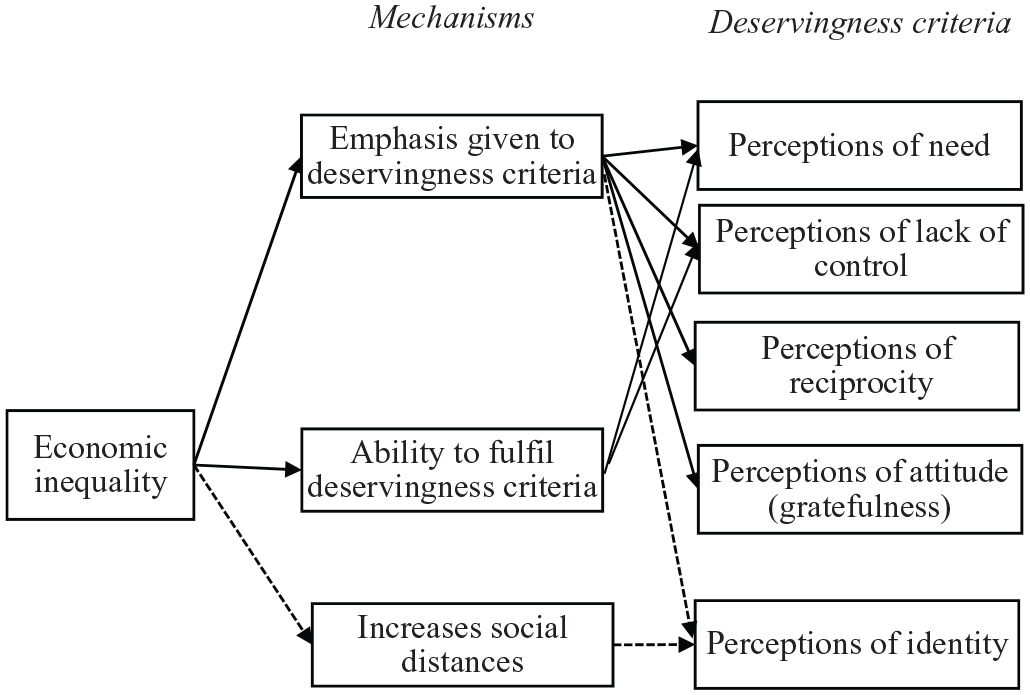
The effect of economic inequality on deservingness criteria of disabled people.
Wilkinson and Pickett (2009) argue that high degrees of inequality produce a range of negative outcomes including reduced social trust. Their explanation for this phenomenon is grounded in the importance of social comparisons and psychosocial mechanisms producing status anxiety. People living in highly unequal areas are more concerned about how they compare with others which triggers status competition and declined social trust and solidarity. Their work has attracted some criticism (Goldthorpe, 2009; Präg et al., 2014), but many of their findings have been substantiated. Other studies show that inequality has adverse consequences for social solidarity (Paskov and Dewilde, 2012), generalized trust (Uslaner, 2002) and that the gap between rich and poor is strongly associated with an individual’s perception that others will take advantage of them (Kawachi et al., 1997). Based on these studies, we would expect that higher levels of economic inequality lead people to put more weight on all deservingness criteria, and thus hold less lenient views of disabled people (negative effect on perceived work limitations). 1
Evidence that inequality may instead increase feelings of solidarity and altruistic motives comes from a variety of disciplines such as economic sociology, experimental economics and neuroscience (Fehr and Schmidt, 1999; Sachweh, 2012). This research shows that high levels of inequalities can foster egalitarism, feelings of sympathy and normative concerns about others. Based on these studies and given that disabled people are consistently found among the most deserving of welfare support (Jeene et al., 2013; Van Oorschot et al., 2017), we would expect that higher levels of economic inequality render people more concerned about the welfare of disabled people, and thus less selective in applying the deservingness criteria (positive effect on the perceived work limitations).
The second mechanism concerns the effect of economic inequality on people’s ability to fulfil the deservingness criteria. There is a substantial literature showing that health outcomes are worse and the incidence of impairments associated with disability higher in contexts of high economic inequality (Emerson et al., 2011; Nowatzki, 2012; Präg et al., 2014; Smith et al., 2016). We hypothesize that higher rates of disability and long-term illness within unequal areas are likely to increase perceptions of neediness and lack of control, thereby leading to more lenient views of disabled people. First, when people have disabled friends and relatives or encounter disabled people regularly, they become more aware of the obstacles disabled individuals encounter to lead a productive life thus increasing perceptions of need. Secondly, in situations of high health inequalities, people will be less likely to blame disabled individuals for their condition and recognize the structural causes behind their impairment, thus increasing perceptions of lack of control. Based on these mechanisms, we expect that individuals’ ability to fulfil the need and control criteria has a mediating effect on public perceptions of the work limitations of disabled people, i.e. individuals’ response to similar levels of need and control as depicted in the vignette will be magnified in areas of high inequality leading to more lenient views of disabled people (positive effect on perceived work limitations).
We also expect that economic inequality increases differences in economic resources and lifestyles between the bottom and the rest of society, consequently making it more difficult to fulfil the identity criterion. However, this criterion was effectively controlled in this study by the vignette design which asked respondents to imagine that the individuals in the vignette had the same socio-economic background as themselves. Hence, the potential effect of social distances could not be assessed in this study.
Finally, previous studies on the effects of economic inequality have generally focused on income, that is, the flow of resources to individuals and families and neglected wealth – the stock of assets people own. Wealth inequality is generally higher than income inequality and this difference has been growing over time (Hills et al., 2013). While income and wealth inequality are clearly connected, their relationship is complex (Rowlingson and McKay, 2012), and they each deserve careful analysis in their own right. In order to provide a fuller understanding of the relationship between economic inequality and public perceptions of the work limitations of disabled people, we include measures for both wealth and income inequality.
Data and methods
Data sources and models
We use data from ELSA, a panel study of a representative cohort of men and women living in England aged 50 years and older and their partners. We focus on the over-50s as this population are more susceptible to and familiar with work disablement and also this population will have the greatest variation in wealth and incomes as they reach the end of their careers and retire. Data for this current study is from ELSA Wave 3 (2006/07), which was the only wave to date to include a self-completion module consisting of nine vignettes covering pain, affect [depression] and cardiovascular disease [CVD]. A total of 9771 main interviews were completed with 2497 individuals also completing the work vignettes module. After excluding partners under 50 years old and those who did not complete the vignettes questionnaire, the number of participants included in our study was 2387 or 21,483 person-vignette observations.
The vignette methodology was pioneered in political science to adjust self-assessments for reporting heterogeneity (King et al., 2004) and has been used in a wide range of domains including health, business ethics, job satisfaction, recruitment policy and attitudes to workplace childcare (Aguinis and Bradley, 2014). Vignettes have also been found to be a useful tool in understanding within-country differences in work disability reporting (Kapteyn et al., 2007). 2
Respondents rated the work limitation of the vignettes on a five-point scale ranging from ‘not limited’ (=1) to ‘extremely’ (=5) and therefore a form of ordered probit model was the natural regression framework. Our assumption is that individuals who are assessed as having severe work limitations are also recognized as manifesting genuine needs and effectively lacking control over their condition, and thus deemed deserving of public support. Conversely, individuals who are judged as being able to work are also consequently viewed as undeserving of support and legitimacy in relation to benefit conditionality. The implication is that individual judgements about the degree of work limitations reflect opinions about the welfare deservingness of disabled people.
We estimate the relationship between economic inequality and vignette ratings using both a random-effects ordered probit model and a more flexible random-effects generalized ordered probit model. Whereas the ordered probit model imposes the restriction that economic inequalities affect all levels of the vignettes’ work limitation by the same magnitude, the generalized ordered probit model accommodates inequality affecting high and low work limitation differently.
In the random-effects ordered probit model, the probability of observing outcome

The generalized random-effects ordered probit then allows the coefficients

Dependent variable: Vignette assessment
Individuals were asked to rate the severity of work limitation of various hypothetical persons who experience different circumstances related to health on a five-point Likert scale ranging from ‘not limited’ (=1) to ‘extremely’ (=5). Respondents were asked to assume that the people depicted in the vignette had a similar age, education and work history as themselves and that other than the conditions mentioned, were in reasonably good health. The vignettes are described in Supplementary Appendix Table B.
Table 1 presents frequency distributions of responses to the work disability vignette ratings across the three domains. The vignettes are designed in such a manner that the hypothetical persons display varying degrees of need and lack of control over work disability within each domain. This is evident within the pain domain where the modal responses (in bold) indicate increasing severity of work limitation in the order of vignette 2, 1 then 3. Ordering can also be seen within the other domains but to a lesser extent.
Frequency distributions of vignette ratings, ELSA Wave 3 cohort (n=2387).
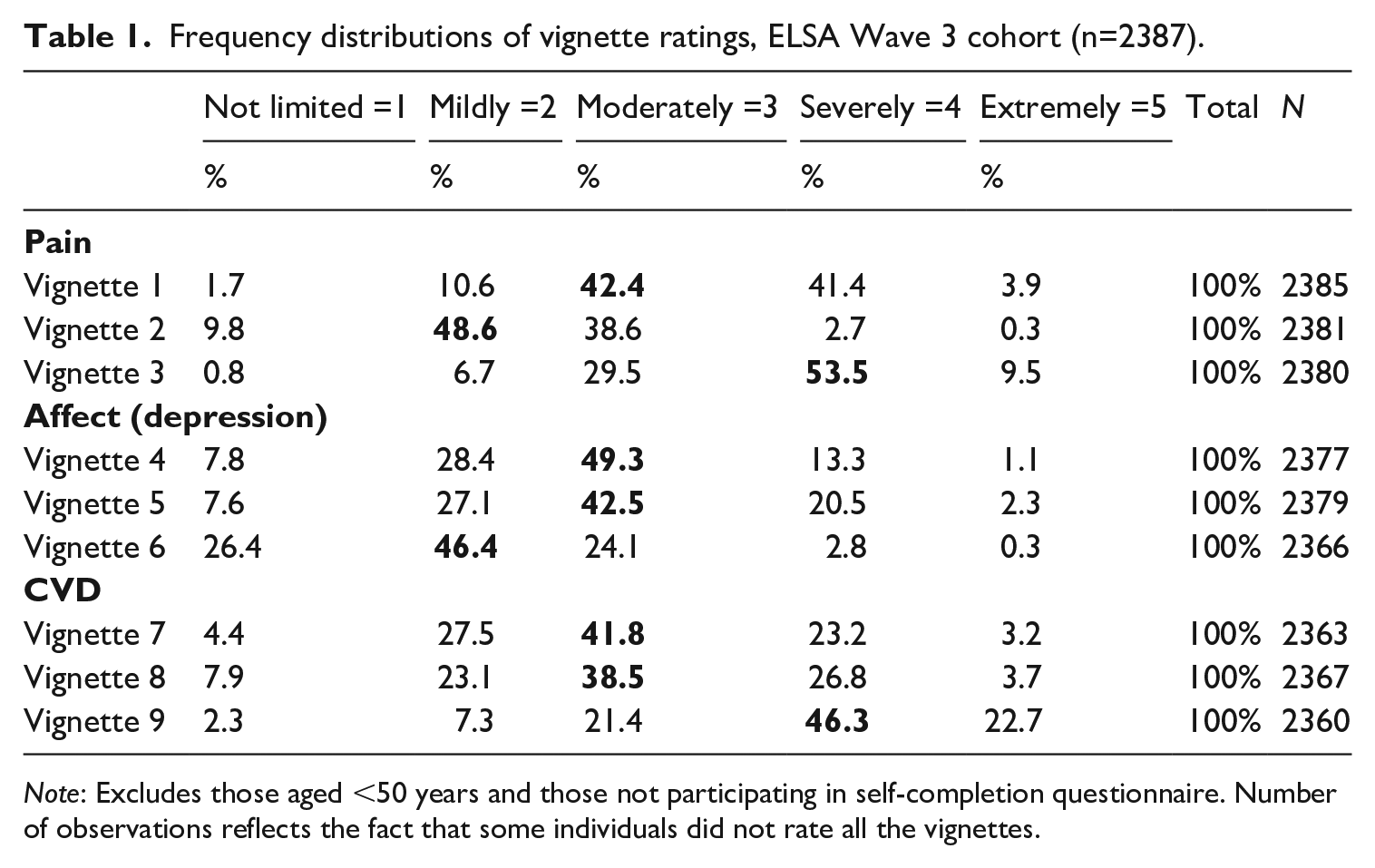
Note: Excludes those aged <50 years and those not participating in self-completion questionnaire. Number of observations reflects the fact that some individuals did not rate all the vignettes.
Inequality measures
Local authority identifiers (n=351) were obtained and those with no individuals were excluded from the analysis (n=315). For wealth and income inequality measures, the Gini coefficient (

where
The indices show that wealth in the UK is more unequally divided than income (wealth
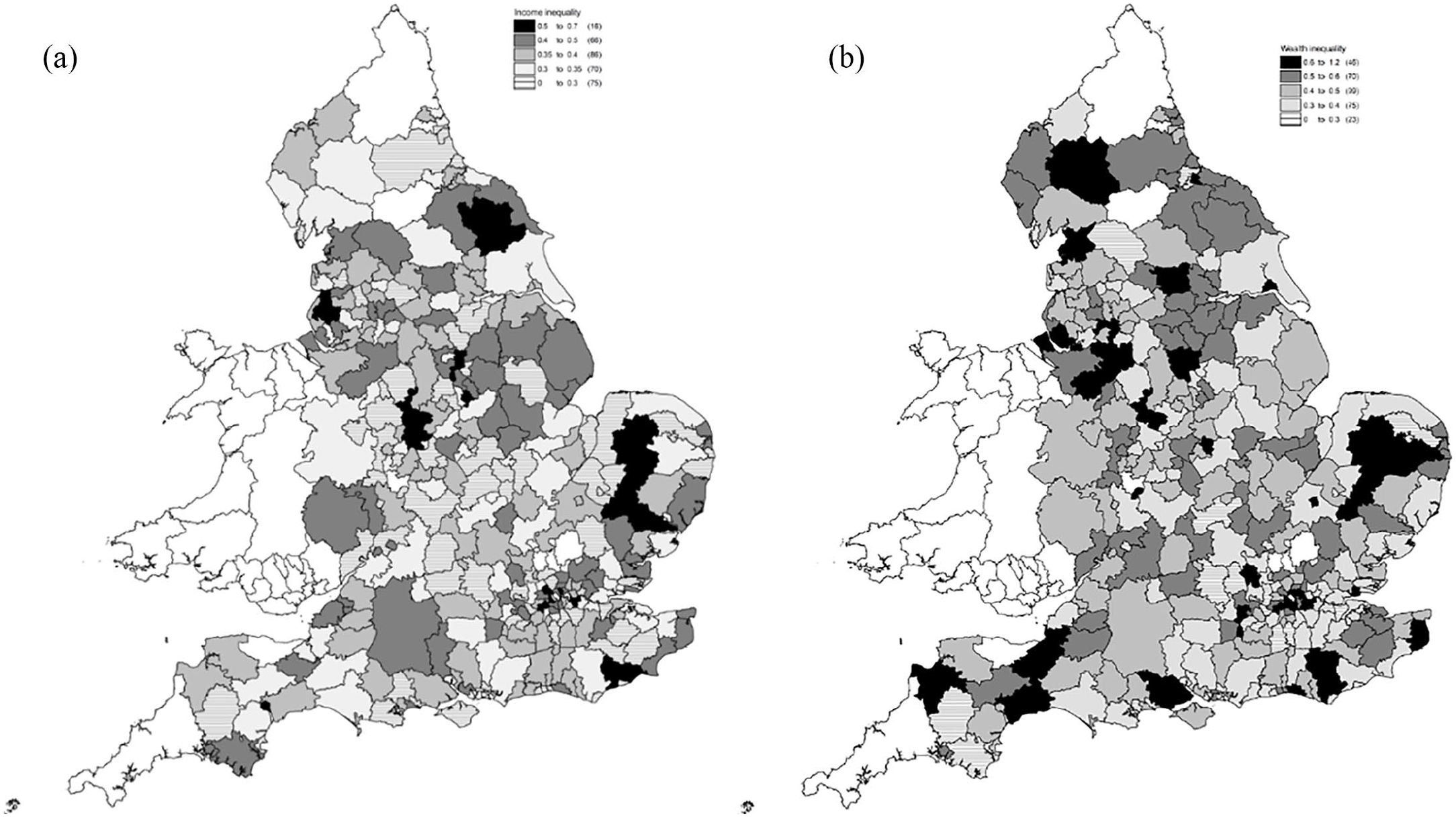
Economic inequality in England. (a) Bias-adjusted income Gini index among those aged 50+ in ELSA Wave 3 (2006/07) by local authority district. (b) Bias-adjusted wealth Gini index among those aged 50+ in ELSA Wave 3 (2006/07) by local authority district.
Control variables
At the individual level, we control for sex, age, education, civil status, employment, benefit receipt and health status. Household level variables include total benefit unit income (sum of income from employment, state benefits, state and private pension, assets and other income), and net total unit wealth (sum of savings, investments, physical and housing wealth after financial and mortgage debt has been subtracted). We use the proportion of individuals in each area who have claimed disability living allowance (DLA) to control for area-level disability benefit receipt. 3
Several studies have established that ethnic, linguistic or religious diversity weakens social bonds (Ervasti et al., 2012) with potential negative effects on attitudes towards welfare beneficiaries and we therefore control for these variables in our models. Fractionalization indices (Alesina et al., 2003) for ethnic and religious diversity were calculated at local authority level using data from the 2001 Census as follows:

where

or

These indices measure the probability that two randomly drawn people from a local authority belong to different ethnic or religious groups. The indices range from 0 (=complete homogeneity) to 1 (=complete heterogeneity). Area-level social capital was measured following Nieminen et al. (2008) by using factor analysis to reduce 21 variables covering aspects such as personal relationships, support, civic engagement to the three dimensions of local area and trust, social support and social networks (Supplementary Appendix Table C).
Results
Table 2 reports the standard ordered probit model for the association of area-level economic inequality with perceptions of work disability. We include responses to all nine vignettes and control for the vignette question using dummy variables. In all models, we control for individual and area-level covariates as outlined above. We also control in a stepwise fashion for the level of household wealth and income, social capital, and ethnic and religious fractionalization. Positive (negative) coefficients indicate that a variable increases (decreases) the propensity to report the vignette person as being limited in the kind of work they can do.
Random-effects ordered probit for all work disability vignette ratings in the ELSA Wave 3 cohort.
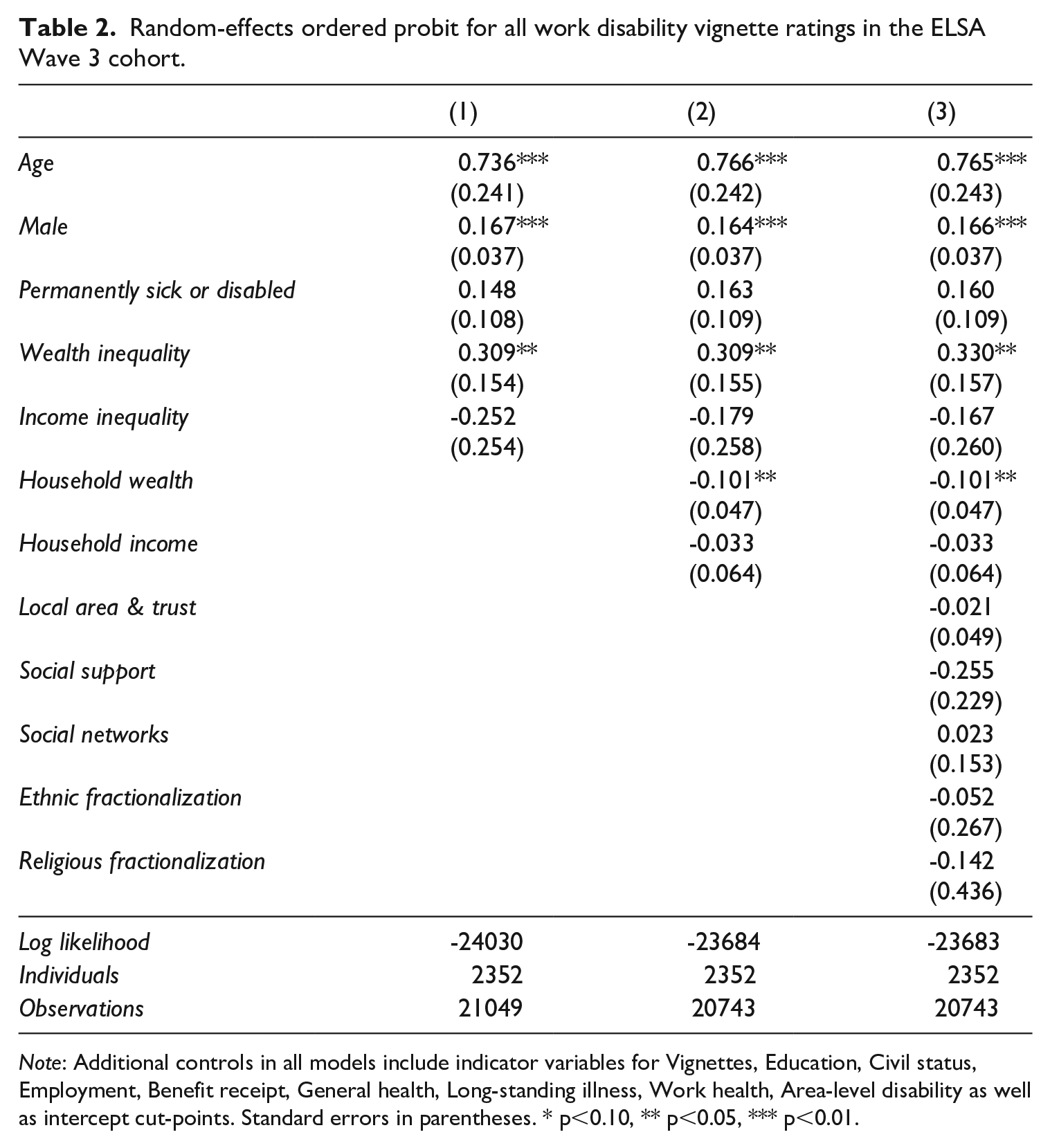
Note: Additional controls in all models include indicator variables for Vignettes, Education, Civil status, Employment, Benefit receipt, General health, Long-standing illness, Work health, Area-level disability as well as intercept cut-points. Standard errors in parentheses. * p<0.10, ** p<0.05, *** p<0.01.
The wealth inequality coefficient remained significantly positive across models with minimal changes in the estimated coefficients (β = 0.309 in (1); (2) β = 0.309; (3) β = 0.330). Therefore, respondents from areas with high wealth inequality were more likely to rate the vignettes as work-limited. On the other hand, income inequality is not statistically significant in any specification (β = -0.252, p=0.32 in (1); (2) β = -0.179, p=0.49; (3) β = -0.167, p=0.52).
While the level of household income had no association with vignette ratings, people with higher levels of household wealth tended to rate the degree of work limitation as less severe. Therefore, wealthy individuals rate the vignettes as less work disabled but to a lesser degree in areas of high wealth inequality. Older people rated vignette work disability higher perhaps reflecting the instruction to respondents to assume that the people depicted in the vignette were similar in age to themselves. Men were more likely to rate the vignettes as work-limited as in US data studied by Kapteyn et al. (2007). Area-level social capital, ethnic diversity and religious diversity were non-significant.
The coefficient on wealth inequality is relatively large and the estimate in model 3 implies that a hypothetical change from perfect equality to perfect inequality would be predicted to increase the probability of considering the vignettes as severely or extremely work limited by 8.3 per cent. For comparison, the marginal effect of increasing household wealth to £500,000 from the mean level of £300,000 lowers the probability of considering the vignettes as severely or extremely work limited by only 0.5 per cent.
We then used a random effects generalized ordered probit model to accommodate variation by the level of work disability (Table 3). The regression uses the previous specification including social capital, ethnic and religious fractionalization (model 3 in Table 2). It is observed that individuals in areas of high wealth inequality tend to rate the vignettes as having a higher level of disablement at almost all levels of work disability. The greatest association with wealth inequality occurred between the ‘severely’ and ‘extremely’ work limited category (β = 0.536). Income inequality has a statistically non-significant coefficient across levels except for a negative relationship at the top of the scale. As before, higher household wealth is negatively associated with vignette ratings except at the lowest level of work disability. The local area variables are statistically non-significant at all levels of the Likert scale. A global test of the constraint that parameter estimates for all variables do not vary across work disability category was rejected (
Random-effects generalized ordered probit for vignette ratings in the ELSA Wave 3 cohort.
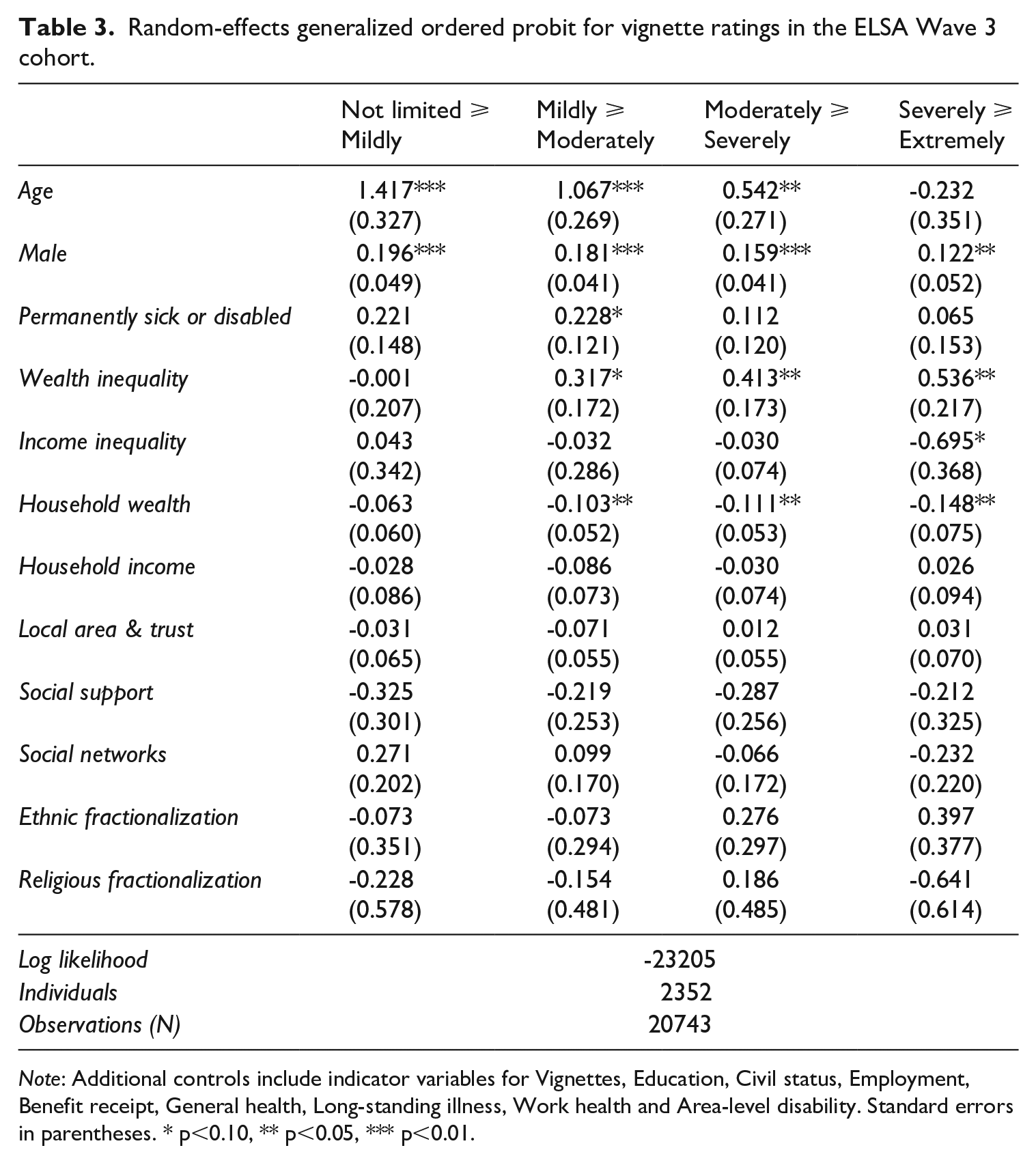
Note: Additional controls include indicator variables for Vignettes, Education, Civil status, Employment, Benefit receipt, General health, Long-standing illness, Work health and Area-level disability. Standard errors in parentheses. * p<0.10, ** p<0.05, *** p<0.01.
Finally, we estimated the random-effects ordered probit model on the three vignette domains of pain, affect and CVD separately (Table 4). We use the specification in model 3 of Table 2. We observe that wealth inequality has a positive coefficient for all three domains. It is significantly positive for the pain domain only (β = 0.664, p<0.01) and large but statistically insignificant for the CVD domain (β = 0.347, p=0.16). The coefficient for the pain domain is approximately twice the size of the coefficient reported in Table 2 when all vignettes were included. Previous research suggests that the deservingness criteria may be used also to analyse within group differences in perception (Buss, 2018; Larsen, 2008b; Roosma and Jeene, 2017). In this view, need and lack of control are clearly more visible in situations of pain than for CVD or depression. Indeed, many individuals with mental health impairments claiming disability benefits, have declared that they were more likely to have their impairments disregarded because of their relative invisibility (Bambra and Smith, 2010).
Ordered probit for domains of vignette ratings in the ELSA Wave 3 cohort.
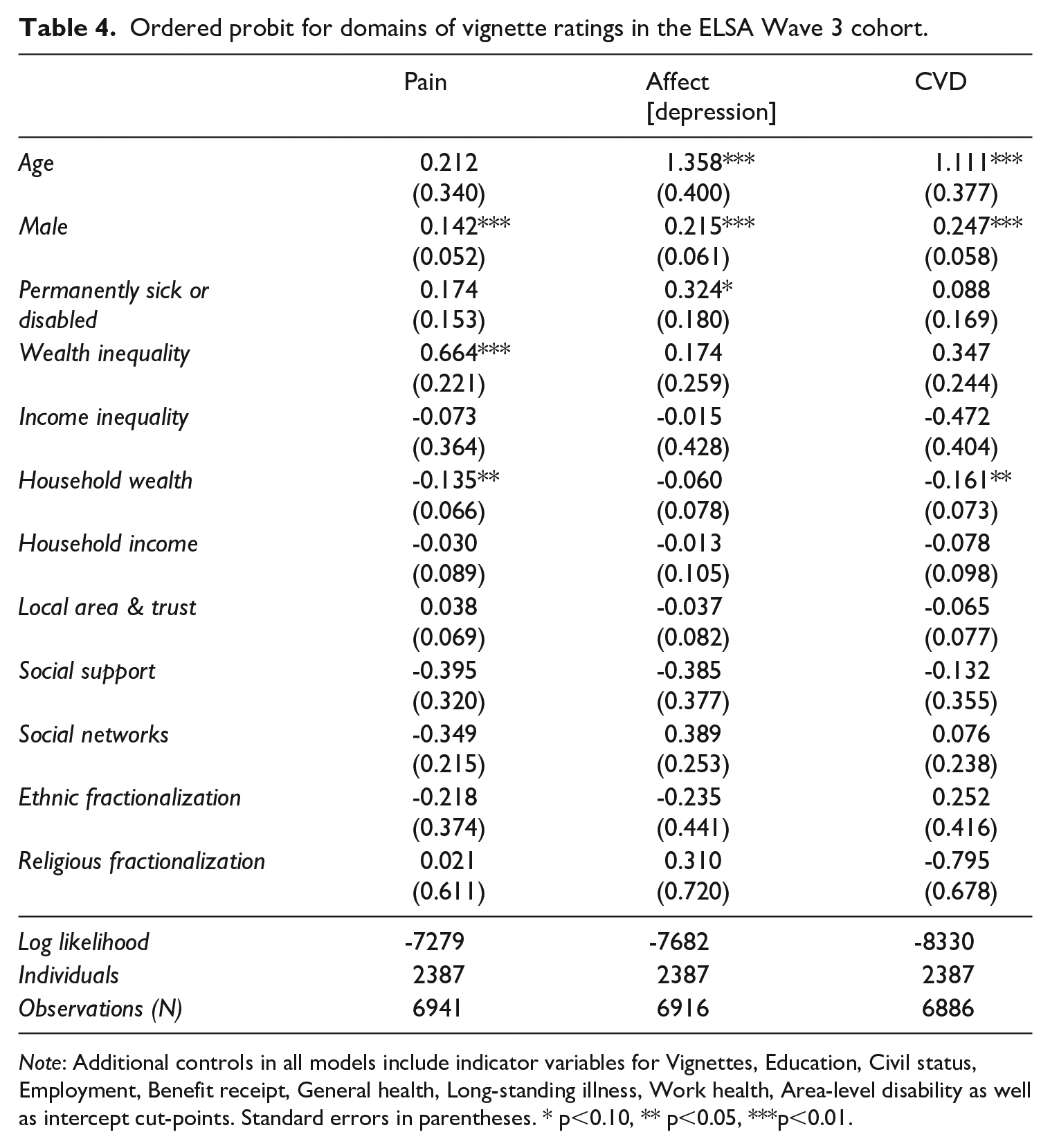
Note: Additional controls in all models include indicator variables for Vignettes, Education, Civil status, Employment, Benefit receipt, General health, Long-standing illness, Work health, Area-level disability as well as intercept cut-points. Standard errors in parentheses. * p<0.10, ** p<0.05, ***p<0.01.
Discussion
Moral economy perspectives put the question of legitimacy squarely into the analysis of the moral structure of economy and polity themselves (Kohli, 1987: 127). This article contributes to classical sociological debates about human motives and the role of self-interest, altruism and social norms in the context of the formation of opinions about the role of work and welfare in society (Bolton and Laaser, 2013; Kangas, 1997). It does so by focusing on the relationship between economic inequalities and the perceived work limitations of people with disability. Whereas Wilkinson and Pickett’s work (2009) suggests that growing levels of economic inequalities increase feelings of relative deprivation and status anxiety leading to more severe views of the work limitations of disabled people; scholarship on the moral economy shows that social norms and collectively shared understandings about what constitutes a fair and equitable exchange of rights and obligations play an important role in the formation of public opinions (Sachweh, 2012; Taylor-Gooby et al., 2019). 5 As stated by Mau (2004: 24), since both purely self-regarding and purely altruistic individuals are rather rare social phenomena, ‘the interesting question for theoretical and empirical analysis is how norms and economic incentives interact’. This analysis contributes to address this question by showing that high levels of wealth inequality are associated with greater leniency towards people with disability. This finding casts doubts on the crucial role attributed to self-interest as the central mechanism linking economic inequality and solidaristic pro-welfare attitudes, and supports the idea that people’s views of disabled people are grounded in a moral economy i.e. long-term orientations about fairness and appropriateness. In particular, the findings show that living in an area of large wealth disparities induces people to: 1) apply deservingness criteria less strictly and give more weight to moral concerns about disabled people (mechanism 1); 2) become more aware of the structural causes behind disablement and ill health which leads to more lenient assessments of the need and control criteria (mechanism 2).
These findings have also important policy implications. From a policy perspective, the authors observe that in the last decades the social rights of disabled people have been increasingly contested reflecting political and media discourses depicting disabled people as simply unemployed rather than incapacitated, or worse, as welfare scroungers and cheats (Garthwaite, 2011). Critics of these reforms have stressed that welfare conditionality enforces an individual deficit model of disability which eschews the many obstacles that disabled people encounter at work or when looking for work (Barnes, 1999). While the effectiveness of such measures comes under increased scrutiny (Fletcher and Flint, 2018; McNeill et al., 2017), our findings show that their social legitimacy is also far from equivocal and public perceptions of the work limitations faced by disabled people may be amplified by rising inequalities in the UK.
Conclusions
The relationship between inequality and social attitudes towards welfare recipients has received little attention in previous research despite growing concerns about the societal effects of existing levels of inequality. This article addresses this gap by investigating the relationship between economic inequalities and the perception of the work limitations of disabled people using vignettes from ELSA (2006/07) which was carried out at a time of increased media debates and legislative change concerning the conditionality of disability benefits. We focus on people with disabilities because previous research demonstrated that they are both consistently found among those considered most deserving of welfare support (Jeene et al., 2013; Van Oorschot et al., 2017) and the subject of increased work conditionality (Bambra and Smith, 2010; Baumberg-Geiger, 2017). Our key findings show that individuals living in areas with large wealth inequality are more likely to rate the vignettes as work limited, while income inequality loses significance once controls for the levels of household wealth and income are included. These results are robust across different model specifications and using different geographical units and demonstrate the importance of distinguishing between different forms of economic inequality.
There are a number of limitations to our analysis. Given the cross-sectional nature of our data we are unable to interpret our results as unambiguously causal but to date there are no general surveys in the UK with repeated measures of disability vignette responses. As our dataset is confined to those aged 50 years and older, results may not generalize to the general population. Patterns of wealth and income distribution as well as attitudes to work disability may be different for older people. Also, the findings concern perceptions only of disabled people; future research should investigate their validity with regard to other social groups (e.g. unemployed, immigrants) and outcomes (e.g. voting behaviour, attitudes towards elites). Regardless of these limitations, our study clearly demonstrates an association between area-level wealth inequality and perceived work limitations of disabled people within a cross-sectional regression framework and in the presence of a comprehensive set of control variables.
Future research should focus on understanding the nature and mechanisms underlying this relationship. Research on lay perception of inequalities and the deservingness of the rich suggests that distinct economic inequalities may produce different effects on public perceptions because of: 1) the greater visibility, and 2) the contested nature of wealth as compared to income.
People do not know the entire income distribution, they form an opinion about the extent of inequality based on the information that is available to them, for instance, by comparing their own living standard with that of others living around them (Irwin, 2018). Since wealth takes the form of real assets, particularly property which is clearly observable, wealth inequality is more conspicuous than income inequality. Respondents may thus be more affected by this obvious visible evidence of inequality (Nishi et al., 2015). Other studies have found that when people are presented with new knowledge about the true scale of inequalities, support for the welfare state rises (Bamfield and Horton, 2009). A further aspect concerns the perceived legitimacy of inheritance and other forms of unearned wealth (Rowlingson and McKay, 2012). Existing research shows that the extent to which wealth is perceived as the fruit of hard work and individual effort represents an important basis upon which the public forms perceptions of the deservingness of the rich, and consequently of the legitimacy of existing levels of wealth inequality (McCall, 2013; Sadin, 2017). In this view, the unearned nature of much wealth could render people more sensitive to large inequalities in wealth rather than income.
Supplemental Material
sj-pdf-1-wes-10.1177_0950017020967229 – Supplemental material for Deservingness, Conditionality and Public Perceptions of Work Disability: The Influence of Economic Inequality
Supplemental material, sj-pdf-1-wes-10.1177_0950017020967229 for Deservingness, Conditionality and Public Perceptions of Work Disability: The Influence of Economic Inequality by Rossella Ciccia, Declan French, Frank Kee and Mark O’Doherty in Work, Employment and Society
Footnotes
Funding
This research has received funding from the European Union’s Horizon 2020 research and innovation programme under the Marie Skłodowska-Curie grant agreement No. 746168 – AGenDA. Any dissemination of results reflects only the authors’ view and the Commission is not responsible for any use that may be made of the information it contains.

Notes
References
Supplementary Material
Please find the following supplemental material available below.
For Open Access articles published under a Creative Commons License, all supplemental material carries the same license as the article it is associated with.
For non-Open Access articles published, all supplemental material carries a non-exclusive license, and permission requests for re-use of supplemental material or any part of supplemental material shall be sent directly to the copyright owner as specified in the copyright notice associated with the article.
