




Abstract
Once being independent pioneers, nonprofit welfare organizations now face marketization as they compete with commercial actors in delivering services within the welfare state. This development has been described as “becoming business-like,” which implies a tension between the traditional normative identity and the more recent utilitarian identity of nonprofits. We question this polarization by analyzing a case study of a Norwegian nonprofit that is expanding in processes of increased marketization, asking how nonprofits internally legitimize marketization. Central to our theoretical contribution is the concept of The Shield of Purpose that serves as a strategic discursive resource through which the organization legitimizes its market-oriented adaptations while simultaneously developing its normative identity. This concept illustrates the organization’s ambidextrous use of its foundational diaconal purpose as both a defense against mission drift and a mechanism for integration with market pressures.
Introduction
Marketization is impacting nonprofit welfare services (Bassi & Vincenti, 2015, p. 916). The shift toward marketization aligns with the rise of New Public Management principles that emerged in the 1970s, aiming to enhance efficiency in Western welfare states (Hvenmark, 2016). Because nonprofit provision is heavily dependent on government funding (Anheier & Salamon, 2006), and such funding constitutes a major share of revenues in both Europe and the US (Gurmu, 2017; Lai, 2023; Mosley, 2020), nonprofits must present themselves as attractive, competitive actors in an increasingly marketized welfare arena.
Importantly, navigating heightened marketization entails more than adhering to new practices; rather, it concerns the very essence of nonprofit identities. Many nonprofits have adopted a utilitarian identity in addition to their original normative organizational identity (Jäger & Schröer, 2014). The outcome has been conceptualized as hybrid organizational identities (Billis, 2010) serving as a response to the divergent demands of remaining true to the mission while operating in an increasingly business-like manner (Maier et al., 2016; Sirris, 2020). Such an adaptation, however, is not without peril. As nonprofits edge closer to market-oriented models, they risk “mission drift,” a phenomenon where the pursuit of financial sustainability can blur and eventually eradicate their original identity as they lose sight of their original purpose and values (Ebrahim et al., 2014). This potential identity dilution poses fundamental questions regarding nonprofit organizations’ ability to safeguard their normative imperatives while adapting to the exigencies of the market.
Although the phenomenon of nonprofits adopting business-like practices is well-documented (King, 2017; Maier et al., 2016; Salamon, 1993), we need to better understand how this legitimation process unfolds within such organizations. Legitimacy is “socially and argumentatively constructed by means of considering reasons to justify certain actions, practices, or institutions and is thus present in discourses between the corporation and its relevant public” (Palazzo & Scherer, 2006). Our approach is to investigate how legitimation of marketization occurs internally in nonprofit organizations. Such a focal point bridges the scholarly discussion from the manifestations of becoming business-like to the internal processes of meaning-making and legitimation within nonprofits. To explore this phenomenon, this article builds on a case study of one of Norway’s leading nonprofit welfare organizations, which has not only withstood but thrived amid intensified marketization. Drawing on interviews with top executives and relevant organizational documents, our objective is to elucidate the discursive mechanisms through which this organization internally legitimizes marketization. The research question guiding this study is: “How do nonprofits internally legitimize marketization?”
Central to our argument is how existing research depicts nonprofit identity tensions in the context of marketization (Billis, 2010; Sanders, 2015). While research acknowledges hybridity in nonprofit organizational identity, a recurring theme remains the polarization between normative and utilitarian identities—that is, between value-driven missions and market-oriented adaptations (Knutsen, 2013; Maier et al., 2016). This study, in contrast, contributes a counternarrative to this polarization by presenting a case study of a nonprofit welfare organization capable of maneuvering these trends to its own advantage.
Some nonprofits have thrived and seemingly become more business-like, thereby challenging the distinct division traditionally perceived between nonprofit organizations and marketization. They have done so without losing their normative mission, and they still identify and are identified as nonprofits (Sirris et al., 2022; Wæraas et al., 2024). We challenge the polarization between nonprofits and for-profits, as well as between the rationales of normative values and the competition and market rationales. A key contribution of this article is suggesting and outlining the theoretical concept The Shield of Purpose, which we define as a discursive resource that nonprofits use strategically to internally legitimize the adoption of market-oriented practices by (a) anchoring marketization to realize its purpose and (b) aligning it with the values base of such organizations.
In the remainder of this article, we outline the foundational concepts of legitimation and marketization, present our research setting and methods, and then analyze the findings with particular emphasis on our concept of The Shield of Purpose. We conclude by discussing implications for scholarship and practice.
Theoretical Perspectives
Legitimation and Legitimacy
To understand how nonprofits internally legitimize marketization, it is essential to first explore the concepts of legitimation and legitimacy. Legitimacy is understood as a socially constructed perception of appropriateness, holding a pivotal position within the discipline of sociology in general (Weber, 1922/1968) and particularly to institutionalism (Suchman, 1995). Widely used across various disciplines, it remains an ambiguous concept. In organizational studies, legitimacy is defined as a “generalized perception or assumption that the actions of an entity are desirable, proper, or appropriate within some socially constructed system of norms, values, beliefs, and definitions” (Suchman, 1995, p. 574). Thus, legitimacy denotes an organization’s “fit” with its environmental and contextual conditions. It is deemed essential for the survival of organizations. Legitimacy has been explained in equivalents such as congruence, consistency, acceptance, cultural alignment, normative support, and consonance (Suddaby et al., 2017). It can be pragmatic, based on self-interest, morally based on normative approval, or cognitive in the sense of being taken-for-granted (Suchman, 1995). By legitimation, we refer to the various processes through which legitimacy is established, including discursive processes (Vaara et al., 2006). Furthermore, we distinguish between the processes of internal and external legitimacy and legitimation. The former refers to processes occurring within an organization (Drori & Honig, 2013; van der Steen et al., 2022)—which is the focus of our study—while the latter concerns how external actors assess and confer legitimacy, a theme particularly relevant to nonprofits in the context of parliamentary discussions (Eidslott et al., 2024).
The progression of nonprofits toward adopting business-like practices necessitates internal legitimation within these organizations to construct and sustain meaning around such transformations. Vaara et al. (2006) contend that controversial organizational changes precipitate a need to make sense of and either legitimize or delegitimize the alterations that have occurred. One aspect of legitimation is delegitimating, establishing a sense of negative, morally reprehensible, and unacceptable action (Vaara & Monin, 2010). Particularly significant and contentious changes may lead to a “turning point” where the discourse paves the way for legitimizing similar changes in the future (Vaara et al., 2006). This discursive approach is particularly important to our understanding of the legitimation of marketization. Discourse produces concepts that provide meaning and facilitate relationships (Hardy et al., 2000). On this backdrop, legitimation is envisaged as a discursive process creating a sense of legitimacy or illegitimacy within texts and social contexts (Joutsenvirta & Vaara, 2015).
Particularly within the realm of nonprofit organizations, legitimacy is acknowledged as a persistent challenge (Billis, 2010). In the civic sector, organizations are compelled to address the needs and expectations of their diverse constituencies and stakeholders. Moreover, they are embedded in a societal and contextual framework that is replete with entrenched values, normative claims, and practices (Frumkin & Andre-Clark, 2000). In addition, the shift toward more business-like practices among nonprofits carries significant implications for their legitimacy, with varying outcomes (Maier et al., 2016; Vaara et al., 2006). The impact on legitimacy may manifest positively or negatively, largely contingent upon the degree to which these organizations conform to the prevailing expectations within their institutional contexts (Maier et al., 2016).
Suddaby et al. (2017) offer a distinctive conceptualization of legitimacy. Initially, the notion of legitimacy-as-property posits that legitimacy is bestowed upon an organization that fulfills certain criteria demanded by its evaluators. This legitimacy is dichotomized with illegitimacy. However, this perspective is criticized for its essentialist, fixed, and universal assumptions. In this article, we follow Suddaby et al. (2017) alternative conceptualization of legitimacy-as-process, which views legitimacy as a dynamic construct, continuously and actively negotiated in a process in which legitimacy grows and declines. Hence, legitimation develops from a zero state to a tipping point, encapsulating the fluid nature of legitimacy. We differentiate between internal and external legitimacy (Drori & Honig, 2013). Internal legitimacy manifests when an organizational entity increases its legitimacy—be it an entity, strategy, discourse, or practice—and augments its standing. Researchers agree that internal legitimacy means compliance with the constructed dominating organizational system, mission, purpose, and culture (Park et al., 2012). Furthermore, legitimacy plays a pivotal role in debates surrounding resource allocation. Nonprofit organizations, constrained by their mission and purpose, risk losing their legitimacy should they deviate from these foundational principles (Herlin, 2015).
Having now delineated the concept of legitimacy and legitimation, we discern its pivotal role as a theoretical lens for grappling with the tensions nonprofits negotiate in reconciling their foundation values with external imperatives. This theoretical foundation highlights the dual challenges that nonprofits face: maintaining legitimacy while negotiating external pressures of adaptation against their deeply rooted traditions and ethos. These intricate dynamics come into sharper focus when considered through the context of marketization, to which we now turn.
Conceptualizing Marketization
Marketization represents a notable shift in the nonprofit sector. The impetus for marketization includes diminished governmental support, heightened service demands, intensifying competition, and escalated demands for accountability (King, 2017; Ko & Liu, 2021). Consequently, nonprofits increasingly mirror their for-profit counterparts not only in appearance but also in their strategic endeavors and identities.
We adopt a social constructivist lens (Burr & Dick, 2017) to scrutinize the legitimation of marketization, wherein this process is posited as a practice intricately woven into and reflective of the broader societal context, influenced by dominant currents such as intensified competition within the welfare domain. Crucially, legitimation and marketization are both shaped by and instrumental in shaping the power dynamics that permeate our social structures across both micro and macro levels of analysis. Against this backdrop, the concept of “becoming business-like rhetoric” emerges as a particularly relevant focal point for our study. In a seminal study, Dart (2004) distinguishes between the business-like organization of nonprofits’ core and support processes, business-like goals, and business-like rhetoric. We would emphasize that rhetoric will naturally overlap with other categories, such as core and support processes. Such an intersection underscores the bidirectional influence where rhetoric both mirrors and molds practice—and conversely, a stance that acknowledges the impact of discursive practices on organizational behavior (Dart, 2004).
Central to our discursive approach, the conceptual landscape of nonprofit organizations transitioning toward business-oriented paradigms is rigorously delineated in a highly quoted literature review by Maier et al. (2016). These authors show how the infusion of business-like language and practices permeates the discursive domain. This process encompasses the use of narratives and communication strategies, reflecting a more business-oriented ethos within the nonprofit sector (Maier et al., 2016), and theoretical concepts such as organizational identities and values frames (Jäger & Beyes, 2010).
Maier et al. (2016) systematically explore an array of terminologies developed by scholars to describe the shift toward becoming business-like of core and support processes for nonprofits. First, organizational rationalization focuses on streamlining processes for enhanced efficiency. Following this, managerialization describes the adoption of corporate management principles. Third, corporatization points to the restructuring of nonprofit governance to reflect corporate models. Fourth, marketization entails a shift toward market-type relationships with stakeholders and within the welfare system. In addition, consumerism refers to changes in nonprofit activities and outputs toward a market orientation, where market-type relationships are cultivated. These evolving paradigms challenge the foundational identity of nonprofit welfare organizations. However, a more favorable stance is often taken toward social entrepreneurship, which is characterized by innovation, risk-taking, and proactiveness. Closely related to this is the concept of professionalism, which emphasizes the adoption of professional standards to safeguard quality (Maier et al., 2016).
Building upon this reimagined landscape, our study challenges the polarization between nonprofit and business identities. This nuance is addressed in the existing literature on the subject, to which we now turn. Eikenberry and Kluver (2004) delve into how nonprofit organizations adopt approaches and values from the private market within the sphere of public management. They argue that marketization can harm democracy and citizenship because of its impact on nonprofit organizations’ ability to create and maintain a strong civil society. Sandberg et al. (2020) investigate the marketization of the nonprofit sector through a comparative case study of two nonprofit organizations, employing a discursive approach, which holds relevance for our study. They focus on organizations’ response to external pressures for marketization. Their case study shows how marketization is a situated process through which organizational context leads to variation in nonprofits’ discourses and practices that are still neoliberal in nature. Furthermore, Sandberg and Robichau (2022) examine the effects of marketization on nonprofit managers’ sense of meaningfulness in their work, viewing this phenomenon through the lens of hybridization. They found that public and nonprofit managers experience meaningfulness in work differently. Neoliberal market values are evoked within nonprofit endeavors, highlighting significant discursive elements (Sandberg & Robichau, 2022). Moreover, Sanders (2015) explores the tension between social missions and the market economy, investigating how nonprofits define and navigate this everyday concern (Sanders, 2015). She emphasizes communication to understand the essence of being a nonprofit and to unveil new opportunities for defining nonprofit work on their own.
Further, several studies have explored the linguistic and discursive aspects of nonprofits. For instance, Koschmann and Sanders (2020) investigate how communication is not merely a tool for conveying information but a constitutive force within nonprofits. Corple (2024) demonstrates how nonprofit organizations discursively frame successful commercialization as part of their mission, rather than positioning it in opposition—an approach that aligns with, yet diverges from, our own study, where our focus is on purpose rather than mission (Corple, 2024). Similarly, Gill and Wells (2014) explore how a United States-based nonprofit rhetorically constructs legitimacy through metaphors and narratives, specifically drawing parallels to The Hunger Games to navigate challenges and justify its existence in a competitive, resource-constrained environment (Gill & Wells, 2014). Jensen (2021) illustrates how nonprofits interpret social welfare logics differently, depending on their ideological orientation. One organization adopts neoliberal ideas of individual responsibility, while the other rejects neoliberalism in favor of an alternative, anarchist approach. Yet, both organizations, albeit in different ways, are influenced by the broader neoliberal context in which they operate. Building on these contributions, our study shifts the focus to the role of legitimation in these processes. We ask not only whether and how nonprofits navigate these tensions, but also whether their efforts to legitimate market adaptations are successful in sustaining organizational coherence. In this view, outcomes such as hybridity and/or mission drift are not a given; rather, they reflect the degree to which legitimacy is meaningfully constructed in ways that align with both normative values and the broader socio-cultural context.
Method
Research Setting
In Northern Europe, some faith-based organizations bear the designation “diaconal,” a term derived from the Greek Biblical concept diakonein, meaning to serve. Diaconal organizations’ “identity and mission are self-consciously derived from [Christian] religious traditions and operate on a voluntary, non-profit, and independent basis to promote articulated ideas about a common good” (Askeland et al., 2019, p. 30). Such organizations, primarily in health and social care, emerged alongside industrialization in Norway, playing a pioneering role in the development of the health and social care system (Haugen, 2018). In 2004, EU regulations required competitive tendering in health and social care, ending direct contracting with nonprofits. This reform opened the door to commercial actors, sparking political controversy between “welfare profiteers” and benevolent nonprofits. Subsequent policies sought to strengthen nonprofits and limit commercial growth (Haugen, 2020). Commercialization is typically viewed negatively both within the context of the nonprofit sector and in Norwegian parliamentary debates (Eidslott et al., 2024).
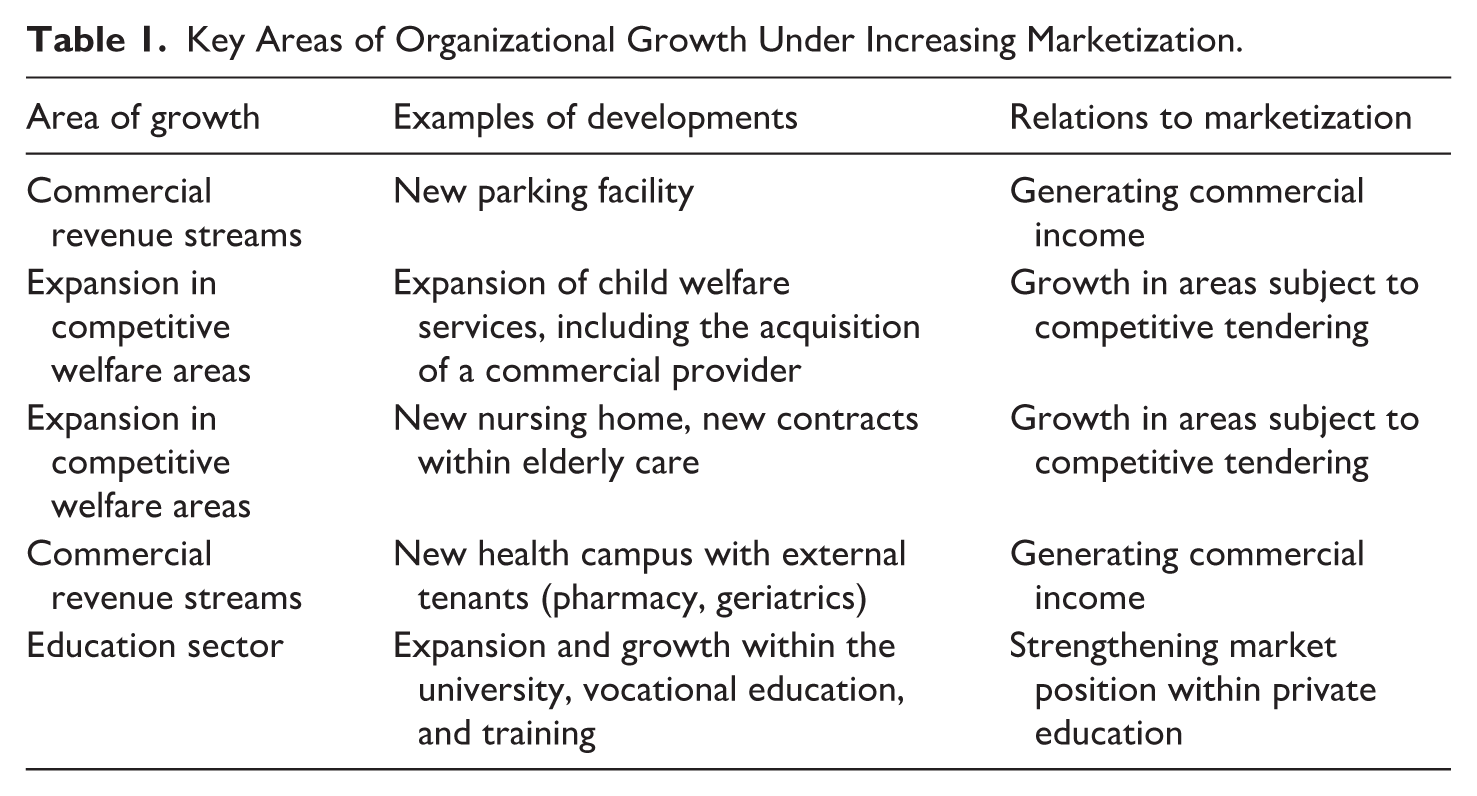
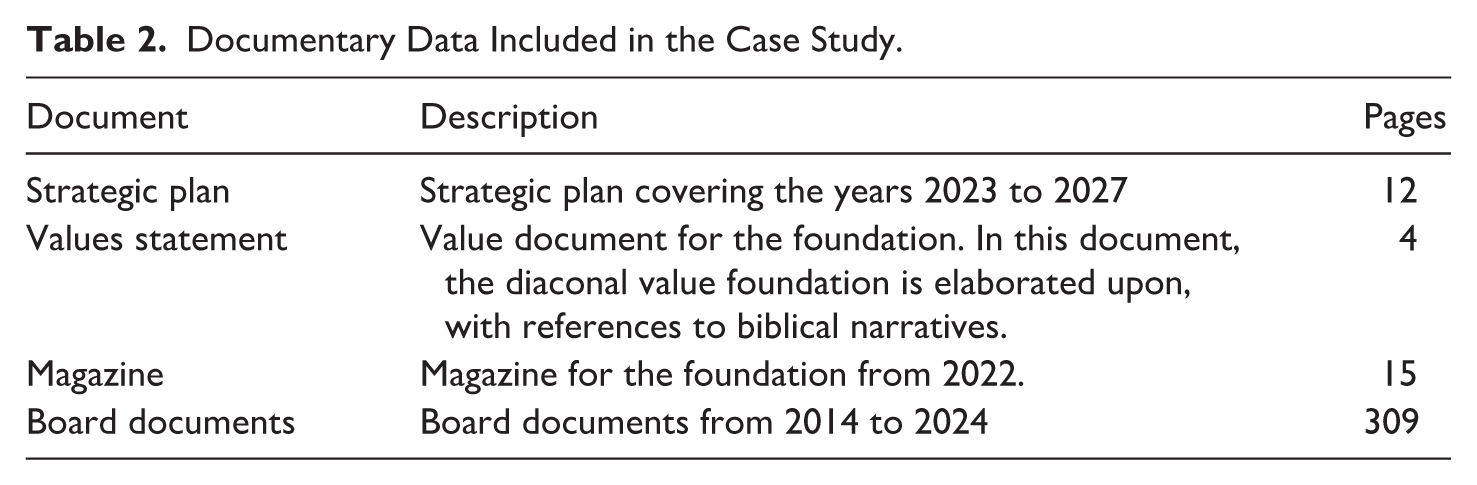
We were guided by our research question, “How do nonprofits internally legitimize marketization?” and undertook a case study, corresponding to what Stake (2006) defines as an instrumental case study. Our selected organization—anonymized as Diaconia, is a diaconal foundation owning and operating a range of health and social services. This case provides a unique vantage point for studying tensions between traditional, mission-driven values and market pressures. Notably, the foundation has recently witnessed significant growth, thus exemplifying a trend toward expansion and enhancement. Diaconia stands as an independent diaconal organization, committed to its purpose: fostering Christian care for people. The foundation’s rapid growth in a marketized context is explicated in the milestones listed in Table 1 and derived from our document analysis (Table 2). Although a direct causal link cannot be established, these developments reflect the organization’s strategic positioning and expansion in a marketized welfare context, including growth in tender-based services, commercial revenue streams, and private education (Table 3–5).
Key Areas of Organizational Growth Under Increasing Marketization.
Documentary Data Included in the Case Study.
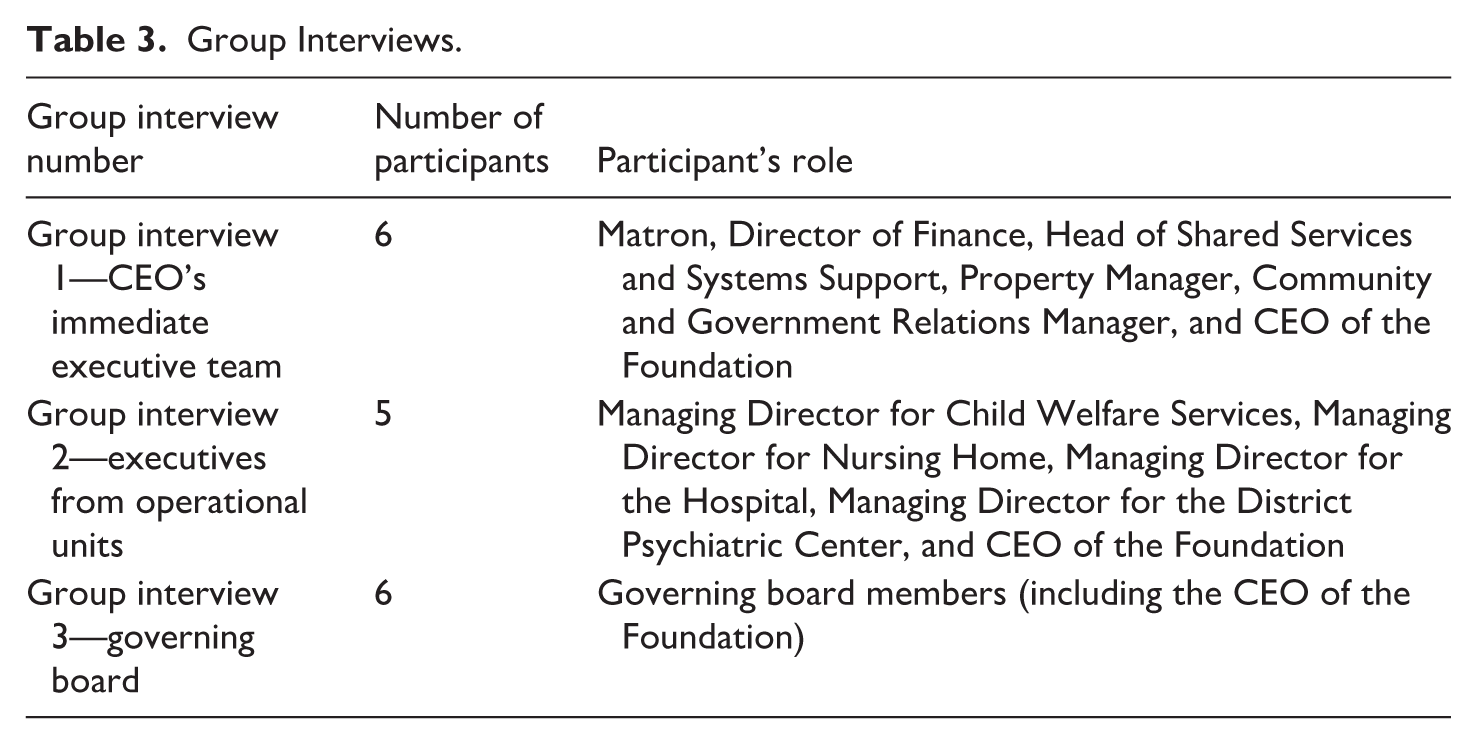
Group Interviews.
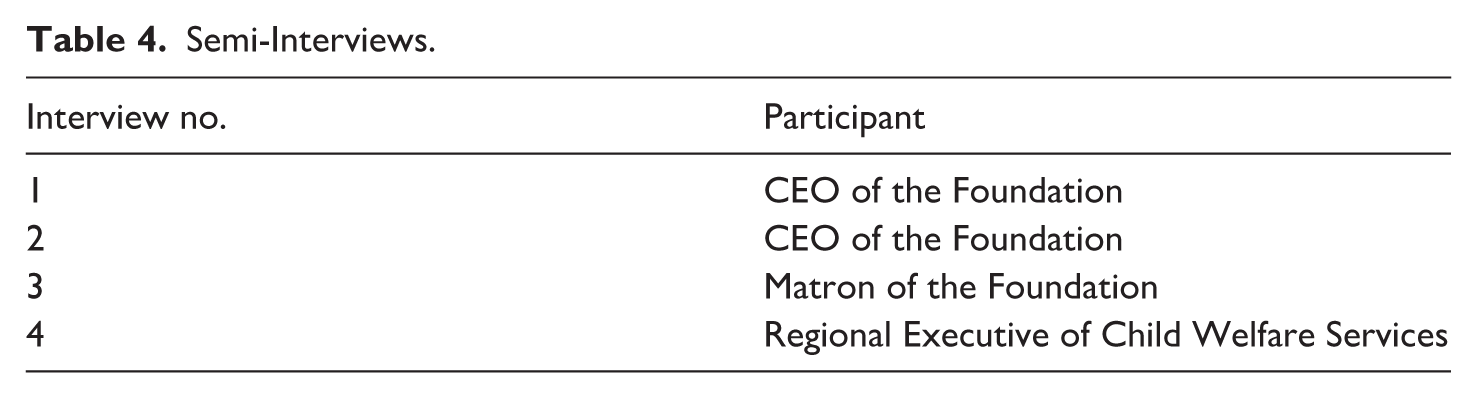
Semi-Interviews.
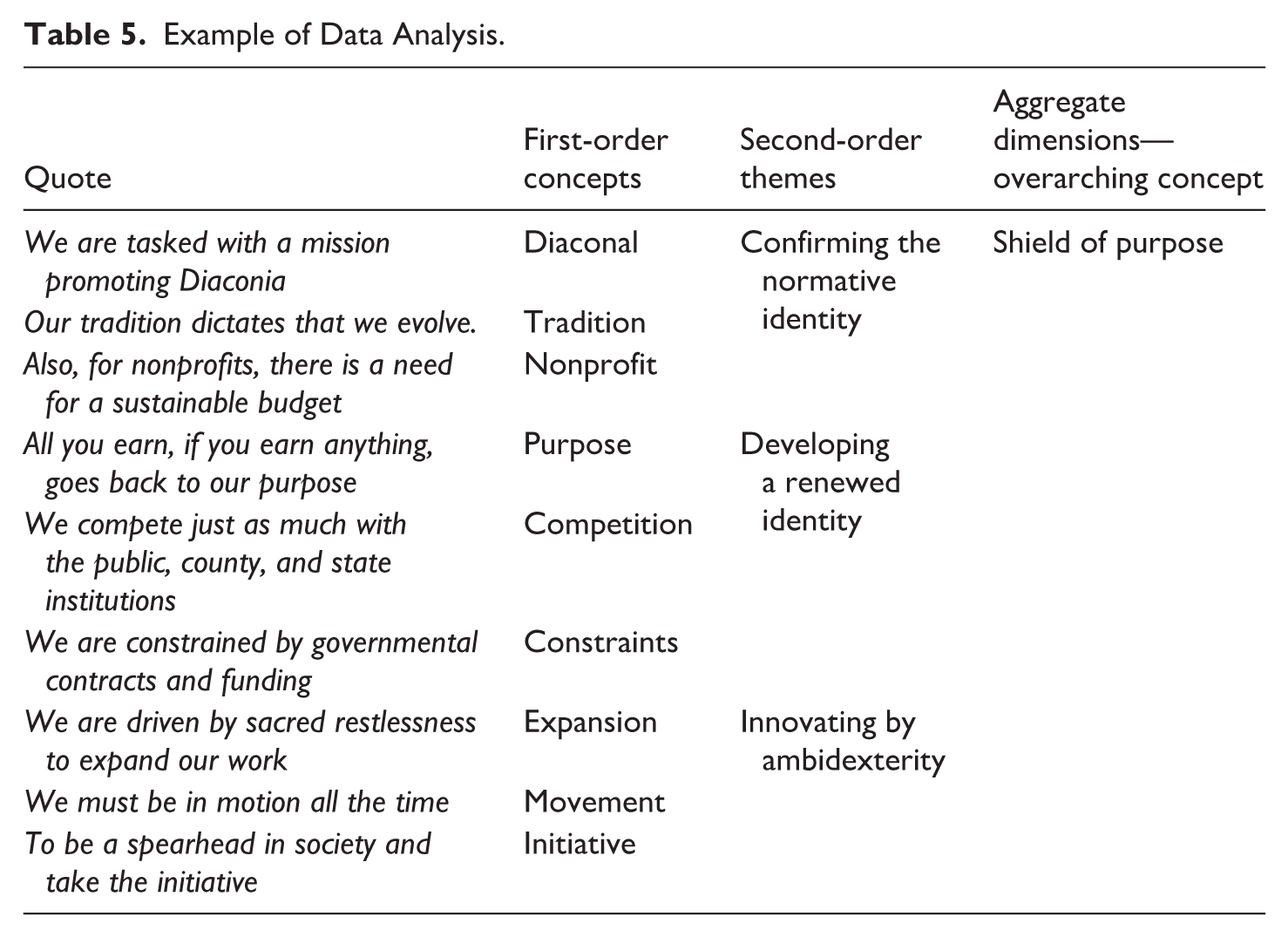
Example of Data Analysis.
Data Sources
We analyzed both policy documents and interview transcripts, offering a multifaceted view of the organization. The documents served as our secondary data source but played an important role in the early stages of the research process. The first author conducted an initial review of the document corpus, developing a broad overview and selecting key documents for further analysis. This included strategic plans, values statements, annual reports, and board documents. 1 The selection and interpretation of these documents were subsequently discussed and refined in collaboration between the authors. The selection consists of a strategic plan for the foundation covering the years from 2023 to 2027. Further, the foundation’s value document was included. An issue of the foundation’s magazine was also incorporated. Finally, board documents and annual reports were included in the study, providing a comprehensive view of the foundation’s strategic endeavors in its day-to-day operations. The documents from 2014 onward were selected because this period marks key strategic shifts within the organization in response to increasing marketization pressure.
While the document analysis provided important contextual insights and guided the development of our interview questions, the interviews served as our primary data source, offering in-depth perspectives on how the organization’s leaders understand and articulate their strategic choices. The inaugural session involved the CEO’s immediate executive team, and the second session engaged leaders from diverse operational units, including hospitals, nursing homes, mental health outpatient facilities, and child welfare services. The final session convened members of the governing board, representing members with affiliations to Christian communities both in their professional capacities and personal engagements. In contrast, the religious affiliations and connections to the concept of Diaconia among the participants in the initial two interviews varied. In total, the interviews lasted 4 hours and 50 minutes, providing 83 pages of transcriptions.
We intended to gain insight into the organizational identity and how it is understood and interpreted, considering the changes the organization has undergone and continues to face. Thus, we developed a semi-structured interview guide with 14 questions about organizational identity, changes in organizational identity, and competition and market orientation, among other topics. Our approach sought to let group dynamics and conversations develop organically, accessing the interviewees’ in-depth reflections about the phenomenon of inquiry. In addition, to deepen our understanding, three semi-interviews were conducted by the lead author: Twice with the CEO of the foundation, once with the matron, and once with the regional executive of child welfare services. Notes were taken and subsequently reviewed with the co-author.
Data Analysis
In our methodology, we were inspired by the so-called “Gioia method” (Gioia et al., 2013). The methodology proposes a multi-level analytic framework. The first-order analysis focuses on the perspectives of the participants, utilizing terms that are directly derived from the informants’ language; the second-order analysis then reinterprets these findings through the lens of the researcher, employing scholarly concepts, themes, and dimensions (Gioia et al., 2013). A third, and often culminating, analytical step involves synthesizing these second-order themes into aggregate dimensions—overarching theoretical constructs. The purpose is to progressively advance the process of abstraction. This structured approach enables a rigorous examination of organizational phenomena, bridging the gap between informant experiences and theoretical insights.
The first step of the analysis was the interview process itself, conducted by the first author. Notes were taken throughout, and subsequently, the interviews were transcribed. Both the first and second authors then engaged in an analysis of the transcriptions, where, in line with Gioia et al. (2013), precedence was given to what the informants themselves expressed rather than confirming our own theoretical stances. In this segment of the analysis, we both meticulously reviewed the transcribed interviews multiple times and engaged in thorough discussions. Subsequently, we collaborated to classify the various categories.
In the initial stages of the analysis, we identified 102 preliminary concepts, reflecting a wide range of expressions and observations from the informants. Through iterative discussions, we condensed these into nine first-order concepts, capturing the core ideas expressed in the empirical material. These concepts were then grouped into three second-order themes that reflected broader patterns of meaning. This analytical process gradually increased the level of abstraction, moving from informant-centered language toward more theoretical interpretations. Finally, these themes were synthesized into a single aggregate dimension—what Gioia et al. (2013) refer to as the highest analytical level of abstraction. In our study, this aggregate dimension is captured by what we term The Shield of Purpose, a theoretical concept that constitutes the main contribution of our study. 2
During the analysis, we were attentive to how the organization described its work, its purpose, and its broader socio-cultural context, and we allowed recurring patterns to shape our concepts and, subsequently, the themes. This included, among other things, how the relationship between market adaptation and purpose was articulated. The focus on legitimation was not a predefined analytical lens when we began the analysis, but rather something that emerged over time as a recurring pattern in how leaders justified organizational changes and framed their development. We worked collaboratively throughout the analysis process, engaging in phone conversations, digital and physical meetings, and email exchanges to discuss and refine our interpretations.
Research Ethics
Ethical concerns were safeguarded by granting the participants anonymity. In addition, they were informed and gave their consent. They openly and freely discussed the issues in the interviews, and we noted no controversial problems. SIKT, the Norwegian Agency for Shared Services in Education and Research, granted permission for the study to be conducted. Reference number: 326709.
Findings
Our analysis illuminates the mechanisms by which marketization is internally legitimized. This phenomenon intimates a form of strategic discursive legitimation. We showcase how the organization’s purpose serves as an overarching legitimation strategy, manifesting in manifold ways, as delineated through the three themes that structure our data presentation. We define these three themes as discursive legitimation strategies deployed to rationalize the embrace of marketization. Thereafter, we delve into how these elements propel our study forward and coalesce into our principal finding—our aggregate dimension, in Gioia et al. (2013) terms, captured by the theoretical concept The Shield of Purpose.
Confirming the Normative Identity
First, it is striking that when exploring marketization, the organization’s leadership pointed to its established normative identity. Consistent with the ethos of most nonprofits, this was to be safeguarded and not compromised. We termed the organization’s approach of legitimizing marketization by emphasizing its foundational values as the strategy of “confirming the normative identity.” This strategy involved reaffirming the organization’s core principles and traditions to maintain continuity amid change. In our analysis, this theme included the first-order concepts of diaconal, tradition, and nonprofit. Within our data, the normative, established identity pertained to history and tradition and to categories such as diaconal and nonprofit that were contrasted and compared to the public and commercial sector. The normative identity, including the purpose, appeared as inextricable, forming the core of the organization’s activity. Interestingly, contemporary marketization was legitimized precisely through the organization’s intrinsic symbolic and historical values, as illustrated by a quote from the Community and Government Relations Manager: We are tasked with a mission. We possess a tremendously important competence, which we can maintain, that we have from former times, where history, identity, and tradition dictate that we evolve. We are not lagging simply to survive as a nonprofit. Our pioneers did an enormous amount. We should not lean back on them; we should demonstrate that Diaconia is as relevant now as it was back then.
Here, the emphasis on tradition and diaconal heritage served to legitimize marketization by framing it as a continuation of the organization’s long-standing mission. The first-order concepts reinforced the theme of confirming the normative identity by illustrating how the organization remained true to its roots even as it engaged with market dynamics. In alignment with this perspective, the interviews collectively indicated that the normative identity, purpose, and history served as driving forces for change and development—consistently demonstrating the enduring relevance of Diaconia even today. This was implicitly tied to the organization’s tendency toward growth and development, essentially integrating business-like approaches to honor normative values and the organization’s historical and symbolic heritage. However, this did not imply that the alignment between values, marketization, and economics is seamless or devoid of contrasts. Rather, it was acknowledged that the organization found itself at a crossroads, having to navigate broadly between two forces: diaconal values and market rationality, which potentially set the stage for a paradoxical relationship. A board member constructed a dichotomy between capitalism on one side and the values of nonprofits on the other: Capitalism is, in its purest form, quite raw and brutal in its pursuit of returns. In a nonprofit enterprise, the focus is on the ethical-moral aspect, yet there exists a need for a sustainable budget. That is, we must consider the financial aspect.
The board member thus underscored that nonprofits must maintain an efficient and healthy financial feasibility—understood as the inability to subsist solely on noble values, symbols, good intentions, and warmth of heart; that being so, financial viability is essential. Intriguingly, in this discussion, the board member drew on his personal experience from the commercial enterprises—where, as he described, raw capitalism predominated—as the driving force behind his decision to engage in board work motivated by a desire to serve values that transcend purely material, capitalist ones.
Turning to the concept diaconal, it appeared that not all leaders or employees identified with the term’s religious connotations. However, there were significant stakeholders from whom top management required support. This included the field of diaconal organizations nationwide, as well as the Evangelical-Lutheran Church of Norway. It was evident that they recognized the importance and historical obligation of maintaining the relevance of the term Diaconia. This manifested in efforts to update its content, and an ongoing process of internal legitimation was evident in the overall strategy and emphasized by the CEO at each board meeting. Reflections on the word Diaconia and its translation into contemporary challenges and needs underscore how present practices are intertwined with the organization’s historical and symbolic significance.
A board member reflected on the relevance of Diaconia in our time: We need Diaconia today. Just look at the newspaper headlines about poverty, crises, and food lines. It doesn’t take long to see the need for Diaconia in an expanded sense. The interpersonal connections, seeing one another, helping where help is needed.
In the following discussion, a board member pointed out that Diaconia was important in a different manner than before. The overarching tendency was to talk explicitly of Diaconia. The CEO also mentioned that he was proud of the word Diaconia and uses it actively when engaging with politicians and other decision-makers.
Further, a focus on the diaconal aspect and the normative identity was consistently evident in the board documents. For instance, the documents highlighted that the foundation annually directs attention to value-oriented activities, requesting that various operational units within the foundation report on their value work; thus, contemporary practices are anchored in the time-old, foundational values of the organization. In addition, the strategic plans outlined in the board documents stipulated that the foundation should “make visible and develop Diaconia,” including through the expansion of service areas and the development of new services. In this way, growth and change were legitimized through their grounding in the normative basis of the foundation.
Developing a Renewed Identity
In the preceding analytical category, the legitimation of marketization was intricately bound to the preservation of the organization’s normative identity. This was not, however, without reservations and nuances. Rather, the organization orchestrated a delicate dance between safeguarding tradition, normative identity, and symbols—such as Diaconia—and embraced a modernized identity. The pressures of heightened competition and constraints, which were first-order concepts identified in our analysis, necessitated a transformation of identity to remain relevant and effective. This dynamic is mirrored in our theoretical contribution, The Shield of Purpose, wherein we illustrate how transformations, namely ways of marketization, are legitimized through purpose, profoundly intertwined with the normative identity, the very lifeblood of nonprofit entities. We term the organization’s strategy of legitimizing marketization by evolving and modernizing its identity as “developing a renewed identity.” This approach entails embracing change and innovation while still honoring core values, allowing the organization to adapt to contemporary challenges without relinquishing its essence.
Accordingly, in this segment of our analysis, we turn to explore how the legitimation of marketization was accomplished through its alignment with a renewed identity, particularly in response to the constraints imposed by heightened competition and economization. We associate this theme with the first-order concepts of purpose, competition, and constraints. In this context, emphasis was placed on the continuous competitive situation faced by the organization, with demands for efficiency and the need to adhere to the same standards that govern public and commercial entities, according to one of the directors: We also compete with the public, county, and state institutions. So, it’s equally important for us to be able to demonstrate that, compared to the public institutions working within the same areas as us, we provide something of more value. That our contribution is something that wouldn’t be provided if it were public. Our hospital runs its operations more cost-effectively than the public sector.
Here, competition acted as a catalyst for change. Facing increased competition from both public and commercial entities, the organization acknowledged the need to differentiate itself and demonstrate added value to stakeholders. This competitive pressure led to an intentional effort to renew its identity, adopting practices and perspectives that aligned with contemporary expectations while staying true to its mission. Similarly, constraints such as financial pressures and demands for efficiency pushed the organization to adapt. By embracing new practices that meet these constraints, the organization renewed its identity to be both mission-driven and economically viable.
Moreover, the emphasis on purpose remained crucial. As a board member noted: “All you earn, if you earn anything, goes back to the purpose.” By anchoring the renewed identity in the core purpose, the organization legitimizes the adoption of marketization practices as necessary steps to fulfill its mission in a competitive environment. In other words, by highlighting its purpose and values base, this organization identified as less commercial. Asking what differentiated it from a commercial entity would be the lack of owner’s surplus, as well as the mission. Having said that, the nonprofit was able to operate in the market, competing with commercial entities, as stated by a board member: “We probably need to be competitive in price with commercial entities in the long run. The diaconal aspect must be an additional value that stakeholders acquire as a bonus.”
The terminology associated with marketization and commercialization was rarely used explicitly. Hence, the interviewees did not need to advocate for their growth strategies. The economic aspects emerged, however, according to a board member: “It should be profitable and efficient. But any efficiency gained simply generates more resources for what we are supposed to be doing.” The CEO excels at that; he constantly reminds us that we are here for our purpose.
Furthermore, the board documents displayed a keen awareness of competition. For example, an annual report noted that the foundation’s primary financial basis was public funding and that securing contracts was particularly crucial, especially within child welfare services. In addition, there was mention of the potential for operational expansion and the importance of maintaining “sustainable finances.”
Innovating by Ambidexterity
The third way marketization was legitimized was through innovation by ambidexterity. This is a theme integrating the first-order concepts of expansion, movement, and initiative. This tied together the diaconal heritage where deaconesses were highly innovative, operating in the absence of public health and care services, and the contemporary demands for relevance for the nonprofit sector. We termed the organization’s strategy of legitimizing marketization through simultaneously exploiting existing competencies while exploring new opportunities as “innovating by ambidexterity.” This approach embodies the organization’s capacity to balance tradition with innovation, navigating the complexities of marketization while remaining steadfast to its core mission.
The CEO of the foundation described innovation using several terms, including “we are driven by sacred restlessness,” which referred to how this foundation has a restlessness in the sense that they do not settle for the status quo in their services but continually seek new solutions. They did not aspire to be the sole provider of such successful services but rather encouraged others, including public and commercial entities, to adopt their innovative approaches, as has been demonstrated in the past with initiatives like the co-residence program within child welfare services. Thus, the sacred restlessness channeled the diaconal purpose into new, innovative solutions, disrupting—for the better—the welfare landscape. This was evident in the statements of two board members: But when it comes to the longer-term picture, we must be quite humble in that we must be able to change. We mustn’t stop growing. We mustn’t stop evolving. Movement vs. monument; we must not become a monument. We must be in motion all the time.
Here, it was evident that growth and change are perceived as imperatives for the nonprofit sector, which is demonstrably engaged in a competitive arena. Being in motion was understood as a necessity for this organization. In this manner, marketization—interpreted as continuous growth and changes was legitimized through innovation as a vital means of survival. This theme was also reflected in the interview with the group executives, where the director of the nursing home stated the following: I believe that when you’re not in the public sector, you have more flexibility to turn around faster. You can dare to challenge, try new things, and test them out. So, we often see that the public sector follows suit when it has been tested out with us.
In this instance, innovation was highlighted as a distinctive feature of the foundation, where the foundation led the way and tested things out, thanks to faster decision-making processes, thus paving the way for improvements in the welfare state. As such, innovation was not only linked to the organization’s survival but also to the role of nonprofits in steering welfare services in the right direction—taking the initial step and thus inspiring both public and commercial entities to follow suit. This sentiment was also echoed in the second interview, where the CEO stated: I’m very much on the innovation track. If we don’t evolve and have this restlessness within us, taking the next step and trying to look a little further ahead, perhaps some of our competitors will do so. So, we must take on that role. To be a spearhead in society in some areas. Innovation and development are extremely important based on the values we have. And those values we must work with all the time. It’s kind of perishable.
You’re not leaning back?
No, we can’t. I think we’ll disappear.
Then we’re gone.
Here, we see that development and expansion—sometimes referred to as a “sacred restlessness”—was legitimized through innovation, which further connected to the organization’s role in a broader interpretation of a societal mission, where they served as a vanguard in the evolution of welfare services.
Innovation as a theme was also prominently featured in the board documents. The 2019 annual report described the year as one of development and growth for the foundation, marked by the expansion of subordinate service areas and the introduction of new enterprises. The year was characterized as challenging, yet the growth and expansion were portrayed as tied to the foundation’s Christian values, deemed essential for future relevance. This growth was also connected to the foundation’s history; it was expressed that the foundation can grow and evolve because its predecessors have previously paved the way with considerable courage. There was an expressed admiration for the work of the deaconesses and a felt responsibility to carry this legacy forward through continuous growth and expansion. Their history suggested that rarely, if ever, had “everything been in place” before decisions were made; rather, choices had been made boldly, often involving significant risk. In this context, we observed a complex interplay between historical values and innovation to legitimize ongoing expansion and growth through innovative ventures.
Importantly, references to the purpose held potency as a means of legitimation; in discussions related to market thinking, growth, and expansion, the discourse aligned with the notion that growth and development helped realize the purpose, albeit through new, modern approaches. Even as the organization shifted toward a more corporate model, there remained a constant awareness that the purpose was the rationale behind their actions. For instance, in an annual report, it was explicitly stated as follows: “We are proud that our buildings and properties serve solely to facilitate the advancement of our purpose, whether it be education, hospitals, care, or child welfare.” Here, the growth and expansion of the foundation were directly linked to the realization of its purpose, which legitimized new initiatives and developments. Importantly, the purpose acted both as an anchor and a legitimation for change; thus, we saw the contours of the purpose as especially vital when it came to sensemaking related to organizational changes aimed at becoming more growth- and competition-oriented and legitimizing such processes. This will be further elaborated in the following section.
Summarizing a Threefold Discursive Legitimation Strategy
Our study shows how Diaconia strategically navigates the landscape of marketization. In summary, it leverages three themes. These themes are intertwined, although they can analytically be distinguished. In all three themes, references to the organization’s purpose are prominent. In confirming the normative identity, the connection is clear, as the normative identity is tied to the organization’s purpose. Moreover, the purpose is also linked to a renewed identity in a competitive context, where agility and change in response to increased competition are portrayed as necessary to fulfill the purpose. In the context of innovation as a legitimation strategy, this is connected to the nonprofit’s mission by portraying nonprofits as disruptors whose “sacred restlessness”—growth and development—not only enhances their own services but also contributes to beneficial changes across the entire welfare landscape. Visualizing the theoretical perspectives (box 1) and our data analysis highlighting three strategies (box 2), we propose the following general model of how nonprofits legitimize marketization.
Discussion
We now explicate the relevance and implications of our findings, framed by the research question: “How do nonprofits internally legitimize marketization?” While the delineation between nonprofit and for-profit entities is often traditionally described as polarized (Maier et al., 2016), this distinction has been increasingly problematized in the literature, which acknowledges the complexities and hybrid realities that emerge when nonprofits adopt market-oriented practices (Corple, 2024; Jensen, 2021; Sanders, 2015; Sirris, 2020; Suykens et al., 2023). Building on this ongoing scholarly conversation on nonprofits adopting market-oriented practices, our study draws renewed attention to a distinct scholarly perspective, namely, the discursive construction of such practices. Moreover, we extend prior research that explores the intersection of nonprofit organizations and marketization through the lens of communication, in which discursive processes are central (Corple, 2024; Sanders, 2015). We foreground how nonprofits actively construct legitimacy through their narratives, metaphors, and rhetorical choices. A key contribution of our study is the introduction of the concept of The Shield of Purpose, which captures how nonprofits discursively legitimate market-oriented practices by anchoring them in their normative mission. This detailed examination uncovers the inner workings of how marketization is not merely adopted but meaningfully integrated through internal processes of legitimation that sustain organizational coherence.
Our case study shows how this development has impacted Diaconia through substantial growth over a period of ten years (Table 1). On this backdrop, we explore how this growth, manifesting in discursive strategies, is legitimized internally. However, marketization and related concepts are seldom mentioned explicitly in our empirical material. Thus, discussions around marketization occur in rather implicit and vague terms, underscoring how marketization is legitimized through alternative conceptual guises, which is not uncommon in legitimation processes (Glozer et al., 2019; Lefsrud et al., 2020). Such linguistic vigilance reflects the discursive perspective that forms the core of our study, rather than material practices, although intrinsically linked to language and rhetoric (Hardy et al., 2000).
Within the rhetorical and linguistic sphere, there is one specific concept that asserts itself prominently: the purpose. The primacy of purpose legitimizes various modes of marketization. The increasingly competitive markets that nonprofits operate in do not inherently signal a departure from their core principles, which would signify a “mission drift” (Ebrahim et al., 2014). Rather, as illustrated by our study, it could prompt a sophisticated discourse of legitimation where values and marketization are interwoven. The purpose serves as an anchor for the organization’s operational endeavors, which are in continual flux and evolution. This triggers a need for legitimation and delegitimation to foster sensemaking and organizational resonance (Vaara et al., 2006)—an answer to who one is and why one acts as one does in the face of an ever-changing organizational existence. This is increasingly marked by the demands of public contractors who act more as customers than mere facilitators of welfare services, and by the pressures from competitors (Sivesind & Saglie, 2017, p. 34). The primacy of the term purpose is not accidental but is found in the Norwegian Law for Foundations. Paragraph 2 centers the purpose as it states that a “foundation refers to an asset value that, through a will, gift, or other legal disposition, is independently made available for a specific purpose of an ideal, humanitarian, cultural, social, educational, economic, or other nature” (Stiftelsesloven, 2001).
In the case of Diaconia, its purpose serves as The Shield of Purpose, a profound legitimizing strategy demonstrating remarkable versatility. We define The Shield of Purpose as a discursive resource that nonprofits use strategically to legitimize the adoption of market-oriented practices by (a) anchoring commercialization as a means to realizing their purpose and (b) aligning it with the values base of such organizations. This multifaceted approach allows various aspects of marketization to be ostensibly justified, as each is portrayed as a mechanism for fulfilling the diaconal purpose. The Shield of Purpose not only provides a formidable defense against criticisms of misalignment with foundational values but also intricately interlaces various strands of market logic, seamlessly integrating them into the very fabric of the organization’s core identity. In doing so, it effectively reconciles a myriad of business practices of marketization with the overarching mission, ensuring that each step taken is perceived as a stride toward fulfilling the organization’s purpose.
Moreover, every metaphor has its limitations. In this case, using the imagery of a shield connotes an external attack. This can be at odds with our study, which concerns internal constructions of legitimacy. Second, it has a nefarious connotation since one might perceive it to be a rhetorical strategy that seeks to guard or hide something internal, which is not our intention to convey. Having addressed these shortcomings, we point to a main insight from our study, which is the intricate interplay between purpose and market forces, which highlights a complex dynamic in which the organization’s diaconal mission serves both as a guiding principle and a legitimation for its adaptation within a market-oriented environment.
An important clarification is needed. Our case demonstrates a nonprofit organization navigating marketization in a way that reflects agency and strategic adaptation—showing that such changes can be leveraged to the organization’s advantage, even if not without controversy. However, this should not be interpreted as if nonprofits are free to choose whether to engage with market logics. Quite the opposite: nonprofits do not operate in a cultural vacuum. They are embedded in welfare regimes increasingly shaped by market logics, and thus marketization is an institutional reality that they must confront and interpret. For instance, Jensen’s (2021) study of two nonprofit shelters in the United States demonstrates that while one interprets a social welfare logic through a neoliberal lens, and the other rejects such ideology in favor of a more anarchist ideal, both are nevertheless shaped by the growing dominance of neoliberal ideas.
In our case, market logics are integrated into the organization’s practices and discourses, with The Shield of Purpose serving as a key legitimation strategy. By anchoring market adaptations in the normative mission, the organization discursively integrates mission and market. This can be understood as a form of hybridity. However, hybridity and mission drift represent two closely related but distinct outcomes of legitimacy processes. In the literature, hybridity is often treated as a descriptive category rather than a positive evaluation, whereas mission drift refers to situations where the legitimation process fails—where hybridity undermines, rather than supports, the organization’s core purpose.
Importantly, the distinction between hybridity and mission drift does not concern whether nonprofits are affected by marketization—they inevitably are. Rather, the distinction concerns how successfully they legitimate these adaptations in ways that sustain organizational coherence. This is where our study contributes to the literature on marketization and legitimation. As the legitimacy literature highlights, sustaining congruence between organizational actions and the socio-cultural context is crucial for maintaining legitimacy (Suchman, 1995). Our study bridges the literature on marketization and legitimation by showing how The Shield of Purpose facilitates this congruence, enabling nonprofits to engage in market-oriented practices, thus bolstering congruence with the contemporary influx of marketization without losing sight of their foundational values. Furthermore, in alignment with Suddaby et al. (2017) framework, legitimacy is not a static attribute but a dynamic construct, which is continuously and actively negotiated in a process in which legitimacy grows and declines. In our material, The Shield of Purpose plays a pivotal role in this ongoing negotiation by serving as both a defensive and proactive mechanism that nonprofits use to maintain their legitimacy amid shifting market dynamics. The Shield of Purpose exemplifies legitimacy-as-process by shaping the perception that the adoption of market-oriented strategies is a necessary and mission-aligned adaptation. In doing so, it frames hybridization not as mission drift, but as a legitimate and coherent organizational outcome.
Organizational life unfolds not in black and white, but in shades of nuance and contradiction, where binaries dissolve, and complexity reigns. The Shield of Purpose invites scholars and nonprofit practitioners into a lens that not only anticipates but also celebrates this nuance. Our study demonstrates how nonprofits, through the discursive strategies encapsulated in The Shield of Purpose, reframe marketization not as a sign of mission drift, but as a facet of hybridity. However, hybridity—when meaningfully legitimized as aligned with the organization’s mission—is not a static state, but rather a fluid and continuously evolving aspect of organizational life. Like other facets of organizational reality, it remains subject to ongoing negotiation and external pressures. Put differently, the risk of mission drift persists if legitimacy is not continuously constructed in a way that sustains coherence between market adaptations and the normative mission. The Shield of Purpose is a theoretical concept we propose to capture this dynamic process. It is grounded in our empirical observations of how leaders discursively navigate tensions between market adaptations and normative commitments, and it serves as an analytical lens for understanding how legitimacy processes sustain organizational coherence within the shifting dynamics of a marketized welfare context.
Limitations
Our focus on internal legitimacy meant that interviews and documents largely reflected intra-organizational management, while external stakeholder perspectives lay outside our scope. The foundation’s own narrative of marketization, therefore, dominated the analysis. Concentrating on strategy and leadership was nonetheless fruitful, offering insight into leadership dynamics, shared assumptions, and the reciprocal shaping of strategy and internal rhetoric. The three group interviews with top management took place in a setting largely free of explicit debate on marketization, implying implicit acceptance and adaptation rather than open confrontation.
Conclusion
Our study shows how nonprofit welfare organizations construct and legitimize engagements with marketization. We highlight the tension between nonprofits’ normative values and market imperatives, challenging the common polarization between identity and strategy. Central to this is the concept of The Shield of Purpose, which frames nonprofit strategy as a fusion of normative commitments and market pragmatism. This dual function safeguards core values while enabling market strategies to serve the mission. In doing so, we contribute a critical perspective that invites both scholars and practitioners to reconsider market engagement as a harmonization of purpose and pragmatism. For scholars, the study offers new insights into the interplay between normative identity and market logic; for practitioners, it points to ways in which moral and monetary values can cohere in organizational narratives. Future research should extend our discursive approach by examining power dynamics in legitimizing strategies, as well as exploring other countries and contexts to refine and compare these conceptual insights (Figure 1).
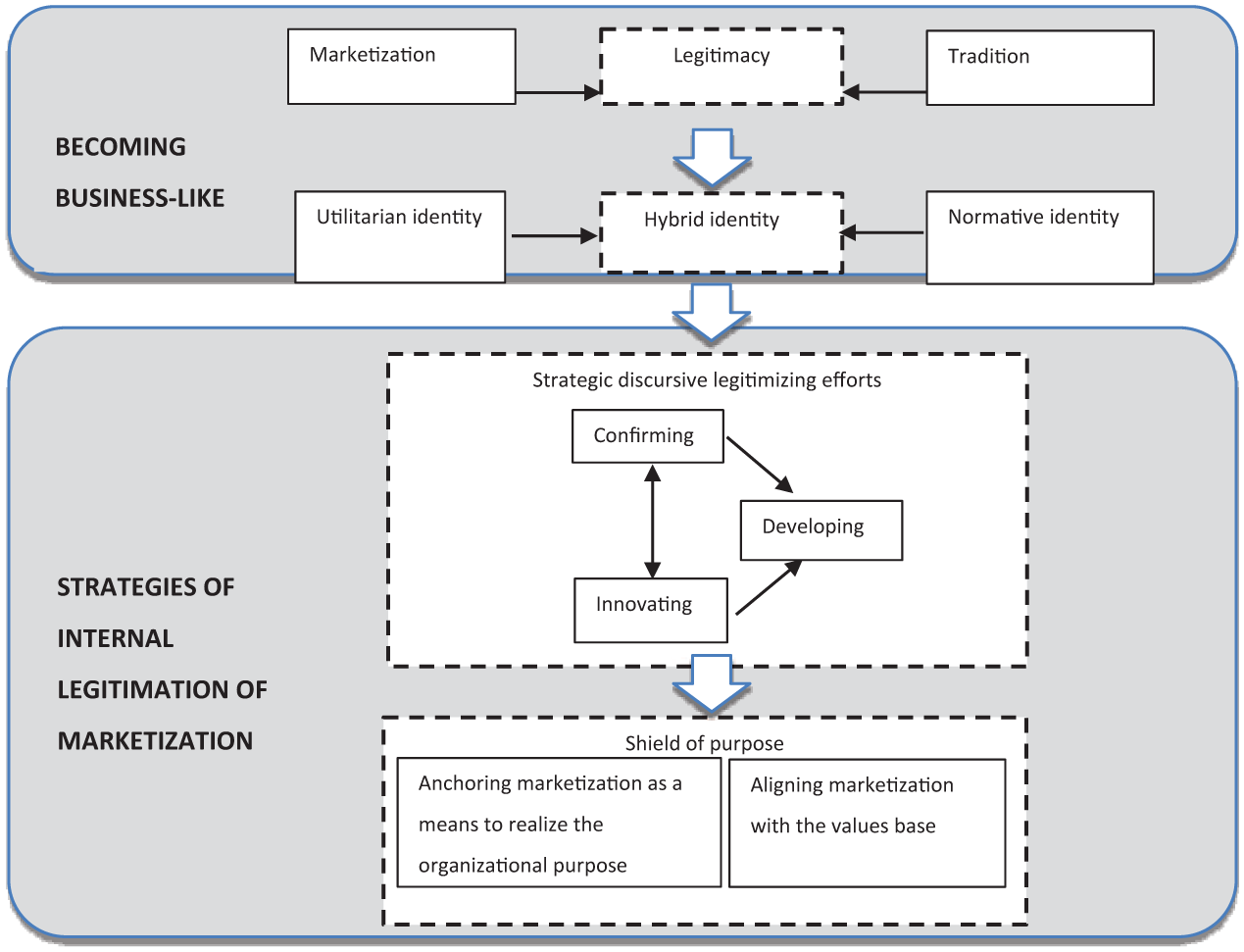
A Model of Shield of Purpose—Legitimizing Marketization in Nonprofit Organizations.
Footnotes

Funding
The authors received no financial support for the research, authorship, and/or publication of this article.
Declaration of Conflicting Interests
The authors declared no potential conflicts of interest with respect to the research, authorship, and/or publication of this article.
Data Availability Statement
The data are not publicly available due to ethical, legal, or other concerns. Reference number to the Norwegian Agency for Shared Services in Education and Research: 326709.