




Abstract
The nature of foundation work is underexplored with little attention to the internal dynamics of foundations. Focus has been on the organizational level describing foundations’ societal roles, but understanding the individual experiences of those working within foundations would remove much of the mystery of these institutions. This article focuses on the experiences of the individual foundation professional, by exploring the entry-to-exit of UK family foundation CEOs. This study demonstrates inherent tensions between amateur and emerging professional influences in foundation roles. In asking about the changing nature of foundation work, this article highlights three underexplored elements: competing expertise, inconsistent field formalization, and a professionalizing context. Understanding these elements are crucial for implementing effective and equitable field-level initiatives. Focusing on foundation professional experiences challenges the “black box” narrative by providing a greater understanding of foundation work and its evolution.
Philanthropic foundations have historically suffered from critiques as opaque “black boxes,” unable to explain their structures and practices (Diaz, 1999, p. 141). Several scholars have commented on this opacity—problematizing the private nature of these institutions, such as democratic unaccountability (Arnove, 1980; Dowie, 2001; Reich, 2018; Roelofs, 2007) and questioning their stakeholders, purporting to act in the name of the public good (Kohl-Arenas, 2016; McGoey, 2015; Tompkins-Stange, 2016). One challenge is that very little attention has been given to the “internal dynamics” of foundations, such as decision-making processes (Diaz, 2001, p. 215). Instead, there has been a preference to focus on the organizational level, which describes foundations’ societal roles (Bethmann, 2019). An early study of foundation administrators pointed out this gap and suggested that “knowledge about the managers of an enterprise is key to understanding the enterprise itself” (Zurcher & Dustan, 1972, p. 1). They believed that focusing on the individuals working inside foundations would help remove the “mystery or ignorance” surrounding the organization (Zurcher & Dustan, 1972, p. 1). The lack of research into foundations' internal workings perpetuates the perception of them as black boxes. Field-level complexity is explained by foundation individualism: if you've seen one foundation, you've seen one foundation. This gap hinders a deeper understanding of how foundation work has evolved.
In foundation research, the experiences of foundation professionals are often overlooked. This oversight is unfortunate, as their experiences can provide valuable insights into the nature and evolution of foundation work. Foundation work can be thought of as the structures, processes, and norms of employment within a philanthropic foundation and its field. This article asks: what are the changing aspects of UK family foundation work? The literature demonstrates a duality of informality and competency codification in the history and structure of foundation work. Most literature on the topic reflects a U.S. context; there is emerging U.K. literature demonstrating a similar situation. The study of professions shows how the relationship between amateur and professional is also present in adjacent fields, such as fundraising, nonprofits, social enterprise, and corporate social responsibility (CSR), providing evidence of the complexity in understanding these roles.While the literature provides important insights into the changing nature of these roles, there is limited reflection from individual perspectives. This article explores how UK family foundation professionals’ experiences of their roles reflect the changing nature of work in the foundation sector. The qualitative empirical evidence, obtained through 31 semi-structured interviews with U.K. family foundation CEOs, demonstrates perspectives on entry and appointments, expectations and stakeholders, and evolution and succession. The themes of amateur traditions and emerging professional influences across foundation professional experiences contribute to competing expertise, inconsistent formalization, and professionalizing context in foundation work. By examining the foundation professional experience in detail, the article raises awareness about foundation work, which can have implications for field-level change-making initiatives, such as promoting diversity, equality, and inclusion.
Literature Review
This section emphasizes the connection between the historical informality of foundation work and the increasing codification of competencies in the United States and the United Kingdom. It then extends this relationship to a broader perspective on the evolving nature of roles in related fields, such as fundraising, nonprofits, social enterprise, and corporate social responsibility. The study of professions offers a framework for understanding the complexity of emerging roles, which navigate between amateur traditions and professional influences, providing insights into the key aspects of foundation professionals and how their roles have changed over time.
Historical, Structural Conditions of Foundation Work in the United States and the United Kingdom
Changes in foundation work are reflected by the dynamic relationship between the informal nature of the role in the past and the current codification of competencies. The emergence of foundation professionals with specific competencies has contributed to the shift of foundation work from amateur traditions to emerging professional influences. Although most literature focuses on the U.S. context, the development of foundation work is also evident within emerging literature from the United Kingdom.
Informality
The informality within the philanthropic field can be traced back to its historical roots in amateur traditions, which included a limited number of roles, minimal training, and a lack of formal policies. Before World War II, many private foundations operated with very few or no paid staff, often relying on the donor or legal advisors to manage philanthropic activities (James, 1973). In 1972, only 1.5% of all U.S. private foundations had staff, highlighting the scarcity of professional roles within the sector. One reason behind this staffing scarcity was the composition of foundations, with the majority being established with family wealth (Zurcher & Dustan, 1972). Family members often controlled charitable activities in these cases, necessitating only a legal or accounting-based administrator for assistance. Even as foundations’ assets grew, hiring staff was likened to “buying milk rather than keeping a cow,” favoring consultants over generalist staff to maintain control and due to the availablity of people (Andrews, 1956, p. 131). A cost-benefit approach also guided staffing decisions, emphasizing low overheads as a measure of efficiency (Freeman, 1981).
In the United Kingdom, the history of foundation professionals is less documented. Military men often filled foundation roles, primarily in administrative capacities, which were viewed as passive and reactive positions (Whitaker, 1974). Unlike in the United States, where foundation officers often had academic backgrounds, U.K. trustees themselves were often experts, eliminating the need for additional expertise among administrators:
If one compares the Rockefeller philanthropies with those of Wellcome and Nuffield in Britain, all of which have taken a particular interest in aspects of science and medicine, in the American case, the foundation officers are more likely to have had academic backgrounds and to possess expert knowledge or the necessary connections to expertise, while the trustees were layman and laywomen, whereas in the British case, the trustees included a number of practicing scientists who were able to make expert judgements themselves on applications being considered (Bulmer, 1995, p. 286).
The appointment of military men into foundation roles comprised administrative duties. It was a role accepted at the end of one’s career or a semi-retirement role. Military men were hired for their reliability, trustworthiness, and ability to enact trustee directions.
By the 1990s, most foundations still did not employ staff, with only 5% hiring any personnel (Freeman, 1991). Only three in 100,000 Americans had the opportunity to work within private foundations (Ylvisaker, 1999). There was also a low level of turnover reported, with administrators working continuously within the same foundation for many years (von Lossberg, 1990). Recent estimations show a median of five full-time staff across U.S. foundation types. This figure increases to 79 full-time staff for foundations with more financial assets, those with over USD 2 billion (Council on Foundations, 2021). Within a European context, family or private foundations reported an average staffing size of six employees (Rockefeller Philanthropy Advisors, 2016). However, the lack of reliable data on the total number of staff working at grantmaking foundations remains challenging (Carpenter, 2017).
The lack of formal training in the field was seen as preserving the sector’s career-path diversity (Zurcher & Dustan, 1972). Some feared that formal training could standardize practices, limiting creativity (Horn & Gardner, 2006). One administrator cautioned, “let us not turn into morticians with annual meetings and trade associations” (Zurcher & Dustan, 1972, p. 70). This sentiment was partly driven by the fact that many staff members were not necessarily seeking long-term careers in philanthropy. The practice of staff rotating in and out of their roles created opportunities for fresh ideas and innovation, and formal training was perceived as potentially limiting this creativity (Horn & Gardner, 2006; Zurcher & Dustan, 1972). Even by the 1990s, formal training in the skills, techniques, or proper behaviors required for these roles was not mandatory (Freeman, 1991).
Although foundations promoted equality in their missions, this was not always reflected internally. The literature points to rudimentary policies, with “virtually no evidence” of clear thinking on staff size, recruitment, training, or responsibilities (Zurcher & Dustan, 1972, p. 32). Job descriptions were often vague or unwritten, leaving roles undefined (von Lossberg, 1990). One foundation staff member described entering foundation work was like a “parachute jump” (Weaver, 1965, p. 67), while another felt “thrown into the deep end” and being told, “come in, you’ve got to give away ten million dollars” with minimal guidance (Horn & Gardner, 2006, p. 91).
Over half of foundation professionals were recruited without formal job searches, often entering the field “idiosyncratically” through personal connections or by chance (Odendahl et al., 1985, p. 77). The apprenticeship model was favored over formal training (Zurcher & Dustan, 1972), with each appointment handled on a case-by-case basis. This lack of formal training and policies contributed to the feminization of foundation roles, leading to “cheaper hiring” of women compared to men (Odendahl et al., 1985, p. 5). This resulted in lower wages and fewer advancement opportunities for women, perpetuating wage gaps (Branch et al., 2010; Burbridge et al., 2002; Odendahl et al., 1985). Recent data show that women earn 85% of their male counterparts, with median salaries for women at $201,382 versus male counterparts at $236,080 (Council on Foundations, 2023).
The lack of specific training in foundation work has significantly impacted how the field has developed. A generalist disposition and lack of training were seen as a benefit of ensuring foundation work’s plurality and individuality. The view presumed that people would leave the field and return to their previous occupations (Horn & Gardner, 2006; James, 1973; Zurcher & Dustan, 1972). While the lack of formality encouraged apprenticeship and removed some barriers to entry, it also led to slow advancement for minority groups. The lack of specific training characterizes the amateur tradition of foundation work, perpetuating confusion and uncertainty about what it takes to be a grantmaker (Rockefeller Philanthropy Advisors, 2016).
Competency Codification
Contrasting the field’s informality, emerging professional influences are evident as foundation staff are recruited from various fields, with “no one field of professional training” predominating (Freeman, 1991, p. 97). Instead, foundation professionals were drawn from various fields, and boards of trustees often hired candidates holding multiple jobs before entering their foundation roles (Branch et al., 2010; Odendahl et al., 1985; Zurcher & Dustan, 1972). Representing “congeries of professions,” candidates come to foundation work from various industries, including business, education, law, nonprofit management, and other fields (Smith, 2007, p. 7). This diversity perpetuated the lack of specific training in the field, with foundation roles influenced by norms from these professions.
H. Thomas James (1973), former head of the Spencer Foundation, emphasized that previous professional experiences, like his academic career, influenced foundation work but did not form a separate profession within philanthropy. He further expressed that a “profession, by other nature, can be useful in this area, but not a profession in the private foundation” (James, 1973, p. 196). A similar view suggested philanthropy should not be a career track but a temporary application of one’s skills, “a person should not come to philanthropy too early in their careers . . . and should not stay that long” (Horn & Gardner, 2006, p. 81). Coming from other careers and then returning to those careers promoted the idea that philanthropy was a canvas for applying ideas and approaches rather than having its own body of knowledge or content.
The codification of foundation work is a relatively recent phenomenon. One of the first foundation staff manuals, created in 1972, was in response to requests for clarification on the duties of foundation staff. The result was a 250-page, 11-chapter manual for staff that covered multiple aspects of foundation operations, such as grantmaking, budgeting, portfolio management, and human resources (Frumkin, 1999). In the 1980s, the Council on Foundations expanded these efforts, publishing comprehensive manuals for private foundations (Freeman, 1981, 1991; Freeman et al., 2005).
By the 1990s, tensions arose between staff and trustees as the number of career professionals grew. One mid-1990s U.K.-based study by Leat (1995, 1999) revealed emerging tensions created by the shifts between foundation staff and trustees. As the study reported, staff felt that their trustees perceived them as paper pushers and postal workers rather than valuing them for their foundation expertise. They complained of trustees’ lack of voluntary sector experience. These complaints were likely early indications of a shift in perspectives of their expertise—away from the administrative military men and toward charitable sector experts. Moreover, trustees skeptical of this emerging expertise downplayed the shift, asking whether “a profession of spending” existed (Leat, 1995, p. 325). This tension increased as trustees recruited external advisors rather than staff to assist with grantmaking decisions (Leat, 1995).
The “Competencies for CEOs in Private Foundations” report was the first attempt to codify the role of foundation CEOs in the United States, highlighting the previously vague expectations for these positions (Council on Foundations, 2006). These “lofty” expectations included expertise in the nonprofit sector, strategy creation, social issues, evaluation, and decision-making (Council on Foundations, 2006, p. 1). The National Center on Family Philanthropy (NCFP) later noted a lack of baseline data on family foundation CEOs, emphasizing the need for further study (Esposito, 2012). Subsequent surveys called CEOs “artful jugglers” due to the broad skillset required (Twersky, 2014, p. 5). These reports marked a growing interest in defining CEO competencies, setting a precedent for similar efforts with program officers (Buteau et al., 2017; Johnson Center, 2020; PEAK, 2017; Sturgis, 2008).
Both the United Kingdom and the United States share informal hiring practices for administrative roles. Although prior professional experience was valued, appointments were mainly made through personal networks and not necessarily in philanthropy. The push toward professional competencies offered to clarify and legitimize roles and expectations within the field, reflecting a broader trend from informality to formalized standards (Carpenter, 2017; Odendahl et al., 1985). Professional associations catalyzed the development of competency codification. The development marks the field’s interest in specifying and codifying the roles and skills required for foundation staff, thereby shaping and influencing the formulation of these roles. Despite jurisdictional differences, the trend from informality to competency codification is similar.
The Study of Professions in Adjacent Fields
The study of professions literature has a long and wide-ranging history across multiple disciplines and occupational fields (Suddaby & Muzio, 2015). It has conceptualized terms such as professional, profession, professionalization, and professionalism. There is also an emerging picture of the development of the foundation professional through the study of professions lens, moving the role from philanthropoid, operational administrator, and organizational manager to foundation professional (Fugiel Gartner et al., 2023). This section briefly examines the application of studying professions through trait, power, and institution perspectives (Table 1) to understand roles within fundraising, nonprofits, social enterprise, and CSR and demonstrate similar tensions to foundation professional role development. The trait perspective examines individual and group elements like skills, education, ethics, and professional culture. The power perspective emphasizes relationships between individuals and groups, including clients, peers, and the state. The institution perspective considers the roles of individuals and groups within organizations, focusing on professionalization, institutionalization, and organizational context.
Study of Professions in Adjacent Fields.
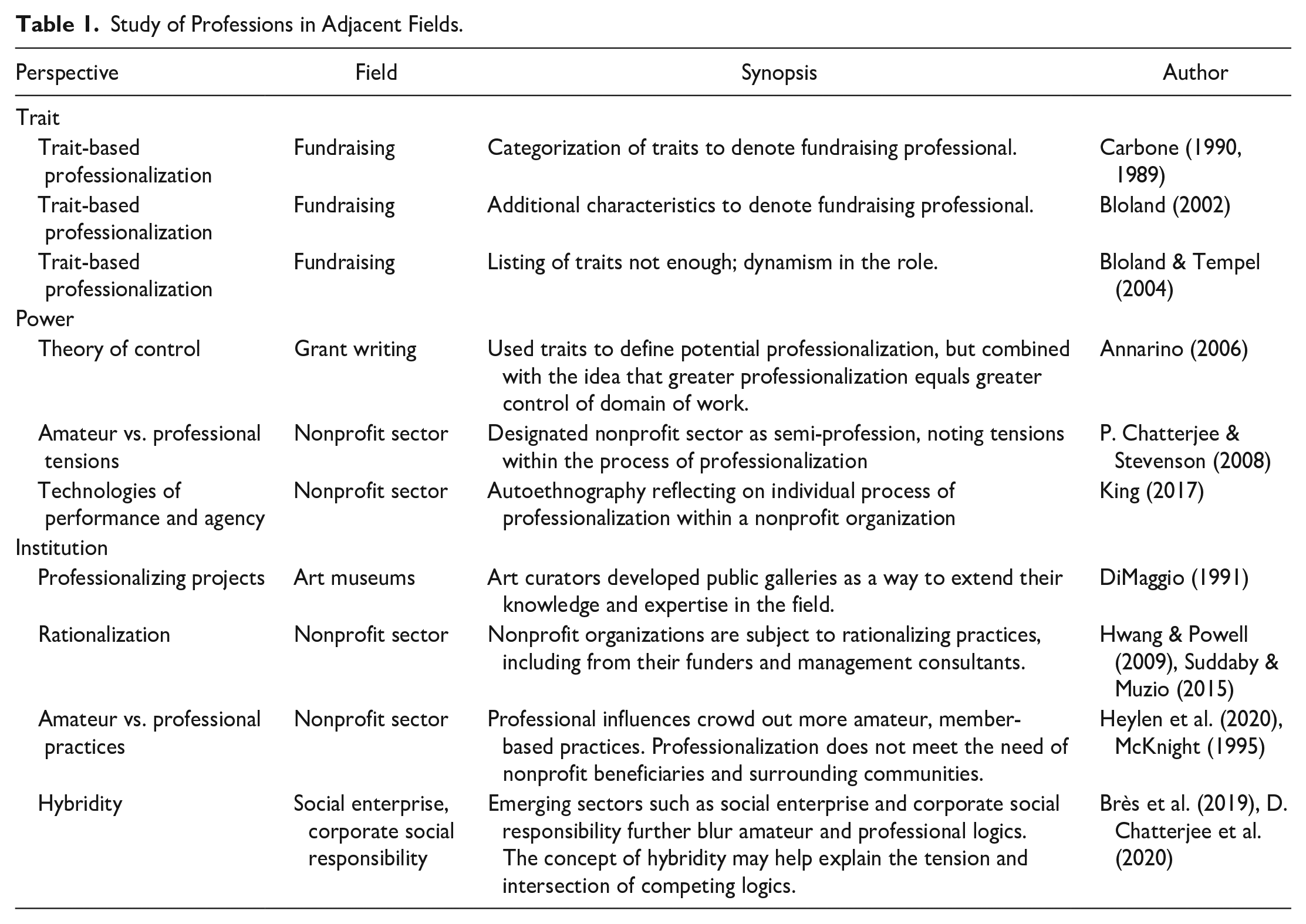
Early research on fundraisers focused on identifying traits to understand their professionalization status. Carbone (1989, 1990) surveyed nearly 800 fundraisers, developing six characteristics to measure professionalization: autonomy in decision-making, systematic knowledge and skills, self-regulation and collegial standards, commitment to the profession, altruism, and a code of ethics. This framework positioned fundraising as an emerging profession moving along a continuum toward full professionalization.
As fundraising roles evolved, the initial traits-based approach proved inadequate. Bloland (2002) suggested incorporating additional traits, such as organizational placement, expertise in standardized methods, and business ideologies, to better reflect the changing economic and sociological landscape. This highlighted the complexities of professionalization that a simple checklist could not capture. Recognizing these limitations, Bloland and Tempel (2004) redefined professionalization as a dynamic, ongoing process rather than a linear continuum, suggesting that full professionalization is an ideal rather than an attainable state.
Despite this shift, the trait-based perspective persisted in research. Annarino (2006) examined the grant profession by combining traits with the theory of control, which views professional power as a progression through specific phases toward full professionalization. Her focus groups placed grant professionals as an emerging profession, demonstrating how professional power could be conceptualized and studied within the nonprofit sector. The nonprofit sector, often perceived as amateur, showed signs of emerging professionalization in roles like fundraisers and grant writers, reflecting the sector’s semi-professional nature (P. Chatterjee & Stevenson, 2008). These roles could then be individually explored through funding and evaluation experiences, which were increasingly impacted by business norms (King, 2017).
Adopting rationalized practices such as strategic planning, financial audits, and evaluation drove this professionalization. Hwang and Powell (2009) found that these practices moved nonprofits from amateur to professional orientations, emphasizing the transformative impact of professional practices. These practices offered some improvement to organizational operations, and some could construe this improvement as progress. However, the practices also came at a cost to nonprofits’ attention on direct service provision. King (2017, p. 241) reflected how he became more business-minded in his nonprofit role through “technologies of performance,” such as evaluation and monitoring, and “technologies of agency,” through sector socialization.
The tension between amateurism and professionalization is evident in various nonprofit roles. For instance, professional curators played a crucial role in developing public art museums, transferring art from wealthy estates to public galleries and integrating their expertise into the philanthropic discourse (DiMaggio, 1991). Displacing civil society practices is a caution long raised in community research and challenges notions that the end state of professionalization is widely beneficial (McKnight, 1995). Subsequently, Heylen et al. (2020) found that professional influences crowd out more amateur, member-based practices in civil society organizations. In the study by Hwang and Powell (2009), nonprofit organizations receiving grants from private philanthropic foundations increased their organizational rationalization. In this example, they demonstrated the power of isomorphic forces to spread rationalized norms and practices between organizations. More recently, the norms and practices of professional management consultants hired by nonprofits were described as altering the core procedures of charities in the United States (Suddaby & Muzio, 2015).
Emerging social sector roles, such as CSR and social enterprise, further complicate the understanding of professionalization. These roles are characterized by hybridity, blending corporate and nonprofit logic, making traditional trait-based approaches insufficient (Brès et al., 2019; D. Chatterjee et al., 2020). CSR professionals often come from various departments within their institutions, lacking defined career pathways, while social enterprises operate at the intersection of social and market-oriented logics. This complexity requires new frameworks to understand professionalization in these evolving fields. The study of emerging roles, such as foundation professionals, and the impact of multiple logics underscore the need for a nuanced understanding of these nonprofit and philanthropic roles.
Method
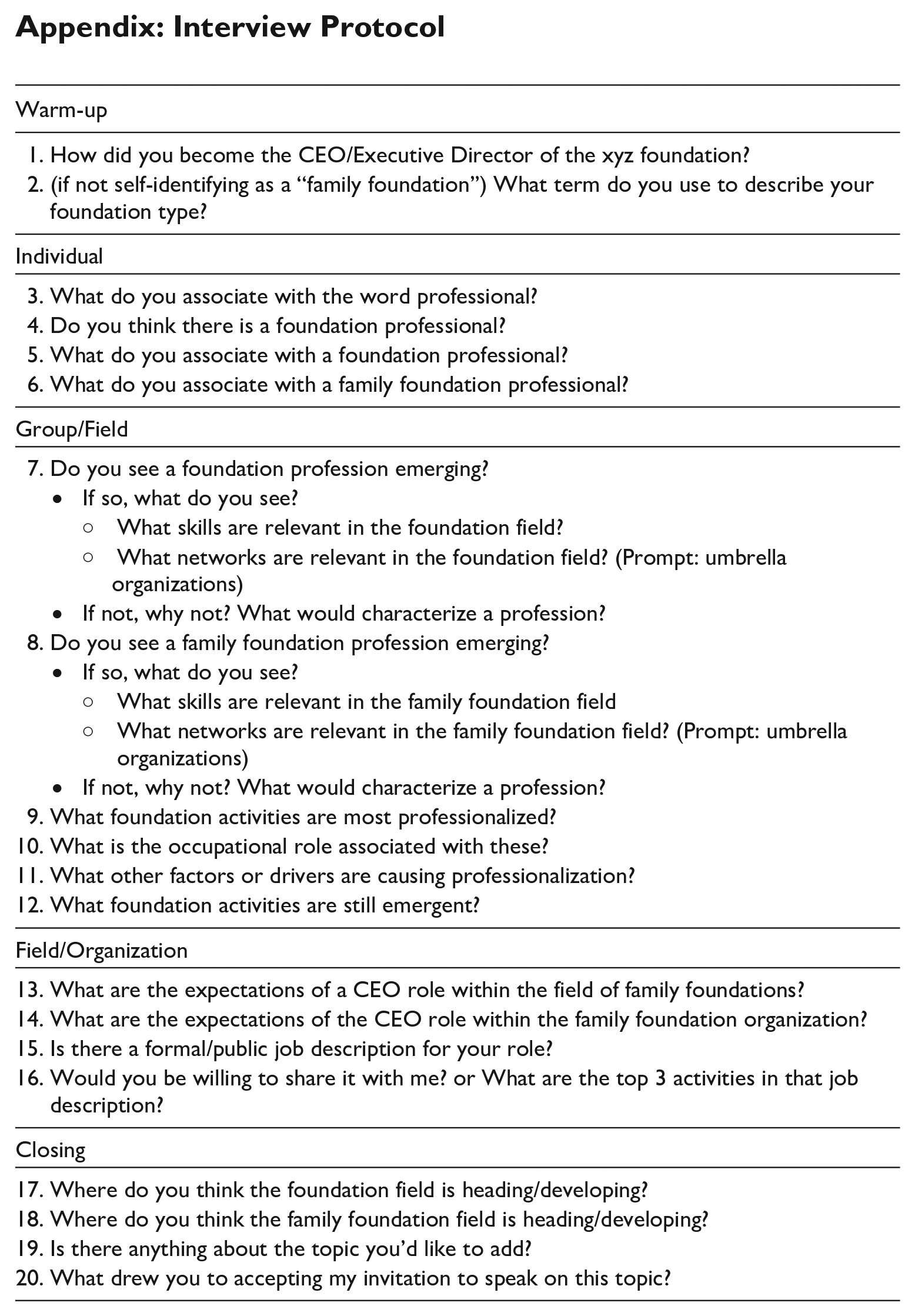
This article focuses on the changing nature of foundation work. It draws upon interviews with the CEO of U.K. family foundations (Appendix). These interviews were conducted in 2018, exploring the experiences and roles of CEOs within U.K. family foundations. The Association of Charitable Foundations’ (ACF) 2015 Family Foundation Giving Trends (FFGT) report was used to construct the sample pool of participants (Pharoah et al., 2015). Each research participant represented a senior-level role, generally termed Chief Executive Officer. Participation criteria included full- or part-time staff who were paid employees whose work was concerned with the family foundation’s administrative, programmatic, or strategic work. Inclusion focused on having the experience of being a foundation staff. Of the 150 family foundations, 74 qualified for the research as they had an employee fitting these criteria.
As part of a qualitative exploratory research design, 31 participants (16 women and 15 men) were interviewed using a semi-structured format. The majority of participants held the title of Director (16 participants), followed by Chief Executive Officer (10), with smaller numbers holding the titles of Secretary (2), Manager (1), Advisor (1), and Executive (1). Most participants had been serving as CEO for 5–10 years at the time of the interview, followed by those who have served for 0–5 years. A smaller number of participants have served for 20–25 years or 30–35 years, with only one participant in each of these categories. There were no participants with service durations of 15–20 years or 25–30 years. The average duration of CEOs was approximately 9 years. Other descriptive characteristics are removed for confidentiality purposes; participants’ quotations are denoted by participant numbers.
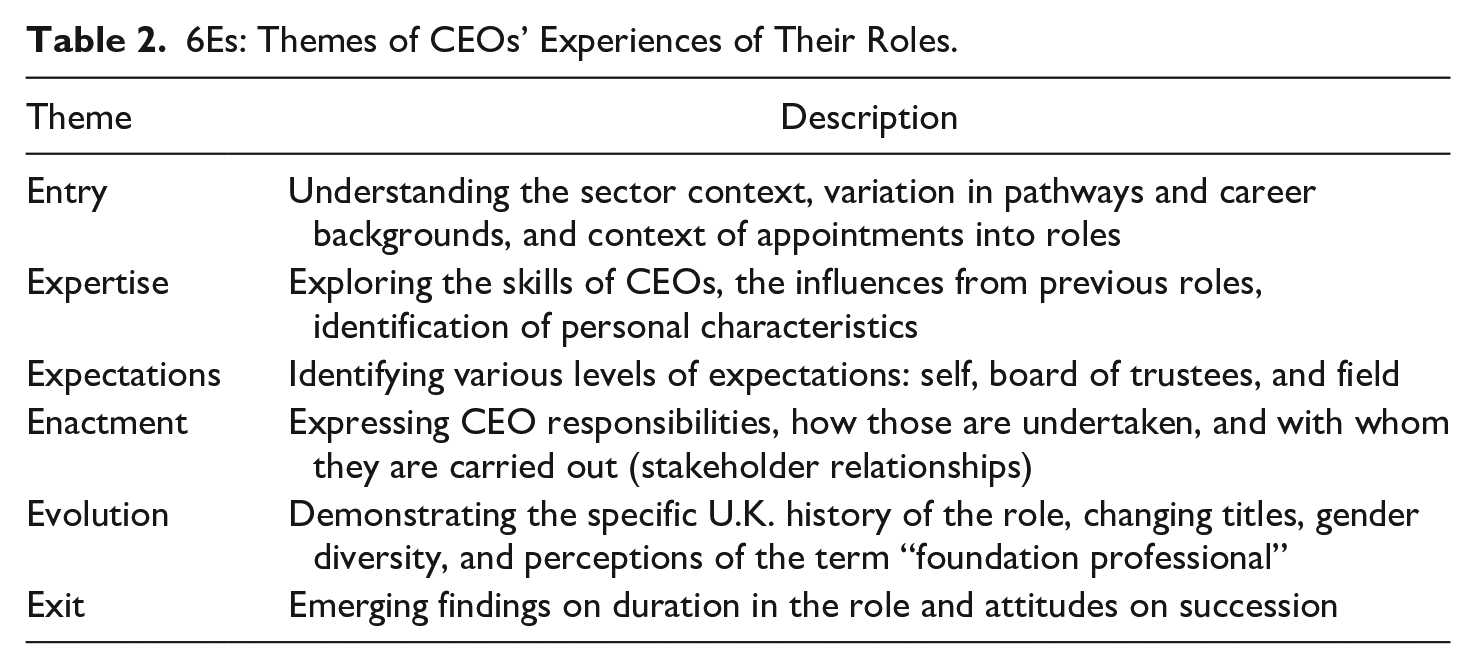
Semi-structured interviews are beneficial in fields that are still developing, such as foundation professionals, as they provide rich and experiential information (Edmondson & McManus, 2007). Through this approach, participants could share their experiences and subjective points of view (Rubin & Rubin, 2012). The interview data were analyzed thematically using first- and second-order processes, which allowed for an inductive approach centered on the participant’s voice, combined with an aggregate theoretical analysis (Gioia et al., 2013). The analysis highlighted six key themes related to CEO experience in their roles: entry, expertise, expectations, enactment, evolution, and exit. This article draws together findings from across these six themes that most clearly demonstrate the changing nature of foundation work, through the foundation professional experience (Table 2). The themes of entry and expertise, expectations and enactment, and evolution and exit are synthesized to demonstrate the key aspects of U.K. family foundation work.
6Es: Themes of CEOs’ Experiences of Their Roles.
Findings: The Foundation Professional Experience
The term “foundation professional” has evolved over time and is now commonly used to describe those who work in foundations and within the industry. This evolution provides valuable insight into how these roles have transformed over time and what responsibilities and expectations are associated with them. Comprehensive data on the U.K. family foundation landscape is lacking, making it challenging to assess the sector’s size accurately. In the United Kingdom, foundation work is constrained by a relatively small sector size and a limited number of available roles, which can pose challenges for those seeking employment in the field. When asked about foundation professionals in the United Kingdom, one participant shared that unlike other professions, such as dentistry, where roles are abundant, the actual number of staff roles within family foundations is unknown: “If you had a group photograph, how many do you think would be in it” (#15)? This context underscores the unique challenges of understanding foundation work, particularly in the United Kingdom. This section will illuminate three experiences from CEO interviews, shedding light on foundation work drawn from the foundation professional experience: entry and expertise, expectations and enactment, and evolution and exit.
Entry and Expertise
Three important aspects of the pathway to becoming a CEO in the foundation sector are worth noting: the lack of formal, foundation-specific qualifications, the diversity of career backgrounds and their influences on foundation work, and how CEOs are appointed. One of the findings is that no specific qualification is required for CEOs to enter their roles. Most CEOs did not follow a standardized educational pathway when asked about the educational requirements for foundation professional roles. Only one CEO said they had completed a philanthropic master’s course as part of their transition into the CEO role (#1).
Instead, foundation education was generally pursued as professional development after being appointed. Participants had different skill sets and needs regarding foundation education, so professional development and independent learning satisfied those needs. Multiple participants highlighted their attendance in courses offered by philanthropic intermediary organizations (#1, #4, #14, #15, #23, #28, #32). In addition to professional development courses, some participants learned through individual-led reading and research (#14), learning on the job (#33), and action-set learning involving a small group of peers (#31).
When considering the emergence of foundation qualifications, some participants were uncertain about the availability and value of specific qualifications through higher education. However, some felt that specialized philanthropic training was necessary for the field’s professionalization (#1, #3, #18, #23). They wanted to invest in their staffing to receive these skills. Others were more skeptical of specialized training or required qualifications (#20, #25). One participant stressed the importance of non-specific qualifications for the role, as there is currently no minimum standard or ideal qualification in grantmaking.
While foundation-specific training and educational offerings are emerging, people often end up in family foundation CEO roles “almost by accident, not necessarily by design” (#26). Moreover, there is no unifying career path to such positions, and participants indicated a diversity of career backgrounds. Foundation websites may contain their staff bios, but the career backgrounds of family foundation CEOs are relatively unknown. Even among participants, individual experiences and backgrounds of their peers are not always shared.
Table 3 consolidates the participants’ responses to a question about their career backgrounds, demonstrating the diversity and lack of one shared pathway. Participants have multiple experiences across public, private, and charitable sectors. Overall, the picture is of CEOs coming from different backgrounds and, as one participant called, “wavy” pathways into their CEO roles (#31).
Participant Career Backgrounds (Reported From Highest to Lowest Occurrences).
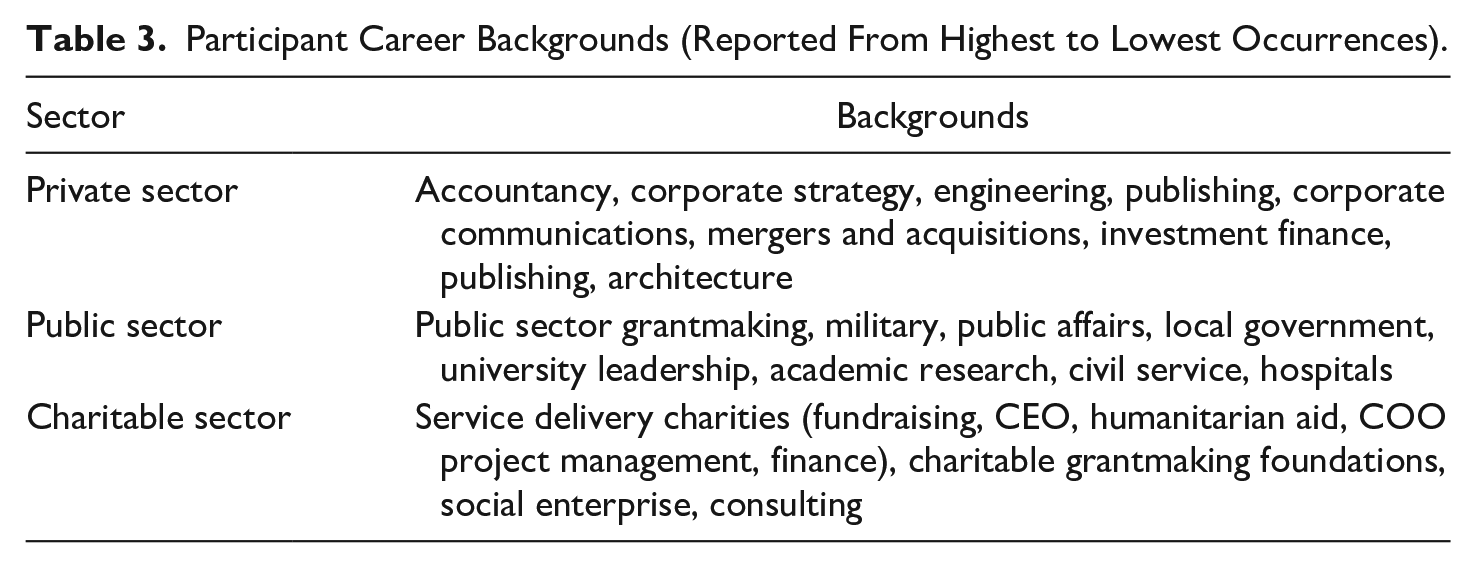
However, there is also some clustering within certain backgrounds. This clustering demonstrates that while diverse, several CEOs have shared experiences, providing evidence that particular experiences are valued within family foundation settings, such as public sector grantmaking, accountancy and corporate strategy, and service delivery charities.
Personal connections influenced the appointment of just over half of the participants to their roles within the foundation. These connections were formed through various means, such as previous colleagues, the board of trustees, former grantees, and family businesses. Some CEOs had closer personal ties with the founders, such as family or friends. For these participants, their prior relationships gave them a better understanding of the founder and family’s philanthropic intentions. However, this practice of hiring based on personal connections created a challenge for those outside of inner circles and limited entry for diverse candidates.
External recruitment processes were also utilized and valued by participants, with some emphasizing the importance of transparency in the process. One participant shared their experience of being recruited by the trustees through an open process, with advertising in the press and a lengthy two-part interview process. Another participant described how the trustees previously relied on the military for recruitment but, after receiving 75 applications through a headhunter, chose someone from the military, indicating a shift in recruitment practices but not the result.
Overall, while personal connections were seen as valuable for trustworthiness and familiarity with the founder’s intentions, participants emphasized the need for diversity and transparency in recruitment processes. While some entry experiences may be clustered, recruitment practices have not emphasized specific qualifications or backgrounds. There is no standardized education or career pathway. CEO appointments are based on the hiring bodies’ discretion and organizational needs.
Expectations and Enactment
Ambiguity surrounds the expectations placed upon CEOs. The lack of clarity in job descriptions and informal performance management contributes to varying trustee expectations across family foundations. This ambiguity is particularly evident in the context of foundation strategy development. Job descriptions shape expectations for CEO roles. However, these documents are not readily available in the public domain and are often characterized by their absence, basicness, or vagueness. Some CEOs have job descriptions that encompass an extensive list of responsibilities, while others find their roles defined by a lack of specificity:
I had main responsibilities covering 1, 2, 3, 4, 5, 6, 7, 8, 9 areas. Of those 8 to 9 categories, there are 3, 4, or 5 sub-categories, so it is not just one task within them. So, I’ll have to read it through again to see what I’m doing or not (#24).
Moreover, these job descriptions are not consistently updated, and there is a growing interest in codifying them more traditionally for successor CEOs.
With this lack of clarity at entry, some CEOs perceive their role as facilitating the philanthropic vision of trustees, translating their intentions into actionable policies. In this model, trustees are primarily responsible for setting the foundation’s strategy, while the CEO focuses on operationalizing grantmaking and presenting charity recommendations.
Conversely, an alternative model exists, where CEOs are expected to actively lead in shaping the foundation’s strategy. In such cases, the CEO’s arrival signifies an expectation that they will play a pivotal role in setting the strategic direction, which trustees subsequently endorse. This positionality involves understanding the values and viewpoints of trustees and building their capacity to create and articulate the foundation’s strategy. Once the strategy is established, trustees typically maintain a hands-off approach to day-to-day operations. These findings underscore the presence of two distinct sets of expectations regarding strategy development, which cannot be universally generalized across the field. Expectations appear fluid and are subject to negotiation within individual foundations, sometimes leading to contradictions.
In light of these gaps in formal expectations, individual and field-level expectations emerge as essential influencers of CEO behavior. CEOs are expected to manage risk, protect the foundation’s reputation, and ensure resilience alongside broader industry norms of being business-like and demonstrating impact. However, there is evidence of a growing expectation for CEOs to excel in their roles, emphasizing highly developed skills and exceptional service delivery. These heightened expectations seem to have evolved over time, indicating a shift in trustee perspectives toward valuing the CEO’s impact on the foundation. The ambiguity surrounding CEO expectations in family foundations is multifaceted, shaped by factors such as strategy development models, evolving performance standards, and the presence (or absence) of comprehensive job descriptions.
Evolution and Exit
As highlighted in the literature review, a noteworthy tradition marks the historical context of the CEO role in U.K. family foundations. Participants in the study frequently referenced the historical trend of appointing individuals with military backgrounds, retired diplomats, or civil servants to key positions within family foundations:
My two immediate predecessors had distinguished civil service careers and moved from research councils to the civil service world. Before that, there was a procession of military men, who again did it, not necessarily in retirement but in their last job (#23).
These appointments often occurred during these individuals’ second or third careers or just before retirement. They were characterized by their commitment to administrative tasks and ensuring compliance with regulatory requirements. However, a significant transformation is evident in contemporary CEO roles within family foundations. Participants noted a shift away from this traditional image of the foundation professional “who have been out in the sector, have made things happen, and who are coming into this sector with that energy and drive” (#31).
This transformation is first evidenced by the changing role titles (Table 4). The term “Chief Executive Officer (CEO)” was initially chosen to describe senior staff in these organizations based on prior literature. However, the research revealed that role titles within the field were far from the standardized ones. Notably, there has been a shift from titles associated with administrative functions, such as “Administrator” or “Secretary,” toward titles that align more closely with leadership roles, such as “CEO” and “Director.” This transition underscores the changing nature of foundation professional roles and their increasing alignment with leadership responsibilities:
And over that time, my role would have been called the Clerk or the Secretary. And then it would probably have been called the Coordinator. There was a big fashion around the ‘80s for that sort of role to be called Coordinator. Then it started to be called the Director, and now it is called the CEO. So gradually, it has aligned itself more in terms of what it looks like or sounds like to the private sector (#4).
Titles of Family Foundation Senior Staff (N = 74 Eligible Family Foundations).
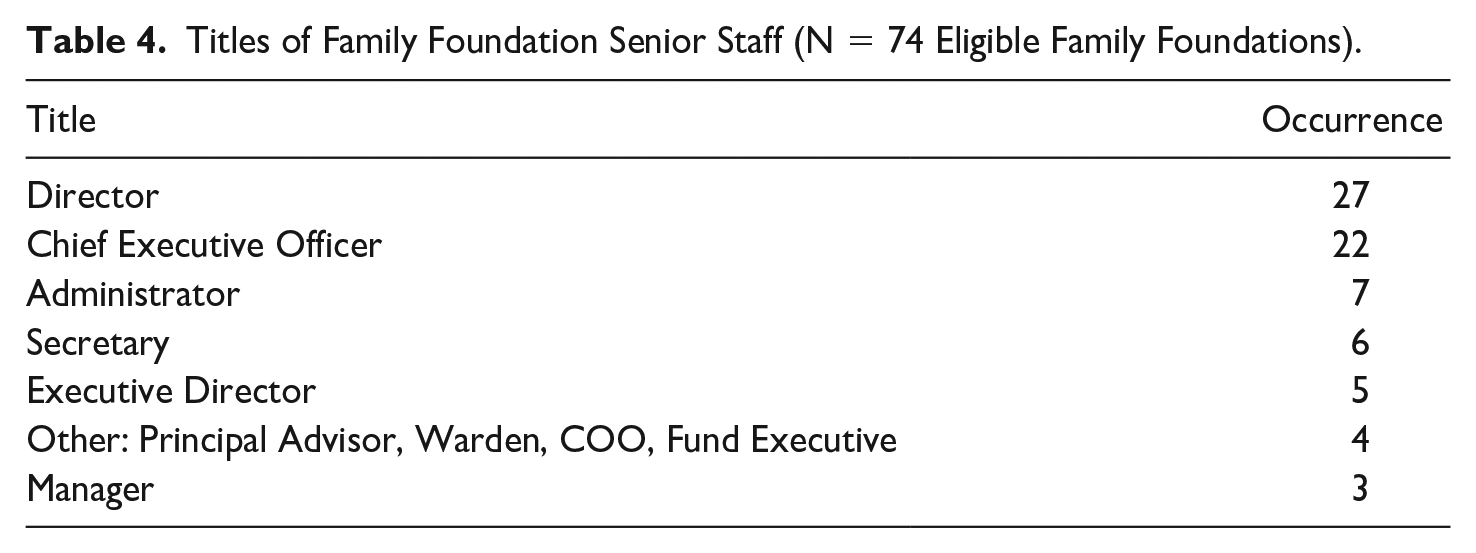
Today’s CEOs are bringing a more dynamic, proactive approach to their roles, focusing on making a tangible impact in the philanthropic sector. This evolution suggests that the role of foundation professionals has grown beyond its historical confines.
The role transformation is also evidenced by gender diversity. Among the 31 CEOs in the sample, slightly over half were women. These numbers contrast with historical perceptions of foundation roles in the United Kingdom, traditionally dominated by men, often with military or civil service backgrounds. While the possibility of self-selection bias among participants cannot be discounted, the gender balance observed in the sample aligns with the broader finding that women led 60% of the eligible foundations. Women most frequently held the title of CEO, often at their own request.
In addition to these role transformations, the study also shed light on the topic of succession planning within family foundations. As described in the Method section, CEO tenure varied significantly. The factors contributing to these varying tenures remain elusive. The roles are “nice and comfortable,” and people do not always want to move on (#5, #16, #29). As one participant shared, exiting and succession of roles were essential in filling dead man’s shoes:
The expression comes because people are waiting for the next big slot to become vacant. If someone moves on or retires, then there’s a big reshuffle of the seats until everyone settles down again (#8).
Instead of describing succession, another participant reflected that people tended to stay in the field: “Once you are in this world, you don’t often move out of it again” (#5). One participant mentioned defining their own “shelf life” for their role (#8); however, they reported that communication among peers regarding this aspect was infrequent.
The evolution of foundation professional experiences, duration in, and succession of roles demonstrate a changing environment, but one with limited movement. Participants were also split in their opinions on whether a “foundation professional” role existed. Some agreed that the role evidences similar features, such as skills or characteristics, of a professional; others disagreed that the claim could be made based on the various individual backgrounds, lack of specific training, and the importance of organizational needs in the role. The limited turnover within the sector raises essential questions about the availability of roles for new entrants and the intricacies of succession planning within family foundations.
Summary of Findings
The findings presented in this study illuminate three key characteristics of the foundation professional experience in U.K. family foundations (Table 5).
Summary of Findings.
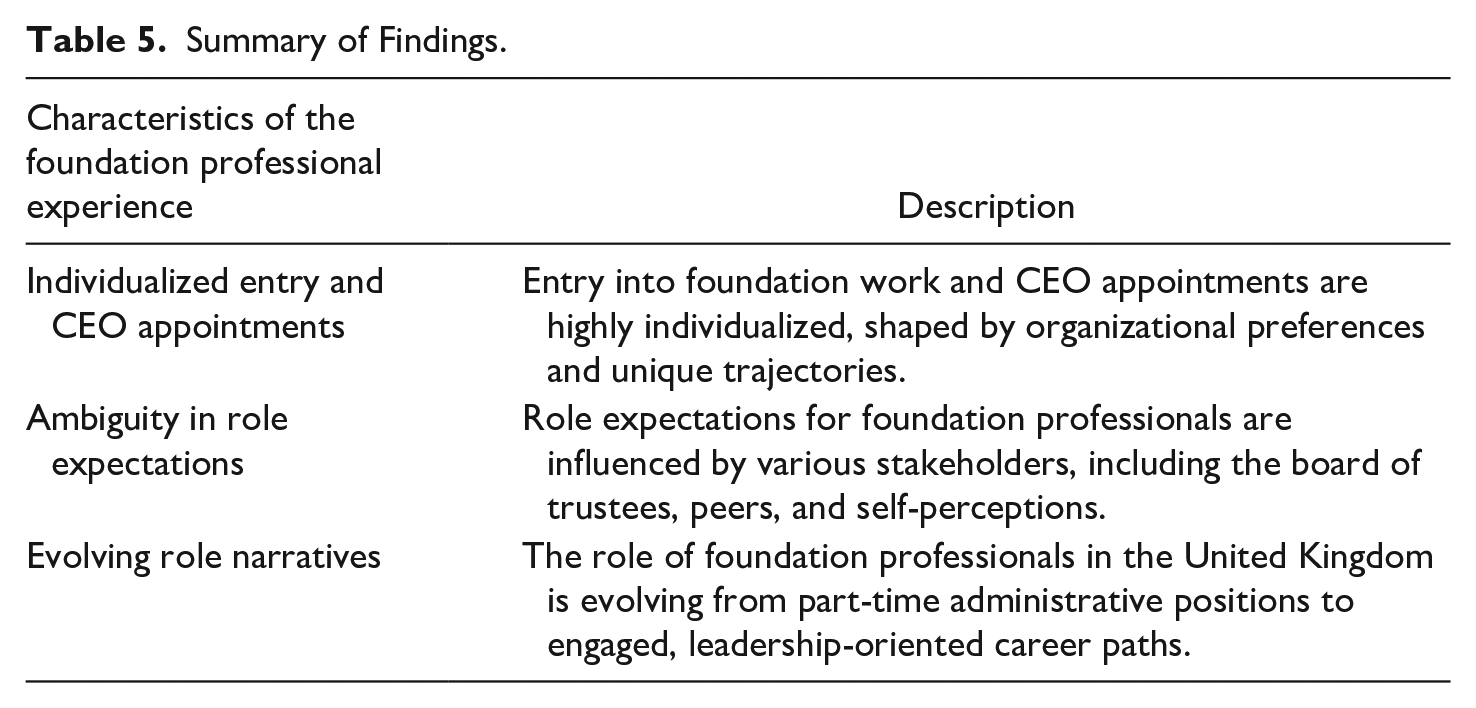
First, the process of entering foundation work and being appointed CEO is highly individualized and shaped by organizational preferences. Second, there is ambiguity surrounding role expectations for foundation professionals, which various stakeholders influence. Finally, the study shows that the traditional image of a part-time administrative role predominantly held by men gives way to a more engaged, career-oriented path, exemplified by the changing titles used within the sector. The characteristics of individual experiences shape our understanding of foundation work, providing insights into how the field is evolving in the United Kingdom.
Discussion
There is a reciprocal influence between the foundation professional and the broader foundation field. Because of this reciprocal relationship, we can gain insights into foundation work through the experiences of individuals, and, conversely, understand individual experiences better by examining the nature of foundation work. Insights from individual experiences in UK family foundations reveal three key field-level elements of foundation work in this jurisdiction: competing expertise, inconsistent formalization, and a professionalizing context. These elements may also apply to foundation work in other contexts.
Competing Expertise
Competing expertise provides the first insight demonstrating developments in the field. The insight illustrates a changing domain of expertise within foundations—from trustees to CEOs. The insight is similar to foundation professional literature expressions of amateur traditions and emerging professional influences. This study demonstrates that a shifting positionality, away from administration and toward expertise, characterizes the development of the foundation professional in the United Kingdom. The more recent emergence of the title CEO reinforces the importance of demonstrating leadership and expertise—both internally and externally. The title is an expression of who wields these elements within a foundation. However, not all participants saw a need for or desire to be called CEO.
Moreover, the ambiguity over expectations between CEOs and trustees, such as through strategy development, demonstrates that while titles may change, there remains tension over expertise. While informal policies have historically facilitated some entry into the field, they have also constrained progress. The absence of clear job descriptions and CEO responsibilities variations have made it challenging to ascertain the precise nature of the role and who defines it. Consequently, self-expectations and field-level expectations have stepped in to fill this void. One example may be seen in diversity, equality, and inclusion, where self and field expectations may have outpaced organizational readiness or board of trustee expectations. For any field-level change, this situation is crucial to understand. The changing loci of control, from board to CEO or staff, and the individuation of roles complicate how field initiatives can be absorbed into organizational norms and culture.
Inconsistent Formalization
Philanthropy is unlike other professions—there are no standard pathways to entry or education and no certification required for or regulation of roles. As a result, the normative isomorphic forces—that typically homogenize organizations through education and professional associations—are inconsistent within this context (DiMaggio & Powell, 1983). In this study, professional associations and education are foundation field-level structures. Each was used irregularly among U.K. CEOs. Participants reflected a lack of specific foundation education or qualifications. They demonstrated individualized approaches to using professional association programs and services.
Sporadic use of field-level structures explains why the spread of normative isomorphic forces has not appeared smoothly in a foundation field context. Without consistent use, the influences of the professionalizing context are contained, and formalization is inconsistent. There is no standardized type of foundation professional through credentialing, regulation, or certification. Oppositely, the foundation professional’s individuation provides space and flexibility to undertake their work. In their work on CSR professionals, Brès et al. (2019) reflected how loose definitions of professional roles provided greater flexibility and the ability to relate to a broad range of ideas.
Lack of formal education means CEOs can lead the foundation as necessary, creating agility and responsiveness to emerging needs. Reflecting their skepticism toward the standardization of practices, some CEOs praised the opportunity to approach their roles more individually, unconstrained by peer group norms. Meanwhile, the participants who support formal education and professional standards see them as timely and necessary for the philanthropic sector. The development of these types of field-level initiatives can raise the profiles of CEOs, valuing their expertise as more professional and casting a greater legitimacy in their roles. Both positionalities affect how CEOs enact their roles in foundation work, which impacts grantees and beneficiaries in different ways.
Critiques of foundation professionalization must be re-evaluated in light of this fragmentation, as they often assume a more cohesive, professionalized group (Frumkin, 1998, 1999). For example, this fragmentation helps explain why diversity, equality, and inclusion approaches are not consistently implemented across the foundation sector and why the mechanisms being used, such as awareness campaigns, initiatives, and demographic data, may not suffice to instigate meaningful organizational, cultural, and operational shifts, equally across the field. In a study of Dutch philanthropic organizations, Ghorashi et al. (2015) found that short-term interest and intentions of increasing diversity were met by longer-term implementation challenges when the complex reality of individual, organizational change was revealed.
If formal education offerings and professional associations continue to grow and are more consistently used by foundation staff, this would likely result in increased formalization of the field. The trajectories of foundations may begin to look more similar, brought about by the people and ideas within and encouraged by the structures that support the distribution of knowledge and practices. Some CEO clusters still see benefits in the field’s roots and maintaining individuality. Their positionality may be tricky to hold as formalization is supported by and benefits the two institutions—formal education and professional associations—required to spread these norms and practices.
Professionalizing Context
Private, public, and charitable professional backgrounds contribute to a professionalizing context. There are long-standing connections between business and philanthropic foundations, such as through the concept of philanthropoid, aligning with the rise of scientific philanthropy (Zunz, 2012). More recent incarnations have been through strategic philanthropy (Porter & Kramer, 1999) and philanthrocapitalism (Bishop & Green, 2008). CEOs feel the professionalizing influences from the private sector, which impacts how they think about developing plans and setting targets for their foundations.
The professionalizing context emerges from the charitable sector as well. The proximity of charities and foundations means that influences are easily spread (Hwang & Powell, 2009). As one participant mentioned, the foundation sector is part of the charitable sector, not separate from it (#19). Experience in other charitable organizations is linked directly to participants’ foundation roles through relationship management styles, grantmaking practices, and advocacy views.
The impact of public sector practices, such as accountability and demonstrating impact, has shaped expectations of foundation outputs and reporting. These influences have been examined at an organizational level, such as the impact of new public management on foundations (e.g., Jung, 2018; Jung & Harrow, 2015; Leat, 2006; Leat et al., 2017; Tomei, 2013), yet their connection to individuals and how influences spread within foundations have not been thoroughly interrogated.
Professionalization efforts often create paradoxes, particularly for non-majority groups (Ferguson & Dougherty, 2022; Wood & Conrad, 1983). For example, while professionalization efforts may seek to promote gender or racial diversity, they may simultaneously reinforce traditional norms of professionalism rooted in mid-20th-century White male characteristics (Cheney & Lee Ashcraft, 2007). This study’s findings raise questions about whether female foundation professionals may seek CEO titles to align themselves with the traditional image of a White male professional, thereby protecting their professional space and guarding against the informality of the field.
The growing emphasis on competency codification has played a crucial role in formalizing these roles and bolstering their external legitimacy. While competency codification may seem to represent a positive progression toward rationalized professionalization, that is due to the prioritization of professionalization in wider society. Understanding “what” and “how” competency codification occurs is vital, as it assigns specific skills and characteristics to these roles. In this research, amateur and professional are descriptors rather than valuations. The small size of the field and the prevalence of personal connections result in limited opportunities and networks from which foundation staff are drawn. However, as part of the professionalization discourse, competency codification should be interrogated as it may appear to represent progress. Yet, the influx of professional influences from existing fields and the triaging of roles through characteristics and skill sets may be as limiting as the amateur informality of appointing a friend, family, or other stakeholder from the donor’s network.
Contrasting the administrative roots, foundation professional expertise has grown over time. The competing expertise between CEOs and trustees reflects these changes within the foundation field. As part of developing expertise, the field also displays a professionalizing context. This context is due to influences brought into foundations from other sectors. However, adopting these influences is very individual, as the sporadic use of field-level structures has disrupted the spread and the formalization of norms and practices. The professionalizing context and inconsistent formalization are counterbalanced. This balance is reflected in field-level initiatives and highlights the challenge of making systematic changes in a fragmented, individuated field.
Conclusion
This article redirects foundation research from a predominant focus on foundations at the organizational level to exploring how individual experiences can reveal foundations' internal dynamics and activities. It highlights the impact of both amateur and emerging professional influences on the roles of foundation professionals. Similar influences are observed in adjacent fields, indicating that foundation professionals are not unique in facing these dynamics. By examining the entry-to-exit of UK CEOs in family foundations, the article illustrates how the role navigates tensions between these influences and how the field evolves amid competing expertise, inconsistent formalization, and a professionalizing context. The study's focus on the UK jurisdiction and family foundations, coupled with the limitations of sample size, emphasizes the need for continued research into the development of foundation staff roles and the broader evolution of foundation work. Understanding these elements is crucial for implementing effective and equitable initiatives at the field level. Shifting the lens to the individual helps demystify the "black box" of the organization, providing a vital perspective for a more comprehensive understanding of foundation professional roles and foundation work.
Footnotes
Appendix: Interview Protocol
| Warm-up |
|---|
| 1. How did you become the CEO/Executive Director of the xyz foundation? |
| 2. (if not self-identifying as a “family foundation”) What term do you use to describe your foundation type? |
| Individual |
| 3. What do you associate with the word professional? |
| 4. Do you think there is a foundation professional? |
| 5. What do you associate with a foundation professional? |
| 6. What do you associate with a family foundation professional? |
| Group/Field |
| 7. Do you see a foundation profession emerging? |
| • If so, what do you see? |
| ○ What skills are relevant in the foundation field? |
| ○ What networks are relevant in the foundation field? (Prompt: umbrella organizations) |
| • If not, why not? What would characterize a profession? |
| 8. Do you see a family foundation profession emerging? |
| If so, what do you see? |
| ○ What skills are relevant in the family foundation field |
| ○ What networks are relevant in the family foundation field? (Prompt: umbrella organizations) |
| If not, why not? What would characterize a profession? |
| 9. What foundation activities are most professionalized? |
| 10. What is the occupational role associated with these? |
| 11. What other factors or drivers are causing professionalization? |
| 12. What foundation activities are still emergent? |
| Field/Organization |
| 13. What are the expectations of a CEO role within the field of family foundations? |
| 14. What are the expectations of the CEO role within the family foundation organization? |
| 15. Is there a formal/public job description for your role? |
| 16. Would you be willing to share it with me? or What are the top 3 activities in that job description? |
| Closing |
| 17. Where do you think the foundation field is heading/developing? |
| 18. Where do you think the family foundation field is heading/developing? |
| 19. Is there anything about the topic you’d like to add? |
| 20. What drew you to accepting my invitation to speak on this topic? |
Acknowledgements
I am grateful to the participants of this study for sharing their experiences, offering reflections on their work, and allowing us to gain valuable insights into their roles. Thank you to the reviewers and editor for their time, valuable feedback, and suggestions that have greatly enhanced this article.
Author’s Note
The data are not publicly available due to ethical, legal, or other concerns.
Declaration of Conflicting Interests
The author(s) declared no potential conflicts of interest with respect to the research, authorship, and/or publication of this article.
Funding
The author(s) disclosed receipt of the following financial support for the research, authorship, and/or publication of this article: The Diana, Princess of Wales Memorial Fund and the University of St. Andrews School of Management supported this research with funding.
