




Abstract
This study investigates how career empowerment predicts promotive and prohibitive voice behaviors and how career security intervenes in this relationship. The moderating role of bystanders’ direct and indirect intervention behavior is also tested between career security and voice behavior. Three-wave time-lagged data were collected from 267 non-managerial front-line banking employees to test the proposed model. The structural equation modeling (SEM) statistical technique was used for data analysis. The results showed that career empowerment significantly predicts promotive and prohibitive voice behaviors, both directly and indirectly. Furthermore, the direct intervention behavior of bystanders significantly moderates the relationship between career security and both types of voice behavior (promotive and prohibitive). Theoretical and practical implications of the study are discussed.
The Background
Speaking up is no longer viewed as a “complaint-oriented behavior” (Maynes & Podsakoff, 2014) because employees’ voice is now seen as making a significant contribution to the overall improvement of organizations (Tedone & Bruk-Lee, 2021). Speaking up is important to make organizations enabling (Khan & Khan, 2021) because an employee’s voice helps organizations in innovating their products and processes (Rasheed et al., 2021). Merely, employees’ decision to engage in voice behavior is driven by the larger interest of the organizations (Liu et al., 2010). Also, speaking up behavior positively impacts employees’ career progression and job performance (Fuller et al., 2006). Promoting employee voice has become a critical concern for organizations (Song et al., 2021). However, the development of a positive psychological state among employees, which is a prerequisite for the emergence of employee voice (Luthans et al., 2006), poses another significant challenge for organizations in the 21st century. Previous research has examined leadership (Khan & Khan, 2021; Rasheed et al., 2021), job satisfaction (Tedone & Bruk-Lee, 2021), pro-social emotions (Heaphy et al., 2021), and supervisor empowerment (Park et al., 2021) as the key determinants of employees’ voice behavior. Despite the theoretical developments in the knowledge base on promotive voice behavior, we argue that there is still potential for advancement by examining it through the lens of career empowerment—a recent and novel development in the field of career management (Grabarski, 2021).
While employees’ voicing brings several benefits, organizations are likely to face severe challenges in the case of employees’ silence (Knoll & Van Dick, 2013). Mostly, employees prefer to prioritize maintaining their social image and security over their decision to engage in voice behavior (Maynes & Podsakoff, 2014) in situations where speaking up may lead to confrontation or displease other organizational members (Maynes & Podsakoff, 2014). Against this backdrop, employees’ psychological safety and empowerment may play a significant role in improving situations that hinder their willingness to speak up (Liang & Farh, 2008). This is because safety and empowerment allow employees to have the expectation that their constructive behavior, such as speaking up for the well-being of the organization, is secure (Sun et al., 2020). Despite the potential capability of empowerment in developing employees' voice behavior, this aspect has not been adequately addressed in the existing literature. This study aims to bridge this gap by examining the impact of career empowerment on employee voice behavior. Furthermore, the majority of studies on voice behavior have been conducted in a Western context. Therefore, it is imperative to examine voice behavior models in the Asian context, where cultural and social factors may significantly influence individuals’ voice behavior (see Song et al., 2021). Moreover, this study provides a timely response to recent scholarly calls for understanding the underlying mechanisms of employees’ voice and its determinants (e.g., Khan & Khan, 2021; Rasheed et al., 2021) by examining career security as a mediating mechanism between career empowerment and employees' voice behavior. Park et al. (2021) also emphasized the importance of examining the impact of employees' empowering behavior, beyond psychological empowerment, on employees’ voice behavior (Park et al., 2021).
The increasing interest of scholars in examining the phenomenon of voice behavior across different industries, such as construction (Khan & Khan, 2021), hospitality (Chiang & Chen, 2021), manufacturing, and distribution (Lee et al., 2021) depicts that the subject matter is equally important and critical regardless of the industry’s nature. We selected banking professionals as our sample to test our theoretical model on employee voice. In Pakistan, all banks operate under the regulations of the State Bank of Pakistan, which has implemented a voice policy to promote integrity and accountability among financial institutions under its jurisdiction. We chose the banking sector for our study because, despite regulatory oversight, it still lacks a proper voice mechanism for its employees (Hunjra et al., 2010). Hence, we embarked on this inquiry to examine the impact of career empowerment on bank employees’ promotive and prohibitive voice behaviors through the mediating role of career security. Additionally, this study aims to explore the interactive role of bystanders’ intervention behavior in the relationship between career security and voice behavior (both promotive and prohibitive).
Theory of Planned Behavior and Model Predicting Voice Behavior
Theory of planned behavior serves as a theoretical base to guide this inquiry (Ajzen, 1991). The TPB holds the view that three factors significantly determine an individual’s possibility to engage in a given action or behavior. These factors include a positive attitude, subjective norms, and perceived behavioral control. Individuals’ behavior, planned or enacted, is always proceeded by other factors that motivate them to engage or not to engage in a given behavior (Ajzen, 1991). Employee voicing is a planned behavior that occurs in the interpersonal context (Liang et al., 2012). Furthermore, we propose employee voicing is a behavior that is proceeded by other factors such as career empowerment and career security. When employees' perceived control over their careers is high, there is a greater likelihood that they would act upon their plans (Grabarski, 2021). Based on the TPB, we theorize that career-empowered individuals are more likely to engage in voice behavior due to their perceived behavioral control. They have a positive evaluation of speaking up for the well-being of both the employee and the employer, as it is not expected to displease others (subjective norms) and is considered safe.
Empowerment, psychological empowerment, and career empowerment are related constructs but have distinct focuses and dimensions. Empowerment generally refers to the process of enhancing individuals’ feelings of self-efficacy and addressing conditions of powerlessness through formal and informal means (Conger & Kanungo, 1988). While empowerment and psychological empowerment can be applied broadly in organizational contexts, career empowerment specifically focuses on individuals’ career-related experiences and outcomes (Grabarski, 2021). The development of the career empowerment construct, with due acknowledgment, was largely influenced by the theoretical base of psychological empowerment. Arguably, career empowerment is the domain-specific enhancement of the psychological empowerment construct. Career empowerment comprises seven dimensions, of which four remain the same as psychological empowerment (meaning, competence, self-determination, and impact). The additional three dimensions are focus, growth, and relationship (Grabarski, 2021). Under the umbrella of career empowerment, of these additional dimensions, “focus” is defined as the “clarity of individuals’ vision of what they want their career to be, including but not limited to understanding their goals, how to achieve those goals, and recognizing their potential; 'growth' as the cognitive component of active engagement in the process of career development, which includes seeking personal challenge and accomplishment, learning, and variety of experiences; and 'relationships' as meaningful connections to other human beings that include being supportive of one’s career development” (p. 54). These additional dimensionalities distinguish career empowerment from psychological empowerment because the latter only addresses the present job and workplace phenomenon (Grabarski, 2021). On the contrary, career empowerment explains individuals’ visioning of future career state and cognition toward the materialization of career vision through relationship building.
Career Empowerment and Voice Behavior
The sense of being empowered increases the likelihood of individuals engaging in voice behavior (Memon et al., 2021). Theoretically, this sense of power aligns with the self-determination dimension of the career empowerment construct (Yoo, 2017). Regardless of the debate surrounding the source of such empowerment, the literature supports the assertion that empowerment fosters voice behavior. For instance, at supervisory and leadership positions, empowering leadership and supervisors’ empowerment are argued to influence employees’ inclination to engage in voice behavior (Chiang & Chen, 2021). At the employee level, psychological empowerment has also been found to be significantly related to voice behavior (Memon et al., 2021). Moreover, since voice behavior is characterized as voluntary behavior that is not contingent on formal rewards or punishments (Lin et al., 2015), determination and self-motivation (which stem from the sense of being empowered) are necessary to demonstrate such voluntary behavior (Quinn & Spreitzer, 1997). Based on the evidence discussed above, we hypothesize that:
Employees’ career empowerment positively impacts their promotive voice behavior.
Employees’ career empowerment positively impacts their prohibitive voice behavior.
Career Security as a Mediator
Speaking up at the workplace may displease others and have potential consequences (Chou & Barron, 2016). As a result, employees may feel hesitant to raise their voices and prioritize their own security over the well-being of the organization (Maynes & Podsakoff, 2014). In such circumstances, psychological security becomes crucial as it enables employees to speak up freely, with the expectation that their constructive behavior (speaking up for the organization’s well-being) is safe (Sun et al., 2020). Viewing through the lens of the leadership perspective of empowerment (Menon, 2001), a recent study has demonstrated that empowered employees experience a sense of job and career security (Sulaiman et al., 2021). Another study reports that higher psychological empowerment reduces insecurity among employees in the nursing profession (Hashish et al., 2018). In the context of Pakistan, employees from various multinational organizations have demonstrated a positive relationship between psychological empowerment and security (Ramey et al., 2019). Furthermore, in terms of career, employees who feel powerless to pursue their chosen career domain are more likely to experience career insecurity (Colakoglu, 2011). Employees’ perceived risks associated with their career security are a reflection of their psychological insecurity (cf. Sun et al., 2020). Further, employees’ psychological security is imperative for promoting the norm of voice behavior (Liang & Farh, 2008). Arguably, career empowerment negates negative psychological factors that contribute to insecurity, thus promoting employee voice behavior (Sun et al., 2020). Therefore, based on the evidence discussed above, it is hypothesized that:
Employees’ perceived career security mediates the relationship between career empowerment and promotive voice behavior.
Employees’ perceived career security mediates the relationship between career empowerment and prohibitive voice behavior.
Bystanders’ Intervention as a Moderator
Bystanders’ intervention behavior is considered a constructive intervention in limiting undesirable behaviors (Griffith et al., 2021) such as bullying (Saam, 2010) and harassment (Bowes-Sperry & O’Leary-Kelly, 2005). Such confrontation may be direct or indirect (Griffith et al., 2021). A further categorization of bystanders’ intervention behavior may take the form of involvement—the extent to which the observer (bystander) gets involved in a particular undesirable event as an offender (Bowes-Sperry & O’Leary-Kelly, 2005). For example, according to Bowes-Sperry and O’Leary-Kelly, an observer’s inclination to publicly or privately discourage an undesirable event defines high and low involvement, respectively. However, regardless of the form of intervention, there is a cost associated with it, which can be a critical factor influencing the bystander’s decision to become involved or refrain from involvement in a given undesirable event (Griffith et al., 2021). Under such circumstances, psychological security becomes crucial and enables employees to speak up freely, with the expectation that their constructive behavior (speaking up for the well-being of the organization) is safe (Sun et al., 2020). Building on these theoretical foundations, it is argued that psychological safety, including career security, motivates bystanders to intervene in organizational wrongdoings and speak up for the greater interest of the organization.
Employees’ direct bystander intervention behavior moderates the relationship between perceived career security and promotive voice behavior such that the relationship between perceived career security and promotive voice behavior gets stronger when employees demonstrate a higher level of direct bystanders’ intervention behavior.
Employees’ direct bystander intervention behavior moderates the relationship between perceived career security and prohibitive voice behavior such that the relationship between perceived career security and prohibitive voice behavior gets stronger when employees demonstrate a higher level of direct bystanders’ intervention behavior.
Methodology
Sample and Procedures
We chose a three-wave time-lagged data collection strategy because it is a highly recommended approach for examining causality, especially in mediating models (Cole & Maxwell, 2003). We initiated data collection in June 2021 and distributed 1000 copies of the questionnaire to the participants. During the first wave (T1: June–August 2021), respondents were asked to rate their career empowerment (Grabarski, 2021) along with providing their demographic information. In the second wave of data collection (T2: September–November 2021), respondents were asked to rate their career security (Hoge et al., 2012). Finally, during the third wave of data collection (T3: December 2021–February 2022), participants rated their promotive and prohibitive voice behaviors (Liang et al., 2012), along with their direct intervention bystander behavior (Griffith et al., 2021). We concluded the T1 phase of data collection with 404 responses. Out of these 404 responses, 380 were returned during T2. Finally, upon the completion of T3, we obtained 334 responses in our database. After conducting an initial screening of the data, we identified 267 usable responses, while the remaining 67 responses were deemed unusable due to excessive missing data. Furthermore, we found that the majority of participants were male (187, 70%), aged between 20 and 24 years (112, 42%), held an undergraduate degree (144, 54%), and occupied an entry-level position (147, 55%).
Instruments
We relied on pre-validated measurement scales, all anchored with a 5-point Likert scale (except for career security and bystander behavior), where 1 and 5 represented participants’ extreme disagreement and agreement, respectively, with a particular statement.
Career Empowerment
Career empowerment, the only higher-order reflective–reflective construct, was measured using a 21-item questionnaire consisting of seven dimensions: self-determination, competence, impact, meaning, focus, growth, and relationships. Each dimension comprised three items (Grabarski, 2021). An example item from the self-determination dimension is “I am able to take action in my career.” The scale has demonstrated good reliability in previous studies (α = .97, Grabarski, 2021).
Career Security
Career insecurity was measured using a 4-item scale developed by Hoge et al. (2012). The scale utilized a 6-point Likert scale ranging from 1 (fully applies) to 6 (does not fully apply). The scale was originally developed in German, and a translated English version has been used in previous studies (Spurk et al., 2016), showing good reliability (α = .69, Spurk et al., 2016). An example item is: “I often wonder how my career will develop.” The scale assesses the extent to which individuals feel insecure (secure if reverse coded, see Ebner, 2021) regarding their career endeavors.
Voice Behavior
Employee voice behaviors, both promotive and prohibitive, were measured using a 5-item scale for each (Liang et al., 2012). Supervisor managers rated their subordinates’ behavior in relation to their promotive and prohibitive voice. Voice behavior generally reflects employees’ comfort in communicating their concerns to their immediate supervisors and upper management. Failing to inform them may pose serious threats to business performance (see Tedone & Bruk-Lee, 2021). Promotive voice behavior indicates employees’ voluntary suggestions for improving business processes, while prohibitive voice behavior measures the extent to which employees speak out against inappropriate occurrences within the organization. Both promotive (α = .95) and prohibitive (α = .94) voice behavior have be shown to have good reliability in previous studies (e.g., Song et al., 2021).
Bystander Behavior
Direct bystander intervention behavior was measured using an 8-item scale recently developed by Griffith et al. (2021). Participants were asked to rate the likelihood of their engagement in bystander intervention behavior. Examples of items in the scale include “informing the offender about why an attitude or behavior was inappropriate,” “speaking to the offender in private about their behavior,” and “reminding the offender that a behavior is not consistent with our shared values.” Participants were asked to rate the extent to which these behaviors represent their intervention actions as bystanders.
Control Variables
In addition to the main constructs, we also collected demographic information from participants as these variables may potentially influence employees’ decision to engage or not to engage in voice behavior. Demographic variables such as gender, age, education, and service tenure have been found to be related to voice behavior in previous studies (Li & Tian, 2016). For instance, individuals with higher educational qualifications (Frese et al., 1999), longer service tenure (Stamper & Dyne, 2001), and higher positions in the organizational hierarchy (Fuller et al., 2006) have been found to be more likely to engage in voice behavior. By including these demographic variables, we can better understand the potential influences on employees’ voice behavior in the banking sector.
Examination of the Common Method Bias
The recommendations of Podsakoff et al. (2012) and the use of Harman’s test for a single factor are considered effective techniques for testing common method bias in quantitative research. These techniques have been widely adopted in previous studies on career-related topics (e.g., Ahmad & Nasir, 2023) and voice behavior (e.g., Park et al., 2021). Variables in the proposed research model (see Figure 1) were subject to data collection in different timeframes to avoid the potential possibility of the occurrence of common method bias (Podsakoff et al., 2012). Data on employees’ career empowerment was collected during T1 followed by career insecurity during T2 and voice behavior and bystander intervention behavior during T3. Harman’s single factor test suggests that if all the variables in a given model are loaded onto a single factor, and resultantly that particular single factor explains more the 50% of the variance, there is a problem of common method bias (Chang et al., 2010). In our case, a single factor did not explain the more than 50% variance, thereby showing that there is no such issue of common method bias in this study. Proposed theoretical framework of employee voice behavior.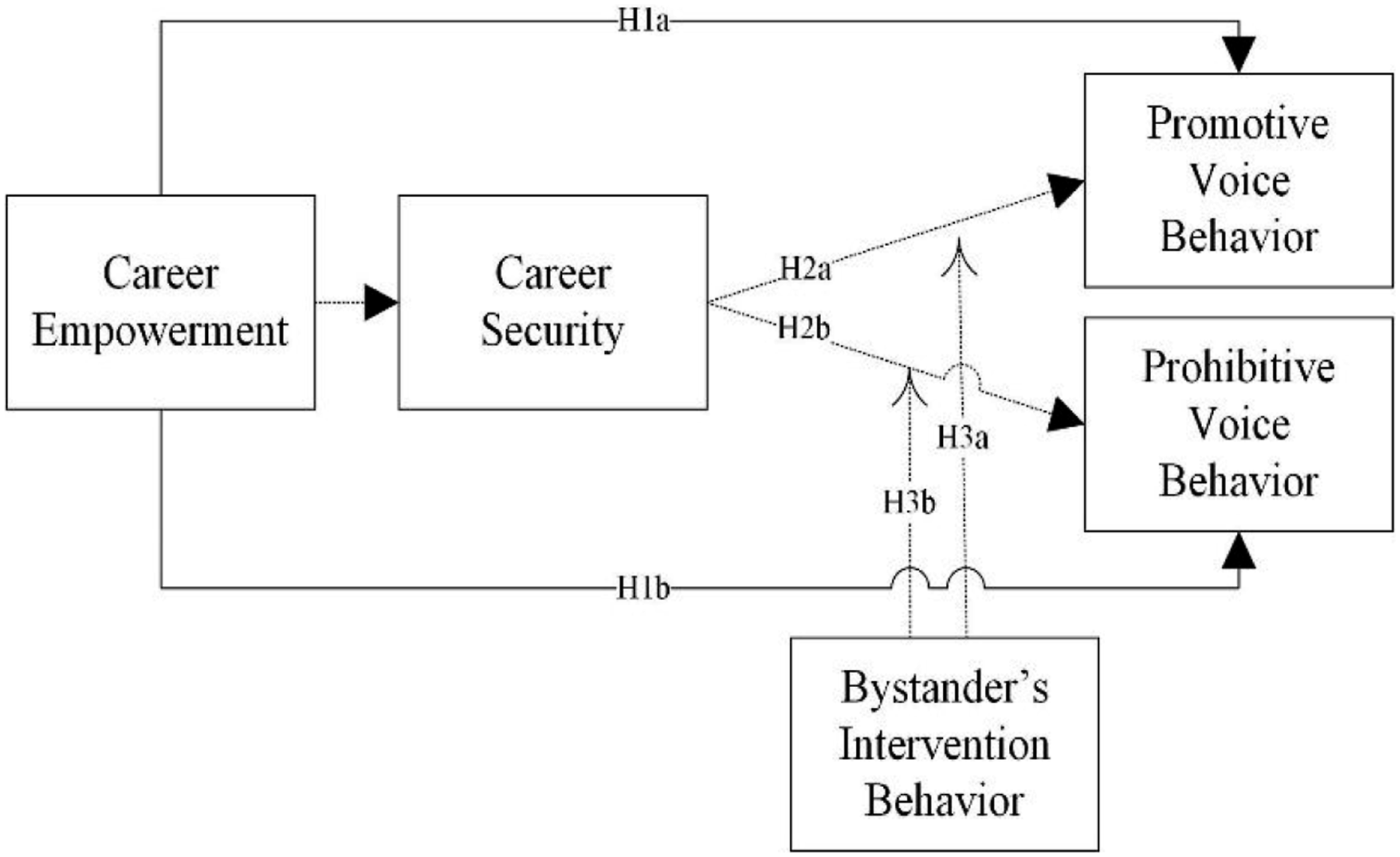
Data Analyses and Results
We executed preliminary data diagnosis tests through SPSS version 26. Particularly, data were examined for missing values to get a separate dataset that is usable for the further course of analyses. We omitted data on responses with a significant proportion of missing values. Hair and colleagues (2013) suggest the deletion of responses having greater than 15 percent missing values (67 responses). Thus, we retained the remaining responses, that is, responses with less than 15 percent missing values (267 responses). We replaced the missing values with the mean value via the mean imputation method in SPSS because this method preserves the mean value of the observed data, ensuring that the imputed values do not significantly alter the overall distribution (Sterne et al., 2009). This was then followed by an examination of our proposed model through the structural equation modeling (SEM) technique. Hence, SmartPLS version 3.2.3 was used for the evaluation of the measurement and structural model. Recent quantitative scholarships on the subject of employees’ voice behavior have been relying on SEM as a method of statistical analysis (Khan & Khan, 2021; Lee et al., 2021).
Means, Standard Deviations, and Correlations.
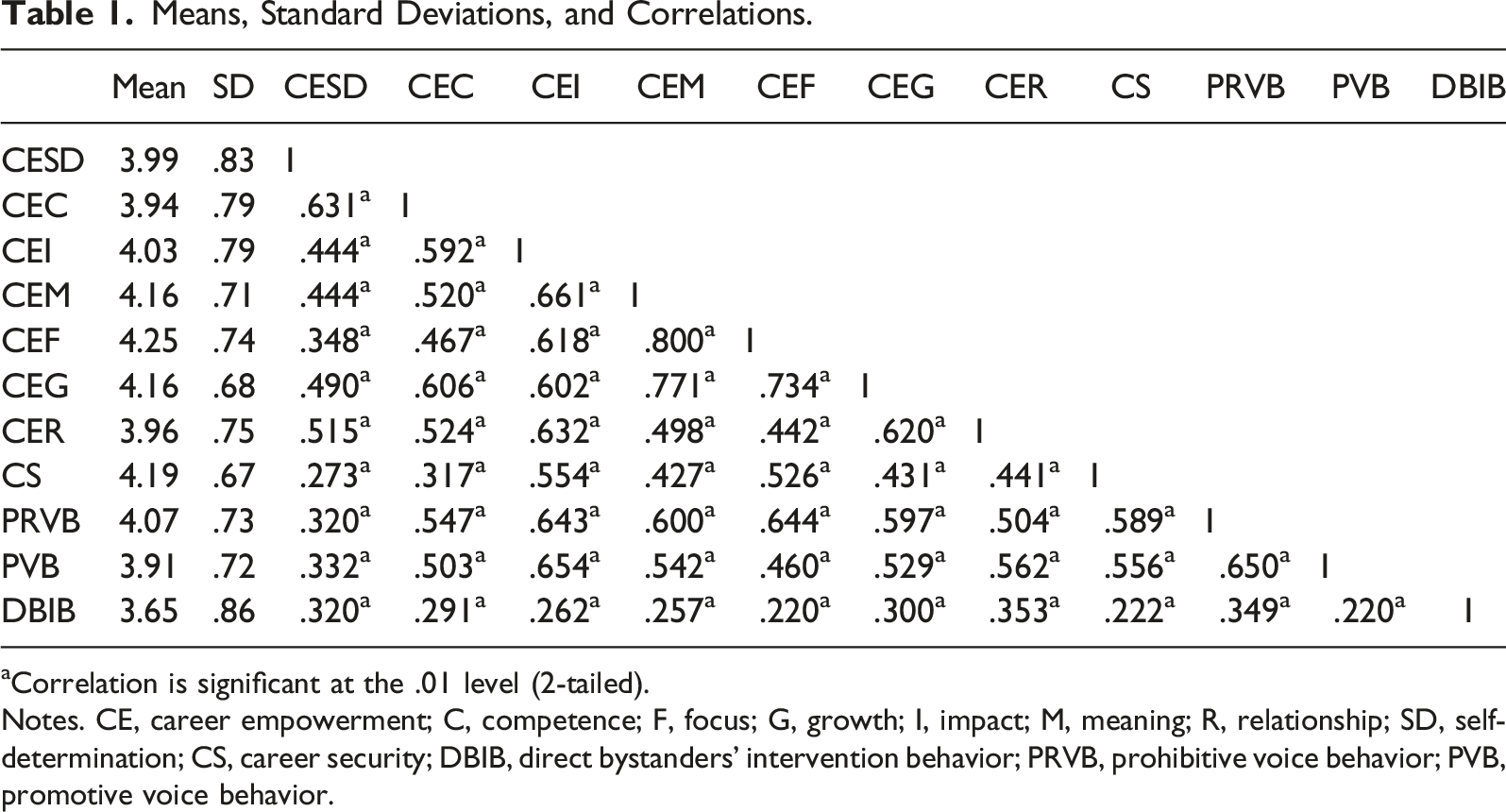
aCorrelation is significant at the .01 level (2-tailed).
Notes. CE, career empowerment; C, competence; F, focus; G, growth; I, impact; M, meaning; R, relationship; SD, self-determination; CS, career security; DBIB, direct bystanders’ intervention behavior; PRVB, prohibitive voice behavior; PVB, promotive voice behavior.
Measurement Model Evaluation
To assess the viability of our measurement model before testing the proposed theoretical relationships among variables, we examined factor loadings, scale reliability, convergent validity, and discriminant validity. Since one of the study variables, career empowerment, was a second-order construct reflective–reflective in nature, we employed a two-stage disjoint approach (Sarstedt et al., 2019). Although there are other available techniques within SEM (SmartPLS), according to Sarstedt et al. (2019), “there is no compelling reason to prefer one over the other because all yield the same results with negligible variance.” Certain threshold values are used to determine the appropriateness of a given parameter. For example, commonly used and recommended threshold values include factor loadings (.61–.90, Hair et al., 2014), average variance extracted (AVE) (.50, Chin, 1998), composite reliability (CR) (.70, Hair et al., 2010), and Cronbach’s alpha (.70, Nunnally, 1978). The results indicated that the values of item loadings, reliability coefficients (α), CR, and AVE were well above the recommended threshold values.
The model was also tested for discriminant validity using Fornell and Larcker’s (1981) criteria and Heterotrait-Monotrait (HTMT) ratio calculation, which are popular and frequently used criteria for evaluating the measurement model with the SEM technique. While Henseler et al. (2015) argue that HTMT yields more accurate and promising results, Fornell and Larcker’s (1981) criteria are still widely used and relied upon for discriminant validity analysis. We tested our model using both criteria and found that discriminant validity was established in both cases. The results showed that HTMT values for all constructs were below the recommended threshold of <.90 (Henseler et al., 2015). Furthermore, the AVE values of the latent constructs were greater than the squared correlation values of the latent constructs (Fornell & Larcker, 1981).
Hair et al. (2019) suggest using indices of model fitness with great caution, as the values of such indices may not be comprehensive and could be questionable. However, we report the standardized root mean squared residual (SRMR) to address potential model misspecification. An SRMR value below .10 is considered indicative of adequate fit. Our results demonstrated an adequate model fit (SRMR = .09).
Structural Model Evaluation (Hypotheses Testing)
After confirming the adequacy of the measurement model, we proceeded to test the proposed structural relationships (hypotheses). SmartPLS served as a robust platform for examining the inner model and testing the proposed relationships, as well as conducting direct, indirect, and total effects testing among the variables under investigation. To test the hypotheses and explore other structural paths in the model, we conducted bootstrapping with 5,000 resamples (Lu & Lu, 2020). This allowed for rigorous statistical analysis and inference in our study.
Direct and Indirect Effects
Path Analyses and Hypotheses Testing.
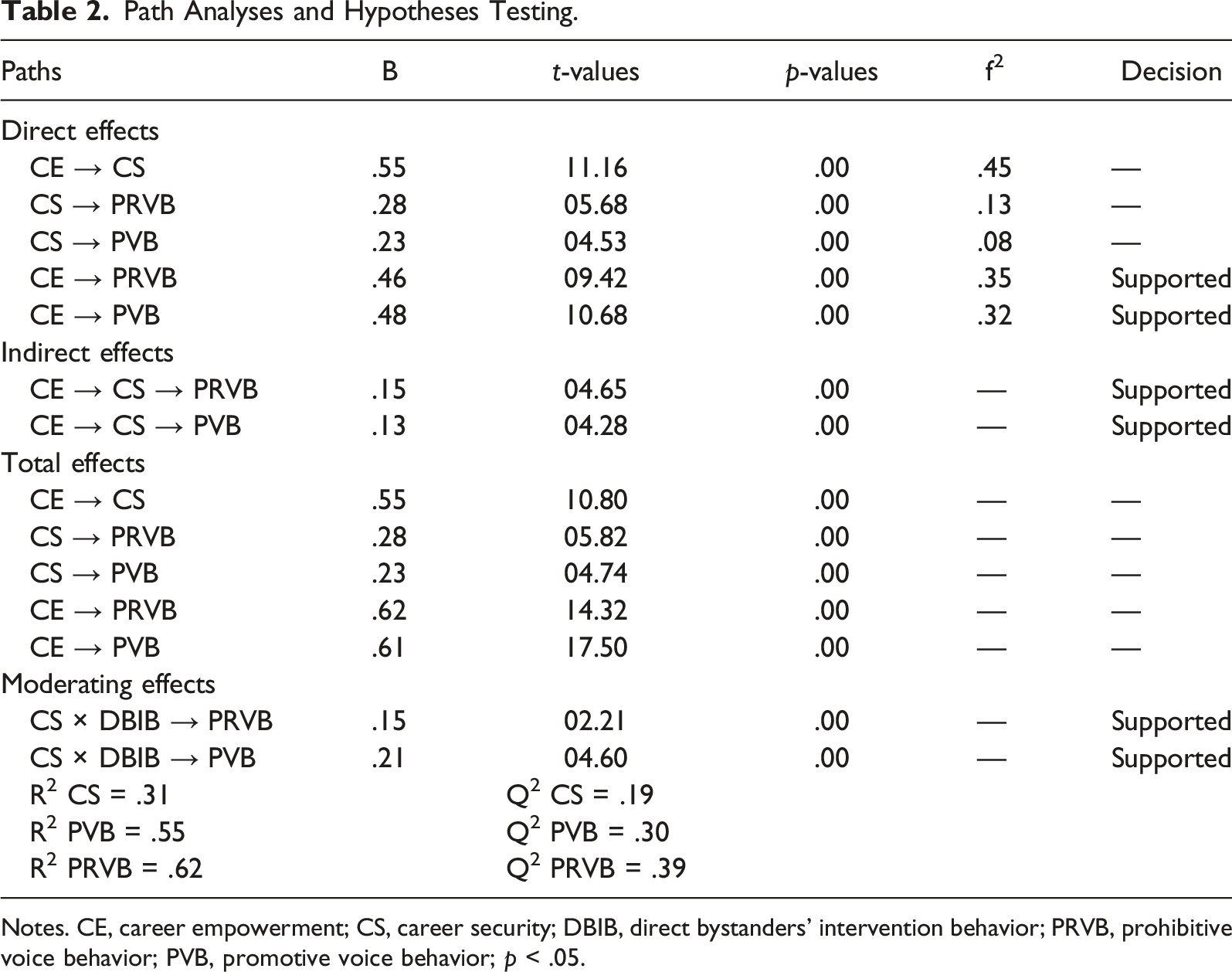
Notes. CE, career empowerment; CS, career security; DBIB, direct bystanders’ intervention behavior; PRVB, prohibitive voice behavior; PVB, promotive voice behavior; p < .05.
Moderation Analysis
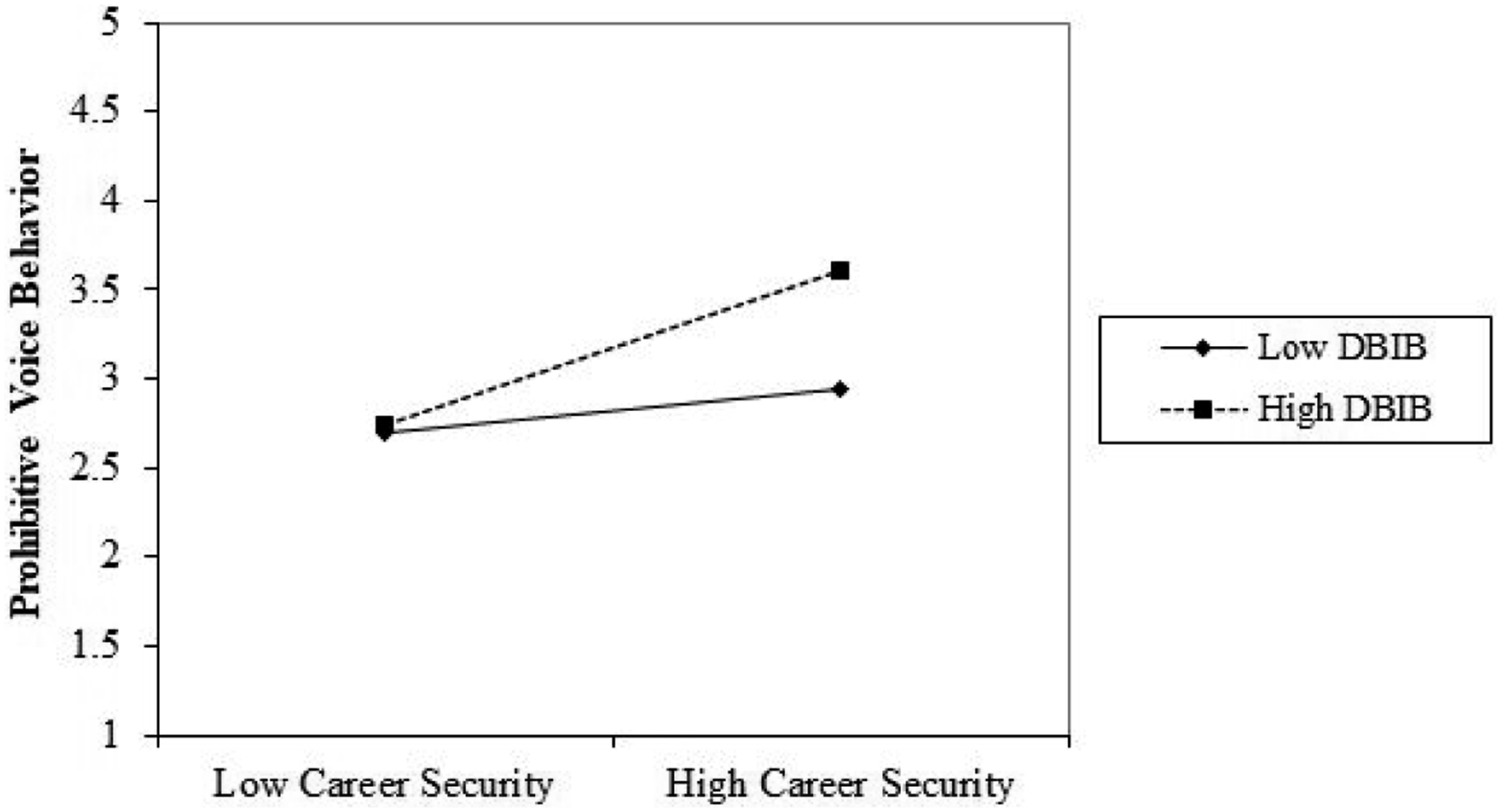
The results revealed that the interaction of direct bystanders’ intervention behavior on the relationship between career security and promotive voice behavior was significant (H3a: β = .21, t = 4.60, p < .05) (see Table 2). This finding indicates that the link between career security and promotive voice behavior is stronger when employees demonstrate a higher inclination to engage in direct bystander intervention behavior. In other words, employees who are more likely to intervene directly in workplace situations are more likely to exhibit promotive voice behavior when they feel secure in their careers. Similarly, the interactional role of direct bystander intervention behavior between career security and prohibitive voice behavior was also found to be significant (H3b: β = .15, t = 2.21, p < .05) (see Table 2), providing support for H3b. This suggests that the relationship between career security and prohibitive voice behavior is influenced by the level of direct bystander intervention behavior.
To visually depict the moderation relationship, we followed the suggestions of Stone and Hollenbeck (1989) and created plots illustrating the interaction between direct bystanders’ intervention behavior, career security, and voice behavior. Figure 2 shows the slopes depicting the relationship between perceived career security and promotive voice behavior, varying at different levels of direct bystanders’ intervention behavior. The slope demonstrates that the link between career security and promotive voice behavior becomes stronger as employees exhibit a higher level of direct bystanders’ intervention behavior. Similarly, Figure 3 illustrates the slopes representing the relationship between perceived career security and prohibitive voice behavior, with varying levels of direct bystanders’ intervention behavior. The slope indicates that the association between career security and prohibitive voice behavior strengthens as employees display a higher degree of direct bystanders’ intervention behavior. Moderation of DBIB between CS and PVB. Moderation of DBIB between CS and PRVB.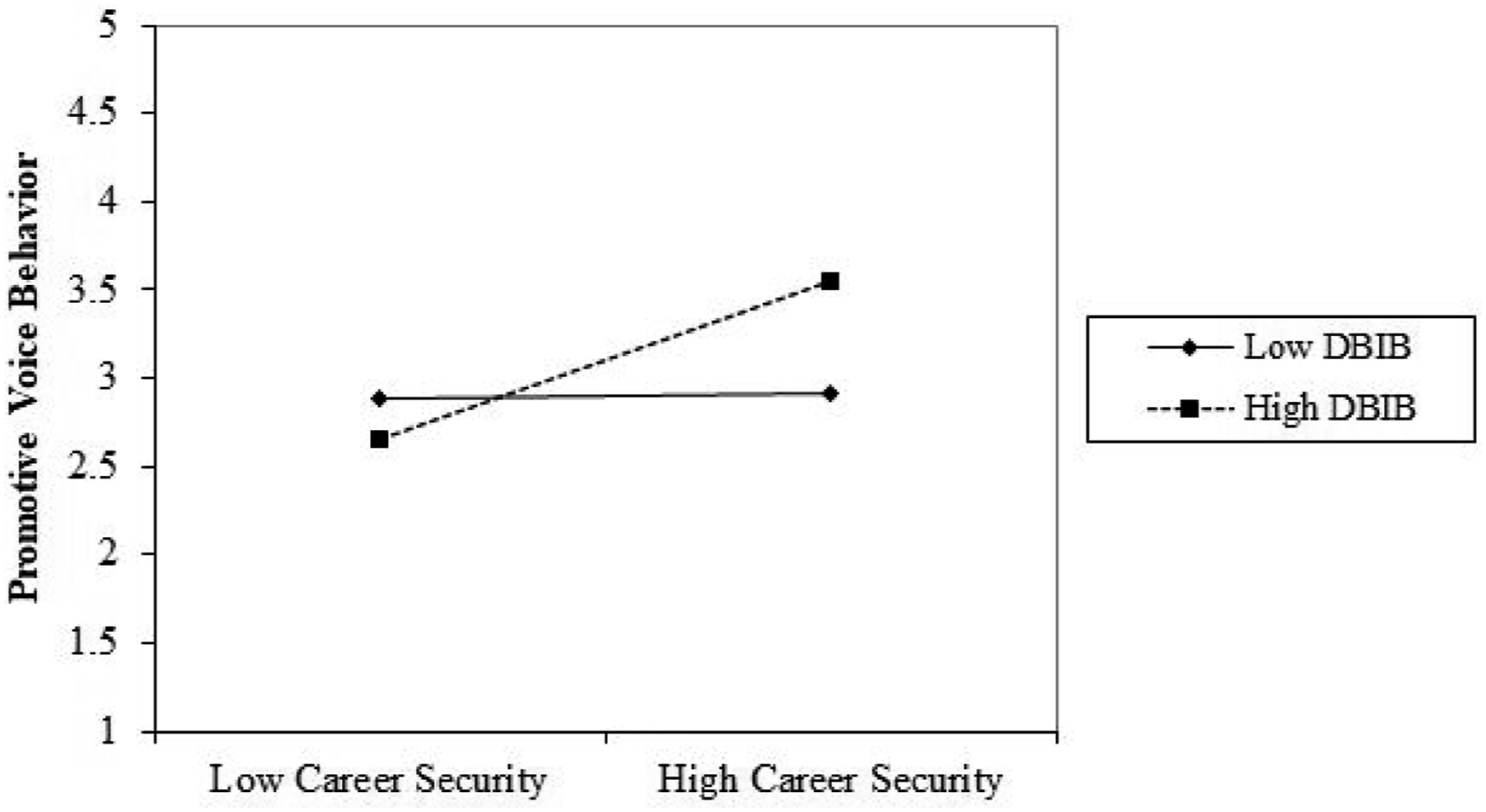
Predictive Relevance (Q2) and Effect Size (f2) Analysis
Additional analyses were performed to calculate the predictive power of the model, effect sizes, and predictive relevance (see Table 2). R2 values can be graded as substantial (.75), moderate (.50), and weak (.25) (Hair et al., 2017). The f2 values .02, .15, and .35 show weak, moderate, and strong effect sizes, respectively (Cohen, 1988). A value >0 for Q2 implies the predictive relevance of the model while a value <0 reflects the non-predictive relevance of the model (Ali et al., 2016). Evidently, prohibitive voice behavior (R2 = .62), promotive voice behavior (R2 = .55), and career security (R2 = .31) showed substantial, moderate, and weak predictive power in the proposed model. The score on predictive relevance for career security, promotive voice behavior, and prohibitive voice behavior was well above the “0” value—thereby confirming their predictive relevance in the proposed model. Lastly, CE → CS, CE → PRVB, and CE → PVB demonstrated strong effect sizes in the model, while CS → PRVB and CS → PVB showed a weak and moderate level of effect sizes.
Discussion
This study responds to the unresolved query that how career empowerment impacts employees’ voice behavior. The study also answers the question that how bystanders’ intervention behavior intervenes in the relationship between career empowerment and voice behavior. The results showed that career empowerment significantly predicts (directly and indirectly) both promotive and prohibitive voice behaviors. Further, the direct intervention behavior of bystanders significantly moderated the relationship between career security and voice behavior (promotive and prohibitive). In the following section, we discuss how the empirical evaluation of the proposed model for this study improves our understanding of employee’s voice behavior through the integration of career empowerment, career security, and bystanders’ intervention behavior. In addition to clarifying the theoretical connections among these variables, we will also discuss the practical implications of our findings for professionals and organizations.
Theoretical Contribution
Psychological empowerment has long been studied as a key enabler of several career-related positive outcomes in the career management discipline such as career competencies (Kong et al., 2016) and career satisfaction (Arogundade & Arogundade, 2015). Despite this positive utility of psychological empowerment, its scope remains limited to the employees’ current jobs and workplace phenomenon (Grabarski, 2021). For example, psychological empowerment remained focused on how employees see the alignment of their values (Spreitzer, 1995), skills level (Bandura, 1989), abilities (Ashforth, 1989), and autonomy (Deci et al., 1989) with their present jobs. As such, it offers little about the futuristic career perspective of individuals and how they can achieve their career goals through professional relations and network building. Against this backdrop, this study displaces itself from the psychological empowerment construct and uses career empowerment as a source of positive vocational outcomes—thereby enhancing the theoretical understanding of stakeholders related to the individuals’ focus, growth, and relationship perspectives of their career. Future researchers can also take the opportunity to explore the merits of these emerging perspectives of individuals’ career empowerment in the course of their career development.
This study introduces a new theoretical perspective on how career empowerment enables employees to engage in promotive voice behavior. A plausible explanation for this phenomenon is that the level of career empowerment reflects the extent of control employees have over their career domain. When individuals feel empowered and in control, they are more likely to overcome their fears and concerns regarding the potential negative consequences of speaking up (Morrison, 2011). Consequently, employees who have a greater sense of control over their work are more inclined to demonstrate voice behavior (Frazier & Fainshmidt, 2012; Mowday, 1978). The concept of power, as reflected in the self-determination dimension of the empowerment construct (Yoo, 2017), plays a significant role in this explanation. Among the seven dimensions of career empowerment, one dimension called “impact” explicitly represents individuals’ propensity to influence others in a constructive manner. It is therefore plausible that career empowerment empowers employees to proactively and voluntarily suggest improvements in the organization. By considering the influence of career empowerment on promotive voice behavior, this study contributes to our understanding of the underlying mechanisms that drive employees to speak up and make positive contributions in the workplace. It highlights the importance of empowering employees in their career development and the potential impact this empowerment can have on their willingness to engage in proactive voice behavior.
The study also contributes to the field of career management by shedding light on how career empowerment enhances employees’ prohibitive voice behavior. In organizational settings, demonstrating prohibitive voice behavior is often more challenging compared to promotive voice behavior. This is because prohibitive voice behavior involves courageously challenging undesirable conduct in the workplace. Speaking up in a prohibitive manner can potentially displease others and lead to consequences (Chou & Barron, 2016). As a result, employees may hesitate to raise their voices and prioritize their own sense of security over the well-being of the organization (Maynes & Podsakoff, 2014). A theoretical explanation for this phenomenon is that individuals who are empowered in their careers have a greater sense of control over their professional paths (Frazier & Fainshmidt, 2012). As a result, they may be less sensitive to the potential negative outcomes of their prohibitive voice behavior and therefore feel more comfortable openly speaking up against undesirable behaviors.
In line with our proposal that career empowerment enables voice behavior, the study has important theoretical implications. The findings partially support our assertion, as the causal relationships between career empowerment and career security, career security and promotive voice behavior, and career security and prohibitive voice behavior were all substantiated. This provides sufficient evidence that career empowerment significantly contributes to employees’ engagement in promotive and prohibitive voice behaviors. However, it also indicates that the causality between career empowerment and voice behavior is not necessarily mediated by career security. Traditionally, career empowerment has been viewed as a motivational construct (Thomas & Velthouse, 1990) that enhances individuals’ morale and ambitions (Morrison, 1996). As a result, individuals with high morale and ambition in a specific domain are more likely to experience positive outcomes, such as perceiving career security and engaging in promotive and prohibitive voice behaviors.
Another important theoretical implication of this study is the identification of the interactive role of direct bystanders’ intervention behavior in the relationship between career security and both promotive and prohibitive voice behaviors. This analysis revealed two theoretical perspectives. According to one perspective, the direct bystanders’ intervention behavior strengthens the causal relationship between career security and promotive voice behavior. This implies that when employees demonstrate a higher level of direct bystander intervention behavior, the relationship between their perceived career security and their engagement in promotive voice behavior becomes stronger.
Bystanders’ intervention behavior is viewed as a constructive form of intervention aimed at curbing undesirable behaviors such as bullying (Griffith et al., 2021) and harassment (Bowes-Sperry & O’Leary-Kelly, 2005). Therefore, when employees perceive a high level of career security and actively engage in direct bystanders’ intervention behavior, it amplifies their inclination to engage in promotive voice behavior. This indicates that perceived career security alone may have limited impact on promoting voice behavior unless individuals also have the intention and willingness to intervene in undesirable conduct.
Practice Implications
Organizations, managers, and counselors are suggested to explicitly focus on each dimension of the career empowerment construct during the course of career empowerment development. The practical utility of the self-determination dimension of career empowerment has frequently been discussed from the perspective of individuals with disabilities (e.g., Lee et al., 2012), even though it is equally critical and important in the normal work stream (Grabarski, 2021). Thus, career counselors and managers can do a better job of improving the self-determination level of their clients and subordinates by guiding them in their choices and control of careers. Impact, meaning, and focus are the other important areas on which managers and counselors should work to improve the career empowerment of their subordinates and clients. Conceptually, the “meaning” dimension of career empowerment illustrates employees’ perceived fit between their values and the career pathways provided to them by their employers. Furthermore, “focus” explains the degree to which an employee has clarity regarding his/her career vision (Grabarski, 2021). Therefore, it becomes imperative for organizations, managers, and counselors to understand the career vision and values of individual employees to enhance their career empowerment. For example, an individual whose focus is to adopt a career path that creates value for the society he/she live in, parallel to the growth of their career, would prefer to become part of an organization that emphasizes corporate social responsibility. Thus, organizations that solely focus on wealth maximization and contribute little to society at large are less likely to attract talent who prioritize “impact.”
Organizations, managers, and counselors can help individuals develop a professional network that may help them further to develop their careers. In this regard, counselors can suggest online and offline strategies for network building to their clients, as both platforms are equally beneficial for professional networking (Baumann & Utz, 2021). Furthermore, these strategies have also been found to be effective in promoting employees’ subjective and objective well-being (Spurk et al., 2019). Organizations and managers can do a better job in this regard by supporting intra-organizational cross-functional collaborations. Such collaborations help employees extend their professional network, explore other career opportunities, and connect with individuals who can assist them in their career advancement. On the contrary, online professional platforms such as LinkedIn can help employees create a network with individuals of their interest outside their current organization and industry. In addition to “networking,” “growth” is another integral dimension of career empowerment. Managers can meet the growing needs of their subordinates to empower them in terms of their careers. Job enrichment and job enlargement are viable strategies available to managers to satisfy the growth needs of their subordinates. This is because the enrichment and enlargement of roles do not require managers to significantly realign the roles of their subordinates (Ahmad, 2022).
Viewing the results of this study, it is evident that career empowerment significantly impacts both promotive and prohibitive voice behaviors. Therefore, organizations can harness the full potential of career-empowered employees. Furthermore, based on the findings that career security plays a role in the causal interplay between career empowerment and voice behavior, organizations, managers, and counselors should prioritize enhancing the career security of their employees, subordinates, and clients. This is because psychological safety and empowerment can significantly reduce the occurrence of situations that limit employees from speaking up in both promotive and prohibitive ways (Liang & Farh, 2008). Additionally, a sense of safety and empowerment allows employees to have the expectation that their constructive behavior, such as speaking up for the well-being of the organization, is safe (Sun et al., 2020). Furthermore, our understanding suggests that career empowerment and career security may not function optimally unless complemented by the behavioral intention to intervene in a given situation. Therefore, we recommend that organizations focus on improving their employees’ bystander intervention behavior, in addition to providing support for career empowerment and career security. Such proactive measures by organizations and managers are likely to increase the likelihood of employees engaging in both promotive and prohibitive voice behaviors.
Limitations and Future Avenues of Research
It is important to acknowledge that while the three-wave time-lagged study design utilized in this study is a strength that helps reduce the potential occurrence of common method bias (Podsakoff et al., 2003), there are still certain limitations and areas for future research that should be noted and considered. Career empowerment, as a construct, is a relatively new development (Grabarski, 2021) and can be considered as a domain-specific extension of the broader concept of psychological empowerment. Due to its recent emergence, the empirical testing of the career empowerment construct has not been extensively conducted. Therefore, we recommend that future studies replicate and retest the model proposed in our study within diverse geographical and cultural contexts. This will contribute to a more comprehensive understanding of the generalizability and applicability of the model across different settings. While the interventional behavior of the bystanders can be direct and indirect (Griffith et al., 2021), we have only studied the direct intervention behavior of bystanders. The study revealed a significant interactional role of direct bystanders’ intervention behavior in facilitating both promotive and prohibitive voice behaviors. Therefore, we believe that the intervention behavior of indirect bystanders may yield promising outcomes. As a result, it should be a subject of study in future scholarly research. The Bystanders’ Intervention Behavior Scale assesses the general behavior of individuals in terms of their inclination to become involved or refrain from involvement in socially disapproved and intolerant events. In line with this, it may be valuable for future research to explore participants’ responses regarding bystanders’ intervention behavior in specific incidents, preferably those of an objective nature, which have the potential to displease others. This could be an important area of focus for further investigation.
Furthermore, as previously demonstrated, this study utilizes career empowerment as a factor contributing to positive vocational outcomes. By doing so, it contributes to the advancement of our theoretical comprehension regarding the latest perspectives on individuals’ empowerment in career domains, including focus, growth, and relationships. Therefore, an opportunity arises for researchers to explore the potential benefits associated with these emerging perspectives within the context of individuals’ career development. This study also provides evidence that career empowerment enhances employees’ career security, which is a crucial aspect of individuals’ career development. While career security has become a significant concern for employees given the prevailing tensions in the global economy and job market, there is an additional opportunity for researchers to explore and propose alternative approaches to enhancing career security beyond relying solely on career empowerment. Lastly, we put forward the argument that self-determination plays a vital role in individuals’ career empowerment, particularly in relation to the sensitivity of their career choices and the potential for misperceived control over a specific career domain (cf. Ahmad, 2022). Given the sensitivity and the potential adverse consequences involved, future scholarly research can provide guidance on methods to enhance employees’ self-determination in terms of their career choices and perceived control. This can be achieved by focusing on the lens of choice and control within the realm of career development.
Conclusion
Career empowerment is a significant enabler of employees’ promotive and prohibitive voice behaviors. Furthermore, bystanders’ intervention behavior amplifies the likelihood of employees engaging in both promotive and prohibitive voice behaviors. We have identified key enablers of employees’ voice within the context of career management and strongly recommend future research to explore such enablers in other domains, such as organizational behavior and human resource management.
Footnotes
Declaration of Conflicting Interests
The author(s) declared no potential conflicts of interest with respect to the research, authorship, and/or publication of this article.
Funding
The author(s) received no financial support for the research, authorship, and/or publication of this article.
