



Abstract
To contribute to the current knowledge, this research was conducted, perhaps for the first time, among 1354 Arab users of digital media platforms to investigate emoji as a social presence tool and how the variables of the gender, generation, and the sender’s relationship to the receiver affect the usage and interpretation of the appropriateness of these graphical icons. Among the significant results of this study, generation and gender explained a significant amount of the variance in the frequency and motivation index. Interestingly, there was a significant, three-way interaction among senders’ gender, raters’ gender, and salience. The analysis also showed that the generation and relationship of the sender had a statistically significant effect on appropriateness ratings.
Emojis, which are graphical icons used in digital communication, provide an emotional component to text-based interaction that may increase a message’s efficacy, readability, and interpretability by emphasizing its intended positive, negative, or neutral tone (Butterworth et al., 2019). In 2022, 92% of the world’s Internet population used emojis, making them the most widely used form of digital expression (Team Communication Hub, 2022). Scholars have recently started investigating the role and significance of emojis in digital communication due to their rising popularity (Bai et al., 2019). Still, studies on how people use and interpret emojis are in their infancy (Sampietro, 2021). This is particularly true when it comes to the roles played by the demographic variables of senders, such as age, gender, and their relationship to the receiver, which may significantly impact these processes. Previous research has indicated that cultural differences exist in how emojis are used and interpreted (Deubler & Swaney‐Stueve, 2020; Guntuku et al., 2019). It has been argued that emojis representing negative emotions are used more frequently in countries with a high degree of power distance wherein people accept hierarchical structures and each person has a designated position in those rankings that does not require explanation. On the contrary, emojis representing positive emotions are used more frequently in countries with a high degree of uncertainty avoidance and individualism and a long-term orientation, as predicted by Hofstede’s cultural dimension model (Xuan et al., 2016). Similarities in the usage of emojis were found to be high among individuals from similar cultures and with a shared language, such as those in the United Kingdom and the United States, but lower when compared with the use of emojis in other languages, such as Italian and Spanish (Barbieri et al., 2016). Likewise, users in Finland, India, and Pakistan all use distinct emojis that reflect their own cultures (Sadiq, 2019). Nevertheless, a review of the literature reveals that most studies have concentrated on Western culture’s use and interpretation of emojis or those of Eastern cultures (e.g., Freedman, 2018; Li et al., 2019; Lu et al., 2016; Togans et al., 2021). There has been a dearth of research on how people in the Middle East, and especially Arab countries, perceive and utilize emojis. Arab countries are 22 countries which main language is Arabic and located either in North Africa, such as Egypt and Sudan, or Arabian Peninsula in Asia, such as Saudi Arabia and United Arab Emirates (World Population Review, 2023). This is considered an oblivious gap in the research, since Arab world is different in many ways from all other cultures. This is due to it having a high level of collectivism, a high-power distance, and a strong avoidance of uncertainty (Obeidat et al., 2012).
Thus, to contribute to the current knowledge, this research aims to investigate emoji as a social presence tool among Arab digital media users and, perhaps for the first time, how the demographic variables of the sender play a role in the usage and interpretation of these graphical icons.
Theoretical Background
Emoji as a Social Presence Tool
Online visual communicative elements, including emojis, GIFs, photos, and videos, were termed “graphicons” (graphical icons) by Herring and Dainas (2017). These elements provide a similar function to non-verbal cues such as facial and body language in face-to-face communication, thereby enhancing otherwise purely textual exchanges (Tang & Hew, 2019). Since “e” stands for “picture” and “moji” for “character” in Japanese, the term “emoji” is derived from the Japanese word “pictograph” (Leonardi, 2022). In digital communication (such as text messaging, email, and social media), emojis reflect the writer’s emotional mood, transmit data, and enable humorous communication without using words, according to the Merriam-Webster online dictionary (2020). Previous studies have shown that emojis are used for various purposes and that different individuals embrace them for a variety of reasons, among which are displaying emotional and social meanings, minimizing ambiguity in communication and seeking changes (Alfano et al., 2022; Kariryaa, Rundé, Heuer, Jungherr, & Schöning, 2022; Kaye et al., 2016). In this sense, emojis may function as a kind of virtual social presence. By “social presence,” we mean the degree to which people feel that they are able to utilize media tools independently as “real” people while also feeling linked to and engaged with others by using such products (Chen & Liao, 2022). Short et al. (1976) put forth the social presence theory (SPT), and the idea of social presence has its origins in the interpersonal communication and symbolic interaction theories (Osei-Frimpong & McLean, 2018). This theory hypothesizes that people’s opinion of a media and communication tool is influenced by how intimate and immediate they find it to be. Intimacy is a measure of how users feel about the digital tool’s potential to foster feelings of closeness, affection, or community with their interaction partners. Immediacy is defined as the extent to which digital tool users believe that their messages will be read and responded to in a timely manner (Hollebeek et al., 2021). As social presence has been frequently used to assess the ability of people to communicate via digital media platforms, the current study aims at investigate its applicability in terms of emoji usage by answering the following two questions: Q1. How frequently and why do Arab digital media users use emojis as a social presence tool? Q2. How do Arab digital media users interpret emojis?
Emojis and the Effects of the Demographic Variables of the Sender and the Receiver
Research on the relationship between gender and emoji usage has produced contradictory findings. Recent research (e.g., Faris et al., 2021; Garda, 2022; Jones et al., 2020; López-Rúa, 2021) has shown that women use more emojis than men, which matches the common knowledge that states that women experience and exhibit emotions more than men. In contrast, an earlier study by Tossell et al. (2012) found that men use a more diverse range of emojis than women, and the studies of An et al. (2018) and Aretz and Mierke (2019) showed that gender has no effect on emoji usage. A review of findings on the impact of age on emoji use is similarly varied. Some studies (e.g., Kazmi et al., 2019; Oleszkiewicz et al., 2017; Weiß et al., 2020; Zhou et al., 2017) have shown that younger users are more likely to employ emojis in their digital communication than older ones. In contrast, a smaller number of studies (e.g., Fullwood et al., 2013; Pérez-Sabater, 2019) showed no significant age variation in emoji usage. However, focusing on the differences identified in these studies reveals that the comparisons were made across the age categories of the samples, even when the participants were all from the same generation, and referred to “younger” and “older” users without distinguishing between the generations. A generation was defined by Carr (2019) as a cohort of individuals born around the same time, often within a 20-year time span, who share a common historical experience that shapes their identities and the identities of those around them. However, it is unclear if a generational split exists, not in the extent to which individuals of various ages use digital media tools but in how their use of these tools such as emojis affects other spheres of life (Bowe & Wohn, 2015). Thus, to bridge the gap in the literature, the current study aims to test the following hypothesis: H1: The frequency and motives of using emojis among Arab digital media users is affected by their generation and their gender.
The demographic factors of the sender are another crucial feature that was evidently disregarded in prior research and might explain divergences in the interpretation of emojis as being appropriate. Only one known study investigated how the sender’s gender can influence how the recipient interprets the emojis they receive. Receivers may perceive a message differently depending on whether they anticipate dealing with a higher quantity of emojis and more emotionally inflected use of them when communicating with females or males, as shown by research by Herring and Dainas (2018). However, there is yet to be research on how the recipient’s generation affects their understanding of emojis or if users’ perception of emojis’ appropriateness differs depending on whether the sender is a male or female and from a younger or older generation. Besides, the usage of emojis in conversations with friends has been shown to be much higher than in those with total strangers in face-to-face communication (Derks et al., 2008). Thus, it is also crucial to investigate whether receiving emojis in an online conversation with a family member or a friend would differ in suitability from receiving the same emojis from a colleague or a stranger. Due to the lack of knowledge in the field, this study also aims to investigate the following hypothesis: H2: The interpretation of emojis’ appropriateness among Arab digital media users is affected by the sender’s gender, generation, and relationship with the recipient.
Methods
Research Design and Participants
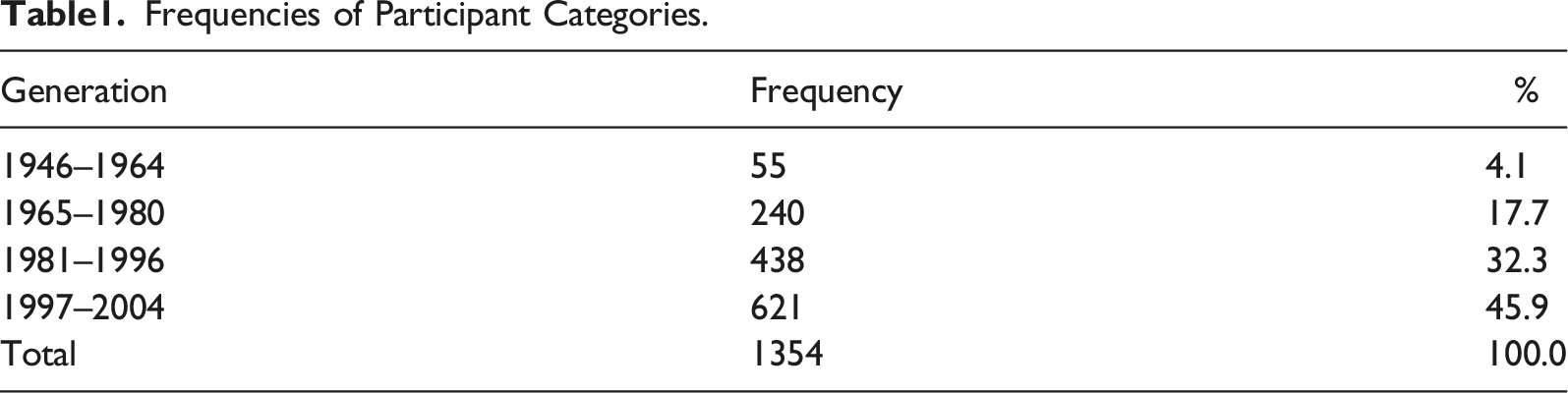
Frequencies of Participant Categories.
Procedure and Measures
A Google form was used to create the questionnaire, the link to which was circulated on the pages of several digital media platforms well known among Arab users (i.e., Twitter, Facebook and WhatsApp). The data collection took two months from the start of October until the end of November 2022. The research was performed in accordance with the ethical guidelines administered by the authors’ university. After providing consent, participants were first asked about their gender and the year in which they were born to identify their generation. As mentioned earlier, a generation typically refers to people born over a 20 year span. Thus, this research aimed to investigate the differences between the four generations mentioned earlier to cover emoji users aged between 18 and 77 years and grouped into four categories (i.e., born between 1946 and 1964; 1965 and 1980, 1981 and 1996; and 1997 and 2004).
To measure the frequency of emojis usage, the research followed the method applied by Liu and Sun (2020). Participants were asked to indicate their average frequency of emoji usage on a 5-point scale (“1 = below 5% in each conversation, 2 = 5–10%, 3 = 10–15%, 4 = 15–20%, and 5 = above 20%”). To understand the participants’ motives for using emojis, the scale proposed by Prada et al. (2018) was adopted. Participants were requested to report their conscience (“from 1 = completely disagree” to 7 = completely agree”) with the subsequent nine sentences: “When I use [emoji], I intend to…” (1) “express how I feel to others”; (2) “strengthen the content of the message”; (3) “soften the content of the message”; (4) “make the content of the message more ironic/sarcastic”; (5) “make the content of the message more fun/comic”; (6) “make the content of the message more serious”; (7) “make the content of the message more positive”; (8) “make the content of the message more negative”; and (9) “express through images what I can’t express using words.”
Examples of Positive, Neutral, and Negative Emojis.




Results
Descriptive Analysis of Response to Questions Regarding Frequency of Emoji Use, How the Users are Motivated to Use Them, and How Different Salience of Emoji are Interpreted.
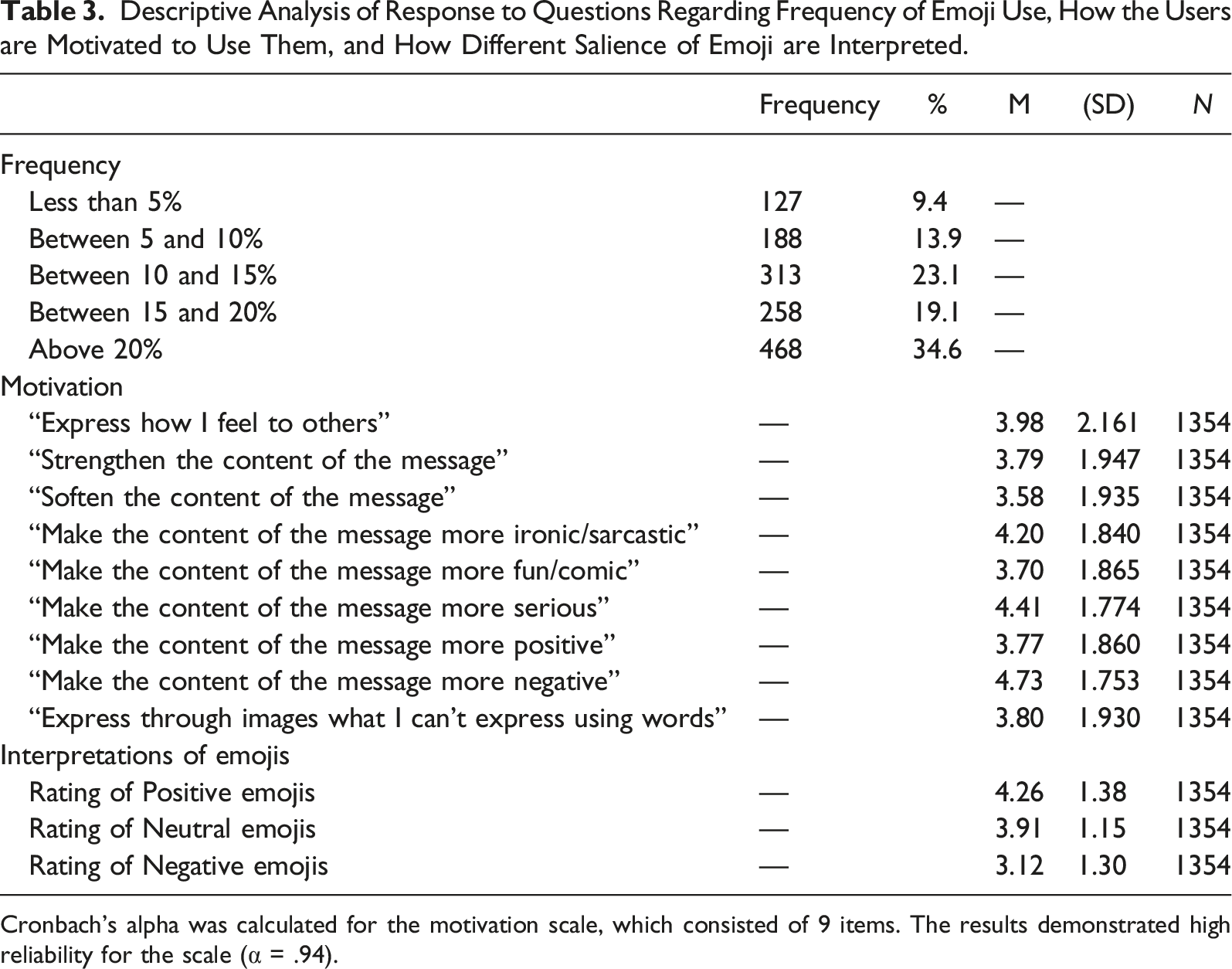
Cronbach’s alpha was calculated for the motivation scale, which consisted of 9 items. The results demonstrated high reliability for the scale (α = .94).
H1. The Frequency and Motives for Using Emojis Among Arab Digital Media Users Is Affected by Their Generation and Gender
Frequency
To examine the relationship between gender and generation and both frequency of emoji usage and the motivation for using them, regression analysis was carried out. In the first analysis, frequency was the dependent variable and both gender and generation were the independent variables.
An examination of standard residuals was conducted, which revealed that the data had no outliers (std. residual min. = -2.329, std. residual max. = 2.061). The data assembled the assumption of independent errors (Durbin–Watson value = 1.7). The histogram of standardized residuals showed that the data had almost normally distributed errors, as did the normal P–P plot of the standardized residuals, which displayed points that were not totally on the line, but near. The scatterplot of standardized predicted values indicated that the data assembled the assumptions of homogeneity of variance and linearity.
The enter method was used and it was revealed that generation and gender explained a significant amount of the variance in emoji frequency (F(3, 1350) = 48.10, p < .01, R2 = .097, R2Adjusted = .095). T-tests were used to examine the significance of variables ability to predict in the model. The analysis showed that gender did not significantly predict emoji frequency (beta = .414, t(1353) = 1.56, ns); however, generation did so significantly (beta = .494, t(1353) = 8.44, p < .01). The interaction between gender and generation was not significant (beta = -.081, t(1353) = -1.01, ns). Thus, the frequency increased by 0.494 as the generations progressed from oldest to youngest.
Motivation
In the second regression analysis, motivation was the dependent variable and both gender and generation were the independent variables. An examination of standard residuals was conducted, which revealed that the data had no outliers (std. residual min. = -2.507, std. residual max. = 2.354). The data assembled the assumption of independent errors (Durbin–Watson value = 1.447). The histogram of standardized residuals revealed that the data had almost normally distributed errors, as did the normal P–P plot of the standardized residuals, which presented points that were not totally on the line, but near. The scatterplot of standardized predicted values indicated that the data assembled the assumptions of homogeneity of variance and linearity.
The enter method was used and it was revealed that generation and gender explained a significant amount of the variance in the motivation index (F(3, 1350) = 39.82, p < .01, R2 = .081, R2Adjusted = .079). The analysis showed that gender did not significantly predict emoji motivation (beta = .068, t(1353) = .218, ns), although generation did (beta = -.529, t(1353) = -7.687, p < .01). The interaction between gender and generation was not significant (beta = -.024, t(1353) = .258, ns). Thus, motivation decreased by -.529 as the generations progressed from oldest to youngest.
H2. The Interpretation of Emojis’ Appropriateness Among Arab Digital Media Users Is Affected by the Sender’s Gender, Generation, and Relationship with the Recipient
Gender
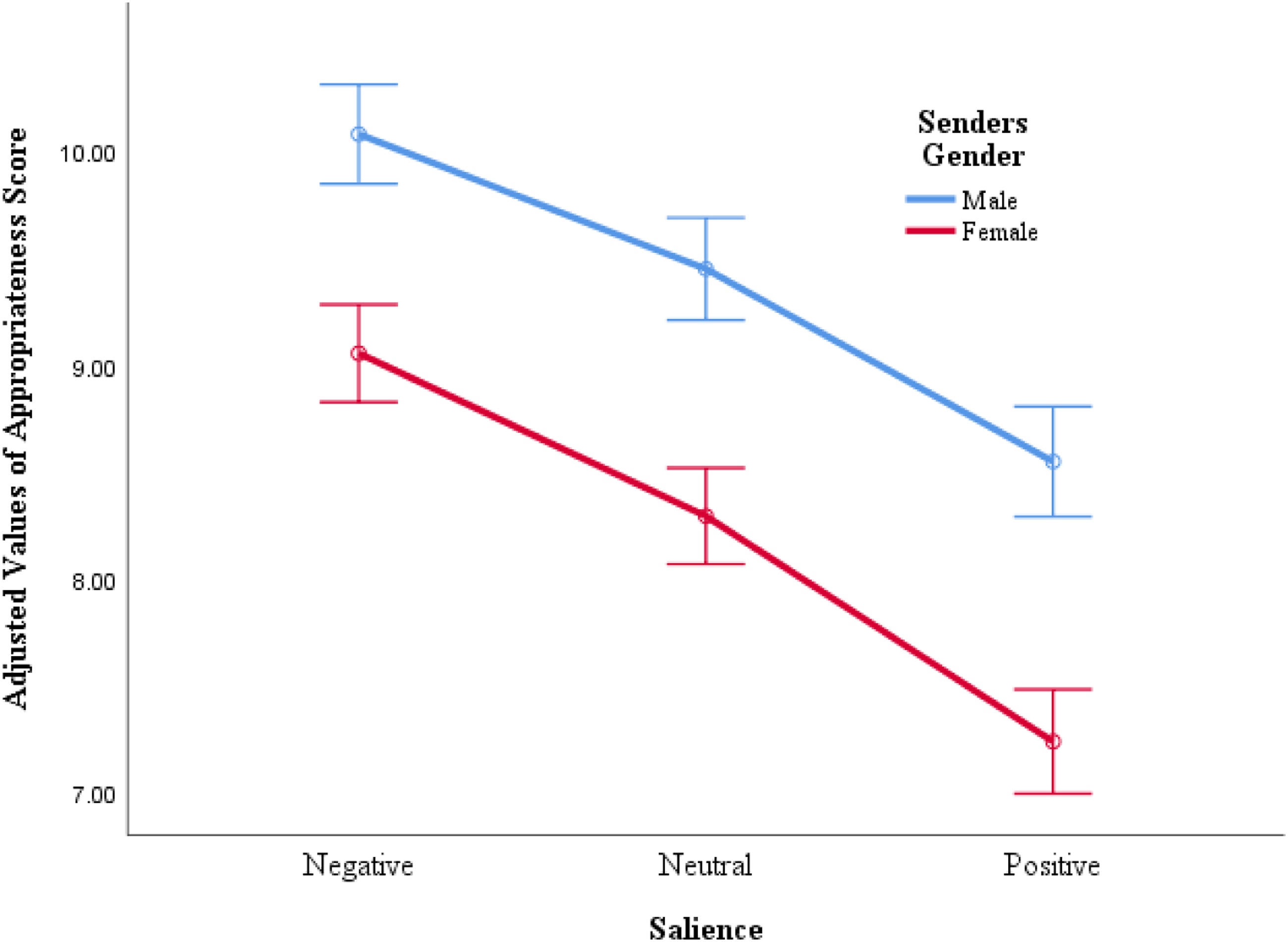
To explore the differences between levels of specific factors in terms of appropriateness scores, a series of multi-factorial ANOVAs was performed. For the first analysis, gender was explored, together with the different levels of salience, namely positive, negative, and neutral, of each of the emojis rated by the receiver. A two-way ANOVA was carried out to test the influence of the gender of the sender and salience on appropriateness ratings. The ANOVA revealed that there was a statistically significant interaction between the effects of the gender of the sender and salience F(1.96, 1353) = 4.912, p < .01). The results were plotted using estimated marginal means of appropriate scores which reflected a model that had considered adjustments for differences in n for the independent variable (Figure 1). Simple main effects analysis revealed that salience had a statistically significant effect on appropriateness scores (p < .01), as did gender (p < .01). Adjusted values (for gender) of appropriateness score for emoji senders’ gender at each level of salience.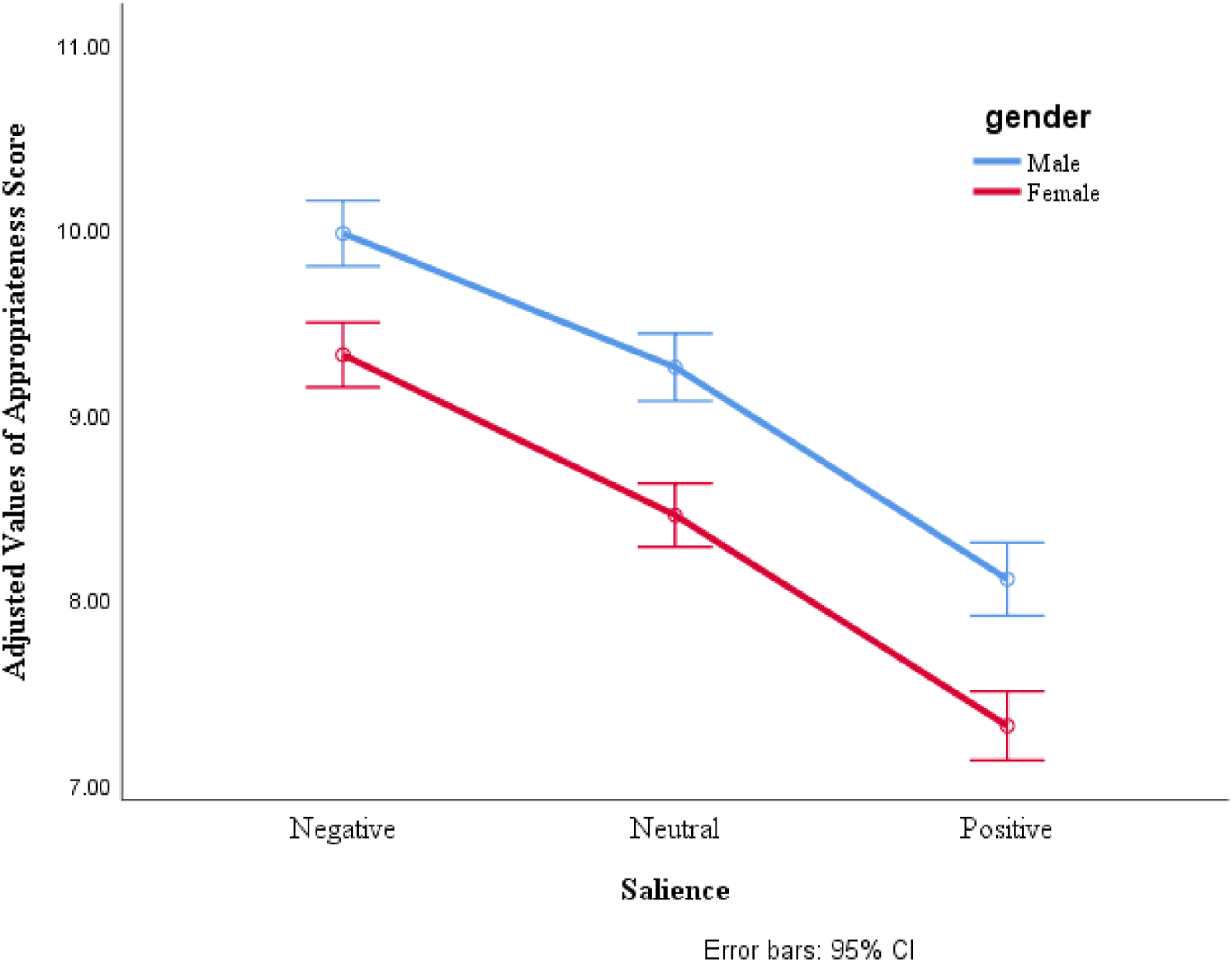
To investigate further the perception of appropriateness in terms of gender, a three-way ANOVA was carried out using the sender’s gender, the gender of the appropriateness rater, and salience. The ANOVA revealed that there was a significant, three-way interaction among the sender’s gender, the rater’s gender, and salience (F(1.970, 2663.367) = 8.344, p < .01). For males receiving emojis, there was no difference between male and female senders in terms of perceived appropriateness (Figure 2) However, female recipients demonstrated a significant difference between male and female senders in terms of appropriateness ratings (Figure 3). Therefore, there was a significant interaction between the gender of the sender and the gender of the receiver in terms of appropriateness score (F(1, 1352) = 100.238, p < .01). Adjusted values (for sender and receiver gender) for emoji senders’ gender over three levels of salience for male receivers only. Adjusted values (for sender and receiver gender) of appropriateness score of appropriateness score for emoji senders’ gender over three levels of salience for female receivers only.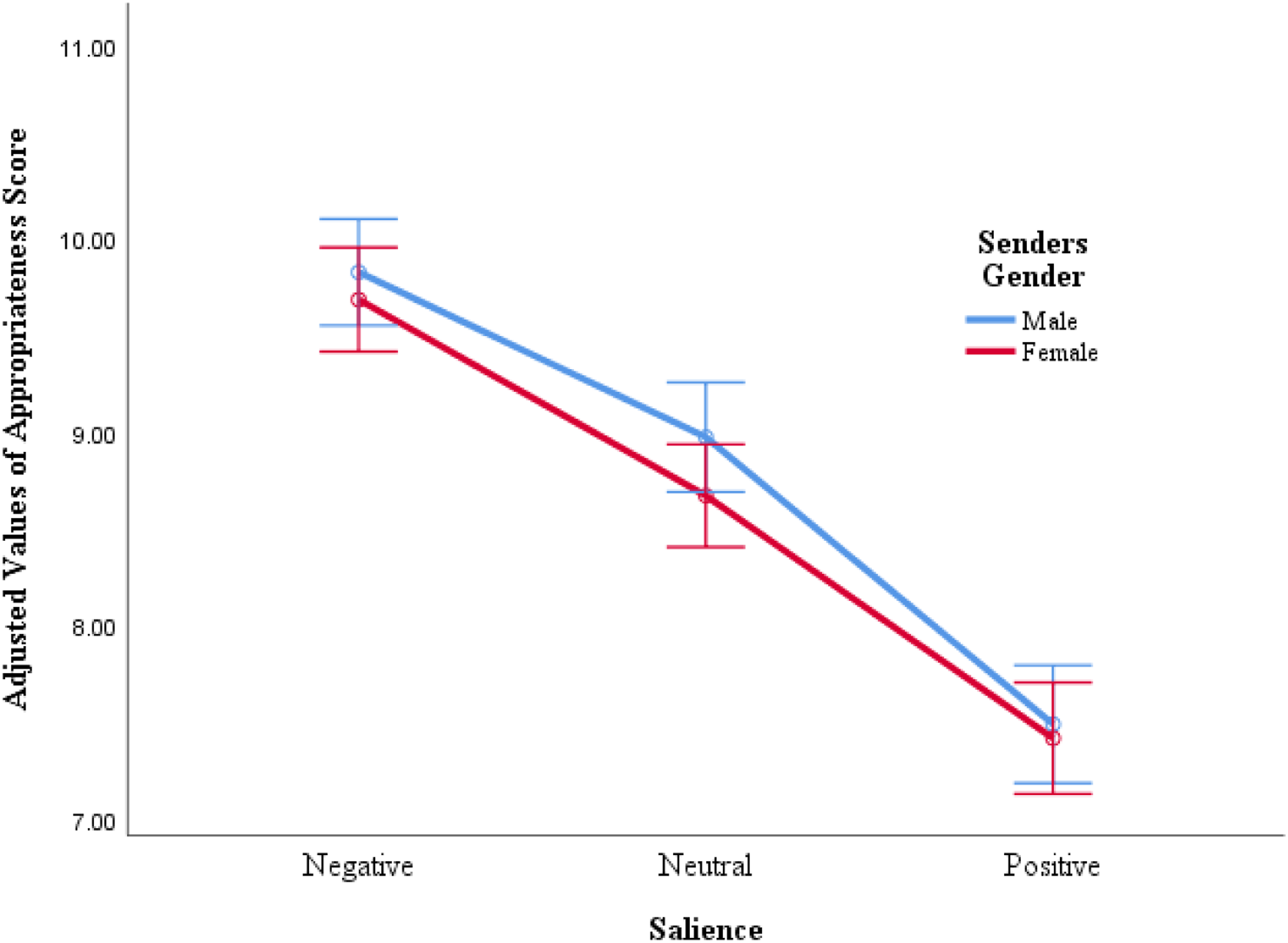
Generation
The second two-way ANOVA investigated the effect of salience and generation on appropriateness ratings. The levels of salience were positive, negative, and neutral, and the generation levels corresponded to those described earlier, in that they were represented by 1946–1964; 1965–1980, 1981–1996; and 1997–2004. The ANOVA revealed that there was not a statistically significant interaction between the effects of generation and salience (Figure 4) (F(4.67, 6323.11) = 1.221, p = .292). Simple main effects analysis revealed that salience had a statistically significant effect on appropriateness scores (p < .01) as did generation (p < .01). Adjusted values (for generation) of appropriateness score for emoji senders’ generation over three levels of salience.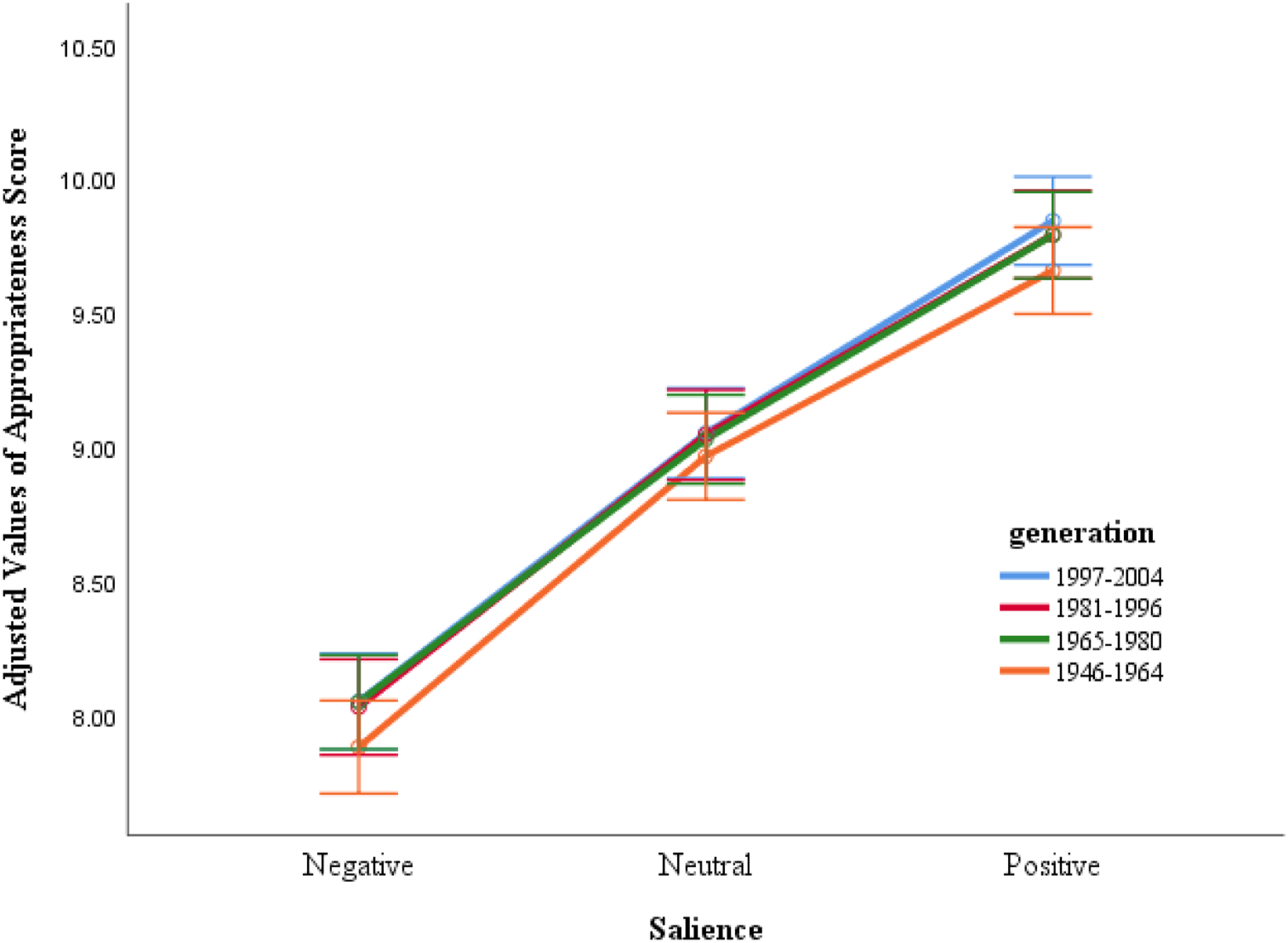
Pairwise comparison using Bonferroni adjusted alpha levels demonstrated a significant difference between the appropriateness ratings of those who were between 1946 and 1964 and between 1997 and 2004 (p < 0.1). A significant difference was also found between those who were between 1946 and 1964 and between 1965 and 1980 (p < .05).
Relationship
For the final analysis, a two-way ANOVA was carried out to test the influence of relationship and salience on appropriateness ratings. The ANOVA revealed that there was a statistically significant interaction between the effects of relationship and salience (Figure 5) (F(4.453, 6024.822) = 21.480, p < .01). Simple main effects analysis revealed that salience had a statistically significant effect on appropriateness scores (p < .01), as did relationship (p < .01). Adjusted values (for relationship) of appropriateness score for emoji senders’ generation over three levels of salience.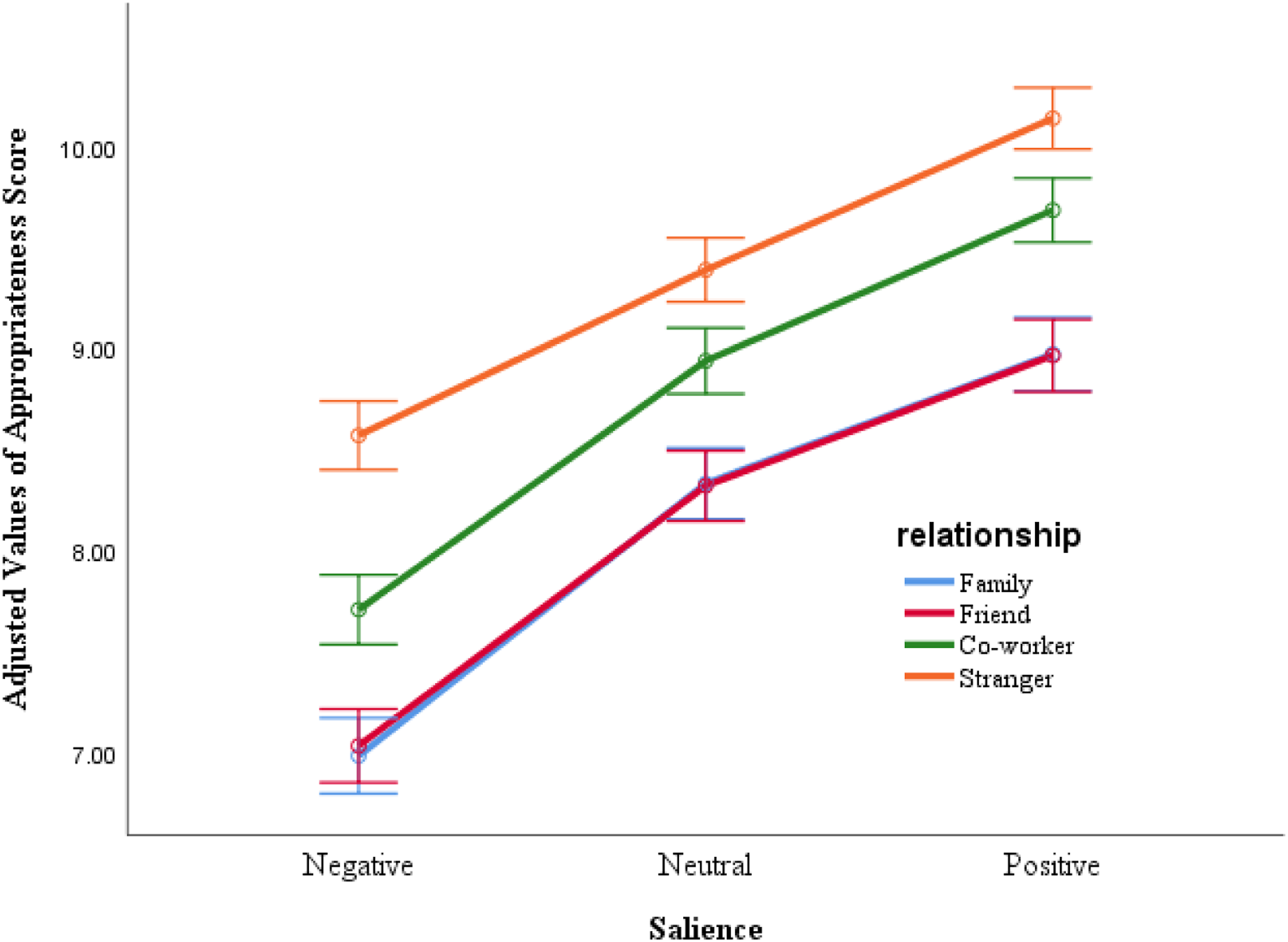
Pairwise comparison using Bonferroni adjusted alpha levels demonstrated differences between Family and Co-Workers (p < .01) and Family and Strangers (p < .01) in terms of appropriateness scores. There was not a significant difference between Family and Friends in terms of appropriateness ratings (p = 1.00).
Discussion
This study presents remarkable results and contributes to the current knowledge regarding the usage of emoji as a social presence tool by Arab digital media users and how the demographic variables of the sender have a role to play in the usage and interpretation of these graphical icons. The results reveal that Arab digital media users use emojis heavily during their communication online. More than one third of the sample used them more than 20% in each conversation, and more than 40% used them between 10% and 20% in each conversation. This result is interesting, as it shows that those users who belong to a culture with strong avoidance of uncertainty rely heavily on emojis to avoid misunderstandings that might occur during their online conversations due to the lack of non-verbal cues (Venter, 2019). This result also confirms that Arab digital media users heavily use emoji as a social presence tool and feel they are able to utilize this tool independently to engage with others via digital media platforms (Chen & Liao, 2022). It could also be argued that they may heavily use emojis to foster feelings of closeness, affection, or community with their interaction partners and to ensure that they receive a response in a timely manner (Hollebeek et al., 2021). Additionally, it could be argued that such heavily reliance on emojis in texts may be due to users from such cultures tending to write shorter massage in comparison with users from low uncertainty-avoidance cultures (Fischer et al., 2021), meaning they depend on emojis to convey meaning and avoid uncertainty in a shorter form.
Notably, the results also showed that Arab users are motivated to use emojis in a negative way, rather than a positive one, and mostly use them to make message content appear more negative, serious, or sarcastic. The findings are in line with research by Xuan et al. (2016), who argued that emojis representing negative emotions are used more frequently in cultures with a high degree of power distance. This finding could be explained as well in light of Lu et al.’s (2016) results, which revealed that users from high uncertainty-avoidance cultures are more likely to express negative emotions than positive ones through emojis because their stress and anxiety levels are high. Hence, they tend to reveal more negative emotions than individuals from low uncertainty-avoidance cultures. They also add to previous research by confirming that each culture differs in how they use emojis (Deubler & Swaney‐Stueve, 2020; Guntuku et al., 2019).
While the most recent studies conducted in Western and Eastern cultures (e.g., Faris et al., 2021; Garda, 2022; Jones et al., 2020; López-Ra, 2021) showed that women now use more emojis than men and do so in different ways, in the current study, gender did not significantly predict emoji frequency and motivation. This result is interesting, as it shows the influence of the Arab culture, with its power distance and avoiding uncertainty characteristics, on both genders. Contributing to the gap in the knowledge, this study is the first to investigate the role of generations in the usage of emojis, as the differences found in previous studies were made across age categories among the samples, even when the participants were all from the same generation. The results of these studies varied between those that revealed that younger users are more likely to employ emojis in their digital communication than older users (e.g., Kazmi et al., 2019; Oleszkiewicz et al., 2017; Weiß et al., 2020; Zhou et al., 2017) and those that indicated no significant age variation in emoji usage (e.g., Fullwood et al., 2013; Pérez-Sabater, 2019). However, the current study reveals that while the frequency of emoji usage increased as the generations progressed from oldest to youngest, the range of motivations for using emojis decreased as the generations progressed from the oldest to the youngest. This result is interesting, as it shows that while the younger generations use these icons more, the older ones employ them for a wider range of purposes. This could be due to the fact that older users tend to utilize shorter, less sophisticated sentences in their communications (Shadden, 1997).
Contributing to the current knowledge, this study is the first to investigate the three-way interaction among sender’s gender, rater’s gender, and salience. Among the most interesting findings is that for female recipients only, there was a significant difference between the appropriateness scores of male and female senders. In fact, female receivers rated male senders’ emojis as more appropriate than those received from female senders. This is a remarkable finding, as it shows that females find all types of emoji acceptable when they are sent by males but not by females. Such a finding can complement and contradict at the same time results in the field of language usage that show that in digital media platforms, “females use more affiliative language in same gender interactions than males, and males use more assertive language in same gender interaction” (Joiner et al., 2014, p. 168). Thus, it could be argued that females expect to receive more positive emotional icons and consider it totally inappropriate to receive negative ones from females, rather than from males.
Interestingly, the results show that there was no interaction between generation and salience, which means that there was no change in appropriateness when emojis were received by any generation. However, the pairwise comparisons found that receiving emojis from users born between 1946 and 1964 (in general) was significantly considered less appropriate than receiving them from other generations. This result matches the roles set by the Arabic culture, which, due to its collective nature, obliges individuals to take care of youngers and guide and teach them what is right and wrong, and they tend to forgive their misbehavior. Thus, it seems that the participants tended to accept and stand by the emojis sent by youngers more than the elders. Remarkably, receiving specifically negative emojis from strangers was considered less appropriate than receiving them from anyone else. Also, in general, it appears that the participants considered it less appropriate to receive any type of emoji from strangers and co-workers than from family. This finding is because Arab culture is collectivist and family-oriented in nature. Thus, Arabs tend to tolerate negative emojis sent by family members more than when they receive them from individuals outside their family network.
In conclusion, this study reported that Arab digital media users heavily use emojis during their online communication. In line with previous literature on high uncertainty-avoidance cultures, the results showed that Arab users are motivated to use emojis in a negative rather than positive way. In contrast to prior research, however, gender did not significantly predict emoji frequency or motivation. Moreover, this study revealed that while the frequency of emoji usage increases from the oldest to youngest generations, the range of motivations for using emojis decreases according to this same generational progression. Contributing to emoji literature, this study offers novel findings regarding the three-way interaction among sender gender, rater gender, and salience. One result observed was a complete change in perception of appropriateness when dealing with gender of sender as compared with other factors. The lowest appropriateness of negatively rated emojis was observed with both the generation of the sender and the relationship of the sender. However, this was reversed when appropriateness was rated with the relationships of negative to positive. This demonstrates a completely different lens through which the appropriate scores are viewed. Further study of this difference in perception will need to be carried out with the consideration of the different social roles and expectations that are associated with each of these factors.
While this study reveals interesting results and contributes to the current knowledge in the field, it has some limitations. This study adopted the quantitative method, and it is recommended that future studies adopt its aims but also analyze the data qualitatively as a way of comparison. Besides, this study is cross-sectional, and it would be interesting to conduct a future study to follow up with the participants to investigate if their attitudes have changed over time. Moreover, this study’s sample was self-selected; thus, its findings should be interpreted with caution. Finally, this study focused on the Arabic culture and its characteristics. Future research could be conducted among different cultures to study if they yield different results.
Footnotes
Declaration of Conflicting Interests
The author(s) declared no potential conflicts of interest with respect to the research, authorship, and/or publication of this article.
Funding
The author(s) received no financial support for the research, authorship, and/or publication of this article.
Data Availability Statement
The data used in this study can be made available upon request from the corresponding author. Interested scholars should contact Dr. Shuaa Aljasir at [shaljasir@gmail.com] for additional information.
Author Biography
References
