



Abstract
This review critically examines the synergistic potential of ethylene propylene diene monomer (EPDM) and silicone rubber (SR) blends reinforced with nanoferrite particles for the development of multifunctional engineering composites. Although EPDM and SR individually exhibit excellent environmental resistance and thermal stability, respectively, their inherent immiscibility poses a major challenge for high-performance applications. This work consolidates and critically analyzes the dispersed literature to elucidate phase behavior, interfacial interactions, and composition–property relationships governing EPDM/SR/nanoferrite systems. Fundamental principles of rubber blending are discussed, with emphasis on compatibilization strategies to overcome polarity mismatches, alongside the role of nanoferrites as multifunctional fillers enhancing mechanical, thermal, and electromagnetic properties. The analysis highlights that effective interfacial stabilization achieved through approaches such as maleic anhydride-grafted EPDM and dynamic vulcanization is central to performance optimization. By identifying current limitations and outlining future research directions, including sustainable material alternatives and additive manufacturing technologies, this review provides a structured framework for the rational design of high-performance, eco-friendly elastomeric nanocomposites for automotive, aerospace, and electronic applications.
Keywords
Introduction
Rubber materials are indispensable in modern engineering owing to their unique viscoelastic behavior, high elasticity, and ability to withstand deformation, making them critical for seals, vibration isolators, protective coatings in automotive, aerospace and electrical industries.1,2 Natural rubber and synthetic elastomers have traditional applications; however, single-phase rubbers frequently fail to meet multifunctional requirements, such as simultaneous resistance to ozone cracking, extreme temperatures, mechanical fatigue, and electromagnetic interference.3,4 To overcome these limitations, rubber blending and nanofiller reinforcement have evolved as synergistic strategies to tailor macroscopic properties at the molecular and nanoscale levels.2,5 Nanoferrite particles represent multifunctional additions, simultaneously enhancing the mechanical properties, magnetic response, and electromagnetic wave absorption in composite materials. 6
EPDM stands out for its fully saturated backbone, which confers exceptional resistance to ozone, UV radiation, oxidation, and polar solvents, alongside low-temperature flexibility and electrical insulation.1,4,7,8 Blending EPDM with other elastomers, such as isobutylene-isoprene rubber (IIR), has been explored to balance thermal aging resistance and mechanical performance. In this context, the incorporation of organoclay nanoparticles into immiscible IIR/EPDM blends has been shown to enhance mechanical properties, including tensile strength and hardness, while reducing resilience, due to improved intercalation of elastomer chains within the silicate layers. 9 Previous studies demonstrated that different nanofillers impart distinct functionalities to EPDM-based systems. Conductive fillers such as graphene enhance electrical and thermal properties in EPDM-containing elastomeric composites, 10 also bentonite clay incorporation into sulfur-cured EPDM significantly enhances tear strength and thermal aging resistance, 11 whereas magnetic nanofillers such as nanoferrites primarily contribute to magnetic response, dielectric loss, and electromagnetic wave absorption.12,13 Hybrid filler strategies reported for EPDM systems demonstrate that multifunctional performance can be achieved through synergistic filler combinations.14–16 EPDM-based materials are widely employed in compressible sealing applications, where long-term viscoelastic stability and resistance to stress relaxation are critical for reliable automotive performance. 17
SR characterized by its Si-O-Si backbone, offers superior thermal stability, low surface energy, excellent dielectric performance, and biocompatibility, but suffers from low mechanical strength and poor abrasion resistance.18,19
Blending EPDM with SR aims to combine EPDM’s environmental durability with SR’s thermal and dielectric resilience; yet, thermodynamic immiscibility driven by polarity mismatch (EPDM non-polar, SR polar) results in phase separation, weak interfacial adhesion, and compromised performance unless properly compatibilized.20–22 Similar challenges of phase incompatibility in polar/non-polar elastomer blends have been addressed through the use of maleic anhydride-grafted compatibilizers, which enhance interfacial adhesion and nanofiller dispersion. 23 Compatibilized NR/EPDM blends using EPDM-grafted-maleic anhydride (MAH-g-EPDM) as a compatibilizer have demonstrated significant enhancements in mechanical and rheological properties upon incorporation of graphene oxide nanofillers, achieved through melt mixing techniques that promote favorable filler dispersion and interfacial interactions. 24 Such approaches highlight the efficacy of grafted compatibilizers in overcoming phase immiscibility in non-polar/polar elastomer systems, offering valuable insights for multifunctional reinforcements in EPDM-based blends.
Nanoferrite particles (MFe2O4, where M = Ni, Co, Zn, Cu, etc., or hexagonal ferrites like BaFe12O19/SrFe12O19) have emerged as multifunctional reinforcements that enhance mechanical stiffness, magnetic response, dielectric loss, and microwave absorption.25,26 Recent research has explored the synthesis and characterization of complex spinel ferrites, such as Co-Sr-Ni systems, highlighting their structural stability and functional efficiency. 27 The integration of advanced nanoferrites into elastomer matrices like EPDM/SR offers a promising route for developing multifunctional materials with tailored catalytic and electromagnetic properties. Nano-sized ferrites are suitable for potential uses in the fields of magnetic and non-conductive materials due to their maximum levels of magnetic properties, high electrical resistivity, significant mechanical hardness, and chemical stability. 28 When incorporated into EPDM/SR matrices, nanoferrites localize preferentially at phase boundaries, reducing interfacial tension and promoting co-continuous morphologies.29,30
Reinforcing elastomers with nanofillers, highlighting nanoferrites as cost-effective alternatives to carbon nanotubes, offering high electrical and thermal conductivity, fine dispersion at 40 nm scale, and significant improvements in tensile strength, abrasion resistance, and dynamic mechanical properties with only 5-10% loading. 31
While EPDM and SR nanocomposites are well-documented, the ternary EPDM/SR/nanoferrite system remains underexplored. This review fills this gap by providing a unique, unified framework that links phase compatibility strategies with multifunctional reinforcement, a novelty not addressed in existing literature. We systematically evaluate blending fundamentals, nanoferrite integration, and composition-property correlations across mechanical, thermal, and electromagnetic domains. By consolidating dispersed data on interfacial energetics, this work offers a concise roadmap for designing next-generation, eco-friendly multifunctional composites, paving the way for industrial scalability.
Review methodology
To ensure a systematic evaluation of the literature, a multi-stage search strategy was employed, focusing on the synergistic effects of EPDM/SR blends and nanoferrite reinforcement.
Search strategy and keywords
The literature search was conducted across major databases, including Scopus, Web of Science, and Google Scholar. The search was executed using a combination of keywords: Primary Keywords: “EPDM”, “Silicone Rubber (SR)”, “Nanoferrite”, “Rubber Blends”. Secondary Keywords: “Phase Compatibility”, “Compatibilizers”, “Mechanical Reinforcement”, “EMI Shielding”, “Magnetic Properties”.
Selection criteria and investigation logic
The review followed a hierarchical selection process to identify research gaps and establish the novelty of the EPDM/SR/Nanoferrite system: 1. Binary Blends and Compatibility: Initial efforts focused on EPDM/SR binary blends. Given the limited number of studies on this specific pair, the scope was expanded to include general rubber blending techniques, interfacial challenges, and the role of specific compatibilizers for polar/non-polar elastomer systems. 2. Nanoferrite Reinforcement: A systematic search was conducted for nanoferrite integration within the EPDM/SR matrix. The investigation revealed a significant scarcity of literature on this ternary system, which constitutes the primary novelty of this review. 3. Comparative Analysis: To provide a comprehensive baseline, the search was extended to include studies where nanoferrites were incorporated into EPDM or SR individually. This allowed for a comparative analysis of how nanoferrites enhance mechanical, thermal, and magnetic properties in single-phase versus blended matrices. 4. Cross-System Evaluation: Studies involving EPDM or SR blended with other elastomers were also reviewed to synthesize broader trends in filler partitioning and morphological evolution.
Fundamentals of rubber blending
The practice of blending elastomers dates back to the early 20th century, when manufacturers recognized that combining distinct rubber types could yield materials with balanced properties suited to specific service conditions. 18 Unlike homogeneous polymers, rubber blends are heterogeneous systems in which two or more elastomers are physically or chemically intermixed to exploit complementary characteristics.2,32 In the specific case of EPDM/SR blends, the challenge lies in bridging the gap between EPDM’s hydrocarbon nature and SR’s inorganic siloxane backbone, which necessitates a deep understanding of blending fundamentals.
Industrial formulations commonly involve binary or ternary combinations, with proportions specified in parts per hundred rubber (phr) to facilitate scale-up and quality control during compounding. 7 The goals include improving mechanical toughness, thermal endurance, processing rheology, and cost-efficiency without sacrificing the inherent elasticity of the base polymers. 33
Thermodynamic considerations
Blend performance is fundamentally dictated by thermodynamic interactions between the constituent chains. The thermodynamic miscibility of EPDM and SR is primarily restricted by the positive enthalpy of mixing (ΔHm), resulting from the significant disparity in their solubility parameters. Unlike the miscible systems often cited in literature, such as CPE/EVA blends,7,33 the EPDM/SR pair lacks specific molecular interactions, leading to high interfacial tension and a distinct phase-separated morphology. This immiscibility necessitates the use of compatibilizers to ensure stable mechanical performance.
Morphology classification
Immiscible systems, far more common, exhibit dual
Blending techniques and compatablization strategies
Rubber blending techniques.
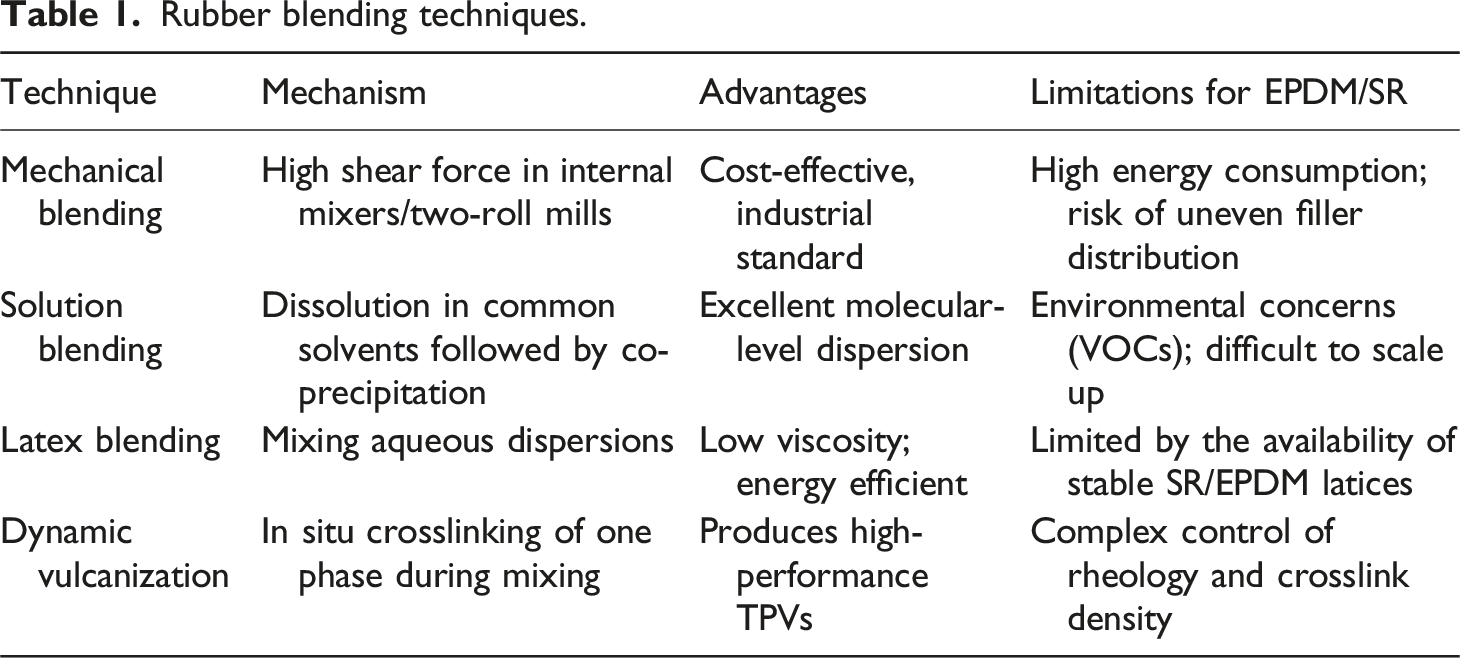
Among these techniques, dynamic vulcanization is effective for EPDM/SR systems to produce high-performance thermoplastic vulcanizates with tailored morphologies, it also represents a pivotal innovation in blend technology. By adding curatives (sulfur, peroxides, or phenolics) while the rubber phases are molten under shear, selective crosslinking of the dispersed phase occurs, producing finely divided vulcanized particles embedded in a thermoplastic matrix.36,39,40 The resulting thermoplastic vulcanizates combine rubbery elasticity with melt processability, as seen in polypropylene/EPDM systems where crosslinked EPDM domains enhance oil resistance and compression set. 26 Phase inversion during dynamic vulcanization driven by viscosity ratios and crosslinking rates can be manipulated to favor co-continuous morphologies for optimal toughness. 26
Radiation-based crosslinking has also emerged as an alternative processing route for saturated elastomers, particularly EPDM, offering uniform network formation without the need for chemical curatives. Electron beam irradiation has been reported as an effective non-thermal technique to induce crosslinking during or after processing, with crosslink density governed primarily by irradiation dose rather than conventional curing chemistry. 41 Such approaches are attractive for filled EPDM systems, where enhanced interfacial bonding and controlled network formation can be achieved through dose-dependent mechanisms.
Interfacial compatibility remains a persistent challenge in immiscible rubber blends, as high interfacial tension promotes phase coalescence and macro-scale separation, ultimately degrading mechanical performance.2,20 Recent advancements in elastomer blending emphasize the critical role of interfacial engineering to overcome thermodynamic immiscibility. For instance, the incorporation of functionalized additives has been shown to significantly reduce interfacial tension and promote stable phase morphologies, thereby enhancing the overall mechanical and thermal performance of rubber-based composites. 42
Characterization tools for blend fundamentals
The performance of rubber nanocomposites is fundamentally dictated by the hierarchical structure-property relationships established during processing. Effective filler-matrix interactions and the formation of a robust filler network are essential for achieving multifunctional properties, as the spatial distribution of nanoparticles directly influences the stress transfer mechanisms and functional responses of the elastomer matrix. 43
Vulcanization chemistry governs the three-dimensional network structure responsible for elasticity, mechanical strength, and long-term stability in rubber blends. 44 Diene rubbers cure via sulfur vulcanization, forming mono-, di-, and polysulfidic crosslinks accelerated by zinc oxide and guanidine or sulfenamide promoters. 19 Non-diene elastomers like EPDM and SR require peroxide initiators (e.g., dicumyl peroxide, DCP) that abstract hydrogen to create carbon-centered radicals, yielding stable C–C bonds. 45
Co-agents, antioxidants, and protective waxes are commonly employed to improve crosslinking efficiency and enhance resistance to thermal aging and ozone degradation in service environments. 19 Cure behavior in rubber blends is monitored using rheometric techniques, which provide insight into scorch safety, optimum cure, and network development during processing.19,46
Compounding additives play multifaceted roles beyond crosslinking. Processing aids reduce melt viscosity and die swell during extrusion, while tackifiers improve green strength for tire building. 7 Protective waxes bloom to rubber surfaces post-vulcanization, forming microcrystalline barriers that inhibit ozone attack a critical mechanism in outdoor applications. 19 In filled systems, bound rubber formation serves as an indicator of polymer-filler interactions, with higher bound rubber contents generally correlating with enhanced reinforcement and reduced dynamic losses. 19
Analytical protocols are essential for validating blend architecture and performance. Microscopy techniques scanning electron microscopy (SEM) and transmission electron microscopy (TEM) resolve phase domains, filler dispersion, and interfacial gaps at sub-micron resolution.47–49 Thermal analysis via thermogravimetric analysis (TGA) and dynamic mechanical analysis (DMA) quantifies degradation onset, char yield, and viscoelastic transitions. 45 Solvent swelling in conjunction with the Flory-Rehner equation estimates crosslink density (ve), while Fourier-transform infrared spectroscopy (FTIR) tracks chemical modifications during aging or compatibilizatio.50,51 Electrical and dielectric spectroscopy probe conductivity pathways and polarization mechanisms in conductive or shielding formulations. 52
A comparable polarity gradient is evident in peroxide-cured HNBR/EPDM blends, where the total solubility parameter declines. 53 The three-dimensional Flory–Huggins parameter based on Hansen solubility components accurately predicts solvent transport and swelling behaviour across both polar and non-polar amines in these blends, whereas the one-dimensional is preferable for crosslink-density determination. 53 This further validates the advantage of Hansen-based interaction parameters in tackling thermodynamic immiscibility in non-polar/polar elastomer systems such as EPDM/SR.
These fundamental principles establish the framework for understanding morphology evolution, nanoferrite localization, and structure-property relationships in EPDM/SR-based multifunctional composites, which are discussed in the following sections.
Blends containing EPDM, SR, or both
Ethylene propylene diene monomer (EPDM) rubber excels in weather resistance and flexibility due to its non-polar, saturated backbone, making it a staple in outdoor applications like seals and roofing.14,54 SR with its silicone-oxygen backbone, offers exceptional thermal stability and low-temperature flexibility, ideal for high-heat environments such as aerospace components.55,56 Blending these elastomers aims to combine EPDM’s environmental durability with SR’s thermal resilience, yet their differing polarities often result in immiscibility, posing challenges to phase adhesion and performance.
EPDM-based blends
EPDM stands as a cornerstone in elastomer blending, prized for its saturated backbone that delivers unmatched durability in harsh environments.1,57,58 Its structure ensures seamless integration with diverse partners, allowing formulators to fine-tune composites for everything from rooftop membranes to engine mounts without compromising long-term stability. 4 Bragaglia et al. 59 emphasized EPDM’s role as a flexible matrix in thermoplastic vulcanizates (TPVs), where dynamic crosslinking with polypropylene yields compression sets below 25% at elevated temperatures. In NR/EPDM systems, EPDM’s ozone shield extends service life in tire sidewalls, though chlorinated polyethylene at 5 phr is needed to curb phase coarsening. 20 Ternary NR/SBR/EPDM blends, optimized through design of experiments, strike a sweet spot between wet traction and rolling resistance for high-mileage tires. 7 Zhang et al. 60 explored EPDM blends with NR/BR elastomers for ozone-resistant tire sidewalls, proposing new approaches that improved mechanical properties like fatigue resistance and crack growth inhibition, achieving up to 50% extension in sidewall durability compared to conventional formulations.
He et al. 3 demonstrated carbon nanotubes’ synergy with EPDM, where 1 phr loadings elevate modulus by 80% while preserving elongation above 500%. Yet, overfilling EPDM/PP blends triggers filler clusters, slashing impact strength unless shear-induced dispersion is tightly controlled. 26 EPDM, when paired with virgin stock, regains 90% of original tensile strength via adjusted sulfur/peroxide ratios. 61 Abdulrahman et al. 62 demonstrated EPDM’s compatibility with high-density polyethylene and carbon black, achieving tensile strengths up to 15.1 MPa at 40 phr. Antunes et al. 26 detailed phase inversion in EPDM/PP during dynamic vulcanization, producing sub-micron rubber domains that revolutionize hose durability. EPDM/SBR compounds, refined via statistical modeling, maximize grip on slick roads without inflating fuel consumption. 7 FKM/EPDM, despite cure-rate mismatches, yields fuel-tank linings when peroxide systems are synchronized with co-agents. 20
Le et al. 63 mapped filler migration in ternaries: silica gravitates to NBR in EPDM/NBR, while carbon black nests in EPDM when paired with NR. Nano-clay at 3 phr fully exfoliates in EPDM, cutting oxygen permeation by 70% for tire inner liners. 4 Silane-grafted graphene oxide in EPDM/BR pushes tear resistance to 45 kN/m. 3 Rahmaniar et al. 64 investigated pumice and clay as natural fillers in NR/EPDM (60/40) blends, revealing that 50/50 pumice/clay at 70 phr optimized cure rate index, density (1.4 g/cm3), and abrasion resistance (350 mm3 loss), underscoring sustainable minerals as viable reinforcements for tire and industrial goods.
El-Sabbagh 65 clarified that compatibility in natural rubber and EPDM blends is poor due to solubility parameter mismatch, leading to phase separation and non-linear viscosity; however, gamma radiation or grafting EPDM with maleic anhydride improves homogeneity, reduces dispersed phase domain size, and results in a single glass transition temperature in differential scanning calorimetry.
Thermal profiles shift with partners EPDM/PP TPVs hold firm past 400°C, while EPDM/IIR degrades gracefully at 350°C under inert conditions. 61 Kodal et al. 66 examined DSC, TMA, TGA, and DTA in carbon nanofiller-rubber nanocomposites, revealing 10-30% increases in glass transition temperature via DSC and decomposition delays up to 50°C in TGA, offering methodologies applicable to nanoferrite systems for assessing thermal stability and filler dispersion effects. EPDM/NBR cables maintain volume resistivity above 1012 Ω·cm. 29 Long-term aging of EPDM/CR shows crosslink breakdown after 500 hours at 150°C, countered by antioxidant bleed from the CR phase. 20 Ateia et al. 67 developed EPDM blends with enhanced electrical and mechanical properties for industrial applications, reporting increased dielectric constant and tensile strength through optimized filler ratios, demonstrating their viability for high-voltage insulation and sealing systems where environmental resistance is critical.
SR-based blends
SR imparts thermal stability from −100°C to over 300°C and inherent biocompatibility, yet its mechanical weakness often below 5 MPa tensile demands strategic partnerships.1,5,68 Blending SR with polar or reinforcing elastomers compensates for these deficits while preserving its dielectric and heat-resistant core, creating hybrids suited for medical tubing, aerospace seals, and electrical insulation.2,69
Muslov et al. 5 quantified SR’s baseline hyperelasticity, recording 5.55 MPa tensile strength and 1387% elongation at 25°C, dropping modestly to 4.01 MPa and 979% at 45°C, with a stiffness gradient of just −0.08 MPa/°C ideal for thermal cycling. When blended with nitrile rubber (NBR), SR/NBR at 70/30 ratios gained oil swell resistance below 15%, far outperforming neat SR’s 80% uptake, thanks to NBR’s polar shielding. 2
Han et al. 45 reviewed SR’s thermal limits, noting neat SR onset degradation at 350°C in air, but CeO2 at 2 phr pushed this to 420°C via radical scavenging, a strategy echoed in SR/fluoroelastomer blends where FKM phases delayed chain scission to 450°C. In contrast, SR/NR blends at 50/50 improved tear strength to 25 kN/m double neat SR yet required silane grafting to prevent NR’s oxidative collapse under UV. 2
El-Nashar et al. 13 loaded SR with Co-Zn nanoferrite up to 17 phr, peaking saturation magnetization at 33.2 emu/g and resistivity at 5.82 × 10¹⁰ Ω·cm at 8 phr, ideal for flexible magnetic sensors. Agami 70 mirrored this in SR/Co-Zn systems, finding dielectric constant climbing from 3.2 to 8.5 at 8 phr before plateauing, while mechanical properties followed suit tensile peaking at 9.5 MPa versus 3.5 MPa for unfilled SR.
Sun et al. 71 contrasted ferrite types in liquid silicone rubber: SrFe12O19 at 7 wt% delivered −33 dB reflection loss across 10.1 GHz, while carbonyl iron powder at 3 wt% managed −21 dB over 3.9 GHz, highlighting hexagonal ferrites’ broadband superiority. Suprapedi et al. 72 pushed SR/SrFe12O19 to 90 wt% filler, yielding remanence of 56 emu/g and coercivity of 1900 Oe permanent magnet territory albeit at elongation cost (178%).
Hemeda et al. 52 aged SR/NiCr ferrite composites, observing ε′ rise with SR fraction due to interfacial polarization, while AC resistivity fell trade-offs managed via glucose-capped ferrites per Peymanfar et al., 73 who achieved −82.7 dB RL at 11.2 GHz in capped BaFe2O4/SR versus −51.7 dB uncapped. Shit et al. 69 cautioned on SR’s low surface energy (21 mN/m), driving filler migration in blends; silane-treated silica in SR/EPDM localized at interfaces. 74 Thermal conductivity followed filler geometry plate-like SrFe12O19 outperformed spherical Co-Zn by 30% at equal loading.13,71
EPDM/SR blends: An emerging frontier
EPDM and SR represent polar opposites in elastomer chemistry EPDM’s hydrocarbon chain versus SR’s siloxane backbone yet their union promises a rare fusion of outdoor toughness and extreme thermal resilience, albeit at the cost of inherent immiscibility.1,21 This polarity gap drives coarse phase separation unless bridged by compatibilizers or nanofillers, making EPDM/SR blends a true frontier in multifunctional rubber design. 21
Bhowmick et al.
21
pioneered aging studies on 50/50 EPDM/SR, revealing dual
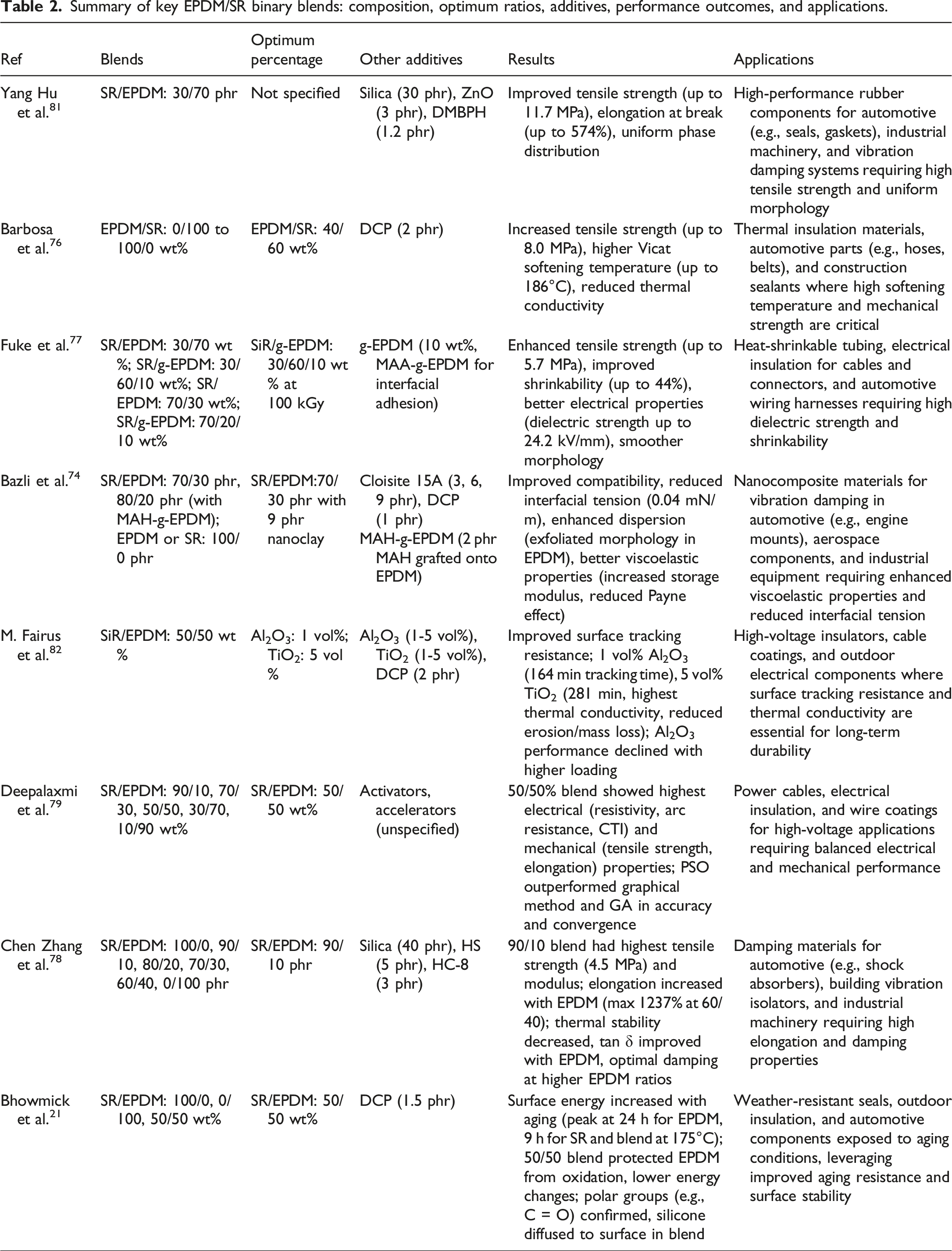
Fuke et al. 77 introduced MAH-g-EPDM in 30/60/10 SiR/EPDM/g-EPDM, electron-beaming to 100 kGy for 44% heat shrinkability at 140°C and dielectric strength of 24.2 kV/mm outperforming ungrafted 30/70 by 150% in shrink response while smoother morphology cut surface roughness by 60%. Bazli et al. 74 slashed interfacial tension to 0.04 mN/m using 2 phr MAH-g-EPDM and 9 phr nanoclay in 70/30 SR/EPDM, achieving exfoliated clay in EPDM phase, storage modulus up 300% at 25°C, and Payne effect halved versus uncompatibilized blends. Consistent with these findings, the incorporation of MAH-g-EPDM as a compatibilizer in polar/non-polar rubber blends has been shown to significantly refine phase morphology and enhance nanofiller dispersion. For instance, in XNBR/EPDM blends reinforced with graphene nanoplatelets (0.1-1 phr), the addition of MAH-g-EPDM reduced the size of the dispersed EPDM phase in the XNBR matrix, promoted uniform graphene distribution with minimal aggregation, and resulted in a rougher fracture surface indicative of improved interfacial adhesion. These morphological improvements translated into mechanical properties enhancements. 23
Zhang et al. 78 flipped the ratio: 90/10 SR/EPDM maximized modulus at 100% strain, while 60/40 hit 1237% elongation and peak tan δ for damping EPDM’s saturation enabling hyperelasticity SR alone cannot. Aging reversed roles; SR’s surface bloom post-175°C protected EPDM’s core dropping oxidation index by 55%. 21
Nanoferrites bridged the gap: Parveen et al. 12 doped EPDM-rich blends with 5 phr Ni-Zn-Cu ferrite, doubling resistivity to 33 GΩ while tensile rose 100%; El-Nashar et al. 13 mirrored in SR-rich with Co-Zn at 8 phr for 350% elongation and 67 Shore A. Hybrid loading e.g., 3 phr nanoclay + 5 phr ferrite cut agglomeration seen in single-filler systems. 74
Applications span extremes: 40/60 for construction sealants, 76 50/50 for cable jacketing, 79 30/70 for heat-shrink tubing, 77 and nanoferrite variants for EMI-shielded automotive wiring. 12 Challenges persist high SR drives cost, high EPDM sacrifices heat but grafted compatibilizers and hybrid fillers,75,77 resolve both. Future lies in bio-siloxanes and recycled EPDM to green the blend while retaining 11+ MPa strength and 500%+ elasticity.
Sustainability also took center stage, with eco-friendly nanoferrites stepping in as greener alternatives to traditional fillers, answering the call for materials that are kinder to the planet while still packing a performance punch. 12 To address these sustainability issues, recent studies have explored renewable bio-fillers as alternatives to traditional reinforcements. Abid et al. 80 reviewed the use of renewable resources such as proteins and polyacids as eco-friendly fillers for green elastomers, emphasizing their biocompatibility, and ability to enhance mechanical and thermal properties while reducing reliance on petroleum-based additives in rubber composites.
Summary of key EPDM/SR binary blends: composition, optimum ratios, additives, performance outcomes, and applications.
Nanoferrite fillers in rubber blends
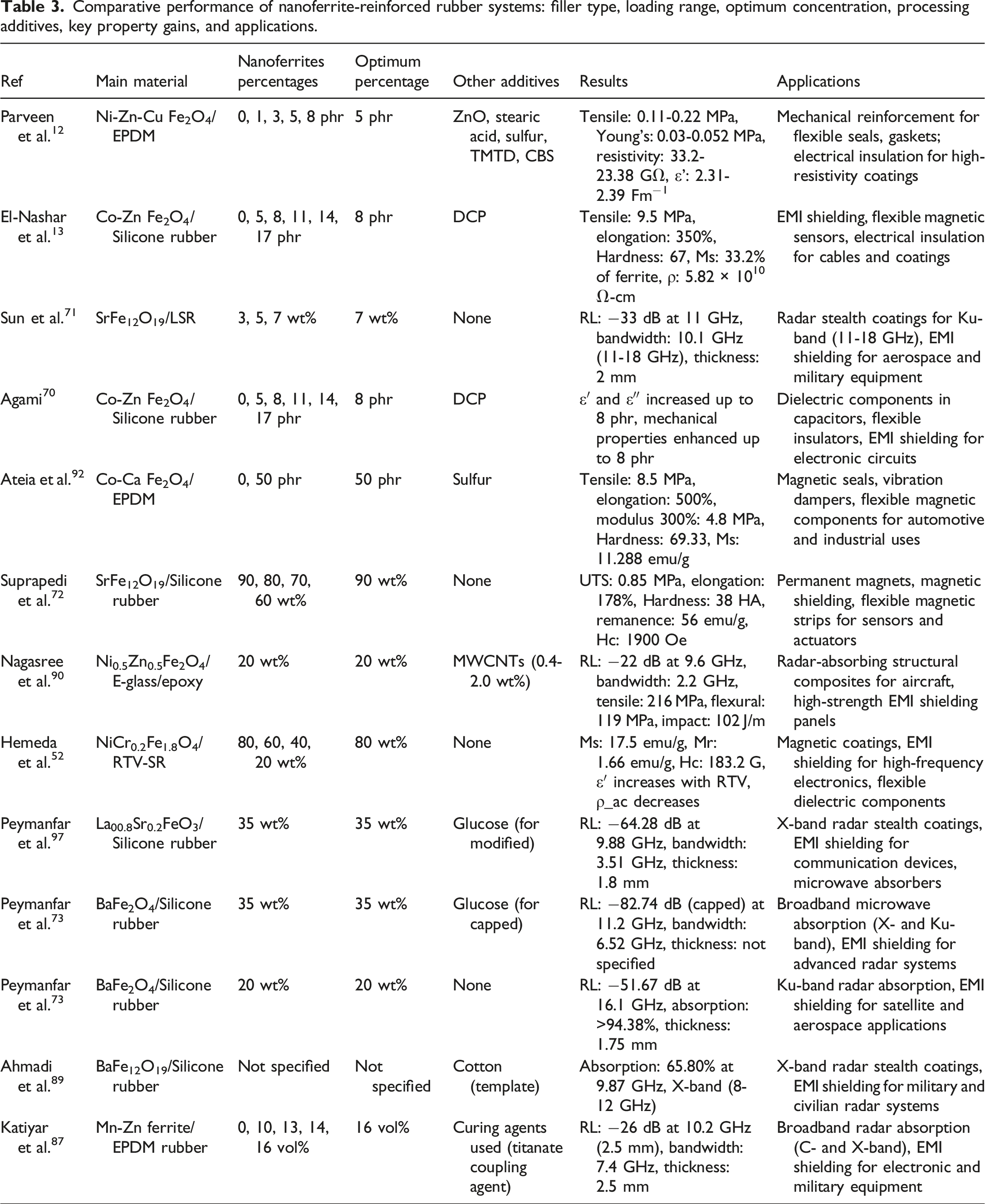
Nanoferrites emerged as versatile fillers that significantly enhanced both mechanical and functional properties in rubber blends, particularly in composites combining EPDM and Silicone Rubber. 20 The synthesis methodology is crucial in determining their final properties, including particle size, shape, and distribution, which directly influence their dispersion within the rubber matrix. Among common methods, the Chemical Co-precipitation technique stands out as one of the most efficient and manageable routes for preparing spinel nanoferrites such as Co Zn nanoferrite. 83 This method involves precise control over precipitating agents and temperature to ensure the formation of a pure cubic spinel phase. Subsequent Annealing at various temperatures (e.g., 400-800) is essential for enhancing crystallinity and controlling the size of the nanoparticles; particle size increases with annealing temperature, which in turn affects magnetic properties like saturation magnetization. 83 Controlling these parameters is a critical first step to minimize agglomeration and improve interfacial compatibility with the EPDM/SR matrices. Menon et al. 84 reviewed the use of manganese-zinc ferrite in EPDM matrices, noting its ability to impart electromagnetic interference shielding and microwave absorption capabilities. Vishnu et al. 20 highlighted that fillers like ferrites improved dielectric and electromagnetic properties while mitigating thermal degradation through enhanced dispersion, a principle highly applicable to EPDM/SR blends. These properties positioned nanoferrites as key enhancers for applications such as electrical insulation, radar-absorbing coatings, and EMI shielding. Bellucci et al. 85 clarified that nickel-zinc ferrite and potassium strontium niobate nanoparticles in natural rubber increase thermal stability and glass transition temperature, with similar trends observed for dielectric permittivity, suggesting that these enhancements are governed by the same interfacial mechanisms.
The mechanical enhancements driven by nanoferrites were substantial, primarily due to strong filler-matrix interactions and uniform dispersion at optimal loadings. Parveen et al. 12 synthesized Ni-Zn-Cu ferrite nanoparticles via sol-gel and incorporated them into EPDM, achieving a 100% increase in tensile strength (from 0.11 MPa to 0.22 MPa) and an 86% increase in Young’s modulus at 5 phr, with SEM confirming even dispersion. El-Nashar et al. 13 found that Co-Zn ferrite nanoparticles in SR at 8 phr yielded a tensile strength of 9.5 MPa and elongation at break of 350%, driven by enhanced crosslinking and stress distribution. Sattar et al. 86 reported that Co-Zn nanoferrites in NBR at 4 phr optimized tensile stress and Young’s modulus due to increased rubber-ferrite interactions. Prema et al. 30 showed that nano-sized nickel ferrite and gamma ferric oxide acted as semi-reinforcing fillers in EPDM, significantly improving tensile strength, tear strength, and hardness. These studies underscored nanoferrites’ potential to reinforce EPDM/SR blends, provided loadings were carefully controlled to maintain mechanical integrity.
Nanoferrites also imparted exceptional electromagnetic properties, enhancing the functionality of rubber composites for high-frequency applications. Katiyar et al. 87 demonstrated that EPDM composites with a 0.16 vol fraction of Mn-Zn ferrite and 2.5 mm thickness achieved a reflection loss of −26 dB at 10.2 GHz, with a 7.4 GHz absorption bandwidth, due to increased dielectric and magnetic losses. Sun et al. 71 reported that strontium ferrite nanoparticles (7 wt%) in liquid SR achieved a minimum reflection loss of −33 dB at 11 GHz with a 10.1 GHz bandwidth, driven by magnetic losses and uniform dispersion. Peymanfar et al. 73 showed that BaFe2O4 nanoparticles in SR at 35 wt% yielded a maximum reflection loss of 82.74 dB at 11.2 GHz with a 6.52 GHz bandwidth, enhanced by glucose-capped isotropic magnetic exchange. Beyond electromagnetic shielding, surface-modified magnetic nanoferrites exhibit exceptional adsorption capacities (>100-400 mg g−1) for heavy metals and dyes, coupled with near-complete magnetic regenerability, establishing their dual role as high-performance fillers and eco-friendly water remediation agents. 88 Kodal et al. 66 reviewed thermal properties of rubber nanocomposites with carbon nanofillers, reporting TGA shifts in degradation onset by 20-50°C and DSC improvements in crystallization behavior, providing insights into dispersion mechanisms that could parallel nanoferrite’s role in enhancing thermal stability and filler-matrix interactions in EPDM/SR systems. Ahmadi et al. 89 synthesized barium hexaferrite nanoparticles via a sol-gel method using a cotton template, achieving a microwave absorption of 65.8% at 9.87 GHz in an SR matrix. Siva Nagasree et al. 90 found that NiZn ferrite in E-glass/epoxy composites with MWCNTs achieved a reflection loss of −22 dB at 9.6 GHz, suggesting synergistic dielectric-magnetic filler effects applicable to EPDM/SR blends. These findings highlighted nanoferrites’ ability to endow EPDM/SR composites with superior microwave absorption and EMI shielding capabilities.
The balance between mechanical and electromagnetic properties in nanoferrite-reinforced blends depended on filler composition, loading, and processing conditions. Agami 91 clarified that in Co-Zn nanoferrite/NBR nanocomposites, rheometric and mechanical properties improve with increasing ferrite load but decrease with particle size, while dielectric constant increases with both load and particle size, attributed to nanoparticle-rubber matrix interactions. Ateia et al. 92 reported that EPDM composites with 50 wt% Co0.7Ca0.3Fe2O4 nanoferrites exhibited ferromagnetic behavior with a saturation magnetization of 11.288 emu/g at 300 K, driven by uniform dispersion of particles, as confirmed by SEM. Agami 70 demonstrated that CoZn nanoferrites in SR at 8 phr enhanced dielectric permittivity across 50 Hz to 5 MHz due to interfacial polarization. Suprapedi et al. 72 observed that SrFe12O19 in SR enhanced tensile strength with increasing SR content up to 40 wt%, but magnetic properties like remanence decreased (from 56 to 28 emu/g) due to SR’s non-magnetic nature. Hemeda et al. 52 found that NiCr0.2Fe1.8O4 nanoferrites in RTV-SR increased dielectric constant with RTV content, while AC resistivity decreased, with uniform dispersion confirmed by XRD and SEM. These studies emphasized the need for optimized nanoferrite loadings and EPDM/SR ratios to balance mechanical reinforcement with electromagnetic functionality.
Challenges in nanoferrite incorporation included agglomeration at higher loadings, which compromised performance. Investigations noted that agglomeration beyond 5-8 phr diminished mechanical properties due to uneven stress distribution.12,13 Agami et al. 70 reported reduced dielectric performance at higher nanoferrite loadings in SR due to agglomeration. Prema et al. 30 observed that agglomeration above 80 phr in EPDM limited tensile strength and hardness improvements. Antunes et al. 26 stressed that precise control over processing was critical to ensure uniform dispersion and optimal composite performance, a principle applicable to EPDM/SR/nanoferrite blends. Strategies like sol-gel synthesis, as used by Parveen et al. 12 and Ahmadi et al., 89 or surface modification of nanoferrites could mitigate agglomeration, enhancing filler-matrix interactions. Yaghmour et al. 93 incorporated sol-gel synthesized ZnFe2O4 nanoparticles into NBR, demonstrating enhanced thermal stability (reduced degradation rate), increased hardness and tear strength, and saturation magnetization rising with loading, while EPR revealed higher g-factor and line width validating zinc ferrite as a multifunctional reinforcement for flexible magnetic composites. Mahmoud et al. 94 developed Lithum Ferite/Silica nanoparticles from rice husk silica, which, at 16 phr in NBR, enhanced tensile strength, modulus, and microwave absorption with a 2.2 GHz bandwidth. Vidya et al. 95 comprehensively reviewed over 70 studies and confirmed that maximum saturation magnetization, retentivity, and coercivity in spinel nanoferrites are consistently achieved via sol-gel auto-combustion, autoclave, and chemical bath deposition methods, whereas co-precipitation and mechanical alloying yield the lowest values, with oxygen vacancy content and cation distribution governed by calcination temperature being the dominant controlling factors.
In summary, nanoferrites significantly enhanced the mechanical, magnetic, and dielectric properties of EPDM/SR blends, making them suitable for advanced applications like EMI shielding, microwave absorption, and electrical insulation. Studies demonstrated nanoferrites’ electromagnetic potential,71,87,96 while others highlighted their mechanical reinforcement capabilities.12,13 Challenges like agglomeration necessitated careful optimization of filler loadings and processing conditions, as emphasized by Antunes et al. 26 and Agami et al. 70 Future research should focus on developing advanced dispersion techniques, exploring hybrid nanoferrite fillers, and optimizing EPDM/SR ratios to fully realize the potential of these composites in high-performance engineering applications.
Comparative performance of nanoferrite-reinforced rubber systems: filler type, loading range, optimum concentration, processing additives, key property gains, and applications.
Characteristics of EPDM/SR blends with nanoferrite reinforcement
This section evaluates the performance of EPDM/SR blends reinforced with nanoferrites and other fillers. Properties including mechanical, thermal, dielectric, magnetic, and electromagnetic shielding effectiveness are analyzed across loading levels, synthesis methods, and surface modifications.
Mechanical properties
Mechanical properties played a crucial role in the durability and performance of EPDM and SR blends, particularly when enhanced with nanoferrite fillers for demanding engineering applications. 79 Deepalaxmi et al. 79 demonstrated that EPDM significantly bolstered tensile strength and elongation at break in SR/EPDM blends, especially at higher EPDM contents, due to its robust polymer backbone. This mechanical reinforcement suggested that SR/EPDM blends, when combined with nanoferrites, could achieve superior strength and flexibility, making them ideal for applications like flexible cables, automotive seals, and cable insulation.
Nanoferrites significantly enhanced the mechanical properties of EPDM/SR blends through strong filler-matrix interactions and optimized crosslinking. Parveen et al.
12
reported that Ni-Zn-Cu ferrite nanoparticles in EPDM at 5 phr accelerated sulfur curing, reducing scorch time (ts2) from 24.08 to 3.71 minutes and optimum cure time (tc90) from 29 to 6.76 minutes, leading to a 100% increase in tensile strength (from 0.11 MPa to 0.22 MPa) and an 86% increase in Young’s modulus. As shown in Figure 1, the addition of these nanoferrites significantly enhances both the tensile strength and Young’s modulus, with a peak improvement of approximately 100% and 86%, respectively, at a 5 phr filler loading. This enhancement is attributed to the uniform dispersion of the NiZCF nanoparticles, which facilitates efficient stress transfer between the filler and the polymer chains. However, a decline in properties was noted at higher loadings (8 phr) due to particle agglomeration, highlighting the importance of optimizing filler concentration in multifunctional EPDM composites. Mechanical properties of Ni-Zn-Cu ferrite/EPDM nanocomposites as a function of filler loading: (a) Tensile strength and (b) Young’s modulus. The maximum reinforcement is observed at 5 phr loading. (Adapted from Ref. 12 licensed under a Creative Commons Attribution. 4.0 International License).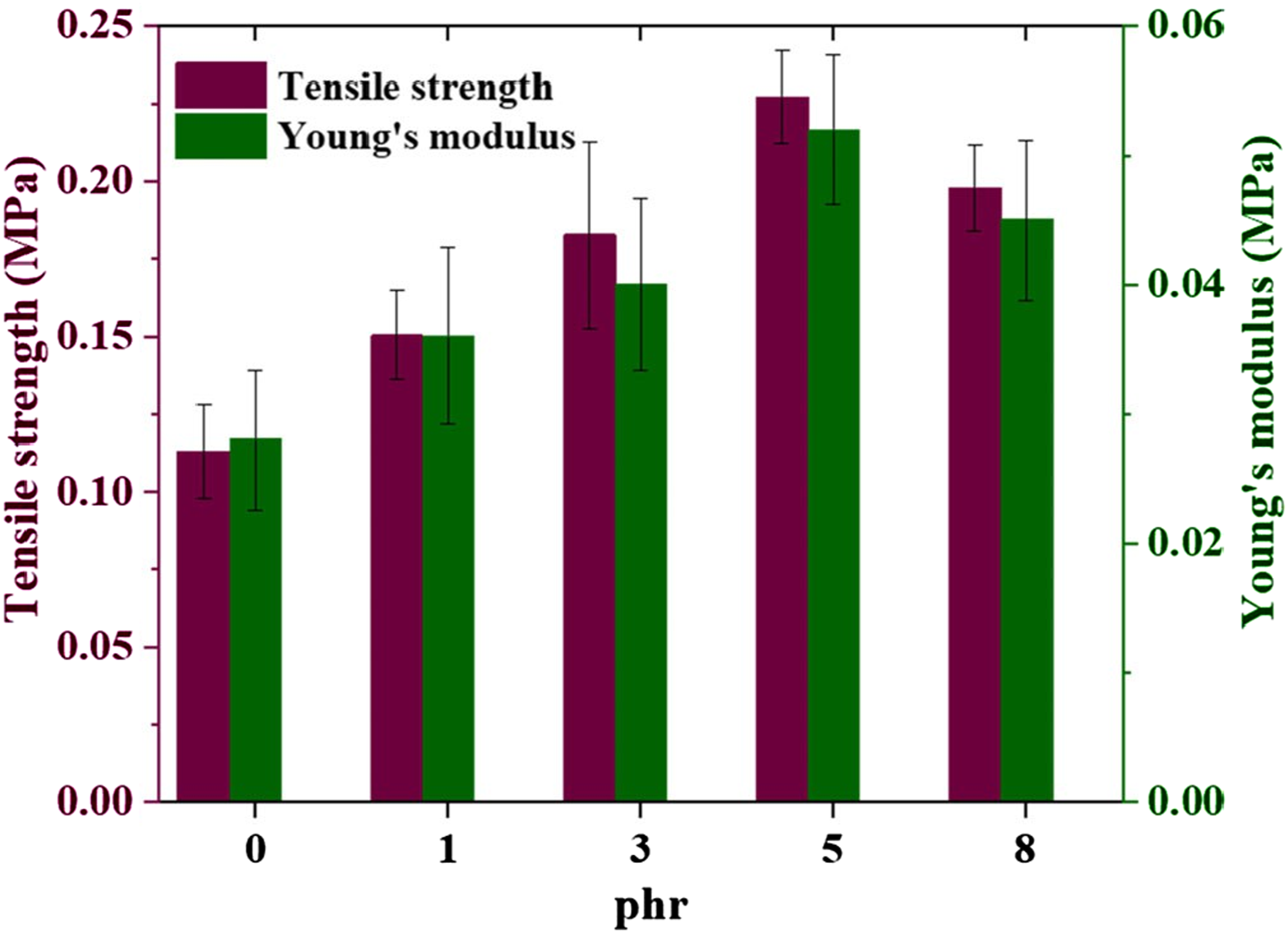
Ateia et al. 92 found that EPDM with 50 wt% Co0.7Ca0.3Fe2O4 nanoferrites achieved a tensile strength of 8.5 MPa and elongation at break of 500%, compared to 2.03 MPa and 300% for pure EPDM, due to increased crosslinking and homogeneous dispersion. El-Nashar et al. 13 observed that Co-Zn ferrite nanoparticles in SR at 8 phr yielded a tensile strength of 9.5 MPa and elongation at break of 350%, attributed to uniform dispersion and strong interfacial interactions. Sattar et al. 86 noted peak tensile stress and Young’s modulus in NBR with Co-Zn nanoferrites (x = 0.8) at 4 phr, suggesting similar optimization could enhance EPDM/SR blends. These findings highlighted nanoferrites’ potential to improve mechanical integrity, provided filler loadings were carefully controlled to avoid agglomeration, which reduced performance at higher loadings (e.g., 14 phr in SR 13 ).
Compatibilization and crosslinking strategies further improved the mechanical performance of SR/EPDM blends. Roy et al. 98 demonstrated that MAH-g-EPDM enhanced tensile strength in halloysite nanotube-filled EPDM composites through improved interfacial bonding, a principle applicable to nanoferrite-reinforced EPDM/SR blends. Fuke et al. 77 reported that MAA-g-EPDM in SR/EPDM blends increased tensile strength from 0.98 MPa to 5.7 MPa at 100 kGy electron beam crosslinking, enhancing toughness through improved interfacial adhesion. Hu et al. 75 showed that SR/EPDM blends with novel SR designs exhibited elongation at break of 494-574%, surpassing commercial SR-Vi blends (424%), due to a homogeneous crosslinking network ensuring uniform stress distribution. Costa et al. 4 found that 1.5 wt% multi-walled carbon nanotubes (MWCNTs) in silane-modified EPDM improved tensile strength and elastic modulus by 25%, emphasizing the role of nanofiller dispersion. These strategies underscored the importance of compatibilization and crosslinking in achieving robust mechanical properties in nanoferrite-reinforced EPDM/SR blends.
Blend composition and phase interactions significantly influenced mechanical outcomes, often requiring a balance between strength and flexibility. Zhang et al. 78 reported that a 90/10 SR/EPDM blend yielded the highest tensile strength (4.5 MPa), while increasing EPDM content to 40 phr enhanced elongation at break to 1237% but reduced tensile strength to 2.7 MPa, reflecting a trade-off. Eid et al. 29 found that a 75/25 EPDM/NBR blend, stabilized with 10 phr PVC, achieved superior stress and strain at yield, highlighting EPDM’s contribution to tensile properties, a benefit extendable to EPDM/SR systems. Zhang et al. 60 observed that NR/BR/EPDM blends with APPS-grafted EPDM exhibited superior fatigue-to-failure properties, outperforming conventional NR/BR tire sidewall compounds due to improved covulcanization and filler distribution, suggesting similar modifications could enhance EPDM/SR/nanoferrite composites. Katiyar et al. 87 noted that increasing Mn-Zn ferrite loading in EPDM from 0 to 0.16 vol fraction raised hardness from 67-68 to 75-76 Shore A, but decreased tensile strength from 60 to 74 kg/cm2 due to the dilution effect, indicating the need for balanced nanoferrite content to maintain mechanical integrity.
The mechanical response of EPDM/SR blends is significantly influenced by the phase morphology and the concentration of the silicone phase. As illustrated in Figure 2, the incorporation of SR leads to a progressive modification of the tensile properties. According to the study by Barbosa et al.,
76
an increase in SR content results in a decrease in the Young’s modulus, while simultaneously enhancing the tensile strength compared to neat EPDM. This improvement is particularly evident in samples with higher SR content (ES4 and ES5), which exhibit tensile values approaching those of pure SR. Interestingly, the elongation at break remains relatively stable across different compositions, suggesting that the elastic nature of the material is preserved despite the inherent immiscibility of the two polymers. A noteworthy phenomenon was observed in the 40/60 EPDM/SR blend (ES4), where the stress-strain curve shows a sudden drop followed by a subsequent increase. This behavior is attributed to partial delamination and rupture parallel to the load direction, a characteristic of the transition morphology near the phase inversion point. These findings highlight the potential of EPDM/SR blends for applications requiring specific mechanical stability and cost-effectiveness, such as thermal seals and cable insulation. Tensile stress-strain behavior of EPDM/SR blends at various weight ratios: (ES1) neat EPDM, (ES2) 80/20, (ES3) 60/40, (ES4) 40/60, (ES5) 20/80, and (ES6) neat SR. The abrupt drop in ES4 indicates partial delamination during testing. (Adapted from Ref. 76 licensed under a Creative Commons Attribution. 4.0 International License).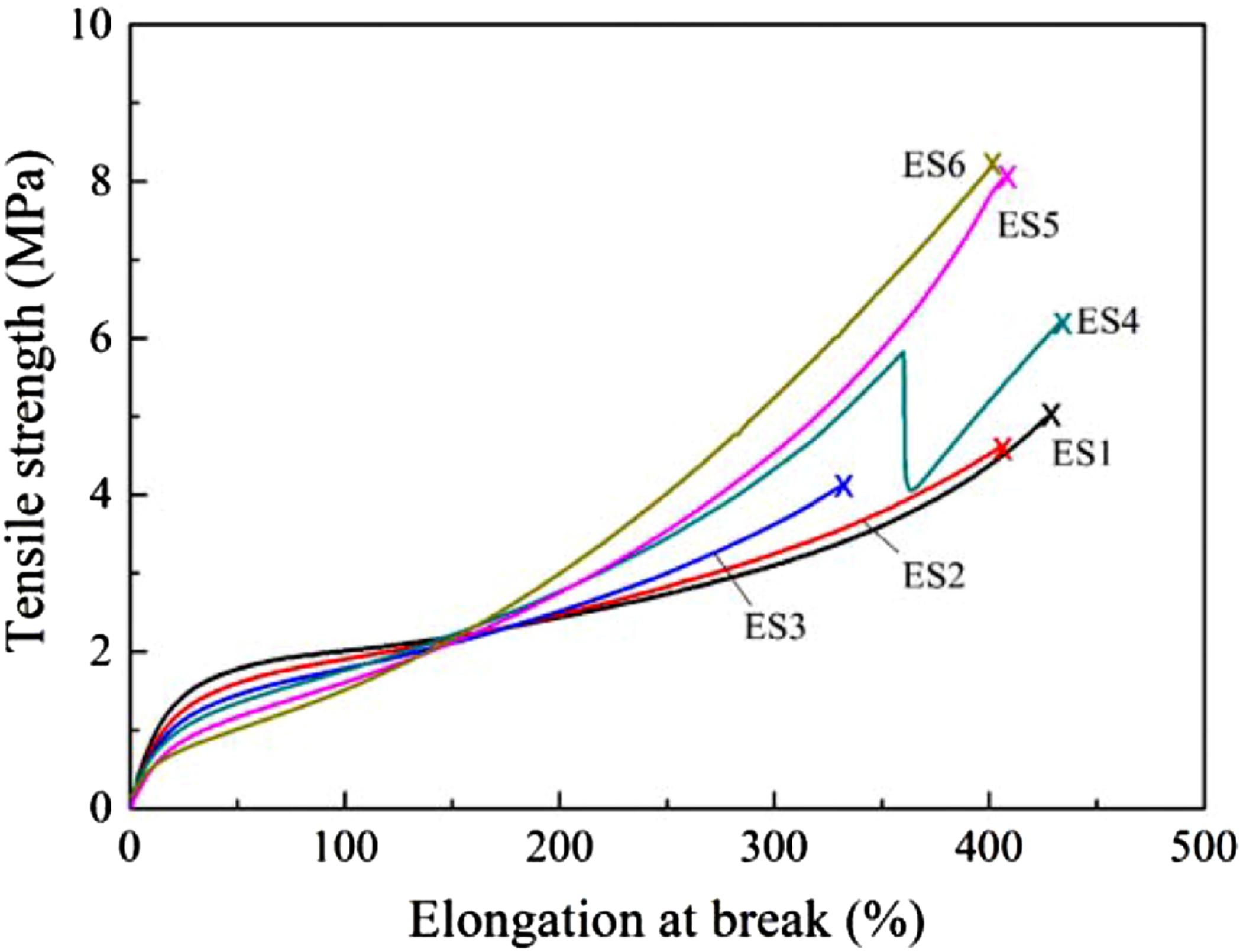
Challenges in achieving optimal mechanical performance included phase immiscibility and agglomeration at higher nanofiller loadings. Dorigato et al. 99 reported that nanofillers in PP/ABS blends increased tensile strength from 36 MPa to 40.5 MPa by stabilizing phase morphology, a principle applicable to EPDM/SR blends with nanoferrites to mitigate immiscibility. Parveen et al. 12 and El-Nashar et al. 13 emphasized that agglomeration beyond optimal loadings (e.g., 5-8 phr) reduced mechanical properties due to uneven stress distribution. Compatibilization strategies such as MAH-g-EPDM98,100 or silane modification, 4 and precise processing control were critical to ensuring uniform filler dispersion and phase homogeneity, as noted in previous studies on EPDM/SR blends.
Based on the consolidated data, the mechanical integrity of EPDM/SR/nanoferrite systems is governed more by the quality of the interface than the quantity of the filler. While high loadings are often sought for functional properties, the resulting agglomeration remains the primary bottleneck. We recommend that future designs prioritize dynamic vulcanization or functionalized nanoferrites to ensure that mechanical robustness is not sacrificed for electromagnetic performance.
Thermal and environmental stability
Thermal and environmental stability significantly extended the service life of EPDM and SR blends, enabling their use in harsh conditions for applications like cable insulation, aerospace components, and outdoor insulators. 45 Han et al. 45 emphasized that SR’s thermal stability was enhanced by additives like FeO(OH), which retained tensile strength and elongation after aging at 250°C for 14 days, suggesting potential benefits for EPDM/SR blends. Zhang et al. 78 found that neat SR exhibited a single-stage degradation at 420-580°C, significantly higher than EPDM’s degradation at 350-480°C, highlighting SR’s superior thermal resistance. Wang et al. 101 found that accelerated aging of SR seals in marine atmosphere revealed synergistic effects of temperature (110-150°C), 28% compression, and chemical media, accelerating oxidation and reducing thermal stability via TGA. 101 These properties positioned SR/EPDM blends as promising candidates for high-temperature environments, with nanoferrites offering further stabilization.
EPDM contributed environmental durability to SR/EPDM blends, though its thermal stability required enhancement. Costa et al.
4
reported that EPDM-based nanocomposites with 6 wt% nanoclay increased the maximum decomposition temperature by 10-15°C and residue percentage, attributed to the nanofiller’s barrier effect restricting chain mobility. Bragaglia et al.
59
noted that EPDM in EPDM/POM blends maintained a glass transition temperature (
Nanoferrites significantly enhanced the thermal and environmental stability of SR/EPDM blends by acting as thermal barriers and stabilizing phase morphology. Barbosa et al.
76
reported that SR in EPDM/SR blends increased the Vicat softening temperature, particularly after phase inversion, due to the thermal stability of Si-O bonds, supporting high-temperature applications. To further elucidate the phase behavior of the EPDM/SR system, Differential Scanning Calorimetry (DSC) analysis was conducted, as illustrated in Figure 3. The thermograms clearly exhibit two distinct glass transition temperatures Tg, each corresponding to the individual polymer phases. This lack of Tg convergence serves as a definitive thermal signature of the thermodynamic immiscibility between the non-polar EPDM and the polar SR. From a critical perspective, the persistence of these independent transitions confirms that the binary blend remains a phase-separated system at the molecular level. This thermal evidence reinforces the necessity of incorporating functional fillers, such as nanoferrites, which may potentially act as interfacial modifiers to enhance phase coupling and shift these thermal transitions. DSC thermograms of the binary system: (ES1) neat EPDM, (ES2) 80/20, (ES3) 60/40, (ES4) 40/60, (ES5) 20/80, and (ES6) neat SR blends. The presence of two distinct glass transition temperatures for the blends confirms the thermodynamic immiscibility of the phases. (Adapted from Ref. 76 licensed under a Creative Commons Attribution. 4.0 International License).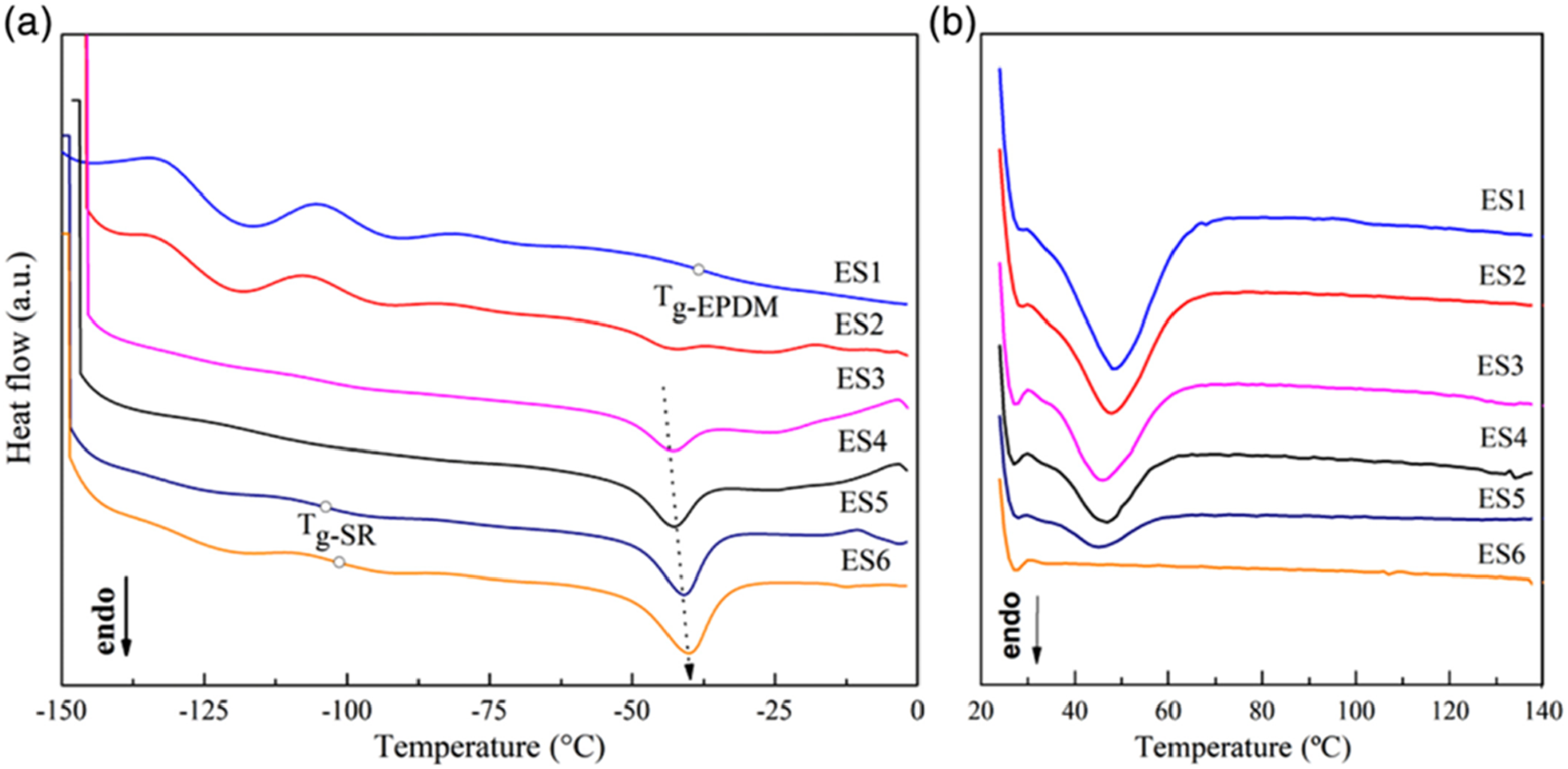
Fairus et al. 82 found that 1 vol% TiO2 nanofillers improved thermal conductivity in SiR/EPDM blends, suggesting that nanoferrites could complement these effects by enhancing thermal endurance. Bhowmick et al. 21 observed that a 50:50 SR/EPDM blend exhibited increased surface energy during air aging at 175°C, peaking earlier than pure EPDM due to polar carbonyl group formation, with SR diffusion reducing oxidative degradation. These findings indicated that nanoferrites, known for stabilizing SR systems, could mitigate thermal and oxidative degradation in SR/EPDM blends, ensuring durability in harsh environments.
Composition ratios and phase interactions influenced the thermal stability of SR/EPDM blends, presenting challenges that nanoferrites could address. Zhang et al. 78 noted that increasing EPDM content in SR/EPDM blends lowered thermal degradation temperatures from 544°C for neat SR to 458°C at a 60:40 SR/EPDM ratio, suggesting a need for stabilizing fillers to maintain high SR content benefits. Bendjaouahdou et al. 103 found that PP/SMR-ω blends with 30 wt% SR exhibited optimal resistance to thermal (100°C, 6 days) and UV aging (72 h), with minimal tensile strength loss, indicating SR’s potential to enhance EPDM/SR blend durability. The incorporation of nanoferrites, as suggested by Costa et al. 4 and Fairus et al., 82 could counteract the thermal stability reduction associated with higher EPDM content, leveraging SR’s superior thermal resistance while enhancing overall composite performance.
Damping properties, critical for vibration control applications, also benefited from SR/EPDM blend compositions and nanoferrite reinforcement. Zhang et al. 78 demonstrated that SR/EPDM blends with 30-40 phr EPDM showed a higher loss tangent (tan δ) than neat SR across 30-200°C, due to EPDM’s lower cross-link density and increased molecular mobility. This enhanced damping capability suggested that incorporating EPDM in SR/EPDM/nanoferrite composites could improve energy dissipation, while nanoferrites could further optimize performance through interfacial interactions, as noted in studies on nanofiller-reinforced blends. 4 Such properties made these composites suitable for damping-intensive applications like vibration isolators and structural components.
Challenges in achieving optimal thermal and environmental stability included phase immiscibility and the thermal degradation associated with higher EPDM content. The studies highlighted that immiscibility between SR and EPDM could compromise thermal performance unless addressed through compatibilization or nanofiller stabilization.76,78 Specifically, Zhang et al.
78
demonstrated through thermogravimetric analysis that neat SR exhibits the highest thermal stability with a single-stage degradation between approximately 420-580°C, while neat EPDM shows lower stability with degradation starting around 350-480°C. In SR/EPDM binary blends, a clear two-stage degradation pattern emerges (first stage related to EPDM at 360-490°C, second stage to SR at 490-580°C), and the overall thermal stability progressively decreases as EPDM content increases, as evidenced by lower residue percentages at high temperatures (e.g., 550°C). This trend is clearly illustrated in Figure 4.
78
TGA curves illustrating the thermal degradation behavior of SR/EPDM blends at various ratios, showing decreased stability with increasing EPDM content. (Adapted from Ref. 78 licensed under appropriate permissions).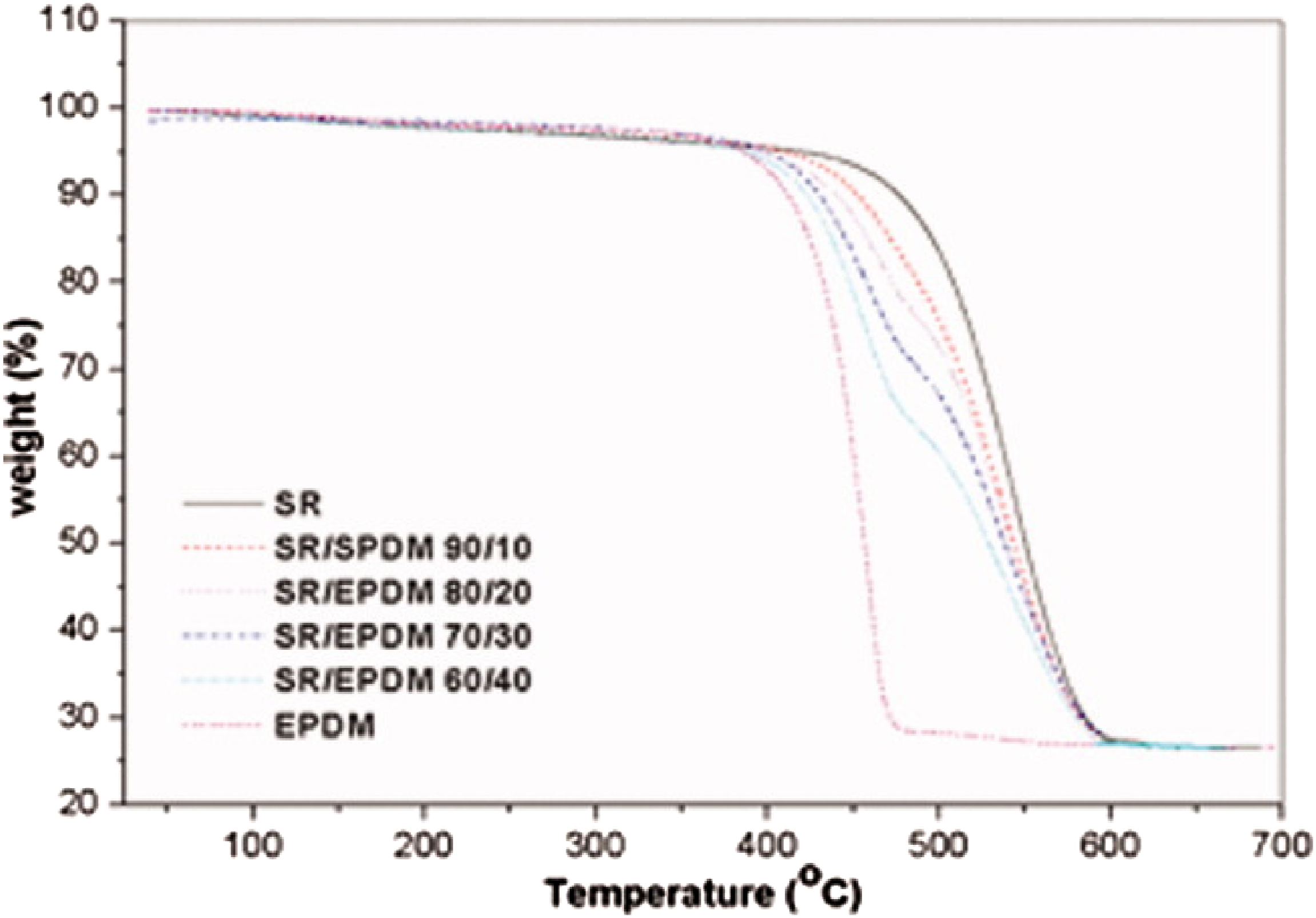
Nanoferrites, as evidenced by Costa et al. 4 and Fairus et al., 82 offered a solution by enhancing phase interactions and acting as thermal barriers, reducing degradation and improving aging resistance.
The thermal stability of nanoferrite-reinforced EPDM/SR blends presents both advantages and challenges. Although nanoferrites contribute to improved thermal resistance by acting as heat barriers, their impact on the degradation kinetics of the silicone rubber phase has not been thoroughly investigated. Hybrid systems combining nanoferrites with thermally conductive fillers represent a promising strategy for developing effective heat-dissipation pathways and improving the thermal durability of elastomeric composites.
Evolution of morphology
Refined morphology significantly enhanced the structural uniformity and performance consistency of EPDM and SR blends, ensuring reliability in demanding applications like cable insulation and automotive components. 76
The correlation between phase morphology and mechanical integrity is clearly demonstrated in the study of EPDM/SR blends across various concentrations. As shown in Figure 5,
76
the fracture topography varies significantly with the blend ratio. While EPDM (Figure 5(a)) exhibits a relatively homogeneous surface, the blends show distinct second-phase regions. In my perspective, the delamination and sudden drops in tensile strength observed in certain ratios (like 40/60 EPDM/SR) are direct consequences of the ‘phase pullout’ phenomenon (indicated by red arrows in Figure 5(d)). This suggests that at specific proportions, the thermodynamic affinity reaches its minimum, leading to a coarse morphology with poor interfacial adhesion. Conversely, decreasing the EPDM concentration can sometimes lead to a more refined dispersion (Figure 5(e)), highlighting the sensitivity of the system’s performance to the composition of the matrix. SEM micrographs illustrating the phase morphology of EPDM/SR blends: (a) 100 wt% EPDM; (b) 80 wt% EPDM; (c) 60 wt% EPDM; (d) 40 wt% EPDM; (e) 20 wt% EPDM; and (f) 0 wt% EPDM. White arrows indicate second-phase regions, while red arrows highlight phase pull-out, demonstrating the inherent immiscibility of the binary system. (Adapted from Ref. 76 licensed under a Creative Commons Attribution. 4.0 International License).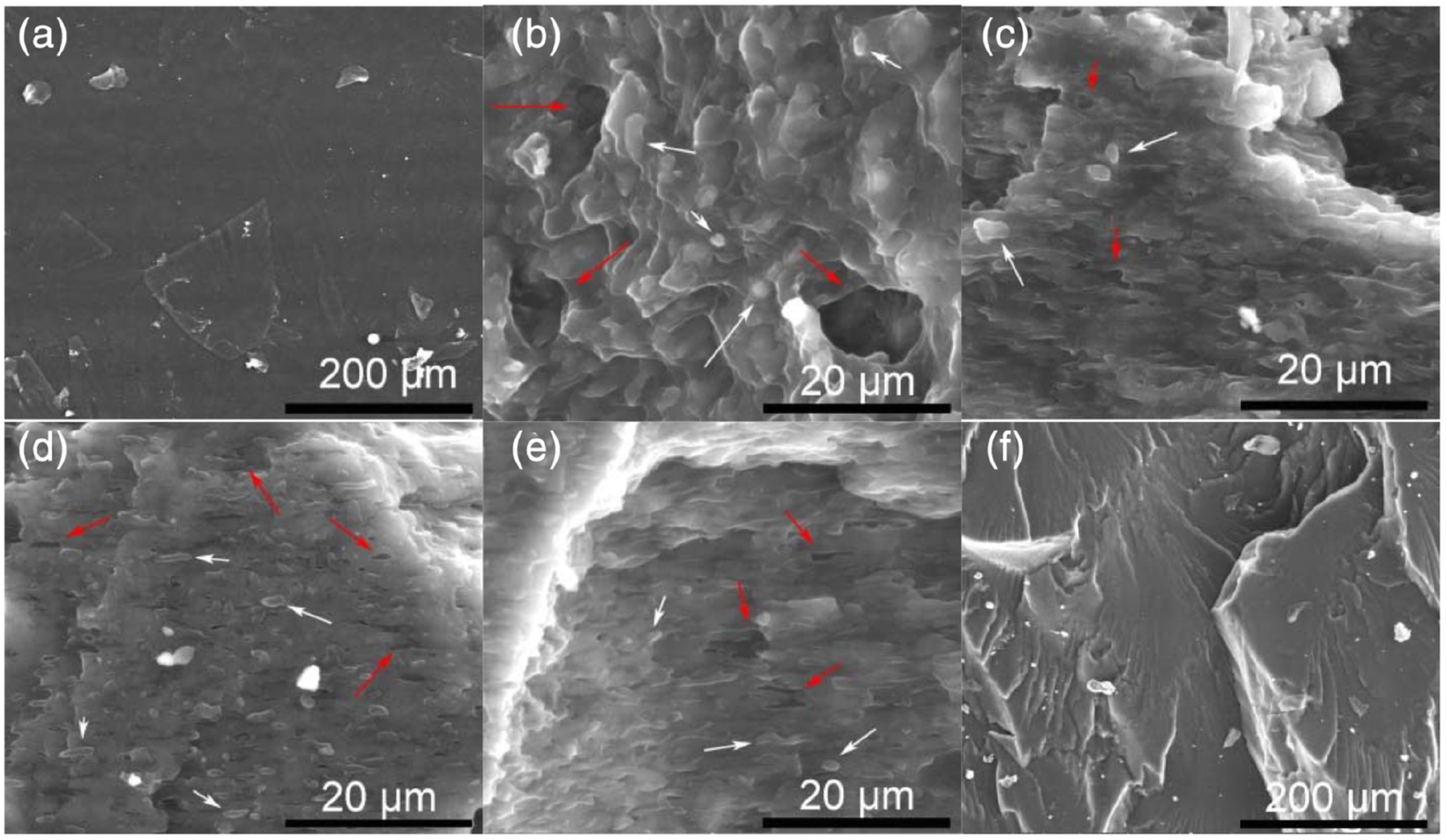
The transition from a coarse phase-separated structure to a more stable, co-continuous morphology is often facilitated by the synergistic effect of compatibilizers and nanofillers. As illustrated in Figure 6,
74
MAH onto the EPDM chain significantly enhances the interfacial interaction between the SR and EPDM phases. In my perspective, the most striking observation is how the nanofiller tends to migrate and localize within the EPDM phase or at the interface. This migration, as seen in the transition from droplet-shaped domains to elongated, stretched structures (Figure 6(b) and (c)), effectively stabilizes the morphology and prevents phase coalescence. This compatibilization effect of the nanoparticles, combined with MAH grafting, results in a much finer and more uniform dispersion, which is the fundamental reason for the improved viscoelastic and mechanical responses observed in these multifunctional nanocomposites. SEM micrographs demonstrating the stabilization of EPDM/SR blends: (a) Comparison of filler dispersion quality in neat versus grafted matrices; (b) Transition of morphology from droplet-like to co-continuous structures; (c) Enhancement of interfacial compatibility and adhesion following MAH addition. (Adapted from Ref. 74 licensed under a Creative Commons Attribution. 4.0 International License).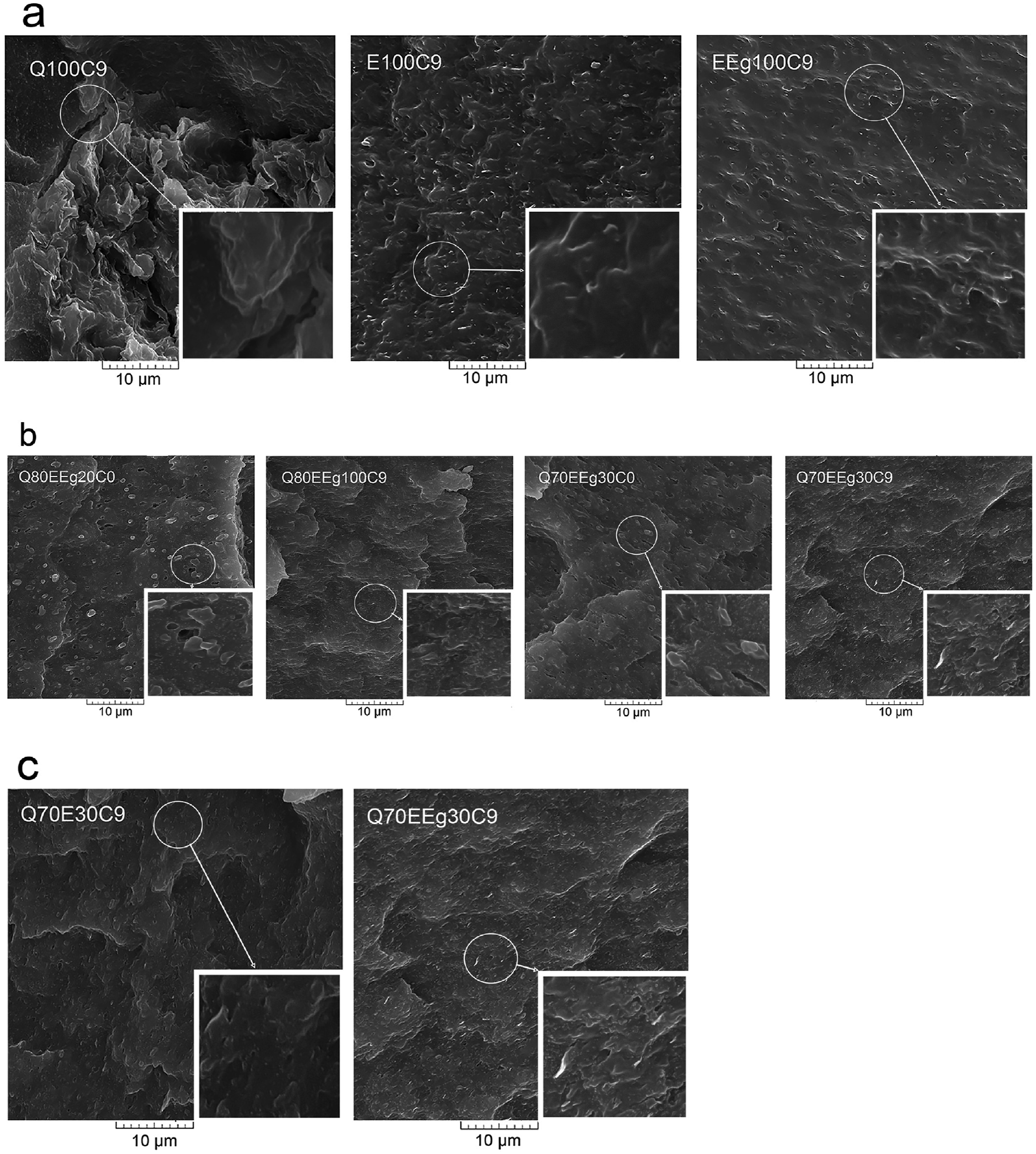
Beyond the phase distribution of EPDM/SR blends, the dispersion quality of nanoferrites within the matrix is a decisive factor for the final composite properties. As illustrated in Figure 7,
13
the morphological transition from a neat matrix to a system loaded with different concentrations reveals critical insights into filler-filler and filler-rubber interactions. SEM micrographs of Co-Zn ferrite-loaded silicone rubber at different concentrations: (a) Blank rubber showing inhomogeneous ingredient distribution; (b) Sample C2 (8 phr) exhibiting optimal homogeneous dispersion of ferrite nanoparticles; (c) Sample C5 (17 phr) illustrating nanoparticle agglomeration and supersaturation effects. (Adapted from Ref. 13 licensed under a Creative Commons Attribution. 4.0 International License).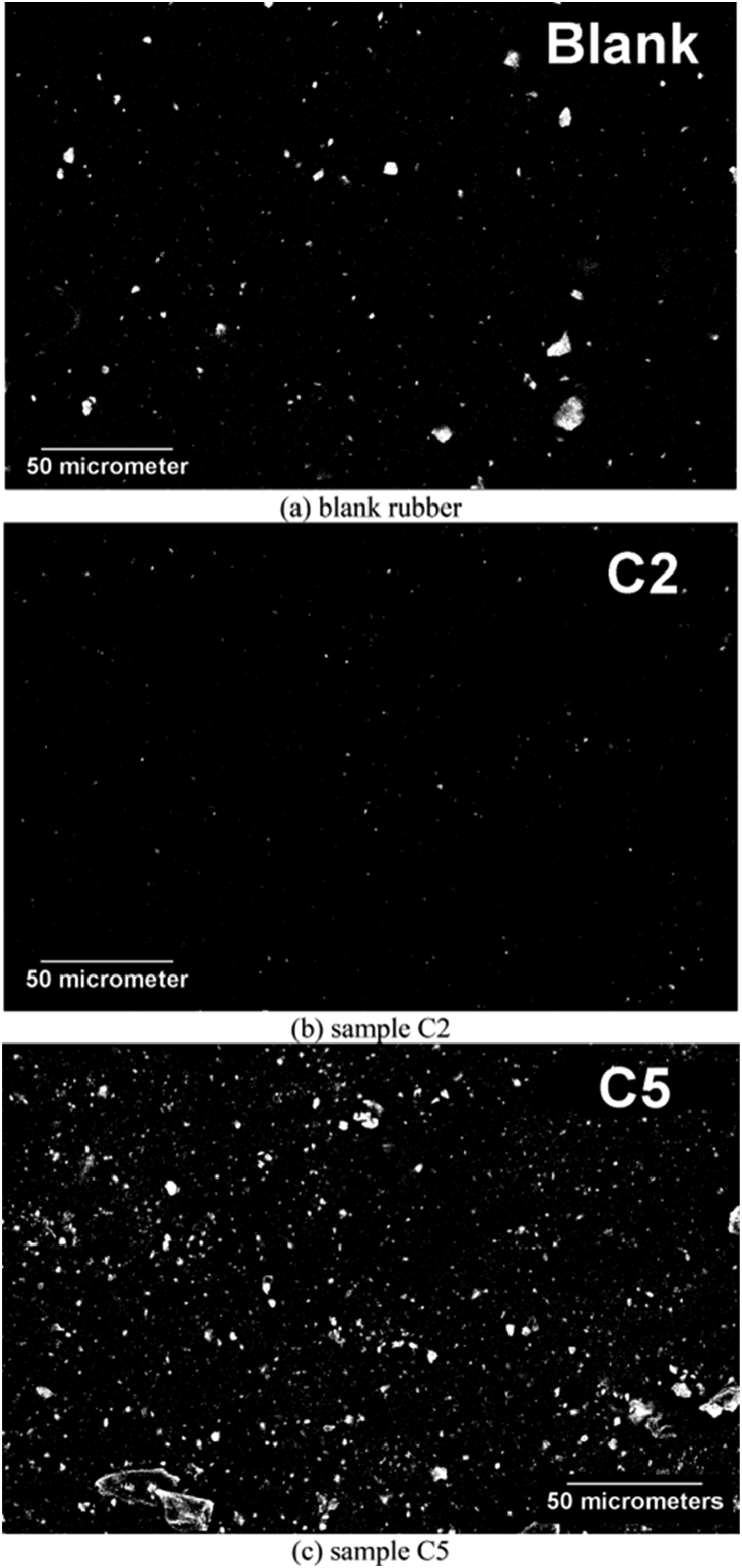
In the blank sample (Figure 7(a)), the matrix exhibits an inhomogeneous distribution of ingredients, appearing as isolated shiny particles. However, the incorporation of Co-Zn ferrite at an optimized concentration of 8 phr (Figure 7(b)) results in a highly homogeneous distribution with uniform particle sizes and separations. From a critical standpoint, this uniform dispersion at 8 phr is the primary driver for accelerated curing and enhanced cross-link density, as the nanoparticles act as nucleation sites during the vulcanization reaction.
Conversely, at a higher ferrite loading of 17 phr (Figure 7(c)), the system reaches a “supersaturation” point where the magnetic attraction between nanoparticles leads to significant agglomeration. This agglomeration at 17 phr is a major technological bottleneck; it not only hinders the initiation of the vulcanization reaction thereby increasing scorch and cure times but also creates stress concentration points that can degrade mechanical integrity. This observation underscores the necessity of optimizing filler phr levels to maintain a balance between functional enhancement and structural stability.
Barbosa et al. 76 demonstrated that phase inversion in EPDM/SR blends at 60/40 to 80/20 ratios reduced viscosity, improving processing and stabilizing morphology for consistent performance. This morphological control was critical for achieving uniform properties, making SR/EPDM blends suitable for high-performance composites when reinforced with nanoferrites.
Nanoferrites played a pivotal role in refining the morphology of EPDM/SR blends by promoting uniform filler dispersion and enhancing filler-matrix interactions. Parveen et al. 12 found that Ni-Zn-Cu ferrite nanoparticles in EPDM dispersed homogeneously at 3-5 phr, creating a rough morphology that strengthened filler-matrix interactions, though agglomeration at 8 phr disrupted uniformity. El-Nashar et al. 13 reported that Co-Zn ferrite nanoparticles (8 phr) in SR achieved uniform dispersion, as confirmed by SEM, enhancing structural integrity, but agglomeration at 14 phr compromised homogeneity. Ahmadi et al. 89 observed that barium hexaferrite nanoparticles, synthesized with a cotton template, exhibited a uniform rod-shaped morphology in an SR matrix, improving composite structural integrity. Sattar et al. 86 noted uniform Co-Zn nanoferrite dispersion in NBR at x = 0.8, suggesting that controlled nanoferrite incorporation could enhance EPDM/SR phase uniformity. These studies highlighted nanoferrites’ potential to optimize blend morphology, provided agglomeration was minimized through precise loading control.
Compatibilization strategies further improved morphological stability by reducing phase separation and enhancing phase dispersion. Fuke et al. 77 found that 10 wt% MAA-g-EPDM in SR/EPDM blends reduced interfacial tension, producing smaller globular domains and smoother morphology, as confirmed by SEM, which improved blend cohesion. Bragaglia et al. 59 reported that EPDM in EPDM/POM blends reduced POM domain sizes from 10.78 μm to 1.29 μm with 20 wt% Zn2+ ionomer, enhancing phase dispersion and blend stability. Chiper Titire et al. 104 observed that 40 wt% EPDM in PA6 blends produced a homogeneous structure with reduced porosity, improving morphological uniformity. Abdulrahman et al. 62 found that carbon black in EPDM/HDPE blends reduced HDPE droplet size, suggesting nanoferrites could refine phase dispersion in EPDM/SR blends when paired with compatibilizers. These findings indicated that compatibilization, combined with nanoferrite reinforcement, was essential for achieving uniform and stable morphologies in EPDM/SR blends.
The interplay of blend composition and nanofiller incorporation was critical for morphological refinement, but challenges like agglomeration posed risks to uniformity. Dorigato et al. 99 noted that nanofillers in PBAT/PLA blends reduced interfacial tension, stabilizing uniform morphologies, a principle applicable to EPDM/SR blends with nanoferrites to enhance phase compatibility. However, Parveen et al. 12 and El-Nashar et al. 13 emphasized that agglomeration at higher nanoferrite loadings (e.g., 8-14 phr) disrupted morphological homogeneity, leading to uneven stress distribution and reduced performance. To address this, precise processing techniques, such as optimized mixing conditions and surface-modified nanoferrites, were necessary to ensure uniform dispersion, as suggested by Ahmadi et al. 89 and Sattar et al. 86
Refined morphology significantly improved the structural uniformity and performance consistency of EPDM/SR blends, supporting their use in applications requiring reliability, such as cable insulation and structural components. Future research should focus on developing novel compatibilizers, optimizing nanoferrite dispersion techniques, and tailoring SR/EPDM ratios to maximize morphological stability for advanced engineering applications.
Electrical and magnetic properties
Superior electrical and magnetic properties significantly enhanced the electromagnetic functionality of EPDM and SR blends, making them ideal for applications like electromagnetic interference shielding, microwave absorption, and high-voltage insulation. 79 Deepalaxmi et al. 79 found that SR/EPDM blends, particularly at a 50:50 ratio, exhibited high surface resistivity and comparative tracking index, driven by SR’s inherent hydrophobicity and dielectric stability. This strong electrical performance positioned SR/EPDM blends as promising matrices for nanoferrite reinforcement, enabling tailored electromagnetic properties for advanced cable insulation and shielding applications.
Nanoferrites played a critical role in enhancing the electrical and magnetic properties of SR/EPDM blends by increasing permittivity, permeability, and microwave absorption capabilities. Katiyar et al. 87 demonstrated that Mn-Zn ferrite in EPDM increased permittivity (ε′ to 8.1) and permeability (μ′ to 1.48) in the 3.95-5.85 GHz range, achieving a −26 dB reflection loss at 10.2 GHz. They also reported that treating Mn-Zn ferrite with a titanate coupling agent ensured homogeneous dispersion in EPDM, preventing agglomeration even at high loadings (0.16 vol fraction), as confirmed by SEM. 87 Peymanfar et al. 73 found that BaFe2O4 nanoparticles in SR achieved a reflection loss of 82.74 dB at 11.2 GHz with a 6.52 GHz bandwidth, enhancing electromagnetic shielding. Ahmadi et al. 89 observed that barium hexaferrite nanoparticles in an SR matrix achieved a microwave absorption of 65.8% at 9.87 GHz, attributed to enhanced interfacial polarization and magnetic properties. Menon et al. 84 noted that cobalt ferrite nanospheres in paraffin composites achieved a −32.79 dB reflection loss at 10.47 GHz, suggesting potential for EPDM/SR blends in EMI shielding. These studies underscored nanoferrites’ ability to significantly improve the electromagnetic functionality of SR/EPDM composites.
The incorporation of nanoferrites also enhanced dielectric properties, critical for high-voltage and electronic applications. Hemeda et al. 52 reported that NiCr0.2Fe1.8O4 in RTV-SR increased dielectric constant and conductivity, though saturation magnetization dropped from 32.68 to 17.5 emu/g due to the non-magnetic SR matrix, with heat treatment optimizing performance. Agami et al. 70 found that CoZn nanoferrites (8 phr) in SR increased real and imaginary permittivity across 50 Hz to 5 MHz, improving dielectric performance. Sattar et al. 86 observed that Co-Zn nanoferrites (x = 0.8) in NBR increased dielectric constants and reduced AC resistivity via electron hopping, suggesting similar enhancements in EPDM/SR blends. El-Nashar et al. 105 reported that EPDM loaded with Ca bentonite increased the real part of permittivity (ε′) and dielectric loss (ε″) up to 31.38 wt%, due to the filler’s higher polarity, a principle applicable to nanoferrite-reinforced EPDM/SR composites. Prema et al. 30 noted that nano-sized nickel ferrite in EPDM proportionally increased saturation magnetization and magnetic remanence with higher loadings, enabling tailored magnetic properties, though surface spin disorder reduced magnetization compared to bulk ferrites.
El-Nashar et al.
13
demonstrated in SR/Co-Zn nanoferrite composites that saturation magnetization increases with ferrite loading up to 17 phr, reaching a maximum ratio of 33.2% relative to pure ferrite powder, attributed to enhanced magnetic interactions despite agglomeration at higher loads. The hysteresis loops show a ferrimagnetic behavior with lower Ms in composites due to the non-magnetic SR matrix, as illustrated in Figure 8.
13
Hysteresis loops (M vs H curves) illustrating the field dependence of magnetization for SR/Co-Zn nanoferrite composites at loadings (0-17 phr), showing increased saturation magnetization with higher ferrite content. (Adapted from Ref. 13 licensed under a Creative Commons Attribution. 4.0 International License).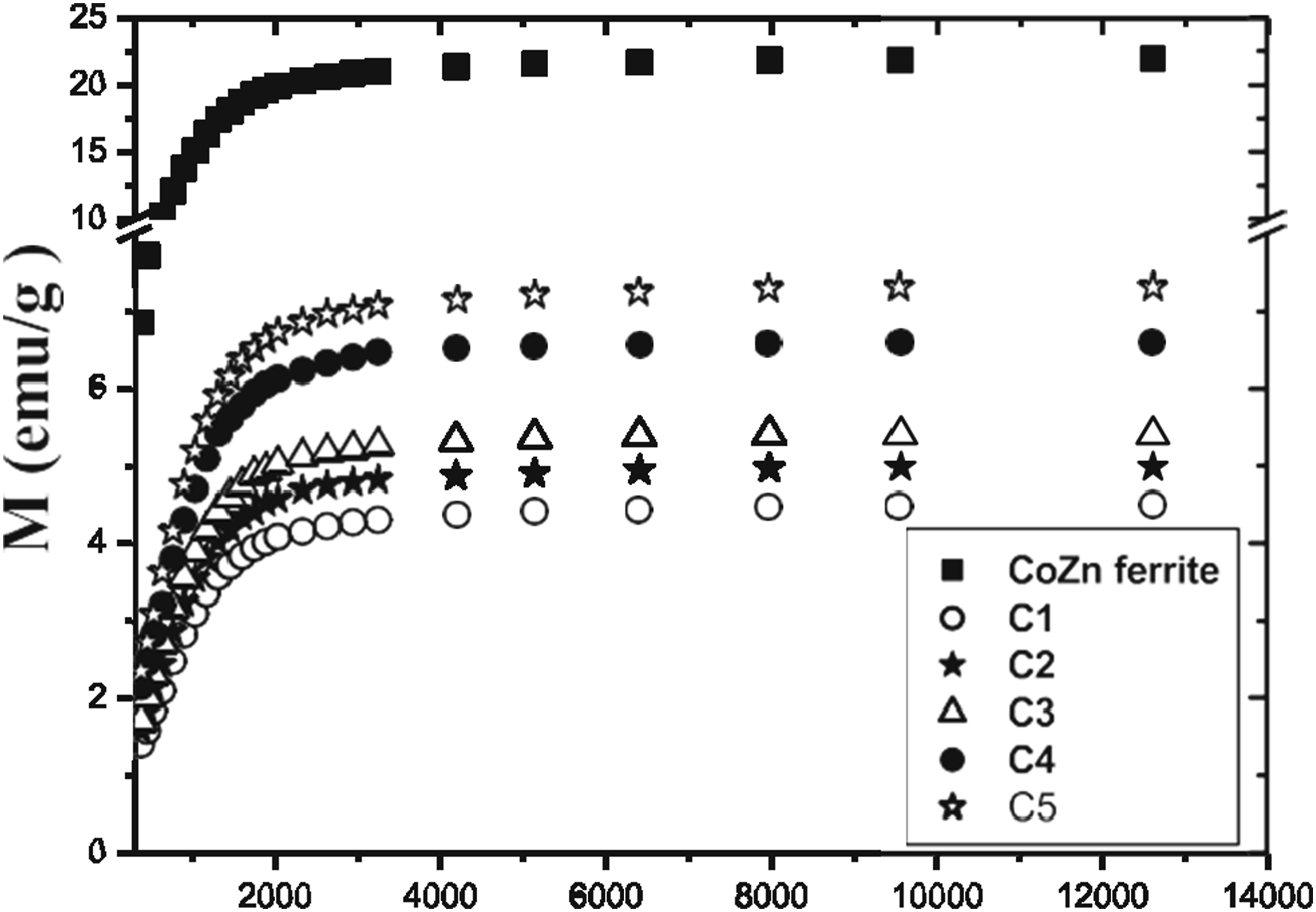
These findings highlighted nanoferrites’ versatility in enhancing dielectric and magnetic performance. Blend composition and processing strategies further optimized electrical and magnetic properties. Fuke et al. 77 found that SR/EPDM blends with higher EPDM content achieved a dielectric strength of 23.1 kV/mm, enhanced by electron beam crosslinking, supporting insulation applications. Nagasree et al. 90 demonstrated that NiZn ferrite (20 wt%) with MWCNTs in E-glass/epoxy composites achieved a −16 dB reflection loss across a 2.2 GHz bandwidth, indicating synergistic magnetic-dielectric effects applicable to EPDM/SR blends. These studies emphasized the importance of uniform nanoferrite dispersion and balanced SR/EPDM ratios to maximize electromagnetic performance.
Challenges in achieving optimal electrical and magnetic properties included agglomeration at higher nanoferrite loadings, which compromised performance. Agami et al. 70 reported reduced dielectric efficiency in SR at 17 phr CoZn nanoferrites due to agglomeration. Fairus et al. 82 highlighted that agglomeration at 2-5 vol% nanofillers correlated with diminished tracking performance. To address this, surface treatments like titanate coupling agents, as used by Katiyar et al., 87 and precise processing control were critical to ensuring homogeneous dispersion, as confirmed by SEM analyses across studies.82,87 The non-magnetic nature of SR, as noted by Hemeda et al., 52 reduced magnetization in high-SR blends, suggesting a need for optimized SR/EPDM ratios to balance magnetic and dielectric enhancements.
Existing studies tend to emphasize maximum reflection loss, while the critical role of effective absorption bandwidth is frequently underrepresented. To improve industrial relevance and scalability, future research should prioritize morphological engineering strategies, particularly the controlled interfacial localization of nanoferrites, to achieve percolation at reduced filler contents without compromising flexibility and density.
Current and potential engineering applications
EPDM/SR blends demonstrated remarkable practical utility in a wide range of applications, from cable insulation to automotive components, owing to their balanced electrical, mechanical, and environmental properties. 79 Deepalaxmi et al. 79 showed that a 50:50 SR/EPDM blend, optimized via Particle Swarm Optimization, achieved superior performance for cable insulation, highlighting the potential of computational techniques in blend design. Vishnu et al. 20 noted that elastomer blends, including those with EPDM, excelled in marine applications like sealing, fendering, and vibration isolation due to their resistance to seawater, UV radiation, and extreme temperatures. These versatile properties positioned EPDM/SR blends as ideal matrices for nanoferrite reinforcement, enabling multifunctional composites for demanding environments.
Nanoferrite reinforcement significantly expanded the application scope of EPDM/SR blends by enhancing electromagnetic and functional properties. The synergy between conductive polymers and magnetic fillers is crucial for achieving superior shielding effectiveness through combined absorption and reflection mechanisms. 106 Katiyar et al. 87 observed that Mn-Zn ferrite in EPDM achieved a reflection loss of −26 dB at 10.2 GHz with a 2.5 mm thickness, underscoring nanoferrites’ potential for microwave absorption in EPDM/SR composites used in EMI shielding. Sattar et al. 86 highlighted that Co-Zn nanoferrite/NBR composites were suitable for EMI shielding due to dielectric enhancements, a benefit applicable to EPDM/SR blends. Agami et al. 70 demonstrated that SR/CoZn nanoferrite composites, optimized at 8 phr, were viable for cable manufacturing, electronic seals, and healthcare products, suggesting broader applications for EPDM/SR/nanoferrite blends in EMI shielding and durable seals. Eid et al. 29 found that silica-filled EPDM/NBR blends at 50-60 phr exhibited improved dielectric properties, indicating that nanoferrites could enhance EPDM/SR blends for electrical engineering applications like high-voltage insulation.
The incorporation of nanoferrites also supported advanced and specialized applications. Zhu et al. 107 suggested that graphene/silicone composites held promise for flexible sensors, antifouling coatings, and electronic packaging, indicating that nanoferrite-reinforced EPDM/SR blends could extend to magnetic shielding and high-durability seals. Muslov et al. 5 leveraged SR’s biocompatibility and mechanical properties for auricular prostheses, suggesting that EPDM/SR/nanoferrite blends could target biomedical or flexible component applications. Titire et al. 104 recommended their PA6/EPDM blend for impact-resistant applications due to enhanced energy at break at higher speeds, a principle applicable to EPDM/SR blends for automotive components. Abdulrahman et al. 62 achieved a neutron cross-section of 0.28 cm−1 in carbon black-filled EPDM/HDPE, hinting at potential nuclear shielding applications for nanoferrite-reinforced EPDM/SR blends. These studies underscored the versatility of nanoferrite-enhanced EPDM/SR composites across diverse fields.
Sustainability emerged as a critical consideration in EPDM/SR blend applications, aligning with the rubber industry’s shift toward eco-friendly materials. Aini et al. 102 emphasized the environmental drawbacks of carbon black, including high carbon dioxide emissions and health risks from pulmonary inflammation, driving the adoption of sustainable fillers like lignin. They suggested that nanoferrites in EPDM/SR blends could reduce environmental impact while enhancing functional properties like magnetic and electrical performance, supporting greener alternatives for automotive components and insulation. 102 Prema et al. 30 noted that EPDM, when vulcanized with peroxide, formed robust carbon-carbon crosslinks, yielding vulcanizates with superior heat resistance, aging stability, and electrical properties, making it an ideal matrix for sustainable nanoferrite composites. These findings highlighted the potential of nanoferrite-reinforced EPDM/SR blends to balance performance and environmental responsibility.
Processing and compatibilization strategies further optimized EPDM/SR blends for practical applications. Rezaeian et al. 22 demonstrated that optimized EPDM/SBR blends, bonded to metal substrates using heat-activated adhesives like Chemosil X6025, exhibited superior cure characteristics and adhesion strength, enhancing corrosion resistance in industrial equipment. Bragaglia et al. 59 enhanced EPDM/POM blends’ toughness and stiffness with ionomer compatibilization, suggesting that similar strategies could improve EPDM/SR/nanoferrite blends for thermoplastic-elastomer applications like seals. Dorigato et al. 99 identified melt compounding as a versatile method for polymer blends, recommending further studies on nanofiller localization to optimize dispersion in EPDM/SR composites. Costa et al. 4 concluded that nanofillers expanded EPDM’s applications by enhancing thermal, mechanical, and electrical properties, reinforcing the potential of nanoferrite-based approaches for high-performance composites.
Challenges in realizing the full potential of EPDM/SR/nanoferrite blends included achieving uniform nanoferrite dispersion and addressing phase immiscibility. Investigations70,99 emphasized the need for optimized filler loadings to prevent agglomeration, which could compromise electromagnetic and mechanical performance. Historical studies demonstrate that rubber blends frequently display dual glass transition temperature Tgpeaks and nonuniform carbon black distribution, even in cases of comparable solubility parameters (δ), yielding mechanical properties inferior to those predicted by linear interpolation owing to phase incompatibility and preferential filler localization in lower Tgomains. 37 The immiscibility between SR’s polar backbone and EPDM’s non-polar nature, as noted in previous studies, required compatibilization strategies like ionomer addition 59 or grafted polymers 22 to ensure morphological stability. Advanced processing techniques, such as melt compounding 99 or computational optimization, 79 offered solutions to these challenges, enhancing blend performance for specialized applications.
In summary, EPDM/SR blends, enhanced by nanoferrite reinforcement, offered exceptional practical utility across applications like cable insulation, EMI shielding, automotive components, and biomedical devices. Furthermore, recent advancements by Elbasiony et al. 108 on ZnFe2O4 nanocomposites have highlighted the significant potential of ferrite fillers in tuning the linear and nonlinear optical properties of polymer matrices. Their findings suggest that such composites are not only limited to electromagnetic shielding but are also promising candidates for advanced optoelectronic devices and nonlinear optical limiters. Future research should focus on optimizing nanoferrite dispersion, exploring sustainable compatibilization strategies, and leveraging computational design to unlock the full potential of EPDM/SR/nanoferrite composites for advanced, environmentally responsible applications.
Future perspectives and challenges
The comprehensive consolidation of the literature presented in this review highlights the significant potential of nanoferrite-reinforced EPDM/SR blends as multifunctional elastomeric systems. Nevertheless, it simultaneously reveals critical scientific and technological gaps that must be addressed to enable their transition from laboratory-scale studies to industrially viable materials. From a critical perspective, the overall performance of these composites is predominantly governed by interfacial synergy rather than filler content alone. While most existing studies emphasize macroscopic property enhancements, the field now necessitates a paradigm shift from empirical filler loading toward deliberate and controlled interfacial engineering.
Synthesis versatility and hybrid architectures
One of the key insights emerging from this review is the pronounced influence of nanoferrite synthesis routes on composite performance. Variations in synthesis methodologies including sol–gel, hydrothermal, and co-precipitation techniques lead to distinct crystallite sizes, surface chemistries, and magnetic responses, which in turn govern dispersion stability and interfacial interactions within EPDM/SR matrices. Future research should therefore move beyond compositional optimization and systematically address the concept of synthesis history as a design parameter.
Furthermore, the next stage of development is expected to involve hybrid filler architectures. The integration of nanoferrites with secondary conductive or high-aspect-ratio fillers, such as carbon nanotubes, graphene derivatives, or MXenes, offers a promising pathway toward ternary systems capable of delivering synergistic electromagnetic attenuation, mechanical reinforcement, and thermal regulation beyond the limits of single-filler composites.
Advanced compatibilization and interfacial stabilization
The intrinsic thermodynamic immiscibility between EPDM and SR remains a central limitation. Future efforts should prioritize advanced compatibilization strategies that go beyond conventional physical blending. In particular, reactive compatibilizers based on multifunctional graft or block copolymers could establish robust covalent or supramolecular linkages across the interface. In parallel, the emerging use of Janus nanoparticles with asymmetric surface functionality represents a transformative approach, enabling simultaneous interfacial stabilization and reinforcement while promoting selective localization at the EPDM/SR interface.
Sustainable manufacturing and additive technologies
In the context of global sustainability goals, the development of environmentally responsible EPDM/SR/nanoferrite systems is becoming increasingly important. Future research should explore bio-based EPDM alternatives and renewable fillers, as well as the potential synergy between nanoferrites and biochar or natural fibers to create next-generation green multifunctional elastomers.
Additionally, additive manufacturing represents a rapidly emerging frontier. Tailoring the rheological behavior of EPDM/SR/nanoferrite formulations for advanced techniques such as direct ink writing or stereolithography could unlock unprecedented design freedom, enabling the fabrication of complex EMI shielding components, flexible electronics, and customized medical devices that are unattainable through conventional processing routes.
Smart functionalities and industrial scalability
Beyond static performance, the incorporation of smart functionalities such as self-healing mechanisms based on microencapsulation or supramolecular interactions could significantly enhance the durability and service life of EPDM/SR nanocomposites in demanding automotive and aerospace environments. However, the translation of such advanced concepts to industrial-scale production remains challenging. Achieving uniform dispersion at elevated filler loadings without sacrificing processability continues to be a major bottleneck. Advanced compounding strategies, including high-shear liquid-phase mixing and ultrasonic-assisted dispersion, should therefore be optimized to ensure that laboratory-scale performance can be reliably reproduced in large-scale manufacturing.
In summary, the body of work analyzed in this review provides a foundational platform for the rational design of high-performance EPDM/SR/nanoferrite composites. By integrating controlled synthesis strategies, interfacial engineering, hybrid architectures, and sustainability-driven processing approaches supported by computational modeling the field is well positioned to address the multifaceted demands of future elastomeric applications while maintaining environmental and industrial relevance.
Conclusion
This review systematically consolidates the literature on nanoferrite-reinforced EPDM/SR blends, highlighting the synergistic integration of EPDM’s environmental resistance, SR’s thermal and dielectric stability, and the multifunctionality of nanoferrite fillers. The reviewed studies demonstrate notable enhancements in mechanical performance, thermal endurance, and electromagnetic shielding effectiveness, particularly at balanced blend compositions (≈50:50 EPDM/SR) and moderate nanoferrite loadings (5–8 phr). Critical analysis indicates that preferential filler localization at phase interfaces, promoted by reactive compatibilization strategies (e.g., maleic anhydride-grafted EPDM) and controlled processing techniques such as dynamic vulcanization, plays a decisive role in achieving co-continuous morphologies and optimal performance.
The resulting ternary EPDM/SR/nanoferrite system exhibits strong potential for advanced applications, including automotive sealing, high-voltage insulation, and broadband EMI shielding. Nevertheless, challenges related to filler agglomeration at higher loadings, long-term durability under complex aging conditions, and large-scale processability remain. Overall, this emerging nanocomposite platform offers a promising pathway toward lightweight, durable, and multifunctional elastomeric materials, providing a solid foundation for future research and industrial translation.
Footnotes
Declaration of conflicting interests
The authors declared no potential conflicts of interest with respect to the research, authorship, and/or publication of this article.
Funding
The authors received no financial support for the research, authorship, and/or publication of this article.
