



Abstract
This research focuses on the synthesis and evaluation of novel bitumen additives aimed at improving the performance and durability of asphalt materials. The synthesized additives were characterized using spectroscopic and thermal analysis techniques, such as FTIR and TGA, to determine their structural and thermal properties. Modified bitumen samples were prepared by incorporating different concentrations of the synthesized additive, and their physical, mechanical, and rheological properties were investigated through penetration, softening point, ductility, flash point and dynamic shear rheometer (DSR) tests. Experimental results indicated that the additive significantly enhances the high-temperature stability, reduces temperature susceptibility, and improves the rheological performance of bitumen. Specifically, modified bitumen exhibited increased resistance to rutting, aging, and oxidative degradation compared to conventional bitumen. This improvement in bitumen performance can lead to extended pavement life, reduced maintenance costs, and enhanced sustainability in road construction.
Keywords
Introduction
The durability and performance of asphalt pavements are critical factors influencing the service life and maintenance requirements of road infrastructure. Bitumen, as the primary binding material in asphalt mixtures, plays a fundamental role in determining the mechanical behavior, resistance to deformation, and long-term stability of pavements. 1 However, conventional bitumen exhibits inherent limitations, particularly under extreme climatic conditions and increasing traffic loads. These limitations include low resistance to rutting at elevated temperatures, brittleness at low temperatures, and progressive degradation due to oxidation and ultraviolet exposure. 2
To tackle these challenges, significant research efforts have focused on modifying bitumen using various additives, including polymers, nanomaterials, and industrial by-products. Among these alternative strategies, the use of waste-derived materials has gained attention as a promising and sustainable approach, offering a dual advantage: improving bitumen performance while also reducing environmental pollution. In particular, waste oils—such as used engine oil, lubricants, and vegetable oils—have garnered interest due to their chemical compatibility with bitumen and their potential to act as reactive precursors for functional additives. 3
Waste oils contain a complex mixture of hydrocarbons, including aliphatic and aromatic compounds, which can be chemically tailored to improve the viscoelastic, thermal, and oxidative stability of bitumen. Through targeted chemical modifications—such as oxidation, sulfonation, or grafting reactions—waste oils can be converted into high-value additives that not only enhance the binder’s physical properties but also contribute to a more circular and resource-efficient materials economy. Furthermore, the valorization of waste oils aligns with current trends in green infrastructure and supports global efforts to reduce the carbon footprint of construction materials.
This study focuses on the synthesis and comprehensive characterization of a novel bitumen additive derived from waste oils. The synthesis procedure involved controlled chemical modification aimed at improving the additive’s compatibility and reactivity with bituminous matrices. The structural and thermal properties of the synthesized additive were investigated using Fourier-transform infrared spectroscopy (FTIR) and thermogravimetric analysis (TGA), providing insight into the functional groups, phase transitions, and thermal stability of the material.2,4
To evaluate the practical applicability of the synthesized additive, modified bitumen samples were prepared with different additive dosages and subjected to a series of standardized tests. These included penetration and softening point measurements to assess consistency and thermal susceptibility; ductility tests to determine elasticity and cohesion; and dynamic shear rheometer (DSR) analysis to evaluate viscoelastic behavior and rutting resistance. The results were compared to those of unmodified bitumen to quantify the improvements in performance parameters. 5
The findings of this research show that the developed additive significantly improves the high-temperature performance, aging resistance, and overall rheological properties of bitumen. These enhancements lead to increased pavement durability, fewer maintenance requirements, and greater cost-effectiveness throughout the pavement’s lifespan. Additionally, utilizing waste oil as a raw material for bitumen modification offers a scalable and environmentally sustainable alternative to traditional modifiers.6,7
In summary, the present work contributes to the growing body of knowledge on sustainable asphalt technologies by introducing an innovative additive formulation based on recycled materials. It underscores the technical feasibility and environmental benefits of integrating waste-derived components into asphalt binder systems, thereby supporting both performance enhancement and resource conservation objectives in modern pavement engineering. 8
Materials and methods
Materials
The bituminous matrix used in this study was a 50/70 penetration grade bitumen, widely utilized in road paving applications due to its favorable balance of hardness and ductility. To enhance the mechanical and viscoelastic properties of the binder, nitrile- butadiene rubber (NBR) of SKN-40 (ISO 132) grade (Russian origin) was incorporated as the primary elastomeric component. This synthetic copolymer is known for its excellent resistance to fuel, aging, and thermal degradation.2,7,9,10
In addition to SKN-40, polyisobutylene (PIB)
To regulate the viscosity of the bitumen–polymer mixture and improve dispersion of the elastomeric phases, waste T-33 grade transformer oil (IEC 60296) was used as a solvent. This naphthenic-based oil is commonly used in electrical insulation systems and possesses good thermal stability and solvency properties, making it effective in reducing internal friction and enhancing blend workability. It does not act as an elastomer but rather facilitates processability and homogeneity of the polymer-modified system. 11
For improved phase compatibility and adhesion between the polar and non-polar components, a coupling agent was employed. Maleic anhydride-grafted polyolefin (MAH-g-PO) was selected as a reactive compatibilizer to enhance the interaction between the polar nitrile rubber and the hydrophobic bitumen matrix. 12
Synthesis of the waste oil-based additive
The synthesis of the bitumen additive was carried out by thermomechanical blending of polymeric and compatibilizing components in a naphthenic oil medium to ensure homogeneity and phase stability prior to incorporation into the bitumen matrix. The process was carefully controlled by adjusting the mixing speed, which was set at 1000 rpm to ensure effective dispersion; the mixer geometry was optimized for uniform shear distribution; the batch size was maintained at 1 kg to ensure consistency and repeatability; and the atmospheric conditions, including temperature and humidity, were regulated to maintain stable processing conditions and avoid any unwanted reactions during the blending.
Initially, nitrile-butadiene rubber (NBR, SKN-40) (manufacturer: LANXESS AG) and polyisobutylene (PIB) (Low MW, manufacturer: BASF SE) were introduced at concentrations of 3 wt% each, relative to the total formulation mass. These elastomeric components were dispersed in T-33 grade transformer oil, which served as a low-viscosity (2.5 to 5.0 cP (centipoise) at 40°C) processing medium and plasticizing carrier. The mixture was heated to a temperature range of 100-120°C under continuous mechanical stirring and maintained under these conditions for 30 minutes to allow full dissolution and swelling of the elastomers.
Subsequently, 1 wt% of maleic anhydride-grafted polyolefin (MAH-g-PO) was added to the hot mixture. The compatibilizer was introduced after pre-swelling of the elastomer phase to facilitate interfacial interactions between the polar nitrile groups in NBR and the non-polar matrix components. The reaction was continued for an additional 3-4 hours under the same temperature range and shear conditions to ensure uniform distribution and effective grafting interaction within the oil-polymer blend.
The resulting pre-dispersed polymer-oil additive was then cooled to approximately 120°C and stored in airtight containers prior to subsequent incorporation into the bitumen matrix. The blend exhibited good colloidal stability and viscosity suitable for high-shear mixing with 50/70 bitumen in further modification stages. 13
Preparation of modified bitumen samples
The modification of base bitumen was performed using a high-shear laboratory mixer equipped with temperature and rotational speed control. The base binder, 50/70 penetration grade bitumen, was first heated to 160 ± 5°C and maintained under gentle stirring (approximately 300 rpm) until a uniform molten state was achieved.
Subsequently, the synthesized polymer–oil additive, prepared as described in Section 2.2, was incorporated into the molten bitumen at varying dosages of 0.5 wt% and 2 wt% (by weight of bitumen). The addition was carried out gradually over a 10 minutes period to avoid thermal shock and ensure smooth incorporation. 9
Once the additive was fully introduced, the system was subjected to high-shear mixing at 3000 rpm for 20 minutes, maintaining the temperature within the range of 160–170°C throughout the mixing process. This stage was essential to promote effective dispersion of the elastomeric and polymeric components within the bitumen matrix, reduce phase separation, and ensure homogeneity.
Following the high-shear mixing, the modified binders were subjected to a 20-min post-blending phase at 150°C, under slow agitation, to stabilize the microstructure and allow completion of any residual physical interactions between the matrix and the additive components.
The prepared modified bitumen samples were then poured into preheated containers and left to cool at room temperature. Once solidified, samples were conditioned for 24 hours before undergoing physical and rheological testing. All formulations were produced in duplicate to confirm reproducibility and allow statistical comparison of performance results.
Characterization techniques
To comprehensively assess the structural, thermal, and performance characteristics of both the synthesized additive and the modified bitumen samples, a series of analytical and standardized tests were conducted. 14
Fourier transform infrared spectroscopy (FTIR)
FTIR spectroscopy (Varian 660) was employed to determine the chemical structure of the synthesized additive and to monitor potential interactions with the bitumen matrix. Spectra were collected in the range of 4000–400 cm−1 using an ATR accessory. Functional group assignments focused on nitrile (–C≡N), aliphatic (–CH2/–CH3), carbonyl (C = O), and olefinic (C = C) bands, which are indicative of chemical modifications and component compatibility.7,15
Simultaneous thermogravimetric and differential thermal analysis (TG-DTA)
TGA was used to determine the thermal stability and degradation profile of the synthesized additive. Measurements were performed from ambient temperature to 600°C at a heating rate of 10°C/min under nitrogen atmosphere. The onset decomposition temperature (Tonset), maximum degradation rate temperature (Tmax), and residual mass were used to assess oxidative resistance and potential volatility. TG-DTA was performed using a PerkinElmer STA 6000 simultaneous thermal analyzer.10,16,17
Flash point determination
The flash point of both the T-33 transformer oil and the final additive was determined using the Pensky-Martens closed cup method in accordance with ASTM D93. This test evaluates the lowest temperature at which the sample vapors ignite in air under controlled conditions. The flash point is critical for assessing the safe handling, mixing, and storage temperature limits of the oil-based additive. All tested samples exhibited flash points above 150°C, ensuring safe blending within the operational temperature range of bitumen modification (160–180°C). 18
Physical property tests
The physical performance of modified and unmodified binders was evaluated through the following standard tests: • Penetration (EN 1426/ASTM D5-06): Measured binder consistency at 25°C. • Softening Point (EN 1427/ASTM D36): Determined the temperature at which bitumen softens under specified conditions.
19
• Ductility (EN 13398/ASTM D113): Assessed the extensibility of bitumen at low temperature before failure.
20
Modified and unmodified binders were evaluated using standard physical tests, including penetration (EN 1426/ASTM D5), softening point (EN 1427/ASTM D36), and ductility (EN 13398/ASTM D113), to assess consistency, thermal susceptibility, and flexibility. Each test was conducted in duplicate under controlled conditions to ensure reproducibility and performance comparison.
Rheological analysis
Rheological characterization of the binders was performed using a Dynamic Shear Rheometer (DSR) in accordance with EN 14770 and AASHTO T315 standards. Both frequency sweep and temperature sweep tests were conducted. The frequency sweep test was carried out at a constant temperature of 64°C over a frequency range of 0.1–10 Hz (corresponding to angular frequencies of approximately 0.63–62.8 rad/s), within the linear viscoelastic (LVE) region at a constant strain level of 10%. The temperature sweep test was performed over a temperature range of 30–90°C at a fixed loading frequency of 10 rad/s, using the same strain level and plate geometry (25 mm diameter, 1 mm gap). These tests were conducted to evaluate the viscoelastic behavior, temperature sensitivity, and high-temperature rutting resistance of the binders. 21
Performance testing
To assess the influence of the synthesized additive on the performance properties of the base bitumen, a series of standardized physical and rheological tests were conducted. These tests aimed to evaluate consistency, thermal susceptibility, ductility, and viscoelastic behavior of the modified binders under service-like conditions. 21
Penetration test
The penetration of bitumen was measured according to EN 1426/ASTM D5-06 to assess the consistency and hardness of the binder at 25°C. A standard needle was allowed to penetrate the sample under a load of 100 g for 5 seconds, and the depth of penetration was recorded in 0.1 mm units (dmm). Lower penetration values indicate harder binders with better high-temperature resistance.22,23
Softening point (ring-and-ball method)
Softening point was determined in accordance with EN 1427/ASTM D36, which reflects the temperature at which the binder softens under defined heating conditions. A higher softening point is associated with improved high-temperature performance and rutting resistance.19,24
Ductility test
Ductility was tested following EN 13398/ASTM D113 at 5°C to evaluate the material’s ability to elongate under tensile stress before failure. Increased ductility is desirable for resistance to thermal cracking and improved flexibility at low service temperatures.20,25
Storage stability test
The thermal–mechanical stability of the modified binders was assessed using a storage stability test based on ASTM D7173. Samples were poured into vertical aluminum tubes and stored at 163°C for 48 hours. Afterwards, the tubes were sectioned, and the softening point difference between the top and bottom portions was measured. A difference below 2.5°C indicates acceptable storage stability. 21
Flash point
Flash point was determined using the closed cup method (ASTM D93) to ensure safe handling and processing. Modified binders must retain a flash point above 230°C to comply with paving-grade bitumen standards. This test is essential when incorporating oil-based additives. 18
Dynamic shear rheometer (DSR) testing
Rheological performance was evaluated using a Dynamic Shear Rheometer (DSR) in accordance with EN 14770/AASHTO T315.26,27 Tests were performed over a temperature range of 30–90°C and a frequency of 10 rad/s. Key parameters included: • Complex shear modulus (G*) – representing the material’s total resistance to deformation. • Phase angle (δ) – indicating the elastic (solid-like) vs. viscous (liquid-like) behavior. • Rutting factor (G*/sin δ) – used to assess resistance to permanent deformation at high temperatures.
Higher G*/sin δ values correspond to better rutting resistance and are critical for binders used in warm climates or high-traffic pavements.
Results and discussion
Structural characterization (FTIR)
The FTIR spectrum of the synthesized bitumen additive exhibits a variety of absorption bands indicative of its multi-component structure, including contributions from elastomers (NBR, PIB), transformer oil, and functionalized waste oil derivatives. 28
The key spectral features are as follows: • 2923.10 cm−1 and 2853.42 cm−1: Strong absorption bands due to asymmetric and symmetric C–H stretching vibrations of –CH2– and –CH3– groups, confirming the aliphatic hydrocarbon backbone of polyisobutylene and base oil components. • 3435.90 cm−1 and 3851–3868 cm−1: Broad peaks in this region may correspond to O–H stretching vibrations, suggesting the presence of minor hydroxyl or moisture-related components, possibly from partial oxidation products in waste oil. • 2728.66 – 2340.64 cm−1 region: These bands may be attributed to overtones or weak C–H stretch combinations; some bands near 2340 cm−1 can also be associated with trace CO2 interference. • 1746.02 cm−1 and 1704.85 cm−1: Strong, sharp peaks corresponding to C = O stretching vibrations from ester and/or carboxylic acid groups. These are key markers of successful oxidative modification of waste oil and grafting reactions involving maleic anhydride groups. • 1601.94 cm−1 and 1456–1376 cm−1: These correspond to C = C stretching (aromatic or unsaturated) and CH2/CH3 bending vibrations, consistent with residual unsaturation from nitrile rubber and hydrocarbon content. • 1245.73 cm−1 and 1165.80 cm−1: Associated with C–O stretching in esters and anhydrides; supportive of the formation of functionalized oil derivatives or reaction products with the compatibilizer. • 1034.03 cm−1, 1002.09 cm−1, 980.05 cm−1: Strong absorptions in this region may reflect C–O–C stretching (ethers or esters), especially those formed during compatibilization with MAH-g-PO. • 915.01 cm−1, 832.20 cm−1, 783.24 cm−1: Out-of-plane bending vibrations typical of substituted olefins or vinyl groups — consistent with unreacted double bonds from elastomer components. • 722.70 cm−1, 710.27 cm−1: Methylene rocking vibrations from long-chain aliphatic hydrocarbons, characteristic of PIB and oil-based matrices. • 434.09 cm−1: Possibly associated with skeletal vibrations or residual inorganic traces, though often below the typical analysis range.
In summary, the Figure 1 (FTIR analysis) indicates the presence of functional groups of the major components in the synthesized additive and provides molecular-level evidence supporting its functionality in bitumen modification.
29
FTIR spectrum of the synthesized additive.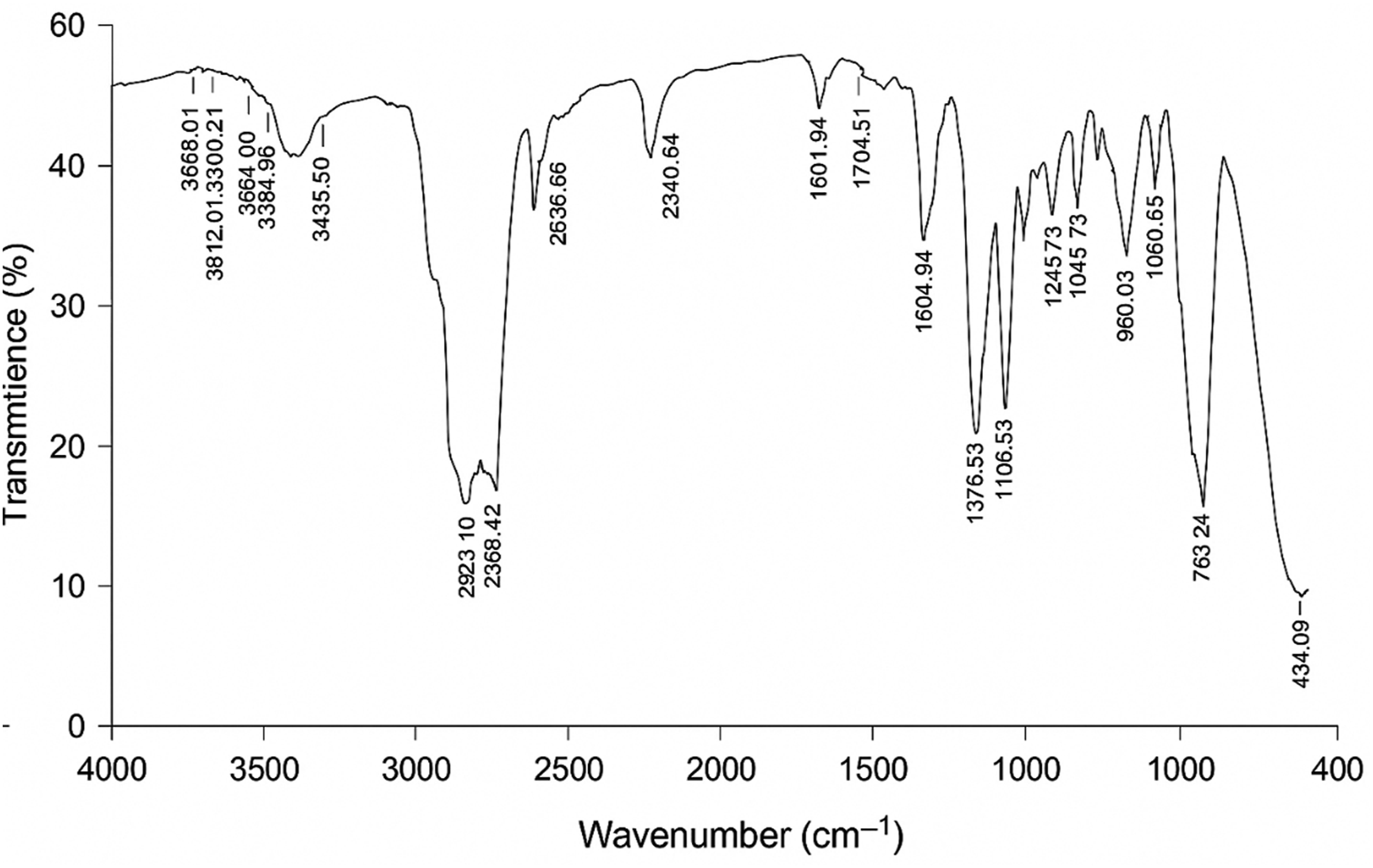
Thermal properties (DSC and TGA)
Thermal stability and phase transitions of the synthesized additive were further investigated using thermogravimetric (TG) and differential thermal analysis (DTA). The results are presented in Figure 2.
30
TG-DTA curves of the synthesized additive.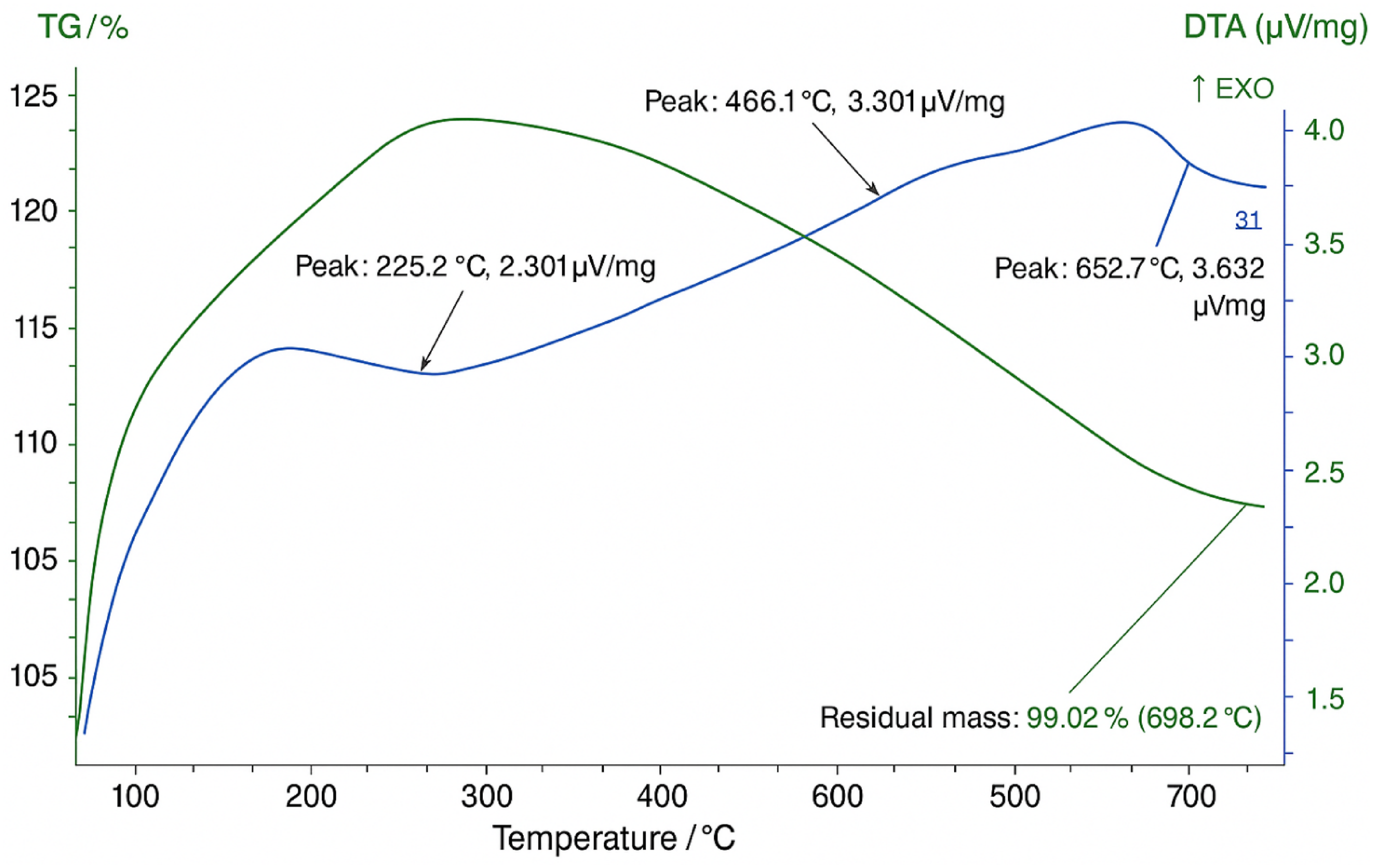
The thermogravimetric (TG) and differential thermal analysis (DTA) of the synthesized additive reveal its excellent thermal stability and complex thermal behavior. The TG curve shows a slight increase in sample weight up to approximately 225°C, which may be attributed to oxidative uptake or interaction with atmospheric moisture. At this point, the mass reaches a maximum of about 125%, after which a gradual mass loss is observed. By 698.2°C, the sample retains 99.02% of its original mass, indicating extremely high thermal stability and limited decomposition across the entire heating range. The DTA curve displays three distinct exothermic events, suggesting structural changes rather than simple thermal degradation. The first exothermic peak occurs at 225.2°C (Δ = 2.301 µV/mg), possibly due to crosslinking or oxidative stabilization of the additive’s polymeric components. The second exothermic peak at 466.1°C (Δ = 3.470 µV/mg) may correspond to cyclization, further crosslinking, or backbone rearrangements. The third peak at 652.7°C (Δ = 3.632 µV/mg) likely indicates final-stage degradation or carbonization of aromatic or carbon-rich structures. The presence of these multiple thermal transitions, combined with the extremely low mass loss, suggests that the additive is well-suited for applications requiring thermal endurance, such as in asphalt modification or advanced polymer composites operating at elevated temperatures. 31
Physical properties of modified bitumen (penetration, softening point, ductility)
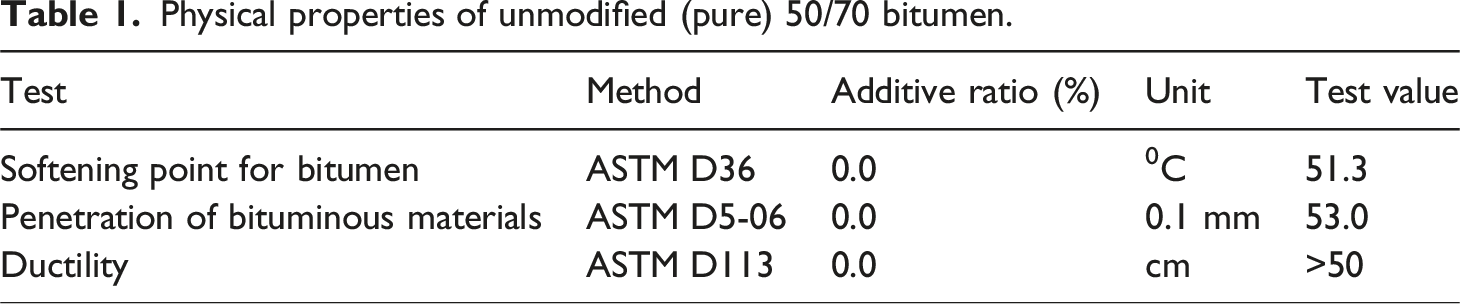
Physical properties of unmodified (pure) 50/70 bitumen.
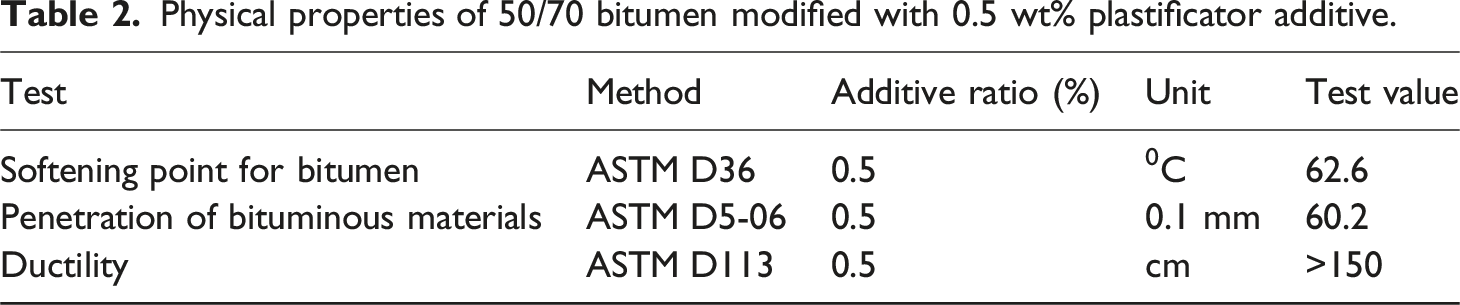
Physical properties of 50/70 bitumen modified with 0.5 wt% plastificator additive.
Physical properties of 50/70 bitumen modified with 2.0 wt% plasticizers additive.
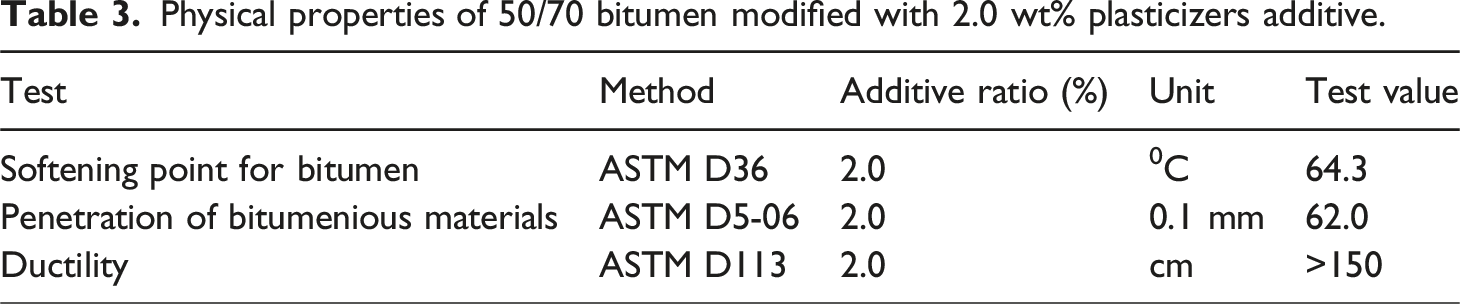
Upon the addition of 0.5% and 2.0% by weight of the additive, the softening point of the bitumen increased from 51.3°C to 62.6°C and 64.3°C, respectively. This indicates an improved resistance to high-temperature deformation, due to the thermally stable rubbery matrix introduced by the butadiene-nitrile rubber and polyisobutylene. 33
The penetration values also increased from 53.0 to 60.2 and 62.0 (0.1 mm), which may be interpreted as an improvement in flexibility, without compromising material cohesion. The plastificator likely increases molecular mobility within the bitumen while preserving its structural integrity through elastic reinforcement. 34
Ductility results showed a dramatic improvement, increasing from >50 cm in the unmodified sample to >150 cm in both modified samples. This clearly demonstrates enhanced elongation and tensile capacity, attributed to the formation of a flexible and continuous polymer network within the bitumen matrix. The crosslinked elastomer phase improves energy dissipation and crack resistance under mechanical stress. 35
These results collectively confirm that the additive not only acts as a plastificator but also as a functional modifier, significantly improving the thermal and rheological performance of the bitumen. Therefore, the modified bitumen exhibits superior physical behavior suitable for use in pavement materials subjected to thermal and mechanical loading. 36
Rheological performance (DSR)
DSR results (G and δ) of unmodified and modified 50/70 bitumen at 64°C.*
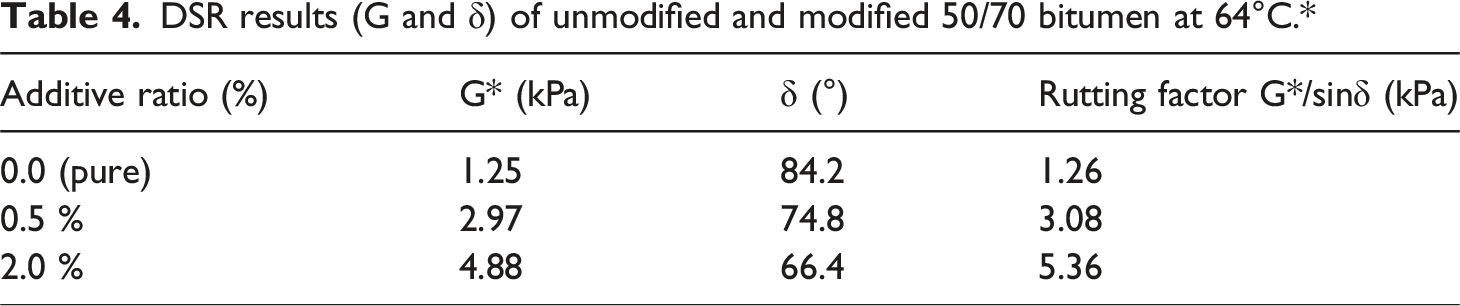
As shown in Table 4, the unmodified bitumen exhibited a G* of 1.25 kPa and a high phase angle (δ = 84.2°), indicating a predominantly viscous behavior with low elastic recovery potential. Upon addition of 0.5% plastificator, G* increased to 2.97 kPa and δ decreased to 74.8°, leading to a rutting factor (G*/sinδ) of 3.08 kPa — more than double that of the pure bitumen.
The sample with 2.0% additive showed the most significant improvement, with a G* of 4.88 kPa and a δ of 66.4°, resulting in a rutting factor of 5.36 kPa. This shift indicates a more elastic and stable structure under cyclic loading, largely due to the formation of an internal elastomeric network provided by the butadiene-nitrile rubber and polyisobutylene components of the additive. 38
These enhancements align well with the observed increase in softening point and ductility. The decreased δ values reflect better elastic recovery, while the increased G* suggests higher stiffness and resistance to permanent deformation. Therefore, the modified binders not only meet but exceed the Superpave specification of G*/sinδ ≥1.0 kPa for unaged binders at 64°C, demonstrating excellent rheological performance and potential for use in heavy-duty asphalt applications. Furthermore, the modified binders exhibit improved PG 76 characteristics, indicating their suitability for high-performance applications in regions with extreme climatic conditions and heavy traffic loads, thus further confirming their potential for use in demanding asphalt applications.
Flash point determination
The flash point of the pure and modified bitumen samples was determined using the Pensky-Martens Closed Cup method in accordance with ASTM D93. This method is suitable for testing materials with higher flash points and is widely used for petroleum-based binders to ensure safety during storage and application.7,39
Approximately 75 mL of each sample was placed in a sealed test cup and heated at a controlled rate of 5°C/min. A standard test flame was introduced into the closed chamber at defined intervals to identify the lowest temperature at which a flash occurred. The procedure was repeated three times for each sample to ensure reproducibility, and the average values were reported.40–43
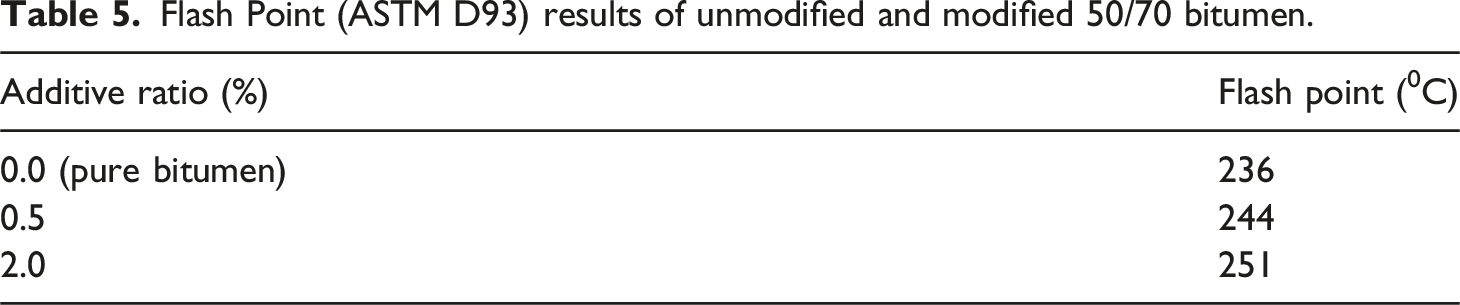
Flash Point (ASTM D93) results of unmodified and modified 50/70 bitumen.
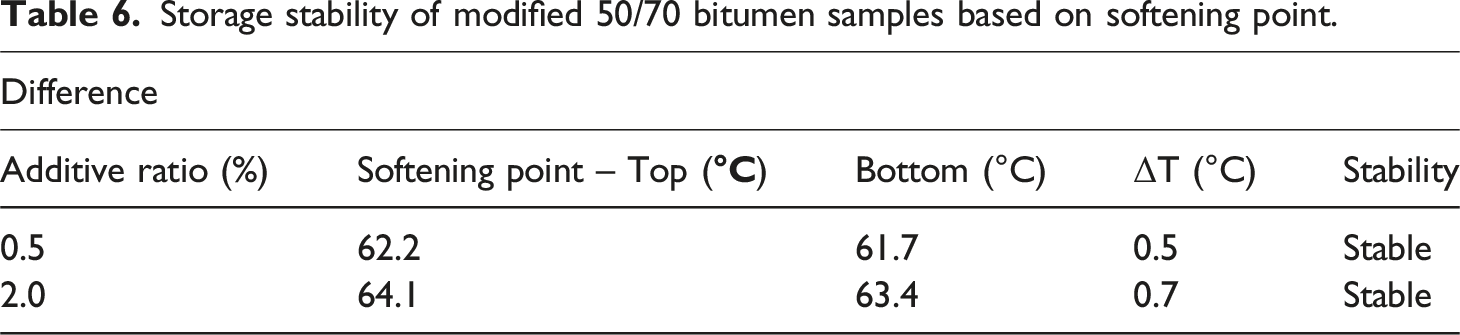
Storage stability of modified 50/70 bitumen samples based on softening point.
The results demonstrate that the incorporation of 0.5% and 2.0% of the plastificator additive led to an increase in flash point from 236°C to 244°C and 251°C, respectively. The observed enhancement is associated with the reduced volatility and increased thermal resistance introduced by butadiene-nitrile rubber and polyisobutylene components. These materials likely retard the release of flammable vapors at elevated temperatures, thereby improving the safety profile of the bitumen during high-temperature processing and application.44–46
Storage stability and processability
Ensuring the storage stability and processability of modified binders is essential for their industrial applicability. A stable binder must retain uniformity during prolonged storage at elevated temperatures, while also remaining workable during mixing, pumping, and laying processes.47,48
The storage stability of the modified bitumen samples was evaluated based on ASTM D7173. Each sample was poured into an aluminum tube (diameter ∼25 mm, height ∼140 mm), sealed, and stored vertically in an oven at 163 ± 2°C for 5 days. After conditioning, the tubes were cooled to ambient temperature, sliced into three equal parts (top, middle, bottom), and softening point tests (ASTM D36) were conducted on the top and bottom sections. A difference of less than 5°C was considered acceptable for stable systems.49,50
Conclusion
In this study, a novel bitumen additive was successfully synthesized from waste-derived polymeric materials, including butadiene–nitrile rubber, polyisobutylene, and transformer oil, compatibilized with maleic anhydride-grafted polyolefin (MAH-g-PO). The structural integrity and functional performance of the additive were confirmed through FTIR, DSC, and TG-DTA analyses, which demonstrated its high thermal stability, functional group diversity, and suitability for asphalt applications.51–53
Modified bitumen samples prepared with 0.5 wt% and 2.0 wt% of the synthesized additive exhibited significant improvements in physical and rheological performance compared to the unmodified binder. Notably, softening point increased by up to 13°C, penetration values indicated enhanced flexibility, and ductility exceeded 150 cm in all modified samples. Rheological testing via DSR confirmed substantial increases in complex shear modulus and rutting resistance, with G*/sin δ values rising from 1.26 to 5.36 kPa, well above Superpave requirements.3,54–56
Furthermore, the modified binders demonstrated elevated flash points (up to 251°C), excellent storage stability (ΔT <1°C), and smooth processability without signs of phase separation or gelling. These outcomes underscore the additive’s compatibility with conventional bitumen and its ability to enhance binder performance under thermal and mechanical loading.57–59
Overall, the research confirms that the synthesized additive not only meets the key performance criteria for modified binders but also offers a sustainable and resource-efficient solution by valorizing waste oils. This approach aligns with green construction principles and presents a scalable pathway toward high-performance asphalt materials with reduced environmental impact.60,61
Footnotes
Declaration of conflicting interests
The authors declared no potential conflicts of interest with respect to the research, authorship, and/or publication of this article.
Funding
The authors disclosed receipt of the following financial support for the research, authorship, and/or publication of this article: This work was supported by the KOBIA; 5th Grant Competition under Contract No. QD-09/24.
