



Abstract
Tire rubber has always been a major environmental and waste management problem due to its non-biodegradability and accumulation in landfills. Moreover, global statistics reveal that a substantial number of tires become unsuitable for use or retreading. For the reasons, in this work waste tire rubber was used to produce thermoplastic elastomers. The work consisted of three experimental stages. In the first one, the contribution of the tire rubber sizes was evaluated in thermoplastics with 80% polypropylene and 20% waste tire rubber, having sizes of 180, 250, 420, 850 and 2000 μm. The best results were obtained for thermoplastics with waste tire rubber of 250 μm, showing improvements in the tensile and flexural strength as well as in the Izod impact. In the second stage, the contribution of the content of tire rubber was evaluated, having concentrations from 10% to 50% of tire rubber. The results show increase in the tensile strain and Izod impact. Finally, in the third stage, the exposition to gamma radiation of the thermoplastics was evaluated, having irradiation doses from 100 to 500 kGy. The thermoplastics were produced with 60% PP and 40% waste tire particles. The results show increase in flexural strength and the modulus of elasticity (in tensile and flexural) with the radiation dose increases. The use of waste tire rubber and the treatment by gamma radiation offers an option for improvement mechanical properties of thermoplastic elastomers.
Introduction
The improper disposal of waste tires has become a significant social and environmental concern. They are difficult to compact in landfills, and pose a serious fire hazard; once ignited tire fires are difficult to extinguish. Additionally, tires resist natural degradation, contributing to long-term pollution. In response, increasing attention is being given to materials produced from renewable resources, which offer other reuse and exhibit a lower environmental impact. One promising solution is the reuse of waste tire rubber (wTR) in thermoplastic matrices to produce composite materials known as thermoplastic elastomers (TPEs), which combine the elasticity of rubber with the processability typical of thermoplastics.
Tires are composed by natural or synthetic rubber, reinforcing fillers (mainly carbon black), steel wire, textiles fibers (such as polyester, rayon or nylon), zinc oxide and sulfur, among other materials. The recycling process for tire rubber involves the separation and recovery of steel and textiles components. Tire rubber shredding can be classified into three processes based on particle size: micronization (<0.8 mm), pulverization (0.8–2.5 mm) and granulation (2–4 mm). In a study involving waste tire rubber with a density of 0.83 g/cm3, the material was shredded into three particle size ranges: <0.08 mm, 1.0–1.6 mm, and >1.6 mm, and its mechanical properties were then evaluated. The best results were obtained for shear strength with an improvement of 100%, reaching a value of 300 kPa. This result was achieved using rubber particles of 0.08 mm and an irregular surface texture. 1 Furthermore, waste tire rubber (wTR) is widely used in various engineering applications, including road construction, geotechnical works, fuel for cement kilns and incinerators for production of electricity, and as an aggregate in construction materials.
The addition of tire rubber into a polypropylene matrix can lead to either an increase or decrease in mechanical and thermal properties, depending on factors such as rubber content, particle size and surface treatment. However, studies on the use of waste or recycled tire rubbers in polypropylene composites remain limited. A few notable researches are described.
The resulting properties of polypropylene and tire rubber composites depend on the particle content and size. Tire rubber is obtained from truck and automobile tires and is added in concentrations of 10 to 60% by weight, ranging in size from 0.25 mm to 1.0 mm. The resulting mechanical and thermal properties are related to the adhesion produced. Moreover, the produced composites have had different applications as in engine´s sound encapsulation in commercial vehicles. Specifically, in composites with polypropylene and waste tire rubber (0.5 to 1.0 mm sizes), at low content of rubbers (10 wt%) the tensile strength increases by 65% and the elongation at break by 16.4% but the flexural strength decreased 42%. 2
For composites with 30% tire rubber the impact strength improved by 245%3,4 or increase up to 150%, 5 such improvement was due the low stiffness and high impact absorption generated by tire rubber particles or due to the capacity of the polypropylene to absorb high impact energy. However, the tensile strength decreases up to 64% and the elongation at break decreases by 32%3–6 or increases up to 175%. 5
In other properties high concentrations of tire rubber are required to improve any mechanical property. The addition of 60% tire rubber to polypropylene generated an increase of 30% in the elongation at break, which was due to the high strains produced by recycled rubber. 3 Also increase 22% the mechanical damping (tan δ). 5 Increment is related to the rubber particle size, since with small particles better dispersion is achieved, as well as bigger surface area which allowing better interaction between polypropylene matrix and the tire rubber particles. 3 The properties decreased by 80% in Young’s modulus, 5 70% in tensile strength or 55% in tensile strength and 4% in elongation at break. 5 These results were due to the flexibility of the tire rubber particles, in which cracks initiate around them, separating them from the polypropylene matrix, thus modifying the elasticity. However, the Youngʼs modulus decreases 63% and the tensile strength 58%. The molecular entanglements in the rubber chains are unable to prevent rapid flow and then quickly fracture in response to the applied stress.3,5–8
Limited studies are found for composites produced with both recycled or waste polypropylene and tire rubber. For example, composites with 55% recycled rubber (0.85 mm size) and recycled polypropylene (rPP), showed improvement of 60% in the elongation at break, but decreased up to 80% in the Young’s modulus and up to 64% in the tensile strength. The results are related to the recycled rubber, since it confers more elasticity and less rigidity to the blends. 9 In other study, waste polypropylene (wPP) was mixed with ground tire rubber (0.4 mm size). Detrimental mechanical results were obtained. The modulus of elasticity decreased 95%, the tensile strength decreases 85%, which was due to the rubber presence since it was unable to bridge the growing crack throughout the composite. Moreover, addition of 10% rubber, decrease 50% the strength and 12.5% the deformation. The elongation at break gradually decreased up to content of 40% rubber, but for higher contents the values improved 11%, which was due to the high stretching of the rubber. 10
Chemical agents are used to improve phase compatibility, for example, the use of PP-g-MA in thermoplastic elastomers composed of polypropylene (PP) and (5%–25% by weight) waste tire rubber (wTR) particles, with sizes ranging from 0.5 mm to 1.0 mm. The findings indicate that a 20% PP-g-MA content substantially reduces fluidity (i.e., increases viscosity) in all composites except the 75/25 PP/wTR formulation, suggesting improved interfacial interaction. Tensile strength decreases considerably as the waste tire rubber concentration increases. For the 75/25 composite, tensile strength decreases by up to 46.5%, the elastic modulus decreases by up to 41.5%, and the mean strain at break decreases by 40.6%. Microscopic analysis reveals that waste tire rubber particles tend to fracture into two halves, indicating good interfacial adhesion with the polypropylene matrix. 11
Waste ground rubber tires (wGRT) measuring 0.125 mm in size, at a concentration of 10% to 90% by weight, were blended with high-density polyethylene (HDPE) to produce a thermoplastic elastomer. The results show a decrease in tensile strength of up to 74% and a decrease in Shore A hardness of up to 18% with increasing rubber tire. In contrast, the elongation at break increases more than sevenfold compared to neat HDPE. Styrene-butadiene-styrene (SBS) was used at concentrations ranging from 0 to 15 phr as a compatibilizer. The results showed a negligible change in tensile strength, despite increasing wGRT content. Regarding Shore A hardness, it increased up to 60% with the addition of 12 phr of SBS. Furthermore, the elongation at break showed an improvement of up to 55% when 15 phr of SBS was used. 12
Crosslinking in polymers requires energy, such as that produced by chemicals or electromagnetic energy. Crosslinking to form chemical bonds can be carried out by sulfur crosslinking (C-S x -C) and peroxide crosslinking (C-C) procedures. 3 On the other hand, gamma radiation is electromagnetic energy that produces various phenomena in polymers, such as the generation of free radicals and the crosslinking of polymer chains that contribute to the formation of C-C bonds. There are numerous studies on the use of gamma radiation to modify rubber, but not on scrap tire rubber, which are limited. The objectives include: (i) increasing the degree of crosslinking of polymer chains and improving composite material performance after adding modified rubbers as a partial substitute to the blends; (ii) using gamma radiation to polymerize composite materials; and (iii) understanding the relationship between radiation dose and crosslinking or degradation processes in the polymer structure.
Exposures to irradiation at low doses, typically below 30 kGy, have been performed, where changes in properties are attributed to the increased number of crosslinks generated in the rubber network as the absorbed dose increases. Crosslinking restricts the mobility of the polymer chains and results in an increase in the gel fraction and density. For example, compounds made of 70% butadiene and 30% natural rubber irradiated at low doses show an increase of up to 85% in the gel fraction, while nitrile butadiene rubber (NBR) increases the crosslink density by 23%.13,14
Crosslinking of polymer chains, which occurs at low doses of up to 30 kGy, also results in an increase in mechanical properties. In butadiene/natural rubber composites, the elongation at break increases by 317% and the tensile strength from 5.0 to 13.8 MPa. In nitrile butadiene rubber (NBR), the modulus of elasticity increases by up to 36% and the hardness by 15%.13,14 At higher radiation doses, polymer chains in rubber are cleaved, and the values of certain properties decrease. For example, in butadiene/natural rubber composites, volumetric swelling and molecular weight decreased with increasing dose. In nitrile butadiene rubber (NBR), toughness decreased by up to 20%, strain at break by up to 10%, and tensile strength by 8% at a dose of 45 kGy.13,14 At a dose of 350 kGy the elongation at break increases 150% for butyl rubber. Moreover, tensile strength decreases gradually, reaching up to 75% less, with respect to the 4.8 MPa value of non-irradiated one. 15
Some research focuses on studying the effects of gamma radiation on various rubber-based composite. At low doses, high crosslinking of the polymer chains occurs. For example, at a dose of 10 kGy, the addition of rubber from truck tires resulted in a 135% improvement in elongation at break, but tensile strength decreased by up to 60% and hardness by 26%. 16 The results obtained after exposure to high doses (>30 kGy) show that the predominant phenomenon is the scission of polymer chains. Truck tire rubber shows a 30% decrease in elongation at break at a dose of 30 kGy. 16 In composites produced with recycled tire rubber (rTR) and natural rubber (NR), the mechanical properties decrease with increasing radiation dose. Tensile strength decreased up to 71%, elongation at break by 29%, modulus by 25%, and Shore A hardness by 18%. However, these losses can be reduced by adding vulcanizing agents to the composites, as the tensile strength increases by 35% and the modulus by up to 16% at 60 kGy. However, the elongation at break decreases by up to 16% and the Shore A hardness decreases by 15%. 17
Increased exposure to gamma radiation is required to improve the mechanical properties of composite materials. For example, in composites containing rubber fibers from scrap tires and sand, the addition of them decrease gradually the compressive strength up to 53% less and the strain at yield point decrease up to 46% less. However, at high irradiation doses, specifically 70 kGy, the cleavage of polymer chains in the tire rubber occurs, resulting in a smaller decrease (27%) in compressive strength. 18
In some composites, for example, those made with natural rubber and organic fillers, changes in mechanical properties occur at doses higher than 30 kGy. In fact, changes at high doses (from 30.1 to 121.8 kGy) are produced by gamma rays through crosslinking effects. The highest mechanical values were achieved with a dose of 91 kGy. Tensile strength improved by 300%, reaching a value of 27.5 MPa, while the elongation at break improved by 50%, reaching a value of 180%. In addition, hardness improved by 19% at a dose of 121.8 kGy. 19 In concrete production, recycled tire rubber was exposed to gamma radiation and subsequently added to the concrete. At a dose of 40 kGy, crosslinking of the polymer chains occurred, and the crosslink density increased by 28%. These characteristics led to a 50% increase in compressive strength. However, at higher radiation doses (60 kGy), the strength gradually decreased and water absorption increased by 13% due to degradation. 20
Some research focuses on the effects of gamma radiation on various polypropylene-based composite materials. For example, composites produced with a polypropylene matrix and silver-coated silica nanoparticles (1%–3%) were irradiated at a dose of 20 kGy. The results showed higher tensile strength and a higher elastic modulus than non-irradiated samples. However, an opposite effect was observed on the elongation at break, as it decreased after irradiation. 21 Composite materials produced with 80% polypropylene, 10% bagasse, 10% bamboo, and acrylic resin were polymerized by gamma radiation. Exposure to a dose of 30 kGy increased the compressive strength by 104% due to crosslinking of the polymer chains. However, at a dose of 50 kGy, the strength was negatively affected due to polymer chain breakage. 22
This study aimed to investigate the effects of waste tire rubber and gamma radiation on the mechanical properties of thermoplastic elastomers produced from polypropylene (PP) and waste tire rubber (wTR). Tire rubber particles, ranging in size from 180 µm to 2 mm, were added to polypropylene at different concentrations. The thermoplastics’ flexural and tensile properties, as well as their Izod impact strength, were evaluated. The thermoplastics were subsequently exposed to gamma radiation doses of 100, 200, 300, 400, and 500 kGy. The irradiated thermoplastics were then subjected to the same mechanical tests applied to non-irradiated thermoplastics.
Materials and methods
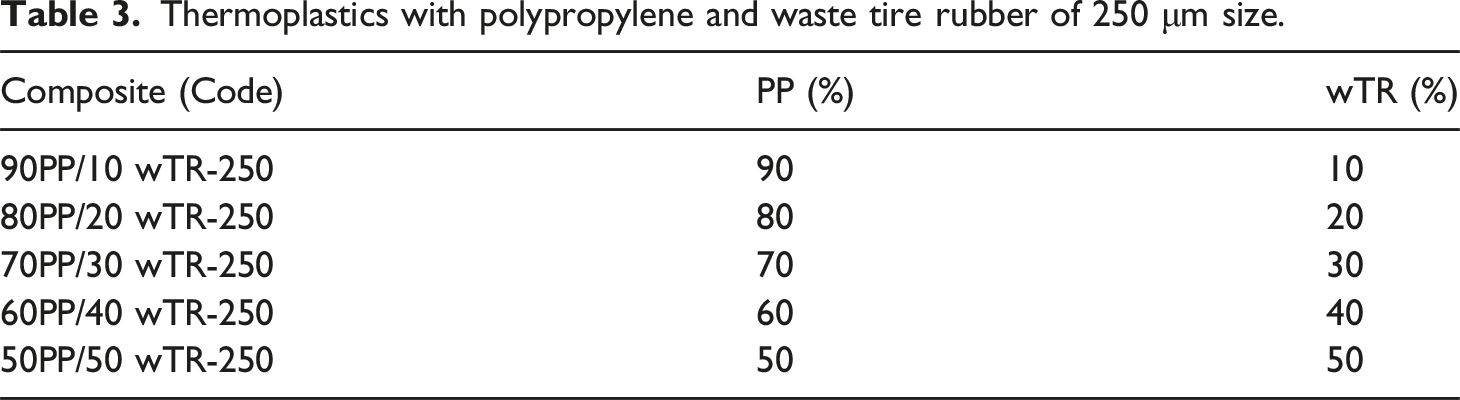
The experimental program was carried out in three stages. In the first stage, composite materials were manufactured with polypropylene and rubber from used tires, the latter with different sizes (180 μm – 2 mm). The tensile strength, flexural strength and Izod impact strength of the thermoplastics were evaluated. The second stage consisted of evaluating the effect of the amount of used tire rubber (10%–50% by weight) in the thermoplastics made with polypropylene. For a comparison with the thermoplastics made in the first stage, the same mechanical tests were performed. Finally, in the third stage, the thermoplastics that showed the best overall mechanical performance in the second stage were selected for further analysis, focusing on the effects of gamma radiation at doses of 100, 200, 300, 400 and 500 kGy. Again, the same mechanical tests were evaluated for comparative purposes.
Materials
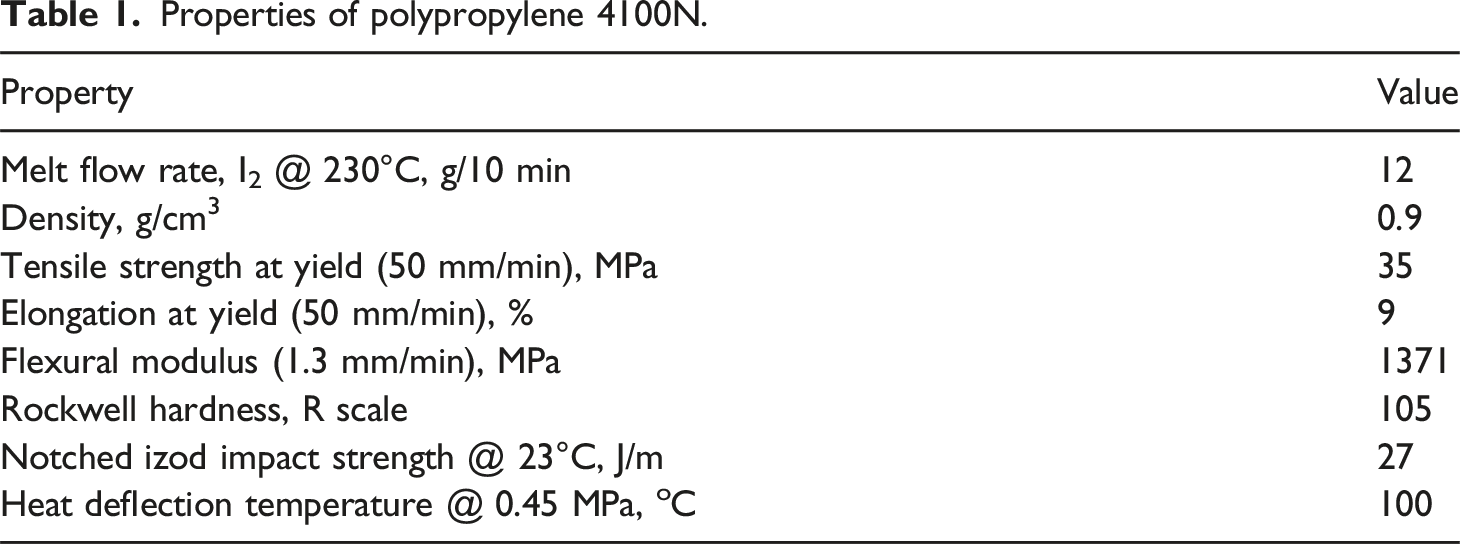
Properties of polypropylene 4100N.
The waste rubber used is the product of the mechanical shredding process of end-of-life automobile and truck tires, with a composition of 29.9% styrene-butadiene rubber (SBR), 24.5% natural rubber (NR), 19.1% inorganic materials (ZnO) and ashes, 18.1% carbon black and 8.4% oil/plasticizer. The tire rubber had a density of 0.92 g/cm3. The composition was provided by the supplier, Trisol Company (Tultitlan, Mexico) (Figure 1). The waste tire rubber particles were dried in a furnace to 60oC during 3 hours for moisture elimination. A similar temperature has been used to dry ground tire rubber to a constant weight, during crosslink density measurement.
23
Then they were subjected to a screening process to separate them by particle size. The sieving was carried out using five sieves: 80-mesh (180 µm), 60-mesh (250 µm), 40-mesh (420 µm), 20-mesh (850 µm) and 10-mesh (2 mm). The distribution of the particle sizes is shown in Figure 1. According to the literature, automotive tire particles are classified in terms of their dimensions, namely: granulated elastomer (75 µm - 4.75 mm), sieving (0.15-10 mm), and tearing (150–300 mm). Thus, our tire rubber particles belong to the granulated type.
24
Waste tire rubber particle sizes.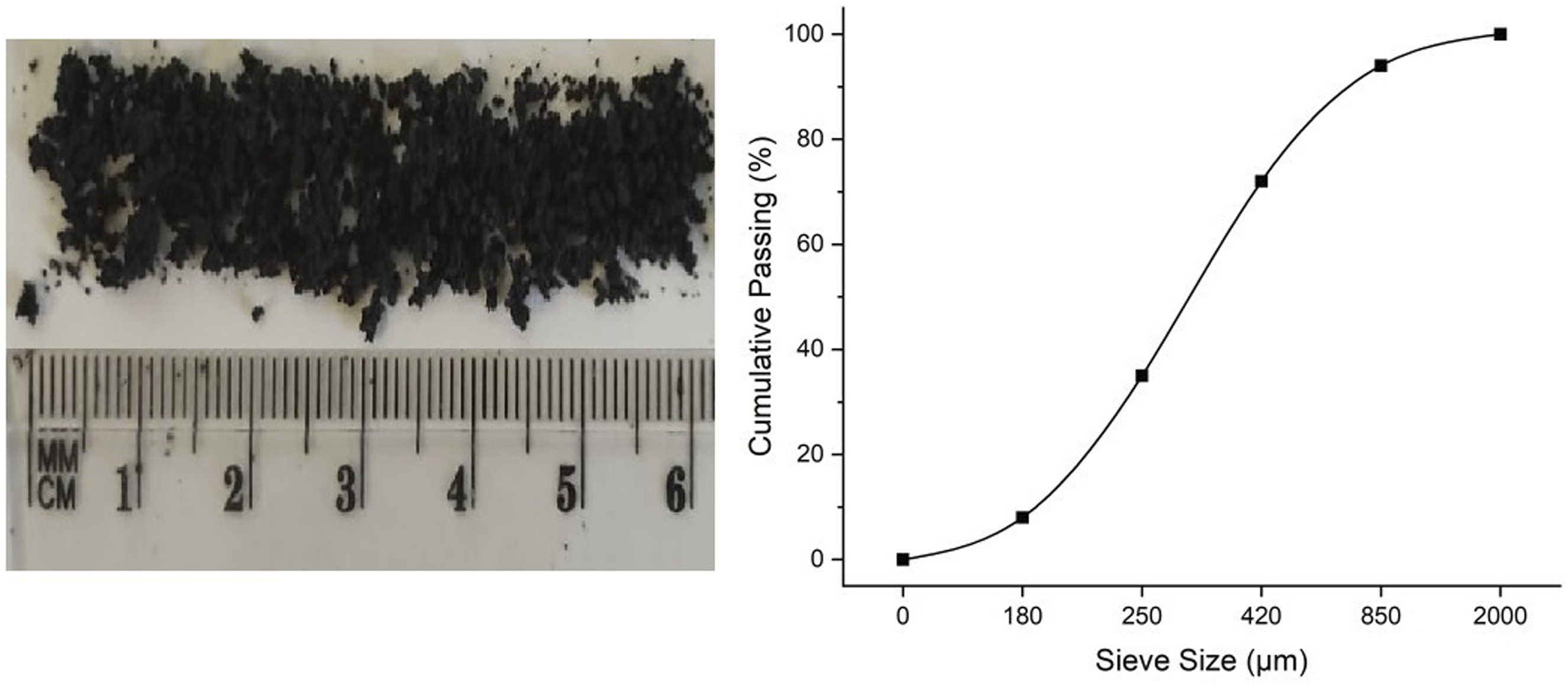
Production of the thermoplastics with polypropylene and waste tire rubber
Thermoplastics with 80% PP and 20% wTR.
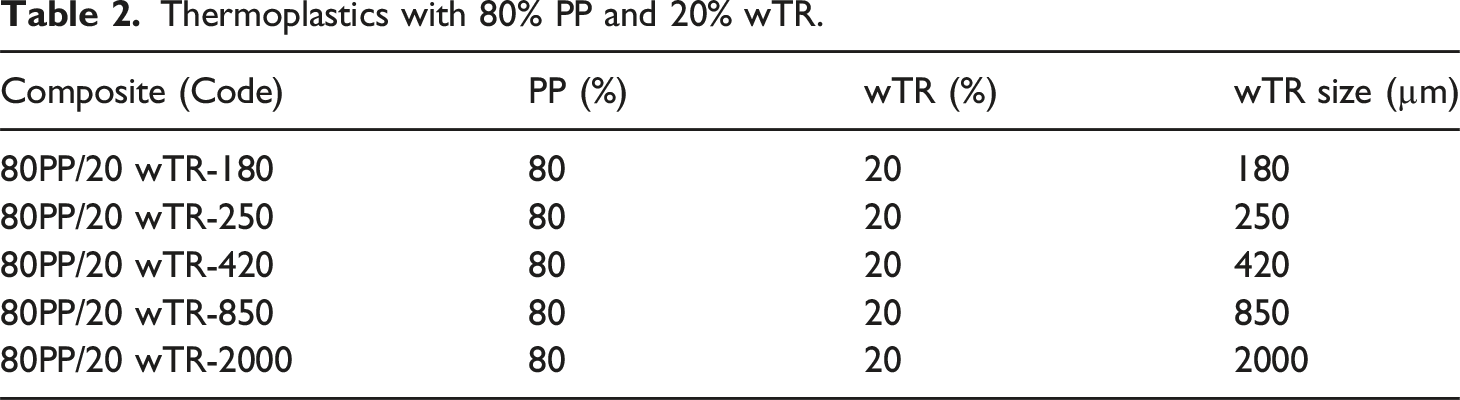
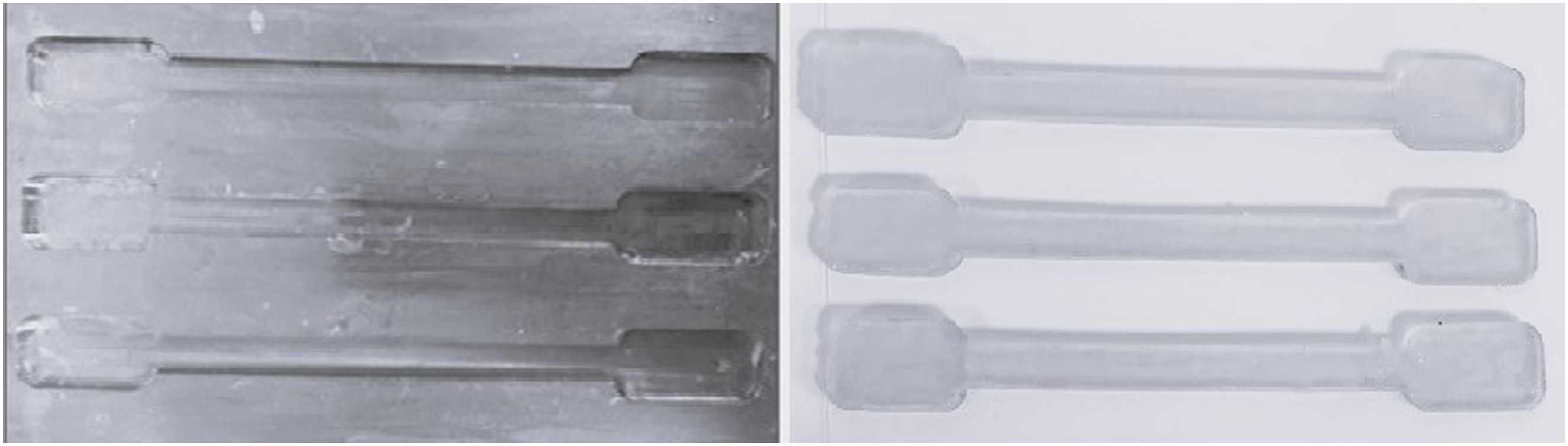
Mold for preparing dog bone-shaped specimens (a), and polypropylene specimens (b).
Five different composite formulations were produced, each one containing a different single rubber size. For each formulation, 15 specimens were fabricated. A total of 75 specimens were produced in this first stage.
Thermoplastics with polypropylene and waste tire rubber of 250 μm size.
The thermoplastics exposed to gamma radiation
Thermoplastics with 80%PP and 20% wTR.
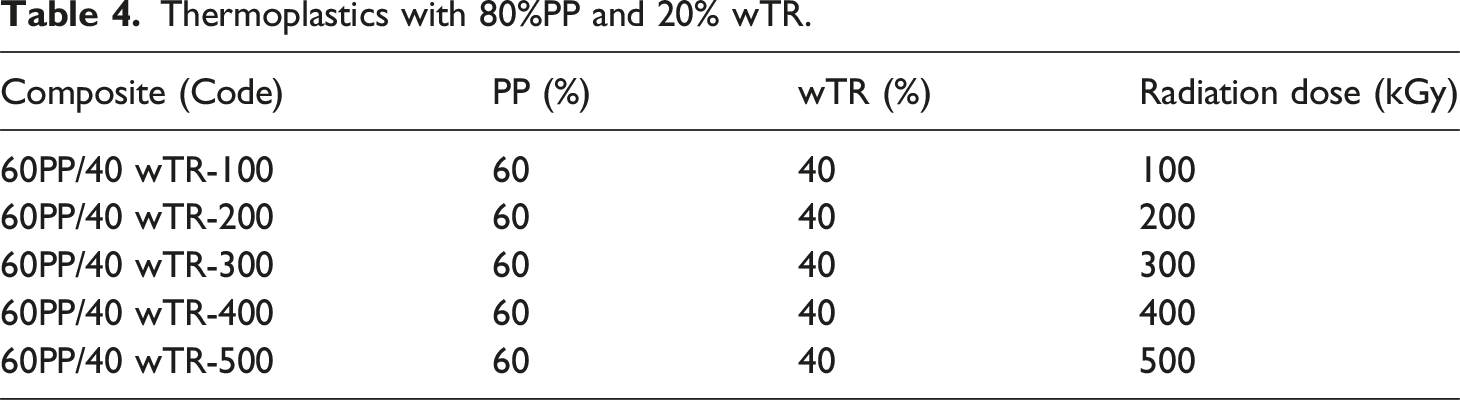
For each radiation dose, 15 specimens were produced. A total of 75 specimens were produced in this third stage. The irradiation process was made in air atmosphere at room temperature at 3.5 kGy/h dose rate, in an industrial irradiator type JS-6500 from Atomic Energy of Canadian Limited (AECL), that operate with cobalt-60 (60Co) pencils with a half-life of 5.2 years. A dyed polymethylmethacrylate (PMMA) dosimeter was used. The irradiator is located at the National Institute for Nuclear Research of Mexico (ININ).
Tensile, flexural and impact tests of the composite materials
The tensile and flexural tests of the thermoplastics were made in a Universal testing machine KEJIAN model KJ-1065, equipped with a 500 kgf load cell. The tensile tests were carried out in accordance with ISO 527-1. A crosshead speed of 50 mm/min was used and the tests were performed at 23°C and 50% humidity. A total of 75 specimens were tensile tested. The three-point flexural tests were conducted in accordance with ISO 178 standard, at a rate of 2 mm/min, under the same temperature and humidity conditions. A total of 75 specimens were flexural tested. In the case of Izod impact tests, the specimens were notched in the center, and then evaluated in a JJ-Test analyzer (model XJU-22), in accordance with ISO 180. A total of 75 specimens were impact tested.
Results
Thermoplastics with 80% polypropylene and 20% waste tire rubber
Flexural and tensile strength of thermoplastics
The flexural and tensile strength values of the thermoplastics with different rubber particle sizes are shown in Figure 3. In the case of the flexural strength, the values varying from 32.3 to 33.4 MPa, i.e. they have minimal differences. Regardless of the rubber particle sizes the variations on the flexural behavior are almost constant. Comparing with the value for pure polypropylene, 45.0 MPa, the values for the thermoplastics are up to 39% lower. The waste tire rubber particles reduce the flexural capacity of the polypropylene. Tensile and flexural strength of thermoplastics with 80% PP and 20% wTR.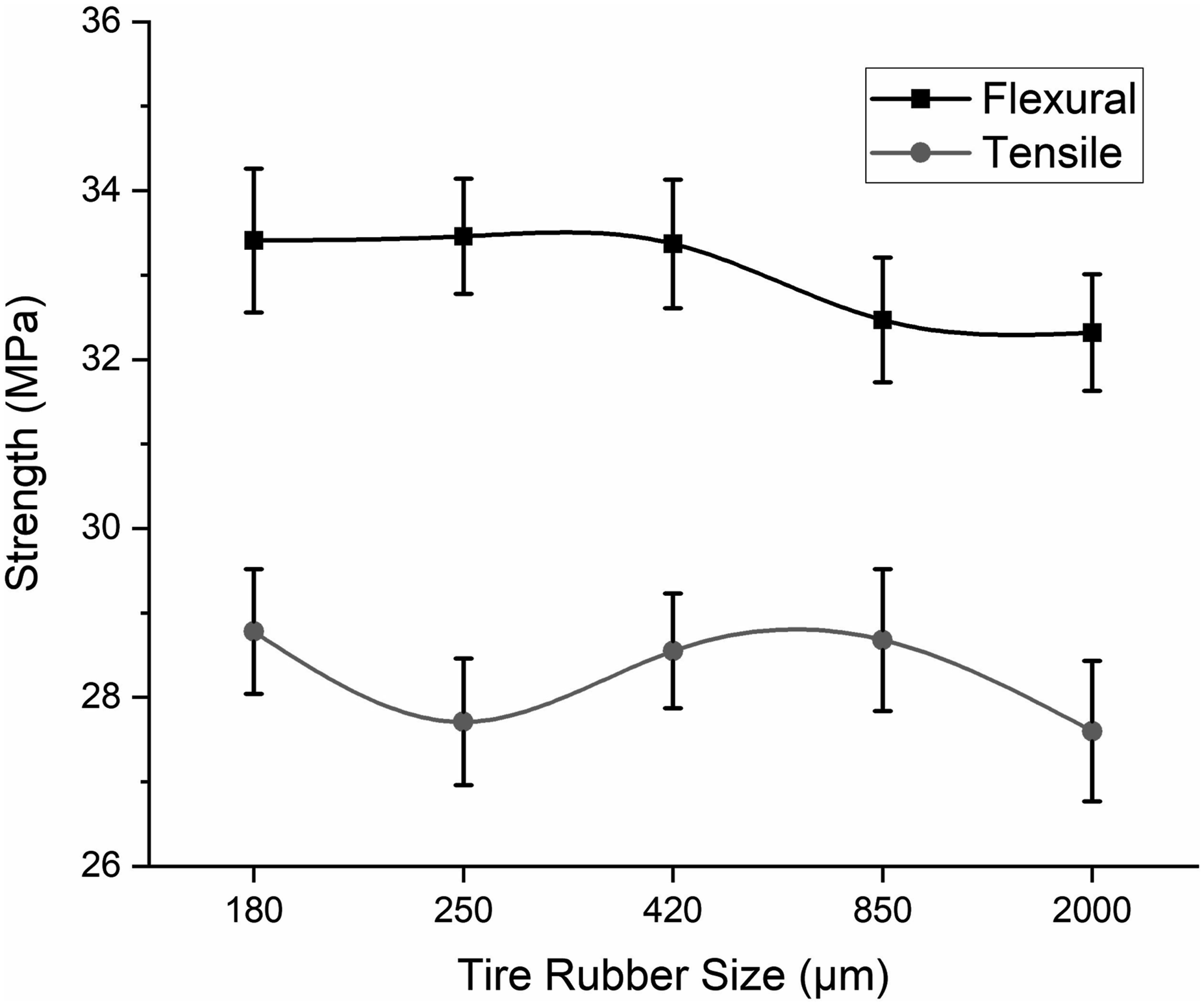
A similar situation occurs with the tensile strength values, which vary between 27.6 and 28.7 MPa, i.e. they show a minimal difference in values. Thus, the different size of the tire rubber particle does not significantly affect the tensile capacity. However, the addition of tire rubber particles produce reduction on the tensile strength of pure polypropylene, whose value is 36.0 MPa. Then the value of 27.6 MPa for the composite is 30% lower than that for pure polypropylene. This decrease could be attributed to the low interfacial adhesion between the polypropylene matrix and the rubber particles.
Tensile strain of thermoplastics
Tensile strain values of thermoplastics are shown in Figure 4. Deformation values range from 14.8 to 16.5%, which are up to 30.9% higher than the value of pure polypropylene, which has a 12.6% in deformation. This increase in elasticity can be considered a characteristic of a thermoplastic elastomer. The maximum deformation value is for thermoplastics with rubber particles of 420 µm (40-mesh), but for higher rubber sizes the deformation decreases. The addition of the tire rubber particles to polypropylene, produce more deformation to it, which has been mentioned in some researches.4,9 Also in natural rubber-reclaimed rubber/polypropylene systems considered thermoplastic elastomers.
5
Thus, certain rubber particle sizes confer more elasticity and less stiffness to the thermoplastics, but higher rubber size affect the tensile strain behavior. Tensile strain of thermoplastics with 80% PP and 20% wTR.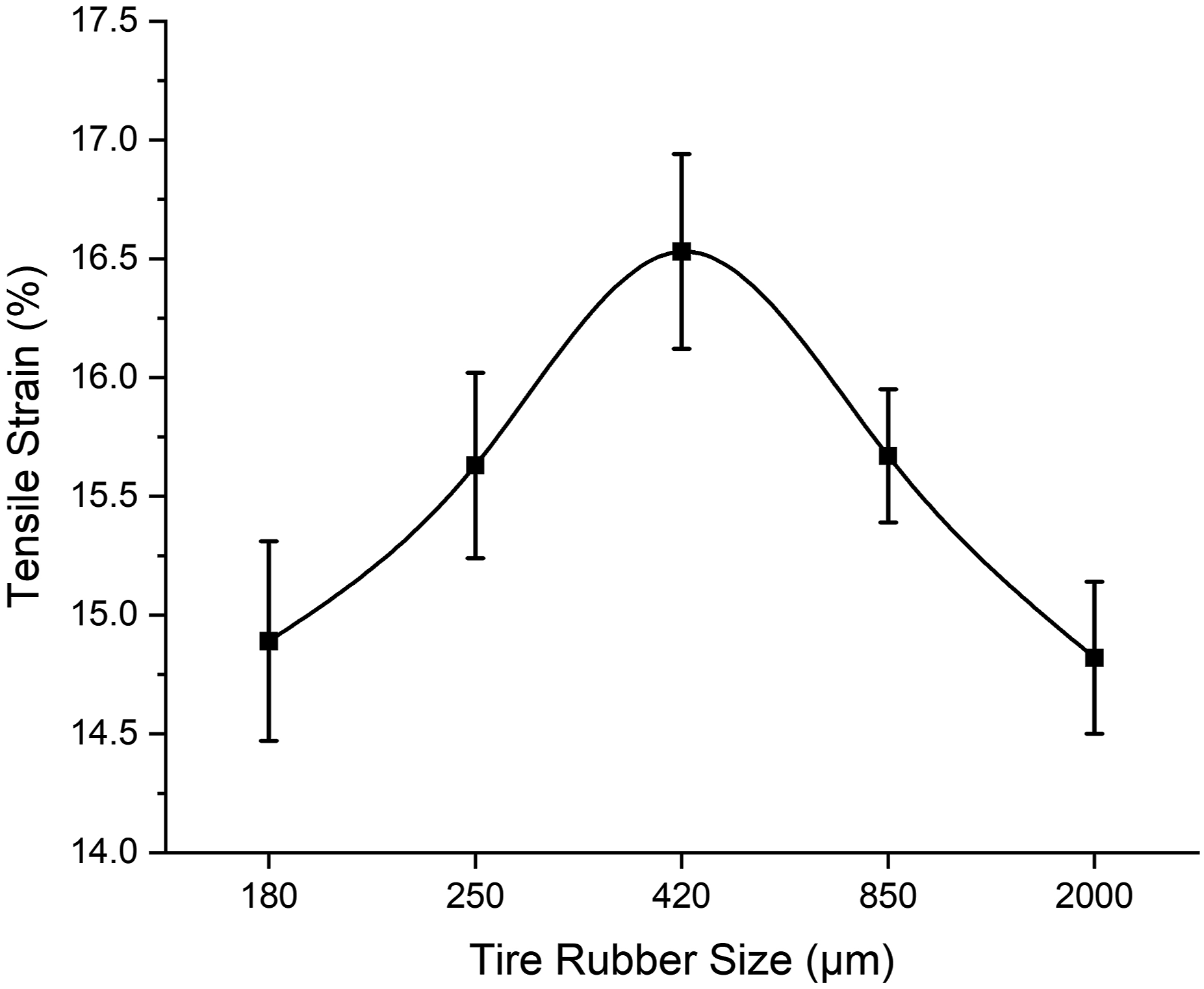
Flexural and tensile modulus of thermoplastics
The flexural modulus values of thermoplastics decrease gradually according to the tire rubber particle sizes increase (Figure 5). The values ranging from 1.06 to 1.21 GPa, which are lower than that for pure polypropylene, namely 1.51 GPa. The addition of tire rubber decreases up to 29% the value of pure polypropylene. Smaller particles rendered better modulus of elasticity compared to bigger ones. Bigger particle size has higher probability of failure cracks whereas smaller ones tend to develop smaller microcracks below to the critical length dimension. No too much difference is observed to the tensile moduli values of thermoplastics with tire rubber particles (Figure 5). The values ranging from 0.71 to 0.77 GPa, which are up to 32% lower than that for pure polypropylene, whose value is 0.94 GPa. Tensile and flexural modulus of thermoplastics with 80% PP and 20% wTR.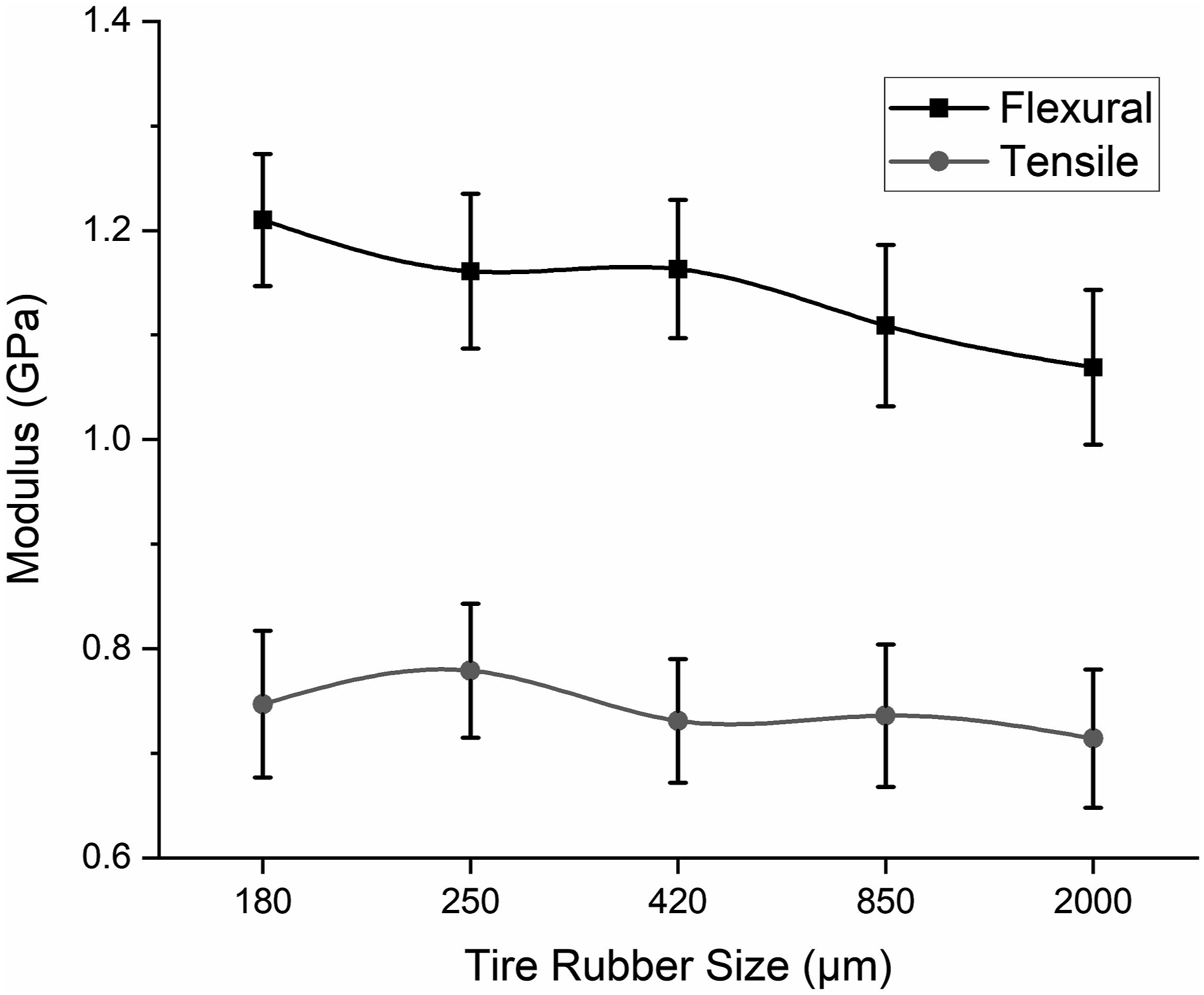
Izod impact of thermoplastics
The Izod impact of thermoplastics with tire rubber particles shows maximum values of 57.5 J/m (Figure 6). This for thermoplastics with rubber particles of 250 μm. Furthermore, the Izod impact values are higher than that for pure polypropylene, whose value is 30.8 J/m. Thus, the addition of the tire rubber improves the Izod impact of the polypropylene up to 86%. Improvement in impact strength was due to capability of waste tire rubber to absorb the impact energy. Besides, smaller particles have better interaction with polypropylene due its larger contact area. Izod impact of thermoplastics with 80% PP and 20% wTR.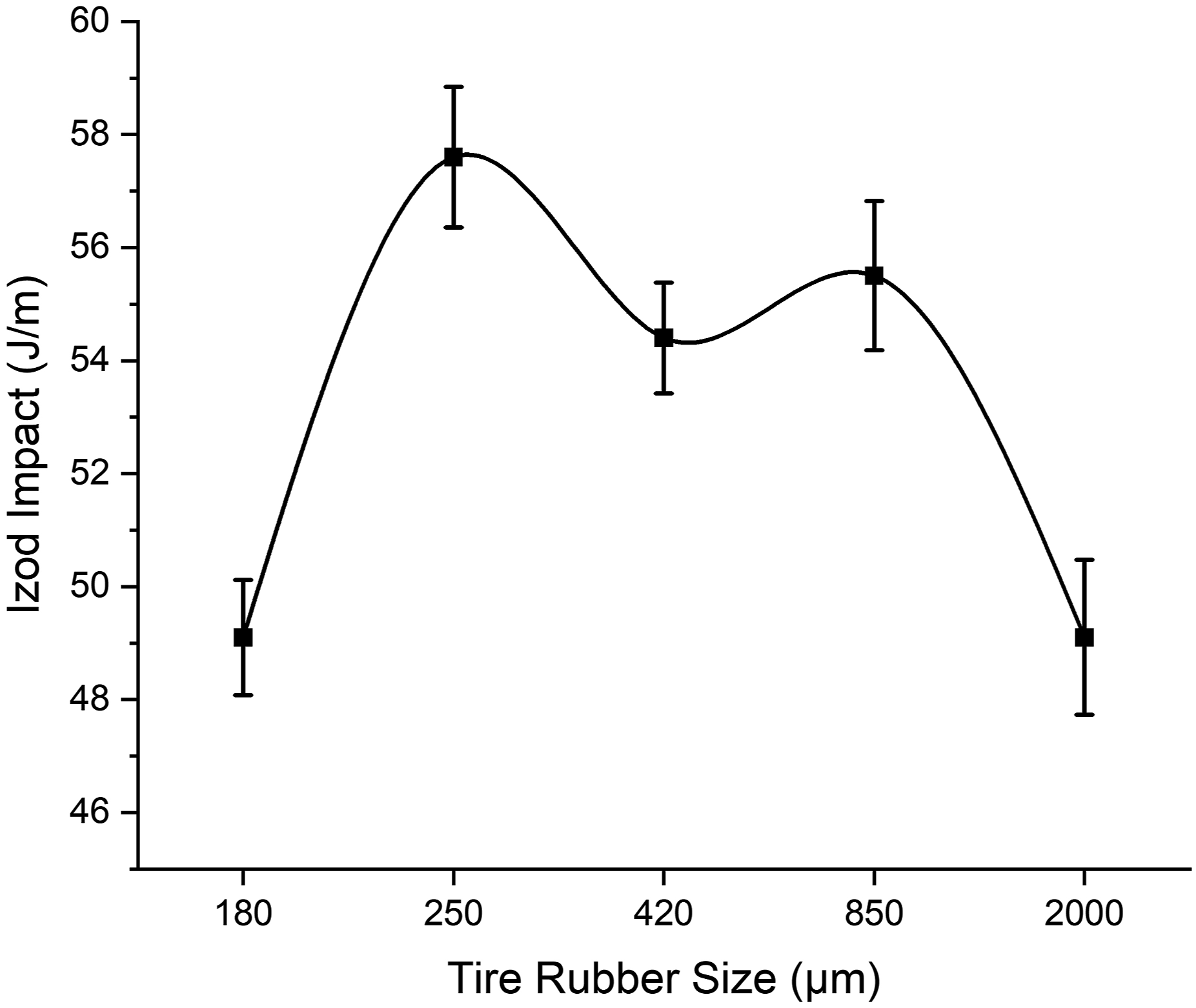
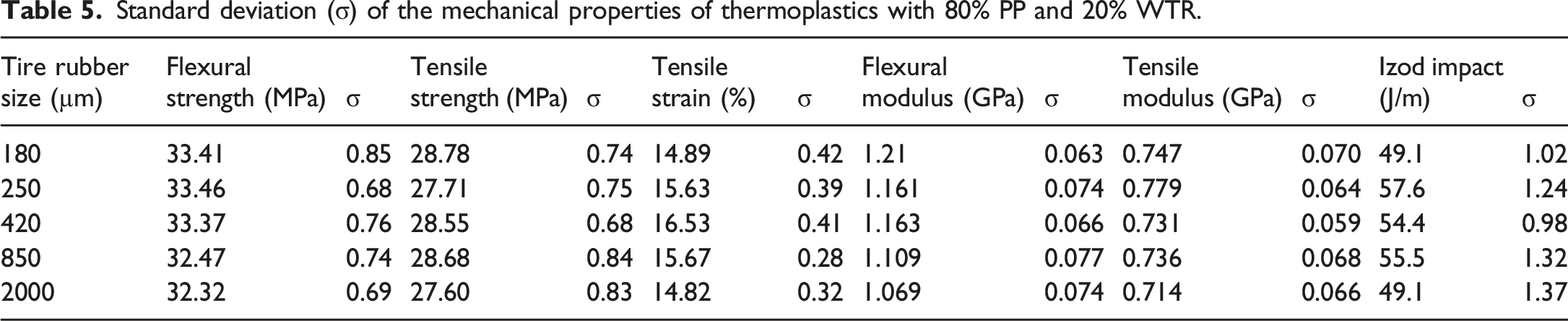
Standard deviation (σ) of the mechanical properties of thermoplastics with 80% PP and 20% WTR.
Thermoplastics with polypropylene and waste tire rubber of 250 μm
Flexural and tensile strength of thermoplastics containing tire rubber particles of 250 μm
Flexural strength values of thermoplastics produced with polypropylene and tire rubber particles with 250 μm in concentrations from 10% to 50% are shown in Figure 7. The values gradually decrease with increasing tire rubber content. The highest value is of 36 MPa for thermoplastics with 10% wTR, which is lower in comparison to the 45 MPa for pure polypropylene. The addition of tire rubber decreases the flexural property of pure polypropylene. The reduction in the values is attributed insufficient interfacial bonding between polypropylene and rubber particles, this due to over saturation of tire rubber and increase the brittleness in the composite. Tensile and flexural strength of thermoplastics with polypropylene and waste tire rubber particles of 250 μm.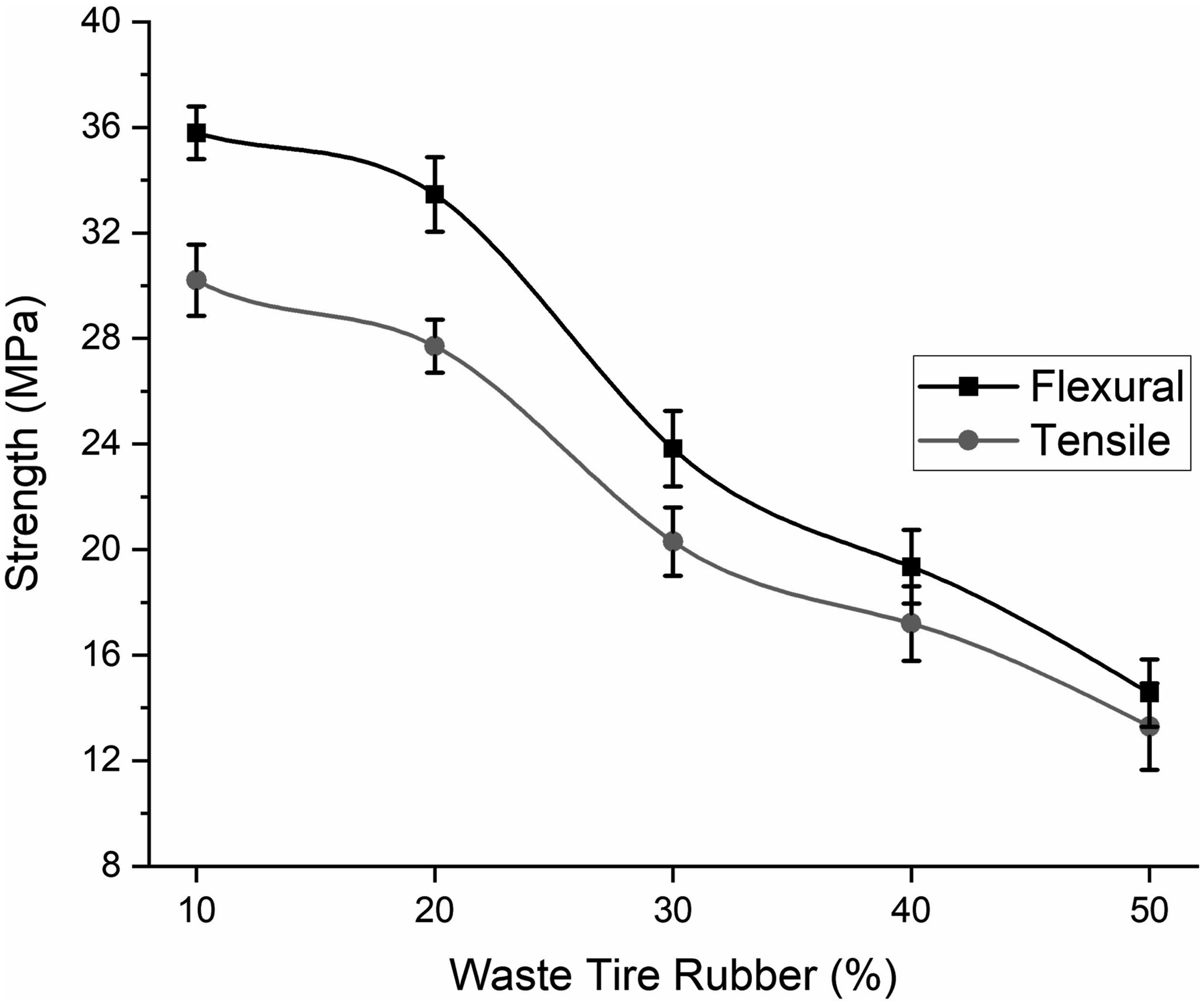
Similar behavior was observed for tensile strength, the values gradually decreasing as more tire rubber particles are added. The maximum value was for thermoplastics with 10% tire rubber, namely 30.2 MPa, which is lower than that for pure polypropylene, i.e. 36 MPa. The decrease can be ascribed to the agglomeration and more concentration of rubber particles, which creates areas of stress concentration and incompatibility within the thermoplastic. In fact, more separation and roughness are observed for composite materials with 40% of waste tire rubber after tensile testing (Figure 8). SEM images of the fractured zone after tensile testing of thermoplastic composites containing polypropylene and waste tire rubber (wTR).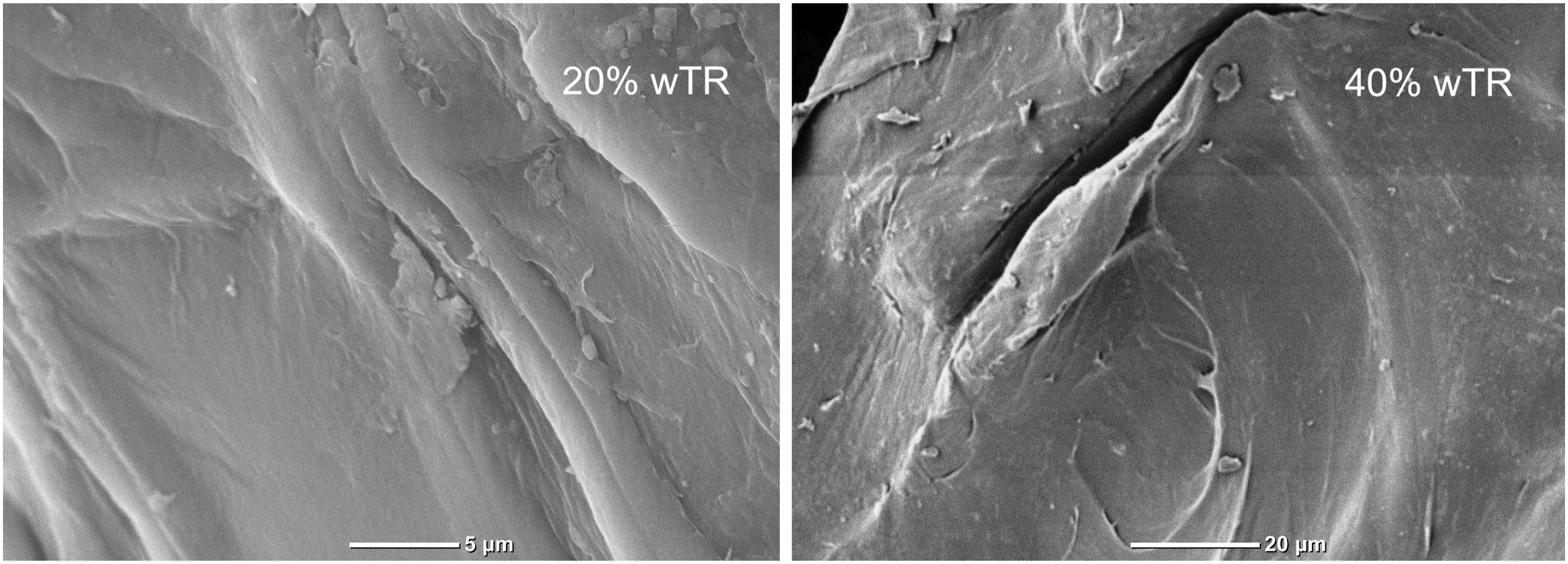
Tensile strain of thermoplastics with 250 μm tire rubber particles
The tensile strain values follow a particular behavior. For additions of 10% and 20% of tire rubber particles the values increase but decreasing slightly for addition of 30% and 40% tire rubber (Figure 9). Finally, with 50% tire rubber, the deformation increases notably up to 18%, which means an improvement of 41% with respect to the deformation of pure polypropylene, whose value is 12.6%. Improved elasticity can be considered a sign of thermoplastic elastomeric properties. On the contrary, in investigations of polypropylene with tire rubber, the tensile strength values decrease.6,8–10 The increase in this work could be due to the small size of the tire rubber particles (250 μm), not usual in this type of composites. Small sizes can generate a uniform distribution of the rubber particles within the polypropylene matrix and improve the load distribution between them. Therefore, rubber particles finely dispersed in the polypropylene matrix and partially cross-linked, as well as elastomeric behavior at room temperature can be considered characteristic of a thermoplastic elastomer. Tensile strain at yield point of the thermoplastics with polypropylene and waste tire rubber particles of 250 μm.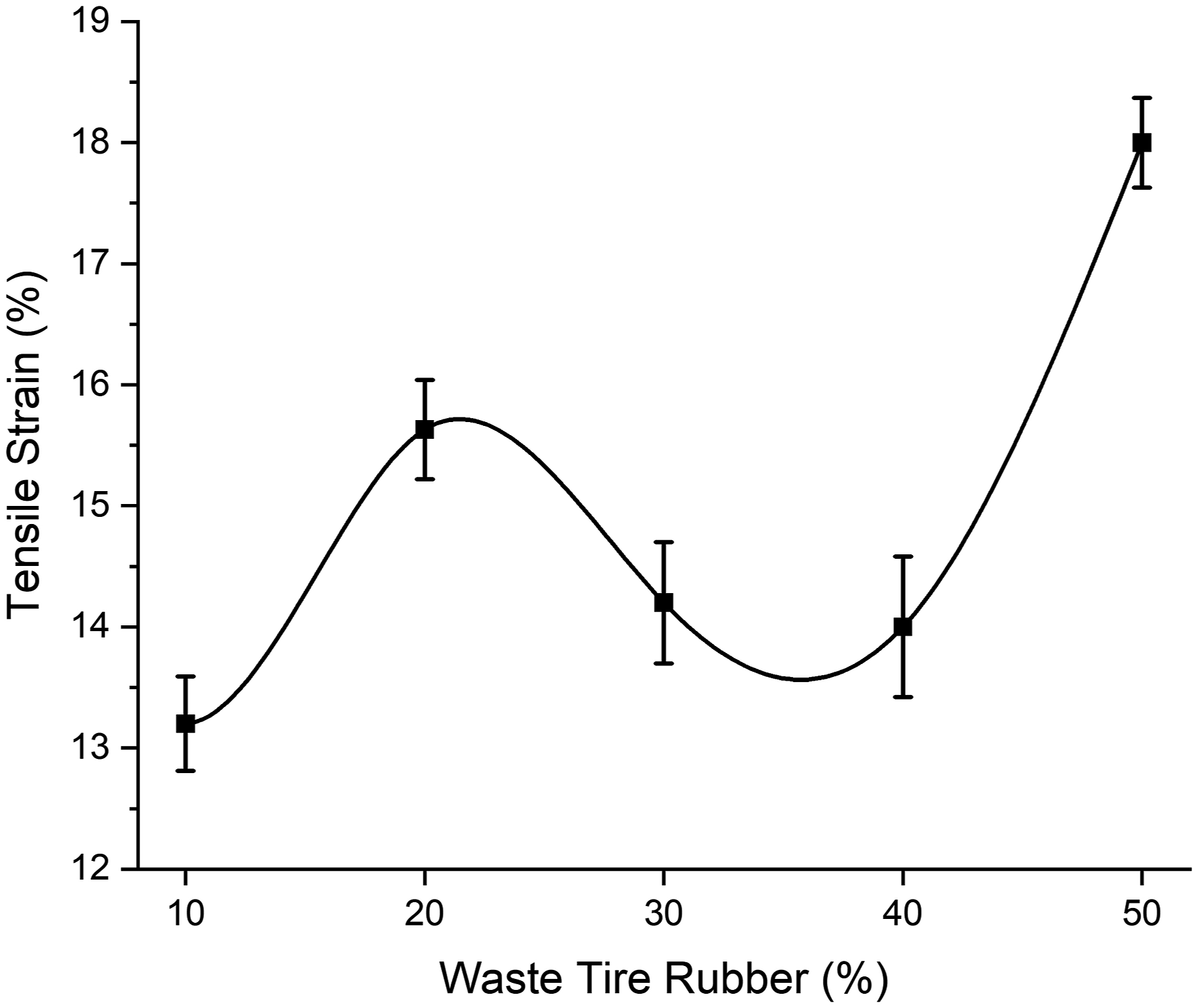
Flexural and tensile modulus of thermoplastics with 250 μm tire rubber particles
The behaviors of the flexural and tensile modulus values are similar to those observed for flexural and tensile strength. They decrease with increasing the tire rubber concentrations (Figure 10). The maximum flexural modulus value was for thermoplastics with 10% waste tire rubber, namely 1.21 GPa. For higher tire rubber concentrations the modulus decreases notably. This maximum modulus is lower than that for pure polypropylene of 1.55 GPa, which means a 21.9% less. Decrease among 20% and 80% of the Young´s modulus have been reported for composites produced with polypropylene and tire rubber.5,6,8–10 Tensile and flexural modulus of the thermoplastics with polypropylene and waste tire rubber particles of 250 μm.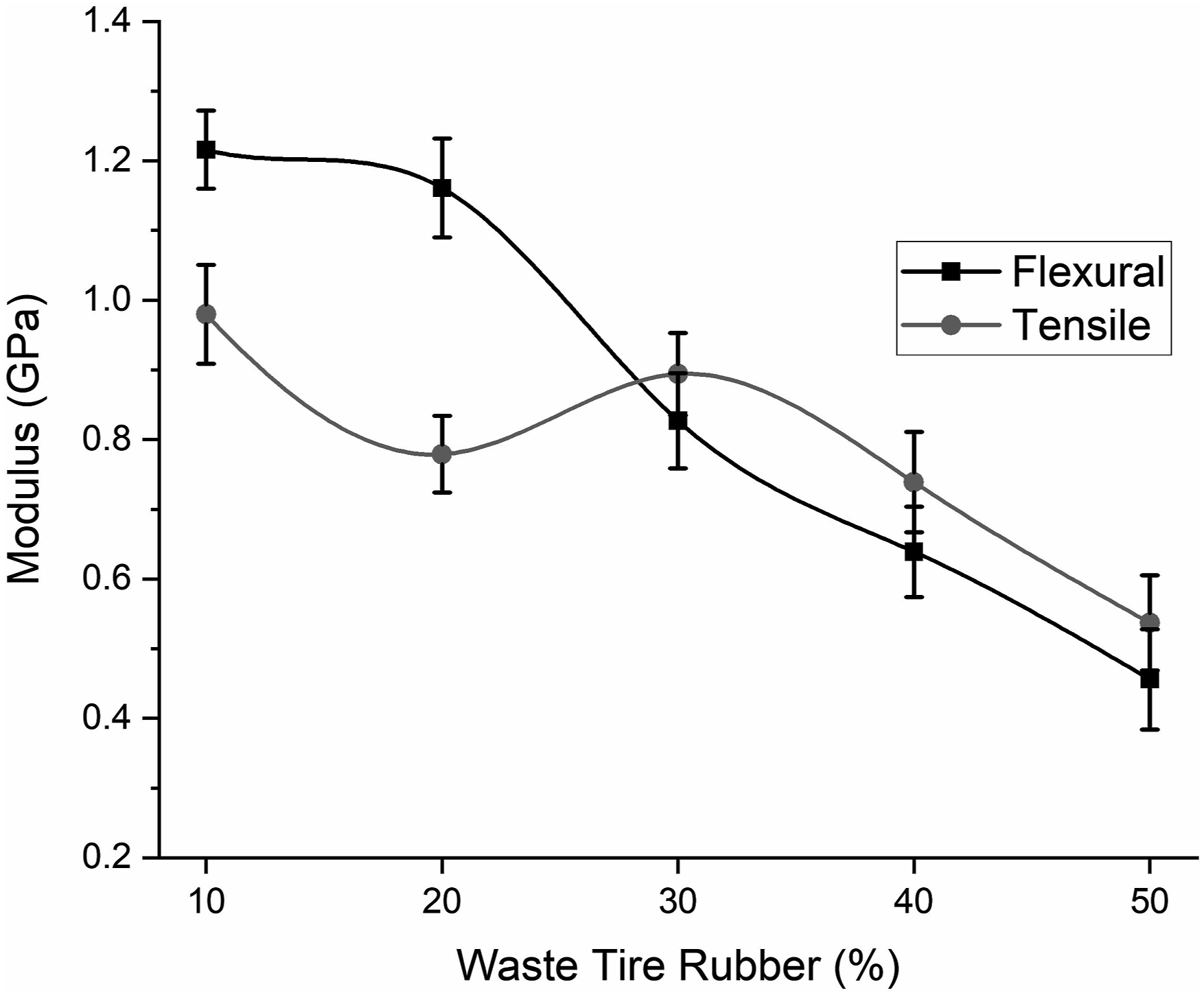
The decrease in the modulus of elasticity is related to the flexibility and molecular entanglement of the tire rubber particles. Under applied stress, cracks initiate around them, separating them from the polypropylene matrix and rapidly promoting fracture.3,5–8 Furthermore, after the flexural test, composites containing 10% waste tire rubber (wTR) show better adhesion between the polypropylene matrix and the tire rubber than those with higher rubber content (40%), in which cracks are more visible with a large separation (Figure 11). Therefore, higher tire rubber content may promote agglomeration and higher interfacial tension and consequently decrease the modulus of elasticity. SEM images of the fractured zone after flexural testing of thermoplastic composites containing polypropylene and waste tire rubber (wTR).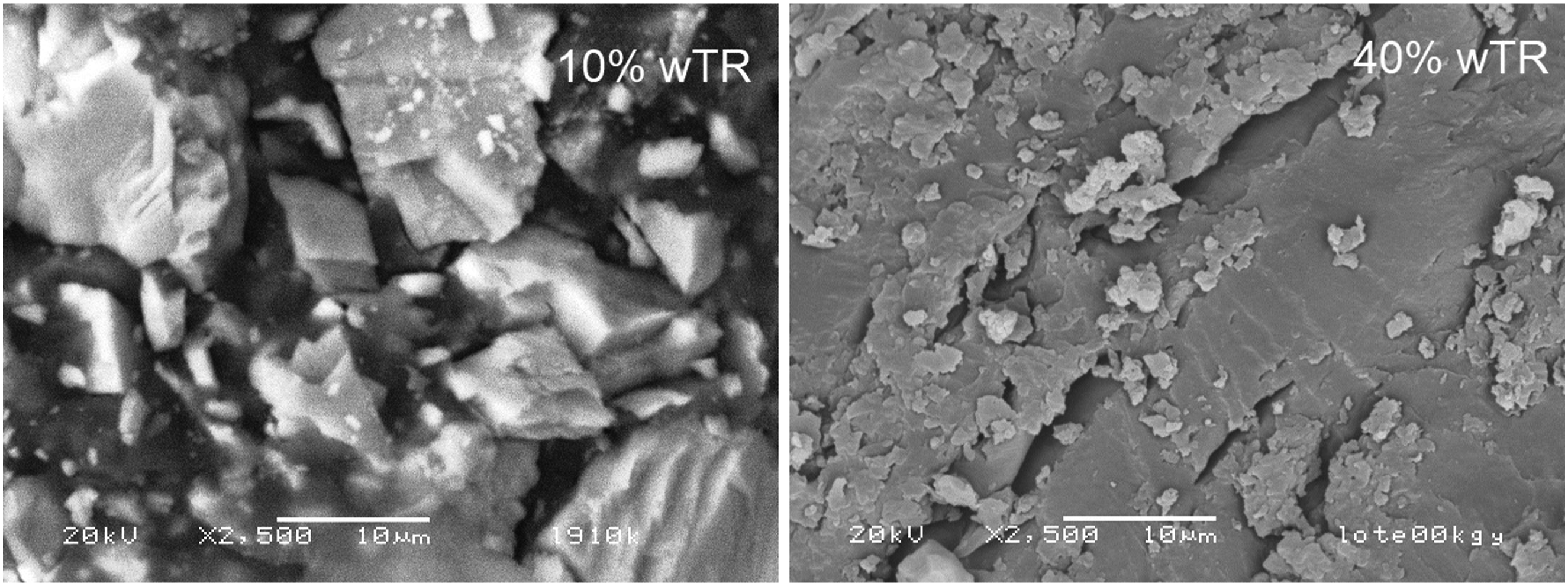
In the case of the tensile modulus, the values decrease gradually with increasing of the rubber particles concentration. The maximum value was obtained for thermoplastics with 10% tire rubber (0.98 GPa), which is comparable with the value for pure polypropylene, namely 0.94 GPa. The values obtained range from 0.57 to 0.98 GPa, which are less pronounced than those obtained for flexural modulus. Rubber particles produce high moduli in tension compared to those in flexural. The excessive amount and uneven distribution of rubber particles reduce the interfacial bonding within the thermoplastic and weaken the stress distribution between the polypropylene and the rubber particles.
Izod impact of thermoplastics with tire rubber particles of 250 μm
Izod impact values showed notable results (Figure 12). The values gradually increase as more waste tire rubber is added. The highest value was 172.4 J/m, which means an improvement of 459% with respect to the value for pure polypropylene of 30.8 J/m. In some studies, greater improvements of 245% in impact resistance have been observed.
2
The gradual increase ascribes to the capacity of the rubber particles to absorb and displace energy more effectively than pure polypropylene. The increase indicates appreciable interfacial bonding through the uniform distribution of rubber particles within the polypropylene. Izod Impact of the thermoplastics with polypropylene and waste tire rubber particles of 250 μm.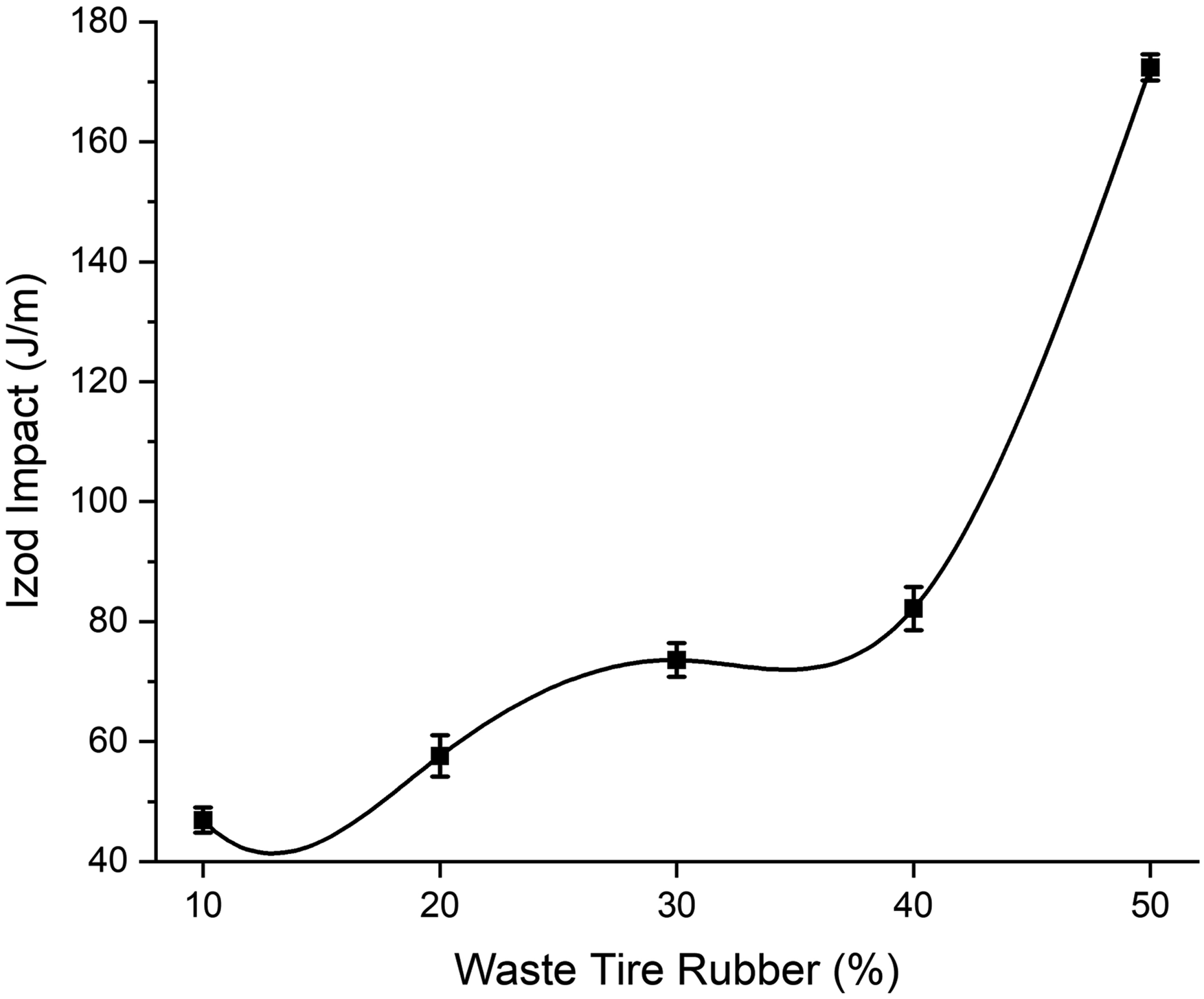
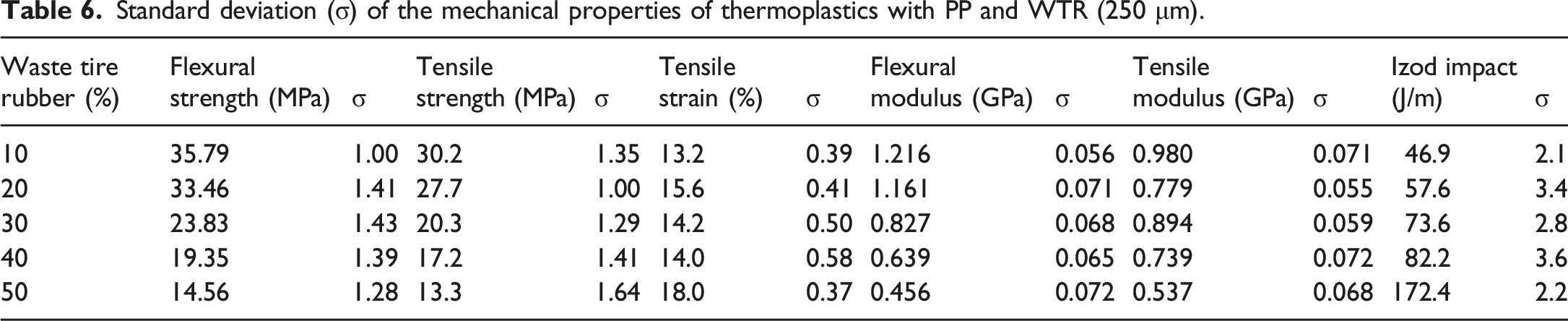
Standard deviation (σ) of the mechanical properties of thermoplastics with PP and WTR (250 μm).
Irradiated thermoplastics with 60% polypropylene and 40% waste tire rubber of 250 μm
Flexural and tensile strength of the irradiated thermoplastics with 60% pp and 40% tire rubber particles of 250 μm
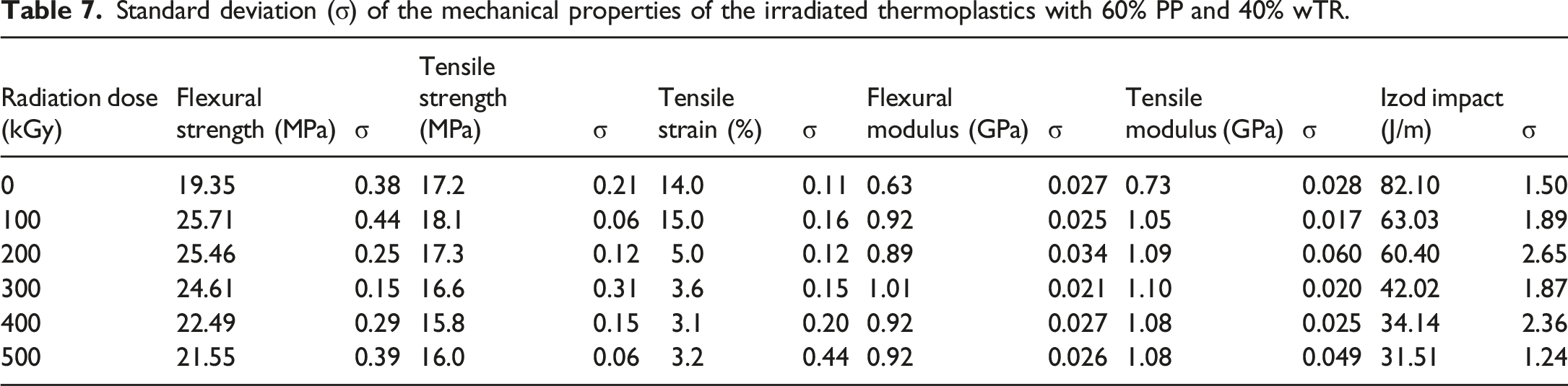
The flexural strength of the non-irradiated thermoplastic is 19.3 MPa, while the highest value among the irradiated samples, 25.7 MPa, is obtained at a dose of 100 kGy, representing a 33% improvement (Figure 13). At this dose, crosslinking of the polymer chains in the tire rubber is more likely to occur. However, for higher doses the flexural strength values decrease gradually, but they are higher than that for non-irradiated thermoplastics. Flexural and tensile strength of thermoplastics with 60% polypropylene and 40% waste tire rubber as a function of the gamma radiation exposure.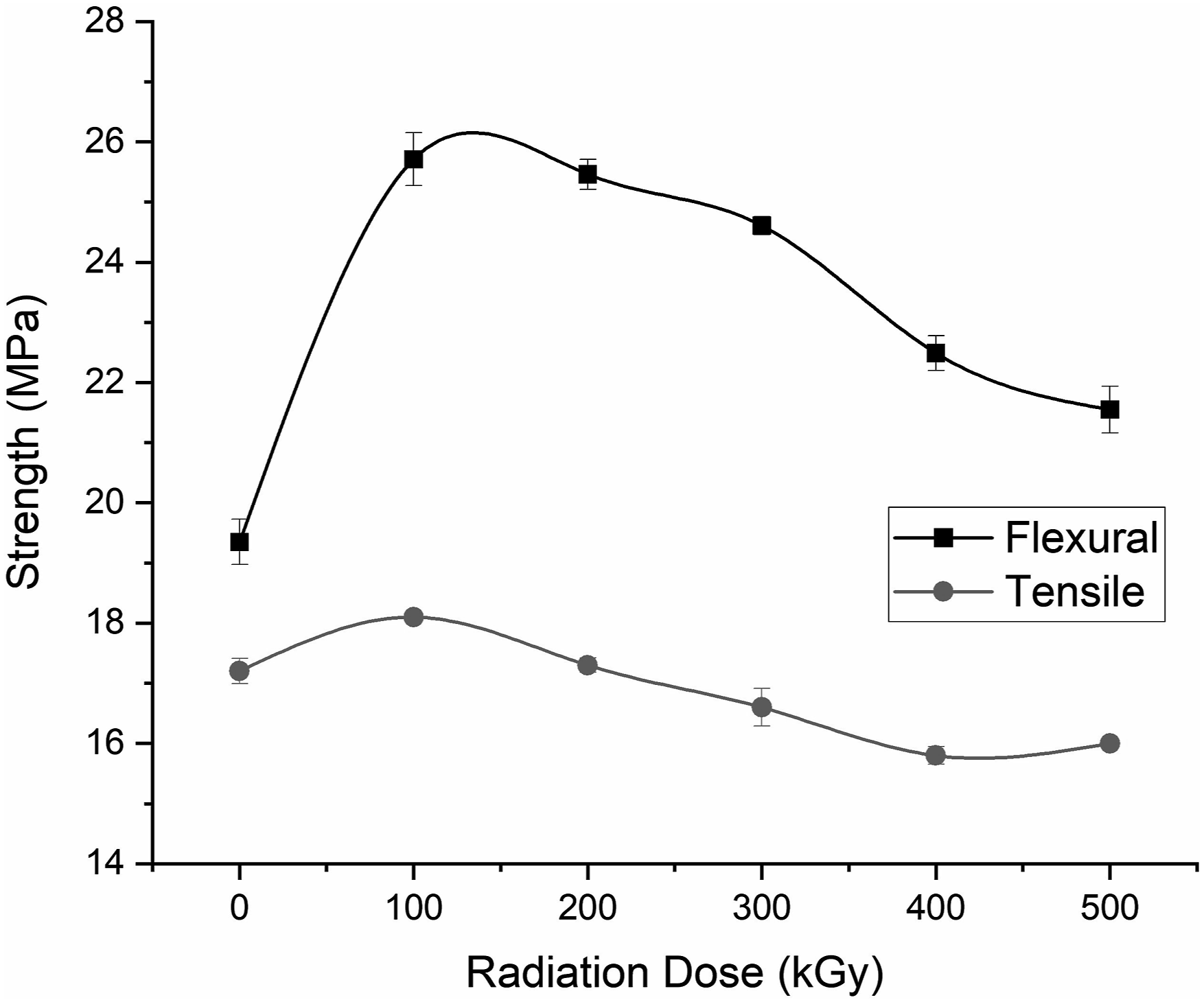
The tensile strength values showed a more stable behavior. The tensile strength value for non-irradiated thermoplastic is 17.2 MPa, while the irradiated ones ranging from 15.8 to 18.1 MPa. The maximum tensile strength was 18.1 MPa, obtained for thermoplastics irradiated at 100 kGy dose, getting an improvement of 5.2%, however, at higher doses, tensile strength values decreased. In a similar investigation on natural rubber composites, tensile strength improved by 300% after exposure to a dose of 91 kGy. 19 However, in some investigations on tire rubber composites, tensile strength improved at doses below 10 kGy, but gradually decreased at higher doses.16,17
The increase in flexural and tensile strength are associated to the modifications produced by gamma radiation on polypropylene and tire rubber. As is known, the highest concentration in the composite corresponds to polypropylene (60% by weight), so that the gamma radiation is distributed mainly in this, hence the contribution of polypropylene against radiation is very important. Non-irradiated polypropylene shows a homogeneous surface (Figure 14), but at a dose of 100 kGy some detached particles (indicated by a circle), small cracks (indicated by an arrow) and voids are observed. These surface modifications are due to degradation of the polyolefins by secondary alkyl radicals, which react rapidly with oxygen, and then low molecular weight chains are generated after cleavage of the polymer chains. Further surface deterioration is observed at doses of 300 kGy with an increase in the number of detached and dispersed particles, and cracks. As the radiation dose increases to 500 kGy the voids (indicated by a circle) become more visible. These surface changes produced by gamma radiation on polypropylene may be related to the modification of the stress distribution in the composite materials which become less resistant. SEM images of polypropylene as a function of the gamma radiation exposure.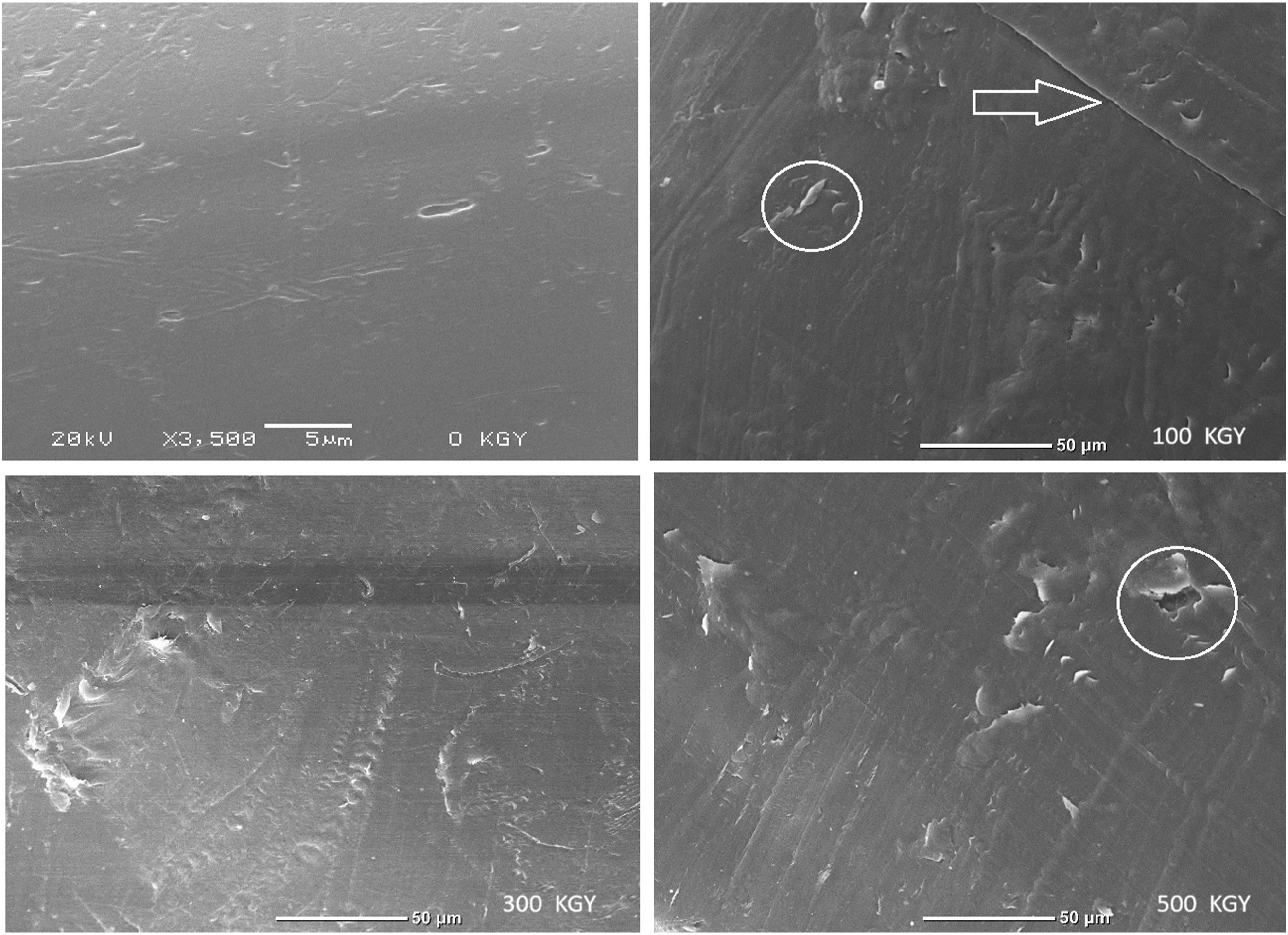
Tensile strain of the irradiated thermoplastics with 60% polypropylene and 40% tire rubber particles of 250 μm
The tensile strain values show a well-defined behavior. The value for non-irradiated thermoplastic is 14%, this increase to 15% at a dose of 100 kGy. But for higher radiation doses the values decrease notably (Figure 15). Gamma radiation causes cross-linking of the polymer chains in the tire rubber, which reduces their mobility, resulting in low deformation after applying stress to the specimens.
16
In composites with truck tire rubber, the maximum deformation is reached at a low gamma dose (10 kGy), but this decreases at doses above 30 kGy. Furthermore, composites with a combination of recycled tire rubber and natural rubber, or with waste tire rubber, show a decrease in elongation at break at doses above 30 kGy, where the predominant phenomenon is the scission of the polymer chains.17,18 Tensile strain of thermoplastics with 60% polypropylene and 40% waste tire rubber as a function of the gamma radiation exposure.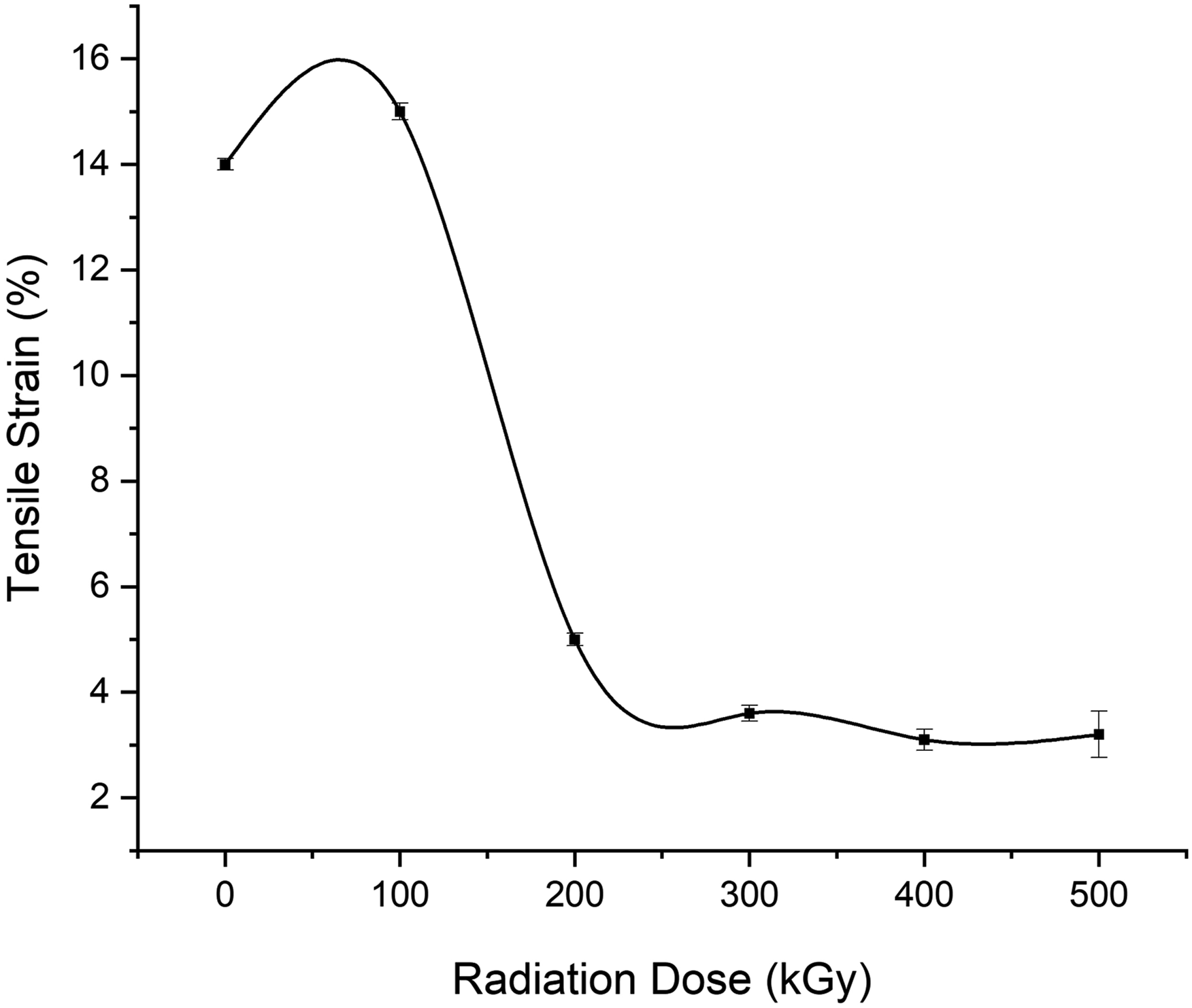
Tensile and flexural modulus of the irradiated thermoplastics with 60% polypropylene and 40% tire rubber particles of 250 μm
The flexural modulus of non-irradiated thermoplastic is 0.63 GPa, which increases in irradiated ones. Exposure to a radiation dose of 300 kGy produces a 60.3% increase in the modulus (Figure 16). Gamma radiation produce effects as increase of surface area in polymer materials, for example in the rubber particles, which enable more effective stress distribution and load transfer capability across rubber and polypropylene. Bigger surface areas of tire particles could generates a thermoplastic with harder particles, which contribute to improving the mechanical resistance. Flexural and tensile modulus of thermoplastics with 60% polypropylene and 40% waste tire rubber as a function of the gamma radiation exposure.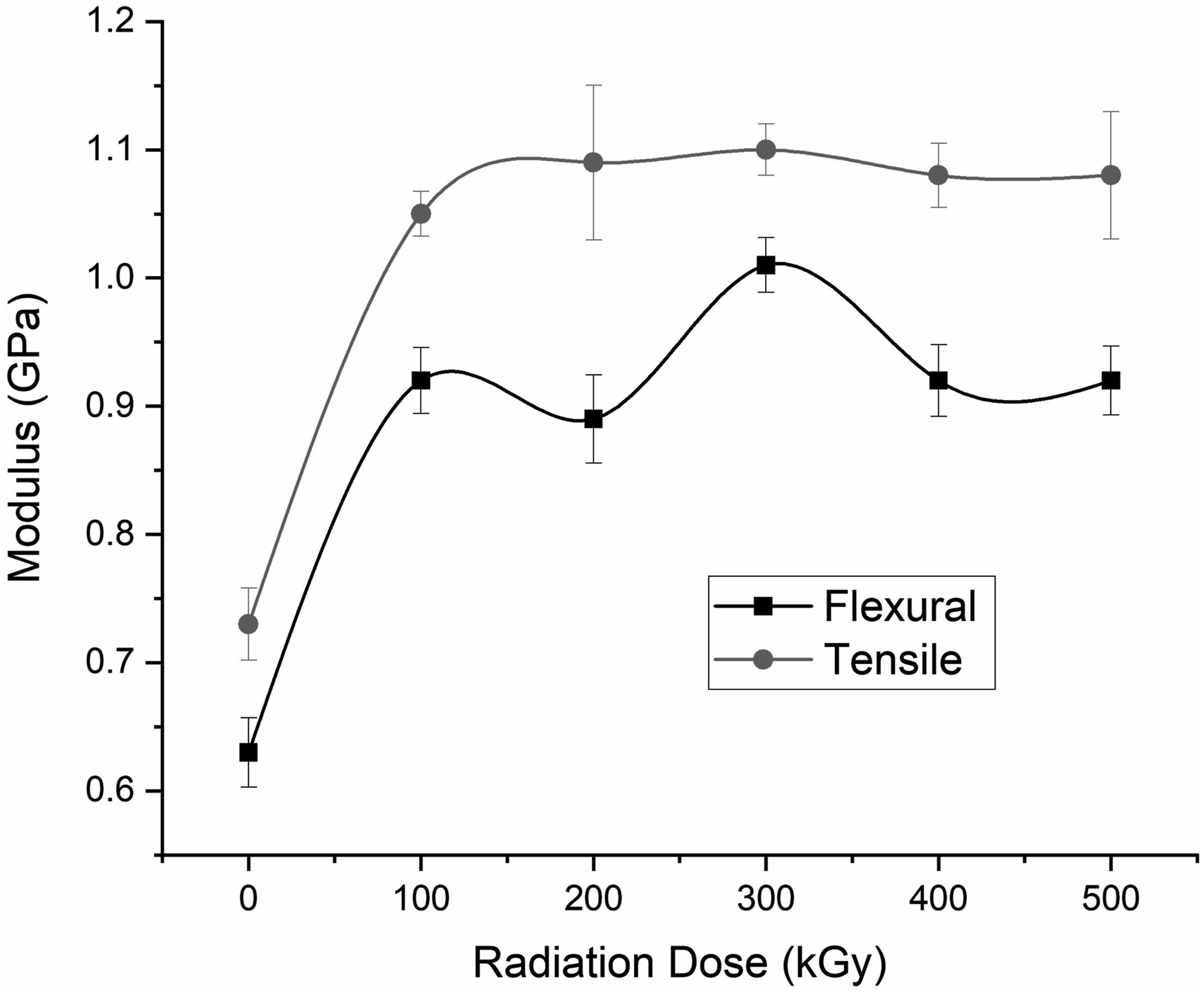
A significant increase in tensile modulus is observed. The non-irradiated thermoplastic exhibits a modulus of 0.73 GPa, while irradiated samples show values varying from 1.05 to 1.10 GPa, representing a maximum improvement of 50.6%. At high radiation dose, 60 kGy, the tensile modulus increases for composites with recycled tire rubber and natural rubber. 17
Both flexural and tensile moduli increase with radiation dose. This increase may be related to structural modifications of polymers, polypropylene, and tire rubber. Structural modifications of polypropylene have been previously analyzed. In the case of waste tire rubber (wTR), non-irradiated rubber shows a smooth surface containing irregularly shaped particles (Figure 17), while rubber irradiated at a dose of 100 kGy shows a rough surface with voids (indicated by a circle) and detached particles. Possibly, the energy supplied by irradiation at 100 kGy is sufficient to destroy the disulfide bridges (S–S) in tire rubber and cause some degradation of the carbon backbone chains. These modifications together to those obtained on polypropylene at a dose of 100 kGy, may be responsible to the highest values obtained in the tensile strain as well as in the flexural and tensile strength. Furthermore, at a dose of 300 kGy, the voids are more defined following an axial direction (indicated by an arrow), generating a larger surface area with more anchoring zones, which can be penetrated by the polypropylene. SEM images of waste tire rubber (wTR) as a function of the gamma radiation exposure.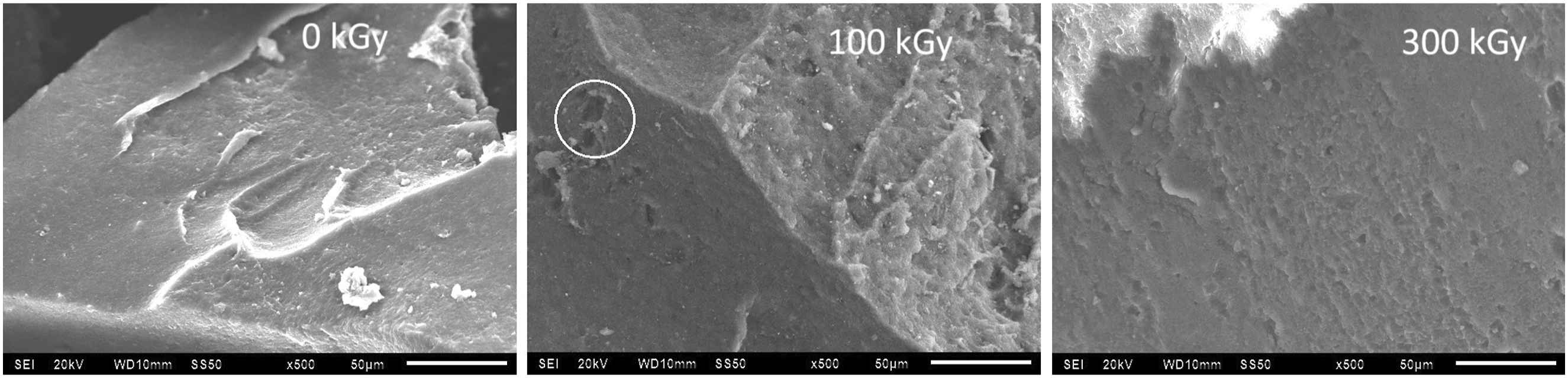
Therefore, higher mechanical values can be obtained, for example those of the tensile modulus obtained at a dose of 300 kGy.
Izod impact of the irradiated thermoplastics with 60% polypropylene and 40% tire rubber particles of 250 μm
The Izod impact of thermoplastics show a well-defined behavior, the values gradually decrease with increasing radiation dose. For non-irradiated composite the impact resistance is 82.1 J/m (Figure 18). Gradual reduction reveals that ionizing radiation reduces the energy absorption capacity and causes the thermoplastic to break. Some authors point out that, at higher radiation doses, the polymer chains of rubber fragment, and the values of certain properties, such as impact resistance, decrease.13,14 Izod impact of thermoplastics with polypropylene and 40% waste tire rubber.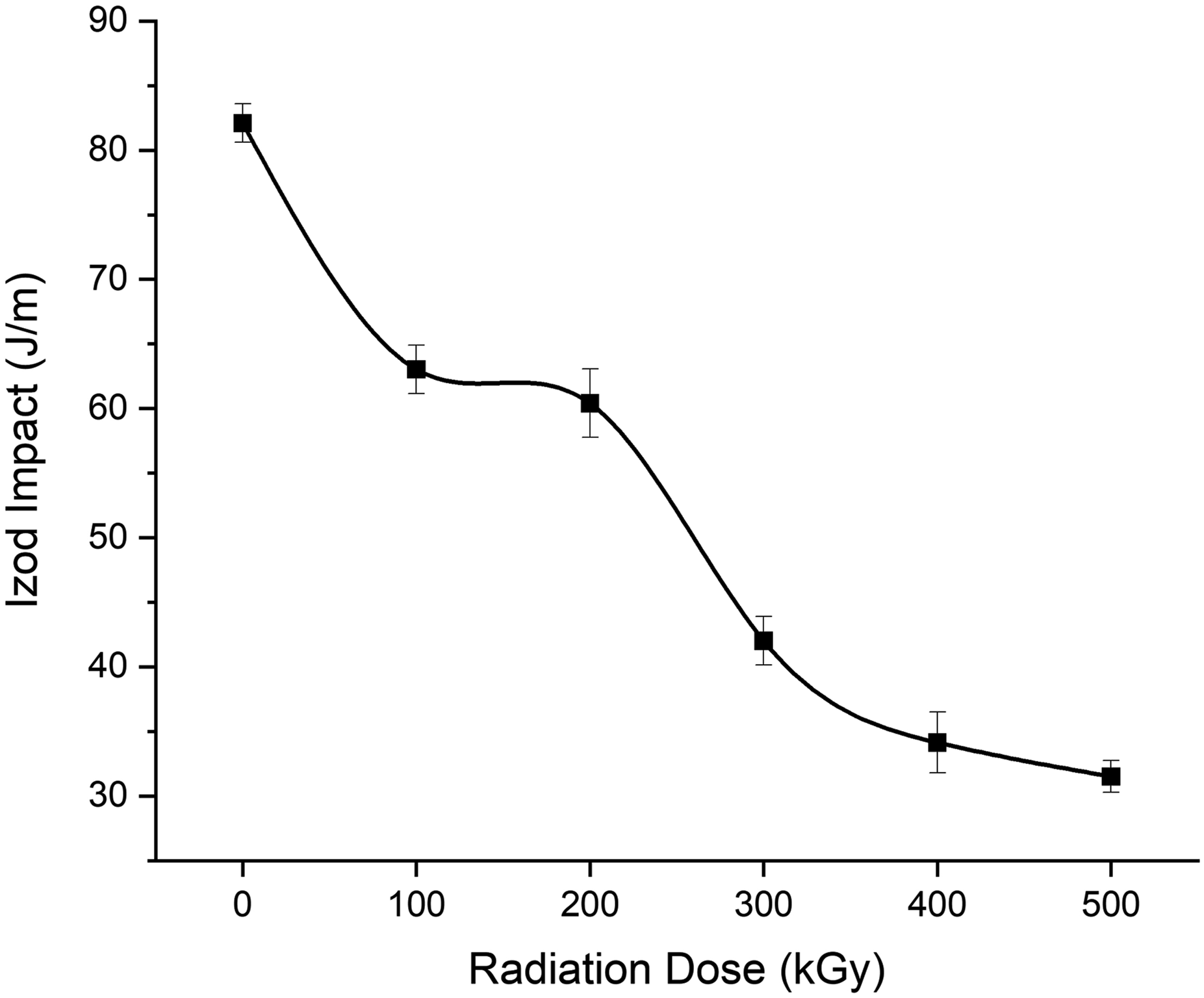
Standard deviation (σ) of the mechanical properties of the irradiated thermoplastics with 60% PP and 40% wTR.
Comparison of the highest mechanical values of the thermoplastics.
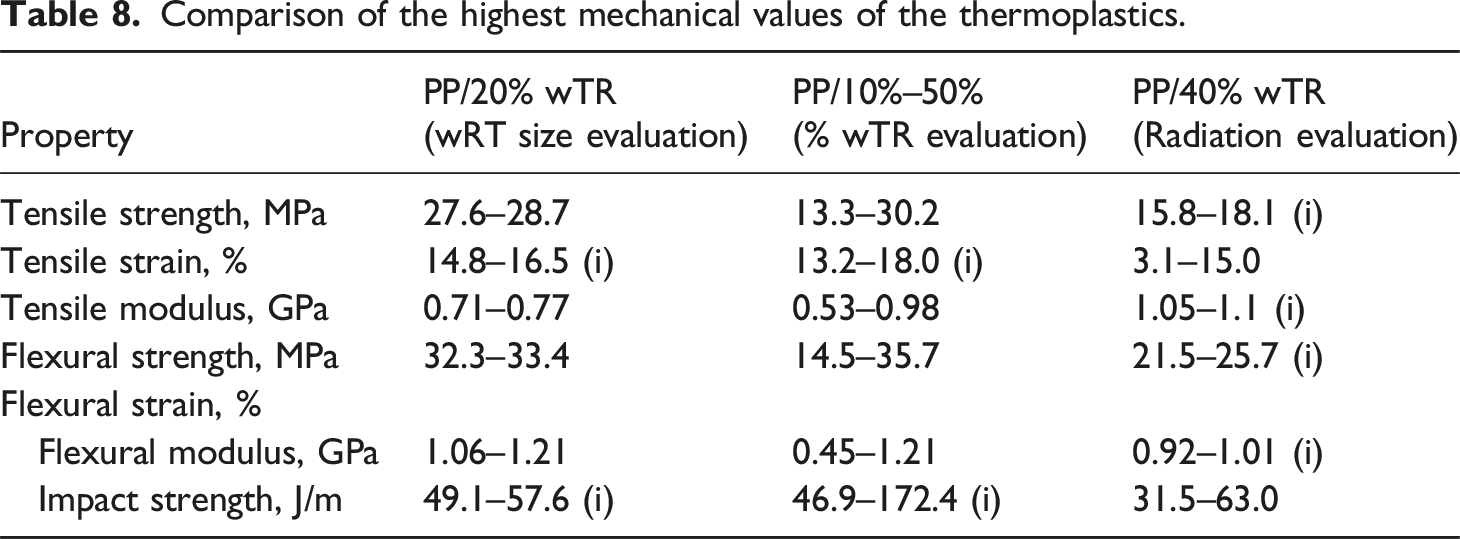
In the second stage it was evaluated the quantity of tire rubber added, again both properties increased, 41% the tensile strain and 459% the Izod impact. The tire rubber particles remain disperse in the thermoplastic. As the content of tire rubber increases, more rubber/polypropylene interaction is produced. Then more tensile deformation and impact force can be supported by the thermoplastic. Conversely, these properties decreased in the third stage, where the application of gamma radiation was evaluated. Nevertheless, the remaining properties had increase: 5.2% tensile strength, 33% flexural strength, 50.6% tensile modulus and 60.3% flexural modulus. Exposure to high radiation doses (100 kGy to 500 kGy) can maintain or minimize variations in mechanical values, something that rarely occurs with non-irradiated composites. Therefore, gamma radiation can be a useful tool to prevent the decrease in mechanical values when high concentrations of tire rubber particles are added.
Conclusions
The use of waste polymers in thermoplastics has several advantage and benefits. One of them is to get improvement on the mechanical as well as to help to environmental issues. In this work, the addition of tire rubber particles to polypropylene produced notable improvements in the Izod impact (up to 493%) and tensile strain (up to 41%). Improvements get by thermoplastics with high content (50% by weight) and small sizes (250 μm) of tire rubber. Thus, the tendency is to use high concentrations and small sizes for to get better mechanical features. Contrary, the other mechanical properties are improved when the thermoplastics are exposed to gamma radiation, getting improvement the flexural modulus (60.3%), tensile modulus (50.6%), flexural strength (33%) and tensile strength (5.2%). The treatment by gamma radiation offers an option for improvement some mechanical properties that cannot getting by addition of polymers.
Footnotes
Acknowledgements
The authors thank to National Council of Humanities, Sciences and Technology of México (CONAHCYT), for scholarships granted (Graduate Studies and International Exchange), for one of the authors (A.L. Remigio-Reyes).
Declaration of conflicting interests
The authors declared no potential conflicts of interest with respect to the research, authorship, and/or publication of this article.
Funding
The authors received no financial support for the research, authorship, and/or publication of this article.
