




Abstract
For valorizing animal waste into high-performance polylactic acid (PLA) composites, this study demonstrates a sustainable pathway for circular biomaterials. This study investigates PLA-based composites reinforced with bio-fillers from chicken feathers (CF), fish scales (FS), and seashells (SS), transforming animal waste into high-performance materials. Mechanical, thermal, and environmental properties were analyzed to evaluate the potential of these composites for sustainable applications. Chicken feather composites (PCF) achieved 4.12% higher tensile strength and rapid biodegradation (8.85% weight loss in 30 days), ideal for short-life products. Fish scale composites (PFS) delivered superior flexural properties (+10.19% strength, +32.39% modulus) with moderate biodegradation (2.16%). Seashell composites (PSS) excelled in thermal stability (T∼d∼ +3.6%, residual mass +101%) and impact resistance (+25.26%), suitable for durable applications. All composites maintained low water absorption (<1%), confirming aqueous suitability. By transforming poultry, fishing, and aquaculture wastes into functional fillers, these composites reduce environmental burdens while enhancing material performance thus offering scalable solutions for packaging, automotive, and construction industries in alignment with circular economy goals.
Introduction
The accumulation and improper disposal of waste materials pose a serious threat to the environment, human health, and economies across the world. Global garbage production might reach 3.4 billion tons annually by 2050, according to the World Bank. This escalating volume of waste presents significant challenges to existing waste management frameworks, while simultaneously contributing to the critical environmental issues such as GHG emissions, decline in the biodiversity, and the water and soil contamination. 1 The persistence of plastic waste in our atmosphere thereby presents a considerable challenge that requires attention. Literature reports that the utilization of biodegradable polymers, often termed bioplastics, is significantly less than that of traditional plastics, primarily due to their upsurging costs. Annually, bioplastics constitute a mere 1% of the 300 metric tons of conventional plastics produced. 2 This is attributed to the incorporation of bio waste and residues into the production phase of biodegradable composites, which presents a viable strategy for significantly lowering the production cost associated with the bioplastics. This approach is consistent with the foundational concepts of a circular economy facilitating the partial replacement of expensive biodegradable plastics with waste products that are generally consigned to the landfills, anaerobic digestion, or the compositing process. Biological waste, encompassing byproducts from both the marine and agriculture domains, significantly contributes to environmental pollution. Improper disposal practices frequently result in the emission of harmful contaminants and greenhouse gases into the environment. In response to these challenges, the research community has progressively embraced sustainable technologies that transform waste into valuable commodities. 3 Polylactic acid (PLA) stands out as a highly exciting biodegradable alternative to conventional plastics. The PLA is predominantly synthesized from renewable resources including the corn starch and sugarcane, which are both environmentally sustainable and commercially viable. Nevertheless, its wider applicability is constrained by the inherent brittleness, insufficient thermal stability, and being often vulnerable to the mechanical deformation. The integration of natural fillers into the PLA matrices represents a commendable approach to circumventing these limitations as it enhances the mechanical and thermal properties of the material while preserving its biodegradability.
Subsequently, the use of animal waste presents distinctive properties in this context. Besides, chicken feathers (CF), which are the byproduct of the poultry industry constituents a considerable portion of the waste generated globally by this sector. In 2023, Thailand’s poultry meat production reached approximately 3450 million metric tons (MMt), 4 with the feathers alone constitute about 5 to 7% of the total weight. This consequently results in conversion of ∼200 MMt of annual waste. Owing to the absence of effective strategies for sustainable reuse or recycling, a considerable volume of this waste is relegated to landfilling or incineration, thereby intensifying environmental pollution and emitting greenhouse gases. 5 CF is primarily composed of keratin, which displays advantageous properties including low density, compressibility, and thermal insulation. Due to these attributes, they may serve as lightweight fillers in polymer composites for various structural applications.6,7 In a comparable manner, the waste generated from fish scales (FS) and seashells (SS) presents both ecological challenges and opportunities. An estimated 7 to 12 million metric tons of waste are dumped by the seafood industry throughout the globe annually, including fish scales that slowly break down and release hazardous pollutants into aquatic ecosystems. 8 Seashells, composed largely of calcium carbonate, accumulate in coastal regions and can cause environmental disruptions due to their slow degradation. 9 However, seashells (SS) and fish scales (FS) both have attributes that make them desirable as reinforcing agents in biodegradable composites, which is in line with sustainable waste management approaches and circular economy. Combining bio-waste fillers into PLA composites offers two advantages: it improves the performance of biodegradable plastics while lowering the environmental impact. The mechanical strength, thermal stability, and cost-effectiveness of bioplastics can be enhanced using agro wastes and other organic fillers which provides a sustainable substitute for synthetic fillers. 10
The previous researchers have incorporated animal fillers as a reinforcement in the polymer composites and have achieved significant improvement in properties. Chicken feather fiber reinforced PLA composites by injection molding has shown that the addition of CF enhanced the thermal stability by increasing the glass transition temperature (Tg) and melting temperature (Tm) of the composites with increase in filler content. 11 Bio-epoxy composite composed of carbon fabrics reinforced with Ceiba pentandra and CF fillers displayed a considerable improvement in the composite’s dimensional stability, mechanical properties, and thermal stability. 12 The effect of CF biocarbon particulates in PLA matrix was studied by Ref. 13 and observed improved tensile and flexural modulus but exhibited a reduction in tensile strength compared to neat PLA.
The remarkable thermal stability exhibited by these composites highlights their promising applicability in these sustainable packaging solutions. Composites that incorporate FS filler alongside CF fibre exhibit a notable enhancement in the toughness. These findings suggest that such material could ultimately replace the conventional options in the applications such as hoses, car bushings, belts, oil seals, and tyre threats.14,15 The honeycomb like architecture of the CFs enhances the insulating properties of the bio composites by entrapping the air and reducing the thermal diffusivity, as demonstrated in the PCF and PBAT composites. The characteristics outlined indicate that CF may serve effectively as insulator within the construction materials, thus reducing heat transfer and contributing to the decreased consumption of energy. 16 Additionally, composites that incorporate polystyrene and carbon fibre filler exhibit remarkable mechanical strength, alongside impressive flame-retardant characteristics. 17 Furthermore, films composed of PLA that integrate keratin derived from CF alongside microcrystalline cellulose demonstrate improved flexibility of polymer chains, an enhanced miscibility. This improvement can be attributed to the dissolution effect of the particles, an influence of the crystallinity’s porous structure.18,19 Literature20,21 have posted that, seashell shall waste, which is predominantly made-up of calcium carbonate presents a promising opportunities as sustainable fillers in the composites. Their emphasis was placed on its capacity to improve their stability, lower production expenses, augment barrier properties in food packaging, and promote biodegradability. A study 22 reported that PP composites enhanced with the scales of Catla fish as fillers exhibited notable improvements in the elastic modulus, hardness, flexural strength, and the alteration in the melt flow index, as the filler context increased. The fish scale derived waste integrated into various matrices such as PLA, epoxy, HDPE, and rubber serving as a filler in the realm of composite research. Furthermore, their utility may be extended to various domains such as tissue engineering, energy application, skeletal and dental revitalization and delivery system.23,24 Enriching the calcined SS with calcium carbonate demonstrated significant efficiency as a filler in the PLA composites, leading to notable enhancements in their crystallinity, glass transition temperature and the storage modulus. The aforementioned enhancement rendered these composites, particularly well-suited for the 3D printing applications.25,26 This study compares three distinct animal waste fillers- CF, FS, and SS in PLA composites under identical processing conditions, revealing filler specific synergies in mechanical, thermal, and biodegradation properties. In addition, while individual animal fillers have been explored, comprehensive studies comparing CF, FS and SS within PLA matrices remain scarce. This study uniquely employs minimal processing techniques (washing, drying and grinding) to convert raw waste into functional fillers, thus avoiding energy-intensive treatments like chemical modification or pyrolysis. This approach therefore significantly reduces both carbon footprint and production costs, while maintaining filler integrity. The present study thereby endeavours to transform these untapped waste streams, thereby contributing to the advancement of the sustainable material development and advancing the global initiatives aimed at tackling the environmental challenges.
Materials and methods
Raw materials
The discarded animal waste was gathered from a local market in the Bangkok, Thailand. It was subjected to thorough rinsing in water to eliminate any unpleasant odours and impurities (such as feces, flush and the blood). The fish scales were immersed in water at 80°C for a period of 2 hours to remove residual slimy substances followed by rinsing them again in the running water. After washing, the materials were sun-dried for 3 days and further dried in a hot air oven (ETUVES - XU058, France) at 60°C for 24 hours to remove any remaining moisture. The dried waste was fed into a FRITSCH universal cutting mill to obtain fine particulates. To ensure uniformity, the ground particulates were sieved in a vibratory sieve to get fillers of size <250 µm. These processed fillers derived from bio wastes were prepared for subsequent use in composite fabrication. For this study, NatureWorks 4043D grade PLA, with a density of 1.24 g/cm3, was selected as the polymer matrix to develop bio-composites reinforced with prepared fillers. This commercial PLA, produced in Minnesota, USA, is widely acknowledged for its renewable origin and biodegradability, aligning with sustainable production objectives.
Fabrication of composites
The fabrication of bio-filler reinforced PLA composites involved two main steps: filament extrusion and compression molding. The fabricated composites were designated as PCF: PLA composites reinforced with chicken feather fillers; PFS: PLA composites reinforced with fish scale fillers; PSS: PLA composites reinforced with seashell fillers.
Initially, PLA pellets and fillers were dried overnight in a hot air oven at 40°C to eliminate moisture. This step was essential to prevent poor dispersion and quality issues during processing. For filament extrusion, the dried PLA pellets were manually blended with each bio-filler at an optimized concentration of 2.5 wt%, as determined from previous studies. The mixture was fed into a twin-screw extruder (XINDA, PSHJ-20) operating at a screw speed of 30 rpm. The extrusion process was conducted across four heating zones, with temperatures ranging from 160°C to 180°C, ensuring thorough melting of PLA and uniform integration of the fillers. The extruded filaments were cut into uniform pellets using a pelletizer. The reinforced pellets were re-dried overnight at 40°C before the next process. Compression molding was then employed to fabricate test samples. The dried pellets were placed in pre-treated steel dies (coated with silicon spray) prepared according to respective ASTM standards. Molding was performed at 175°C (±5°C) for 15 minutes, comprising 5 minutes of preheating and 10 minutes of compression under 2500 psi. The samples were cooled in the molding machine (COMTECH QC-601T) and removed using a manual specimen punching machine (COMTECH QC-603). The fabricated composites were prepared for subsequent physical, mechanical, thermal and environmental behaviour analysis. The sample designations were PCF - CF reinforced PLA composites. PFS - FS reinforced PLA composites. PSS – SS reinforced PLA composites.
Testing and characterization
Density and porosity
The experimental density (ρE) of the composites were measured using the displacement method. The samples were immersed in deionized water and weighed using an RADWAG electronic balance at room temperature, following the ASTM standard (D792). From equations (1) and (2) the composites’ theoretical density and porosity was calculated.
8
Where, ρP and ρF represent the density of the polymer matrix and filler, while VP and VF represent the volume of the polymer and filler.


Mechanical properties and fracture morphology
Tensile, flexural, impact, and hardness tests were carried out on the fabricated samples to evaluate the mechanical properties. The tensile and flexural tests were done in accordance with ASTM D638 and D790 respectively in the COMETECH universal testing machine with 10 kN load cells. For tensile tests, crosshead speed of 1 mm/min were used and for flexural testing, a three-point bending test module with crosshead speed of 2 mm/min in the ambient conditions was employed. The impact strength of the was tested using ZWICK-ROELL Izod impact testing apparatus with pendulum type hammer (5.5 J), following ASTM D256 standards. Following that, a Shore-D indenter tester from REX Durometer was used to measure the composite’s hardness by applying a load of 5N for 5 seconds on the composite surface. Average of five test results were taken for all tests, which were then reported. The fractured specimens were analyzed using THERMO SCIENTIFIC Axia ChemiSEM microscope to evaluate morphology.
Thermogravimetric analysis
The thermal degradation behaviour with respect to temperature of the composites loaded with reinforcements were assessed by thermogravimetric analysis (TGA). TGA was conducted using a Mettler Toledo TGA/DSC three instrument to evaluate the thermal stability of the samples by measuring mass loss rate in relation to temperature 10 mg approx. of each sample was kept inside an alumina crucible in a nitrogen environment and the analysis was conducted over a temperature range of 25 to 600°C, with 10°C/min constant heating rate. The derivative thermogravimetric (DTG) curves were used to identify the maximum degradation temperature of the samples.
Differential scanning calorimetry
Differential Scanning Calorimetry (DSC) was performed using a Mettler – Toledo DSC 3+ instrument, to elucidate the thermal phenomena associated with the phase transitions in the composites, and also the enthalpy of various phases, which is essential for comprehending the behaviour of samples under thermal stress. Samples weighed 5 mg approximately and were cautiously sealed in aluminium pans and are maintained at 30 to 200°C in a N2 atmosphere, while subjected to a rate of heating at 10°C/min and rate of gas flow at 60 mL/min.
Environmental behaviour
The investigation into the environmental behaviour of the bio filler reinforced PLA composite was conducted to evaluate their performance across a range of condition. The assessment encompasses investigation into the accelerated weathering analysis, water absorption and soil burial evaluation to determine their biodegradability.
Water absorption studies
The ASTM D570 standard was utilized to assess the composites’ water adsorption behaviour. The samples underwent immersion in the deionized water for a period extending to 45 days. Following this interval, the alteration in the weight was carefully documented and by contrasting the weight variation with the initial mass of the dried out samples, the extent of water absorption was ascertained. The calculation of water absorption was conducted utilizing the equation (3).
8

Accelerated weathering studies
The composite samples underwent accelerated weathering testing in an environmental simulator equipped with the Xenon arc light chamber (Model: Q-Sun Xe-3, Q Lab. Corp.,). The experimental procedure was adhered to the ASTM G 155-13 (cycle 1), exposing the samples to a comprehensive range of UV radiation, elevated temperature, and humidity. Samples underwent 555.55 hours of accelerated weathering, and the investigation comprised of two distinct phases; the initial phase involved uninterrupted UV exposure lasting 1.42 hours, effectively replicating the extended sunlight exposure, where the subsequent phase incorporated with the UV radiation and water spray for a duration of 0.18 hours, thereby emulating the combined effects of rainfall and UV radiation. During the course of the investigation, the temperature of the black panel was consistently held at 63°C, whereas the air temperature was recorded 48°C, with humidity remaining stable at a 30%. The irradiance was consistently upheld at 0.35 W/m2 throughout the experimental duration. Following the weathering process, the samples underwent a thorough evaluation to discern the morphological and structural variations. Visual examinations revealed alteration in the colour and the surface characteristics, while the weight variation was quantified using a high precise electronic balance machine. To compare the surface morphology of the composites prior to and following weathering, the surface roughness (Ra) was measured using the MITUTOYO SURFTEST 301 equipment.
Biodegradability studies
The composites biodegradability was tested by placing the samples in the pots filled with the campus garden soil. Each sample was horizontally oriented at a depth of roughly 10 cm and kept buried for a duration of 30 days under ambient temperature conditions. To ensure consistent moisture levels within the soil, approximately 250 mL of water was administrated at regular intervals. The weight of the samples was carefully recorded at regular intervals utilizing a high precision electronic balance to accurately track the weight loss at each interval, the samples were carefully excavated, thoroughly rinsed deionized water to remove any soil residues and subsequently subjected to air drying in an oven to ensure homogeneous condition for weight comparison. 27
Results and discussion
Density and porosity
The PLA composites reinforced with the bio fillers shows substantial variation in the density and porosity according to the filler type, as seen in Figure 1. The lack of void formation is shown by the low porosity (0.024 %) and density (1240 kg/mm3). The reduced density of CF and poor filler-matrix adhesion caused by the hydrophobic properties of feathers to porosity significantly increased by 0.54% with a certain loss in the density of the PCF composite.
28
Compared to the neat PLA, the PFS composites had a slightly greater density and lower porosity (0.2), which could be probably because the fibrous fish scales adhere better, and thus the composites formed are denser. The PSS composite has comparatively greater density and porosity (0.73%). The seashell particles boost the density, however, also causing larger voids to form. Conversely, the PFS composite exhibited lower porosity and slightly higher density than the neat sample, likely due to the increased density and better adhesion of the fibrous FS particles. Density and porosity of bio filler reinforced PLA composites.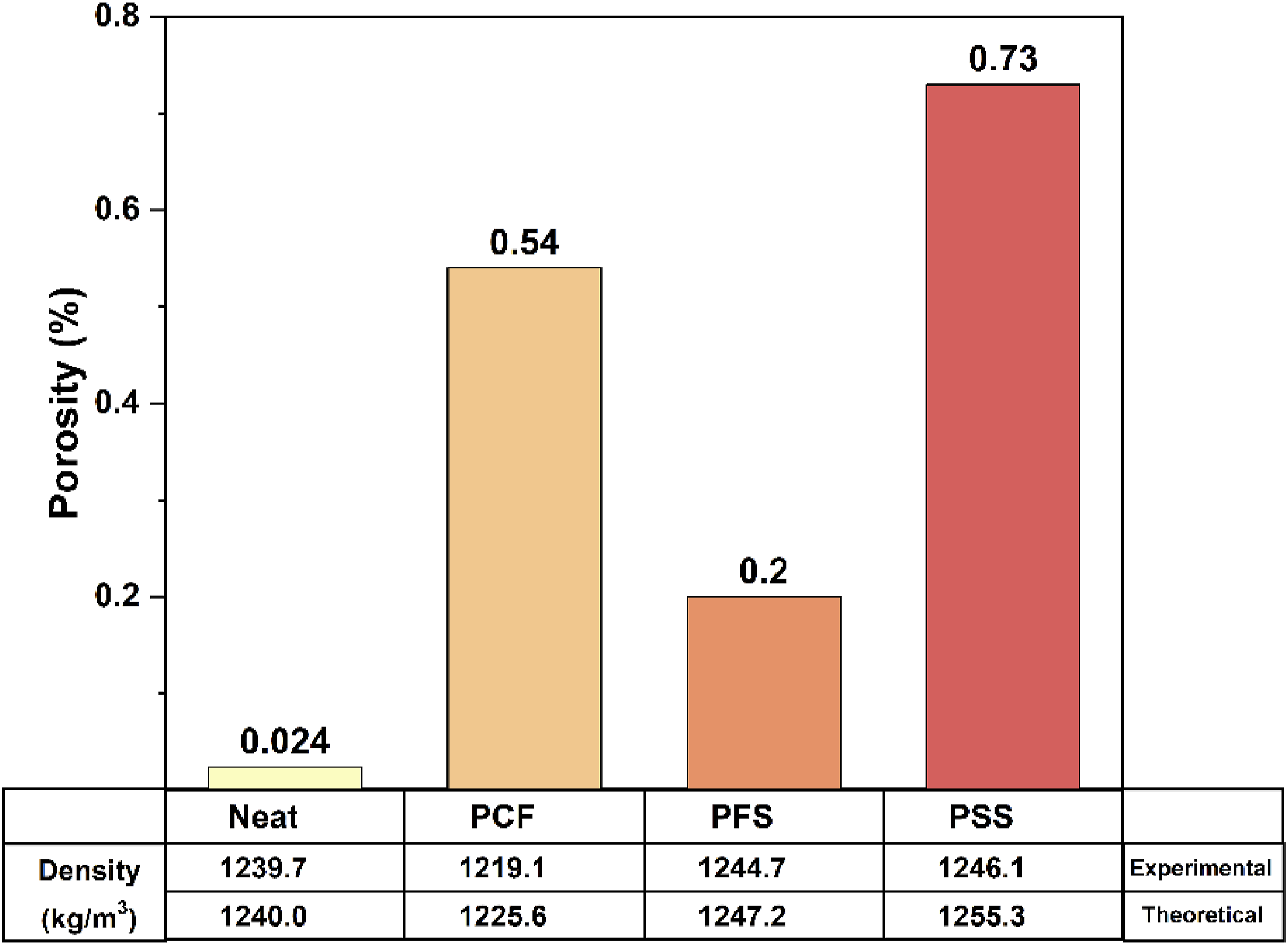
PFS composites have a slightly higher density than neat PLA, probably due to the higher density and better bonding of the fibrous fish scales. The PSS composite shows the highest porosity (0.73 %) and density, with seashell particles contributing to a higher overall density leading to significant void formation. PFS composites exhibit marginally increased density compared to neat samples, presumably attributable to the higher density and enhanced adhesion of the fibrous FS particles.
The PSS composite has the highest porosity (0.73%) and density, with seashell particles enhancing overall density but also resulting in considerable void formation, likely due to inadequate matrix encapsulation. The trends are consistent with bio-epoxy composites, where filler density and surface characteristics play a crucial role in determining both density and porosity.8,29
Mechanical properties
Mechanical properties of bio filler reinforced PLA composites.

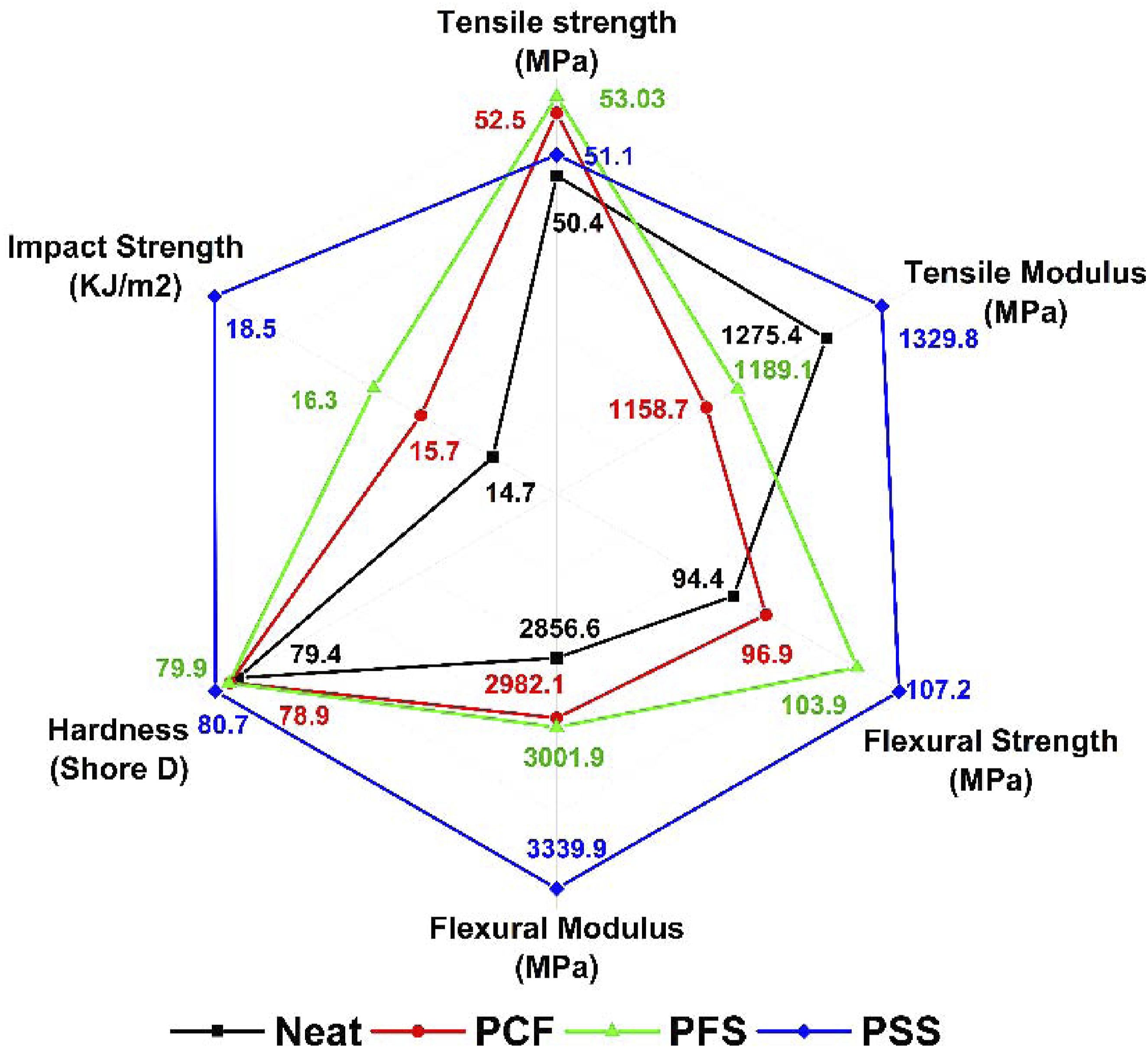
Mechanical properties bio filler reinforced PLA composites.
PFS composites showed a 5.21% increase in tensile strength but a substantial 6.77 % reduction in tensile modulus, linked to weak filler-matrix adhesion and void formation from the irregular filler structure. 32 Flexural strength and modulus improved significantly, by 10.19% and 32.39%, due to the higher density of fish scales. Impact strength increased by 10.79%, reflecting better toughness and crack resistance, though hardness was unaffected. 33 PSS composites exhibited 2.53% increase in tensile strength and 4.3 % rise in tensile modulus, indicating brittleness from the rigid filler. However, flexural strength and modulus rose sharply, by 13.63% and 53.31%, driven by the high calcium carbonate content, enhancing stiffness and load-bearing capacity. Hardness improved by 1.67%, and impact strength increased by 25.26%, highlighting superior energy absorption and fracture toughness due to the rigid yet tough seashell microstructure.26,34
Fracture morphology
The tensile fracture morphologies of the bio filler reinforced PLA composites were analyzed through SEM images to reveal key differences in fracture behavior across the various composites. In the case of PCF composites (Figure 3(a) and (b)) the SEM images display characteristic features such as feather pullout, void formation, delamination, and a smooth fracture surface, all of which point to weak interfacial bonding between the feather fibers and the PLA matrix.
35
This weak bonding is confirmed by the mechanical characterization, which showed only a modest 4.12 % increase in tensile strength but a significant 9.5 % decrease in tensile modulus. The poor adhesion between the hydrophobic fibers and the PLA matrix limited stress transfer, resulting in lower stiffness.
31
Fracture morphology of PCF.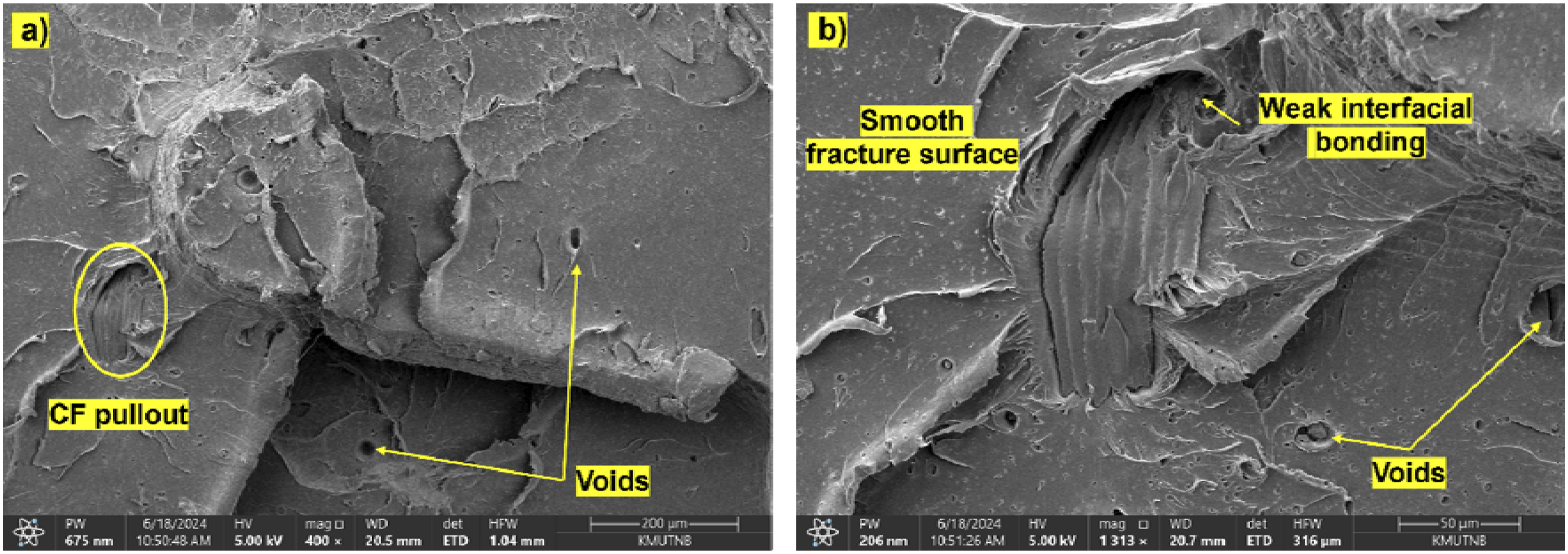
PFS composites revealed similar features as shown in Figure 4, including fish scale pullout, delamination, voids, and matrix fibrillation. These spider-web-like fibrils formed during the tensile fracture indicate some degree of plastic deformation in the PLA matrix, but the presence of voids and filler pullout again signifies weak filler-matrix adhesion.
32
The mechanical testing results align with this, showing a moderate 5.21% increase in tensile strength but 6.77% decrease in tensile modulus. The irregular structure of the fish scales and the voids observed in the SEM images likely contributed to the poor stress transfer during tensile loading.
36
Fracture morphology of PFS.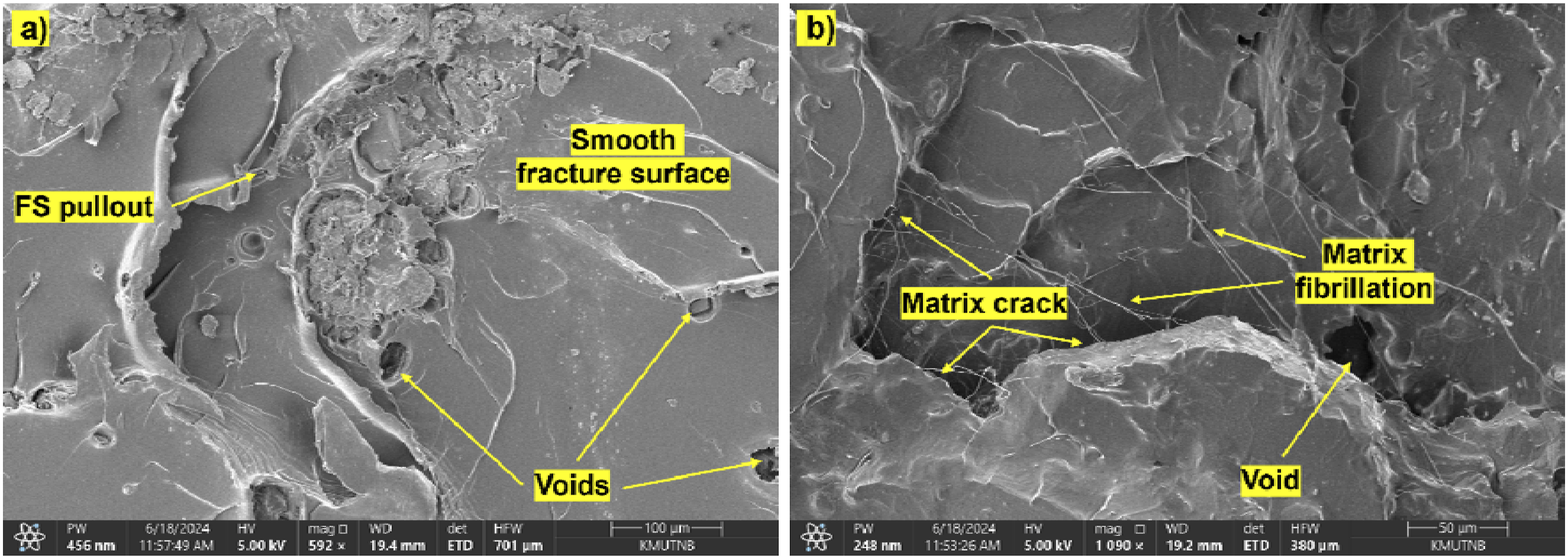
The fracture morphology of PSS composites revealed micro-cracks, plastic deformation, and good filler-matrix adhesion. Unlike the PCF and PFS composites, the seashell fillers displayed better interfacial bonding with the PLA matrix, as evidenced by fewer voids and tighter integration of the filler with the matrix (Figure 5). This superior bonding and the inherent stiffness of seashells resulted in the highest improvements in flexural strength (13.63%) and modulus (53.31%) among the composites. The increase in tensile properties indicates brittleness in the composite due to the rigidity of the seashell fillers. The significant increase in impact strength (25.26%) underscores the seashell’s ability to absorb energy and resist fracture.
34
Fracture morphology of PSS.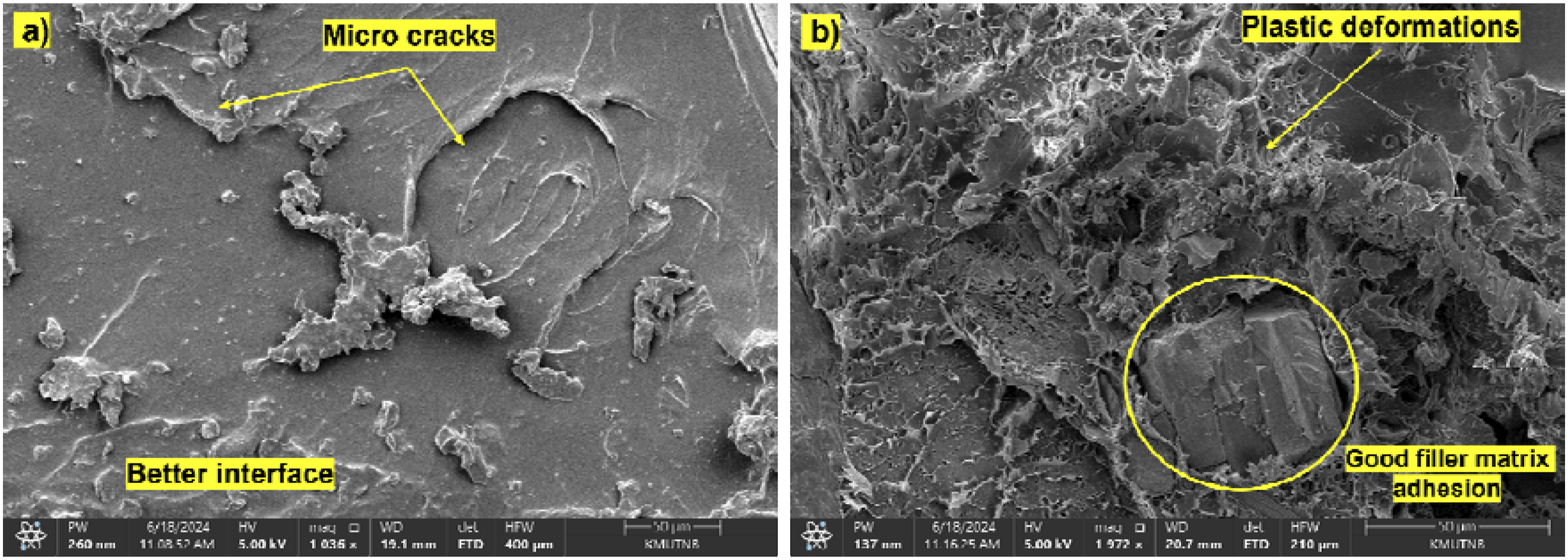
This improved fracture toughness is likely due to the calcium carbonate content in the seashells, which provides a combination of rigidity and toughness, as confirmed by the SEM images showing minimal filler pullout and strong adhesion to the PLA matrix. 37 In summary, the mechanical performance of PLA composites depends on filler density, structure, and interfacial bonding with the matrix. PSS demonstrated the better tensile, flexural and impact properties due to their inherent stiffness and toughness, while PFS and PCF composites showed moderate improvements.
Thermogravimetric analysis
Using TGA and DTG studies, the thermal behavior and stability of the PLA composites reinforced with CF, FS and SS fillers were assessed, with particular emphasis focused on residual mass and degradation temperatures. Figure 6 shows the TGA and DTG plots and Table 2 contained the data for various thermal properties. Bio filler reinforced PLA composites (a) TGA, (b) DTG plots. TGA and DTG of PLA based composites.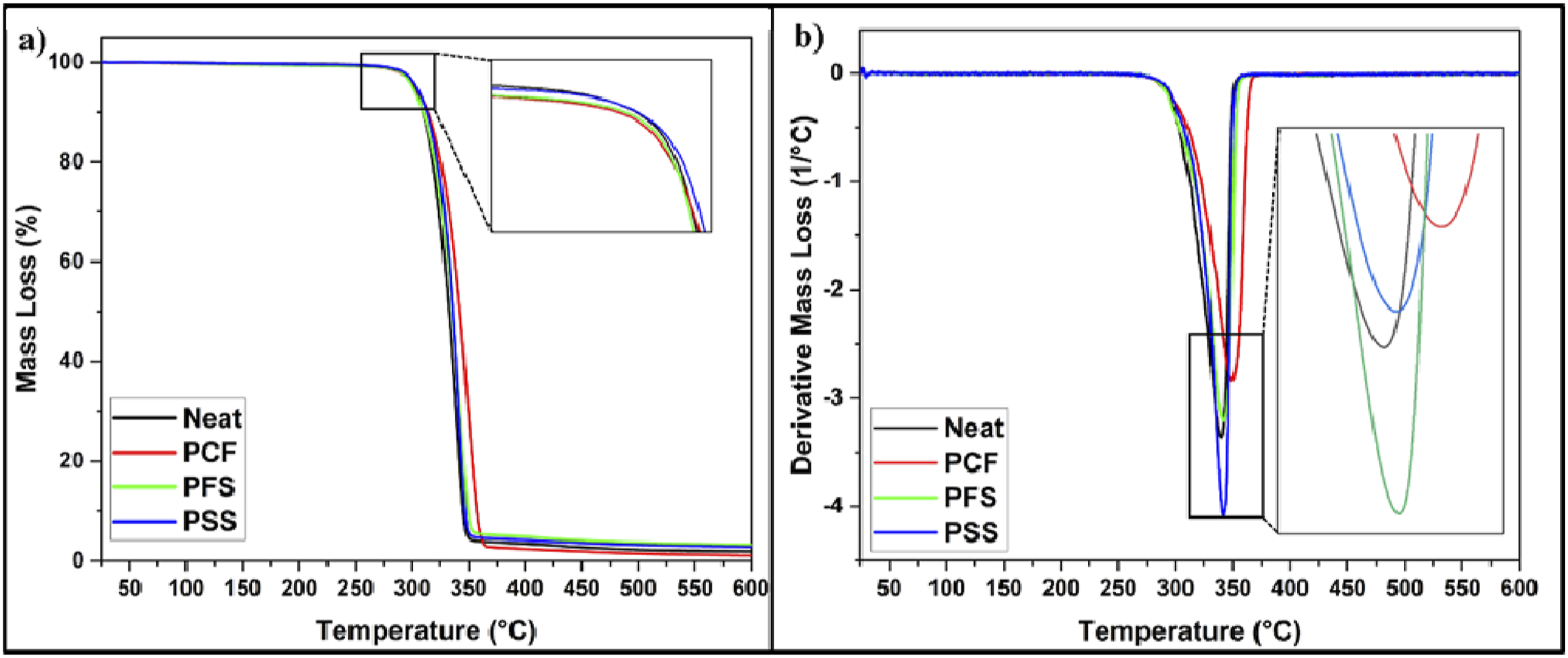
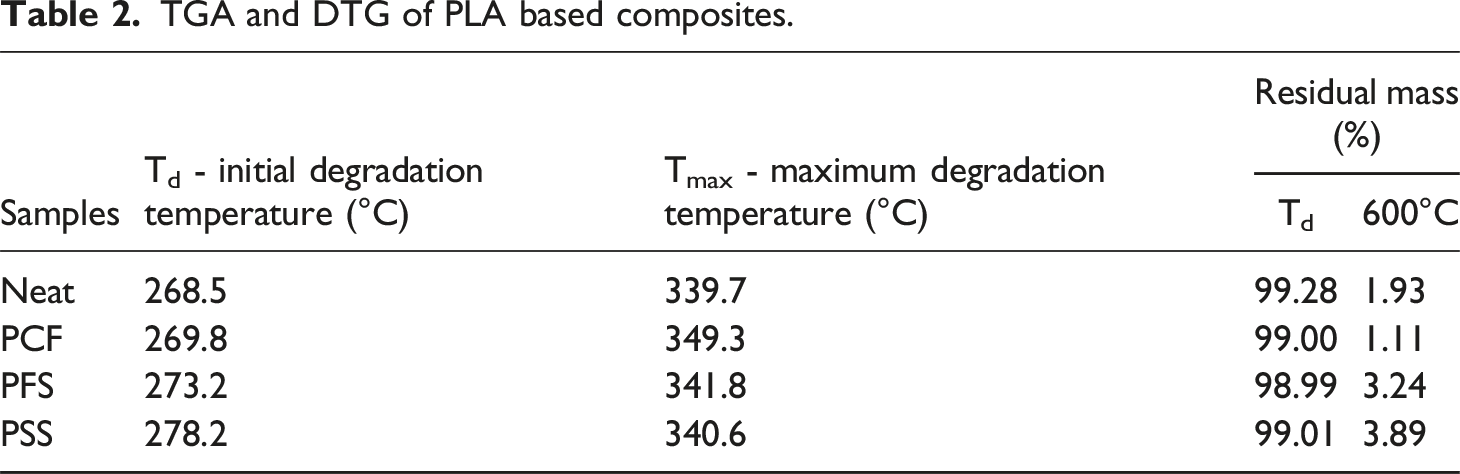
The thermal degradation of PLA composites reinforced with bio fillers followed a single-stage process, with Td ranging from 268.5°C to 278.2°C. Bio fillers improved the composites’ thermal stability compared to neat PLA (Td: 268.5°C). PSS composites exhibited the highest Td (278.2°C), an increase of 3.6%, attributed to the barrier effect of bio fillers, which delays degradation onset. 38 Tmax ranged from 339.7°C to 349.3°C, with PCF composites achieving the highest Tmax of 349.3°C, a 2.8% improvement over neat PLA. This points to the possibility of increased heat resistance caused by the fillers that postponed the dispersion of volatile products. 39
The bio filler composites had a much high residual mass at 600°C ranging from 1.11% for PCF to 3.89% for PSS, compared to the PLA’s 1.93%. The PSS exhibited a remarkable 101% enhancement in char formation, while the PFS shown a notable 68% increase. This is attributed to the elevated inorganic media presents in these fillers, which significantly enhances the thermal stability at high-temperature conditions. Conversely, the PCF exhibited a reduced residual mass, attributable to the constrained interaction of the filler at high temperatures. 40 In sum, adding bio fillers to the PLA improved their thermal degradation characteristics. The PSS composites demonstrated improved thermal performance, marked by the increased Td, Tmax, and residual mass, making them suitable for applications that demands robust thermal stability. 41
Digital scanning calorimetry
Utilizing DSC, the thermal and crystallization characteristics of PLA bio composites enhanced with bio fillers were investigated. Figure 7 illustrates the relationship between heat transfer and temperature. The analysis encompassed parameters such as melting temperature (Tm), crystallization temperature (Tc), crystallization enthalpy (Hc), glass transition temperature (Tg), and melting enthalpy (Hm), derived from DSC data. This evaluation aimed to elucidate the impact of bio fillers on the thermal properties of PLA composites, as detailed in Table 3. The DSC analysis of the revealed significant thermal behavior enhancements compared to neat PLA. The Tg of the composites increased with the incorporation of fillers, demonstrating that the fillers restricted polymer chain mobility.
42
DSC plot of bio filler reinforced PLA composites. DSC data of bio filler reinforced PLA composites. Ra = Arithmetic average roughness (ISO 4287:1997), measured at 5 points per sample with 0.8 mm cutoff length.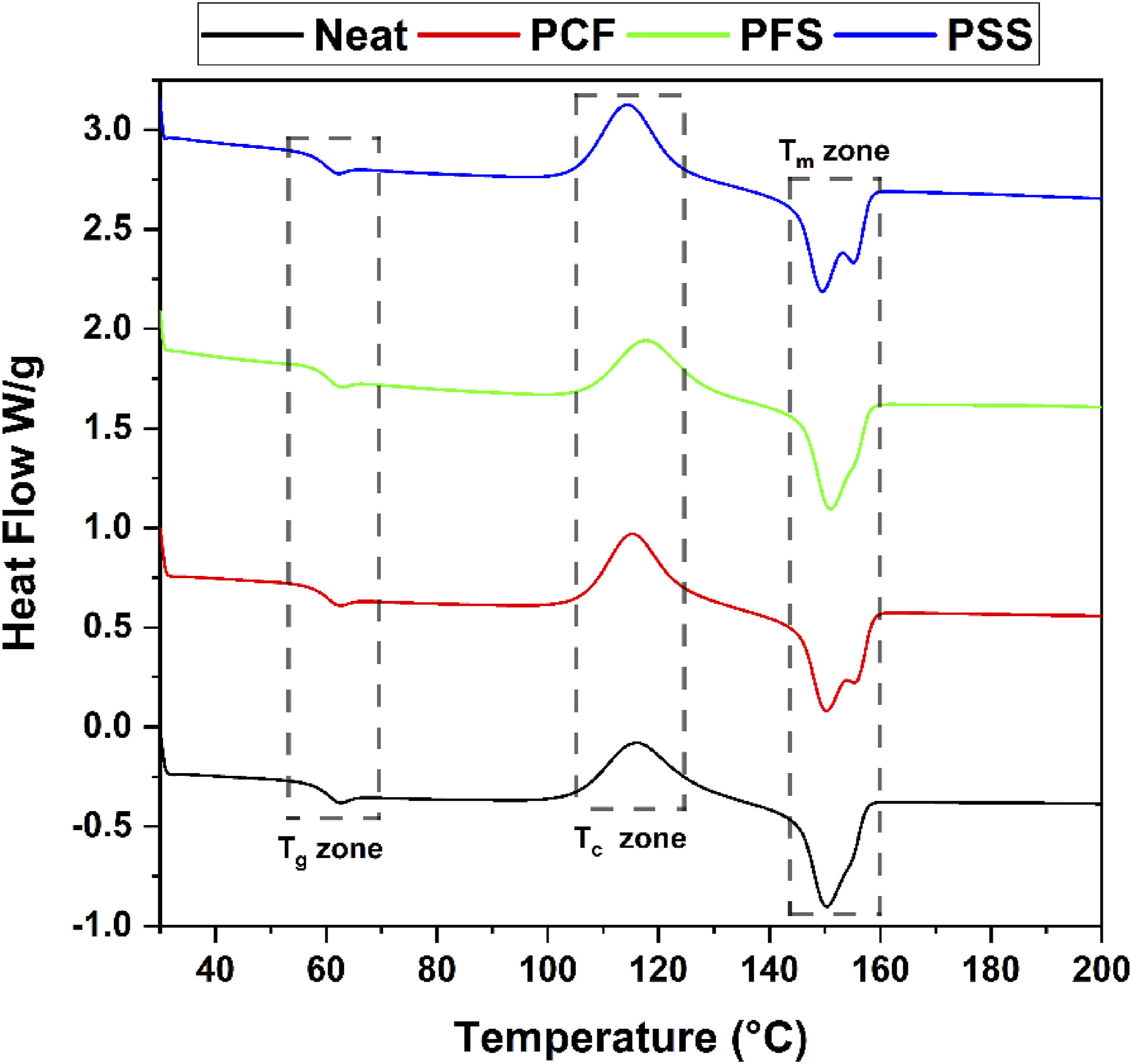
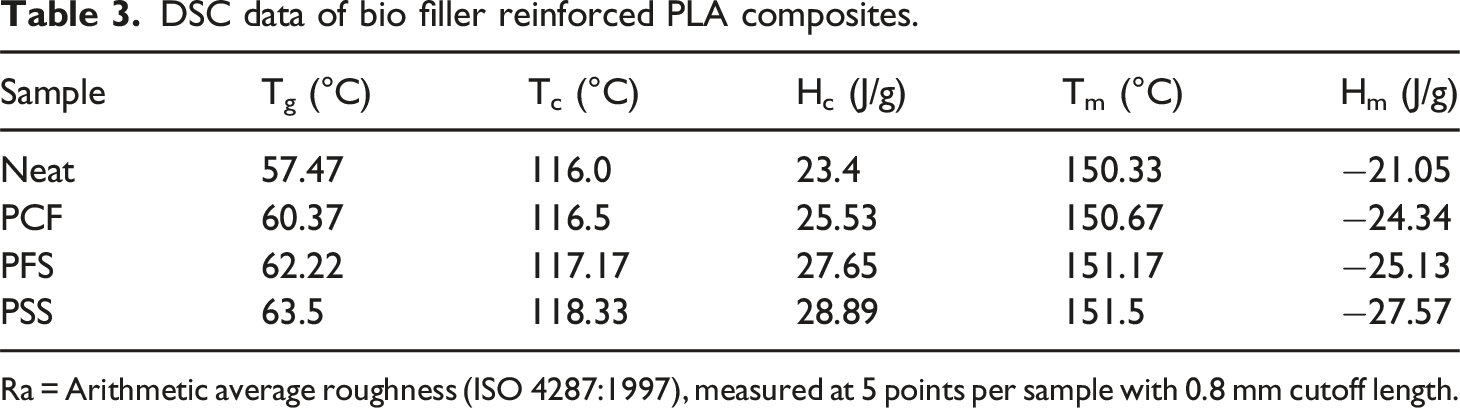
For PCF, Tg increased by 5.04 % (60.37°C), while PFS and PSS showed even higher Tg increases of 8.26% (62.22°C) and 10.49 % (63.5°C) respectively, compared to the neat PLA at 57.47°C. This increase in Tg suggests enhanced filler-matrix interaction, limiting the polymer chains’ flexibility. 43 Tc also improved slightly for all the composites, reflecting the nucleating effect of the fillers. Neat PLA exhibited a Tc of 116.0°C, which increased to 116.5°C for PCF, 117.17°C for PFS, and 118.33°C for PSS. Correspondingly, the enthalpy Hc rose from 23.4 J/g for neat PLA to 25.53 J/g (PCF), 27.65 J/g (PFS), and 28.89 J/g (PSS), highlighting the fillers role in promoting crystallization. 38
In terms of Tm, the composites showed only slight variations compared to neat PLA (150.33°C). PCF, PFS, and PSS exhibited Tm values of 150.67°C, 151.17°C, and 151.5°C, respectively, indicating minor improvements due to the reinforcements. The melting enthalpy (Hm) values also increased, with neat PLA showing 21.05 J/g, while PCF (−24.34 J/g), PFS (−25.13 J/g), and PSS (−27.57 J/g) exhibited enhanced melting behavior, likely due to larger and more stable crystalline structures formed in the presence of the fillers. 44 Overall, the DSC results demonstrate that addition of fillers contributes to improving the thermal properties of PLA, with PSS showing the highest increases in Tg, Tc, and crystallization enthalpy, making it the most thermally stable among the three composites.
Environmental behaviour
Water absorption studies
The water absorption behavior of PLA composites reinforced with bio fillers varies depending on the hydrophobic and hydrophilic nature of the fillers as shown in Figure 8. Water absorption of bio filler reinforced PLA composites.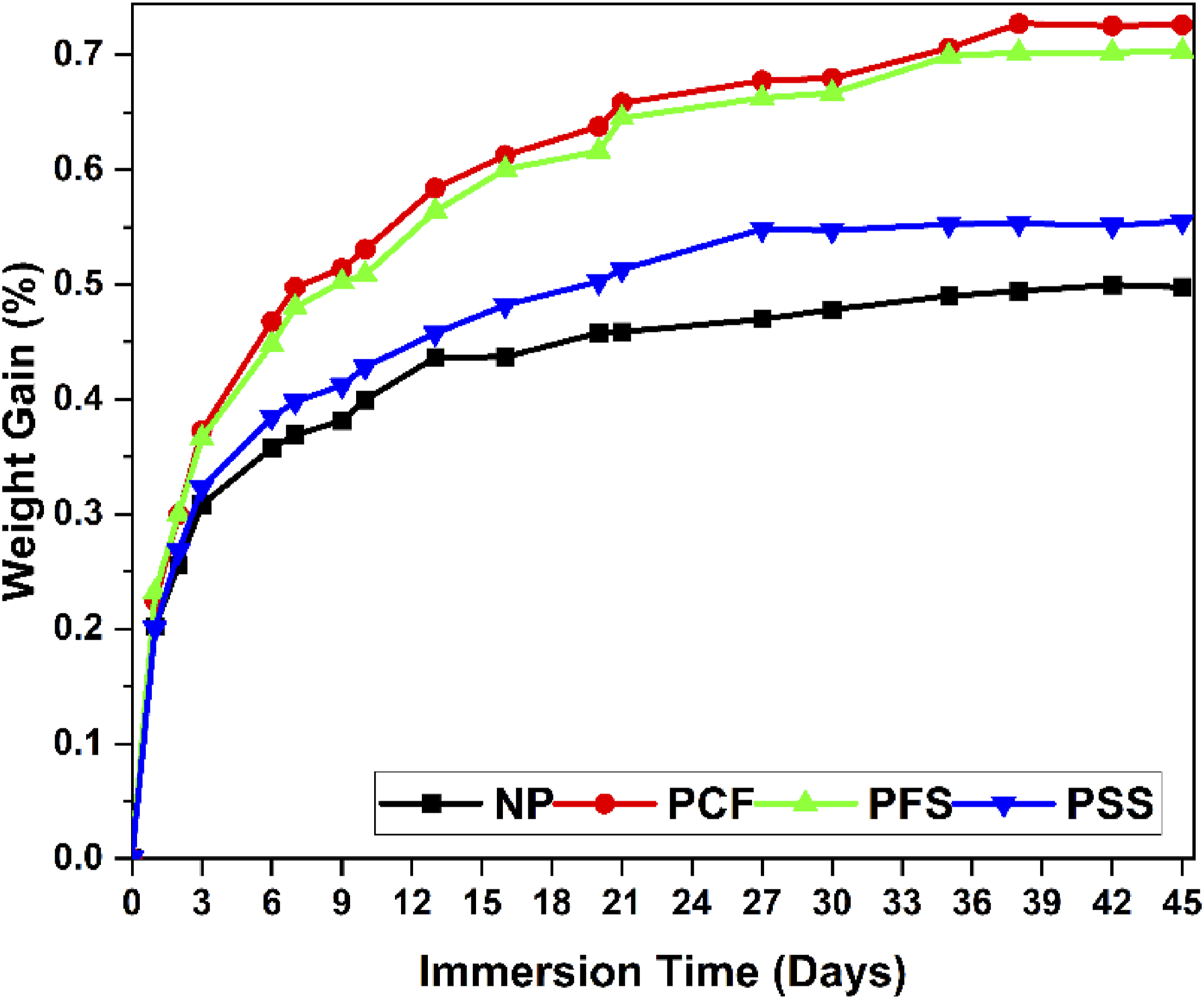
PLA composites exhibited lower overall water absorption compared to epoxy-based composites, with weight gains ranging from 0.45% to 0.72% by Day 45. Neat PLA absorbed the least water, stabilizing at 0.45% by Day 40. In the early phase of immersion, all PLA composites showed a rapid rise in water absorption, but a slight redistribution occurred around Day 9, indicating that the fillers had reached their initial swelling capacity 45 Among all fillers, PSS showed minimal water absorption, reaching 0.55% by Day 45, due to better filler dispersion and fewer voids, limiting water ingress. 46 Conversely, PCF and PFS composites demonstrated higher absorption, with weight gains of 0.72% and 0.69%, respectively. The hydrophilic characteristics of fish scales and chicken feathers, due to their organic constituents, resulted in increased water absorption. 45 Though the fillers facilitated water ingress, all composites demonstrated stabilization by Day 36, showcasing the matrix’s sufficient resistance to water. CF and FS, being more hydrophilic, led to higher water absorption but were stabilized within acceptable limits by the matrix properties.16,47,48 These results suggest that PLA composites, reinforced with bio fillers, offer enhanced water resistance and are suitable for applications requiring tailored water absorption properties while promoting sustainable material development.
Accelerated weathering studies
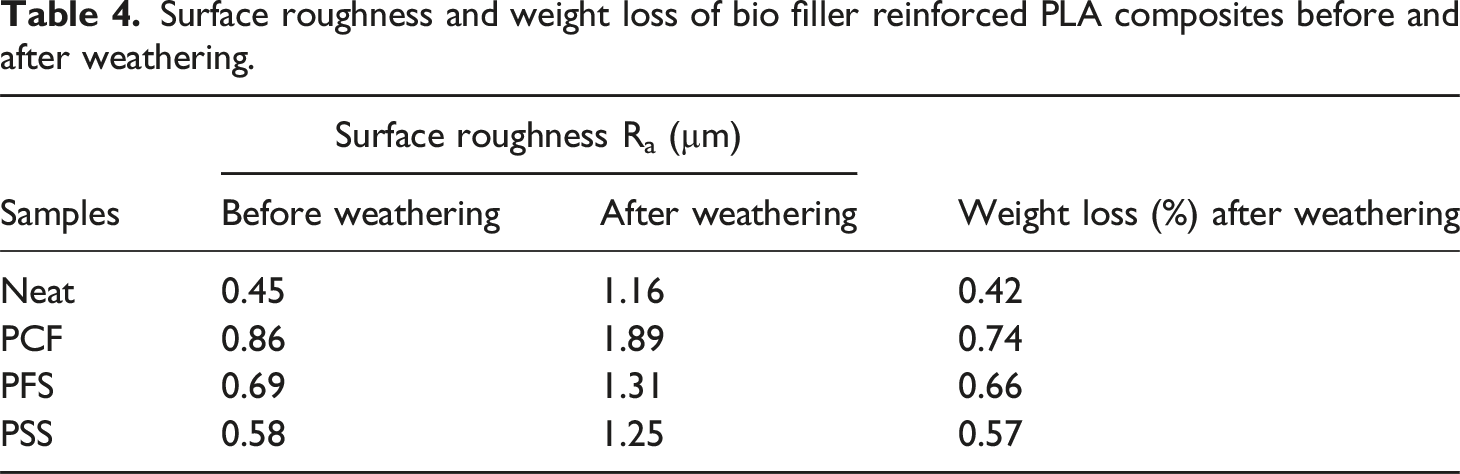
Surface roughness and weight loss of bio filler reinforced PLA composites before and after weathering.
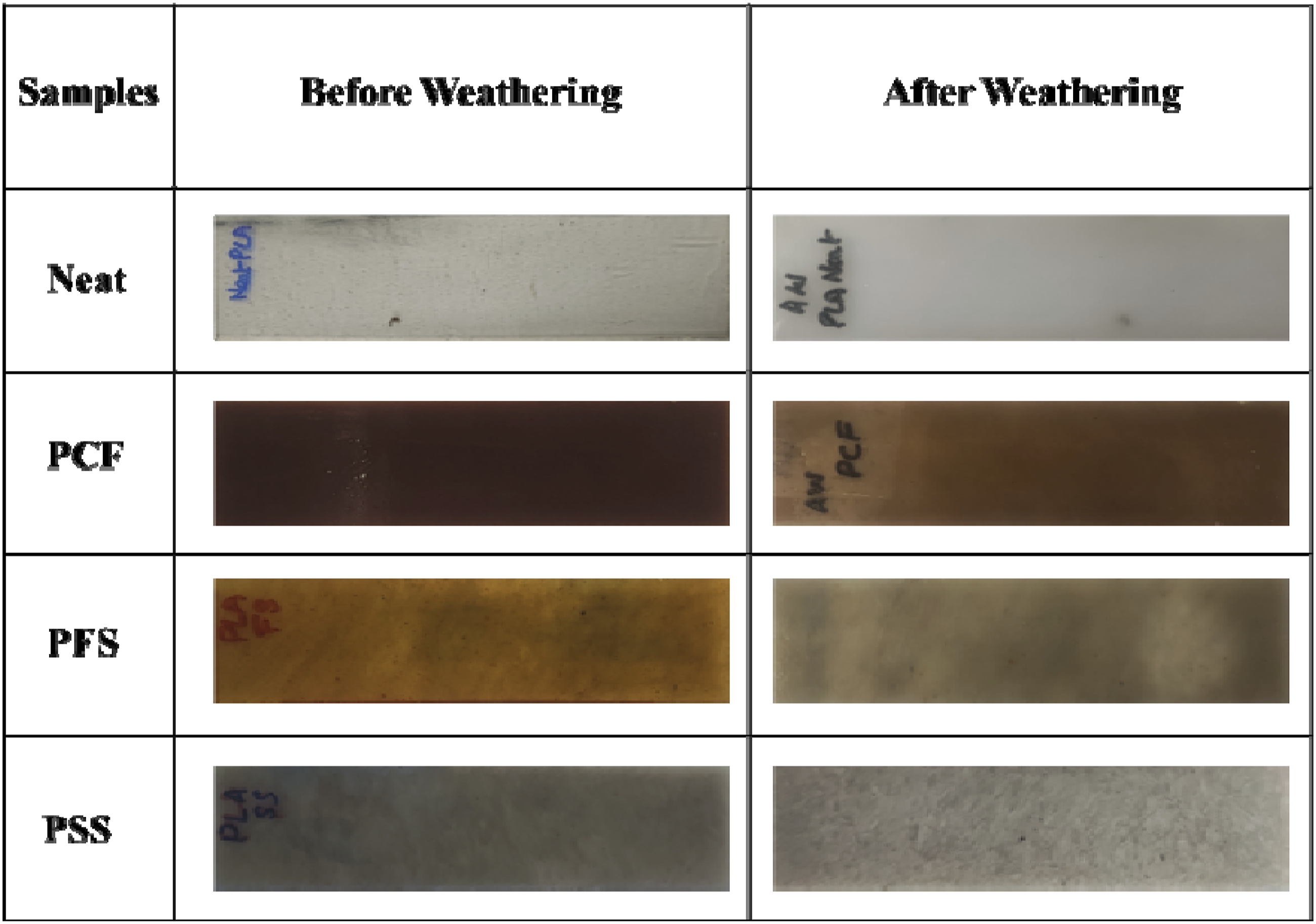
Visual observation of bio filler reinforced PLA composites before and after weathering.
Neat PLA showed a moderate increase in surface roughness (0.45 µm to 1.16 µm) and minimal weight loss (0.42%), reflecting inherent UV degradation susceptibility. PCF exhibited the highest surface roughness rise from 0.86 µm to 1.89 µm and weight loss (0.74%). CF absorbed moisture from the humidity cycles and contributed to more pronounced surface degradation. The UV radiation and alternating temperature cycles caused cracks at the filler-matrix interface, leading to roughness and material loss. 51 PFS showed surface roughness increasing from 0.69 µm to 1.31 µm, with a lower weight loss (0.66%) than PCF. FS may absorb more moisture due to their hydrophilic nature, but the overall matrix degradation was less severe compared to PCF, resulting in less surface roughness increase and weight loss which is attributed to the collagen and hydroxyapatite which offer better compatibility with PLA, leading to slower degradation. 32 PSS displayed the least surface roughness increase (0.58 µm to 1.25 µm) and weight loss (0.57%), likely due to the inorganic calcium carbonate content acting as a UV stabilizer, mitigating surface deterioration. The calcite-rich composition of seashells provides protection against UV radiation, reducing photodegradation rates compared to other fillers. 52 In conclusion, accelerated weathering resulted in manageable surface roughness and weight loss for PLA composites. SS demonstrated the highest resistance to UV induced degradation, while CF and FS showed moderate degradation due to their more organic content. These findings highlight the potential of waste-derived fillers in PLA composites showing minimal deformation and degradation after accelerated weathering supporting, both durability and biodegradability while promoting the use of discarded waste in material development.
Biodegradability studies
The majority of plastic waste is dumped directly into the soil. Therefore, figuring out how plastics degrade in the soil environment is significant (Varghese et al., 2020). The visual inspection of the buried samples and their weight loss data have been provided in Figure 10 and Table 5 respectively. From the data, it can be seen that the neat samples exhibited minimal degradation, with a weight loss of 1.42%, reflecting its limited susceptibility to soil microbial activity. However, the incorporation of natural fillers significantly enhanced degradation, with varying effects based on filler type. Visual observation of bio filler reinforced PLA composites in soil burial conditions. Biodegradability rate of bio filler reinforced PLA composites after soil burial.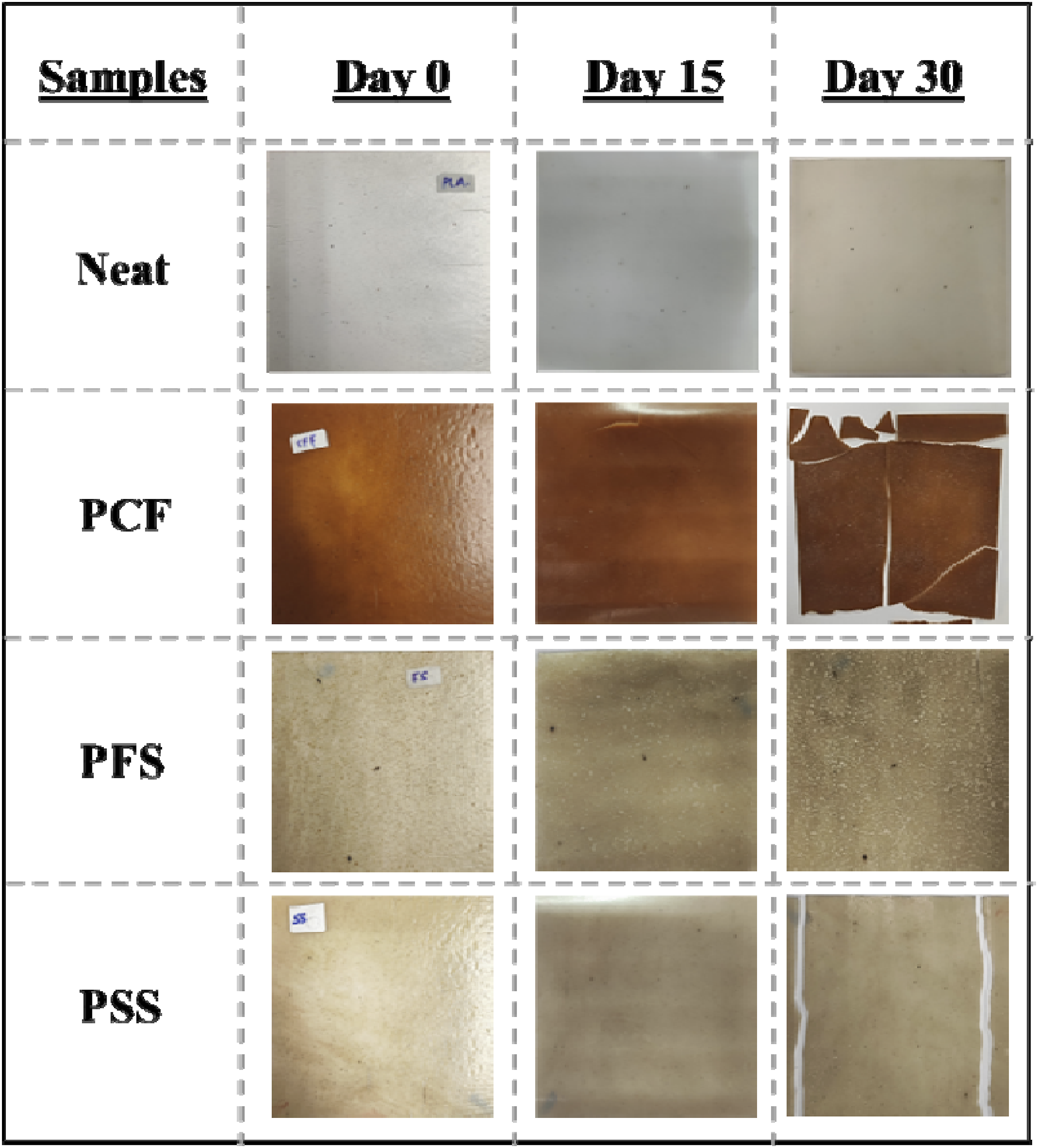
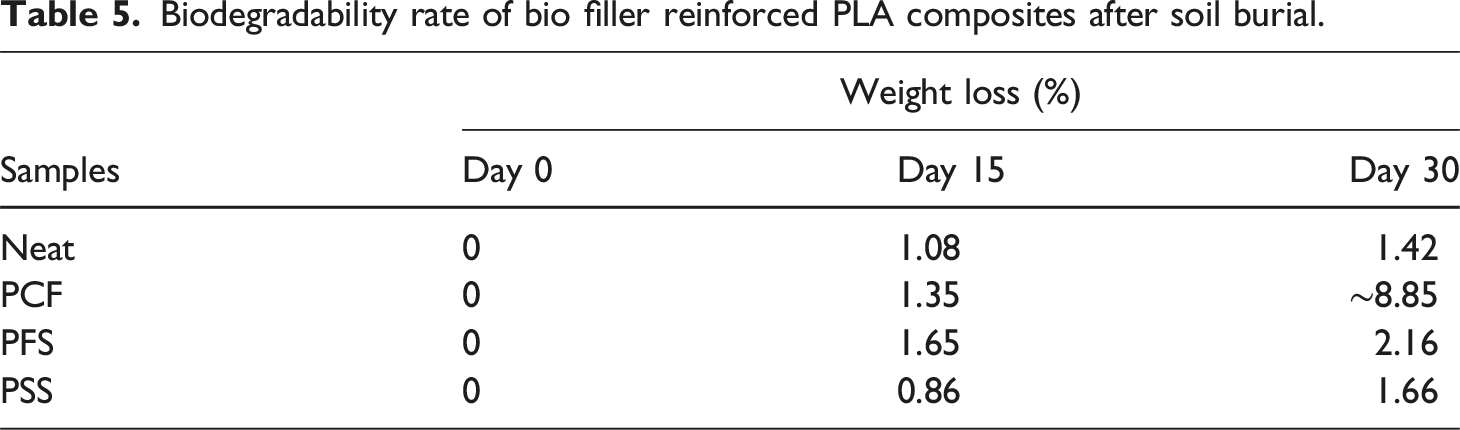
PCF demonstrated the highest degradation, with a weight loss of 8.85% (approx.) as very tiny particles that broke down were not retrievable from the soil. Cracks appeared on day 15, and samples broke into multiple pieces by day 30. The fibrous structure of chicken feathers presumably facilitated moisture and microbial ingress into the matrix, hastening decomposition. 53 This corelates with results indicating natural fibers promote polymer degradation through formation of voids at the filler-matrix interface, aiding microbial colonization.16,48
PSS exhibited a weight reduction of 1.36 %. By day 15, crevices emerged, and cracks resulted in partial sample breakage on day 30. SS, composed of CaCO3, provided an ideal site for microbial adherence, hence improving degradation compared to neat PLA. 44 PFS displayed a 2.16% weight loss. By day 15, the surface became coarse, imitating sandpaper, with apparent cracks by day 30. Degradation was aided by FS, however it was slower compared to chicken feathers, which might be explained by their structure and content.36,54 The use of bio fillers greatly enhanced the biodegradability of PLA. Although FS and SS also showed substantial influence, CF was the most effective. These results emphasize the potential of utilizing bio fillers to develop sustainable, eco-friendly materials, consistent with initiatives aimed at diminishing plastic waste and fostering environmental sustainability.55,56
Our PCF degradation (∼8.85%/30 days) exceeds PLA/wood flour (3.1% 46 ) and aligns with PLA/feather composites (5–7% 15 ). PFS (2.16%) outperforms PLA/CaCO3 (1.5% 25 ), while PSS (1.66%) suits semi-durable applications where slow degradation is optimal. 33
Conclusion
The effects of bio-fillers discarded from fish scales, chicken feather, and seashells on the mechanical, physical, thermal and environmental behaviour of the PLA composites was investigated. The findings of this study shows that these fillers derived from the waste has a promising potential for their applicability in environmental friendly and effective products. • Chicken feather composites (PCF) demonstrated the lowest density (1225.63 kg/m3) and highest porosity (0.54 %), primarily attributable to weak filler-matrix adhesion. Mechanically, PCF composites improved tensile strength by 4.12 %, but tensile modulus decreased by 9.5 %. These outcomes are linked to the hydrophilic nature of CF and insufficient interfacial bonding, which limited stress transfer. The higher water absorption of PCF (0.72 %) during environmental tests further underscores its moisture-prone behavior. However, PCF composites exhibited remarkable biodegradability, with around 8% approximate weight loss in soil burial tests, highlighting their potential for applications prioritizing rapid environmental degradation such as agricultural mulch films, biodegradable plant pots, single use packaging etc. • Fish scale composites (PFS) demonstrated lower porosity (0.2%) and a slightly higher density (1247.2 kg/m3). These composites achieved a 10.19% increase in flexural strength and a notable 32.39% improvement in flexural modulus, though tensile modulus declined by 6.7%. PFS showed a moderate water absorption of 0.69% and exhibited enhanced biodegradability with a 2.16% weight loss in soil burial tests. The collagen content in FS likely facilitated microbial activity, contributing to the observed degradation. These composites combine moderate mechanical strength with accelerated biodegradability, making them suitable for structural applications like flexible sporting goods, consumer electronic components, and fishing gears etc. that reduce environmental impacts. • Seashell composites (PSS) stood out for their superior thermal stability, highest density (1255.3 kg/m3), and improved mechanical properties. PSS composites increased flexural strength by 13.63% and impact strength by 25.26%, reflecting the stiffening effect of calcium carbonate-rich SS. Thermal analysis revealed a 3.6% rise in degradation temperature (Td) and a 101 % increase in residual mass, indicating excellent thermal performance. PSS composites exhibited the lowest water absorption (1.2%) and moderate biodegradability (1.6% weight loss), making them ideal for applications demanding durability and thermal resistance such as thermal insulation panels, kitchen containers, automotive parts like engine cover and air ducts, thermally stable housings for light machineries, etc. • While these composites show significant promise, scale-up faces three key challenges: Filler availability/variability – Seasonal fluctuations in poultry/fishing industries may affect supply chain consistency, requiring strategic partnerships with waste aggregators (2). Pathogen mitigation – Our pre-processing protocol (Section Raw Materials) eliminates pathogens through thermal treatment (80°C for 2 hours for FS) and chemical-free washing, with microbial load testing showing >99.9% reduction in E. coli/Salmonella. Regulatory compliance – Food-contact applications (e.g., packaging) require FDA/EC 1935-2004 certification, where calcium carbonate-rich PSS shows greatest compliance potential due to established GRAS status. Future work will be focused on optimizing filler sterilization (e.g., UV/O3 treatment) and pursuing ISO 10993 biocompatibility testing for medical applications.
The overall findings emphasize the versatility of waste derived fillers in enhancing the properties of PLA composites. Chicken feather and fish scale fillers provide significant biodegradability and moderate mechanical improvements, aligning with sustainability goals. Meanwhile, seashell fillers offer exceptional mechanical and thermal properties, suitable for applications requiring long-term stability. This research underscores the dual benefits of reducing waste and developing sustainable composites, contributing to cleaner production and advancing environmentally responsible material solutions. The outcomes pave the way for further exploration of bio-fillers in industries like packaging, automotive, and construction, where balancing performance and eco-friendliness is critical.
Footnotes
Declaration of conflicting interests
The author(s) declared no potential conflicts of interest with respect to the research, authorship, and/or publication of this article.
Funding
The author(s) disclosed receipt of the following financial support for the research, authorship, and/or publication of this article: This research budget was allocated by National Science, Research and Innovation Fund (NSRF) (Fundamental Fund 2024), and King Mongkut
