



Abstract
Bio-based resin plasticizers not only overcome the toxicity and non-degradability of phthalate plasticizers, but also expand the application areas of polymers. In this study, the environmentally sustainable plasticizer isosorbide dinonanoate (ISN) is chosen to plasticize and toughen PLA for enhancing the impact strength and processability, further expanding the application in the field of flexible packaging materials. Our work primarily focuses on the impact strength, crystallinity, glass transition temperature (Tg), processability, and morphology for PLA composites. The results demonstrate that adding ISN at a concentration of 25 phr reduces the Tg by 22°C, representing a 35.4% decrease relative to neat PLA, thus confirming the effective plasticizing impact of ISN on PLA; the Izod impact strength arrives at 688 J/m, approximately 30-fold increase, demonstrating dramatically enhanced toughness of PLA; and the equilibrium torque is 1.9 Nm, involving improved processability of the composites. DSC tests show that the crystallinity of PLA composites improves when the amount of ISN increases. Notably, the crystallinity increases by 248% from 7.07% to 24.59% when the addition of ISN is 25 phr. Meanwhile, SEM reveals that ISN has good compatibility with PLA, as evidenced by the absence of phase separation on the fracture surfaces of the composites.
Keywords
Introduction
Along with polymers utilized in all aspects of life and manufacturing, while enjoying convenience of polymers, people have become aware that polymers are threatening the environment on which we always depend.1,2 Because of stable structure of most polymers, they are hardly degraded by natural microorganisms, and furthermore the toxic metabolites produced in the process of decomposition are harmful to the environment.3,4 When waste polymer materials are left untreated in the nature for long periods of time, it can give rise to a number of negative consequences on ecological system such as variations in the characteristics of the soil, 5 and interfere with normal growth and development for plants and animals.6,7 Besides, it is the poisonous ash and gases produced by incineration that can arouse atmospheric and land pollution. 8 More importantly, due to the shortage of non-renewable petroleum raw materials, biodegradable materials have emerged at a history moment.9–15
To the best of our knowledge, PLA is a renewable resin with considerable potential for development that has been extensively examined for application in medical treatment,16,17 agriculture 18 and packaging materials19,20 thanks to its excellent optical properties, mechanical durability and good machinability. Furthermore, PLA is completely biodegradable in a humid environment and at a temperature above the glass transition. However, certain drawbacks of PLA including low crystallinity, inherent brittleness and poor thermal stability hinder its further applications.21–24 In order to improve the mechanical properties of PLA, numerous measures have been developed and implemented in recent years. Among of them,co-polymerization is a modification method using flexible monomers to copolymerize with PLA to regulate the molecular structure of the polymer and improve the mechanical properties of the polymer such as tensile and impact performance.25–27 Nevertheless, co-polymerization modification is not in line with the concept of economical sustainability and is difficult to produce on an industrial scale. In contrast to the former, it is more cost-effective to blend PLA with other biodegradable and non-biodegradable resins, such as poly(ε-caprolactone) (PCL), 28 poly(butylene adipate-co-terephthalate) (PBAT), 29 acrylonitrile butadiene styrene (ABS) 30 and ethylene-co-vinyl acetate (EVA). 31 Unfortunately, above-mentioned blends suffer from poor compatibility, which gives rise to limited improvement in the mechanical properties of the materials.
At present, many researchers also promote another modification method that PLA blends with plasticizers to expanding the application in the field of flexible packaging materials. Frequently used plasticizers include dioctyl phthalate, 32 citrate esters,33–36 polyethylene glycol (PEG),37–39 vegetable oil 40 and epoxidized vegetable oil.41–44 Although they can improve the brittleness of PLA, most of them are less compatible with PLA and have potential migration problems. Therefore, it is necessary to exploit green plasticizers with excellent properties.
Isosorbide esters are typically renewable plasticizers, which are obtained by esterification of isosorbide, a versatile biobased diol. Their performance can be easily tailored by employing carboxylic acids with different chain lengths. More attractively, isosorbide esters are readily biodegradable and harmless to mammals. 45 In this paper, ISN, an environmental-friendly plasticizer, is utilized to prepare PLA composite with high toughness and excellent processing performance. The brittle resistance, crystallinity, dynamic mechanical thermal behaviors, processability, corresponding compatibility and migration resistance for PLA composites are systematically analyzed, while the possible plasticizing mechanism of ISN is discussed in detail.
Experimental
Materials
ISN is homemade in the laboratory. The specific synthesis method can refer to previous work by our group. 46 PLA (4032D, MFR = 7 g/10 min at 190°C, 2.16 kg, density = 1.24 g/cm3) is obtained from Nature Works (America).
Preparation of PLA/ISN composites
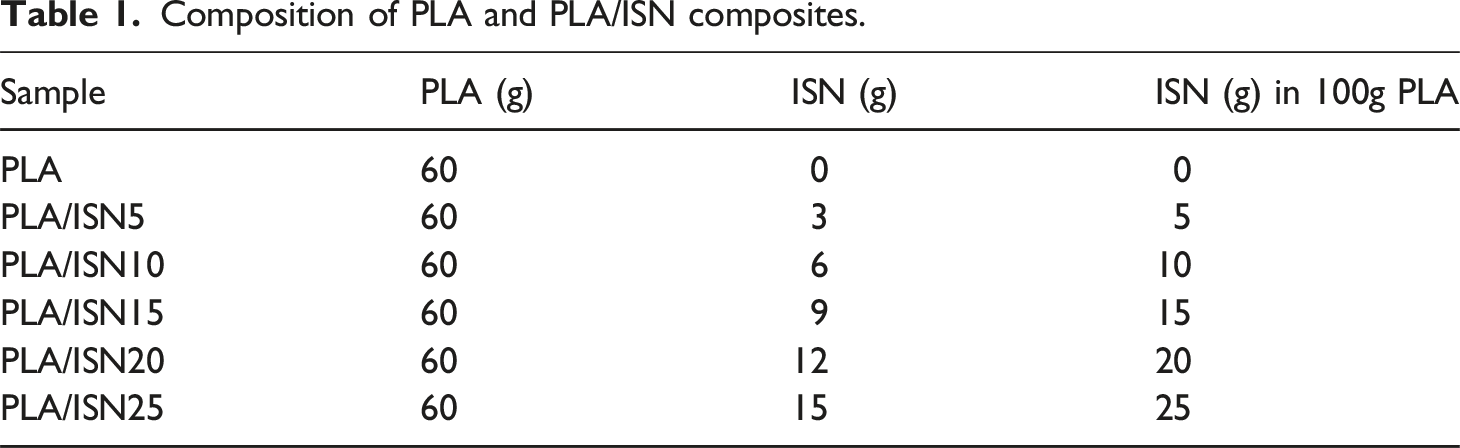
Composition of PLA and PLA/ISN composites.
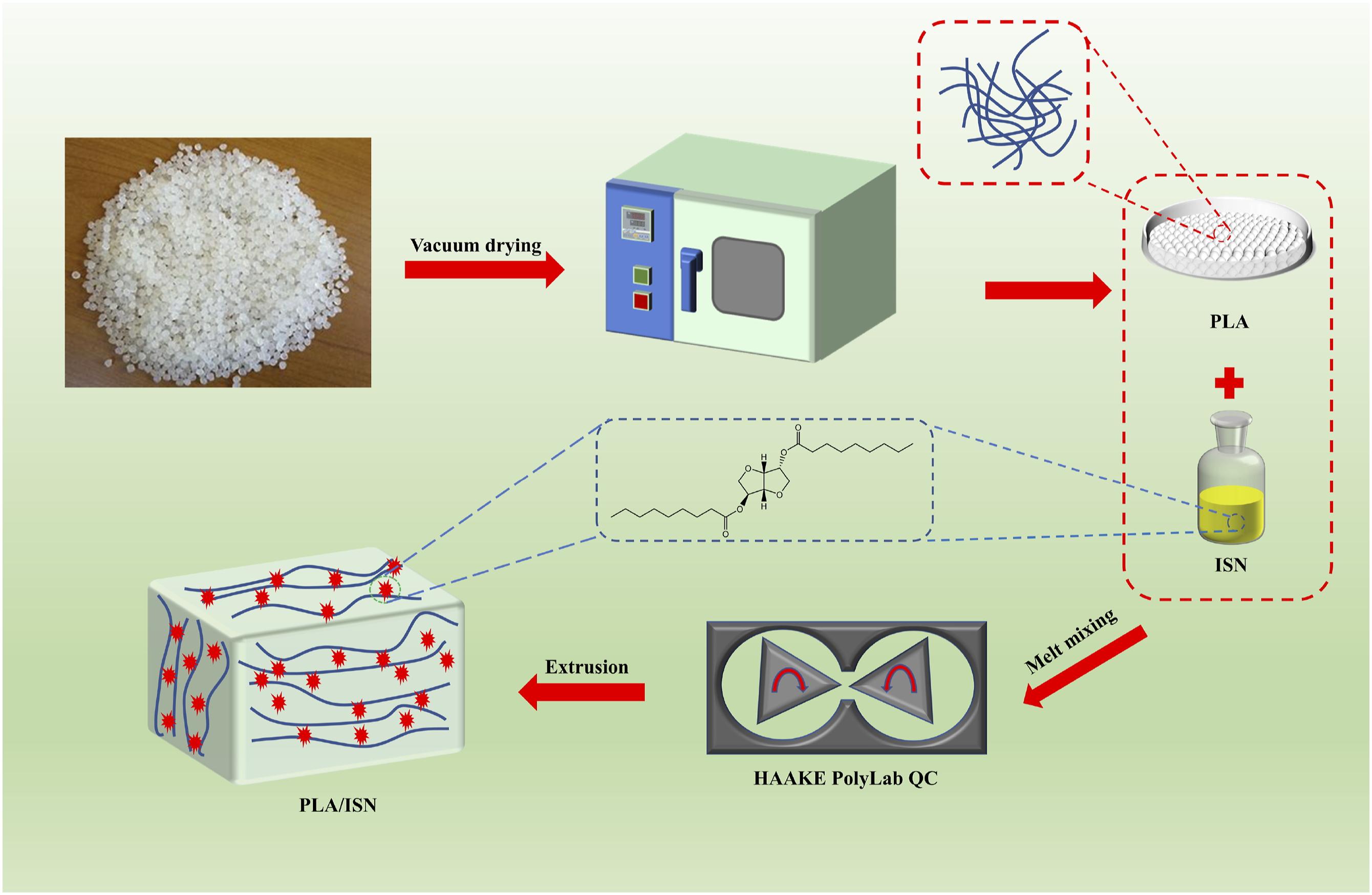
Preparation flowcharts of PLA/ISN composites.
Characterization
Dynamic mechanical thermal analysis (DMTA)
The samples are measured by a dynamic mechanical analyzer (Diamond PE, PerkinElmer, USA) within the temperature ranges from 0 to 120°C at a heating rate of 3°C/min. Maintain the frequency at 1 Hz and the deformation of 0.1%. The size of samples is 30 × 10 × 1 mm and Tg of the PLA and PLA/ISN composites is obtained from the tanδ-temperature variation curves.
Mechanical properties
The impact splines (length × width × thickness is 65 × 12 × 3 mm) and the tensile splines (length × width × thickness is 50 × 4 × 1 mm) are used for testing at room temperature. Notched Izod impact tests are performed using XJU-5.5 cantilever beam impact tester with a pendulum value of 5.5 J according to Chinese standard GB/T1843-2008 and the impact speed is 3.5 m/s. The tensile properties of PLA and PLA/ISN composites are tested by an Instron 1121 universal electronic stretching machine with a 1.0 kN load cell and a constant crosshead speed of 50 mm/min based on Chinese standard GB/T1040.1-2018. The final data represents the average of at least five tests.
Differential scanning calorimetry (DSC)
About 5 mg samples are thermally analyzed by a differential scanning calorimeter (Pyrussapphire, PerkinElmer, America) under a nitrogen atmosphere (nitrogen flow of 20 mL/min). In the temperature range of 25 to 180°C, the samples are heated up, cooled down and heated up again, in which the temperature change rate of is 10°C/min and a 5-min residence time at each temperature cycling node. The degree of crystallinity (X
c
) is calculated from the below equation: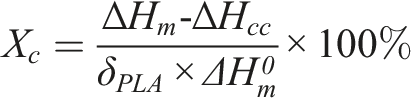
X-ray diffraction analysis (XRD)
PLA and PLA/ISN composites are tested and analyzed using a wide-angle X-ray diffractometer (D/MAX 2000/PC, Rigaku, Japan) with an angular resolution of 0.5°, a scanning range of 5–50° and a Cu Kα radiation wavelength of 1.54 Å.
Scanning electron Microscope (SEM)
Use an ion sputtering instrument to spray gold onto impact fracture surface, and then place the prepared sample under a SEM (JEOL Electronics Co., Ltd, Japan) to observe the impact section morphology of the composites.
Surface migration test
The tested specimens of size 50 × 50 × 1 mm were prepared using a hot press and weighed to obtain an initial mass M
0
. Clamp the specimens with pure PLA sheet (60 × 60 × 2 mm), Perform surface migration test by air circulating oven, according to ISO 177:2016 standard (70°C, load of 5 kg, duration of 24 h) and finally, reweigh testes specimens to obtain mass M
1
. The migration resistance of ISN in the samples is evaluated based on the mass loss ratio (V) of the samples, which is calculated according to the following formula: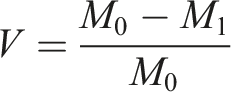
Rheological property test
PLA and PLA/ISN composites are made into circular thin sheets (diameter × thickness is 25 mm × 1 mm) and the rheological property tests are carried out with a rotational rheometer (AR2000EX, TA Instruments, America) within the angular frequency ranges from 0.1 to 100 rad/s and a temperature of 180°C. The distance between the plates of the rotational rheometer is 1 mm and the strain amplitude is set as 0.1 % to ensure a linear viscoelastic response. 36
Results and discussion
Dynamic thermomechanical analysis
In the dynamic thermomechanical analysis, the maximum tanδ value corresponding to the Tg of composite materials. It can be observed from Figure 2, The DMTA spectra of all the composites showed a single peak, indicating good thermodynamic miscibility between ISN and PLA. When the addition of ISN increases, a phenomenon of the peak of tanδ moving towards the low-temperature region is found, indicating that ISN plays a good plasticizing role. When the amount of ISN added is 25 phr, Tg of PLA decreases from 62°C to 40°C, which is a decrease of 22°C. Specifically, the incorporation of ISN to PLA resin reduces the extent of entanglement between polymer chains and improves sliding properties. DMTA curves for PLA and PLA/ISN (a) Tanδ as a function of temperature, (b) storage modulus.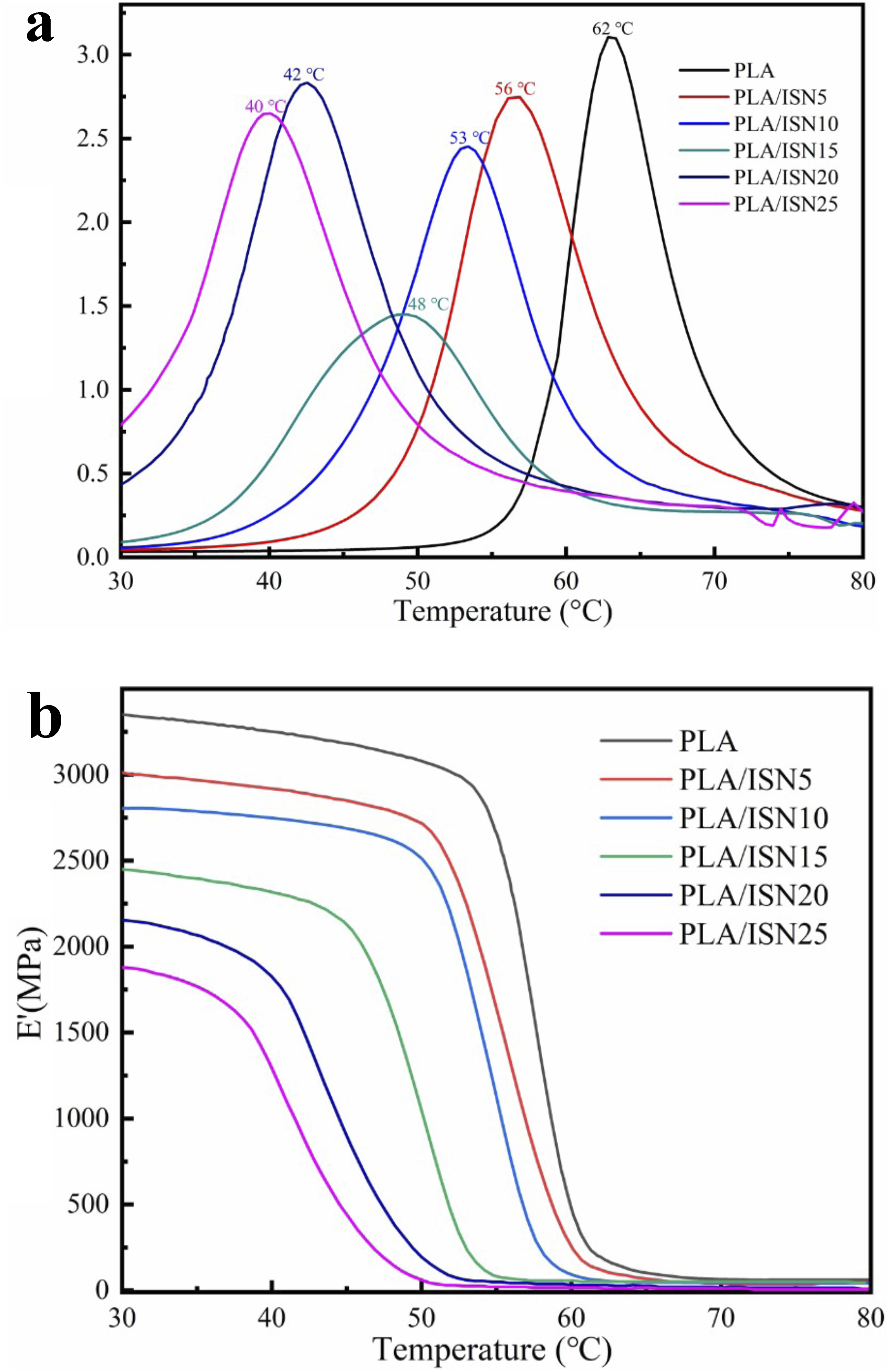
Subsequently, the storage modulus of PLA/ISN composites are expectedly lower than that of neat PLA, and with the increase of ISN, the storage modulus of the composites gradually decreases. When the concentration of ISN is 25 phr, the storage modulus drops to 1880 MPa, which is down by 43.86% compared to neat PLA. Besides, around the glass transition region, the free volume in the blends starts to thaw and the thermal motion of the molecules has sufficient energy, which leads to a sharp decrease of the storage modulus.
Mechanical properties
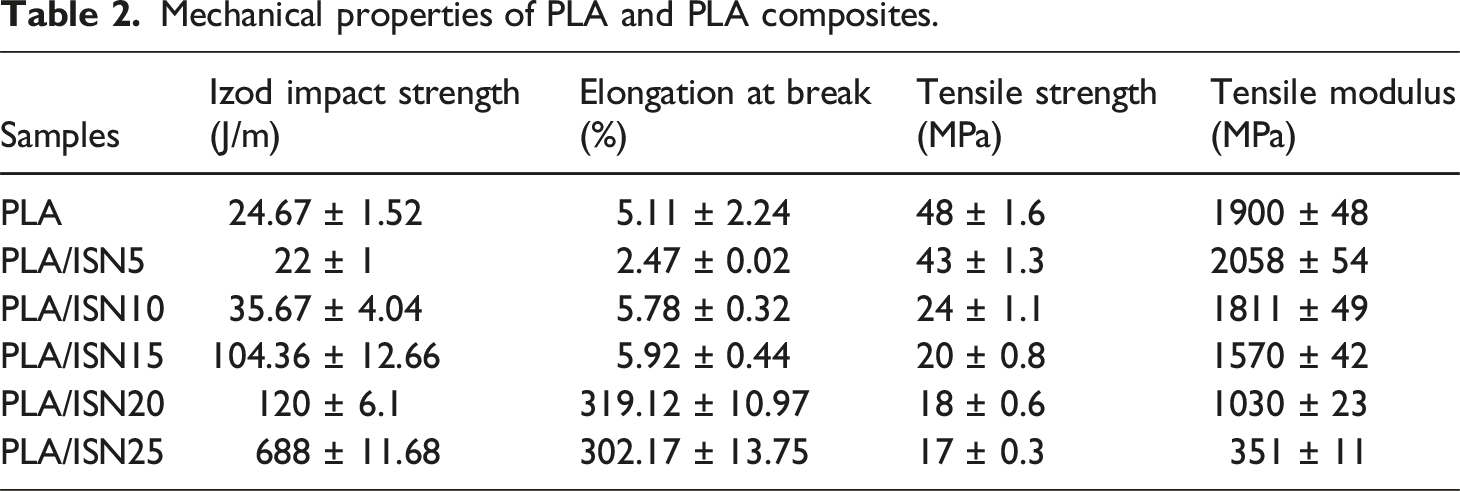
Figure 3 demonstrates the effect of the ISN concentration on the Izod impact strength and tensile properties of PLA/ISN composites, and specific data is listed in the Table 2. The results show that ISN is conspicuously beneficial to enhance the flexibility and brittleness resistance of PLA composite materials, and simultaneously, the tensile strength and elastic modulus are inversely proportional to the amount of ISN added. Nevertheless, when the ISN amount reaches 5 phr, the deformation resistance of the PLA composites increases along with the decrease in elongation at break and Izod impact strength, resulting in an “anti-plasticizing” phenomenon.48,49 Pure PLA is rigid before yielding and fractures at low strain, with an elongation at break of only 5.11%. Adding 10 phr and 15 phr of ISN does not transform PLA from fragile to pliable, with elongation at break of 5.78% and 5.92%, respectively. However, when the quantity added of ISN reaches the value of 20 phr, the elongation at break dramatically increases from 5.11% to 319.12% for PLA, representing a significant increase of 61-fold, which marks a substantial improvement in the mechanical properties of PLA composites. An analogous variation in elongation at break has been observed in other studies.50–52 With the addition of ISN reaches 25 phr, the Izod impact strength reaches 688 J/m, which is approximately 30 times tougher than pure PLA. Combined with the following DSC and XRD analyses, it can be surmised that the toughening effect may be due to the action of ISN nucleating agent. DSC showed that ISN significantly increased the crystallinity of PLA/ISN composites. After a large amount of ISN is introduced into the PLA resin, some polar groups in ISN interact with the polar groups in the PLA molecular chains, forming new interactions. Meanwhile, the non-polar long carbon chains of ISN insert into the PLA molecular chains, causing physical isolation and shielding. This results in a reduction of the extent of entanglement between the PLA molecular chains and an increase in free volume, allowing composite samples to effectively transfer and absorb energy under external impact. The mechanical properties of PLA and PLA/ISN composites. (a) Stress-strain curve, (b) Izod impact strength. Mechanical properties of PLA and PLA composites.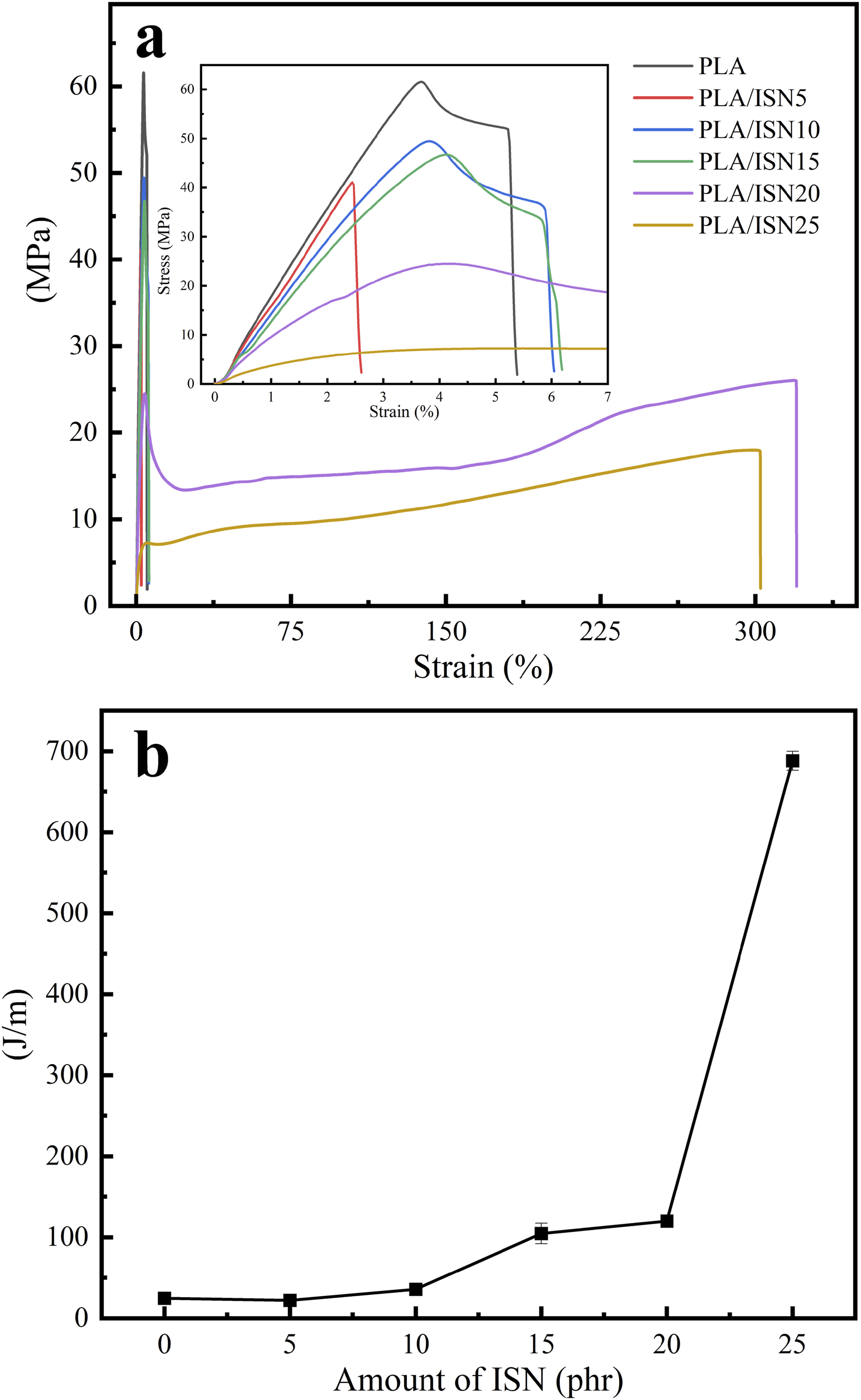
Thermal transition
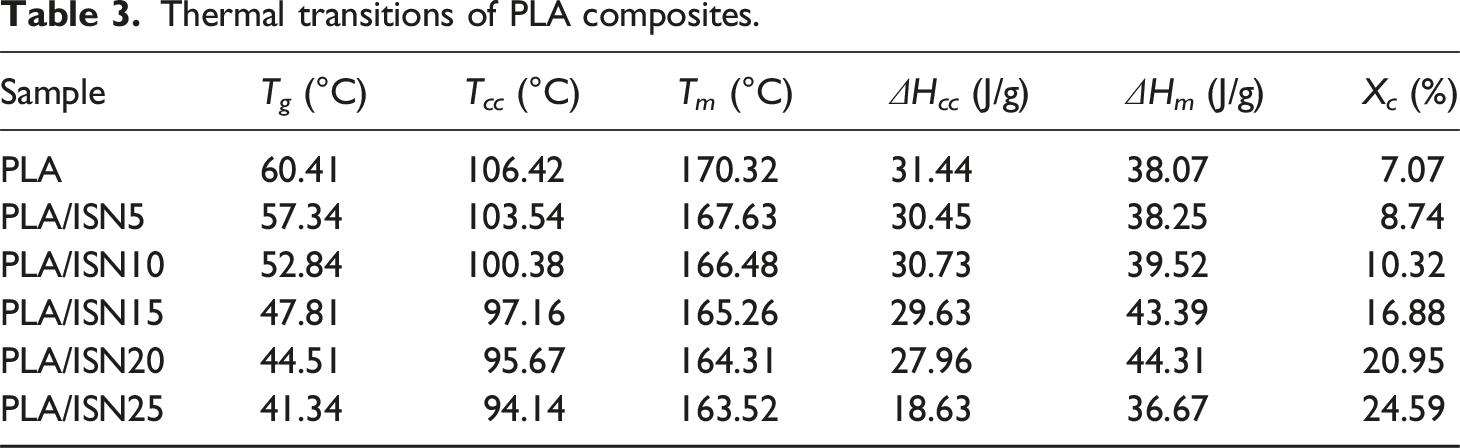
The DSC thermographs of PLA/ISN composites are exhibited in Figure 4 and the relative results are listed in Table 3. Figure 4(a) shows the cooling thermograms of the samples recorded at a cooling rate of 10°C/min. It can be seen that there is a decrease in the Tg of PLA after the incorporation of ISN, which is in agreement with the results obtained by DMTA. It is also observed that neither PLA nor PLA/ISN composites show crystalline behavior during the cooling step. Expectedly, all PLA materials exhibit cold crystalline behavior during the second heating process. As shown in Figure 4(b), the cold crystallization peaks in PLA/ISN composites decidedly shift toward the lower temperature zones with increasing of ISN concentration. With 25 phr ISN addition the cold crystallization temperature of the composite falls to 94.14°C, a marked decline of 12.28°C compared to neat PLA. Generally, the lower T
cc
, the better crystallization performance of the composites. In our fabricated PLA composites, ISN can promote PLA molecular chain movement, and effectively improve the crystallization rate. Hence, the X
c
of PLA/ISN composite elevates from 7.07% of PLA to 24.59%, an increase of 248%. Concurrently, due to molecular chains of PLA composites possess higher mobility, the melting temperatures of the composites have gradually decreased with increasing of ISN concentration. The DSC curve of PLA and PLA/ISN composites (a) cooling process, (b) secondary warming process. Thermal transitions of PLA composites.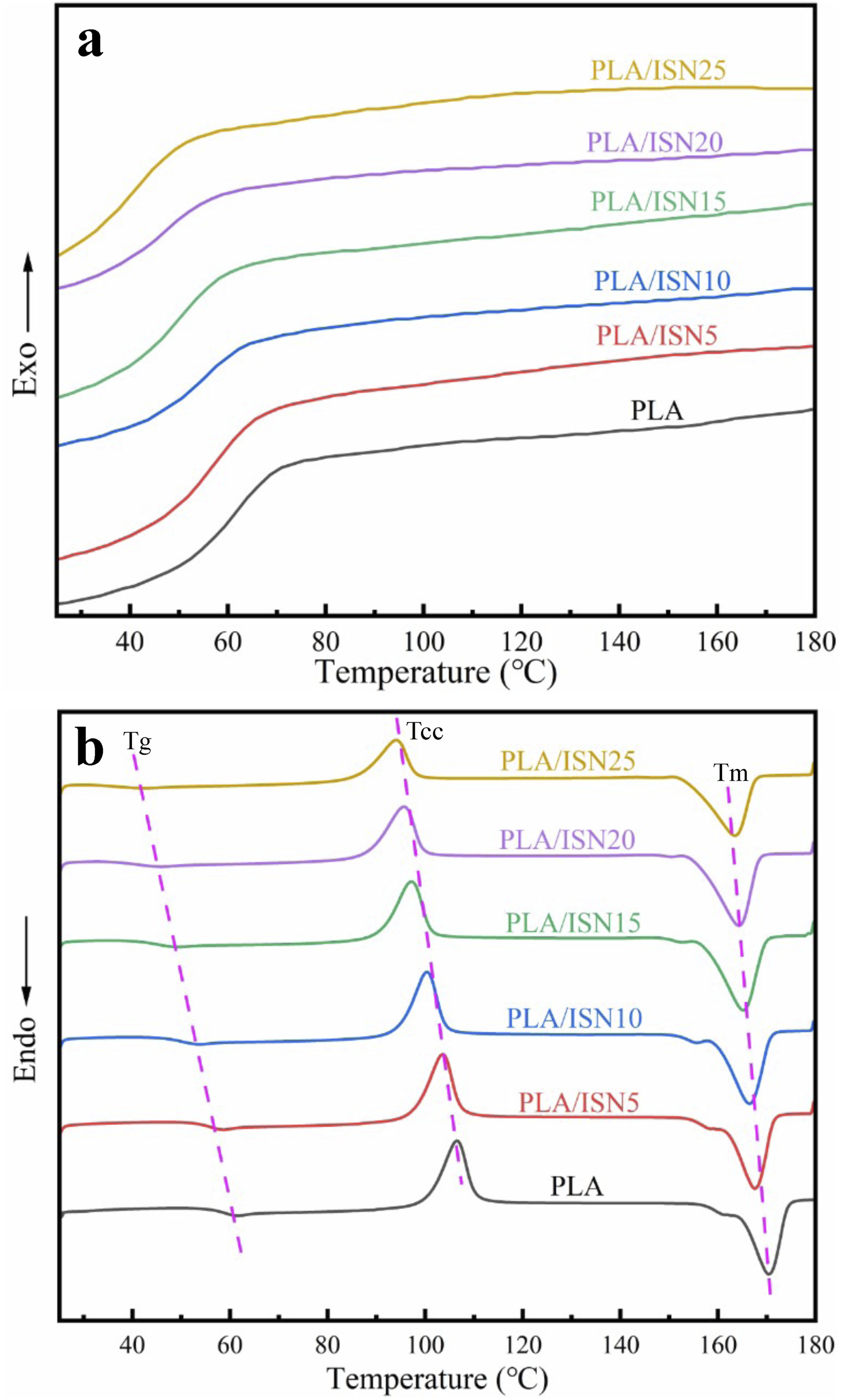
XRD
In Figure 5, for the PLA samples, 2θ = 18.5° and 32.6° belong to the characteristic diffraction peaks of PLA crystals. It is clearly seen that the characteristic peaks of PLA and PLA/ISN are not significantly sharp but appear as ‘buns'. Similar with pure PLA, the diffraction peaks of PLA composites do not exhibit a significant shift while the peak area increases to some extent after the addition of ISN. The change is a sign that ISN promotes the crystallization of PLA as evidenced in the DSC result earlies. A conclusion can be drawn that the crystallinity of PLA composites is enhanced, and simultaneously, there are a large number of amorphous zones in both the plasticizer-added composites and pure PLA. The XRD curve of the PLA and PLA/ISN.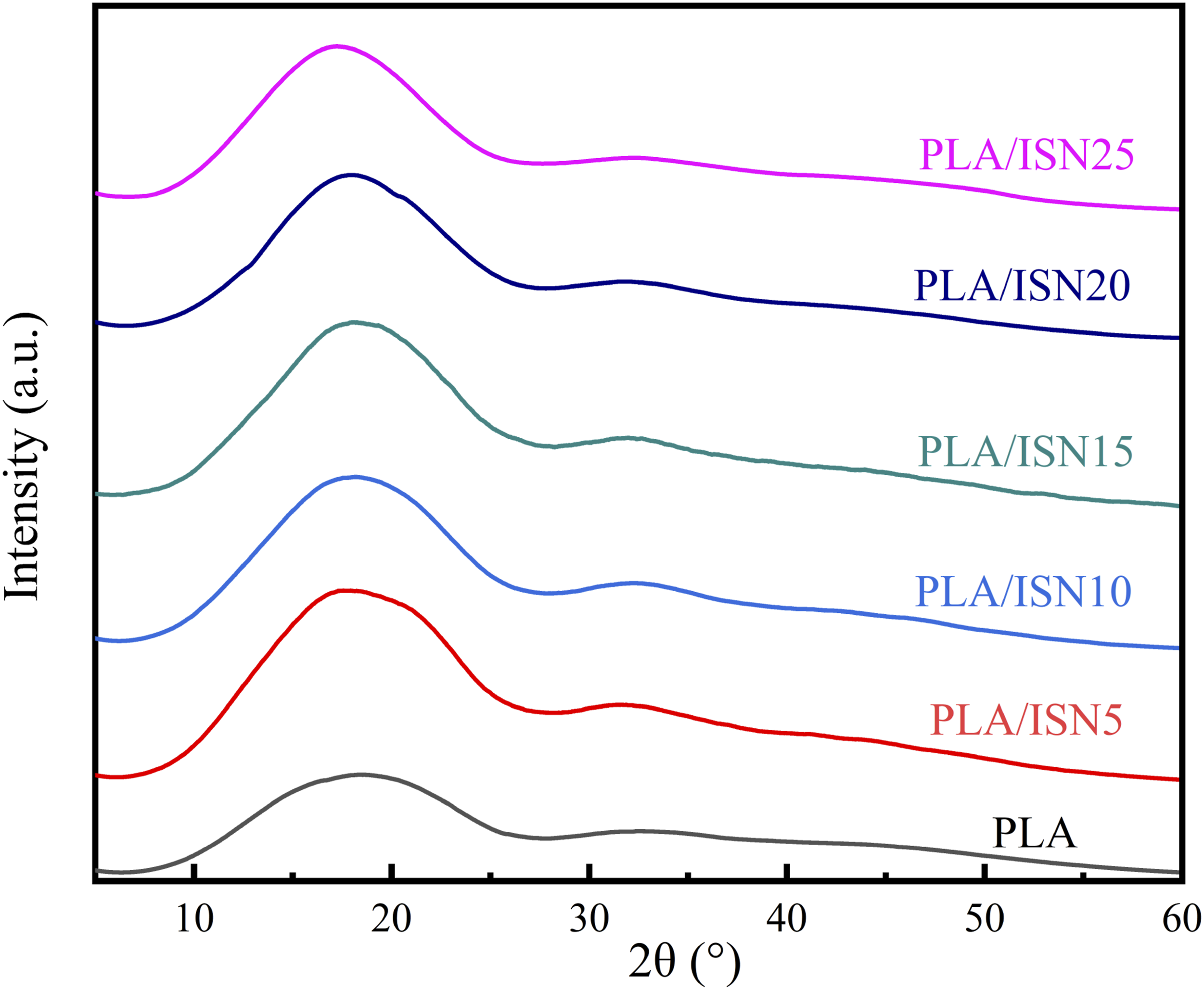
Microtopography analysis
By impact section SEM graphs, the microstructure changes of PLA materials can be intuitively observed. From Figure 6, neat PLA features smooth and flat impact cross-section, which presents a representative characteristic of brittle fracture, consistent with its poor toughness of 24 J/m. As the amount of ISN added to the blend system increases, the impact section begins to become rougher. As the incorporation of ISN is 25 phr, the impact cross-section of sample becomes more and more rough and uneven, showing the thread-pulling phenomenon, which indicates that more energy is absorbed during the impact process and the resistance to brittleness is significantly improved. SEM images of the impact cross-section of PLA and PLA/ISN composites: (a) PLA; (b) PLA/ISN5; (c) PLA/ISN10; (d) PLA/ISN15; (e) PLA/ISN20; (f) PLA/ISN25.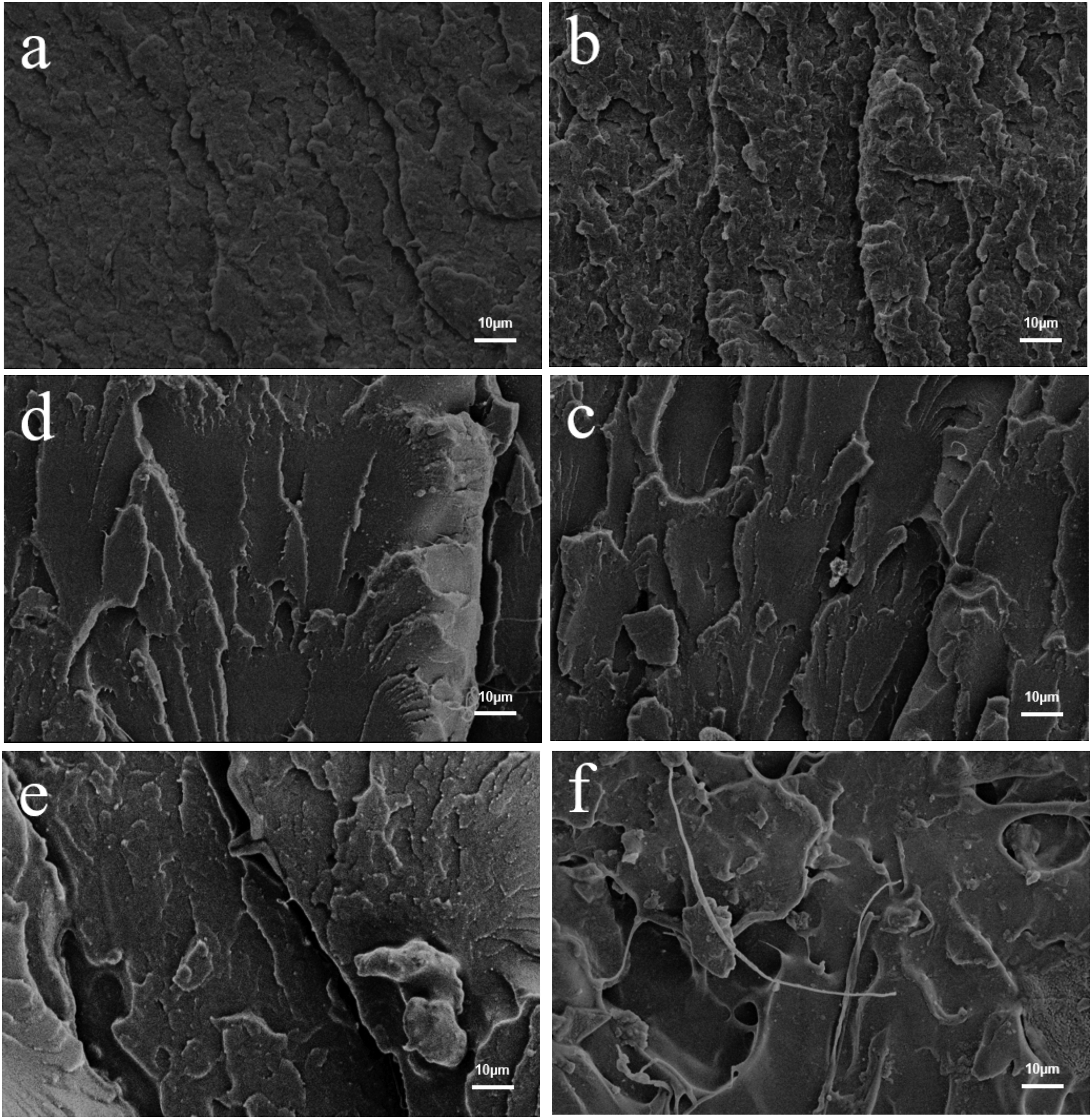
Meanwhile, none of the samples show phase separation in the impact section micromorphology, suggesting that ISN has excellent compatibility with PLA matrix, which may be due to the interaction of oxygen atoms on the ester bonds and heterocycles in the ISN molecules with the PLA chains. The results further showed that different contents of ISN had good miscibility with PLA matrix, which is in agreement with the results in DMTA.
Migration test
The microtopography analysis and DMTA show that ISN is structurally compatible with PLA resin and therefore ISN has a highly plasticizing efficiency. However, the unavoidable migration of small molecule plasticizers in the matrix can negatively affect the mechanical properties and appearance of PLA materials, so surface migration tests are necessary. The migration of ISN is investigated by subjecting PLA and PLA/ISN composites to a migration temperature of 70°C (above the glass transition temperature). Figure 7 shows the weight loss ratios of plasticized PLA samples with different contents after migration tests. It can be seen that the pure PLA also shows a small weight loss after the test, which may be due to a small amount of degradation after prolonged high temperature treatment. The weight loss ratio of the PLA composites increases with the increment of ISN contents, reaching 6.18 % at 25 phr. Above the glass transition temperature, the PLA molecular chains slide more easily, and without the influence of external forces, ISN dispersed in PLA resin will gradually agglomerate together and eventually detach from the PLA matrix due to thermal movement. In addition, PLA/ISN composites with high ISN content tends to transfer ISN towards the pure PLA sheet, which ultimately leads to the result that the higher the ISN content, the higher the migration rate of ISN. Migration test of PLA/ISN composites. Rheological behavior of PLA and PLA composites: (a) processing balanced torque; (b) complex viscosity; (c) storage modulus; (d) loss modulus.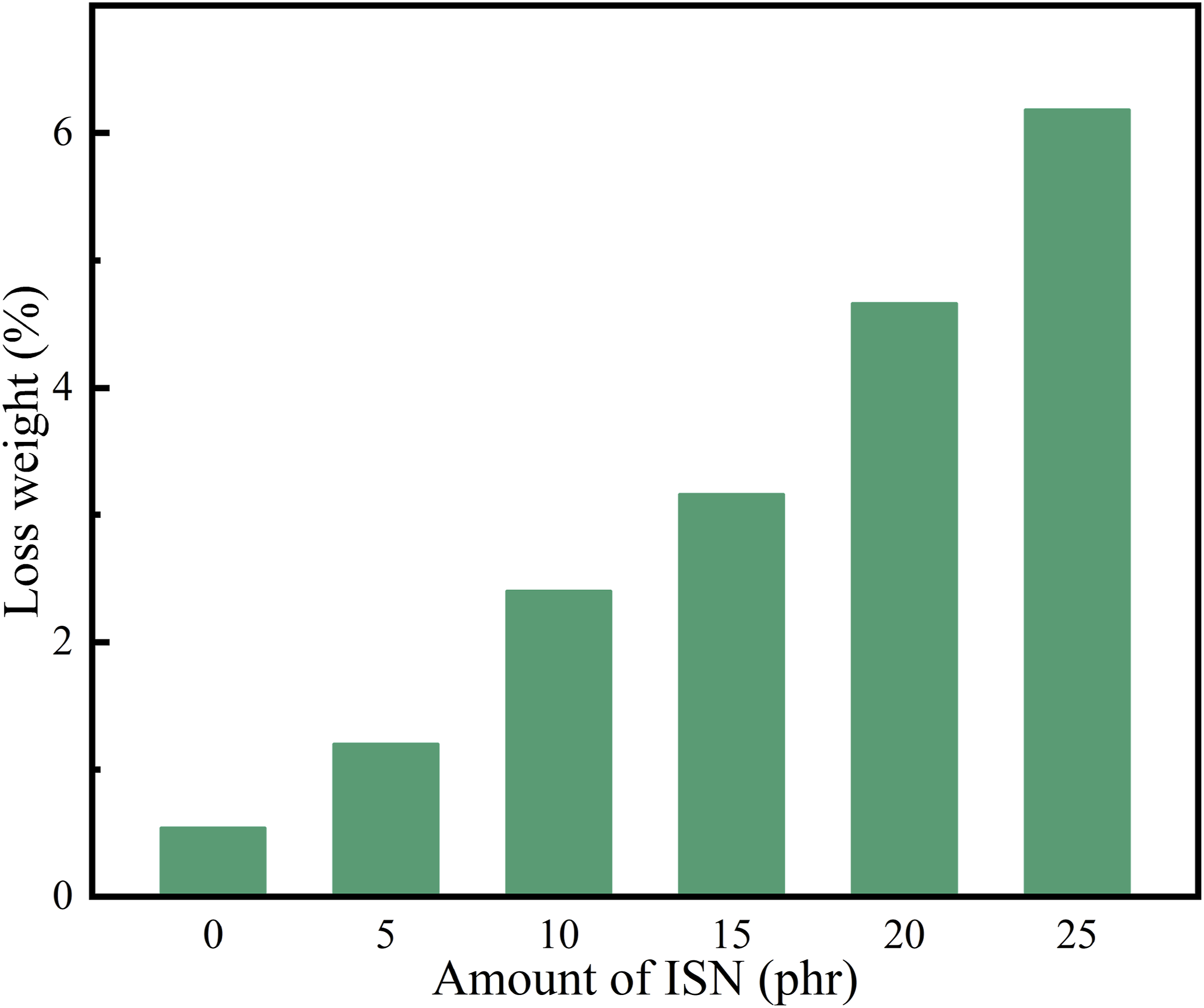
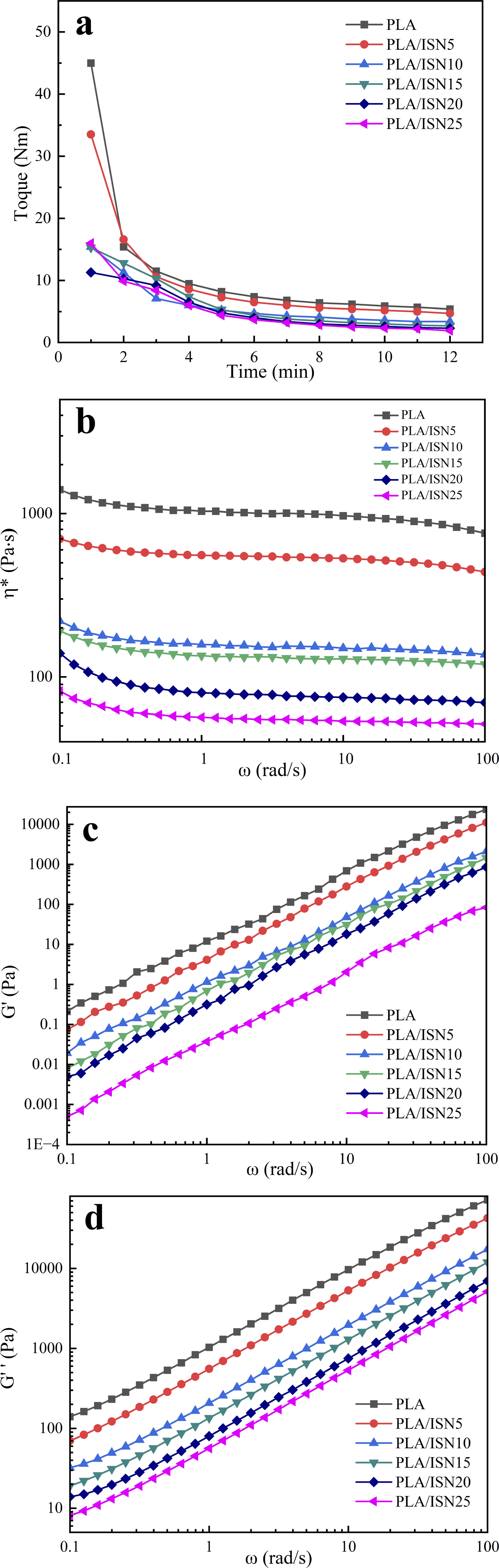
Processability analysis
The rheological performance of PLA and PLA
Plasticizing mechanism of ISN
Figure 9 shows a schematic diagram of possible plasticizing mechanism in PLA composites. Due to the induction effect, the electron cloud of carbon-oxygen bonds shifts towards oxygen atoms with stronger electronegativity, leading to a negative charge on the oxygen atom and a positive charge on the carbon atom. During the melt blending process, the oxygen atoms in the heterocycle and ester group of ISN form new interaction forces with the positively charged carbon atoms on the PLA chain, which gives a disservice to existing electrostatic interactions in the PLA chains. Simultaneously, owing to the sensitivity of the electrostatic force to the distance between atoms, when ISN inserts into the PLA chain, the non-polar long carbon chain plays a role in increasing the free volume and shielding electrostatic interactions between PLA chains, so that PLA composites can commendably transfer and absorb the energy when given the external forces. Moreover, the polymer chains still have high activity at lower temperatures, which manifests as a reduction in Tg. Possible plasticizing mechanism of ISN on PLA.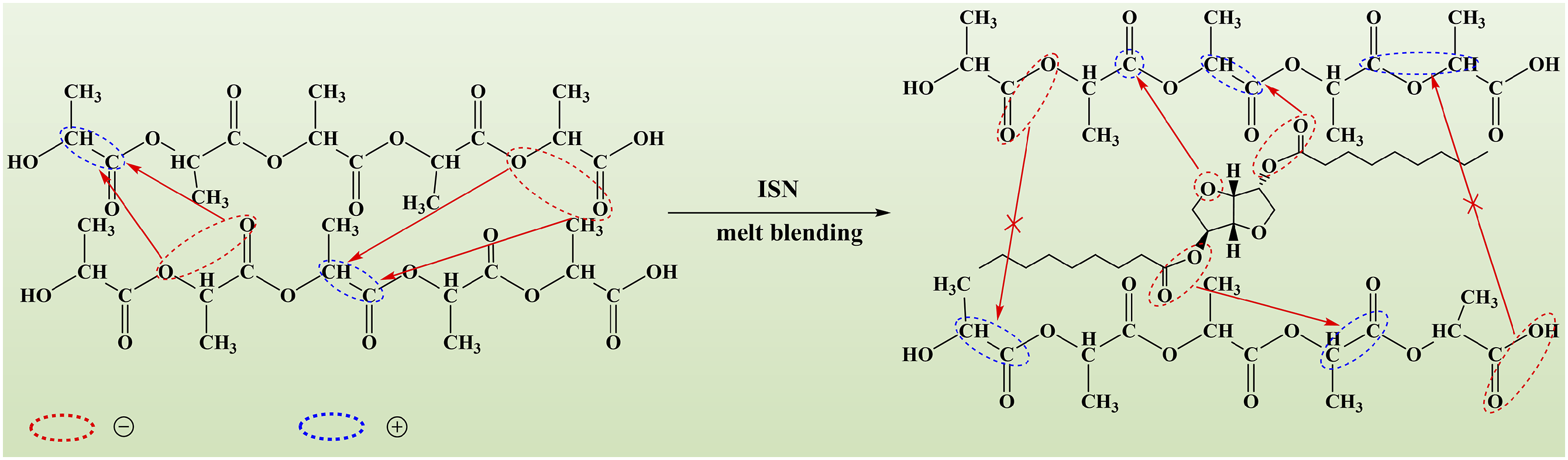
Conclusion
The rigid PLA is successfully plasticized by bio-based ISN through melt blending. A significant decline in glass transition temperature is observed in the PLA/ISN composites, indicating that ISN has a discernible plasticizing effect on PLA resin. The results demonstrate that when the content of ISN is 25 phr, the composite shows the best mechanical properties. Specifically, the impact toughness arrives at 688 J/m, and simultaneously, the elongation at break is 302%, which is 28 and 59 times higher than pure PLA, respectively. Besides, ISN can obviously improve crystallinity excluding impaired crystal structure, and at same time, the PLA composites become easier to process, as analyzed from DSC, XRD, and rheological behavior. Microscopic morphological observations show that the brittle-to-ductile transition occurs in PLA composite materials and phase separation is not discovered, which indicates that ISN and PLA are completely compatible.
Footnotes
Declaration of conflicting interests
The author(s) declared no potential conflicts of interest with respect to the research, authorship, and/or publication of this article.
Funding
The author(s) disclosed receipt of the following financial support for the research, authorship, and/or publication of this article: This work is financially supported by the Project of Jilin Provincial Department of Science and Technology (20240301030GX).
