



Abstract
The use of poly(lactic acid) (PLA)-based composites reinforced with natural fibers is becoming increasingly popular in sustainable packaging. However, these materials often lack adequate barriers and desirable functional properties. Concurrently, zinc oxide nanoparticles (ZnO NPs) have been incorporated into PLA-based composites to develop functional packaging films. Despite this progress, there is a gap in the literature regarding packaging materials that require both functional and performance properties, specifically those that combine natural fibers and ZnO NPs within the PLA matrix. This study aims to develop and optimize the effects of ZnO nanofillers and false banana, also called Enset fibers (EFs) as hybrid reinforcements in PLA matrices. A central composite design (CCD) approach was used to evaluate the effects of EFs at three levels (5 %, 15 %, and 25 % w/w) and ZnO NPs at three levels (0 %, 5 %, and 10 % w/w) on the performance (tensile and flexural strength) and functional properties (water and antibacterial activity) of the resulting nanocomposite materials. The findings indicate that the inclusion of ZnO NPs significantly enhanced both the performance and functional properties of the nanocomposites, whereas the inclusion of EFs improved the performance properties but reduced the functional properties of the nanocomposites. Ultimately, this study identified an optimal formulation for producing durable and functional composites for various packaging applications.
Keywords
Introduction
The nature of packaging significantly influences the successful delivery of chemically unstable goods, such as food and pharmaceuticals. 1 By 2050, global food supply is expected to increase by 50 % owing to population growth. This demand for food also increases the demand for food packaging materials, necessitating tailored solutions to maintain food quality and meet the increasing demands of consumers, producers, and legislative forces. 2 In this regard, food packaging is essential for maintaining product quality and safety by creating a barrier against contaminants, water vapor, oxygen, fragrances, and light. Consequently, packaging materials must possess the appropriate mechanical, barrier, and thermal properties to protect food products from external factors.1,3
However, most food packaging materialsrely on single-use plastics derived from petroleum sources, contributing to environmental degradation and increasing waste management issues. 4 According to predictions by Smithers Pira, the global packaging industry is expected to reach $1.05 trillion by 2024, a significant increase from the $917 billion in market valuation in 2019. This growth is largely driven by the popularity of polymers, such as PET, as lighter and cheaper alternatives to metal cans and glass bottles. 3 Consequently, researchers are actively exploring biodegradable, renewable, and recyclable materials to address these challenges. Among biodegradable materials, biodegradable composites are gaining popularity as they can effectively address these problems and promote a sustainable environment.5,6 These materials typically consist of a biodegradable polymer matrix reinforced with natural fibers, such as cellulose, or nanomaterials, such as zinc oxide.7,8 They are biodegradable and have a lower environmental impact than standard plastics, aligning with the sustainability objectives. Therefore, biocomposites are also a viable choice for more efficient and environmentally friendly food-packaging solutions. 9
Among these materials, PLA-based biocomposites are the most commonly used materials for packaging applications. 10 It is considered as a top choice for biodegradable materials because of its exceptional durability, mechanical strength, and transparency. 11 For instance, European bioplastics 12 reported that bioplastics production capacity is expected to increase significantly from 2.18 million tons in 2023 to 7.43 million tons in 2028, with PLA being the highest at 31 % in 2023 and expected to reach 43.6 % by 2028, particularly for rigid and flexible packaging applications. PLA is also recognized as safe and has been approved for use as a food contact packaging material by the United States Food and Drug Administration (FDA).13,14 Therefore, over the past 25 years, research on PLA has diversified significantly owing to environmental concerns and its potential for packaging applications. 1 Importantly, the market for natural fiber-reinforced composites is expected to grow from $4.46 billion in 2016 to $10.89 billion in 2024. 15 However, common plant fibers cannot satisfy the increasing demand for various composites because of their decreasing availability and limited growing space.16,17 Therefore, research and design are becoming increasingly interested in the use of natural fibers from agricultural waste. In light of this, false banana, also called Enset fibers (EFs) is one of the novel plant fibers extracted from the Enset plant, found in Ethiopia abundantly, which is cultivated like other crops. 18 Dejene 18 reported that Ethiopia harvests 100-million Enset plants annually for starchy food, providing 20 % of the population. This process generates 150,000 tons of EFs, which researchers are exploring as eco-friendly fiber sources. Moreover, this fiber has potential applications in the production of biocomposites.
In addition to sustainability, in recent years, the packaging industry has focused on improving the performance and functionality of packaging materials to meet the growing demand for fresh and high-quality food products.19,20 However, natural fiber-based PLA packaging materials lack barrier and functional properties, leading to research on improving these properties, while retaining biodegradability and recyclability.3,21,22 Therefore, recent research in the packaging industry has focused on developing hybrid composites (natural fibers and nanofillers), which are multifaceted materials that combine performance properties, reduce costs, and eliminate the disadvantages of using a single filler. 8 They are attractive because of their ability to use natural fibers and other fillers such as clay, carbon, glass fiber, mica, nanoparticles, and other natural fibers. 10 Incorporating specific nanomaterials into natural fiber-based PLA packaging can also lead to antibacterial, anti-odor, UV protection, and highly hydrophobic functionalities. Various nanoparticles (NPs) such as ZnO, TiO2, and AgO2 have been used as functionalizing fillers in green packaging. 23 However, Khammassi et al. 24 highlighted the importance of selecting suitable nanofillers to improve the PLA properties for specific applications. Among other nanoparticles, zinc oxide nanoparticles (ZnO NPs) play a vital role in enhancing the properties of PLA composites for food packaging applications. ZnO NPs enhance composite properties, including barrier, mechanical, and antimicrobial. Moreover, apart from other NPs, nano-ZnO is widely used in the food industry and is classified as generally recognized as safe (GRAS) by the Food and Drug Administration. 25
Therefore, researchers have used natural fibers as reinforcements in PLA-based composites and ZnO NPs as fillers in PLA-based composites.26–30 The interaction between nanosized ZnO and natural fibers in PLA matrices offers advantages such as better barrier quality, flexibility, and lower environmental impact than conventional packaging.31,32 However, they also face challenges in optimal PLA-based packaging that balances performance and functionality owing to different material compositions and may not tolerate high or low temperatures, impacting food compatibility. An optimal composite material for food packaging that balances strength, environmental impact, and functionality is required to address the aforementioned problems in the ever-changing packaging market. 9 However, there is a lack of optimization studies that incorporate both natural fibers and ZnO-functionalized fillers into PLA matrices for packaging materials that require both functional and mechanical properties. Therefore, the study of nano-ZnO-functionalized natural-fiber-reinforced PLA biocomposites for food packaging is an important research topic. This study aimed to address this gap by focusing on the development and optimization of ZnO nanofiller-enhanced EF-reinforced PLA biocomposites using response surface methodology for functional and durable food packaging applications.
Materials and methods
Materials
The mechanically extracted reinforcing material, False banana/Enset fibers (hereafter called EFs), was purchased from local farmers in Hawassa, Southern part of Ethiopia. The specification of the fiber includes density (1.32 g/cm3), tensile strength (350-450 MPa), elongation at break (2.24 %), aspect ratio (20:1) and thermal stability (260-263°C). The commercially available PLA pellet (CAS No. 26,100-51-6) with the density (1.24 g/cm3), melting flow rate (6 g/10 min), glass transition temperature (55–60°C) and melting temperature (150-170°C) was obtained from PLA suppliers (Addis Ababa, Ethiopia) and used as biomatrix. Nano-ZnO powder with an average particle size ranging from 20 to 30 nm, purity (99.8 %), and bulk density (0.3 g/cm3) was procured from Guangzhou Hongwu Material Technology Co., Ltd (Guangzhou, China) and used as the nanofiller in this research endeavor. In addition, the necessary chemical for fiber surface treatment, namely high-purity alkaline-NaOH (99 %), was obtained from Hawassa University Institute of Technology (Hawassa, Ethiopia). Both chloroform with purity (99.8 %), molar mass (119.38 g/mol), and density (1.49 g/cm³) and acetic acid with density (1.04 g/cm3 (25°C), pH value (2.5 (50 g/l, H₂O, 20°C) and solubility (602.9 g/l soluble) were purchased from the Global Scientific Lab and Trading (Hawassa, Ethiopia).
Experimental design
Actual levels of factors.
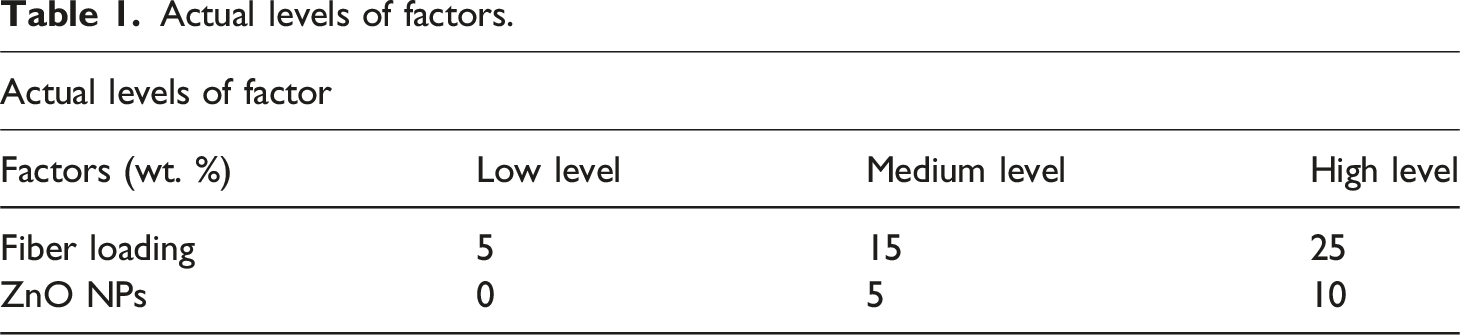
The choice of EFs loading (5, 15, and 25 %) and ZnO NPs (0, 5, and 10 %) for this study was guided by the literature and was based on several reasons. This study utilized a broad range of factor levels to investigate how these factors affect the performance of the composite and to identify changes in the mechanical properties, water activity, antimicrobial properties, and other relevant characteristics. The aim was to create a green composite material that met the specifications for performance and functional food packaging applications. Additionally, the potential interactions between EFs loading and ZnO NPs content were explored to understand the complex relationships between these factors and to determine the most effective combination for improved composite properties by simultaneously considering multiple factor levels. The mathematical model representing the response of a CCD is a quadratic model, whose interactions are described by equation (1).
Nanocomposite fabrication
Alkaline treatment of EFs
The EFs were cleaned with hot water to remove adhering dirt and were later cut according to the size of the treatment material and required length. This cutting process not only enhances the surface area of the fiber but also ensures its straightness throughout the surface modification process. To carry out the surface modification, 5 wt. % concentrations of NaOH was employed, following the methodologies outlined by previous researchers Abraha et al. 33 Prior to the treatment or processing, the EFs were dried in an oven at 40°C for 48 h. Subsequently, the fibers were immersed for two hours at room temperature in a container that contained a solution of 5wt.% NaOH at a material liquor ratio (MLR) of 1:10, in accordance with established protocols. The extra sodium hydroxide remaining on the fiber surface was neutralized by rinsing the EFs multiple times with tap water and a drop of acetic acid after treatment. The fibers were thoroughly cleaned with distilled water until the pH reached seven. Upon completion of the cleaning procedure, the fibers were allowed to air dry for 48 h before being subjected to a 6-hour oven dry cycle at 80°C. Finally, the alkaline-treated EFs were cut to length of 4-6 mm for better dispersion, effective reinforcement, and stress transfer in the bio-resin matrix. 34
Masterbatch preparation
Masterbatch thin films comprising PLA, EFs, and ZnO were prepared using a solvent-casting method. The process began by mixing the Enset fibers (4-6 mm) with ZnO NPs (20-30 nm) in chloroform to create a uniform blend, as illustrated in Figure 1. Subsequently, the PLA pellets were then dissolved in chloroform at 50°C for 24 h to form a clear PLA solution, following the methodology outlined by Bajwa et al.
32
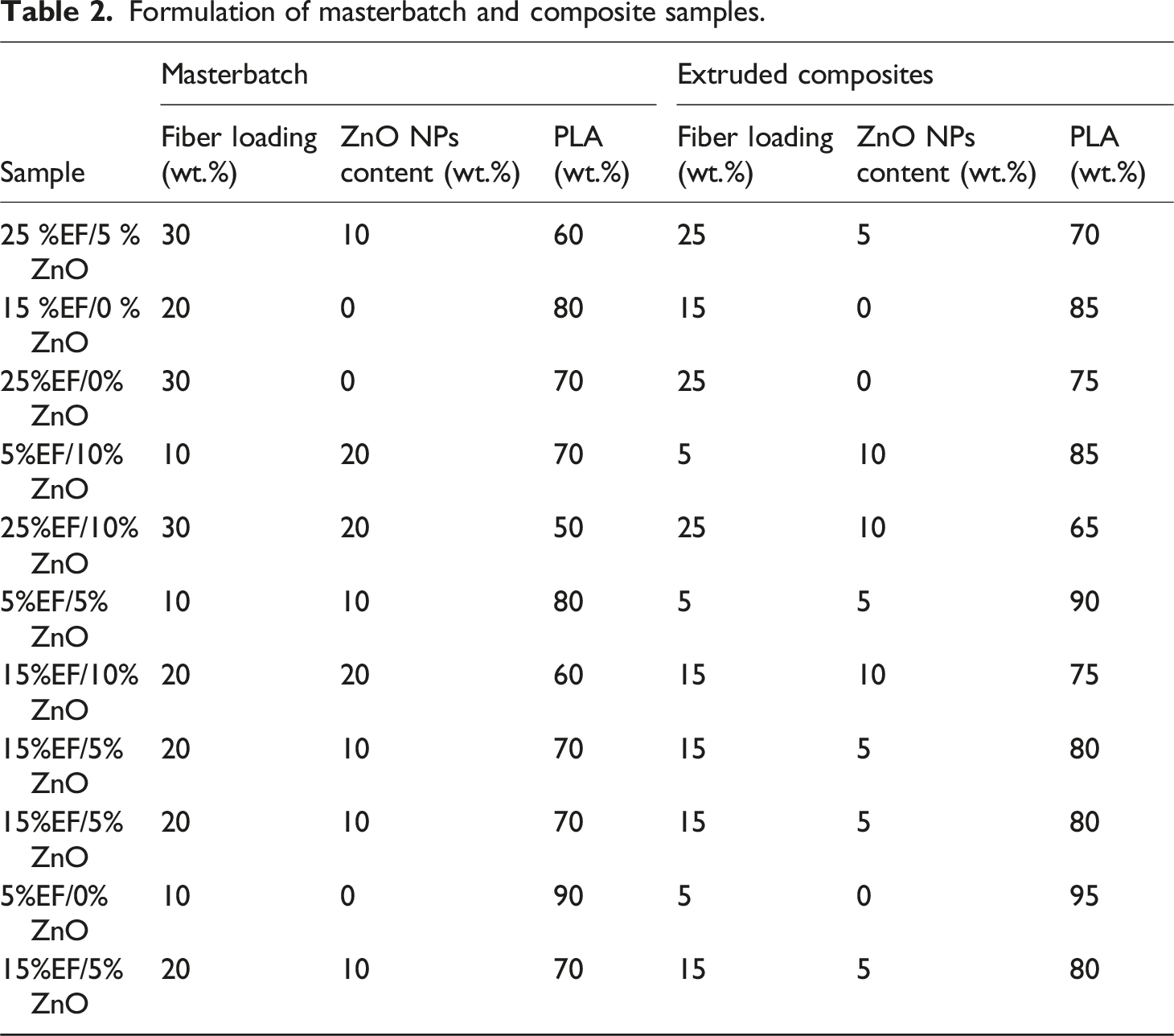
Following the dissolution of PLA, a ZnO-EFs mixture was introduced into the PLA solution. The combined mixture was homogenized for 5 min to ensure the proper dispersion of the EFs and ZnO within the PLA matrix. The specific percentages of each component in the PLA-EF-ZnO masterbatch are listed in Table 2. After mixing, the solution was poured into petri dishes. To minimize air bubble formation, the dishes were placed in a closed cabinet for 24–48 h, allowing the films to solidify completely. The solidified films were then dried in a hot-air oven, peeled, and cut into the final masterbatch forms. A summary of the preparation process is shown in Figure 1. The overview of masterbatch preparation. Formulation of masterbatch and composite samples.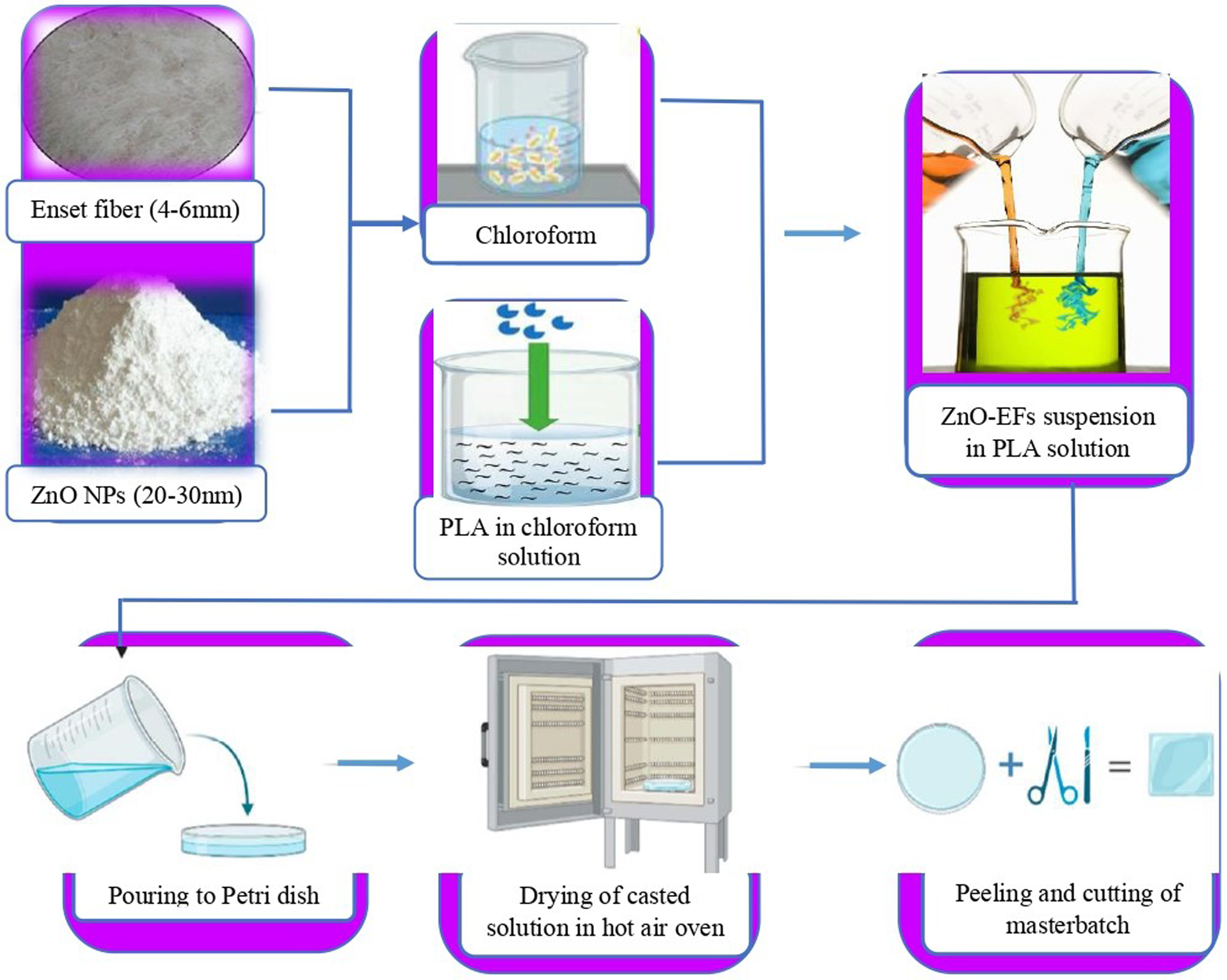
Nanocomposite samples preparation
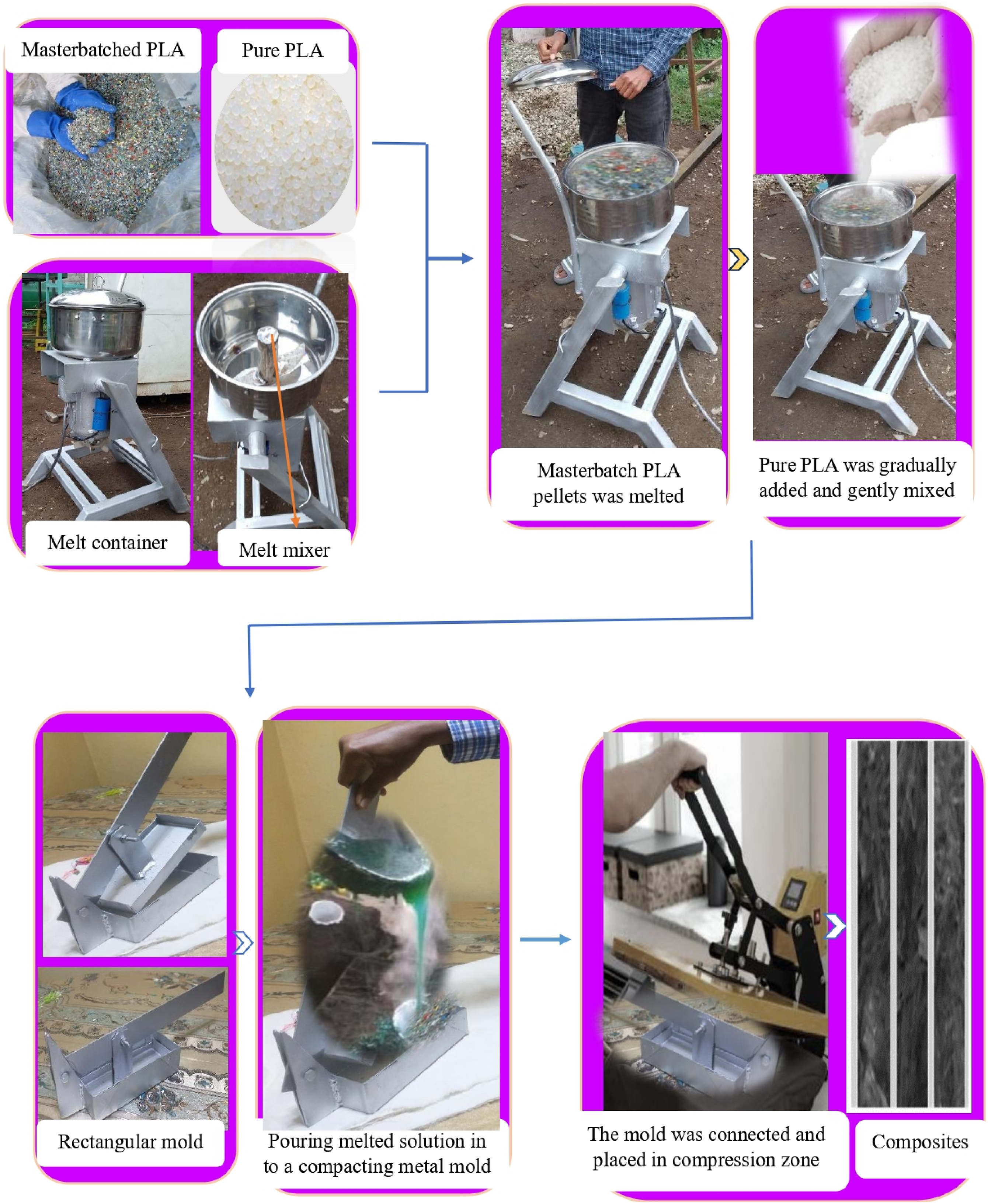
The preparation of nanocomposite samples began with chopping the masterbatch films into small pieces, approximately the size of the PLA pellets, while considering the length of the EFs (4–6 mm). This was accomplished by using a paper cutter. Prior to the melt processing, the PLA pellets and masterbatch pieces were dried at 50°C for 8 h in an oven to remove excess moisture from the materials. Subsequently, nanocomposites were produced by diluting the masterbatch pellets through extrusion, adhering to the specific percentages of each component, as detailed in Table 2. To initiate the melting process, the masterbatch PLA pellets were placed in a stainless-steel melting container equipped with a motor-driven mixer/stirrer and a temperature-controlled heater. Melting occurred within the temperature range of 150–170°C. Once the masterbatch PLA had completely melted, pure PLA was gradually added and gently mixed to ensure homogeneous distribution until ZnO NPs were obtained at concentrations of 5, and 10 % by weight, and EFs at loadings of 5, 15, or 25 % by weight following the formula specified in equation (2). It is important to note that processing parameters, such as temperature and time, have a significant impact on the properties of the produced composites. High temperatures beyond the melting temperature, coupled with prolonged exposure in the molten state, can lead to the degradation of PLA, resulting in low-strength composite products owing to the catalytic effects of ZnO. Therefore, researchers carefully monitored the process and ceased heating immediately after the masterbatch PLA was fully melted and added pure PLA within five to six minutes to prevent the degradation of both natural fibers and PLA. Finally, the melted solution was poured into a compacting metal mold with dimensions 250 mm × 100 mm × 7 mm. The mold was then subjected to compression molding at a pressure of 3 MPa and temperature of 140-150°C. This process continued until solidification occurred, which took approximately 5–7 min, resulting in a uniform and flat surface, as illustrated in Figure 2. The general procedure for sample nanocomposite preparation
Nanocomposite characterization
Chemical properties characterization
Fourier-transform infrared spectroscopy (FTIR)
Fourier-transform infrared spectroscopy (FTIR) was utilized for the EF-reinforced composites with and without ZnO NPs and to analyze the chemical interactions between the EFs, ZnO, and PLA. The FTIR analysis was conducted using a Spectrum 100 spectrometer (Hawassa University, Ethiopia). Prior to the analysis, the composites with and without the ZnO nanopowder were dried overnight at 70°C. The FTIR spectra covered a wavelength range of 4000 cm−1 to 500 cm−1 at a resolution of 4 cm−1. Each sample underwent an average of 5 scans to ensure the accuracy and reliability of the analysis.
Water Activity (aw)
Water activity, a measure of the free moisture in a product (composite), is a critical factor in food preservation as it influences microbial growth, chemical reactions, and physical properties of food products. Microorganisms utilize free water molecules for their growth. 35 Water activity was measured using a water activity analyzer (Pre-aqua Lab, USA) at Hawassa University College of Agriculture, Ethiopia. Prior to the measurement, the instrument was calibrated using a saturated salt solution of NaCl. The aw values and temperatures were recorded at the time of the measurement.
Mechanical property characterizations
Following the preparation of the composite materials, tensile and flexural tests were conducted on each specimen to evaluate their strength. Tensile and flexural strengths are crucial properties of biocomposites intended for durable and active food packaging applications. These assessments were performed using a Universal Material Tester (UMT) at a crosshead speed of 2 mm/min for all test loads.
Tensile strength test
The ASTM D3039 standard was used for the tensile testing of the samples. The testing was performed on a GUNT® Hamburg Universal Material Tester (WP-300, Hawassa University, Ethiopia) equipped with a 20 kN load cell at a strain rate of 2 mm/min until fracture. The test had a specimen geometry of 3 mm × 20 mm × 220 mm, and a gauge length of 120 mm. During testing, the specimens were secured in the grip of the UMT and an axial tensile load was applied at both ends of the specimen. The tensile strength was determined from the experimental data using equation (3).
Flexural strength test
The flexural test assesses the bending (flexural strength) characteristics of a material subjected to an external load. This test was performed according to the ASTM D790 standard using the UMT. The composites were tested using a three-point flexural method with specimens prepared as 130 x 13 mm2 squares using a saw cutter. The tests were conducted using a GUNT® Hamburg Universal Material Tester WP-300, the same machine used for tensile testing. The machine was adjusted horizontally to apply the necessary force to the sample, allowing determination of the bending strength values of the composite materials. Three replicate samples of each composite test were tested and the resulting average values were recorded for further analysis.
Thermal property characterization
Thermogravimetric analysis (TGA) was performed using a TGA 8000 instrument (Adama, Ethiopia). This study aims to investigate the thermal degradation temperature and weight loss of pure PLA and nanocomposites at a heating rate of 10°C/min within a temperature range of 0 °C–800°C under a continuous nitrogen (N2) atmosphere. Prior to analysis, the instrument was calibrated with calcium oxalate and aluminum standards. 36
Evaluation of antibacterial activity
The effectiveness of the nanocomposite against both Gram-negative (Escherichia coli) and Gram-positive (Staphylococcus aureus) bacteria was assessed in accordance with JIS Z 2801-2010. Initially, 11 composite samples measuring 1 cm2 × 0.4 cm were subjected to high-temperature steam sterilization at 121°C for 30 min using an applicator rod, forceps, and reagent gun. Following sterilization, 100 μL of the S. aureus bacterial solution was evenly distributed across the plates using a spreading rod. Each plate contained three pieces of nanocomposite, with four plates set up for all the samples. The procedure used for E. coli was identical to that described previously. The plates were then sealed with aseptic film and placed in a constant-temperature, constant-humidity chamber at 37°C for 48 h to evaluate the antibacterial effect. Subtracting the exterior diameter from the inner diameter of the clear zone of the “sample nanocomposites” yields the inhibition zone (cm), as shown in Figure 3. The antibacterial diameter was measured to assess the effectiveness of each sample against both S. aureus and E. coli, and the mean of three separate studies was considered. Evaluation of antibacterial activities.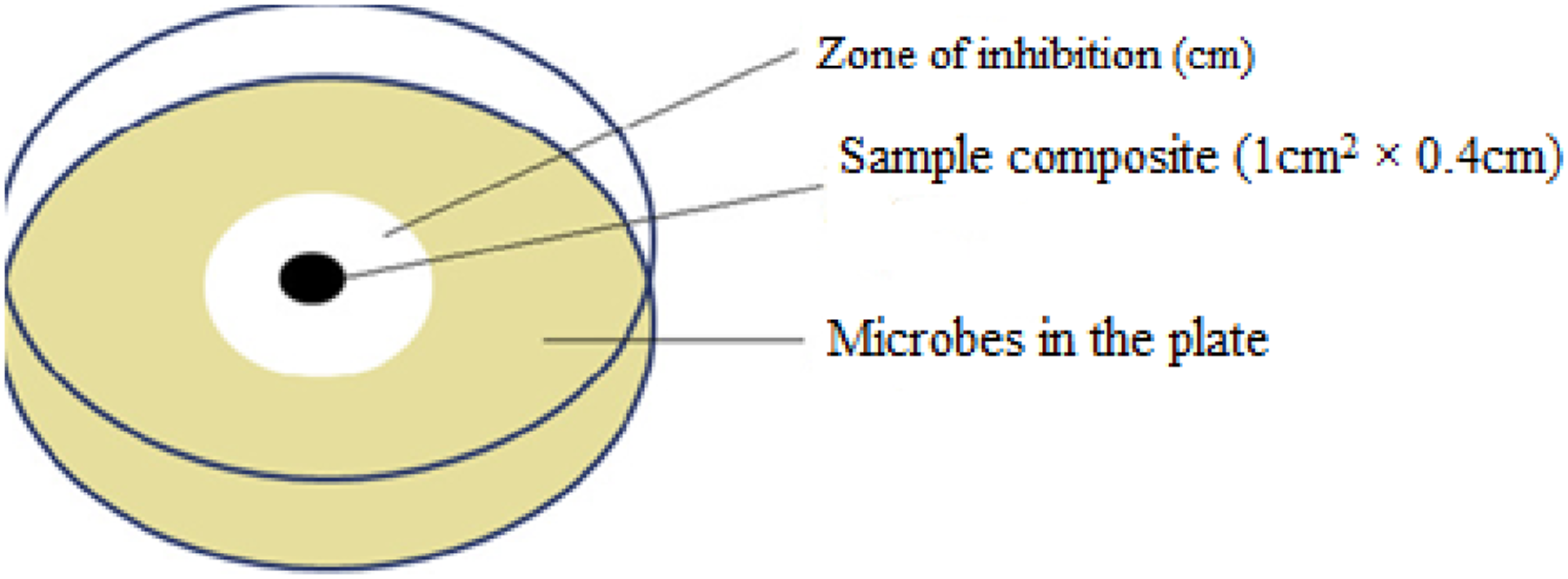
Result and discussion
FTIR analysis
Infrared spectroscopy was conducted to evaluate the interactions between PLA, EFs, and ZnO NPs. Figure 4 depicts the infrared spectra of pure PLA and the various PLA-based nanocomposites produced in this study. In the case of the pure PLA composite, the broad band at 3650 cm−1 is attributed to the O-H stretching vibration of PLA, whereas the peak at 2943 cm−1 is associated with the stretching vibration of the -CH3 group. Additionally, the strong characteristic peak at 1746 cm−1 was assigned to the C = O stretching vibration of the ester groups in the PLA molecules. Notably, the rapid cooling of PLA during processing caused a slight shift in this lower band owing to reduced crystallization, which is consistent with a previous report by Bajwa et al.
32
The peak at 1382 cm−1 was attributed to asymmetric C-H bond vibrations. In the case of the PLA/15 %EF composite, the absorption bands at 3426 and 1382 cm−1 represent the stretching and bending vibrations of the hydroxyl groups, respectively. Furthermore, the peaks around 1088 cm−1 are associated with the C-O-C stretching of the pyranose and glucose ring skeletal vibrations. Importantly, the incorporation of EFs led to a shift in the C = O peak to a lower wavenumber (1732 cm−1) and a decrease in the peak intensity, which can be attributed to the formation of hydrogen bonds between the carbonyl groups of the PLA matrix and the hydroxyl groups of EFs, as illustrated in Figure 4(b). The addition of ZnO resulted in a further shift in the C = O stretching vibration peak to a lower wavenumber, as shown in Figure 4(a). This indicates significant intermolecular interactions between PLA, EFs, and ZnO, as depicted in Figure 4(b). These observations were consistent with those reported by Yu et al.
37
(a) FTIR spectra of pure PLA, PLA/EFs, and PLA/EF/ZnO-based composites; (b) Schematic diagram illustrating the hydrogen bonding between PLA, EFs, and ZnO NPs.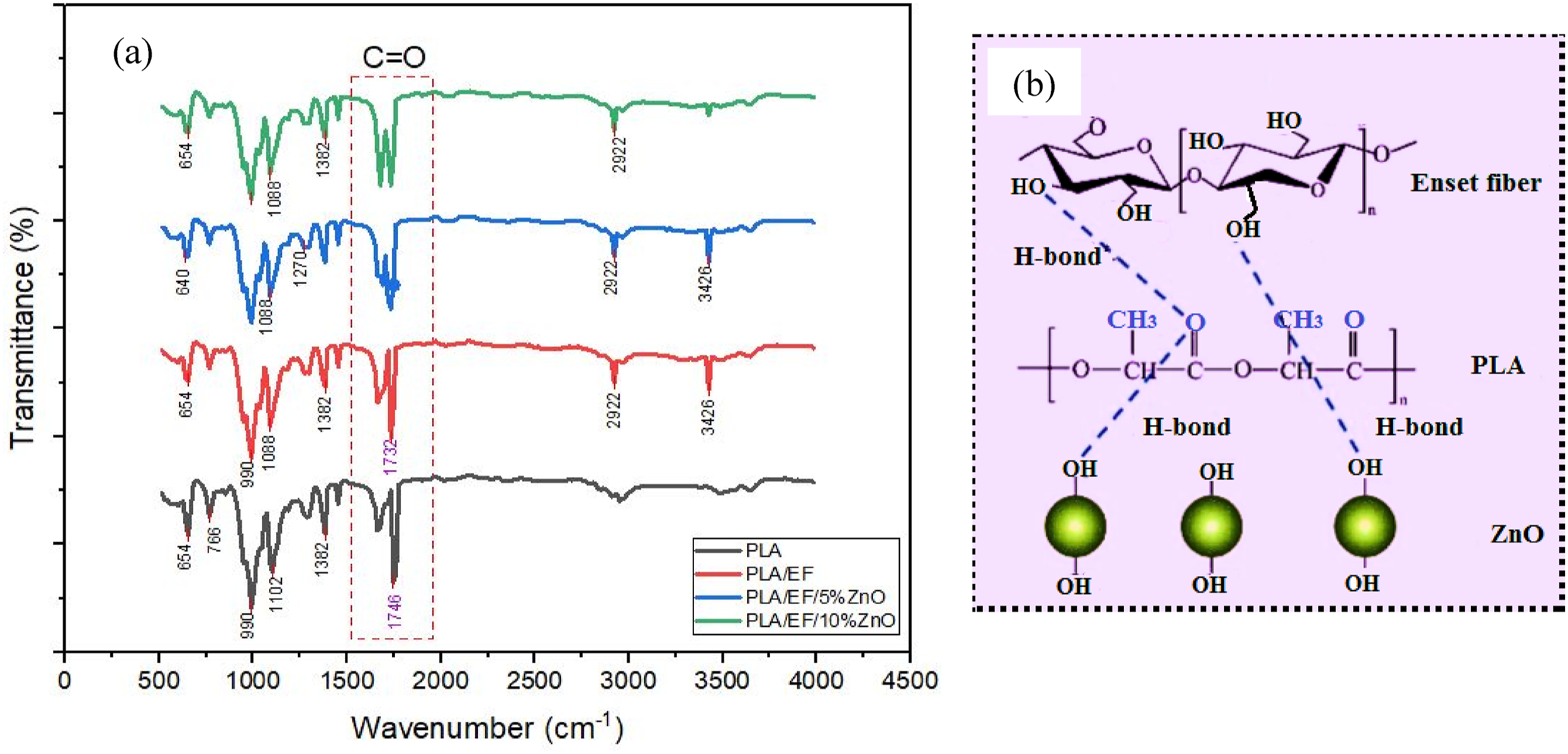
Thermal properties
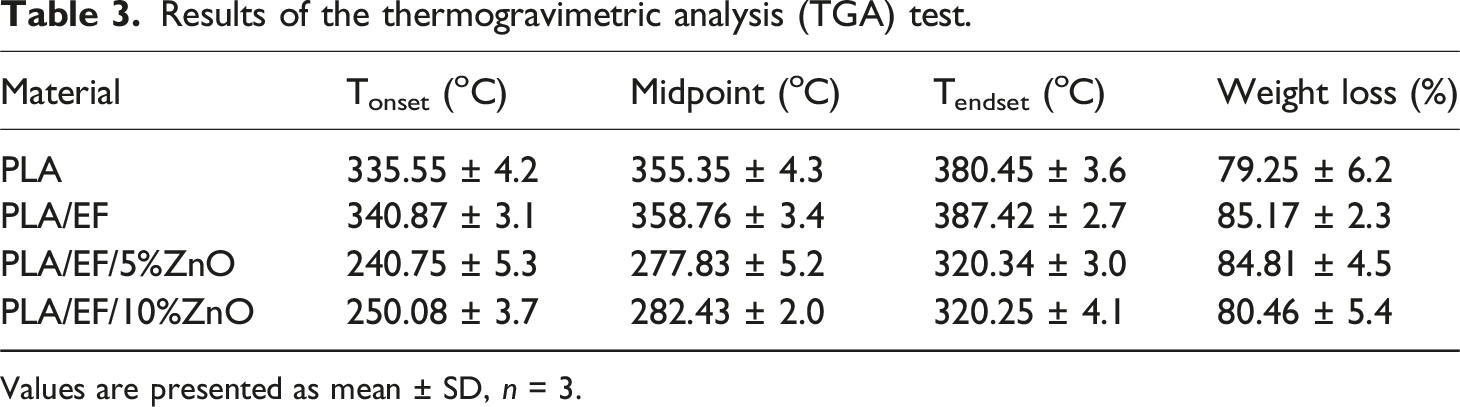
The thermal stability of the nanocomposites was investigated using thermogravimetric analysis (TGA), and the results are shown in Figure 5. All composite samples displayed a two-step thermal degradation pattern. The heating process was commenced at 30°C, with an initial slight weight loss occurring at approximately 100°C, which was attributed to the evaporation of the absorbed water in the composites. The second and major weight loss was observed at 335.55 °C–380.45°C for the pure PLA and 340.87 °C–387.42°C for the PLA/EF composite, and in the range of 240.75 °C–320.34°C for the PLA/EF/ZnO composites. The thermal degradation analysis results for different PLA-based composites are listed in Table 3. The maximum rate of degradation (Tmax) of pure PLA was found to be 380.45°C, resulting in a weight loss of up to 79.25 %. The Tmax value of the PLA/EF binary composite shifted slightly to 387.42°C, indicating no significant improvement in thermal stability after the addition of EFs. However, the Tmax values of the PLA/EF/ZnO ternary composites decreased and shifted to lower temperatures with increasing ZnO NP content. Specifically, the Tmax values of the PLA/EF/5% ZnO and EF/10% ZnO composites were 320.34 and 320.25°C, respectively, with a corresponding weight losses of 84.81 % and 80.46 %. This indicates a significant reduction in the thermal stability of the ZnO-incorporated ternary composites compared that with of the pure PLA and PLA/EF composites. This findings are consistent with the TGA results reported by Yu et al.,
37
who also noted a decrease in thermal stability with the addition of varying concentrations of ZnO NPs to the PLA matrix. The reduced thermal stability of PLA/EF/ZnO ternary composites can be attributed to several factors. The presence of ZnO NPs appeared to induce the degradation of PLA during composite preparation, leading to a substantial decline in the molecular weight of PLA.
38
This degradation is attributed to the catalytic effect of ZnO, which acts as a reactant and accelerates the thermal degradation of PLA.38–40 Additionally, the formation of ZnO aggregates within the PLA matrix can disrupt the crystallization process of PLA, further contributing to a reduction in the thermal stability.
39
Interestingly, certain studies have indicated that the addition of ZnO NPs can increase the crystallinity of PLA composites,
38
which is typically expected to enhance thermal stability. However, the overall effect of ZnO on the thermal stability of PLA composites appeared to be negative because of the aforementioned catalytic degradation process. Graph of thermogravimetry analysis (TGA) at each variation of ZnO. Results of the thermogravimetric analysis (TGA) test. Values are presented as mean ± SD, n = 3.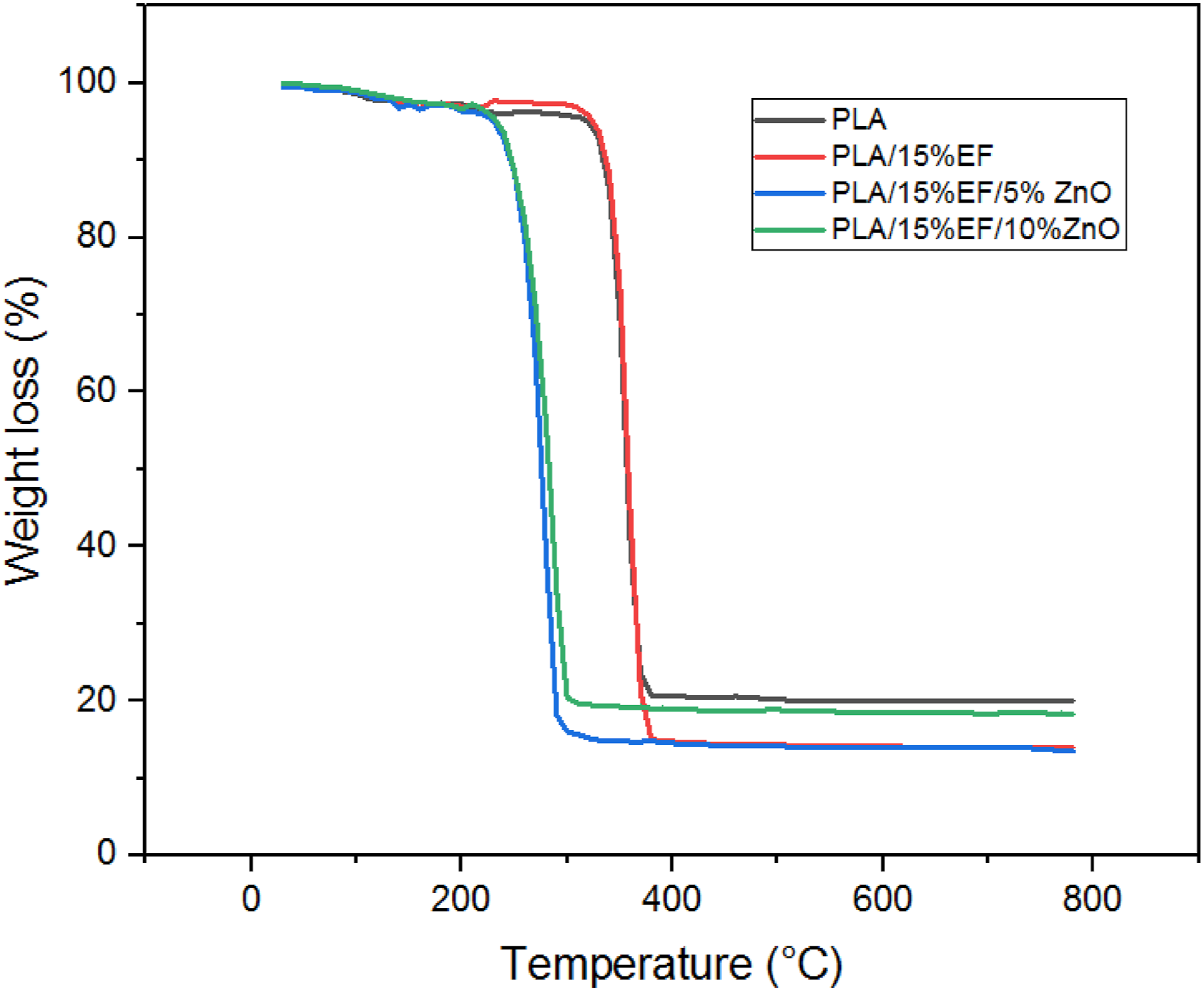
Optimization process with response surface methodology (CCD Quadratic Model)
The central composite design (CCD) runs the matrix and the corresponding multiple responses obtained.
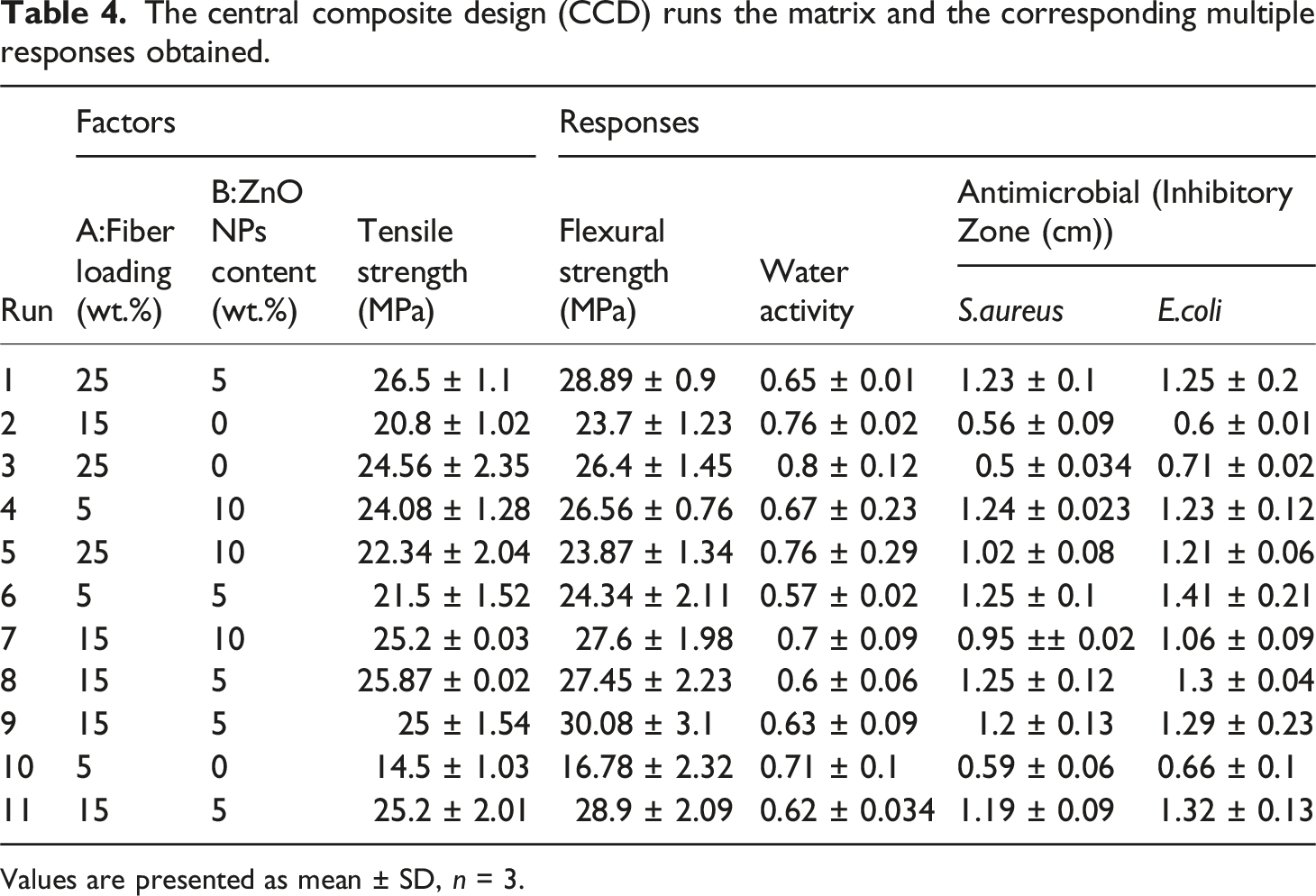
Values are presented as mean ± SD, n = 3.
Analysis of variance (ANOVA) and effect of factors on the multiple responses
ANOVA (CCD quadratic model) result and fit statistics.
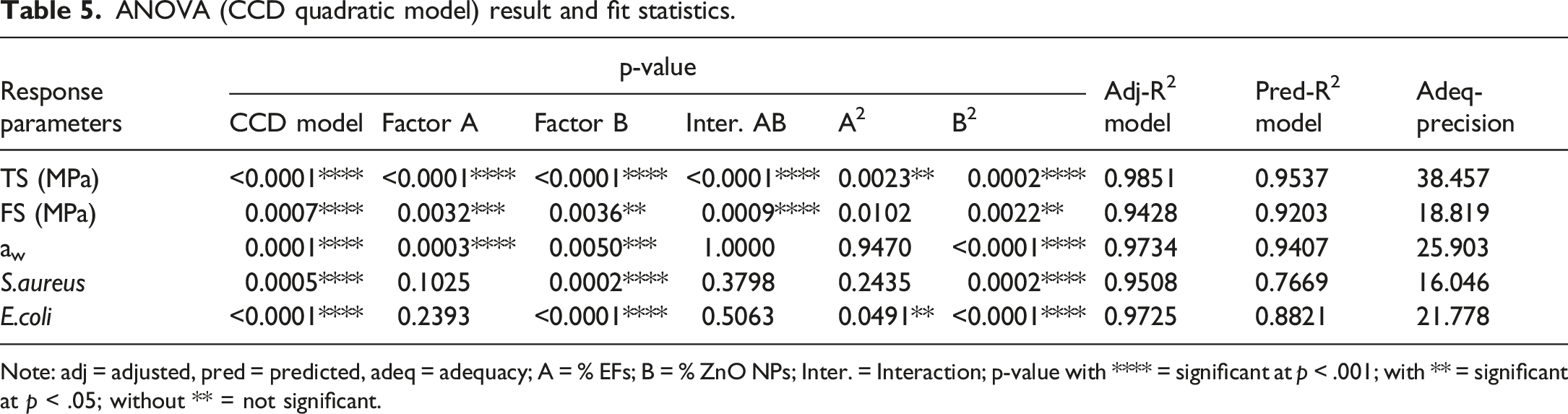
Note: adj = adjusted, pred = predicted, adeq = adequacy; A = % EFs; B = % ZnO NPs; Inter. = Interaction; p-value with **** = significant at p < .001; with ** = significant at p < .05; without ** = not significant.
In all responses, except antimicrobial responses, the main factors (factors A and B) had a significant effect (p < .05). However, in the case of antimicrobial responses, fiber loading did not show significant effect (p = .1025 for S. aureus and p = .2393 for E. coli), and there was no interaction effect between ZnO NPs and fiber loading. Fiber loading in composites, as investigated by Ferede and Atalie, 41 directly affects mechanical properties, such as tensile strength, flexural strength, and water absorption characteristics. The study found that increasing the fiber content enhanced these properties to an optimal level, beyond which a decline was observed. Similarly, Rihayat et al. 42 reported the incorporation of ZnO NPs into polymer matrices, which can significantly influence the mechanical properties of the composites. Additionally, although the interaction effect (Int. AB ) and quadratic terms (A2 and B2) had significant effects on the mechanical properties; however, they did not significantly affect the water and antibacterial activity (p > .05). Notably, the quadratic term (B2) has a significant effect on water and antibacterial activity. Interestingly, while the EFs and ZnO NPs contents have a pronounced effect on the mechanical and water absorption properties, their impact on antimicrobial activity was not directly correlated with the loading amount. This suggests that the the antimicrobial activity of composites is not significantly affected by the amount of EFs; rather, it is more dependent on the intrinsic properties of the nanoparticles and their interaction with microbial cells. 43
Additionally, Table 5 indicates that all the predicted R2 values of the responses are in reasonable agreement with the adjusted R2; that is, the difference was less than 0.2, indicating that the fit statistics and all responses were qualified for the optimization process. However, when measuring the signal-to-noise (S/N) ratio, a ratio greater than four is desirable. The current study yielded ratios of 38.457, 18.819, 25.903, 16.046, and 21.778 for TS, FS, aw, S. aureus, and E. coli, respectively, indicating adequate signal. This confirms that each model of all responses can be used to navigate the design space or qualify for inclusion in the optimization stage.
The ANOVA table provides information on the significance of the main and interaction effects of the multiple responses. However, it does not provide accurate information on the correlation (coded value) between factors and responses, or the factors that have the most significant effect on the responses. Therefore, it was necessary to use regression equations and graphically represent them in the next section for each response.
Main and interaction effects of factors on tensile strength
A regression model equation was developed to predict the expected change in tensile strength at various EFs and ZnO NPs values. After removing the non-significant terms, the resulting quadratic regression model is presented in equation (4). Regression analysis showed that the EFs and ZnO NPs content were positively correlated with the tensile strength of the composites. This positive relationship between the factor and the response indicates that the tensile strength of the composites increases when the value of the independent variables increases. However, the negative coefficients indicate that the tensile strength of the composite decreases when the value of the input variables is increased. It is worth noting that the higher coefficient of determination for EFs loading (2.22) in the regression equation indicates a stronger relationship between the EFs content and tensile strength than the relationship between the ZnO NPs content and tensile strength (1.96). This discrepancy is likely attributed to the reinforcing nature of EFs, which are specifically aligned and alkaline-treated to enhance mechanical properties. In contrast, ZnO NPs, which may interfere with the fiber-matrix interface, potentially reducing the tensile strength. This finding aligns with the studies referenced in Refs.33,44,45 Additionally, the interaction effects (Int. AB) and its quadratic terms (A2, B2) were found to be negatively correlated with tensile strength, further emphasizing the complexity of these interactions in composite performance.
Moreover, the continuity or behavior of the positive relationship between the factors (including interaction) and tensile strength at all factor levels is depicted in Figure 6. Notably, the TS of the 5 % EFs composites was 14.5 MPa, which significantly increased by 43.4 % (20.8 MPa) and 69 % (24.56 MPa) after the addition of 15 and 25wt.% EFs, respectively, as depicted in Figure 6(a). This enhancement can be attributed to the good dispersion of EFs in the PLA matrix and favorable interfacial interactions between PLA and EFs. In addition, the chemical treatment of EFs with alkali solutions improves fiber-matrix adhesion, leading to better stress transfer and mechanical interlocking within the composite.
18
TS further increased significantly (p < .05) with the addition of ZnO, as illustrated in Figure 6(b). This is due to the reinforcement of the net structure of the composite and the formation of chemical bonds between the fibers, ZnO, and matrix (as evidenced by FTIR analysis), which enhances the mechanical properties.46,47 The main and interaction effect of EFs and ZnO NPs on the tensile strength of composites: (a) Effect of EFs loading at various levels of ZnO NPs; (b) Effect of ZnO NPs at various levels of EFs loading; (c) The 3D plot of EFs with respect to ZnO NPs; (d) The 3D plot of ZnO NPs with respect to EFs loading.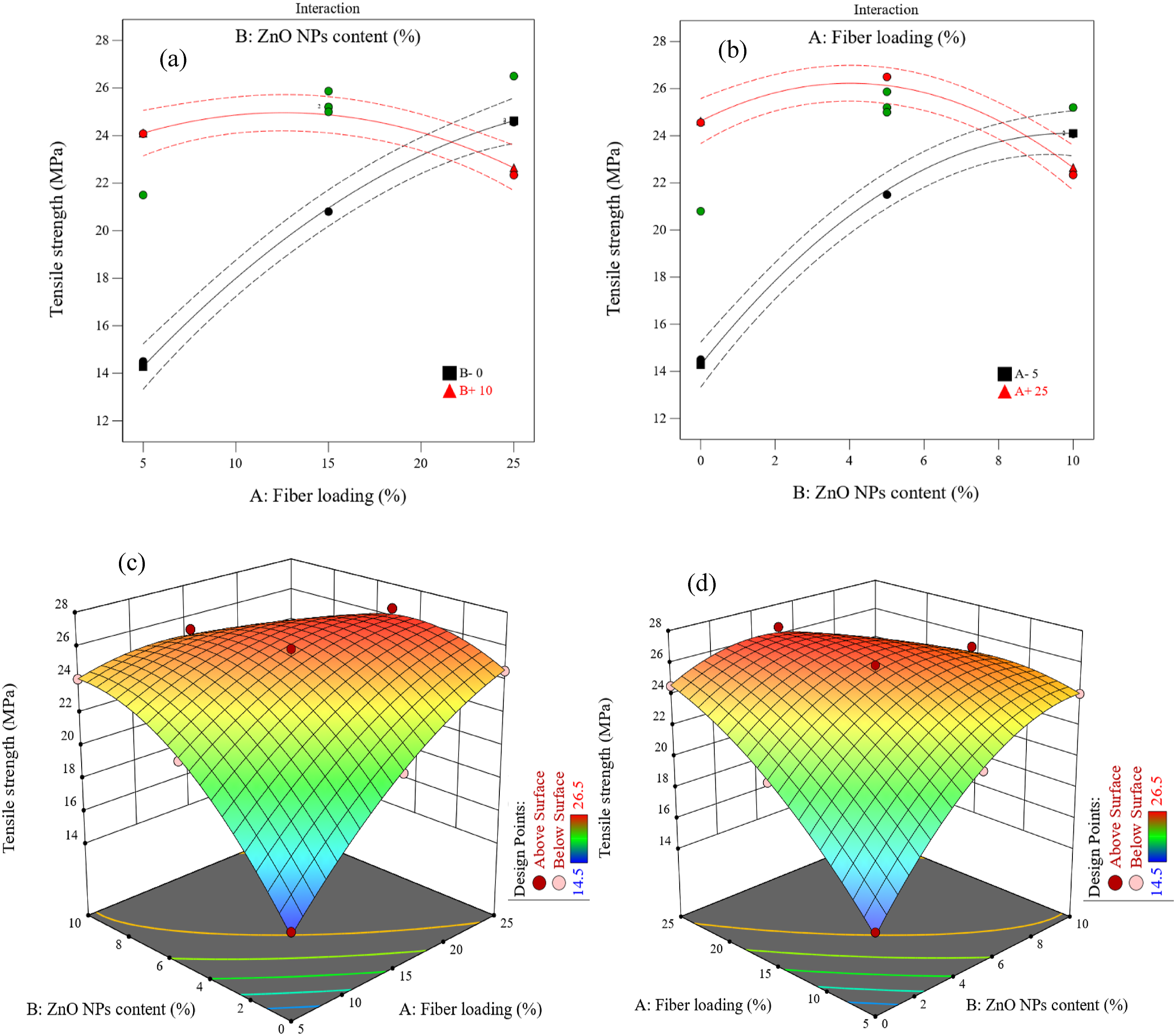
Interestingly, the interaction between the EFs and ZnO NPs has an impact on the tensile strength, as evident from regression equation (4) and Figure 6. This interaction resulted in further improvement in the tensile strength. Specifically, an increase in EFs content from 5 to 25 wt. % led to rise in tensile strength from 14.3 MPa to 24.6 MPa at a low level of ZnO NPs, represented by the solid black line in the graph (Figure 6(a), (c)). This is attributed to the reinforcing effect of the fibers within the composite material. As the fiber content increased, there was a greater distribution of stress across the fibers, which enhanced the overall tensile strength of the composite.33,48 This is consistent with the finding that surface-treated EFs can significantly improve the mechanical properties of composites, as they provide better adhesion between the fiber and matrix, leading to improved load transfer. 48 However, at higher concentrations of ZnO NPs (10wt. %), the tensile strength reduction occurred due to agglomeration of the nanoparticles, which can create stress concentrations and weaken the interface between the fibers and the matrix, as depicted in Figure 6(b), (d). This can lead to a decrease in the effectiveness of stress transfer from the matrix to the fibers, thus reducing the tensile strength. 49 Additionally, excessive ZnO NPs might interfere with the fiber-matrix bonding, further compromising the mechanical properties of the composite.
In summary, the initial increase in tensile strength with higher EFs content is likely due to improved stress distribution and fiber-matrix adhesion. However, at higher ZnO NPs contents, the negative effects of nanoparticle agglomeration and potential interference with fiber-matrix bonding may outweigh the benefits of increased fiber content, leading to reduced tensile strength. Ultimately, a maximum tensile strength (26.5 MPa) was achieved with 25wt.% EFs and 5wt.% ZnO NPs, highlighting the importance of optimizing both fiber and nanoparticle content for enhanced composite performance.
Main and interaction effects of factors on flexural strength
After removing the non-significant terms,a quadratic regression model is presented in equation (5). Regression analysis showed thatboth EFs loading and ZnO NPs content were positively correlated with the flexural strength of the composites. Notably, the effect of EFs loading on flexural strength (1.91) was higher than that of ZnO NPs (1.86) as we increased the EFs loading or ZnO NPs by one unit. This difference can be attributed to the inherent mechanical properties of EFs and their interaction with the matrix material. EFs have a high strength-to-weight ratio and can significantly enhance the mechanical properties of composites, including their flexural strength, when properly integrated into a matrix.18,50,51 In contrast, while ZnO NPs can improve certain mechanical properties, their impact on flexural strength is not as substantial as that of natural fibers. This could be because the nanoparticles may not be as effective in reinforcing the matrix against the bending forces. Additionally, the interaction effect and its quadratic terms exhibited a negative correlation with flexural strength because the presence of ZnO NPs can sometimes reduce the number of active sites for bond formation between the matrix and fibers, potentially weakening fiber-dominated properties, such as tensile and flexural strength.
45
Interestingly, the effects of the EFs and ZnO NPs were found to be more significant in terms of tensile strength than flexural strength. It is generally understood that the tensile strength can be substantially enhanced by the addition of rigid nanoparticles and aligned fibers, which facilitates improved stress transfer and load bearing capabilities. However, flexural strength improvements may be reduced owing to the complex interplay of material components under bending stresses.44,52,53 Therefore, further research specifically examining the mechanical properties of such composites is required to provide a more detailed understanding of their dynamics.
The presence of EFs or nano-ZnO in the PLA matrix increased the flexural strength to a certain level, as shown in Figure 7. Specifically, the FS of the 5 % EFs composites was 16.78 MPa, which significantly increased by 41.2 % (23.7 MPa) and 57 % (26.4 MPa) after the addition of 15 and 25wt.%EFs, respectively, as shown in Figure 7(a), (b). The FS further increased significantly (p < .05) with the addition of up to 5 wt. % of ZnO NPs, but it decreased at higher concentrations (10 wt.%), as illustrated in Figure 7(a). This behavior can be attributed to the reinforcing effect of the nanoparticles at optimal concentrations. As depicted in Figure 7, at lower loadings (black line in the graph), the fibers and nanoparticles were well dispersed within the matrix, leading to improved stress transfer and mechanical interlocking, which enhanced the flexural strength of the composites.54–56 However, at higher loadings (red line in the graph or 25wt. % of EFs and 10wt.% of ZnO NPs), the agglomeration of fibers and nanoparticles can occur, resulting in stress concentrations and a reduction in the effective contact area between the matrix and the reinforcements. This agglomeration disrupts the uniform stress distribution and weakens the interfacial bonding, leading to a decrease in flexural strength.
55
Additionally, excessive fiber content can lead to poor wetting and an insufficient matrix to cover the fibers, further contributing to the decline in mechanical properties.
56
The main and interaction effect of EFs and ZnO NPs on the flexural strength of composites: (a) Effect of EF loading at various levels of ZnO NPs; (b) The 3D plot of EF with respect to ZnO NPs.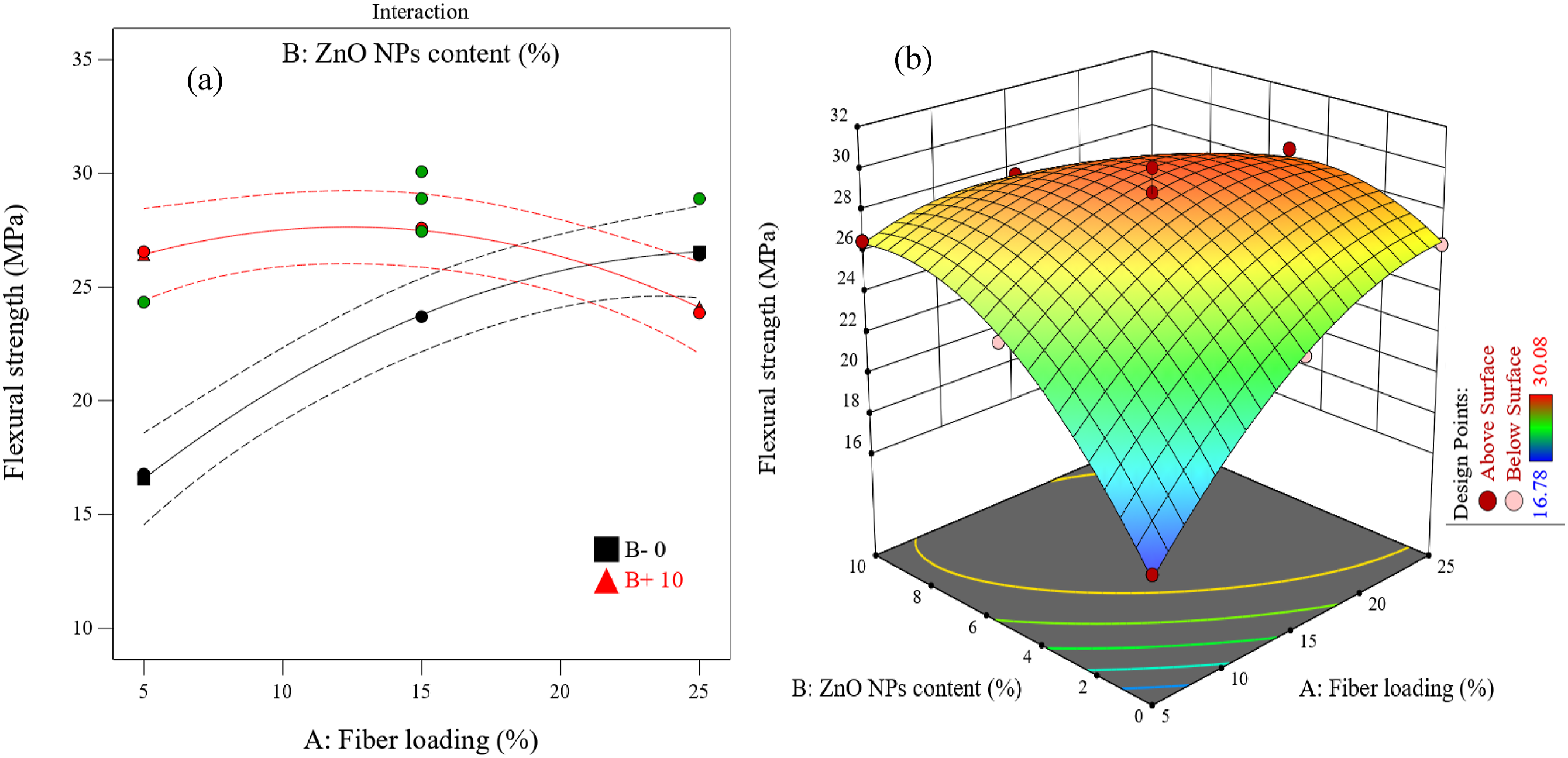
Generally, the initial increase in flexural strength with the addition of EFs and ZnO NPs was due to the improved stress transfer and mechanical interlocking at optimal concentrations. The subsequent decrease at higher loadings is a result of fiber and nanoparticle agglomeration, which disrupts the stress distribution and weakens interfacial bonding. These findings highlight the importance of optimizing the loading levels of the EFs and ZnO NPs to maximize the flexural strength of the composites while minimizing the adverse effects of agglomeration and poor interfacial bonding. This is in agreement with Refs.54–56
Main and interaction effects of factors on water activity (aw)
The measurement of water activity (aw) aims toassess the ease with which microorganisms, such as bacteria, yeast, or mold, can grow on this nanocomposite. The lower the aw value, the more difficult it is for the microbes to grow. The interaction and 3D plot of aw are presented in Figure 8, which shows a significant reduction (p < .05) in water activity values by 19.7 %, decreasing from 0.71 to 0.57 with the addition of 5 %ZnO NPs, at all levels of EFs (Figure 8(a)). This is because of the ability of nanoparticles to enhance the barrier properties of the material. Specifically, the presence of ZnO NPs in the PLA matrix can create a more tortuous path for water molecules, thereby reducing water vapor permeability. This effect is attributed to the improved dispersion of the nanofillers within the PLA matrix, which can obstruct the diffusion pathways of water molecules and enhance the resistance of the material to water absorption.57,58 Main and interaction effects of EFs and ZnO NPs on water activity of ZnO-functionalized EF-reinforced PLA composites.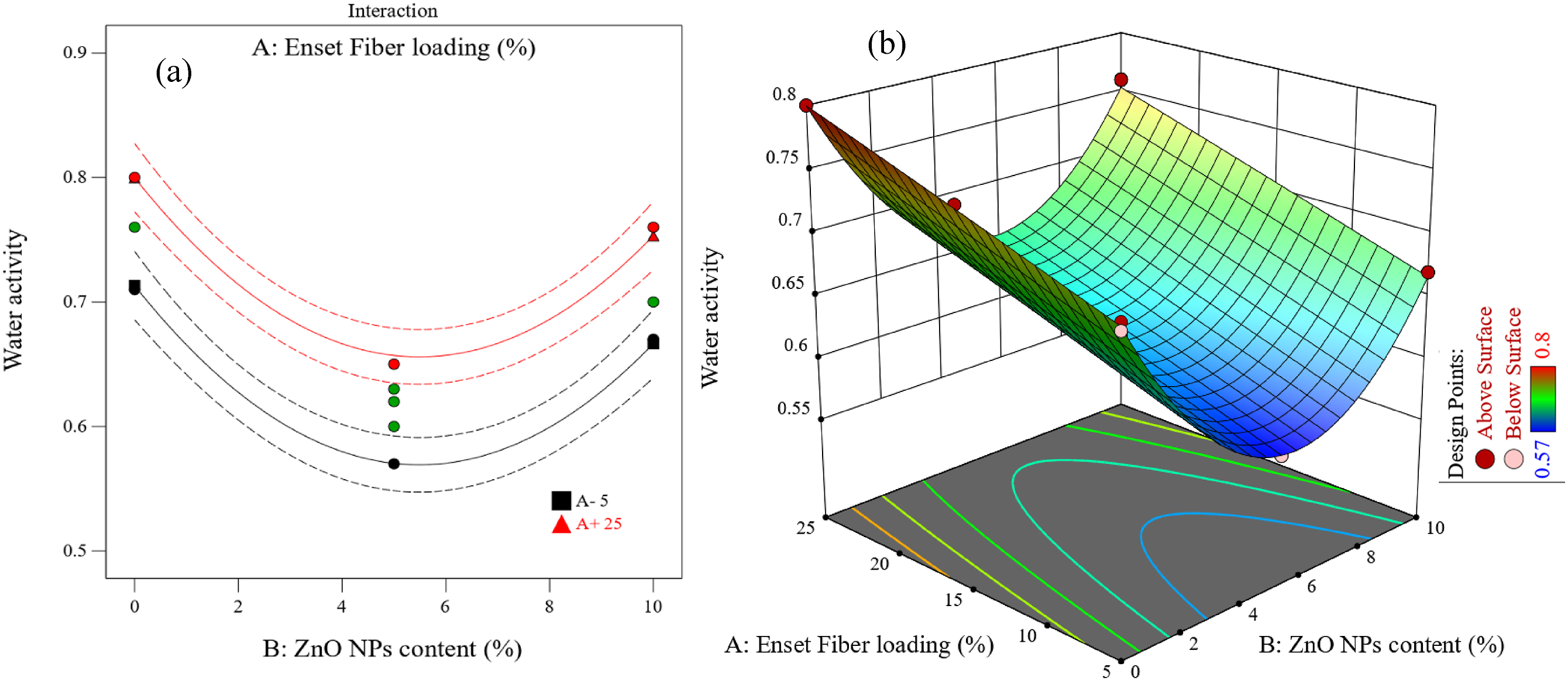
These findings suggest that the addition of ZnO NPs not only improves the mechanical properties of the nanocomposite, but also significantly contributes to its effectiveness in inhibiting microbial growth by lowering water activity. However, the beneficial effects of ZnO NPs were optimized at certain concentrations and exceeded these levels (5wt. %) can lead to agglomeration, resulting in a subsequent decrease in barrier effectiveness, as indicated in Figure 8(a). 58 Conversely, the addition of EFs to the PLA and PLA + ZnO NPs composites significantly (p < .05) increased the water activity by 12.6 %, rising from 0.71 to 0.8, which can be attributed to the hydrophilic nature of the natural fibers, as shown in Figure 8(b). EFs, like other natural fibers, have an inherent tendency to absorb moisture because of the presence of hydroxyl groups in their cellulose structure, as observed in the FTIR analysis.33,59 When these fibers are incorporated into the PLA matrix, they attract and retain water molecules, leading to an increased water activity in the composites. This effect is further exacerbated by the fact that natural fibers can create microvoids at the interface with the PLA matrix, which can act as sites for water ingress, thereby compromising the resistance of the composite to moisture. 33 This result is in agreement with those of Luzi et al. 58 and Jamnongkan et al. 57 As a result, there was no significant interaction effect between these factors on the water activity values of the composites. It is important to note that higher water activity values are generally unfavorable for food preservation because they promote microbial growth. 37
Main and interaction effects of factors on the antimicrobial activity
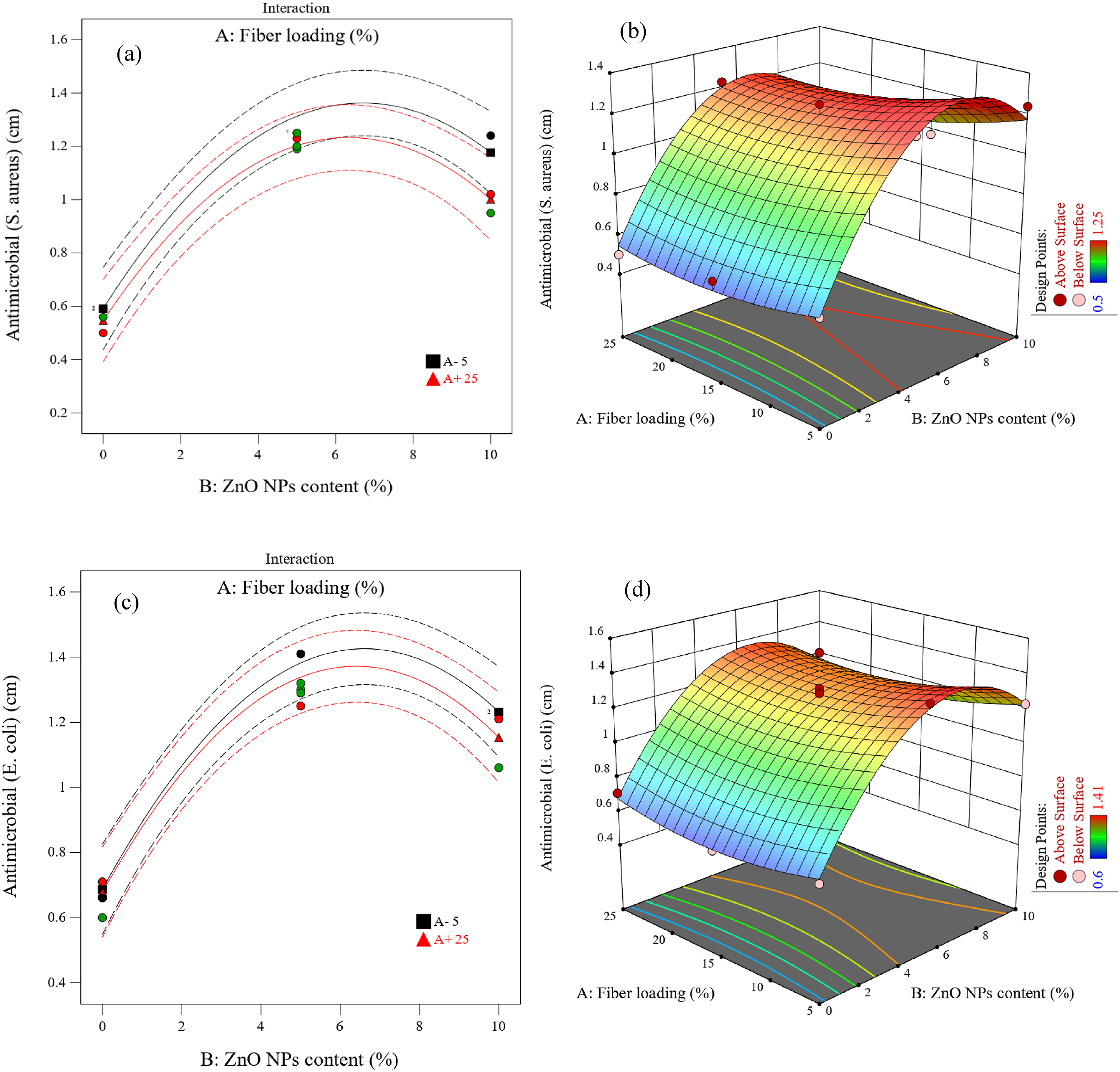
Evaluation of the antibacterial activity of food packaging materials is of paramount importance for ensuring food safety and extending shelf life while maintaining the quality of the food product. In this study, the antibacterial activity of various PLA-based composite samples was assessed against two food-borne pathogenic bacteria, E. coli, which is Gram-negative, and S.aureus, which is Gram-positive. The results of this evaluation, along with the real images, are presented in Figures 9 and 10. As anticipated, the EF/PLA binary composite samples (0 % ZnO) did not show any antibacterial activity against either E. coli or S. aureus (p > .05), as shown in Figure 9. This lack of antibacterial effectiveness highlights the necessity of incorporating additional antimicrobial agents, such as ZnO NPs, to enhance the protective properties of composite materials. Real images showing the antibacterial activity of the standard antibiotic disc (p) and PLA-based nanocomposite samples with different EFs contents corresponding to each run (numerical number in the figure) against E. coli and S. aureus. Antibacterial activity of PLA/EF/ZnO composites against S. aureus (a, b) and E. coli (c, d).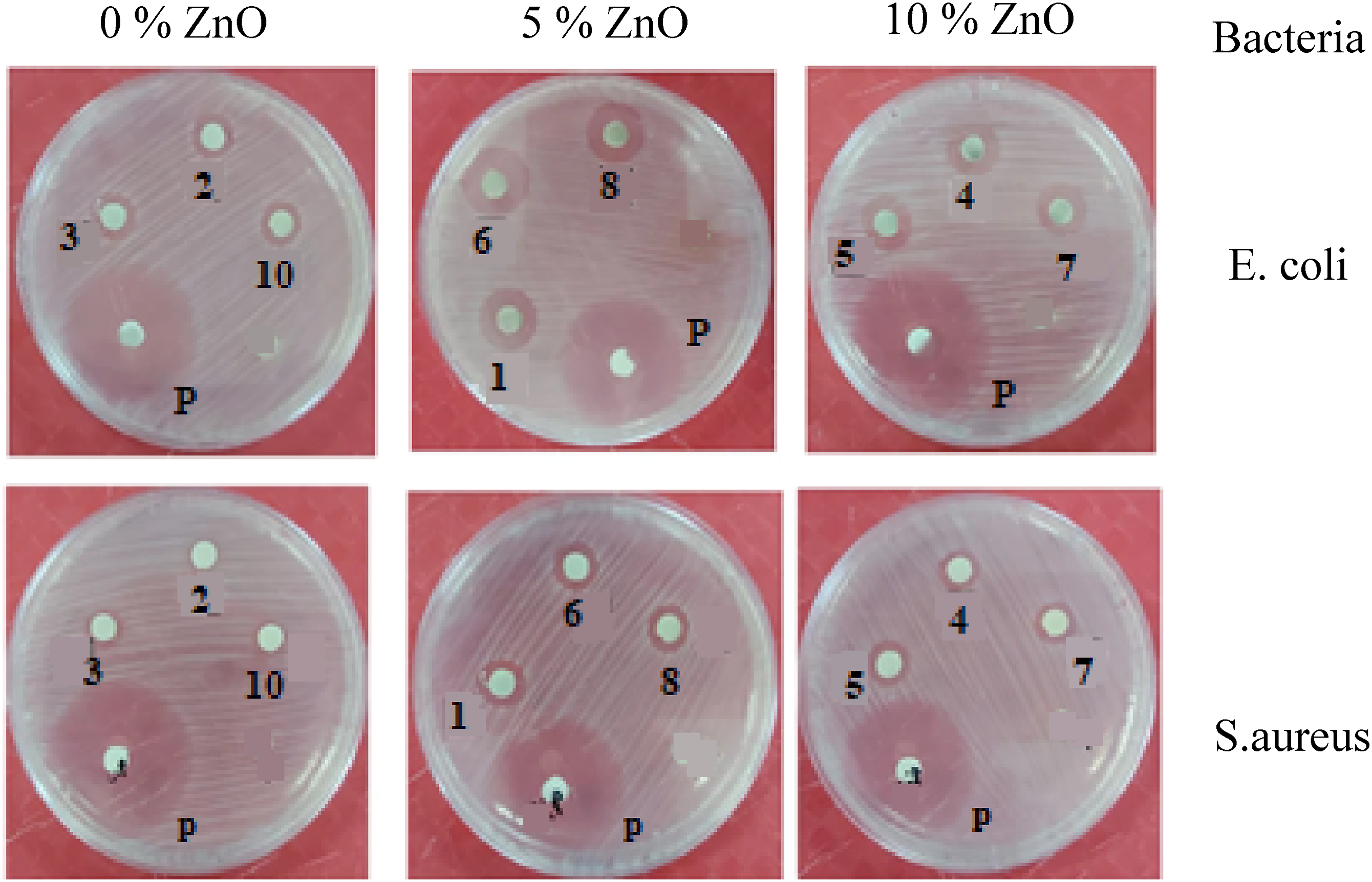
Therefore, the PLA/EF/ZnO ternary composite samples exhibited antibacterial activity owing to the antibacterial ability of ZnO NPs. The unique characteristics of ZnO NPs, which are not found in natural fibers, such as Enset, contribute to their effectiveness. Specifically, ZnO NPs have a high surface-area-to-volume ratio, which increases their interaction with microbial cells.60,61 The mechanism of action involves physical contact between ZnO NPs and the bacterial cell wall, generation of reactive oxygen species (ROS), and the release of Zn2+ ions, which can disrupt microbial cell membranes and metabolic processes. 62
As the ZnO NPs content in the PLA/EF/ZnO composites increased, from 0 to 5 wt. % the antibacterial activity also improved. The growth inhibition rate of the PLA/5 %EF/5 % ZnO composite sample against S. aureus and E. coli bacteria reached the inhibition zones (1.25 cm) and (1.41 cm), respectively, demonstrating excellent antibacterial capability (p < .0001). However, the growth inhibition rate of the PLA/5 %EF/10 %ZnO composite samples reduced their effective antibacterial action against S. aureus (1.24 cm) and E. coli (1.23 cm). This was attributed to the aggregation of ZnO NPs, leading to a decrease in the surface area available for interactions with microbial cells. 62 This observation aligns with the findings reported by Chong et al. 60 Furthermore, the antibacterial activity of the PLA/25 %EF/10 %ZnO composites further reduced their effective antibacterial action against S. aureus (1.02 cm) and E. coli (1.21 cm), because the presence of high EFs content in PLA/25 %EF/10 %ZnO composite samples could potentially interfere with the release of Zn2+ ions or reactive oxygen species (ROS) from the ZnO NPs, which are crucial for their antibacterial properties. 62 The fibers may act as a physical barrier, limiting the contact between the NPs and the bacteria, or they could adsorb Zn2+ ions, reducing their availability to exert antimicrobial effects.
Notably, the antibacterial activity of the PLA/5 %EF/5 %ZnO composite against E. coli (1.41 cm) was higher than that against S. aureus (1.25 cm), as depicted in Figure 10. This finding is consistent with those reported by Yu et al. 37 However, the sensitivity of different gram-positive or gram-negative bacteria to the antibacterial mechanisms of ZnO NPs in PLA composites remains a debated topic. 63 Some studies have indicated that PLA-ZnO nanocomposites demonstrate lower antibacterial efficiency against gram-positive bacteria, given that gram-negative bacteria possess a thinner peptidoglycan layer in their cell wall, making them more susceptible. Conversely, gram-positive bacteria, like S.aureus, are prone to aggregate, thereby protecting internal cells from direct exposure to ZnO NPs.28,37,63–65 Most studies, however, describe the opposite trend, with PLA-ZnO nanocomposites showing reduced antibacterial efficacy against gram-negative bacteria due to their outer membrane contains lipopolysaccharides, which enhance their barrier properties.64,66–69 Wang et al. 70 also highlighted that the cell walls of gram-positive bacteria, composed of a thin peptidoglycan and teichoic acid layer, have numerous pores that allow foreign molecules to penetrate, leading to membrane damage and cell death. In addition, gram-positive bacteria typically have a higher negative charge on their cell wall surface than gram-negative bacteria, which can attract nanoparticles. However, the inconsistency in antibacterial mechanisms likely stems from the coexistence of different ZnO-based mechanisms, which may or may not be simultaneously active in a specific testing environment or method. Moreover, the antibacterial activity of PLA-ZnO composites against E. coli and other gram-negative bacteria can be influenced by the chemical structure of PLA because the increased electron density of PLA ester groups in PLA may cause electrostatic repulsion between the composites and bacteria. 69
Optimization of multiple responses for performant and functional packaging
Constraints for the optimization process.
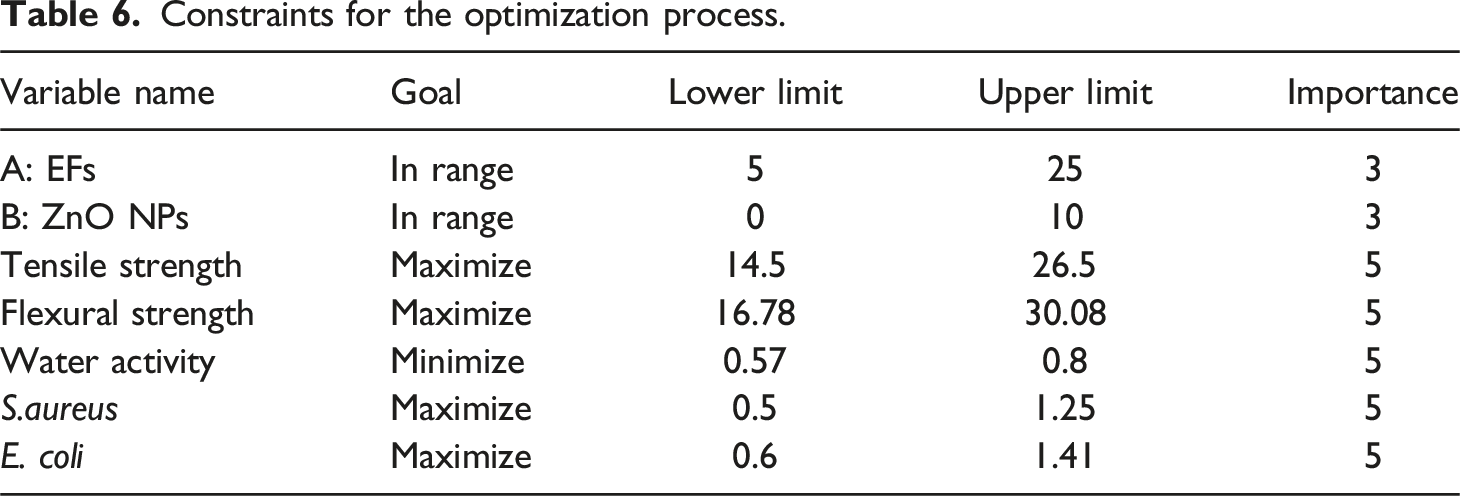
The solution of the optimized formula given by DX-13.

Confirmation of the optimum formula
Actual and theoretical values of responses at the optimal point.
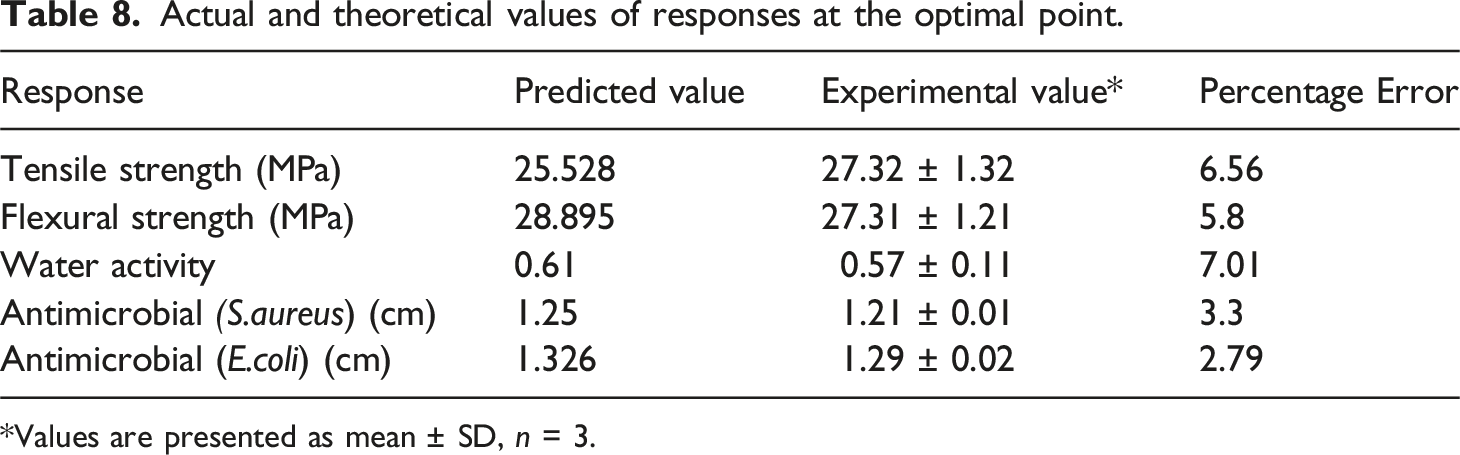
*Values are presented as mean ± SD, n = 3.
Conclusion
In this study, we successfully developed functional and high-performance nanocomposite based on polylactic acid (PLA) reinforced with Enset fiber (EFs) and ZnO nanoparticles (ZnO NPs). The resulting material demonstrated significant improvements in its multifunctional properties, making it a promising candidate for advanced food-packaging applications. To optimize the formulation, we employed a central composite design that allowed us to evaluate multiple responses related to key food packaging characteristics. Notably, FTIR analysis confirmed the strong compatibility and favorable intermolecular interactions among PLA, EFs, and ZnO NPs, which were crucial for ensuring the stability and performance of the nanocomposite. The incorporation of ZnO NPs proved particularly effective, leading to substantial enhancements in both the mechanical properties (tensile and flexural strength) and the barrier properties against moisture and microbial growth. These enhancements are vital, as they contribute to extending shelf life and ensuring food safety. Although EFs enhanced the mechanical properties, they did not significantly improve the barrier properties, suggesting that ZnO NPs primarily contributed to this aspect. Additionally, the combination of EFs and ZnO NPs did not exhibit any interaction effects on the barrier properties, indicating their independent benefits within the composite. However, it is important to acknowledge that the thermal stability of the PLA/EF/ZnO nanocomposites was lower than that of the PLA/EF composites, suggesting a trade-off between the mechanical performance and thermal resilience, which should be addressed in future research. Moreover, the antibacterial activity of the PLA/EFs/ZnO nanocomposites showed promising results, with significant inhibition against E. coli and S. aureus, achieving growth inhibition rates of up to 1.41 cm and 1.25 cm, respectively, at a 5 % ZnO NP concentration. This highlights the potential of nanocomposites to serve not only as packaging materials but also as active barriers to microbial contamination. Based on our optimization results, we identified the optimal composition for multifunctional packaging as PLA/13.6 % EFs/6.3 % ZnO nanocomposites. This formulation exhibited a tensile strength of 25.528 MPa, flexural strength of 28.895 MPa, antibacterial inhibition against S. aureus of 1.25 cm and E. coli of 1.326 cm, along with a water activity value of 0.61. Therefore, the optimized PLA/13.6 % EFs/6.3 % ZnO nanocomposite holds significant promise as a durable and active food-packaging material. Its multifunctional properties, including enhanced mechanical strength, moisture resistance, and antibacterial activity, make it a valuable alternative for sustainable and effective food packaging solutions. Future studies should focus on improving the thermal stability and exploring the long-term performance of these nanocomposites under real-world conditions.
Supplemental Material
Supplemental Material - Achieving performance and functionality in PLA-based packaging: Insights form hybrid composites with False banana (Enset) fiber and ZnO nanoparticles
Supplemental Material for Achieving performance and functionality in PLA-based packaging: Insights form hybrid composites with False banana (Enset) fiber and ZnO nanoparticles by Bekinew Kitaw Dejene, and Adane Dagnaw Gudayu in Journal of Thermoplastic Composite Materials
Footnotes
Acknowledgements
The authors would like to acknowledge the Ethiopian Institute of Textile and Fashion Technology, Bahir Dar University, Bahir Dar, Ethiopia, and Hawassa University Institute of Technology, Hawassa University, Hawassa, Ethiopia for the support of this project.
Author contributions
B.K.D. conceptualization, methodology, formal analysis, investigation, writing original draft; and A. D.G. validation, writing review & editing, supervision.
Declaration of conflicting interests
The author(s) declared no potential conflicts of interest with respect to the research, authorship, and/or publication of this article.
Funding
The author(s) received no financial support for the research, authorship, and/or publication of this article.

Data availability statement
Data will be made available on request.
Supplemental Material
Supplemental material for this article is available online.
References
Supplementary Material
Please find the following supplemental material available below.
For Open Access articles published under a Creative Commons License, all supplemental material carries the same license as the article it is associated with.
For non-Open Access articles published, all supplemental material carries a non-exclusive license, and permission requests for re-use of supplemental material or any part of supplemental material shall be sent directly to the copyright owner as specified in the copyright notice associated with the article.
