



Abstract
Bio-sourced plastics are most widely essence among all potential materials to replace fossil based plastics which have many unfavorable impacts to the environment like global warming, land pollution, water pollution and global warming etc. Fossil based polymers that is polypropylene are mainly non biodegradable in nature and that tends to cause pollution on the earth surface and causes different harmful diseases if we do not provide proper disposal to waste polymers. To keep eye on that, this review paper focused on the replacement fossil based polymer with introducing biopolymer Polylatic Acid (PLA) polymer matrix composite with the incorporation of different leaf fiber. The intention of the current review is to represent the detailed idea for the development of PLA polymer matrix composite with the incorporation of different leaf fiber and with the proper selection compatibilizer to enhance the mechanical, degradation and other properties. Among these, leaves, once relegated to the realms of waste, have risen as potent contributors to the realm of fiber composites. The spotlight of exploration falls on green composites reinforced with leaf fibers, showcasing mechanical properties and modulus that surpass other classes of polymer composites. This revelation not only reshapes our understanding of plant-based fibers but also propels them into the forefront of innovation across industries. The modified composite can be used as various packaging materials in different areas like in textile industry, medicine and drug packaging, food industry for food packaging etc. This overview will support the researchers to engage in the development of degradation capability with enhancing mechanical properties of bio-sourced materials as composite materials. In essence, this review not only describes the essence of leaf fiber based composites but also acts as a main role for a greener, more sustainable future. It deliberates the necessity of leaves, transforming them from waste into a usable product thereby producing more strength in composite materials.
Introduction
PLA (polylactic Acid)
In 1932 Dr Wallace Carothers discovered polylactic acid or polylactide. Polylactic acid is a vital polymer for packaging application since it comes from entirely renewable resources including sugarcane, corn, maize, and potatoes.
1
Polylactic acid (PLA) is an bio aliphatic polyester material made of lactic acid monomers such as 2-hydroxy propionic acid produced from green sources viz.
2
starch and sugar.
3
The monomer is lactic acid which isprepared by the fermentation process. Polylactic acid is an aliphatic thermoplastic polymer that is biodegradable and has a high modulus and strength. Compostable biopolymers like polylactic acid help to mitigate environmental issues associated with petroleum-based, non-renewable plastics.
4
Its properties are similar to those of polyethylene (PE), polypropylene (PP) and polystyrene (PS) etc.
5
The same fabrication machinery used to make plastic based on petrochemicals is also used to make bioplastic based on PLA. This fabrication process is reasonably inexpensive. Polylactide produced the second-highest amount of bioplastics out of all the bioplastics. Chemicals such as dioxane, tetrahydron, heated benzene, and chlorinated solvents can all dissolve PLA.
5
The synthesis process of PLA is represented in Figure 1. Schematic diagram showing synthesis of polylactic acid (PLA).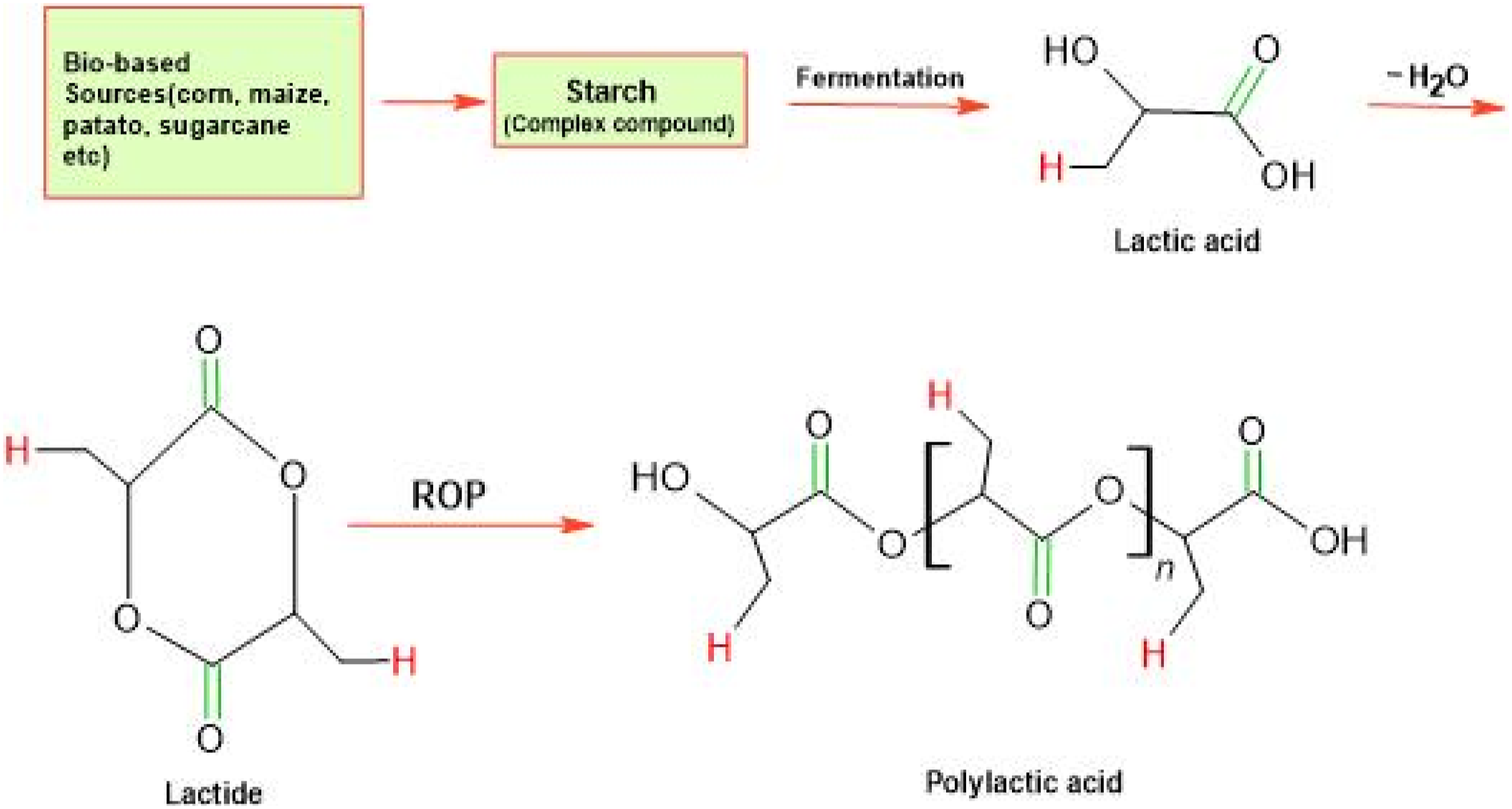
Development of unique materials from biocompatible source is very much important for the next generation industries due to their excellent properties, environmental value, sustainability etc. Because various petro based materials and chemicals are used in industry causes various environmental problems. Hence replacement required. PLA mostly obtained by the ring opening polymerisation from lactide. The hydrophobic nature of PLA can be attributed to its CH3 side chain. Synthetic PLA and bio PLA are the two primary varieties of PLA.
Synthetic polylactic acid
Mostly PLA is synthesized through a chemical process known as polymerization. The raw materials for synthetic PLA are typically derived from starch of plants, which are then chemically processed into lactic acid. The lactic acid is then polymerized to form PLA.
it is more environmentally compatible due to its biodegradability and renewable sourcing.
Bio polylactic acid
Bio PLA is produced using lactic acid obtained through fermentation processes involving bacteria. In this case, microorganisms ferment sugars to produce lactic acid, then purified and polymerized to form PLA.
Bio PLA has similar properties with synthetic PLA.Both synthetic and bio PLA are alternative choice to petroleum-based plastics due to their 100% renewable sourcing and biodegradability.
Leaf Fiber
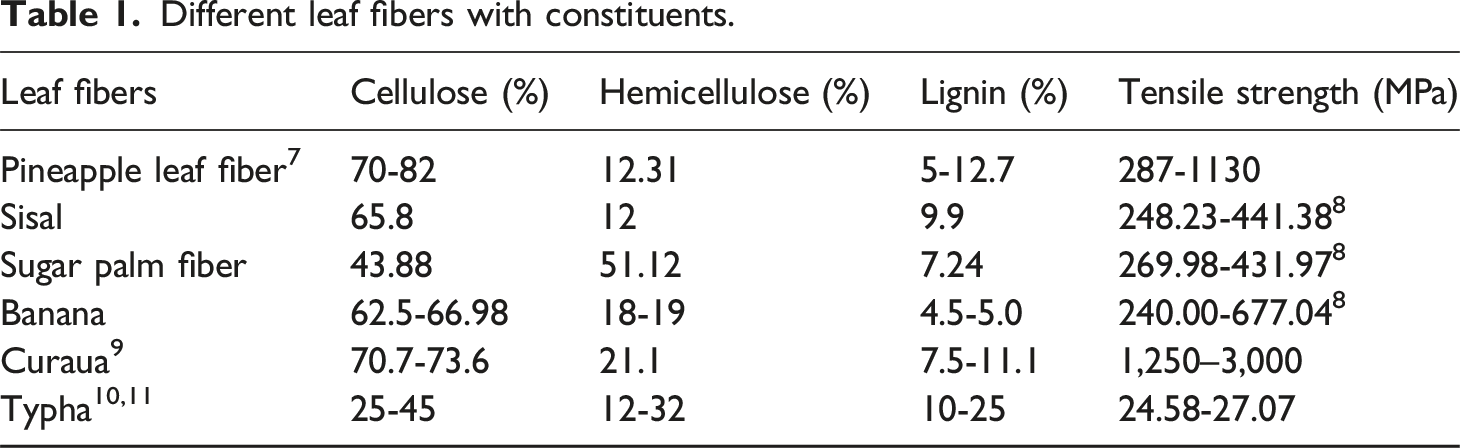
The growing environmental problems, waste disposal problems, and the depletion of non-renewable resources can be reduced by use of green materials which play vital role against environmental challenges. According to these challenges natural in recent times, leaf fibers have been utilized as filler or reinforcement material because of its superior improved characteristics, 100% biodegradability, low density, easy separation, affordability, and availability compared to synthetic fibers. A collection of long, multicelled lignocellulosic fibers that include cellulose, hemicellulose, and lignin are known as natural leaf fibers. It has better mechanical qualities because of its high cellulose content. 6
Different leaf fibers with constituents.

PALF Preparation process with chemical treatment.
Some studies have used leaf fiber to produce sustainable green composites,1,4,13–15 due to its high content in cellulosic percentage which gives it better strength. Generally mechanical scrapping process is used for fiber extraction from the leaf.
Generally, leaf fibers are hydrophilic becauseofcellulose content and Cellulose has hydroxyl (-OH) groups, which are polar in nature and can form hydrogen bonds with water molecules. This polar nature makes itto hold water. PALF used as a reinforcement material because it content (70%–80%) cellulose, (5%–12%) lignin and ash 1.1% which can be satisfy the mechanical properties. According to the results The content of PALF (pineapple leaf fiber) determined the tensile modulus of the composites. 5
PLA with leaf fiber composite advantages and disadvantages
Advantages
Leaf fiber and PLA both are 100% renewable and biodegradable. Fibers from waste in the area of polymer composites reinforced with leaf fiber, fruits fiber and vegetable fibers, which is extracted from agricultural waste. 16 Leaf fibers have rough surface which, due to the fiber’s strong adherence to the PLA matrix, is appropriate for PLA matrix reinforcement. The superb interlocking tensile characteristics were eventually enhanced by adding more filler. Both substances are completely biodegradable and environmentally benign, serving as a substitute for polymers made of petroleum. The highest mechanical properties such as 2.05 MPa in tensile strength, 5.9 MPa in flexural strength, and 4.29 kJ·m−2 in impact strength respectively wer found possibly in the combination of agar fiber and lotus leaf fiber incorporated PLA matrix. With an equilibrium moisture absorption rate of 32.32%, the composite also exhibited a low moisture absorption profile. 17
Disadvantages
Usually Leaf fibers are hydrophilic while PLA is hydrophobic hence they are not miscible, in this case coupling agent plays a vital role which coupling the both materials. Elongation at break of the non-coupling agent is 111% which has 40% PALF. When introduce coupling agent only a 57% increase in elongation at break was generated by the composite. 5 The poor adhesion between PLA matrix and fiber of the impact samples fracture surface has been observed through SEM micrographs due to the absence of compatibilizer. 18 Lesser the fiber content ultimately properties will varies therefore increasing the composite’s reinforcement with more fibres has consistently raised its tensile modulus. 3 The tensile characteristics appeared to be lower than those of the untreated fiber in the presence of maleic anhydride polyethylene (MAPE) which led to the greatest impact on the flexural and impact properties. 7
Literature review
Robert Masirek et al. 1 developed the composite of hemp fiber with PLA by using batch mixing and PLA-PEG/Hemp prepared by plasticized with polyethylene glycol. Various characterization techniques such as Differential scanning calorimetry, wide-angle X-ray scattering, thermo gravimetric analysis; polarized optical microscopy, scanning electron microscopy, and mechanical testing were employed to evaluate the composite properties. According to the analysis, hemp/PLA composite is completely amorphous, whereas hemp/PLA-PEG is semi-crystalline. They observed that the PLA/hemp composites exhibited a higher modulus whereas; the PLA based PEG/hemp composites exhibited significantly lower modulus. This is because of the presence of more plasticizer in PLA based PEG/hemp composites.
Abir khan et al. 13 observed at the development of PLA and kenaf fiber composites. Kenaf fiber is an essential component of reinforcements in composite materials because of its exceptional mechanical qualities and biodegradability. They conducted extensive research on the mechanical, thermal, and acoustic qualities. It has been observed the improvement in the tensile strength and thermal stability of the kenaf-PLA composites after chemical modification of fiber.
Zineb Samouh et al. 14 examined the sisal fiber and PLA composites’ mechanical and thermal characteristics. They combined different weight percentages of sisal fiber—5%, 10%, and 15%, for example—with PLA, the foundation material. To extrude the composite, they have followed a twin screw extruder thereby increasing the strengthe of PLA composites. After that, they explored the enhancement in the tensile strength& modulus, flexural strength, and its impact strength of PLA composites were all gradually enhanced by increasing the proportion of sisal fiber. Since PLA is typically stiff, adding more fiber enhanced the charpy-impact characteristics. The Tg of the PLA matrix remained unchanged when sisal fiber content was increased in PLA composites, as shown by the results of the dynamic mechanical (DMA) tests and the DSC investigations. It has been observed that in PLA’s composite, sisal fiber act as a nucleating agent when the concentration of sisal fiber increases. The findings indicate that sisal fiber may be used in place of the artificial PLA nucleating agents while preserving the composite material’s full biodegradability.
Tuan Anh Nguyen et al. 4 examined the use of PLA composites for banana fiber reinforcing. Banana fiber has been purified using both physical and chemical techniques to improve the qualities of developed composite from the existing. Different weight percentage viz. 10%, 20%, and 30% banana fiber contents were successfully manufactured into PLA/banana fiber composites. It was investigated for hardness, impact strength, flexural strength, and tensile strength. Among them, 20% of the weight of fiber exhibited higher mechanical strength in bio composites compared to other contents. It has been discovered that banana fiber-reinforced banana fiber composites have excellent mechanical qualities, are more readily available, and are inexpensive, making them suitable for usage in both household and automobile applications.
Wassamon Sujaritjun et al. 5 explored PLA composites reinforced with bamboo, vetiver grass, and coconut fibers by using extrusion and injection molding techniques, , and the mechanical characteristics of surface-modified or treated natural fibers were examined. This paper concentrated on the tensile characteristics of composites made of natural fibers. They examined the tensile properties of four composites such as untreated bamboo fiber, coconut fiber, epoxy-treated bamboo fiber, vetiver grass fiber and coconut fiber reinforced within PLA matrix composites. They discovered that the bamboo fiber reinforced composite exhibited higher in tensile strength than others.
Santosh kumar et al. 6 explored on mechanical characteristics of natural fiber reinforced polylactic acid based composites. Because kenaf fibers are the strongest natural fibers available and the composited incorporated with kenaf fibers exhibited the highest mechanical qualities. Untreated fiber-reinforced polylactic acid composites are reported to have low processing temperature, poor interfacial bonding with polymer, and to absorb moisture. As a result, it is necessary to surface treat the material with NaOH to remove impurities and improve its mechanical properties.
S. F. K. Sherwani et al. 19 worked on the PLA composites with the loading of different weight % of sugar palm fibers (SPF) and their effect on the mechanical especially in impact, flexural and tensile analysis, morphological, and physical properties such as voids, density, and water absorption studies etc. This experiment analysed the density, thickness, water absorption and swelling of composites. In SPF/PLA composites, the maximum amount of sugar palm fiber was 30%. This resulted in higher density and water absorption values are observed respectively. Tensile and flexural strength have been shown to increase in the composites with a 30% SPF loading. More adhesion and fewer microcracks and voids are seen in the morphological characterization of the 30% SPF/PLA composites which led to the improvement in interfacial adhesion between PLA and SPF.
Ujendra Kumar Komal et al. 20 pioneered advancements in banana fiber-reinforced PLA biocomposites (PLBFs) using three molding techniques: direct injection molding (DIM), and extrusion injection molding (EIM), extrusion compression molding (ECM). Their breakthrough stereo microscope analysis highlighted improved fiber distribution and orientation in EIM-PLBF, showcasing aligned surface fibers and a random core arrangement. Notably, heightened melt viscosity correlated with increased fiber alignment in the flow direction. Comparing DIM-PLBF and ECM-PLBF, EIM-PLBF emerged as the leader, exhibiting superior tensile, flexural, and crystallinity properties. DIM-PLBF excelled in impact strength. EIM-PLBF also demonstrated the highest storage and loss modulus. Optical and SEM images validated diverse biocomposite properties, emphasizing the impact of processing methods on distribution, orientation, fiber attrition, and fracture characteristics. The study uniquely positions short banana fiber biocomposites for lightweight, non-structural automotive applications. Their potential in dashboards, door panels, and interior components marks a promising avenue for sustainable materials in the automotive industry. It is also possible to use the developed biocomposites in items like phone cases, paperweights, and mirror casings. For this reason, choosing a processing method that produces repeatable products, has a short processing time, and is easy to use is essential to guaranteeing the economic viability of these biocomposites.
Yeng-Fong Shih et al. 21 worked on PLA/BF composites made by the melt-blending technique. A mechanical test was conducted after chemical modification of banana fiber. An increase in the loading of fiber content resulted in a rise in the composites’ tensile with strengths in flexural. Increase in loading of fiber content, composites’ impact strengths decline. Researchers also looked at how the PLA composite reinforced with modified banana fibers could lessen the country’s reliance on imported fibers and ease financial pressures within the industry. Containers for hot food or cases for electrical and picture products are examples of products where MBF reinforced PLA can withstand larger stress changes and be applied at high temperatures. The materials are also used to provide additional premium and application.
Supraneekaewpirom et al. 5 shown that although PLA is a biopolymer that can be composted and meets environmental standards, it ultimately has low mechanical capabilities. In contrast, PALF is utilized as a reinforcing material because it contains a 70%–80% of cellulose, 5%–12% of lignin and 1.1% of ash, all of which can meet mechanical requirements. The analysis results demonstrated the pineapple leaf fiber tune the tensile modulus of the prepared composites. Comparison with pure PLA, the fiber reinforced composite’s tensile modulusand elongation at break show a 40% PALF content, followed by increases of 48% and 111%, respectively. Because PLA is hydrophobic and PALF is hydrophilic, they chose maleic anhydride as a coupling agent to combine the two. In comparison with non-coupling agent composites it is found that the 34% tensile strength increased and 104% of pure polylactic acid. The elongation of 111% at break of the non-coupling agent. The coupling agent introduced green composite showed 57% increase in elongation at break.
Rose farahiyan Munawar et al. 22 examined the effects of various fiber characterizations; the fibers were taken from four varieties of pineapple that are grown in Malaysia, jasopine, maspine, Moris Gajah, and N36. Additionally, the physical and mechanical characteristics of this green composite were examined. After that, they created two composites: PALF with PLA and PLAF with PP. Physical tests were conducted on the two composites to determine their water absorption as well as their tensile and flexural strengths so that they could be compared. Using a 10% fiber loading, various pineapple fiber types were combined with polymers. There are 10 samples total that were created. They used tensile and flexural tests as well as SEM to do physical characterization. The test’s findings suggest that the Josapine type pineapple leaf fiber showed better yield than the other three types of PALF. The morisgajah type of PALF has maximum percentage of moisture content, that is 65.81% it also investigated, if the moisture content in the matrix composite is high then it making debonding easily so the fiber needs to be well dried before processing.
SupraneeKaewpirom et al. 23 explored the fiber from pineapple leaves using PLA composites, examining their characteristics. Maleic anhydride was employed in this study as a coupling agent to create composites. They discovered that the result of tensile and tensile modulus of the leaf tip PALF and leaf base PALF. Maleic anhydride had a significant role in the fibers’ proper dispersion throughout the PLA which is lowering the chance of void formation, which led to improved adhesion at the fiber-PLA matrix contact.
Zhaoqian Li et al. 18 examined the sisal/PLA composites’ surface characteristics. According to this study, sisal fiber surface modification somewhat raised the tensile properties and decreased the impact properties of composite materials. Mechanical testing results indicate that the sisal fiber composite with surface treatment has better mechanical results compared to the untreated fiber loading polylactide composites. Scanning electron microscopy graphs of the impact specimen’s fracture surface showed that applying coupling chemicals to the sisal fiber’s surface might improve the adhesion joint between the fiber and PLA matrix.
Ruihua hu et al. 24 looked into Tests were conducted on mechanical analysis of the prepared composites with different fiber volume fractions. It was decided what the ideal fiber content was. The investigation focused on how alkali treatment affectedcomposite’s mechanical properties as well as the morphology of the natural fiber surface. According to test results, the composite with the best mechanical qualities at 40% of alkali treated fiber. The removal of non-cellulosic layer on the fiber results in a modification of the surface shape of the fiber and improves adhesion conditions.
KankaveeSukthavorn et al. 25 examined a melt-spinning method for creating a bio-based polymer composite with ground tea leaves (GTL) and PLA. To increase the durability of PLA, polyethylene glycol was used to dry both GTL and PLA in the hot air oven at temperature 60°C for 24 h’ time periodbefore to compounding procedure. PLA/GTL masterbatch pellets, containing 10% weight of GTL, were produced at 150-180°C using a twin-screw extruder. Similarly, the four master batches used weight percentages of 5, 10, 15, 20, and 30% of GTL. Several tests, including MFI, XRD, SEM, and DSC, were conducted. The findings showed that PLA/PEG + GTL-5 had good mechanical properties. Grame-positive bacteria with antimicrobial qualities can be employed to create antimicrobial green composite materials for waste-water treatment.
M kamalimoghaddaam et al. 10 investigated Typha plant which is a semi-aquatic plant and this is found in wetlands. This plant is a best choice for long leaf fibers. The research has been done on the extraction process of Typha leaf fiber and its characteristics. It explored that how Typha fiber can be used as additives or reinforcing material with different polymeric materials. The extraction process and how it affects the characteristics of Typha fiber was studied. With the help of chemical treatment and water retting method long fiber extracted from the typha leaves. The concentration of waxy and non-cellulosic material that present on the typha fiber surface of the water-extracted Typha leaf fiber result showed weak adhesion with the polymer resin. The fibers that are alkali treated able to improvement the composite qualities.
IM di Rosa et al. 3 investigated about the composites of Phormium tenaxfibers with polylactic acid. The 40% weight percentage fiber loading with PLA composites were developed by injection molding and twin-screw. Thermogravimetric analysis or TGA, differential scanning calorimetry or DSC, scanning electron microscopy or SEM, and mechanical testing was done. The phormium fiber loading increased the crystallinity rate, according to the thermal investigation it found that cold crystallization peak moves to low temperature while fiberconceentation is increased. From the dynamic mechanical analysis results the polymer’s Tg unchanged. Increasing in fiber loading increase the tensile modulus from the SEM results it found that the diffused fiber pull out and the poor adhesion also determined.
Siti Nur Rabiatutadawiah Ramli et al. 26 examined the treatment, fiber length, and PLA composite of pine apple leaf fiber. Natural fibers are use as alternative to the synthetic fibersin composite applications has increased rapidly due to the cost effective, light weight and non-toxicity. There is currently a dearth of research on fully biodegradable composites, or biocomposites. In this sense, long pineapple leaf fiber (PALF) reinforced polylactic acid biocomposites are especially useful. This work thus investigates the impact of alkaline treatment and the use of different fiberlengths on the mechanical properties of polylactic acidbiocomposites reinforced with pineapple leaf fiber. Flexural testing was done with ASTM D790. The results showed that treating the PALF fibers with an alkaline solution improved the bio composites’ flexural properties. The rougher surface of the fibers may have contributed to this improvement by enhancing the mechanical interaction between the reinforcement and matrix.
Masud s. Huda et al. 27 examined about the surface improvement of pineapple leaf fiber, treated or surface improvement fiber can be tune the interfacial as well as mechanical characteristics. The natural based fiber additives composites like pineapple leaf fiber with PLA made by film stacking method of the compression molding. They find out how the surface improved fibers are affect the functionality of the composites. They also determined that he chemically treated fiber with PLA composites shows excellent mechanical properties. Silane and alkali treatment were take place and results showed superior mechanical properties than the untreated fiber composites. The dynamic mechanical analysis was studied and it revealed that the interfacial properties between the fibers and polylactic acid impact the performance of the green composites. In final conclusion it found that the PALF or pineapple leaf fiber is a great choice for high performance with biodegradable composites.
H.N Salwa et al. 28 studied about the green composites. Petroleum-based synthetic polymers have benefits including flexibility, light weight, and transparency, they are typically utilized as packaging materials. But the garbage that the increased use has produced has had detrimental effects on the environment. Many packaging items on the market are marketed as being made entirely of natural, renewable resources, despite this fact. The majority of materials used in biocomposites were either a combination of synthetic compounds or the matrix or fiber/filler made from naturally occurring renewable resources. Green biocomposites, on the other hand, made of a biopolymer matrix and entirely biodegradable natural fibers, would be an excellent substitute. After use, it can safely decompose organically and return to the environment. The primary drawbacks of biopolymers in product applications are their insufficient mechanical and barrier qualities. However, adding fillers or reinforcing fibers would help to improve the composites’ end qualities. 29
This review aims to showcase the most recent advancements in green biocomposites research and how they relate to food packaging. Additionally, it is suggested to offer important details regarding the characteristics of green biocomposites, the different kinds of biopolymers that are accessible, and natural fibers, including how they are made. In addition, the state of the economy and the future direction of these materials in the food packaging sector will be examined.
Potjanart Suwanruji et al. 21 examinedthe modification or development of isocyanate-treated and silane pineapple leaf fiber. The pineapple leaf fiber (PALF) was treated with 0%–20% silane and isocyanate solution and use it as a reinforcements agent with low-density polyethylene (LDPE) and polypropylene (PP) to create acomposite. The reactive site of silane and isocyanate was presence on the PALF surface was found from the FTIR results. SEM results showed the treated fiber has chemically coated while untreated fiber has not. The moisture absorption is reduced by these surface treatments. The PALF composite’s physical properties has been studied. From the mechanical test results the treated composites got greater tensile strength and lower crystallinity than the untreated composites. From the results the Silane treatment PALF/LDPE composites got better strengths than the isocyanate treatment. Fiber pull-out minimised by isocyanate and silane treatments for PALF with PP composites.
Santosh sadashiv todkar et al. 30 examinedthe improvements of eco-friendly natural fibers like pineapple fiber kenaf, jute, oil palm, cotton, banana, flax, sisal and hemp and its composites with polymer matrix for different types of applications such as automotive, infrastructure, furniture, biomedical and packaging sector. The synthetic fiber based composites are responsible for the environmental issues including the production, degradation and recycling process of that composites. Pineapple leaf fiberplays an important role in order to production of natural fiber and synthetic fiber with polymer matrix. The PALF length, fiber orientation, polymer matrix type, voids and the porosity content affect mechanical properties. A review paper was studied on the enhancement of PALF as reinforcement with biodegradable, thermoset and thermosetting polymer matrix and development it’s mechanical properties. The tensile property improvement, thermal stability, durability as well as interfacial improvement was studied.
Guravtar Singh Mann et al. 16 reviewed and learned about green composite. Biocomposites are considered the next generation of materials since they are environmentally friendly components that offer sustainability, eco-efficiency, and green chemistry. Biocomposites are used in a wide range of industries such as the automotive, biomedical, energy, toy, sports, and so on. An extensive assessment of the current green composites and the widely used processing technologies that underpin them has been attempted to be offered in this review article in order to guarantee that the materials can meet the needs of the present and the future. Different natural fiber types have been mixed with polymer matrixes in research to make composite materials that are similar to those formed of synthetic fibers. This review study also highlights the needs for green composites in a range of applications, from the standpoint of the available fiber variety and processing techniques. The explicit goal of this review is to improve the younger researchers’ knowledge base in this area.
JanuarParlaunganSiregaret al. 7 investigatedabout the natural fiber reinforcement composite that have biodegradability feature. The pineapple leaf fiber (PALF) has biodegradable and eco-friendly than the synthetic fiber. The objective of this paper work is to determine the effects of both PALF fiber loading and the addition of maleic anhydride polyethylene or MAPE and how it affects the mechanical properties of PALF with polylactic acid green-composites. The specimen that preparedas sheets with untreated pineapple leaf fiber with ratio (0.5%,10%,15%), where the treated pineapple leaf fiber at weight ratio 10% treated with 2, 4 and 6% of maleic anhydride polyethylene with the roll mill mixing at temperature 190°C. The tensile and young’s modulus is maximum for 10% untreated PALF fiber, where impact and flexural decrease with increasing in fiber loading. It is found that the tensile properties were lower due to the presence of maleic anhydride polyethylene where the flexural properties and impact properties improved by the addition of maleic anhydride polyethylene. This study also showed that the fiber loading, polymer resin and compatibility were two important factors that enhance the mechanical properties.
M. Ramesh et al. 31 investigated on leaf fibers as reinforcement agents in green composites. Fibers are taken from the stem, leaf, bast, flower, and fruit sections of the plant. These fibers are used extensively in the packaging, furniture, automotive, marine, infrastructure, and aerospace industries. Out of all the plant parts, leaves were thrown away as waste most of the time. In actuality, the strength of the fibers taken from the leaves is comparable to that of the fibers taken from other sections of the plant. Numerous researchers worked with henequen, palm leaf stalks, pineapple leaves, areca leaf stalks, abaca fibers, and many other leaf-based fibers. It was found that, in comparison to other classes of polymer composites, the leaf fiber-reinforced green composites exhibited higher mechanical characteristics and modulus. This review focuses on the prospective applications, characteristics, extraction techniques, and qualities of several leaf-based fibers that might be utilized as reinforcements. The strength, finite element modeling, and commercial applications of leaf fiber composites are covered in this review.
Pintu Pandit et al. 32 examined to classify pineapple leaf fiber (PLF), researchers have examined the origins of PLF, their plant-based distribution, and their methods of harvesting. PALF is considered to have a better texture than other vegetable fibers. It improves soil quality and aids in climate restoration by stopping soil erosion. The growing methods, plant architecture, varieties, diseases, dietary needs, practicality, and global production of pineapples are all covered in this chapter. The distribution, kinds, and possibilities for fruit production as well as fiber output are also discussed in this chapter. Post-harvest practices, fiber retting, finishing, decorticating methods, chemical composition, and physico-chemical properties are all covered in the reports. It also explains how plants benefit farmers, consumers, and the environment.
G. Rajeshkumar et al. 33 examined the Sustainable bio composites made of renewable resources have been developed as a result of global environmental awareness and concern. In order to create bio composites, natural fibers sourced from various renewable resources and biodegradable polymers have proven essential. Obtainable from entirely renewable sources like wheat, corn, rice, and sweet potatoes, polylactic acid, also known as polylactide (PLA), is a flexible aliphatic linear thermoplastic biodegradable polymer with unique properties like compostability, biocompatibility, and sustainability. Among its many benefits are its low energy consumption, minimal greenhouse gas emissions during production, and suitability for 3D printing. In order to get around this, PLA is combined with several types of natural fibers to enhance its mechanical, antibacterial, thermal, water barrier, and crystallization qualities. Furthermore, adding natural fibers lowers the price of PLA products while simultaneously assisting in the production of competitive, high-quality commercial goods that are utilized across several industries. The major topics covered in this review paper are the synthesis and the degradation of the polylactic acid in the field of industries and processing sector. Different kind of natural fibers and their importance in the PLA based composites. This paper’s main goal is to give academics, business professionals, and researchers a comprehensive understanding of PLA-based bio composites.
K shi et al. 17 examined the project’s objective, as stated in this report, was to develop natural resource-based packaging materials in an effort to decrease the harm that plastics cause to the environment. To make degradable composites, sodium alginate, gum gum, chitosan and agar combined with lotus leaf fibers in. They investigated the thermal conductivity, moisture absorption, thermal properties, mechanical properties. From the FTIR results it’s found that the two components can be linked in the bio-adhesive polar groups and that create a H-bond with -OH in lotus leaf fibers. Agar and lotus leaf fibre composite show best mechanical properties with 2.05 MPa tensile strength, 5.9 MPa flexural strength and 4.29 kj.m-2 impact strength. The composites show poor moisture absorption rate of 32.32%. From thecompleteanalysis, degradability, thermal insulation and non-toxicity ofthe combination of lotus leaf fiber and agar composite demonstrated potential as a plastic substitute in the packaging sector.
Marco Antonio Moreira de Araujo et al. 29 examined the use of PLA in a biocomposite made of curaua leaf fiber. The formulations of polylactic acid reinforced with curaua leaf fiber composites were prepared. This green composite material qualities are renewability and biodegradability. The goal of this manuscripts was to use of curaua leaf fiber withpolylactic acid to develop a biodegradable as well as sustainable polymer composite. We evaluated the mechanical strength, shape, and temperature of the PLA and its composites. Research was conducted on the critical fiber length to ascertain how it affected the mechanical qualities. In order to compare and demonstrate a respectable level of agreement with the experimental results, predictions for Young’s modulus were developed. As compared to virgin PLA, the impact strength of the sample is improved by 20% and the Young’s modulus increased by 70%. According to thermal research, compositions containing up to 20% of weight in fibers exhibit better heat stability. The PLA matrix’s crystallinity was altered by the fiber.
R.A Ilyas et al. 34 research on bio composites based on polylactic acid. Concerns over resource depletion and rising pollution have led to a notable upsurge in interest in biopolymer manufacturing in recent years. Among various biopolymers, polylactic acid is the most widely produced biopolymer overall the world and it is a good opportunity for making it suitable for product development. Natural fiber based PLA composite can replace the petroleum-based plastics. The type of fiber as well as the adhesion between the fiber and the polymer matrix is important to get good mechanical properties. An overview of natural fibers with PLA 3D printing was covered. Along with its applications in 4D printing for stimuli-responsive polymer applications. The goal of this study is to present a summary of the research and development work done over the last 10 years on PLA-based natural fiber bio-composites. In regard to research on PLA-derived biocomposite, this study provides an overview of recent findings on PLA synthesis and biodegradation, including its characteristics, methods, issues, and potential applications.
Saiful izwan Abd razak et al. 12 looked into PALF and PLA composites as possible packaging materials. The study concentrated on a recently developed packaging paper that made of bio-pulped pineapple leaf fiber with PLAcomposites. The sheets were solvent impregnated with different amount of PLA concentrations to enhance their moisture barrier and mechanical properties. The 4% concentration of PLA of the packaging material showed less moisture intake rate with high tear index. The results of electron microscopyshowed that specimen at 4% concentration PLA impregnation exhibited an even, densely packed PLA inverted microsphere shape. These results suggest that packaging materials for use in commercial settings could be produced by surface coating with biodegradable polymers, such as PLA. This innovative packaging material may lead to a decrease in the use of plastic packaging and wood-based paper.
A valdes et al. 35 examined, the main goals of food packaging research are to improve food quality and safety. Therefore, food packaging that increases product shelf life while enabling quality and safety monitoring in compliance with global standards is favoured. In the realm of multifunctional materials, where there is increased interest in the utilization of natural fillers or agricultural based wastes and the development of packaging application is a vital topic. In order to achieve these application techniques, the development of bio-based composite must be creating with specific formulations. The applications or end use in the areas like consumer education, marketing and food preservation and protective films can be applicable. The use of bio composites in recent year has been studied. From the starting to recently developed bio-based plastics with its mechanical, moisture barrier, effect of antioxidant and its antibacterial properties has been investigated for food packaging film. From the food industry, regulations, migrating characteristics, possible human ingestion, safety and hazard associated with these innovative additions, and other concerns must be markable. The most recently development in the application with the formulation to development of bio composites are studied in this article. In this review, different issues from the natural additives and the agricultural waste in food packaging system are covered.
Soundhar Arumugam et al. 36 examined the mechanical characteristics of banana leaves for use in environmentally friendly food packaging. The primary objective of the packaging industry is to provide biodegradable, waste-reducing packaging materials. This endeavor produces food packaging materials made of organic, sustainable, and nutritious ingredients derived from the banana leaf. The banana leaves dried and layered such as 2, 3, 4, five in different ways by use of corn starch. The tensile strength of these four layers are 22.7%, 42.7%, 48%, and 56%. According to the tensile results the 5-layer sample got greater tensile strength compared to one layer. The processed banana tree leaf had a 6-month longer shelf life without the usage of chemicals, producing a sustainable bio-based substance that could eventually replace both plastic and paper.
Smitthipong et al. 8 described the properties of thermoplastic starch (TPS) based composite with the loading of pineapple leaf fiber (PALF) within PLA and compared between PALF composite based on TPS and PLA/TPS blend. The composite was followed by a single-screw extruder. They demonstrated that PALF/PLA with TPS composite exhibits superior water resistant and mechanical properties than the PLA/TPS blend whereas flow behaviour of both composite and blend is same (power law index) as PLA alone. The tensile strength of TPS with PALF/PLA composite increased with the loading of PALF up to 8 wt% concentration, beyond which it decreased further loading of high fiber volume. Hence, PALF/PLA composite with the loading of 8 wt% PALF was chosen as optimized sample. With the loading of TPS within PALF/PLA matrix, the tensile strength is exceeded as compared to PLA/TPS/blend up to 60 wt% TPS; after this, the reversion of phase occurred between TPS and PLA. For all type of TPS wt% concentration, the melt viscosity of PALF/PLA with TPS with was close to Newtonian thereby indicating the influence of PLA’s in the total system. PALF/PLA with TPS composites exhibits higher water resistance as compared to the blend of TPS/PLA, representing better water resistance and mechanical properties but similar flow behaviour to PLA.
Further, Suteja et al. 11 worked on 3D-printed parts the and analysed the enhancement in the mechanical properties due to the adding natural, or synthetic fibers continuous or short, as reinforcement for thermosetting or thermoplastic matrices. No such research in the literature available in incorporated continuous natural pineapple leaf fiber as reinforcement for a PLA matrix using 3D printing. This study investigated the tensile strength, elongation, and dimensional error of 3D-printed parts made of continuous pineapple leaf fiber-reinforced PLA composite using varying extrusion temperatures and feed rates. A 32 factorial design with two replications was employed, resulting in 18 tensile test specimens per ASTM D638. Results indicated that continuous pineapple leaf fiber reinforcement increased the composite’s tensile strength without exceeding common FDM printed parts’ maximum dimensional error. The average tensile strength of the composite was 96.8 MPa, and the maximum average dimensional error was 0.63 mm. However, the composite’s elongation was lower than pure PLA. While the required printing time remained the same as for pure PLA, optimizing extrusion temperature could enhance elongation and tensile strength within acceptable dimensional error limits.
Skosana et al. 37 provided a comprehensive review of natural fiber-reinforced polymer composites (NFRPCs) for automotive light-weighting. By examining their properties, applications, and advancements, the review underscored NFRPCs’ potential to enhance sustainability in the automotive industry. The study highlighted that using renewable natural fibers, alongside surface treatments and nanofiller integration, NFRPCs offer notable mechanical properties while minimizing environmental impact. The review encouraged researchers, engineers, and industry stakeholders to integrate NFRPCs in automotive applications, advocating for sustainable materials and production techniques to reduce the industry’s environmental footprint and promote a sustainable future.
Kassegn et al. investigated the impact of processing methods and sisal fibers (SFs) loading on the mechanical, thermal, and rheological properties of PLA bio-composites. Understanding SFs-reinforced PLA bio-composites under elevated conditions is crucial for evaluating their applicability. The study revealed that adding SFs increased the tensile modulus but decreased tensile strength. At 5 wt% SFs, the flexural strength decreased, but it increased at 10 wt% and higher, along with the flexural modulus. Incorporating tributyl 2-acetylcitrate (ATBC) plasticizer reduced tensile and flexural strengths and moduli but increased impact strength. Thermal conductivity tests showed an increase with SFs inclusion and ATBC plasticizer but decreased with temperature. Differential scanning calorimetry indicated higher crystallinity in biocomposites compared to neat PLA. ATBC plasticizer acted as a nucleating agent, increasing PLA’s crystallinity and reducing crystallization and glass transition temperatures. Rheological tests indicated shear viscosity decreased with increasing temperature but increased with fiber content. The compounding and molding processes significantly influenced fiber characteristics and the overall mechanical properties of the bio-composites.
Thakur et al. focused on fabricating composite structures using the fused filament fabrication (FFF) technique, specifically PLA sandwiched with carbon fiber (CF) layers, and optimized the process using machine learning (ML). PLA-CF-PLA composites were produced with various fiber deposition angles (0°, 45°, 90°), nozzle temperatures (200°C, 205°C, 210°C), and bed temperatures (55°C, 60°C, 65°C), followed by tensile testing and fracture analysis via SEM-EDS. XRD, FTIR, and DSC supported the findings. Using Classification and Regression Trees (CART), the ML model predicted strength at peak and break. Optimal settings for maximizing strength at peak were 0° fiber orientation, 205°C nozzle temperature, and 55°C bed temperature. The model showed high accuracy in predicting peak and break strength, with significant contributions from fiber orientation (73.82%), nozzle temperature (21.36%), and bed temperature (4.38%). These parameters significantly influenced the mechanical properties of PLA-CF-PLA composite structures produced using FFF technology.
Methodology
Preparation of leaf Fiber
Before being extracted into the mechanical extraction machine, leaf fibers are first removed from the plants and given a thorough cleaning with water. Initially the fibers are detached from the leaf of the plant and the fibers were cleaned extensively at 70°C in a 2% solution detergent. After that they were then rinsed thoroughly with water and dry in air for 2-3 h, and kept in a hot air oven set at 60°C. 4
Chemical Pre-treatments of different leaf fibers
The gathered leaf fiber was manually cut into pieces measuring 1-3 mm. A thorough analysis of recently released research articles reveals a number of noteworthy developments in the principles governing the production of leaf fiber/PLA composites. Common techniques, such sodium hydroxide (NaOH) treatments, are utilized to reduce void formation3,4,29 and additional modification throughout the composites process. Alternative procedures, on the other hand, make use of silane coupling agents and acid treatments. Typically, a NaOH solution (4 g of NaOH to 100 mL of distilled water) is used to treat fibers. After that, the chopped fiber was cleaned with distilled water, submerged in a NaOH solution for an hour, and then dried for 2 hours at 70°C in a hot air oven to eliminate moisture.
Preparation of leaf Fiber/PLA composites
Prior to the compounding procedure, chopped fibers were well-dried at 70°C for 2 hours, and PLA was pre-dried for 2 hour in a hot air oven at 80°C. Leaf fibers and PLA were combined in several weight percentages (10, 20, 30, 40, and 50%). 4 Two roll mill machines receive these masterbatches at room temperature. Twirling twin screw extruder in tandem Composite pellets are created during the pelletizing process and are prepared for specimen preparation.
Preparation of specimens
After that, the pellets are injected into the mold to prepare the sample. Prior to preparing the specimen, the processing temperature must be determined. One virgin PLA specimen is also prepared in the form of a sheet, dumbled, or tape. Five specimens are prepared with varying ratios. The samples are now prepared for characterisation research.
Characterization study
SEM analysis
Robert masirek et al. used scanning electron microscopy to evaluate the green composite according to their properties. From the result it is found that the hemp with PLA composite is fully amorphous where hemp with PLA-PEG composite is semi-crystalline. 1 Zineb samouh et al. got that the untreated fiber surface was rough, means this may containing some impurities. 14 In 300x magnification, 10% of fiber loading composite show weaker interfacial bonding than the 30% sugar palm fiber contain composite. 19 The maspine pineapple leaf fibers have more plate-like surface, while other fibers exposed the circular structure and no gap found between the fiber and PLA matrix. 22 From the SEM result of ground tea leaves, it found that it contains five main elements like potassium, calcium, manganese, iron and zinc. Among them calcium contents are high up to 54.71%. 25 Without surface modification, without compatibilizing agent andHigher the fiber content that 20% and 40% phormium fiber content composite shows that fibers are pullout and poor adhesion. That’s why tensile properties will fall down . 3 SEM results of the fractured long treated PALF fiber with PLA composites specimen shows presence of voids at the surface of specimen. Fibers pull-out because of poor wettability orPLA/PALF adhesion. While the PLA matrix with the treated PALF influenced the better adhesion at the interface between PLA with PALF composite. 26 Without surface modification and coupling agent it is found that the all sample showing brittle fracture. 9 The total surface of the composites PALF with 4% PLA it is found that uniform coating of PLA on the PALF with 4PLA. this data gives a strong packaging sheet. 12
NaOH treatment
Tuan Anh Nguyen et al. have taken different concentration of NaOH are 1%, 2%, 3%, 4% and 5%, among these 4% NaOH shows good mechanical properties compared to base matrix. 20
Moisture absorption
The 7 days analysis test result shows that the water absorption increased gradually with the increasing the sugar palm fiber adding because of -OH group increasing. 19 PALF need to be dried at 70°C for 9h to remove all moisture from the fiber which shows less moisture content and good result will come. 22 It is seen that PALF reinforced with PLA composite show less moisture absorption compared to non-reinforced PALF composite. 12
Tensile testing
It is found from the tensile test PLA with PP got maximum tensile strength than the PALF with PLA composite. 22 It is found the maximum value of tensile strength and modulus of PLA with sisal composites is 70.76 MPa and 4.6 GPa, respectively. 14 The tensile strength of PLA with SPF 30% composite shows highest value of 13.70 MPa while 40% shows 9.21 MPa. 19 The result shows that the PLA/PEG with GTL5 composite have higher tensile strength than PLA/PEG fiber due to the GTL has short fbers length. 25 Tensile properties of the Typha with PLA composite decrease in the increase of fiber adding, due to the poor distribution of fiber in the matrix.
Flexural testing
The flexural strength and modulus of the sisal with PLA composite is improve by the 15% fiber loading. 14 From the sugar palm fiber with PLA composites the flexural strength and modulus tests, the value for SP0 is 128.65 MPa and 4.688 GPa. 19 From the three-point bending test the flexural strength of both composite with higher value than tensile result. 22 NaOH treatment enhance the flexural modulus 46% of the short PALF fibers reinforced PLA bio-composites where untreated fiber has 220% flexural modulus. The long fiber with PLA composite shows a maximum flexural property approximately 114.03 MPa while untreated surface modification composite shows 33.64 MPa. 26
DSC analysis
Differential Scanning Calorimetry (DSC) results indicate that the incorporation of sisal fiber into PLA composites enhances the crystallization of the composites. Notably, a 10% sisal fiber loading in PLA composites exhibits the highest degree of crystalline compared to 5% and 15% fiber loadings. This improvement in crystallinity is often facilitated by the addition of nucleating agents. The DSC curve also reveals that Young’s modulus becomes less effective at 30% and 40% weight/weight curaua fiber with PLA composites.
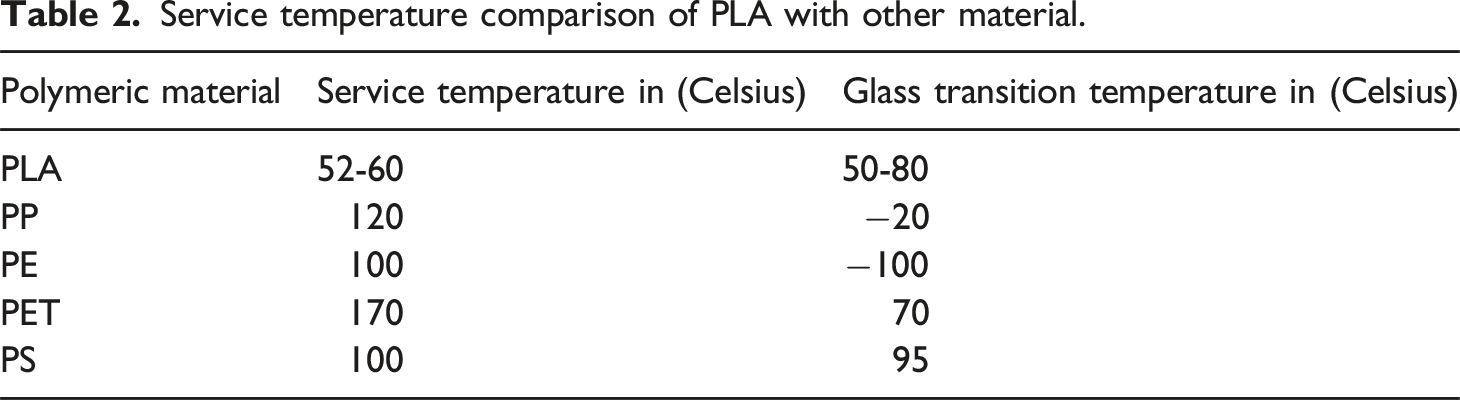
Service temperature comparison of PLA with other material.
DMA analysis
For the analysis of the viscoelastic properties including Tg of plastic materials, Dynamic Mechanical Analysis (DMA) is a crucial technique. DMA assesses the material’s response to sinusoidal stress, providing insights into its stiffness, damping behavior, and transition temperatures. This data is essential for better analysis of the mechanical performance and service temperature range of PLA composites under various conditions.
The analysis from DMA indicates that increasing sisal fiber loading in PLA composites enhances the storage modulus in the glassy state. However, the storage modulus decreases above 50°C due to the transition of the amorphous regions of the polymer from a glassy to a rubbery state. Specifically, the storage moduli for 5% sisal/PLA, 10% sisal/PLA, and 15% sisal/PLA composites are 207.81 MPa, 218.3 MPa, 224.9 MPa, and 245.0 MPa, respectively. Moreover, the inclusion of Phormium tenax fiber in PLA improves the storage modulus, resulting in higher dynamic stiffness. The tan δ peaks for PLA with Phormium tenax fiber composites are observed around 60°C, indicating the presence of fibers.3,8,14
Given the moderate Tg and susceptibility to moisture, PLA-based composites are generally suitable for non-structural applications. Although they offer excellent environmental benefits and adequate mechanical properties for certain uses, their performance under high stress and temperature variations may not meet the requirements for structural applications. Emphasizing these limitations is crucial for setting realistic expectations and guiding the appropriate application areas.
PLA and its composites with natural fibers, such as leaf fibers, offer a sustainable alternative for various applications. However, the service temperature range defined by Tg, especially under moist conditions, restricts their use in high-performance structural applications. Dynamic Mechanical Analysis (DMA) provides critical data to assess these limitations and guide the development of PLA-based materials for suitable, non-structural applications. Highlighting these aspects ensures a comprehensive understanding of the material’s capabilities and constraints.
TGA analysis
Robert masirek et al. found hemp with PLA has high modulus where hemp with PLA-PEG has lower modulus from the mechanical test of the composites. From the thermal degradation curve, it is found that in the first step of curve thermal decomposition observed below 150°C. 1 From the TGA analysis Zineb et al. found from the thermogravimetric analysis. 14 Thermal degradation of phorium tenax fiber happens in two stage, the most cellulosic decomposition at 337°C while neat polylactic acid shows peak at 350°C. 3 Due to the lignin content in fiber thermal degradation in second stage shows at 350-450°C where in the first stage of thermal degradation is due to the cellulose and hemicellulose. It also found that curaua fiber contain 6% w/w of water loss. 9
Impact test
The good impact result of sugar palm fiber with PLA composite shows maximum of 2.32 kj/m2 with 40% fiber loading. Increasing the fiber content means a good adhesion between fiber and fiber which influence good impact strength. 19
Versatile application study
In agriculture sector
The development of leaf fiber/PLA green composite in the future may also be advantageous to the agricultural sector. Utilizing natural fibers made from leaves can help farmers generate extra income and encourage the use of sustainable farming methods. A more circular economy where valuable resources are produced from agricultural waste could arise from this. Notwithstanding these encouraging possibilities, issues with scalability, affordability, and recycling strategies must be resolved before leaf fiber/PLA green composites are widely used. composites, which are biodegradable mulching films, provide a sustainable alternative. These films reduce plastic waste in agricultural areas by offering the same advantages as regular mulches but decomposing organically over time.
Biodegradable Planters/pots
Agriculture frequently uses plastic containers for plants and seedlings, which adds to the trash produced by plastic. Planting pots made of bio-based materials that combine plastic and leaf fiber can be molded to provide durability and biodegradability. The roots of the young plants won’t be stressed as much if these pots are placed straight into the ground, saving on the necessity for transplantation.
Structures for greenhouses
A greenhouse is necessary for protected and regulated farming. Conventional building materials for greenhouses frequently contain non-renewable resources. Composites made of leaf fiber and PLA can be used as a sustainable substitute for traditional greenhouse components like frames and panels. Greenhouse constructions can last longer and have a smaller environmental effect because of the composites’ natural strength and durability.
Matting for Erosion control
Fertile topsoil depletion is a major challenge in agriculture due to soil erosion. To stop soil erosion, slopes and other susceptible locations can be covered with erosion control matting composed of leaf fiber/PLA composites. These mats provide a sustainable, organic solution that stabilizes the soil and gradually breaks down to nourish the soil.
In Food packaging
Green biocomposites will eventually take the place of non-biodegradable plastics as the material used for food packaging. The food packaging industry is always investigating and developing new methods to enhance the performance characteristics of these materials. Examples of these methods include surface modification and the application of nanotechnology to produce bio-nanocomposites. Manufacturing procedures also need to be more productive and energy-efficient. The development and application of leaf fiber/PLA green composite materials in food packaging represents a significant step toward the creation of a more sustainable and environmentally friendly packaging industry. Because of its renewable material base, biodegradability, and versatility, this composite has great promise for reducing the environmental impact of packaging while meeting the food industry’s growing demand for sustainable solutions. Packaging for New Products: The leaf fiber/PLA composite’s inherent strength and flexibility make it suitable for fresh food packaging. The permeability of the material allows fruits and vegetables to have extended shelf life, reducing food waste.
Takeout containers
Because of its endurance, the composite is suitable for use as takeout containers. Its environmentally friendly qualities match the expanding demand from customers for sustainable packaging choices in the restaurant industry.
Flexible packaging
The leaf fiber/PLA composite's versatility allows for the flexible packaging of a wide range of food goods. Its adaptability makes it a competitive alternative to conventional plastic films.
In drug delivery sector
The use of leaf fiber/PLA green composite in drug delivery offers a novel method for environmentally friendly and biodegradable pharmaceutical packaging. Through the integration of leaf fibers with polylactic acid (PLA), a bioplastic sourced from sustainable resources, this hybrid material presents an environmentally sustainable substitute for conventional packaging. While keeping the PLA biodegradable, the leaf fiber strengthens it and increases its strength and durability. This green composite supports the expanding demand for sustainable practices in the healthcare sector while also lessening the environmental impact of pharmaceutical packaging.
Conclusion
The development and utilization of green composites, particularly those incorporating leaf fibers and polylactic acid (PLA), represent a promising avenue in for sustainability and environmentally materials. The combination of natural fibers derived from leaves with PLA, a biodegradable and bio-based polymer, offers a unique combination of desirable properties that can be tailored to various applications. This conclusion explores the key aspects and implications of leaf fiber/PLA green composites. Firstly, the environmental sustainability of these composites cannot be overstated. Both leaf fibers and PLA are renewable resources, with the former sourced from abundant plant materials and the latter derived from corn starch or sugarcane. This renewable nature contributes to a reduced carbon footprint compared to traditional petroleum-based polymers. The use of these materials in green composites is in line with the desire to lessen the environmental impact of conventional materials and the increasing emphasis on sustainable practices around the world.
Notable are the mechanical characteristics of leaf fiber/PLA composites. Banana, sisal, or jute leaf fibers give the composite greater modulus, tensile strength, and impact resistance. The intrinsic strength and stiffness of natural fibers provide these benefits, resulting in a composite material that can match or even outperform conventional materials in terms of mechanical qualities. This makes leaf fiber/PLA composites competitive substitutes in a number of industries, including as packaging, construction, and automobiles. Furthermore, the environmentally appropriate disposal of leaf fiber/PLA composites at the end of their useful lives is guaranteed by the biodegradability of PLA. These composites avoid the permanence of synthetic polymers in the environment since they decompose into natural components. This quality is especially important for tackling the global problem of plastic pollution and is consistent with the ideas of the circular economy. Leaf fiber/PLA composites processing and manufacturing also provide adaptability. Compression molding, injection molding, and extrusion are just a few of the processes that can be used to create products with specific characteristics. These composites are a viable choice for general adoption because of their ability to adapt to current manufacturing processes, which makes it easier to integrate them into current production systems without requiring major overhauls.
Even with these encouraging qualities, there are still obstacles in the way of leaf fiber/PLA composites’ widespread use. It is necessary to address issues including cost, production scalability, and the requirement for additional research to optimize material compositions and processing parameters. Overcoming these obstacles and easing the shift to a more sustainable and circular economy will require concerted efforts from academia, business, and policymakers. In conclusion, there is a lot of promise for sustainable materials when leaf fibers and PLA are combined to create green composites. The amalgamation of sustainable resources, enhanced mechanical attributes, and biodegradability renders leaf fiber/PLA composites a compelling substitute for traditional materials. Even if obstacles still exist, continuous research and development is setting the stage for a time when these composites will be crucial in encouraging environmental sustainability in a variety of industries.
Future scope
Because of its eco-friendly and sustainable qualities, leaf fiber/PLA (polylactic acid) green composite has bright future possibilities in a number of industries. Natural leaf fibers and PLA, a renewable and biodegradable thermoplastic sourced from plants like corn and sugarcane, are combined in this novel composite material. When these elements are combined, a material is produced with remarkable mechanical qualities, favorable environmental effects, and a wide range of uses. The future scope’s significant contribution to environmental sustainability is one of its main features. Because leaf fiber/PLA green composite is naturally biodegradable, it has a lower environmental impact than conventional plastics derived from petroleum. With the growing worldwide concerns about plastic waste and climate change, industries are looking more and more for eco-friendly solutions. Hence, the bio-based composite plays a vital role like a leader for sustainable green material due to its renewable and biodegradable properties.
Leaf fiber/PLA green composite’s adaptability makes it suitable for broad use in a variety of industries. It provides a sustainable substitute for traditional plastic packaging materials in packaging. Because of its biodegradability, trash won’t cause the environment to suffer long-term damage. Furthermore, the material’s strong mechanical qualities make it appropriate for use in consumer items, building materials, and automotive components. Fuel-efficient vehicle development can be aided by the lightweight and durable properties of leaf fiber/PLA composites in the automobile industry. As a result, carbon emissions may be significantly reduced, answering the growing worries regarding climate change. It is expected that industry will look for environmentally friendly solutions to meet strict rules on emissions and environmental effect as governments throughout the world tighten their regulations. Furthermore, it is anticipated that improvements in manufacturing technology would raise the productivity of leaf fiber/PLA green composites.
These materials will become more economically viable as production techniques become more efficient and economical, which will promote their broader adoption across industries. Novel approaches to improving the mechanical properties could result from research and development in this area, increasing the composite’s competitiveness with respect to more conventional materials. The development of leaf fiber/PLA green composite in the future may also be advantageous to the agricultural sector. Utilizing natural fibers made from leaves can help farmers generate extra income and encourage the use of sustainable farming methods. A more circular economy where valuable resources are produced from agricultural waste could arise from this. Notwithstanding these encouraging possibilities, issues with scalability, affordability, and recycling strategies must be resolved before leaf fiber/PLA green composites are widely used. To overcome these obstacles and realize this eco-friendly material’s full potential, cooperation amongst researchers, businesses, and politicians will be essential. In summary, the leaf fiber/PLA green composite seems to have a promising and significant future. Because of its adaptability to many industries and environmental sustainability, bio-sourced material plays a crucial role for conversion to more sustainable and greener materials. This composite has the power to completely transform a number of industries and contribute to a future that is more environmentally conscientious and sustainable as technology develops and environmental consciousness rises.
Footnotes
Declaration of conflicting interests
The author(s) declared no potential conflicts of interest with respect to the research, authorship, and/or publication of this article.
Funding
The author(s) received no financial support for the research, authorship, and/or publication of this article.
