



Abstract
In this work, conductive polymeric composites (CPCs) of renewable source high-density polyethylene (HDPE) (BioPe) with various carbon black (CB) concentrations were developed. To corroborate the electrical conductivity prediction techniques, an artificial neural network (ANN) was modeled and trained to predict electrical conductivity using processing parameters, filler information, and polymeric matrix. Thus, the obtained neural network and the proposed methodology could serve as experimental support for the development of new materials based on parametric variation and consequent prediction of electrical conductivity. Therefore, the use of artificial neural networks from processing data and filler concentration proved to be an efficient technique for predicting the electrical conductivity of CPCs using conductive carbon black as conductive filler.
Keywords
Introduction
The incorporation of nanoparticles into a polymeric matrix can effectively combine the advantages of each component in obtaining a polymeric composite, such as processability characteristics, physical and mechanical properties of the polymeric matrix, and the inherent versatility of nanoparticles, for example, conductivity, high surface area, and rigidity.1–4
To obtain electrical conductivity in polymers, it is necessary to develop conductive polymeric composites (CPCs) that are considered organic metals and are obtained from the mixture of an insulating polymeric matrix (electrical conductivity in the order of 10−9 S/cm) with a conductive filler, e.g. graphene, graphene oxide, carbon black, carbon fiber, carbon nanotube.5–9 CPCs have high conductivity (∼10−1 S/cm), are light, and, in general, have good mechanical properties compared to the polymeric matrix and can be manufactured in the form of flexible films and rigid components for various applications.10,11
Systems modeling using the artificial neural network approach is a powerful tool inspired by biological systems that are capable of determining an input-output type relationship for a wide range of scientific and engineering problems.12–16 In the context of the development of composites, the use of artificial neural networks demands a large set of experimental data for their respective modeling and consequent use. In the literature, it is observed that several works have been published using this technique as a way of predicting different properties of composite materials, for example, mechanical, thermal, electrical, fatigue, and operational parameters of structures based on cementitious composites.17–21 ANNs are classified into two large groups, ANNs without feedback (feedforward) and those with feedback (feedbackward). The architecture of an ANN is closely related to the learning algorithm used to adjust synaptic weights. 22 Among the different types of architectures found in the literature, one-layer and multi-layer feedforward networks are widely used for prediction applications. ANNs are classified as having one layer when they have only one level (set of n perceptrons) in which calculations are performed and the result produced corresponds directly to the output of the ANN.
Figure 1 shows an ANN without feedback with multiple hidden layers. This structure of multiple hidden layers has several characteristics that, depending on the configuration, can vary according to the number of perceptrons per layer, which can contain an adjustable number of hidden layers, as well as being fully connected or partially connected. This last characteristic refers to the number of existing synaptic connections for each perceptron in a specific layer, as this may be completely or partially connected to the perceptrons of the subsequent layer. By convention, the ANN illustrated in Figure 1 is called n-n-m, as it is connected to a network and has n neurons in its source, the hidden layer has n perceptrons and the output layer has m output neurons. The function of the hidden layers is to extract, from the adjustment process of the respective weights of the network, high-order statistics to identify patterns present between the input and output signals of the network, therefore the adjustment of the number of hidden layers and learning algorithms, correspond to critical ANN performance factors.21–24 Feedbackless ANN with multiple hidden layers.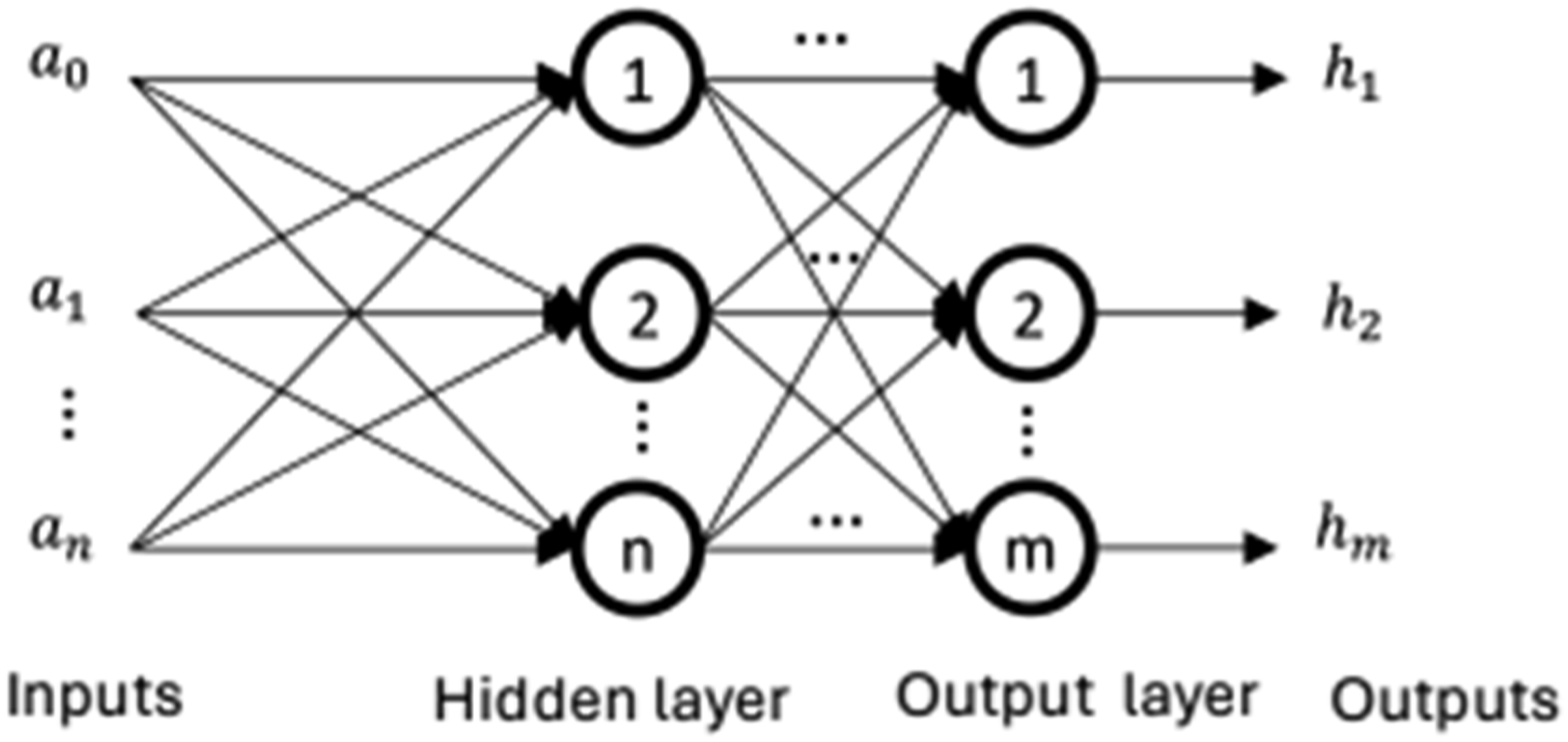
Artificial Neural Networks (ANN) have been used as a strategy for modeling the electrical conductivity of CPCs, as well as for other types of composites, as will be presented below in the summaries of articles found in the literature.
Kumar et al. 22 used the technique of artificial neural networks for glass fiber reinforced polymer (GFRP) composites and GFRP composites incorporated with 0.5% and 1% by weight of graphene nanoplatelets (GNPs) where they were prepared by the lay method manual -up along with compression molding. Tribological testing was conducted in a dry sliding environment with a Tribo-Tester Pin-on-disk for a run time of 10 min and under an applied load of 20 N, 40 N, 60 N, and 80 N. The experiment data (610 datasets) were used during the application of the Artificial Neural Network (ANN) technique. The results of the experiment were compared with the results obtained from the ANN. It showed that the ANN predicted the output parameters with an overall percentage error of less than 5% and a coefficient of determination (R2) greater than 99%.
The work of García-Carrillo et al. 25 uses the approach of two artificial neural networks (ANN) that were developed to approximate the thermal conductivity and electrical conductivity of high-density polyethylene composites (HDPE) and filler, based on data obtained experimentally. The composites were prepared by twin-screw extrusion using four different types of fillers at different concentrations. The obtained ANN models were used in a multiobjective genetic algorithm (GA) to optimize the design parameters of the composites to maximize their thermal conductivity and minimize their electrical conductivity. The ANN models showed a good correlation between simulated and experimental data, evidenced by correlation factors R, above 0.97. The multilayer perceptron ANN with three neurons in a single hidden layer and trained by the Levenberg-Marquardt algorithm exhibited the best predictive performance in both models. As a result of the GA multiobjective optimization process, a set of Pareto optimal solutions was obtained to maximize the thermal conductivity and minimize the electrical conductivity. The optimization and modeling procedure developed can be applied to other properties of polymeric composites.
Ozden et al. 12 used the artificial neural network (ANN) technique to predict cutting forces during turning and optimize the machining process of unreinforced and reinforced polyamide (PA) with 30% carbon fiber. The ANN model was used to predict the cutting forces during the machining process, the test was carried out using K15 and polycrystalline diamond (PCD) cutting tools, with cutting speed and feed respectively of 50-200 m/min and 0.05-02 mm/rev. This data set was used as input data during the application of the neural network (ANN) technique, showing the effectiveness of the ANN method in predicting cutting forces in the PA machining operation.
Liang et al. 20 used a semi-supervised regression architecture based on two ANNs, named RNA and co-RNA, in which identified (experimental) and unidentified (non-experimental) data were used to perform a refinement in predicting the thermal conductivity of composites with sheets of boron nitride (NB). The input data used for ANN training are the thermal conductivity of the matrix, aspect ratio and diameter of the NB sheets, and volumetric fraction of the filler. The performance evaluation metrics of the proposed ANN are mean squared error (EQM), mean relative deviation (DMR), and coefficient of determination (R2). These performance metrics were used to evaluate the prediction quality, given the proposed architecture, varying the number from 1 to 30 hidden layers of the ANN, the number of learning interactions, and the lower and upper limits of prediction. The authors also evaluated the adjustment of the experimental data to the theoretical models of Maxwell, Bruggemman, the effective medium, and the proposed Co-RNA, the latter of which presented the best results. From the point of view of the performance metrics obtained, NDE of the order 10−3 was obtained, DMR varying between 5, 8, and 11%, and R2 varying between 0.9, 0.95, and 0.97, considering the training, testing, and validation phases.
Therefore, in the context of the development of conductive polymeric composites (CPCs), this technique can be inserted specifically as a tool to support the prediction of the electrical properties of the composite before processing the new material, presenting trends in the behavior of the desired property, based on data of the matrix, load, and processing variables, modeled by the neural network as input information.
Materials and methods
Materials
Bio-based HDPE (BioPe) SHC7260, with an MFI of 7.2 g/10 min, provided by Braskem. High-structured conductive CB, Vulcan® XCMAX™ 22, provided by Cabot Corporation, Brazil.
Experimental procedures
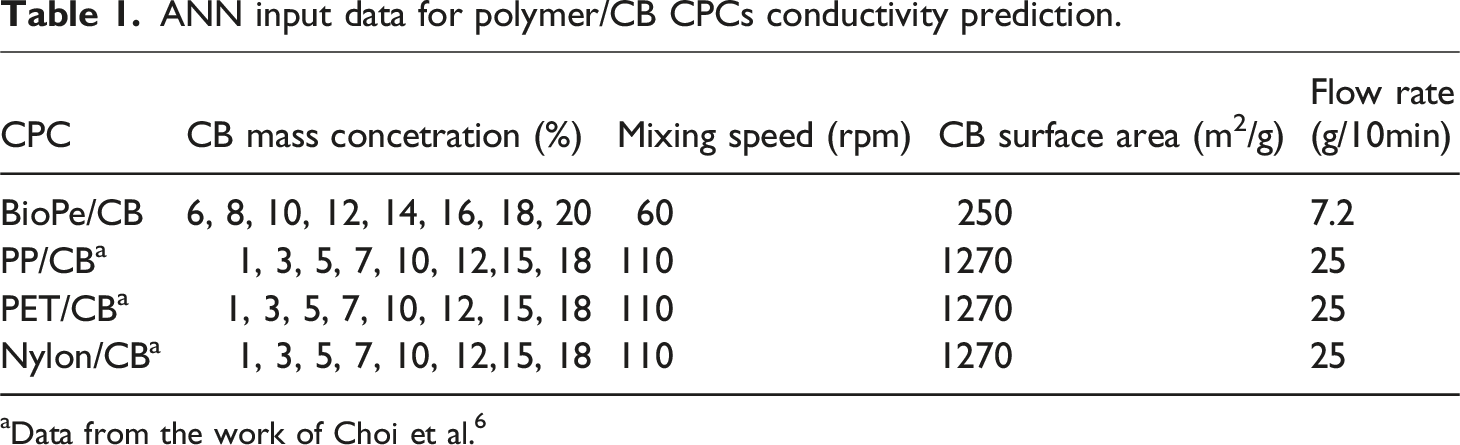
ANN input data for polymer/CB CPCs conductivity prediction.
aData from the work of Choi et al. 6
Results and discussion
The results of electrical conductivity prediction using ANN, of CPCs developed from BioPe are illustrated in Figure 2. According to the experimental data obtained in this work, and those from poly (ethylene terephthalate) (PET), polypropylene (PP), and Nylon-6, from the work of Choi et al.,
6
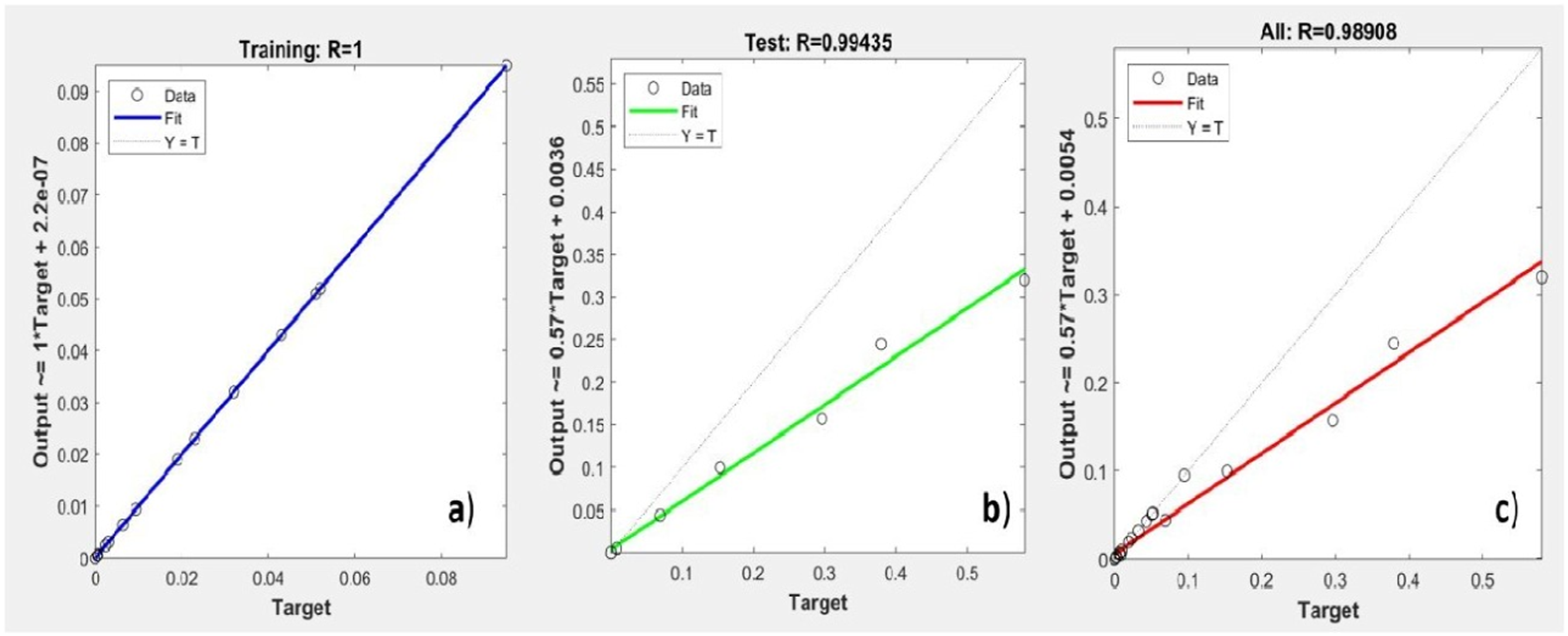
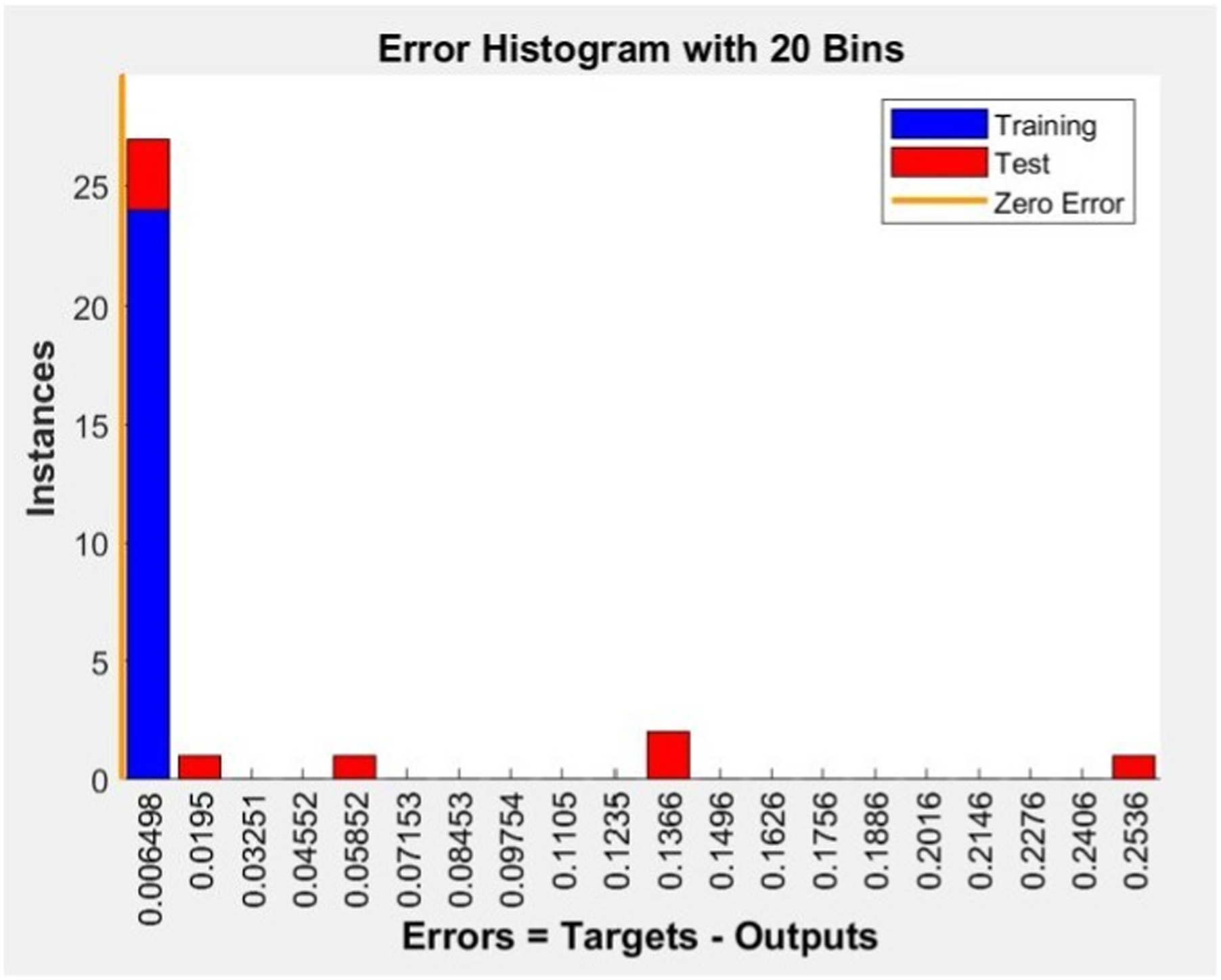
notice from Figure 2(a)-(c), that the prediction of the electrical conductivity of the CPC of BioPe/CB and the PP/CB in the ANN test step, present a uniform behavior for the entire range of CB concentration considered so that the electrical conductivity values of BioPe and PP showed a unit coefficient of determination (R2) as shown in Figure 3(a) corresponding to the training phase. Thus, the best electrical conductivity prediction values are obtained for the ANN input data that are used during the training stage and the initial adjustment of the ANN synaptic weights. The input data referring to the PET/CB and Nylon/CB CPCs were used for the validation and testing steps, that is, the ANN was configured without directly considering the input-output relationship of these systems. It is observed in Figure 3(b) that the R2 adjustment factor obtained was greater than 0.99, despite absolute errors with orders of 25% and 13.66% presented for the initial values of the concentration range as shown in Figure 4 occurred during the ANN test step. The input data referring to the Nylon/CB CPC were used only during the ANN evaluation stage, producing inconsistent electrical conductivity prediction results for initial mass fraction values, as shown in Figure 2(d). Another aspect to be considered during the prediction of the electrical conductivity of the Nylon/CB CPC refers to the fact that the experimental data presented by Choi et al.
6
show that the electrical conductivity of this CPC does not vary for three mass fractions (1, 3 and 5%), indicating that there is no formation of a percolated network in this mass concentration range and also because the ANN did not use this dynamic during the training process. It is illustrated in Figure 2(c), that the adjustment factor obtained for evaluating the ANN considering the completeness of the input data is approximately 0.99, and that there is a certain density of values at the beginning of the mass fraction range that deviates from the desired values. This observation can be demonstrated graphically in Figure 2, in which for initial values of the mass fraction, there is a greater error between the experimental values and those predicted by the ANN. Prediction of electrical conductivity of CPCs based on CB using ANN. Results of the coefficient of determination R2 during the stages of training, testing, and evaluation of the ANN. Histogram of the error distribution during the ANN training and test steps.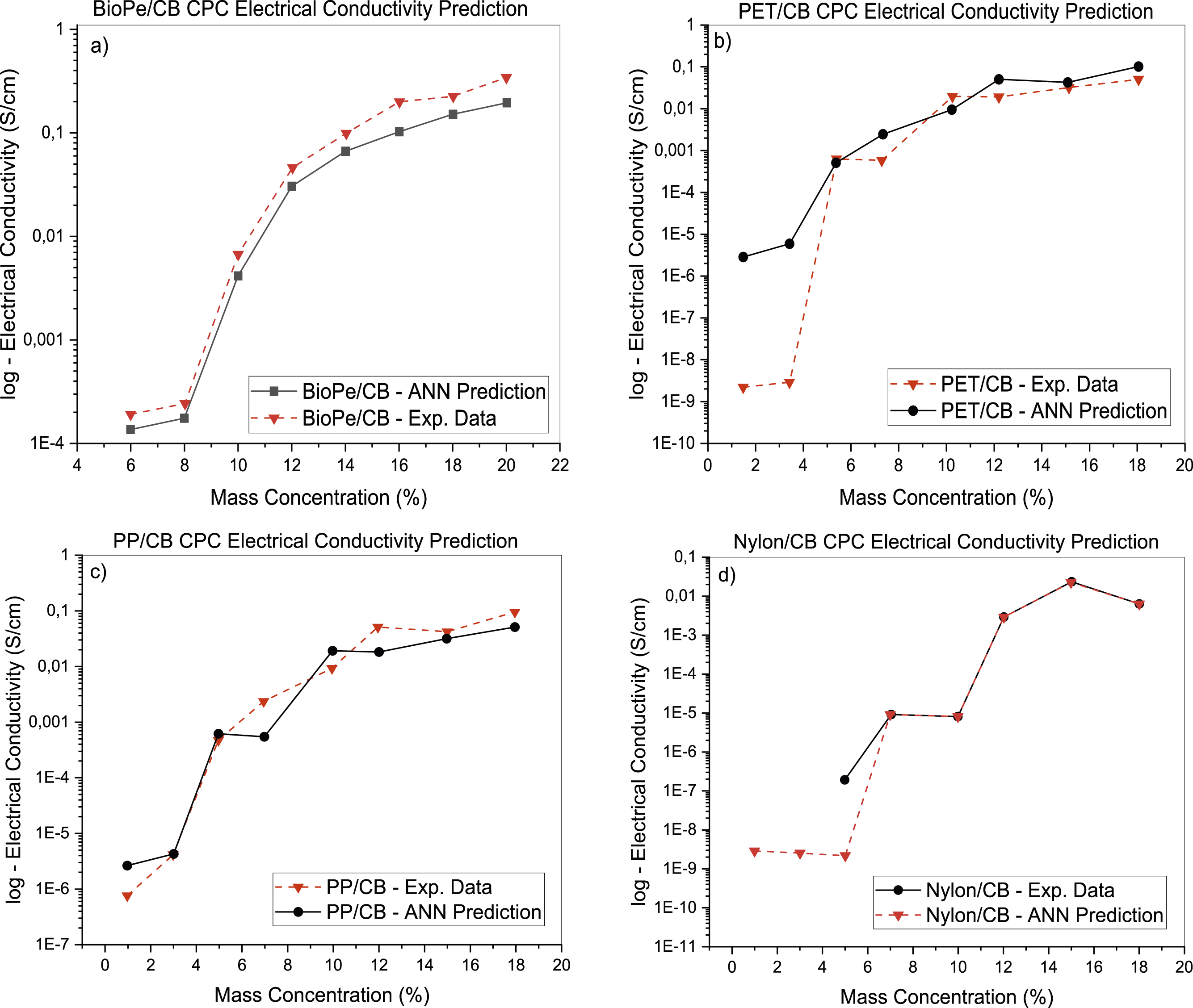
It should be noted that the prediction values and the behavior of the electrical conductivity of the CPCs used for modeling the ANN are satisfactory for values above 5% by mass of carbon black and for the conditions listed in Table 1. Thus, it appears that the performance of the ANN can be improved from a database constantly updated with new experimental data, to be used during the training stage, with a diversity of values that characterize the entire behavior of electrical conductivity for a mass or volumetric concentration range.
The histogram with the distribution of absolute errors obtained during the training and validation phases is illustrated in Figure 4. It should be noted that for the database used, the largest error is 25.36% for a data sample. Overall, the mean squared error obtained during the ANN testing stage has order 10−2, that is in percentage terms, this error corresponds to one percent, and finally, during the training stage, the mean squared error is approximately zero as shown in Figure 5. Mean squared error evolution during the ANN training and test steps.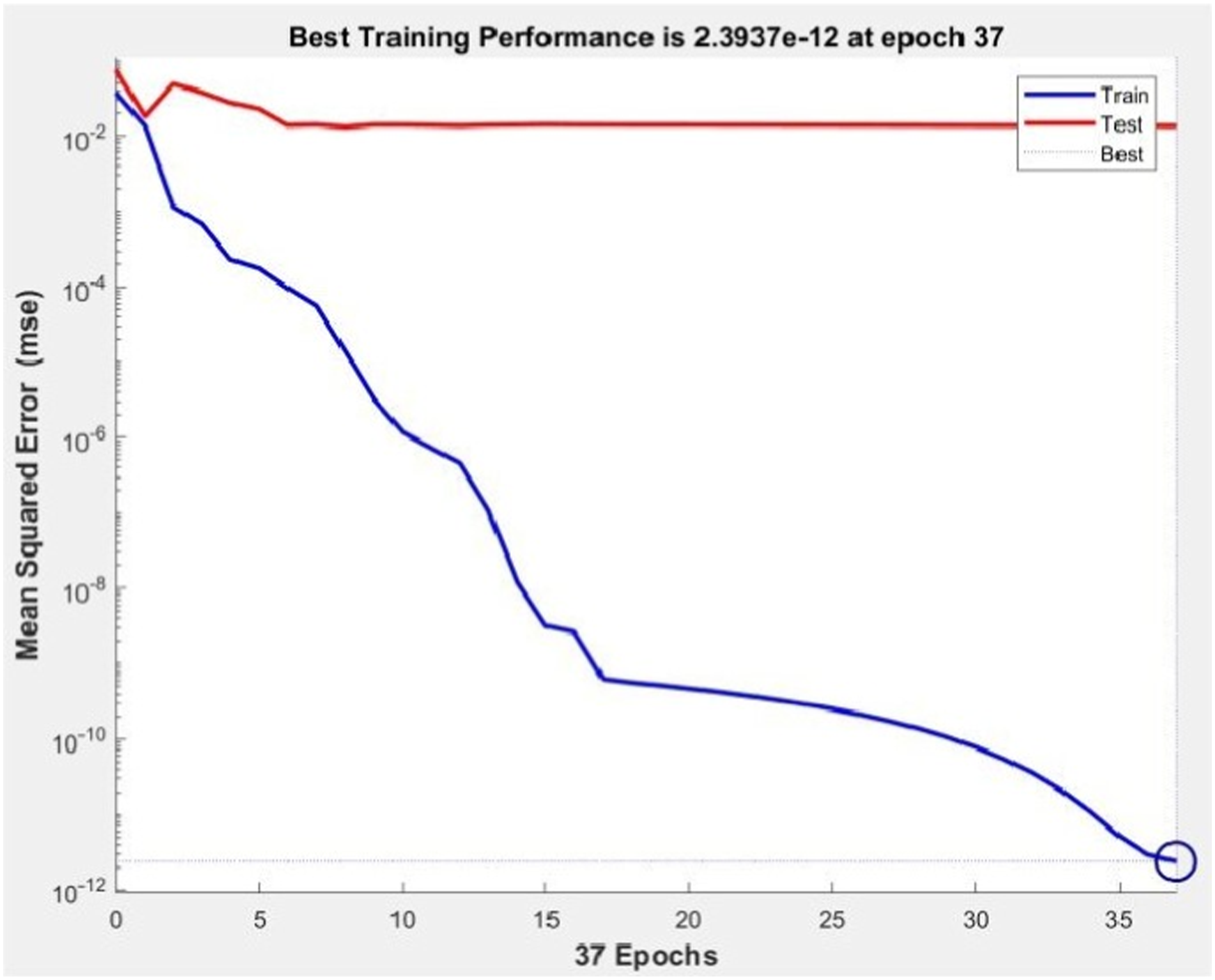
Conclusions
As seen in the literature and applying ANN concepts to predict the electrical conductivity of CB CPCs, good results were obtained making it possible to apply this technique as a support strategy for experimental planning before the processing steps of a new CPC, so that, through a duly trained, tested and validated ANN, it is possible to predict the electrical conductivity of the CPC from evaluations and parametric simulations of the data modeled by the ANN. It should be noted that the integration and description of results on electrical percolation, obtained from mathematical models and the entire set of knowledge on processing CPCs, can be integrated through the use of ANNs to support the development of new materials.
Footnotes
Acknowledgements
The authors would like to thank CNPq (TJAM - Grant number: 405908/2021-0) and FAPESQ (TJAM and SNC: Grant numbers: - 3095/2021 and 2416/2023) for financial support.
Declaration of conflicting interests
The author(s) declared no potential conflicts of interest with respect to the research, authorship, and/or publication of this article.
Funding
The author(s) disclosed receipt of the following financial support for the research, authorship, and/or publication of this article. This work was supported by the Fundação de Apoio a Pesquisa do Estado da Paraíba (FAPESQ); 3095/2021, and Securing of Young Doctors in Brazil; 2416/2023. Conselho Nacional de Desenvolvimento Científico e Tecnológico (CNPq); 405908/2021-0.
