




Abstract
An analytical approach for nonlinear buckling and postbuckling responses of corrugated-core toroidal shell segments with carbon nanotube (CNT) reinforced face sheets in thermal environment subjected to radial pressure is reported in this work. Three distribution laws of functionally graded CNT-reinforced layers and the trapezoidal and round forms of the corrugated core are investigated. An equivalent technique for corrugated panels is improved by adding thermal forces to model the behavior of the corrugated core. The nonlinear equations are formulated by using the geometrically nonlinear Donnell shell theory considering Pasternak’s foundation. An algorithm to solve a system of nonlinear equations is established using the Ritz energy method with three shell deflection amplitudes. The postbuckling expressions between the compressive and tensile loads with maximal deflection and the critical compressive and tensile loads are determined. The numerically investigated examples present the significantly beneficial effects of corrugated core and functionally graded CNT-reinforced face sheets on nonlinear buckling responses of structures.
Keywords
Introduction
The toroidal shell segments and cylindrical shells are two types of revolution shells popularly designed in civil engineering, spacecraft, and aerospace systems. Therefore, a lot of researchers have reported on the nonlinear and linear stability of different types of composite materials.
The nonlinear and linear stability of functionally graded material (FGM) cylindrical shells were mentioned in many works.1–8 Bagherizadeh et al. 1 studied the linear mechanical buckling behavior was investigated using the higher-order shear deformation theory (HSDT), the adjacent equilibrium criterion, and Pasternak’s foundation model. The effects of different boundary conditions of FGM cylindrical shells on the linear buckling behavior were also investigated.2,3 Nonlinear buckling and postbuckling behavior of FGM cylindrical shells considering the thermal environment was mentioned using HSDT and perturbation method.4–6 The designs of FGM cylindrical shells stiffened by spiral FGM stiffeners were presented and investigated using the nonlinear Donnell’s thin shell theory and Galerkin method.7,8 The hygro-thermo-mechanical bending analysis of FGM plates with and without porosity effects was mentioned using Navier’s solution.9,10 By using the four-variable first-order shear deformation theory, the free vibration of FGM plates resting on the viscoelastic foundation was investigated. 11
A new type of fiber composite is known as the functionally graded carbon nanotube-reinforced composite.12–14 The outstanding thermo-mechanical properties of carbon nanotube (CNT) greatly improved the properties of the isotropic matrix. In addition, the continuous and smooth distribution characteristics of CNT-reinforced structures allow making the best use of the CNT bearing capacity. Also having outstanding properties, another nanocomposite material that is also of interest to many authors is the functionally graded graphene platelet reinforced composite.15,16
Similar to the FGM, the buckling, post-buckling, free vibration, and static analysis of CNT-reinforced cylindrical shells, shell panels, and toroidal shell segments were also given due attention.12–14,17–20 The interesting effects of CNT on the mechanical behavior of cylindrical shells were investigated and discussed in detail. Snap-through behavior, thermal and inertial buckling, vibration, and wave propagation of CNT-reinforced beams were investigated using different theories and methods.21–27 An experimental tensile test for CNT-reinforced beams was also performed exploring various micromechanical models. 28 The CNT-reinforced rectangular plates, skew plates, rectangular microplate and doubly curved micro-shell panels were mentioned in buckling and vibration problems.29–32
A more general type of revolution shell than the cylindrical shell, the truncated conical shell, has also been mentioned in many works.33–37 The strong anisotropy of the material and the complexity of the structure created special effects on the buckling and bending behavior of the shell. An anisotropic smeared stiffener technique was developed for the CNT-reinforced stiffeners to analyze the buckling behavior of the CNT-reinforced cylindrical shells with suitable designs of CNT distributions in the stiffeners and in the shells.38,39 In addition, CNT-reinforced composites can also be designed as face sheets and combined with auxetic cores to increase the bearing capacity of the cylindrical shells and toroidal shell segments.40–42 Some works on the viscoelastic behavior of CNT-reinforced cylindrical shells subjected to earthquake loads were also performed taking into account the thermal and moisture effects.43,44 The CNT-reinforced composite was also designed as a type of laminated composite and the effects of negative Poisson's ratio were investigated. 45
In addition to the advantages with regard to lightweight properties and thermal insulation, sandwich structures have outstanding advantages in load-bearing capacity. Many studies on oscillation, stability post-instability, and failure behavior of sandwich structures were also performed.46–52 Corrugated structures are popularly designed as the cores for structures subject to high-intensity loads. In those cases, the corrugated core acts as a lightweight layer, while the face sheets act as the principal carrying capacity layers. Many studies on the mechanical behavior of sandwich panels and panels with corrugated cores were carried out with face sheets and cores all made of isotropic materials.53–57 The very strong anisotropy and complex behavior of these structures have been pointed out and investigated in detail. Work on the nonlinear vibration of full-filled fluid FGM corrugated cylindrical shells was performed 58 using the homogeneous technique for corrugated panels of Xia et al. 53
As pointed out above, there is no research studying the nonlinear buckling of the sandwich CNT-reinforced toroidal shell segments with corrugated core subjected to radial pressure in the thermal environment. This paper proposes an analytical approach to the nonlinear radial buckling of the sandwich CNT-reinforced toroidal shell segments with corrugated core and uniformly distributed temperature changes. The equivalent technique of corrugated structures is improved by adding the thermal terms in the equivalent stiffnesses.
Geometrical and material designs of sandwich toroidal shell segments
The corrugated-core toroidal shell segment under radial pressure denoted as CNT distribution types and configurations of toroidal shell segments with CNT-reinforced face sheets, and corrugated core.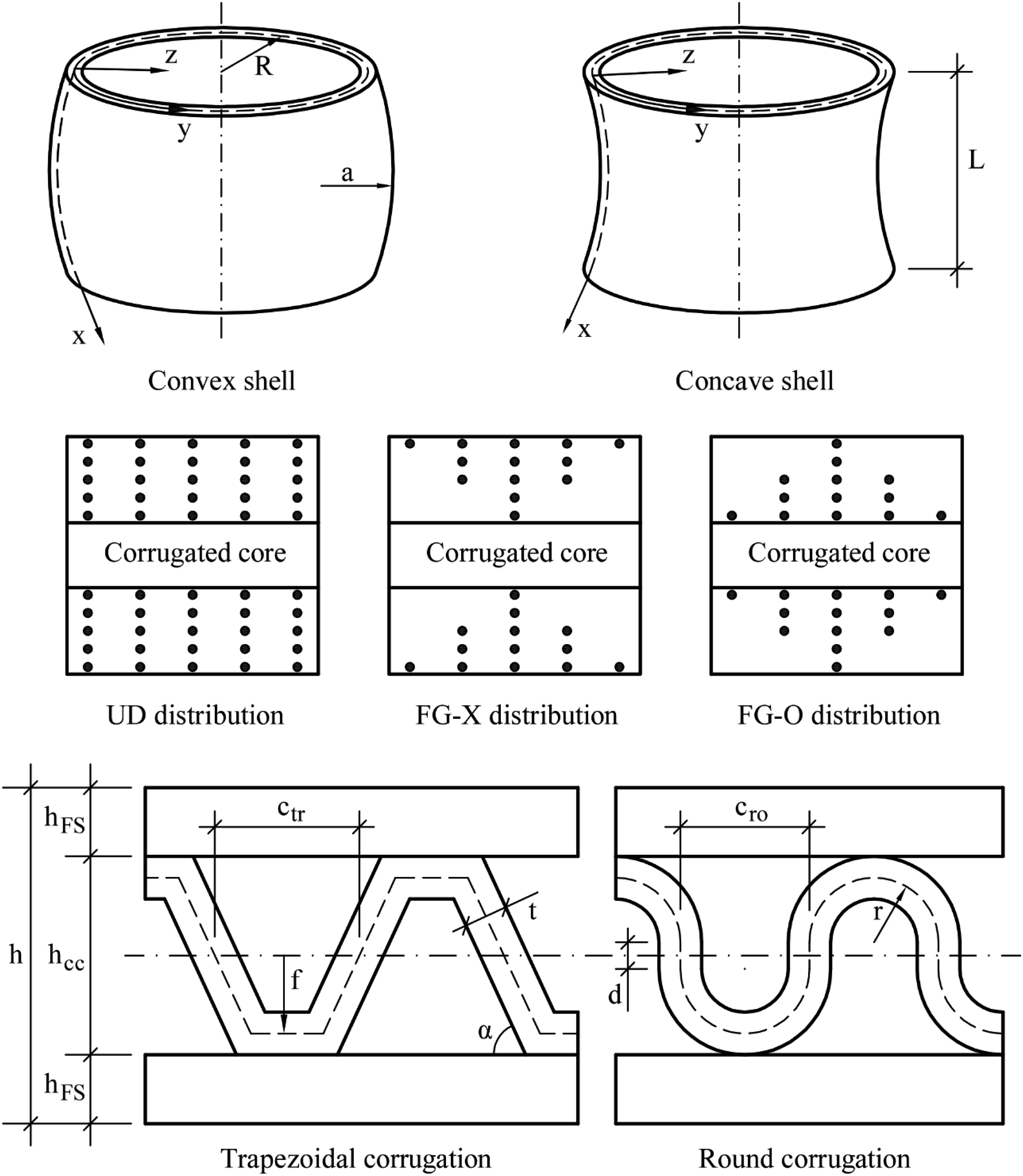
For the external face sheet






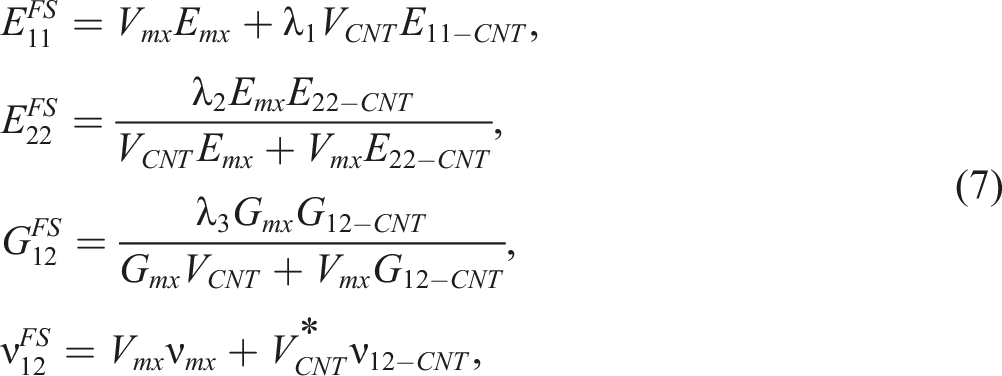
By applying the extended mixture rule, the orthotropic elastic constants of CNT-reinforced face sheets are predicted as12–14
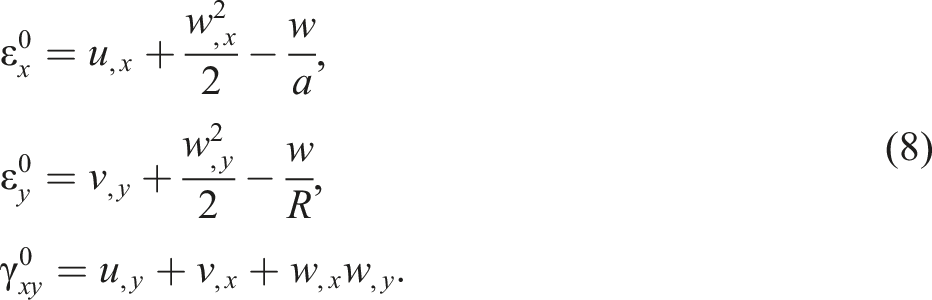
The geometrically nonlinear Donnell shell theory is employed to formulate the basic equation system of buckling responses of corrugated-core toroidal shell segments. The nonlinear forms between the mid-plane strains
According to the assumption of linear material, the Hooke’s law for CNT-reinforced face sheets is presented as


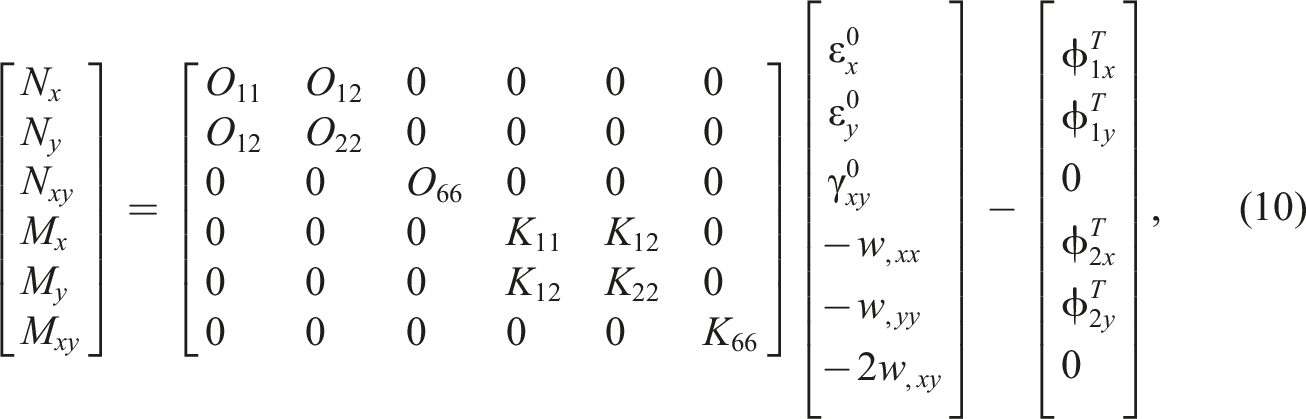
The relations of forces and moments of corrugated-core toroidal shell segments are determined by integrating equation (6) with the thickness direction, presented as


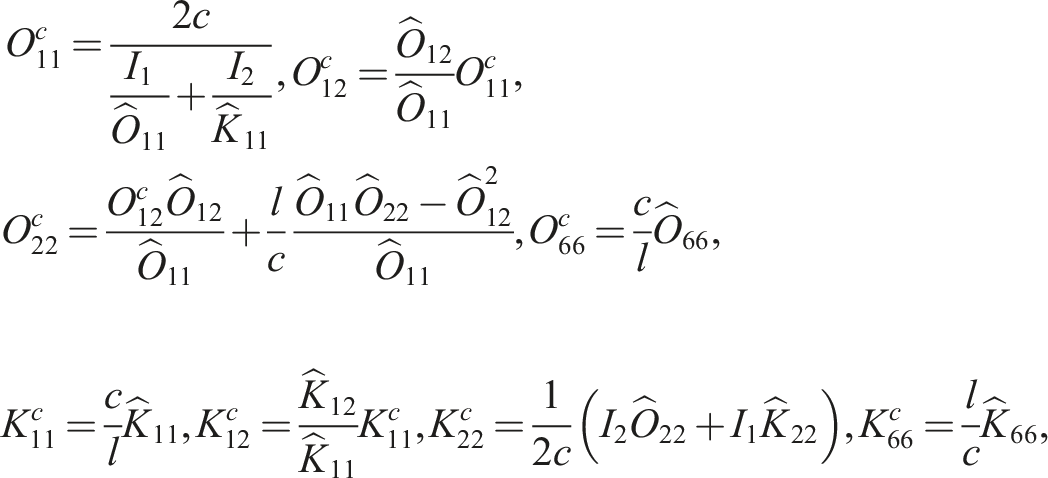



The thermal terms of the shell depending on the thermal terms of the face sheets and corrugated core are expressed as

The thermal terms of top and bottom face sheets are determined by

Note that: the equivalent technique of Xia et al.
53
does not include the thermal forces. The coefficient of thermal expansion depends only on the material and not on the geometry of the structure, so the coefficient of thermal expansion of the corrugated core is applied to be equal to

Potential energy establishments and Ritz energy method
The deformation compatibility equation of corrugated-core shells is directly obtained from equation (8), presented by

The stress function

Consider a corrugated-core toroidal shell segment with CNT-reinforced face sheets under uniformly distributed radial pressure with two simply supported ends. The considered boundary conditions are presented as

The deflection of the shell satisfying the simply supported boundary condition is modeled in the average form, as20,41

The explicit form of the stress function can be determined by substituting the deflection (20) into equation (17), expressed as

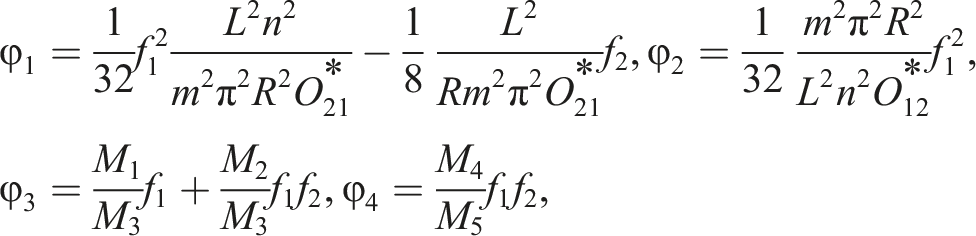
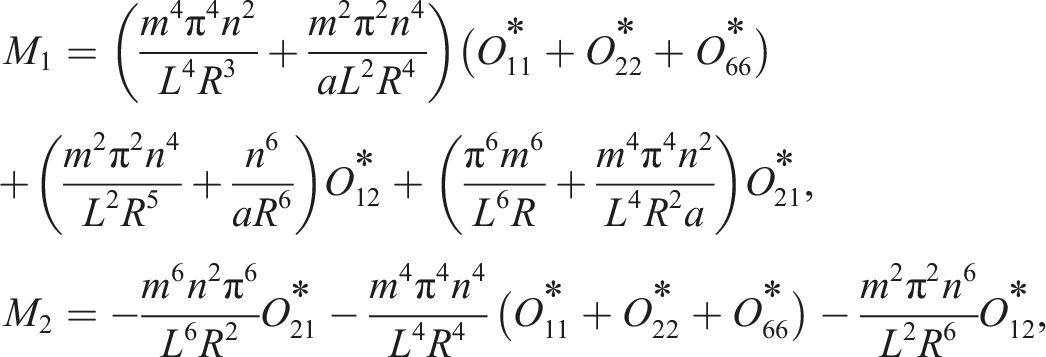
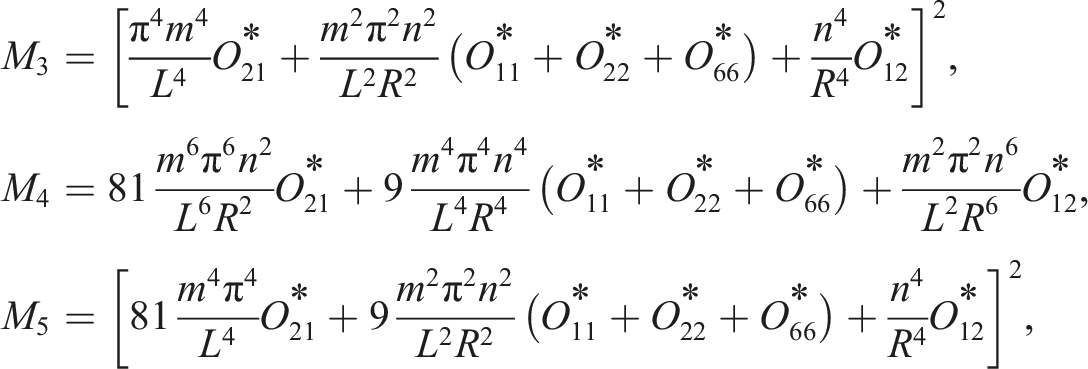
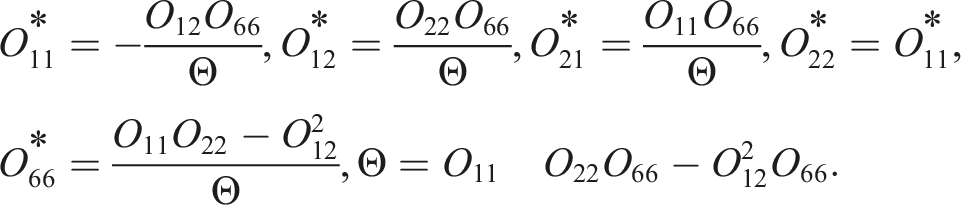
Circumferential closed condition for a toroidal shell segment is expressed by20,41

By using equations (8), (10), and (18), the condition (22) becomes

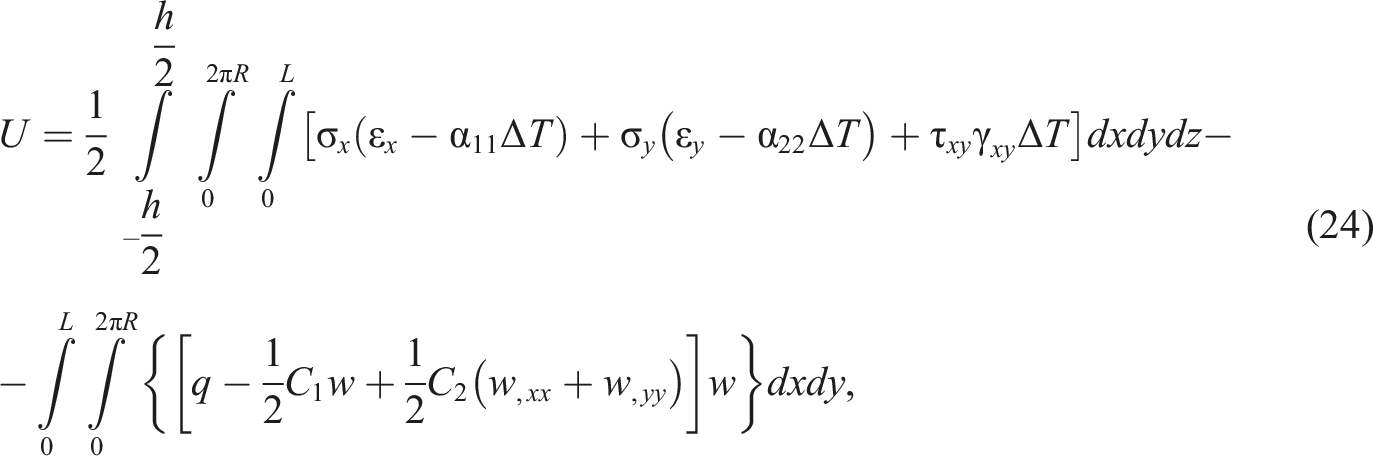
The total potential energy of corrugated-core shells is determined as
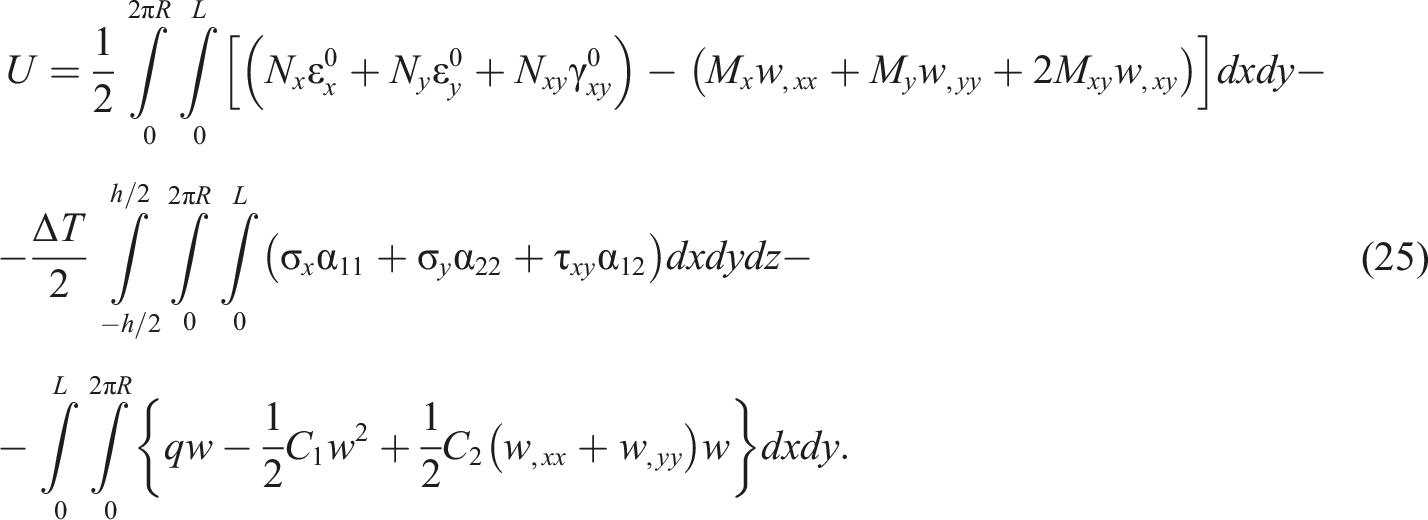
The total potential energy (equation (24)) can be rewritten as




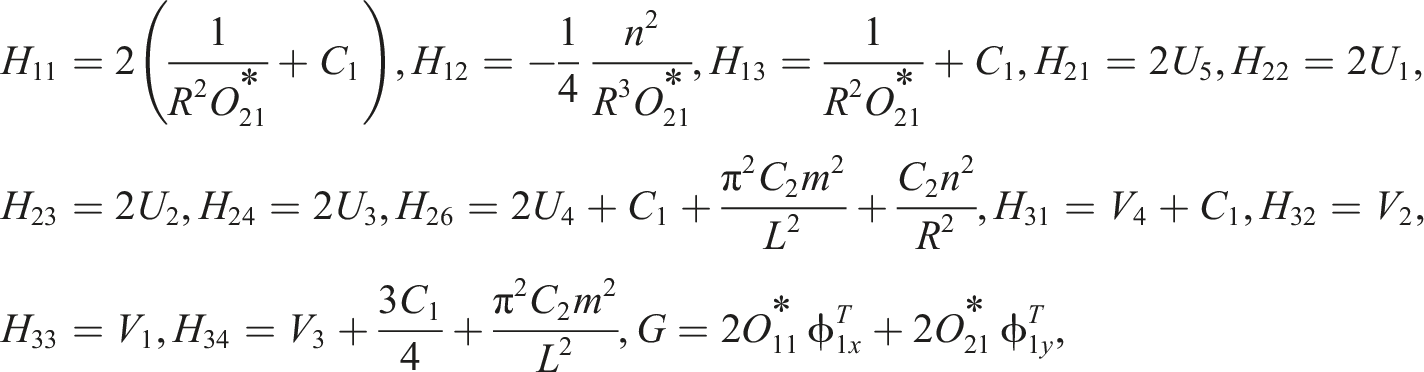
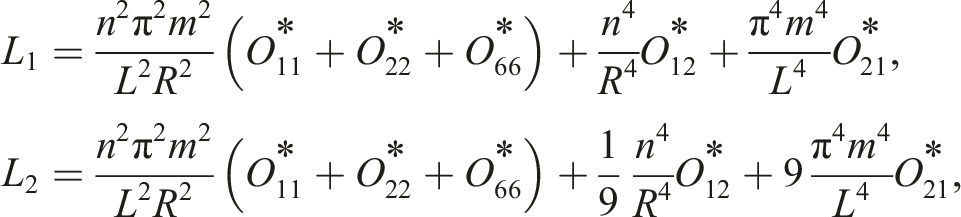



The relation between


From equation (20), the maximal deflection of the shells is achieved by summing three amplitudes, as

The


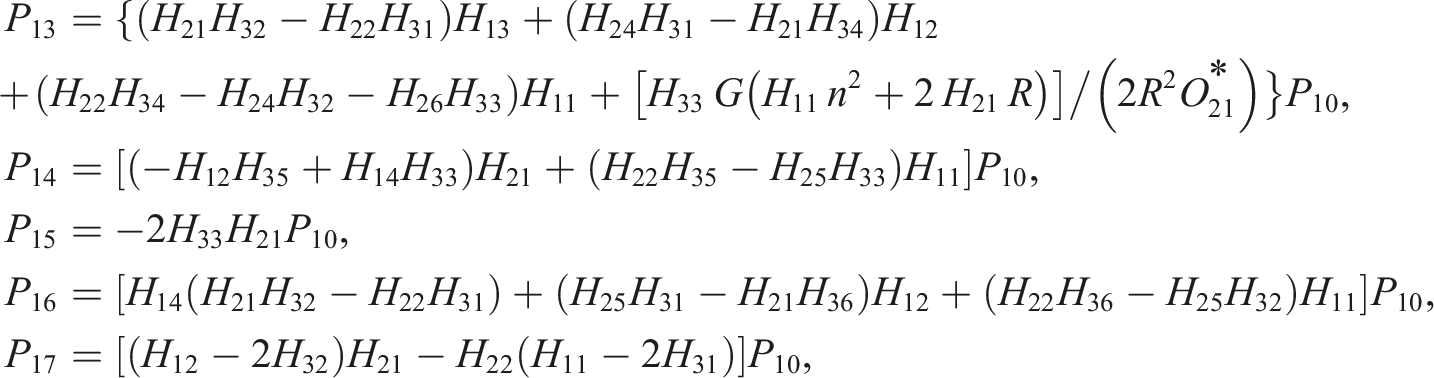

The upper critical buckling for the shells can be obtained by applying

Numerical examples
Comparisons of critical buckling load
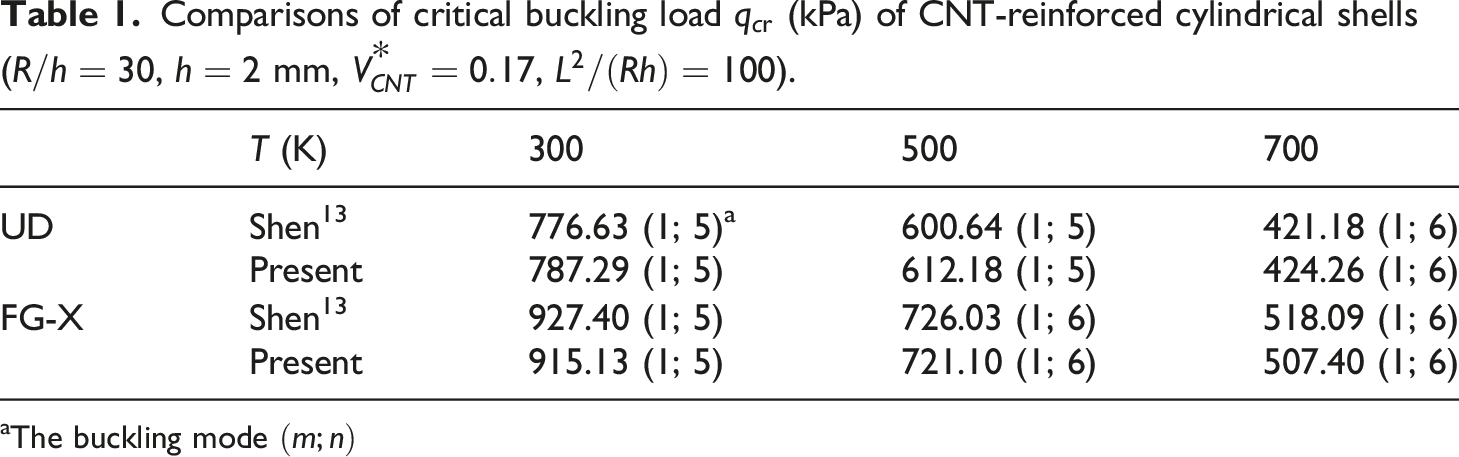
aThe buckling mode
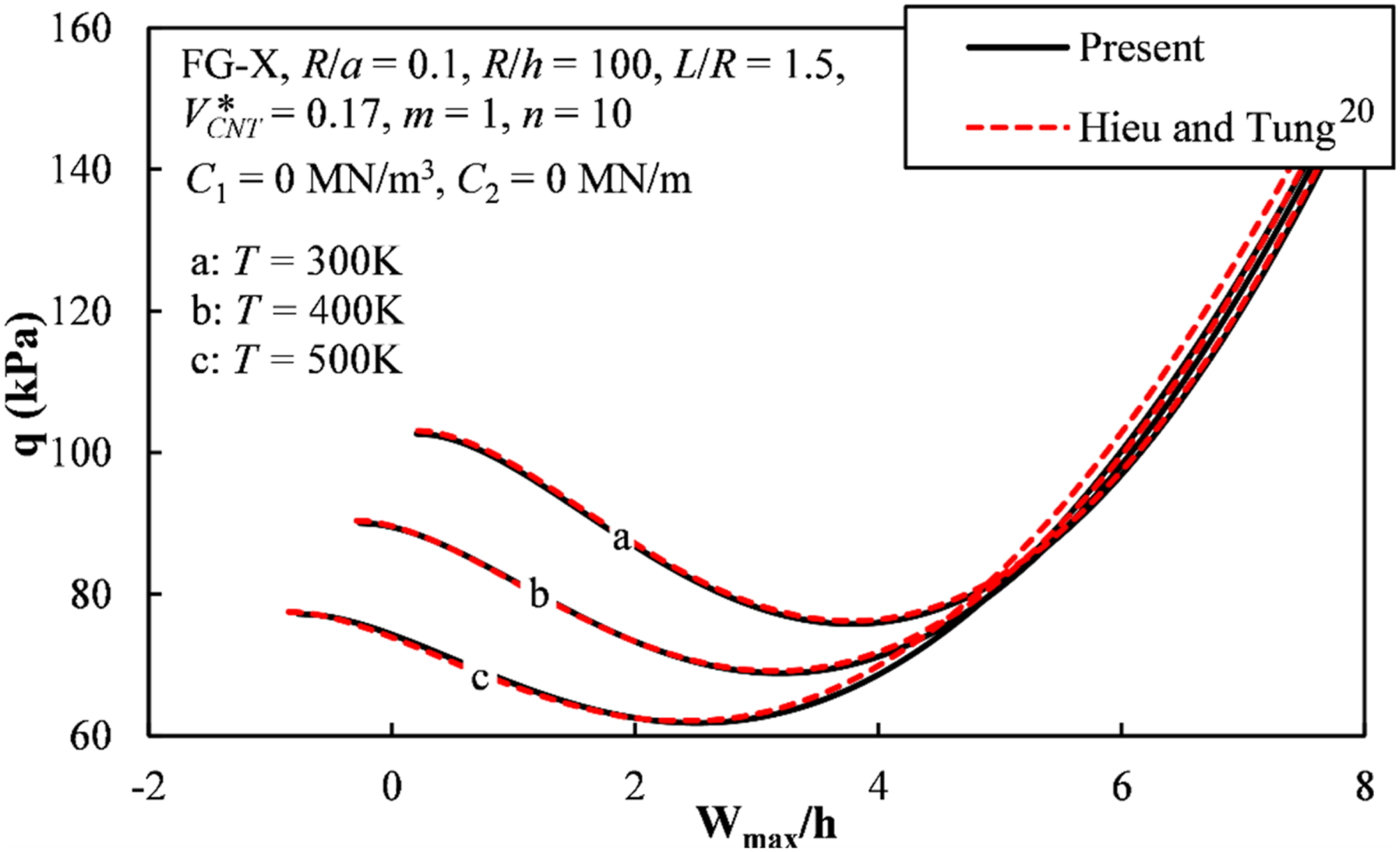
Validation on the postbuckling curves of CNT-reinforced toroidal shell segments.
The CNT-reinforced composite in this paper is chosen with the Poly (methyl methacrylate) (PMMA) matrix. The material properties of CNT, matrix, and efficiency parameters of CNT are taken according to the results of Shen.12–14
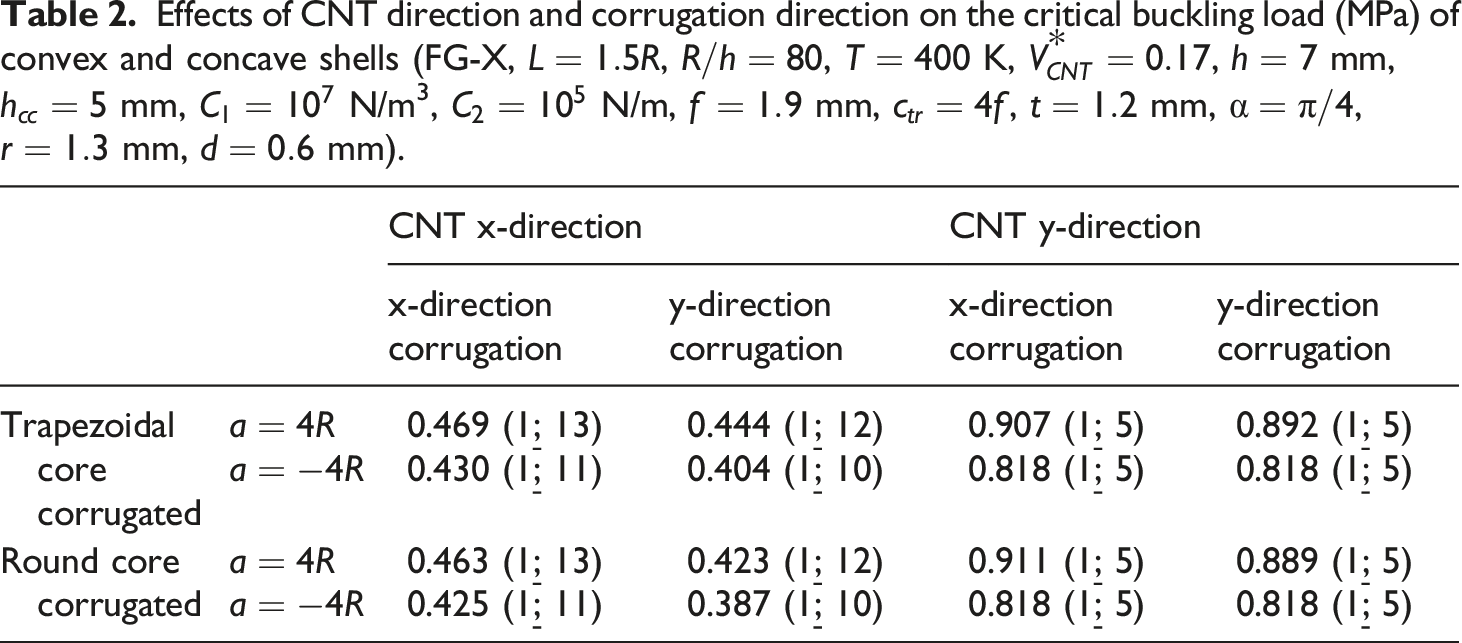
Effects of CNT direction and corrugation direction on the critical buckling load (MPa) of convex and concave shells (FG-X,
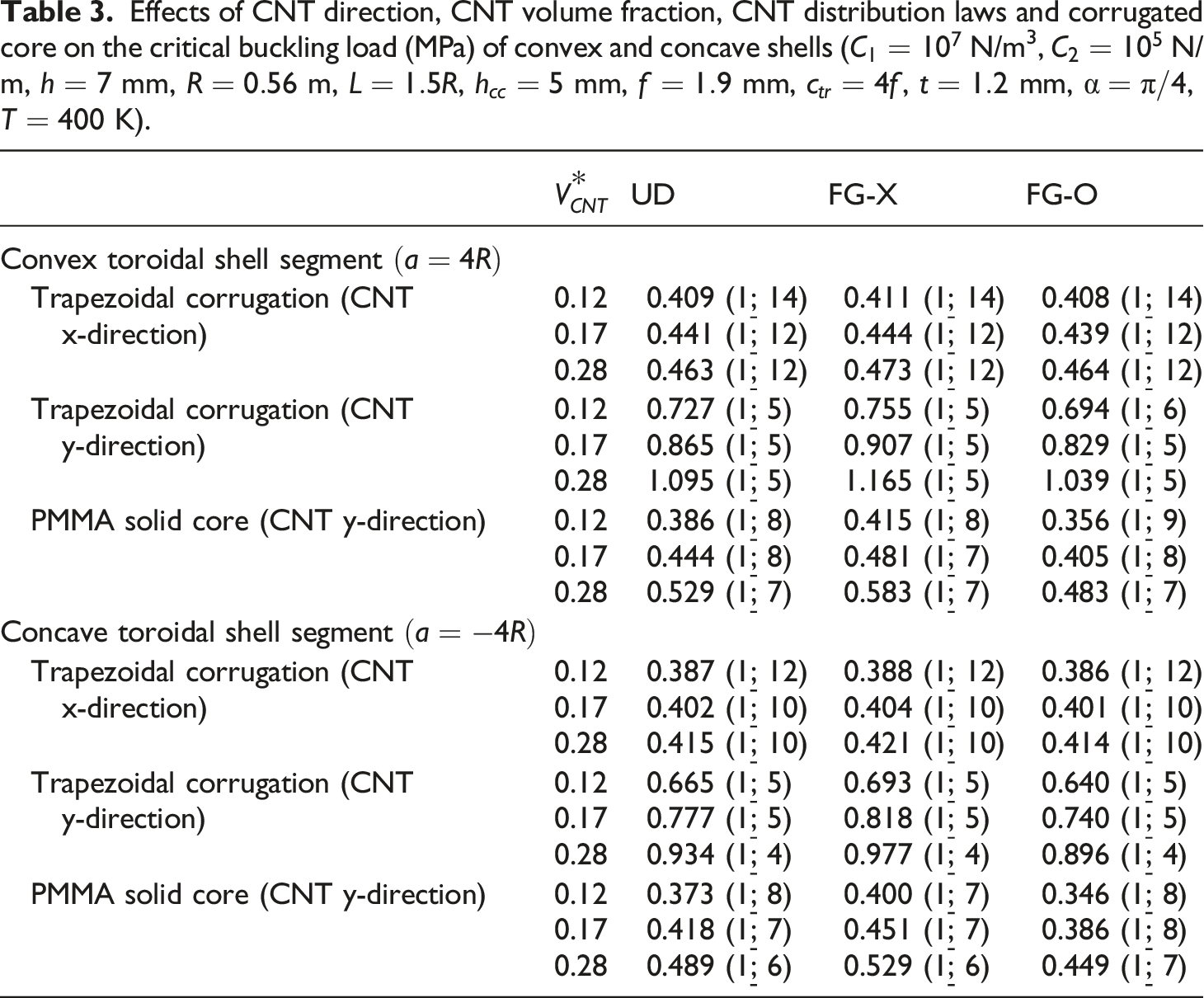
Effects of CNT direction, CNT volume fraction, CNT distribution laws and corrugated core on the critical buckling load (MPa) of convex and concave shells (
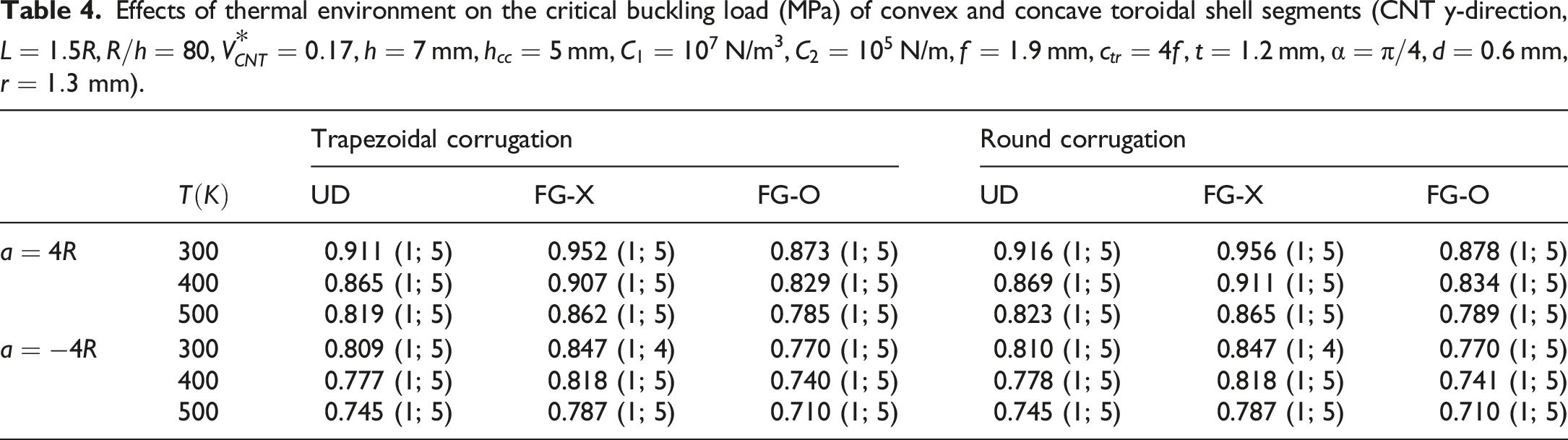
Effects of thermal environment on the critical buckling load (MPa) of convex and concave toroidal shell segments (CNT y-direction,
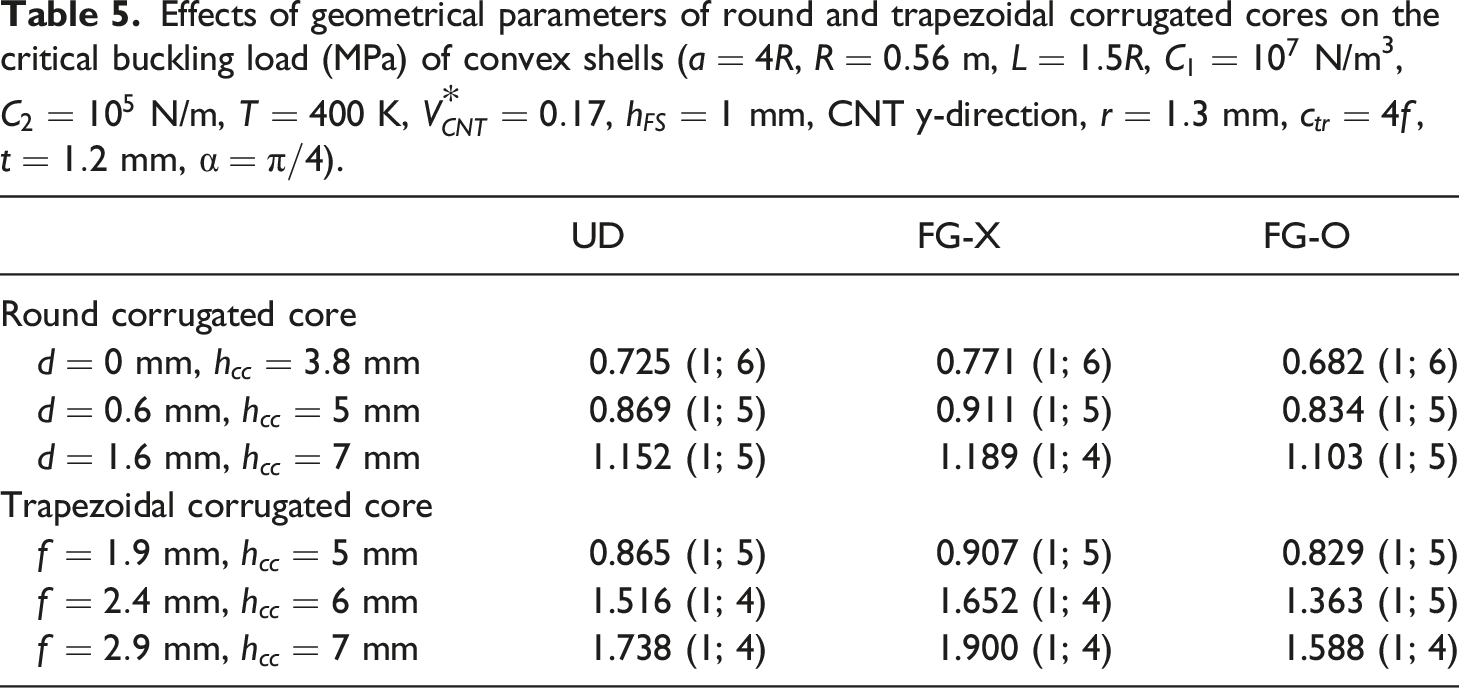
Effects of geometrical parameters of round and trapezoidal corrugated cores on the critical buckling load (MPa) of convex shells (
The postbuckling curves of CNT x- and y-direction shells with corrugated core and solid core are compared in (Figure 3(a) and (b)). The trends of postbuckling curves in the case of corrugated core and solid core and in the case of CNT x- and y-direction shells are clearly different. The effects of CNT distribution laws on the postbuckling curve of toroidal shell segments with corrugated core are shown in (Figure 3(c) and (d)) for convex and concave shells, respectively. Clearly, the postbuckling strength of the FG-X shells is the largest, the next is UD shells, and the last is FG-O shells. The upward trends of the postbuckling curves of the concave shell are significantly larger than those of the corresponding convex shell. In contrast, the upward trend of each shell with different CNT distribution laws is almost the same. Effects of corrugated core types and CNT distribution laws on the postbuckling curves of shells.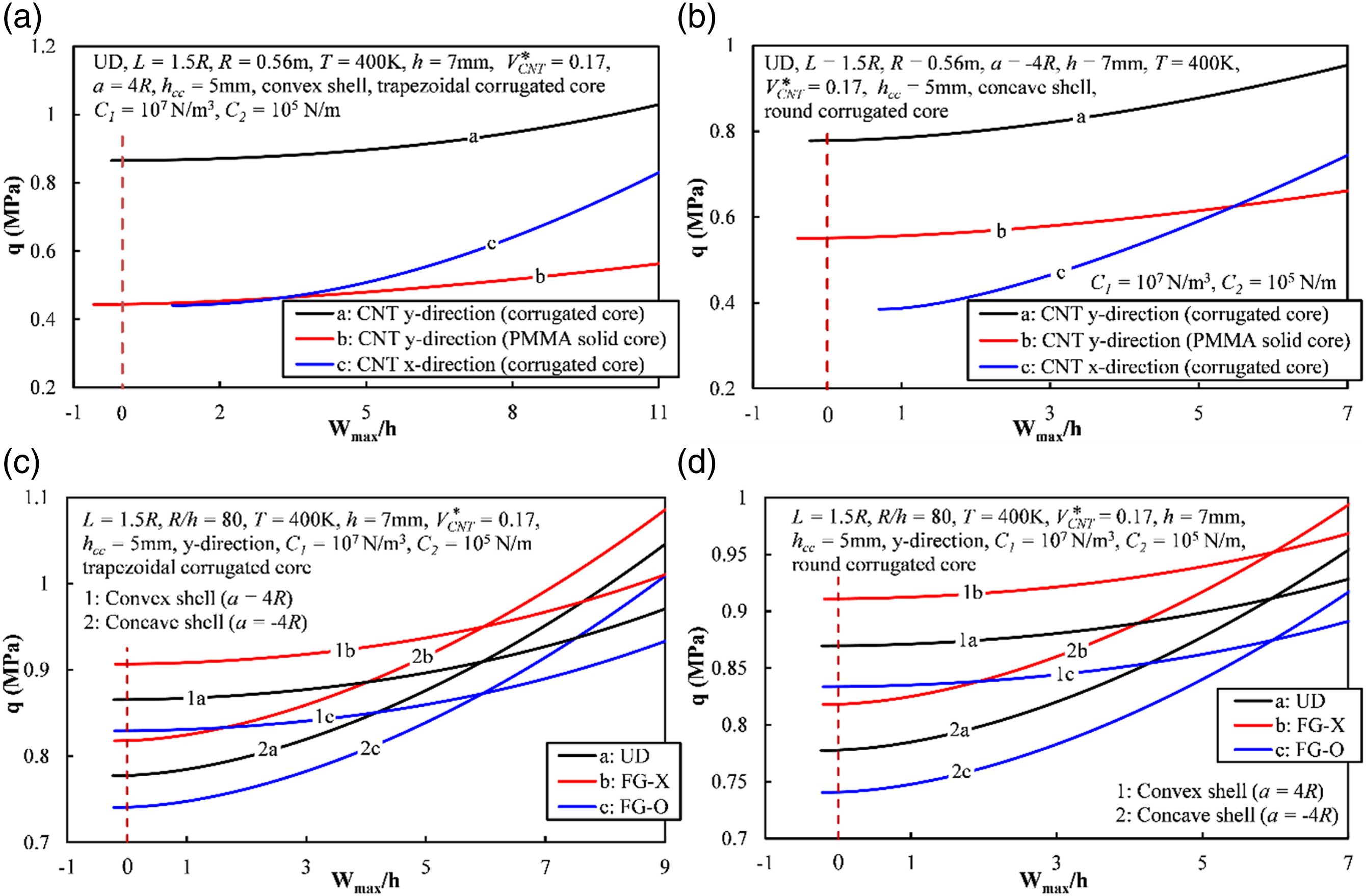
The effects of the CNT volume fraction on the postbuckling strength of toroidal shell segments with the corrugated core can be observed in (Figure 4(a) and (b)). As can be seen, the load-carrying capacity of the shell in the postbuckling state increases if the CNT volume fraction increases. Due to the increase in CNT volume fraction, the stiffnesses of the shell increase, leading to an increase in postbuckling load-carrying capacity. The deterioration of material parameters due to environment temperature leading to a decrease in the load-carrying capacity in the postbuckling state of the shell is clearly shown in (Figure 4(c) and (d)), and the complex trends of the curve can be observed with the concave shell. Negative pre-deflections can also be observed on curves due to the expansion of shells in high temperatures. Figure 4(e) and (f) show the effects of foundation parameters on the postbuckling behavior of shells. The numerical examples validate the large increase of the postbuckling strength with the increase of foundation parameters. In particular, the snap-through phenomenon also decreases sharply when the parameters of the foundation increase. Another important remark is that with the large values of foundation parameters, the postbuckling strength of concave shells is larger than that of convex shells in the large region of deflection. Effects of CNT volume fraction, thermal temperature, and elastic foundation parameters on the postbuckling curves of toroidal shell segments.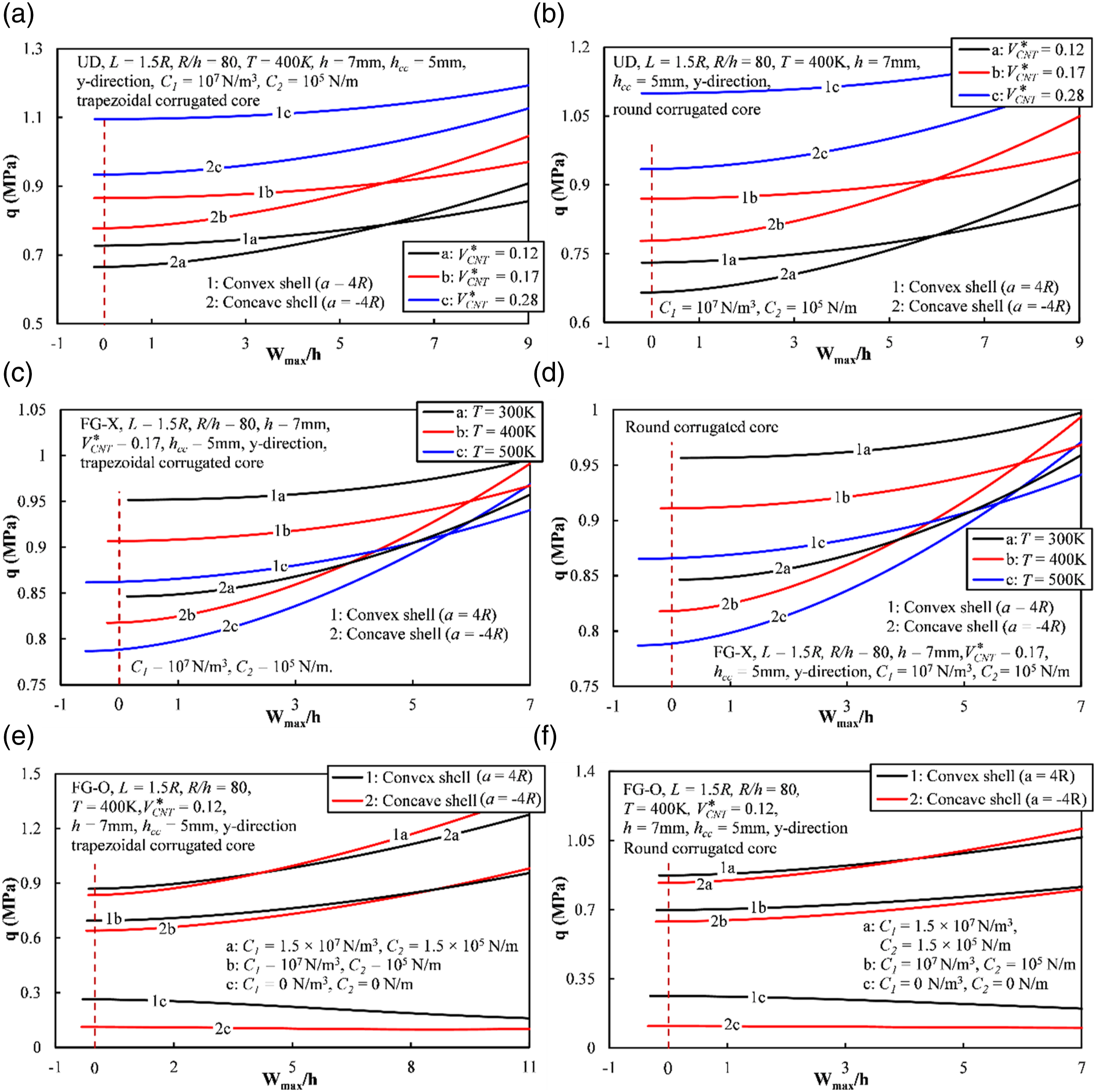
Different longitudinal radii for the convex shell, cylindrical shell, and concave shell are investigated in (Figure 5(a) and (b)). Clearly, in the small region of deflection, the advantage of the convex shell is clearly shown. In contrast, in the large region of deflection, the load-carrying capacity in the postbuckling state of concave shells is larger than that of convex shells, respectively. Additionally, for each type of concave and convex shell, the trends of the curves do not change much when the longitudinal radius changes. The comparisons of the postbuckling behavior of shells with different geometrical parameters of corrugation are presented in (Figure 5(c) and (d)). Similar to the cases of critical buckling load, the corrugated core makes the eccentricities of the two face layers increase sharply when the core thicknesses increase and the total stiffnesses of the corrugated-core shell significantly increases. Therefore, the significant increases in postbuckling strength of toroidal shell segments are obtained in these examples for both trapezoidal and round corrugations. In addition, the trend of the postbuckling curves is different in different cases. Effects of longitudinal radius and geometrical parameters of corrugation on the postbuckling curves of toroidal shell segments.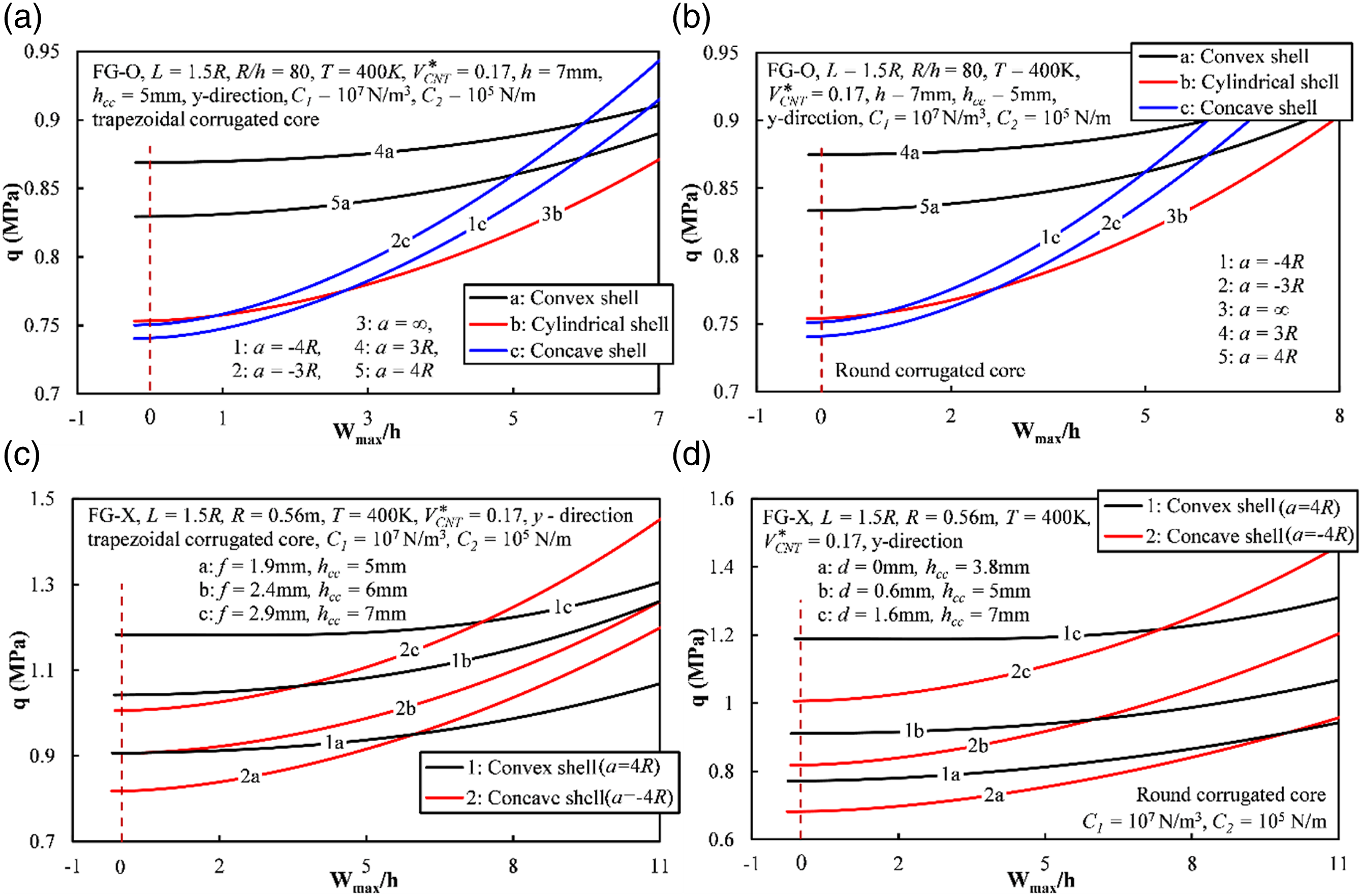
Conclusion remarks
To evaluate the effect of the trapezoidal and round corrugated core on the buckling behavior of the corrugated-core toroidal shell segments with CNT-reinforced face sheets subjected to the radial pressure, a geometrically nonlinear buckling approach was presented. Three types of CNT-distributed laws for face sheets were considered. The most important observation of this paper is that the influence of the corrugated core on the buckling behavior of the toroidal shell segments subjected to radial pressure is significant. The main remarks have been achieved as follows: (i) The superior advantage of the corrugated core (CNT y-direction shells) in increasing the critical load and postbuckling strength compared with the solid core (CNT y-direction shells) is obtained. (ii) The advantage of the FG-X distribution is shown to be superior to the UD and FG-O distributions for solid core shells, however, this advantage is negligible in the case of corrugated-core shells for both concave and convex shells. (iii) The critical buckling loads and postbuckling strength of round corrugated-core shells are slightly larger than those of trapezoidal corrugated-core shells.
This study is a good example for continuing to perform research on other corrugated-core structures, as well as continuing to develop equivalent techniques for corrugated structures according to shear deformation theories.
Footnotes
Declaration of conflicting interests
The author(s) declared no potential conflicts of interest with respect to the research, authorship, and/or publication of this article.
Funding
The author(s) received no financial support for the research, authorship, and/or publication of this article.
