



Abstract
The current study attempts to evaluate the low-velocity impact (LVI) behavior of jute and banana fiber-based hybrid and non hybrid green composites. The proposed composites are fabricated using compression moulding method with variety of positioning of layers namely jute-rubber-jute-rubber-jute (JRJRJ), banana-rubber-banana-rubber-banana (BRBRB), jute-rubber-banana-rubber-jute (JRBRJ) and banana-rubber-jute-rubber-banana (BRJRB). Thus developed composites are subjected to LVI testing using conical and hemispherical shaped impactor in drop weight impact testing machine and different impact velocities of 5 m/s, 10 m/s and 15 m/s. Based on the ability of the proposed composites to absorb energy, coefficient of restitution (CoR), energy loss percentage (ELP), and failure behaviour, the suggested flexible composites’ performances are assessed. The study reveals that JRJRJ composite exhibits better energy absorption capability and BRBRB exhibits least energy absorption capability compared to its counterparts. The damage study reveals that hemispherical impactor leads to more damage area due to its larger contact area whereas, conical impactor results in local penetration. Results reveals that inclusion of jute fiber as reinforcement results in better LVI properties compared to banana fiber. It is also clear that the presence of a compliant matrix improves energy absorption and damage resistance in flexible composites.
Introduction
To shield the target from impact loads, armour made of flexible materials is frequently utilised.1–3 The flexible materials are made up of woven textiles formed of fibres. The energy absorption of such materials has been extensively evaluated using the experimental and analytical techniques.4–13 Out of the different mechanisms, one in particular may have a greater influence depending on a number of variables, such as the yarn’s material properties,14,15 the projectile’s form16,17 and constraints.18–20
Polymer-based matrices are used to reinforce the fibre to create a class of composites known as polymer matrix composites (PMCs). The impact behaviour of the PMCs varies depending on the type of matrices used to reinforce the woven fabric. The PMCs exhibit different mechanical and damage behaviour depending on the type of matrix used. 21 In their comparative investigation, Vieille et al.22,23 indicated that the greatest ratio of dissipated energy is provided by carbon/epoxy based PMC. Additionally, they demonstrated that carbon/PPS’s energy dissipation upon impact was nearly equal to that of carbon reinforced epoxy based composite. The research done by Lee et al. 24 make the case that stiff composites can withstand more energy than compliant composites. However, Gopinath et al. 25 demonstrated that composites which are compliant in nature outperform rigid composites as energy absorbers. Wang et al. 26 developed PMCs making use of matrices of four varieties and assessed for their impact behaviour. The obtained results supported the claim made by Gopinath et al. 25 indicating that compliant composite can absorb more energy and deform more than stiffer composites. Matrix employed in PMCs controls how much deformation occurs, which has an influence on local strain and impact resistance. Numerous researchers are investigating the type of damage that occurs in a composite developed using thermoset (TS)27–32 and thermoplastic (TP)22,33–39 matrices. It is found that composites making use of TS matrix results in more damage compared to TP composites. 33
It is crucial to pick the reinforcement and matrix of composites carefully in order to get the appropriate impact characteristics. It is clear from the studies done so far that TP is preferable over TS for enhancing the impact resistance of composites. 37 Although, stiff composite offers intriguing mechanical capabilities, its impact behaviour is negatively impacted by their hardness and rigidity. To improve the impact qualities of the PMCs, it is therefore necessary to take into account the usage of flexible matrices.
Natural rubber, which is compliant, may be used in place of TS matrix. In their comparison investigation, Vishwas et al. 40 revealed that employing natural elastomer in sandwich composite in the form of core improves the impact response and minimises the amount of the damage when compared to thermoset based composite. Rubber in various forms have been successfully employed in various engineering applications and have proven to be efficient energy absorbers.41–43 Ahmad et al. have completed a substantial amount of work44,45 For different combinations of plain and coated textiles, it was discovered that rubber-coated fabrics significantly improve energy absorption by 45%–59% as compared to the neat system. Roy et al. 46 looked at the Kevlar reinforced rubber composite’s impact behaviour demonstrated that rubber coated cloth absorbs more energy than plain fabric. Stelldinger et al. 47 conducted experimental and computational analyses of the impact characteristics of composite laminates with integrated EPDM rubber layers which showed that the positioning of EPDM layers had a significant impact on the damage threshold loads. Nowadays, natural fibres (NF) are employed as reinforcement in the composites used in various technical applications instead of synthetic fibres (SFs). The primary benefit of employing NF is that they have superior specific strength, are more ecologically friendly, have better vibration and acoustic qualities, etc.48–51 Various NFs, including coir, jute, sisal, cotton, and others are available for use. Due of its superior mechanical qualities, jute is the most widely utilised fibre in PMCs out of all the NF now available. 52
The study of the impact behaviour of composites may be divided into two primary categories: one is the estimation of the composite’s capacity to absorb energy, and the other is the estimation of the composite’s resistance to damage. 53 Due to the fact that the damage generated by low-velocity impact (LVI) is internal and undetectable, it differs significantly from the damage brought on by high-velocity impact (HVI) and might eventually result in catastrophic collapse. The residual characteristics of composites treated to LVI vary according on the type and severity of damage they have sustained.54–57 Consequently, it is crucial to conduct a comprehensive analysis of the impact-related damage.27–32
Up to this point, all research on PMCs has been on stiffer composites and have poor impact capabilities, as well as flexible composites for ballistic applications. To the best of the author’s knowledge, no research on the LVI behaviour of compliant composites hybridized using natural fibers along with natural rubber as matrix has been published to date. In the current study, it is examined how LVI loading on hybrid and non-hybrid flexible composites based on jute, banana, and rubber affects energy absorption, CoR, ELP, and damage behaviour when impacted by conical and hemispherical impactor.
Experimentation
Materials and methods
The compliant composite materials are made of woven jute and banana fabrics, sheets of natural rubber, and prepeg made of B-stage cured natural rubber to bond with jute, banana, and rubber sheets together. Go Green Products store in Chennai, India is where you can get the jute and banana cloth. The natural rubber sheets were given by local farmers working on rubber plantations, while the B-stage cured prepeg was bought from Manjunath Tyres in Baikampady, Mangaluru, India. Jute, banana, and natural rubber sheets are stacked in the right order, and then using a compression moulding process at the optimum temperature, they are joined together. Each stack was then placed in between the plates of a compression moulding machine and subjected to a temperature of 138°C for 6.5°min at 25 kg/cm2, these parameters being based on the rheological properties obtained earlier.
12
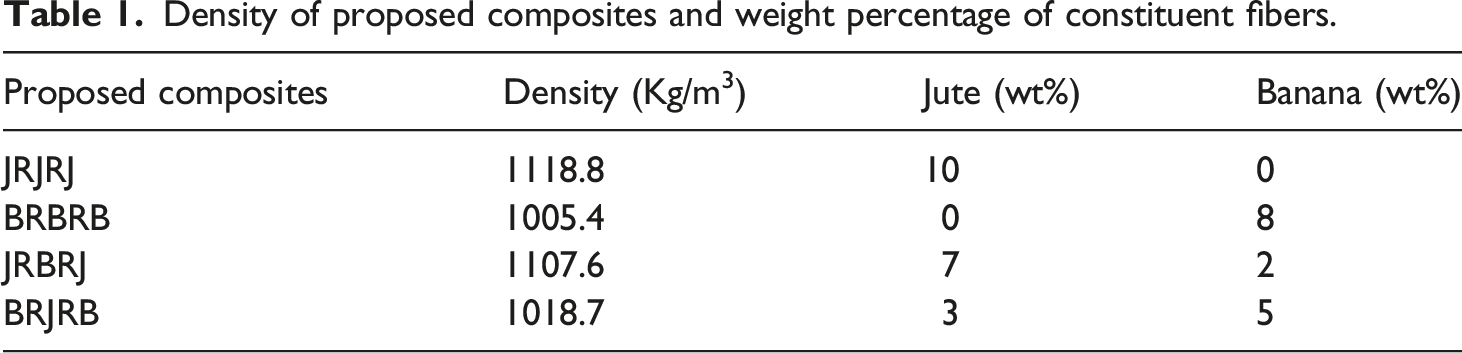
All the produced laminates had a thickness of 10 mm. The produced flexible composite laminates are cut into specimens with a dimension of 150 × 150 mm. Figure 1 depicts the procedures necessary to create flexible composite laminates. Table 1 predicts the density of the proposed composites along with the weight percentage of constituent fibers. Steps involved in manufacture of flexible composites. Density of proposed composites and weight percentage of constituent fibers.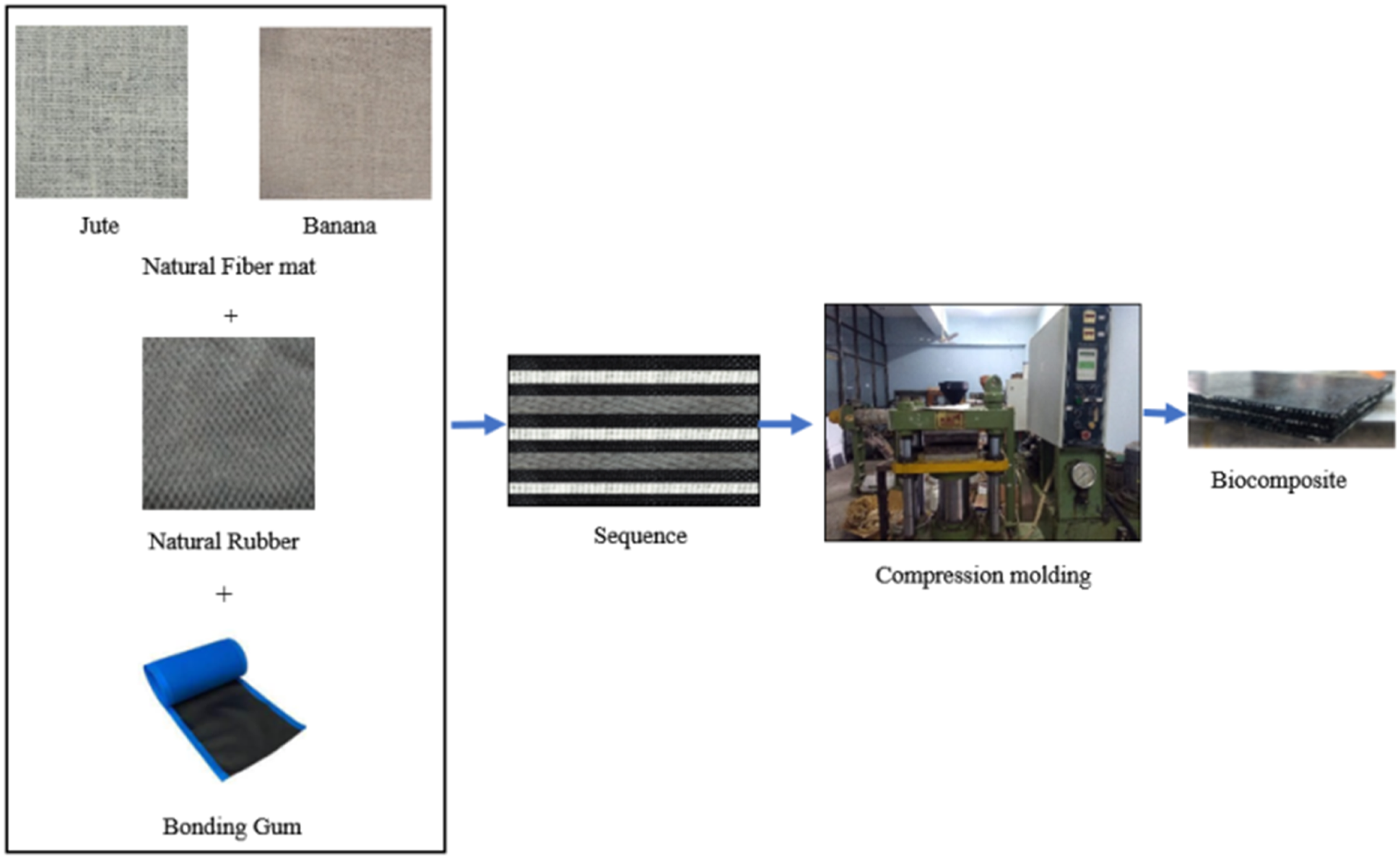
Formulation of rubber compound.
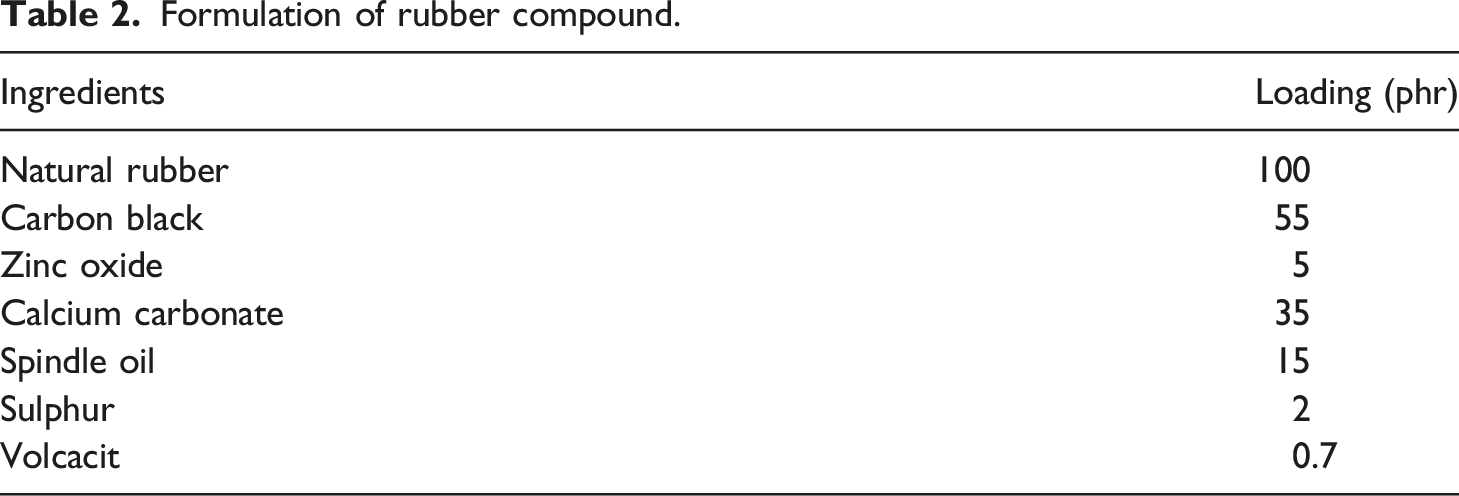
The proposed rubber compound was compounded on a two-roll mill and cured under a hydraulic press. The rheometer results are presented in Figure 2. Rheometer graph.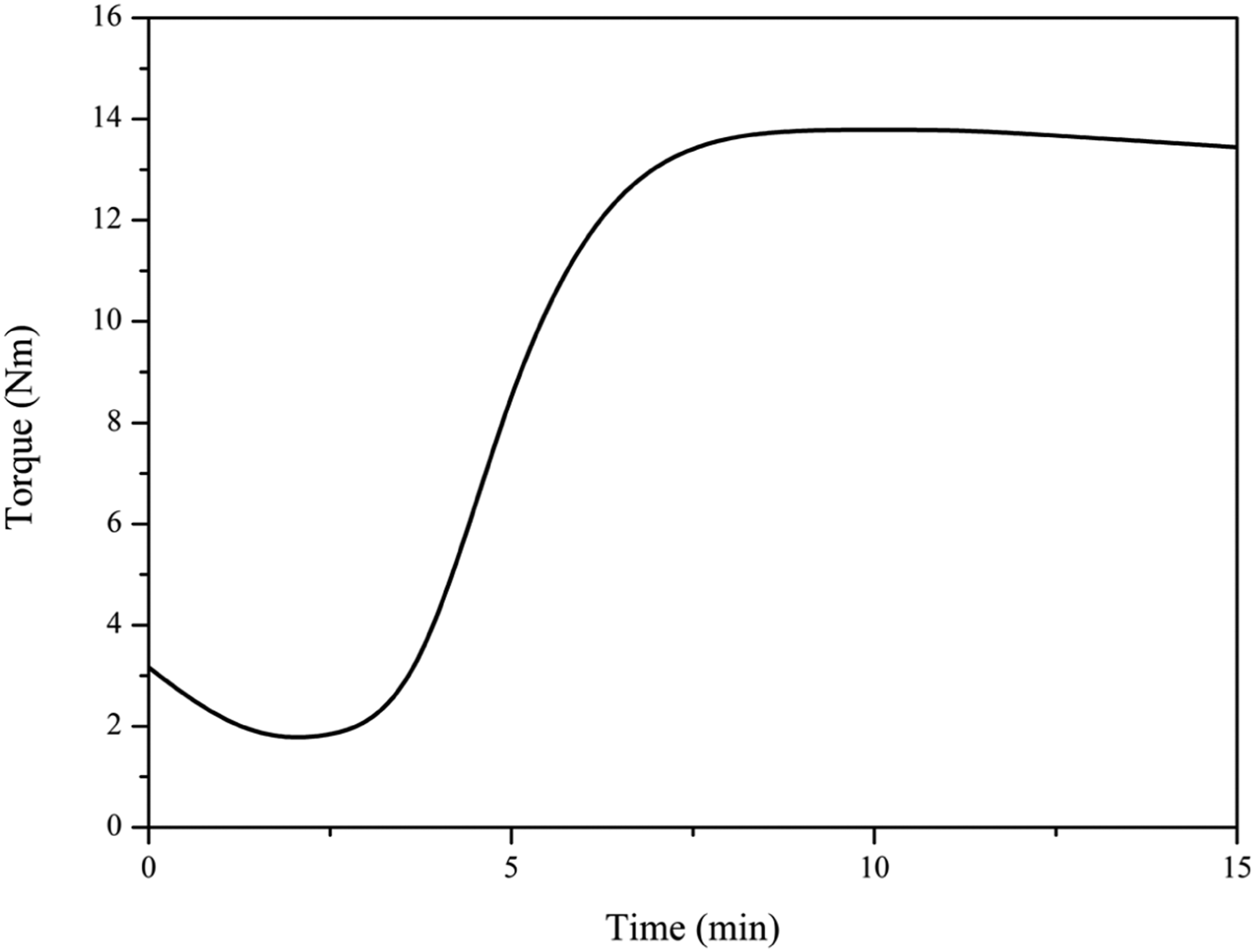
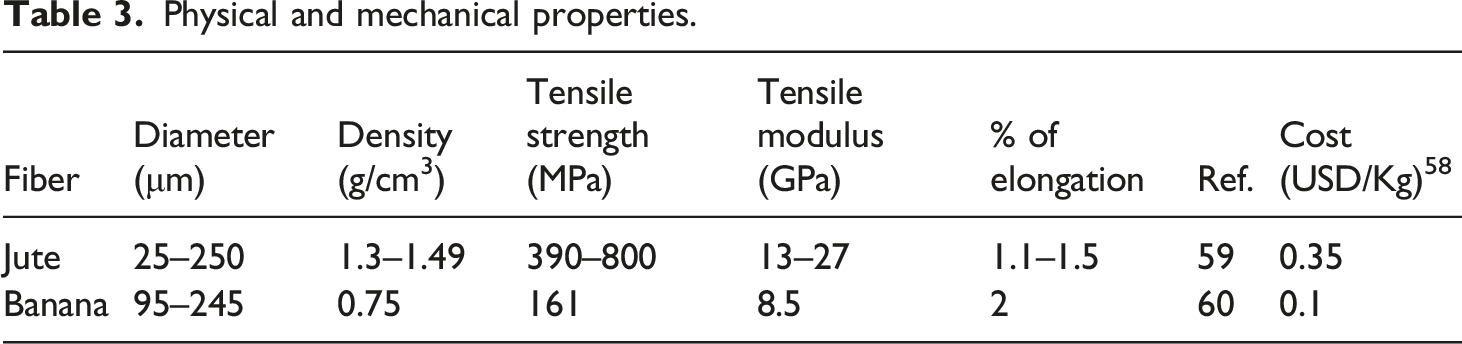
Physical and mechanical properties.
LVI testing
The LVI testing of the suggested flexible composites is carried out using drop weight impact testing equipment with conical and hemispherical shaped impactors as shown in Figures 3 and 4 according to ASTM D7136 standard. The LVI testing facility is equipped with rebounding arresting system. LVI testing arrangement. Conical and hemispherical impactors.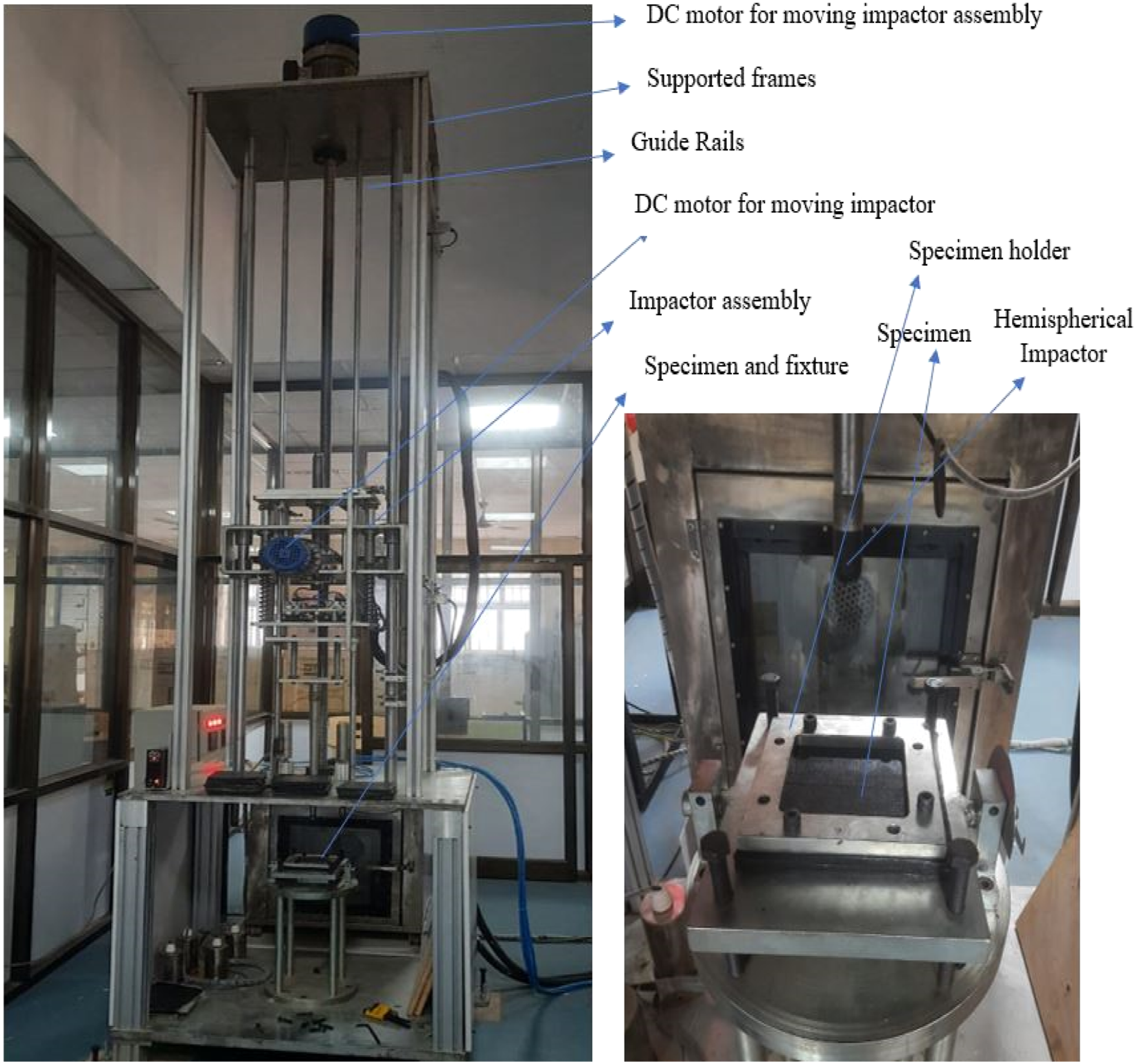
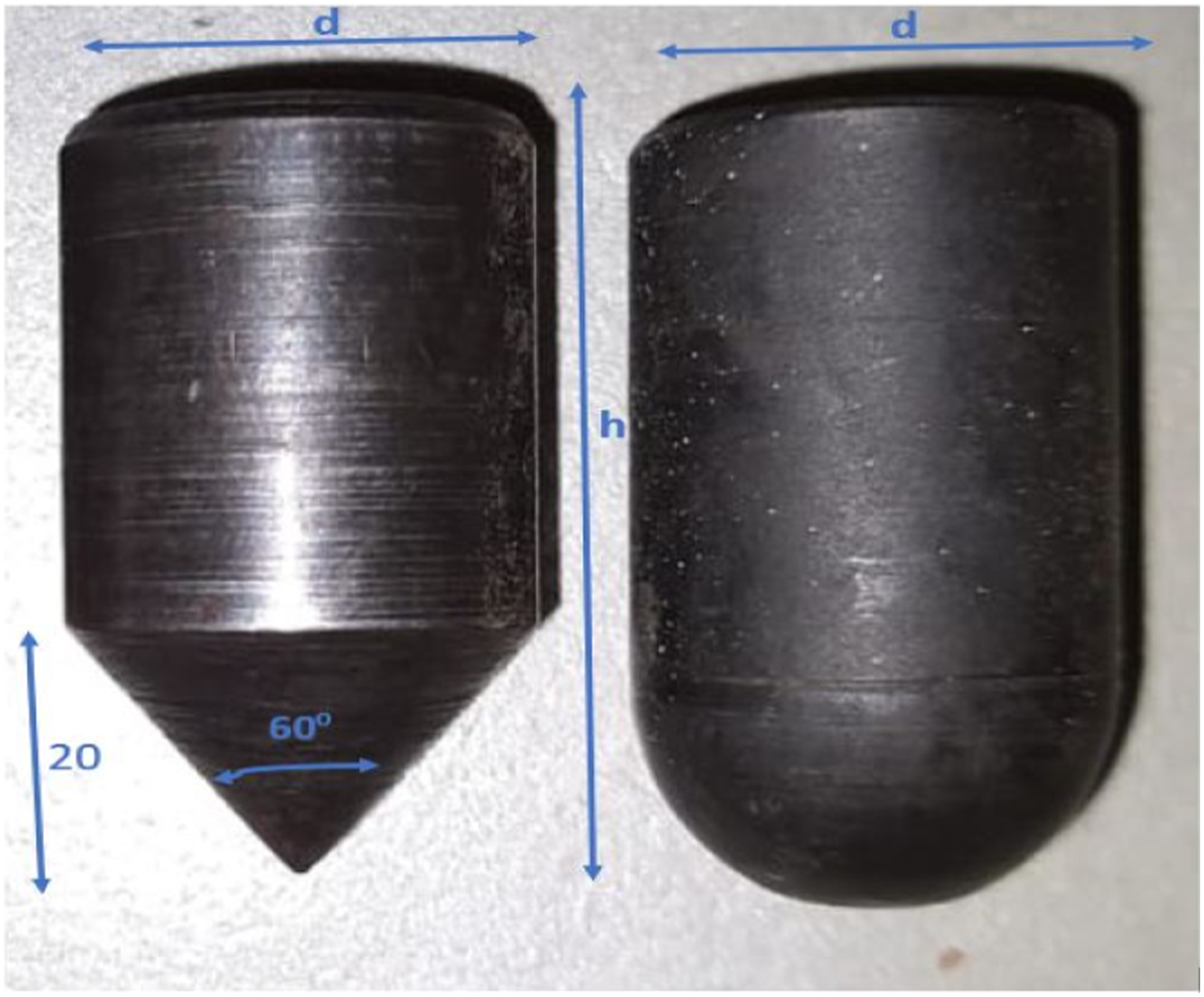
The weight of the impactor assembly is 8.09 kg, and the impactors’ diameter and height are 18 mm and 50 mm, respectively. The impact testing was performed with specimens in the specimen holder of the impact machine at three different heights of impact to get impact velocities of 5 m/s, 10 m/s, and 15 m/s. Impact energy as a consequence is 101.12 J, 404.5 J, and 910.125 J, respectively. The experiment was conducted in a temperature-neutral environment. The impactor’s drop height was altered to achieve the various impact energies. The stored energy of the impactor increases as the height of the drop rises. After being released from a specified height, the impactor assembly’s potential energy is converted to kinetic energy.
Results and discussions
Absorption of energy
An examination of energy-time traces is presented with the help of schematic energy-time graph as shown in Figure 5 from which the absorbed and elastic energies are derived during low velocity impact study. Schematic of typical energy-time graph obtained during low velocity impact.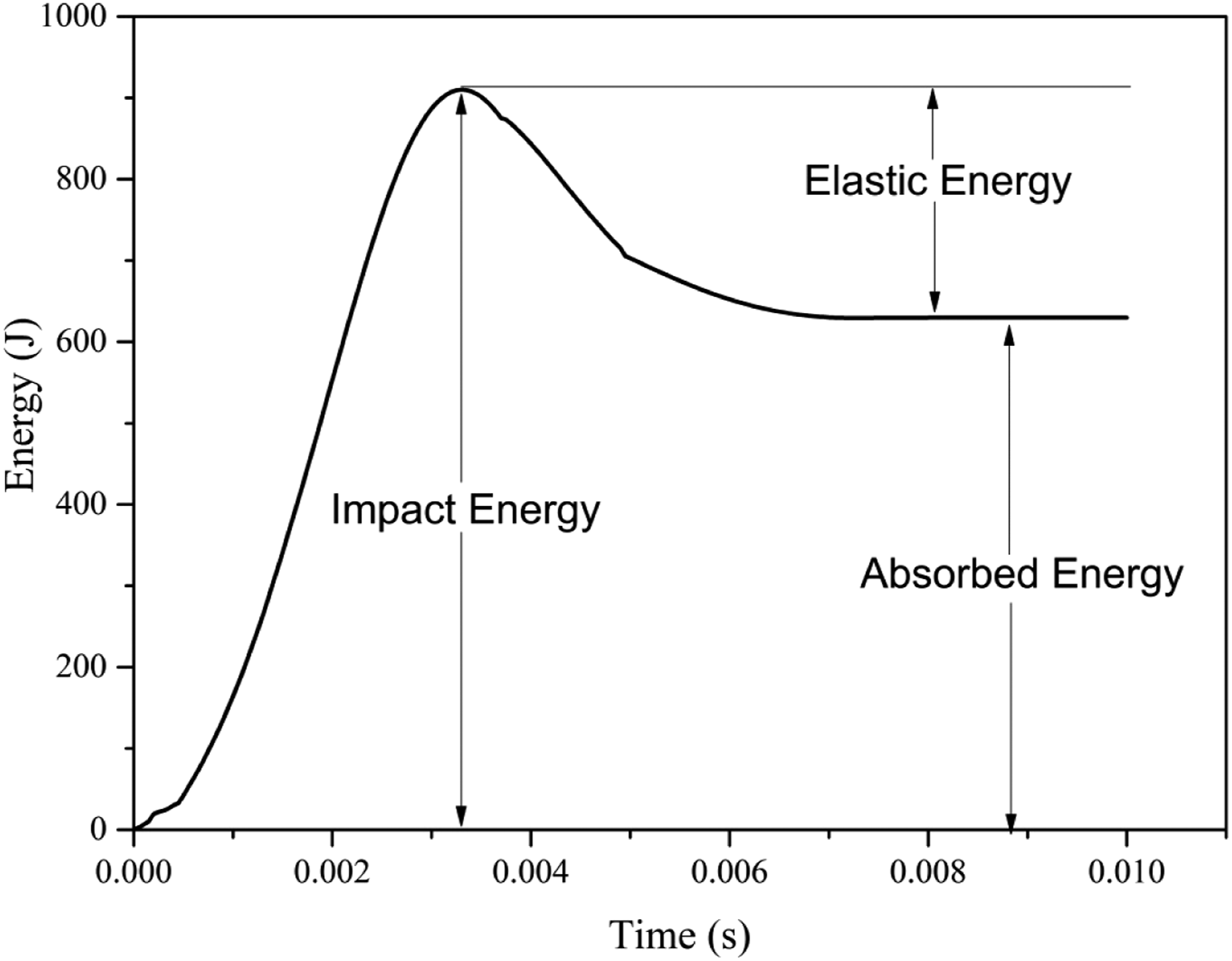
During an impact event, out of the total energy of impact, some amount of energy gets dissipated by the specimen in the form of damage formation. This is referred to as the absorbed energy. From the moment of contact (t = 0 s), the impactor delivers its kinetic energy to the specimen, out of which some amount of energy is stored within the specimen in the form of elastic deformation and the remaining is dissipated mainly by development of damage and negligible amount of energy is dissipated through friction, sound, and heat. Once the impactor completely transfers its kinetic energy to the specimen, the entire kinetic energy of the impactor is converted into elastic strain energy and stored in the specimen. The curve then shows a declining trend during which the stored elastic energy is returned back to the impactor until separation. The final energy values correspond to the energy absorbed by the specimen. 61
Energy absorption of compliant composites.
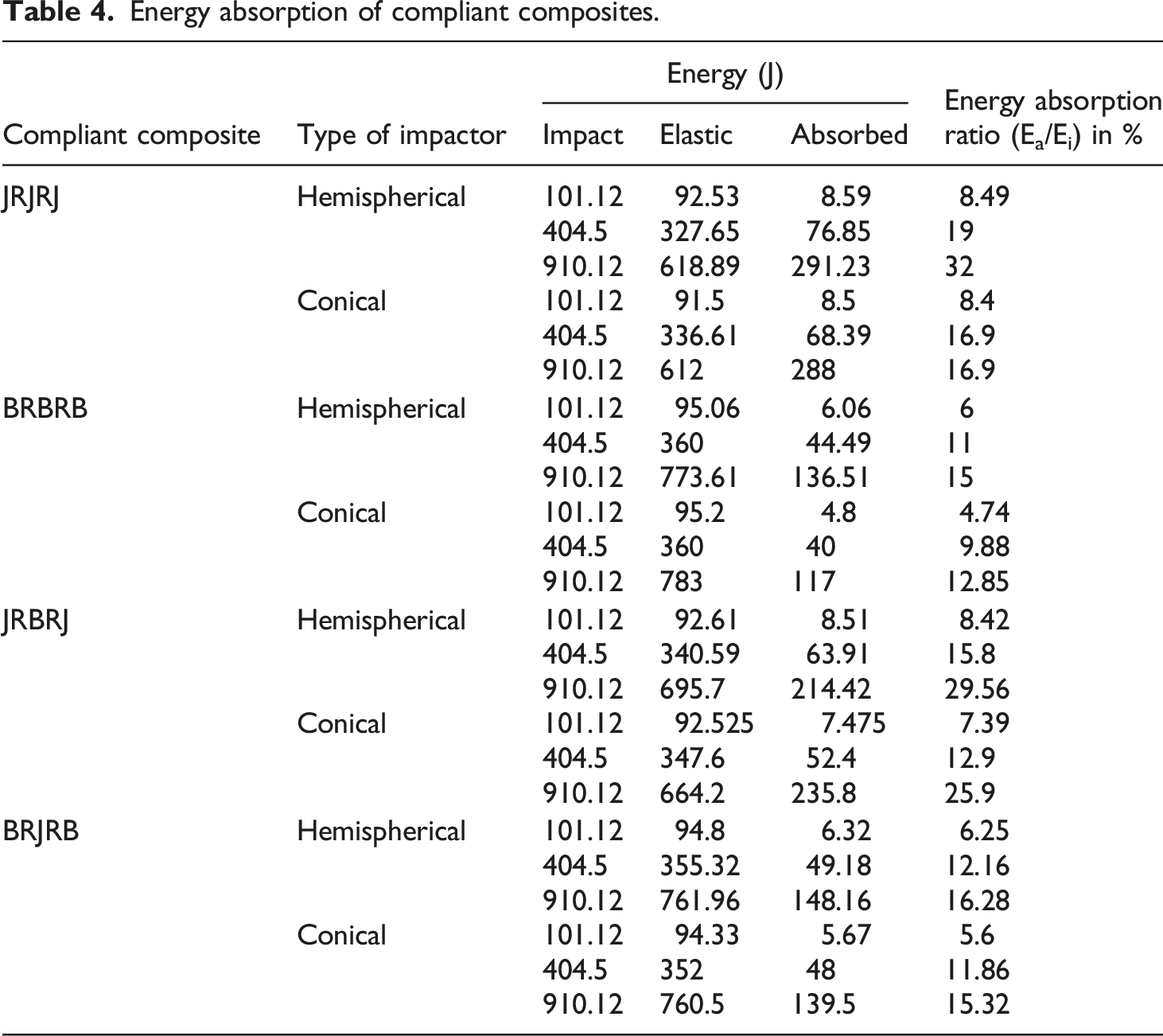
It has been discovered that regardless of the order of stacking, the ability of the compliant composites to absorb energy rises with enhancement in impact energy. For the purpose of comparison, Figure 6 shows the variance in energy absorption of the suggested composites at various energy levels and when affected by various impactors. Energy absorption behaviour of proposed composites at different impact energies when impacted by hemispherical and conical shaped impactors.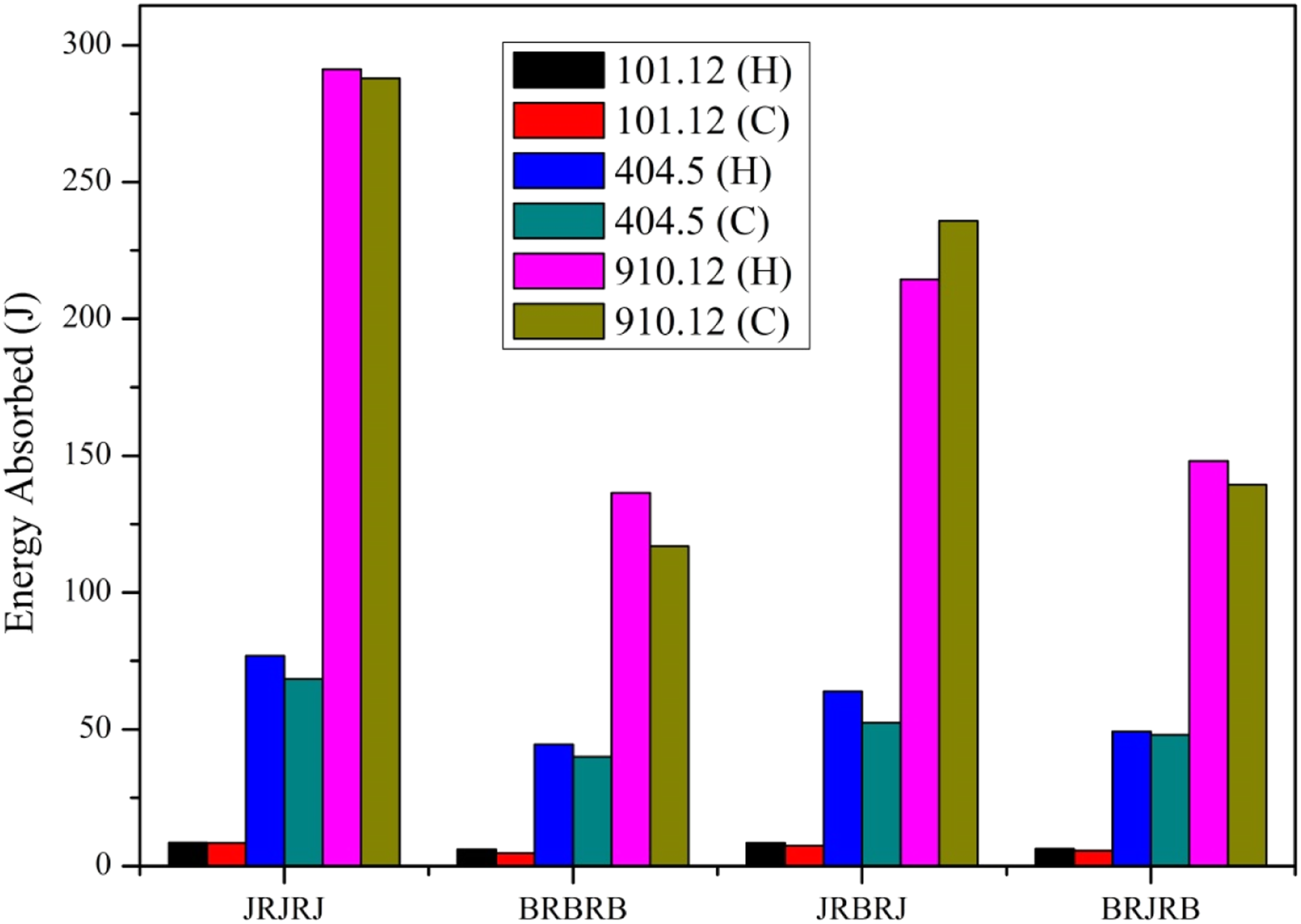
According to Figure 6, proposed flexible composites taken into consideration are sensitive to the order of stacking. No matter the stacking order taken into account, the absorption of energy by the compliant composites is nonlinear, indicating that the compliant composite’s plies are susceptible to perforation and that the residual energy, particularly at impact energies of higher values, declines. It can be seen that the energy absorption at given impact energy is highest in case of JRJRJ flexible composite followed by JRBRJ, BRJRB and BRBRB. Thus it can be concluded that the flexible composite having jute as reinforcement results in better energy absorption compared to the composite having banana fiber as reinforcement. Considering the hybrid composites, it can be seen that the hybrid composite having jute at the impact side exhibits better energy absorption compared to the hybrid composite having banana on the impact side. Hence jute is a better choice as reinforcement compared to banana fiber. The energy absorption of JRJRJ when impacted by hemispherical impactor at 910.12 J is 2.13 times greater than the energy absorpbed by BRBRB under same conditions. When we compare JRJRJ with the better energy absorber in case of hybrid composite that is JRBRJ, the energy absorbed by JRJRJ when impacted by hemispherical impactor at 910.12 J is 1.36 times more compared to JRBRJ under same conditions. The similar trend is observed in case of conical shaped impactor too.
Coefficient of restitution
The plastic deformation associated with both bodies makes it difficult to determine the velocity of the body following a collision between two bodies when the linear momentum equation is simply solved. As a result, the Coefficient of Restitution (CoR) is made use of. It is defined as the ratio of residual to impact velocity as shown in equation (1) and it ranges between zero to one. In real-world applications, CoR has a value between 0 and 1.62,63
Typically, energy is lost during an impact event, and equation (2) is used to get the energy loss percentage (ELP).
Coefficient of restitution (CoR) and energy loss percentage (ELP).
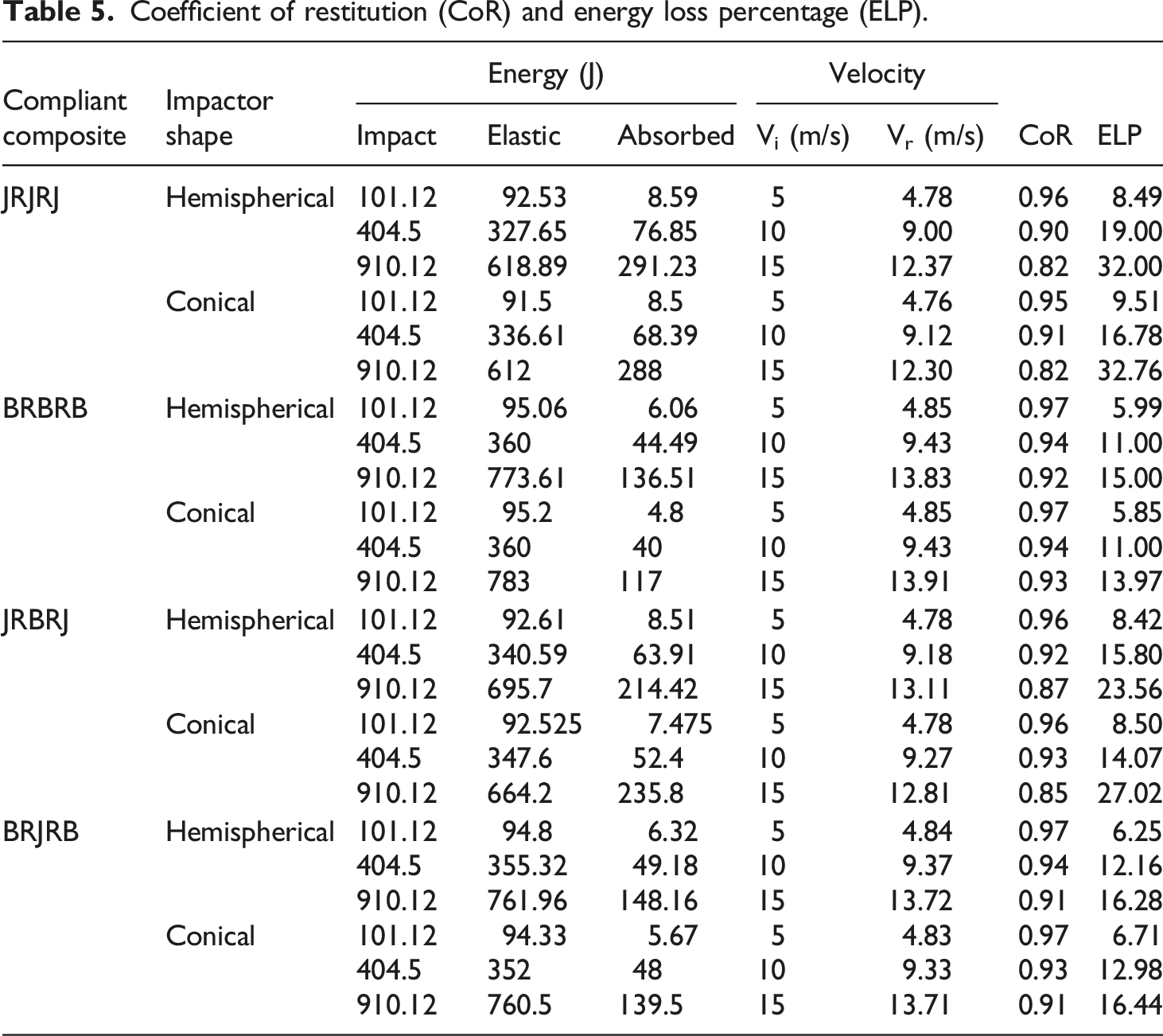
The CoR and ELP obtained for the various impact conditions of the proposed flexible composites are in supportive of the energy absorption trends obtained earlier and supports that JRJRJ absorbs better energy compared to its counterparts and also, the composite with jute on impact side is better energy absorber compared to the composite with banana on impact side. At any impact energy taken into consideration, the CoR for various stacking sequences of the proposed flexible composite is in the order BRBRB > BRJRB > JRBRJ > JRJRJ. This shows that the impactor bounces back more when it hits BRBRB because there is more energy remaining after the impact than there is in the other impactors, resulting in lesser absorption of energy by BRBRB compared to counterparts. Similarly, JRJRJ minimises the rebounding of an impactor to a larger level, and so has more energy absorbing capabilities than the other configurations. The results of energy absorption corroborate this argument.
When an impactor is struck to JRJRJ, its kinetic energy is dissipated to a higher amount than its counterparts because the majority of the impactor’s kinetic energy is converted to absorbed energy in the case of JRJRJ. ELP rises with increasing impact energy for each stacking sequence considered in the order JRJRJ > JRBRJ > BRJRB > BRBRB. As a result, ELP research shows that JRJRJ absorbs more energy than its competitors.
Force-time history
The force-time history for the proposed flexible composites at an impact energy of 910.12 J is presented in Figure 7. Force-time graphs for proposed flexible hybrid composites.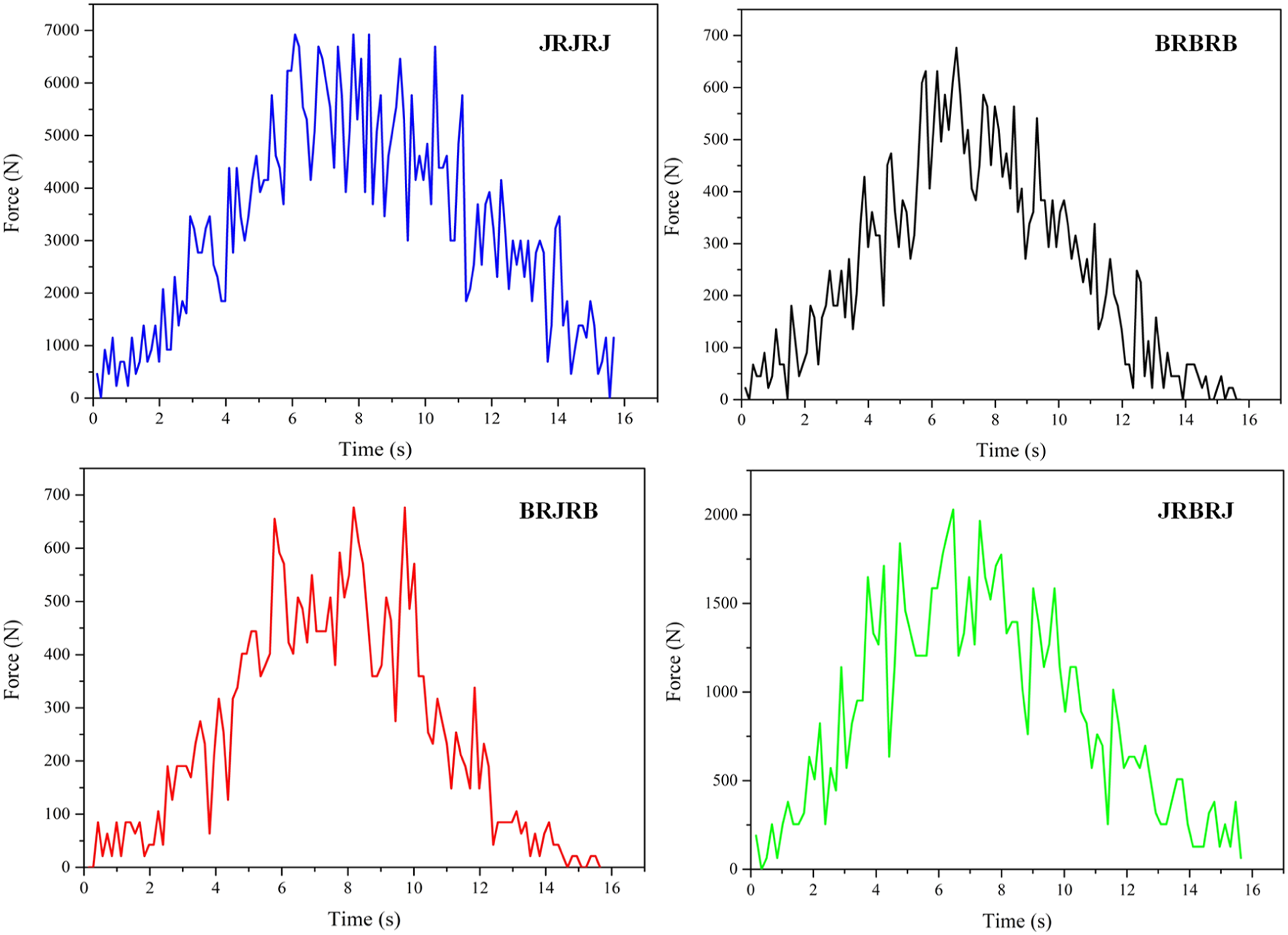
Critical force and peak force of the proposed flexible composites.
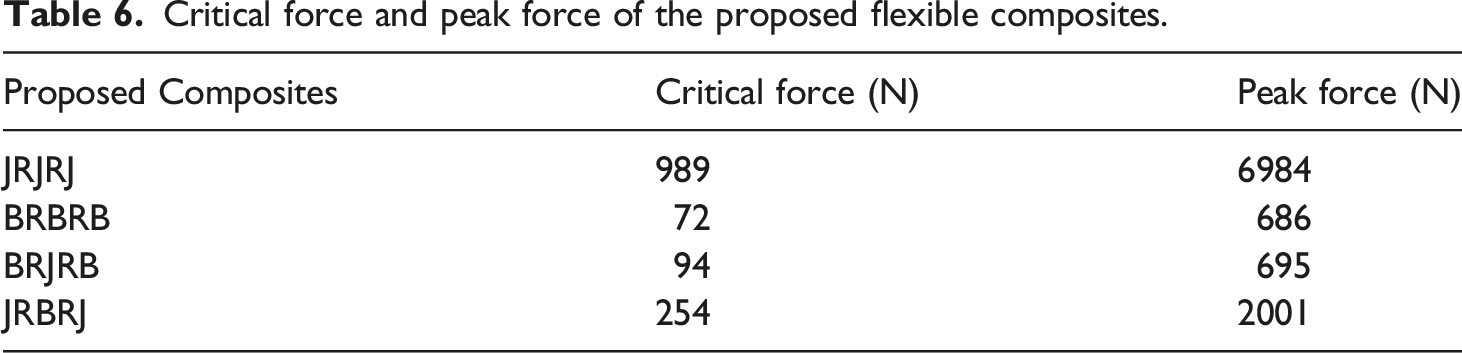
In the force-time curve, a smoothing process has been carried out to remove the fluctuations. A linear increase in the impact force is found out until a point where a drop in force value is observed. This drop in force value indicates a stiffness change of the composite due to damage initiation and is known as critical force (PCritical). Thus, the ability of the composite to resist damage is measured by PCritical. 67
Beyond the critical force, the impact force behavior can be associated with the development of damage in the composite. It is observed that there is no force perturbation after impact damage initiation force. Instead, the force curve immediately raises up to the peak value. This can be related to the absence of delamination kind of damage within the proposed flexible composite. It is worth noting that delamination, which is a dominant mode of failure in conventional stiff composites, 61 has been got rid off in the proposed flexible composites. Hence, the proposed flexible composite can be said to have higher delamination resistance.
Peak force is an indication of load-bearing capacity of the material. The variation in the peak force of the flexible composites at different impact energies considered in the present study is shown in Table 6. It can be seen that the peak force of JRJRJ is high at any impact energy considered compared to its counterparts indicating JRJRJ needs more amount of force to initiate the damage compared to the other three stacking sequences and thus exhibits higher resistance to damage with maximum energy absorption. Also, it is found that the force required to initiate the first damage is more in case of JRJRJ followed by JRBRJ, BRJRB and BRBRB. This shows that the stacking sequence plays a major role in determining the damage resistance and energy absorption of the proposed flexible composites. It can be observed that the contact time of the impactor with the specimen is constant at all the three impact energy levels considered in the present study. This trend is in agreement with the finding reported by Feraboli et al. 68
Damage study
Tested samples using the drop weight impact setup at high impact energy are taken for damage analysis using Image-J software. When the impactor impacts the composite with high impact energy, it damages the composite significantly. Damaged samples impacted by both hemispherical and conical impactors at impact velocities of 5, 10, and 15 m/s are shown in Figure 8. From the figures, it is observed that the damaged area is more when impacted by hemispherical impactor compared to the conical impactor. Local penetration is seen in case of conical impactor as the area of contact is lesser than the hemispherical impactor. In all cases, the area of the damage is more for a hemispherical impactor than the conical impactor. This indicates that energy absorbed is more when a hemispherical impactor is used. Thus, the more the contact area, the more energy is absorbed. From the four damage figures, indentation and deformation are formed in the composites without tearing and breaking of matrix and fibers for both hemispherical and conical impactors. Damaged samples of JRJRJ at different impact velocities and impactors.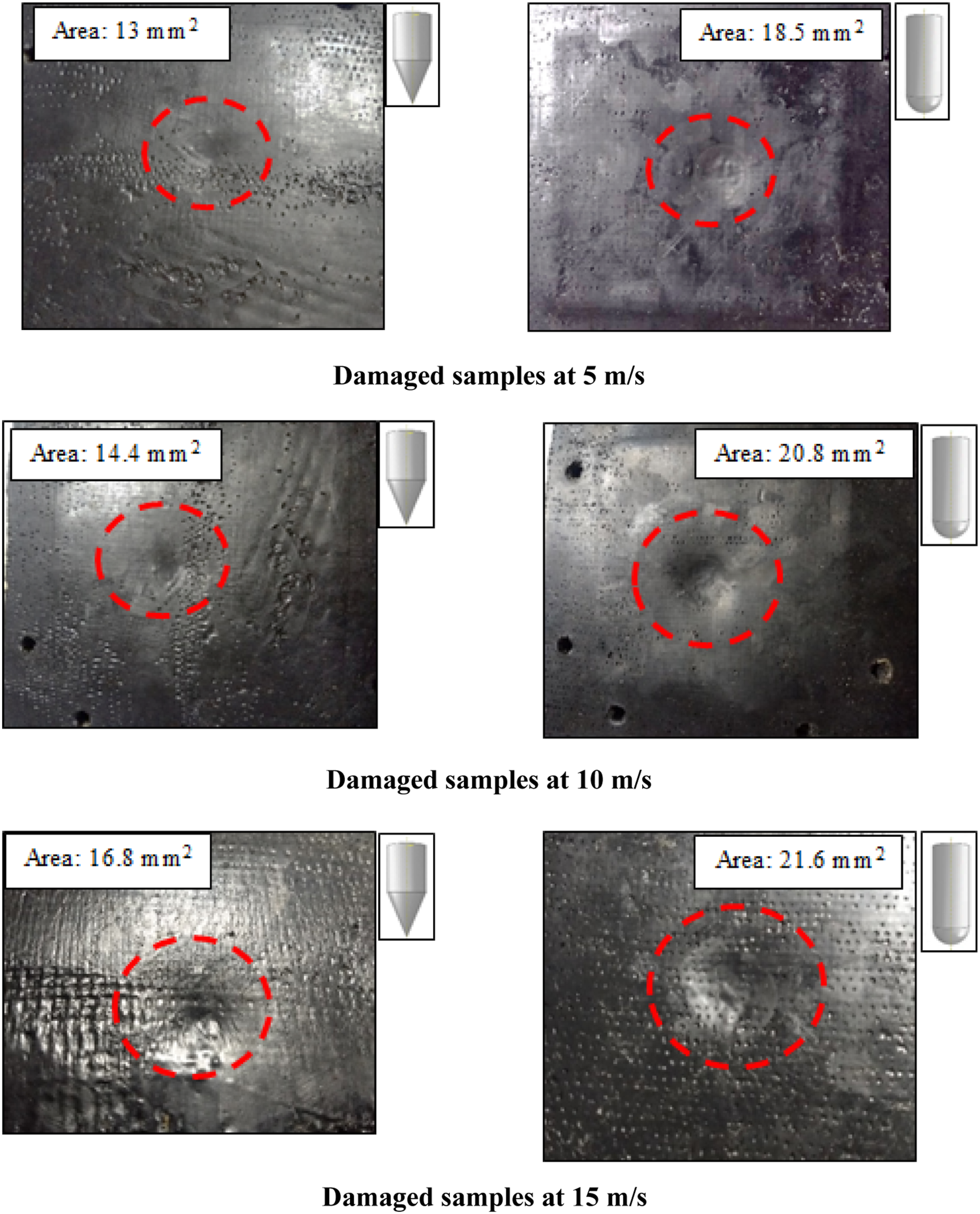
It is clear that when composite materials are struck by various impactor types, the nature of the damage that results varies. When struck by the hemispherical impactor, both composites show damage of the blunt indentation variety. However, when struck with a conical impactor, the same composite materials show damage that resembles a sharp puncture. When the laminate is struck with a hemispherical impactor as opposed to a conical-shaped impactor, it is clear that the damaged area is larger.
Conclusions
Present work investigated the low-velocity impact response of jute, banana, and their hybrid composite with natural rubber as a matrix in experimental method by two different impactors, that is, Conical, Hemispherical. • Jute fibre, banana fibre, and natural rubber were effectively combined to create a unique flexible composite. • It is revealed that absorbed energy is nonlinear independent of layering order, indicating that the layers in the flexible compliant composite are vulnerable to puncture and the elastic energy, particularly at higher impact energy, falls. • The experimental analysis concludes that as impact energy increases, the energy absorbed by all composites (JRJRJ, JRBRJ, BRJRB, and BRBRB) increases without complete damage. • JRJRJ composite absorbs the most energy, and the BRBRB composite absorbs the least. The JRBRJ and BRJRB composite absorb energy that’s in between the pure fiber composite. • Jute appears to be the better reinforcement compared to banana fiber for flexible composites subjected to LVI applications. • The investigation of CoR and ELP for all three stacking sequences at various impact energy reveals that CoR and ELP differ in the following order: BRBRB > BRJRB > JRBRJ > JRJRJ and JRJRJ > JRBRJ > BRJRB > BRBRB, BRBRB which has the highest CoR, gives the impactor the maximum rebound/residual velocity, suggesting that it sustains less damage and absorbs less energy than JRJRJ. The fact that JRJRJ has the greatest ELP means that the impactor lost the majority of its kinetic energy when it hit JRJRJ, and that this kinetic energy loss was turned into absorbed energy by the JRJRJ flexible composite. • It is found that the peak force of JRJRJ is high at any impact energy considered compared to its counterparts indicating JRJRJ needs more amount of force to initiate the damage compared to the other three stacking sequences and thus exhibits higher resistance to damage with maximum energy absorption • Puncture-type damage brought on by the tearing mechanism dominates the damage in the suggested flexible composite. In JRJRJ, the damage is more extensive. In comparison to stiff composites, the suggested flexible composite does not experience catastrophic failure, and delamination is not seen in the proposed flexible composites. • When struck by a hemispherical impactor rather than a conical impactor, the composite is more severely damaged. This shows contact area between the composites and the impactor plays a dominant role in the area of the damage. • As a result, the suggested flexible composites might be a possible material for absorbing energy and functioning as a sacrificial structure like cladding to protect the core structural components such as an automobile’s bumper, the body of an armour vehicle, and so on.
