




Abstract
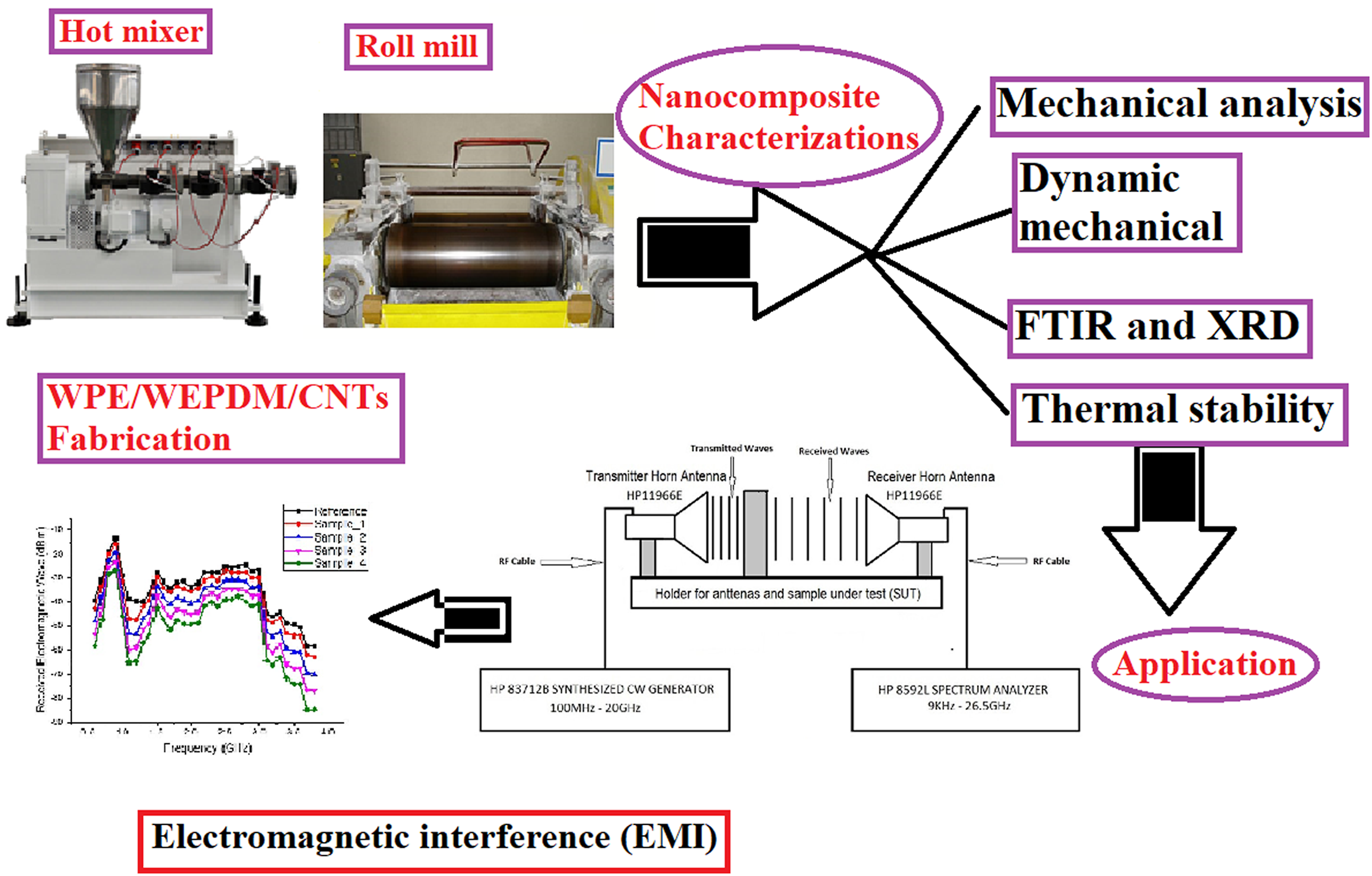
Carbon nanotubes (CNTs) have established wide attention as strengthened fillers because of their excellent several characters. Nano polymers based on thermoplastic elastomer composed of waste polyethylene (WPE)/Waste ethylene propylene diene monomer (WEPDM) blended equally 50/50 wt. % and strengthened with different concentrations of CNT (0.1, 0.3, and 0.5%) were fabricated via melt mixing. The prepared specimens were exposed to various gamma radiation doses, namely 50 and 100 kGy to evaluate the impact of radiation on the Nano polymers structure. FTIR and XRD were used to track the structure and crystallinity changes of thermoplastic elastomer with CNT filling. Mechanical features including tensile strength (TS), elongation at break (E%), modulus of elasticity (EM) and hardness (Shore D) of the unirradiated and irradiated samples were evaluated. Furthermore, the dynamic mechanical properties named storage (E′) and loss modulus as well as tan delta (δ) of the fabricated specimens were measured. TGA and also DSC monitored the thermal decomposition and the melting point alterations caused by CNT reinforcement. Electromagnetic Interference (EMI) was studied for all fabricated samples as an application of shielding for radio frequency signals. In general, all the studied parameters revealed improvements of thermoplastic elastomer properties via CNT interference. Subsequent reinforcement of CNT concentrations into WPE/WEPDM produced higher shielding for radio frequency signals. Furthermore, applied gamma radiation doses improved the shielding properties of the fabricated nanocomposites.
Keywords
Introduction
Vulcanized elastomers are materials with specific mechanical properties, such as high elasticity and low modulus. However, the vulcanized material cannot be reprocessed, since there are sulfidic bonds, which makes them insoluble and infusible. To minimize this problem, researchers in the areas of thermoplastics and elastomers have joined efforts in the development of dynamically vulcanized thermoplastic elastomers (TPE). These materials have synergistic properties of elastomers and thermoplastics. They are elastic materials capable of reprocessing. The physical mixtures of the TPE samples are performed on internal mixers and extruders. The used internal mixers are capable of producing multiphase polymeric mixtures with excellent dispersion. 1 Waste polyethylene represents a substantial portion of the thermoplastics found in waste streams. However, there is minimal use of recycled polyethylene alone because of its low mechanical properties. LDPE waste sources include bags and pallet covers. Nowadays, it was found that PE waste can be developed if its low mechanical properties can be improved by adding other materials. Efforts by various researchers to modify and blend recycled thermoplastic waste have been investigated so as to obtain finished products with good mechanical properties. 2
Thermoplastic polyolefin elastomers are compounds comprising blends of thermoplastics such as polyethylene (PE), polypropylene (PP) and elastomers such as EPDM (ethylene propylene diene monomer) rubber. 2 As the polymer chains of ethylene propylene diene monomer (EPDM) rubber are mainly built up of ethylene and propylene constituents, it is typically blended with either polyethylene or polypropylene to form TPEs. 3 According to the literature, it is found that the presence of active vulcanizing agents in the rubber component was crucial for the formation of materials with high elasticity. 4
The advantages of TPEs come from their outstanding properties. They are characterized by high impact resistance, low density and good chemical resistance. They are used in applications where there is a requirement for increased toughness and durability over conventional thermoplastics, such as automotive bumpers and dashboards. In addition, it is possible to prepare various TPE compounds for suitable end-use applications by changing the polyolefin and EPDM composition. The most attractive feature of these materials is that they can be processed like thermoplastic while exhibiting resilience and elasticity characteristics of an elastomer. 2 Furthermore, thermoplastic elastomers (TPEs) are considered a commercially fascinating class of polymers. These polymers are composed of more than one phase, which consists of (i) semi-crystalline thermoplastics and (ii) elastomers phase. TPEs have properties like thermoset rubbers but have processing flexibility like thermoplastics, which provides a reduction in cost and better design opportunities. 5 Approving to literature, the addition of EPDM to plastic had been increased the mechanical properties such as Izod impact strength, tensile strength, and elongation at break. 6
Carbon nanotubes (CNTs) nanomaterials have been introduced as ideal reinforcement to produce high-performance nanocomposites. The unique microstructures of CNTs grant them extraordinary mechanical, electrical, and thermal properties that make them particularly appealing for nanocomposite applications. 7 Single-walled or multi-walled carbon nanotube (SWCNT or MWCNT) packed polymer composites can be created by in-situ polymerization, solution mixture, or melt mixing (extrusion and injection) methods. Amongst these manufacturing methods, melt processing mainly offers a cost-effective procedure that allows confirming both fast production and environmental benefits as a solvent-free method. 8 The effect of CNTs on the various properties of different types of polymer depend on the CNTs concentrations and the structure of the polymer itself. Electromagnetic interference (EMI) is not only opposed to the normal operation of devices but also injurious for the health of human beings. The increasing usage of communication instruments, portable electronic devices and electromagnetic interference (EMI) has become a significant concern in the modern world.9,10 High-performance EMI shielding materials play an essential role in shielding technology. EMI is the key to controlling the pollution results from electromagnetic radiation.11,12 In addition to high EMI shielding property, high thermal conductivity (TC) is another crucial requirement for electronic materials, which could promptly transfer excess heat from the heated device to its surroundings. 13 Traditional metallic materials can perform these roles. But they are expensive have great density and reduced corrosion resistance limited their practical applications. 14 The gains of polymers such as their lightweight, highly corrosion resistance, process convenience, preparation of multifunctional polymer composites for efficient EMI shielding and heat removal makes them a magic solution for these applications. 15 There are various other conductive materials other than CNTs that are currently being used in EMI shielding.16–22
Polymer processing by ionizing radiation is globally and dynamically safe as it does not require solvents or initiators at high temperature and permits one to avoid degradation phenomena and other side reactions typical of polymer processing in the melt.23–25 High-energy irradiation suggestions distinctive solutions to the problem of recycling due to its aptitude to induce crosslinking, scission and activation by creating free radicals of a varied range of material without introducing any chemical initiators and without dissolving the specimen, therefore, avoiding phase separation.26,27 The objective of this work is to monitor the alterations of chemical structure, mechanical properties, dynamic mechanical assessment and thermal stability of WPE/WEPDM thermoplastic elastomer strengthened with different concentrations of carbon nanotube (CNT) under the influence of gamma irradiation doses. Furthermore, the electromagnetic interference shielding properties (EMI) of the fabricated specimens were considered as an applicable study.
Experimental and techniques
Materials
Waste polyethylene (WPE) in crushed white shape was obtained from the Egyptian Saudi Company for Plastic Products; Industrial Zone, 10th of Ramadan City, Egypt. Waste ethylene propylene diene monomer (WEPDM) rubber in form of gray-white powder is received from the waste of El-Shark Factory for Rubber, 10th of Ramadan City, Egypt. Multiwall carbon nanotubes (CNTs) was supplied by Cheap Tubes Inc. and had a purity greater than 95%. Its physical dimensions were within a 20–30 nm outer diameter, a 5–10 nm inner diameter, and a 10–30 μm length. The functionalization of the nanotubes was attained through acid chemistry, and their surface area was nearly 110 m2/g.
Fabrication of WPE/WEPDM/CNTs
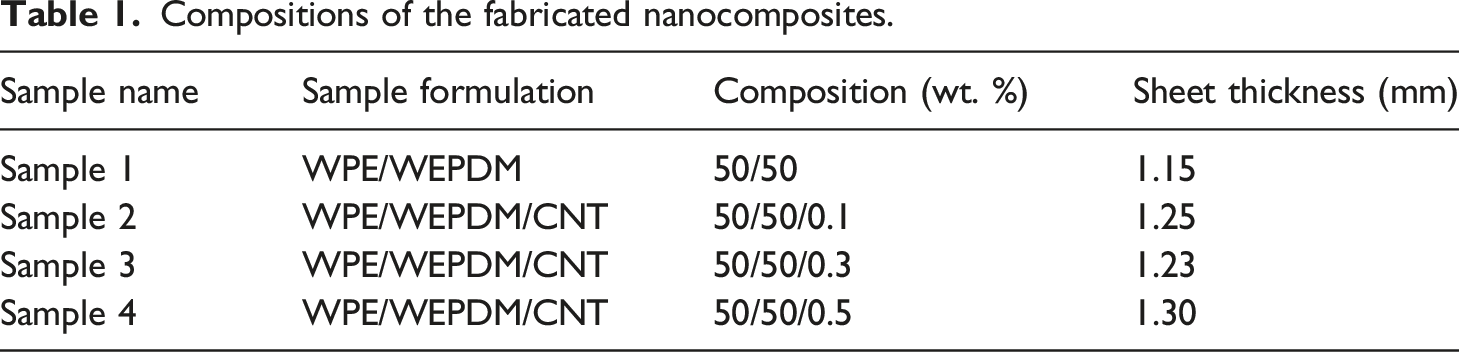
Compositions of the fabricated nanocomposites.
Gamma-irradiation
Gamma-irradiation was performed under an ambient atmosphere in a cobalt-60 gamma cell source, Canada, permanent at the National Center for Radiation Research and Technology (NCRRT), Egyptian Atomic Energy Authority (EAEA), Egypt. The fabricated films were exposed to 50 and 100 kGy at a dose rate of nearly 1.0 kGy/h.
Measurements
Infrared spectroscopy analysis
The functional groups investigation was concluded via the attenuated total reflectance-Fourier transform infrared (ATR-FTIR) Vertex 70 FTIR spectrometer, Bruker Optik GmbH, Ettlingen, Germany at a resolution of 0.5 cm−1 in the range of 4000–400 cm−1.
X-ray diffraction
The crystal structure of WPE/WEPD/CNT nanocomposites were achieved via Bruker X-ray diffraction (XRD) D8-Advance, Germany. All the diffraction patterns were studied at room temperature and under steady operating conditions. The area under the X-ray diffracts grams was determined in arbitrary units. The degrees of crystallinity (Xc %) of TPE strengthened with different percent of CNT, with standard deviations ± 0.35 were calculated using the following relationship: 28 Xc % = Ia/(Ia + Ic) Where Ic and Ia are the integrated intensities of the crystalline and the amorphous phase, respectively.
Mechanical analysis
Mechanical measurements were completed using dumbbell-shaped test sections at a crosshead speed of 300 mm/min at 25 ± 2oC using a tensile testing machine Qchida automated testing machine, Dongguan Haida Equipment Co., Ltd. China. The ISO 527-2 norms and ASTM D 412a-98 were followed. The average value of the mechanical parameters was considered by at least three samples. The hardness test (Shore D) was estimated by a Zwick (Germany). Hardness Tester Machine (Model 3150) as indicated by the ASTM D2240-2000.
Dynamic mechanical analysis
Storage modulus (E′) of the samples in the dimensions 25 × 10 × 1 mm were measured by using Triton technology – DMA, tension mode at 1 Hz frequency.
Thermogravimetric analysis
Thermogravimetric investigation (TGA) was implemented with a Shimadzu TGA-50 framework (Kyoto, Japan) in the temperature range of 20–600oC at a heating rate of 10oC/min under a controlled nitrogen flow of 20 mL/min. Each specimen was measured with a statistical error measurement ± 0.5.
Differential scanning calorimetry
The melting point of the prepared specimens was investigated utilizing the DSC Shimadzu type DSC-50 system in a nitrogen atmosphere at 20 mL/min within the temperature range from ambient to 300oC at a heating rate of 10oC/min. Each specimen was measured with a statistical error measurement ± 0.5.
Electromagnetic Interference
The Electromagnetic Interference (EMI) was measured for all samples before and after irradiation with gamma doses of 50 and 100 KGy. The microwave Agilent HP 83712B Synthesized CW Generator (100 MHz-20 GHz) and HP 8592L Spectrum Analyzer (9 KHz-26.5 GHz) Spectrum Analyzer is calibrated before and after each experiment measurement.
Results and discussion
FTIR and XRD investigations
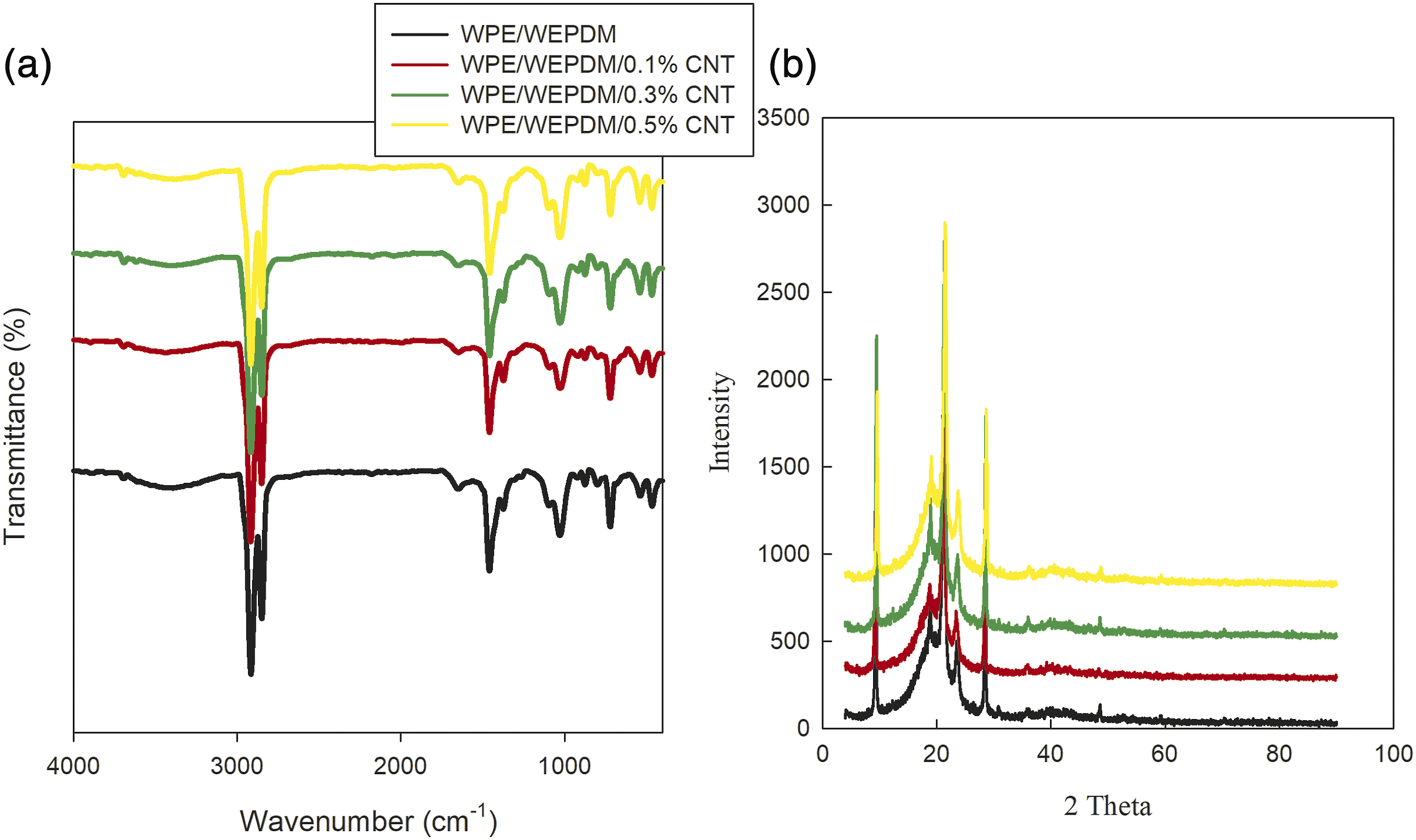
The FTIR spectra of pristine CNT as received and WPE/WEPDM filled with different concentrations of CNT particles are presented in Figure 1(a) and Figure 2(a) respectively. For CNT spectra, the peak at 1600 cm−1 is qualified for stretching vibrations of C=C bond, which form the origin of carbon nanotubes sidewalls. Furthermore, the characteristic peaks at 1740, 1030, and 3440 cm−1 can be referred to the C=O, C‒O and O‒H stretching respectively molded on the side wall of the CNTs which outcomes from either ambient atmospheric wetness or oxidation through purification of raw ingredients.
29
The FTIR spectra of native WPE/WEPDM which are displayed in Figure 2(a) revealed the absorption band at 770 cm−1 can be related to the C–H group of EPDM.
30
Moreover, the peaks noticed at 1350, 1500 and 1630 cm−1 signify C–C and C=C stretching vibrations of EPDM structure.
30
Also, it is observed that the bands at 2920 and 1880 cm−1 are characteristics of the stretching vibration –CH groups existing in the WPE/WEPDM blend. Obviously, after supplementing of CNT into WPE/WEPDM, the FTIR of the strengthened blend doesn’t registered obvious changes in its FTIR spectra. This may be attributed to the complete dispersion of all applied concentrations of CNT particles into the thermoplastic elastomer and in turn, the matrix became one skeleton without any agglomerations. At the same time, the distinct peaks of CNT were located at the same band vibrations of the WPE/WEPDM blend. (a) FTIR and (b) XRD of CNT as received. (a) FTIR and (b) X-ray diffraction of WPE/WEPDM strengthened with different concentrations of CNT.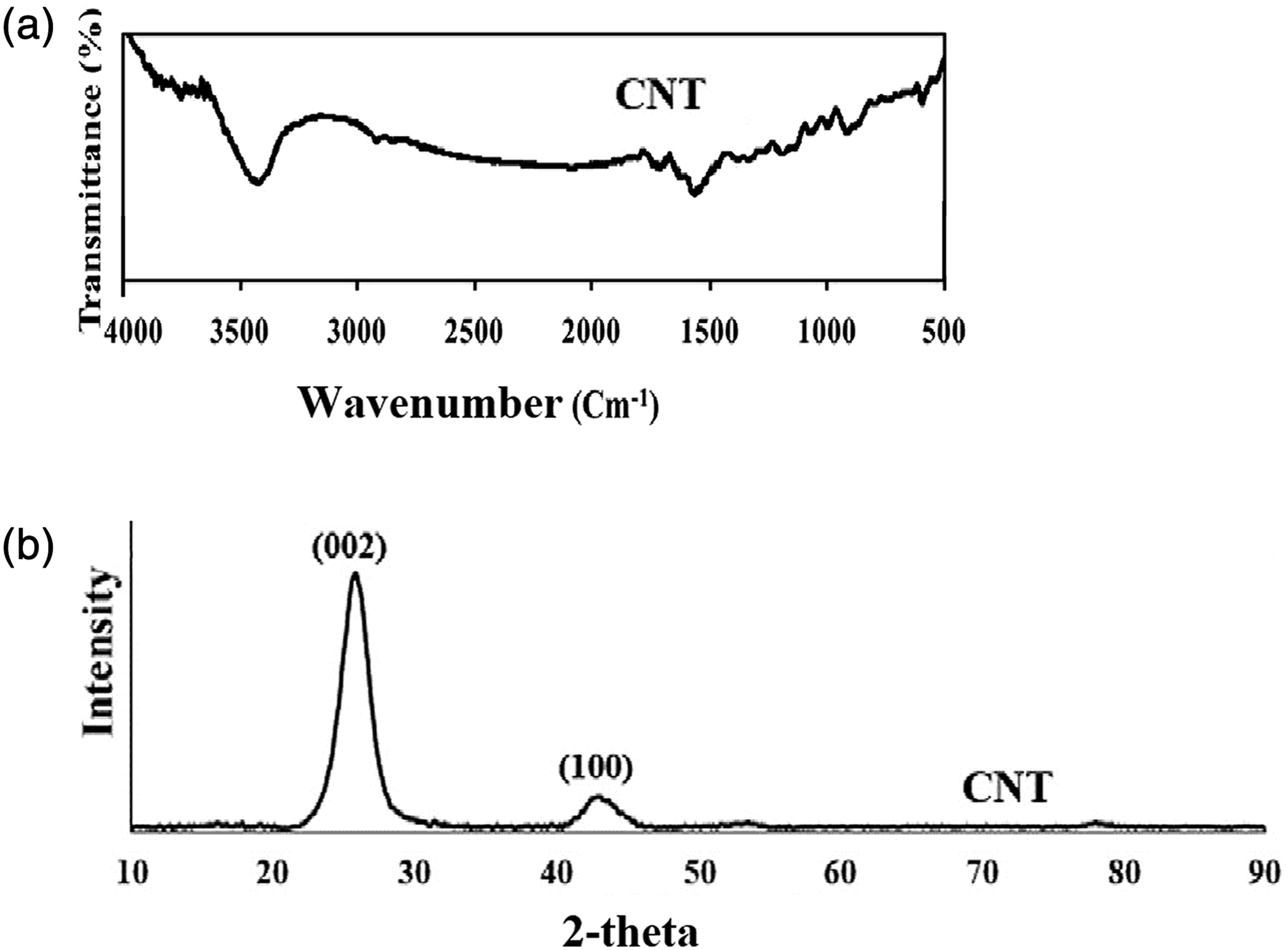
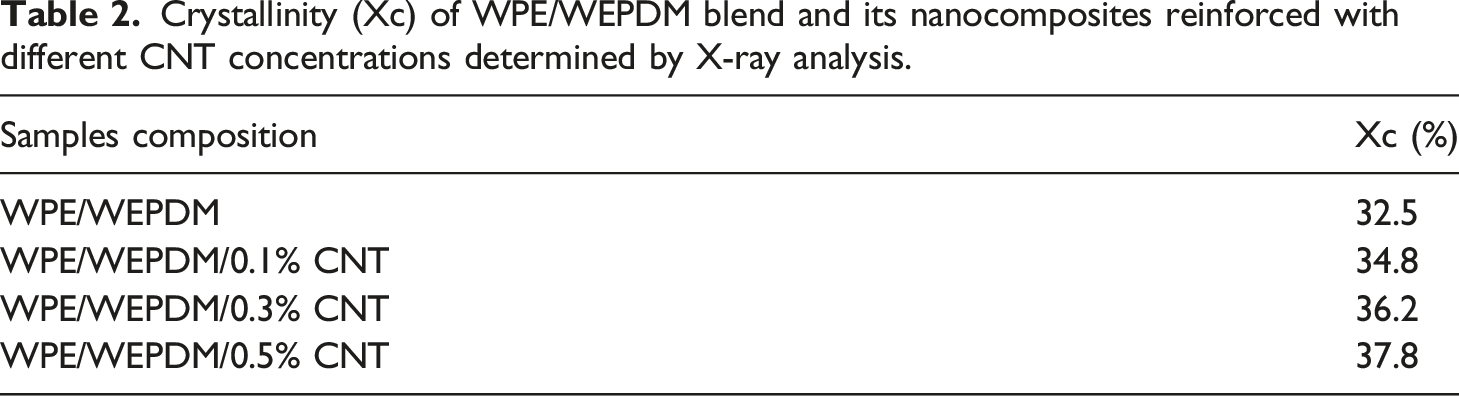
Crystallinity (Xc) of WPE/WEPDM blend and its nanocomposites reinforced with different CNT concentrations determined by X-ray analysis.
Mechanical measurements
Stress-Strain curves characterized in the Figure 3 and the mechanical parameters including tensile strength (TS), elongation at break (E %), modulus of elasticity (EM) and hardness (Shore D) of WPE/WEPDM strengthened with various ratios of CNT particles under the effect of gamma irradiation are presented in Figure 4. It is obvious that the TS of the pristine blend increases with CNT loading, proposing the strength of the nanocomposite increment and better dispersion of CNT into WPE/WEPDM texture has arisen. TS is increased from 9.0 MPa for WPE/WEPDM blend to approximately 15.0 MPa for 0.5% CNT filled WPE/WEPDM nanocomposite. The rate of growth in TS is 66.6% related to the un-reinforced WPE/WEPDM blend. The improved TS attained might be owing to a better diffusion of CNT into the polymer matrix, the innovative surface area of CNT and a good connection between CNT and WPE/WEPDM blend.
36
Stress-Strain curves of (a) unirradiated and (b) irradiated WPE/WEPDM reinforced with various concentrations of CNT. Mechanical parameters of WPE/WEPDM reinforced with various concentrations of CNT at different irradiation does (a) Tensile strenght (MPa), (b) Modulus of elasticity (MPa) (c) Elongation at break (%), (d) Hardness (Shore D).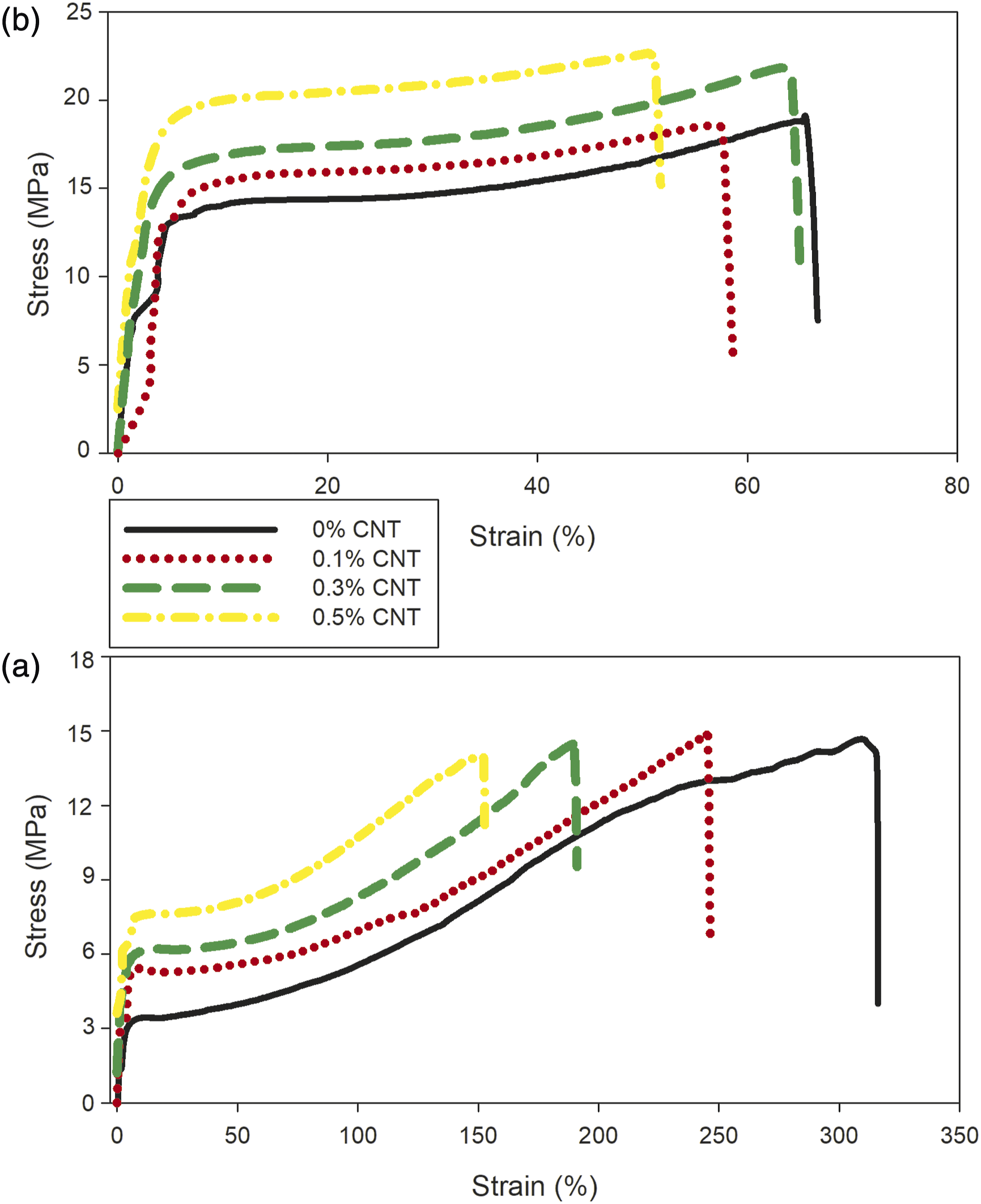
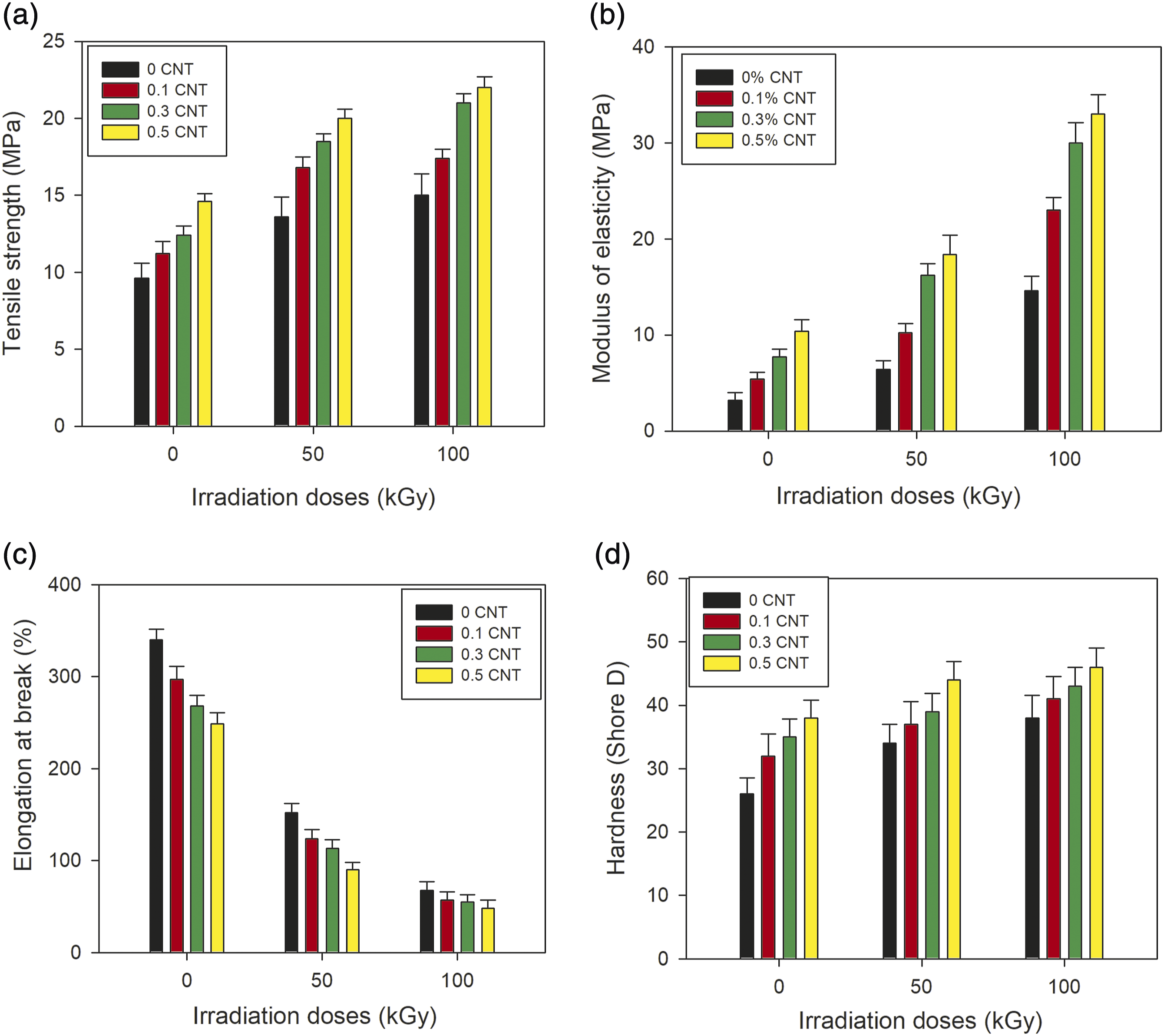
On the other hand, the TS of irradiated pristine WPE/WEPDM improved with irradiation doses due to free radical formation produced by irradiation which developed the crosslinking density inside native WPE/WEPDM. Where, TS of WPE/WEPDM increased from 9.0 MPa to 13.0 MPa of WPE/WEPDM irradiated at 50 kGy. Furthermore, the incorporations of CNT up to 0.5% into the WPE/WEPDM under the effect of ionizing radiation doses have been improved the TS without any agglomeration inside the polymer matrix. Where, the TS of unirradiated WPE/WEPDM/0.5 CNT increased from 15.0 MPa to 19.0 MPa of irradiated WPE/WEPDM at 50 kGy and to 22.0 MPa of the samples irradiated at 100 kGy. Therefore, irradiation improved CNT/polymer adhesion and in turn there is a synergistic effects when CNT and irradiation are combined. 37
It is known that values of the elastic modulus (EM) are directly proportional to the rigidity and stiffness of the polymer matrix. As clear from the Figure 4 and the stress-strain curves (Figure 3(a)), EM of WPE/WEPDM increases with CNT filling up to 0.5%. This designates that the strengthened CNT into WPE/WEPDM blend develops stiffness and rigidity of the nanocomposites. Similar to the TS, irradiation doses were improved the EM of the WPE/WEPDM pristine blend. Furthermore, the incorporations of CNT up to 0.5% into WPE/WEPDM under irradiation doses, increases EM of polymer matrix without any agglomeration as displayed in stress-strain curves (Figure 3(b)). The excessive increase in elastic modulus can be significant to the stiffness aspect of CNT particles. This feature of CNT particles limits the mobility of WPE/WEPDM chains and in turn decreases the flexibility and improved the stiffness. 38
Moreover, irradiation improved CNT/polymer adhesion and in turn there is a synergistic effects when CNT and irradiation are combined. Consequently, a gamma radiation doses of 50 and 100 kGy were considered as the best doses to obtain higher tensile strength and elastic modulus values. This modification may be attributed to the improved dispersion of the Nano filler contents in which the interaction of gamma radiation with the polymer causes a crosslinking between the polymer chains. 37 The better crosslinking density of WPE/WEPDM TPE blend shown the potential occurrence of extra C–C bonds in the system, which is helpful for stress transfer from the matrix to the filler in the process of stretching. 37
In a different behavior of both TS and EM, the incorporation of CNT into WPE/WEPDM produced an evident reduction in the elongation at break % as exists in Figures 3(a) and 4. Thus, as mentioned before, the strengthening of CNT into WPE/WEPDM thermoplastic elastomer texture increased its stiffness and rigidity and therefore decreased the elasticity of the matrix. The conformation variation of the polymer chain is controlled by the CNT, which brings a failure in elongation at break %. 39 An excessive decrease in elongation at break % of native WPE/WEPDM with CNT incorporations and irradiation doses was noticed. Thus, the E % of WPE/WEPDM was reduced from 350% to 50% of WPE/WEPDM/0.5% CNT irradiated at 100 kGy as clear from the stress-strain curves (Figure 3(b)) and E % (Figure 4(c)). The reinforcement effect of CNT and radiation doses create rigidity and induced crosslinking density inside native thermoplastic elastomer and in turn reduced its elongation at break %.
Figure 4 also displays the hardness (Shore D) of WPE/WEPDM reinforced with different concentrations of CNT and subjected to various radiation doses. The hardness (Shore D) of WPE/WEPDM and its nanocomposites were increased with all applied ratios of CNT particles. Hence, the development in hardness values of net blend with CNT up to 0.5% is a logical result due to stiffness and the development of rigidity inside the polymer texture. In the same way as all the studied parameters before, TS and EM, hardness (Shore D) of all WPE/WEPM/CNTs composites was improved up to 100 kGy as a result of induced crosslinking density inside the matrix.
Dynamic mechanical analysis (DMA)
Dynamic mechanical analysis (DMA) is a real income for studying the viscoelastic manners and the fluctuating force and heat of composite materials. Dynamic mechanical analysis of the prepared WPE/EPDM reinforced with various concentrations of CNT varying from 0.1, 0.3 and 0.5% was considered to determine the storage (E′) and loss modulus and also tan (δ) which depend on the temperature, frequency and time, represented in Figures 5 and 6 respectively. For the nanocomposites, the values of modulus in the glassy area increase with the presence of CNT, recorded maximum value for composite containing 0.5% CNT, suggested better interfacial linkage between CNT and polymer matrix. Also, a tight bond between CNT and polymer matrix creates interfacial strength beside the motion chain segment in the un-crystallized region of the polymer matrix.
40
Because of the homogenous dispersion of the CNT in the blend matrix as mentioned before in the mechanical investigations, there was an available polymer for the formation of CNT network structure. As a sign of it, at low frequency, the time was long sufficient to unravel the tangles so a huge aggregate of relaxation happened, therefore the physical interaction between the CNT and the polymer matrix was improved, signifying the rheological performance of the material to transition from liquid-like to solid-like, which was accountable for the development in mechanical properties.
41
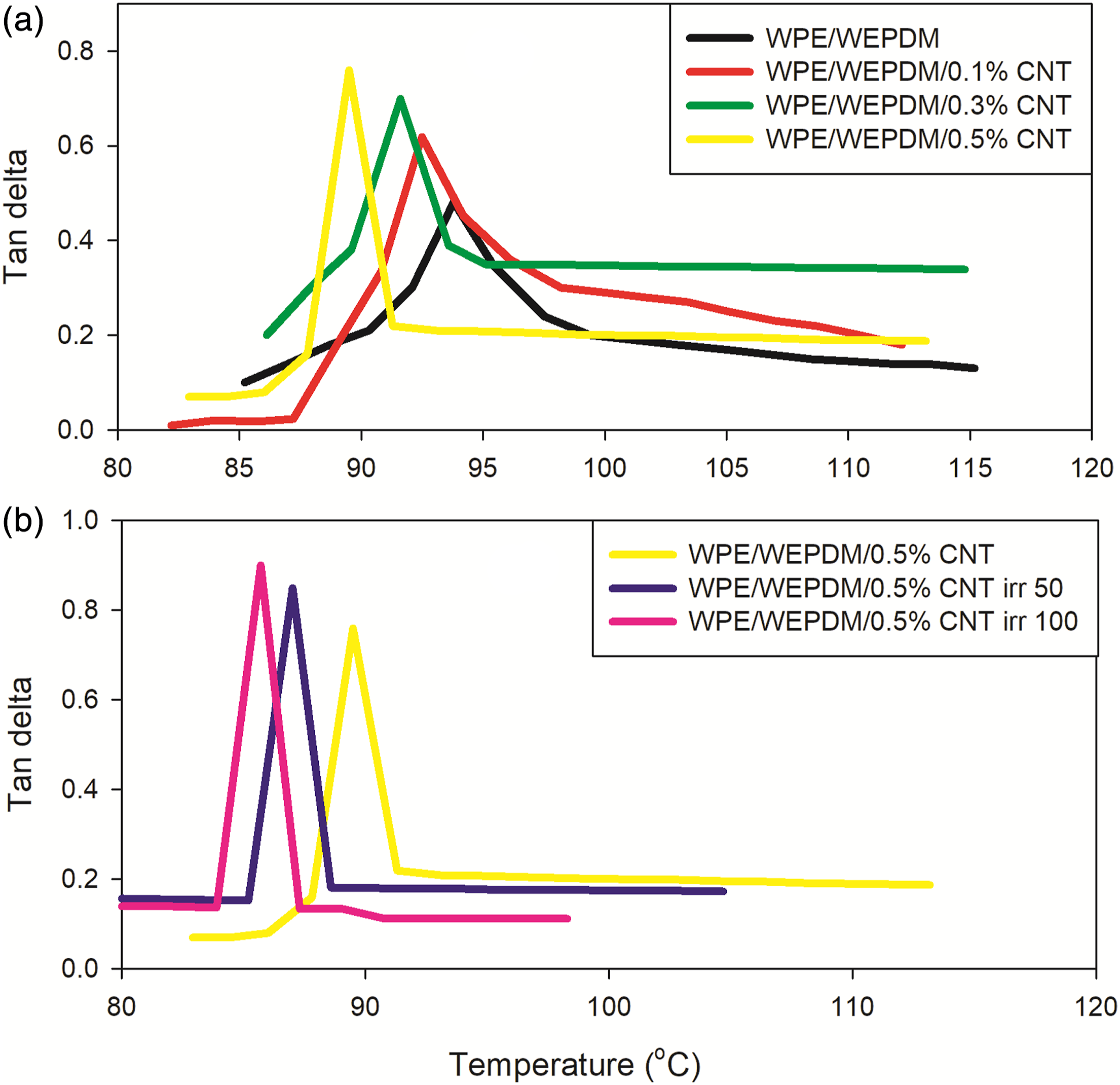
Storage and loss modulus of WPE/WEPDM filled with different concentrations of CNT and exposed to various gamma dosese. Tan delta of (a) WPE/WEPDM strengthened with different CNT concentrations, (b) WPE/WEPDM/0.5% CNT irradiated at 50 and 100 kGy.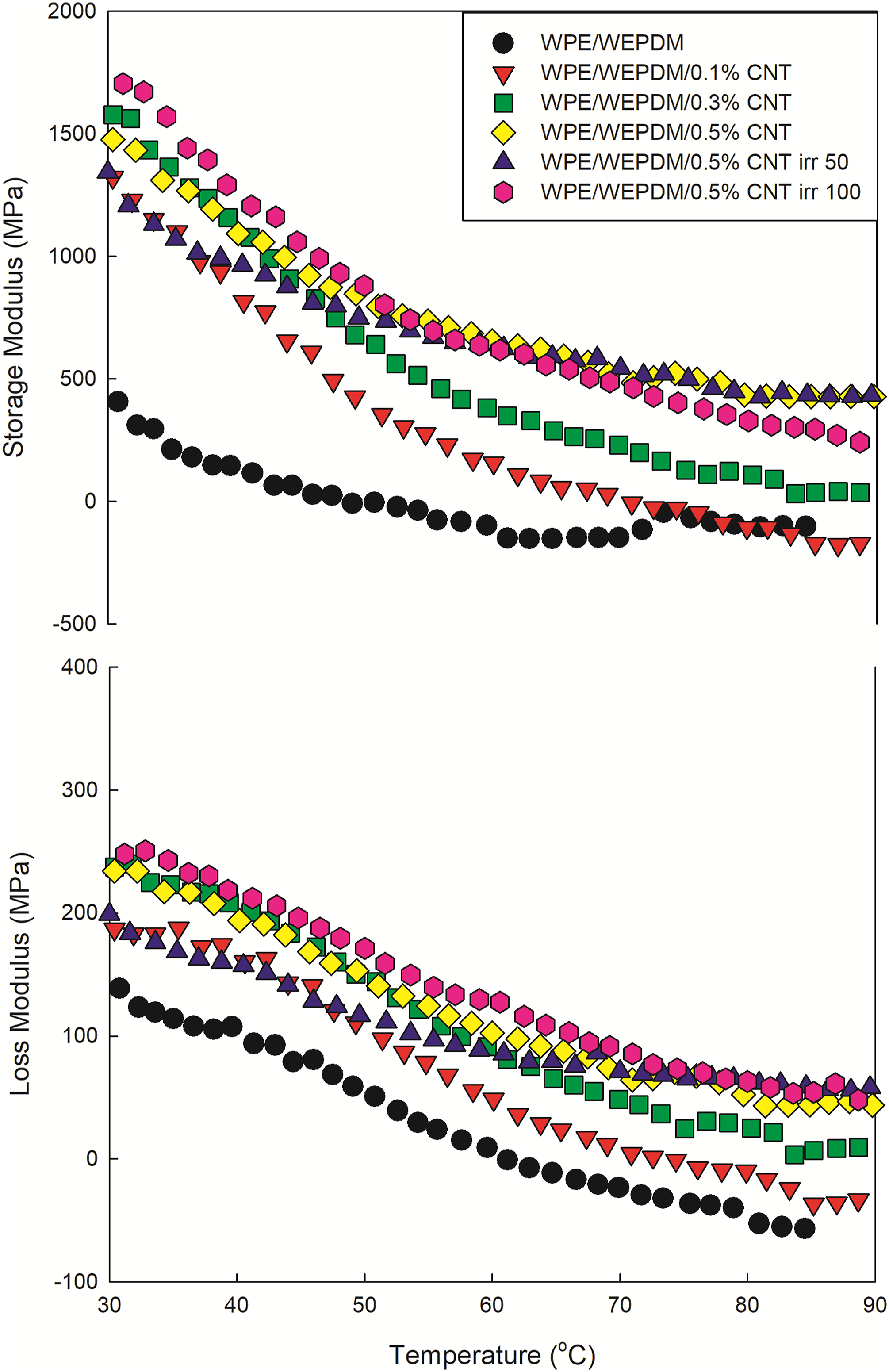
It is obvious that as the temperature increases, the WPE/WEPDM/CNT nanocomposites display only a reduction in the storage modulus. The decrease in storage modulus is apportioned to the relaxation of the polymer chains at the glass transition area. Above the glassy region the WPE/WEPDM/CNT revealed an increase in storage modulus and stayed stable. Furthermore, a decrease in storage and loss modulus values with an increase temperature due to transport of polymer chains becoming more easily at a higher temperature. Also Figure 5 implies the storage and loss modulus of irradiated WPE/WEPDM/0.5% CNT nanocomposite. The values of the studied parameters were increased with gamma radiation doses, attribute to an irradiation sources capable to yield cross-linked nanocomposites. Moreover, storage modulus decrease with increased temperature, reported that transport of polymer chains become more easily with increased temperature.
Figure 6(a) shows the temperature dependence of tan δ for WPE/WEPDM strengthened with different concentrations of CNT. All studied samples presented a single transition in the fixed temperature range. Increased tan delta credited to inner energy stored cannot be dissipated owing to the fundamental resistance properties of the material. The maximum point of the tan δ curve relates to the glass transition temperature (Tg). The DMA curves show that the Tg value of the WPE/WEPDM blends decreases with an increasing percent of CNT up to 0.5%. The reduction in the glass transition temperature with CNT concentrations is associated with improvement in the thermoplastic elastomer matrix that leads to segmental immobilization of the matrix chains in the presence of CNT particles. 42 On the other hand, Figure 6(b) shows the tan delta of irradiated WPE/WEPDM/0.5% CNT nanocomposite. The tan delta curves indicate that the Tg of the irradiated specimens decreases with increasing dose of radiation. The reduction of Tg is measured to be produced by crosslinking due to the irradiation procedure. 43 This performance is confirmed by the results stated before for the tensile properties.
Thermogravimetric analysis (TGA)
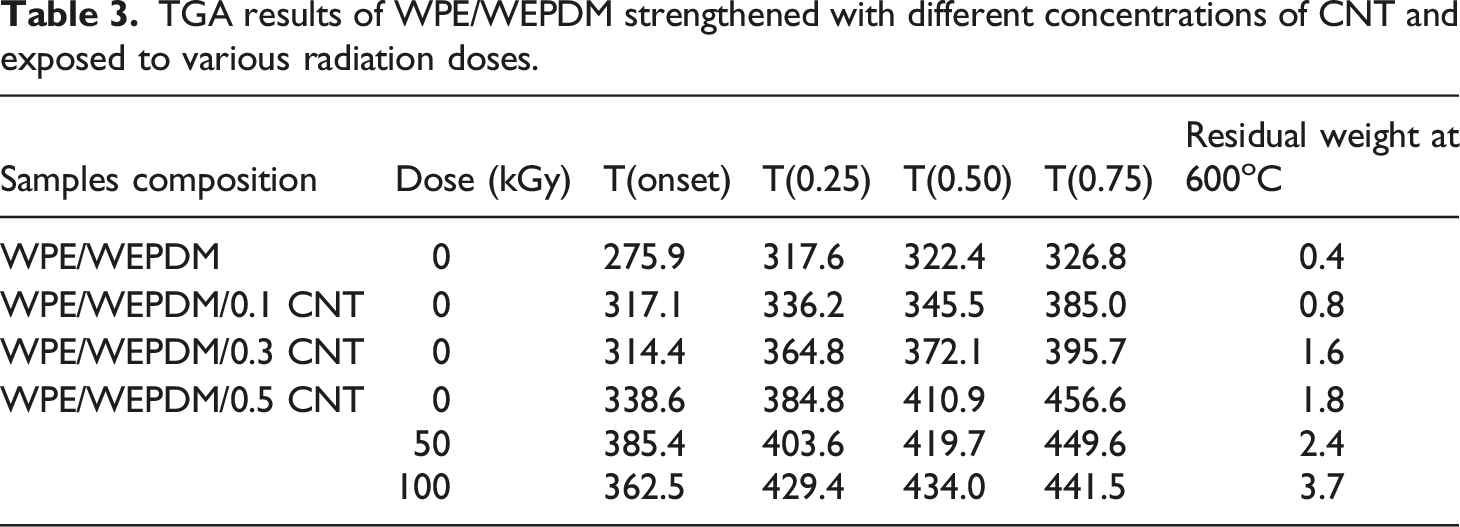
The thermogravimetric analysis is a typical technique in which variations in the mass of a sample are observed as the specimen is gradually heated, with a statistical error measurement ± 0.5. Thermal stability of WPE/WEPDM strengthened with various concentrations of CNT and exposed to different gamma radiation doses is considered in Figure 7 and various degradation steps are listed in the Table 3. Thermogravimetric analysis (TGA) is an important technique to study the enhancement in the thermal stability of net polymer with the presence of filler concentrations. By tracking of TGA curves displayed in Figure 7 and the values of WPE/WEPDM/CNT nanocomposites mass loss listed in the Table 3, the values revealed that the decomposition temperature is divided into starting decomposition temperature, maximum decomposition temperature and temperature of the end of decomposition and all these stages of the nanocomposites mass loss depends basically on the CNT concentrations and applied radiation doses. It is obvious that the thermal stability of WPE/WEPDM increased with all CNT ratios. When we investigate the extent of the thermal stability of WPE/WEPDM thermoplastic elastomer caused by CNT, for the initial decomposition, Tonset, its value of native blend shifted from 275.9oC to 338.6oC of blend reinforced with 0.5% CNT, also at T0.25 the thermal stability of net blend shifted from 317.6 to 384.8oC, furthermore the temperature required to decompose the half weight of WPE/WEPDM was improved from 322.4oC to 410.9oC when the native blend strengthened with 0.5% CNT. It is perfect that with the presence of Nano filler in the polymer matrix leads to increase thermal stability means that crystallinity is firmly connected with the material mass loss.
44
Also, Figure 7 and Table 3 displayed the decomposition temperature and mass loss of WPE/WEPDM/0.5% CNT after irradiation. The thermal stability and residual weight of the nanocomposites increased with radiation doses up to 100 kGy. In which, Tonset shifted from 338.6 to 362.5oC, T0.25 shifted from 384.8 to 429.4oC and T0.5 from 410.9 to 434oC. The ionizing radiation raises the magnitude of the interface linking between the polymer matrix which made the nanocomposites have higher homogeneity and led to growth the thermal stability. Therefore, irradiation improved CNT/polymer adhesion and in sequence there is a synergistic effects when CNT and irradiation are combined.
37
TGA thermograms of (a) WPE/WEPDM, (b) WPE/WEPDM/0.1% CNT, (c) WPE/WEPDM/0.3 CNT, (d) WPE/WEPDM/0.5% CNT, (e) WPE/WEPDM/0.5% CNT irradiated at 50 kGy, (f) WPE/WEPDM/0.5% CNT irradiated at 100 kGy. TGA results of WPE/WEPDM strengthened with different concentrations of CNT and exposed to various radiation doses.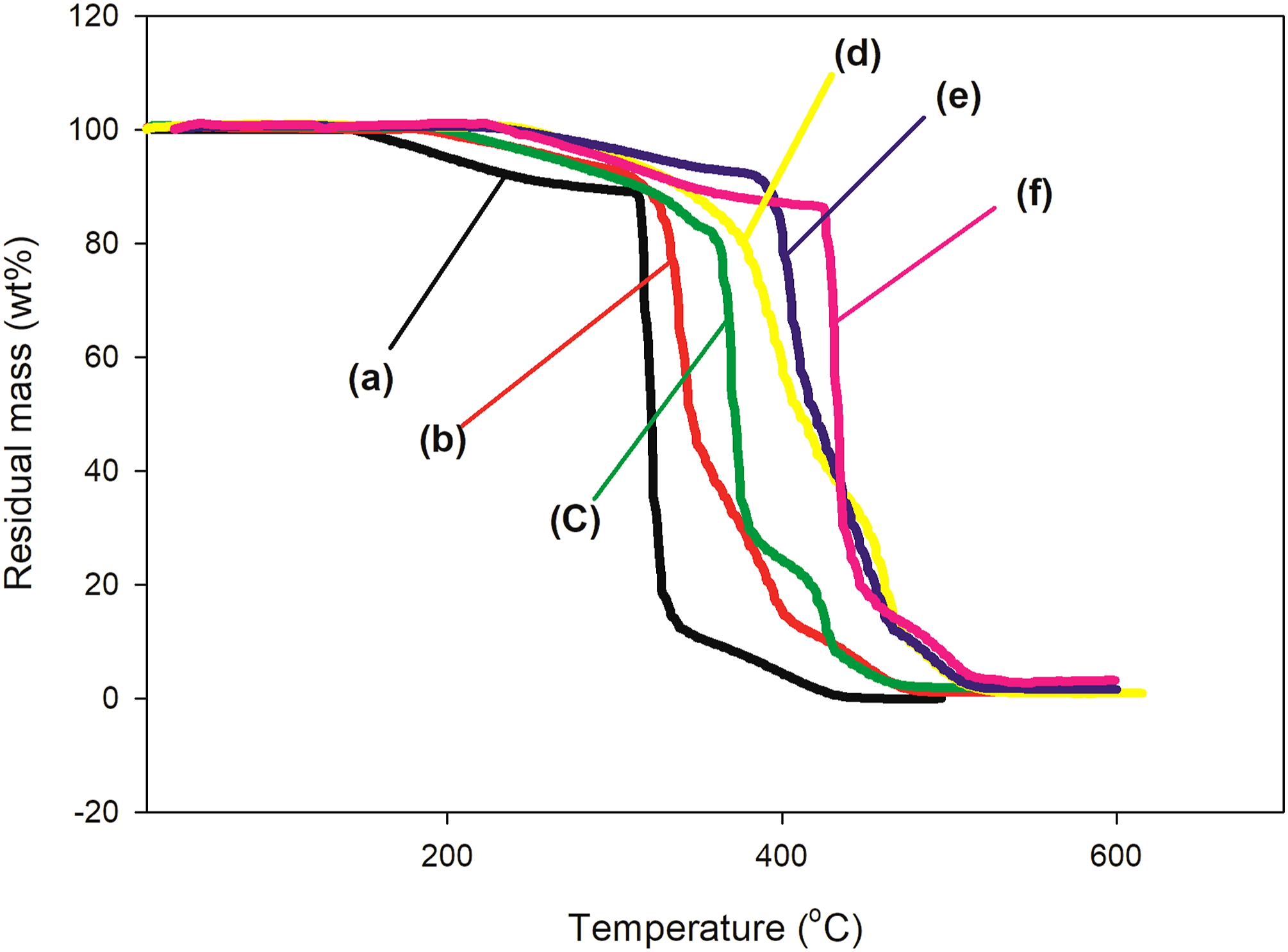
Differential scanning calorimetry (DSC)
Figure 8 demonstrates the melting behavior of native WPE/WEPDM and its nanocomposites with different concentrations of CNT. It can be seen that, with an increase in CNT content, peak melting temperature (Tm) significantly shifted to a higher temperature, suggesting good dispersion and diffusion of nanoparticles into the thermoplastic elastomer. The large improvement in melting temperature of WPE/WEPDM with CNT assists the crystallinity development of the nanocomposites as discussed before. Therefore, the uppermost value of Tm was observed for WPE/WEPDM/0.5% CNT as a result of improved crystalline phase content in the matrix. In which Tm of native blend shifted from 237oC to 258, 259 and 265oC of 0.1, 0.3 and 0.5% of CNT filling. This interesting result settled all studied parameters before, in the positive role of CNT as reinforcing filler. It can consequently be understood that the noticeable changes in examined properties are chiefly owing to physical changes in the polymer matrix. On the other hand, the melting temperature of WPE/WEPDM/0.5 CNT slight increased with irradiation doses. This may be attributed to the crosslinking density caused by irradiation. Wherein, the slight increase of the melting temperature with the induced vulcanization produced by irradiation because of the fact that the crystallization process occurs more rapidly and the resulting crystals are smaller.
45
DSC of WPE/WEPDM strengthened with various.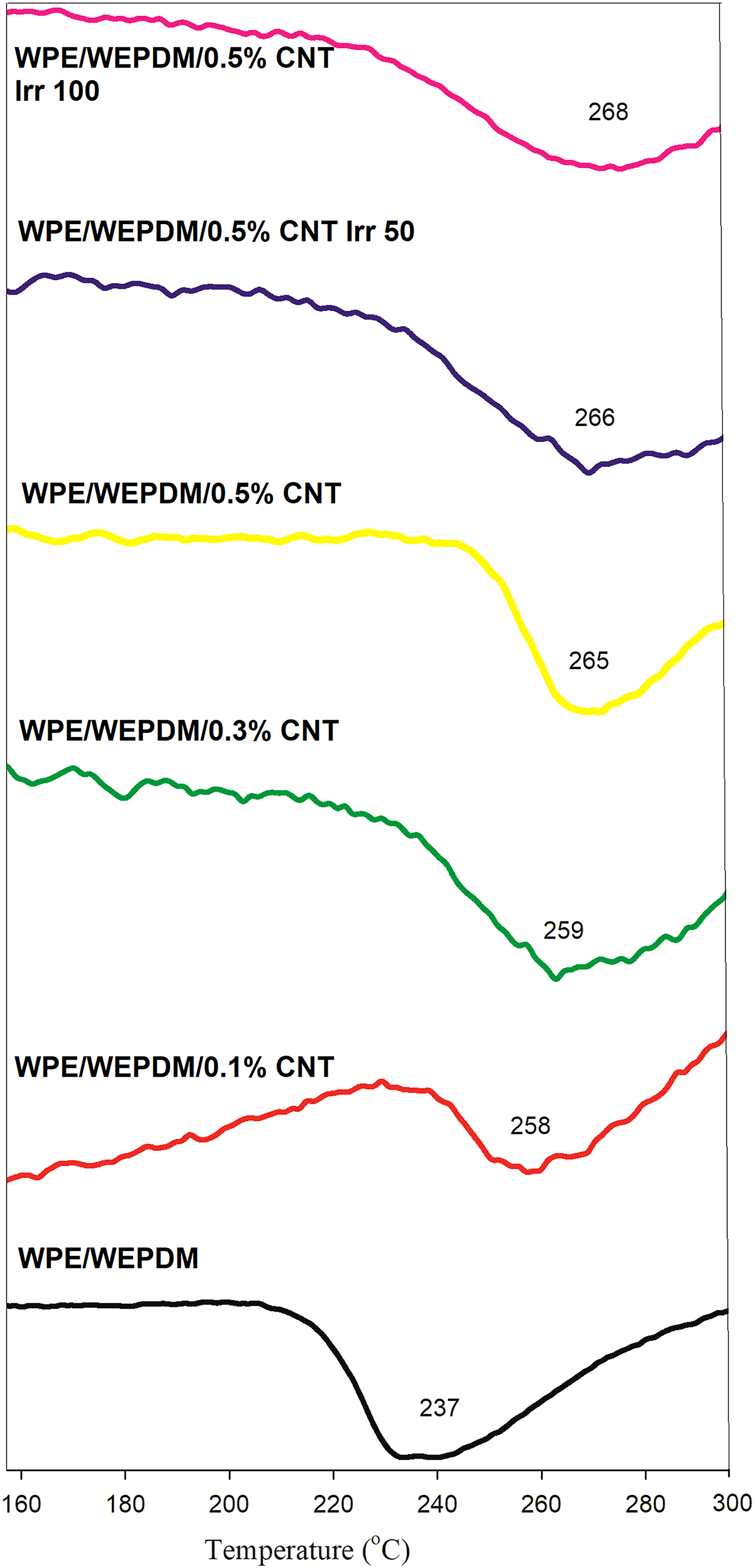
Electromagnetic Interference (EMI)
The Electromagnetic Interference (EMI) was studied for all samples considered before and after irradiation with gamma doses of 50 and 100 kGy. The schematic diagram for the experimental setup is considered in Figure 9. For comfort, we designated the measured samples as represented in Table 1 at the Section 2.2 of the nanocomposites fabrication. Schematic diagram electromagnetic interference experimental setup.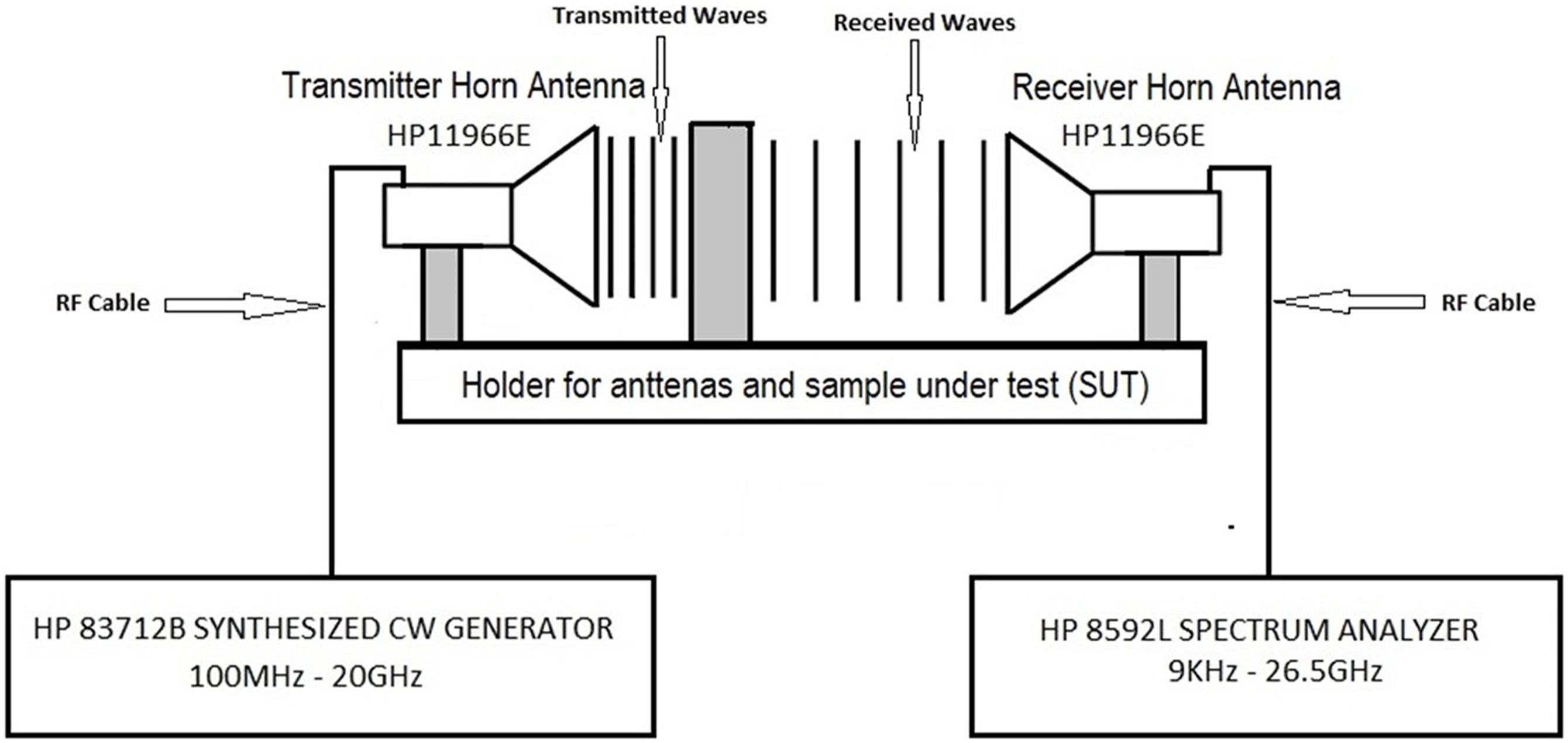
All measured conditions are kept constant by fixing the two horn antennas and the holder carrying the sample under test on the same horizontal holder. This allows a geometric adjustment for the transmitter and receiver antennas. Each sample is fixed between the two antennas in the same location with an appropriate holder. The holder was designed from an aluminum sheet with a suitable hollow in the middle to allow the transmitted waves to reach the SUT. The position of the operator of the measurement processing is kept constant, giving the same condition of human effects. Finally, the time of measurements is approximately the same. These will attain the constant humidity and operating temperature for all samples. Thus using these conditions, the transmitted power and microwave intensity will be the same to reach for all samples. Therefore, the output results can be gathered in the same figure.
Before gamma-irradiation
The effect of concentrations of carbon nanotube in the sample’s composition as illustrated in Figure 10. This figure depicts the extracted behavior of samples S1, which is the Control Sample (CS), S2, S3 and S4 as well as the Original Received Signal (ORS), as a measurement reference, that is measured without any samples or obstacles used. Starting from 0.6 GHz to 3.6 GHz which covers the lower-middle and upper band of L-band as well as the lower and upper-middle band of S-band RF frequencies. The response can be divided into three main regions. These three regions appear in all the next responses also. The first region of the microwave response will start at frequency 0.6–1.5 GHz which covers the middle L-Band RF frequencies. The second region extends from 1.5 to 3 GHz which covers the upper region of the L-Band and the almost S-Band RF frequencies. The third region extends from 3 to 3.6 GHz, which covers the upper-middle band of the S-Band RF frequencies. From Figure 10, in the first region, all samples give moderate shielding characteristics to the received microwave signal in comparison with the control sample or to the original received signal. Meanwhile, in the second region the same response was achieved with better attenuation in the samples S2, S3 and S4. It is clear in region three the samples can be utilized to obstacle the received signal. By investigating this figure, it is clear that increasing the amount of carbon nanotube can attenuate the received signal significantly. The received signal versus frequency in case of no obstacle (Blank), control sample (Red) and CNT samples.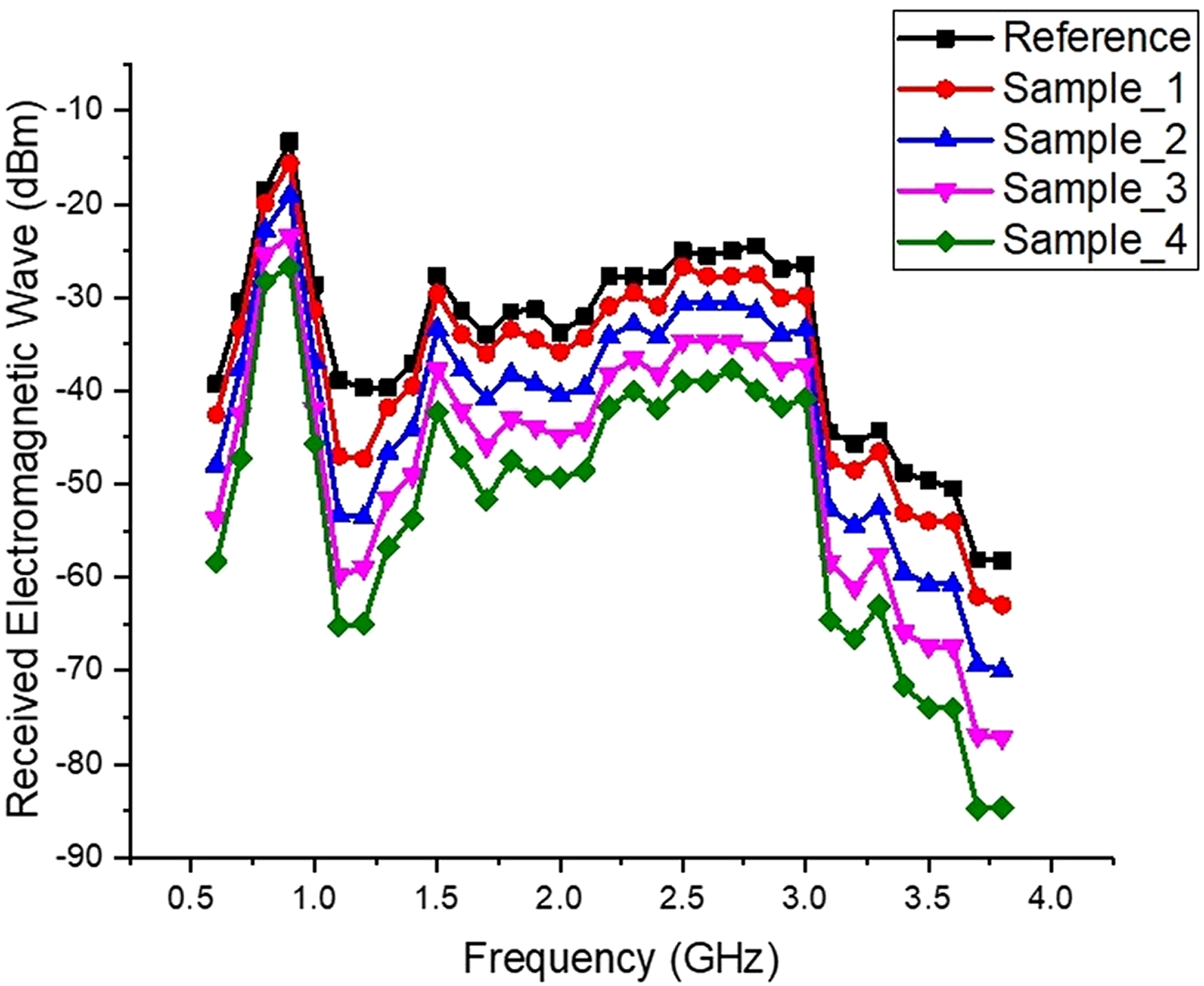
After gamma-irradiation
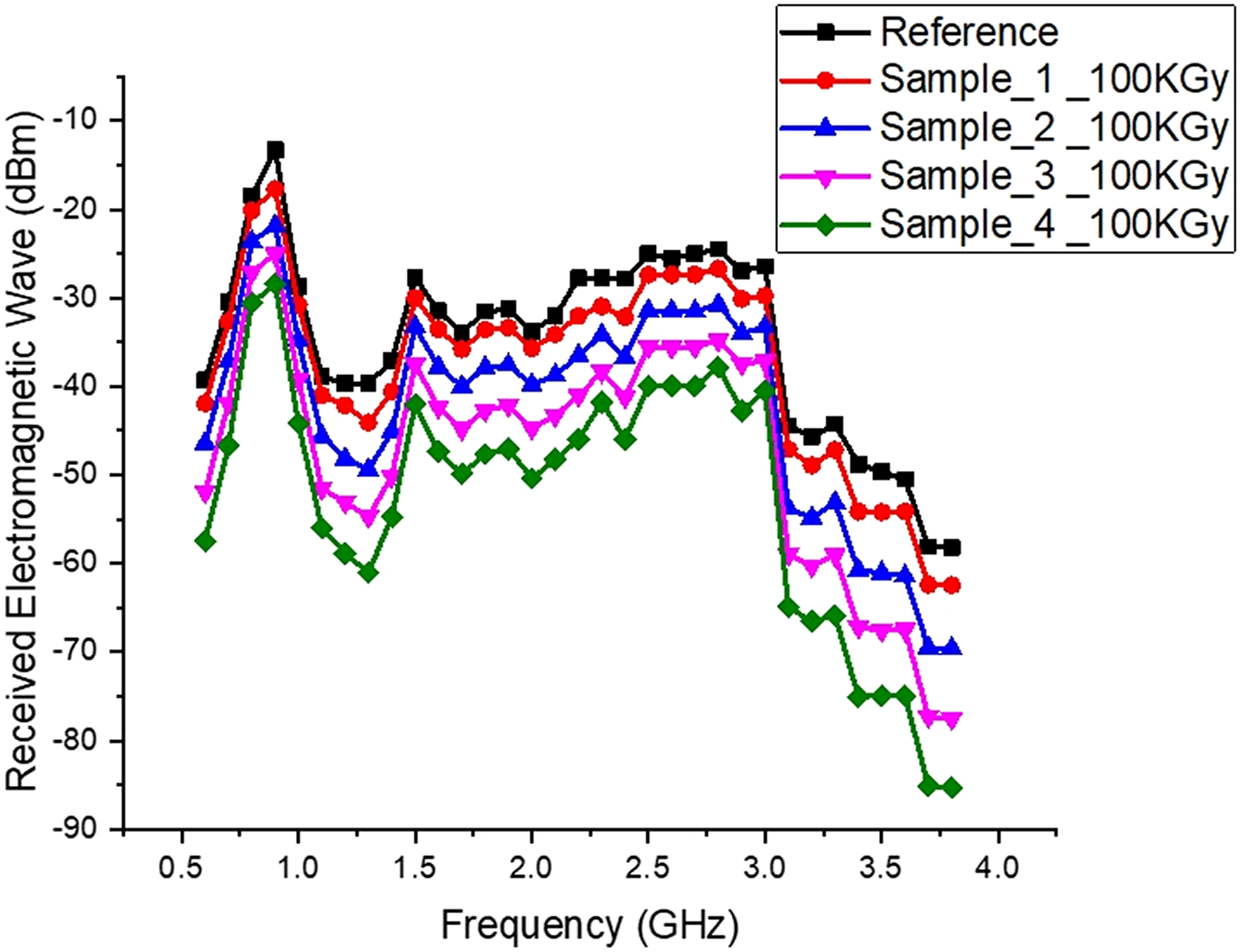
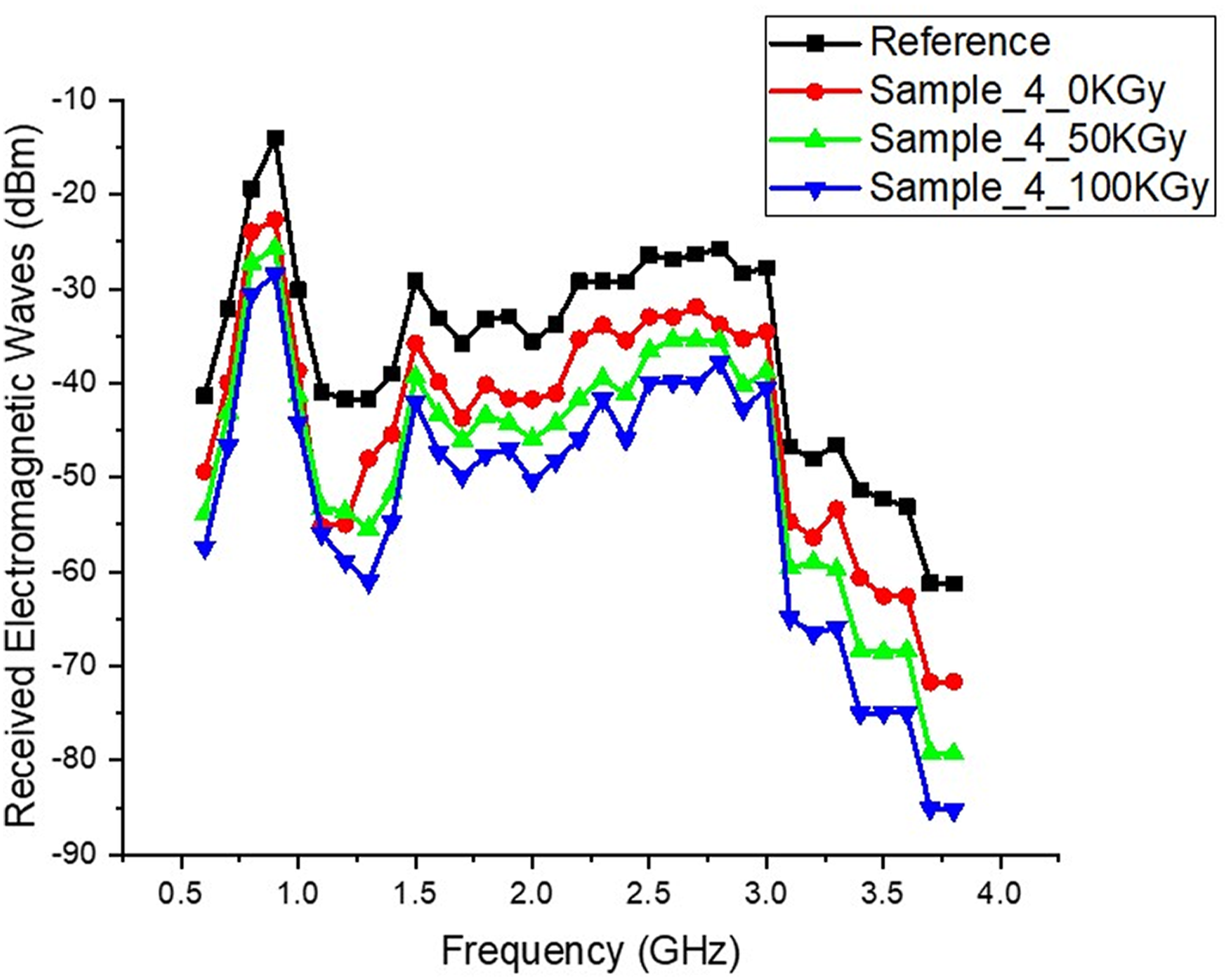
Study the effect of gamma-irradiation on each sample presented along with the following figures. Each figure represents the response of all samples before and after gamma-irradiation with 50 and 100 kGy respectively. Figure 11 represents the response of all samples irradiated with 50 kGy against the received electromagnetic wave interference. There is a significant attenuation among the samples which increase significantly with the increase of the carbon nanotube concentration. Figure 12 shows the trend of all samples at a dose of 100 kGy, concerning to CS. Again, the same three regions are approximately achieved. The effect of the radiation dose appeared significantly in this figure as the dose increased the attenuation of the received signal increased which gives better shielding. The response of sample 4, as a guide for the effect of irradiation dose on each sample individually, was presented in Figure 13. The received electromagnetic signal versus frequency for all samples after irradiation dose of 50 kGy. The received electromagnetic signal versus frequency for all samples after irradiation dose of 100 kGy. The received signal versus frequency for the 0.5% CNT strengthened WPE/WEPDM before and after irradiation.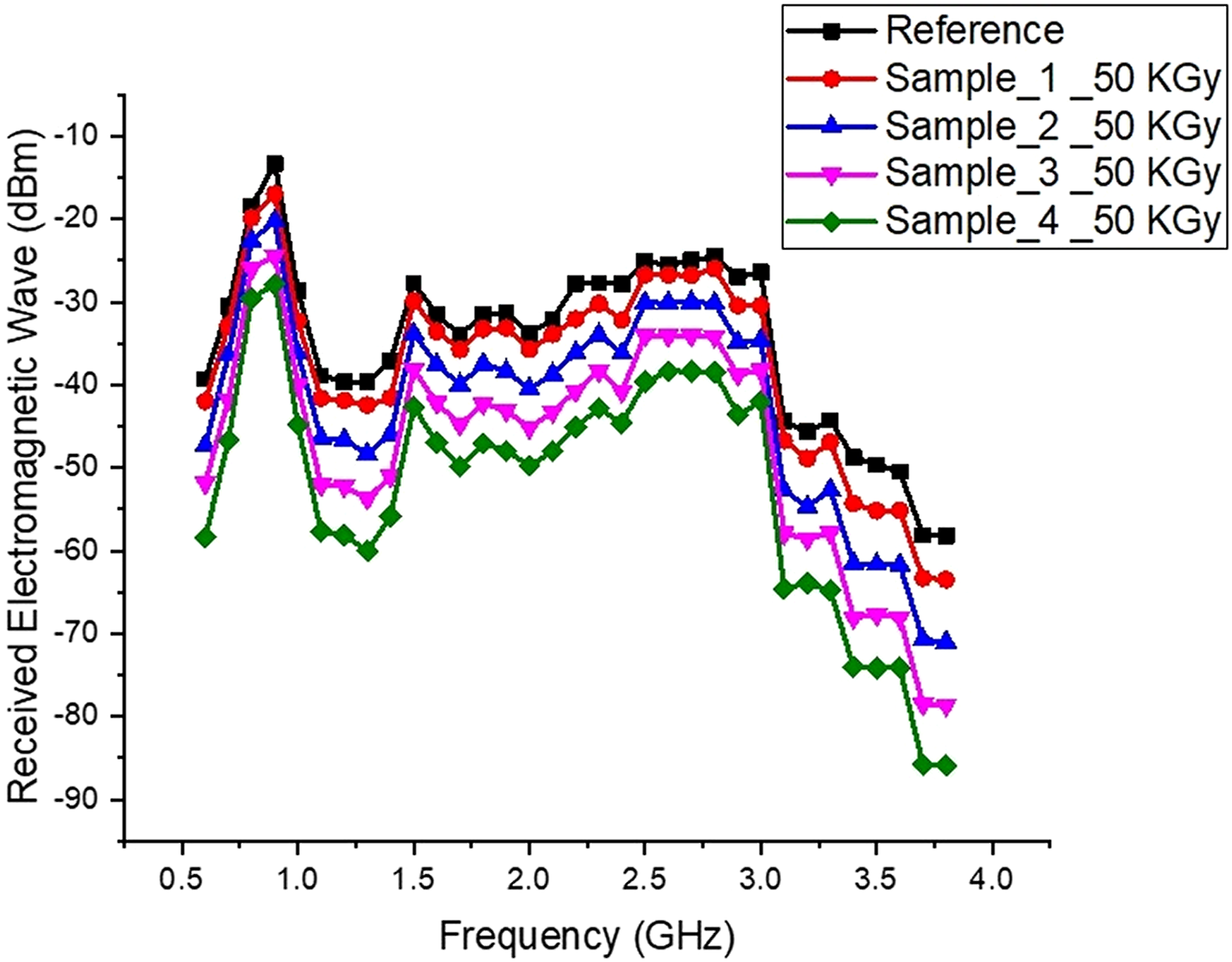
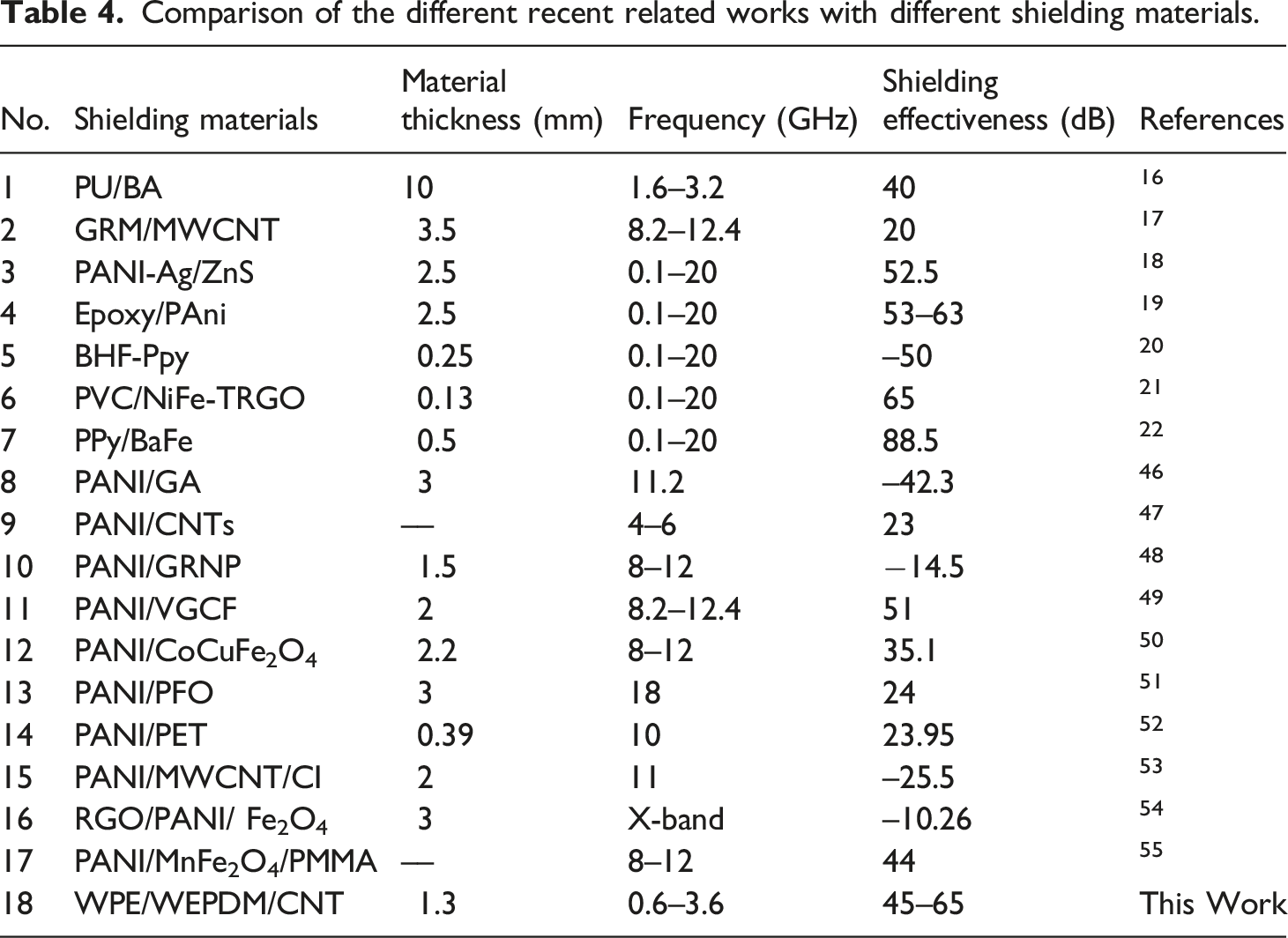
Comparison of the different recent related works with different shielding materials.
Conclusions
In this work, WPE/WEPDM/CNT nanocomposites have been fabricated according to the melt mixing technique using a twin screw extruder. The influences of CNTs loading and irradiation doses on mechanical, dynamic mechanical, thermal stability and electromagnetic interference shielding of WPE/WEPDM thermoplastic elastomer have been measured.
It has been established that the tensile strength of the WPE/WEPDM increases with CNT loading. Where its value increased from 9.0 MPa for WPE/WEPDM to approximately 15.0 MPa for WPE/WEPDM/0.5% CNT. The rate of growth in the tensile strength is 66.6% related to the un-reinforced WPE/WEPDM blend. The strength modulus of WPE/WEPDM increased from 3.8 MPa to 34.0 MPa of irradiated WPE/WEPDM/0.5% CNT at 100 kGy. The reinforcement of CNT into the WPE/WEPDM blend improves the stiffness and rigidity of the nanocomposites without any agglomeration. Storage modulus values of WPE/WEPDM in the glassy area increases with the presence of CNT, the recorded maximum value of nanocomposite contains 0.5% CNT. Irradiation improved CNT/polymer adhesion and in sequence there is a synergistic effects when CNT and irradiation are combined. Tan delta curves show that the glass transition temperature value of the WPE/WEPDM blends decreases with increasing percent of CNT up to 0.5%. Furthermore, tan delta curves indicate that the (Tg) of the irradiated specimens decreases with increasing dose of radiation. The reduction of (Tg) is associated with crosslinking density formation due to the irradiation procedure.
The thermal stability of WPE/WEPDM increased with all CNT percent. Furthermore, the thermal stability and residual weight of the nanocomposites increased with radiation doses up to 100 kGy. With the increase in CNT contents, melting temperature (Tm) significantly shifted to a higher temperature, suggesting good dispersion and diffusion of nanoparticles into the thermoplastic elastomer. It is very important for discovering the material composition which can strengthen the shielding property. We can deduce that the increase of the carbon nanotube concentrations results in higher shielding for radio frequency signals. Also, irradiation with gamma-ray of WPE/WEPDM/0.5% CNT increased its shielding property.
Highlights
• Impact of CNTs loading on mechanical, dynamic mechanical, thermal stability and electromagnetic interference shielding of WPE/WEPDM thermoplastic elastomer have been performed. • Different mechanical parameters and dynamic mechanical properties of the fabricated specimens were investigated. • TGA and DSC monitored the thermal decomposition and the melting point alterations caused by CNTs reinforcement. • Subsequent reinforcement of CNTs concentrations into WPE/WEPDM produced higher shielding for radio frequency signals. • Applied gamma radiation doses improved the shielding properties of the fabricated nanocomposites.
Footnotes
Acknowledgments
Authors would like to thank National Center for Radiation Research and Technology, Egyptian Atomic Energy Authority for facilitating experiments of preparation, irradiation and apparatus used for characterization.
Declaration of conflicting interests
The author(s) declared no potential conflicts of interest with respect to the research, authorship, and/or publication of this article.
Funding
The author(s) received no financial support for the research, authorship, and/or publication of this article.
Data availability statement
The data that support the findings of this study are available from the corresponding author upon reasonable request.
