




Abstract
This paper mainly studies the dynamic response of composites with glass fiber as reinforcement and polypropylene resin as matrix under high-speed projectile penetration. The penetration effects of fiber unidirectional ply cross-ply and quasi-isotropic ply laminate were studied by using penetration velocities of 100–500 m/s. The effects of ply angle on ballistic limit velocity, target energy absorption rate and corresponding failure mode are analyzed. The correctness of the simulation model is verified by comparative experiments, and the ply angle of glass fiber reinforced polypropylene (GF/PP) composites is optimized. The results show that the energy absorption efficiency of the three kinds of laminated plates gradually decreases with the increase of the projectile incident velocity, and with the increase of the velocity, the absorption rate of the target plate gradually decreases tends to the same constant. The laminated plates with complex ply angles are simulated and analyzed, and the optimization results show that the ballistic limit velocity of fiber-reinforced composite laminates with ply angle of 30° is the highest.
Introduction
Glass fiber reinforced composites have the advantages of high strength, light weight and large elongation. They are widely used in aerospace and other fields, as well as in daily production and life.1–5 Through relatively optimized design, glass fiber reinforced composites can achieve even better performance than metal materials and have various production processes. Preparation processes such as hand layup, lamination, and hot press compression molding can produce profiles that meet various application requirements.6,7 In practical engineering applications, composites are subjected to impact loads such as explosion and high velocity impact, resulting in a variety of damage mechanisms such as delamination, cracking of the matrix, and fiber fracture. 8 This kind of damage extends inward and then destroys the integrity of the structure.9–11 Therefore, research on the impact resistance of fiber composites is an important topic worldwide. Kasano 12 conducted penetration tests on glass fiber, carbon fiber, and aramid fiber composites using conical and hemispherical projectiles and determined the relevant ballistic limit velocities of different projectiles; Wen 13 analyzed the penetration depth and perforation of glass fiber laminate when it was penetrated and then obtained the analytical equation of ballistic limit velocity; Through experiments and numerical simulation, Ramazan 14 studied the effects of impact energy, impact block mass, and impact velocity on the maximum contact force, maximum deflection, contact time, absorbed energy, and overall damage area of glass/epoxy composites. Aktas 15 investigated the impact response of unidirectional glass/epoxy laminates with two ply sequences by considering the energy distribution diagram and the corresponding load-deflection curve. It was found that the penetration threshold of (0/90/45/–45)s is lower than that of (0/90/0/90)s, and the ambient temperature highly affects the impact response of composite materials.
Haque16,17 used LS-DYNA to study the transverse impact model of sub-laminate (SBSL) with single layer (0/90) stacking sequence. The (0/90) SBSL model was validated for mesh sensitivity, axial wave velocity and cone wave velocity. On this basis, the author analyzed the perforation mechanism of single layer soft-ballistic sub-laminate (SBAL) and multi-layer soft-ballistic armor pack (SBAP) composed of UHMWPE fibers in the order of (0/90), obtained the minimum perforation velocity, and discussed the large deformation behavior of SBAPs in detail. The author also proposed the ballistic limit velocity equation considering both momentum theorem and energy conservation law, which is suitable for ballistic experimental data fitting of wide range targets and achieves good results. 18 Zhao 19 studied the mechanical properties and failure behavior of glass plain fabric composites under axial (0 and 90°) and off-axis (5, 10, 15, 30, 45, and 60°) tensile loads. The experimental results show that the off-axis elastic modulus and strength decrease with the increase of off-axis angle. Glass fiber composites also have good energy absorption properties.20–22 The notched impact strength of glass fiber reinforced polypropylene composites prepared by Kumar et al. first increases and then decreases as the glass fiber content increases. The glass fiber plays the role of the skeleton in the composites, absorbing the main energy of the impact and being able to transfer energy when the materials impact. This greatly improves the impact strength of the composite,23,24 and the energy absorption property is also one of the standards for judging the impact resistance. Polypropylene, as a thermoplastic matrix, has a higher perforation threshold than the thermoset epoxy matrix under low-speed impact of projectile. This conclusion was reached by Dogan 25 through experiments.
Due to the variability of composite layers, the variability of angles, and the correlation between layers, the damage and failure modes of composites are more complex. It is difficult to perform a thorough damage analysis of composites using traditional mechanics and existing failure criteria. 26 Therefore, in this work, the high-speed penetration of the target specimen of the homemade glass fiber reinforced polypropylene matrix composite laminate is investigated. By changing the ply angle, this work investigates the energy absorption and failure modes of the laminate with different ply angles, simulates the process of penetration of the projectile into the composite laminate with ABAQUS finite element software, simulates and analyzes the laminate with complex ply angles, and determines the optimal design of the ply angle of glass fiber reinforced polypropylene composite material.
Experiment
Penetration experiment scheme
Prepreg is the semi-finished product required for molding laminates. The prepreg is stacked at different angles, then the prepreg is spliced in the mold and molded using a flat vulcanizer under the following conditions: The molding pressure is 1.1 MPa, the molding temperature is 195°C, and the molding heating time is 10 min, 27,28 as shown in Figure 1. Material and conditions for laminate preparation.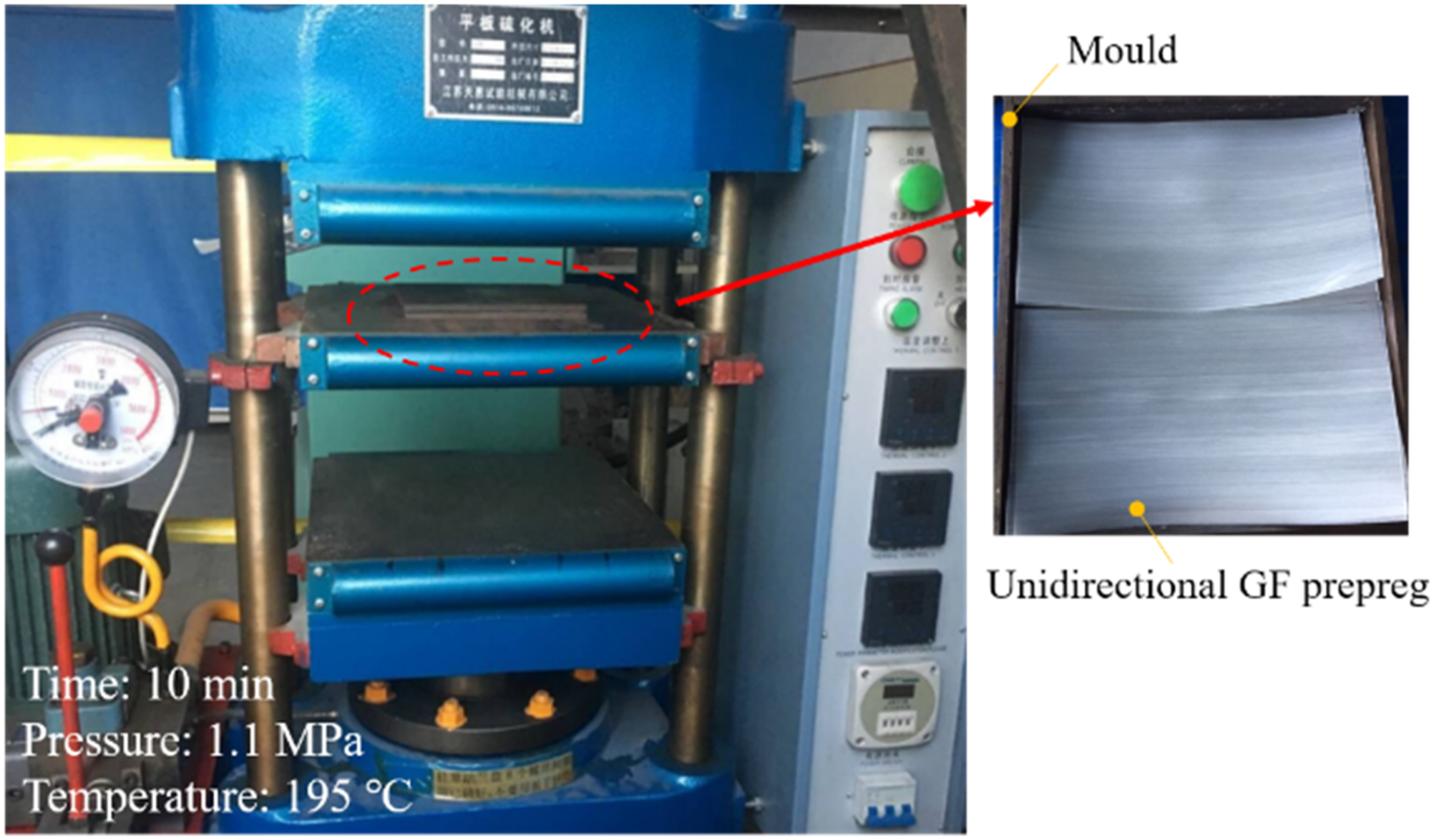
The bullet of the penetration test is a spherical projectile made of high carbon chromium steel, with a mass of 11.89 g and a diameter of 14.3 mm. Figure 2 shows the schematic diagram of the penetration experimental device. The target plates are divided into unidirectional ply (UD), cross-ply and quasi-isotropic ply (QI), all of which must be 12 layers, namely: (0°)12, (0°/90°)6 and (0°/45°/90°/-45°)3. The size of target plate is 250 mm × 220 mm × 2 mm. Schematic diagram of penetration test device.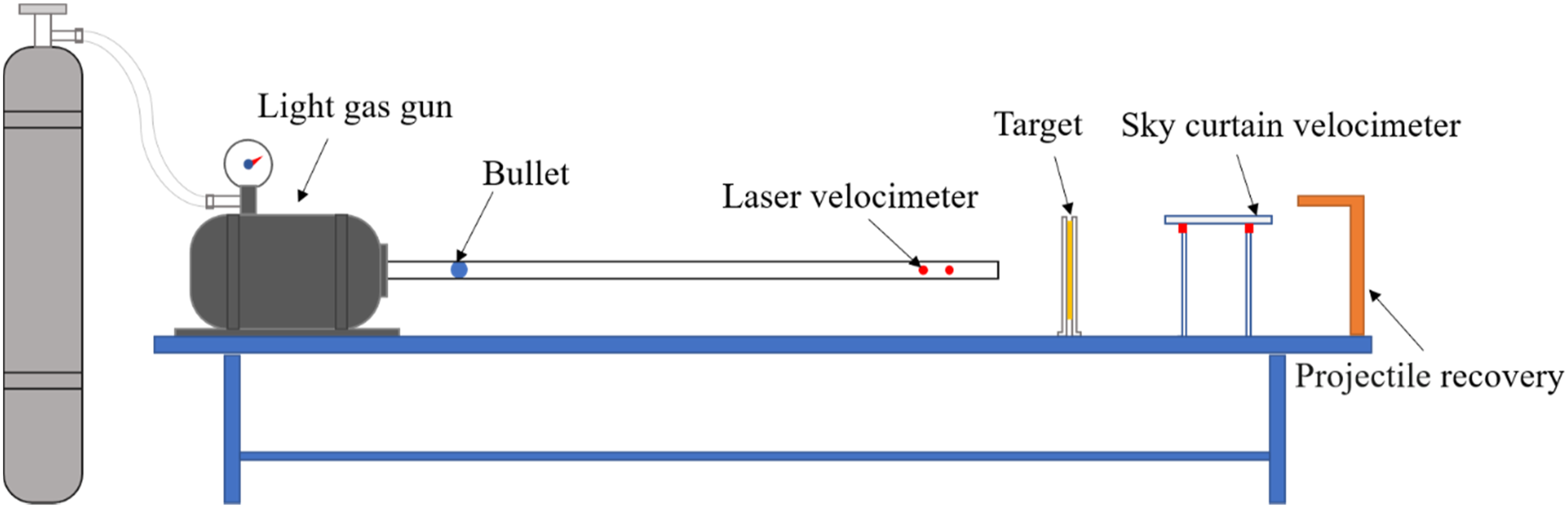
Result analysis
Penetration experimental results of three kinds of laminated targets.
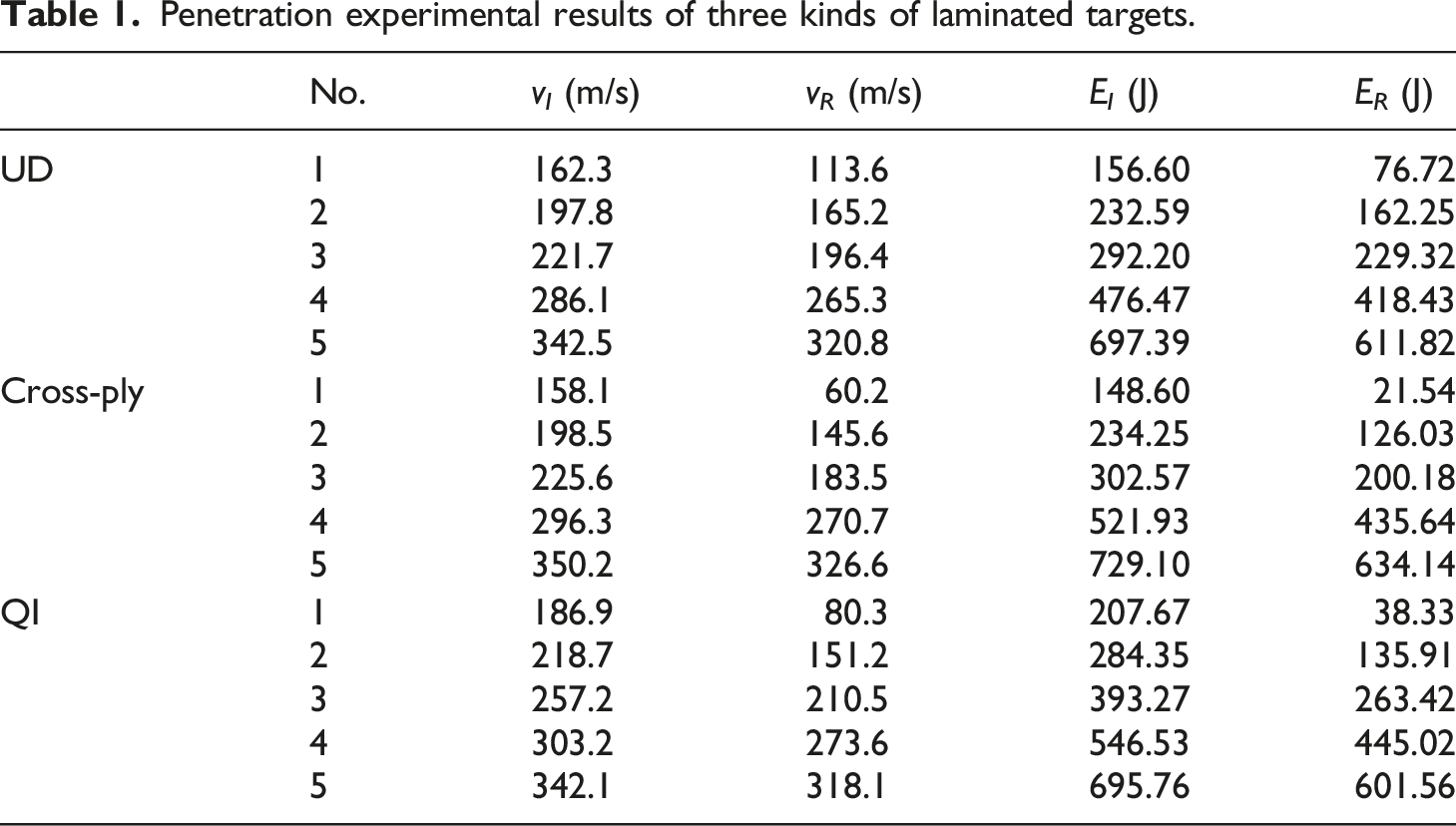
Because the projectile body is made of high carbon chromium steel, its own hardness is high, and it will not produce plastic deformation in the process of perforation. According to the law of energy conservation, the energy absorbed by the unit area density of the target plate is:
As shown in Figure 3(a), the transverse (perpendicular to the fiber direction) and shear strength of the UD laminate is low. The matrix is subjected to normal shear, which results in the breakout of strip fibers, creating a large area of damage that covers almost the whole target plate. The cross-ply laminate fiber laying symmetry, transverse and longitudinal tensile strength are higher after the projectile completely penetrate the target plate, the position of the center of penetration is round hole, a small amount of fiber layer washed out, but in the front of the target plate near the center of penetration, along the target plate two directions of the fiber are the original fibrillation phenomenon, that is: the surface near the main fiber due to the force or high temperature and split out of the fine microfibers. This indicates that the fibers themselves are subjected to a large tensile stress when the projectile penetrates the target plate, and a certain amount of heat is generated locally, which is generated by the friction between the projectile and the target plate. However, macroscopically, this heat is negligible compared with the total energy value of the projectile and does not affect the relevant parameter values of the test. Laminates with QI have a somewhat optimized structure with symmetrical and more dense than cross-ply and higher tensile strength in multiple directions. In the Figure 3(c), it can be seen that the center of erosion has round holes, the fiber layer is not obviously punched out, but near the center of erosion on the front of the target plate, the fibers in the target plate also show the original fibrillation phenomenon. The tensile failure of the 45° laminated fibers can be seen on the back side of the target plate, and the matrix resists the compressive failure. Target damage and the curve of absorbed energy per unit area density: (a) UD, (b) Cross- ply, (c) QI.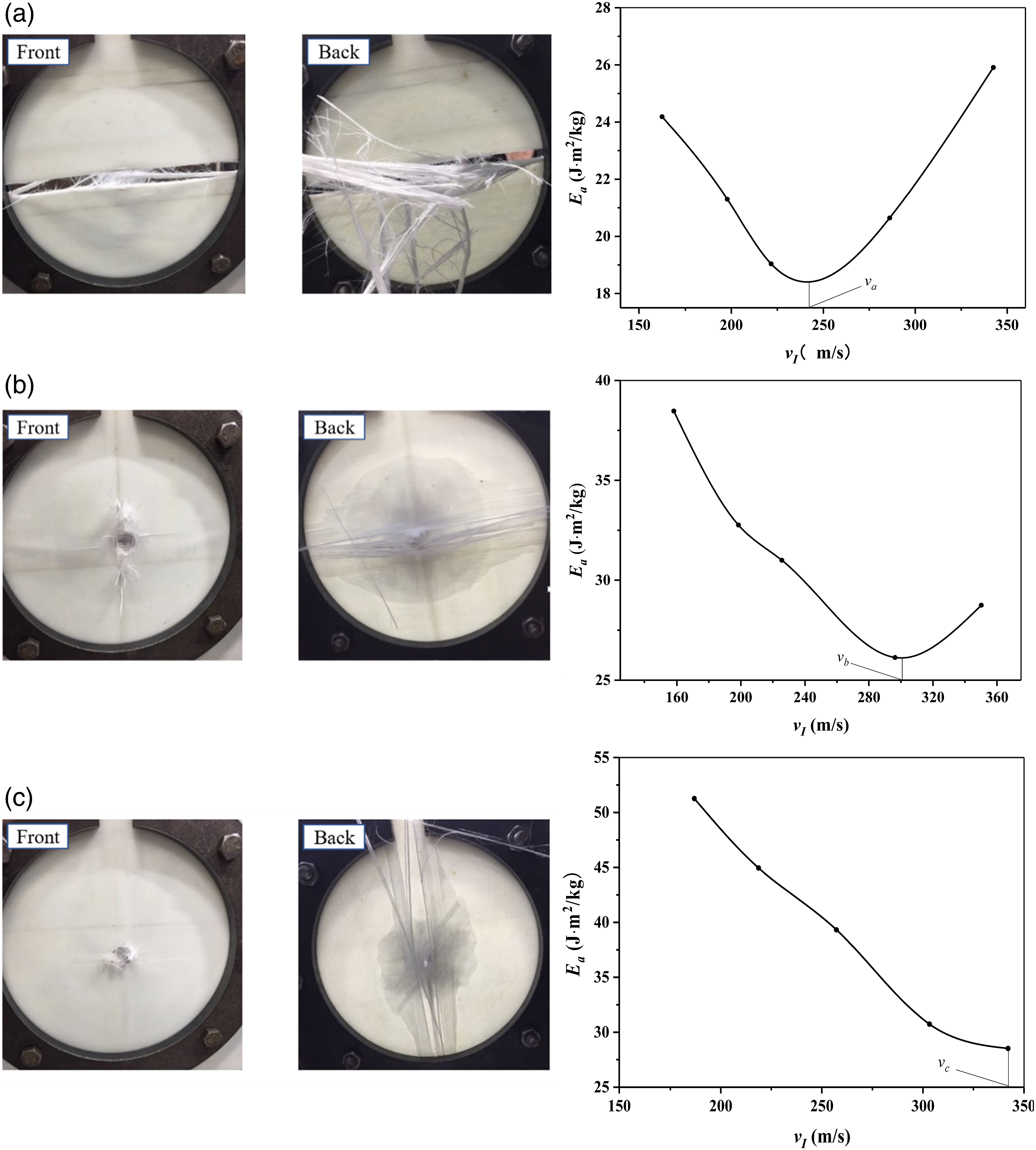
Figure 3(a) shows the curve relationship between
A similar phenomenon is observed in the cross-ply and QI laminates, as shown in Figures 3(b) and (c). The difference is
The energy absorption efficiency (η) of GF/PP composite laminate is an important parameter to measure the anti-penetration performance. Formula 2 is the calculation method. The energy absorption rate curves of the three groups of targets are compared to better analyze the influence of composite targets with different ply angles, as shown in Figure 4. Comparison between incident velocity and energy absorption rate of target plate.
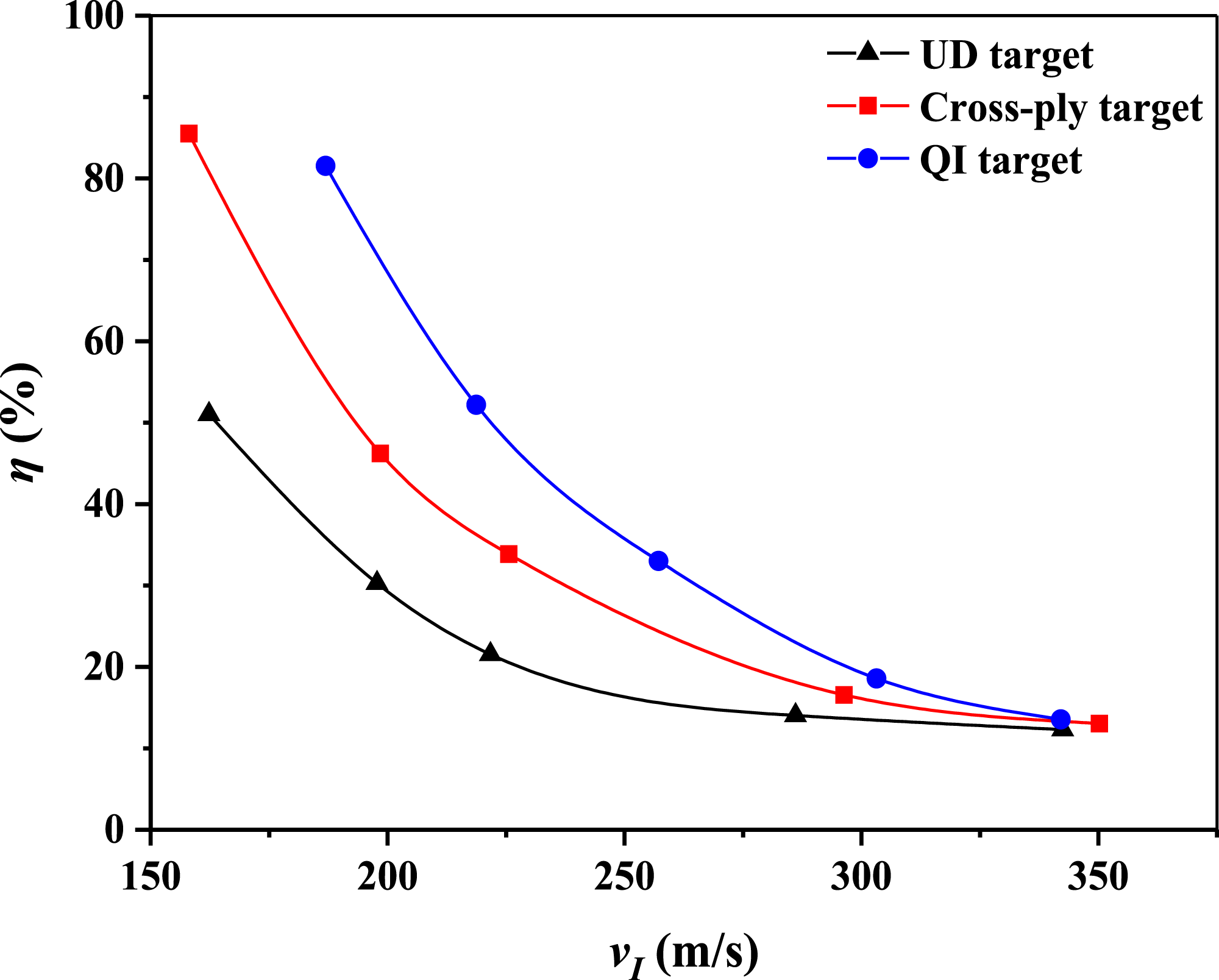
The energy absorption rate of all laminates decreases as the incident velocity of the projectile increases, which approaches a constant, and tends to be the same when the projectile velocity is high, indicating that the minimum energy absorption rate of the laminate is independent of the ply angle of fiber-reinforced composites.
Simulation
Model




Basic mechanical parameters of unidirectional glass fiber reinforced polypropylene matrix composites.

Parameters of Hashin failure criterion.

With the integrated shell unit, the delamination and ply angle are set in the composite plate management options, and the ply direction of the laminate is changed according to the requirements of different tests. Taking the orthogonal ply target as an example, the ply model diagram is shown in Figure 5. UD laminate stacking angle schematic.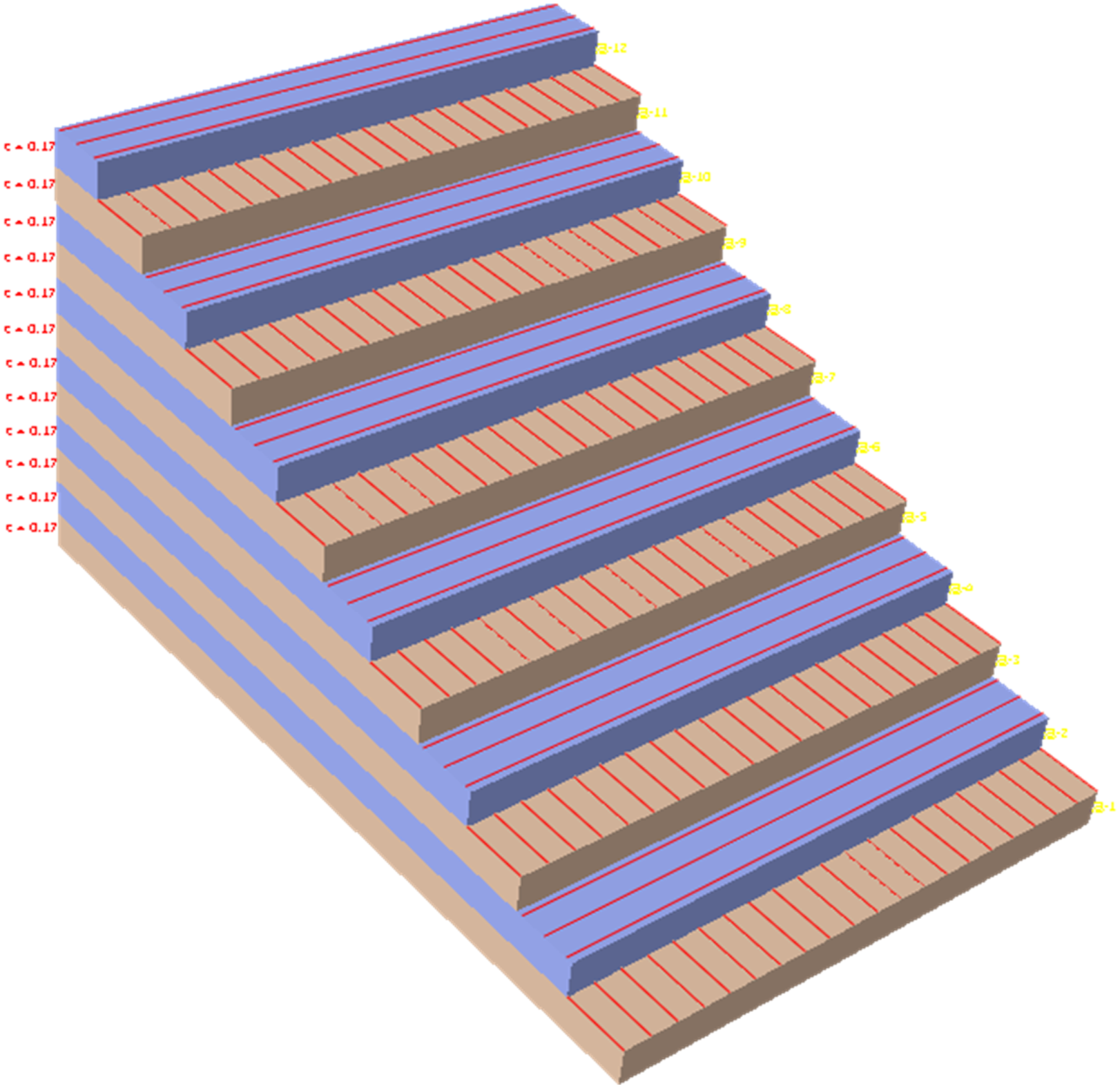
Analysis of simulation results
Figure 6(a) can intuitively observe the stress propagation process of the target plate. When the projectile contacts the target plate, a certain stress is generated on the target plate. With the projectile moving forward, the stress begins to spread outward from the center of the target plate. At time t = 6.0 × 10⁻⁵ s, the maximum Mises stress appears in the center of the target plate. Then the projectile completely breaks through the target plate and the stress propagates to the whole target plate. In addition, it can be observed that a small amount of fiber model in the target plate rushes out. Mises stress nephogram during penetration: (a) UD, (b) Cross-ply, (c) QI.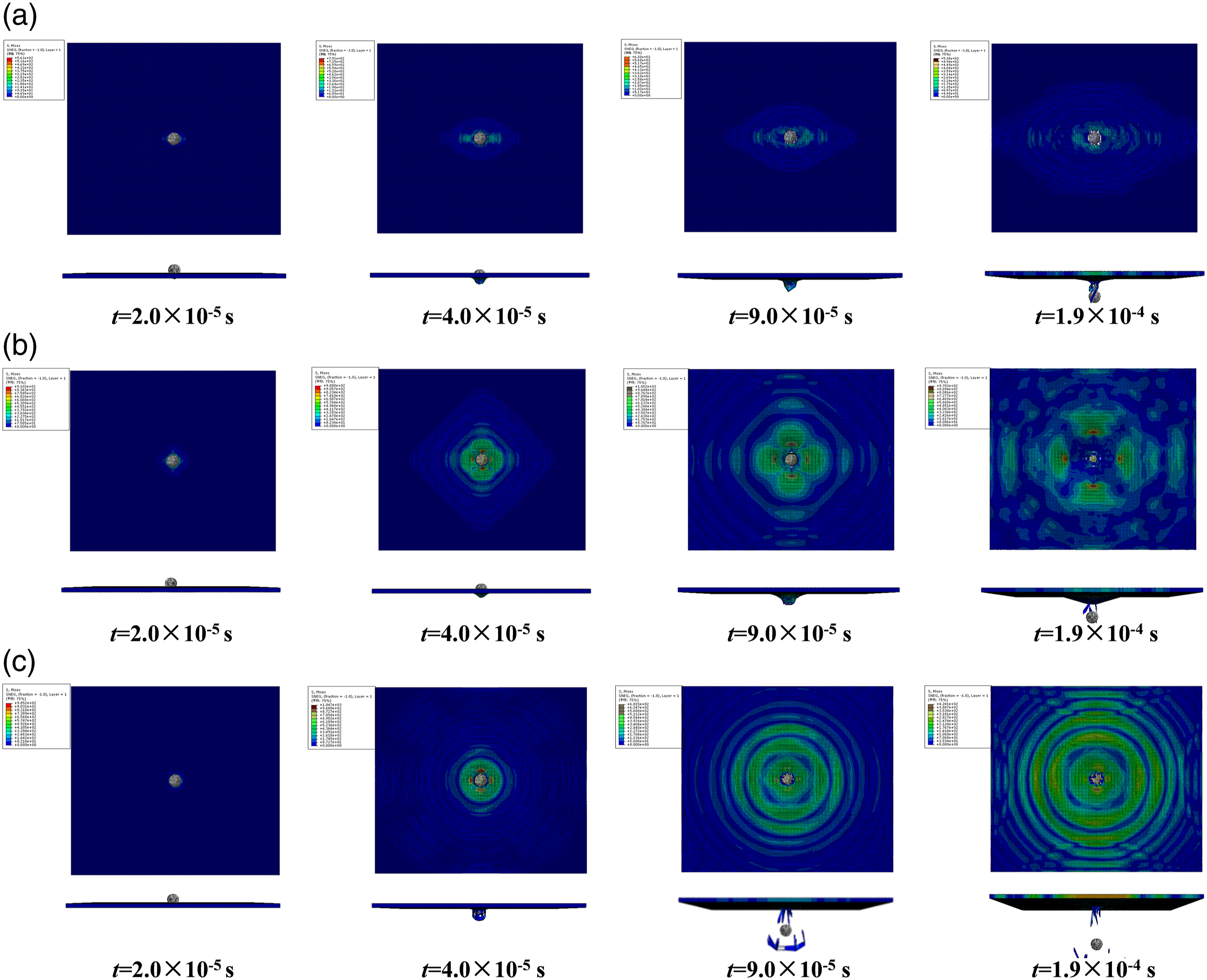
The stress nephogram of the cross-ply target plate is shown in Figure 6(b). The propagation path of the stress from the center of the target plate to the outside is similar to that of the UD target plate. The difference is that the stress distribution in the cross-ply target plate is symmetrical about the transverse and longitudinal axis of the target plate, and the stress maximum continuously moves away from the center of the target plate as the projectile moves forward. From the side view of the target, it can be seen that a large deformation occurs near the center of the target during bullet penetration.
In the stress cloud diagram in Figure 6(c), the outward propagation path of stress from the center of the target plate is similar to that of the first two target plates. Because the fiber ply of the QI target plate is more symmetrical than the cross-ply target plate, the stress in the QI laminate propagates almost in the direction away from the center of the target plate in the form of wave. The deformation of the target plate is not obvious in the process of the projectile breaking through the target plate, but after the projectile breaking through the target plate, there are also fibers rushing out backward.
Energy absorption
To increase the data range, set the incident velocity of the projectile between 180 m/s and 500 m/s for simulation. The energy absorbed by the unit surface density and the energy absorption rate of three different laminates are obtained, as shown in Figure 7. The simulation results agree well with experiment and have high reliability. From the simulation curve, it can be seen that the energy absorbed by the target per unit area first decreases and then increases, namely, there is a minimum value. The maximum incident velocity is required for the QI target to achieve the minimum energy absorption per unit area, and the absorbed energy is higher at the same impact velocity. As the speed of the projectile increases, the energy absorption rates of the three target plates continue to decrease and tend to a constant value (about 10%), which confirms the conclusions previously obtained by experiments. The curves of energy absorption per unit area density and energy absorption rate. With incident velocity are obtained by simulation: (a) UD, (b) Cross-ply, (c) QI.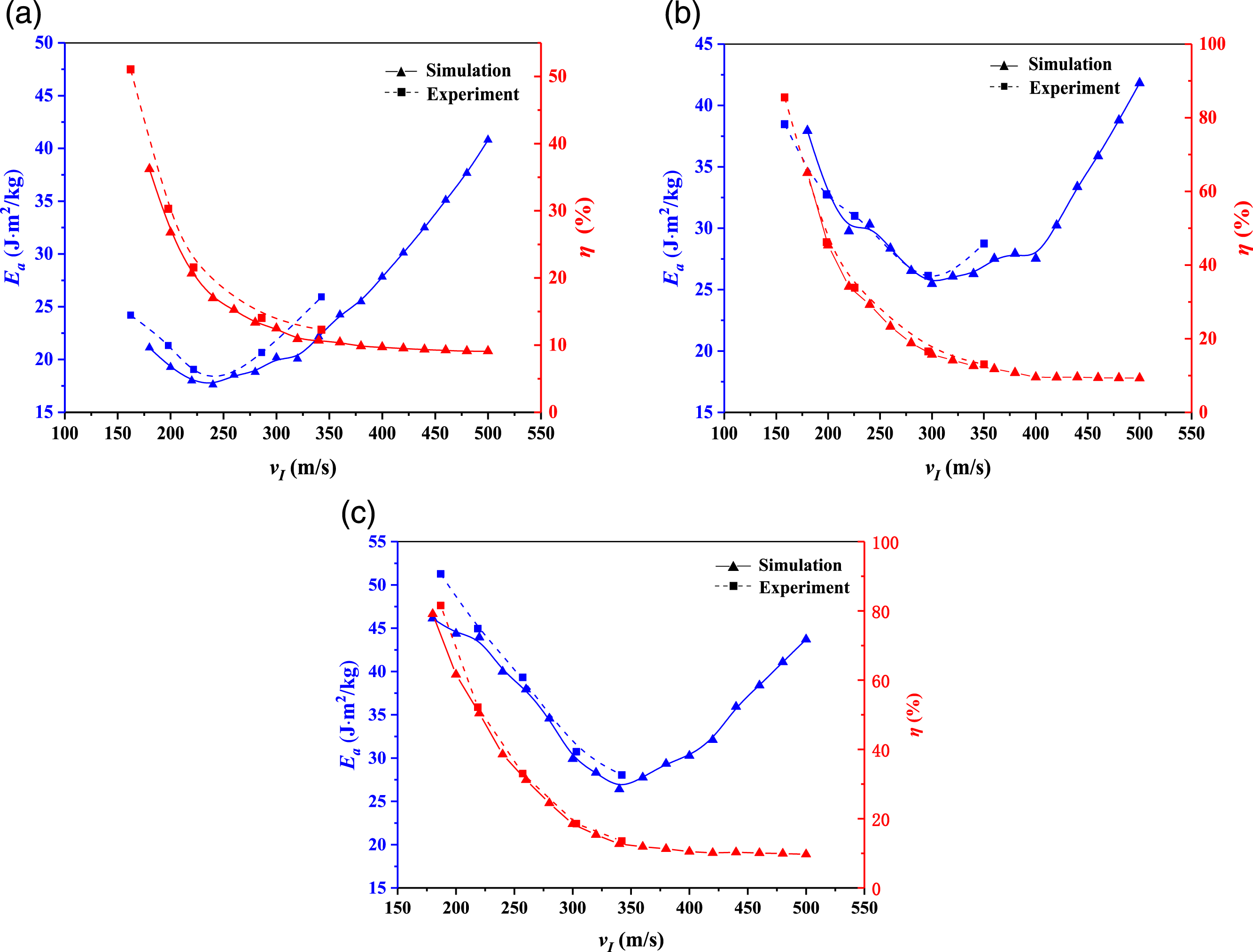
Ballistic limit velocity
The ballistic limit velocity is an important parameter to measure the penetration performance of the target. It refers to the incident velocity at which the probability of complete penetration of the target by the projectile is 50%, and it is also the minimum velocity at which the projectile can completely penetrate the target. According to the law of conservation of energy and momentum, Recht and Ipson
29
proposed the R-I formula, which can be used to determine the relationship between the incident velocity and the residual velocity of the projectile. The formula is as follows:
It can be seen from Figure 8 that the experimental and simulation data of the three kinds of laminates are in good agreement with the R-I curve. The ballistic limit velocity of QI laminate under the penetration of ball projectile is 166.1 m/s, which is 39.7% higher than that of UD laminate and 7.6% higher than that of cross-ply laminate. From this, the ballistic limit velocities of other different ply angles can be calculated to obtain better ply modes of fiber-reinforced composite laminates. The fitting coefficient and ballistic limit velocity are listed in Table 4. Ballistic limit velocity fitting curves of three kinds of laminated targets. Fitting coefficient and ballistic limit velocity of target plate.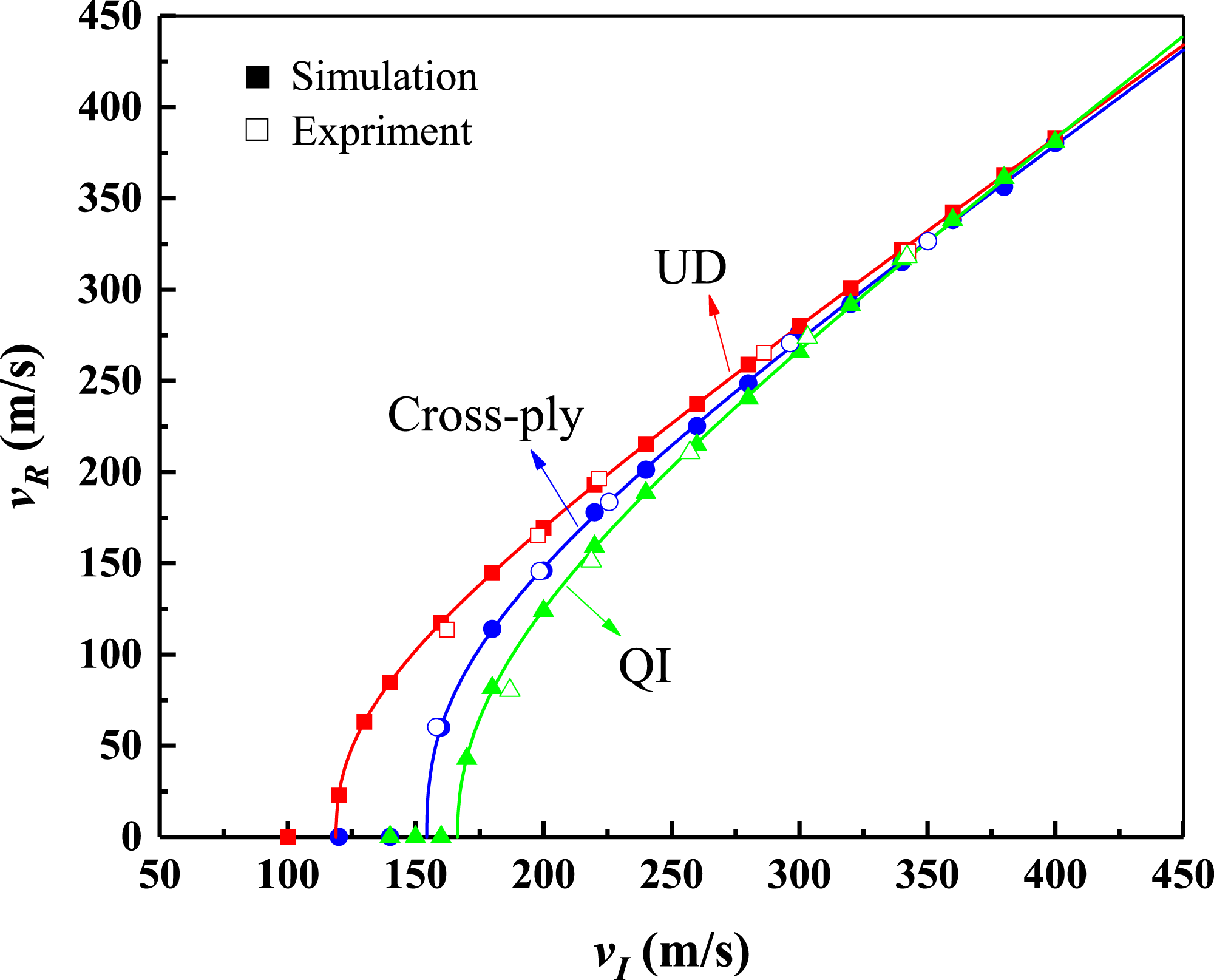
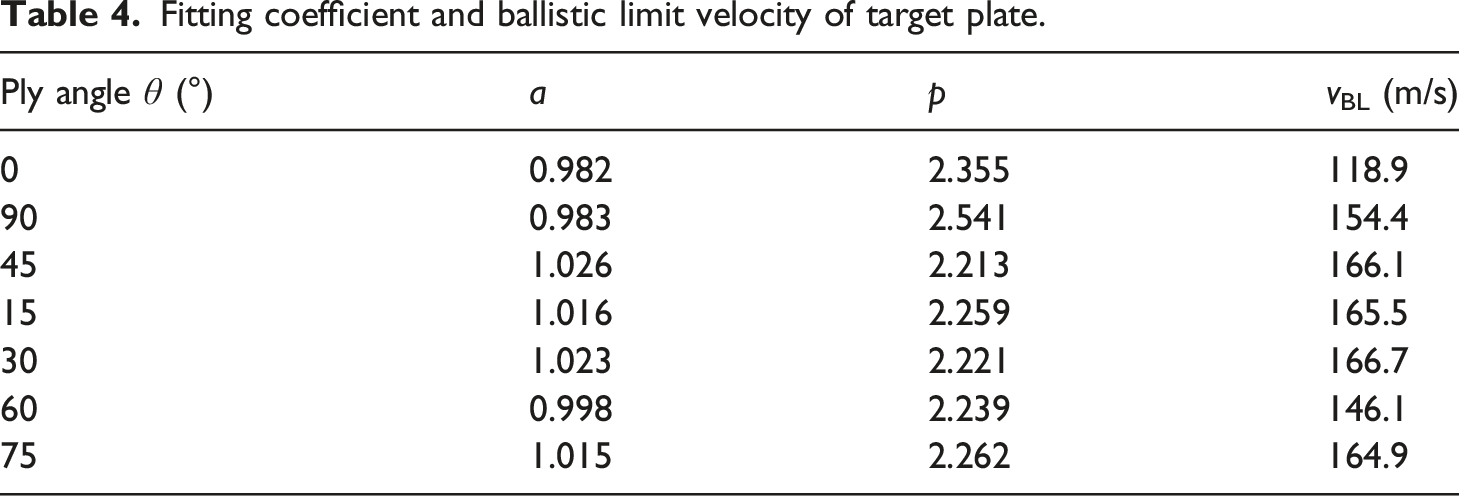
It can be seen that the ballistic limit velocity of the target plate is also different with different ply angles. The ballistic limit velocity of unidirectional ply target is the lowest, while the target with ply angle of 30° has the highest ballistic limit velocity and the best anti-penetration performance. However, the penetration performance of QI laminate is similar to that of 30° ply. If it is not necessary for the structure, QI laminate can be used to replace 30° ply laminate, so as to simplify the ply process in the process of making target plate and increase the accuracy of ply angle.
Conclusion
Several groups of penetration experiments with different ply angles were carried out on GF/PP composite target, through the simulation software, the process of projectile penetrating into composite laminates is simulated and analyzed. The conclusions are as follows:
In the penetration experiments of unidirectional (UD), orthogonal (cross-ply) and quasi-isotropic (QI) laminates, the penetration performance of QI laminate is the best. The energy absorbed per unit area density of the three kinds of laminates first decreases and then increases with the increase of projectile incident velocity. The energy absorptivity of the three kinds of laminates gradually decreases with the increase of projectile incident velocity, and finally tends to be constant.
The ballistic limit velocity of the target with complex ply angle is obtained through simulation, and the penetration performance of the target is evaluated. The optimization result is obtained: the ballistic limit velocity of the fiber-reinforced composite laminate with ply angle of 30° is the highest.
Footnotes
Declaration of conflicting interests
The author(s) declared no potential conflicts of interest with respect to the research, authorship, and/or publication of this article.
Funding
The author(s) disclosed receipt of the following financial support for the research, authorship, and/or publication of this article: This work was supported by the National Natural Science Foundation of China (grant number 11972127).
