



Abstract
This review study and explores the extraction and potential application of cellulose and nanocellulose from solid waste. Among different types of solid waste agricultural solid waste was found the most prominent for the formation of cellulose and nanocellulose. Factors affecting the properties of cellulose and nanocellulose were identified and discussed throughout the manuscript by referring reports on numerous case studies. The utilization of selected lignocellulosic biomass to produce cellulose and nanocellulose could decrease the amount of solid waste dumped on the landfills. Currently, raising awareness upon environmental issues and sustainability for the academicians, manufacturers, and policy makers to focus toward generating more biodegradable polymer products by reducing usage of nondegradable polymer products. Therefore, this study provides a review of various case studies in support of the production of cellulose and nanocellulose from solid waste, which offered the potential and possibility of commercialization of cellulose and nanocellulose products using existing conventional methods.
Introduction
Solid waste is a byproduct of consumption needs of human daily life. 1 There are three common types of waste: (i) solid, (ii) liquid, and (iii) gas waste. These wastes can also be classified as hazardous, organic, and/or recyclable. 1 The removal of these solid waste may improve the quality of human life. Most of the known solid waste is generated by industries and consumers. Few examples of consumer and industrial solid wastes are slag, fly ashes, tires, papers, plastics, and timber. 1 It is reasonable to say that fast population growth led to the accumulation of solid waste.2,3 It may be assumed that the population growth rate is around 3.6% in 2020 and the expected the amount of waste will be about 31,000 tons/day. 4 Most of the Malaysian solid waste contains a very high proportion of organic waste, resulting in a high moisture level. 5
The drastic increase in the manufacturing of rubber production and products, particularly for those used in the automobile industry contributes to the vast amount of rubber waste. 6 This waste, which mostly includes discarded tires are globally produced more than 17 million tons per year. 6 Tire recycling industry produces rubber around 70–80% of waste, whereas the product of recycling may consist primarily of the cured rubber.6–8 In some construction applications, recycled household and industrial waste are applicable, either as an additive (mineral admixture) or constituent of cement. 9 Commercially, most of the polymer composites being made are reinforced with synthetic materials, such as carbon fiber or steel as a filler. However, the applications of these recycle waste materials are underutilized, especially in the production of polymer composites itself.
Utilizing solid waste to extract cellulose as a product, such as standalone derivative, or a reinforced material for composites, could lead to a potential solution for managing and reducing solid waste in the landfills. To assist the development of reinforced polymer composites and the extraction of cellulose or nanocellulose from the solid waste, proper lab scale processes and facilities are needed to create effective commercialized products. Analysis of solid waste generated from different sectors is valuable, especially toward the extraction and potential use of cellulose or nanocellulose as reinforcement in materials and polymer composites. 10
Cellulose composition and yield are based on the process of extraction and the percentage of cellulose content contained in the waste source/source material, according to a previous study in the past, which was mentioned throughout this review. In addition, cellulose derived from urban, clothing, industrial solid waste, and agricultural waste produces a wide range of cellulose compositions and has demonstrated technological inconsistency in end-product yield due to extraction process performance. Processing more waste source material, on average, has a significant impact on cellulose yield. The more industrial waste containing lignocellulosic material that is used, the less waste that is sent to landfills, etc. Therefore, this review covered the method of extraction of cellulose from biomass, municipal solid, textile, industrial, and agricultural. It also covered the aspect of cellulose production in Borneo.
Cellulose from biomass
Cellulose is one of the most abundant sources of renewable organic polymer on Earth. 11 Cellulose could be extracted from numerous sources, such as plants, 12 algae, 13 tunicates, 14 and some bacteria compound.11,15–17 Lignocellulosic biomass or agricultural waste contains 85–90% of cellulose, hemicellulose, and lignin, while the remaining percentage constitutes of organic and inorganic compounds. 18
Cellulose constitutes as a major structural polymer in a plant cell’s wall. It tends to exist in the walls of the plant cell, which are long as threadlike fibers, called as microfibrils. Cellulose is a linear polysaccharide consisting of monomeric units of anhydro-d-glucose units with a β-(1 → 4)-linkage.18–20 The linkage allowed the cellulose microfibril structure to develop strong intermolecular and intramolecular hydrogen bonding.18,21 The cellulose microfibrils were reported to be embedded in the matrix that contained both hemicellulose and lignin. 18
Figure 1(a) shows the primary cell wall, whereas the cellulose microfibrils located in the primary cell wall is relatively short and thin than those located in the secondary cell wall. It was reported that in the primary cell wall the hemicellulose is composed of xyloglucan and it is rich in pectin. 22 Figure 1(b) shows the secondary cell wall, which is located between the primary cell wall and the plasma membrane. It was reported that the secondary cell wall mainly comprised of relatively long and thick cellulose microfibrils, hemicellulose xylan, and lignin. 22 The model in Figure 1 also showed the usefulness of visualization to differentiate cellulose, hemicellulose and lignin in the plant cell walls. The cellulose, hemicellulose and lignin content of agricultural biomass varied according to the source. 22
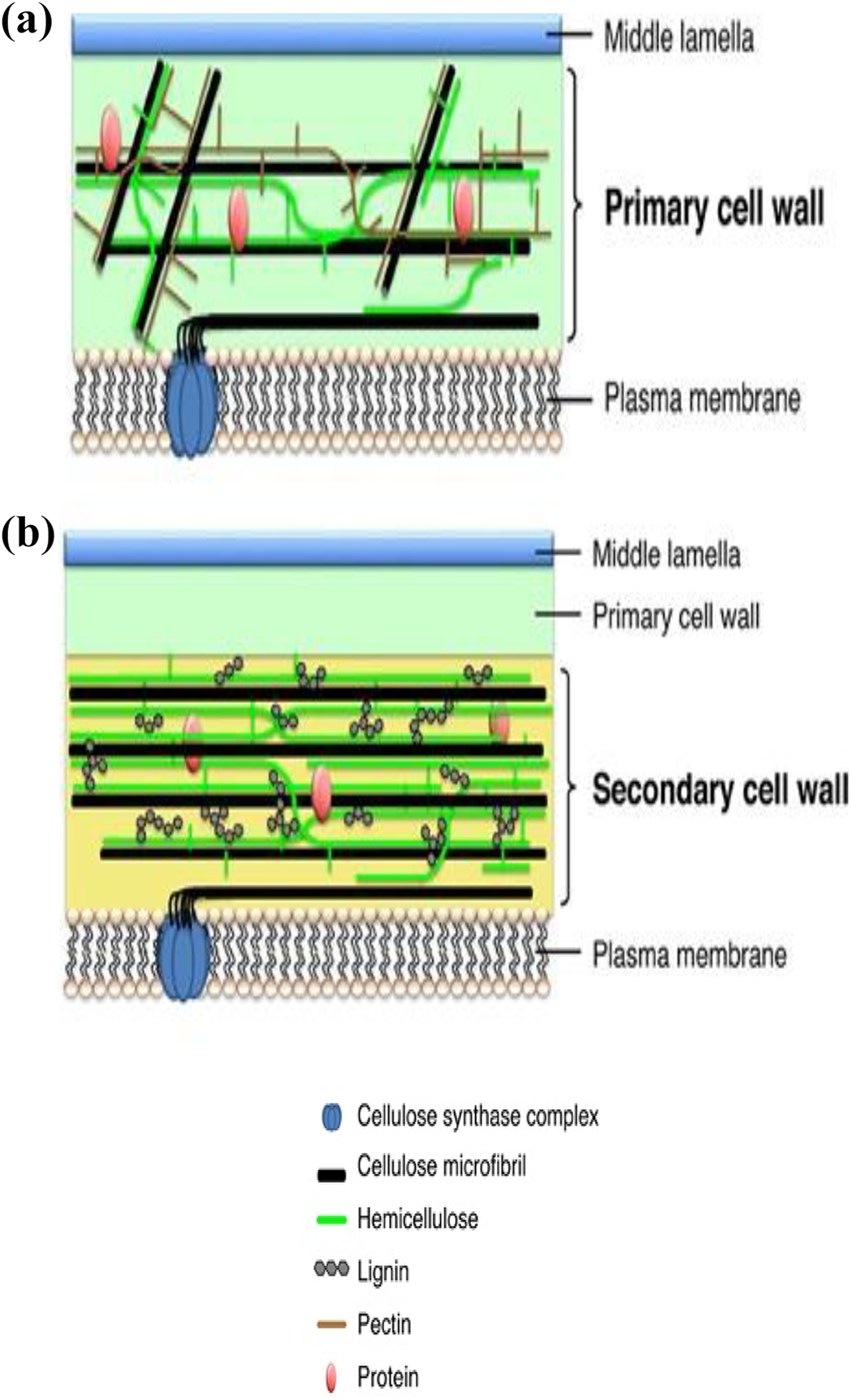
Example of plant cell wall model containing cellulose microfibril, hemicellulose, pectin, and lignin: (a) primary cell wall, and (b) secondary cell wall. 22
Some case study examples are corn stover, which consist of 33–35 wt.% cellulose, 21–24 wt.% hemicellulose, and 17–22 wt.% lignin. 18 Buzała et al. 23 reported that the dry weight of bleached pine Kraft softwood pulp consisted of 96.5 ± 0.2 wt.% cellulose, 3.4 wt.% hemicellulose, and less than 0.05 wt.% lignin. In comparison to softwood pulp and corn stover, an herbaceous crop such as switchgrass has a cellulose content of 38–40 wt.% and low lignin content of 15–19 wt.%.18,24 However, processing procedures regarding the softwood pulps, such as pulping and bleaching may influence by the type and source of the material, which consists mostly cellulose, with minimal amounts of hemicellulose, lignin or other substances, which was reported by Zhao et al. 20 It was confirmed in some of the case studies that harvesting techniques and storage also affected agricultural biomass chemical composition.18,25
Methods of extracting cellulose from biomass
Various case studies suggested that there are many factors that affect the characteristics of cellulose during its extraction, such as the source of material, chemical hydrolysis process, 11 chemical concentration, 26 time and temperature variations, 27 type of pretreatment chemicals 28 and centrifugal force during mechanical processing. 29 Among the various types of extraction methods reported in certain case studies, it was disclosed that the pretreatment, mechanical processing, and chemical hydrolysis are the three key methods to extract cellulose 30 as shown in Table 1.
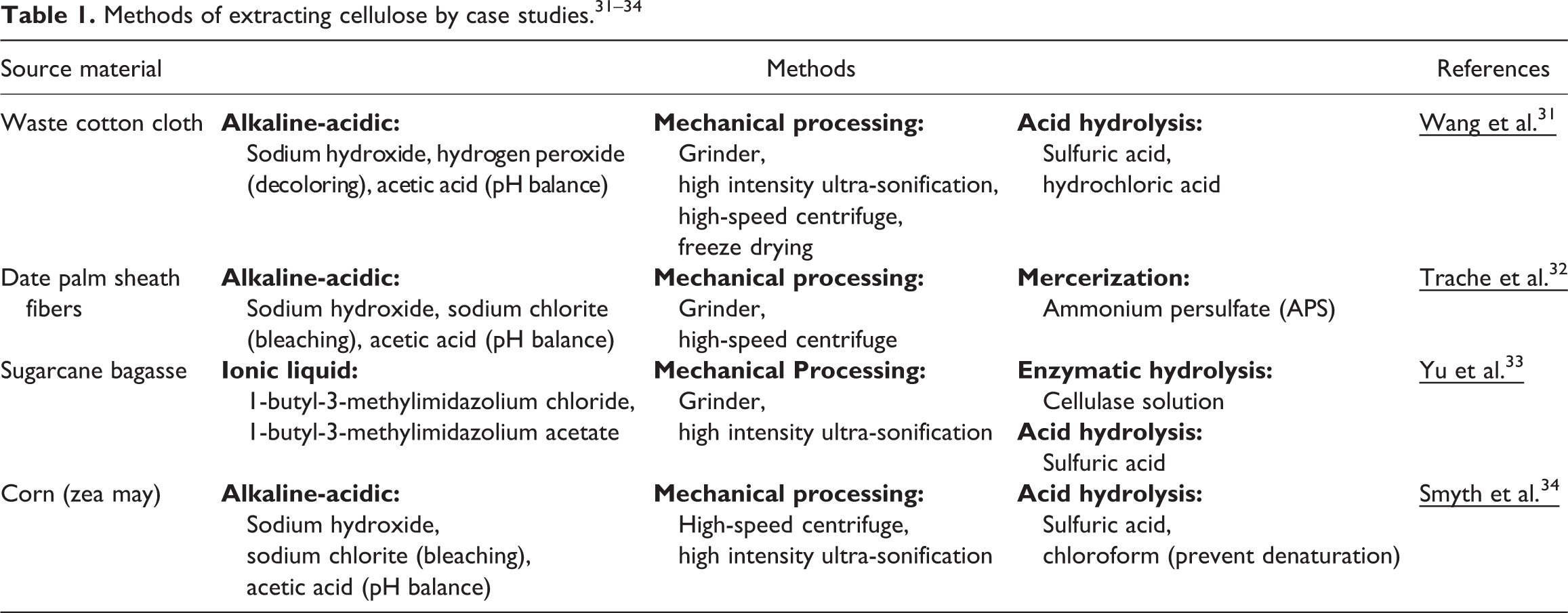
Various case studies reported that the synthesis and characteristics of crystalline cellulose microfibrils are dependent on the source material. However, the particle size of the cellulose is dependent on the pretreatments and disintegration/deconstruction processes.11,35 To ensure proper isolation of cellulose particles, the processes could be categorized into various process stages. The first stage involves purification, homogenization, and pretreatment of the source material.35,36 Processes during the first stage involve the complete or partial removal of matrix materials, such as hemicellulose, lignin, pectin, and stripping wax off the lignocellulosic source material, hence revealing the cellulose.35,37 The second stage involves the separation of the cellulose after the formation of microfibrillar or nanocrystalline particles during the first stage processes. Acid hydrolysis and mechanical treatment are used for separation. According to numerous case studies, these methods could be used separately, or in a combination to achieve the desired cellulose morphology.14,32,35–37 Acid hydrolysis isolates crystalline cellulosic regions of the fiber in the form of micro- or nanocrystals. Case studies also reported that the use of strong acids such as sulfuric, nitric, and hydrochloric acid could successfully breakdown the source material’s fiber structure.14,35,38
In relation to the acid hydrolysis experimental procedures, Wang et al. 31 reported that 80 wt.% phosphoric acid and pretreated cellulose was added in a material-to-liquid ratio of 1:20. The solution was stirred for 7 h at 50°C, then diluted by five times the volume of distilled water at room temperature to stop the hydrolysis reaction. High-speed centrifuge was used repeatedly to obtain clear supernatant and precipitate (cellulose crystals) separation. The centrifugation process continued until a turbid suspension was obtained. Using distilled water for dilution, the solution achieved a constant pH level and was then frozen in the refrigerator. The frozen solution was then freeze dried to remove the water content, thus, revealing the cellulose crystals.32,35,37 Mechanical processing such as grinding, cryo-crushing, and high intensity ultrasonication was used to extract the amorphous compounds, separating it from the cellulose microfibrils. The complete or partial removal of the matrix material and chemical treatment applied, are effective to weaken the interfibrillar hydrogen bond.12,36–38 Figure 2 shows the schematic diagram separation process of cellulose.
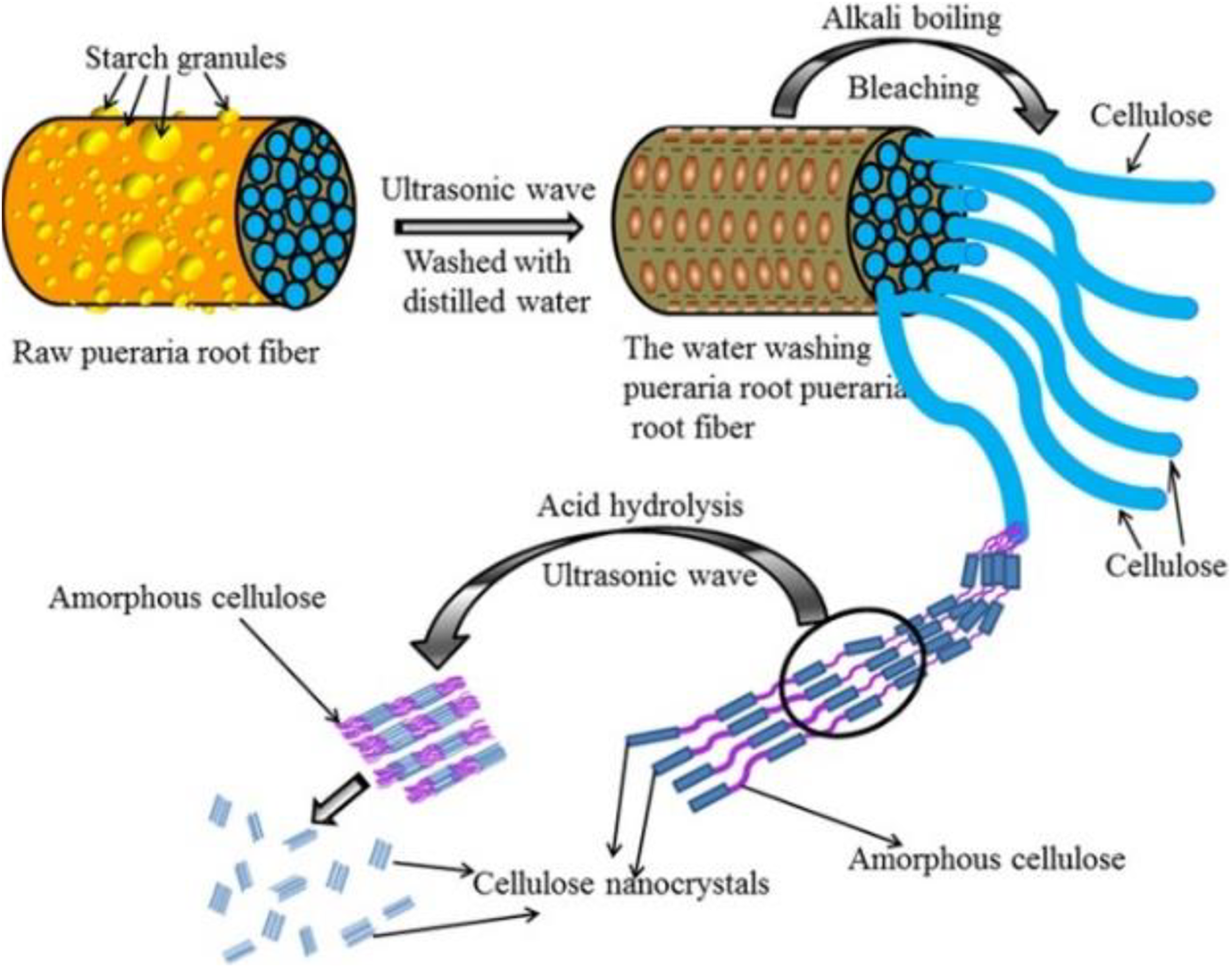
A schematic drawing displaying the separation process of cellulose nanocrystals from source materials (raw Pueraria root fiber). 37
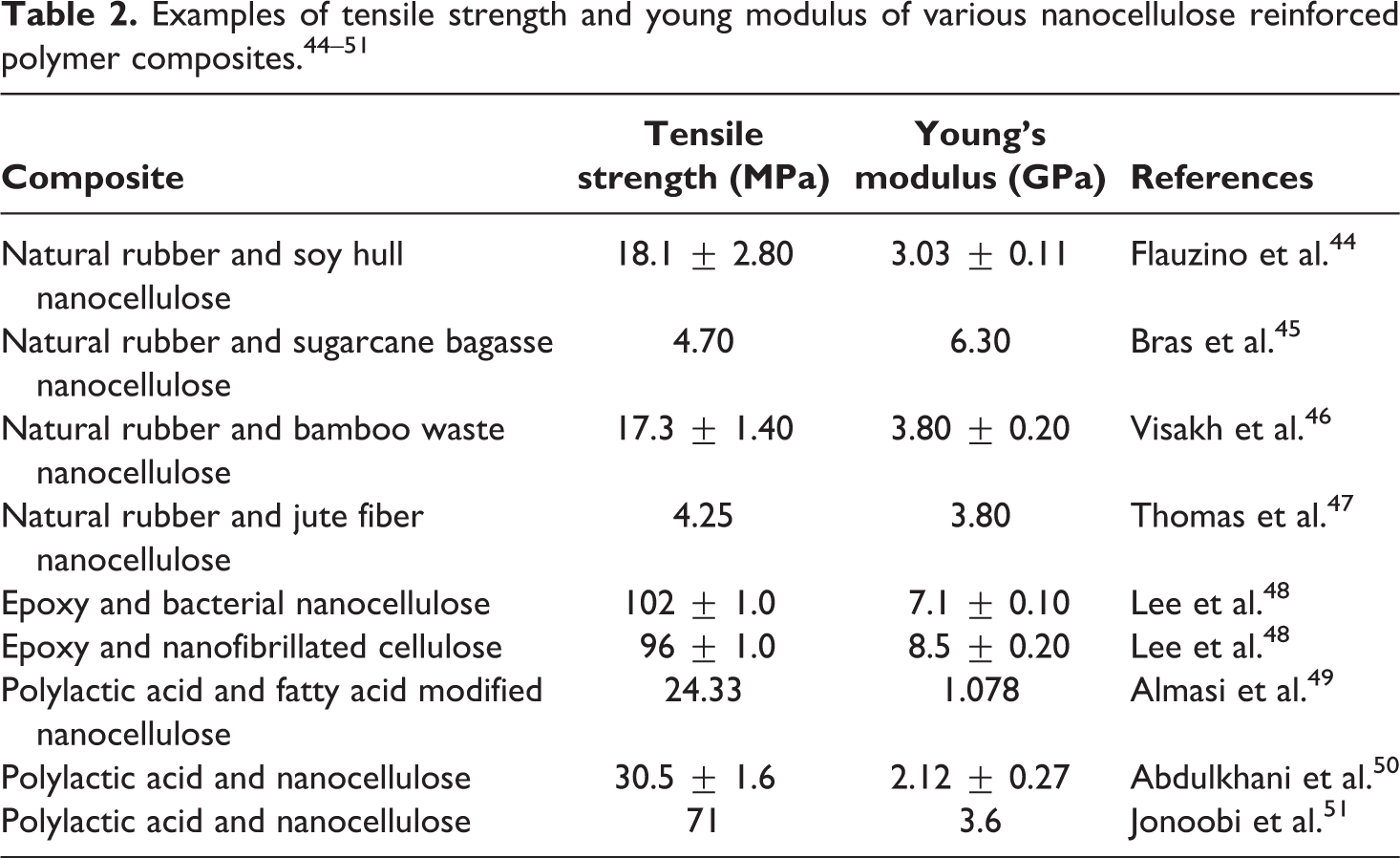
Few case studies reported that cellulose nanocrystalline are elongated as rod-like particles with a highly crystalline structure having a bending strength of about 10 GPa, tensile strength up to 7.5 GPa, and Young’s modulus of approximately 150 GPa.11,39,40 In addition, crystalline cellulose is a lightweight material with a density of 1.5–1.6 g/cm3 compared to glass with a density around 2.5 g/cm3. These properties make CNCs suitable to be used as reinforcement fillers.11,41 Few case studies reported certain problems being faced during preparation of cellulose nanocomposites, such as non-uniform dispersion of the nanocellulose in the polymer matrix and a strong interaction between the filler and the matrix. 42 Surface modification of the cellulose nanocrystals could be an option to overcome the drawbacks related to dispersion and filler/matrix interaction.11,43 Table 2 shows some examples of the tensile strength and young modulus of nanocellulose reinforced polymer composites.
Cellulose as reinforcement fillers
Recently, the use of natural fibers has been acclaimed as reinforcement material in polymer composites. Most manufacturers recognized the application of natural fibers for their flexibility during processing. Their mechanical properties were improved, and they were cheaper with large volumes of production. Examples of natural fiber tensile strength data from case study are 290 MPa for bagasse, 400–627 MPa for pineapple, 140–230 MPa for bamboo, and 175 MPa for coir. 52 There are numerous issues that should be addressed for natural fibers, such as fiber processing, non-linear behavior, fiber–matrix adhesion, and fiber dispersion. 52 Chemical and heat treatments are some of the methods implemented as a solution toward addressing these issues, which have been anticipated to improve the properties as reinforcements. 52
Nanotechnology has been gaining significant advancement throughout the years, particularly on nanocellulose. Håkansson et al. 53 fabricated a strong nanocellulose filament, which rivals the strength of steel filament. The researchers hydrodynamical aligned and assembled cellulose nanofibrils, resulting in strong cellulose filaments. 53 The tensile strength and young modulus of the dried cellulose filament ranged from 295–490 MPa and 12.8–17.6 GPa, respectively. 53 By comparing the data on tensile strength of cellulose filament and natural fiber, the cellulose filament was found to have a higher tensile strength than the natural fiber. The cellulose filament could be considered as a stronger reinforced material due to its mm diameter size, which creates more surface area and exhibits similar or even higher tensile strength than the natural fibers. Matter of fact, it is useful for a reinforced material to have high tensile strength, stiffness, and low density. 52 However, if the adhesion and dispersibility between reinforcement and matrix is optimized, better performance is possible. Cheng et al. 54 successfully managed to disperse cellulose nanocrystals, cellulose nanofiber, and micro-fibrillated cellulose in a starch matrix. Due to the larger aspect ratio, larger hydrogen bonding interactions between filler and matrices occur. According to Cheng et al. 54 the mixing/fabrication process contributed to good dispersion of the cellulose and it was noted that as the weightage of cellulose increased, the results showed a significant increase in mechanical properties for the cellulose in comparison to the pure starch samples.
The application of nanocellulose as reinforcement fillers in various biodegradable polymer matrices is growing, especially in the field of nanotechnology. 11 Cellulose nanocomposites have been mainly prepared by solvent casting, melt mixing and in-situ polymerization. 11 Dufresne 55 stated that cellulose nanocrystals and microfibrils displayed high stiffness, because the fillers were homogeneously dispersed within the polymer matrix, whereas an improvement in mechanical performance was observed. 55 Jonoobi et al. 51 reported an improvement in mechanical properties of nanocellulose reinforced polylactic acid (PLA), it’s tensile modulus and strength increased from 2.9 GPa to 3.6 GPa, and 58 MPa to 71 MPa, respectively. 51 Whereas, Jonoobi et al. 51 indicated that the optimum values of tensile modulus and the tensile strength of PLA were 3.5 GPa and 71 MPa respectively. Other case studies also shared similar results, including improved mechanical properties with the addition of nanocellulose fillers as reinforcements.56,57
Regarding thermal conductivity, Shimazaki et al. 58 reported that in-plane thermal conductivity of nanocellulose composite was over 1.0 Wm−1K− 1 , which was three to five times higher than the controlled samples. They also found that the storage modulus of elasticity of nanocellulose composite was about 5.0 GPa at 80°C, which was larger than the value of 3.7 GPa at the same temperature for the pure epoxy resin. Wong et al. 59 shared similar findings, they found improvement in thermal conductivity with nanocellulose fillers being used as reinforcements. Nguyen et al. 60 on the other hand disclosed that that their cellulose aerogel composite could be conveniently referred as a good thermal insulation material based on their low thermal conductivity of 0.029 to 0.032Wm−1K−1.
Alamri and Low 61 investigated and reported the effect of water absorption of recycled cellulose epoxy composites. According to the results of maximum water uptake and diffusion, the coefficient was found to increase as the cellulose content increased. 61 The highest sample ratio of 46 wt.% recycled cellulose could be the optimum sample as it had the highest water uptake and diffusion coefficient value. 61 Alhuthali et al. 62 obtained similar findings as Alamri et al., 61 where the presence of recycled cellulose in the composites had good water absorption capabilities. Alhuthali et al. 62 found the water uptake and diffusion coefficient decreased clary particles were added into the cellulose composites. This clarified that the cellulose fillers in composites provided water absorption capabilities, and other reinforcements i.e. clay particles, proved to decrease water absorption. 62 Maslinda et al. 63 reported the effect of water absorption on mechanical properties of the cellulose reinforced filler composites. The water absorption pattern of the composites was found to follow a non-Fickian behavior. 63 Both tensile and flexural strength of interwoven composites were higher than the values due to the individual woven composites. 63 It was concluded that the longer immersion time resulted in weakening of the strength and modulus of the samples. Hence, water’s absorption does affect the mechanical properties, however, the intensity of the influence depends on the amount of water intake absorbed. 63
Cellulose in municipal solid waste
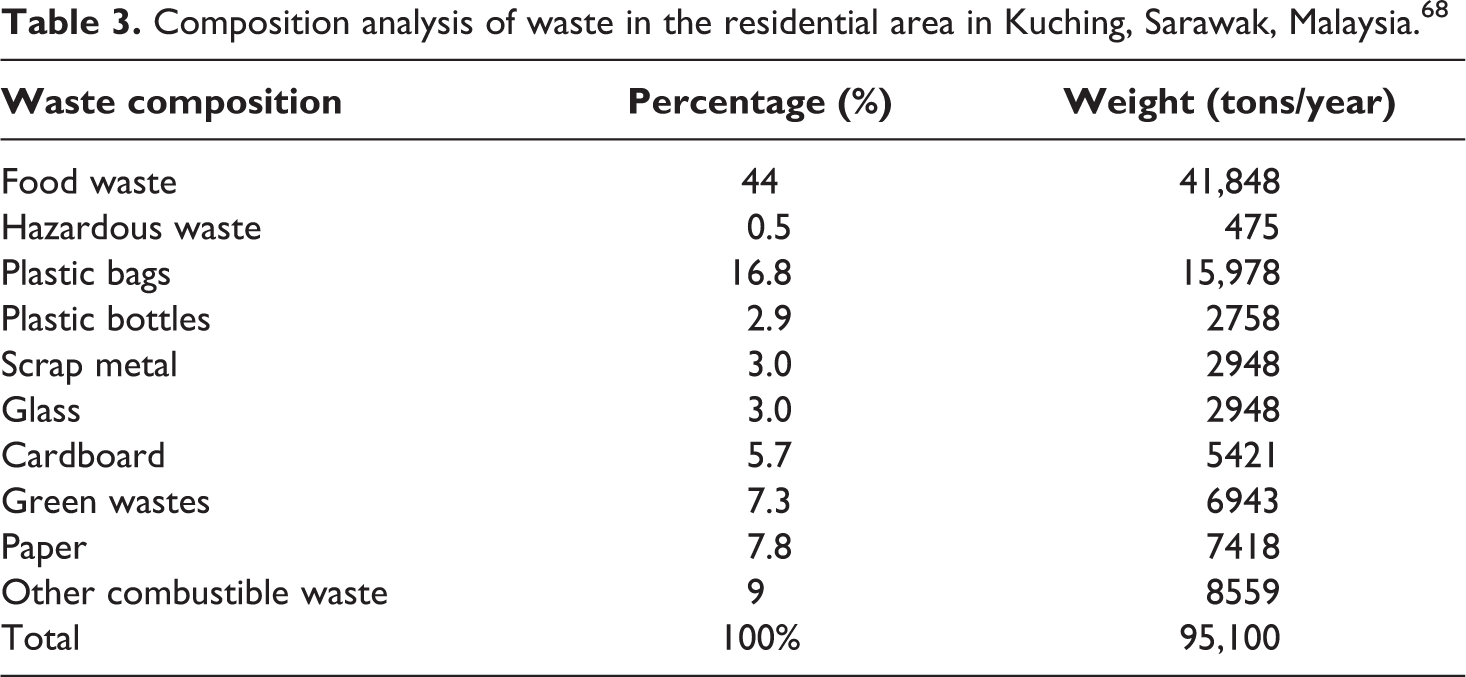
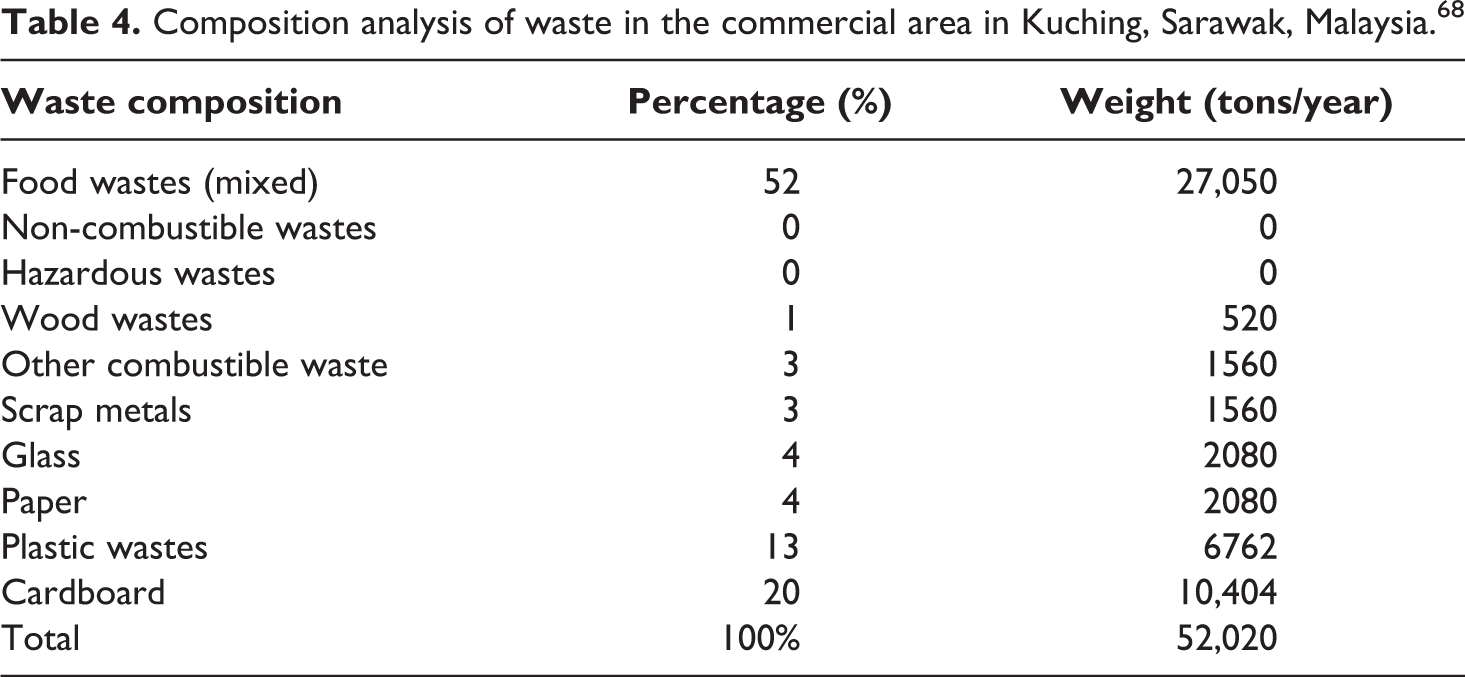
Paper, food, plastic, metal, and glass are recognizable waste related to municipal solid waste. 64 Developments and urbanization can affect the generation of municipal solid wastes. As businesses flourish in the municipal area, studies indicated a rise in paper waste.64,65 In a heavily populated residential area, food, paper, and plastics waste thus produced, are noticeably increased as reported in some of the studies.64,66,67 In Sarawak, municipal solid waste could be classified into residential (e.g. houses and apartments) and commercial areas (e.g. shop lots, food courts and office buildings). Generation of residential waste followed the composition analysis into food wastes, hazardous waste, plastic bags, plastic bottles, scrap metal, glass, cardboard, green wastes, paper, and other combustible waste. 68 In the residential areas, a total of 95,100 tons of solid waste is generated per year. 68 Commercial waste generated, are classified into food waste (mixed), non-combustible wastes, hazardous waste, wood waste, other combustible waste, scrap metals, glass, paper, plastic wastes, and cardboard. 68 For the commercial area, a total of 52,020 tons per year of solid waste was generated. 68 In August 2003, Tang et al. 68 reported that Kuching is the most populated district in Sarawak. As the population grew, the total weight of municipal solid waste generated grew as well.
Common methods of disposing municipal solid wastes are commonly land filling or incineration. Generally, in Sarawak land filling is the most common practice for solid waste management. Since landfill dumping sites in Sarawak are exposed to the atmosphere, this alone can pose problems toward the environment such assoil, air, and water contamination. 69 The option of using incineration technology to dispose municipal solid waste is effective, however the drawback of using an incinerator is the production of a wide variety of pollutants, such as heavy metal, dioxins and furans, which can be detrimental to human health.69,70 A potential solution for waste management that would be beneficial, is cellulose production. For example, Jin et al. 71 stated the production of cellulose from newspaper waste, and the application of their cellulose-based aerogel exhibited good performance in the absorption of oils and organic solvents. 71 Han et al. 72 and Xia et al. 73 conducted similar studies regarding the production of cellulose from newspaper waste but differed through the types of pretreatment applied during the production processes. Solid wastes that are lignocellulosic in nature are only applicable to be used as source material for cellulose production. The application of cellulose and cellulose-based aerogels from newspaper waste as the source material, supported the potential benefits of these products as good absorbent material for metal ion particles and organic dye removal.74–76 Tables 3 and 4 show the composition analysis of waste in the residential and commercial area in Kuching, Sarawak, Malaysia.
Composition analysis of waste in the residential area in Kuching, Sarawak, Malaysia. 68
Composition analysis of waste in the commercial area in Kuching, Sarawak, Malaysia. 68
Cellulose in textile solid waste
Textile solid waste is generated and found in both post-consumer municipal solid waste, and post-industrial solid waste. Large quantities of textile solid wastes can be classified mostly as primary and biological sludge from wastewater treatment systems, and cotton textile residues from production processes such as spinning and weaving.77,78 The amount of textile solid waste can be affected by factors such as increased consumption rate and growing population.79,80 Textile bio-sludge could be classified as substances consisting of organic matter, nitrogen, phosphorous, dyes and heavy metals. Cotton textile residues consist mostly of cotton microfibers lost during manufacturing processes.79,80 According to the Sime Darby Plantation’s 81 data, Malaysia’s textile solid waste consists of 4% of the total municipal solid waste. The projected total weight of municipal solid waste generated is estimated to reach 13.2 million tons by 2020.69,82 Hence, the total amount of the 4% of textile solid waste produced would approximately be 0.528 million tons per year.69,82 Overall, majority of textile solid wastes collected in Malaysia may end up being disposed in landfills or incinerated together with other municipal solid wastes.69,82
In Borneo, the total weight of textile solid waste is 32.65 tons per year, specifically in the Kuching district. 68 Since cellulose can only be extracted from lignocellulosic sources, thus, textile solid wastes can potentially be used as a source material. Certain studies revealed potential toward an alternative method of disposing textile solid waste by utilizing the extraction of cellulose.83,84 As a result, the cellulose being obtained from textile solid wastes can enable the development of cellulose filler reinforced composite products. A study by Wang et al. 31 shows the potential of applying waste cotton cloth as source material to produce nanocellulose. This is an example of an alternative of disposing textile solid waste along with other municipal solid wastes. By recycling the textile solid waste using cellulose extraction processes, it is possible to reduce the amount of textile solid waste ended up via conventional means i.e. landfills or incineration.
Cellulose in industrial solid waste
The generated industrial solid waste generally can be classified into two groups: (i) hazardous, and (ii) non-hazardous solid waste. 85 Hazardous wastes are generated by industries such as petrochemical industries, pharmaceutical and pesticide industries. 85 Industrial processes such as electroplating, metal extraction processes, galvanizing, and refinery contributes toward the generation of hazardous industrial solid waste. 10 On the other hand, most of the non-hazardous industrial solid waste are generated from coal combustion processes, packaging waste, wood waste, paper waste and food processing residues from production processes.10,85,86
The overall industrial solid waste generated from the industrial sector in Borneo, specially Kuching, Sarawak, is approximately 0.3 million tons per year. 68 The industrial solid waste data is excluding schedule waste, which are residential and commercial waste within the municipal area. 68 Due to the vast amounts of industrial solid waste in Kuching, wood waste and ceramic waste was generally disposed and process separately. 68 According to Tang et al., 68 the industrial solid waste generated in Kuching could be categorized in as wood waste and ceramic waste. Wood-based and ceramic industries generate annually about 0.175 million tons and 0.035 million tons of solid waste respectively. 68 Cellulose extraction can become an alternative method of disposal for the wood-based industries in Kuching, as it is lignocellulosic in nature. As an example, Asokan et al. 86 emphasized the preparation of nanocellulose crystal using Acacia mangium wood through pulping, bleaching and sulfuric acid hydrolysis. The resulting nanocellulose crystals were blended with polyvinyl alcohol (PVA) as reinforcement fillers. Experimental results showed an improvement in the PVA composite tensile strength by 30% with 2 wt.% of nanocellulose fillers. 86
Cellulose in agricultural waste
Agricultural solid waste consists mainly of organic substances, their origin mainly comprises of plant or crop remains, livestock and poultry manure, and agricultural processing waste.87–89 Agricultural solid waste is characterized by its large quantity, reproducibility, and its biodegradability. Malaysia is known to be one of the leading producers and exporter of palm oil in the world. Regarding agricultural solid waste, palm oil plantations are considered to produce large amounts of agricultural crop waste during production of palm oil. 90 It was reported that the total area of the palm oil plantation in the whole of Malaysia is 5.74 million hectares in 2016.90,91 Hence, the agricultural crop waste generated in Malaysia is estimated to be 86.9 million tons per year.91,92 The agricultural crop waste has been recycled to produce bio-oil and the agricultural crop waste has the total energy potential of 37 million tons of oil equivalent. 93
The Borneo regions of Sabah and Sarawak contains larger palm oil plantation area than the Peninsular of Malaysia. In 2016, Sabah and Sarawak had a total area of 3.058 million hectares of palm oil plantations, whereas the area reserved for palm oil plantations in the Peninsular was 2.679 million hectares.90,91 Since most of the Borneo region has the largest area for agricultural activities such as harvesting and palm oil production, it is in the best interest of the two states to apply more efficient and sustainable waste management system to solve waste issues and generate additional income by recycling waste to generate useful environmentally friendly products. The disposal of solid waste generated from agricultural production activities is a huge problem in many countries. 94 Thus, the alternative option of recycling agricultural solid wastes as a potential reinforcement material may be a viable solution to reduce the total weight of the solid waste generated.10,94
In Borneo, empty fruit bunch (EFB) being discarded from production of palm oil, is a potential agricultural solid waste that can become viable to process into reinforcement materials.90–92 It was reported that for production of 1 ton of crude palm oil from the fresh fruit bunch (FFB), an estimation of EFB waste to be produced is 6 tons. 90 Through palm oil processing, 22% of EFB and 67% palm oil mill effluent (POME) can be produced byFFB. 95 Over the years there have been several studies that focused the application of agricultural waste as reinforcements in polymer composites, i.e. coir fiber used to form reinforced polypropylene composite panel for automotive interior applications 96 cotton and guayule agricultural waste residues as fiber fillers in thermoplastic composites, 97 vinyl ester bio-composites with carbonized jatropha seed shell filler, 98 enhancing thermal and mechanical properties of PVA composites formed with filamentous nanocellulose fibrils, 99 improving properties using oil palm shell nanoparticles of fibers reinforced polyester hybrid composites, 100 etc. A reinforcement material that can be derived from the agricultural waste apart from natural fiber iscellulose.52,101,102 As the bio-composites market is growing rapidly, extraction and application of cellulose/nanocellulose from agricultural solid waste could also be grown in demand. 101 Nanocellulose are applicable in numerous applications due to their low density, optical transparency, high mechanical properties, large surface area (aspect ratio), flexibility, specific barrier properties, low thermal expansion, and biodegradability.12,42,101,103
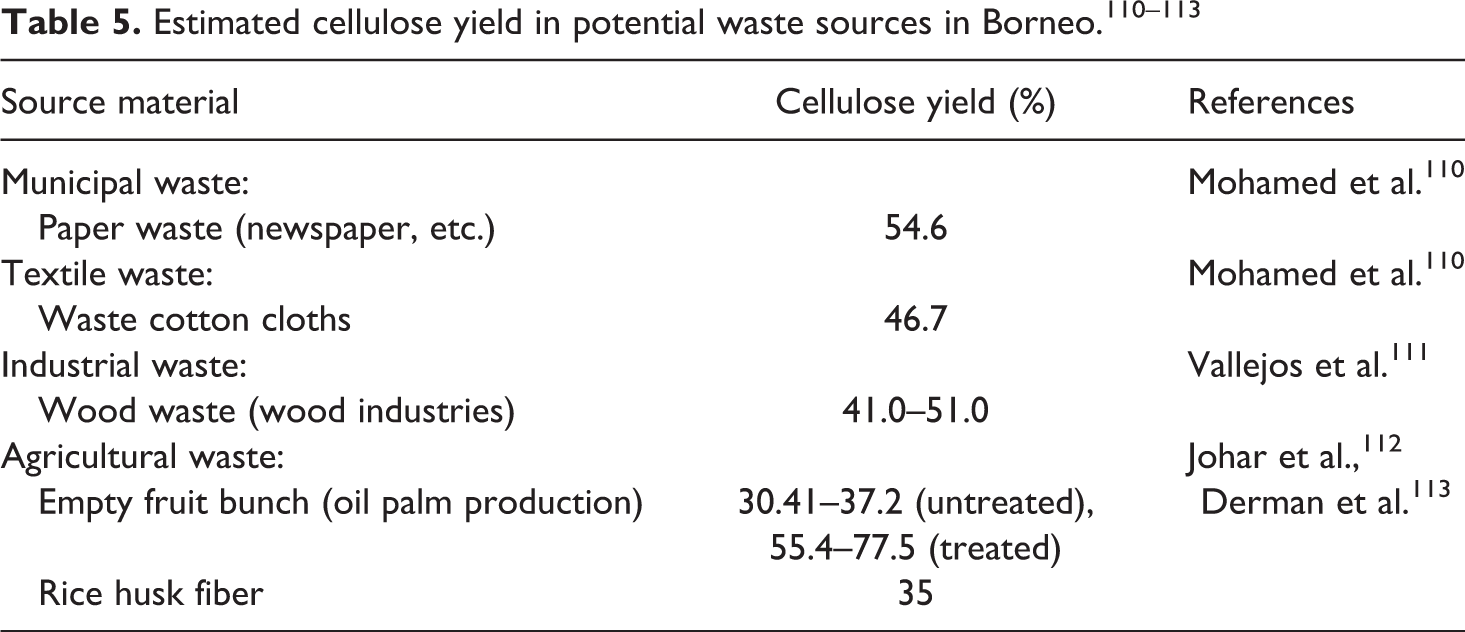
The combination of the nanosized cellulose with polymer matrices impart higher stiffness to the nanocomposites. Nanocellulose was considered an ideal reinforcement material in polymer composites; due to their large surface area resulting from interconnected network structures through hydrogen bonding. 101 Further research on the extraction of nanocellulose from agricultural waste with appropriate modification and characterization could broaden its potential in different fields/applications. Examples of biopolymers in different fields and application are; transparent films, 104 strength enhancers in paper, 105 polymer composite reinforcements, 106 and emulsions and oxygen barrier films for plastics packaging.26,107,108 According to Israel et al., 109 it was reported that the production of cellulosic polymer from agricultural waste produces promising amounts of cellulose content. Israel et al. 109 collected 14 different types of agricultural waste for the experiment and found that the agricultural waste yielded between 18–44% of cellulose diacetate and 35–62% of cellulose triacetate. Table 5 shows the estimated cellulose yield in potential waste sources in Borneo.
Cellulose production within Borneo
This shows the presence of large amounts of agricultural solid waste in Malaysia,90,91,92 specifically Borneo. Based on this report, there is a potential to produce and extract cellulose from agricultural solid waste in Borneo, which is to utilize and reduce total waste generated. Iragashi et al. 114 said that to increase the possibility and potential of the use or application of cellulose as a reinforcement material in polymer composites, a method must be developed to assist the manufacturing process of the composite material using existing equipment.
Most of the studies conducted regarding the application of cellulose as reinforcement material is based upon improving the interaction between nanocellulose and the polymer matrix. The strong hydrophilic nature of nanocellulose inhibits improper dispersion in the hydrophobic matrix. Hence, there are two recognizable approaches to improve the relationship between the nanocellulose and the matrix. According to Igarashi et al. 114 one of the approaches is to use compatibilizers that can bridge between cellulose and the polymer molecules. The application of compatibilizers such as maleic-anhydride-grafted polypropylene (MAPP) and cationic polymer using primary amine (CPPA), has positive results with a considerable improvement in mechanical and thermal properties. 115 The interaction between micro-fibrillated cellulose (MFC) and polymer matrix were noticeably different when combined with MAPP and CPPA compatibilizers. Suzuki et al. 115 determined the strong interaction between the incompatible HDPE and MFC, which were due to the chemical reaction from MAPP and CPPA, hence enabling a reinforcement effect to the cellulose composite. Various studies116–124 also supported approach as Igarashi et al. 114 The application of chemical modifications of cellulose with alkenyl succinic anhydride (ASA) in N-Methyl-2-pyrrolidone (NMP) is to enable better interaction between cellulose and matrix interface. 114 Chemical modification of the surface of the nanocellulose is another approach supported by numerous studies.114,125–130 These studies referred to the application of compatibilizer and its surface modification that contributed and supported toward the improvement of the interface and dispersibility between nanocellulose and the polymer matrix.
The commercialization and production of cellulose reinforced composite could be plausible, according to Igarashi et al. 114 The pulp direct kneading method was reported to enable simple manufacturing processes using conventional means. Raw material selection, pulping, defibrillation, chemical modification, and melt compounding are the proposed processes to produce the bio-composites. The study conducted was in a laboratory scale, therefore Igarashi et al., 114 have yet to quantify the energy and chemical costs in a commercial scale production. However, it was reported that the pulp direct kneading method could be a potential solution for the advancement in commercialization of cellulose reinforced composite. 114 Furthermore, as reported by Igarashi et al. 114 the studies conducted by Suzuki et al. 115 emphasized that kneading refiner-treated wet pulp mix with powdered PP or HDPE plastic can assist the dispersion of the cellulose within the matrix. The use of existing equipment in a manufacturing plant such as a twin-screw extruder and utilizing the melt compounding process, the nanocellulose can uniformly disperse, thereby, improving the production process and application of cellulose as a reinforced material.114,115,131–133 Throughout the application of cellulose and its nanocellulose derived from solid waste, which can currently be manufactured on an industrial scale, it can be used in a variety of fields in our lives, including antimicrobial films, batteries, barrier/separation membranes, biomedical products, catalytic supports, cements, continuous fibers and textiles, cosmetic, electroactive polymers, food coatings, nanocomposite materials, super capacitors, paper products, template for electronic components, wood adhesives, and many more emerging uses.12,47
Summary
Generally, the Borneo region has the potential of utilizing agricultural solid waste to extract nanocellulose for numerous applications. The Borneo region holds a large area for agricultural activities that create large amounts of agricultural solid waste during harvesting and other manufacturing processes. Nanocellulose can be incorporated in existing equipment such as a twin-screw extruder to reinforce polymers used for production. Hence, these studies contributed toward increasing the potential usage of nanocellulose and assisting manufacturing processes for commercial production of reinforced polymer composite products. More research is required to understand the future and the possibility of the use, and capability of nanocellulose reinforced polymer composite products.
Footnotes
Acknowledgements
The authors would like to acknowledge Universiti Malaysia Sarawak (UNIMAS) for the supports.
Funding
The author(s) received no financial support for the research, authorship, and/or publication of this article.

Statement of novelty
The concept model of converting numerous types of agricultural wastes for nanocellulose filler and composite production utilizing conventional equipment.