



Abstract
The performance properties of asphalt binders and mixtures can be enhanced utilizing several modifiers, including; Poly Phosphoric Acid (PPA), Warm Mix Asphalt (WMA) modifiers, and Styrene–Butadiene Rubber (SBR). The current study evaluated the effect of PPA and WMA contents on rheological behavior of SBR modified binders and SMA mixtures. The modified binders were subjected to rotational viscosity, Dynamic Shear Rheometer, and Bending Beam Rheometer, Multiple Stress Creep Recovery (MSCR), and Linear Amplitude Sweep (LAS) tests. The SBR/PPA and SBR/PPA/WMA modified mixtures were subjected to Indirect tensile strength (ITS), dynamic creep, resilient modulus (Mr), wheel track, and four-point beam fatigue (FPB) tests. To analyze the data, two-factor analysis of variance (ANOVA) was investigated. Based on the results of the MSCR test at both stress levels, modification of base bitumen by SBR, PPA and WMA additives causes an enhance in permanent deformation performance of original bitumen. LAS test results indicated that, utilization of SBR and WMA additives improves the fatigue life of bitumen. Also, by addition of PPA, the fatigue life of SBR modified binders increases. whereas, the fatigue lives are higher than original binders ones. Based on results, utilization of SBR and PPA enhances the Mr, rutting properties, ITS, FE, and fatigue behavior of specimens. By increasing the PPA percentage, the rutting and fatigue behavior enhances. Whereas, it causes a decreases in Mr and ITS of modified mixtures. Among warm additives, sasobit has better effect on enhancing the performance of binders and mixtures.
Keywords
Introduction
Fatigue and rutting are two primary distress which occurs on pavements. In recent years, several pavement experts attempt to reduce the severity and amount of these types of binders. Also, many researches were implemented to suggest a relevant rheological factor that can precisely capture the fatigue and rutting performance of the binder. The performance grade system suggests the (|G*|/Sinδ) and (|G*|.Sinδ) parameters to evaluate the rutting and fatigue properties of bitumens, respectively. Several research was proved that these two parameters lack the ability to measure the properties of bitumens at intermediate and high-temperature behavior of bitumens and have poor relationships with mixture performance. Pavement researches proposed a new test method to better measure the rutting and fatigue properties of bitumens named MSCR and LAS tests.1,2
Many pavement researchers concluded that it is needed to modify binders to resist against distresses. Numerous additives including Crumb Rubber (CR),3,4 Styrene–Butadiene–Styrene (SBS), 5 Polyolefin Elastomer (POE), 6 Polypropylene (PP), 7 Styrene–Butadiene Rubber (SBR), 8 Polyethylene (PE) 9 and nanomaterials 10 such as nano carbon fiber 11 and nano clay were utilized to improve the behavior of bitumens. Several pavement researchers were shown that the utilization of polymer to modify binder causes an enhance in fatigue and rutting resistance, thermal cracking, moisture resistance, and lower temperature vulnerability. Among the mentioned polymers, styrene–butadiene rubber (SBR) is commonly utilized in the pavement industry.12,13
SBR is one of the beneficial and effective additives to modify base binders. Several research indicated that utilization of SBR enhancing the performance of asphalt mixtures. Based on the literature, using SBR led to enhance low-temperature performance, elastic recovery, and the adhesive and cohesive performance of binder to aggregate and increasing viscosity. Nevertheless, along with the mentioned benefits of using SBR, the high-temperature performance and storage stability of SBR modified bitumens is miserable by high traffic loading in hot weather areas, which restrictions the utilization of this additive in such areas. 4
Poly phosphoric acid (PPA), an oligomer of H3PO4, is one of the most important additives which can be used alone and also with a combination of other additives in the modification of base binder. As several Research indicated that the addition of PPA is capable of enhancing the high-temperature performance or storage stability of SBR-modified asphalt because of the gelation effect, however, this conclusion is still in question.14,15 Based on the low price of PPA, the utilization of PPA to make an SBR-modified binder led to a decrease in the amount of SBR percentage. Additionally, only a few published researches entirely investigated the PPA influence on the performance of bitumen at high and intermediate temperatures through MSCR and LAS tests.
A useful modifier should enhance the performance of bitumen against a series of failures. Based on literature, one modifier is incapable of improving all performances of pavements. Therefore, modification of bitumen with more than one modifier is essential, which may obtain multiple performance improvements due to multiple interactions. 4 So in the current study, modification of binder by SBR and PPA was evaluated. Considering that the simultaneous use of SBR and PPA improved the properties of the mixture, it causes an increase in viscosity and mixing and compaction temperatures.16,17 In our previous researches,10,11 it is stated that the utilization of warm additives such as Sasobit, Rheofalt, and Zycotherm nanotechnology led to decrease mixing and compaction temperatures. For this reason, utilization of these WMA additives is essential and environmentally sustainable. Therefore, it is essential to evaluate the rheological properties of SBR/PPA bitumens modified by warm additives.
Hao et al. 18 evaluated the low-temperature cracking and rutting performance of mixtures containing PPA and SBR. Results indicated that the utilization of 1% PPA and SBR led to enhance the rutting strength of mixture. While 1% of PPA has a adverse influence on low-temperature performance of specimens. Also, results indicated that modification of binder by PPA/SBR has the best effect on rutting performance of specimens.
Liu et al. 19 evaluated the influence of PPA on creep behavior of binder and also the effect of SBS/PPA and SBR/PPA on intermediate and low-temperature behavior of bitumen and mixture. Results revealed that the utilization of PPA cause a decrease in the creep stiffness of unmodified and polymer modified binder. According to results, the addition of PPA has a adverse influence on cracking resistance of mixtures on low-temperatures while modification of SBR and SBS modified binders by PPA led to enhance the low-temperature performance of specimens.
Liang et al. 20 evaluated the influence of different PPA contents on thermos-rheological, physical properties, fatigue, and rutting behavior, and failure temperature of SBR modified binder. Results indicated that the utilization of PPA cause an enhance in the rutting behavior of binder. So that as the percentage of PPA increases, the performance gets better. Results also revealed that the utilization of PPA has a negative influence on low-temperature properties of the bitumen.
In a study performed by Aflaki and Tabatabaee, 21 the influence of SBS, crumb rubber, PPA, and gilsonite on the rheological behavior of bitumen was investigated. Results revealed that crumb rubber additive enhanced the fatigue and rutting behavior of bitumens. PPA led to enhance stiffness of binder, which has a negative impact on fatigue behavior of binder. SBS also enhanced the high-temperature performance of binders.
Fakhri and Ghanizadeh 22 establish a framework for determination of magnitude and shape of 3D response pulse at the bottom of the asphalt layer using artificial neural network. This framework enables designers to predict the shape and magnitude of stress and strain pulses in three directions based on some parameters related to pavement structure and loading specifications.
Jomoor et al. 23 investigated the influence of changes in the percentage of recycled asphalt pavement (RAP) content on rutting resistance as measured by the flow number test achieved by three-stage model and the minimum rate of total permanent deformation. In this research, only one aggregate gradation with NMAS of 19 mm, one virgin binder (AC 60–70), and one RAP material source at six levels of content (0, 10, 20, 30, 40 and 50%) have been selected to prepare the stone matrix asphalt (SMA) mixtures. Furthermore, two warm mix asphalt additives including zycotherm and sasobit have been used in manufacturing (SMA) samples to carry out dynamic creep test in two levels of stress rate (300 kPa and 650 kpa), and Topcel additive fibers have been used to prevent draindown of these types of asphalt mixtures. The results of the dynamic creep test to measure the flow number in 650 kPa stress level showed that by adding RAP to control SMA specimen, the FN content increases. Moreover by adding Zycotherm to samples manufactured by SMA specimen containing the RAP, the FN content increases by increasing RAP up to 40%. Also by adding sasobit to samples manufactured by SMA specimen containing the RAP and Zycotherm, the FN content increases by increasing RAP up to 30%.
In another study which was performed by Fakhri et al., 24 two-dimensional Discrete Element Modeling (DEM) was employed to investigate the deformation characteristics of Stone Matrix Asphalt (SMA). Instead of the randomly generated initial models Image processing techniques were employed to make it possible to compare the actual and virtual test results. For this purpose, a series of Unconfined Dynamic Creep tests were also carried out in the laboratory according to British Standards. It has been concluded that the developed 2D-model can well predict the deformation characteristics of SMA mixes, however the results of simulations under-predict the accumulated permanent strain obtained through laboratory tests.
Fakhri et al. 25 performed a study to compare the results of permanent deformation and moisture susceptibility for different tests and secondly to use a simple and static deformation strength test for evaluation of rutting resistance of asphalt mixture. To this end the effect of short term aging on the performance of rutting and moisture sensitivity in warm mix asphalt (WMA) mixtures containing glass fibers and the 0, 20, 40 and 50% of reclaimed asphalt pavement (RAP) by aforementioned tests are evaluated. According to the results of this study, the rutting resistance determined from the simple and static deformation strength test had a good correlation with parameters obtained from wheel track test with R squared of 0.9. On the contrary, moisture susceptibility resistance evaluated with AASHTO T283 appears to have contradiction with the result obtained in wheel track testing.
Objectives
A useful modifier should enhance the performance of bitumen against a series of failures. Based on literature, one modifier is incapable of improving all performances of pavements. Therefore, modification of bitumen with more than one modifier is essential, which may obtain multiple performance improvements due to multiple interactions. 4 So in the current study, modification of binder by SBR and PPA was evaluated. Also, to decrease the mixing and compaction temperatures of SMA mixtures, warm additives were used.
The goal of the current work is to investigate the influence of warm additives, PPA, and SBR on the rheological behavior of bitumens and performance of SMA mixture. The effect of warm additives on SBR/PPA polymer blends was evaluated through a series of conventional and rheological tests such as: ductility, penetration grade, softening point, DSR, MSCR, and LAS tests. Also, to investigate the properties of specimens, the Mr, ITS, wheel track, FPB and dynamic creep tests were performed to evaluate the properties of different SMA specimens.
Materials and methods
Materials used
Aggregates
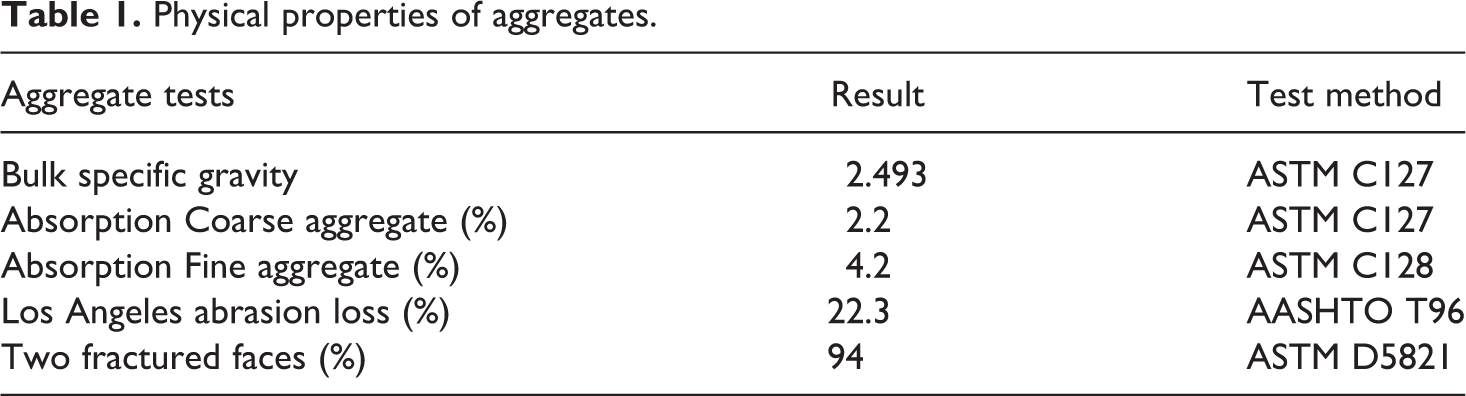
To supply aggregates for the fabrication of samples, a new query in Tehran was utilized. The aggregate’s physical and chemical properties were shown in Tables 1 and 2. In this research, aggregates with a nominal maximum aggregate size of 12.5 mm were used, which their gradations were indicated in Figure 1.
Physical properties of aggregates.
Chemical properties of aggregate.

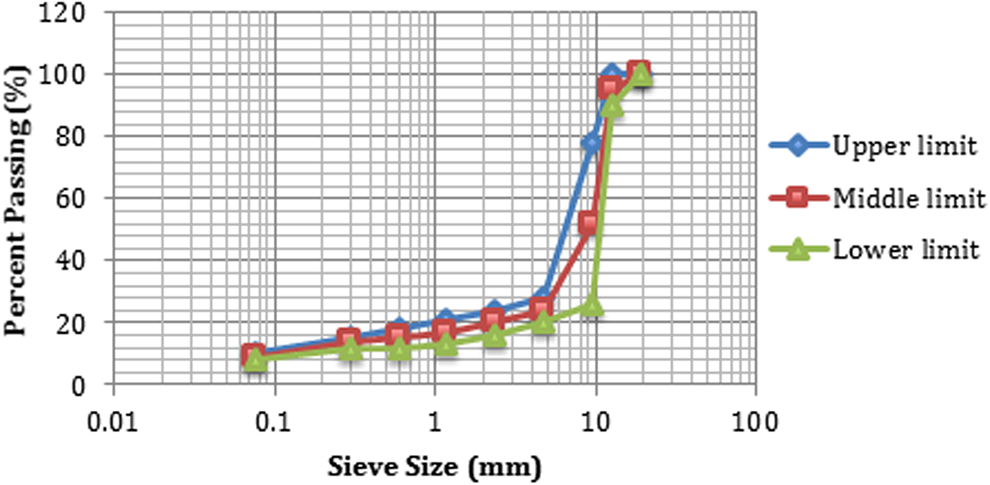
Aggregate distribution with NMAS = 12.5 mm.
Binder
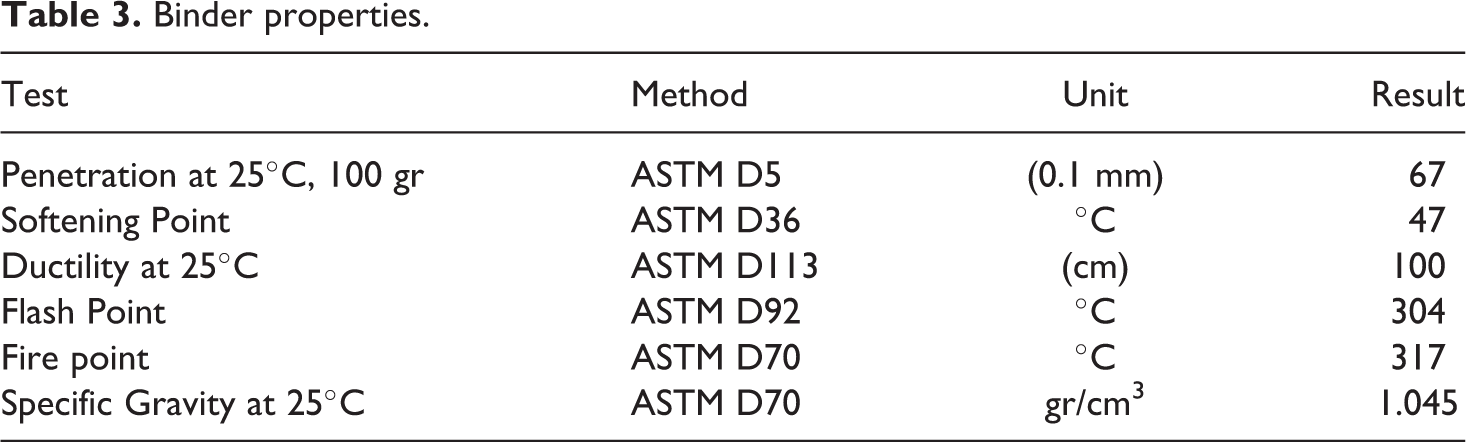
One type of binder AC-60/70 was utilized, and the characteristics of the base binder were tabulated in Table 3.
Binder properties.
Fiber
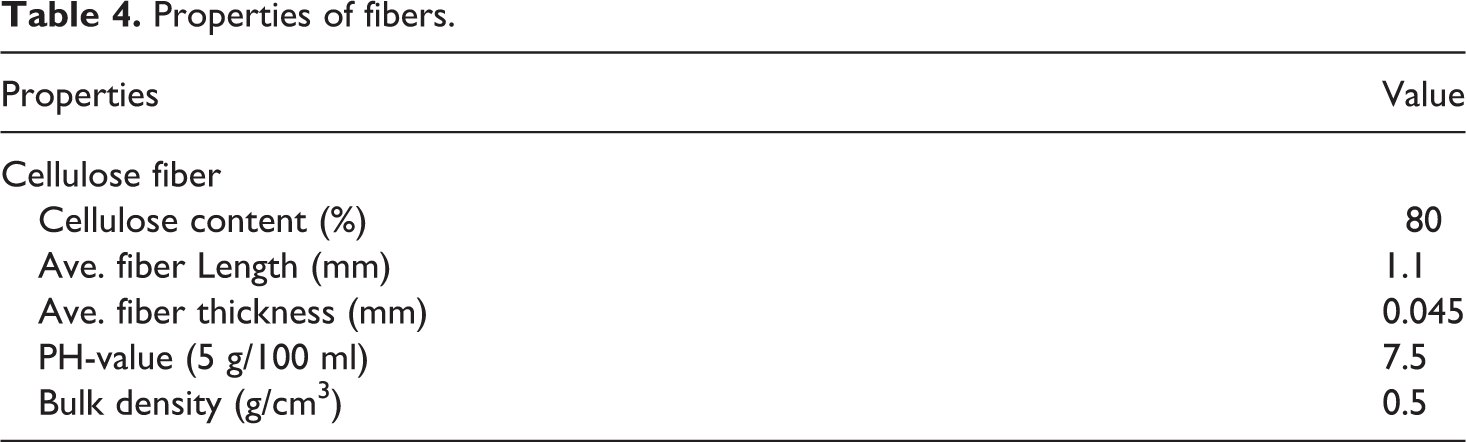
As the National Cooperative Highway Research Pavement (NCHRP) Report No. 425 26 suggested, by utilizing 0.3% cellulose fiber in dry method to the mixture, the drain down of binder will not occur. The properties of the used fiber are shown in Table 4.
Properties of fibers.
Polymer
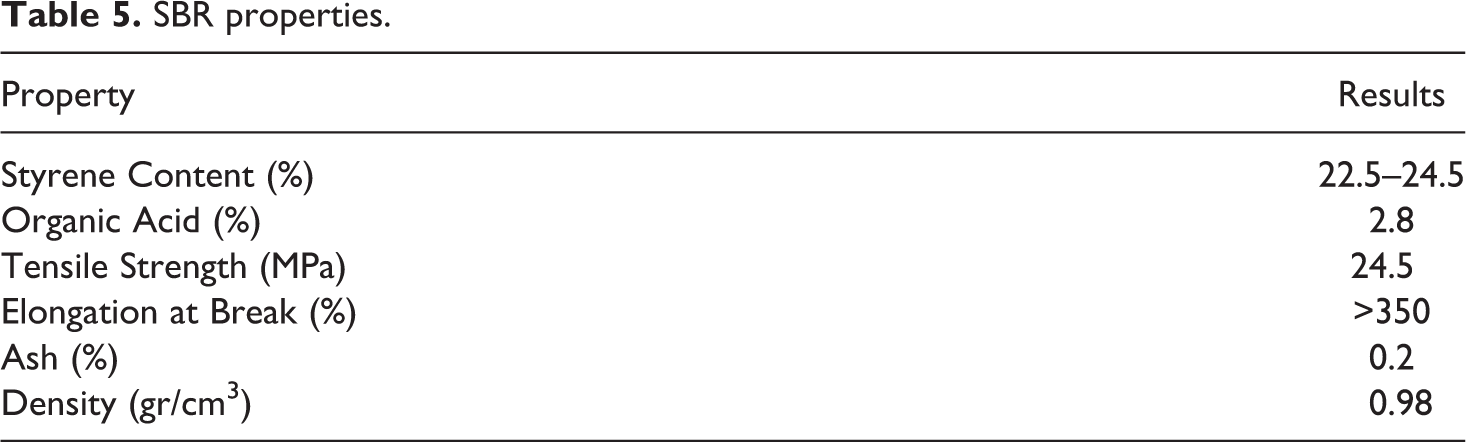
SBR was given from pasargad oil refinery, and its properties were shown in Table 5.
SBR properties.
PPA additive
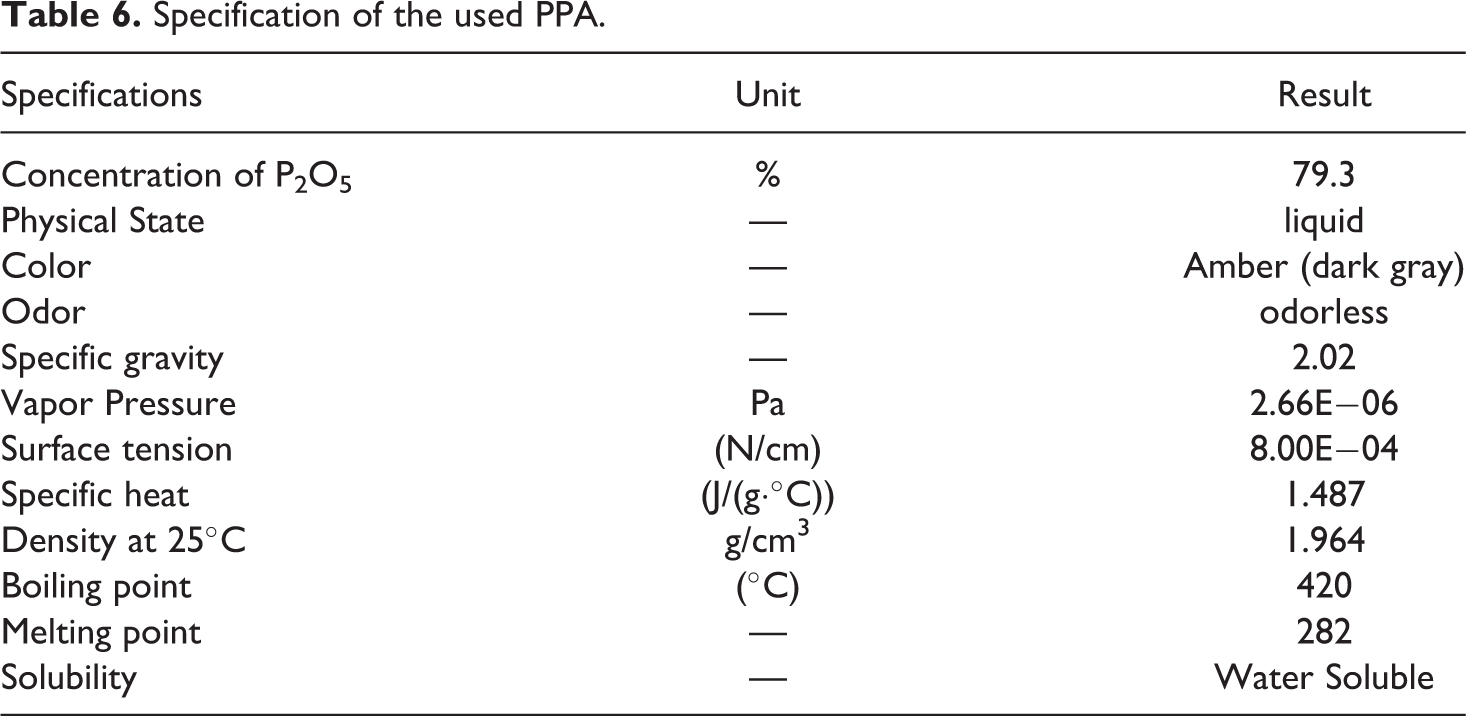
PPA was provided as a chemical modifier from the R&D research center of Pasargad oil refinery. The properties of PPA was indicated in Table 6.
Specification of the used PPA.
Warm additives
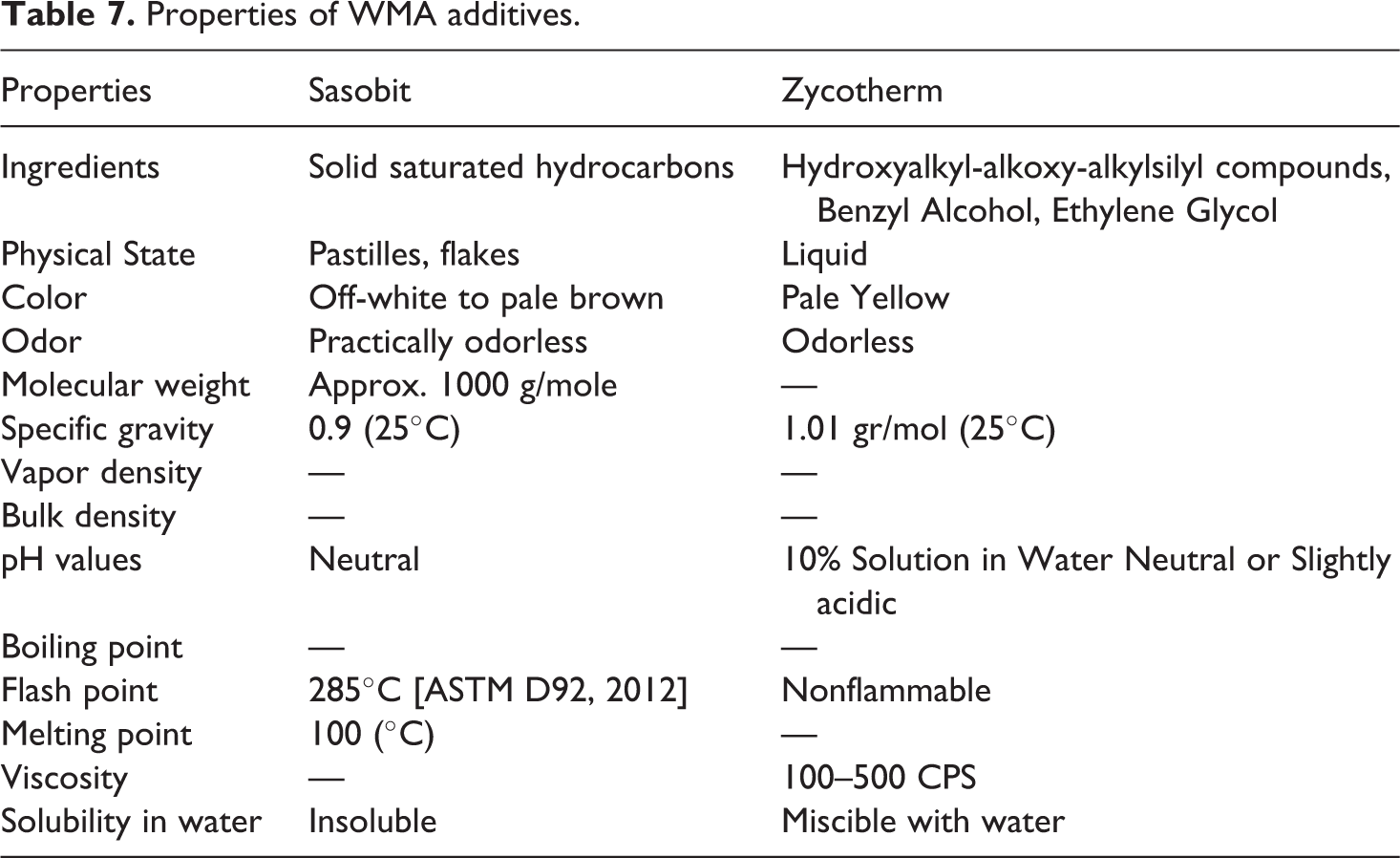
To evaluate the influence of WMA additive on the behavior of PPA/SBR composite modified bitumens, two WMA additive (Sasobit and Zycotherm nanotechnology) were used. Table 7 shows the properties of the mentioned warm additives.
Properties of WMA additives.
Sample preparation
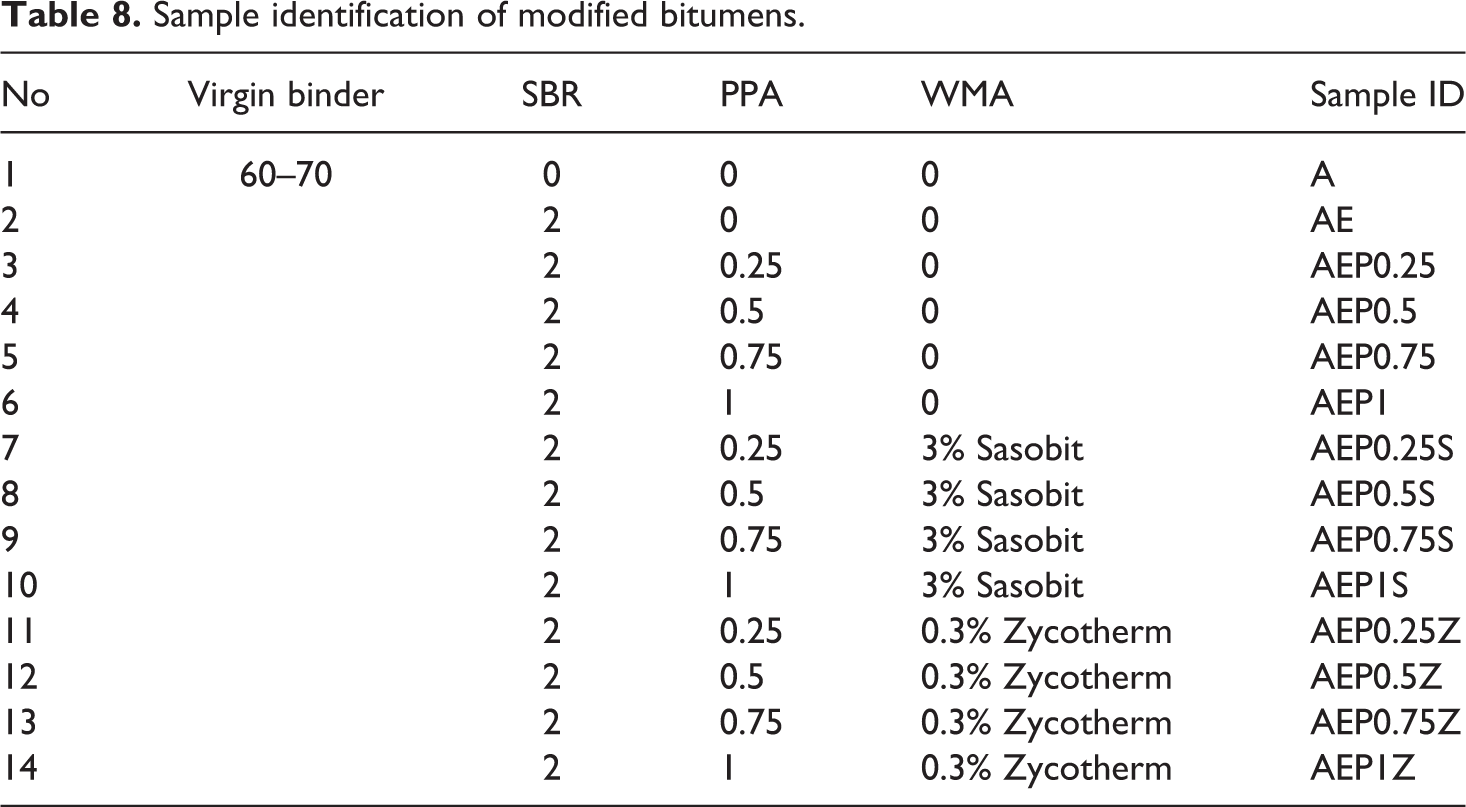
To fabricate SBR/PPA modified bitumens, the high shear mixer was used. At first, the original binder was heated to 125°C in a specific container, and then the SBR (2% by weight of original asphalt) was added gradually and blended with high shear mixer at a temperature of 130°C and the speed of 4000 rpm, for 50 min. After that, a definite amount of PPA was added (0%, 0.25%, 0.5%, 0.75%, and 1.0% by weight of binder) to mentioned SBR modified binder. Then the SBR/PPA binder was heated up to 160°C, and it blended utilizing a high shear mixer speed of 4000 rpm for 40 min. After these procedures, the SBR/PPA modified binders were made. And at last, the warm additives were added. Several research have proposed a temperature of 140–160°C for the mixing of polymer modified binders with WMA additives.27–32 Consequently, a temperature of 155°C was assumed for the preparation of warm modified bitumens. A high shear mixer with a speed of 500 rpm was utilized for 30 minutes to mix WMA additives. Table 8 shows the sample identification of modified bitumens.
Sample identification of modified bitumens.
The NCHRP Report No. 425 was used to design mixtures. 26 Based on the mix design of mixtures, the 7.5% binder content was determined as an optimum binder. In current research for each additive type with different percentages, three replicates were fabricated.
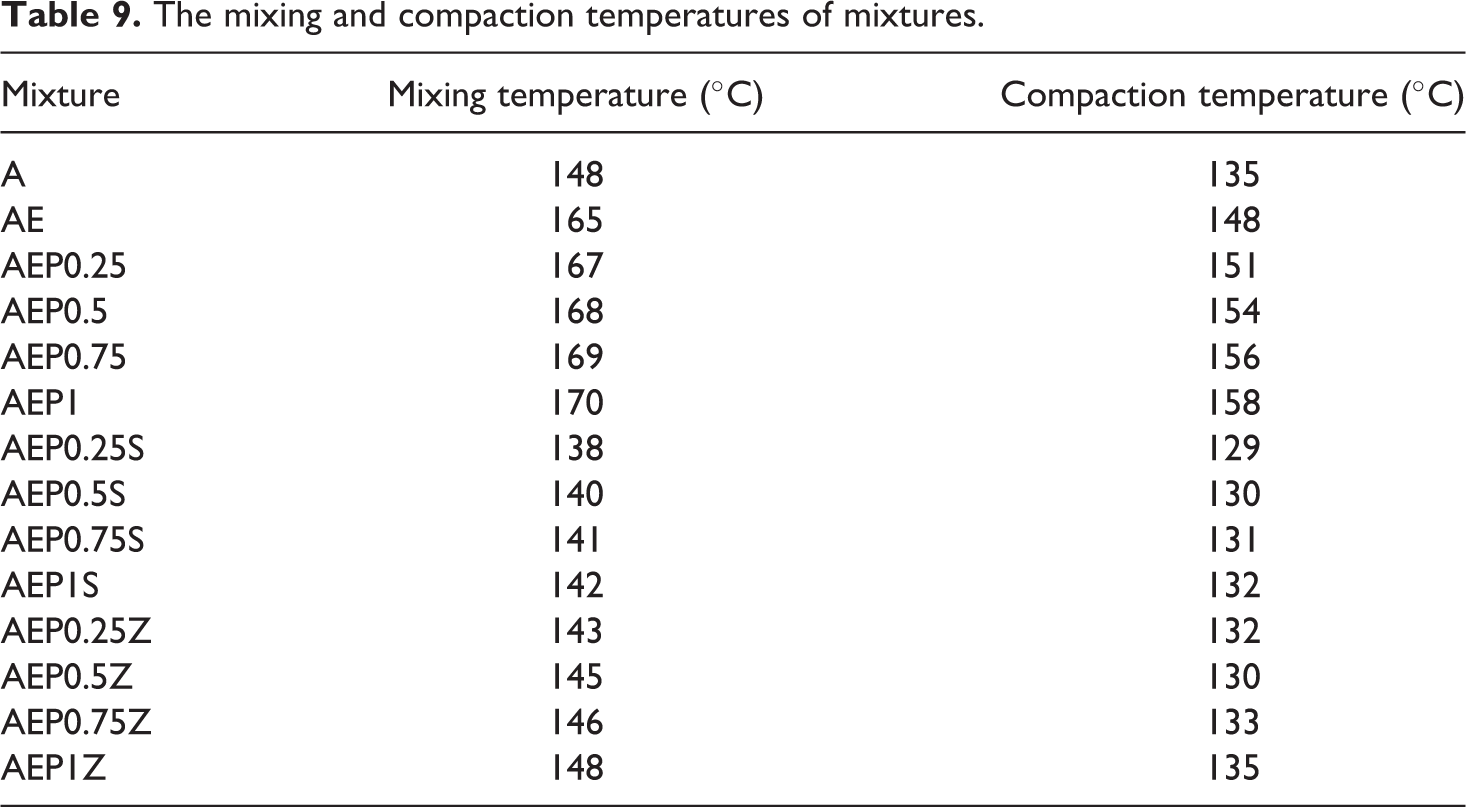
Three replicates for each mixture were fabricated. Table 9 shows a mixing and compaction temperatures of specimens.
The mixing and compaction temperatures of mixtures.
Experimental program
Bitumen tests
The ductility, softening point, and penetration tests were implemented to investigate the physical properties of different bitumens. Also, the rotational viscosity, Bending Beam Rheometer (BBR), and dynamic shear rheometer (DSR), tests were implemented.
Storage stability at high temperature
To measure the strength of modified bitumens against separation, the storage stability test was implemented based on ASTM-D5892–96a at high temperature.
MSCR test
In current work, to measure the strength of bitumens against permanent deformation, the MSCR test was implemented based on AASHTO TP 70 “Multiple Stress Creep Recovery (MSCR) Test of Asphalt Binder Using a Dynamic Shear Rheometer (DSR).” The high PG temperature of bitumens was used to implement the MSCR test on RTFO aged bitumens. 33
LAS
In current work, to measure the intermediate temperature behavior of different bitumens, the LAS test was implemented based on AASHTO TP 101-14 standard. To evaluate the fatigue life of different bitumens, Equation (1) was used:

The A and B parameters, which were calculated using visco-elastic continuum damage theory (VECD), depend on the properties of binders. The test was implemented at 25°C. 34
Performance test
ITS test
The tensile strength of mixture is an important property of pavement, which can be measured by the ITS test. In most cases, the ITS test was implemented to investigate the water damage of specimens. Based on the ASTM D6931-12, the ITS test was performed at 20°C. The ITS of mixtures were obtained based on equation (2)35–37:

where ITS refers to the indirect tensile strength of mixture (kPa); Pmax indicates the maximum load (kN); D shows the diameter of the samples (mm); t refers to the thickness of the specimens (mm).
Resilient modulus
The Mr of mixtures were calculated based on ASTM D 4123. All mixtures were divided into two sets. One set remained dry at 25°C, and the second set of samples was emerged in water based on AASTHO T283 and referred to as conditioned samples. Then the resilient modulus test ran at 25°C by applying Haversine load pulse at 1 Hz with 0.1 s loading and 0.9 s unloading time, respectively. At last, RMR parameter, which was referred to the ratio of Mr of conditioned specimens to the Mr of unconditioned specimens, was determined. The RMR value of 80% was specified as a minimum adequate value 37 :

where P refers to the maximum load applied (N); ν = Poisson’s ratio; t = sample length (mm); δ = horizontal recoverable deformation (mm).
Dynamic creep test
In current work, the US.NCHRP 9-19 standard was utilized to investigate the strength of mixtures versus rutting through dynamic creep tests. The stress level of 450 KPa with 0.1 s loading and 0.9 s rest time was utilized. The test was performed at 50°C.
Wheel track test
To measure the permanent deformation potential of SMAs, the wheel track test was implemented according to AASHTO Standard T-324 38 at 50°C.
FPB test
For investigating the intermediate temperature properties of specimens, the FPB test was performed based on AASHTO T321-07. Following equations were used to measure the flexural stiffness 32 :



where, h shows the length of the specimen (mm); G0 indicates outer (355.5 mm); G1 indicates the inner length of the gauge (118.5 mm); P refers to maximum load (kN); B refers to beam width (mm); S refers to flexural stiffness (MPa).
Equation (7) was used to evaluate the fatigue life of the samples:

where, Nf is fatigue life of specimens; ∊ is applied levels of micro strains; a and b are coefficients.
Results
Binder test results
Rheological and conventional bitumen test result
Figures 2 to 4 show the outcomes of physical binder tests of virgin and modified bitumens. Based on results, the utilization of SBR and PPA cause a decrease in the penetration degree of the binder, while increasing the softening point of binders, which may attribute to stiffens of the binder by utilization of SBR and PPA. As the percentage of PPA increase, the penetration had a reduction trend and the softening point had an increasing trend. Also, outcomes revealed that the utilization of warm modifiers cause a decrease in the penetration values of SBR/PPA modified binders. Meanwhile, the Zycotherm additive has a lower effect of reducing the penetration values. According to the outcomes of test, by utilization of modifiers, the bitumens became stiffer, so the strength of mixtures versus rutting improves.
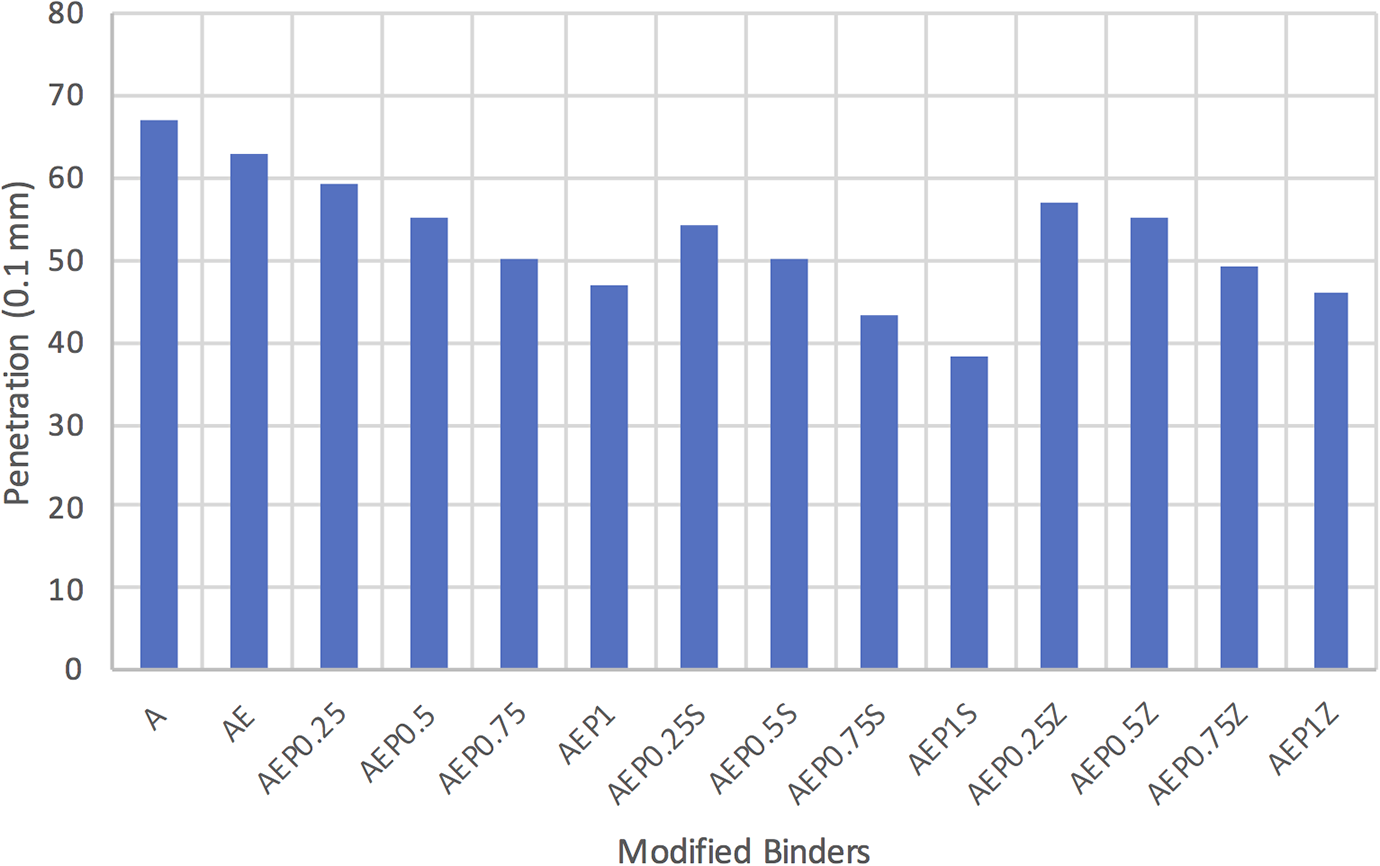
Penetration results of different asphalt binders.
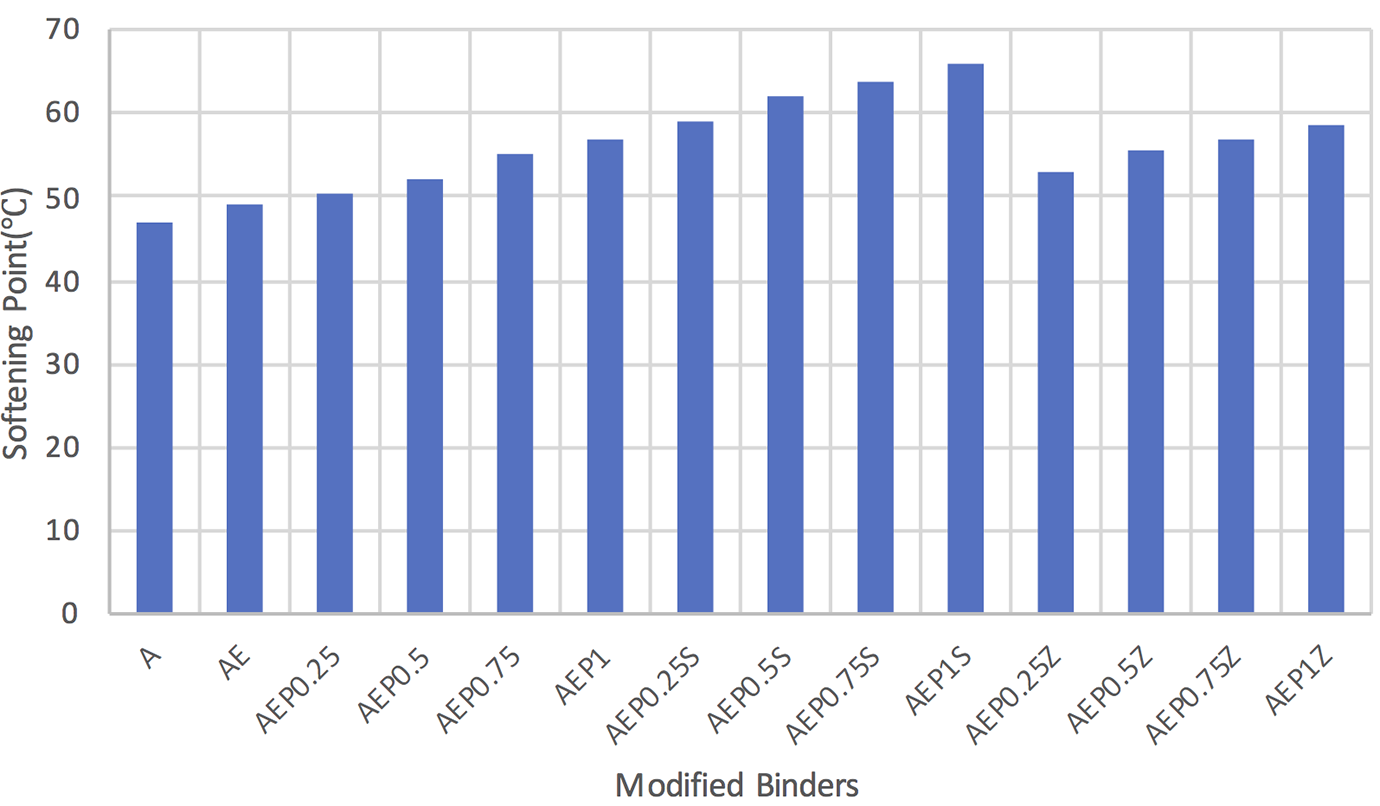
Softening point of different asphalt binders.
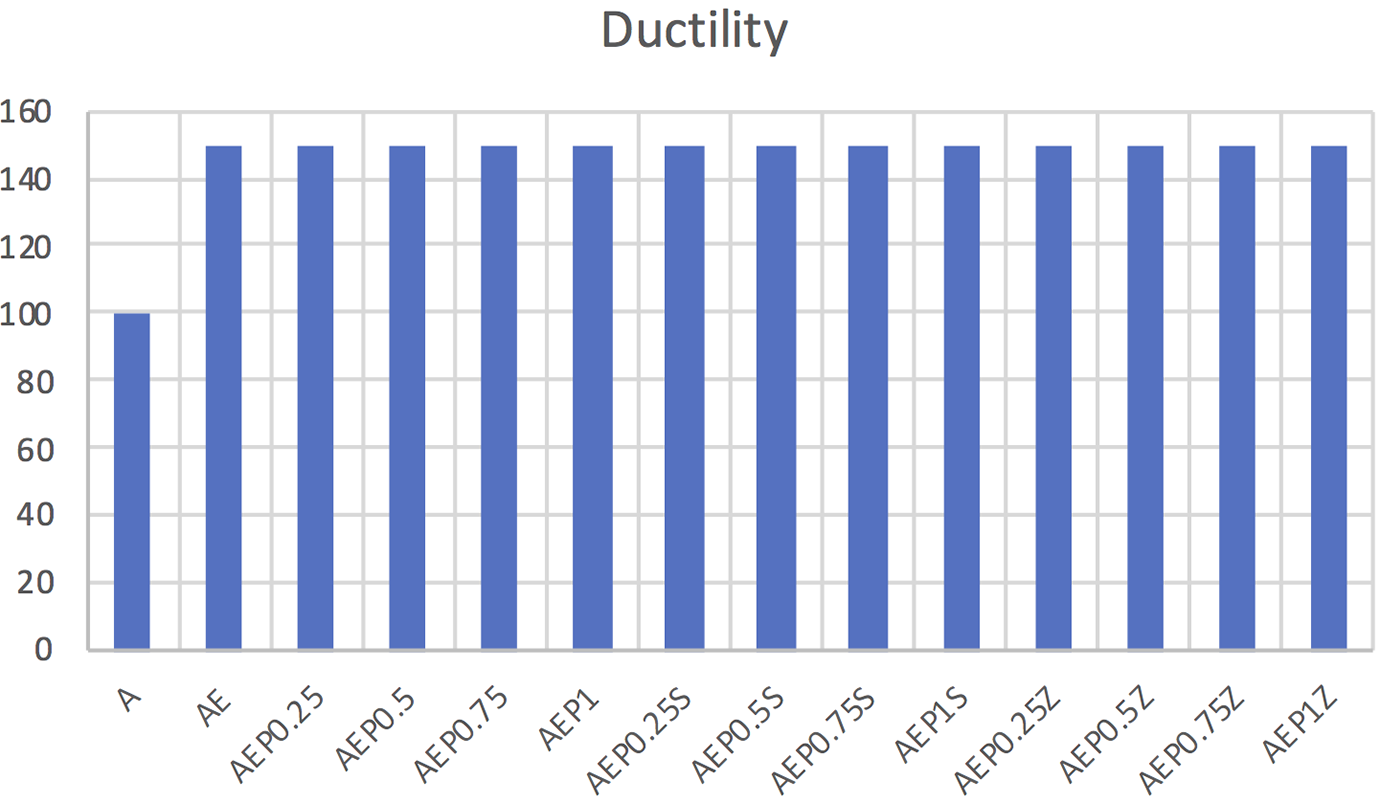
Ductility results of different asphalt binders.
Figure 5 shows the penetration index (PI) of modified binders. Based on the results, the utilization of SBR and PPA causes an increase in PI of bitumens. As the percentages of PPA increases, the PI values increases. Also, the addition of warm additives causes an enhance temperature susceptibility resistance of bitumen. Among warm additives, the Sasobit additive has a better impact in decreasing the temperature susceptibility of binders, followed by Zycotherm additive.
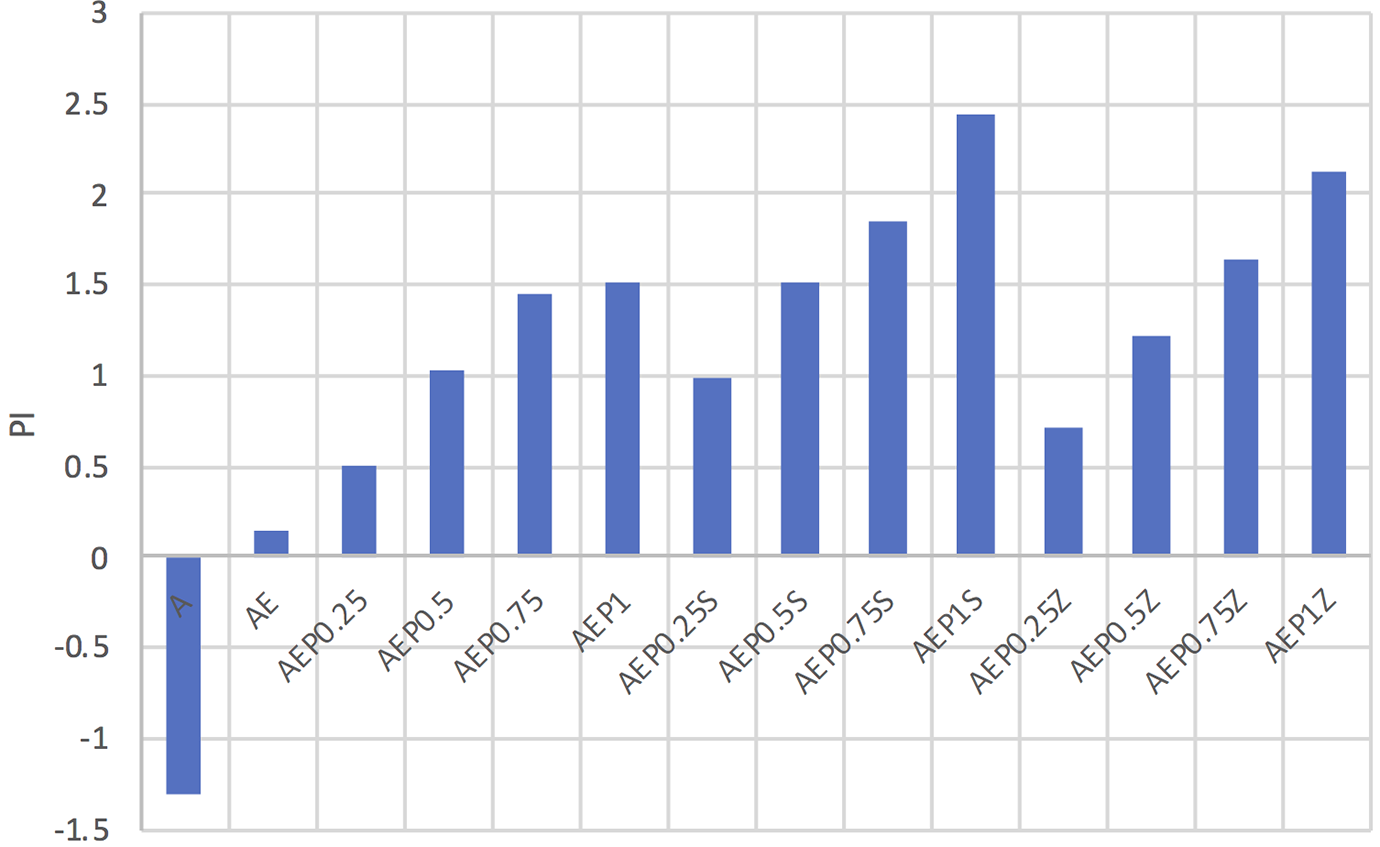
Results of penetration index of different asphalt binders.
Binders with lower PI values are more susceptible to temperature. As the PI values increase, the performance of mixture against permanent deformation and low-temperature distress improves.28,29 According to PI values of specimens, the addition of SBR, PPA, and WMA additives cause an improvement in resistance of binders versus temperature susceptibility.
As demonstrated in Figure 6, using SBR and PPA causes an increase in viscosity of virgin bitumen. As the viscosity of binder increases, the ability to lay down and compaction of the mixture on field becomes harder. According to the viscosity of bitumen, as the percentage of PPA increases, the stiffness of bitumen increases and it causes an increase in the viscosity of binder. Increase in stiffness and viscosity of the asphalt binders after blending them with PPA is a result of concentration of asphaltenes and formation of insoluble materials due to using orthophosphoric acid and anhydrous phosphoric anhydride and increase in the amount of asphaltenes of high-molecular weight by converting the aromatics to resins and resins to asphaltenes. According to results, utilization of warm additives, the viscosity of SBR/PPA modified bitumen decreases. The Sasobit additive have a better impact on the reduction of viscosity followed by Zycotherm additive.
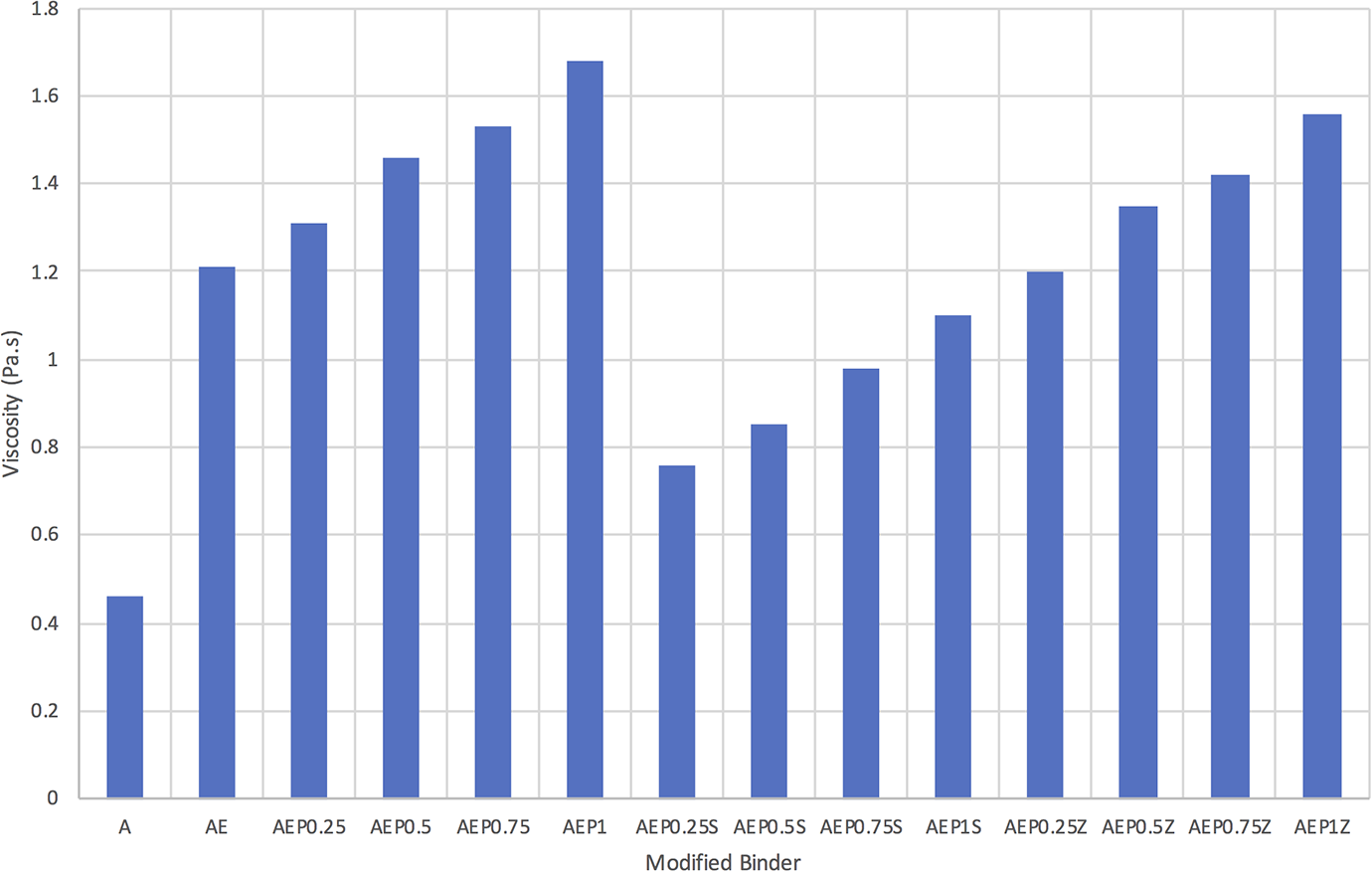
Rotational viscosity of modified binders.
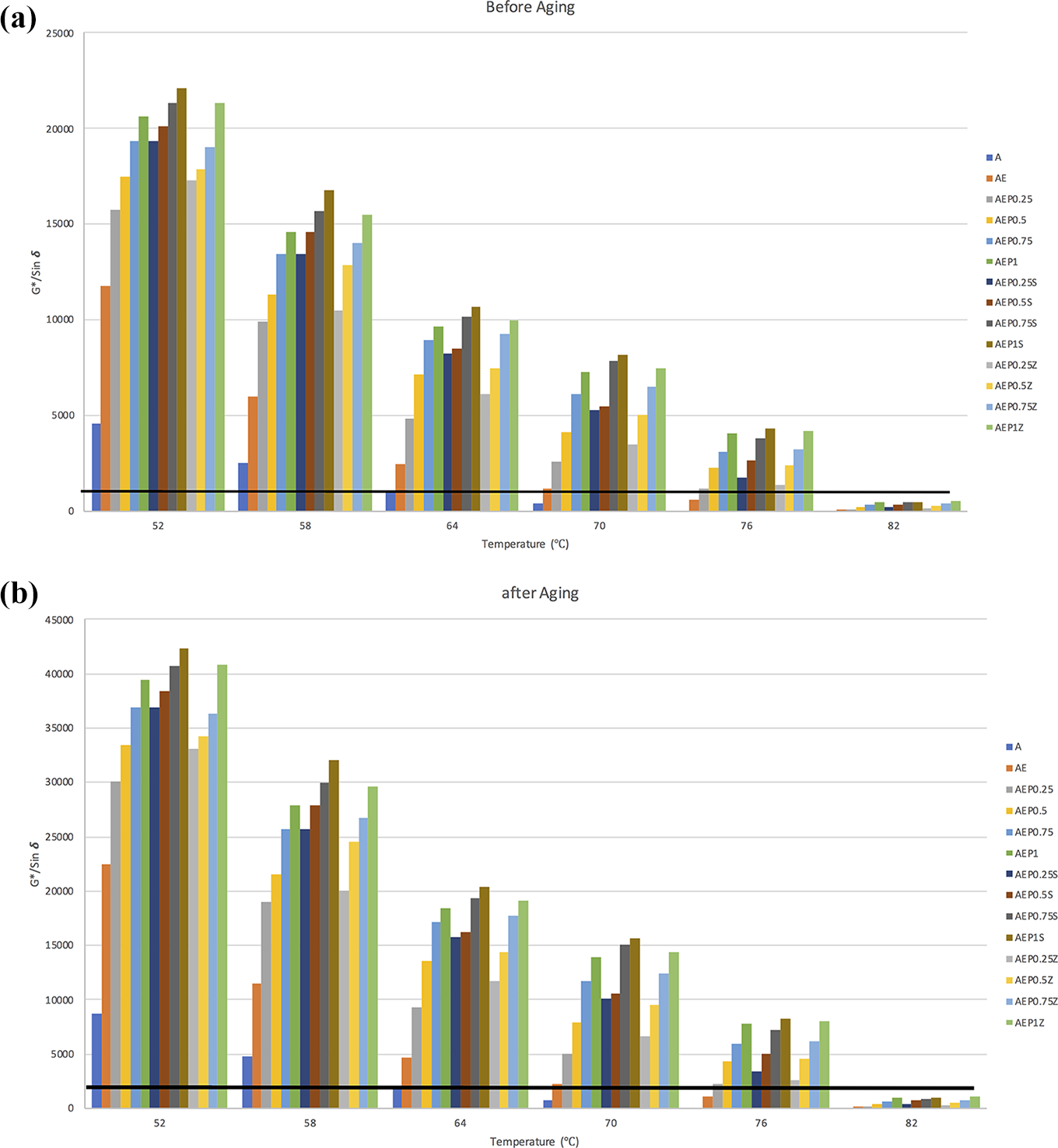
Binders with higher G*/sinδ values, have higher resistance a better resistance against permanent deformation. Original and RTFO aged binders should have a minimum amount of 1 kPa and 2.2 kPa to resist against the rutting. Results of the rutting parameter (G*/sinδ) were shown in Figure 7 before and after the RTFO aging process. Based on results, the rutting resistance of binders modified by SBR and PPA is enhanced, which demonstrates that the utilization of SBR and PPA makes binder stiffer. Then the rutting behavior of binder improves. As the percentage of PPA increases, the stiffness of bitumen increases, and it leads to enhance the rutting resistance of bitumen. Based on results, the utilization of warm additives cause an improve the potential of recovery of binders and also increase in the ability of bitumens to recover the accumulated strains from traffic loading. Among warm additives, Sasobit modified binders have better performance in improving the rutting behavior of binders, followed by Zycotherm additives. It is attributed to stiffens of binder by Sasobit additive. WMA additive and PPA when used together were able to effectively increase the rutting factor of the binder blend. These results support the use of WMA additive and PPA to enhance the resistance of binder to rutting. Although an acidic (PPA) and a basic agent were present in the blends, the addition of PPA was still capable of modifying the binder matrix and improving its stiffness by increasing the concentration of asphaltenes at the expense of saturates. 39 Consequently, it is anticipated that mixes containing PPA and WMA additive would exhibit a higher rutting resistance compared to the mixes without any additives.
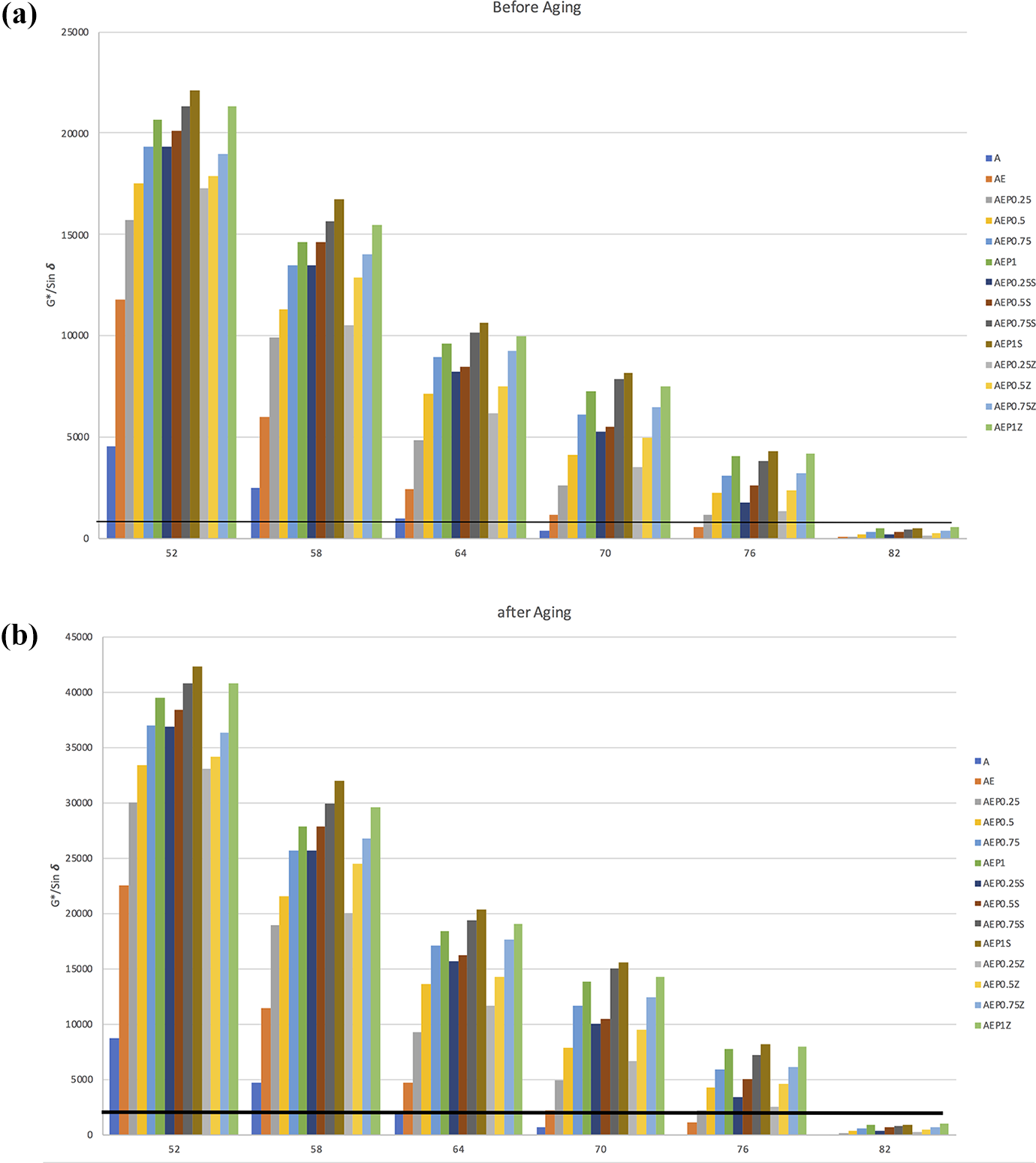
Rutting parameter of base and modified asphalt binders: (a) before aging and (b) after aging.
Also, by the suggestion of a performance grade (PG) system, a binder with a lower G* sinδ parameter has a better strength against intermediate temperature cracking. As the PG system proposed, the G* sinδ was limited to a maximum of 5000 kPa for bitumen, which indicated that binders are capable of resistance against intermediate cracking. As results show in Figure 8, the utilization of SBR cause an enhance the fatigue behavior of binder. Also, the addition of PPA increases the fatigue resistance of bitumens. As the percentage of PPA increases, the fatigue resistance increases. According to Zhang et al., 40 a reduction in fatigue factor indicates that a binder blend becomes softer than the neat binder after long-term PAV aging with improved resistance to oxidation. For an asphalt pavement subjected to repeated loading of different magnitudes and frequencies, using an asphalt binder with improved oxidative resistance is expected to enhance the fatigue life of the pavement under different climatic conditions. 41 This is due to the presence of PPA in the mixes which reduced the rate of oxidative aging with time by forming the carbonyl and sulfoxide compounds in the initial stage of aging. 42 A reduction in OHI (Oxidative Hardening Index) values (The higher the OHI value, the more sensitive an asphalt binder to oxidative aging), confirms the reduction in oxidative aging as a result of using PPA in binder blends. Also, the addition of warm additives to modified binders causes an enhance fatigue behavior of bitumen. Sasobit has the greatest influence on enhancing the intermediate temperature behavior of binders.
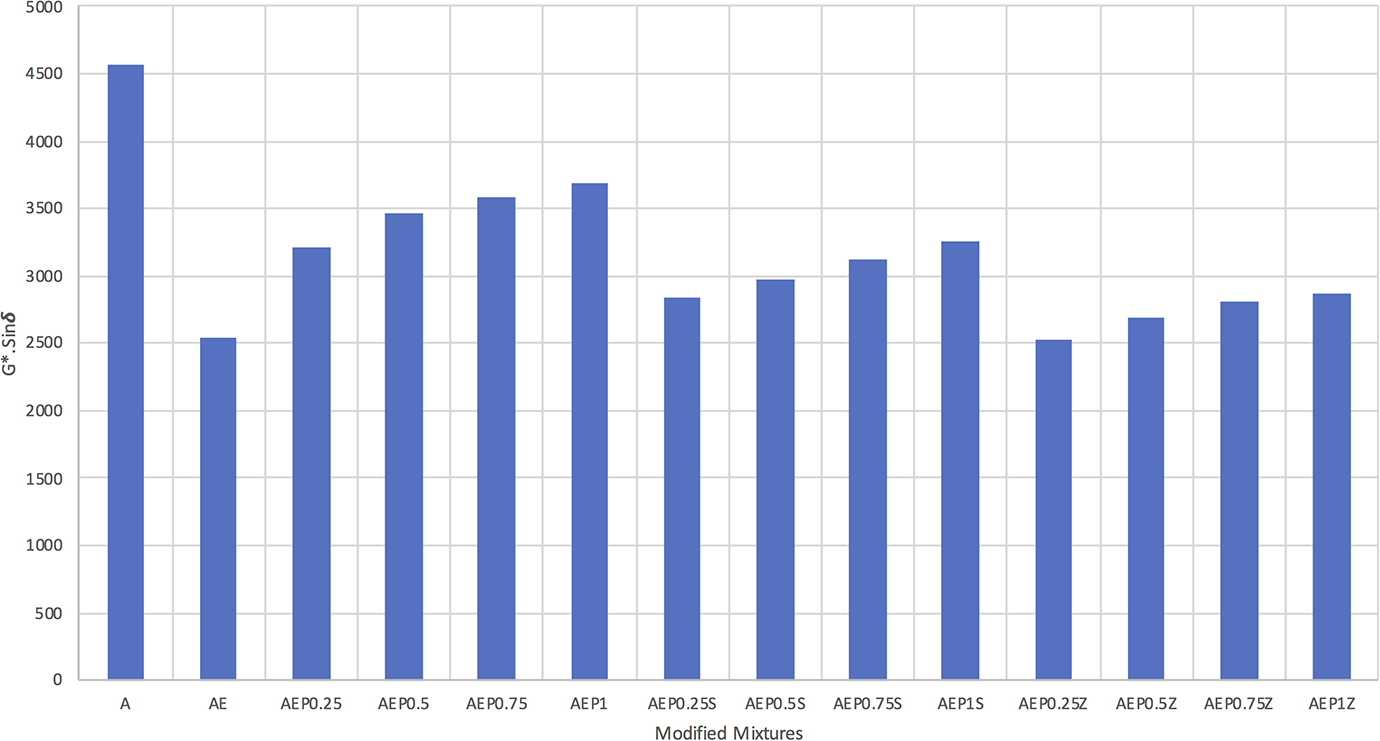
Fatigue parameter of base and modified asphalt binders.
Storage stability test results
The SBR and original binder have different densities, so when the modified binders store in a reservoir or while pumping and use in the pavement, it may occur separation between different phases. In static situations and at high temperatures, based on Stokes’ law, the droplets of SBR ascent and float on top of the binder. The strength of binders at high temperatures against phase separations is measured by performing storage stability test. The result of storage stability test of modified binders was indicated in Table 10. The change in softening points test result from the bottom and the top section of binders containing SBR is higher than 2.5°C. This result show that the phase separation occurred. While utilization of PPA cause an enhances in phase separation of modified binders and the results of softening point from the bottom and the top section of the sample were less than 2.5°C. This can be justified based on two facts: Utilization of PPA, balance the difference between the density of binder and SBR, which is one of the causes for phase separation. The storage stability of the modified binder is influenced by molecular weight and also the structure of bitumen. Utilization of PPA to binder led to stiffens binder, and as a result, the storage stability of the SBR/PPA modified binder enhanced. By the addition of PPA, the structure of materials change from sol to gel. This creates a solid material that has a better stability.
Storage stability test results.
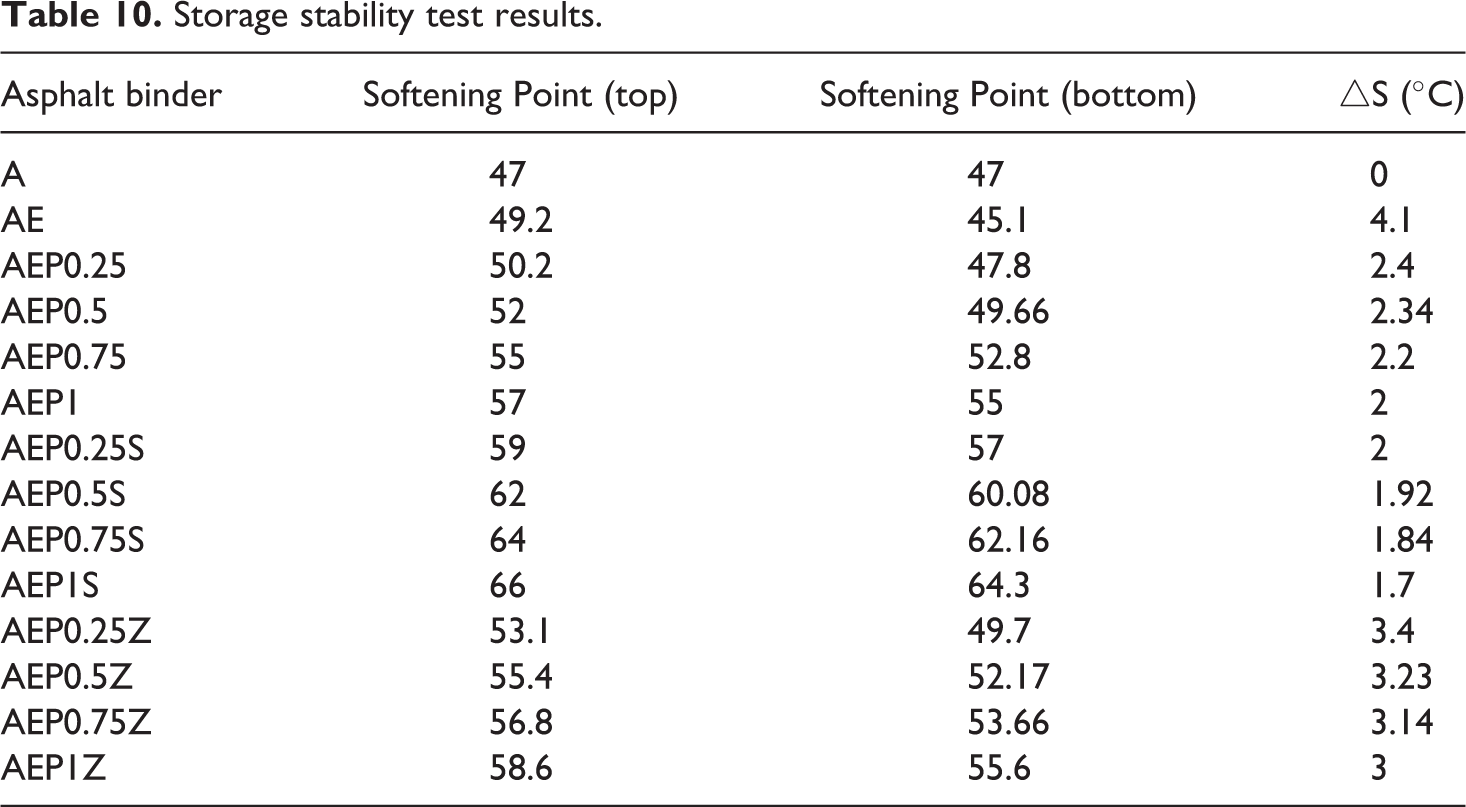
Based on results, the utilization of Sasobit cause an improvement in the phase separation. The reason for these attributes to the matrix of bitumen crystallized by the addition of Sasobit, and as a result, the modified binder stiffens. Whereas, the addition of Zycotherm nanotechnology decreases the phase separation of the binder.
MSCR test
To investigate behavior of bitumen at two stress levels of 100 Pa and 3200 Pa, the MSCR test was performed. The Jnr parameter of bitumens at temperatures of 52°C to 82°C at mentioned stress levels was depicted in Figure 9(a) and (b). Results indicated that as the temperature increases, the Jnr parameter increase. The %R and Jnr of different binders at 64°C are tabulated in Table 11.
Non-recoverable creep compliance of different binders at range of temperatures from 52°C to 82°C at stress levels of (a) 100 pa and (b) 3200 pa.
Results of the MSCR test.
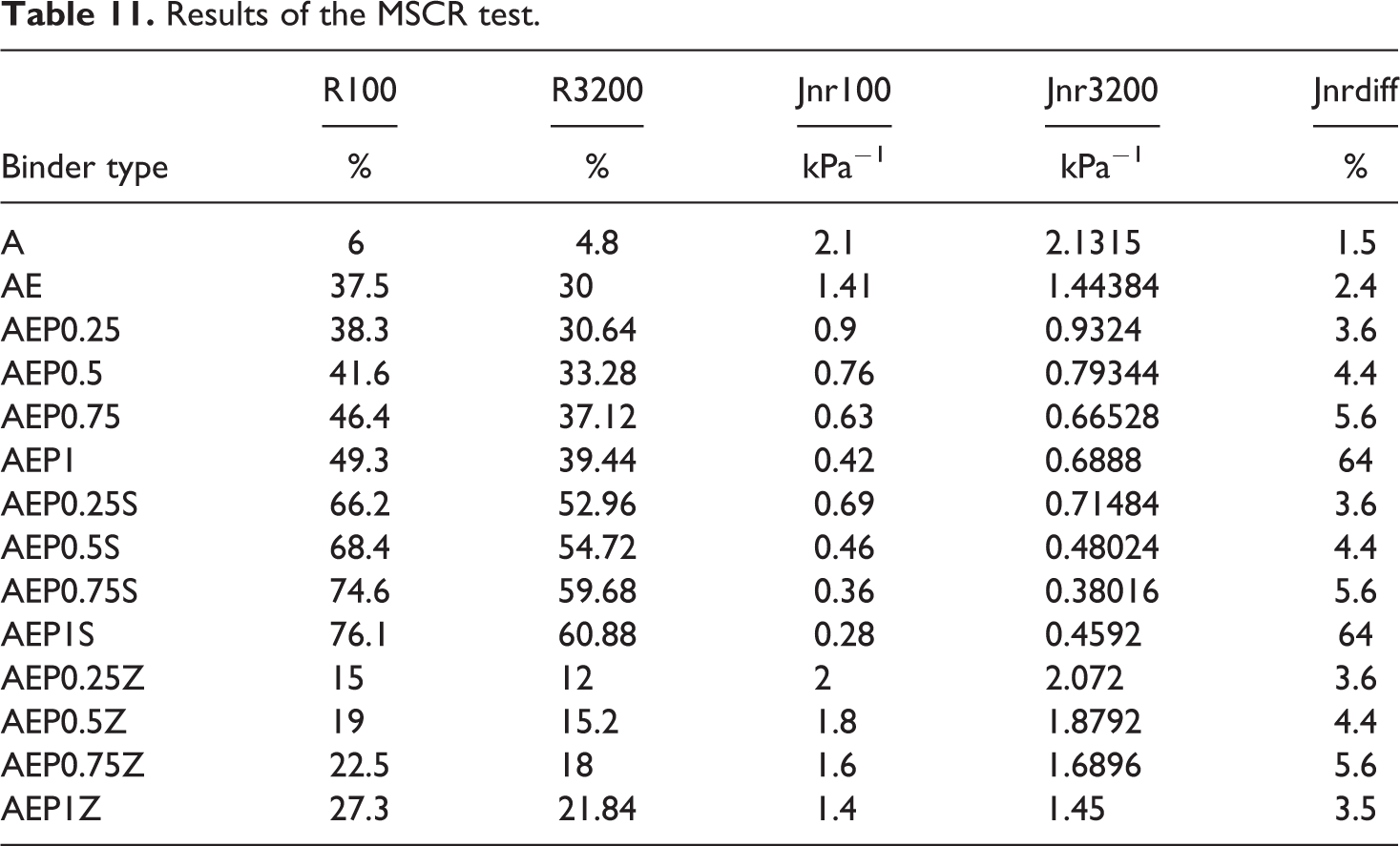
Generally, based on the results, regardless of the stress levels, the utilization of SBR decreased the Jnr value of virgin bitumen, which shows that SBR-modified binders have more rutting resistance. As the results show in Table 11, by utilization of PPA the Jnr values decrease. Also, by the addition of PPA percentages up to 1%, the Jnr parameter decreases. It may attribute to the stiffens of the bitumen by the utilization of PPA, and the resistance of bitumens against rutting increased. Increase in stiffness and viscosity of the asphalt binders after blending them with PPA is a result of concentration of asphaltenes and formation of insoluble materials due to using orthophosphoric acid and anhydrous phosphoric anhydride and increase in the amount of asphaltenes of high-molecular weight by converting the aromatics to resins and resins to asphaltenes. As results show in Table 11, binders modified by Sasobit have lower Jnr values than binders modified by Zycotherm. The reason is by the addition of Sasobit, the stability and stiffness of binders improved by forming a crystalline network/lattice structure. Based on results, the utilization of Zycotherm nanotechnology causes a decrease in the Jnr values of polymer modified binders, but the values of Jnr were higher than Sasobit modified binders. The results were better than the control binder. Also, based on results, samples containing PPA and WMA additives have higher rutting resistance than control sample. This is due to additional cross-linking effect of PPA with polymers, which provides stronger stability and higher stiffness to the modified binders.43,44 By the increasing of stress level to 3.2 kpa, the Jnr values increased. It means that higher permanent deformation would be observed on higher traffic loading. The similar trend observed on Jnr values of modified bitumens on the stress level of 3.2 Kpa.
According to Table 11, the utilization of SBR cause an enhance the %R of the base bitumen. As the percent recovery of binder gets more, the binder has a better ability to withstand permanent deformation. Results on Table 11 indicate that the percent recovery percentage of base bitumen is low, which shows its low ability against intermediate temperature cracking and rutting. Results showed that as the warm additives were added to the original binder, the percent recovery increases. Based on results, bitumens modified by Sasobit have greater percent recovery values in comparison with Zycotherm modified binders. As the results show, the percent recovery of binders increase by the addition of ASAs, which indicates that the resistance of binders against rutting was enhanced. As results show, binders modified by PPA, have higher percent recovery values. As the percentages of PPA increase, the percent recovery increases, which indicates that the resistance of binders against rutting was enhanced. Also, based on the results, the %R was improved by the addition of warm additives. For example, all Sasobit modified binders have higher percent recovery than original, SBR and SBR/PPA modified binders. Whereas, binders modified by Zycotherm nanotechnology, have higher percent recovery than original binders and lower than SBR and SBR/PPA modified binders.
Utilization of 2% SBR and 2% SBR with 1% PPA in base binder improves %R by 167% and 252%, respectively. Addition of Sasobit to binders containing 2% SBR with 1% PPA also enhances the %R by 443% and 282%, respectively, at a stress level of 100 pa. The utilization of 2% SBR and 2% SBR with 1% PPA to bitumen enhances the %R by 161% and 243%, respectively, at a stress level of 3200 pa. However, the addition of Zycotherm to 2% SBR with 1% PPA leads to an increase in the %R by 90% at a stress level of 100 pa.
Based on results, the Zycotherm additive had lowest effect on enhancing percent recovery of modified bitumens at each stress level. The reason for this may be due to low elastic performance and low stiffness of Zycotherm modified binders.
Results of LAS test
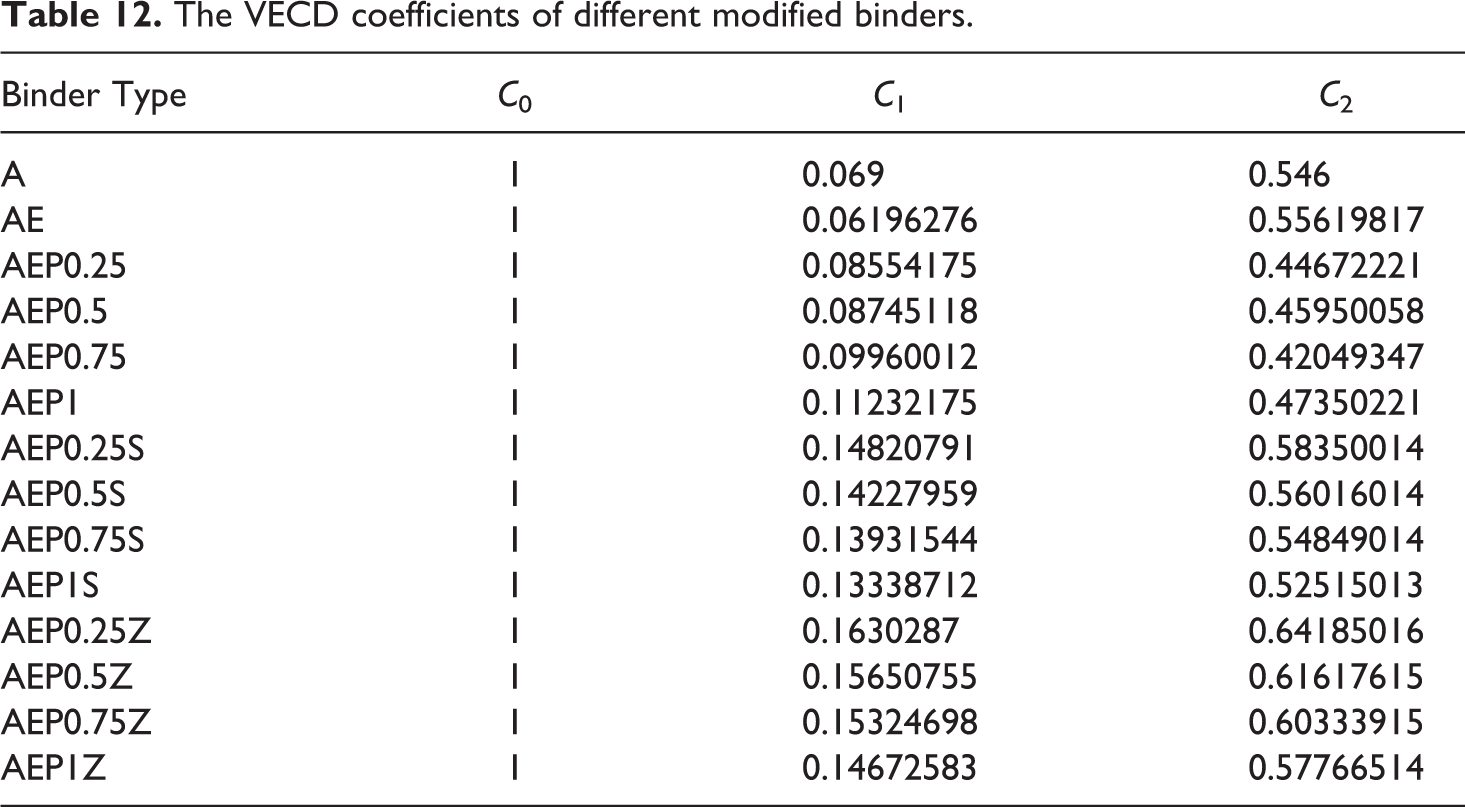
The results of the LAS test were depicted on Tables 12 and 13. Results from Table 12 shows that in high strain levels, the shear stress of modified binders decreases significantly, which indicates a high level of damage. Based on results, the utilization of SBR cause an improve the intermediate temperature properties of base bitumen. Utilization of SBR increases the flexibility of bitumen, and therefore, the fatigue properties of bitumen increase.
The VECD coefficients of different modified binders.
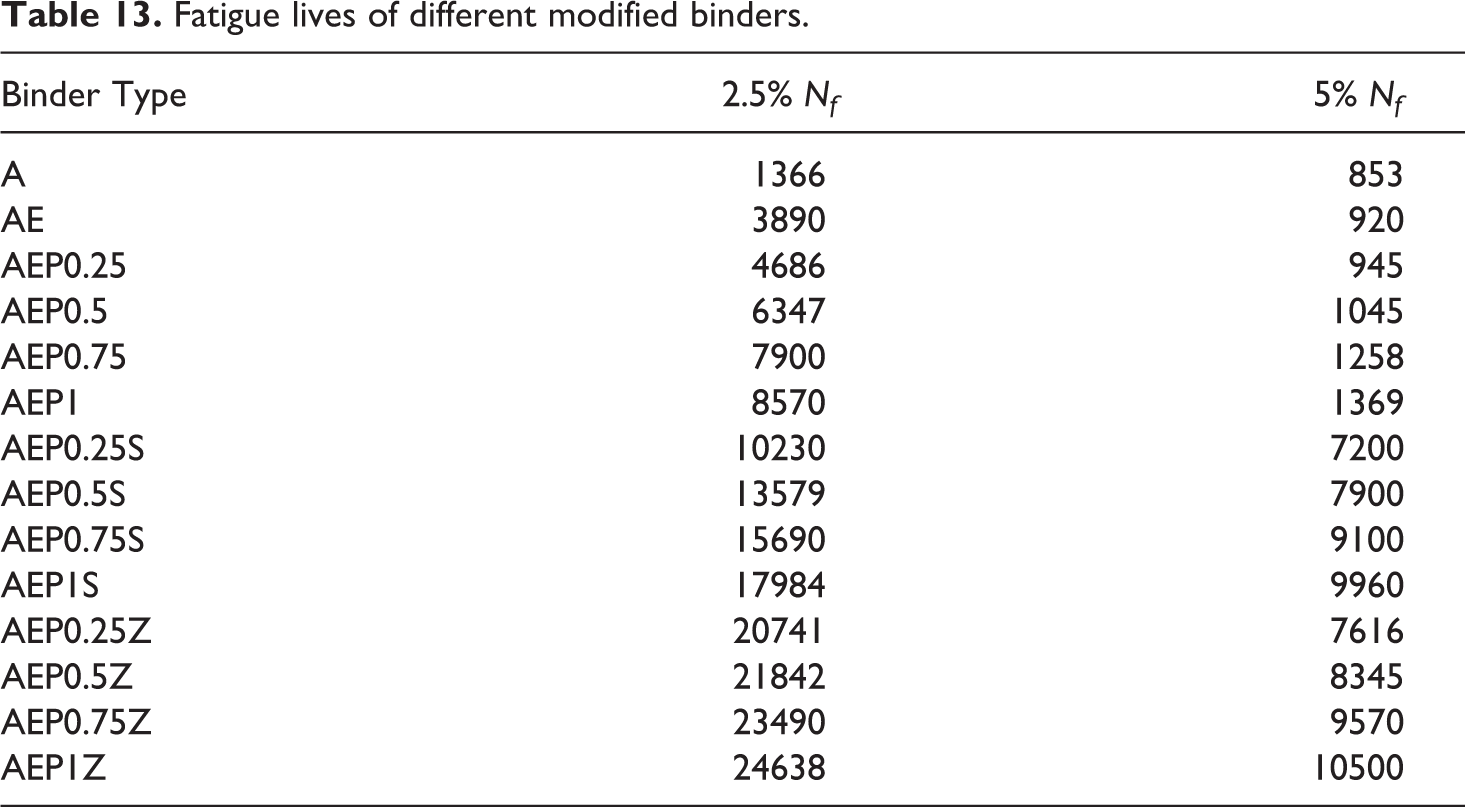
Fatigue lives of different modified binders.
The VECD coefficients of different modified binders were shown in Table 12. The Utilization of modifiers cause an increase and decrease in coefficient C1 and coefficient C2, respectively. Based on the results, AEP0.25Z modified bitumen has the highest C1 and the lowest C2 values. It can be concluded that at low damage levels, the |G*| parameter decreases significantly. while at high damage levels, the |G*| parameter reduces with lower slope.
Table 13 shows the fatigue life of different bitumens. The fatigue test was performed on two strain levels of 2.5% and 5%. As results show, the utilization of SBR leads to enhance in the fatigue behavior of the original binder. Also, utilization of PPA causes an increase in fatigue life of binders. So that by the addition of PPA percentage, the fatigue lives increases significantly. According to Zhang et al., 40 a reduction in fatigue factor indicates that a binder blend becomes softer than the neat binder after long-term PAV aging with improved resistance to oxidation. For an asphalt pavement subjected to repeated loading of different magnitudes and frequencies, using an asphalt binder with improved oxidative resistance is expected to enhance the fatigue life of the pavement under different climatic conditions. 41 This is due to the presence of PPA in the mixes which reduced the rate of oxidative aging with time by forming the carbonyl and sulfoxide compounds in the initial stage of aging. 42 A reduction in OHI (Oxidative Hardening Index) values (The higher the OHI value, the more sensitive an asphalt binder to oxidative aging), confirms the reduction in oxidative aging as a result of using PPA in binder blends. Based on outcomes, it is apparent that AEP0.25Z specimen has higher fatigue life about 18 times and 12 times more than original binder at both strain levels of 2.5% and 5%, respectively. Results showed that the utilization of Sasobit causes an increase in the fatigue performance of binders. According to the VECD analysis of LAS test results, it can be realized that utilization of warm additives causes an enhance fatigue behavior of binders.
Mixture tests result
Mr test results
The Mr test results of specimens modified by different additives were shown in Figure 10. Results revealed that the utilization of SBR causes an enhance in Mr values. This increment attributed to increase in flexibility of mixtures by the addition of SBR. Also, utilization of PPA causes a decrease in Mr of mixtures. So that the AEP0.25 mixture has the highest resilient modulus value among specimens containing SBR/PPA. The reason for this may due to stiffens of bitumen by PPA. As results show, utilization of Sasobit causes an enhance the resilient modulus of SBR/PPA modified binders. Whereas, mixtures containing Zycotherm nanotechnology have lower Mr values than mixtures containing Sasobit.
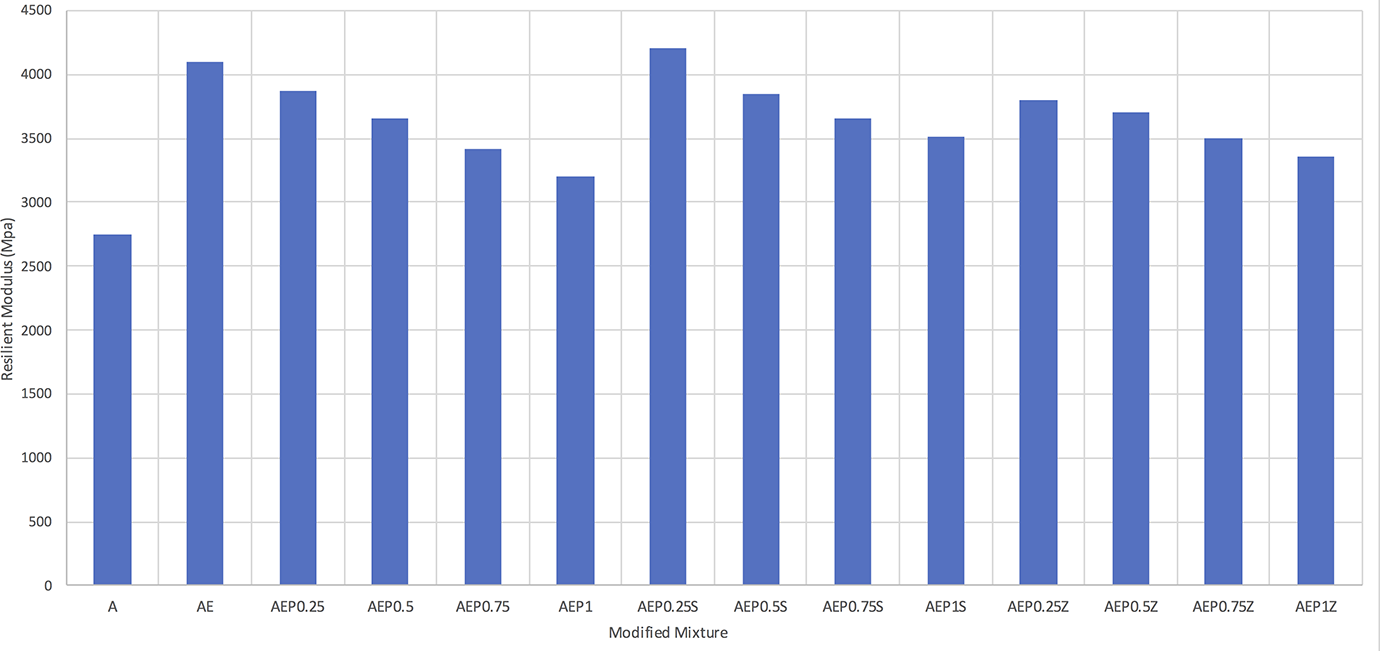
Results of resilient modulus of modified mixtures.
The Mr of mixtures with 0.25% PPA was 40% higher than the unmodified sample, while 1% PPA modified mixture had a Mr about 17% higher than unmodified mixture. The outcomes of Mr test indicated that by the utilization of PPA percentage, the decreasing trend on Mr values is observed. Addition of Sasobit to a mixture containing 0.25% PPA and SBR cause an increase in the Mr of sample up to 53%.
ITS test
Figure 11 indicates the ITS values of specimens. According to outcomes of test, ITS values of specimens with SBR additive were higher than the original specimen mixture. By the addition of PPA to SBR modified binders, the ITS values decreased. Furthermore, the ITS results decrease by an increase in PPA contents. Utilization of WMA additives led to increase in ITS values of SBR/PPA modified mixtures. All warm modified mixtures except Zycotherm modified mixtures had higher ITS values than SBR/PPA mixtures but had lower results than SBR modified mixtures. Among warm modified mixtures, sasobit had the highest ITS values.
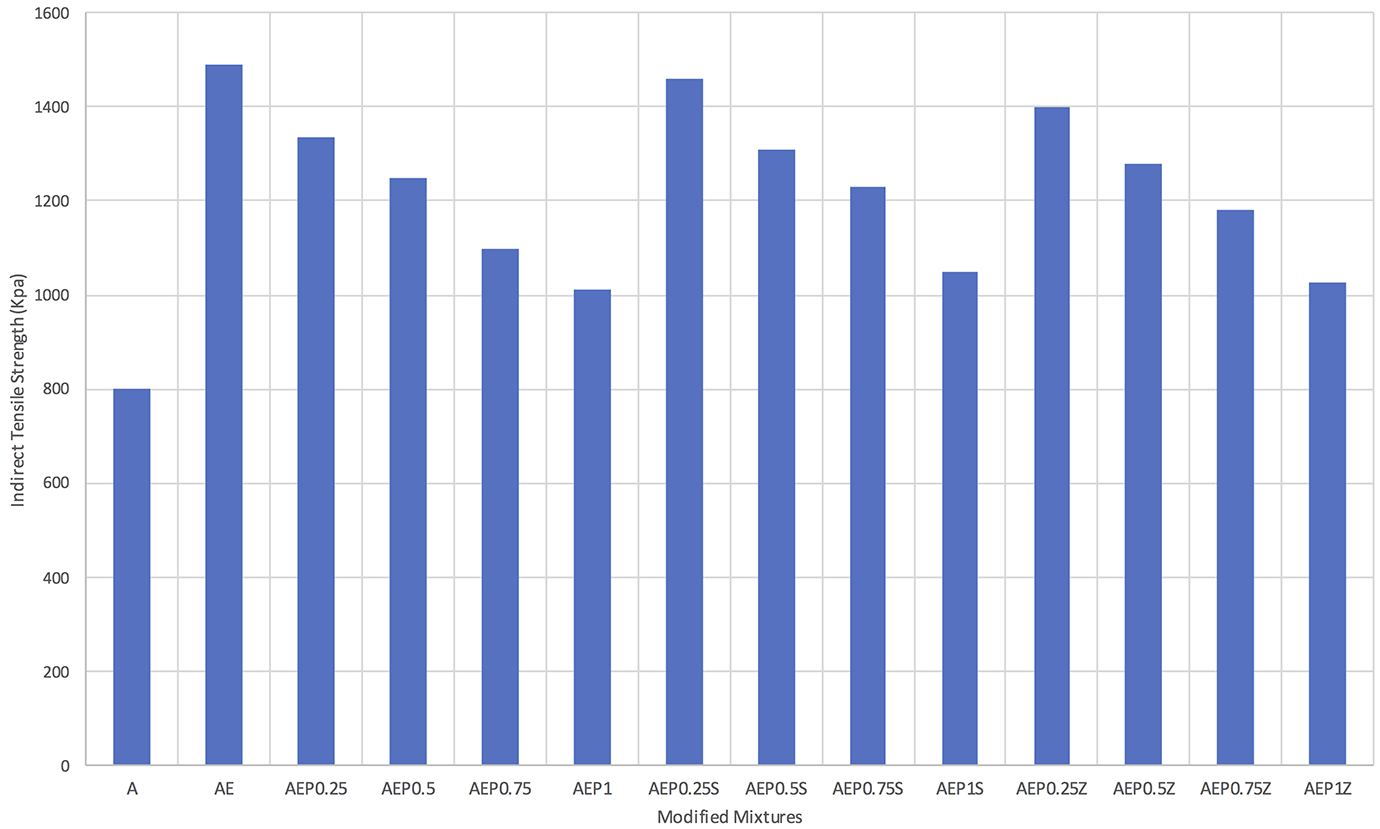
ITS values of mixtures.
As the adhesion of binder to aggregates gets more, the higher the ITS value. Therefore, as seen from the marks, by utilization of SBR and PPA, the cohesion and adhesion of bitumen to aggregate increases and decrease, correspondingly. Based on results in Figure 11, mixtures containing SBR have the highest ITS values among modified samples.
Flow number (FN) results
Figure 12 depicts the FN of modified specimens. Mixtures with greater FN are capable of resisting better against permanent deformation. As the results show in Figure 12, utilization of SBR enhances the permanent deformation resistance of samples, which could be due to the fact that by utilization of SBR, the potential of recovery of specimens increases and the ability of mixtures to recover their accumulated strain improves. As the MSCR test results showed, by addition of SBR and PPA the percent recovery of binders increases. As a result the rutting resistance enhances. Also, based on MSCR, DSR and conventional binder tests results, addition of SBR and PPA additives stiffen binder. By stiffening of binder, the mixtures were more stiff and the resistance of mixture against rutting improves. Also, utilization of PPA causes an enhances FN of mixtures, and by addition of PPA percentage, the rutting resistance improves. Results revealed that the utilization of PPA causes an enhance stiffness, and viscosity of mixtures and as a result, the rutting behavior enhanced. Increase in stiffness and viscosity of the asphalt binders after blending them with PPA is a result of concentration of asphaltenes and formation of insoluble materials due to using orthophosphoric acid and anhydrous phosphoric anhydride and increase in the amount of asphaltenes of high-molecular weight by converting the aromatics to resins and resins to asphaltenes. In addition, utilization of WMA additives causes an increase in the flow number of SBR/PPA modified mixtures. Among warm mixtures, Sasobit and Zycotherm modified mixtures had the highest and lowest resistance against rutting, respectively. This is due to additional cross-linking effect of PPA with polymers, which provides stronger stability and higher stiffness to the modified binders.43,44 For example, the addition of SBR additive led to increase in the FN of samples by 53%. Also, the addition of 0.25% PPA to SBR modified mixture increases the FN by 59%. As results show, utilization of Sasobit causes an increase in the flow number by 100%. While the addition of Zycotherm increases the rutting resistance by 18%.
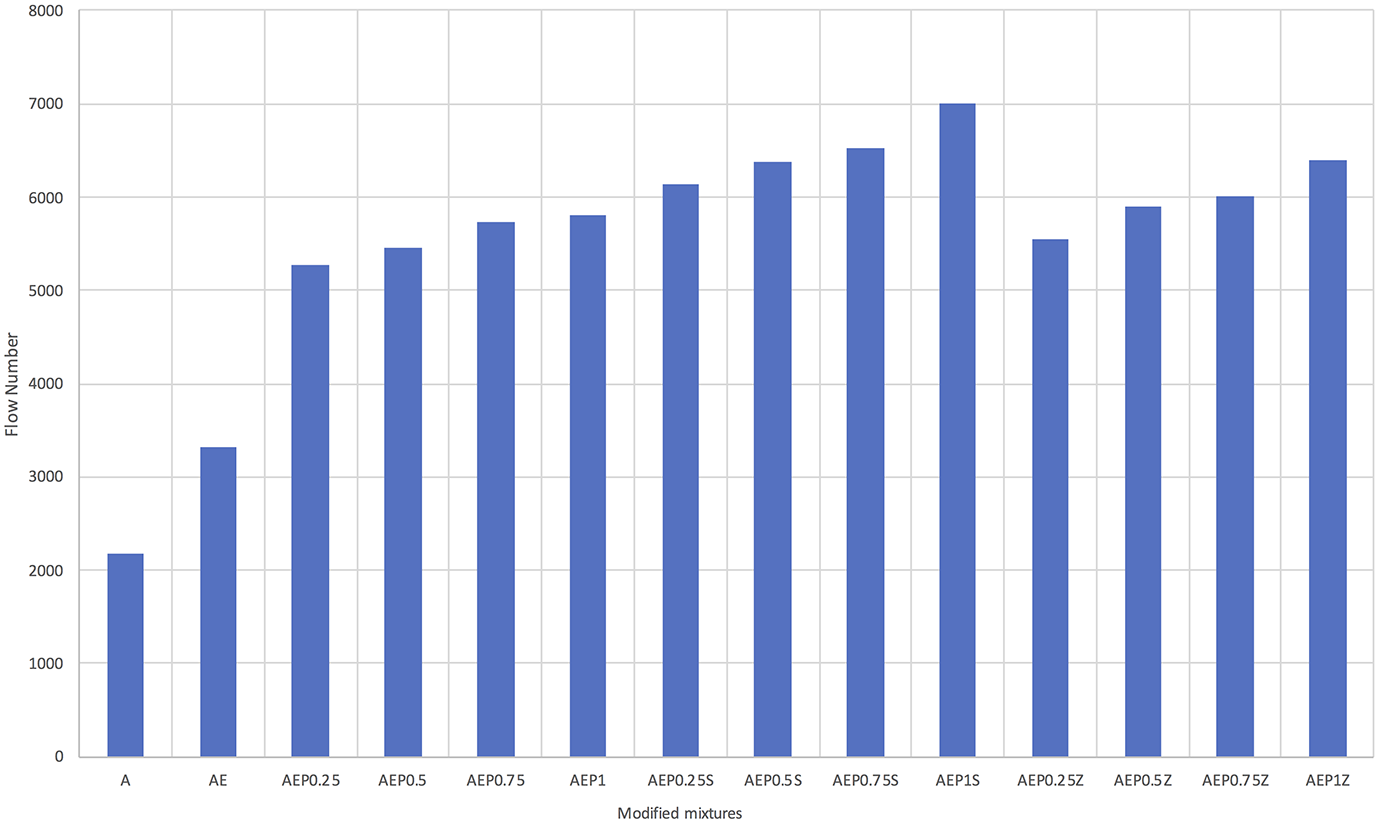
Flow number of modified mixtures.
Wheel track test results
Figure 13 shows the rut depth of specimens. Based on results, SBR causes an improve the permanent deformation resistance of specimens. SBR improves the potential of recovery of mixtures. Also, the addition of PPA enhanced the rutting behavior of mixtures and by increase of PPA percentage, the strength of specimens versus permanent deformation increases. As the MSCR test results showed, by addition of SBR and PPA the percent recovery of binders increases. As a result the rutting resistance enhances. Also, based on MSCR, DSR and conventional binder tests results, addition of SBR and PPA additives stiffen binder. By stiffening of binder, the mixtures were more stiff and the resistance of mixture against rutting improves. Increase in stiffness and viscosity of the asphalt binders after blending them with PPA is a result of concentration of asphaltenes and formation of insoluble materials due to using orthophosphoric acid and anhydrous phosphoric anhydride and increase in the amount of asphaltenes of high-molecular weight by converting the aromatics to resins and resins to asphaltenes. Based on the results, WMA additives result in a decrease in the rutting depth of mixtures. WMA additives improve the flexibility of mixtures. Among warm mixtures, Sasobit modified mixtures had the highest resistance against rutting. This is due to additional cross-linking effect of PPA with polymers, which provides stronger stability and higher stiffness to the modified binders.43,44 Utilization of Sasobit to SBR/PPA mixture cause a decrease in the rut depth by 30%. Based on the results, the rut depth of Zycotherm SBR/PPA modified mixtures were lower than all SBR and SBR/PPA modified mixtures. Whereas, the results were better than the original mixture.
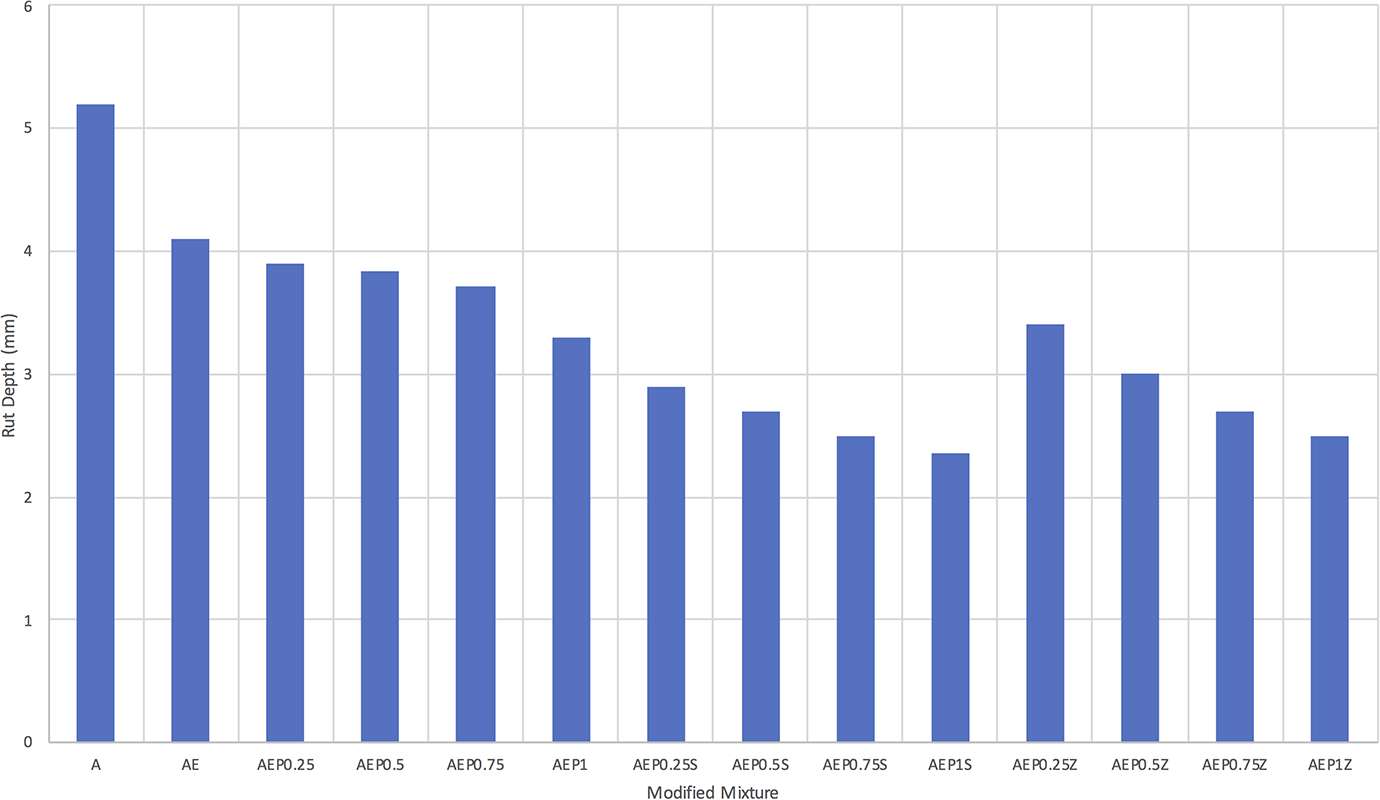
Rut depth of different mixtures.
FPB test
Figure 14 shows the intermediate temperature behavior of specimens. Results demonstrated that the utilization of SBR improves the fatigue behavior of samples. Based on results, the utilization of PPA cause a increase in intermediate temperature behavior of specimens and by increasing the PPA additive content, fatigue lives of specimens increase. Utilization of WMA with SBR/PPA modified binders causes an improve the fatigue behavior of specimens. Among warm modified mixtures, zycotherm modified mixtures had the highest fatigue life.
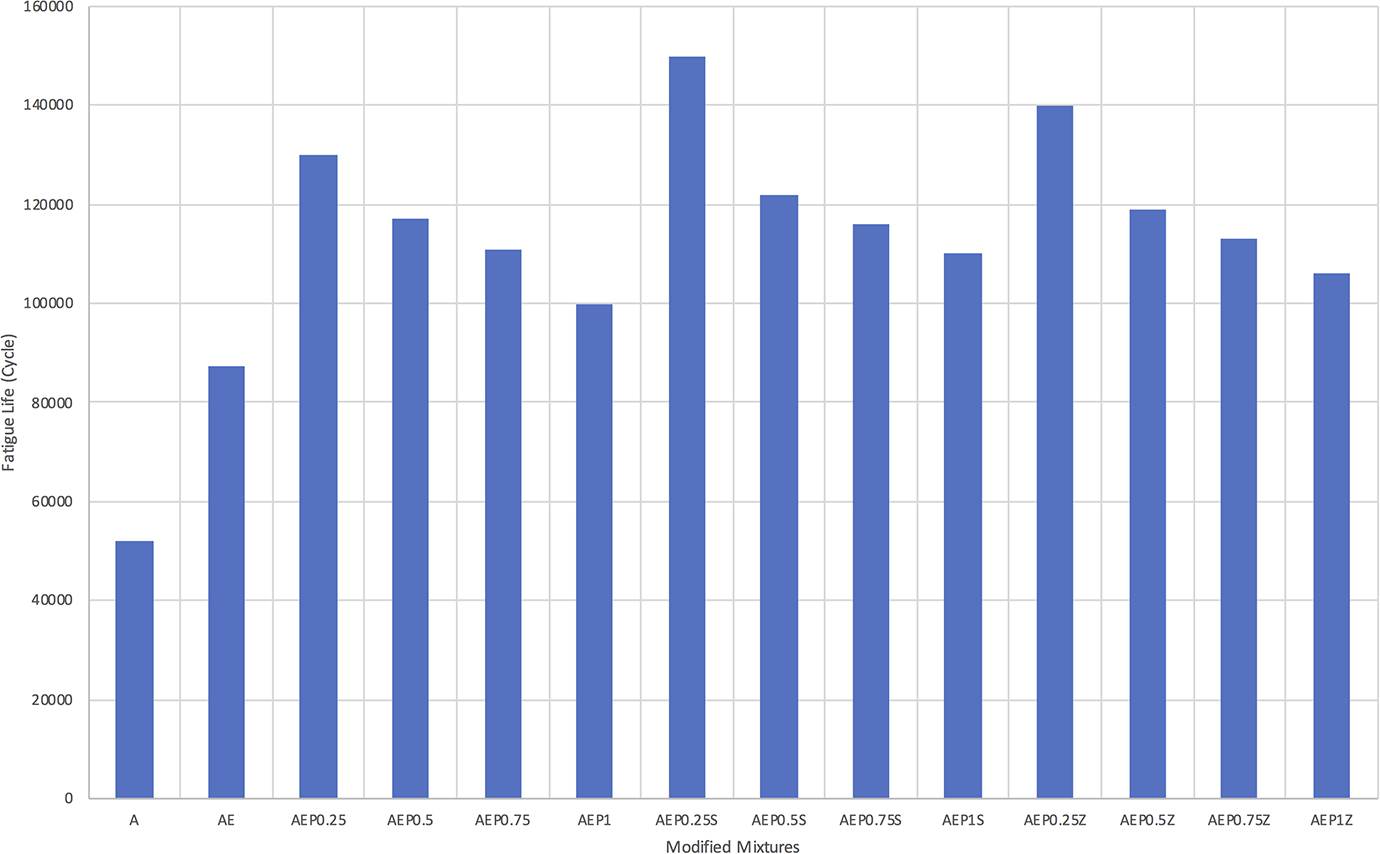
Fatigue lives of different mixtures.
The Fracture energy density values of different mixtures were shown in Figure 15. The required energy to initiate the first crack in asphalt called Fracture Energy (FE). Based on Figure 15, the addition of SBR led to increase the fracture energy. This can be due to an increase in potential of recovery of mixture by the addition of SBR, and as a result, the strain energy and strength of specimen to cracking are increased. Addition of PPA causes an increase in the FE. By addition of more than PPA contents, the FE values increases. The outcomes revealed that the utilization of WMA additives cause an improve in FE values of SBR/PPA modified mixtures the required energy to initiate the crack in mixture increases.
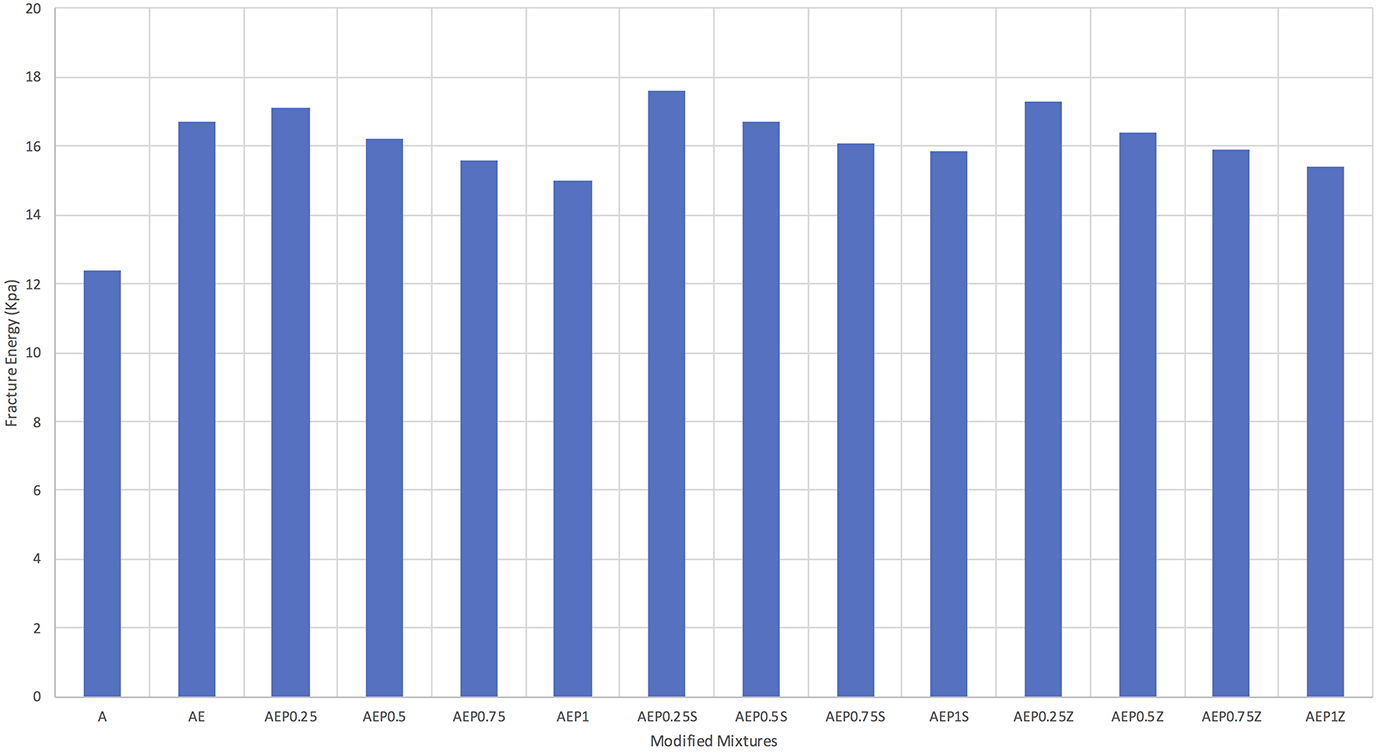
Fracture energy of different mixtures.
Data analysis
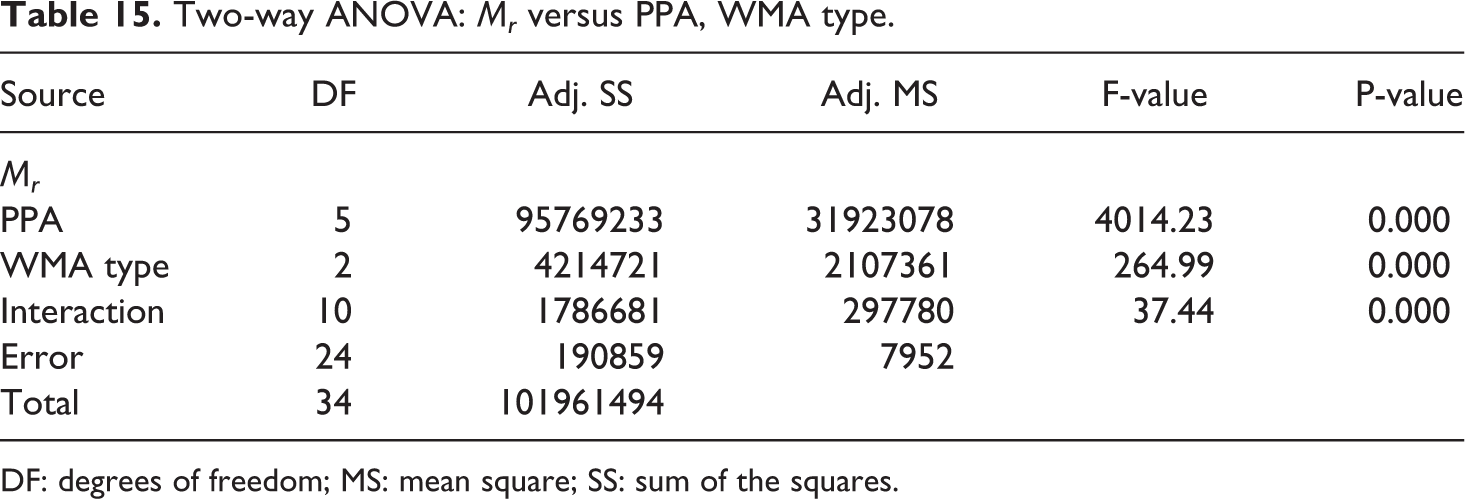
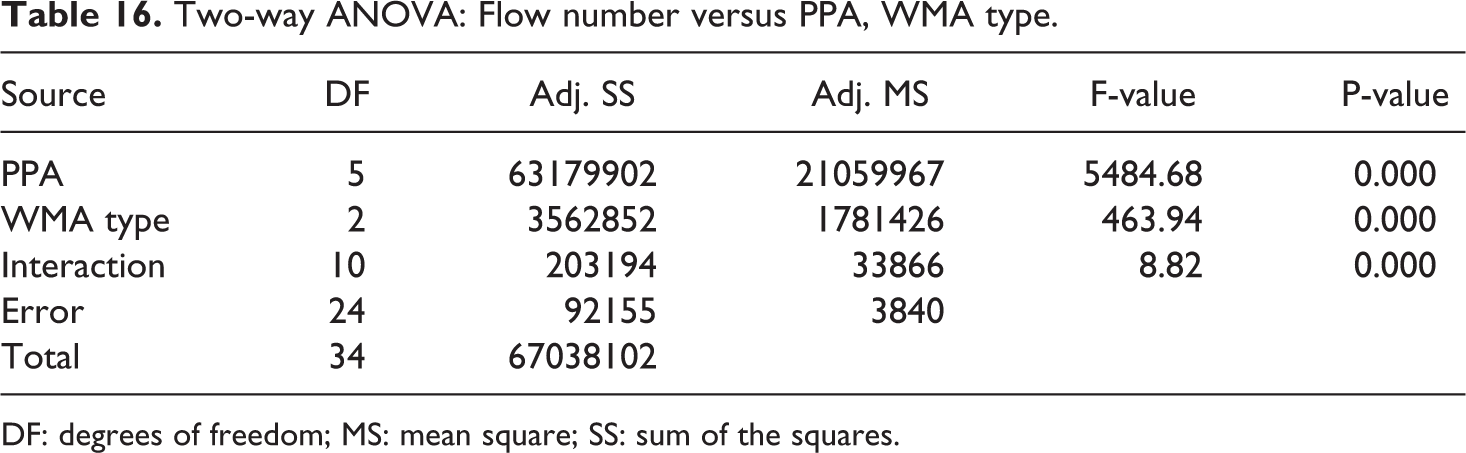
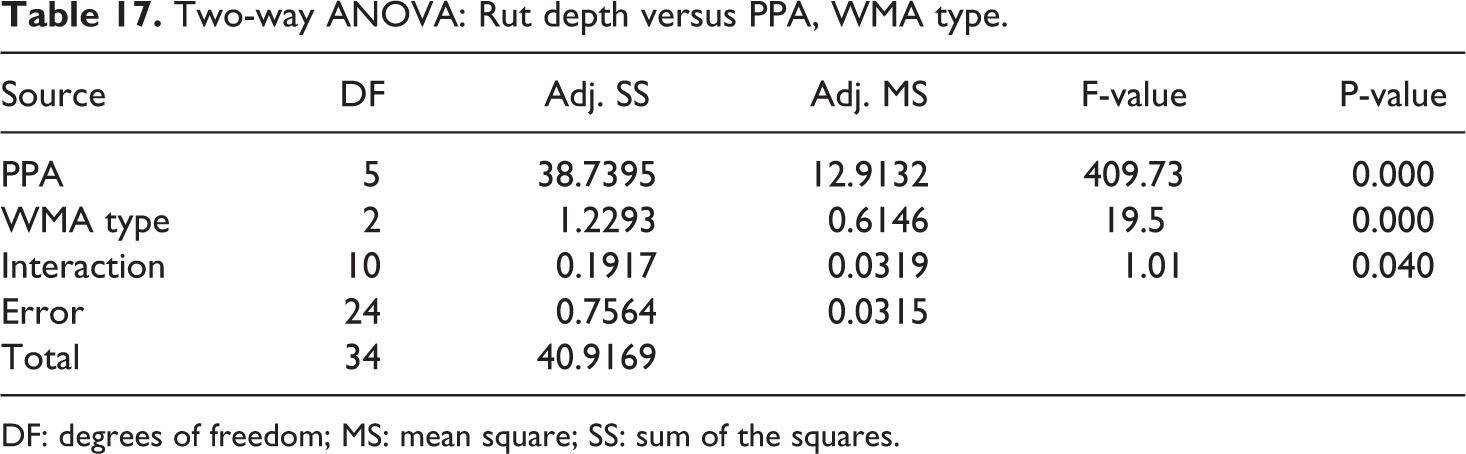
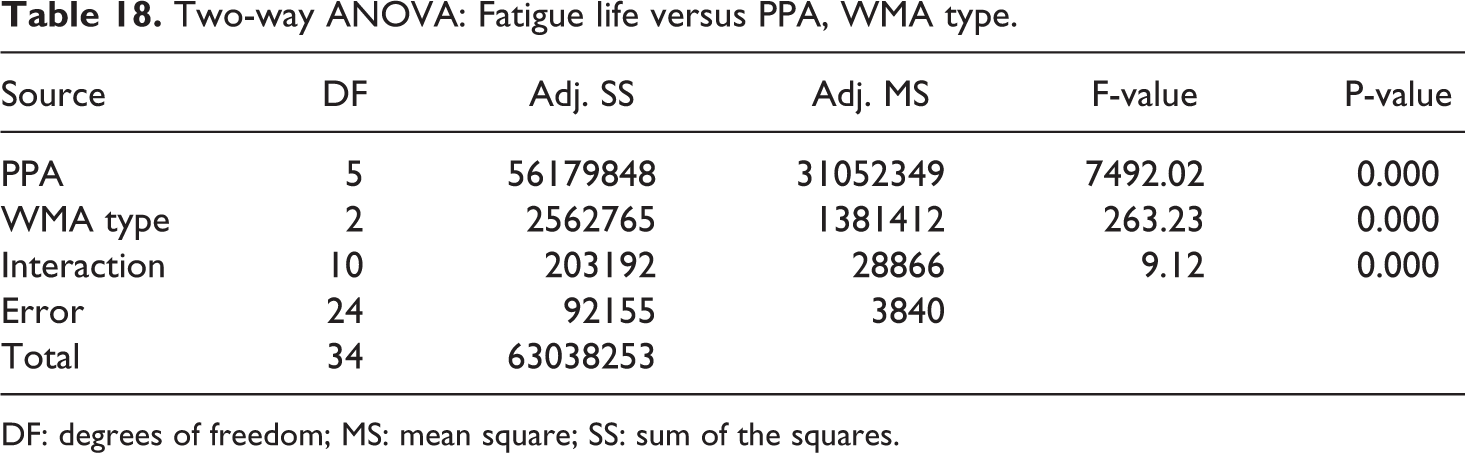
In the present study, a two-factor analysis of variance (ANOVA) was evaluated to analyze data. The resilient modulus, ITS, fatigue life, FN, and rut depth were determined as dependent variables. The two fixed factors are WMA type and PPA. The dependent variables were considerably affected by several admixtures of additive. The outcomes of ANOVA analysis were demonstrated in Tables 14 to 19. The results confirm that the PPA and WMA additive type have a meaningful influence on fatigue life, Mr, flow number, ITS, and rut depth specimens.
Two-way ANOVA: ITS versus PPA, WMA type.
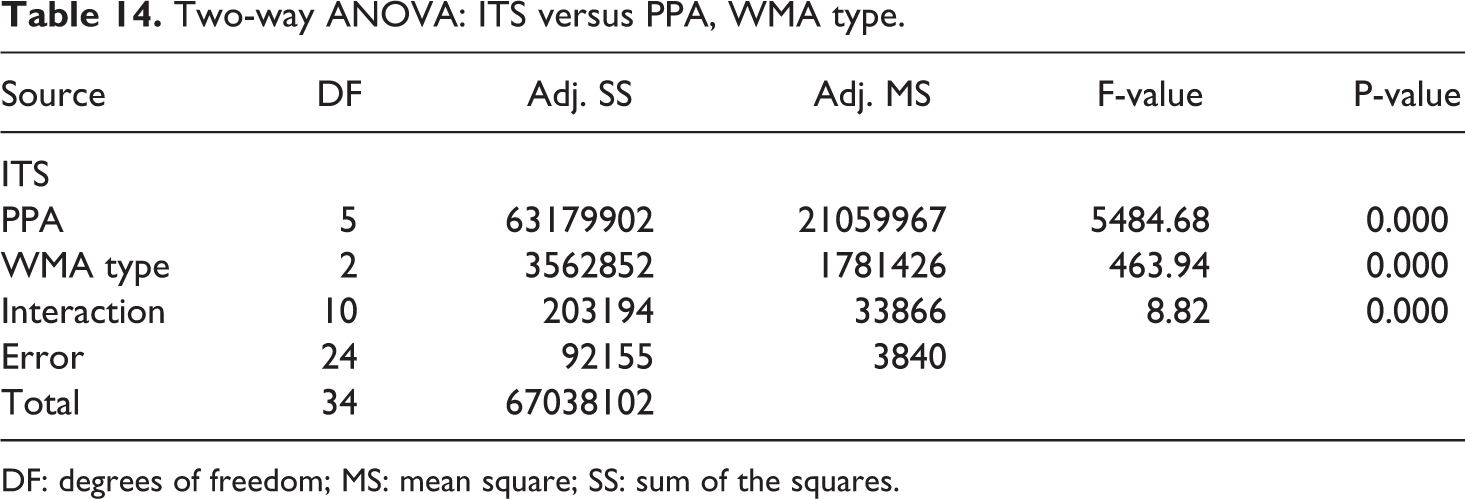
DF: degrees of freedom; MS: mean square; SS: sum of the squares.
Two-way ANOVA: Mr versus PPA, WMA type.
DF: degrees of freedom; MS: mean square; SS: sum of the squares.
Two-way ANOVA: Flow number versus PPA, WMA type.
DF: degrees of freedom; MS: mean square; SS: sum of the squares.
Two-way ANOVA: Rut depth versus PPA, WMA type.
DF: degrees of freedom; MS: mean square; SS: sum of the squares.
Two-way ANOVA: Fatigue life versus PPA, WMA type.
DF: degrees of freedom; MS: mean square; SS: sum of the squares.
Two-way ANOVA: Fracture energy versus PPA, WMA type.
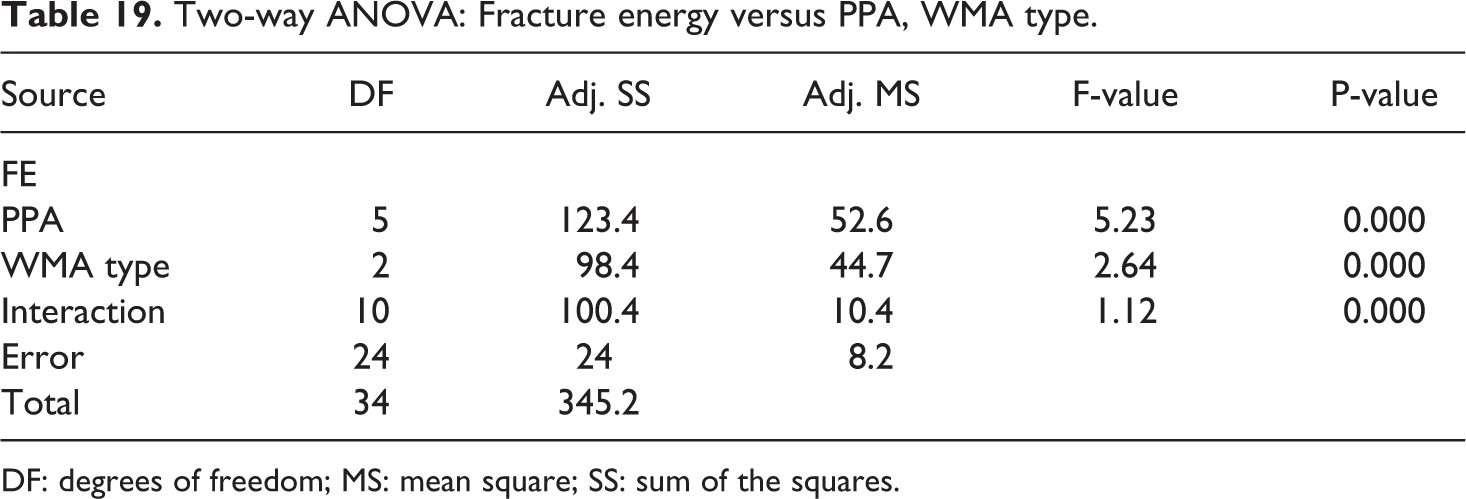
DF: degrees of freedom; MS: mean square; SS: sum of the squares.
Conclusion
The aim of the current study was to evaluate the influence of WMA additives on rheological behavior of bitumen, and performance of SMA mixtures containing by SBR/PPA additives. To reach this goal, the DSR, MSCR, LAS, ITS, Mr, Dynamic Creep, Wheel tracking, and Four-Point Beam Fatigue tests were implemented. The following conclusions can be derived from the results:
The utilization of SBR and PPA cause a decrease in the penetration degree of the binder, while increasing the softening point of binders, which may attribute to stiffens of the binder by utilization of SBR and PPA. Also by addition of SBR and PPA, the viscosity of samples increases. Increase in stiffness and viscosity of the asphalt binders after blending them with PPA is a result of concentration of asphaltenes and formation of insoluble materials due to using orthophosphoric acid and anhydrous phosphoric anhydride and increase in the amount of asphaltenes of high-molecular weight by converting the aromatics to resins and resins to asphaltenes.
Based on results, the rutting resistance of binders modified by SBR and PPA is enhanced, which demonstrates that the utilization of SBR and PPA makes binder stiffer. WMA additive and PPA when used together were able to effectively increase the rutting factor of the binder blend. These results support the use of WMA additive and PPA to enhance the resistance of binder to rutting. Although an acidic (PPA) and a basic agent were present in the blends, the addition of PPA was still capable of modifying the binder matrix and improving its stiffness by increasing the concentration of asphaltenes at the expense of saturates. Consequently, it is anticipated that mixes containing PPA and WMA additive would exhibit a higher rutting resistance compared to the mixes without any additives.
The utilization of SBR and PPA cause an enhance the fatigue behavior of binder. As the percentage of PPA increases, the fatigue resistance increases. A reduction in fatigue factor (G*.Sinδ) indicates that a binder blend becomes softer than the neat binder after long-term PAV aging with improved resistance to oxidation. For an asphalt pavement subjected to repeated loading of different magnitudes and frequencies, using an asphalt binder with improved oxidative resistance is expected to enhance the fatigue life of the pavement under different climatic conditions. 41 This is due to the presence of PPA in the mixes which reduced the rate of oxidative aging with time by forming the carbonyl and sulfoxide compounds in the initial stage of aging. 42 A reduction in OHI (Oxidative Hardening Index) values (The higher the OHI value, the more sensitive an asphalt binder to oxidative aging), confirms the reduction in oxidative aging as a result of using PPA in binder blends.
Based on MSCR test, the Jnr value of the base bitumen decreased by the addition of SBR and PPA. Addition of SBR and PPA increased the stiffness of binder. Increase in stiffness and viscosity of the asphalt binders after blending them with PPA is a result of concentration of asphaltenes and formation of insoluble materials due to using orthophosphoric acid and anhydrous phosphoric anhydride and increase in the amount of asphaltenes of high-molecular weight by converting the aromatics to resins and resins to asphaltenes. Furthermore, by increasing the content of PPA, the permanent deformation strength improve. Binders modified by Sasobit have lower Jnr values compared to binders modified by Zycotherm.
LAS test results indicated that, utilization of SBR led to enhance the intermediate temperature of base bitumen. Utilization of SBR increases the flexibility of bitumen, and consequently, the fatigue behavior of bitumen enhances. Also, the addition of PPA cause an increase in the intermediate temperature properties of binders. So that by the addition of PPA percentage the fatigue lives increase significantly. Increase in fatigue life indicates that a binder blend becomes softer than the neat binder after long-term PAV aging with improved resistance to oxidation. For an asphalt pavement subjected to repeated loading of different magnitudes and frequencies, using an asphalt binder with improved oxidative resistance is expected to enhance the fatigue life of the pavement under different climatic conditions. This is due to the presence of PPA in the mixes which reduced the rate of oxidative aging with time by forming the carbonyl and sulfoxide compounds in the initial stage of aging. A reduction in OHI (Oxidative Hardening Index) values (The higher the OHI value, the more sensitive an asphalt binder to oxidative aging), confirms the reduction in oxidative aging as a result of using PPA in binder blends. Based on results, the utilization of warm additives enhanced the fatigue performance of binders.
According to the ITS test results, ITS values of specimens modified by SBR additive were higher than the control mixture. By the addition of PPA to SBR modified binders, the ITS values decreased. Also, the ITS values decreases by an increase in PPA content. Utilization of WMA additives led to increase in ITS values of SBR/PPA modified mixtures.
The Mr test results indicates that, the utilization of SBR cause the resilient modulus to increase. This increment attributed to increase in flexibility of mixtures by the addition of SBR. Also, utilization of PPA causes a decrease in the Mr of samples. This is due to the stiffens of a binder with PPA. According to the results, utilization of Sasobit causes an enhance the resilient modulus of SBR/PPA modified binders. Whereas, mixtures containing Zycotherm nanotechnology have lower Mr values than mixtures containing SBR/PPA.
Based on the dynamic creep test, using SBR enhances the rutting behavior of mixtures. This could be due to the fact that by utilization of SBR, the potential of recovery of mixtures enhances, and as a result the ability of mixtures to recover their accumulated strain was improved. Results of MSCR test indicated that the addition of SBR and PPA increased the percentage of recovery of binders. Also, the utilization of PPA causes an enhance FN of samples, and moreover, by utilization of PPA percentage, the permanent deformation strength improves. Based on results, the utilization of PPA causes an enhance the stiffness and viscosity of samples, and then the permanent deformation performance enhanced. Increase in stiffness and viscosity of the asphalt binders after blending them with PPA is a result of concentration of asphaltenes and formation of insoluble materials due to using orthophosphoric acid and anhydrous phosphoric anhydride and increase in the amount of asphaltenes of high-molecular weight by converting the aromatics to resins and resins to asphaltenes.
Wheel track test results indicates that, SBR additives cause a decrease in the rutting depth of specimens. Results of MSCR test indicated that the addition of SBR and PPA increased the percentage of recovery of binders. Also, the addition of PPA enhanced the rutting behavior of mixtures and by an increase of PPA content, the strength of specimens against rutting enhances. Increase in stiffness and viscosity of the asphalt binders after blending them with PPA is a result of concentration of asphaltenes and formation of insoluble materials due to using orthophosphoric acid and anhydrous phosphoric anhydride and increase in the amount of asphaltenes of high-molecular weight by converting the aromatics to resins and resins to asphaltenes. Furthermore, the outcomes indicates that the utilization of WMA, the rutting of specimens increases. Among warm mixtures, Sasobit modified mixtures had the highest resistance against rutting. This is due to additional cross-linking effect of PPA with polymers, which provides stronger stability and higher stiffness to the modified binders.
According to the four-point beam fatigue test, utilization of SBR enhance the intermediate temperature performance of mixtures. The outcomes revealed that the utilization of PPA causes an increase in intermediate temperature behavior of specimens and by increasing the PPA additive content, fatigue lives of specimens increase. A reduction in fatigue factor indicates that a binder blend becomes softer than the neat binder after long-term PAV aging with improved resistance to oxidation. For an asphalt pavement subjected to repeated loading of different magnitudes and frequencies, using an asphalt binder with improved oxidative resistance is expected to enhance the fatigue life of the pavement under different climatic conditions. This is due to the presence of PPA in the mixes which reduced the rate of oxidative aging with time by forming the carbonyl and sulfoxide compounds in the initial stage of aging. Utilization of WMA with SBR/PPA modified binders causes an improve the fatigue behavior of specimens.
