




Abstract
This work evaluated the effect of Anti-Stripping Agents (ASAs) on performance behavior of bitumen and high and intermediate temperature performance of SMA mixtures modified by Poly Phosphoric Acid (PPA), Warm Mix Asphalt (WMA) and Styrene-Butadiene Rubber (SBR) additive. Through this paper, the AC-60/70 and AC-85/100 penetration grade bitumens were used as base bitumen. Moreover, three liquid ASAs (ASA (1), ASA (2), ASA (3)), PPA (1% by weight of bitumen), SBR (2% by weight of binder), and two types of warm mix additives (3% Sasobit and 0.3% Zycotherm) were used as a mixture modifier. For evaluating the performance behavior of bitumen, the rotational viscosity, Dynamic Shear Rheometer, and Bending Beam Rheometer, Multiple Stress Creep Recovery (MSCR), and linear Amplitude Sweep (LAS) tests were implemented. Moreover, Resilient Modulus (Mr), Indirect Tensile Strength (ITS), dynamic creep, wheel track, and Four-Point Beam Fatigue (FPB) tests were performed to investigate the performance of mixture samples. Based on the outcomes of the MSCR test, the utilization of SBR/PPA additive and ASAs decreased the Jnr value. Among modified binders, the binders modified by ASA (2) have the lowest Jnr value followed by binders modified by ASA (1) and ASA (3). According to the outcomes of LAS test, the utilization of ASAs leads to increase in the fatigue life of the original binder. According to the outcomes, the utilization of WMA additives and ASAs caused the Mr, ITS, rutting resistance, and fatigue life to increase. Among ASAs, the ASA (2) has the greatest influence on enhancing the performance of mixtures. Based on results, Sasobit additive has a better effect than Zycotherm on enhancing the properties of samples.
Keywords
Introduction
Fatigue and rutting are two primary distress which occurs on pavements. In recent years, several pavement experts attempt to reduce the severity and amount of these types of binders. Also, several research was implemented to suggest a relevant rheological factor that can precisely capture the intermediate and high performance of the bitumen. The performance grade system suggests the (|G*|/Sind) and (|G*|.Sind) parameters to investigate the intermediate and high performance of bitumens, correspondingly. Several research was proved that these two parameters lack the ability to measure the fatigue and rutting performance of bitumens and have poor relationships with mixture performance. Pavement researches proposed a new test method to better measure the rutting and fatigue behavior of binders named MSCR and LAS tests.1–2
Many pavement researchers3–10 concluded that it is needed to modify binders to resist against distresses. Numerous additives including Crumb Rubber (CR),3,4 Styrene-Butadiene–Styrene (SBS), 5 Polyolefin Elastomer (POE), 6 Polypropylene (PP), 7 Styrene-Butadiene Rubber (SBR), 8 Polyethylene (PE) 9 and nanomaterials 10 such as nano carbon fiber 11 and nano clay were utilized to improve the behavior of bitumens. Several pavement researchers8–13 were shown that utilization of polymer to modify binder led to an enhancement in rutting, fatigue behavior, thermal cracking, moisture resistance, and lower temperature vulnerability. Among the mentioned polymers, styrene-butadiene rubber (SBR) is commonly utilized in the pavement industry.12,13
A useful modifier should enhance the performance of bitumen against a series of failures. According to the previous studies,4,12,13 modification of mixtures with only one additive cannot improve the behavior of mixture. So it is need to modify mixtures with more than one additive, which may lead to enhance the behavior of pavement due to multiple interactions. 4 So in the current study, modification of binder by SBR and PPA was evaluated.
SBR is one of the beneficial and effective additives to modify base binders. Several research indicated that the utilization of SBR enhances the performance of asphalt mixtures. Based on the literature, using SBR led to an improve in Low-temperature performance, elastic recovery, and the adhesive and cohesive performance of binder to aggregate and increase viscosity. Nevertheless, along with the mentioned benefits of using SBR, the permanent deformation resistance and storage stability of SBR-modified bitumens is poor under high traffic loading in hot areas, which restricts the utilization of this additive in such areas. 4
Poly Phosphoric acid (PPA), an oligomer of H3PO4, is one of the most important additives which can be used alone and also with a combination of other additives in the modification of the base binder. As several research indicated, the addition of PPA is capable of enhancing the high-temperature performance or storage stability of SBR-modified asphalt because of the gelation effect, however, this conclusion is still in question. The thermal-deformation temperature of PPA is above 300°C, and it can maintain its superior strength, hardness, fatigue resistance, and creep resistance in a wide temperature range and high-humidity environment.14,15 Based on the low price of PPA, the utilization of PPA to make an SBR-modified binder led to a decrease in the amount of SBR percentage. Furthermore, only a few published research investigated the PPA influence on the rheological performance of bitumen at high and intermediate temperatures through MSCR and LAS tests.
Several studies in the past performed on investigation of the influence of PPA on the properties of binder and mixture.16–24 The outcomes revealed that the utilization of PPA reduced the penetration grade and increased the softening point, viscosity, resilient modulus and also improved the high and low-temperature behavior of the binder.16,18,19,22,25,26 In a research performed by King et al. and Bishara et al.,19,25 the utilization of amine-based ASA in a mixture including PPA- modified bitumen, reduced the moisture susceptibility resistance and also stiffness of mixture based on acid–base interaction.
A useful modifier should enhance the performance of bitumen against a series of failures. According to the previous studies,4,12,13 modification of mixtures with only one additive cannot improve the behavior of mixture. So it is need to modify mixtures with more than one additive, which may lead to enhance the behavior of pavement due to multiple interactions. 4 So in the current study, modification of binder by SBR and PPA was evaluated. Several additives were used to modify and enhance the performance of binders and mixtures, including: Rejuvenators, liquid Anti-Stripping Agents (ASA), polymers, Poly Phosphoric Acid (PPA), and hydrated lime. Several research in a past studied the effect of SBR, PPA, WMA additive, and ASA on performance behavior of bitumen and mixture when the mentioned additives were utilized separately.22,24,27,28–32 But not many studies investigated the effect of the mentioned additives simultaneously. The simultaneous use of SBR and PPA enhances the performance characteristics of the asphalt mixture and causes an increase in viscosity and mixing and compaction temperatures.27,33 In our previous researches,34–36 it is stated that the utilization of warm additives such as Sasobit and Zycotherm nanotechnology led to a decrease in the mixing and compaction temperatures. For this reason, utilization of these WMA additives are essential and environmentally sustainable in modifying and lowering the mixing and compaction temperatures of SBR/PPA modified mixtures. Consequently, it is important to evaluate the rheological behavior of SBR/PPA bitumens modified by warm additives. On the one hand, as several research mentioned before,23–27,33,34 the utilization of warm additives may have a negative impact on moisture susceptibility resistance of mixtures. On the other hand, the utilization of ASAs is one of the usual techniques to enhance the performance of pavements against water damage. However, not all ASAs are appropriate to be utilized in all mixtures. Furthermore, additional research was needed to assess the effect of ASAs on the rheological behavior of bitumens and performance of mixture containing PPA, WMA, and SBR.
Hurley evaluated WMA moisture susceptibility using three different additives (Sasobit®, Aspha-min®, and Evotherm®). Investigating the useful effects of ASAs on moisture susceptibility of WMA mixtures, hydrated lime showed improved resistance to moisture damage of the Aspha-min® and Sasobit samples. 37
Xiao et al. measured the moisture susceptibility of the mixtures containing anti-stripping and WMA additives. The anti-stripping agents were lime and two liquid ASAs added to WMA mixtures prepared with Aspha-min and Sasobit. The liquid ASAs have more moisture susceptibility than hydrated lime regardless of WMA additives and aggregate types. 28
Khodaii et al. evaluated the effect of preparation of asphalt mixtures with Zycosoil as an anti-stripping agent on moisture sensitivity of them. Moisture susceptibility was explored using the surface free energy method and laboratory dynamic modulus test. The method explores effective mechanisms of adhesive bond between the aggregate and the asphalt binder. With application of Zycosoil ASA, the required free energies of adhering asphalt bitumen to aggregate in dry and saturated conditions become more close to each other. Consequently, this leads to more moisture damage resistance of the mixture. 38
Hesami et al. studied the effect of using hydrated lime as anti-stripping additive on moisture susceptibility of WMA mixtures prepared with Sasobit and Aspha-min in a similar way. The results of the surface free energy method suggest that hydrated lime improves the adhesion between the asphalt binder and aggregate and decreases the moisture susceptibility of the mixtures. 39
Arabani et al. used surface free energy method for predicting moisture resistance of warm mix asphalt (with Sasobit and Aspha-min) modified with Zycosoil. With application of surface free energy and dynamic modulus results, an index was defined for comparing the moisture damage level of mixes. The result showed that WMA decreases free energy base components of bitumen which leads to increase of mixture moisture susceptibility. In addition, an increase in wet to dry dynamic modulus ratio was obvious for Zycosoil-contained samples in comparison with WMA mixes. 40
Xiao et al. studied the effect of long-term aging on WMA mixtures prepared with moist aggregates, 1 and 2% lime by weight of dry aggregates as anti-stripping, one liquid ASA, and five WMA additives (Aspha-min, Cecabase, Evotherm, Rediset, and Sasobit). They indicated that the resistance of WMA mixtures against moisture damage was improved with long-term aging. The aggregate type had a key role in controlling ITS values. 41
Kavussi et al. investigated the effect of aggregate gradation, hydrated lime, and Sasobit additive on moisture damage using indirect tensile tests and response surface method. The results indicated that dry samples had better mixing with binder than wet samples. The TSR value of samples with lime content ranging from 1.1% to 2.5%, Sasobit content from 0.5% to 2.5%, and fine aggregates from 66% to 74% was greater than 80%. 42
In a study performed by Singh et al, 43 effects of different WMAs (wax, chemical, and zeolite based) on intermediate temperature fracture properties of PPA- and RET-modified asphalt binder using a double-edge notched tension (DENT) test were evaluated. It was found that chemical-based WMA may significantly improve the fracture properties of control binder. On the other hand, wax-based WMA may have a negative impact on the fracture properties of control binder. Likewise, zeolite-based WMA was found to improve the fracture properties of control binder by a marginal amount. Although the use of WMA may reduce the energy requirement, it may increase the moisture damage potential. To protect the asphaltic mixture from moisture damage, use of lime has been conventionally recommended. Therefore, the effect of lime on fracture properties of various asphalt binder combinations was also examined. It was found that irrespective of the asphalt binder combination, addition of lime may produce a negative impact on fracture properties of control binder with or without WMA.
In another study which was performed by Xiao et al., 44 the effects of two aggregate sources; SBS and five other modifiers; and three anti-stripping additives (ASAs) on rheological behavior of binder and rutting performance of mixture were evaluated. Asphalt pavement analyzer (APA) and Hamburg wheel tracker (HWT) were used to investigate the rut resistances of these alternative modified asphalt mixtures. It was found that the APA and HWT rut depths of all alternative modified mixtures met the requirements of rut resistance, and these values were typically located in the range of 1–3 mm regardless of polymer type, ASA type, and aggregate source. The ASAs used in this study were effective and did not display significant differences in rut-resistance values from various polymerized mixtures. Simple logarithmic formulas for HWT rut depth during the loading process and the normal distributions of rut depths were developed in this study.
In another study performed by Ghabchi et al., 45 the effect of Polyphosphoric Acid (PPA) on rheological properties of different grades of asphalt binders containing a chemical Warm Mix Asphalt (WMA) additive in presence and absence of a liquid Anti-Stripping Agent (ASA) were evaluated. Also, the effect of chemical WMA additive, PPA and ASA on rutting and moisture-induced damage potential of asphalt mixes was evaluated. Polymer modified and non-modified asphalt binders were blended with different amounts of PPA, WMA additive, and ASA and tested in a Dynamic Shear Rheometer and a Bending Beam Rheometer. The results indicated that blending WMA additive and PPA with all tested binders increased their rutting and fatigue resistance. However, blending PPA with asphalt binders in presence of the WMA additive and ASA was found to reduce their resistance to fatigue cracking. Also, the use of WMA additive, ASA and PPA was found to reduce the effectiveness of the PPA in bumping the high-temperature Performance Grade (PG) of asphalt binder with an insignificant effect on low-temperature PG. Furthermore, conducting Hamburg wheel tracking and indirect tensile strength ratio tests on asphalt mixes containing WMA additive, PPA and ASA showed a low susceptibility to rutting with no significant indication of moisture-induced damage.
In another study performed by Omrani et al., 46 the moisture susceptibility of unmodified and SBS-modified hot and warm mix asphalt mixtures were investigated. To this end, two different WMA additives including Aspha-min and Sasobit were employed to fabricate WMA specimens. The moisture susceptibility of warm polymer modified asphalt (WPMA) mixes was evaluated using modified Lottman test at 25°C according to AASHTO standard (T 283). In addition, the effect of different percentages of hydrated lime (from 0% to 2%) and Zycosoil (from 0% to 0.1%) as anti-stripping additives on the moisture susceptibility of the mixtures was explored. Based on the ITS test results, WPMA prepared with Sasobit additive and polymer modified asphalt (PMA) mixes satisfied the desirable tensile strength ratio (TSR) (above 80%) but Aspha-min WPMA mixes had TSR lower than 80%.
Based on the reviewed literatures, it seems that no comprehensive study has been conducted on the effect of simultaneous application of anti-stripping agents and polymer additives (SBR/PPA) on the moisture susceptibility of WMA mixtures. This study aims to explore the effect of selected ASAs on the rheological properties of binder and performance of SBR/PPA composite polymer blends containing WMA additives.
Objectives
The aim of the current work is to investigate the influence of ASAs on the properties of bitumens and mixtures containing warm additives, PPA, SBR. In current work, the effect of ASAs (ASA (1), ASA (2), ASA (3)) on performance properties of two types of original bitumen (AC-60/70, AC-85/100) and mixture modified by SBR (2% by weight of binder), PPA (1% by weight of binder) and two warm additives (3% Sasobit and 0.3% Zycotherm) were investigated. The performance of binder was investigated based on rotational viscosity, DSR, MSCR, and LAS tests. Also, to evaluate the performance of SMA’s, the ITS, Dynamic Creep, Mr, and FPBF tests were implemented.
Materials and methods
Materials used
Aggregates
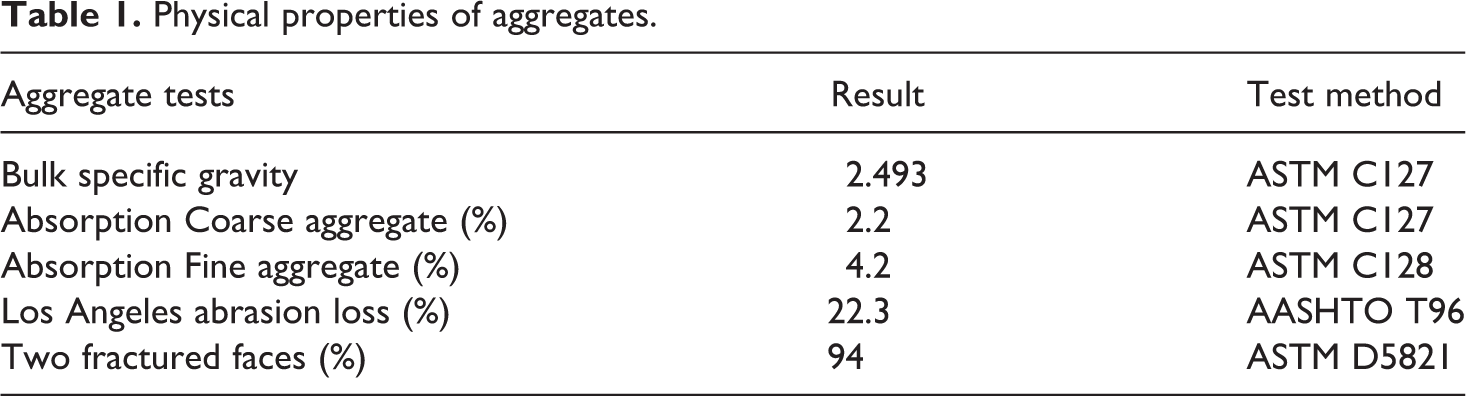
To supply aggregates for the fabrication of samples, a new query in Tehran was utilized. The aggregate’s physical and chemical properties are shown in Tables 1 and 2, respectively. Figure 1 shows the distribution of aggregates with a nominal maximum aggregate size of 12.5 mm.
Physical properties of aggregates.
Chemical properties of aggregate.

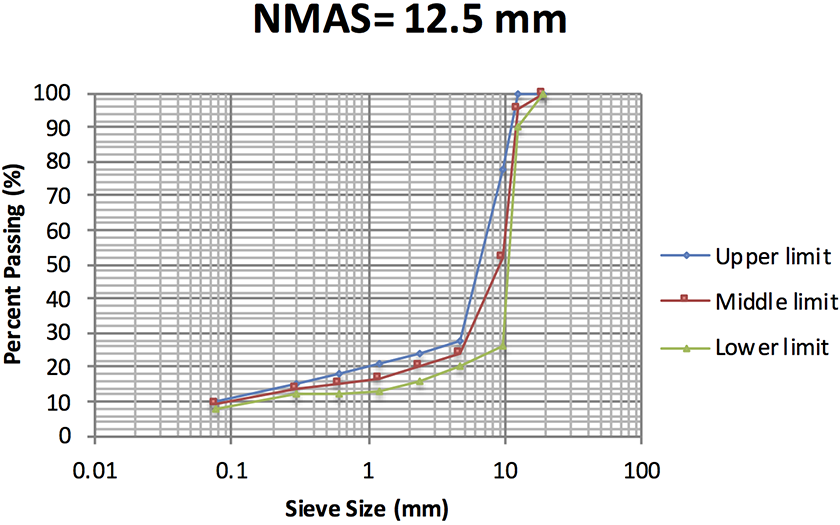
Aggregate distribution with NMAS = 12.5 mm.
Bitumen
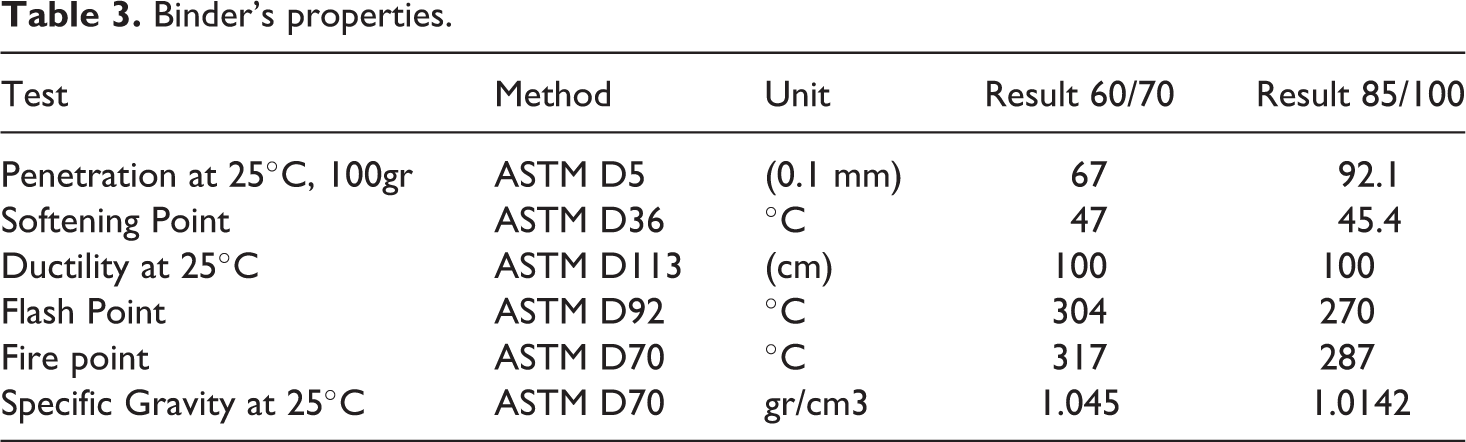
Two types of original bitumen AC-60/70 and AC-85/100 were used, and Table 3 shows the properties of bitumens. The binder AC-60/70 and AC-85/100 were indicated by binder (A) type and (B) type, respectively.
Binder’s properties.
Fiber
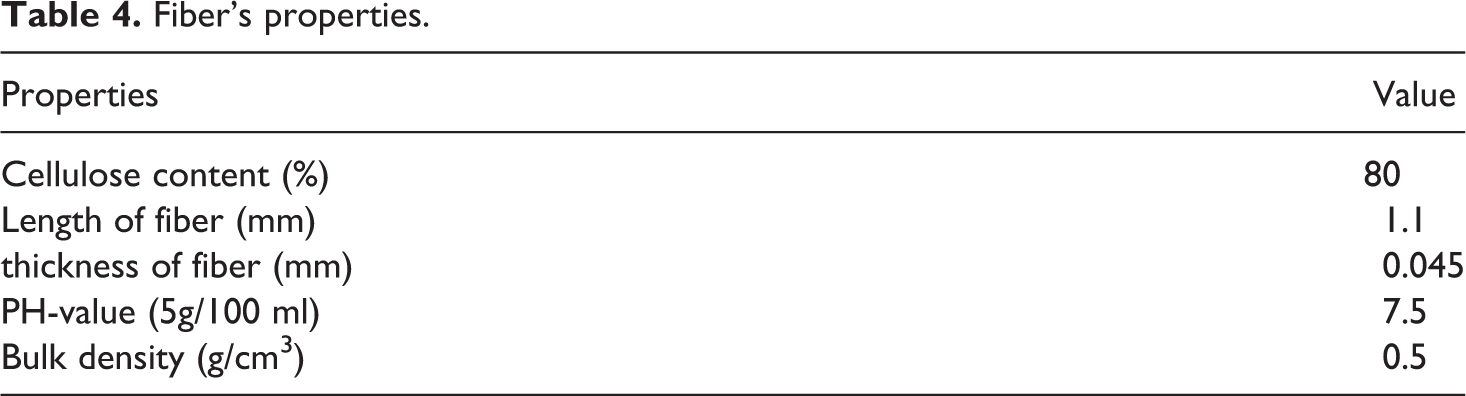
Fiber is typically added to prevent drain down. The optimum binder content was chosen based on the documented results from the National Cooperative Highway Research Program (NCHRP) Report No. 425. 47 This study suggests that it is better to use 0.3% cellulose fiber to eliminate drain down of bitumen. Table 4 tabulates the properties of the fiber.
Fiber’s properties.
Polymer
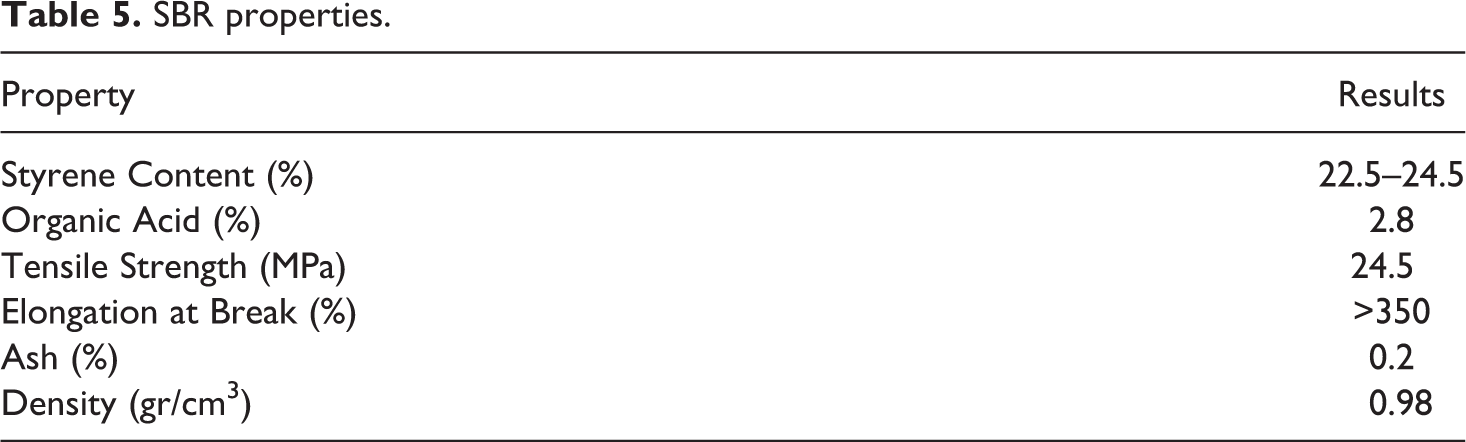
SBR was provided from Pasargad oil refinery, and its properties were shown in Table 5.
SBR properties.
PPA additive
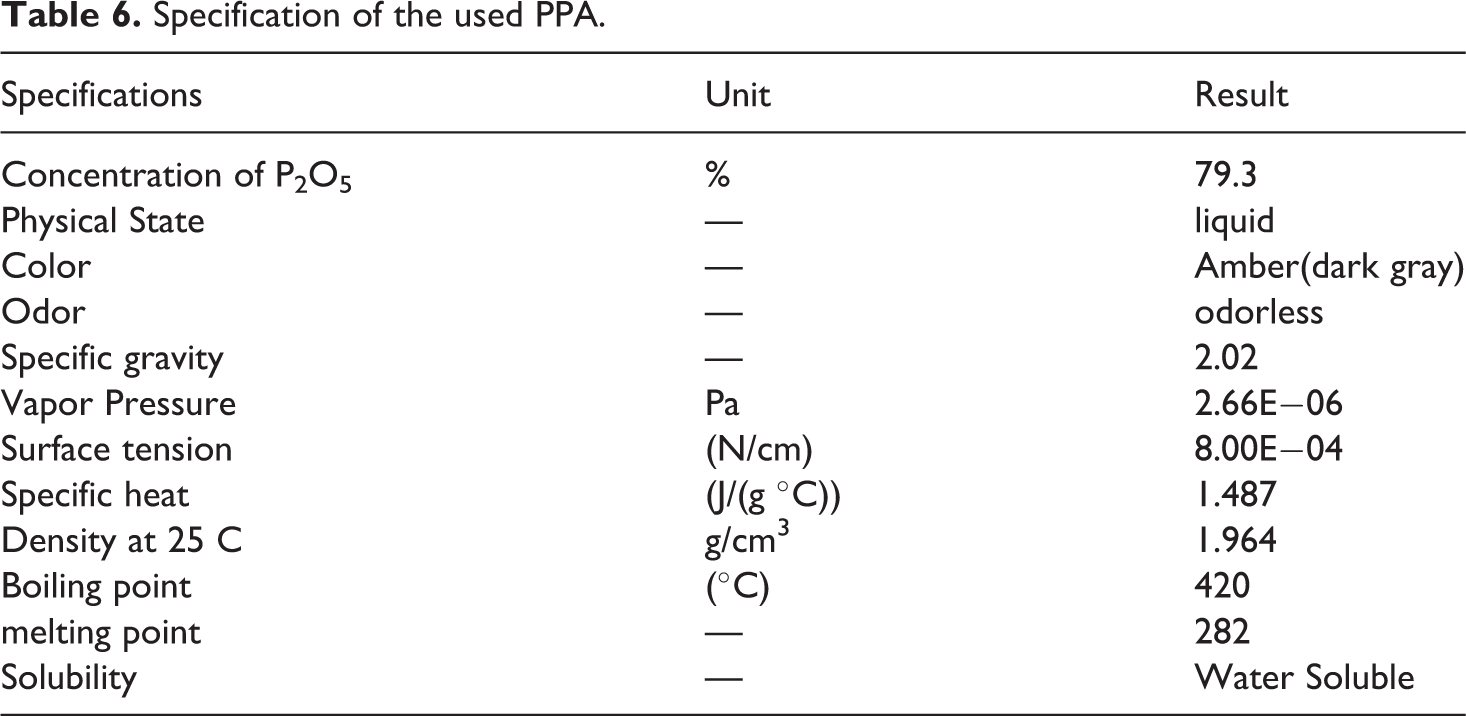
PPA was provided as a chemical modifier from the R&D research center of the Pasargad Oil Refinery. Table 6 shows the properties of the used PPA.
Specification of the used PPA.
Warm additives
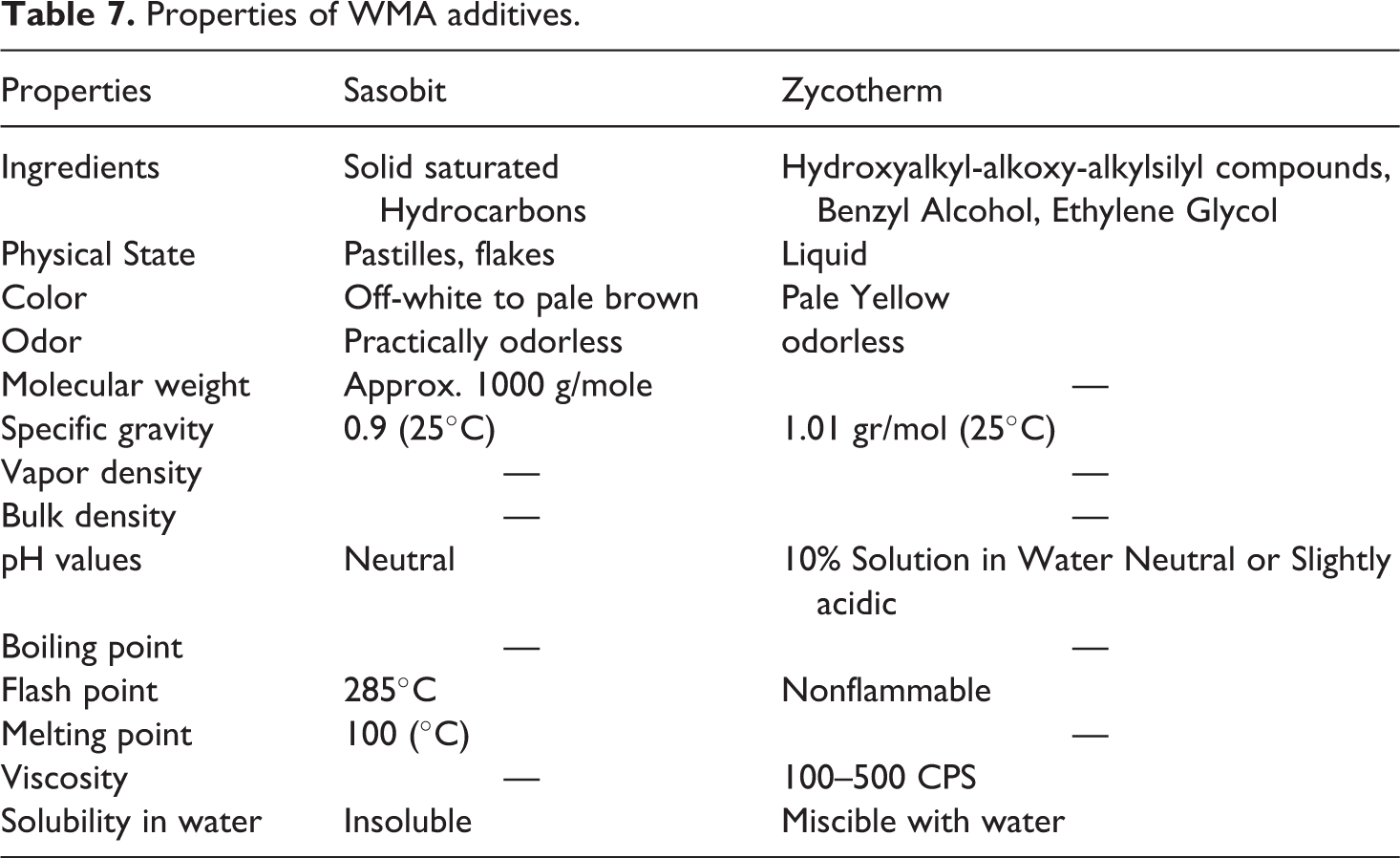
To evaluate the influence of warm additives on behavior of PPA/SBR composite modified asphalt binders, two warm additives (Sasobit and Zycotherm nanotechnology) were utilized. Table 7 shows the properties of the mentioned warm additives.
Properties of WMA additives.
ASAs
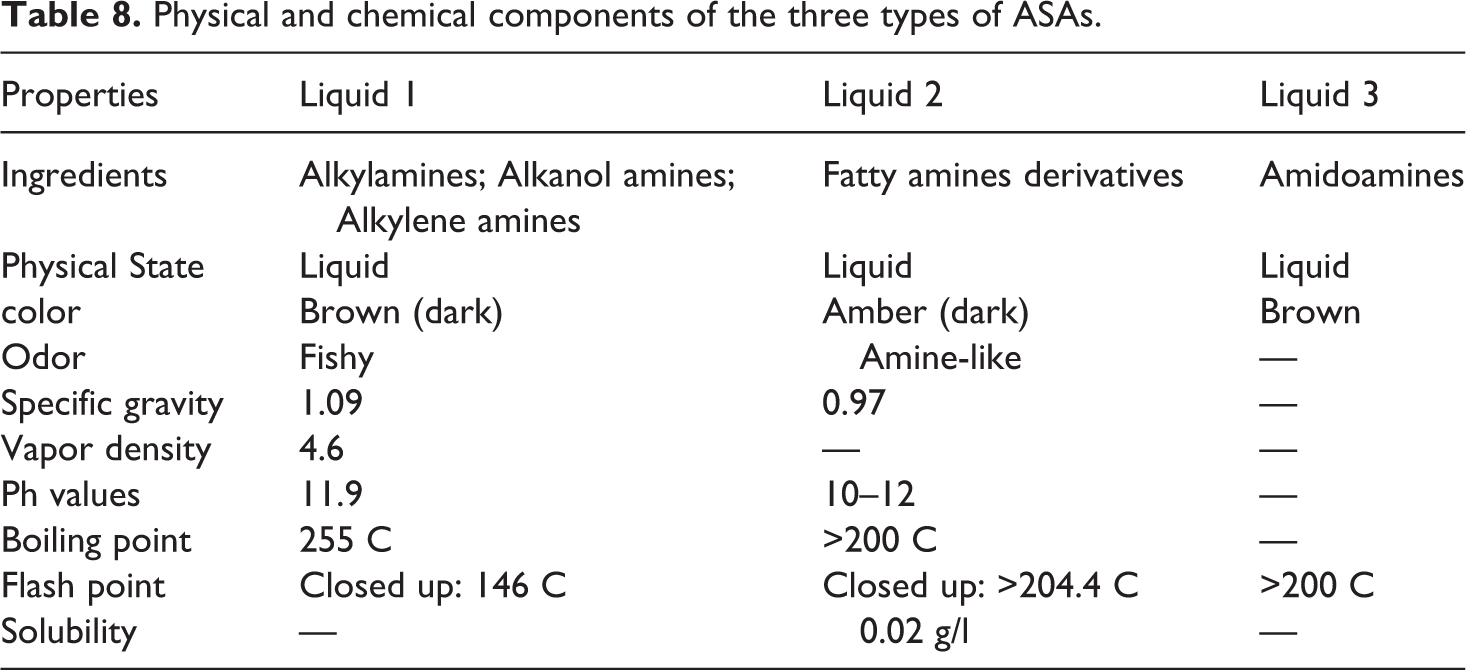
Three types of liquid ASAs, were used in this research. In current work, 0.3% of each ASA was used to modify binder. The properties of used ASAs are shown in Table 8.
Physical and chemical components of the three types of ASAs.
Sample preparation
To fabricate SBR/PPA modified bitumens, the high shear mixer was used. At first, the original binder was heated to 125°C in a specific container. Then the SBR (2% by weight of original asphalt) was added gradually and blended for 50 minutes using a high shear mixer at 130°C temperature and the speed of 4000 rpm. After that, a definite amount of PPA (1.0% by weight of binder) was added to the mentioned SBR-modified binder. Then the SBR/PPA binder was heated up to 160°C and blended for 40 minutes utilizing high shear mixer speed of 4000 rpm. After these procedures, the SBR/PPA modified binders were made. In the end, the warm additives were added. Several research was proposed a temperature of 140–160°C for the mixing of polymer modified binders with WMA additives.31,48–50 Consequently, a temperature of 155° was assumed for preparing warm modified binders. High shear mixer with a speed of 500 rpm was used for 30 minutes to mix WMA additives. For blending ASAs with modified binders, the high shear mixer with a rotational speed of 1000 Rpm was used for 45 min according to previous researches.51–54
Table 9 shows the sample identification of modified bitumens.
Sample Identification of modified bitumens.
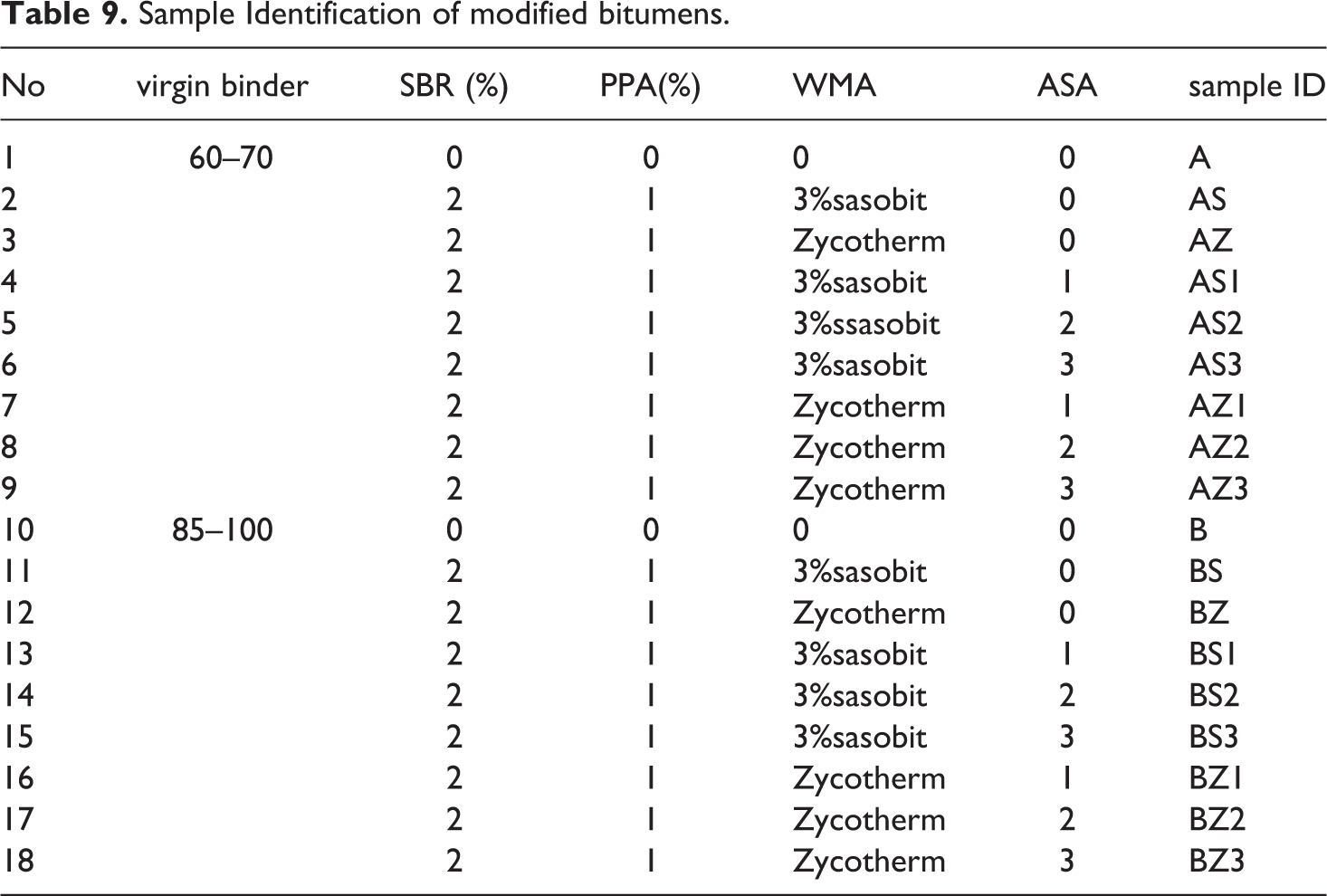
The NCHRP Report No. 425 was used to design mixtures. 37 Based on the mix design of mixtures, the 7.5% binder content was determined as an optimum binder. In current research for each additive type with different percentages, three replicates were fabricated.
Experimental method
Conventional and rheological binder tests
The ductility, softening point, and penetration tests were performed to investigate the physical properties of different bitumens. Also, to investigate the rheological performance of bitumens, the RV and DSR tests were implemented. The dynamic shear rheometer test at the frequency of 10 rad/s (1.6 Hz) was conducted at required high temperature 52°C for control of permanent deformation at high temperatures. Original and RTFO aged asphalt binder samples are tested at the maximum design temperature to determine the binder’s ability to resist rutting. For the rutting resistance, a high complex modulus G* value and low δ are both desirable. According to ASTMD2872 recommendations for control of permanent deformation (rutting), the G*/ Sin(δ) at high-performance temperature (HT) for unaged bitumen and residue aged bitumen after rolling thin film oven (RTFO) test should be more than 1 kPa and 2.2 kPa, respectively. The greater the G*/sinδ is, the better performance the rutting resistance at high temperature is.
According to AASHTO T315, the G*/sinδ parameter is evaluated using the Dynamic Shear Rheometer (DSR) at the frequency of 10 rads (1.6 Hz). An 8-mm-diameter plate with a 2-mm testing gap or a 25-mm-diameter plate with a 1-mm testing gap is utilized in this test. The selection of the testing geometry is based on the operational conditions, so that generally the 25-mm plate geometry is being used at high temperatures (46–82 C) and the 8-mm plate geometry is being used at low and intermediate temperatures (13–31 C). According to AASHTO T315, to control the fatigue cracking of asphalt binder, G*. Sin δ should be less than 5000 kPa for aged binder obtained from Rolling Thin Film Oven (RTFO) and Pressure Age Vessel (PAV) tests. The dynamic shear rheometer test was performed at the frequency of 10 rad/s (1.59 Hz) at a temperature of 25°C to evaluate fatigue behavior of binder. Rotational viscosity test was conducted in order to be certain of bitumen pumping and bitumen mixing with hot aggregates. According to ASTM D4402 recommendations, bitumen viscosity should be less than 3.0 Pa.s at 135°C.
MSCR test
In current work, to calculate the strength of bitumens against permanent deformation, the MSCR test was performed according to AASHTO TP 70 “Multiple Stress Creep Recovery (MSCR) Test of Asphalt Binder Using a Dynamic Shear Rheometer (DSR).” The high PG temperature of bitumens was used to implement the MSCR test on RTFO aged bitumens. 55 Anton Paar DSR with its parallel-plate geometry loading device and a control and data acquisition system were utilized for conducting the MSCR test in the present study. Specimens were tested in replicates using a 25-mm disc and with 1-mm gap setting at temperature of 64°C and at a stress of 100 and 3200 Pa. The tests were performed at the selected temperatures using a constant stress creep of 1 second duration and a relaxation period of 9 seconds, for 10 cycles at each stress level. Percent recoverable and non-recoverable components of creep compliance were determined at the end of 10 cycles. 33 A typical schematic diagram of stress application and accumulation of strain in response to applied stress may be found elsewhere. 34
Initial strain (εo) value at the beginning of creep portion of each cycle and strain value at the end of creep portion (εc) of each cycle were determined. The difference in both strains is known as adjusted strain (ε1). Similarly, strain values (εr) at the end of recovery portion of each cycle, and adjusted strain value (ε10) at the end of recovery portion of each cycle, were computed. The adjusted strain value (ε10), percentage recovery, and non-recoverable compliance were calculated for 10 cycles at each constant stress level using the following formulae:



whereas non-recoverable creep of kPa−1, as noted in Eq. 7, measures the residual strain in a specimen after a creep and recovery cycle divided by the stress applied, and indicates the resistance of an asphalt binder to permanent deformation under repeated load. Where γu is the unrecovered strain from the end of the 9-seconds recovery portion of the creep and recovery test, τ is the shear stress applied during the 1-second creep portion of the creep and recovery test. Creep and strain measurements were recorded for different stress levels. Creep recovery test determines the mechanical properties of asphalt binders and creep compliance of asphalt cement and can be used to predict rutting of asphalt mixtures.34,35
LAS test
In order to evaluate the fatigue resistance of binder, the LAS test was performed. It composed of two stages. In the first stage the frequency sweep test was run to measure the undamaged rheological material properties at a very low strain amplitude of 0.1% and in the second stage the linear amplitude sweep test was run, loading begins with 100 cycles of sinusoidal loading at 0.1% in an intermediate temperature. Each successive loading step consists of 100 cycles at a rate of increase of 1% applied strain until it reaches 30% applied strain. The fatigue life is calculated using the following equation: The mentioned test was performed according to AASHTO TP 101-14 56 standard. To evaluate and measure the fatigue life of different binders, equation (4) was used:

where A and B are coefficients of equation measured based viscoelastic continuum damage theory (VECD). The test was implemented at 25°C. 47 Two replicates were fabricated for each set of binder and the results presented subsequently are the average value of the two replicates.
Performance test
ITS test
In current work the ITS test was implemented to investigate the water vulnerability of samples according to ASTM D6931-12 standard. In this test the cylindrical samples were placed in two loading strips and a compressive load was applied along a diametrical plane which can generate a relatively uniform tensile stress and acts perpendicular to the applied load plane. The loading was continued until the specimen failed. The ITS of samples were calculated through equation (5)28,32,37–41:

where, ITS shows the indirect tensile strength of mixture (kPa); Pmax, indicates to the maximum load (kN); D refers to the diameter of the samples (mm); t indicates the thickness of the specimens (mm).
Resilient modulus
The ASTM D 4123 standard was used to perform the Mr test. Then specimens were tested at a temperature of 25 °C using a haversine load pulse at 1 Hz with a 0.1-s loading and 0.9-s rest period. The estimated poison ratio was assumed to be 0.35 and the maximum applied load was set to 570 N with 100 repetitions for preconditioning. The Mr of samples were calculated through equation (6) 31 :

where; Mr indicates resilient modulus (MPa), P indicates load (N), t refers to the thickness of specimen (mm), δ indicates the recoverable horizontal deformation (mm).
Dynamic creep test
The rutting resistance of samples in this research were investigated based on US.NCHRP 9-19. The test was run at a temperature of 50°C on samples which were preconditioned on the room of Universal Testing Machine (UTM). The stress level of 450 KPa with 0.1 s loading and 0.9 s unloading time was utilized to evaluate the permanent deformation resistance of specimens. The Flow Number (FN) of specimens were measured through this test.
Wheel tracking test
The wheel tracking test was conducted employing the Hamburg wheel tracking device for evaluation of pavement performance in high temperature. Specimens, which were mixed with the determined asphalt contents from mix design and fabricated by the rolling machine, were of dimensions 300 mm × 300 mm in cross-sectional area and 50 mm in height at an air void ratio of about 7%. According to AASHTO-T324. 57 The wheel tracking test was performed using 5.5 kg/cm2 wheel pressure at 60°C temperature under wet condition. The wheel shall make 22 passes across the specimen per minute. Rut depth of asphalt mixtures was measured for 20,000 passes of 5.5 kg/cm2 loaded wheels at 60°C.
Four-point bending fatigue tests
The fatigue life of mixtures were measured according to the AASHTO T321-07. In the current work, strain-controlled test was utilized for evaluating the fatigue properties of samples. The final sizes of fabricated beams were 380*63.5*50 mm based on the AASHTO T321-07 standard. The schematic of the test set up is indicated in Figure 2. The equations (7–10) were utilized to calculate the flexural stiffness of specimens43–45:



where,
The fatigue life of the sample was obtained based on equation (10):

where, Nf is fatigue life of specimens; ∊ is applied levels of micro strains; a and b are coefficients.
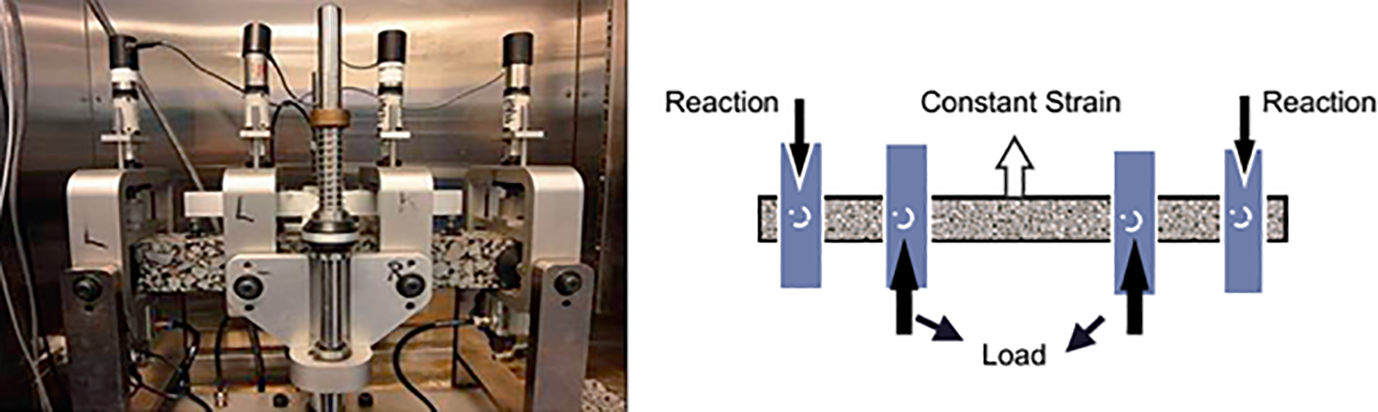
The setup and sketch of four-point bending fatigue test.
Results
Results of binder test
Physical and Rheological binder test result
Figures 3 and 4 indicated the results of physical bitumen tests of original and modified bitumens. Based on the outcomes revealed in Figures 3 and 4, the utilization of ASAs led to a decrease in the penetration degree of the binder, while increasing the softening point of binders, which may attribute to stiffens of the binder by utilization of ASAs. One possible reason is that with the introduction of ASA, a chemical reaction between nitrogen groups of amine ASAs and polar groups of asphalt binder occurs and forms compounds with no anti-stripping property, 58 which leads to the increasing viscosity. As a result, the binder became stiffer. Among modified binders with WMA additives, the binder modified by Sasobit has lower penetration values than Zycotherm modified binders. ASA (2) have a greater impact on reducing the penetration of bitumens in both warm modified bitumens. According to the outcomes, the penetration degree of samples with 85–100 original binder is higher than the ones with 60–70 binder. Results indicated that the penetration values of binders decrease by the utilization of ASAs. Also, the ASA (2) have a greater influence on decreasing the penetration grade of 85–100 bitumens between different ASAs. According to the outcomes, by utilization of modifiers, the binders became stiffer, and consequently, the strength of mixtures versus permanent deformation enhances. Also, results of the softening point revealed that the utilization of ASAs cause an enhance in the softening point of mixtures. The ASA (2) have the highest softening point between different ASAs. Among WMA mixtures, the binders modified by Sasobit have a higher softening point than Zycotherm modified binders.
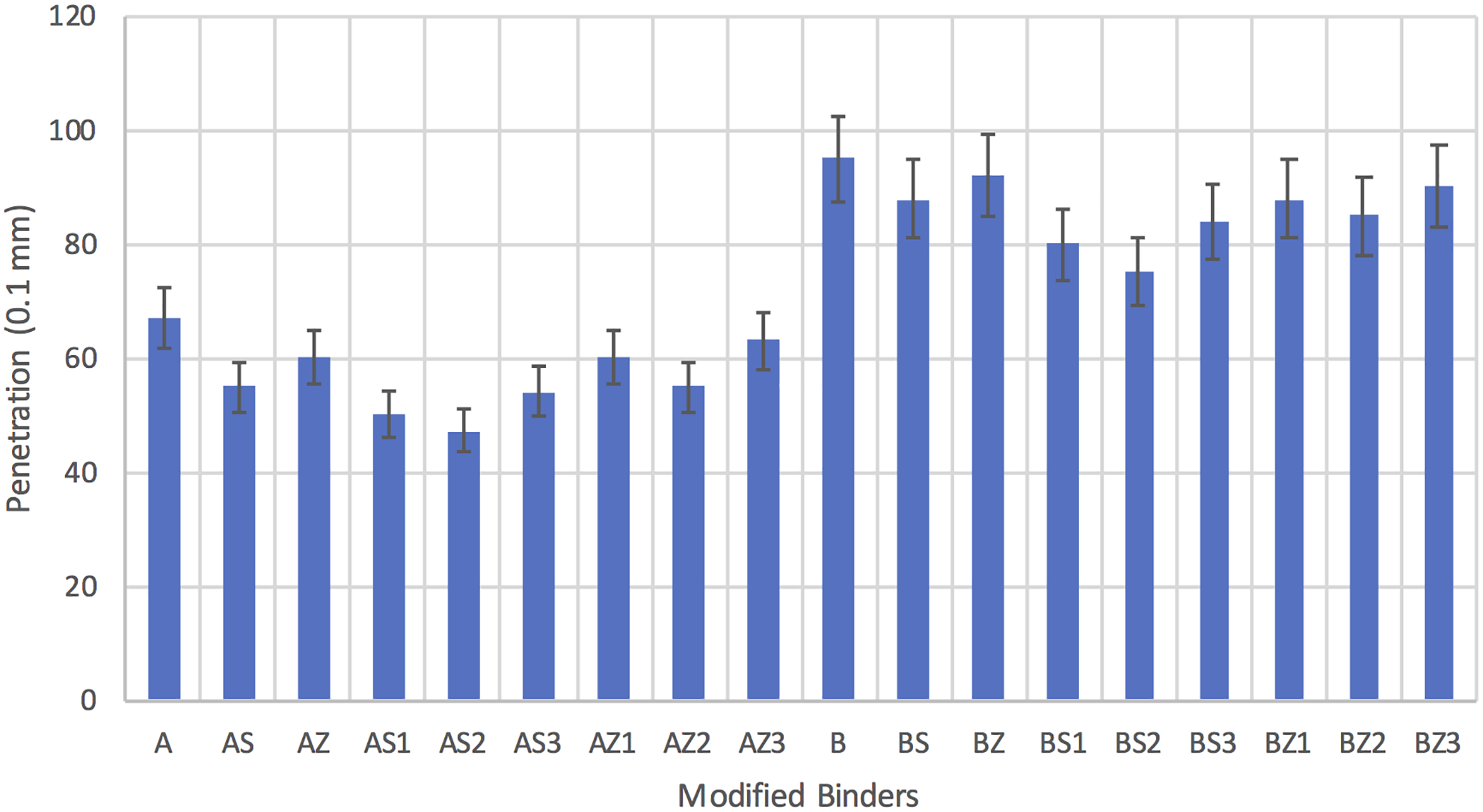
Penetration results of different asphalt binders.
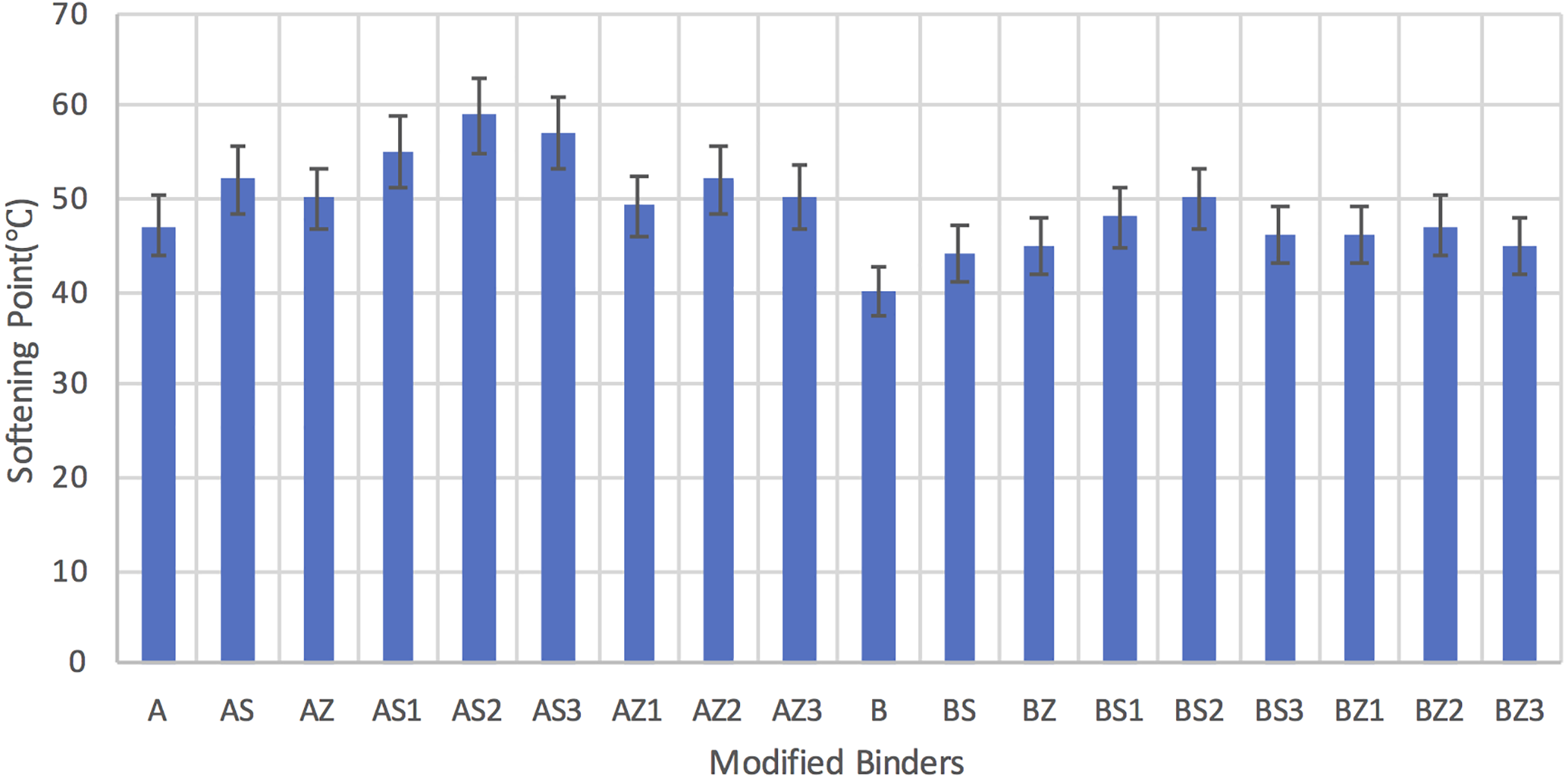
Softening point of different asphalt binders.
Based on the results on Figure 5, addition of WMA additives led to a decrease in the viscosity of the binder. Sasobit modified binders have lower viscosity than binders containing zycotherm. Results revealed that addition of ASAs increases the viscosity of binder. It may be due to the fact that with the introduction of ASA, a chemical reaction between nitrogen groups of amine ASAs and polar groups of asphalt binder occurs and forms compounds with no anti-stripping property, 58 which leads to the increasing viscosity. Among ASAs, ASA (2) modified binders have higher viscosity than others.
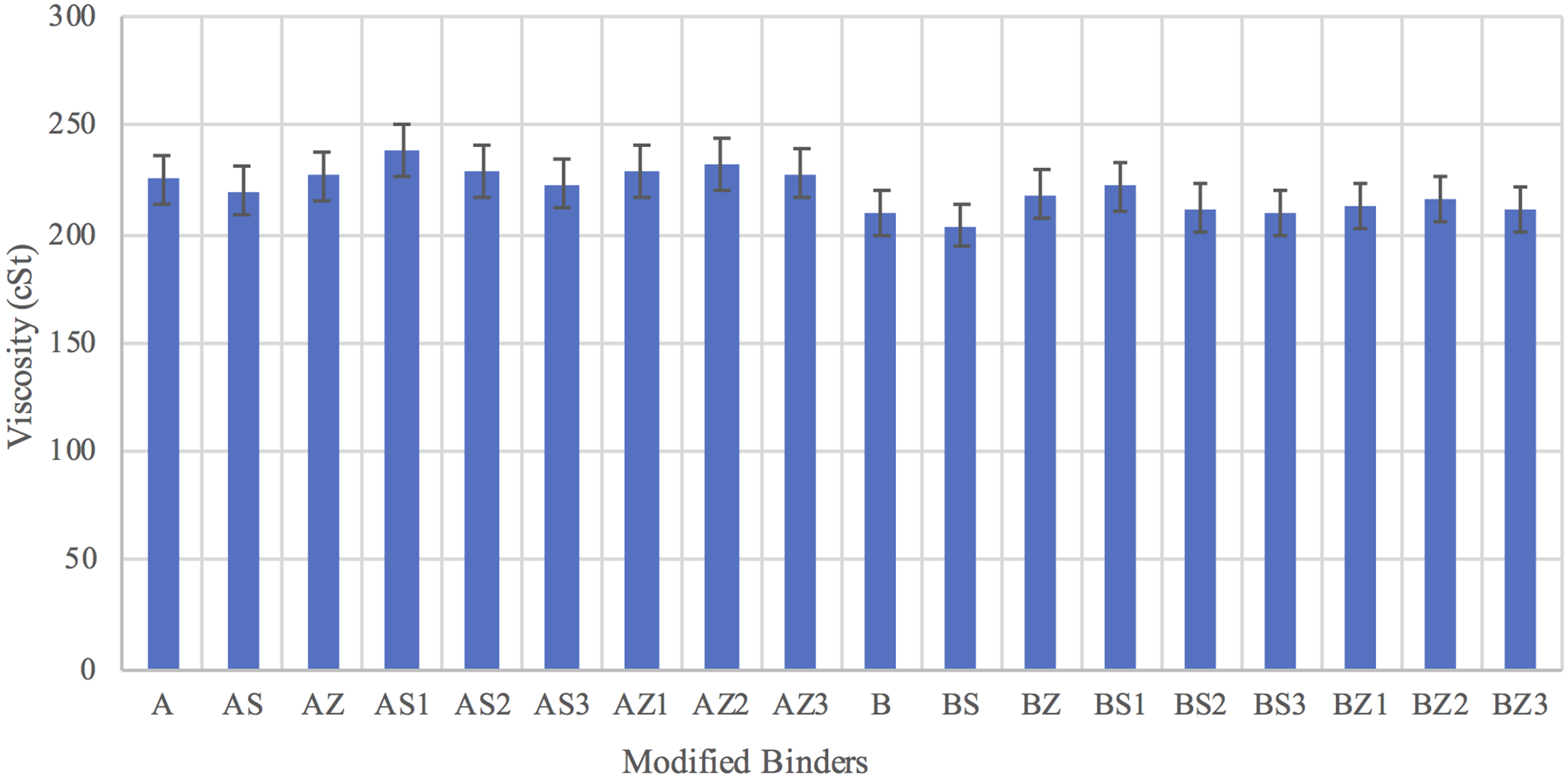
Viscosity of different asphalt binders.
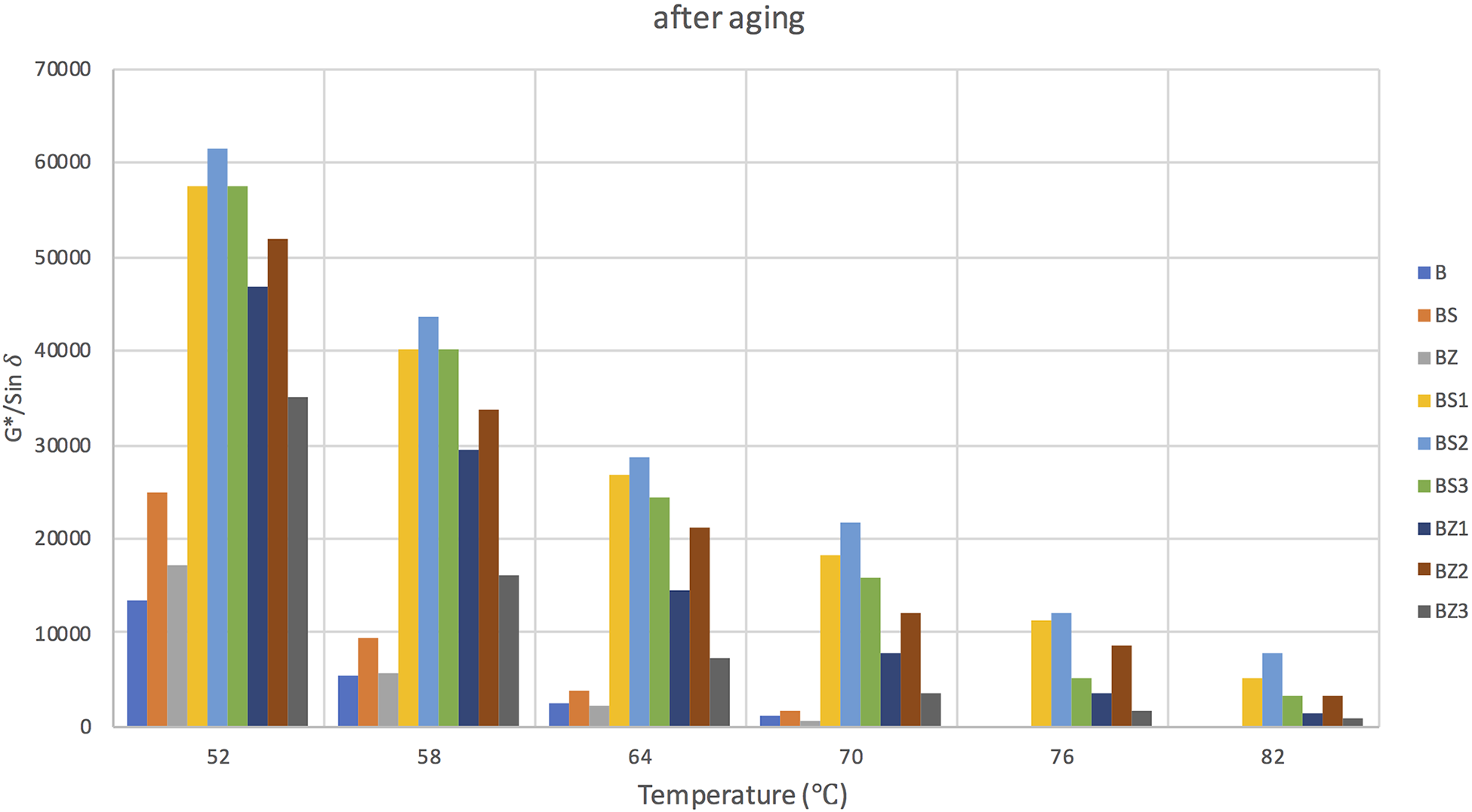
Bitumens with superior G*/sinδ values, have higher strength versus rutting. In order to have a binder which can resist versus rutting, the virgin and RTFO aged bitumens should have a minimum amount of 1kPa and 2.2 kPa. Figures 6 and 7 show the rutting parameter of binders before and after the RTFO aging process. According to the outcomes, the utilization of ASAs leads to improve the permanent deformation of binders, it may be attributed to stiffening of bitumen by utilization of ASAs. It may be due to the fact that with the introduction of ASA, a chemical reaction between nitrogen groups of amine ASAs and polar groups of asphalt binder occurs and forms compounds with no anti-stripping property, 58 which leads to the increasing viscosity. According to the outcomes, the utilization of warm additives cause an improve the flexibility of bitumens and an increase in the ability of bitumens to recover the accumulated strains from traffic loading. Among warm additives, Sasobit modified binders have better performance in improving the rutting behavior of binders, followed by Zycotherm additives. It is attributed to stiffens of the binder by Sasobit additive.
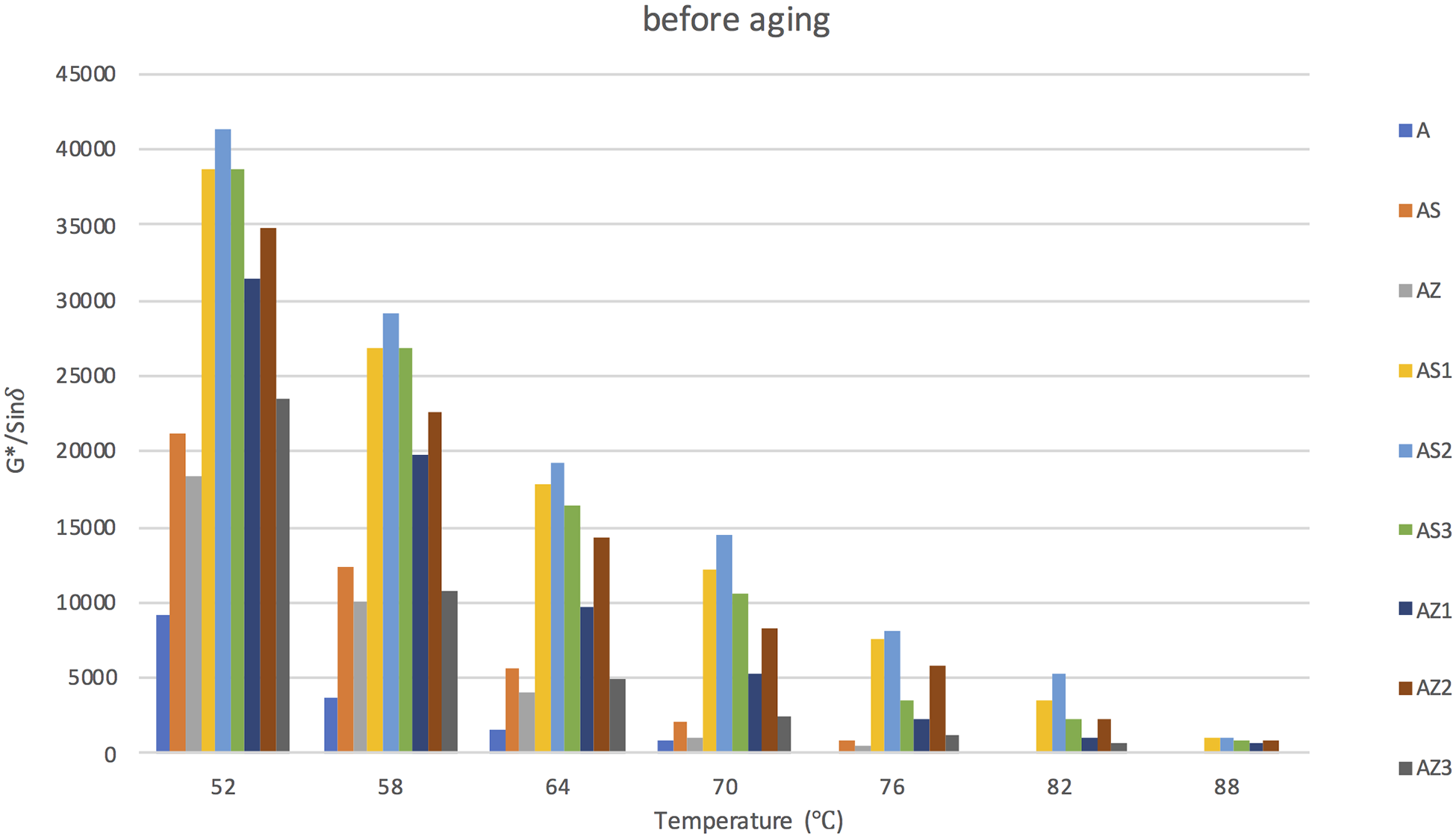
Rutting parameter of base and modified asphalt binder before aging: (a) A type, (b) B type.
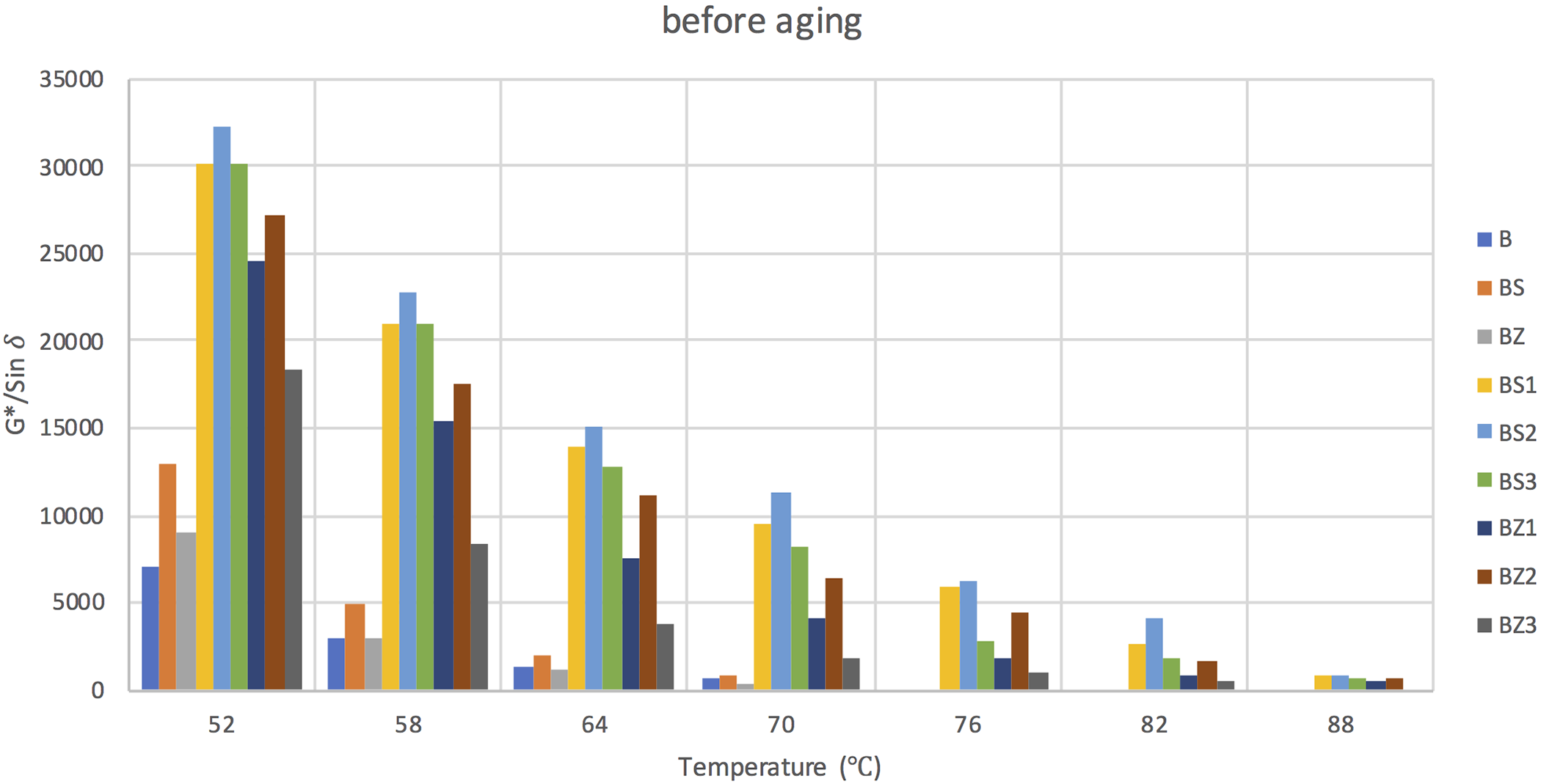
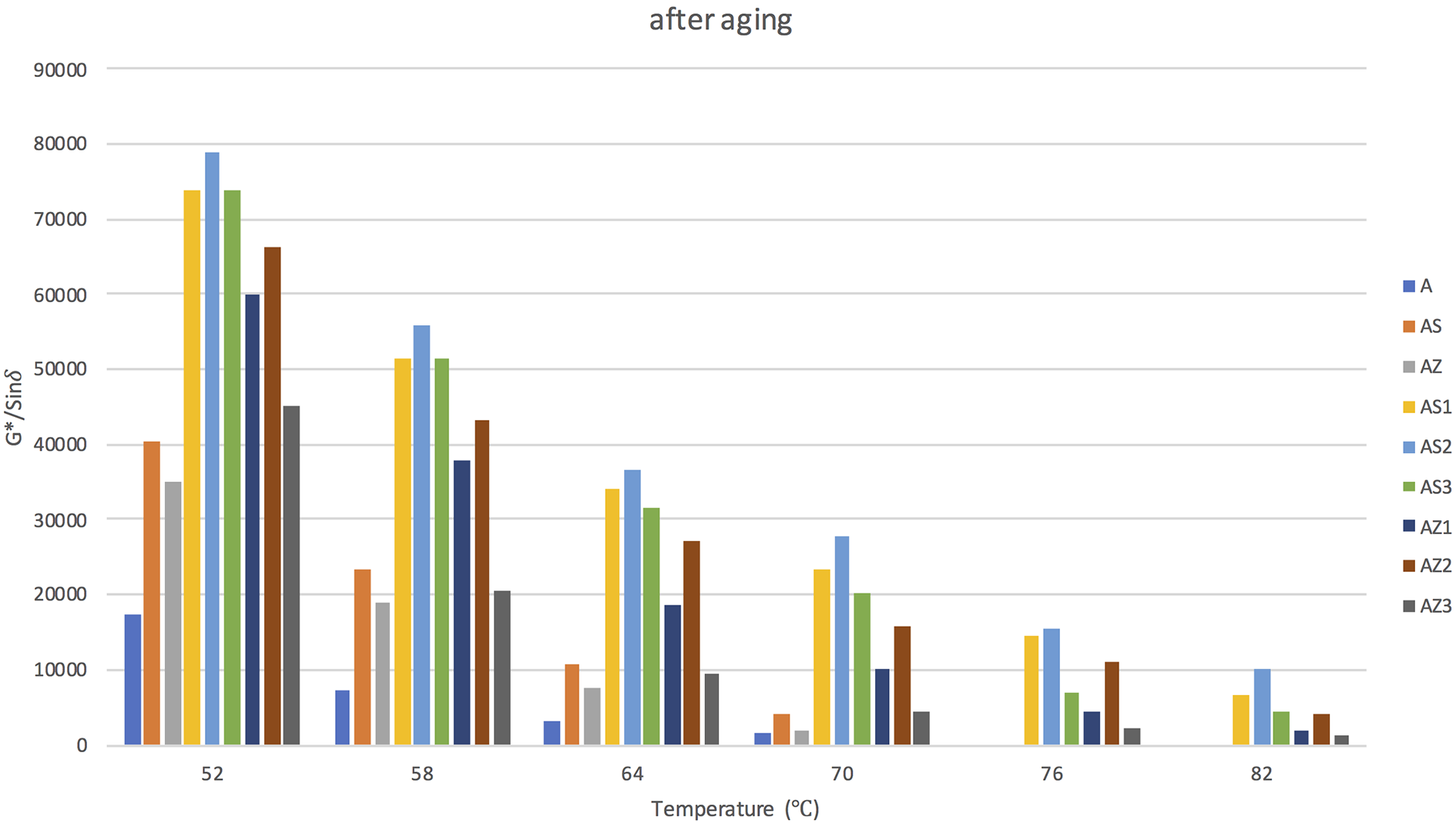
Rutting parameter of base and modified asphalt binder after aging: (a) A type, (b) B type.
Also, by the suggestion of performance grade (PG) system, a binder with lower G* sin δ parameter has a better resistance against fatigue cracking. As the PG system proposed, the G* sin δ was limited to a maximum of 5000 kPa for bitumen, which indicated that binders are capable of resistance against intermediate cracking. As results show in Figure 8, utilization of warm additives to original bitumen leads to enhance the fatigue behavior of bitumen. Moreover, the utilization of ASAs to modified binders leads to enhance fatigue behavior of bitumen. Three types of ASA can evidently decrease the viscosity of asphalt binder after RTFO compared with blank sample. The reason is that the main ingredients of three types of ASAs are amine substance. Based on some published researches from James and Steward 59 and Gawel et al., 60 amine substance was a type of active antioxidants. They could prevent interactions between polar groups in asphalt binder and then slow the hardening of asphalt binder undergoing RTFO. ASA (2) has the greatest influence on improving the intermediate temperature properties of bitumens.
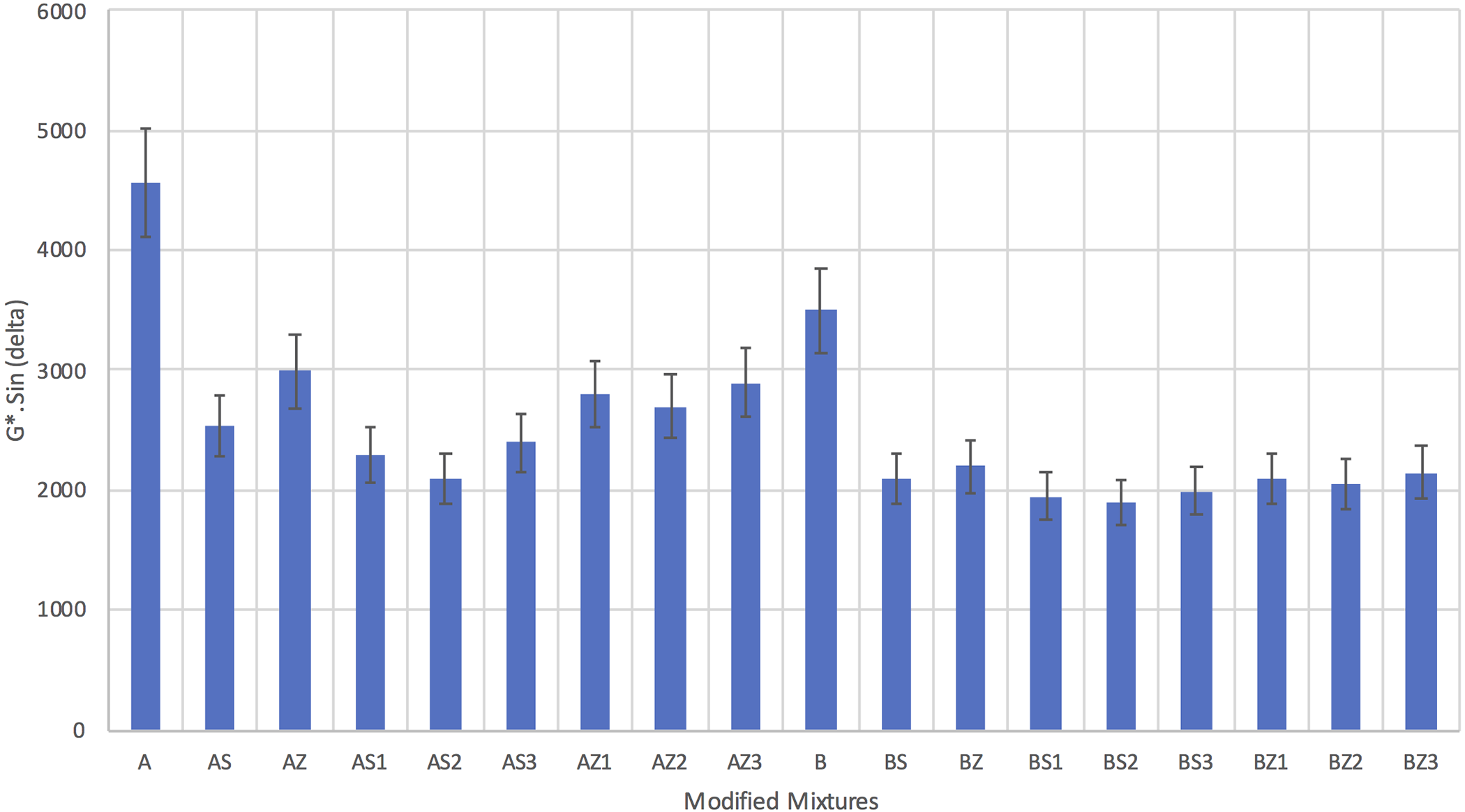
Fatigue parameter of base and modified asphalt binders.
MSCR test
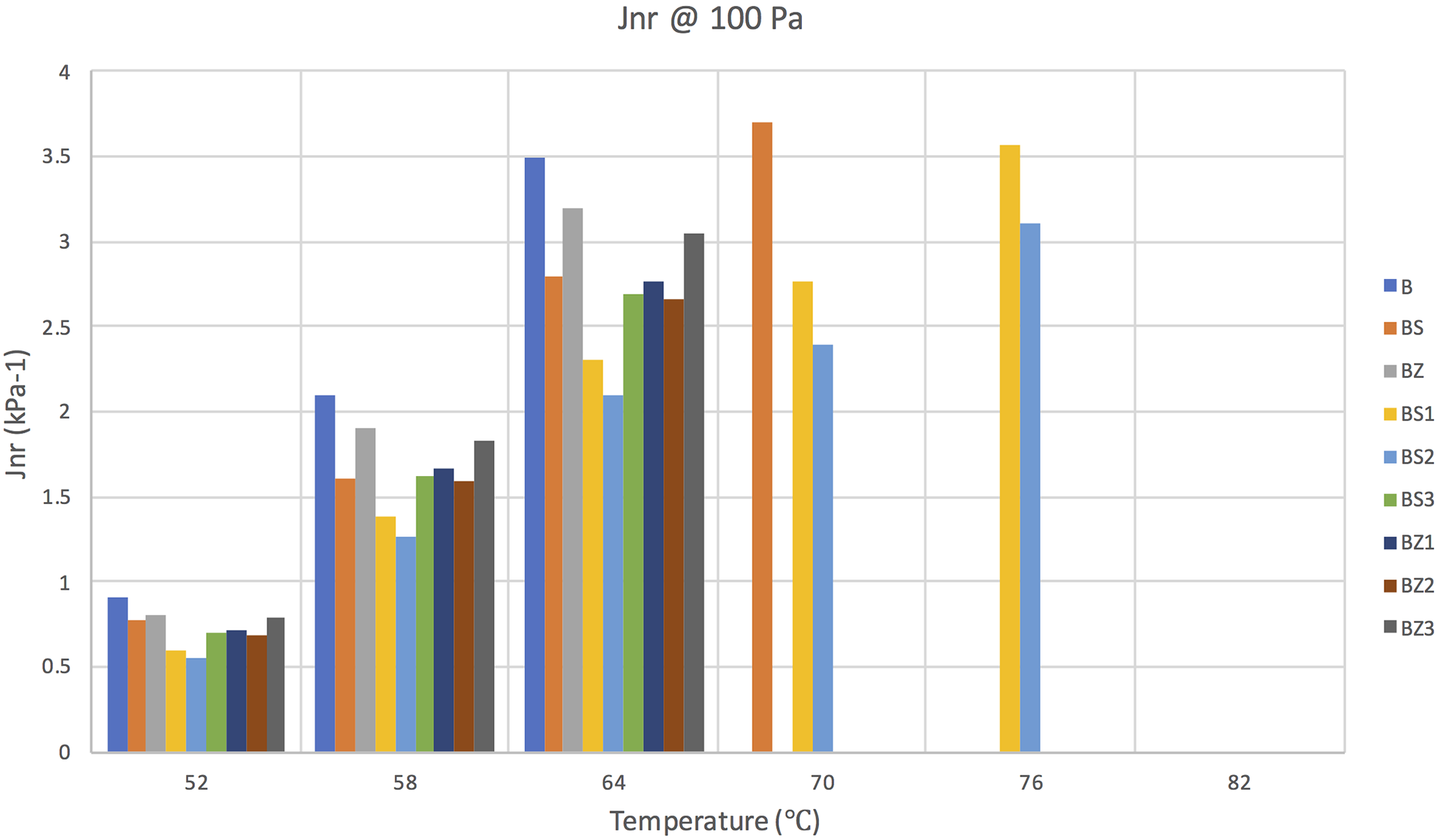
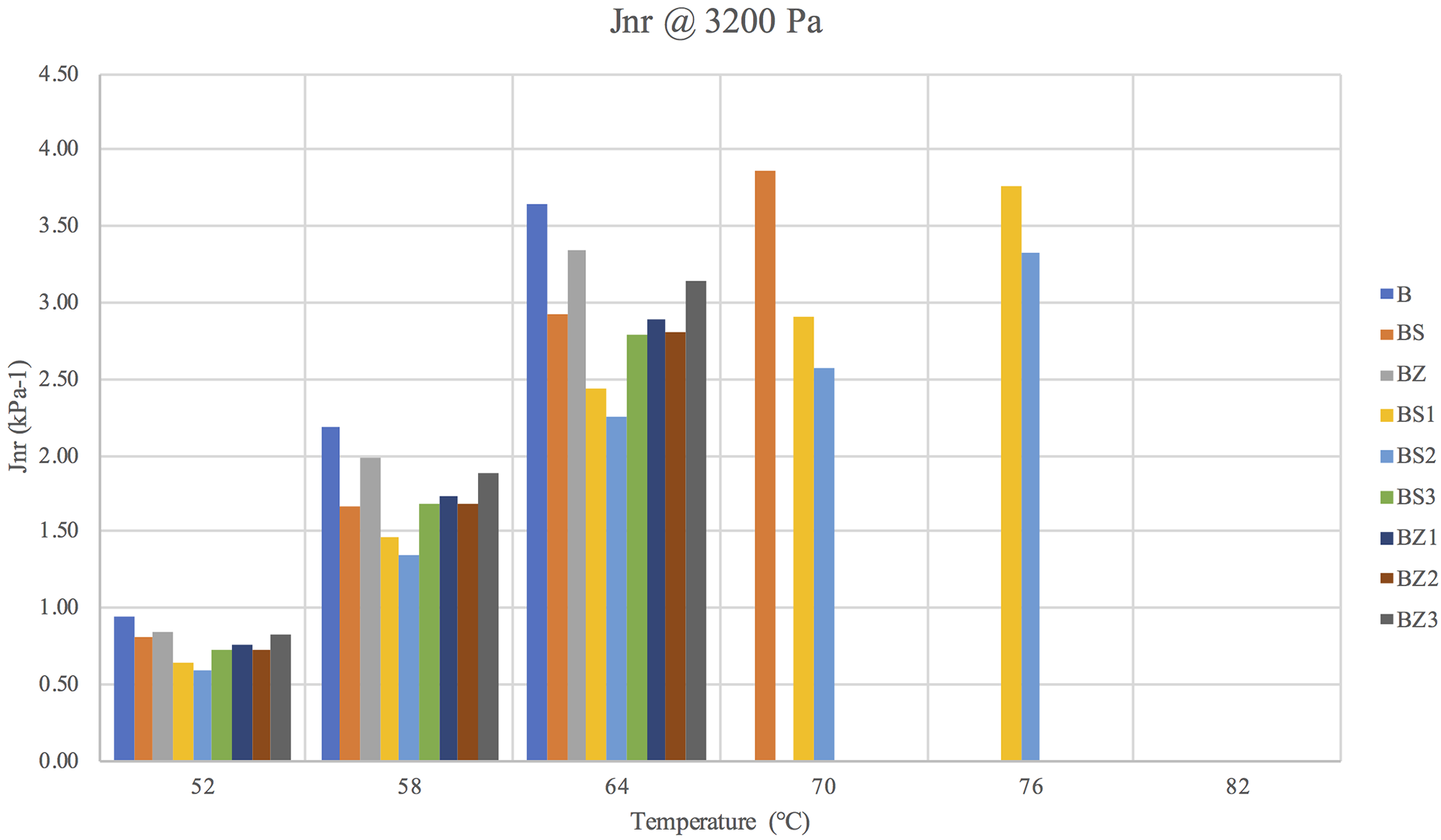
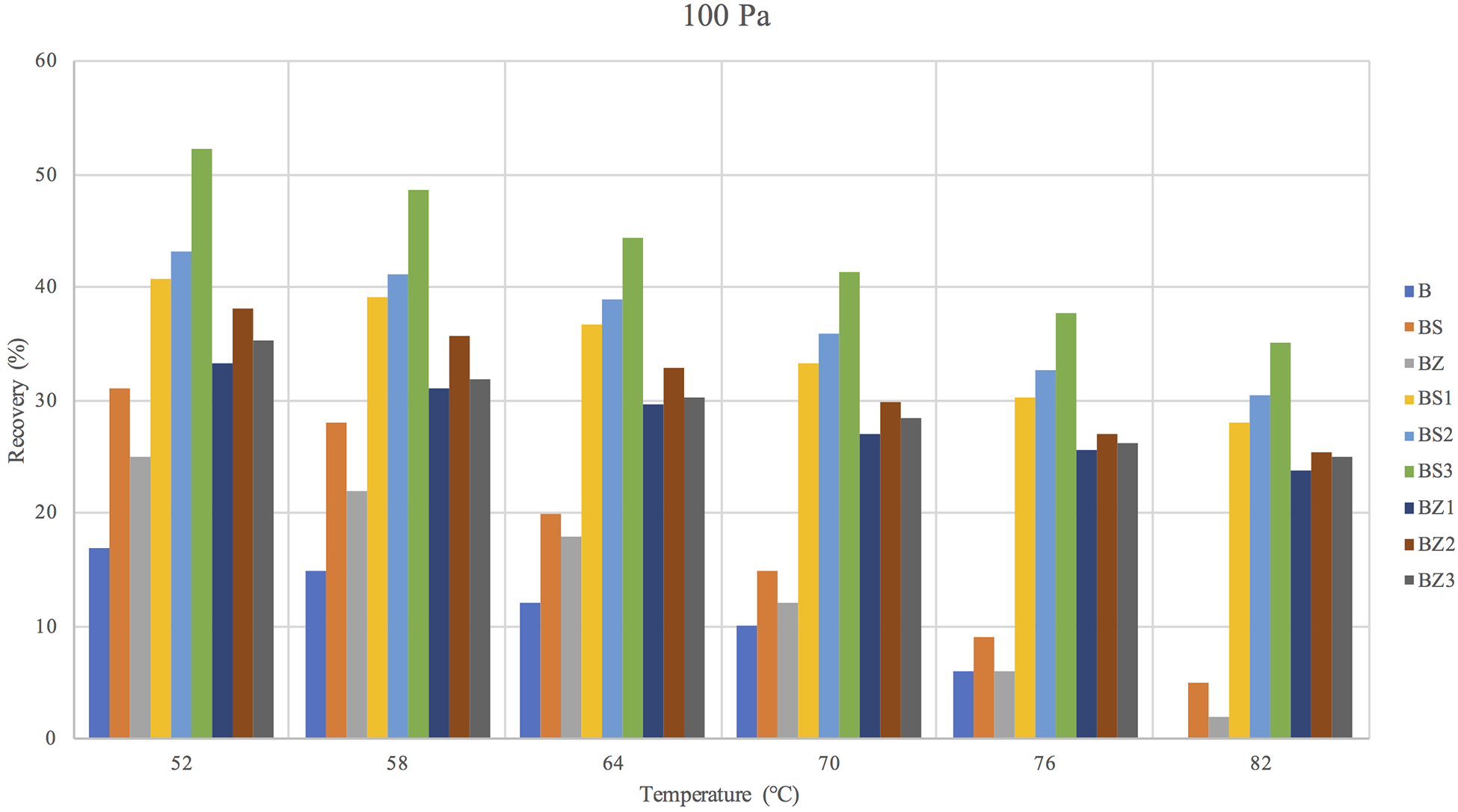
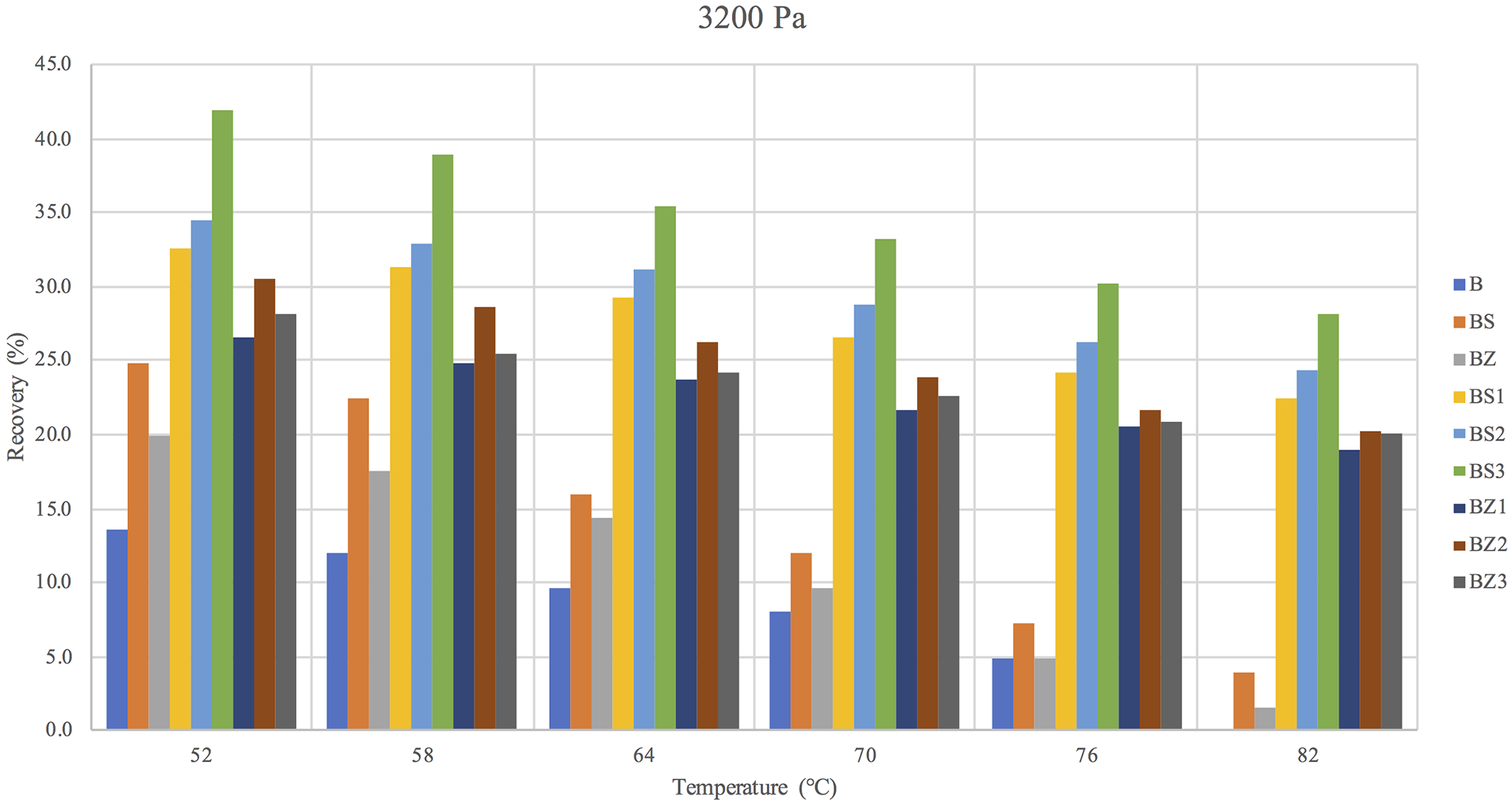
Rutting properties of binder was investigated through MSCR test. Two of the outcomes of MSCR test are Jnr parameter, and percent recovery (%R) which are measured at two stress level of 100 and 3200 pa at temperatures of 52°C to 82°C. The outcomes are indicated in Figures 9 to 12. Based on the outcomes, by increasing the temperature, the Jnr and %R parameter increase and decrease, correspondingly. The Jnr and %R results of binders at 64°C are tabulated in Table 10. Generally, according to the outcomes, irrespective of the stress levels, the utilization of warm additives to SBR/PPA bitumen decreased the Jnr value of virgin bitumen, which shows that warm modified binders have more rutting resistance. As results show in Table 10, binders modified by Sasobit have lower Jnr values than binders modified by Zycotherm. The reason is by the addition of Sasobit, the stability and stiffness of binders improved by forming a crystalline network/lattice structure, but the values of Jnr were higher than Sasobit modified binders. The outcomes revealed that the utilization of Zycotherm nanotechnology leads to a decrease in the Jnr values of polymer modified binders. The outcomes were better than the control binder. According to the results, addition of ASAs leads to improve the rutting resistance of binders. One possible reason is that with the introduction of ASA, a chemical reaction between nitrogen groups of amine ASAs and polar groups of asphalt binder occurs and forms compounds with no anti-stripping property, 58 which leads to the increasing viscosity. As a result, the binder becomes stiffer and as a result the rutting resistance of binder improves. In both warm modified binders, the binders modified by ASA (2) have the highest Jnr value followed by binders modified by ASA (1) and ASA (3). Based on the results, ASA (2) has a better influence on increasing the rutting resistance of warm SBR/PPA modified bitumens. According to the results, Jnr values of specimens containing 85–100 binders were higher than 60–70 modified binders. According to the results, the addition of ASAs led to an improvement in the rutting performance of 85–100 modified binders. ASA (2) have a better influence on improving the rutting behavior of this type of binder.
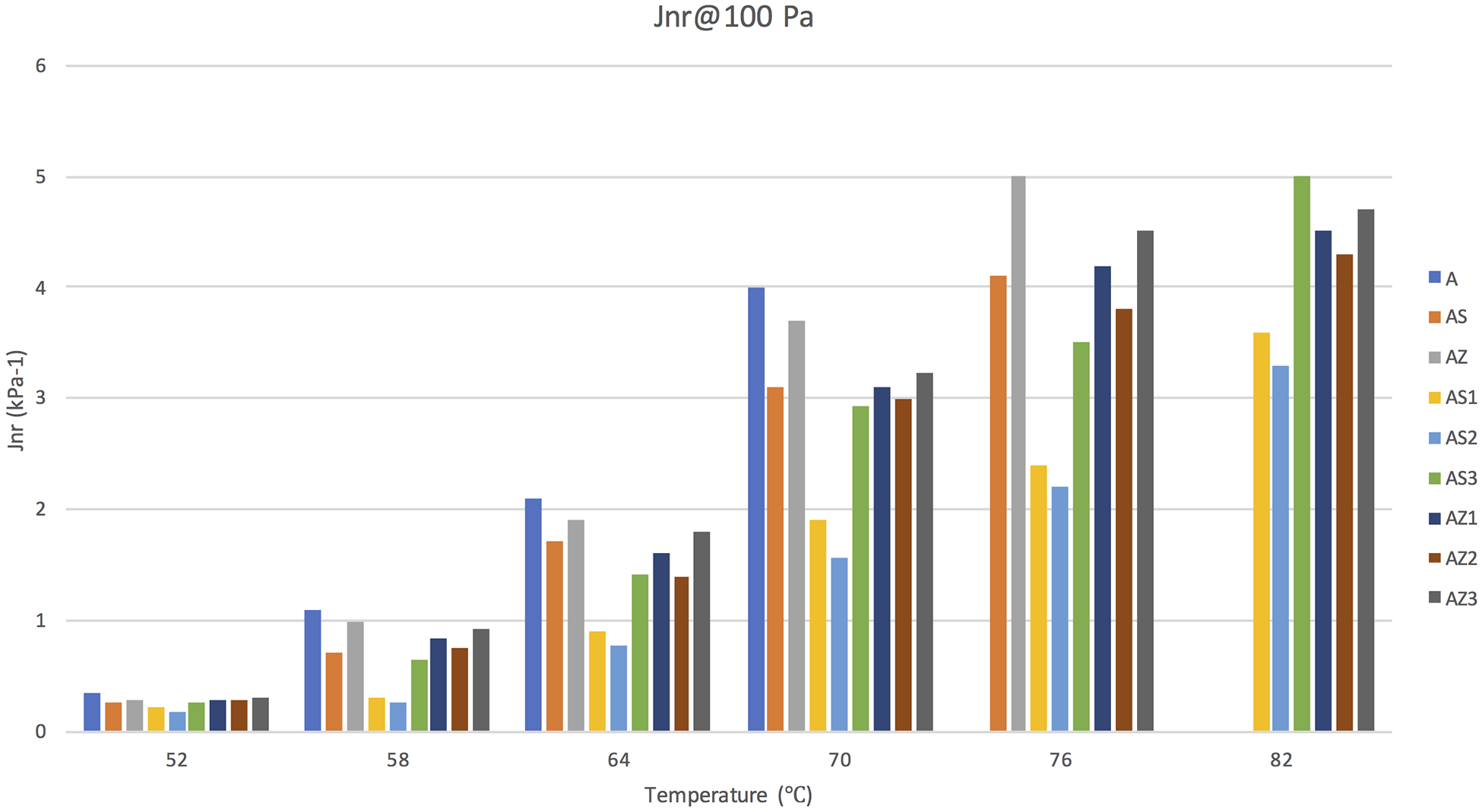
Non-recoverable creep compliance of different binders at range of temperatures from 52°C to 82°C at stress levels of 100 Pa: (a) A type, (b) B type.
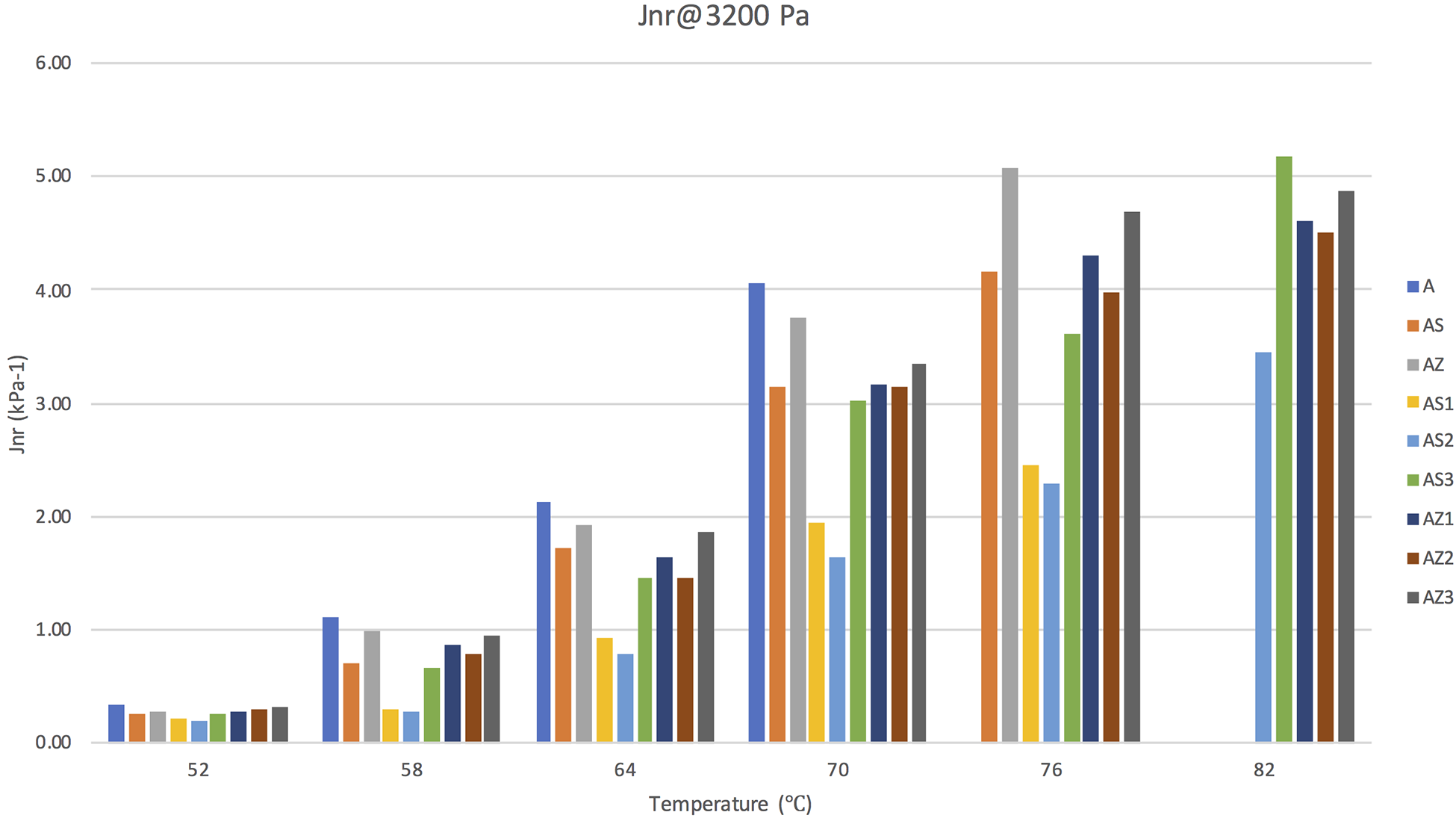
Non-recoverable creep compliance of different binders at range of temperatures from 52°C to 82°C at stress levels of 3200 Pa: (a) A type, (b) B type.
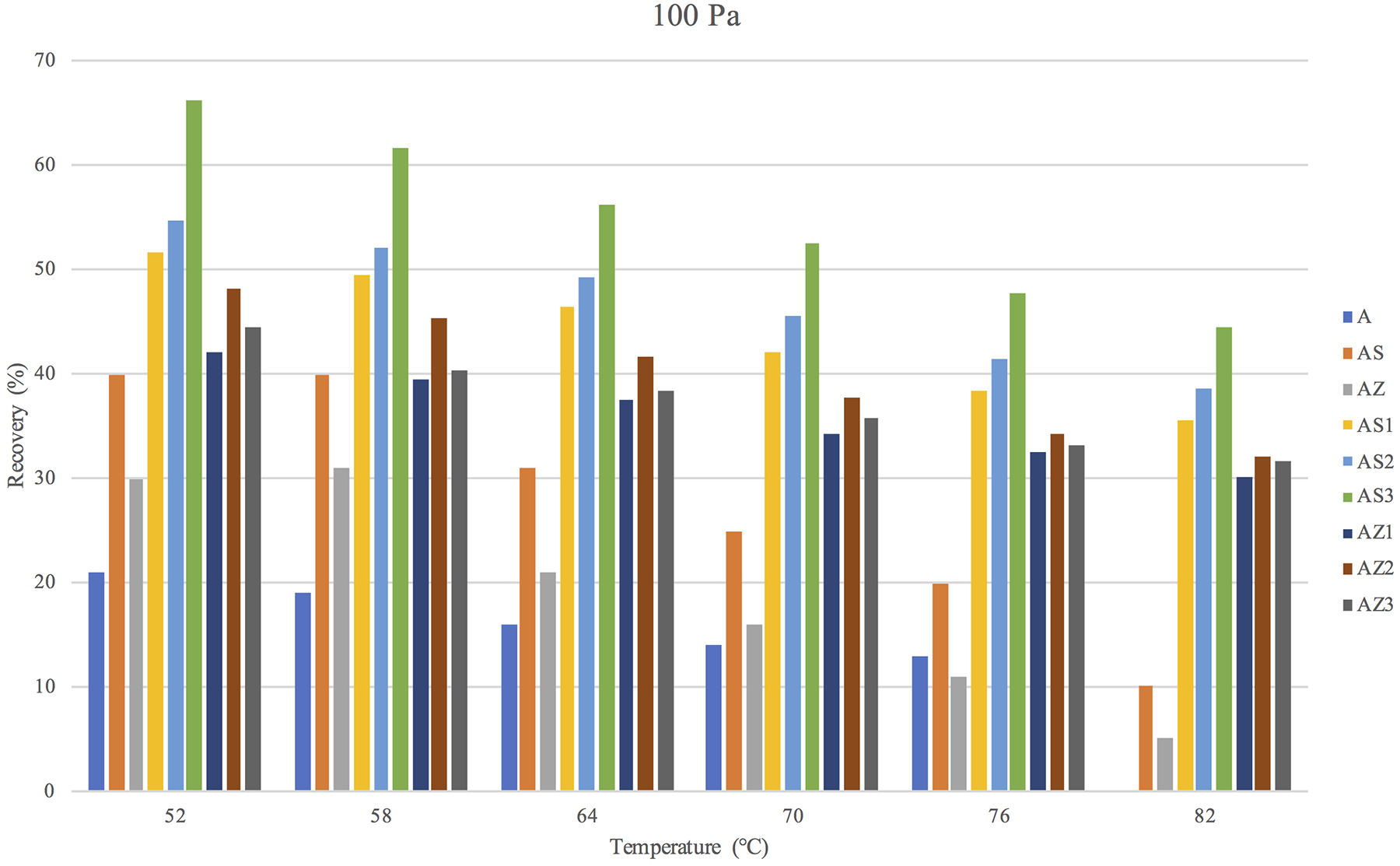
Percent recovery of different binders at range of temperatures from 52°C to 82°C at stress levels of 100 Pa: (a) A type, (b) B type.
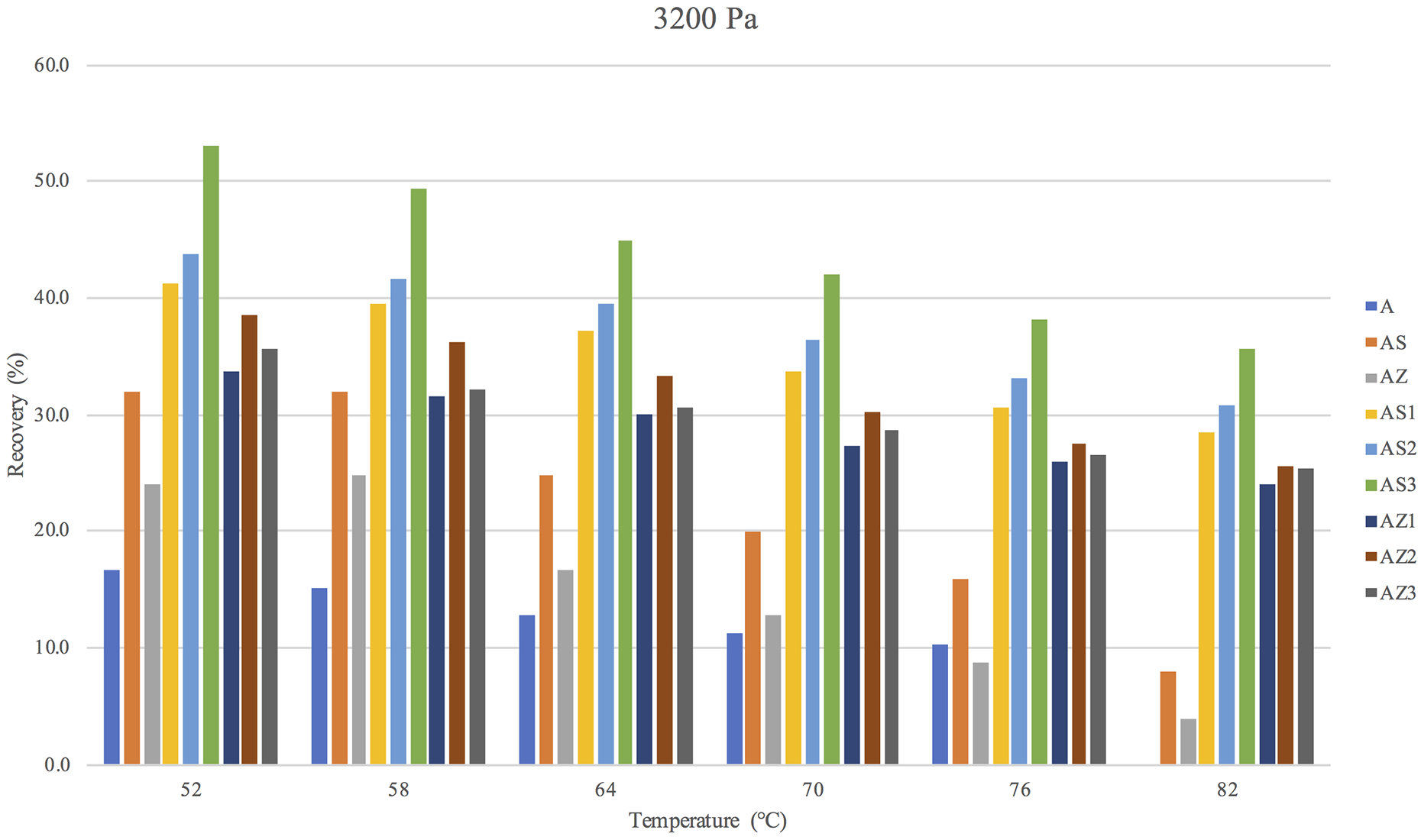
Percent recovery of different binders at range of temperatures from 52°C to 82°C at stress levels of 3200 Pa: (a) A type, (b) B type.
MSCR test results.
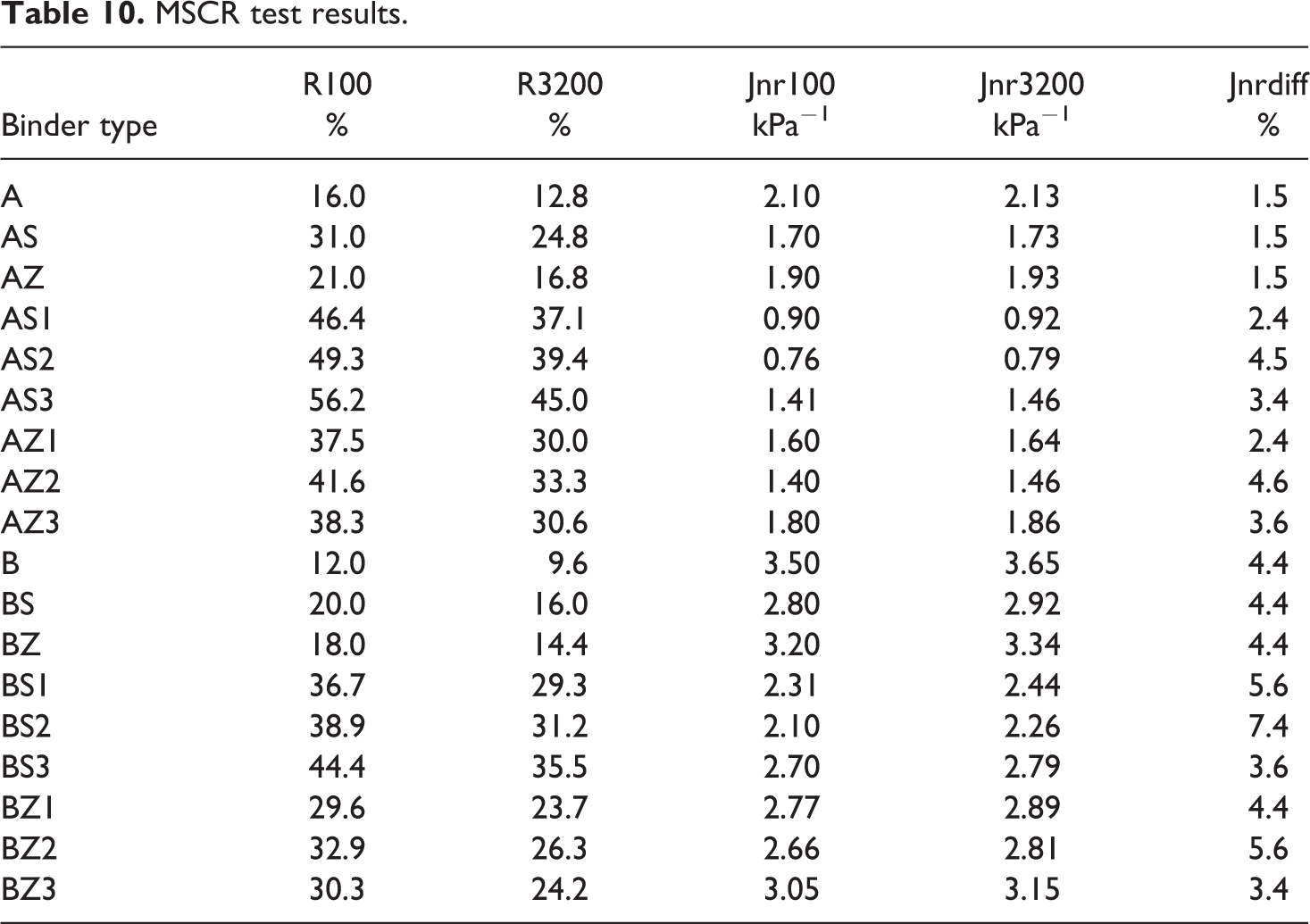
Results showed that as the warm additives were added to the original bitumen, the %R increases. As the percent recovery of binder gets more, the binder has a better ability to withstand permanent deformation. Results on Table 10 show that the %R of original bitumen is low, which indicates its low capacity versus fatigue and rutting. According to the results, bitumens modified by Sasobit have greater %R values in comparison with Zycotherm modified binders. As the results show, the percent recovery of binders increase by the addition of ASAs, which shows that the resistance of bitumens against rutting was improved. The ASA (2) has the highest percent recovery between used ASAs.
The utilization of Sasobit and Zycotherm in SBR/PPA bitumen causes an improvement in recovery by 94% and 32%, respectively. Adding ASA (1), (2), and (3) containing Sasobit increases the percent recovery by 48%, 59%, and 55.3%, respectively, for 100 pa stress level. Adding ASA (1), (2) and (3) containing Zycotherm increases the percent recovery (%R) by 79%, 98%, and 82%, respectively, for 100 pa stress level. While, Adding Sasobit and Zycotherm to 85–100 bitumen leads to an increase in the (%R) by 66% and 34% for 100 pa stress level, respectively. A similar trend was observed on 3200 pa stress levels.
Based on the outcomes of the test, the Zycotherm modifier had the lowermost influence on improving the %R of modified bitumens. The reason for this may be attributed to the little elastic behavior and low stiffness of Zycotherm modified bitumens. Also, the ASA (2) has the greatest influence on increasing the percent recovery of binders.
LAS results
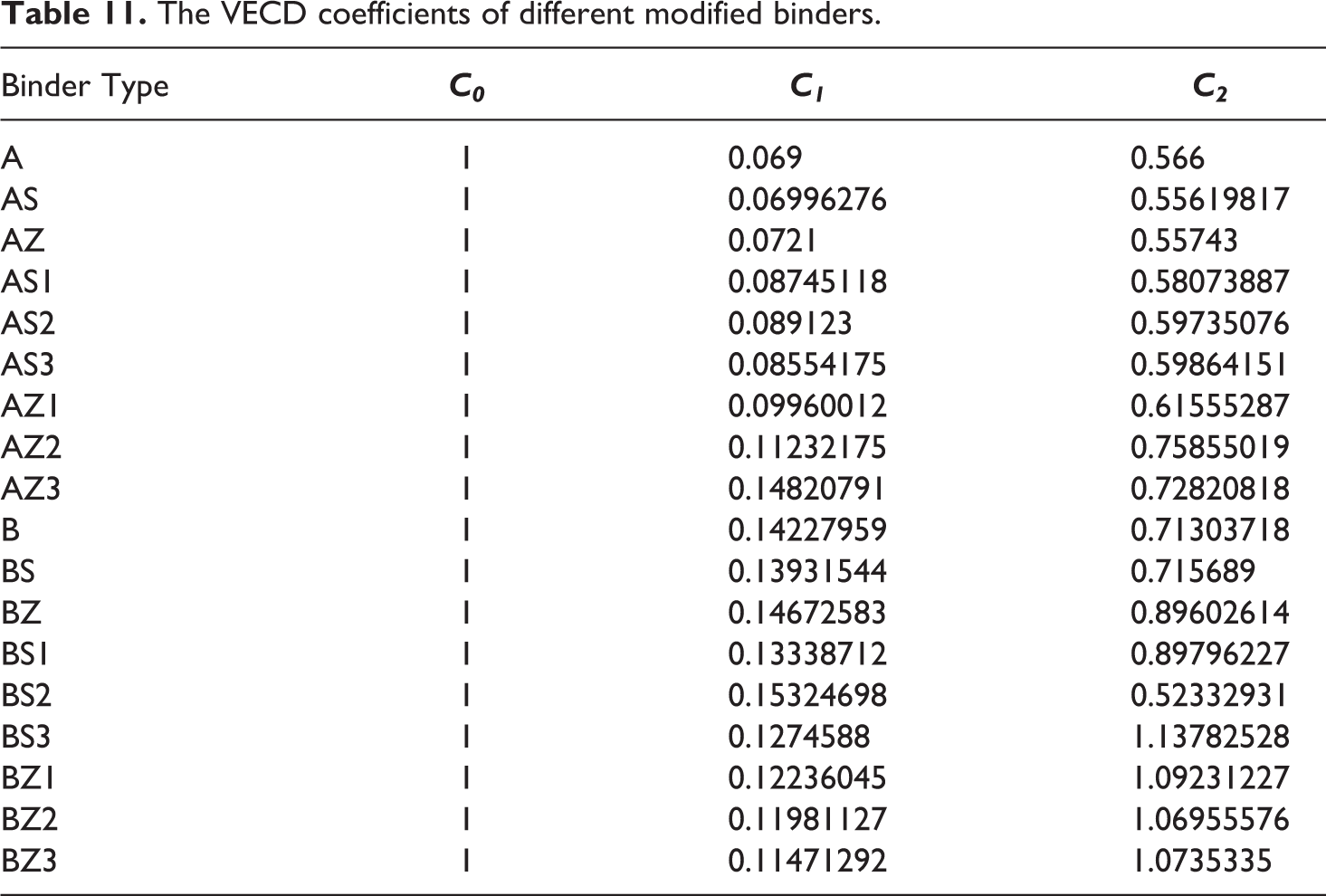
Tables 11 and 12 tabulate the outcomes of LAS test. Based on results, modification of binders with additives led to decrease the shear stress at high stress levels.
The VECD coefficients of different modified binders.
Fatigue lives of different modified binders.
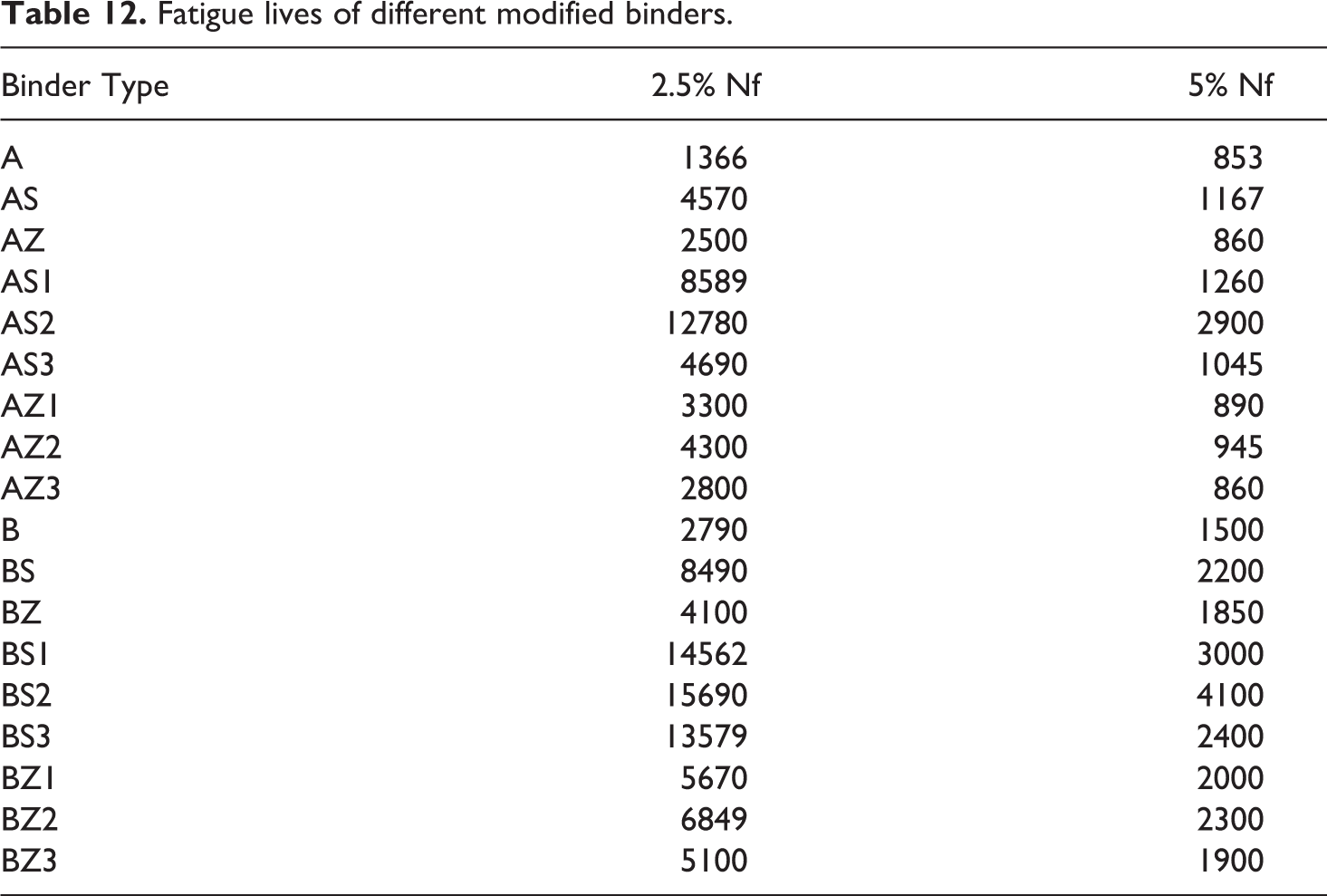
Table 11 shows the VECD results of binder. The outcomes revealed that addition of mentioned additives causes the C1 and coefficient C2 to increase and decrease, correspondingly. According to the outcomes, BS2 modified bitumen has the highest C1 and the lowest C2 values.
Table 12 indicates the fatigue life of bitumens. The test was performed on strain levels of 1% to 30%. The fatigue life of bitumens at one low and one high strain level is shown in Table 12.
According to the outcomes, the addition of WMA additives leads to an enhance in fatigue behavior of the original bitumen. The addition of WMA additives enhances the flexibility of bitumens, and consequently, the fatigue behavior of bitumen enhanced. Moreover, the utilization of ASAs leads to an improvement in the intermediate temperature behavior of binders. In addition, three types of ASA can evidently decrease the viscosity of asphalt binder after RTFO compared with blank sample. The reason is that the main ingredients of three types of ASAs are amine substance. Based on some published researches from James and Steward 59 and Gawel et al., 60 amine substance was a type of active antioxidants. They could prevent interactions between polar groups in asphalt binder and then slow the hardening of asphalt binder undergoing RTFO. As a result it leads to improve the fatigue life of binders. While, by addition of ASA (2), the fatigue lives increases significantly in both warm modified binders. Based on the outcomes, the fatigue life of AS2 binder is 2.8 times and 1.8 times higher than the base bitumen at strain levels of 2.5% and 5%, correspondingly. Results indicate that the utilization of Sasobit led to an increase in the fatigue behavior of bitumens. According to the VECD analysis of LAS test outcomes, it can be realized that utilization of warm additives leads to an improved intermediate temperature behavior of bitumens.
Mixture tests result
Mr test results
Figure 13 shows the Mr values of specimens. Based on the outcomes, the addition of WMA additives causes an enhance in Mr values. The reason may be due to improving the stiffness of specimens by the utilization of WMA additive. The results of MSCR and DSR tests also indicated that addition of WMA additives leads to increase the stiffness of binder. According to the outcomes, the Mr results of specimens containing Sasobit are higher than Zycotherm modified mixtures. Furthermore, the utilization of ASAs causes an improve in the Mr of samples. While, the AS2 sample has the maximum Mr result between different samples of binders including ASAs. It may be due to stiffens of bitumen by ASA (2). The results are consistent with MSCR and physical test results. Results indicated that mixtures containing 85–100 binders have lower resilient modulus in comparison with samples containing 60–70 binders.
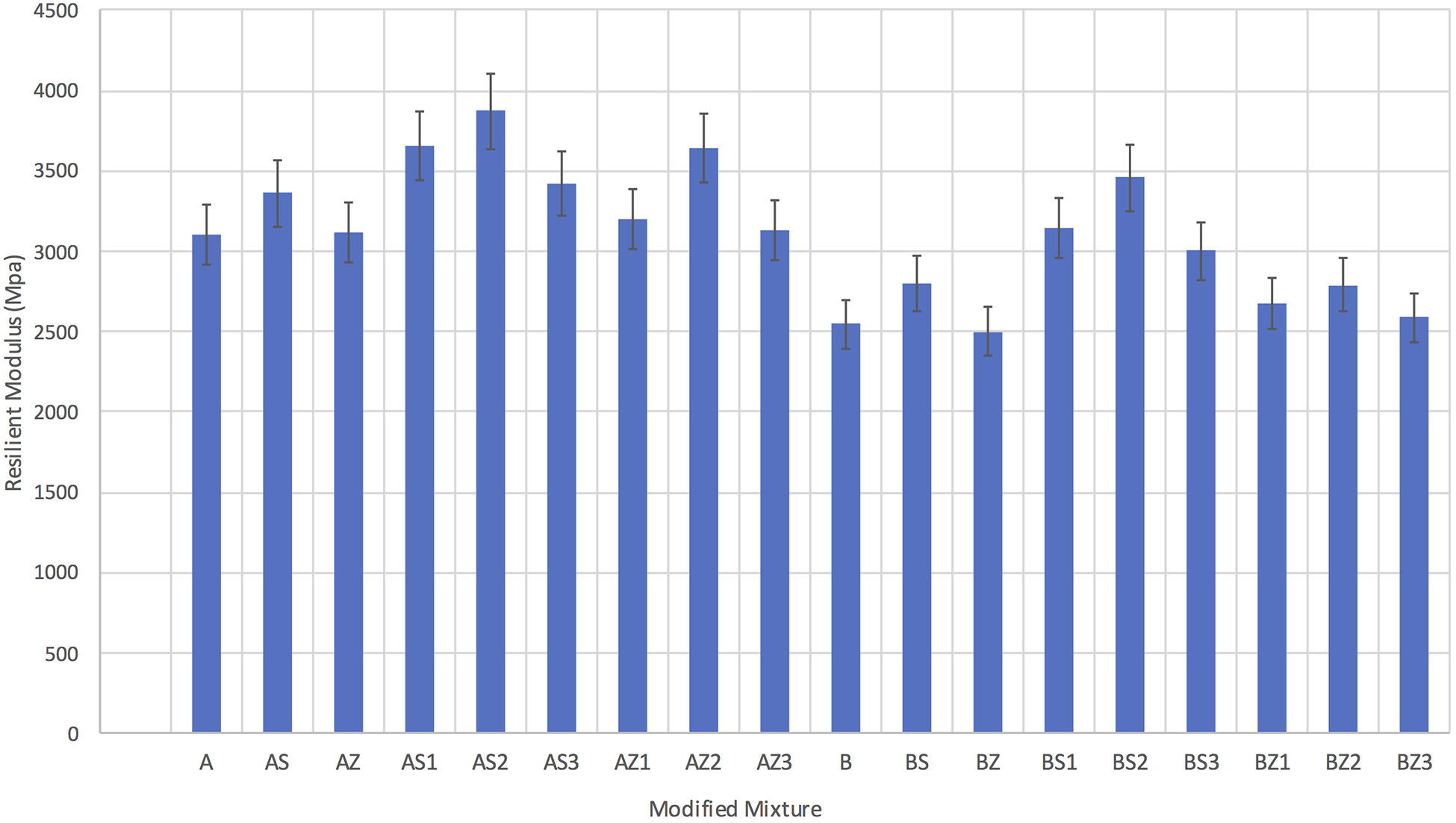
Results of resilient modulus of modified mixtures.
The resilient modulus of AS and AZ were 9% and 1% higher than those of original samples, while AS and AZ mixtures containing ASA (1) had a resilient modulus approximately 18% and 4% higher than the original sample, respectively. Based on the results, the utilization of ASA (2) to AS and AZ samples cause an enhance in Mr values by 25% and 18%, correspondingly.
ITS test
Figure 14 indicates the ITS values of specimens. Results indicated that mixtures containing WMA additive had greater ITS than the unmodified sample. Among warm modified mixtures, Sasobit had the highest ITS values. Based on the outcomes of test, by the utilization of ASAs, the ITS values increased. The reason for this may be due to increase in viscosity of binder by introduction of ASAs, which is the result of a chemical reaction between nitrogen groups of amine ASAs and polar groups of asphalt binder occurs and forms compounds with no anti-stripping property. 58 As a result, the binders containing ASAs have higher ITS values. The ASA (2) had the highest influence on enhancing the ITS values of specimens. Utilization of ASAs with mixtures containing warm additives, the mixtures containing Sasobit have higher ITS values compared to Zycotherm modified mixtures. Based on MSCR and physical test results, addition of warm additives leads to increase the stiffness of binder. Also the ASA (2) has the highest stiffness among binders. The ITS results are in consistent with MSCR, DSR and physical test results.
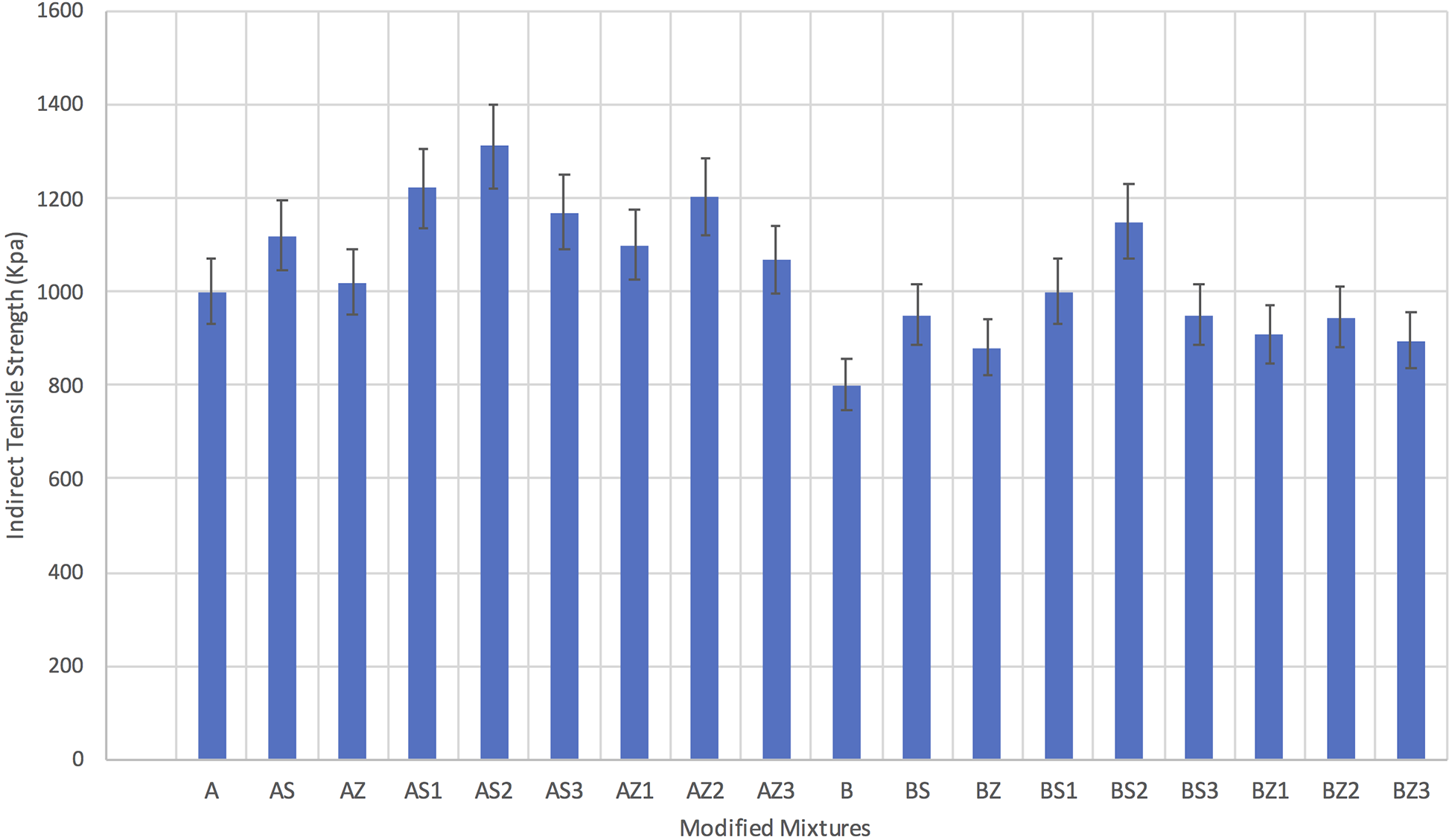
ITS values of mixtures.
As the bitumen bind better with aggregate, the ITS values of mixtures become better. Therefore, as seen from the marks, by utilization of Sasobit and ASA (2), the cohesion and adhesion of bitumen to aggregate increases. Based on the outcomes in Figure 14, specimens containing Sasobit and ASA (2) have the highest ITS values among modified specimens.
FN results
The FN of specimens are indicated in Figure 15. Higher FN values indicates better resistance of mixtures against rutting. Based on the outcomes in Figure 15, the utilization of warm additive enhances the permanent deformation strength of samples. The reason might be due to stiffening of mixture by utilization of WMA, and consequently the strength of mixture versus permanent deformation improved. Also, based on MSCR, DSR and conventional binder tests results, addition of WMA additives stiffens binder. By stiffening of binder, the mixtures were more stiff and the resistance of mixture against rutting improves. Among warm mixtures, Sasobit modified mixtures had the highest resistance against rutting. Moreover, the utilization of ASAs leads to improve in the FN of samples. Based on viscosity test results of binder, addition of ASAs leads to increase in viscosity of binder and the binder gets stiffer and as a result, the rutting resistance of mixture increases. Samples modified by ASA (2), have the best strength against permanent deformation followed by ASA (1) and ASA (3) in both warm modified mixtures. As the results indicate, the MSCR, DSR and conventional test results are consistent with dynamic creep test results. Also, based on Mr test results, addition of WMA additives leads to increase the stiffens of the mixture. Mixtures with higher stiffness have better resistance against rutting. The Mr test results are also in consistence with dynamic creep test results. Results revealed that specimens, including 85–100 binders, have lower flow numbers than mixtures containing 60–70 binders. Based on the outcomes of test, the addition of Sasobit additive causes an enhance in the FN of mixtures by 53%. While utilization of Zycotherm causes an enhance in the FN by 6%. Also, the addition of ASA (2) to Sasobit modified mixture increases the FN by 26%. While, the addition of ASA (2) to the Zycotherm modified mixture increases the FN by 70%. In mixtures containing binder type (B), utilization of Sasobit cause an enhance in FN by 9%. While Zycotherm led to an increase in the FN by 6%.
Flow number of modified mixtures
Wheel track test results
Rut depth of specimens are indicated in Figure 16. Based on the results, WMA additives result in a decrease in the rutting depth of mixtures. WMA additives improve the flexibility of mixtures. . Also, based on MSCR, DSR and conventional binder tests results, addition of WMA additives stiffens binder. By stiffening of binder, the mixtures were more stiff and the resistance of mixture against rutting improves. Among warm mixtures, Sasobit modified mixtures had the highest resistance against rutting. Also, the addition of ASAs causes a decrease in the rut depth of samples. The reason for this may be due to increase in viscosity of binder by introduction of ASAs, which is the result of a chemical reaction between nitrogen groups of amine ASAs and polar groups of asphalt binder occurs and forms compounds with no anti-stripping property. 58 As a result, the rutting resistance of mixtures increases. Mixtures modified by ASA (2), have the highest rutting resistance, followed by ASA (1) and ASA (3) in both warm modified mixtures. As the results indicate, the MSCR, DSR and conventional test results are consistent with dynamic creep test results. Also, based on Mr test results, addition of WMA additives leads to increase the stiffens of the mixture. Mixtures with higher stiffness have better resistance against rutting. The Mr test results are also in consistence with dynamic creep test results. Results revealed that specimens including 85–100 binders have lower flow numbers than mixtures containing 60–70 binders. According to results, the utilization of Sasobit additive led to enhance the permanent deformation of samples by 15%. While, the utilization of zycotherm decreased the rut depth by 3%. Also, the utilization of ASA (2) to Sasobit modified specimens decreased the rut depth by 23%. While, the addition of ASA (2) to the Zycotherm modified mixture decreased the rut depth by 7%. In mixtures containing binder type (B), the addition of Sasobit leads to enhance in the resistance of mixtures against permanent deformation by 14%, while Zycotherm led to a decrease in the rut depth by 4%.
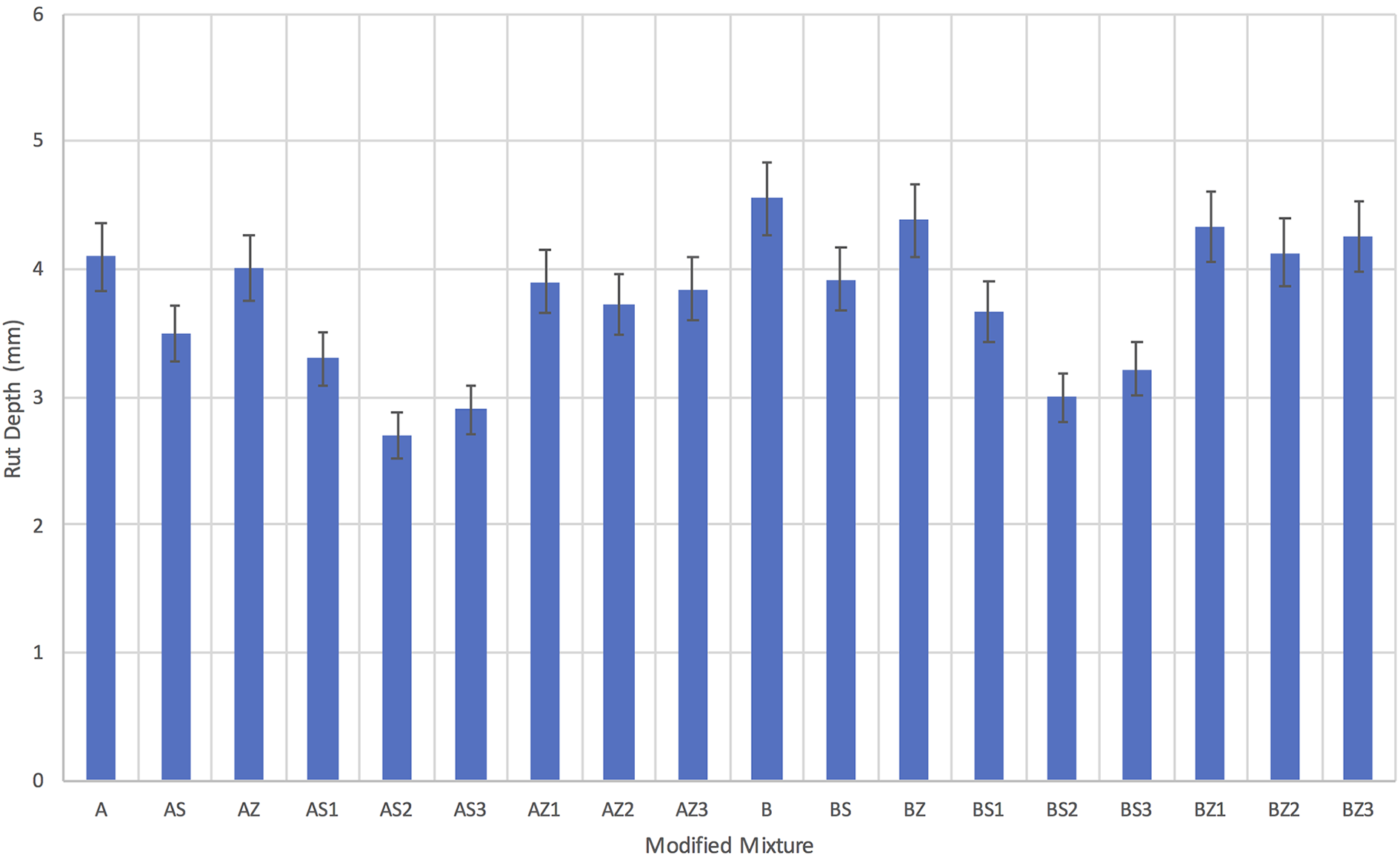
Rut depth of different mixtures.
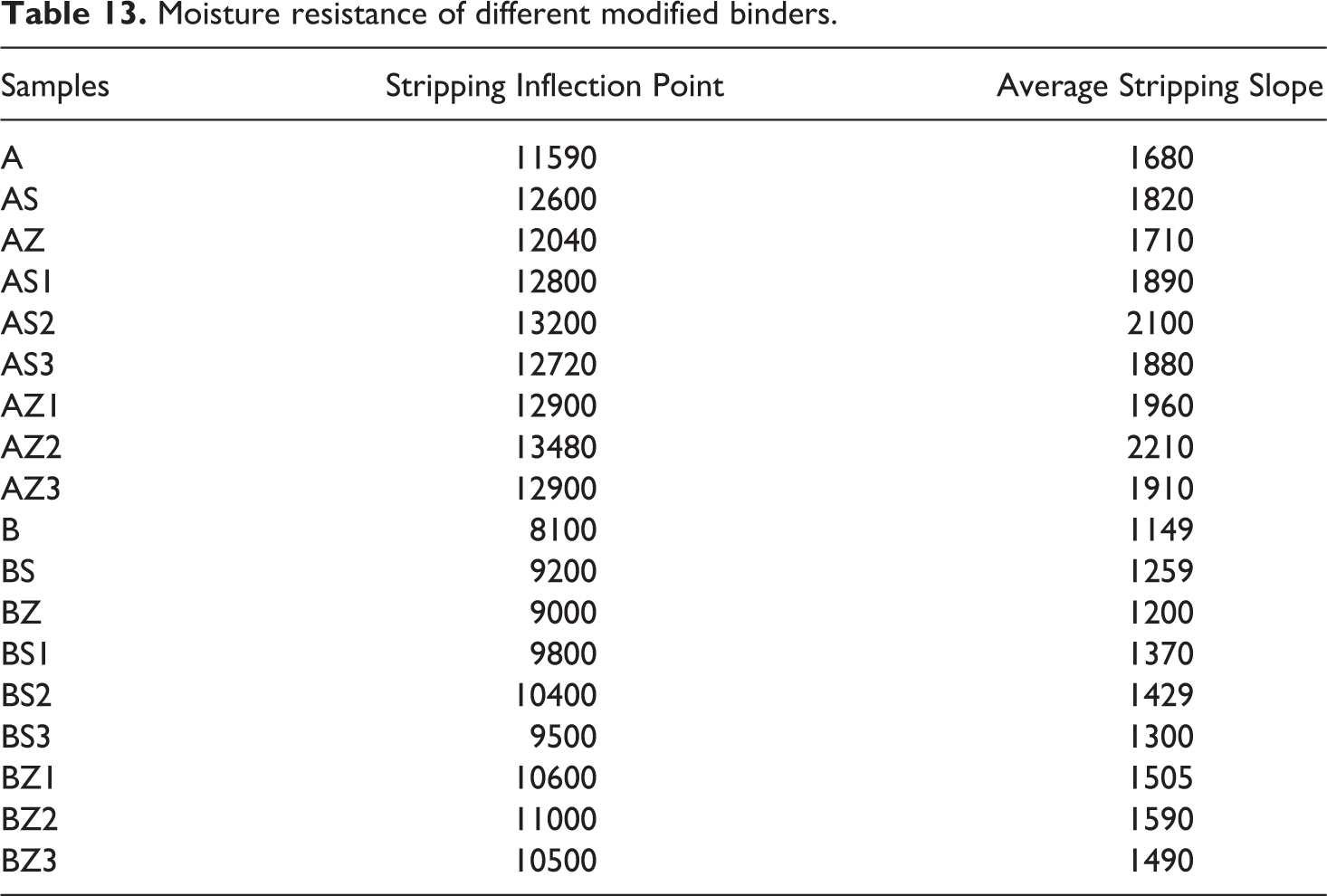
Hamburg Wheel tracking test output parameters, such as Stripping Inflection Point (SIP), and stripping slopes signify that mixtures containing Sasobit and zycotherm have higher number of wheel passes at SIP. Among warm additives the sasobit modified mixtures have better performance. Also, results revealed that the stripping slope of mixture increased by addition of warm additives. Based on the results on Table 13 and Figure 17, addition of ASAs led to increase the number of wheel passes at SIP. Among ASAs, ASA (2) has the best performance on improving the behavior of mixture. According to the outcomes, the number of wheel passes at SIP for mixtures containing A type binder are higher than B type binders. It can be concluded that the WMA mixtures containing ASA (2) and binder type A would perform well in terms of moisture susceptibility.
Moisture resistance of different modified binders.
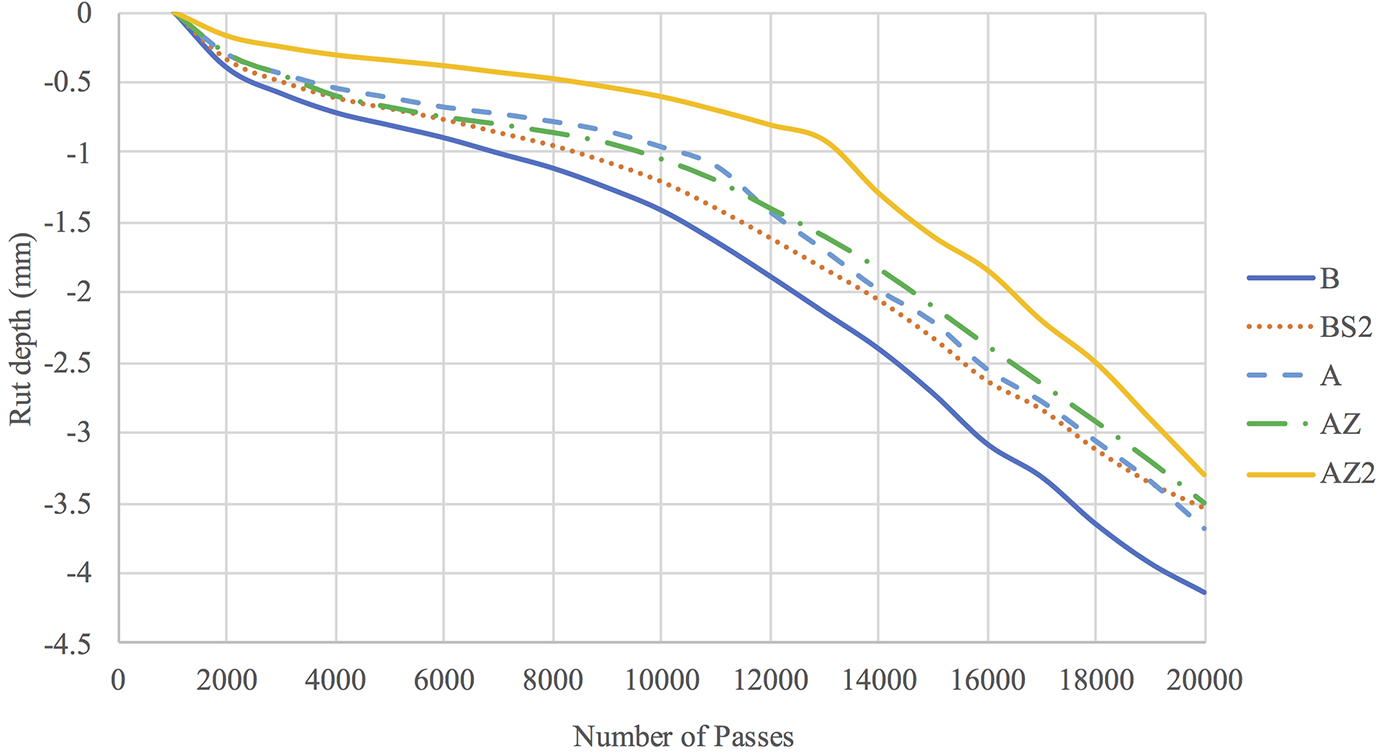
Results of rut depth versus wheel passes.
FPB test
Fatigue life of different mixtures are indicated in Figure 18. According to the outcomes, the addition of WMA additives enhances the fatigue performance of samples. According to the outcomes of the test, the utilization of Sasobit causes an enhancement in fatigue lives of mixtures more than the utilization of Zycotherm additives. As results show, the utilization of ASAs leads to an enhancement in the fatigue life of specimens. Three types of ASA can evidently decrease the viscosity of asphalt binder after RTFO compared with blank sample. The reason is that the main ingredients of three types of ASAs are amine substance. Based on some published researches from James and Steward 59 and Gawel et al., 60 amine substance was a type of active antioxidants. They could prevent interactions between polar groups in asphalt binder and then slow the hardening of asphalt binder undergoing RTFO. As a result the fatigue life of mixture increases. So that mixtures containing ASA (2) have the highest fatigue life in both warm modified mixtures. The LAS test results also indicated that addition of WMA and ASAs additives lead to enhance the fatigue performance of binder and sasobit modified binders have better fatigue life than zycotherm modified binders. The fatigue life of binders which were evaluated by LAS test are in consistence with fatigue life of mixture were evaluated by four-point beam fatigue test. Results revealed that, specimens including binder (B) have higher fatigue lives compared to mixtures containing binder (A). This can be due to the fact that the flexibility of bitumen (B) is higher than bitumen (A).
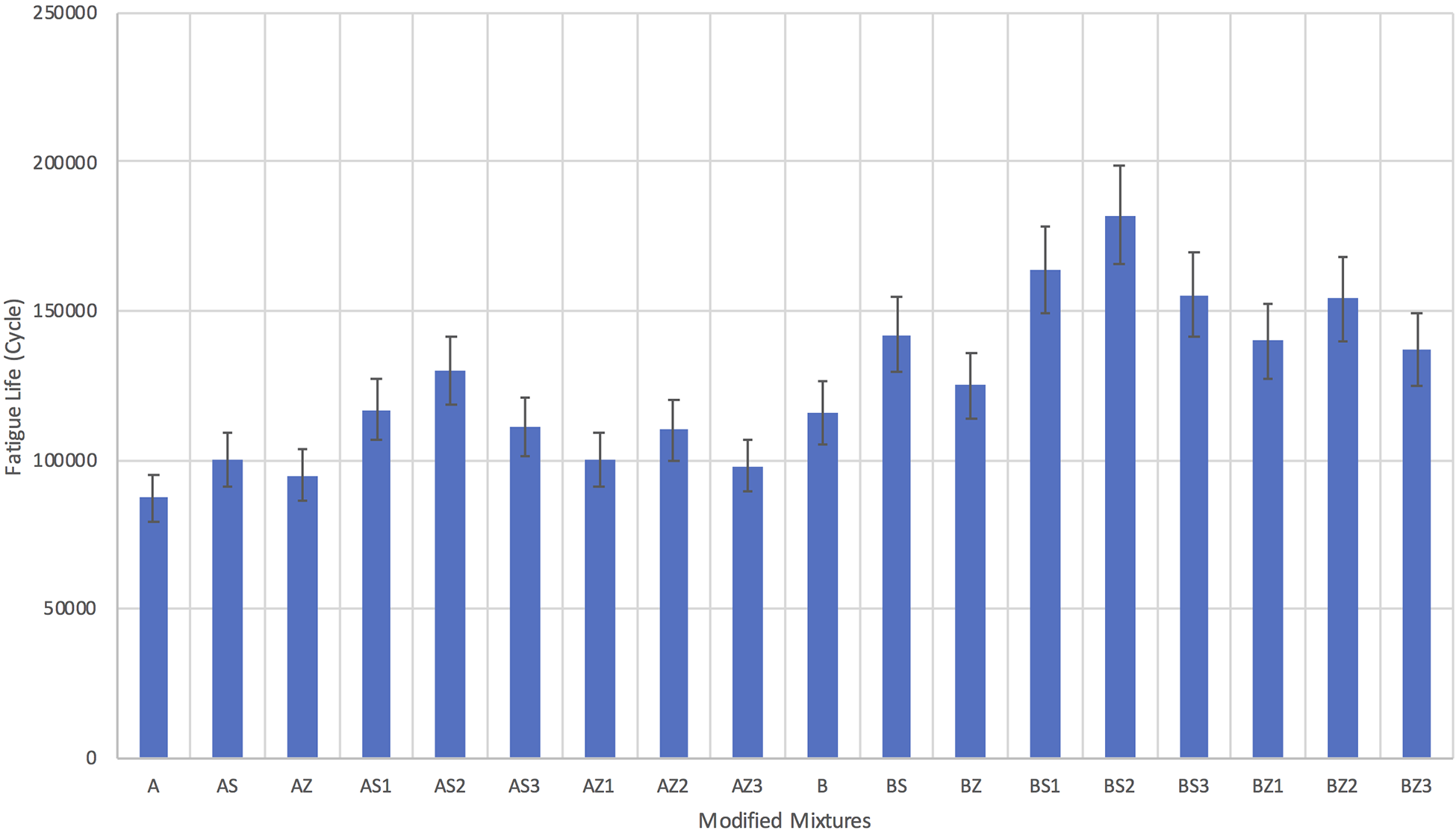
Fatigue lives of different mixtures.
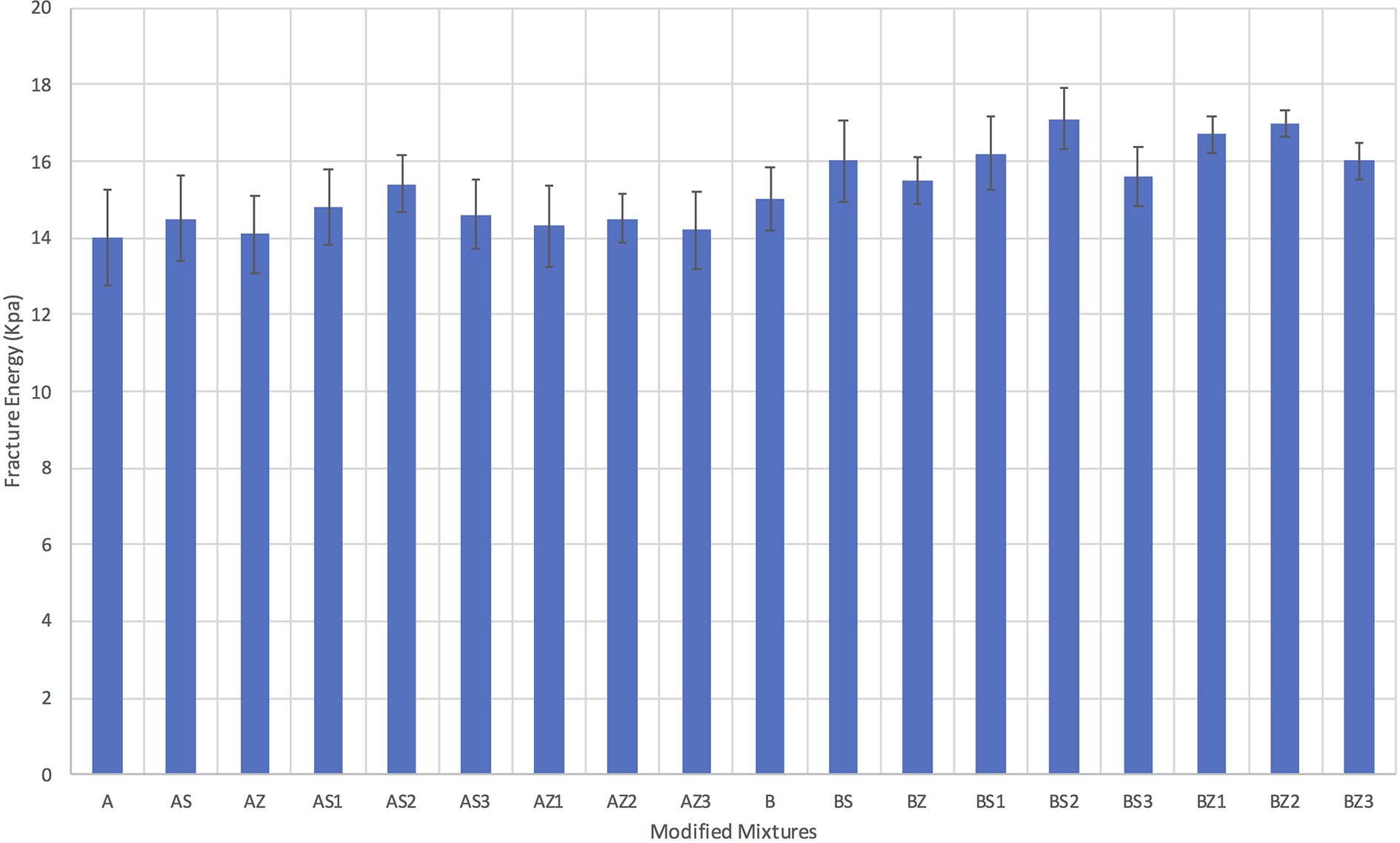
The Fracture Energy (FE) density values of different mixtures are shown in Figure 19. According to the Figure 19, the addition of WMA additive cause an increase in FE. The reason for that may due to an enhance in the flexibility of samples by utilization of WMA. Therefore, the strain energy and resistance of specimens against cracking is enhanced. The utilization of ASAs leads to an enhance in the FE of WMA-modified mixture, while by the addition of ASA (2), the FE has the highest value. The outcomes show that the utilization of WMA additives increased the FE values of SBR/PPA modified mixtures required energy to initiate the crack in mixture increases. Bas results show, specimens, including binder (B), have higher FE values than mixtures containing binder (A).
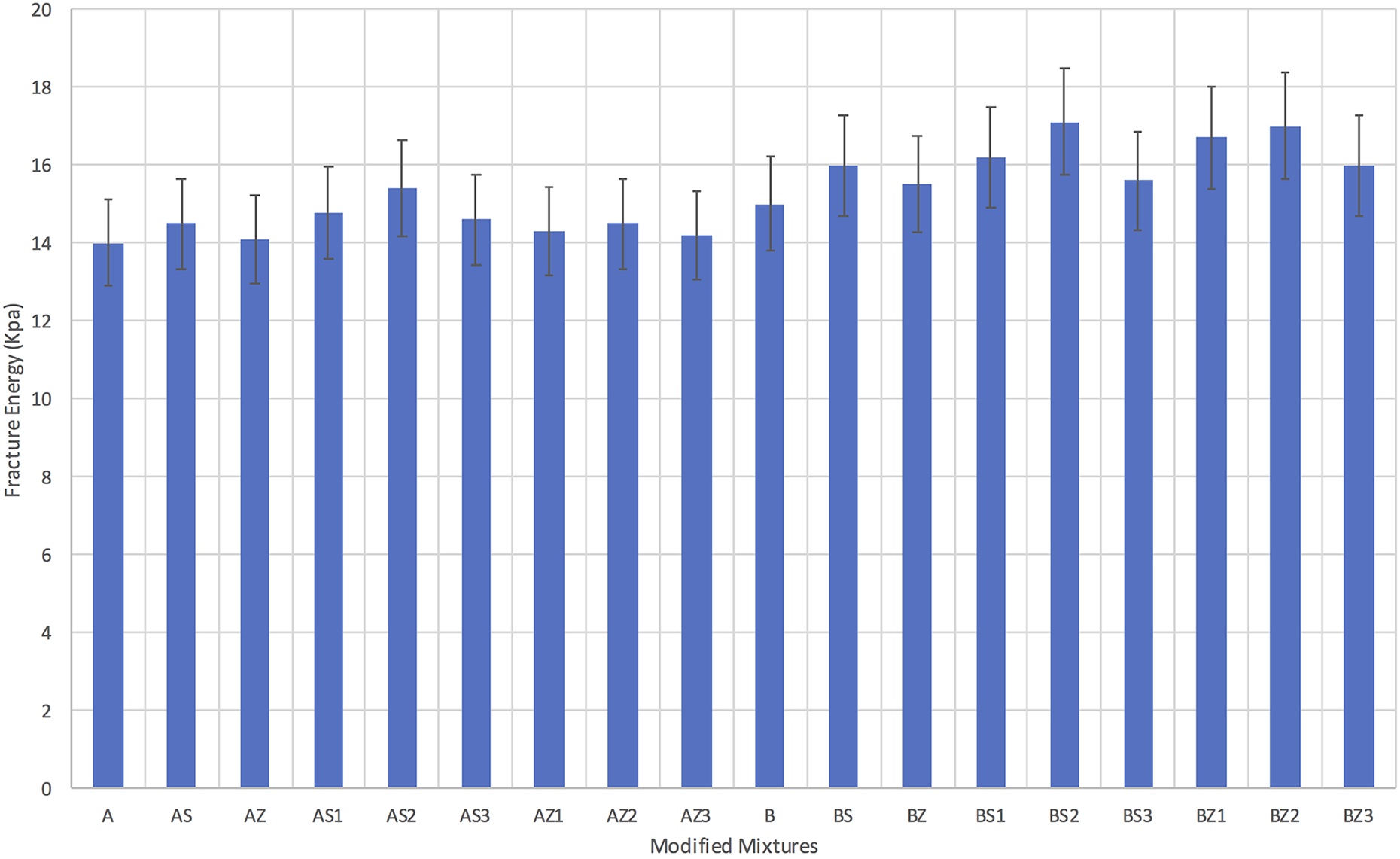
Fracture energy of different mixtures.
Data analysis method
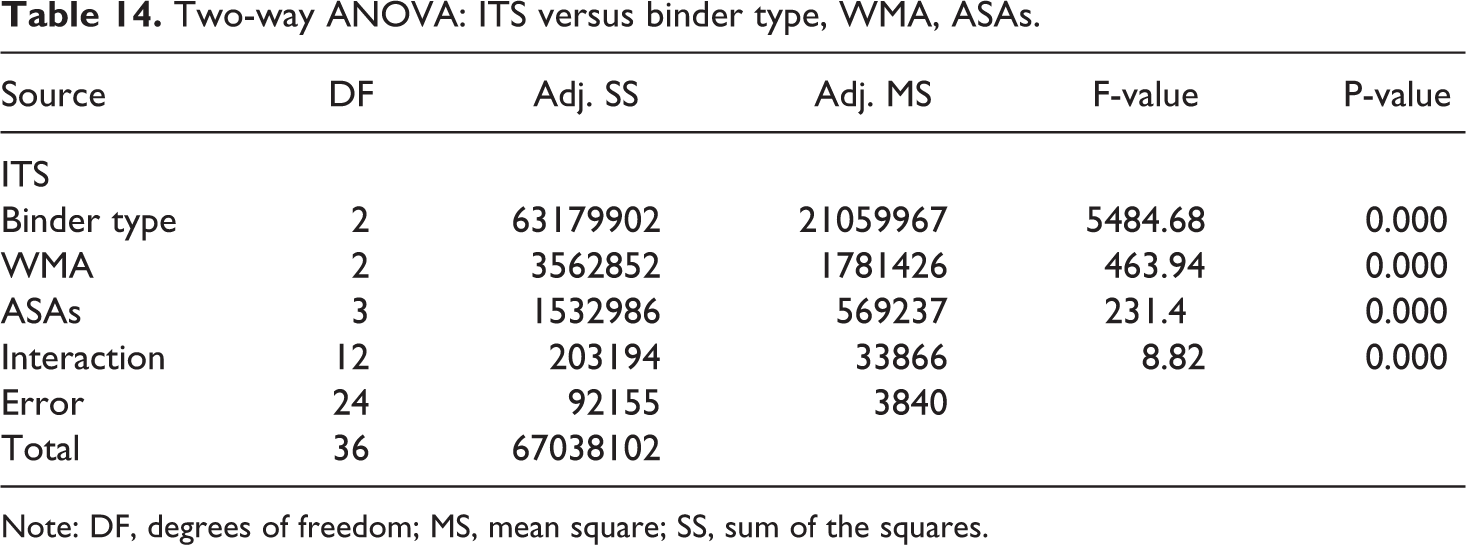
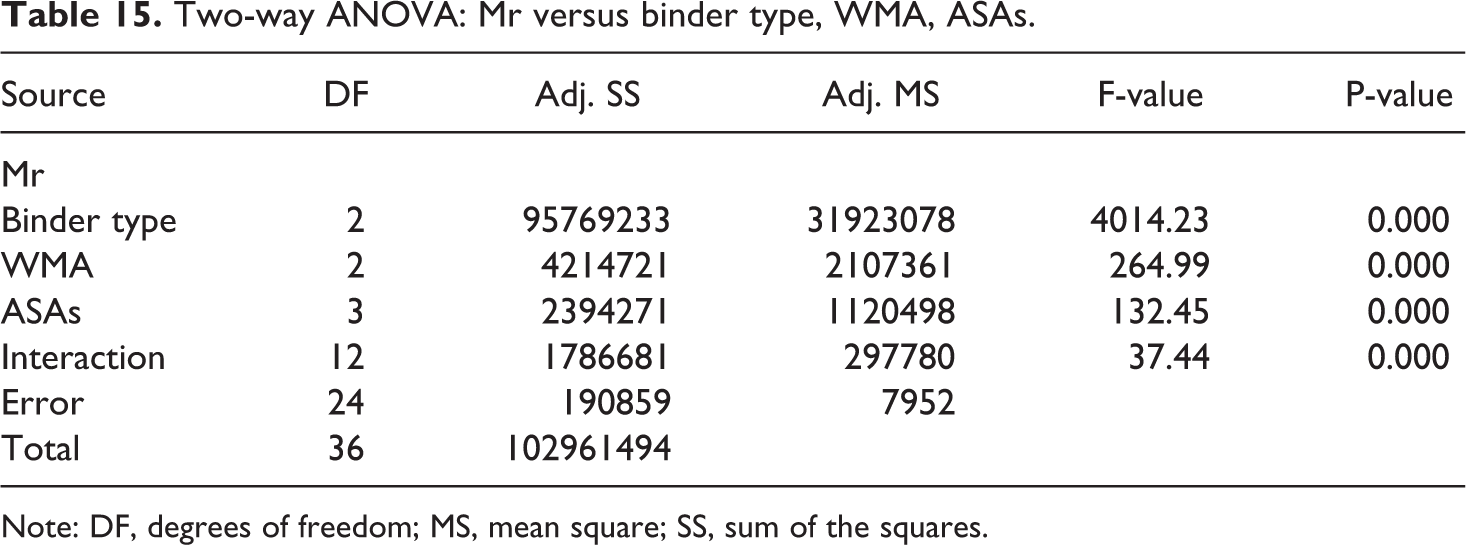
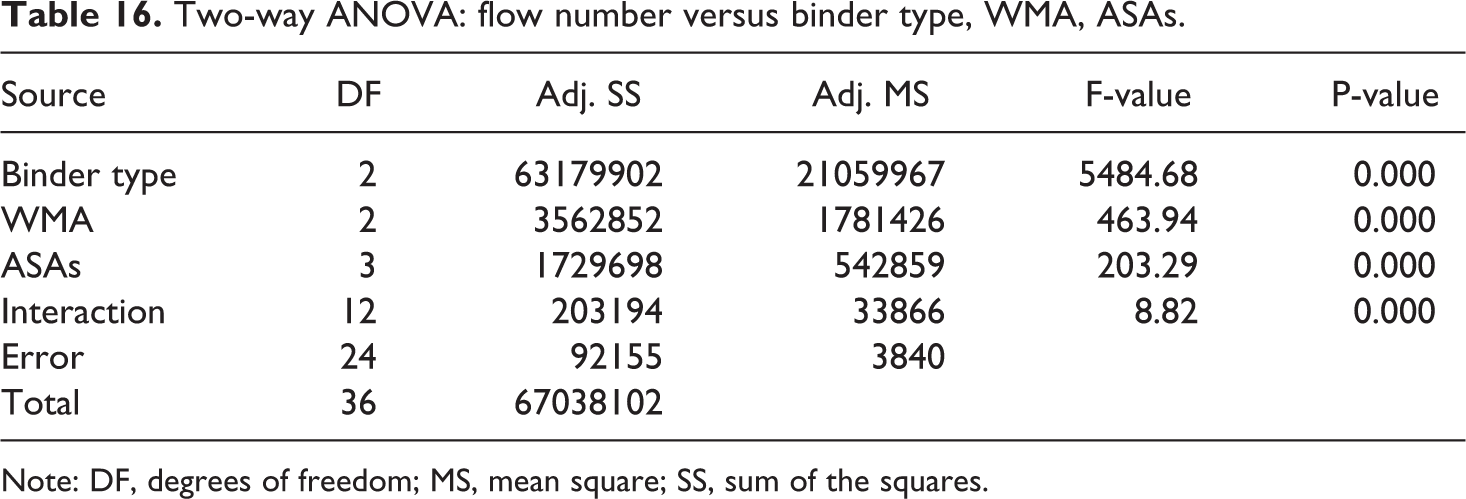
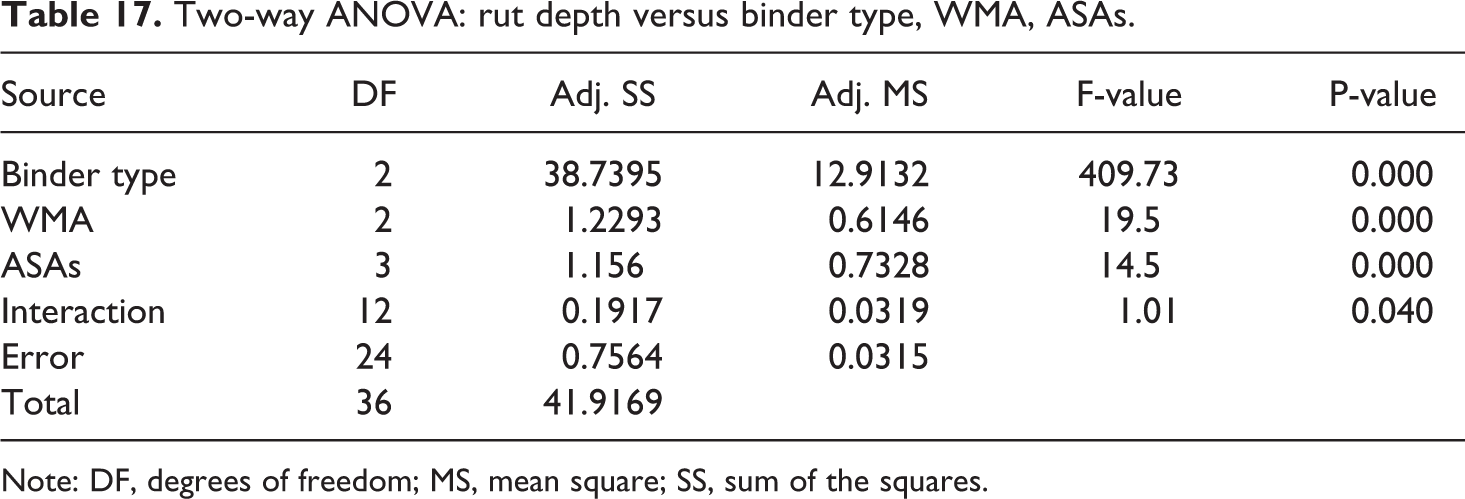
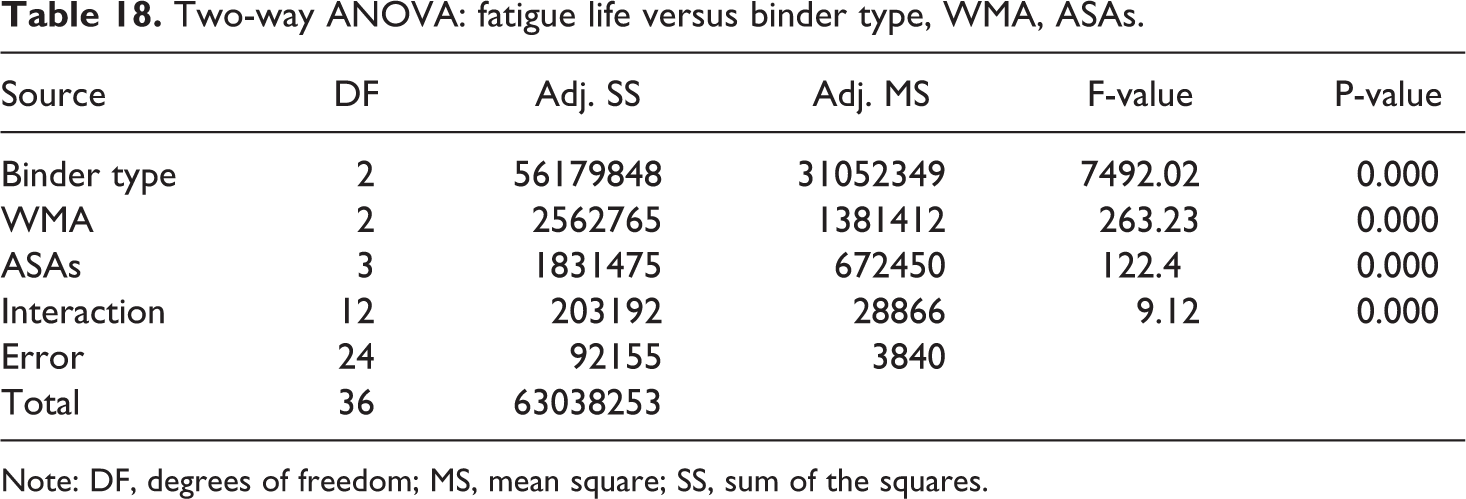
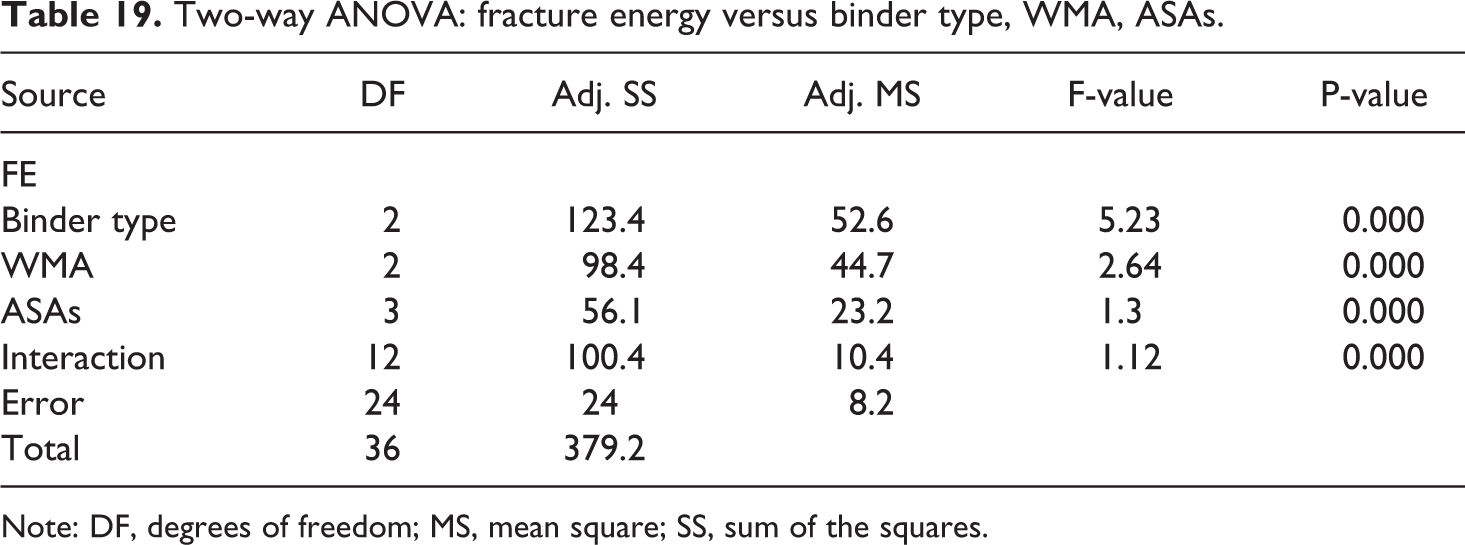
A two-factor analysis of variance (ANOVA) was performed to check the significance of the individual factors on the design objectives. The Mr, ITS, rutting parameter, flow number, fracture energy and fatigue life was considered as the dependent variable. The hypothesis is that there is no significant effect of the two factors on the measured engineering properties. The significance was tested considering 95% confidence interval. The dependent variables were significantly influenced by different combination of binder type, WMA additive and ASAs, and the interaction between them.
The results of Two-way ANOVA were presented in Tables 14 to 19. Statistical analysis shows that the binder type, WMA additive and ASAs have a significant effect on resilient modulus, ITS, flow number, rut depth, FE and fatigue life of mixtures and the interaction between them has a significant effect, too.
Two-way ANOVA: ITS versus binder type, WMA, ASAs.
Note: DF, degrees of freedom; MS, mean square; SS, sum of the squares.
Two-way ANOVA: Mr versus binder type, WMA, ASAs.
Note: DF, degrees of freedom; MS, mean square; SS, sum of the squares.
Two-way ANOVA: flow number versus binder type, WMA, ASAs.
Note: DF, degrees of freedom; MS, mean square; SS, sum of the squares.
Two-way ANOVA: rut depth versus binder type, WMA, ASAs.
Note: DF, degrees of freedom; MS, mean square; SS, sum of the squares.
Two-way ANOVA: fatigue life versus binder type, WMA, ASAs.
Note: DF, degrees of freedom; MS, mean square; SS, sum of the squares.
Two-way ANOVA: fracture energy versus binder type, WMA, ASAs.
Note: DF, degrees of freedom; MS, mean square; SS, sum of the squares.
Conclusion
The aim of this work was to investigate the influence of ASAs on performance of bitumen and SMA mixtures modified by SBR/PPA/WMA additives. To reach this goal, the ITS, Mr, Dynamic Creep, Wheel tracking, and Four-Point Beam Fatigue tests were performed. According to the outcomes, the following conclusions can be obtained: Based on physical properties of binder, addition of warm additives led to decrease the penetration degree and viscosity and increase the softening point of binder. The reason for this may be due to increase in viscosity of binder by introduction of ASAs, which is the result of a chemical reaction between nitrogen groups of amine ASAs and polar groups of asphalt binder occurs and forms compounds with no anti-stripping property. As a result, the rutting resistance of mixtures increases. According to the outcomes of the MSCR test, the Jnr value of the original binder decrease by utilization of warm additive. Binders modified by Sasobit have lower Jnr values compared to binders modified by Zycotherm. In both warm modified binders, binders modified by ASA (2) have the highest Jnr value followed by ASA (1) and ASA (3). According to the outcomes of the LAS test, the addition of warm additives improve the fatigue behavior of the base binder. Moreover, the utilization of ASAs led to an enhance in the intermediate temperature behavior of binders. Three types of ASA can evidently decrease the viscosity of asphalt binder after RTFO compared with blank sample. The reason is that the main ingredients of three types of ASAs are amine substance. Based on some published researches from previous studies, amine substance was a type of active antioxidants. They could prevent interactions between polar groups in asphalt binder and then slow the hardening of asphalt binder undergoing RTFO. As a result the fatigue life of mixture increases. So that by utilization of ASA (2) the fatigue lives enhance significantly in both warm modified binders. Based on the outcomes of ITS test, ITS results of specimens modified by WMA additive were higher than the original specimen. Among warm modified mixtures, Sasobit had the highest ITS values. Results revealed that utilization of ASAs leads to enhance the ITS values of mixtures. The reason for this may be due to increase in viscosity of binder by introduction of ASAs, which is the result of a chemical reaction between nitrogen groups of amine ASAs and polar groups of asphalt binder occurs and forms compounds with no anti-stripping property. As a result, the rutting resistance of mixtures increases. The ASA (2) had the highest impact on increasing the ITS values of specimen. By utilization of ASAs with mixtures WMA additives, the mixtures containing Sasobit have higher ITS values than Zycotherm modified mixtures. According to the outcomes of Mr test, the utilization of WMA additives leads the Mr to enhance. The reason for this may be due to enhance in the flexibility of specimens by utilization of WMA additives. According to the outcomes, the Mr values of specimens containing Sasobit are higher than Zycotherm modified mixtures. Moreover, the utilization of ASAs causes an improve in the Mr of samples. While, between mixtures modified by ASAs, AS2 specimen has the highest Mr value. This is due to the increased stiffness of bitumen by ASA (2). According to the dynamic creep test, utilization of WMA additives enhance the rutting properties of specimens, which could be attributed to increase in flexibility of mixtures due to addition of WMA. Among warm mixtures, Sasobit modified mixtures had the highest resistance against rutting. Moreover, the utilization of ASAs leads to an improve in the FN of samples. The reason for this may be due to increase in viscosity of binder by introduction of ASAs, which is the result of a chemical reaction between nitrogen groups of amine ASAs and polar groups of asphalt binder occurs and forms compounds with no anti-stripping property. As a result, the rutting resistance of mixtures increases. Specimens modified by ASA (2), have the highest strength against permanent deformation followed by ASA (1) and ASA (3) in both warm modified mixtures, based on the results, mixtures including 85–100 binder have lower flow numbers than mixtures containing 60–70 binder. According to the rut depth of mixtures, WMA additives leads to improve the resistance of mixtures rutting. WMA additives improve the flexibility of mixtures. Among warm mixtures, Sasobit modified mixtures had the highest resistance against rutting. Moreover, the utilization of ASAs decreased the rut depth of specimens. Specimens containing ASA (2), have the highest rutting strength, followed by ASA (1) and ASA (3) in both warm modified mixtures. Based on the FPBF test, addition of WMA additives improve the fatigue behavior of samples. According to the outcomes, the utilization of Sasobit increased the fatigue lives of specimens more than utilization of the Zycotherm. According to the outcomes of FPB test, the addition of ASAs leads to an improve in fatigue life of mixtures. Three types of ASA can evidently decrease the viscosity of asphalt binder after RTFO compared with blank sample. The reason is that the main ingredients of three types of ASAs are amine substance. Based on some published researches from recent studies, amine substance was a type of active antioxidants. They could prevent interactions between polar groups in asphalt binder and then slow the hardening of asphalt binder undergoing RTFO. As a result the fatigue life of mixture increases. So that mixtures containing ASA (2) have the highest fatigue life in both warm modified mixtures. Based on the results, mixtures including binder (B) have higher fatigue lives compared to mixtures containing binder (A). This can be due to the fact that the flexibility of binder (B) is higher than binder (A). The addition of WMA additive cause an increase in FE. The reason for that may due to an enhance in the flexibility of samples by utilization of WMA. Therefore, the strain energy and resistance of specimens against cracking is enhanced. The utilization of ASAs leads to an enhance in the FE in both warm modified mixtures, while by addition of ASA (2), the FE has the highest value. Based on results, the low value of error bars indicate that the presented average value is close to the exact mean of samples. Statistical analysis showed that the effect of modifiers was statistically significant.
