




Abstract
In this study, ethylene vinyl acetate (EVA) transparent nanocomposite films, which heal easily with the inclusion of a low amount of silver nanowire (AgNw), were produced. For this purpose, first AgNw was homogeneously dispersed in the polymer solution and then, nanocomposite films were produced from the solutions by casting method. The thermal, mechanical and optical properties of the produced films were characterized. Self-healing properties of nanocomposite films were confirmed by optical microscopy and mechanical tests. Optical microscope results showed that the optimum recovery temperature was 130°C and the addition of a small amount (5% w/w) of AgNw reduced the recovery time of the scratch on EVA film reducing the healing time by 66.66% (from 15 minutes to 5 minutes). In addition, tensile test results supported the optical microscope results. DSC results showed that the regular crystal regions were formed in composite films due to the high thermal conductivity and nucleating agent effect of AgNw. On the other hand, DSC curves proved that the healing process was occurred via re-entanglement of the polymer chains by heat effect, while silver nanowire addition did not affect the mechanical strength and transparency of the films, significantly. AgNw-loaded-EVA-based self-healing transparent films can be used for applications such as tempered glass laminates, electrical cables, coatings, packages, especially to protect the product and reduce the cost of repair.
Keywords
Introduction
Self-healing materials are life-saving, especially for critical products with expensive manufacturing and vital use, so they are getting more and more attention every day. These materials restore the damages that have occurred by autonomic or external stimuli with the non-autonomic principle. 1 Since these materials have a long service life, thus reducing replacement costs and the amount of waste material; it can also be considered environmentally friendly, sustainable, cost-balancing materials. More importantly, these materials provide safe usage because they can be repaired autonomously, easily and quickly compared to traditional materials. 2
There are two main self-healing mechanisms; extrinsic and intrinsic. Healing agent loaded microcapsules 3 or vascular structures, 2 reversible bonds, supramolecular interactions 4 etc. could be incorporated into materials to obtain self-healing materials. Nanoparticle-based self-healing is an another approach which differs from microcapsules and vascular-based self-healing materials by means of repeatable healing effect. 5 Especially thermally conductive and photothermal nanoparticles such as silver nanowires (AgNw), carbon nanotubes, graphene, magnetite (Fe3O4) or gold nanoparticles have been used to achieve self-healing thermoplastic materials.6–14
Silver nanowires, which are thermally and electrically conductive nanoparticles, have advantages over other conductive nanoparticles due to their good conductivity (thanks to the web-like structure) and colourless for transparent applications when used in composites.15,16 In the several studies, AgNw was coated on the polymer surface or laminated with polymers to produce sandwich-like structures.12,13,15,17 However, these methods have some disadvantages such as poor adhesion of the coating material to the surface or delamination.
Generally thermoplastic elastomers and polymers with low glass transition temperature (Tg) an melting temperature (Tm) are preferred as matrix polymer for healable materials. Thus, by softening or melting the damaged area by heating, the healing mechanism based on the re-entanglement of linear chains is achieved.6–14 Ethylene vinyl acetate (EVA) copolymer is also a suitable polymer for this method due to its low melting temperature (50°C). On the other hand, EVA is used for critical applications that requires self-healing property such as electrical cables, packages, coatings, tempered glass laminates and etc. 18
Therefore, in this study, AgNws were dispersed EVA polymer which was used as matrix and AgNw-EVA nanocomposite films that heal rapidly by themselves are produced by the solution casting method. By characterizing the thermal, mechanical and optical properties of the produced films, self-healing behaviour was examined and also the effect of heating temperature and time on healing was investigated.
Materials and methods
Materials
Greenflex® Ethylene vinyl acetate copolymer (EVA) was purchased from Resinex (Turkey). Silver nanowire (AgNw) aqueous solution has ∼1000 aspect ratio and sheet resistance range 10 Ohm/square ∼>300 Ohm/square. Silver nanowires have 50 nm diameter, 8–9 µm length (Figure 1). 1,2-Dichlorobenzene (anhydrous, 99%) was purchased from Sigma Aldrich Chemical Company (USA).
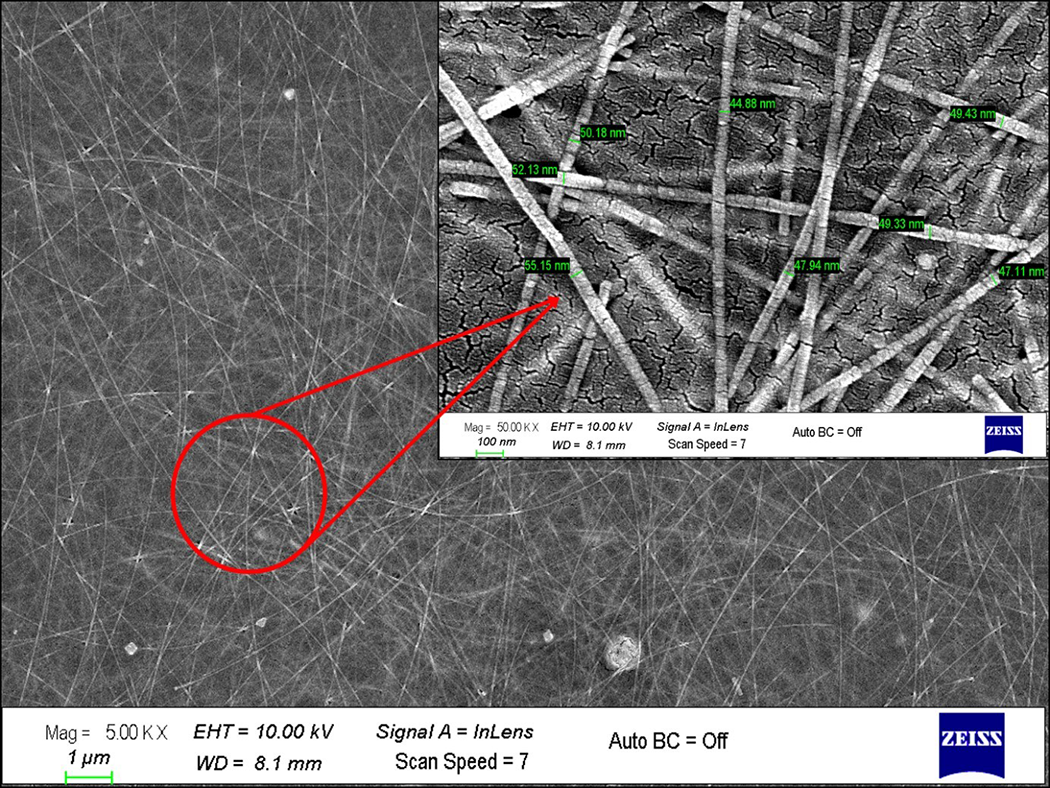
SEM images of the silver nanowires.
Film preparation
EVA solution in Dichlorobenzene (DCB) (10% w/w) was prepared at 130°C. To prepare homogenous dispersion of AgNw in EVA solution (5% w/w), first, AgNw was dispersed separately in DCB for 3 hours by magnetic mixing at 800 rpm. The dispersion was then ultra-sonicated for 5 seconds. Prepared AgNw-DCB dispersion was added into the simultaneously prepared EVA-DCB solution at 130°C and the whole solution was mixed together for another 30 minutes. The films were produced with solution casting method. For this, hot polymer solution was poured onto glass petri dishes on hot plate. Then, the solvent was evaporated and the films were cooled down gradually to obtain transparent homogenous film. The nanocomposite films were named as EVA and AgNw-EVA. The thicknesses of films were obtained between 0.15–0.25 mm.
Characterization
Thermal behaviour of the nanocomposite films was investigated with differential scanning calorimetry (DSC) (TA Instruments) with a heating rate of 10°C/min under nitrogen flow. Self-healing effect was investigated by optically with a light optical microscope (Leica DM2500) and also mechanically by measuring strength of the films according to ASTM D882 standard with mechanical tester (Shimadzu AGS X–Static Mechanical Tester) (Figure 2).
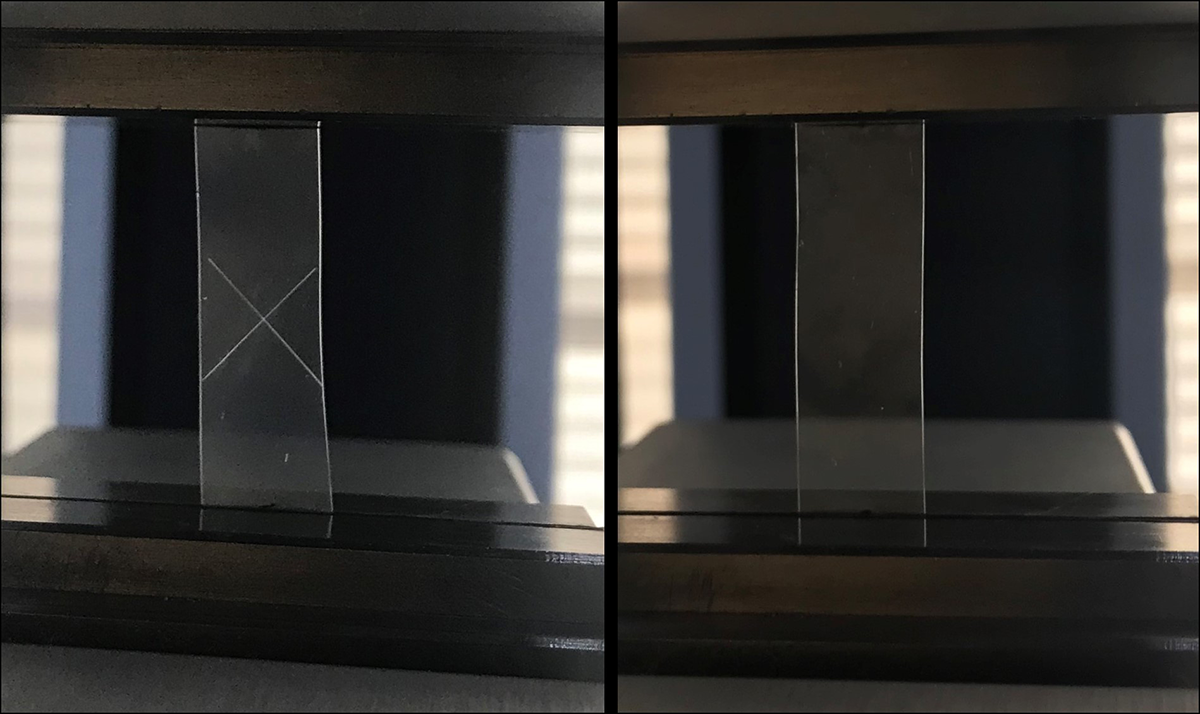
Scratched and non-scratched EVA films between mechanical test holding grips.
Self-healing property of the films was evaluated with scratch test method. 19 The effect of heating temperature and the time on the self-healing property of films were investigated. In this regard, the films, first, were scratched with a razor blade to an approximately 50% thickness of the films (scratch depth ∼0.1 mm) and then, heated in the oven at different temperatures (100, 110, 120 and 130°C) for 10 minutes. Thus, the temperature at which an improvement was achieved in the 10th minute was determined. The scratched films were then heated at 130°C for 1, 2.5, 5, 7.5 10 and 15 minutes to determine the effect of time on the self-healing properties of the films.
Results
Thermal analysis results
Thermal behaviour of the films was investigated with DSC analysis (Figure 3). The effect of AgNw reinforcement in the EVA polymer on the melting temperatures were studied. EVA has two characteristic melting peaks which are at 45–60°C and 75–85°C due to two different crystal structures.20,21 There are several melting peaks (45°C, 58°C, 68°C, 79°C, 85°C) including characteristic melting peaks of EVA (45°C, 85°C) in the DSC curve of the pristine EVA film, due to heterogenic crystalline structure formed during gradual cooling process in the film production.22–24 In the curve of the AgNw-EVA film, the number of the melting peaks were reduced from 5 to 3 (51°C, 61°C, 82°C), and also the enthalpy values were higher than EVA film since AgNw in the EVA polymer acted as a nucleating agent and so, better crystals have been formed by polymer chains.25–28 On the other hand, thermal conductivity of AgNw provided homogeneous heating and cooling of the films during film formation resulted regular crystallization of polymer chains.29–31 Moreover, DSC curves of the heat treated (healing process at 130°C) films for 5 and 10 minutes showed the proper melting peaks compared to the pristine EVA and AgNw-EVA films and also, the peaks changed into wide melting regions that could be explained by crystalline structure of the polymers distracted during healing process. 24
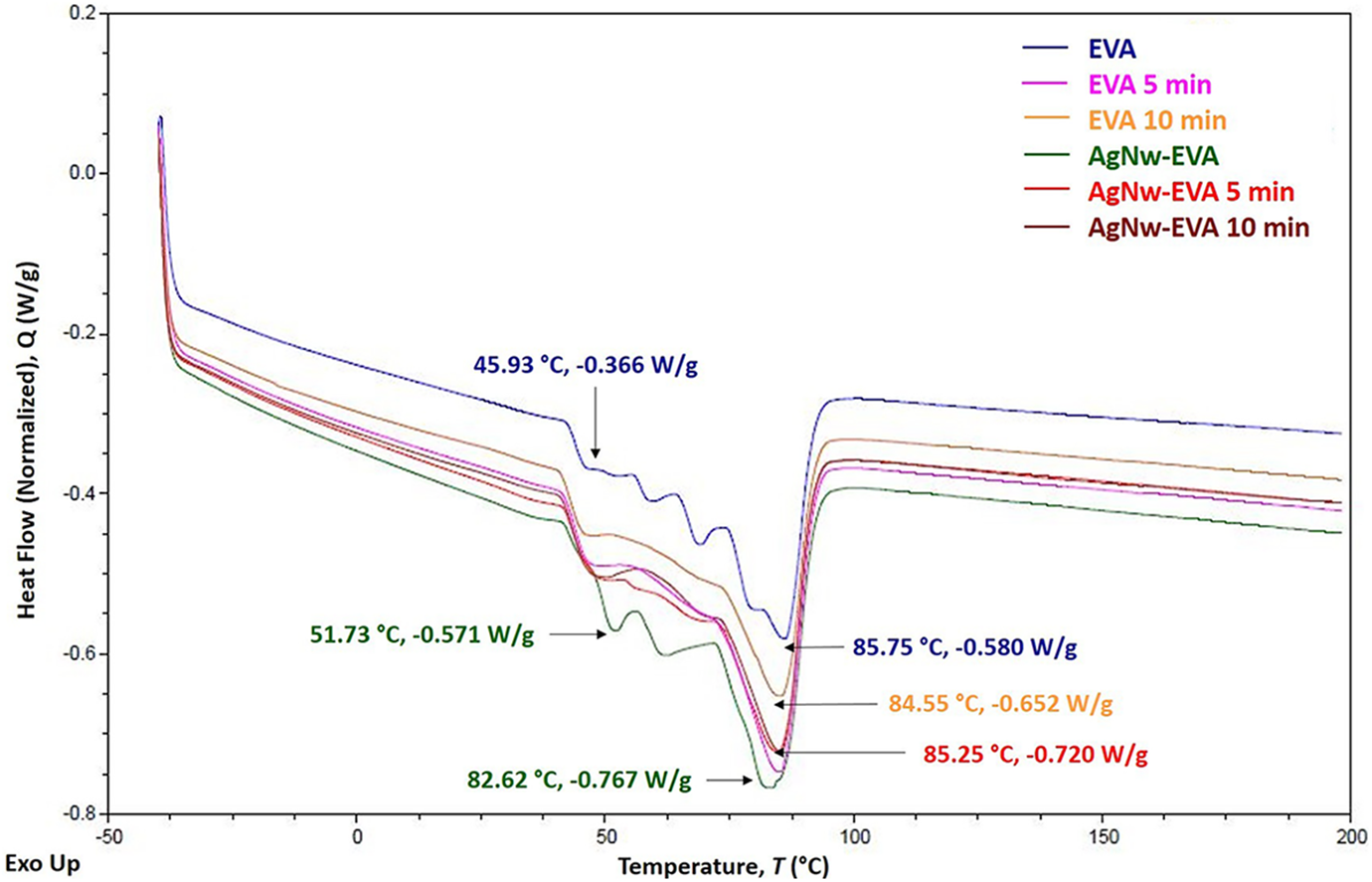
DSC curves of EVA and AgNw-EVA films.
Self-healing test results
The effect of temperature was investigated by heating of the films at different temperatures (100°C, 110°C, 120°C and 130°C) for a certain time (10 minutes). The healing behaviour was observed with the optical microscope images of scratched and healed EVA and AgNw-EVA films (Figure 4). Since the temperatures applied during healing process are above the melting temperature of the EVA copolymer, the scratches of all samples have improved to a certain degree, but this degree of recovery increases with temperature. Also, scratches on AgNw-reinforced films have almost disappeared at lower temperatures than pure EVA film. However, the temperature at which it disappeared is 130°C.
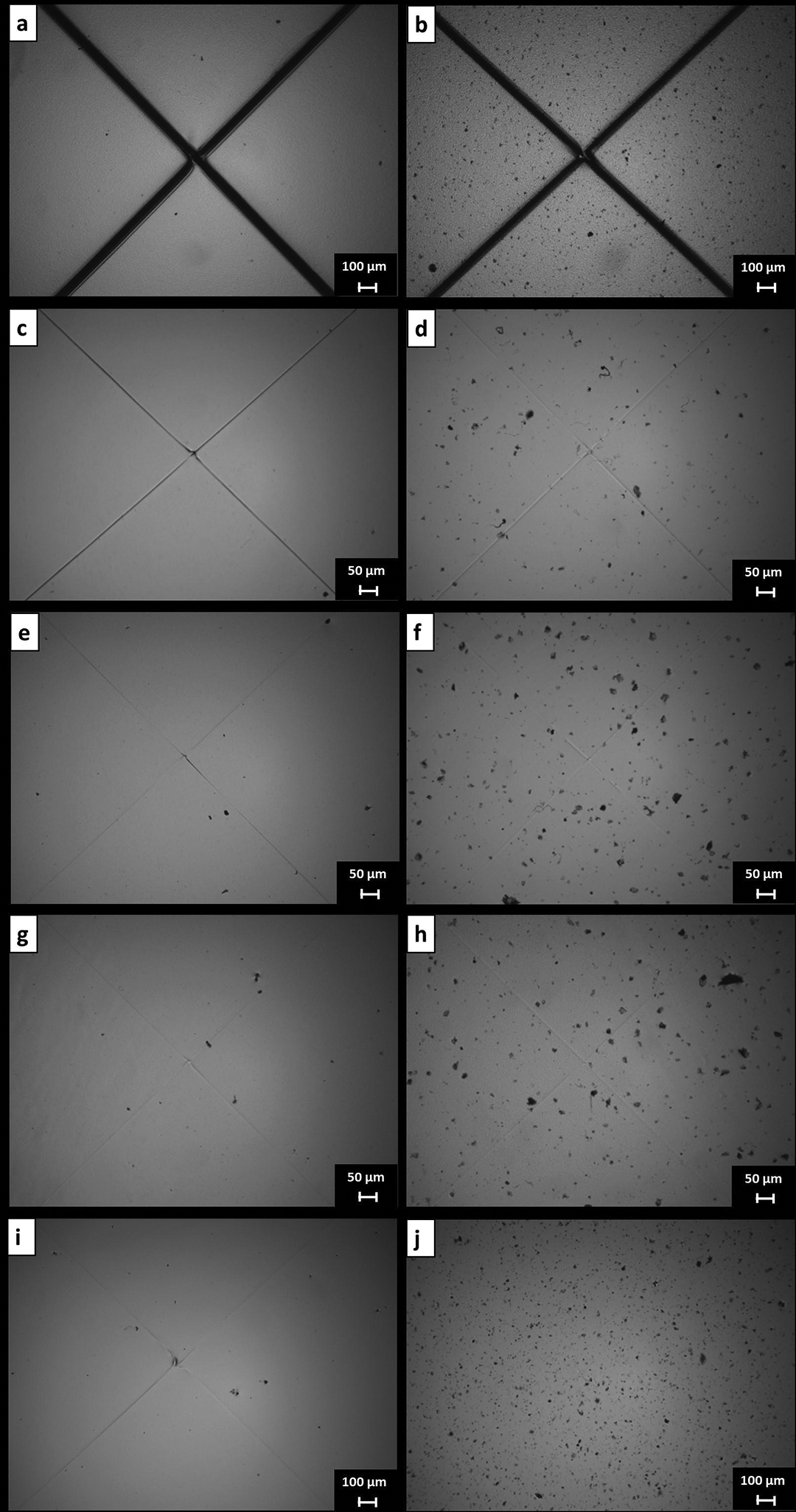
The optical microscope images of scratched and healed EVA and AgNw-EVA films with different temperatures for 10 minutes. (Magnification (a), (b), (i), (j) 100×; (c), (d), (e), (f), (g), (h) 50×) (a) Scratched EVA film, (b) scratched AgNw-EVA film, (c) healed EVA film at 100°C, (d) healed AgNw-EVA film at 100°C, (e) healed EVA film at 110°C, (f) healed AgNw-EVA film at 110°C, (g) healed EVA film at 120°C, (h) healed AgNw-EVA film at 120°C, (i) healed EVA film at 130°C, (j) healed AgNw-EVA film at 130°C.
Besides, the heating time on the healing was investigated with all the temperatures. The results show that the healing degree increased with healing time. AgNw-EVA films at 90°C, 100°C and 110°C recovered for long periods of time such as 1 hour, 35 minutes and 20 minutes, respectively. Therefore, these temperatures are not appropriate, when a rapid recovery is desired.
AgNw-EVA films recovered at 120°C after 10 minutes, while the non-reinforced EVA film recovered after 15 minutes. The fastest self-healing behaviour was achieved at 130°C and the AgNw-EVA film healed after 5 minutes, while the pure EVA film did not heal completely after 5 minutes (Figure 5). These results indicated that 5% AgNw reinforcement obviously increased the self-healing effect of EVA film and also, self-healing time decreased at least 66.66%. Silver nanowires decreased the healing time by increasing thermal conductivity of the films.12,13,29
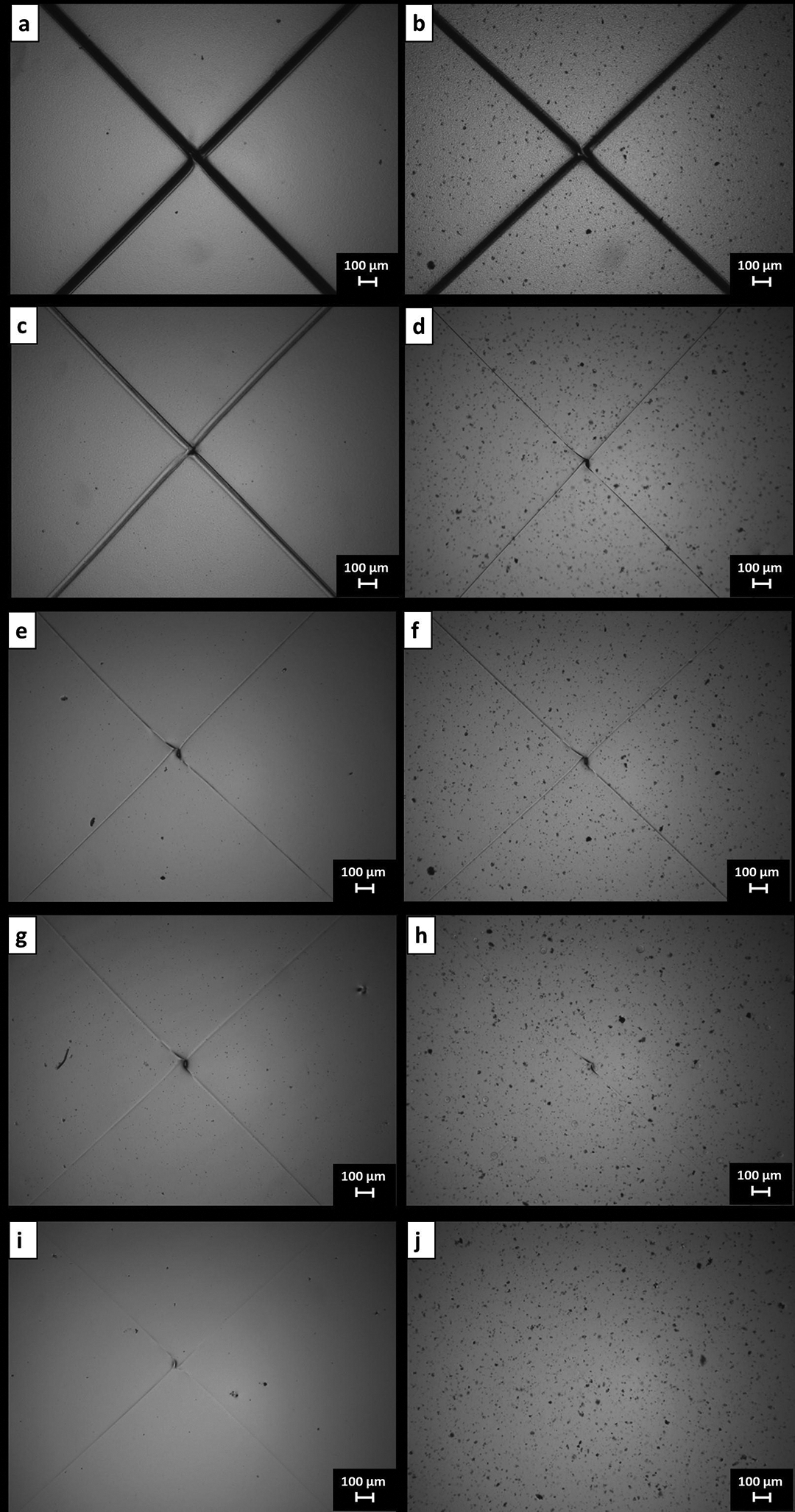
The optical microscope images of scratched and healed EVA and AgNw-EVA films at 130°C for different times (Magnification 100×). (a) Scratched EVA film, (b) scratched AgNw-EVA film, (c) healed EVA film for 1 minutes, (d) healed AgNw-EVA film for 1 minutes, (e) healed EVA film for 2.5 minutes, (f) healed AgNw-EVA film for 2.5 minutes, (g) healed EVA film for 5 minutes, (h) healed AgNw-EVA film for 5 minutes, (i) healed EVA film for 10 minutes, (j) healed AgNw-EVA film for 10 minutes.
Mechanical test results
Breaking stress of the nanocomposite films were shown in Figure 6. Mechanical test results confirm optical microscope results. Silver nanowire reinforcement decreased the mechanical strength of the EVA films slightly. But after the self-healing test (5 minutes at 130°C), the AgNw-EVA film was completely healed and reached higher tensile stress compared to pristine AgNw-EVA film due to re-entanglement of the EVA chains with heat. 24
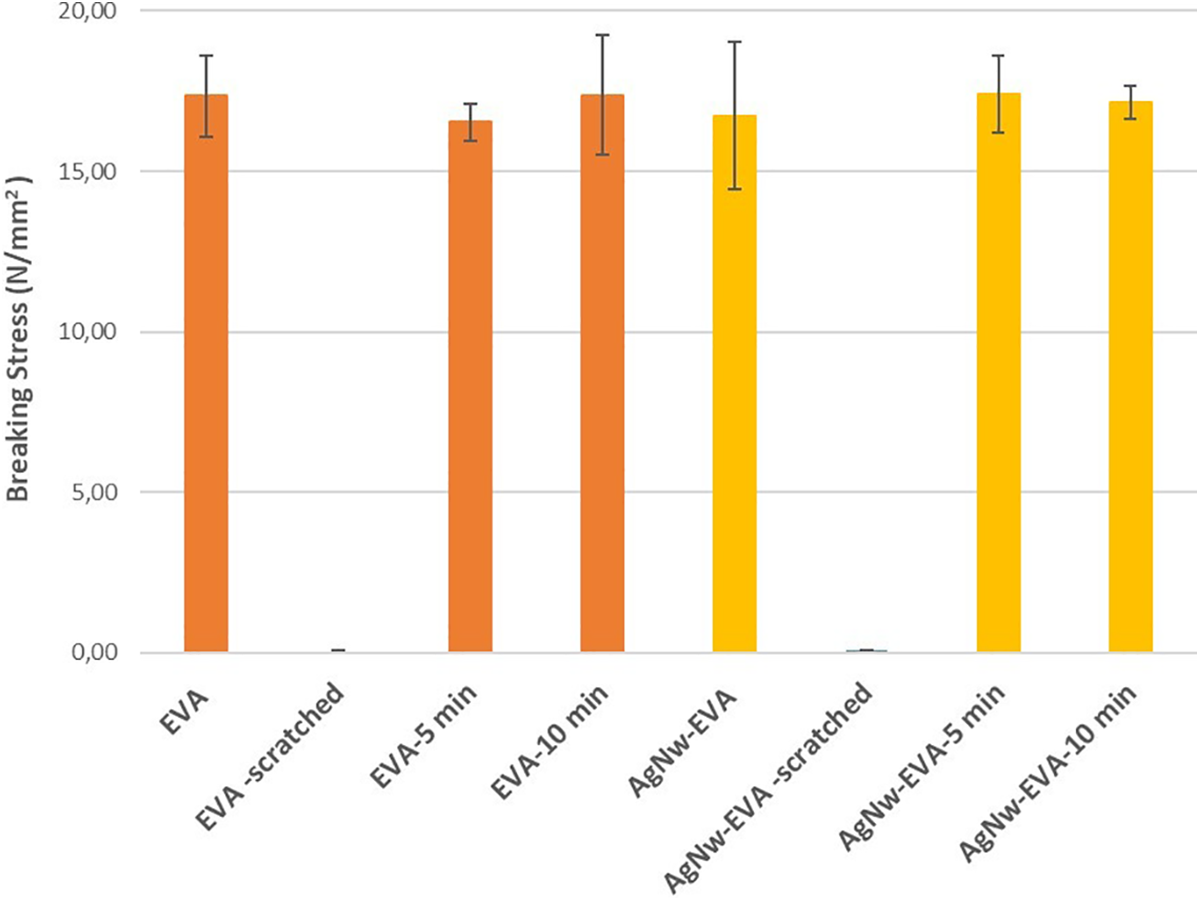
Tensile results of pristine, scratched and healed (at 130°C) EVA and AgNw-EVA films.
Conclusion
EVA polymer-based nanocomposite films were reinforced with low amount of AgNw particles to obtain rapid self-healing films produced with solution casting method. The investigation of thermal healing behaviour of the films was performed via optical, mechanical and thermal analysis. The fastest recovery was achieved at 130°C and pure EVA film healed in 15 minutes, while AgNw-EVA films healed after 5 minutes. As a result, 5% AgNw reinforcement increased the healing rate of the EVA films. At the same temperature, AgNw-EVA films self-healed 66.66% faster than pristine EVA films. The rapid self-healing behaviour of AgNw-EVA film can be explained by the fact that AgNw particles increase the thermal conductivity of EVA films. Thus, polymer chains of nanocomposite films gain easier mobility than pristine EVA. Self-healing AgNw-EVA transparent films were produced without significant strength reduction and transparency reduction is acceptable for applications such as tempered glass laminates, electrical cables, coatings and packages.
