




Abstract
Multi-walled carbon nanotubes (MWCNTs)-reinforced polyurethane (PU) composites were fabricated by using solution mixing technique followed by compression molding. Nano dynamic mechanical analysis was carried out to investigate the viscoelastic properties of PU/MWCNTs composites within a frequency range of 5–250 Hz. At higher frequencies (250 Hz), the storage modulus of PU/MWCNTs composites with 10 wt% loading of MWCNTs was enhanced by 148% in equivalence to pristine PU. An improvement of 13.3% in storage modulus was observed at a loading frequency of 250 Hz in comparison to that of a loading frequency of 75 Hz, which indicates that the effect of MWCNTs on storage modulus was more pronounced at higher frequencies. At 75 Hz, a minor composition of MWCNTs (3 wt%) was sufficient to reduce the value of tan δ from 0.20 to 0.15, indicating that the material becomes more elastic after reinforcing MWCNTs. This significant improvement in the mechanical behavior of composite material has been attributed to the uniform dispersion of MWCNTs, and their adhesion with PU molecules. Reported enhancement in the elastic behavior of PU composite will boost the applicability of PU-based composite material for the fabrication of high-strength boots, gloves, and jackets required to absorb high vibration frequencies experienced during conditions such as rock drilling.
Introduction
Since their appearance, carbon nanotubes (CNTs) have drawn tremendous amount of attention in number of applications like semiconductor, sensors, parts of aircraft, and automobile industry. Their excellent mechanical and thermal properties make them suitable for the synthesis of high-strength polymer-based composite material with improved properties, 1 for the various low load-bearing applications. High modulus of CNTs (up to 1 TPa),2,3 good aspect ratio, 4 and high tensile strength of 60 GPa 5 make them suitable filler candidate for the fabrication of polymer-based composites with improved mechanical and thermal properties than polymer possess alone. Moreover, small diameter (20–100 nm), length up to few microns, and density of 2.6 g/cc 6 help in uniform dispersion of CNTs throughout the polymer matrix, which is the prime factor to owing the properties of CNTs. CNTs have a very low value of Coefficient of Thermal Expansion (CTE) (2e−5/K), good value of thermal conductivity (3000 W/K), 5 and they are thermally stable up to 2400°C. 7 The inclusion of CNTs in any polymer matrix holds the potential to improve the host polymer’s thermal, electrical, and mechanical properties well above the performance possible by traditional filler materials. Several methods were reported in the past by various scientists to disperse multi-walled carbon nanotubes (MWCNTs) into polymer matrix, for example, melt mixing, in situ polymerization, and solution mixing. Among the abovementioned methods, solution mixing was found to be more suitable for the synthesis of MWCNTs-reinforced polymer composite material, as this method provides uniform dispersion of filler material 8 throughout the matrix. There are a number of polymers available in the market but the polymer used in this study (polyurethane (PU)) is of momentous importance in industry with a wide range of applications like catheters, hospital bedding, short-term implants, clothing, and shoemaking. Therefore, PU was selected as an interesting matrix for several reasons including the prospect of improving viscoelastic behavior against the high-frequency loading conditions. In the past, some work was done by various scientists to improve the viscoelastic behavior of polymer-based composite material as a function of varying frequency and temperature conditions.
Guo et al. 9 used PU and MWCNTs nanocomposites prepared by in situ polymerization and solution casting approach for dynamic mechanical thermal analysis (DMTA). This group observed that storage modulus (E′) of PU/MWCNTs composites with 1 wt% loading of MWCNTs increased by 124% (at −75°C) at a constant frequency of 1 Hz. This significant rise in storage modulus is due to the stiffening effect of MWCNTs. They further noticed that the peak position of loss modulus (E″) of nanocomposites remains almost unchanged at about −30°C. And this peak intensity decreases with an increase in MWCNTs content, probably due to the increase in stiffening effect. Barick and Tripathy 10 used carboxylic group (COOH) attached MWCNTs/thermoplastic polyurethane (TPU) for DMTA (at the constant frequency) and reported decreased storage modulus (E′) with increase in temperature of the material. The value of E′ for PU/MWCNTs nanocomposites between the temperature range of −25°C to +25°C was reduced in equivalence to neat PU because short-range regular arrangement of both soft and hard segments of PU was reduced by MWCNTs. They found that the peak of tan δ curve was maximum at around −48°C due to soft segments of the PU matrix. The introduction of MWCNTs into the PU matrix caused the shifting of glass transition temperature (Tg) values to the higher temperature of 42.80°C for the 2.5 wt%-loaded PU nanocomposites from −49.32°C for pure PU. This proved that the molecular chain segmental mobility of the PU matrix was restricted by MWCNTs via interphase adhesion among the COOH group of MWCNTs.
Xiong et al. 11 reported that at −100°C, the value of storage modulus for PU/MWCNTs with 2 wt% loading was nearly twice as compared to pure PU. This rise in storage modulus was due to extremely high modulus of MWCNTs and their interaction with the PU matrix. They further observed that Tg of polymer was greatly increased from −5.4°C for PU to 6.2°C for the composites. The improvement in Tg was mainly due to the excellent thermal properties of MWCNTs and their direct connection with hard segments of PU. Lopes et al. 12 used as-grown and oxygenated MWCNTs (4% COOH group) to evaluate their individual effect on the mechanical properties of the composite. This group performed DMTA at a temperature range of −150°C to 200°C, and constant frequency of 1 Hz. Researchers observed that storage modulus for PU/MWCNTs-ox nanocomposites with 0.5 wt% of MWCNTs was slightly higher below 75°C, in comparison to PU alone. They further noticed that Tg of PU/MWCNTs was improved by 20°C, as compared to pure PU. Xia and Song 13 used HNO3-treated PU/MWCNTs composites for DMTA, at constant frequency conditions by varying temperature (−80°C to 200°C) at a heating rate of 3°C min−1. They observed that storage modulus increased with increased MWCNTs content nearby room temperature, and Tg of the same composite decreased slightly.
Wu et al. 14 performed DMTA on polycarbonate(PC)/MWCNTs-COOH composites at a temperature range of 40–160°C, at constant frequency. At below Tg, improvements of 20.7%, 58.3%, and 102% were observed in storage modulus of PC/MWCNTs nanocomposites with 2, 5, and 7 wt% of MWCNTs, respectively. However, these values start decreasing at above Tg. The improvement in storage modulus for PC/MWCNTs nanocomposites was more than one order in magnitude higher than those of pure PC. These results revealed that the presence of MWCNTs in PC/MWCNTs nanocomposites was possibly confined and retarded the segmental chain motion of PC. Gupta et al. 15 observed that for 10 wt% MWCNTs, the hardness and elastic modulus of PU/MWCNTs composites were significantly improved by 271% and 290%, respectively, in comparison to pure PU. Jindal et al. 16 studied dynamic mechanical analysis (DMA) behavior of poly(methyl methacrylate) (PMMA)/MWCNTs composites at frequency varying conditions. They reported a significant improvement of 10% in storage modulus for 5 wt% PMMA/MWCNTs composites within the frequency range of 50–210 Hz. Jindal et al. 17 also worked to evaluate the static mechanical properties of PC/MWCNTs composites. At minor composition of 2 wt% of MWCNTs, they observed significant improvement of 95% and 150% in elastic modulus and hardness, respectively. Yao et al. 18 worked on DMTA of CNTs-filled PU composites at constant frequency of 10 Hz and temperature range of −100°C to 200°C. Researchers reported that storage modulus of CNTs-filled PU composites was enhanced in comparison to pure PU for the whole temperature range taken into consideration. Mansour et al. 19 prepared composite of PU and CNTs to evaluate their mechanical properties and reported that hardness and modulus for 10 wt% composite were improved by 13% and 256%, respectively. Tehran et al. 20 prepared poly(butylene terephthalate)/TPU/MWCNTs composite with different wt% of MWCNTs (0.1, 0.2, and 0.3 wt%) by using melt mixing technique. Scientists reported that reinforcement of MWCNTs in composite material results in improved flexural and tensile strength of the composite. Latko-Durałek et al. 21 reported that elongation at break of MWCNTs-reinforced thermoplastic fibers was reduced, but Young’s modulus was improved significantly. Mariappan and Jaisankar 22 performed thermal studies on SWCNTs-reinforced TPU composite material and reported improved melting and degradation temperature of the composite material. Doğru and Güzelbey 23 also prepared MWCNTs-reinforced TPU composite by varying the composition of MWCNTs and reported improved mechanical properties at a weight fraction of 1% MWCNTs.
Based on the relevant literature review, it has been observed that viscoelastic behavior of PU by varying temperature conditions has been an important focus area. For applications, where loading frequency and temperatures vary in a combination, it becomes imperative to evaluate their effects on mechanical behavior of the composites.
PU material has a number of applications in various engineering fields like automobile industry, sports, footwear industry, and biomedical implants. The only limitation associated with their use has been their poor mechanical properties due to the presence of soft segments. A product made out of PU material may get deformed permanently due to its molecular chain movement when exposed to oscillatory loading conditions. Therefore, the present study is undertaken to evaluate the viscoelastic properties of MWCNTs-reinforced PU composite as a function of MWCNTs composition and frequency of the applied load. An oscillatory load with varying frequency was applied on the surface of PU/MWCNTs composite specimen, and properties like storage modulus, loss modulus, and damping factor were evaluated and compared with pure PU.
Experimental
Materials and methods
Beads of pure PU were procured from Goyal Poly Products Ltd, Phase-2, Chandigarh, India, and this PU material was used as base matrix. The MWCNTs with a diameter of around 20–100 nm and length of few microns were procured from Intelligent Materials Pvt. Ltd, Chandigarh, India, and these MWCNTs were used as reinforcing material.
Synthesis of PU/MWCNTs composite
Solvent mixing technique23–34 was used for the synthesis of MWCNTs-reinforced PU composite material. Dimethyl formamide (DMF) solvent was used to dissolve PU and to disperse MWCNTs. Beads of pure PU were dissolved in DMF by using magnetic stirring and water-like solution was obtained. Various suspensions of MWCNTs were prepared by varying the composition of MWCNTs (1–10 wt%) by using ultra bath sonication. Both the solutions were mixed and again dispersed by using magnetic stirring for achieving uniform dispersion of MWCNTs into the PU matrix. Thin films of thickness around 0.2–0.3 mm were casted after the evaporation of solvent by placing the solution in vacuum oven for 4–6 h at 103°C. These thin films were molded in the form of small disc with diameter of 10 mm and thickness of 5 mm by using compression molding.24,35–43
Field-emission scanning electron microscopy and mapping
Hitachi apparatus (model SU8000, Japan) was used to perform field-emission scanning electron microscopy (FESEM) for validating the extent of dispersion of MWCNTs into the PU matrix. The operating voltage was set as 5 kV and images were captured at different resolutions. Mapping of the PU/MWCNTs composite was performed by using same equipment at a resolution of 100 nm.
X-ray diffraction
X-ray diffraction (XRD) spectra for PU/MWCNTs composite with 7 wt% MWCNTs and pure MWCNTs were recorded by using diffraction angle in the range of 5–80°.
Nanoindentation
Hysitron T1 950 Triboindentor (Minneapolis, Minnesota, USA) equipped with Berkovich tip, which was three-sided pyramidal tip with an included angle of 142.30° and a tip radius of 150 nm was used for evaluating viscoelastic properties of PU/MWCNTs composites. Before mounting the specimen for indentation, grinding of the specimen was done to ensure roughness free surface. Polycrystalline diamond suspension solution was used to polish the surface of specimen before proceeding to experiment. An oscillating load of 500 µN with varying frequency (5–250 Hz) was applied on indenter approaching the surface of specimen.
Results and discussion
Field-emission scanning electron microscopy
FESEM of pure MWCNTs and PU/MWCNTs composite is shown in Figure 1. The images were captured at different resolutions and it can be seen that uniform dispersion is achieved throughout the polymer matrix, which is the prime factor for owing the properties of MWCNTs.
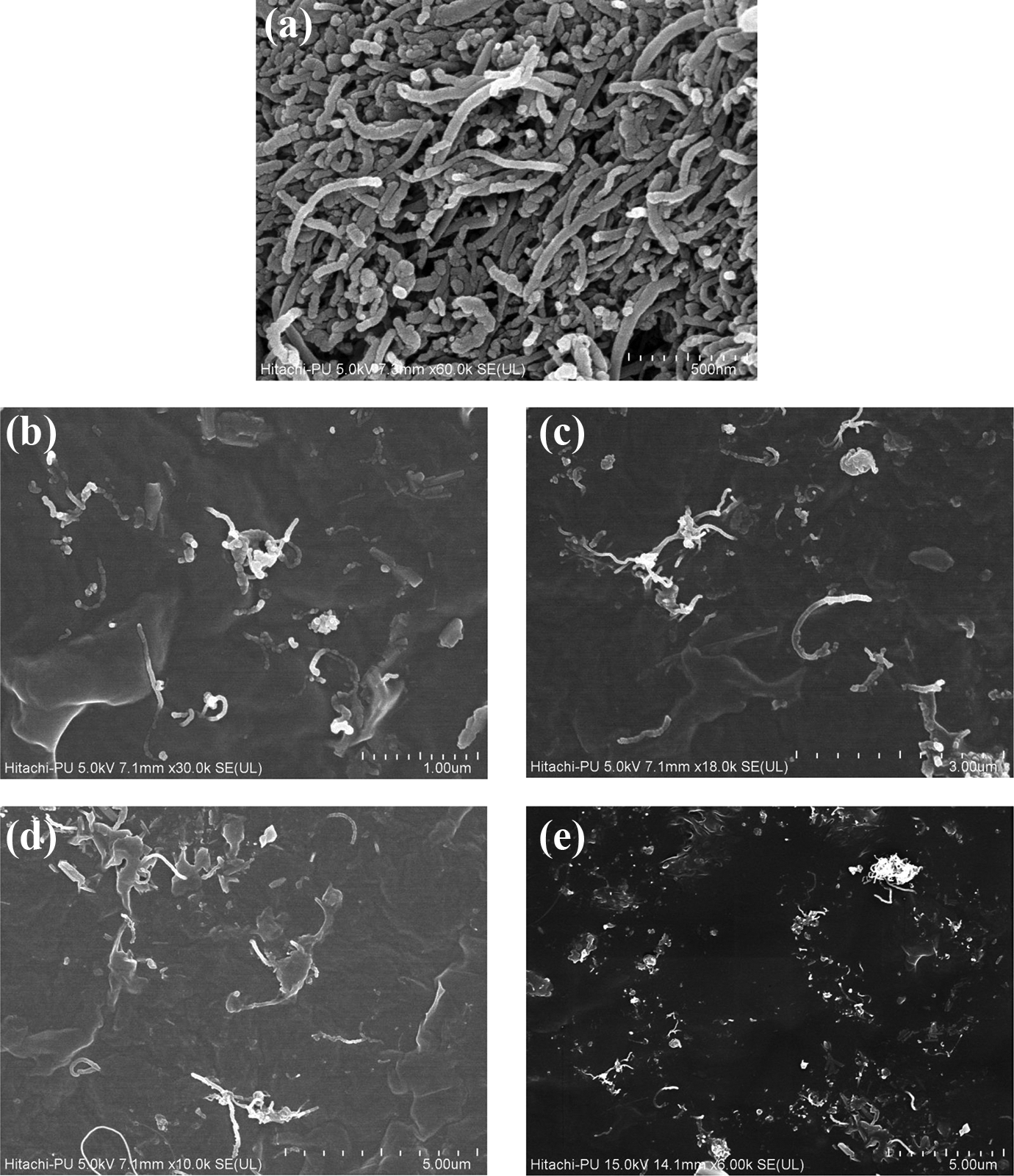
FESEM of (a) pure MWCNTs and PU/MWCNTs composite, (b) 1 wt% MWCNTs, (c) 3 wt% MWCNTs, (d) 5 wt% MWCNTs, and (e) 10 wt% MWCNTs.
Mapping
Mapping of PU/MWCNTs composite with 7 wt% composition of MWCNTs is shown in Figure 2. As shown in Figure 2(b), carbon is the main element present in the composite material, which is due to the existence of MWCNTs. There are other elements like nitrogen (Figure 2(c)) and oxygen (Figure 2(d)), which are present in the composite material with minimal quantity in equivalence to carbon. Mapping provides additional information about compositions like carbon, nitrogen, and oxygen in the composite, and their distribution among all dimensions of the composite material.
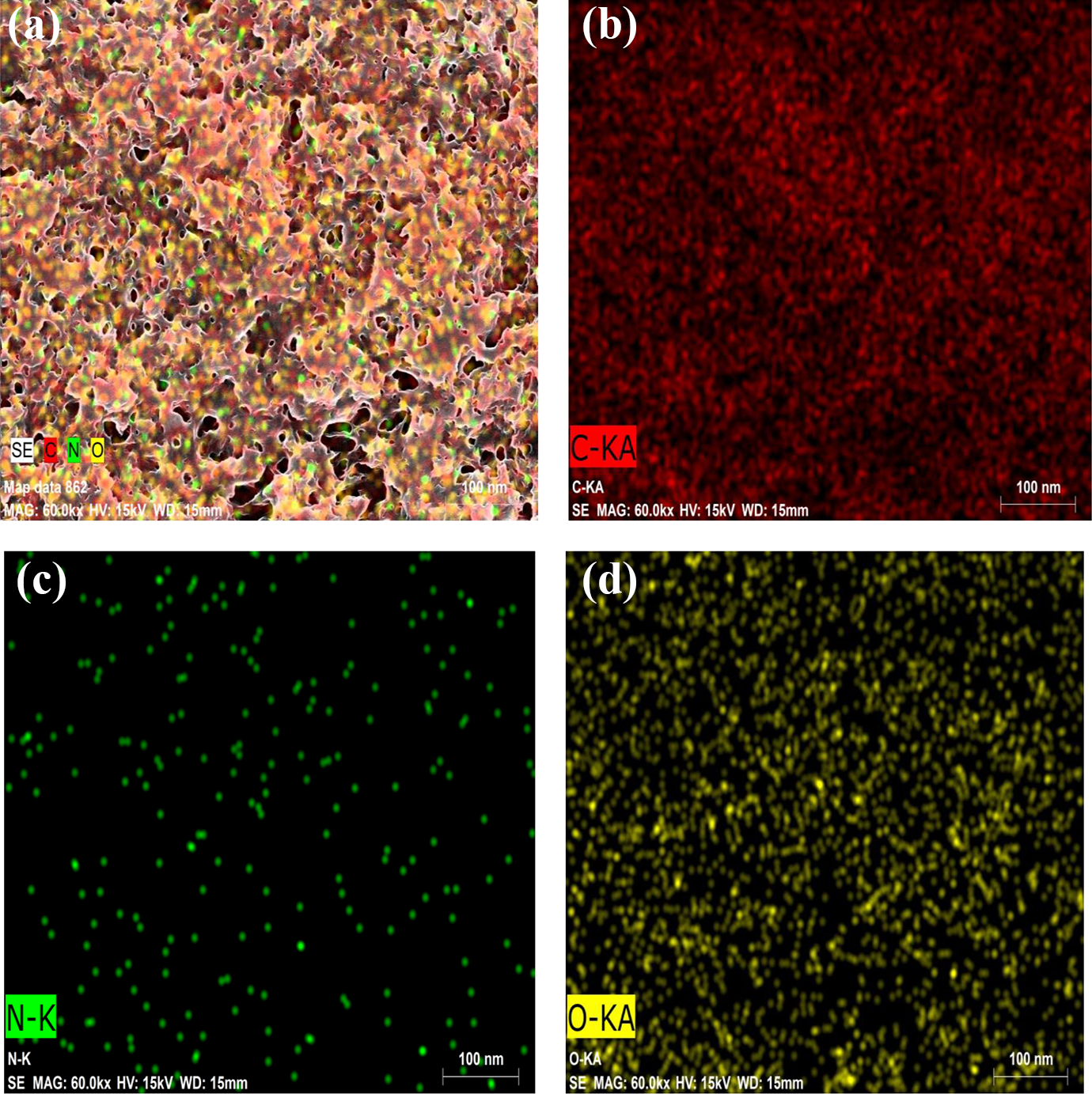
Elemental mapping: (a) PU/MWCNTs composite, (b) carbon content, (c) nitrogen content, and (d) oxygen content.
X-ray diffraction
Figure 3 shows XRD spectra of pure MWCNTs and PU/MWCNTs composite with 7 wt% composition of MWCNTs. The value of 2θ for pure MWCNTs was observed as 26.07°, which shows good agreement with the value (26°) observed by group of scientists. 7 The value of 2θ for PU/MWCNTs was observed as 19.59°, which quantify the value reported in the literature. 44
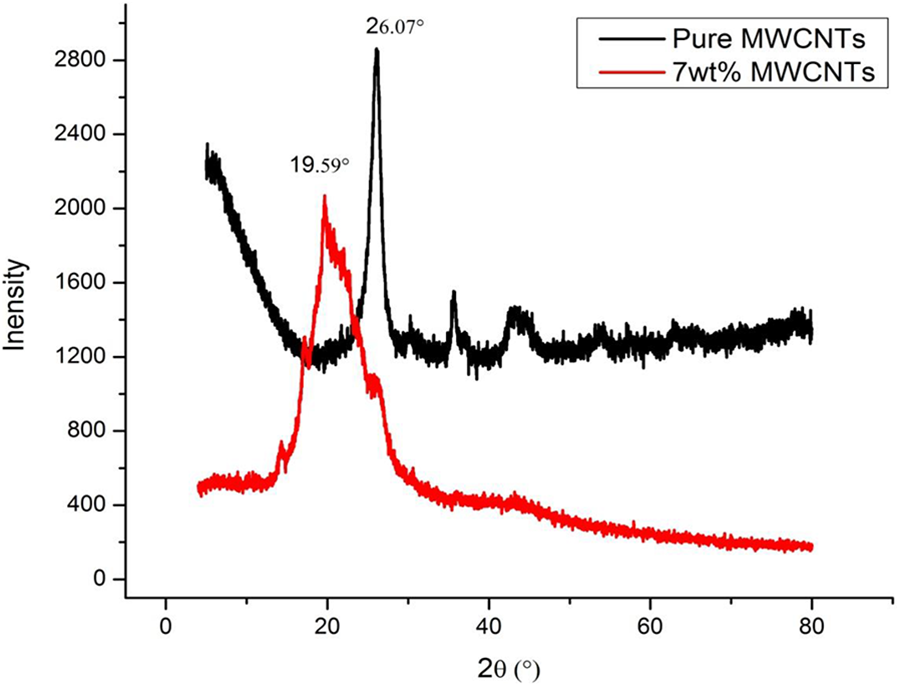
Figure 3. XRD spectra of pure MWCNTs and PU/MWCNTs composite with 7 wt% composition of MWCNTs.
Nano DMA
Nano DMA was used for studying the viscoelastic behavior of PU and its composites. An oscillating load of 500 µN was applied on the tip of indenter, and frequency of load was varied from 5 Hz to 250 Hz. DMA results of PU/MWCNTs composites were compared with the results of pure PU, to evaluate the effect of MWCNTs on damping behavior of PU. Storage modulus (E′), loss modulus (E″), and damping factor (tan δ) were calculated by using equations (1), (2), and (3), respectively



where S and Ds are the stiffness and damping of contact, respectively, and expressed in terms of frequency ω. A is the contact area and β is the dimensionless parameter.
A noticeable change in average storage modulus, loss modulus, and tan δ of PU/MWCNTs composites was observed with the addition of MWCNTs. Figure 4 shows the values of average storage modulus as a function of frequency. At higher frequencies (250 Hz), the value of average storage modulus for 10 wt% PU/MWCNTs composite was observed as 0.119 GPa, which corresponds to a significant enhancement of 148% in comparison to pure PU. Moreover, at higher frequency (250 Hz), the value of average storage modulus for 10 wt% composite was 13.3% higher than that of at lower frequency (75 Hz). This shows that the effect of MWCNTs was more pronounced at higher frequencies; this will enhance the mechanical engineering applications of PU/MWCNTs composites at high-frequency loading conditions.
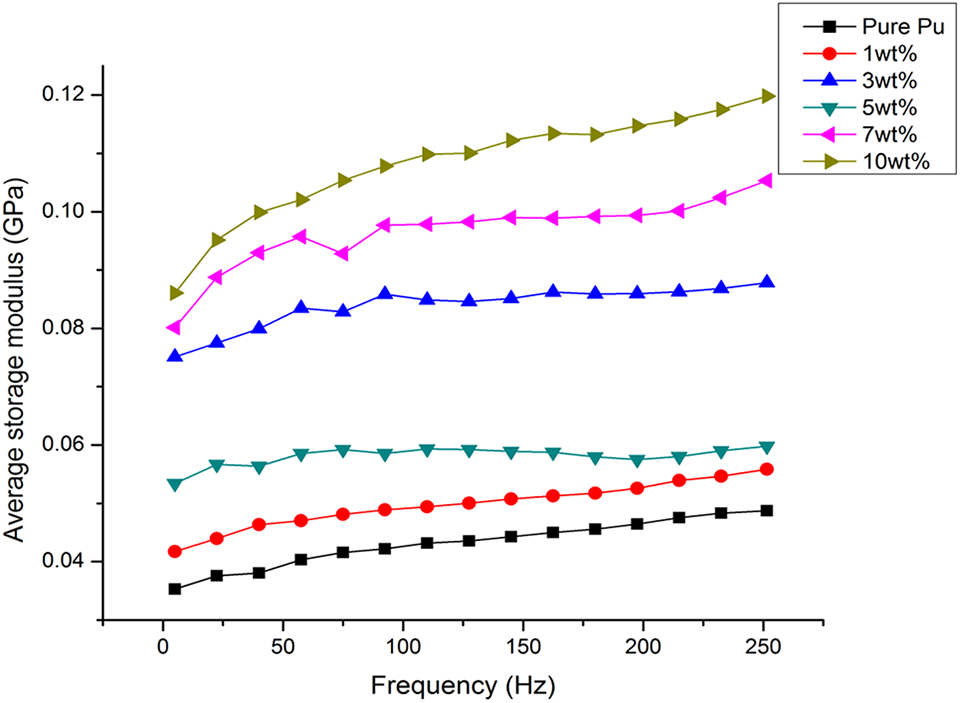
Variation in average storage modulus of PU and its composites under the influence of varying MWCNTs composition and frequency.
Figure 5 shows the variation in average storage modulus of PU/MWCNTs composites at 75 Hz, 150 Hz, and 250 Hz, respectively, under the influence of the varying composition of MWCNTs. It can be seen that the effect of MWCNTs was more at higher frequencies, as increase in storage modulus was more at higher frequencies. The value of storage modulus for pure PU at 75 Hz, 150 Hz, and 250 Hz was observed as 0.041 GPa, 0.044 GPa, and 0.048 GPa, respectively, which peak to 0.082 GPa, 0.085 GPa, and 0.087 GPa for 3 wt% composite material, by showing significant enhancement of 90–100%. For higher composition of MWCNTs (10 wt%), these values further jump to 0.105 GPa, 0.112 GPa, and 0.119 GPa for 75 Hz, 150 Hz, and 250 Hz, respectively, by showing an enhancement in the range of 145–155%, in comparison to pure PU. These results clearly indicate that MWCNTs exhibit more effect on storage modulus at higher frequency of load. MWCNTs have high aspect ratio, which yields to the absorption of PU molecules by MWCNTs due to their higher specific surface area. This absorption of molecular chain on the surface of MWCNTs reduces the mobility of molecular chain and results in strong interconnected structure. 45 When high-frequency load is applied on the specimen, MWCNTs deform elastically and prevent permanent deformation. This contributes to elastic recovery of material after the removal of load, yielding to improved storage modulus at higher frequency.
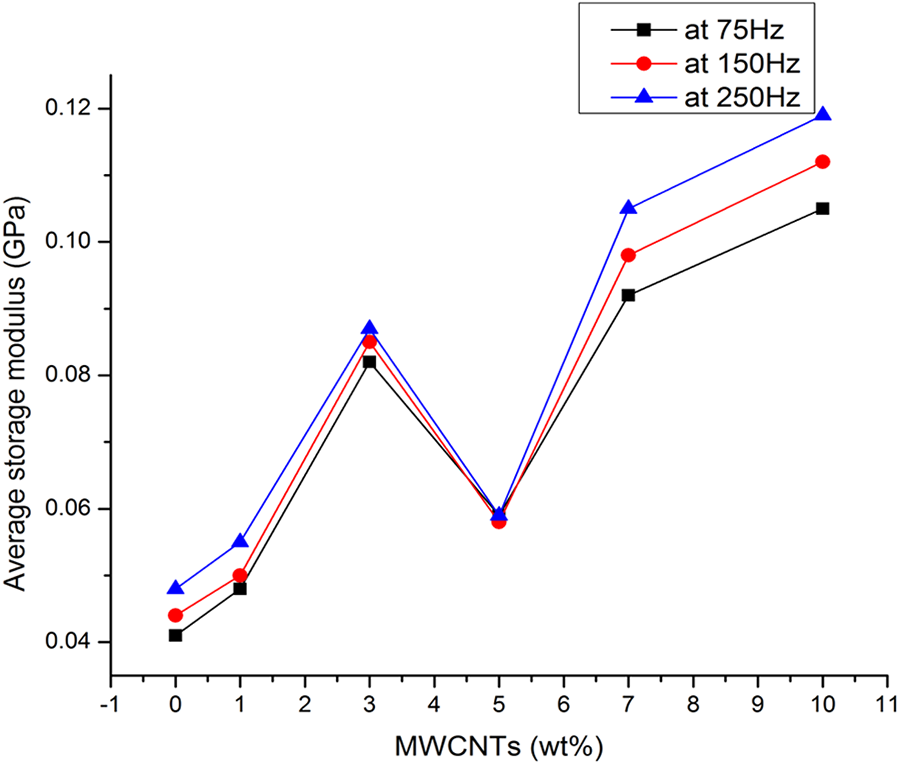
Variation in average storage modulus of PU and its composites at different frequencies (75, 150, and 250 Hz).
It is interesting to notice that, for same frequency, storage modulus was significantly improved with increasing composition of MWCNTs. The value of storage modulus for pure PU at 75 Hz was observed as 0.041 GPa, which peaks to 0.048, 0.082, 0.059, 0.092, and 0.105 GPa for 1, 3, 5, 7, and 10 wt%, respectively, as shown in Table 1. In percentage terms, significant improvement of 156% in storage modulus of 10 wt% composite was observed in comparison to pure PU. A minor composition of 3 wt% was sufficient to enhance the storage modulus by 100%. The same pattern was observed for frequency of 150 and 250 Hz, but the corresponding improvement was more at higher frequencies. At 75 Hz, the value of storage modulus for higher composition of MWCNTs (10 wt%) was observed as 0.105 GPa, which peaks to 0.112 GPa and 0.119 GPa, when frequency increases to 150 Hz and 250 Hz, respectively. In percentage terms, significant improvements of 6.6% and 13.3% in average storage modulus of 10 wt% were observed at 150 Hz and 250 Hz, respectively, in comparison to that of at 75 Hz. This indicates that the impact of MWCNTs was more at higher frequencies in comparison to lower frequencies. The storage modulus of viscoelastic polymeric materials depends on molecular motion of polymer chain. As the PU matrix was reinforced with MWCNTs, the voids were occupied by MWCNTs which restricts the movement of molecules during loading, preventing the permanent deformation of matrix. At higher frequency, time taken by polymer molecular chain to displace also gets reduced, which results in improved energy storage capability of the material and material approaches toward elastic recovery.
Average storage modulus of PU/MWCNTs composite with their standard deviation.
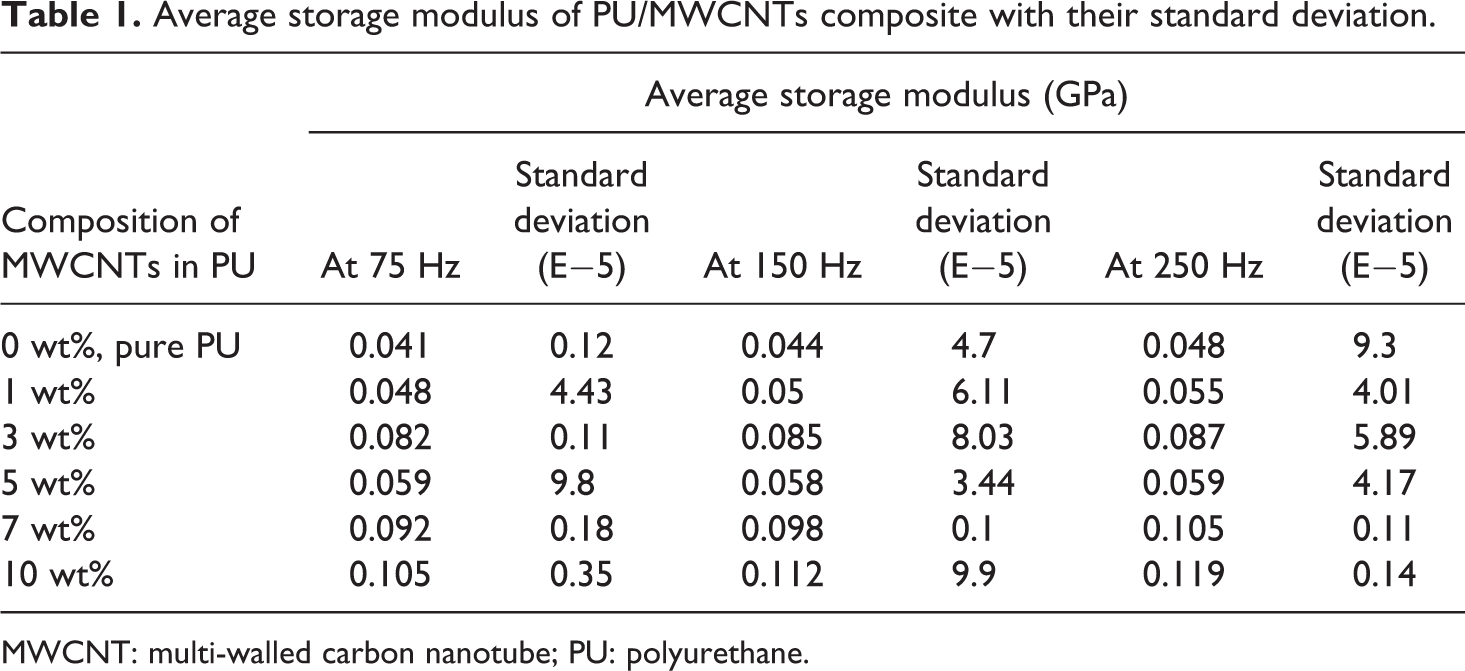
MWCNT: multi-walled carbon nanotube; PU: polyurethane.
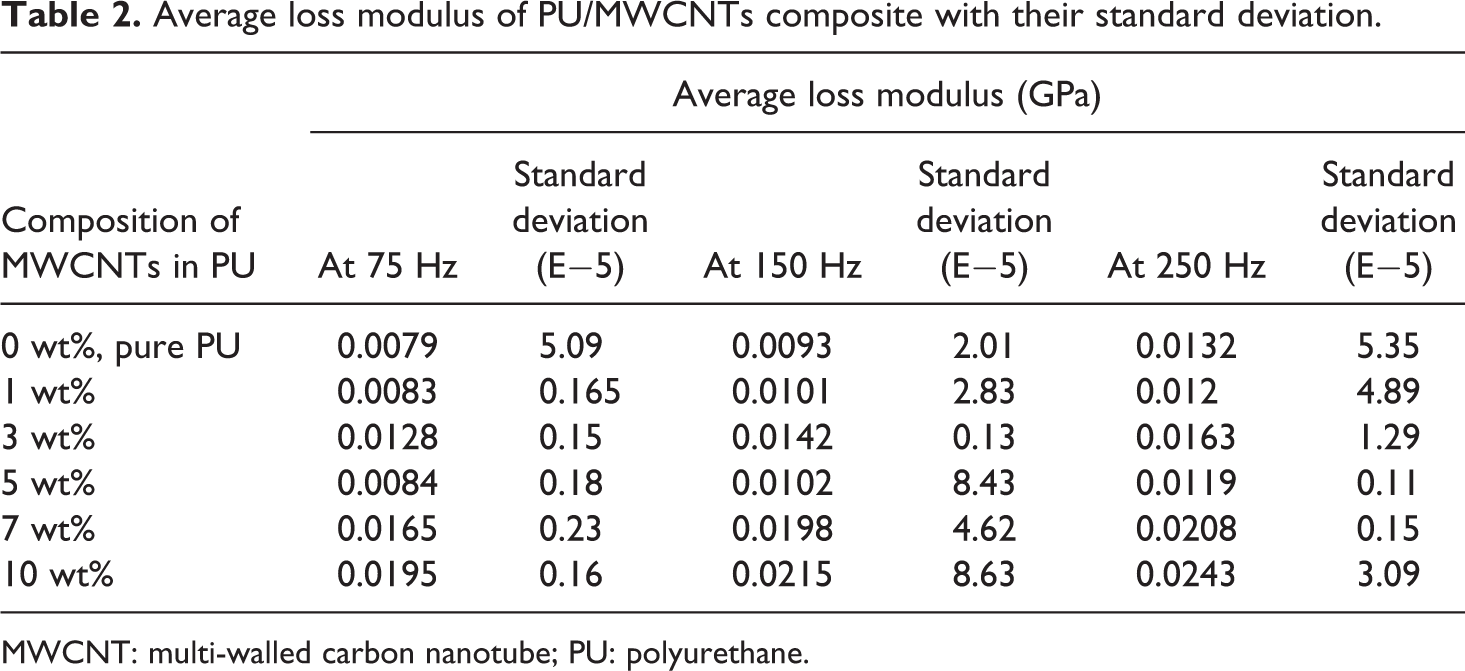
Average loss modulus of PU/MWCNTs composites also increases with increasing MWCNTs, as shown in Figure 6, but the corresponding increase was lower than that of storage modulus; this indicates that the effect of MWCNTs was higher on the storage modulus. Pötschke et al. 46 observed similar behavior for PC/MWCNTs nanocomposites. At higher frequencies (250 Hz), the value of loss modulus for pure PU was observed as 0.0132 GPa which peaks to 0.0243 GPa for PU/MWCNTs composites with 10 wt%; this corresponds to an enhancement of 84%.
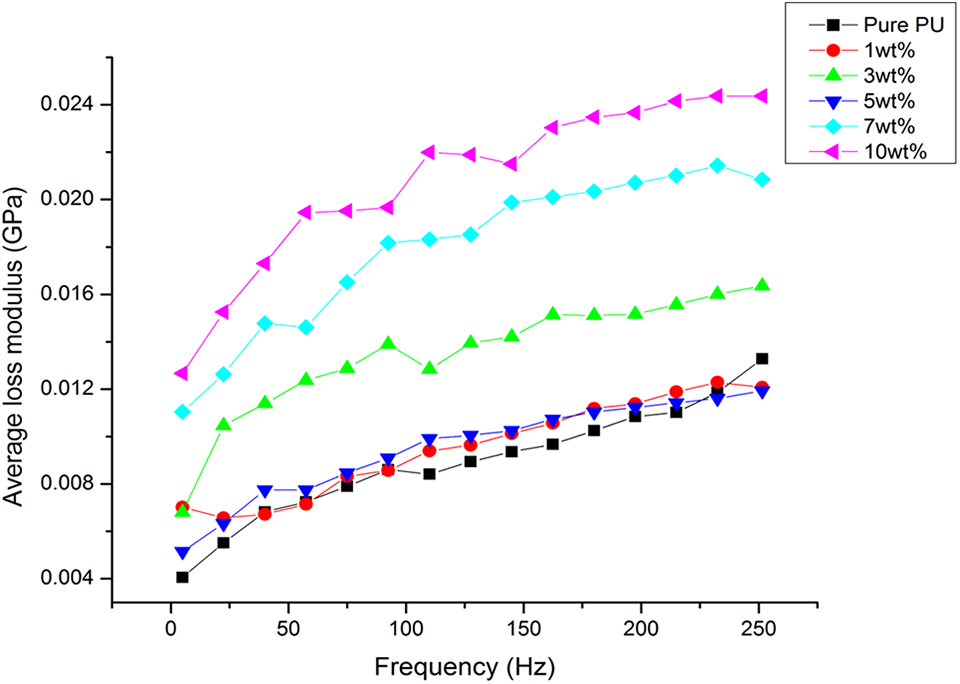
Variation in average loss modulus of PU and its composites with the influence of varying MWCNTs composition and frequency.
Figure 7 shows the variation in average loss modulus of PU/MWCNTs composites at 75 Hz, 150 Hz, and 250 Hz, respectively, with different wt% of MWCNTs. The values of loss modulus for pure PU at 75 Hz, 150 Hz, and 250 Hz were observed as 0.0079 GPa, 0.0093 GPa, and 0.0132 GPa, respectively, which peak to 0.0128 GPa, 0.0142 GPa, and 0.0163 GPa for 3 wt% composite, by showing a significant enhancement up to 80%. For higher composition of MWCNTs (10 wt%), these values further rise to 0.0195 GPa, 0.0215 GPa, and 0.0243 GPa for 75 Hz, 150 Hz, and 250 Hz, respectively, by showing significant enhancement in the range of 80–150%, in comparison to pure PU. It is worthy to notice that the maximum value of average loss modulus was also achieved at higher frequency with higher composition of MWCNTs (10 wt%). It was also noticed that minor composition of MWCNTs (3 wt%) was sufficient to enhance the average loss modulus in the range of 60–80%, for a frequency of 75 and 150 Hz.
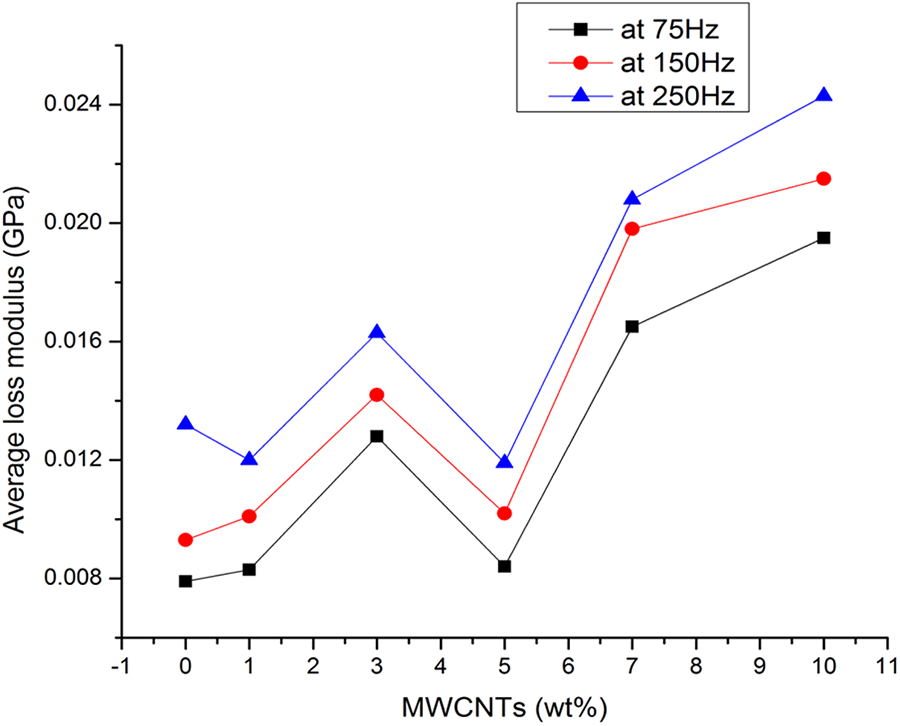
Variation in average loss modulus of PU and its composites at different frequencies (75, 150, and 250 Hz).
Increase in MWCNTs composition results in significant enhancement in loss modulus for all frequencies taken into consideration, as shown in Table 2. At 75 Hz, the value of loss modulus for pure PU was observed as 0.0079 GPa, which peaks to 0.0083, 0.0128, 0.0084, 0.0165, and 0.0195 GPa for 1, 3, 5, 7, and 10 wt%, respectively. In percentage term, significant enhancement of 147% was observed in loss modulus of 10 wt% composite. A similar trend was observed when frequency increases to 150 and 250 Hz, as shown in Figure 7.
Average loss modulus of PU/MWCNTs composite with their standard deviation.
MWCNT: multi-walled carbon nanotube; PU: polyurethane.
When load is applied on a polymer-based composite material, some part of applied energy gets stored in the material and released when applied load is removed, which is represented by storage modulus. The other part of energy gets dissipated due to segmental motions; this energy dissipation is represented by loss modulus. Under loading, the MWCNTs undergo elastic deformation and resist permanent deformation of the composite material. This results in elastic recovery of material after the removal of applied load, thereby increasing loss modulus.
Figure 8 shows the maxima of both storage and loss modulus at a frequency of 250 Hz, at different compositions of MWCNTs. Figure 8 clearly depicts that the maximum values of storage and loss modulus were achieved with higher composition of MWCNTs (10 wt%), at higher frequency. The value of storage modulus for pure PU was obtained as 0.048 GPa, which peaks to its maximum value as 0.119 GPa for 10 wt% composite. Storage and loss modulus increase significantly with increase in wt% of MWCNTs, however, a fall at 5 wt% was observed, which was due to transformation of soft segments of PU into hard interconnected structure of PU and MWCNTs. There was a mixture of soft and hard segments of PU molecules with MWCNTs, which leads to sharp fall in both values due to their viscoelastic nature. Therefore, it is proposed that further addition of MWCNTs beyond 5 wt%, yields in more strong interconnected structure of MWCNTs with PU molecules and mobility of molecules reduced, 47 which results in elastic deformation of MWCNTs bounded molecular chain, therefore increasing the values. The value of loss modulus for pure PU was observed as 0.013 GPa, which also peaks to its maximum value (0.024 GPa) for higher composition.
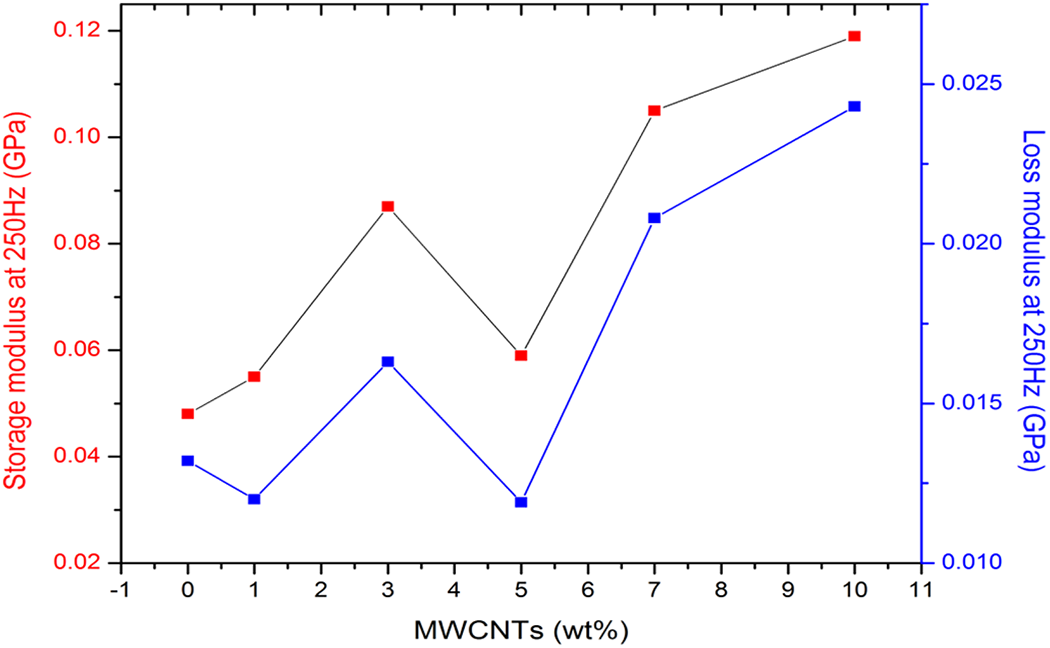
Maxima of storage and loss modulus for the varying composition of MWCNTs at a frequency of 250 Hz.
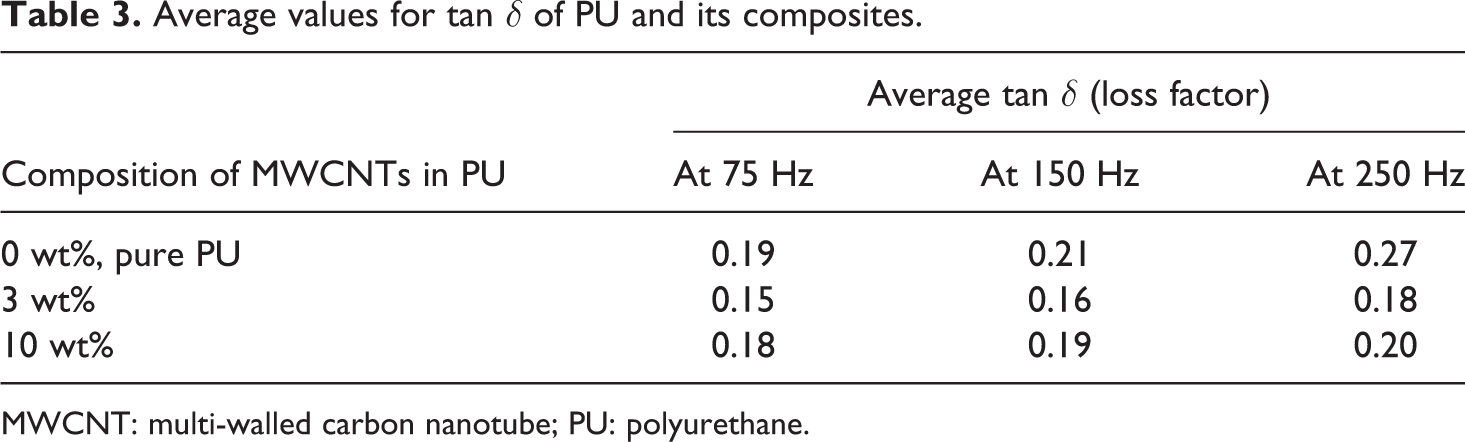
Damping behavior of PU/MWCNTs composites was evaluated by studying the relationship between tan δ and frequency (Figure 9). The value of average tan δ for PU/MWCNTs composites was decreased with increasing composition of MWCNTs. This decrement in tan δ termed as improved elastic behavior of the material. At higher frequencies (250 Hz), the value of tan δ for pure PU was observed as 0.27, which reduced to 0.18 and 0.20 for 3 wt% and 10 wt%, respectively; this corresponds to a reduction of 33% and 26%, as shown in Figure 10. It is worthy to notice that maximum reduction in tan δ was achieved at 3 wt% composition of MWCNTs. As shown in Table 3, at 75 Hz, the value of tan δ for pure PU was observed as 0.19, which reduced to 0.15 and 0.18 for 3 wt% and 10 wt%, respectively. The ratio of energy dissipated (loss modulus) to recoverable energy (storage modulus) was termed as damping factor (tan δ), which shows significant decrement in its value after reinforcement with minor compositions of MWCNTs. Reduced mobility of molecular chain, which was achieved by strong adhesion and binding of PU molecules with MWCNTs, yields to improved elastic nature of composite material. Moreover, high frequency of the applied load reduces the time taken by molecular chain to move, which reduces permanent deformation of the material. The simultaneous effect of increased composition of MWCNTs and higher frequency provides restricted space and less time to polymer chain for movement, therefore, mobility of the molecules was restricted. A minor composition of MWCNTs (3 wt%) results in higher reduction of damping factor, indicating that material has higher potential for absorbing vibrations at a frequency of 75 Hz. This reduced damping factor corresponds to improved elastic behavior of PU/MWCNTs material, which could be beneficial for the fabrication of jackets and gloves for absorbing high vibration during rock drilling, which usually have frequency around 70–80 Hz. Higher aspect ratio of MWCNTs also contributes to the improved interaction between PU molecules and MWCNTs. 48 The improvement in elastic response of the composite material was also attributed to even dispersion of MWCNTs in the PU matrix.
Average values for tan δ of PU and its composites.
MWCNT: multi-walled carbon nanotube; PU: polyurethane.
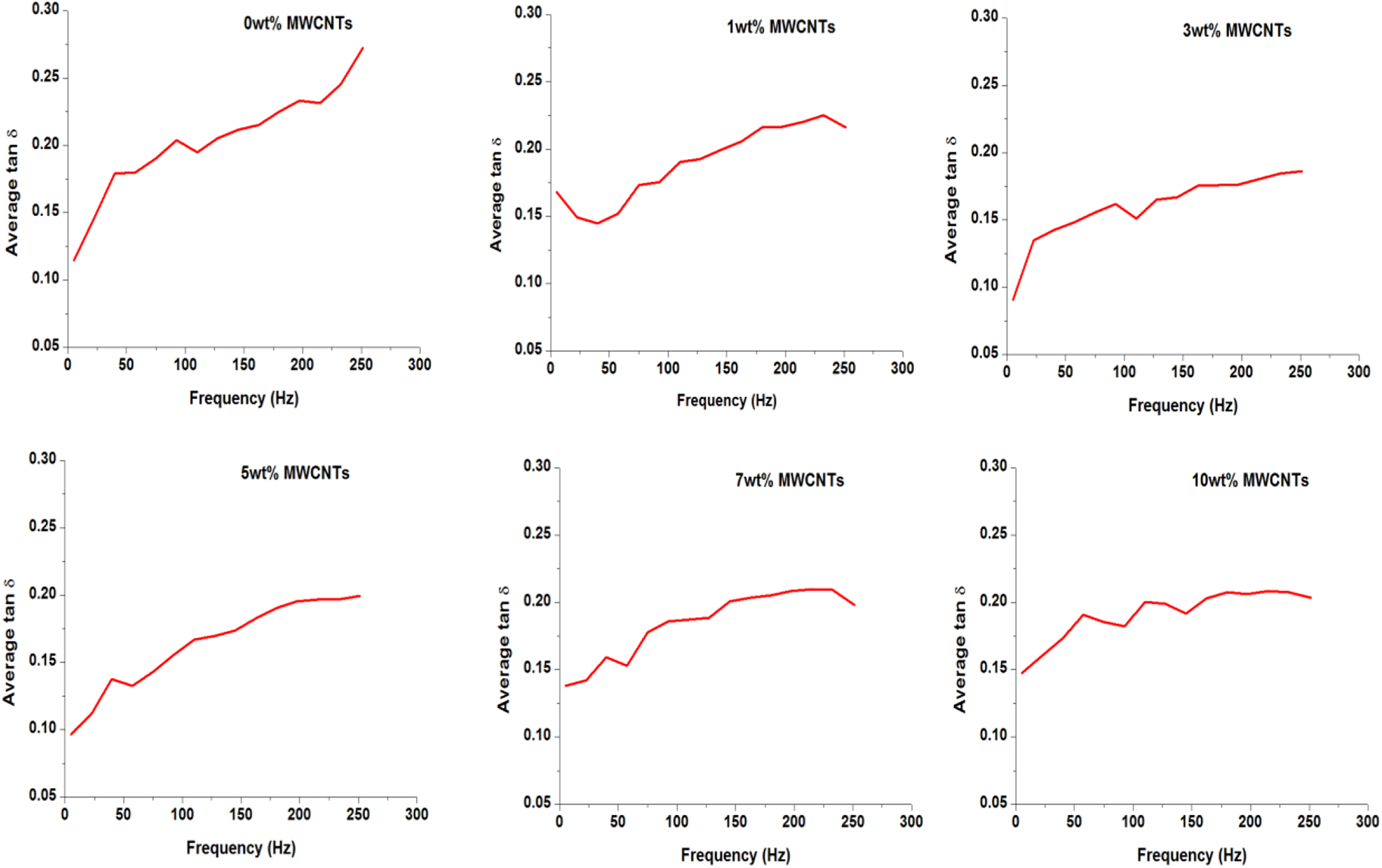
Variation in the tan δ of PU and its composites with the influence of varying MWCNTs composition.
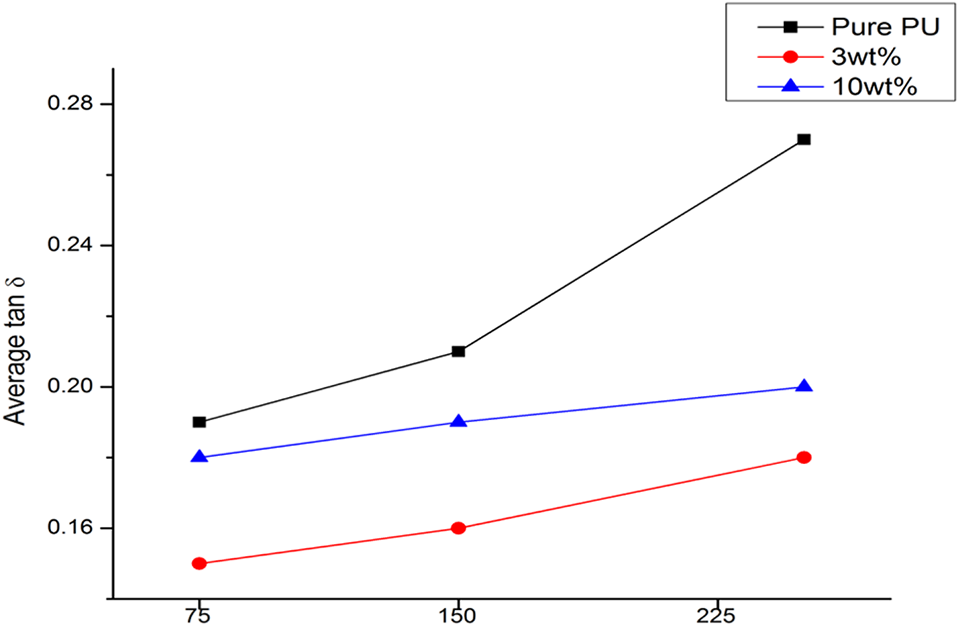
Variation in average tan δ of PU and its composites at different frequencies.
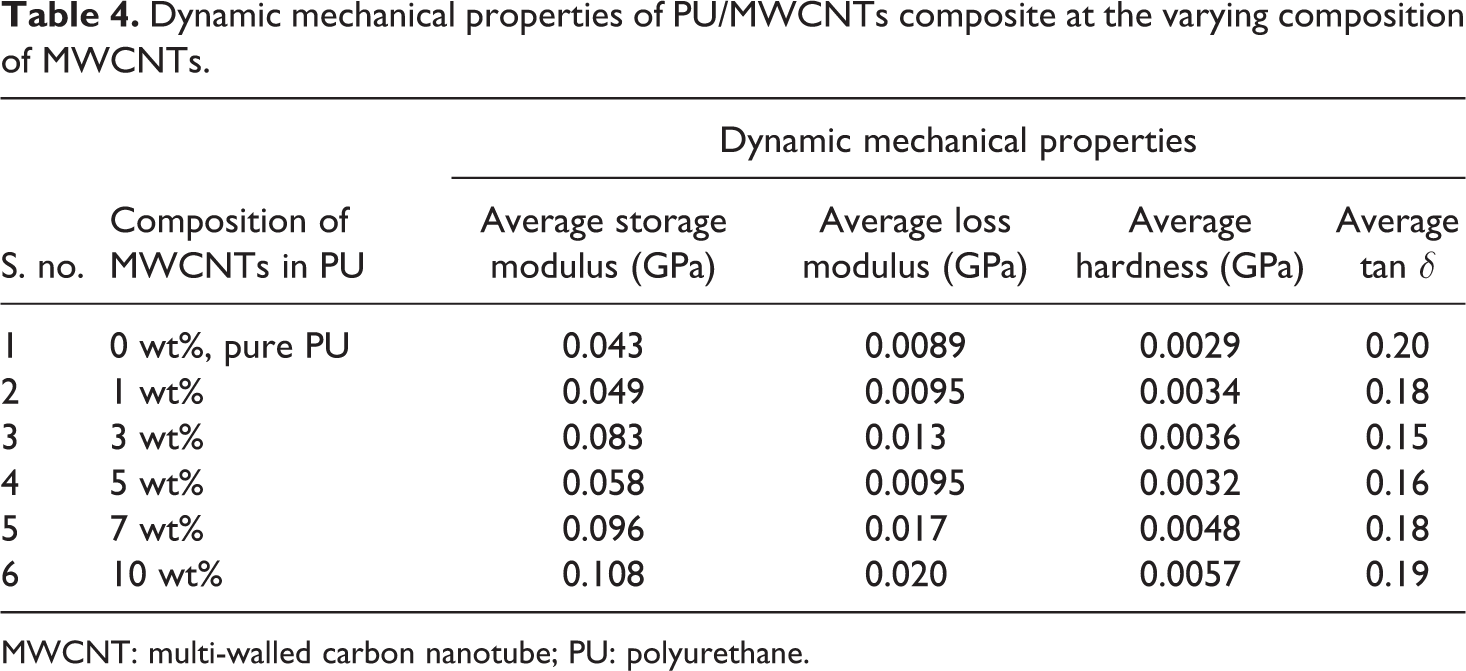
Table 4 shows the viscoelastic properties of PU and its composite material. The addition of MWCNTs into the PU matrix yields significant improvement in the viscoelastic properties of the material. In addition to improvement in viscoelastic properties, MWCNTs reinforcement also results in improved average hardness of PU/MWCNTs composite material, as shown in Figure 11. The value of average hardness for pure PU was observed as 0.0029 GPa, which peaks to 0.0034, 0.0036, 0.0032, 0.0048, and 0.0057 GPa for 1, 3, 5, 7, and 10 wt%, respectively. Significant increment of 96.5% in average hardness of 10 wt% composite was observed in comparison to pure PU. As stated earlier, after reinforcement of MWCNTs, the material approaches toward its elastic recovery, therefore, resistance to localized plastic deformation was increased, which resulted in improved hardness of material against external applied loading. During indentation, when load was applied on the indenter, MWCNTs bonded molecules with PU hinder the plastic deformation of polymer chain, and it becomes difficult to cause permanent deformation, which leads to improved hardness of the PU/MWCNTs composite.
Dynamic mechanical properties of PU/MWCNTs composite at the varying composition of MWCNTs.
MWCNT: multi-walled carbon nanotube; PU: polyurethane.
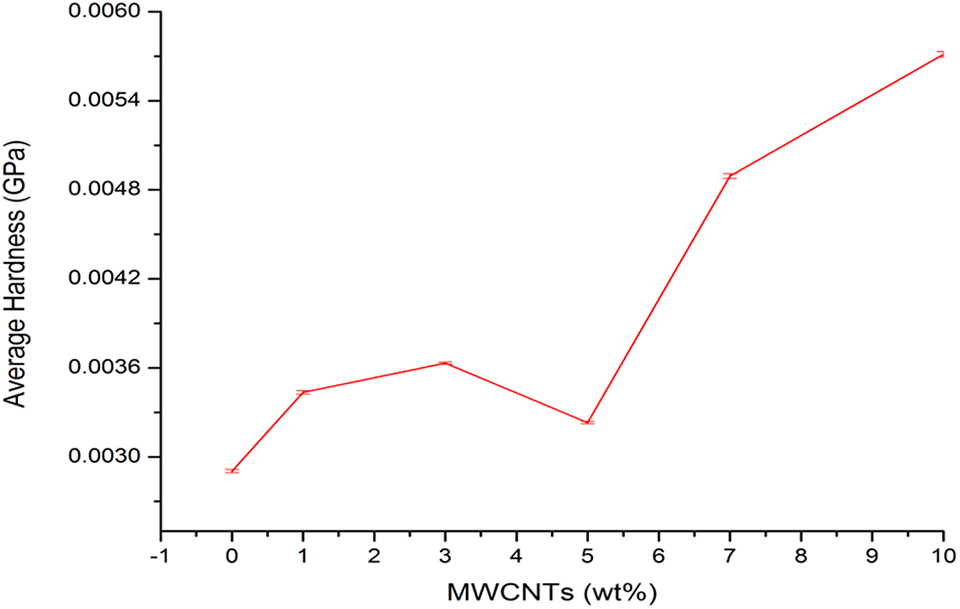
Average hardness of PU and PU/MWCNTs composite with their standard deviation.
The rise in storage modulus of PU/MWCNTs composites was probably due to the stiffening effect9,49,50 of high aspect ratio of MWCNTs. For loss modulus, it was expected that the strong interaction between MWCNTs and PU confines the movement of polymer chains which results in lesser enhancement in energy dissipation ability 9 of PU/MWCNTs composites. This shows that, materials ability to dissipate energy as heat was also improved in comparison to pure PU, but not in the same amount, as storage modulus does. Moreover, the additional static strain 51 in the PU matrix produces a reasonable enhancement in material’s ability to store and dissipate energy because there was no change in material’s internal friction. As tan δ is the ratio of loss to storage modulus 51 and results demonstrated that the effect of MWCNTs on storage modulus was higher in comparison to loss modulus, therefore, the value of tan δ goes on decreasing. This decrement in tan δ was probably because of reduction in the mobility of polymer chains due to the addition of MWCNTs content. 52 Similar behavior (reduction in tan δ) with increasing MWCNTs composition was reported in the literature 52 although the frequency was kept constant to 1 Hz. Therefore, it is proposed that composites with 3 wt% of MWCNTs possess good damping characteristics with significant enhancement in storage modulus. A minor composition of MWCNTs (3 wt%) was found sufficient for enhancing storage modulus by 80%, and the effect of MWCNTs on tan δ was also higher at this composition. A reduction in tan δ for polyethylene (PE)/MWCNTs composites was reported with increasing content of MWCNTs. 7 This group also observed that energy dissipation and relaxation of PE/MWCNTs composites were hindered due to interfacial interaction between PE and MWCNTs. It is suggested that proper dispersion 53 of MWCNTs enhanced their adhesion 54 and interfacial interactions 55 with the PU matrix. As MWCNTs possess excellent load transfer properties, 56 therefore, load was taken by MWCNTs yields to improved mechanical properties of PU/MWCNTs composites.
Conclusion
After evaluating the results of the present work, the following conclusion can be drawn: Value of storage modulus was improved by increasing composition of MWCNTs in the PU matrix. The maximum value of storage modulus was achieved with higher composition of MWCNTs at higher loading frequencies. The value of storage modulus at 250 Hz was found to be 13.3% higher than that of at 75 Hz; this indicates that the effect of MWCNTs was more pronounced at higher frequencies. The loss modulus of PU/MWCNTs composite was also increased but corresponding increase was less than that of storage modulus, which shows that the effect of MWCNTs was more pronounced on storage modulus. At 250 Hz, storage modulus for 10 wt% was increased by 147% in comparison to pure PU, while the increase in loss modulus was only 84%. Reduction in tan δ indicates that the elastic behavior of composite material was increased after the reinforcement of MWCNTs. A minor composition of MWCNTs (3 wt%) was sufficient to reduce the value of tan δ from 0.20 to 0.15 at a frequency of 75 Hz. This improved elastic nature of PU composite could be beneficial for absorbing vibrations during rock drilling which usually have frequency in the range of 70–80 Hz. Average hardness of 10 wt% composite was increased by 96%, in comparison to pure PU, which signifies that after reinforcing MWCNTs, the material offers more resistance to indentation. Presented work opens several new avenues for applications like clothing, high-strength boots, jackets, and gloves for armed forces personnel to absorb high-frequency vibrations generated during rock drilling. Further work can be done on PU/MWCNTs composites to evaluate the thermomechanical behavior of PU/MWCNTs composites under the influence of varying compositions of MWCNTs.
Footnotes
Funding
The author(s) disclosed receipt of the following financial support for the research, authorship, and/or publication of this article: This research work was funded by the Ministry of Human Resource Development (MHRD), Grant Number 17-11/2015-PN-1, and Council of Scientific Industrial Research (CSIR), New Delhi.
