




Abstract
Polyurethane (PU) and zinc ionomer (ZnI)-based polymer composites films were developed by melt extrusion method. The structure, phase morphology, rheology, and mechanical properties of the PU/ZnI blends were studied. The X-ray diffraction analysis displaced that there is no major effect on the crystallinity of PU phase by the addition of ZnI. Scanning electron microscopic images confirmed the partial miscibility of PU and ZnI, which greatly influenced on the tensile and elongation at break (EB) properties of the composite films at a high ratio. Dynamic mechanical analysis indicated that with increasing the ZnI content, the storage modulus of the blends decreased and exhibited two Tg temperature peaks. Tensile strength of the PU/ZnI composites decreased drastically and EB increased significantly by the addition of ZnI, however a degree of interaction has been found. PU/ZnI composite films improved surface hydrophobic with excellent water barrier properties. The ultraviolet transmittance of the PU increased with increasing the content of ZnI.
Keywords
Introduction
Polymer blending is a very important technique for developing materials with various reasons both in industrial and in scientific interest. It is an efficient method with low-cost substitute for synthesizing new specialized polymer materials and improving the processability. The blend material can also improve the mechanical, thermal, optical, and barrier properties of a polymer system. The properties of polymer blends usually depend on the miscibility and morphology components.1–5
Thermoplastic polyurethanes (PUs) are widely used polymers in coatings, adhesives, and biomedical applications with excellent mechanical and biocompatibility properties. The PUs consisting of linear copolymers combine a hard segment with a soft segment. The soft segments usually consist of high molecular weight (600–4000) polyethers or polyesters, whereas the hard segments consist of diisocyanate and low molecular weight (60–400) diol (chain extender), which particularly provides the high modulus and hardness. 6 It is known that the many factors affect the PU properties such as length, types of polyol, and proportion of soft/hard segment to affect the PU properties. It is a material that can replace poly(vinyl chloride) in some applications for improved environmental protection. Various polymers and inorganic mineral fillers have been blended with PU to improve its physical properties and thermal stability for technological, economic, and environmental reasons, as discussed elsewhere.7–9 Surlyn is an ionomer with pendant methacrylic acid groups and methylene backbone. These copolymers were particularly neutralized with sodium and zinc cations. These modified polyethylene possess remarkable clarity and tensile properties than those of conventional polyethylene.10–12
The composites with ionomers have been used to make better thermal stability, impact strength, and chemical resistivity polymer composites. The main characteristic of ionomers is the strong molecular association that occurs between ionic groups that lead to phase-separated ion-rich domains in the hydrophilic polyethylene matrix often called clusters. The presence of these aggregates deeply influences mechanical and melt flow properties of the resulting materials.13–21
Zinc ionomer (ZnI) and PU are used extensively as reinforcing materials for thermosetting as well as thermoplastic matrices due to their exceptional physical and technical prospects.19–24 As far as we know, there has been no reports on the PU/ZnI composite films by melt blending extrusion method. In this study, we explore the influence of ZnI on the properties of segmented PU thermoplastic elastomers. The polymers dispersion, orientation, and networking have been carefully studied and compared. The Fourier transform infrared (FTIR), scanning electron microscopy (SEM), dynamic mechanical analysis (DMA), and rheological studies were conducted to probe the interaction between polymer components. The mechanical and the hydrophobic nature of the composite films were measured and explained.
Materials and methods
Materials
PU (Elastollan® 1283 D11 U from BASF, South Korea) and ZnIs (Surlyn® 9910 from Dupont, South Korea) were purchased and used as received.
Preparation of PU/ZnI composites
A different weight ratio of PU and ZnI (1:0.25, 1:0.50, 1:0.75, 1:1) were prepared by melt blending method using a twin-screw extruder ( SM Platek, TEK45, Japan). During the extrusion, the screw speed was set at 150 r min−1 with a flat temperature profile of 200°C from the hopper to die. The films were collected on a chill roll adequately cooled at 20°C by circulating water. The PU/ZnI composite films thickness were 0.06 mm. Although the processability of the materials was good, some problems of the stickiness of the films with themselves were encountered. Different ratios of PU and ZnI (PU, PU/ZnI-1:0.25, PU/ZnI-1:0.50, PU/ZnI-1:0.75, PU/ZnI-1:1) composite films were prepared by similar method.
Characterization methods
FTIR spectra of the prepared composites were obtained and examined using a PerkinElmer (Spectrum 100 model, Waltham, Massachusetts, USA) spectrometer at attenuated total reflectance mode in the range of 4000–600 cm−1 during 64 scans, with 2 cm−1 resolution. X-ray diffraction (XRD) patterns of the prepared nanocomposite films were analyzed by X-ray diffractometer (D/Max; Rigaku, Japan). XRD spectra were recorded using copper Kα radiation as an incident X-ray source (40 kV, 200 mA) with a scanning speed of 2° min−1 over a range of 2θ = 10° to 80° at room temperature. Thermogravimetric analysis (TGA) was carried out at a heating rate of 10°C min−1 to 800°C under N2 atmosphere using a TA Instruments (SDT Q600 model, New Castle, Delaware, USA). The optical properties of the prepared composite films were characterized using a Shimadzu (UV-1601, Japan) spectrophotometer in the range of 200–800 nm. The contact angle (CA) of PU/ZnI films surface was analyzed using a CA analyzer (model OCA 20, GmbH, Germany) on the movable sample stage, and a drop of water approximately 10 µL was placed on the surface. The water vapor permeability (WVP) of the prepared composite films was determined by reported method.25–27 The morphology of the material after platinum coating was observed using SEM (Hitachi S-4100) operated at an accelerating voltage of 10 kV. The thermomechanical properties of the PU/ZnI composite films were performed using DMA (N535−0001, PerkinElmer) under nitrogen purge gas in a temperature range of −120°C to 100°C at a frequency of 1 Hz and heating rate of 2°C min−1. The rheological properties of the PU/ZnI composites were performed and evaluated using a rheometer (Physica MCR301; Anton Paar, Austria) with parallel-plate geometry (PP25, gap of 1 mm). The analysis was carried out at 200°C with a dynamic frequency sweep in the range of 0.1–100 s−1 at a fixed strain amplitude (λ = 1.0%) within a linear viscoelastic region. The mechanical properties of the film were studied using universal testing machine (Model 3345, Instron, Norwood, Massachusetts, USA) according to our previous report. 28 The film thickness of the prepared composite was determined using a digital micrometer (Mituto, Japan). All the values reported were averages of five different locations on each specimen.
Results and discussion
Fourier transform infrared
The FTIR spectra of PU, ZnI, and PU/ZnI composites with different ratios are shown in Figure 1. A broad absorption band at 3308 cm−1 is due to the N–H stretching vibration present in PU. And also C–H asymmetric and symmetric stretching peaks appeared at 2927 cm−1 and 2854 cm−1, respectively. The signal at 1061, 1694, 1594, and 1518 cm−1 is due to the –C–O, C=O, N–H, and C–C–C aromatic stretching of PU. The PU/ZnI showed that major peaks were observed at 2912 and 2856 cm−1 due to the characteristic absorption bands of –CH3 and –CH2 groups and alkyl groups present in ZnI and PU, respectively. 28 The interaction of these peaks increased while increasing ZnI content in the PU/ZnI composites. However, peaks at 1694, 1594, and 1518 cm−1 were shifted to higher wave number 1701, 1597, and 1521 cm−1, confirming hydrogen-bonded interactions between PU and ZnI copolymer blends.
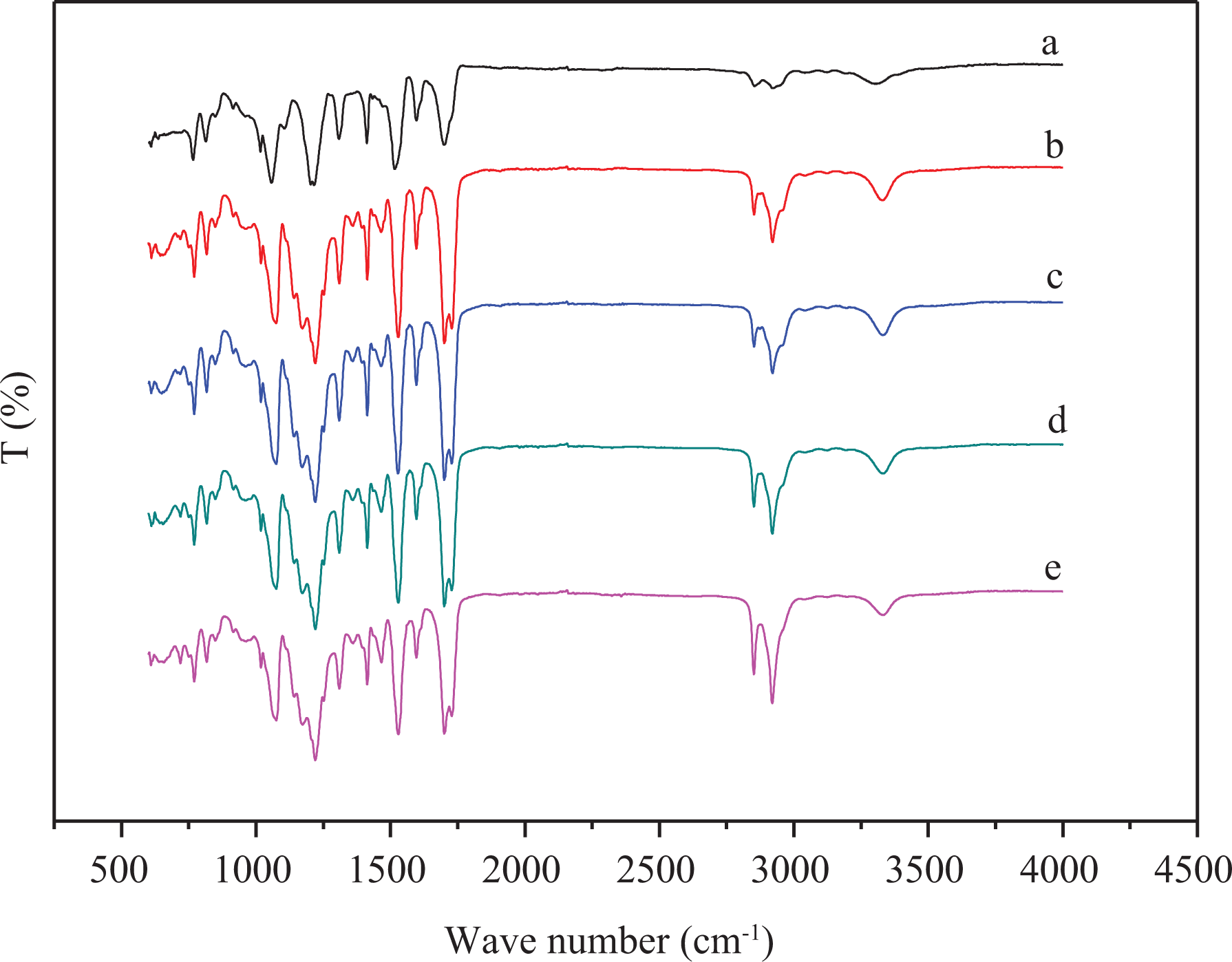
FTIR spectra of (a) PU, (b) PU/ZnI-1:0.25, (c) PU/ZnI-1:0.50, (d) PU/ZnI-1:0.75, and (e) PU/ZnI-1:1.
X-ray diffraction
Figure 2 shows the XRD patterns for PU and PU/ZnI composite films. PU exhibited a broad diffraction peak at 2θ = 19.9°, which indicates the typical amorphous nature of PU. The intensity of the peak decreased with increasing ZnI content and there were changes in the position of the XRD patterns and relative intensities of the PU/ZnI diffraction peaks in all the composite films. The results suggest that the amorphous structure of PU does not change with the addition of the ZnIs. The intensity of peaks decreased with increasing ZnI content because of the dilution effect.
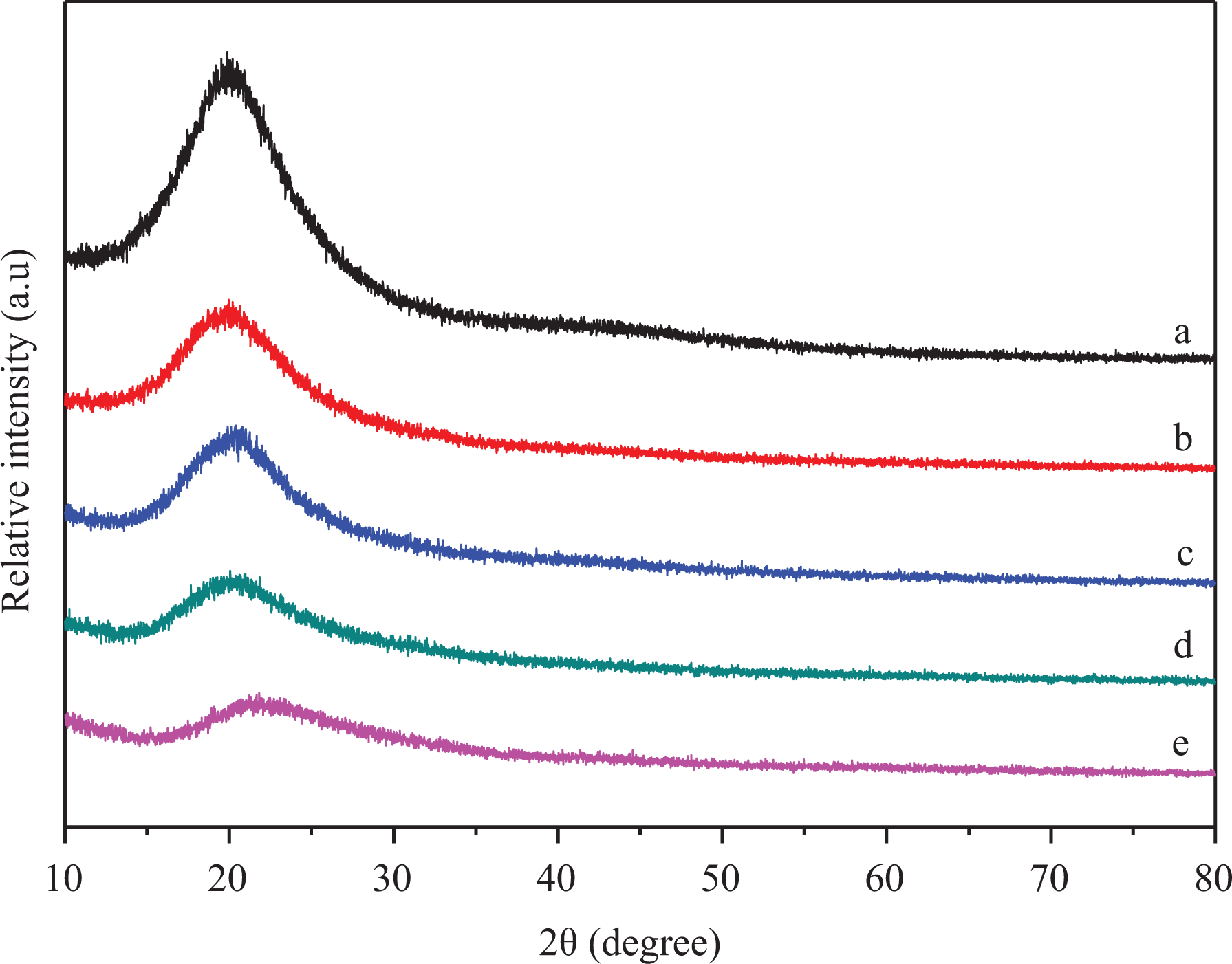
X-ray diffractogram of (a) PU, (b) PU/ZnI-1:0.25, (c) PU/ZnI-1:0.50, (d) PU/ZnI-1:0.75, and (e) PU/ZnI-1:1.
Ultraviolet
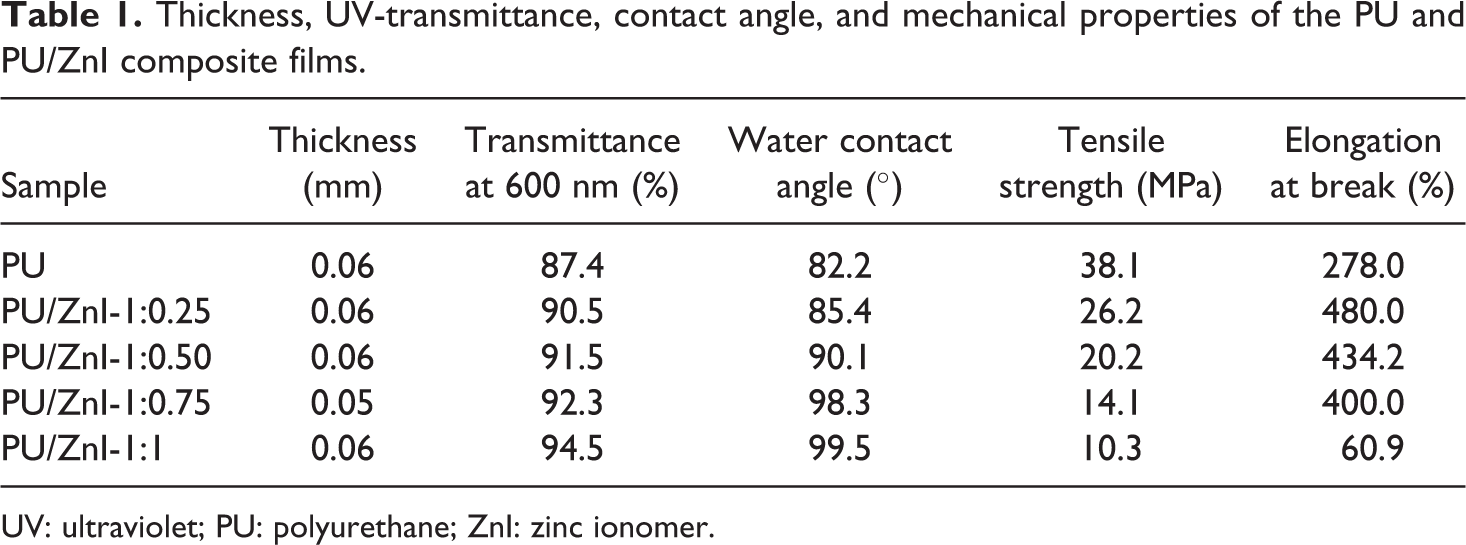
Figure 3 shows the ultraviolet (UV)-transmittance spectra of the PU/ZnI composite films. The transmittance of all the PU/ZnI composites exhibited good optical transparency in the visible range (400–800 nm). The transmittance of the PU and PU/ZnI composites at 600 nm are in the range of 87.4–94.5 nm. The transmittance of the PU/ZnI composite films increased with increasing the ZnI content due to the miscibility of the components. The ZnI is more transparent than PU.
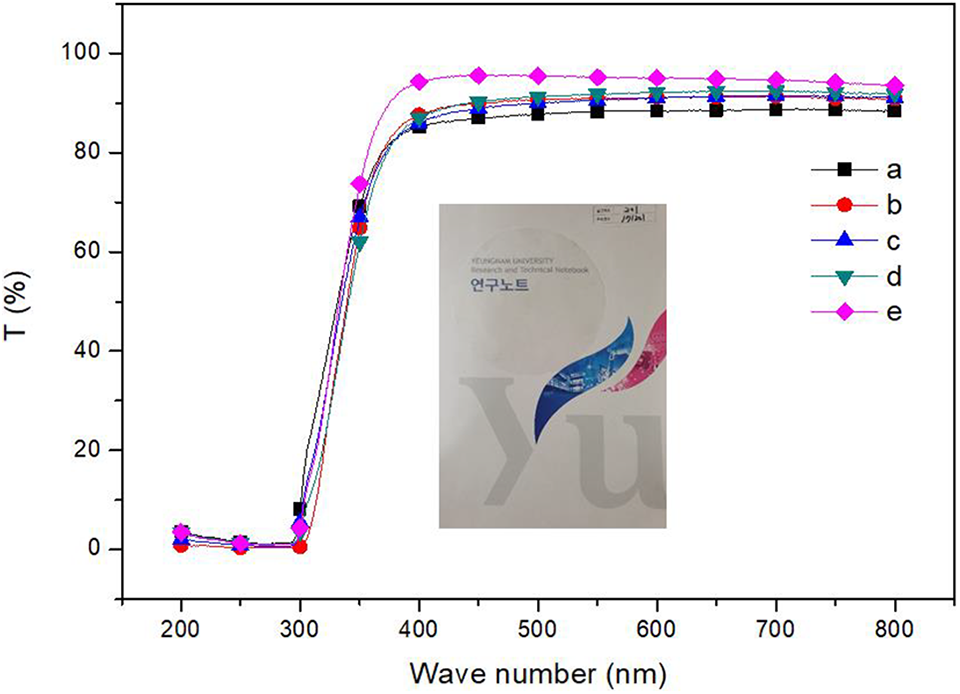
UV-transmittance spectra of (a) PU, (b) PU/ZnI-1:0.25, (c) PU/ZnI-1:0.50, (d) PU/ZnI-1:0.75, and (e) PU/ZnI-1:1.
Scanning electron microscopy
The morphology of the PU and PU/ZnI composite films was characterized by SEM analysis (Figure 4). From the SEM images, the PU surface is uneven, rough surface. When the amount of ZnI increased in the PU surface, the dispersed homogeneous phase is gradually increased. PU/ZnI-1:1 showed good dispersion but small dots appeared. This poor dispersion is due to the more content of ZnIs. The ratio of PU/ZnI increased from 1:0.25 to 1:0.75, and the SEM images indicated that both the polymers dispersed with proper distribution because of the increase in coulomb forces between ZnIs and cationic PU.29,30
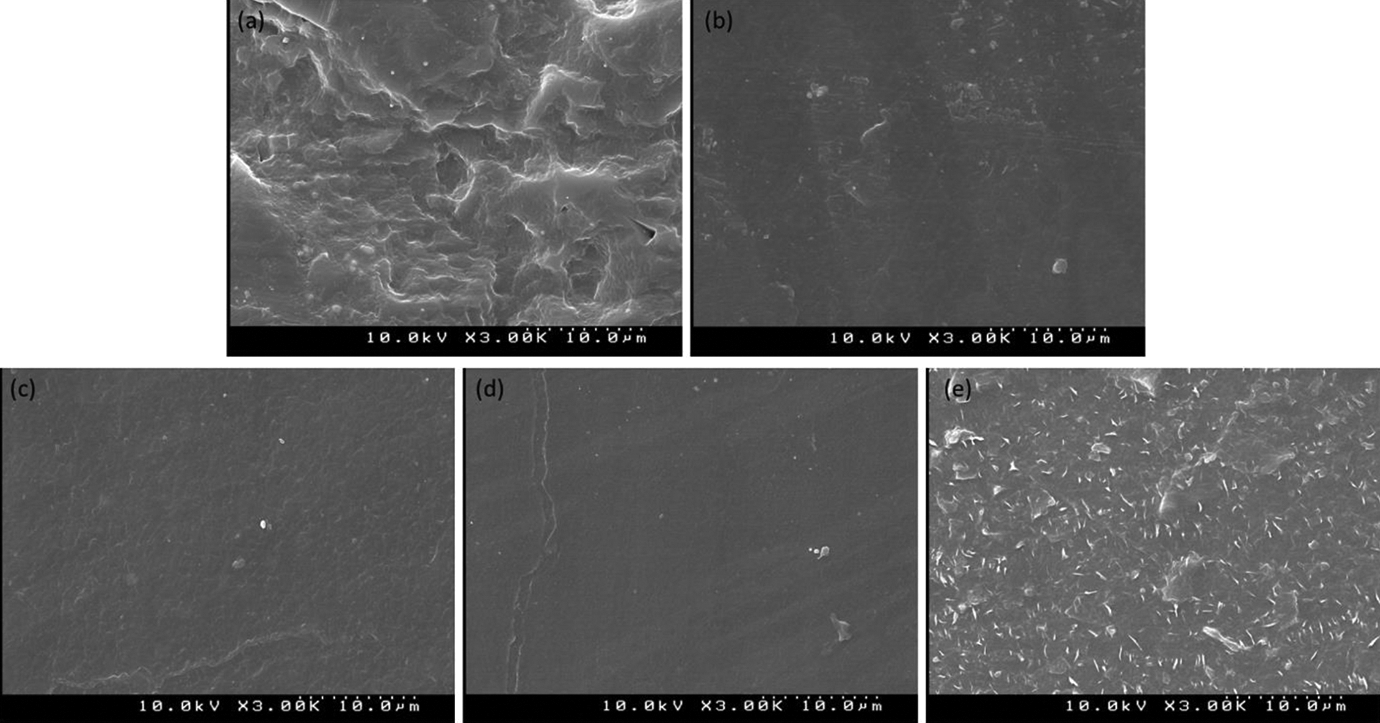
Scanning electron microscopic images of (a) PU, (b) PU/ZnI-1:0.25, (c) PU/ZnI-1:0.50, (d) PU/ZnI-1:0.75, and (e) PU/ZnI-1:1.
Mechanical properties
The stress–strain behaviors of composite films investigate the reinforcement effect in mechanical properties of PU by introducing ZnI materials. The tensile strength of PU decreased with increasing the ratio of ZnIs (Table 1). And also several factors affect the tensile strength of the composite films such as interfacial bonding and content (% or ratio) of both materials. The tensile strength of PU/ZnI-1:0.25 decreased up to 31.2% and then continuously decreased by 73.0% for PU/ZnI-1:1) when compared to the neat PU films.
Thickness, UV-transmittance, contact angle, and mechanical properties of the PU and PU/ZnI composite films.
UV: ultraviolet; PU: polyurethane; ZnI: zinc ionomer.
The elongation at break (EB) of the PU/ZnI-1:1 showed the lowest value but 1:0.25 ratio showed the highest (480%) which is 78.1% is higher than the neat PU. At high percentage of ZnI content, PU/ZnI composites become more brittle. This may be due to the large aspect ratio of ZnI which restricts the molecular movement in the polymer matrixes. 31
Contact angle
The CA measurement of PU and PU/ZnI composites are given in Table 1. It is a quantitative analysis of the wettability of a surface and it varies according to the surface energy and roughness of the composites. 32 The CA of the PU is increased from 82.2° (PU) to 99.5° (PU/ZnI-1:1). The result exhibited that CA was increased drastically up to 1:0.75 ratio, but it is almost constant at 1:1 ratio. However, surface hydrophobicity showed good improvement by the addition of ZnI on PU film.
Water vapor permeability
The WVP of the PU/ZnI composite films are shown in Figure 5. The WVP for all the composite films increased linearly with temperature. At low temperature, concentration of ZnI enhances the well-organized degree of the soft segment in the polymer. In the temperature range from 35°C to 50°C, PU/ZnI composites undergo a phase transition from glassy state to the rubbery state with enhanced leading the WVP of the PU/ZnI composites. 33 On the other hand, at high temperature disrupts the polymer chain packing. However, the PU/ZnI-1:1 composites were the lowest value in all temperature ranges. This is due to the incompatibility and dispersion of both polymers (PU/ZnI-1:1), which allowed to diffuse more water molecules through the composites. This result is consistent with the SEM analysis.
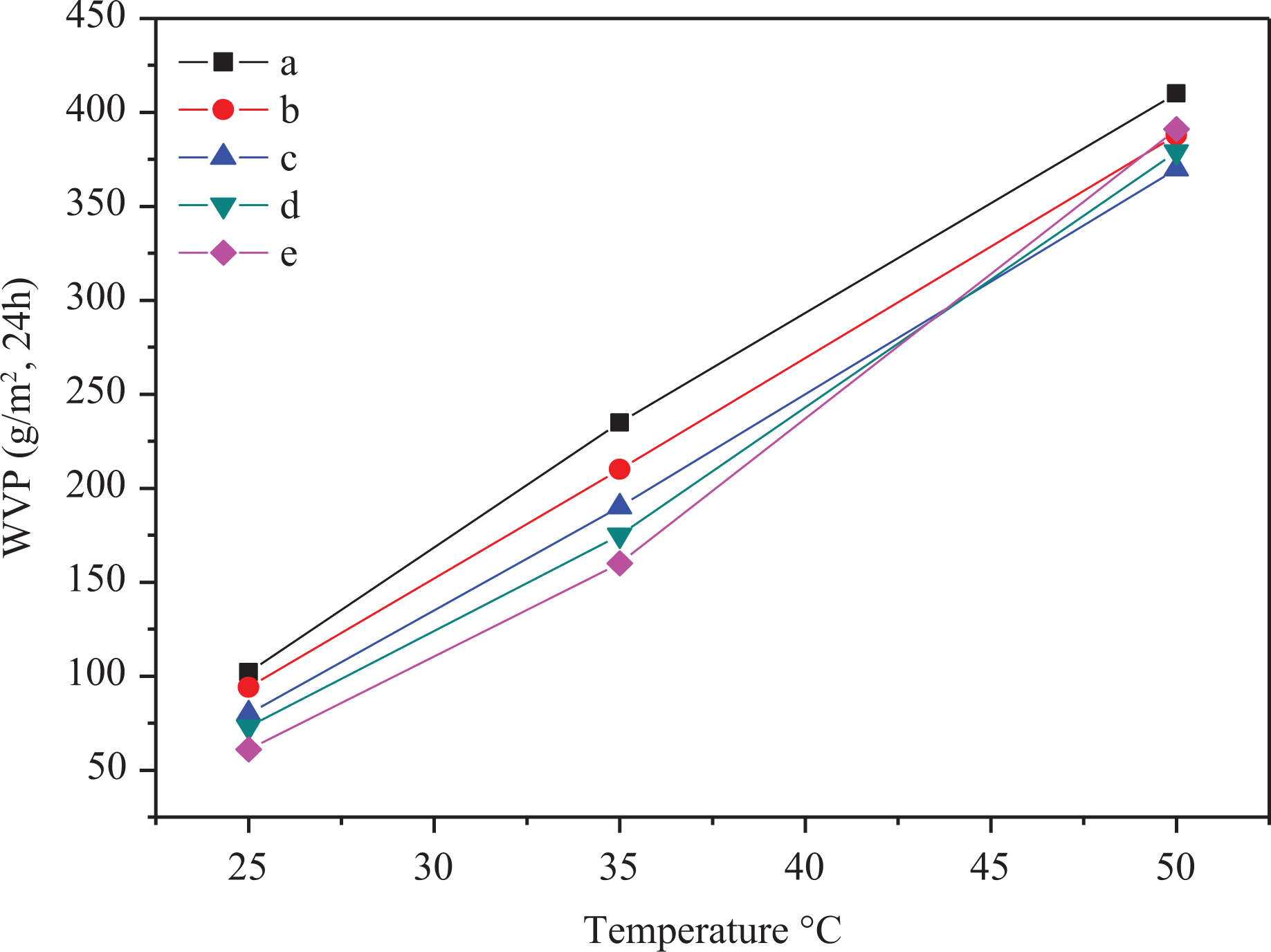
WVP of (a) PU, (b) PU/ZnI-1:0.25, (c) PU/ZnI-1:0.50, (d) PU/ZnI-1:0.75, and (e) PU/ZnI-1:1.
Thermogravimetric analysis
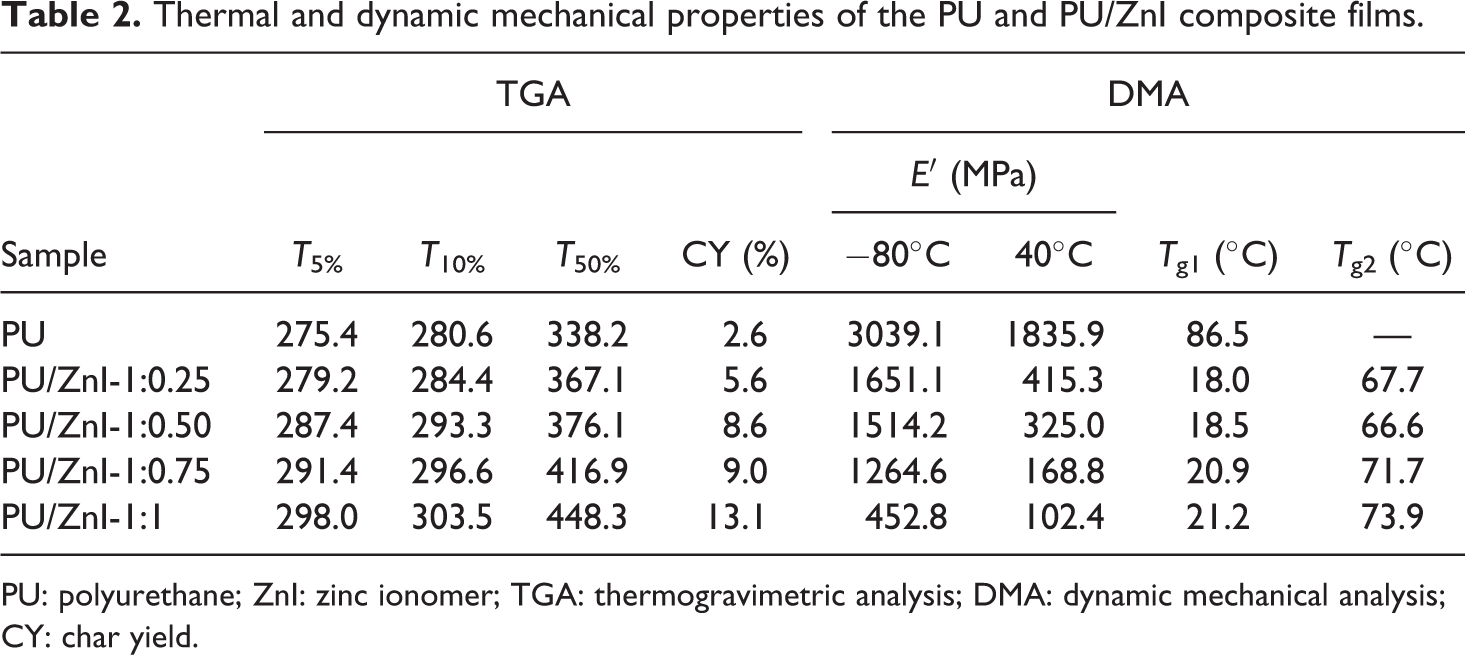
The TGA is an important technique to measure the mass change, thermal degradation or decomposition, and thermal stability of the polymer composites. The results including 5% and 10% gravimetric loss and char yield (CY) of the PU/ZnI composite files are presented in Table 2 and Figure 6. Both the PU and ZnI polymers undergo single-step degradation with an onset between 270°C and 450°C. But the PU/ZnI composites proceed in a three-step process, which were observed around 250–300°C, 300–450°C, and 450–520°C. The results suggested that urethane at 250–400°C and followed by chain session to C–C double bond occurring at around 450°C is mainly attributed to the degradation of polymer chain. ZnI slightly improved the initial degradation temperature and drastically improved T50%. The CY of the composite films is in the range of 2.6–13.1%. Moreover, the temperature for the maximum rate of degradation in all the blends was the same as for all the PU/ZnI composites. ZnI improved the CY when compared to neat PU. This indicates that the degradation of the blends does not have an impact on these properties. To compare with previous reports, the prepared PU/ZnI composite has better CY than reported PU composites.34,35 This improvement of resistance against temperature may be due to the strengthening of the composites rigidity caused by the interaction between the components, which reduces the molecular mobility.
Thermal and dynamic mechanical properties of the PU and PU/ZnI composite films.
PU: polyurethane; ZnI: zinc ionomer; TGA: thermogravimetric analysis; DMA: dynamic mechanical analysis; CY: char yield.
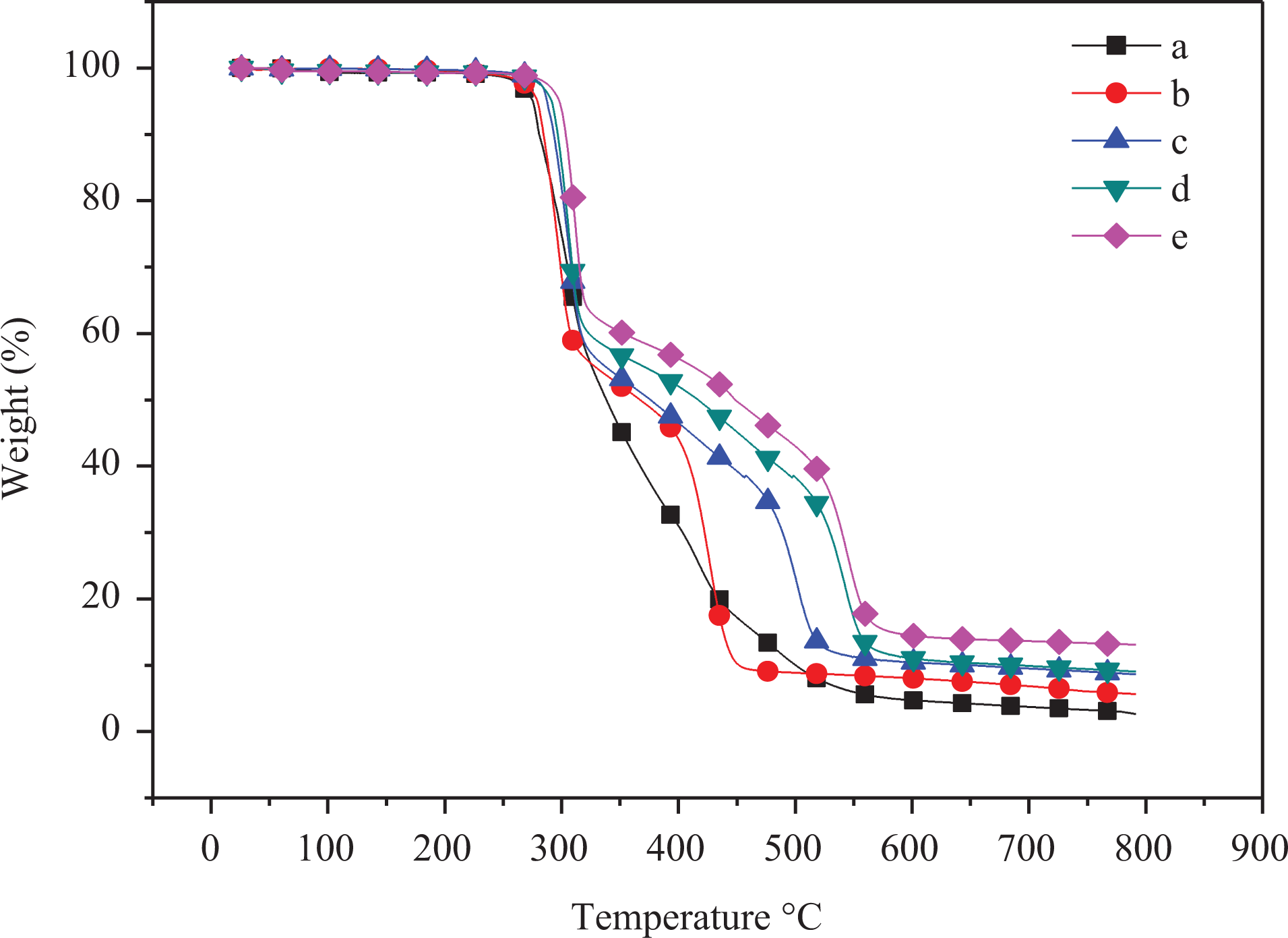
TGA analysis of (a) PU, (b) PU/ZnI-1:0.25, (c) PU/ZnI-1:0.50, (d) PU/ZnI-1:0.75, and (e) PU/ZnI-1:1.
Dynamic mechanical analysis
The DMA helps to determine the miscibility and glass transition temperature of the polymer blends. The storage modulus and glass transition temperature properties of the PU/ZnI composites are shown in Figures 7 and 8, and the data are summarized in Table 2. From the results, E′ decreases with increase in the ZnI content which is more pronounced at high temperature. The storage modulus properties of PU/ZnI composite films are low compared with reported works. 36 This is attributed to the plasticizing effect of ZnI due to its low glass transition temperature. Figure 8 shows the curves of tan δ versus temperature of the PU/ZnI composite films. In the case of PU/ZnI composites, the two glass transition temperature peaks were observed in the temperature range of 18.0–21.2°C and 67.7–73.9°C, respectively. This indicates the occurrence of phase separation in the composites at a microscopic level. The PU/ZnI composites show two relaxation peaks, the low Tg1 of ZnI and the high Tg2 of the PU. These Tg values indicate the existence of amorphous PU and ZnI phases in the blends. The Tg peaks slightly broaden and shift toward each other. Shift in the Tg to higher or lower temperature as a function of composition also indicates the partial miscibility of the components. 37
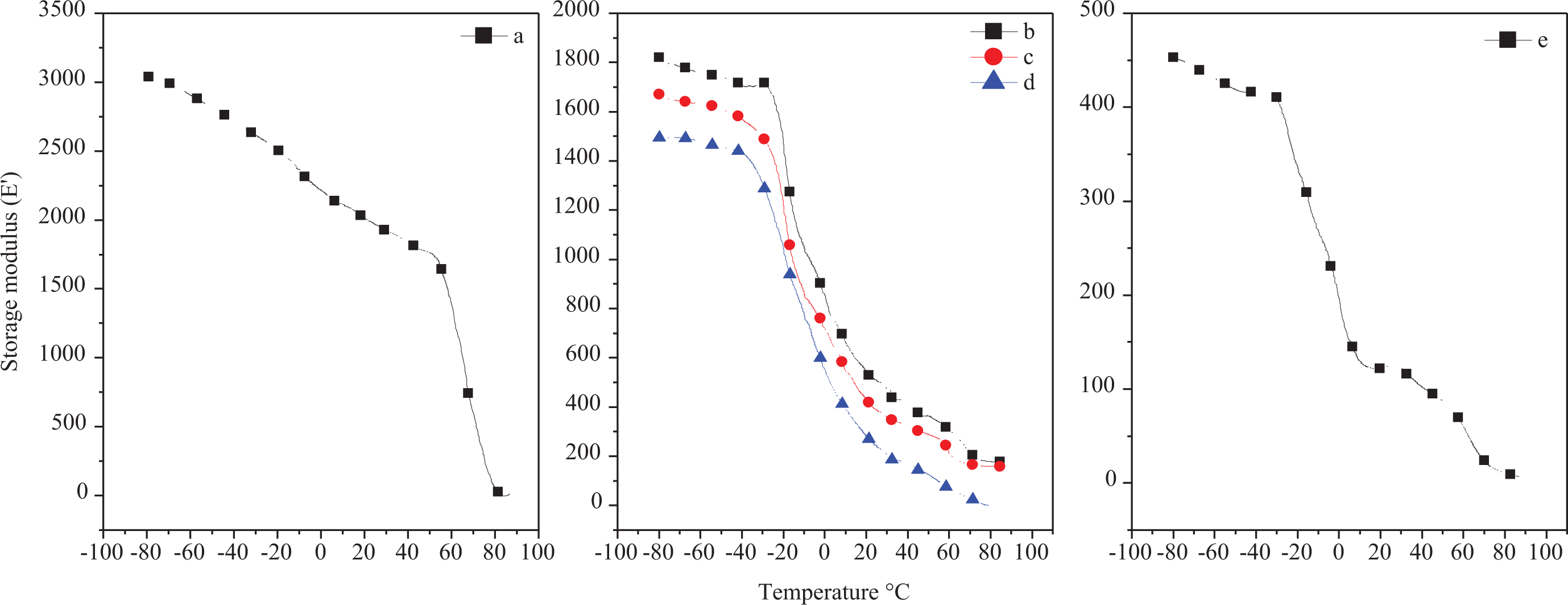
Storage modulus versus temperature for (a) PU, (b) PU/ZnI-1:0.25, (c) PU/ZnI-1:0.50, (d) PU/ZnI-1:0.75, and (e) PU/ZnI-1:1.
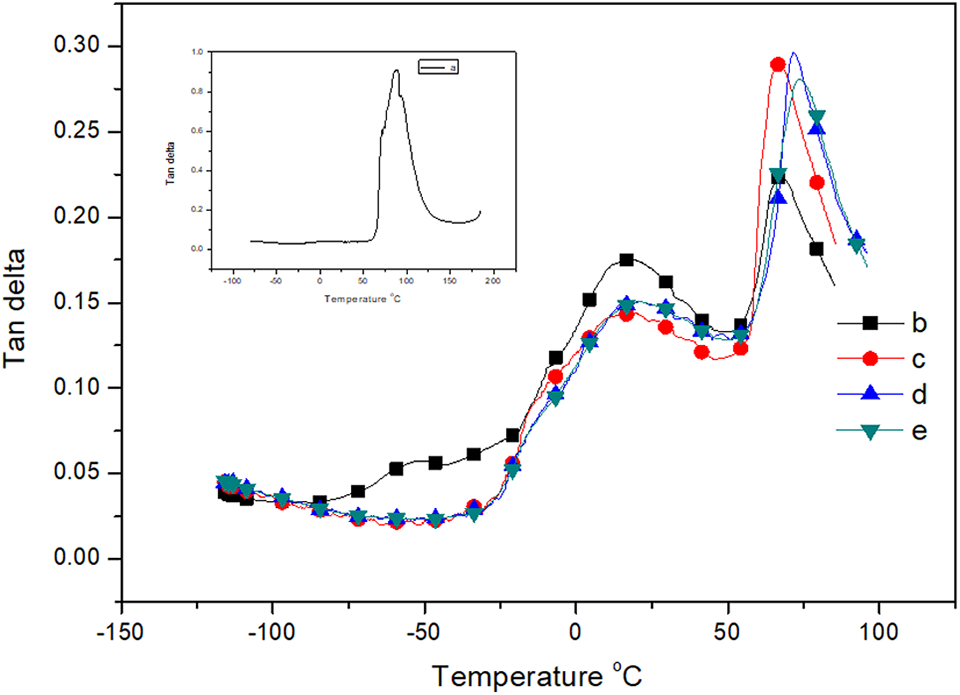
Tan δ versus temperature for (a) PU, (b) PU/ZnI-1:0.25, (c) PU/ZnI-1:0.50, (d) PU/ZnI-1:0.75, and (e) PU/ZnI-1:1.
Rheology
The rheological properties of the PU/ZnI composite blends are important to the fundamental understanding of the practical processing efficiency and structure–property relationship of the polymer components. Figures 9 to 11 show the storage modulus (G′), loss modulus (G″), and complex viscosity (η*) of the PU with different concentrations of ZnIs.
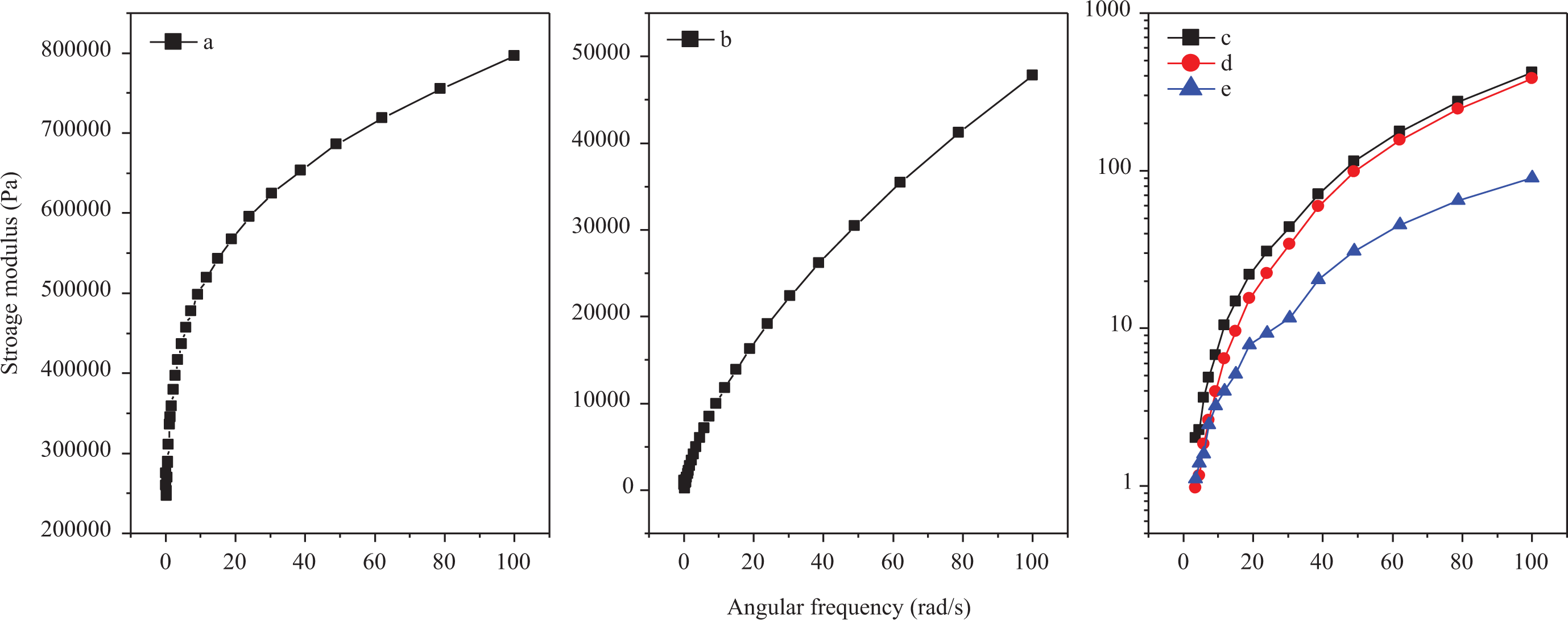
Storage modulus as a function of angular frequency for (a) PU, (b) PU/ZnI-1:0.25, (c) PU/ZnI-1:0.50, (d) PU/ZnI-1:0.75, and (e) PU/ZnI-1:1.
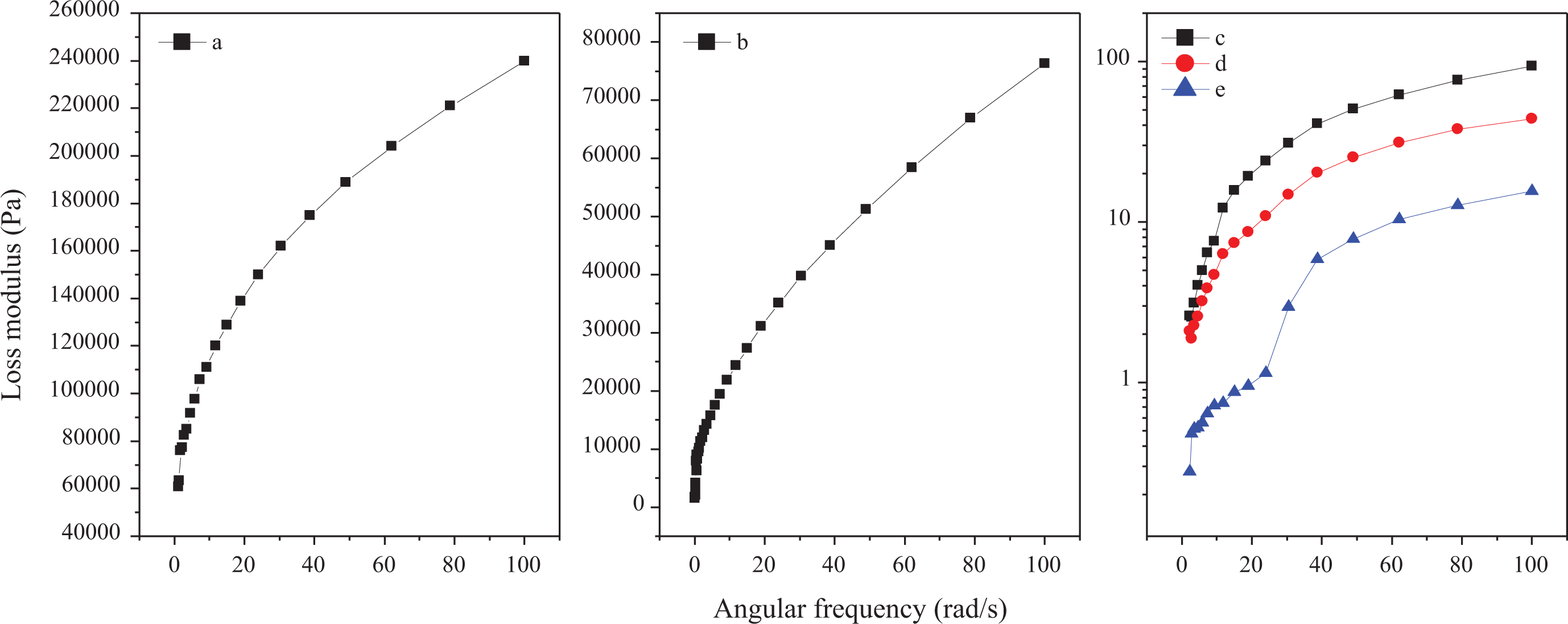
Loss modulus as a function of angular frequency for (a) PU, (b) PU/ZnI-1:0.25, (c) PU/ZnI-1:0.50, (d) PU/ZnI-1:0.75, and (e) PU/ZnI-1:1.
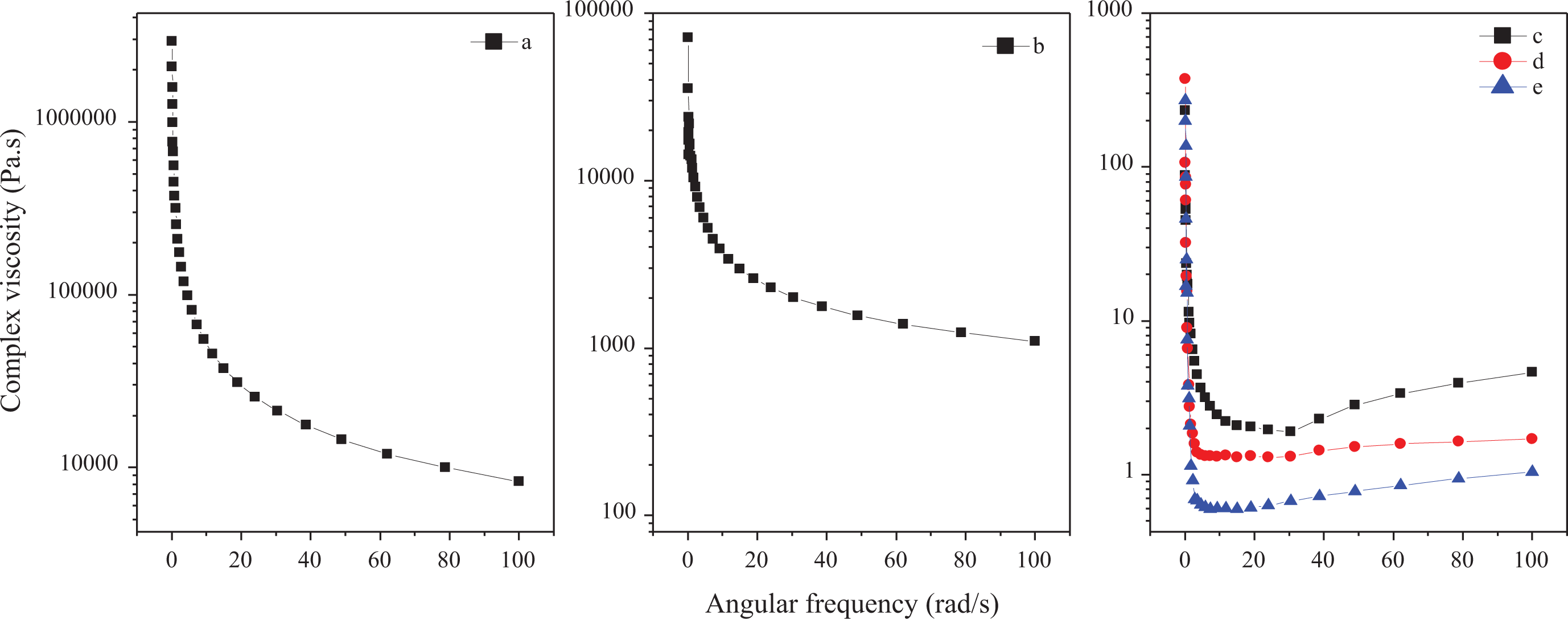
Complex viscosity as a function of angular frequency for (a) PU, (b) PU/ZnI-1:0.25, (c) PU/ZnI-1:0.50, (d) PU/ZnI-1:0.75, and (e) PU/ZnI-1:1.
The storage modulus and loss modulus of PU/ZnI increased with in all frequency ranges. The values of G′ and G″ of PU and PU/ZnI composites at 4.52 (rad s−1) are in the range of 9.18 × 10⁵ Pa to 1.16 and 9.18 × 10⁴ to 0.524 Pa, respectively. However, G′ and G″ of the PU film significantly decreased with increasing ZnI content. In all the PU/ZnI composite films, G′ was obviously higher than G″ over the entire applied frequency region which is due to the elastic nature of the materials. In addition, PU/ZnI composites (1:1, 1:0.75, and 1:0.50) ratio shows lower G′ and G″ than those of PU and PU/ZnI-1:0.25 composites, meaning that fewer entanglements between the components at high concentration. From the results, when increasing the ratio of these materials miscibility of the blend is not good and interaction between components decreased.
The results of complex viscosity versus angular frequency are shown in Figure 11. All the PU/ZnI composites exhibit shear-thinning behavior. Complex viscosity (at frequency) of the PU without ZnI was 3.16 × 10⁵ Pa, which decreased to 1.34 × 10⁴, 11.4, 3.15, and 3.13 Pa in the presence of ZnI (PU/ZnI-1:0.25, PU/ZnI-1:0.5, PU/ZnI-1:0.75, and PU/ZnI-1:1), respectively. The complex viscosity of the PU and PU/ZnI composite films decreased with increasing frequency. The shear-thinning behavior in the polymer is associated with the disentanglement of polymer chains during flow, and cross-link density of the network decreases resulting in a decline in the viscosity. The viscosity of PU decreased slowly when increasing the % of ZnI, and at a high ratio of PU/ZnI viscosities, slopes changed abruptly to much lower values. The incorporation of ZnIs reduces the viscosity due to its plasticizing effect, which leads to a decrease in the intermolecular forces and an increase in the mobility of polymeric chains. At 1:0.25 ratio, a low-frequency complex viscosity decreased with substantial shear-thinning behavior. However, at 1:0.5, 1:0.75, and 1:1 ratios, the complex viscosity slowly increased at high frequencies.38–42
Conclusion
A series of blends of PU- and ZnI-based blends were developed in different ratios. All the PU/ZnI composite films improved their transparency by incorporation of ZnIs. DMA results exhibited that ZnI significantly reduces the storage modulus and tan δ curves demonstrate two Tg peaks which were slightly broaden and shift toward each other, suggesting partial miscibility of the PU and ZnI. TGA results show that the initial thermal stability significantly improved and CY of the composites also improved from 2.6 to 13.1 by the addition of ZnI. Tensile strength and EB reduced from 38.1 MPa to 10.3 MPa and from 278% to 60.9%, respectively. The mechanical studies indicated that substantial structural and/or morphological changes were caused by phase inversion. SEM analysis of the composites showed immiscibility of the components at a high ratio of 1:1. WVP of the PU/ZnI decreased compared with the PU film. The ZnI can enhance the water barrier properties and can slightly influence the CA properties of PU films. Rheology study concluded that PU/ZnI composites exhibited a shear-thinning behavior. The complex viscosity decreased monotonously with increasing ZnI content at low frequency. G′ and G″ increased with frequency and it is low compared with neat PU film. PU/ZnI-1:1 composites exhibited good thermal stability, good water barrier, good CA properties, and least mechanical properties. The miscible and immiscible blends of the PU/ZnI composites show the potential performance in food packaging applications.
