



Abstract
This article addresses the effect of nanocrystalline cellulose (NCC) on the mechanical and thermal properties of polypropylene (PP). A new approach was adopted to produce mechanically improved and thermally stable PP-NCC nanocomposite. This approach involved producing optimized PP-NCC nanocomposite by adding NCC nanoparticles to PP matrix at different concentrations by means of injection molding process. The aim of this work was to find the optimum NCC concentration to enhance the mechanical and thermal properties of the PP matrix. The mechanical and thermal behavior of PP-NCC nanocomposite was studied by performing three-point bend, nanoindentation, differential scanning calorimeter (DSC), thermogravimetric analysis (TGA), scanning electron microscope (SEM), and Fourier transform infrared (FTIR) spectroscopy tests. The results showed that the mechanical properties of strength, modulus, and hardness of the nanocomposites increased with the addition of NCC by 6.5%, 19%, and 150%, respectively. DSC results showed that the addition of NCC to PP does not affect the thermal stability (melting temperature). However, TGA showed that upon inclusion of NCC nanoparticles, the thermal stability of the samples improved compared to pure PP except for the 5% added NCC. This is attributed to the presence of NCC rod-like particles that dissipated heat by generating tortuous paths, as depicted in the SEM results and verified by FTIR results.
Introduction
The eco-friendly nature of natural fibers has driven their applications as fillers in developing composite materials due to their biodegradable characteristics. 1 Disposal of glass or carbon fiber-filled composites, which are synthetic nonbiodegradable polymers, after their useable life has created adverse environmental problems. Many researchers investigated the potential of using natural fibers as substitution to glass fibers. Such studies have shown that composite stiffness was sufficient because natural fibers have high strength and stiffness. However, drawbacks, such as poor filler dispersion and incompatibility with the polymer matrix, have also contributed to catastrophic failures of natural fiber composites.
Recent studies have shown that crystalline cellulose (micro-/nanocrystalline) enhanced material properties at lower filler concentrations compared to unfilled polymer matrices and their composite counterparts. Cellulose is an abundant and natural polymer that can be obtained from many sources. Nanometer-sized single-crystal cellulose, which is commonly referred to as nanocrystalline cellulose (NCC) is usually extracted from natural fibers that come from plants, animals, and mineral sources. Fiber that comes from cotton, jute, ramie, sisal, and hemp normally constitutes a large amount of cellulose, which is the primary source for NCC. Petrochemicals fall under the synthetic fiber category, which provides cellulose nanofibers. Apart from natural fibers, a substantial amount of pure celluloses is also obtained from bacteria, algae, and marine tunicates.2,3 Celluloses extracted from bacteria are called bacterial celluloses, and they exhibit unique properties due to their high crystalline structure. 4 The extraction of NCC from renewable sources has gained growing interest recently because of its outstanding mechanical properties (high specific strength and modulus), large specific surface area, high aspect ratio (L/D) ranging from 1 to 100, environmental benefits, and low cost. 5 The large surface area and crystalline structure of NCC particles have the potential to provide good interfacial adhesion to polymers, such a polypropylene (PP). Both NCC and PP are hydrophobic in nature. Therefore, the compatibility between the polymer and cellulose nanoparticles can exist. Extensive studies showed that NCC had great potential applications in regenerative medicine, optics, and composite materials.
The current methods to producing NCC nanoparticles comprise acid treatments such as sulfuric acid and many physical and mechanical processes. These processes include high-pressure homogenizers, cryocrusher, microfibrillation by super-grinder, microwave, 6 and, most recently, use of a strong oxidizing agent. 7 The use of enzymatic hydrolysis has been rather limited.8–11 NCC as a reinforcing phase has several advantages over other types of nanofillers, as they are easily modified, inexpensive, renewable, and biocompatible. NCCs with high crystallinity possess impressive mechanical properties. Meyer and Lotmar 12 calculated the modulus of NCC theoretically using stiffness constant and found it to be approximately 120 GPa, which was later confirmed experimentally to be within the same range.13,14 The majority of research on NCC as a reinforcing material have focused on the bulk or thin-film materials,15–17 whereas only a few studies have been reported recently on using NCC as a reinforcing material for submicron polymer fibers. Many nanocomposites materials were developed using NCC as a reinforcement into various range of polymeric matrices to improve its mechanical properties, such as poly(styrene-co-butyl acrylate), 18 poly(vinyl chloride), 19 poly(vinyl alcohol), 20 PP, 21 epoxy, 22 natural rubber, 23 and polyurethane. 24 NCC has shown to significantly improve the mechanical properties of polymeric composite materials.
The current article presents a new approach that improves the mechanical properties (strength, modulus of elasticity, and hardness) of a thermoplastic polymer (PP) through dry mixing process. The NCC particles are grinded to form pellets by a pelletizer that are further mixed with the thermoplastic PP. After which, the NCC-filled nanocomposites were prepared by injection molding process. Using injection molding, the NCC allowed particles to conglomerate with the PP pellets. The mechanical and thermal characterization of NCC reinforced PP nanocomposites are discussed in this article.
Materials and sample preparation
PP was purchased from Exeed EFF Co. (Oman). It had a melt flow index of 1.59 g min−1 (230°C) and a density of 0.91 g cm−3. NCC was purchased from CelluForce Co. (Canada). It had average dimensions of 100 nm length, 5 nm diameter, and a measured surface area of approximately 500 m2 g−1.
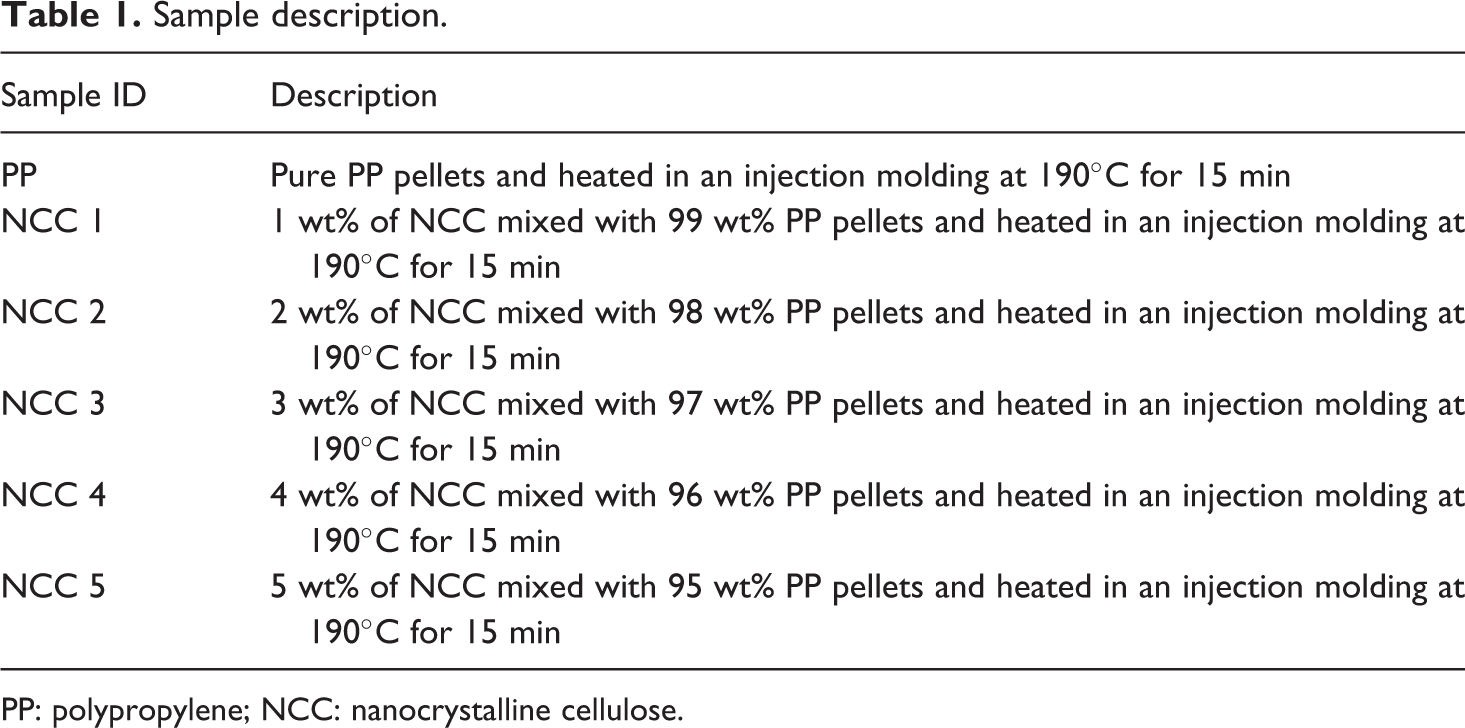
Different percentage concentration of NCC mixed with PP samples was investigated in this study. The addition of NCC at 1%, 2%, 3%, 4%, and 5% concentrations were mixed with pure PP pellets. The mix was poured into the injection-molding machine (Norwood Instrument Ltd, Holmfirth, United Kingdom). The cylinder temperature of the machine was 190°C, and the mold temperature was 50°C. The sample preparations and descriptions are listed in Table 1.
Sample description.
PP: polypropylene; NCC: nanocrystalline cellulose.
Results and discussion
Mechanical properties
Three-point bending test according to the ASTM D790 standard was carried out for all composite samples, as shown in Figure 1. The mid-span deflection was determined using an extensometer at a crosshead speed of 10 mm min−1. The dimensions of each sample are 100 × 12× 3 mm3 that represents the length, width, and thickness, respectively.
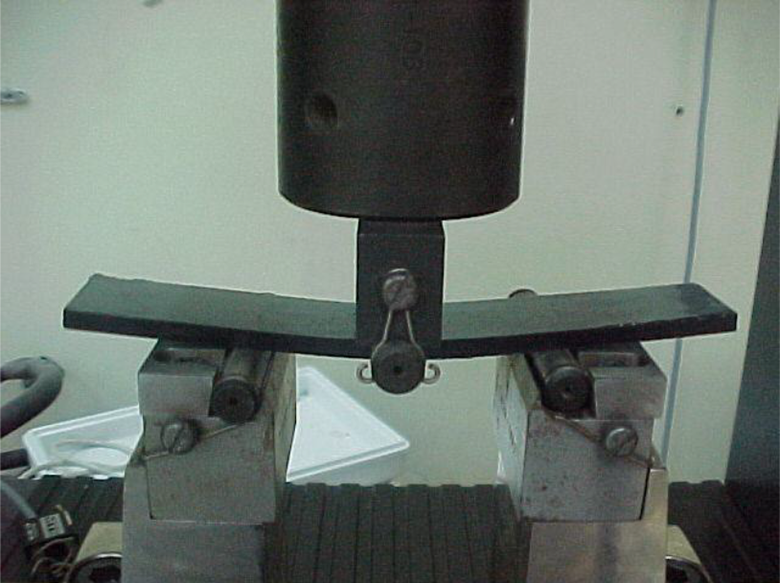
Three-point bending test on the PP-NCC nanocomposite samples. PP: polypropylene; NCC: nanocrystalline cellulose.
Figures 2 and 3 show the mechanical property measurements after taking an average of five tests for each data point. The results clearly show that the peak stress values of the PP-NCC composite samples were slightly affected by the addition of NCC as observed in Figure 2. Elastic modulus, on the other hand, increased dramatically for all composite samples, and this is attributed to the NCC addition as depicted in Figure 3.
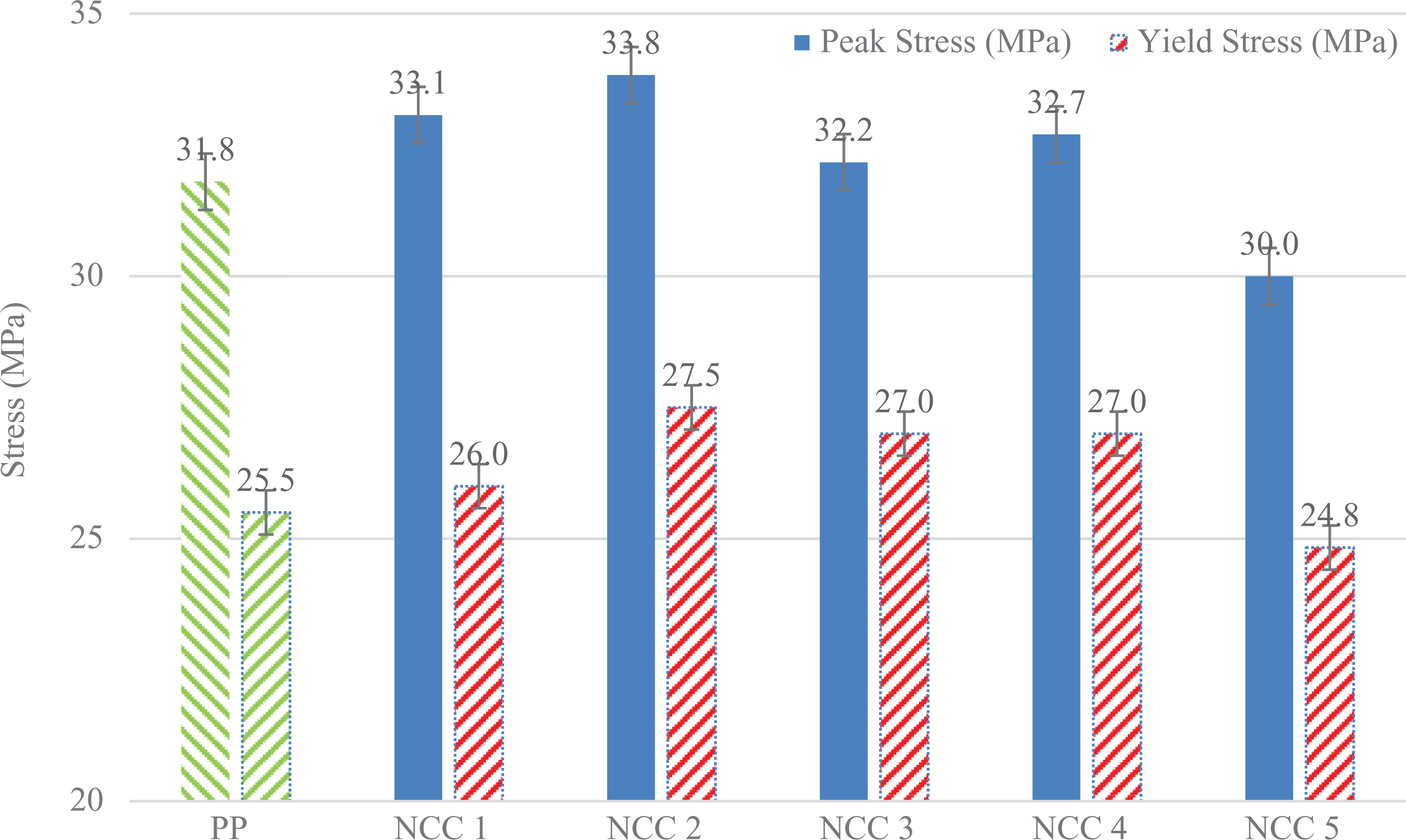
Peak and yield stresses for PP-NCC samples compared to the PP sample. PP: polypropylene; NCC: nanocrystalline cellulose.
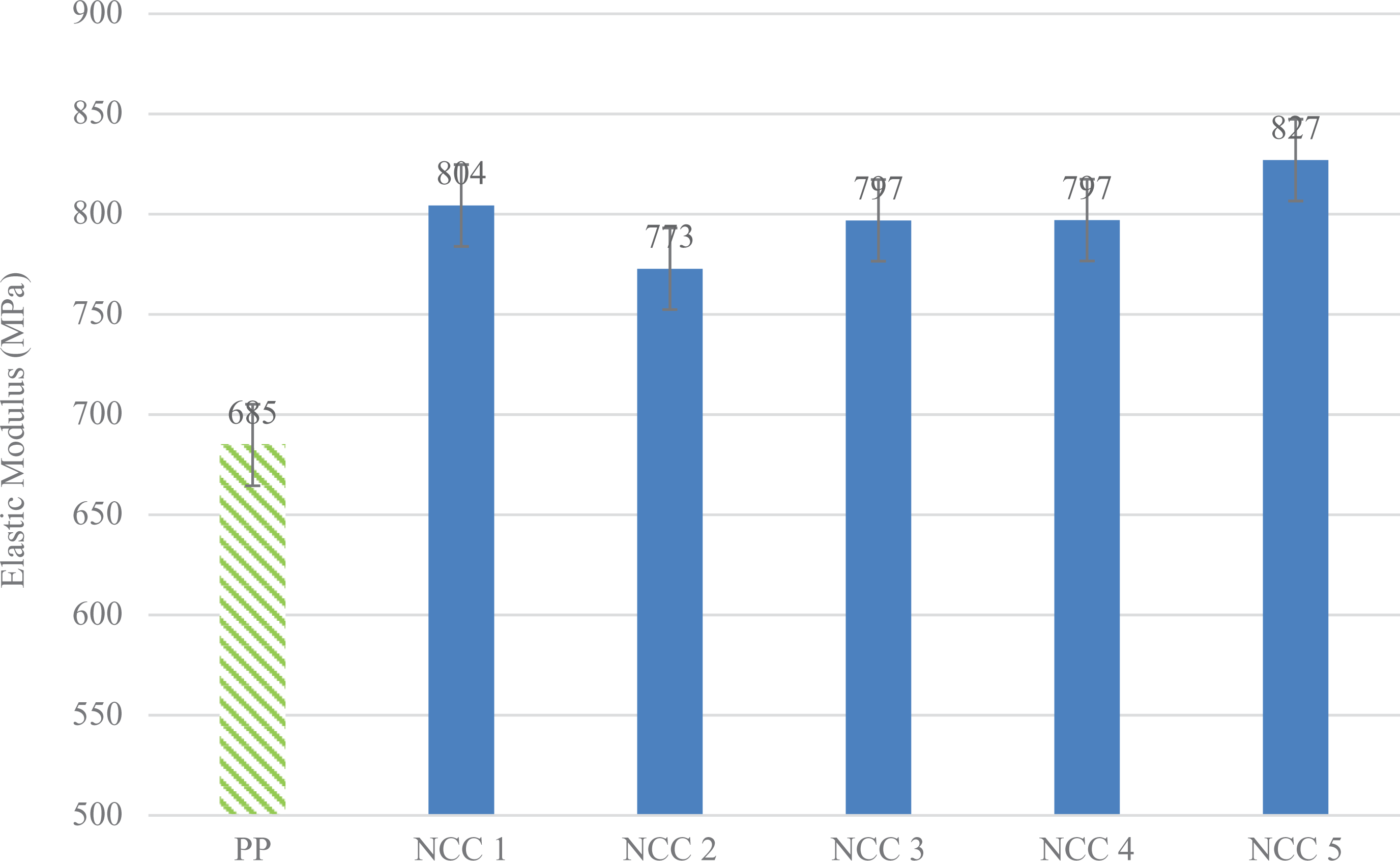
Flexural modulus for PP-NCC composite samples compared to the PP sample. PP: polypropylene; NCC: nanocrystalline cellulose.
The bending strength value of pure PP and PP-NCC composites is depicted in Figure 2. The bending strength (peak stress) and the yield stress of pure PP are found to be 31.8 MPa and 25.5 MPa, respectively. The addition of NCC leads to a slight increase in the values of both bending and yield stress. For the NCC 2 (that indicates 2% NCC particles added), the bending stress of the composite is increased by 6.5% and yield stress is increased by approximately 8%. It is found that the NCC, when added to PP, acts as a reinforcing agent, thus improving the mechanical properties of PP. 25 The improvement of both bending and yield stress is attributed due to good adhesion (interfacial interaction) between PP and NCC. Adding NCC beyond 2% concentration did not improve the bending properties of PP due to poor dispersion of NCC particles in the PP matrix. It was noticed that when 5% of NCC was added to PP pellets, both peak stress and yield stress degraded below the pure PP sample (Figure 2). This degradation is attributed to the weak chemical bonding between the nanocomposite cellulose with the PP matrix.
The effect of adding various percentages of NCC on the flexural modulus of PP-NCC nanocomposite is shown in Figure 3. The flexural modulus value of the pure PP was found to be 685 MPa. Due to the incorporation of 1% of NCC in PP, the flexural modulus has significantly increased to 804 MPa, which is an enhancement of 19%. The highest value of flexural modulus is observed in the case of the NCC 5 sample. The increase in the flexural modulus value of NCC-reinforced PP can be attributed to the increase in the stiffness of the composite after the addition of NCC. It was noticed that the NCC-reinforced PP composite became more brittle as the content of NCC increased. Moreover, the value of flexural modulus increased for all samples with NCC concentration compared to the pure PP sample. However, the 2% concentration showed the lowest modulus value. The flexural modulus increases were dependent on the amount of filler inside the polymer matrix. The stiffness of the composites increased with increasing filler content in the matrix. There was a variation in the increase of the stiffness with increasing the NCC concentration. The reason for this variation is due to the orientation effects, in which reinforcing phases oriented toward the direction of the load and increased stiffness at different rates. 26
Nanoindentation
The nanoindentations were carried out at a constant displacement rate of 0.0167 nm s−1 to avoid strain hardening effect on the measurements until a maximum depth of 1827 nm was reached using a nanoindenter (NanoTest, Micro Materials, Ltd, Wrexham, Wales). The load of 1 mN was held constant for 30 s to avoid creep that may affect the unloading behavior. The hardness was calculated from the load–displacement data obtained from the machine. Similar to the bending test, each data point was calculated by performing five tests for each sample, where 10 indents were performed for each test and the average was taken. Figure 4 shows the effect of hardness of PP-NCC nanocomposite samples. All samples showed an increase in the hardness values when compared with pure PP sample.
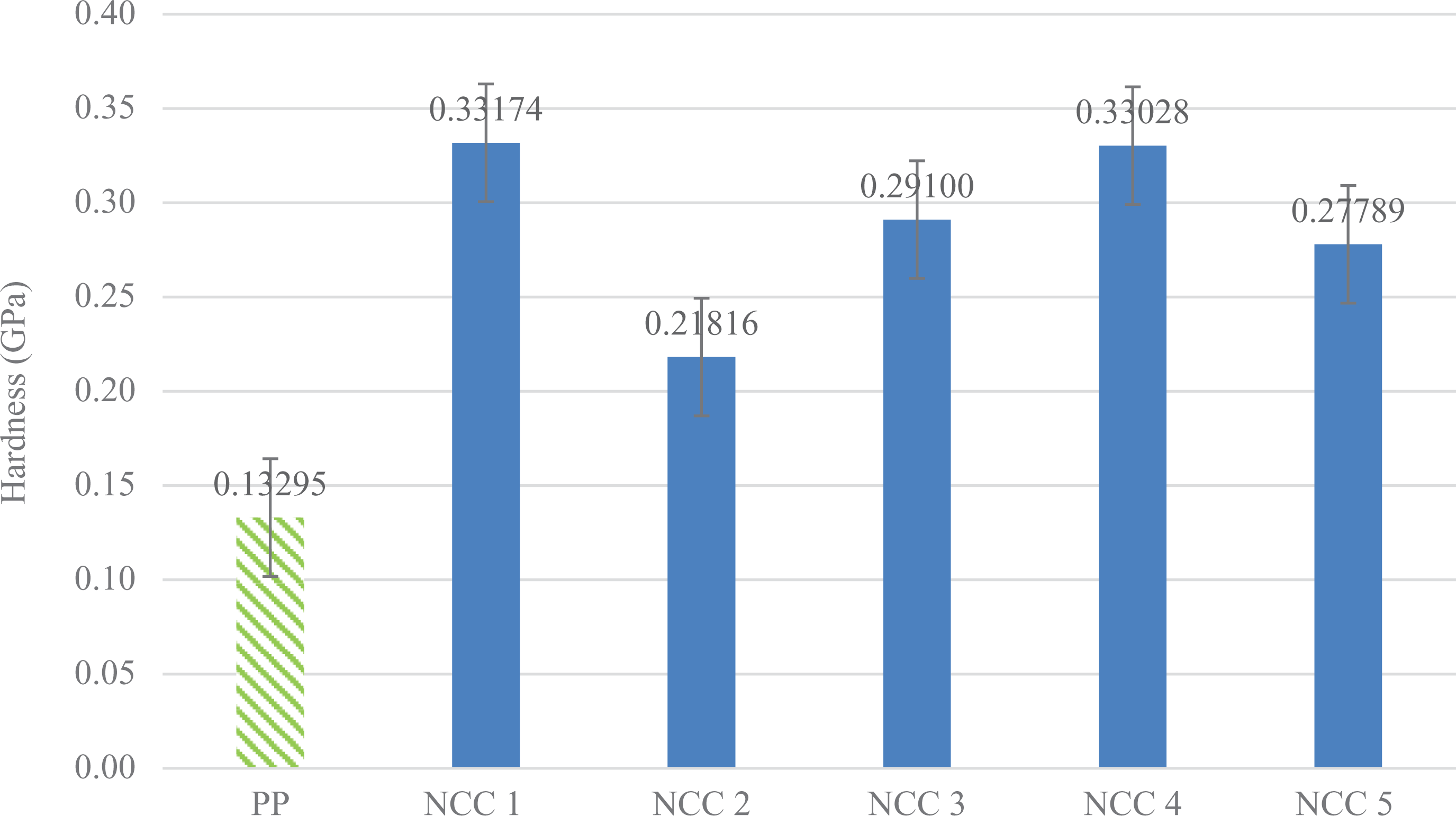
Hardness for PP-NCC samples compared to pure PP sample. PP: polypropylene; NCC: nanocrystalline cellulose.
The hardness value of pure PP sample was found to be 132.9 MPa. Adding 1% NCC increased the hardness value dramatically from 65% to 150% when compared to the pure PP sample. The hardness increased dramatically due to the addition of NCC nanoparticles to pure PP. The variation in the increase of the hardness is attributed to the orientation effects of the NCC rod-like particles.26,27
Thermal properties
Differential scanning calorimetry
Differential scanning calorimetry (DSC) analysis of polymeric membranes was carried out using a differential scanning calorimeter DSC Q200 V24.4 Build 116 Model (TA Instruments, Water LLC, New Castle, Delaware, USA) containing a refrigerator cooling system. Each sample, approximately 5–10 mg in weight, was placed in a hermetically sealed aluminum pans and was then heated from 40°C to 200°C at a rate of 10°C min−1 under nitrogen atmosphere. Placed inside the furnace next to the filled pan is an empty hermetically sealed aluminum pan as a reference cell. The results were analyzed using TA Universal Analysis 2000 V4.5A Build 4.5.05 (TA Instruments) software.
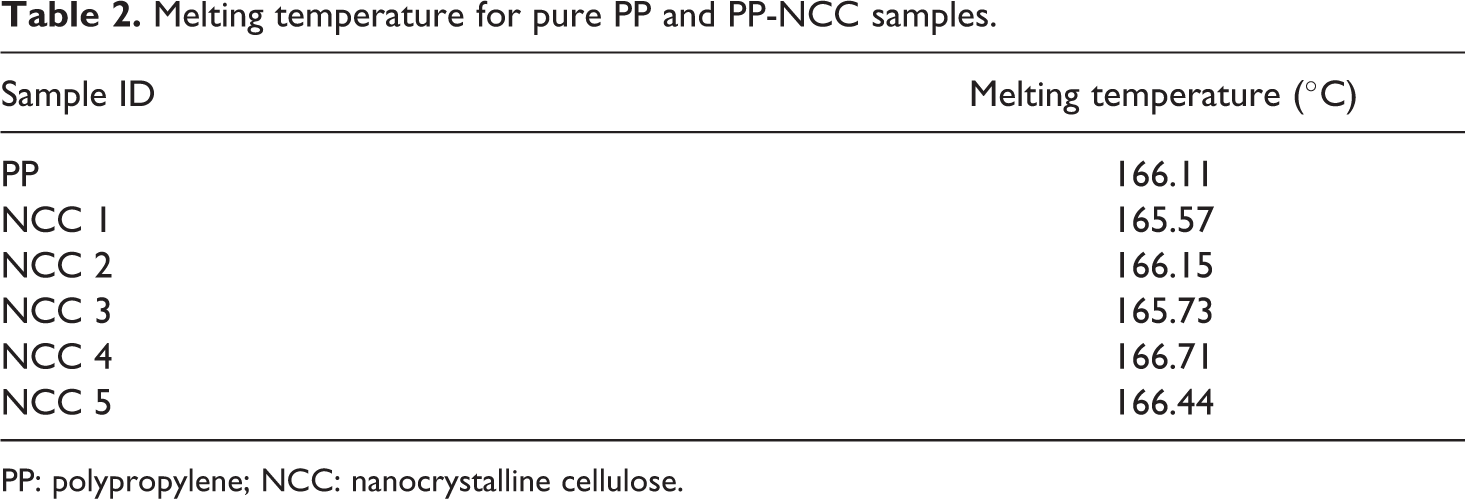
Figure 5 shows the crystallization behavior and endothermic heat flow for PP-NCC samples. Thermal characteristics of the melting temperature (Tm) of PP-NCC nanocomposite are summarized in Table 2. As observed from Figure 5, no significant changes in melting point were noticed after the addition of NCC. The figure also shows that each sample exhibited a single endothermic peak around the Tm, which indicated that the crystalline region of PP-NCC nanocomposite had a Tm of approximately 166°C. The Tm of the samples was negligibly affected after reinforced with NCC.
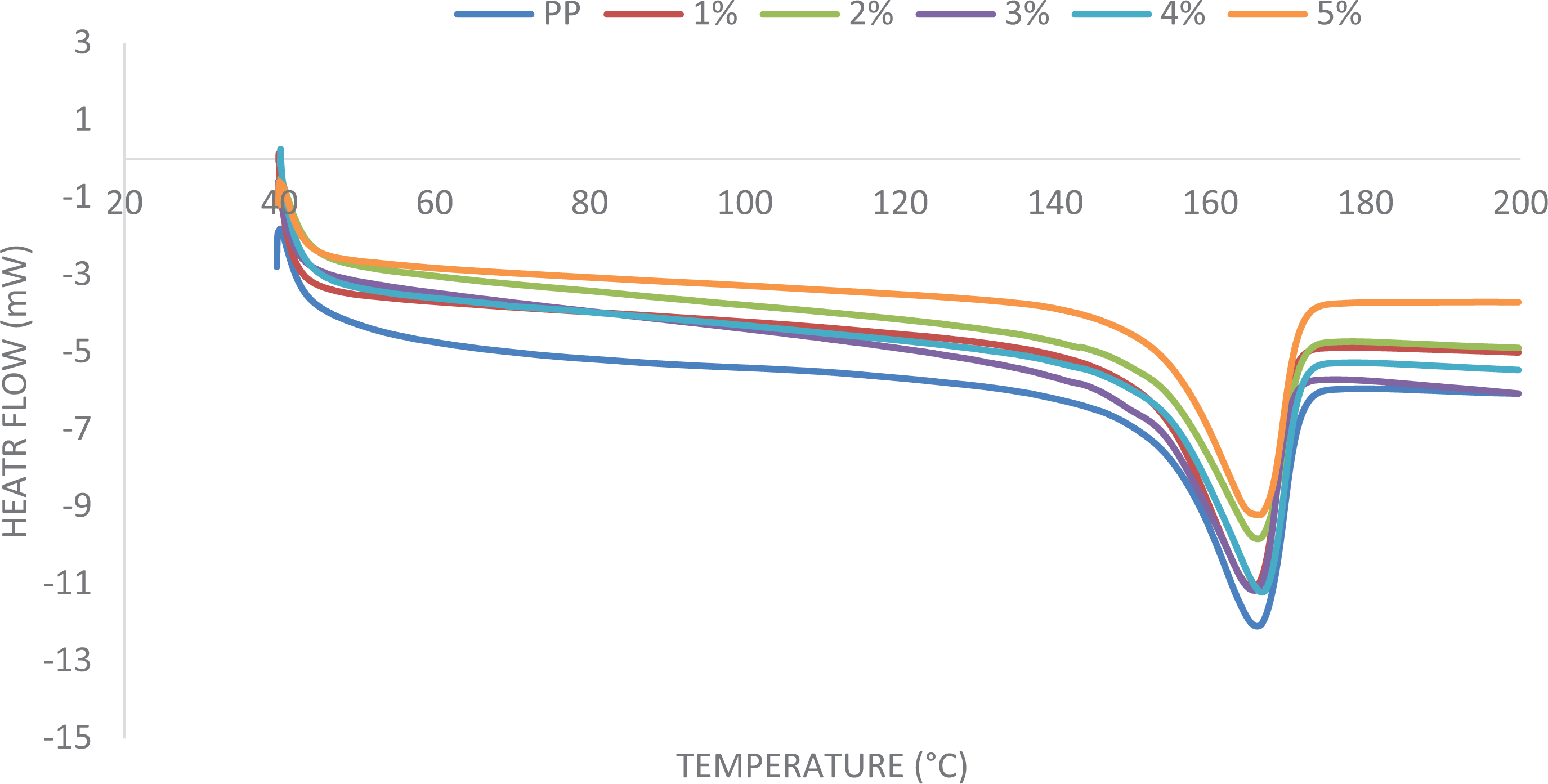
DSC results of pure PP and PP-NCC samples.
Melting temperature for pure PP and PP-NCC samples.
PP: polypropylene; NCC: nanocrystalline cellulose.
Thermogravimetric analysis
Weight decomposition percentage was analyzed using the thermogravimetric analyzer TGA (Q50, TA Instruments, Water LLC, New Castle, Delaware, USA) that contains a TGA heat exchanger system for analyzing PP and PP-NCC samples. Each sample, approximately 5–8 mg in weight, was placed on a ceramic plate inside the tube furnace, which was heated from 25°C to 700°C at a rate of 10°C min−1 under nitrogen atmosphere. The results were analyzed using TA Universal Analysis 2000 V4.5A build 4.5.05 (TA Instruments) software. The TGA results for pure PP and PP-NCC samples are shown in Figure 6. All samples showed a single-stage decomposition.
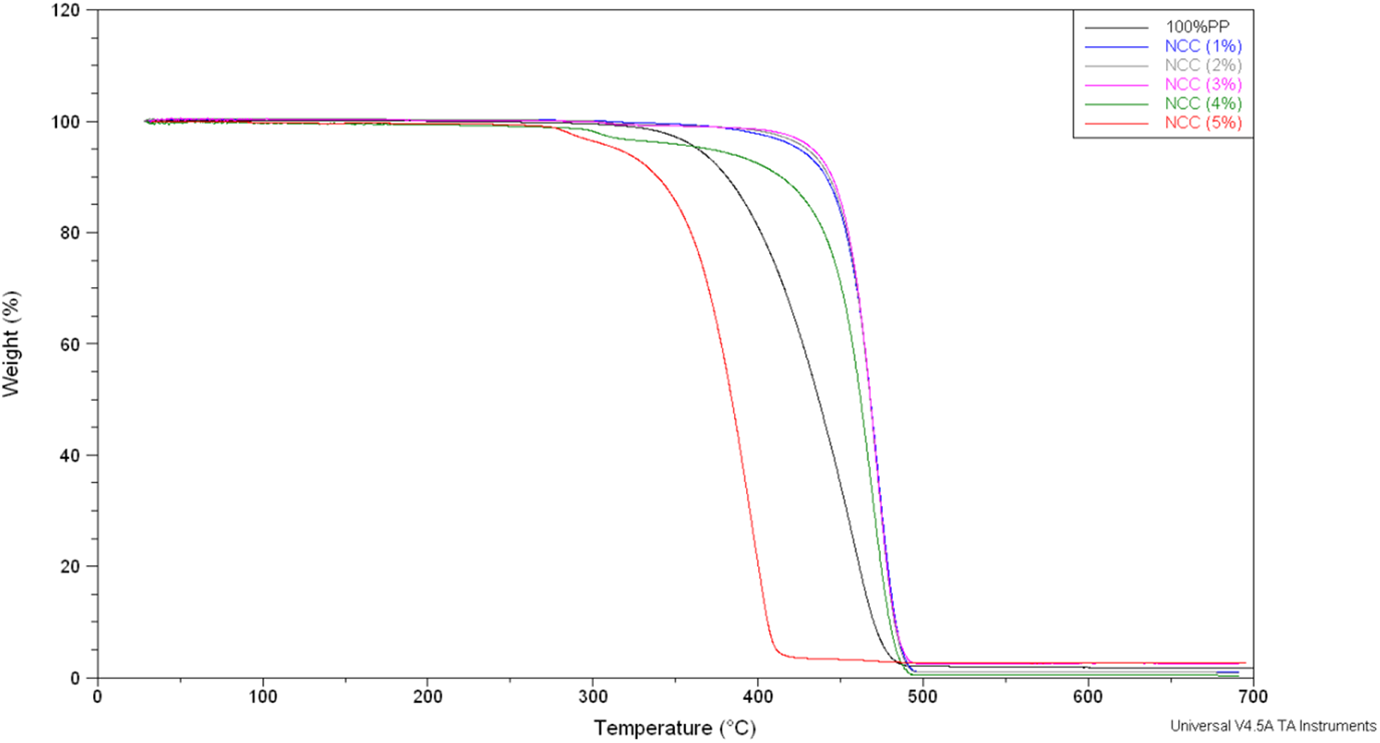
TGA results for pure PP and PP-NCC samples.
Figure 6 shows the thermal resistance of the PP-NCC samples, which was measured under nitrogen gas with increasing temperature. NCC particles are thought to increase the thermal resistance by hindering diffusion of volatile decomposition products or by forming a charred NCC surface that dissipates heat by absorbing it in the inorganic phase.28,29 Both NCC 4 and NCC 5 samples were noticed to degrade at an earlier temperature when compared to the pure PP sample. The reduced thermal resistance may have been due to the nonuniform dispersion of the NCC particles. 26
FTIR spectroscopy
Fourier transform infrared (FTIR) spectroscopy–attenuated total reflectance infrared spectra of the samples were recorded using a 470 FTIR, Nexus Spectrometer (Ramsey, Minnesota, USA). FTIR was used to characterize the presence of specific chemical groups in the materials. It was also used to analyze the interactions among ions in the polymer matrix. PP and PP-NCC were obtained as 1- to 2-mm thick films and analyzed by FTIR transmittance mode. The dried films of PP and PP-NCC were peeled off and cut into strips and sandwiched between the potassium bromide powder before placing in the spectrophotometer.
Figure 7 shows the FTIR spectra that depicts two distinct peaks for the PP-NCC nanocomposite sample compared to the PP sample. The first distinct absorption peak ranging from 1160 cm−1 to 1055 cm−1 are primarily assigned to C–O bond, C–C bond, and ring structures (with typical sharpening at 1060 cm−1), which correspond to typical cellulose compound. The second distinct peak relates to the wavelength intensity near 2900 cm−1. The broad peak at this intensity is assigned to stretching vibration of C–H bond of cellulose. The peak intensity of the C–H bond is not as visible as in the pure PP sample as compared to the PP-NCC samples. The presence of these bands confirms the interaction of NCC in the PP matrix. Furthermore, the intensity of the overall C–H band (2900 cm−1) increased with increasing NCC percentage, signifying adhesion of NCC on the PP matrix. Due to this interfacial adhesion, the overall mechanical properties were enhanced for the PP-NCC sample.
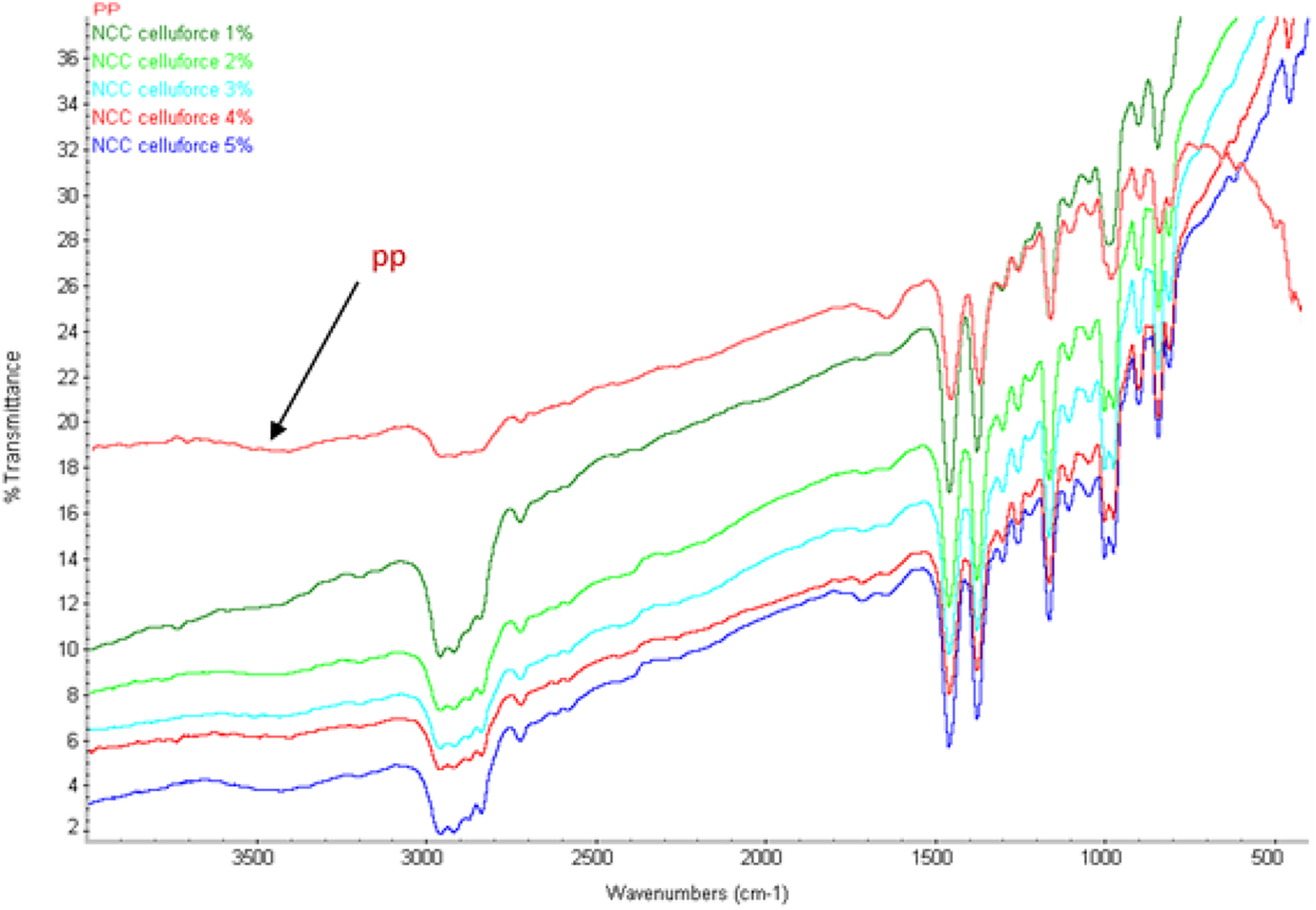
FTIR for PP and PP-NCC samples.
Scanning electron microscopy
Scanning electron microscopy was carried out for extensive morphological inspection of cross section in NCC-reinforced nanocomposites. The small portion of samples after mechanical analysis was dried under vacuum for 24 h at 50°C. The coating of samples was carried out by gold sputtering and was further examined with an electron microscope (JEOL JSM-5600, Peabody, Massachusetts, USA) for morphological changes.
Figure 8(a) and (b) shows the cross-sectional image of the pure PP and PP-NCC samples, respectively. Figure 8(b) depicts a rod-like appearance of NCC nanoparticles. It was observed that NCC nanoparticles are agglomerated on PP. The pure sample developed fibrillar structures along the tensile direction, as shown in Figure 8(a). This implies that significant plastic deformation occurred in the polymer layer during fracture.
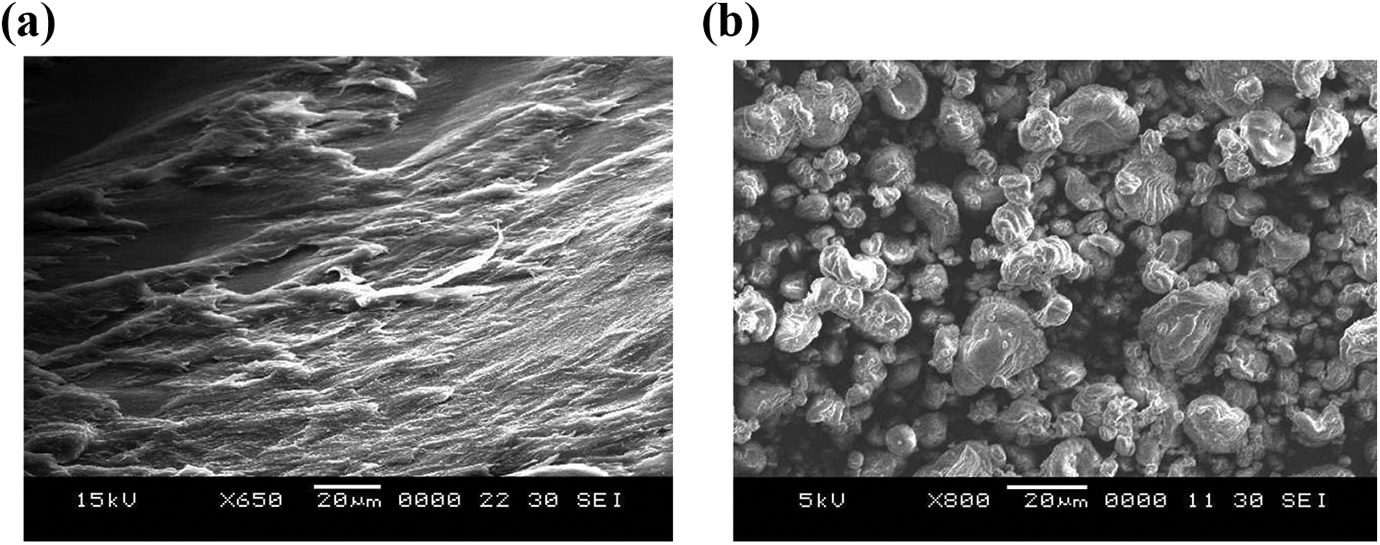
SEM images of (a) pure PP and (b) PP-NCC sample.
Conclusions
The mechanical and thermal behavior of PP-NCC nanocomposites were investigated with various percentage concentration of NCC. The three-point bending tests showed an increase in stiffness when adding NCC to PP. Similarly, hardness values of the PP-NCC samples were increased significantly, more specifically by 150% for the NCC 1 sample. It can be concluded that the NCC used as nanofiller provided dense composite structures, thus leading to better flexural strength. FTIR results showed evidence of bonding between NCC and PP that proves the enhancements of the mechanical properties that were achieved. DSC and TGA results indicated stable thermal behavior of PP-NCC nanocomposite. The Tm from DSC was within the same range for all samples. Overall, the addition of NCC in PP had a positive impact on the mechanical properties and thermal stability.
