




Abstract
The viscoelastic behavior of an extruded wood plastic composite (WPC) made from thermally modified wood under hygrothermal treatment was studied and modeled. Multiple three-point bending creep/recovery tests were carried out using a dynamic mechanical thermal analyzer (DMTA) equipped with a submersible clamp. WPC specimens with a 15-mm span were subjected to two initial applied stresses; 9% and 14% of the flexural strength in 30 min of creep and 30 min of creep recovery under the combined effects of temperature (25°C, 35°C, and 45°C) and water immersion (saltwater (SW) and distilled water). A dry condition WPC control was used to compare the hygrothermal effects with respect to the control conditions. The WPC material in this article exhibited a linear viscoelastic behavior under the effect of temperature, whereas a nonlinear viscoelastic behavior was observed under immersion conditions. A power law model is considered a useful model to describe the creep behavior of WPC specimens with a 15-mm span in the control and the SW conditions and at 45°C. A power law model was used to describe 180-day creep deflection of WPC lumber beams with an 853-mm span subjected to 12 MPa of the flexural strength in four-point bending at 50% relative humidity and at 21°C. The power law model predicts that the WPC lumber will reach a flexural strain in outer fiber of 1% in approximately 150 years.
Introduction
Wood plastic composites (WPCs), unlike elastic materials, exhibit viscoelastic behavior. Gibson 1 reported that thermoplastic composites, in general, exhibit a linear viscoelastic behavior and that can be represented as a physical model; for instance, spring-dashpot in a series arrangement. The spring represents the elastic behavior (i.e. following Hooke’s law) of thermoplastic composites, whereas the dashpot represents the “Newtonian fluid” viscosity. However, other researchers 2 reported that WPC materials exhibit nonlinear viscoelastic behavior that can be related to the effect of the filler (i.e. the wood flour). Barbero 3 distinguished between the linear and the nonlinear viscoelasticity behavior of viscoelastic materials via the stress dependency of the models’ parameters.
To better understand the viscoelastic behavior of WPCs, different models have been proposed in the literature; Maxwell, power law, generalized Burger’s, standard linear solid, standard nonlinear solid, Maxwell–Kelvin, linear solid Zener, and improved Zener (a.k.a. Prony Series) models. The time-dependent viscoelastic behavior of the material based on these models is governed either by an empirical (mathematical) equation similar to the power law model or by the number of the spring and dashpot elements in the model (physical model), and on the arrangement of these elements (parallel or in series). 1,3 –5 Certain models can describe the short-term time-dependent behavior of the viscoelastic material, whereas other models can describe the long-term time-dependent behavior of viscoelastic materials.
Dynamic mechanical thermal analysis (DMTA) instruments and techniques have helped researchers to conduct a variety of short-term experiments, to predict or evaluate the time-dependent behavior of WPC specimens in a short period of time, and hence, to provide a better understanding of the time-dependent behavior of the material over a longer period of time. Tamrakar et al. 6 applied a generalized Burger’s model to describe the strain of WPC and polyvinyl chloride specimens under a short-term (100 min) tensile creep test. Pooler 7 used a power law and Prony Series models to describe the 10- and 600-min creep behavior of WPCs. Xu et al. 8 implemented a three-parameter power law model to investigate the creep behavior of wood filled polystyrene/high-density polyethylene. Slaughter used a three parameter power law model to describe the creep behavior of wood polypropylene plastic composites. 9 Hamel 10 implemented a two-parameter power law model on WPC for seven different formulations in axial creep experiments.
WPC flexural creep experiments have not been implemented solely for short-term (below 24 h) behavior using small specimens (DMTA specimens that have the span ≤50 mm), but also long-term (>24 h) creep implemented on large-scale specimens (WPC specimens have spans > 100 times the size of DMTA specimens). 11 For instance, Brandt and Fridley 12 conducted 90-day creep experiments on specimens with a span length of 1830 mm in flexure. Likewise, Hamel 10 conducted creep experiments for 3 years in compression, and tension on specimens with gage lengths of 12.7 and 57.1 mm, respectively. Hamel 10 further predicted the creep behavior of WPC in flexure for 90 days for WPC specimens with a span of 2130 mm.
The objective of the research presented here was to characterize the hygrothermal creep response of a WPC material evaluated under water immersion and compare it with the creep responses (displacements) published in the literature for other exposure conditions.
In this study, a DMTA instrument with a three-point bending submersible clamp was used to conduct short-term creep and creep recovery experiments under the combined effects of water immersion and temperature on preconditioned WPC specimens with a 15-mm span and to compare that with the control (reference) dry state of the specimens. The WPC materials exhibit different time-dependent behavior, attributable to their different formulations (i.e. different type of plastics and different types and quantity of wood flour). A further description on the creep behavior of the WPCs was conducted using 250-min and 180-day creep experiments using power law models. The WPC material used in this study has potential for application in submerged marine structures, 13 and hence, an understanding and investigation of the time-dependent behavior of this material under the effect of water immersion and temperature is necessary.
Experiment
Materials and equipment
30- and 250-min creep experiments
WPC specimens with dimensions (L, w, h), 15.00 mm, 7.24 ± 0.18 mm, and 2.69 ± 0.24 mm were cut and machined from extruded WPC lumber with width and thickness equal to 139 and 34 mm, respectively. A dynamic mechanical thermal analyzer (DMTA; TA Q800, New Castle, DE, USA) instrument was used to conduct the creep and creep recovery experiments. A three-point bending submersible clamp was used in these experiments as shown in Figure 1(a). This clamp has the ability to conduct a three-point bending test on a specimen submerged in a fluid environment over a range of temperatures from room temperature (ca. 20°C) to 80°C. To ensure the temperature measurement in the liquid environment is the specimen’s temperature, an extended thermocouple in the liquid environment of the clamp was located at 1 mm distance from the tested specimen. The WPC lumber was produced using a counter rotating twin screw Davis-Standard WoodtruderTM in the Advanced Structures and Composites Center at the University of Maine, Orono, Maine, USA. 14
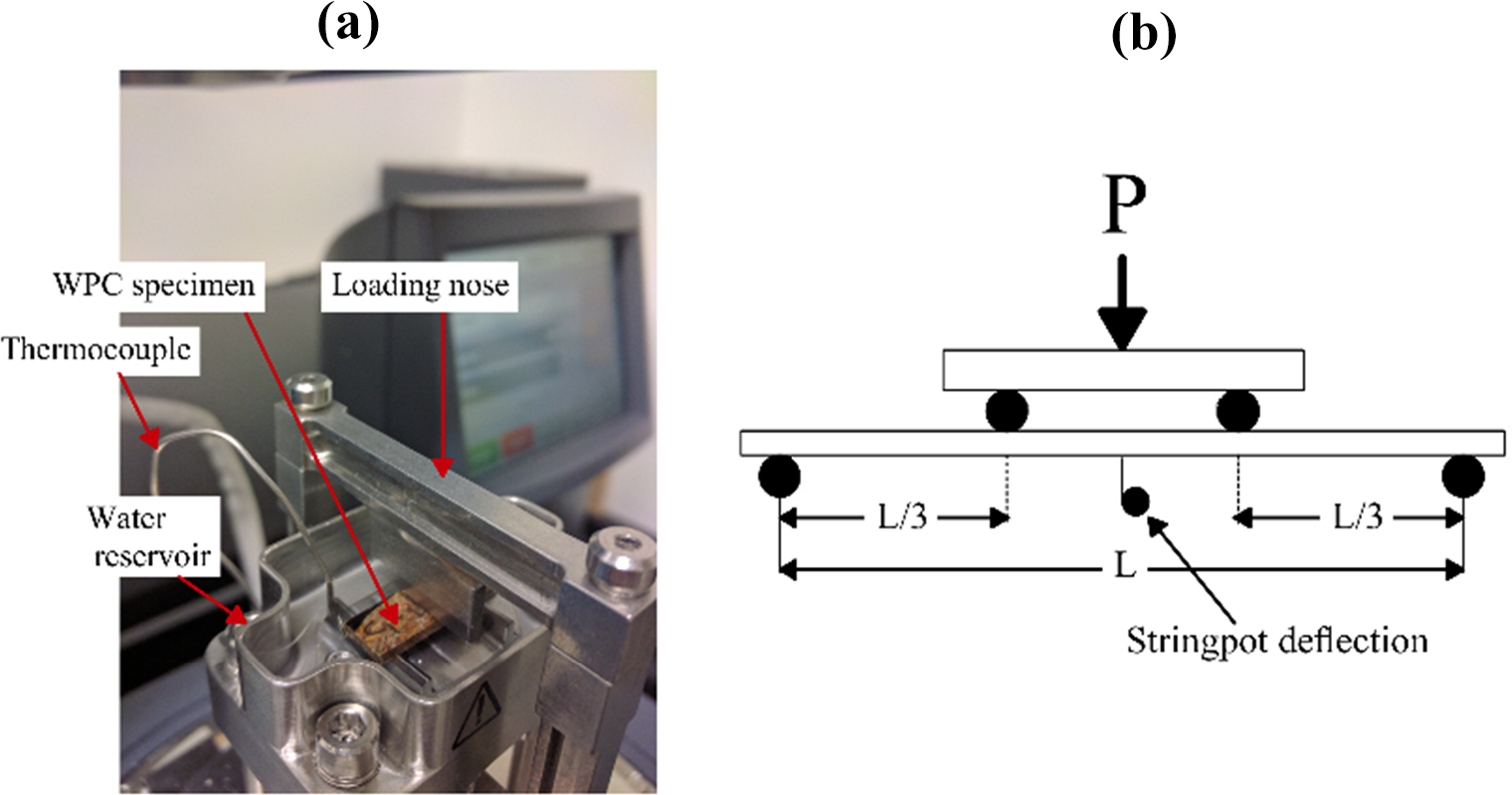
(a) Three-point bending DMTA submersible clamp and (b) a schematic of the 180-day creep experiment in four-point bending.
180-day creep experiments
Five WPC lumber specimens with a span length of 853 mm were loaded in a 180-day creep experiment in four-point bending, as shown in Figure 1(b). The 180-day experiment was conducted in the creep room at the Advanced Structures and Composites Center at the University of Maine. The relative humidity (RH) and temperature were controlled during the 180 days to be 50 ± 5%, and 21 ± 2°C. The WPC examined here is based on a patent-pending formulation that combines thermally modified wood flour that was produced at Uimaharju Sawmill in Finland with a high-strength styrenic copolymer system in an equivalent weight ratio to each of the two constituents. WPC specimens were preconditioned for 1 month in both saltwater (SW) and distilled water (DW).
Mechanical testing
DMTA creep experiments
To obtain the flexural strength WPC used in the DMTA creep experiments (the cut and machined specimens), three-point bending tests were performed according to ASTM D790 using an Instron dual column tabletop electromechanical testing machine, Norwood, MA, USA. A 10-kN load cell was used in displacement control method of testing with an average crosshead speed motion of 1.59 ± 0.17 mm/min 15 was applied during the flexural tests of the five WPC specimens. 16 Prior to the testing, the five WPC specimens with dimensions (L, w, h) (59.68 ± 0.39 mm, 7.25 ± 0.25 mm, 3.73 ± 0.39 mm) were oven-dried at 50 ± 3°C for 24 h. 17
The applied initial flexural stress levels of the WPC specimens in the DMTA experiments were selected to be 9.20% and 13.8% of the ultimate flexural strength. This selection of the stress levels was made based on the recommendation from previous studies; for instance, Hamel 10 recommended studying stress levels that are below 20% of the ultimate stress. Thus, the stress levels in this study were selected to be below 15%. The average ultimate flexural strength was 27.22 ± 3.88 MPa with a coefficient of variation of 13%, and hence, the applied initial flexural stresses in the DMTA experiments were 2.5 and 3.75 MPa, respectively. Three different temperatures (25, 35, and 45°C) were evaluated and five replicates to each stress level were studied on the reference (dry) condition and the preconditioned WPC specimens (1-month immersion) in both DW and SW immersions, respectively. Ten minutes of soaking time was applied prior to the DMTA flexural creep and creep recovery experiments.
180-day creep experiments
The 180-day creep experiments of the WPC lumber (with 853-mm length) was conducted in accordance with ASTM D6112. 18 The applied initial flexural load, (P) as shown in Figure 1(b), in the 180-day creep experiment was 2243.2 ± 15.2 N (12-MPa flexural stress). In accordance with the loading rate mentioned in ASTM D6109, the maximum applied flexural load was applied to the WPC specimen during the instantaneous loading phase (4 min) with a crosshead rate motion of 39.4 mm/min. This crosshead rate motion was computed using the equation stated in the ASTM D6109 by considering a strain of 1% at the outer fiber. This loading rate was similar to the quasi-static rate so that the instantaneous duration is maintained within the short time stated in the ASTM D6109 (not less than 10 s and not more than 10 min).
Results and discussion
Power law model
The relationship between the creep compliance of a material and the stress is shown in equation (1). Furthermore, in accordance with the ASTM D6109, the creep displacement of the WPC lumber in four-point bending test was computed using equation (2)


where S(t) is the creep compliance, ∊(t) is the creep strain, σ 0 is the applied stress, d(t) is the midspan creep deflection (vertical displacement), ε(t) is the creep strain (mm/min), l is the span length, and D is the depth (thickness) of the WPC lumber.
An empirical power law model was used to describe the creep compliance of the WPC in dry, DW, and SW conditions. Prior to and during the creep test, both the DW and SW immersion WPC specimens were subjected to flexural stresses and range of temperatures in the immersed environment. The power law, as shown in equation (3), 3 is suggested for these experiments based on the assumption of the linear viscoelastic behavior of the WPC specimens in this study. 1 The initial value of the compliance represents the reciprocal of the modulus of elasticity (E). The power law model was implemented on the creep compliance vectors obtained from the 30-min and 250-min creep experiments on WPC specimens tested in the DMTA submersible clamp. Parameters of the model and the initial experimental compliance values are reported in Tables 1 to 3

where S(t) is the total creep compliance of the model, S 0, S 1, and n represent the model’s parameters that can be found from the experimental data fitting using a written code in MATLAB, 19 and t is the time of the creep experiment. Parameters of the model for each condition (stress, temperature, and environmental condition) are reported in Tables 1 to 3. In addition to reporting the coefficient of determination (R2) that shows the degree of agreement between the model and the experimental data, and to quantify the degree of the agreement between the model and the experimental data to each condition, the summation of the square error (SSE) vector was also reported in Tables 1 to 3. Figure 2 illustrates the viscoelastic linearity and nonlinearity of the WPC specimens used in this study, whereas Figures 3 and 4 illustrate the combined effect of the high value of temperature in this study (45°C) and the water immersion (SW and DW) on the creep compliance values of the 30-min of WPC specimens under the 2.5 and 3.75 MPa of the applied initial flexural stresses in logarithmic scale. Tables 1 to 3 show that the WPC specimens for the both selected initial flexural stress levels exhibit a reduction in creep compliance at a temperature of 35°C, compared with creep compliance of the WPC specimens at 25 and 45°C. This reduction in the creep compliance at temperatures below the glass transition temperature (T g) can be related to the developed interfacial bonding between the amorphous polymer and the thermally modified wood particles of the WPC of this study. A similar trend was noticed on the neat and sisal fibers reinforced polystyrene composites that was studied by Nair et al., 20 when they investigated the variation in the storage modulus with respect to temperature to polystyrene reinforced with different percentages of sisal fibers. According to a study reported elsewhere 21 and according to the constituents of the WPCs used in this study, this reduction in the creep compliance at 35°C is related to the properties of the amorphous polymer of the WPC and its ability to maintain modulus of elasticity (E) at elevated temperatures below the T g and that was observed in storage modulus versus temperature relationship.
Power law model parameters of the creep compliance curves of WPC specimens tested in the D condition.
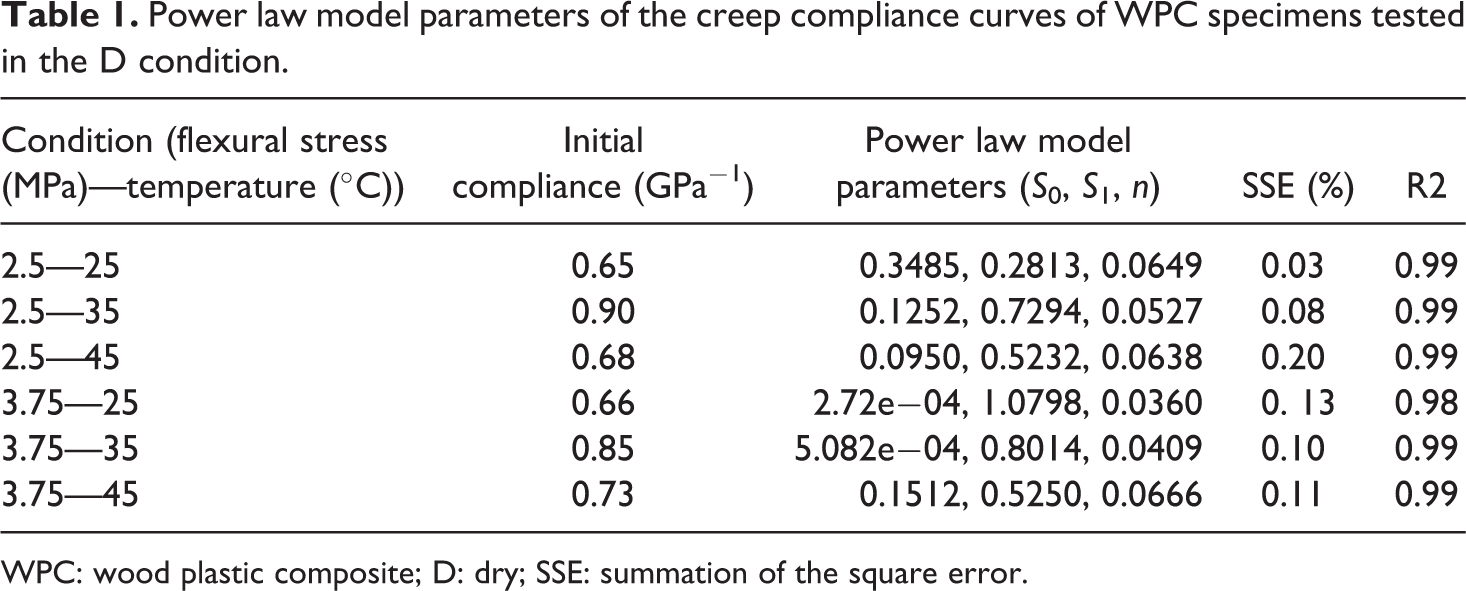
WPC: wood plastic composite; D: dry; SSE: summation of the square error.
Power law model parameters of the creep compliance curves of WPC specimens conditioned and tested in DW condition.
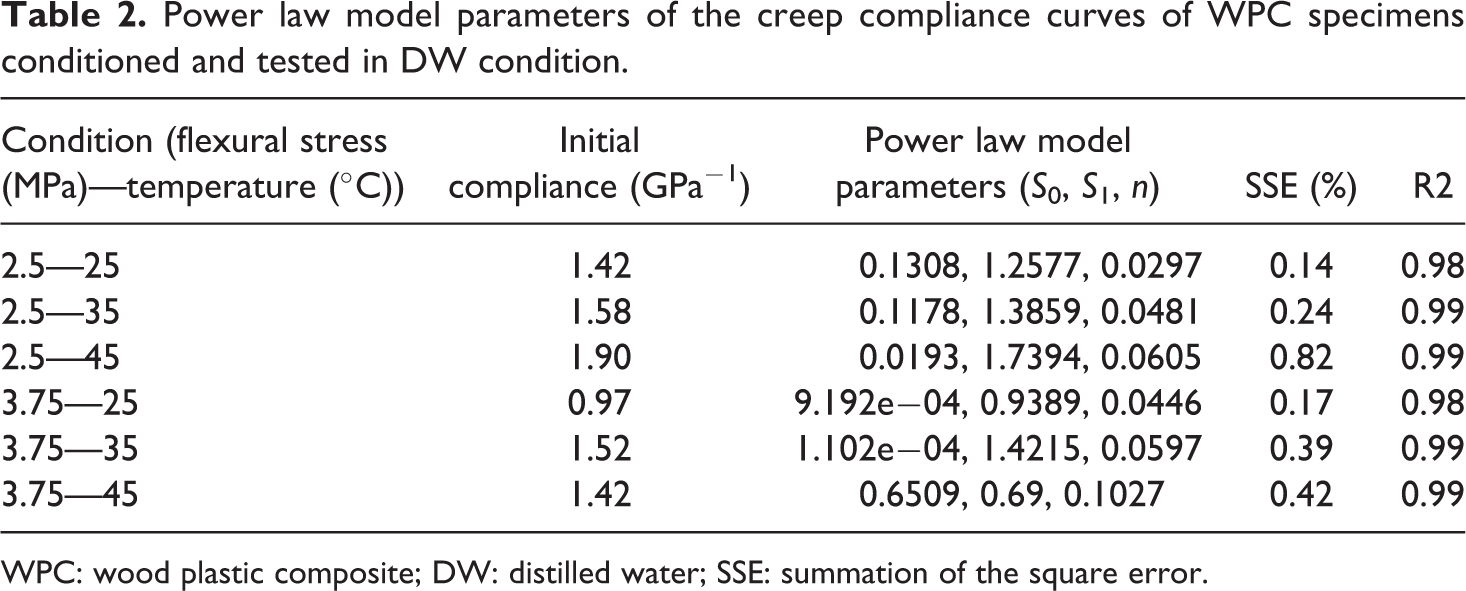
WPC: wood plastic composite; DW: distilled water; SSE: summation of the square error.
Power law model parameters of the creep compliance curves of WPC specimens conditioned and tested in SW condition.
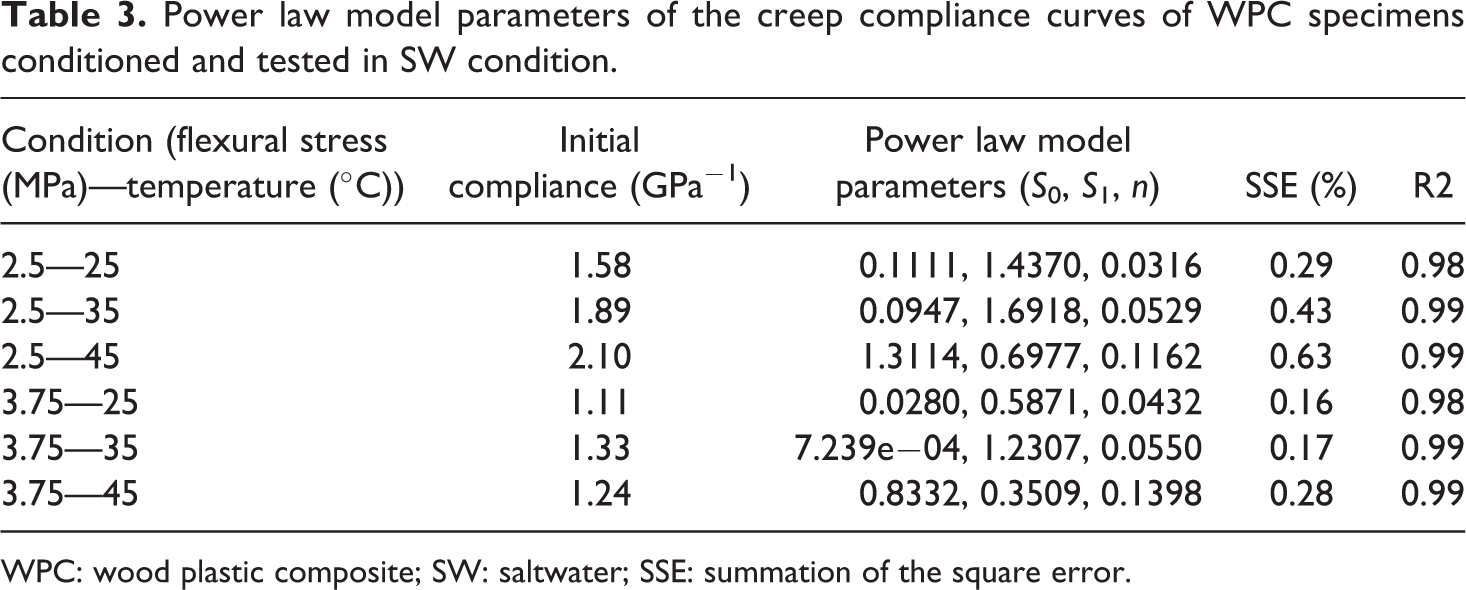
WPC: wood plastic composite; SW: saltwater; SSE: summation of the square error.
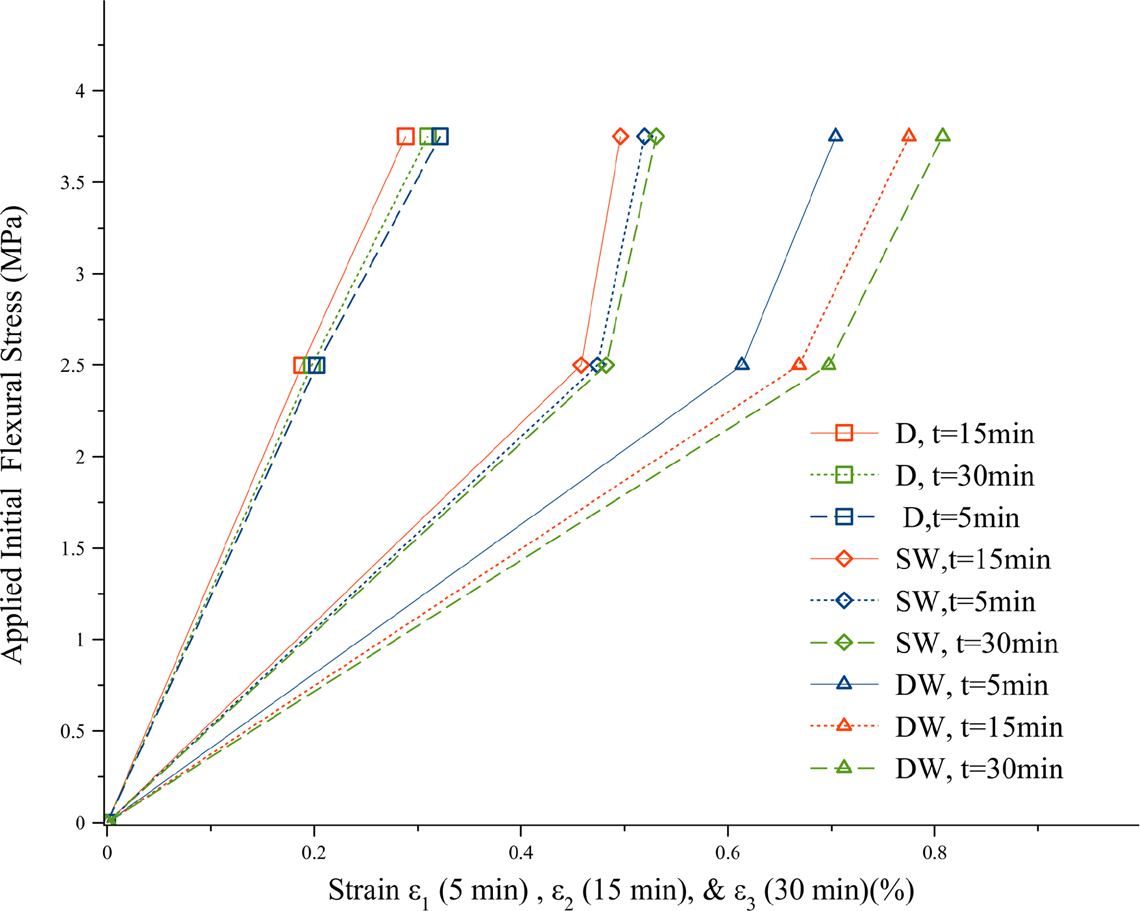
Isochronous curves of the WPC specimens at the creep time; 5, 15, and 30 min at the three different conditions; D, SW, and DW at 25°C.
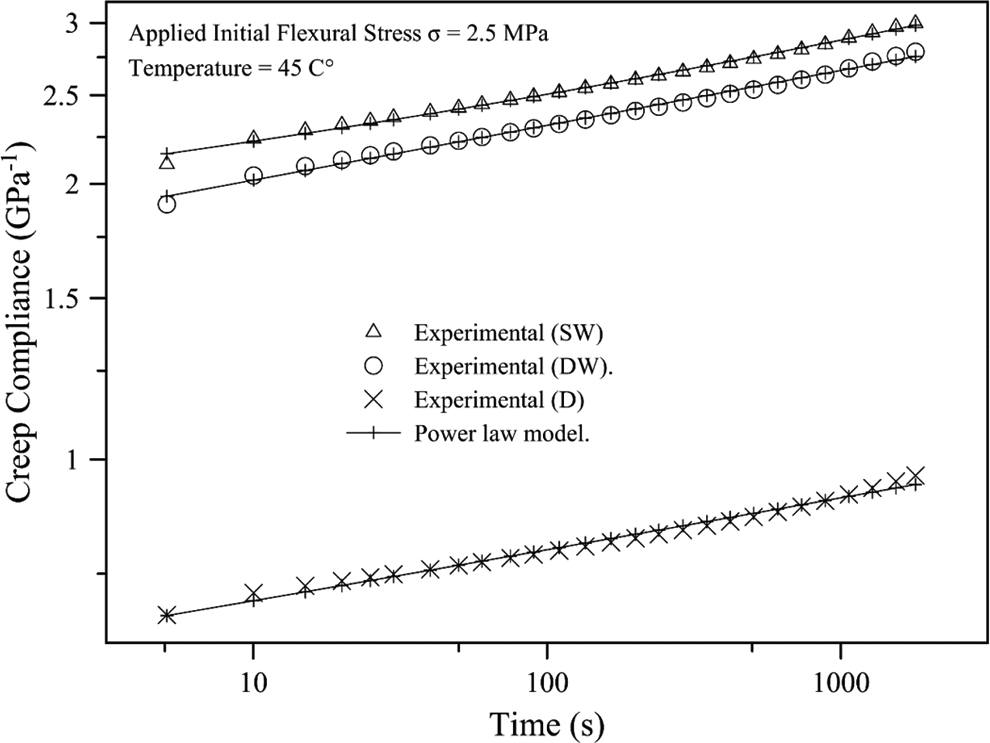
30-min creep compliance of WPC specimens (with 15-mm length) subjected to a maximum flexural stress of 2.5 MPa at 45°C in three different testing conditions; D, SW, and DW conditions.
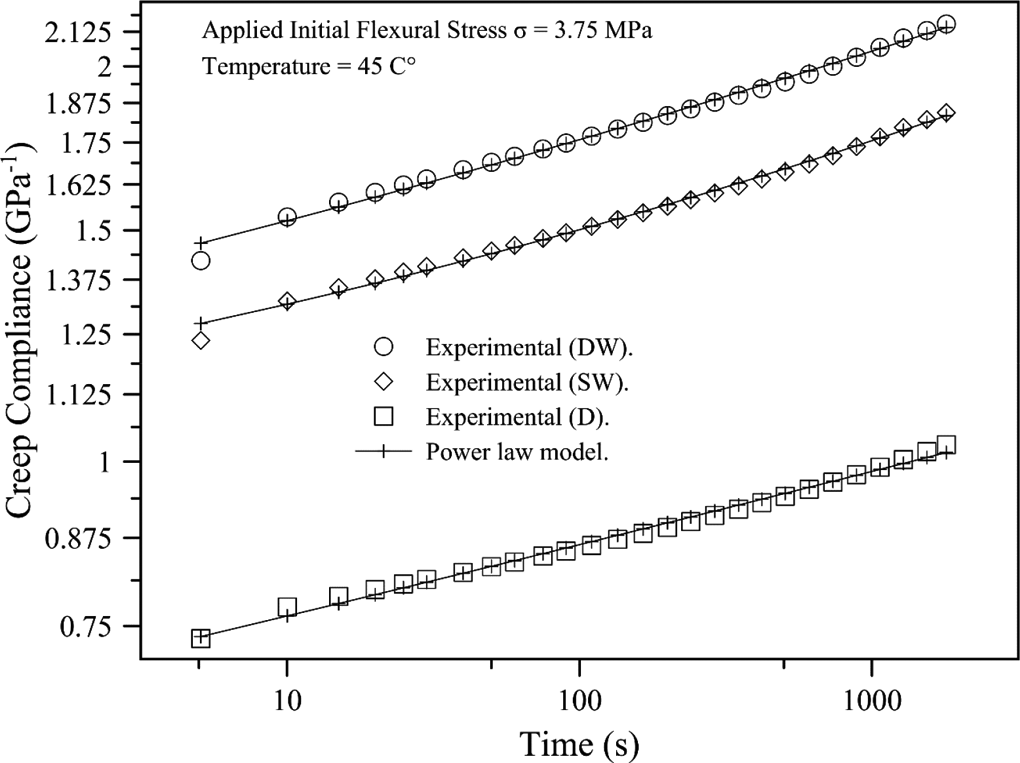
30-min creep compliance of WPC specimens (with 15-mm length) subjected to a maximum flexural stress of 3.75 MPa at 45°C at three different testing conditions; D, DW, and SW conditions.
The 30-min creep of WPC
To investigate the viscoelastic behavior of the WPC, isochronous curves were constructed at 5, 15, and 30 min to the two applied creep flexural stresses for the purpose of evaluating whether the WPC exhibits a linear or nonlinear viscoelastic behavior and these constructed isochronous curves were reported elsewhere 21 and as shown in Figure 2. Three conditions were selected for the purpose of illustration and comparison, the dry (control) and the SW and the DW immersion conditions at 25°C. The WPC specimens show a linear viscoelastic behavior under the dry condition and nonlinear viscoelastic at the other immersion conditions. Isochronous curves at different immersion conditions and at different values of temperature were reported elsewhere. 21
A preliminary study was conducted to apply different models to describe the behavior of WPC, and the power law model exhibited the lowest SSE among the other models examined. For all the cases of the applied flexural stress and hygrothermal conditioning, two distinctive regions in the creep compliance curve can be observed; a high creep compliance rate region at the time below 5 min, and a steady-state rate response for a time greater than 5 min. These two distinctive regions are attributable to the behavior of the WPC material by maintaining its creep compliance and, hence, decreasing the deformation under the sustained applied flexural stress. 21 This can be observed in dry conditions where the moisture degradation is not considered. Once the hygrothermal effect is considered, the creep compliance rate in the steady-state region started to increase and it was higher in SW, compared with the DW, because it was found that the degradation of the SW is higher than the degradation of the DW.
Application of the power law model: 250-min creep of WPC specimen
To verify the power law model used in this study to describe the 30-min creep compliance of WPC specimens, a 250-min creep experiment (stress = 2.5 MPa and temperature = 45°C) was conducted in dry and immersion environments (DW and SW) using the DMTA submersible clamp. The power law model shows good agreement with the experimental data at all three testing conditions; dry, DW, and SW, as shown in Figure 5.
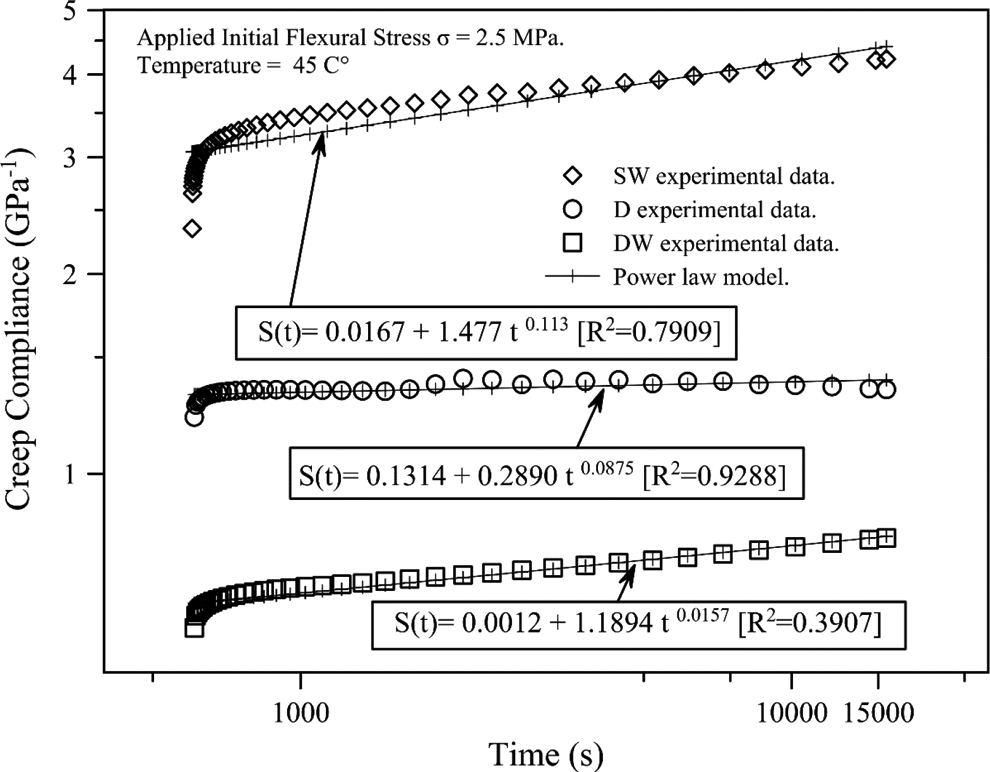
250-min creep compliance values and models’ data fitting of WPC specimens under σ = 2.5 MPa tested at 45°C in D, DW, and SW conditions.
Application of the power law model: 180-day creep of WPC lumber
For the purpose of evaluating the extension of the application of the power law model from the short term to include the long-term creep experiments, the power law model was used to describe the 180-day creep behavior of WPC lumber with a span length 853 mm, tested in creep under a flexural load. The power law model showed good agreement with experimental creep displacement data, as shown in Figure 6. According to ASTM D6109 22 and to equation (2), the flexural yield strength is computed for the stress corresponding to 1% of the flexural strain. Thus, in this study, a prediction of the creep displacement of the WPC lumber is presented using the power law model. Based on the assumption that the WPC should fail at a flexural strain in outer fiber of 1% (similar to the failure strain value mentioned in ASTM D6109), the computed midspan creep deflection will be 44.9 mm. The WPC lumber in this study will reach this creep midspan deflection under a sustained flexural stress (11.8 ± 0.08 MPa) after approximately 150 years, as shown in Figure 7.
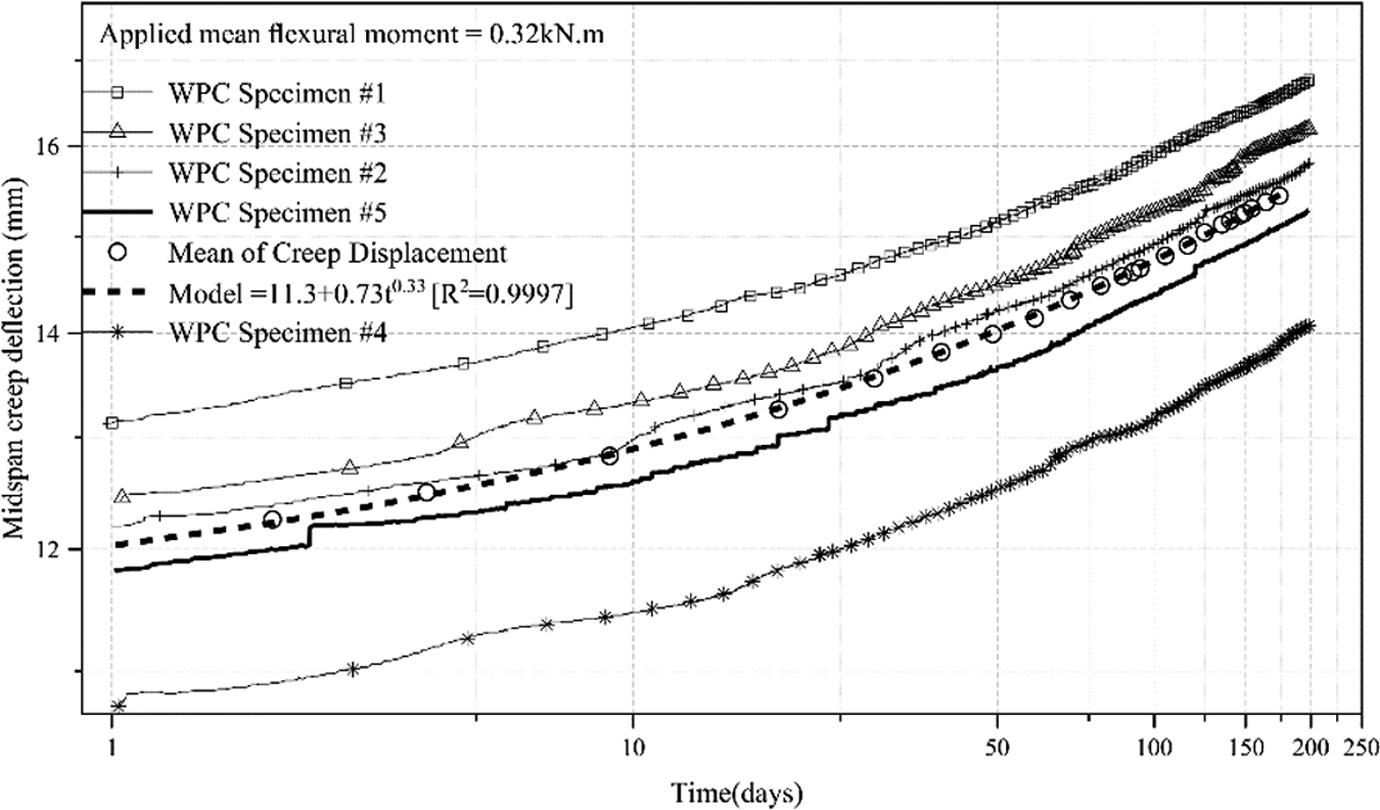
180-day creep displacement of WPC specimens under 2243 ± 15.20 N of applied flexural load in a four-point bending test configuration.
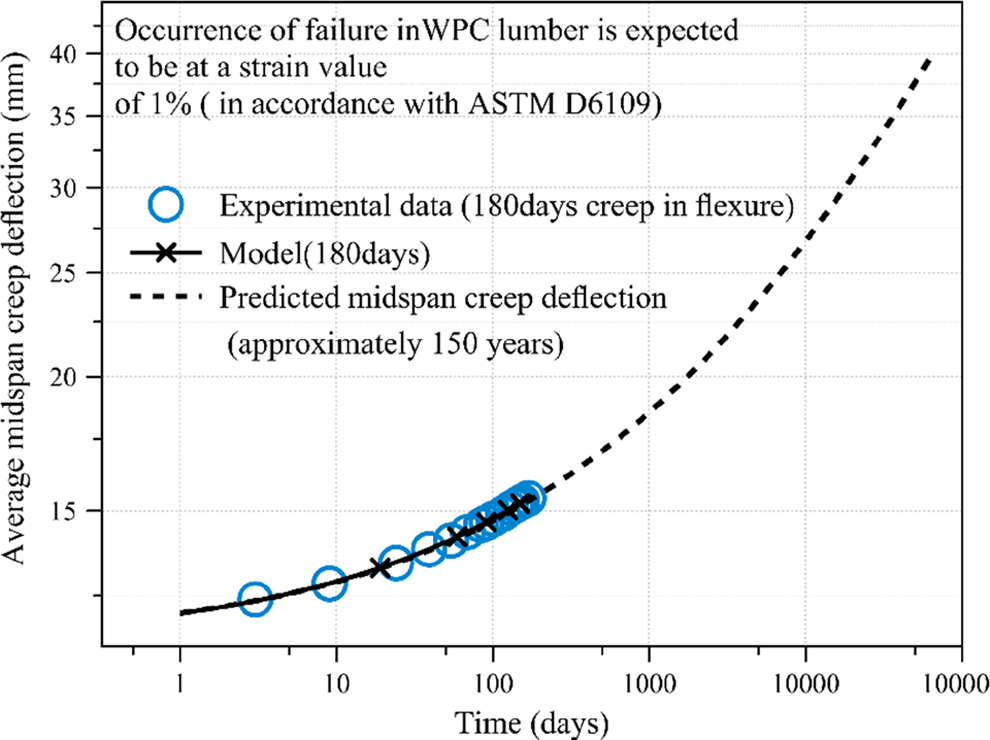
Implementation of the power law model that was used in the description of creep behavior of 30-min creep, 250 min, and 180-day creep to predict the time-dependent displacement of WPC lumber in flexure.
Comparison of WPC creep response and the predicted creep lifetime of previous studies
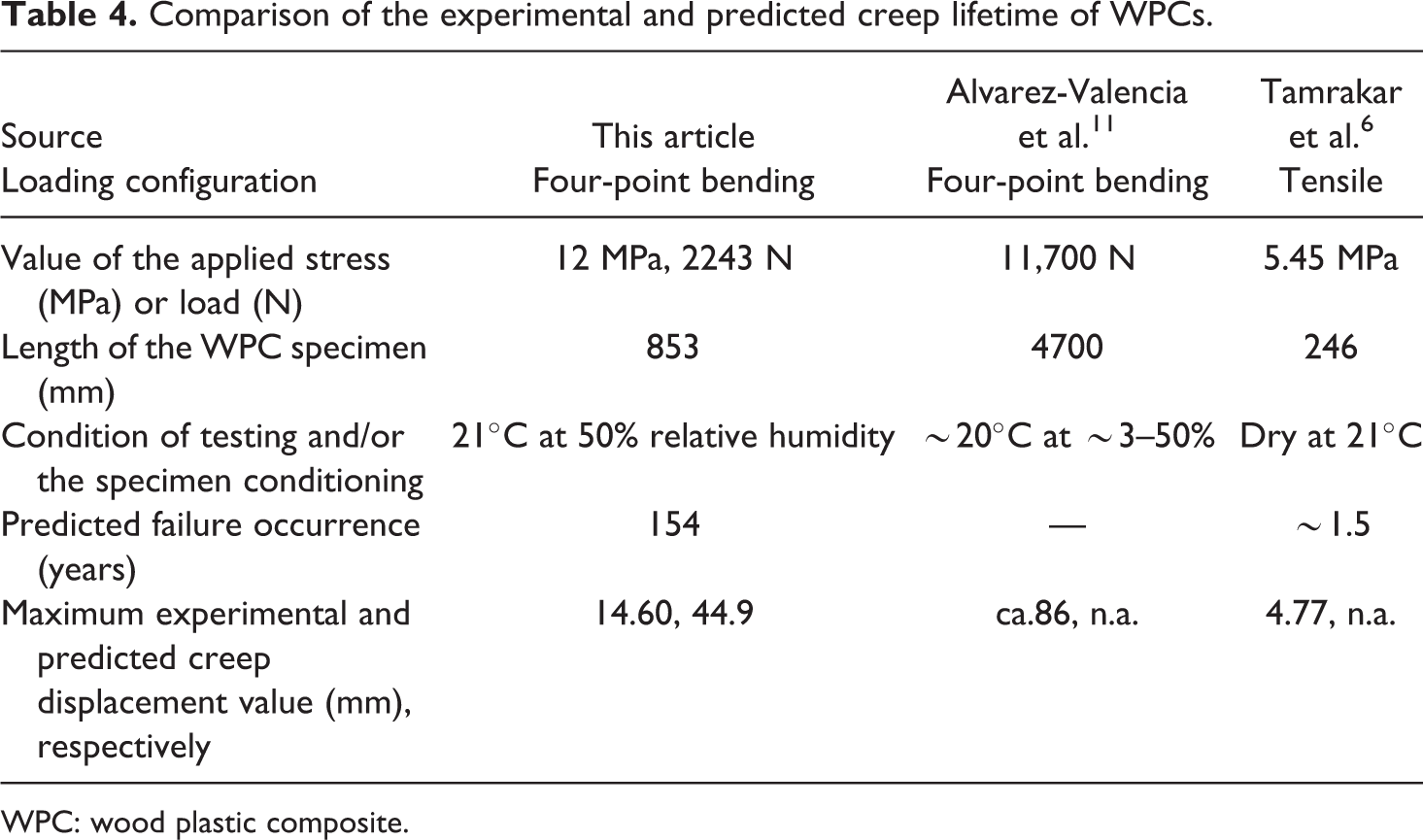
To evaluate the time-dependent behavior of the WPC used in this study, a comparison to the predicted creep displacement of the WPC studied in this article and the WPCs studied by other researchers is reported in Table 4. The short-term viscoelastic extrapolated creep techniques, for instance, the time–temperature or time–temperature–stress superposition 6,23 –26 are used to have an understanding of the long-term behavior of the viscoelastic material (WPC) by applying the principle of superposition and superimpose the short-term relationships to construct the master curve that describes the viscoelastic behavior of the WPC at longer duration of testing. However, these extrapolated experiments encompassed exposing the WPC specimens to high temperature (above the glassy region of the material), whereas the material exposure temperature in service could be lower than the T g. Thus, the prediction of the long-term viscoelastic behavior of these extrapolated experiments is not representative of the viscoelastic behavior of the full-scale WPC members in service. 2,5,6,23,24,26 –30 Furthermore, these techniques (extrapolated experiments) are implemented on the assumption of the linear viscoelasticity and hence the principle of superposition on the short creep curves can be applied, whereas the WPCs in this study showed a nonlinear viscoelastic behavior under the combined effect of temperature and water immersion. Thus, the extrapolated techniques cannot be used to predict the hygrothermal behavior of the WPC specimens in this study.
Comparison of the experimental and predicted creep lifetime of WPCs.
WPC: wood plastic composite.
Viscoelastic models are another tool (approach) in addition to the extrapolated techniques that are utilized to describe the viscoelastic behavior of the WPC for longer durations than the experiments’ durations. However, both the extrapolated techniques and the viscoelastic models do not describe the viscoelastic behavior in the tertiary region. Likewise, the model used in this study did not consider the prediction of the creep behavior in the tertiary region, even though it predicted the creep behavior for 150 years. The creep lifetime prediction can be used to evaluate the WPC in the primary and the secondary regions. Barbero 3 emphasizes the importance of studying the time dependence of the viscoelastic behavior of the material in structural applications in the primary and the secondary regions. The power law model, in this study and unlike the previous studies, was applied for different; time durations, specimen length, and testing conditions (temperature only or hygrothermal). The model showed good agreement with the different hygrothermal conditions in addition to the different test durations and for different specimen lengths, compared with previous studies, as shown in Table 4. In accordance with ASTM D6815, 31 the WPC in this study should attain acceptable fractional creep limit in approximately 10 years, whereas the deflection limit L/20 9,32 of the WPC of this study should be reached in approximately more than 150 years. Furthermore, and according to Shao, 32 when a 70% increase in the initial creep deflection is expected to occur during the service life of the pultruded FRP sheet pile, the expected 70% increase to the initial deflection of the WPC in this study is predicted to occur in 4 years.
For most of the experimental conditions, the parameter (n) in the power law model of this study was dependent on hygrothermal effects (i.e. the value of n increases with the increase of temperature). However, power law models used in previous studies had an independent parameter (n), as was found in the models used by Hamel. 10,33 However, a similar temperature dependency to the power law model parameter (n) was observed in Pooler’s study. 7
The WPC material in this study has the potential to be used in dry applications where the values of the temperature are below the maximum temperature used in this experiment (45°C) and subjected to low levels of applied stresses. Whereas the time-dependent performance of the WPC materials used in the studies reported by Tamrakar et al. 6 and Alvarez-Valencia et al. 11 has shown a potential to be used in structural applications, but with the belief of having a shorter lifetime as shown in Table 4, attributable to the predicted creep tensile displacement and the experimental creep midspan deflection, respectively.
In accordance with ASTM D790, ASTM D2915, 34 and ASTM D6109, 22 the shear deformation can be ignored in the computation of the total midspan deflection when the span to depth ratio (L/h) is greater than or equal to 16. According to DMTA instrument model Q800, it is suggested that the shear deformation can be ignored for L/h greater than or equal to 10. 35 However, to illustrate the difference between accounting for or ignoring the shear deformation in the DMTA experiments for the L/h = 6 ratio, an investigation was conducted to quantify the difference between including or ignoring the shear deformation using Timoshenko’s theory of beam deflection. 36 This investigation required adopting a value of Poisson’s ratio of 0.33 from previous studies. 37,38 These computations were conducted with the assumption that the WPC behaved as an isotropic linearly elastic material. The computed values of the elastic moduli for the WPC specimens with L/h = 16 and L/h = 6 with the inclusion of the shear deformation were 3% and 12.5% higher than the computed moduli when the shear deformation was ignored.
Conclusions
The hygrothermal creep behavior of WPC has been characterized as a function of temperature and water immersion (distilled and SW) using the DMTA three-point submersible clamp. The power law model is considered a useful tool to describe the hygrothermal creep behavior of the WPC in 30- and 250-min DMTA creep experiments. Furthermore, the power law model was implemented to describe the 180-day creep behavior of WPC specimens with a longer span (853 mm) in four-point bending. The WPC in this study showed a linear viscoelastic behavior under the effect of temperature, whereas a nonlinear viscoelastic behavior under the combined effects of temperature and water immersion. According to the predicted flexural strain limit (1%) at the outer fiber, the WPC in this study has the potential to be used in long-term applications where low sustained flexural stresses (below 15% of the flexural strength) are applied. Limiting the increase in creep compliance in the range of temperatures between 25°C and 45°C (at 35°C) in the dry condition to be lower than 39% at both the stress levels 9% and 14% of the flexural strength (related to the formulation of the WPC in this study) is useful for considering this material in environments over a range of temperatures below 45°C.
Footnotes
Authors’ note
The work described in this document was conducted at the Advanced Structures and Composites Center at the University of Maine, Orono, Maine. The thermally modified wood fiber used in this research was supplied by Stora Enso (Finland).
Funding
The author(s) disclosed receipt of the following financial support for the research, authorship, and/or publication of this article: The first author was supported through a scholarship provided by the Higher Committee for Education Development (HCED) in Iraq. The University of Maine research reinvestment funds (RRF) Seed Grant entitled (Development of structural wood plastic composite (WPC) timber for innovative marine application) and the United Stated Department of Agriculture (USDA)-the agricultural research service (ARS) Funding Grant Number (58-0204-6-003) have provided the financial support for this project. The WPCs is based on a patent-pending formulation that has the publication number (WO2018/142314).
