



Abstract
The hygrothermal effect on the short-term creep behavior of extruded thermally modified wood fiber–high-strength styrenic copolymer plastic composites (wood–plastic composites (WPCs)) was investigated on specimens preconditioned for 1 month under water immersion (distilled water (DW) and saltwater (SW)). These specimens were then tested in the same conditions for short-term creep and creep-recovery response using a submersible clamp. The short-term creep tests of WPC specimens (that are immersed in water as a function of different temperatures) have not yet been reported in previous studies. The objective of this study was to determine whether the hygrothermal creep response of WPC material evaluated through water immersion differs from the creep response published in the literature for other environmental exposure conditions. The experiments included measuring 30 min of creep and 30 min of creep recovery on the specimens immersed in SW and DW at two different levels of flexural stresses (9% and 14% of the flexural strength) and three temperature values (25, 35, and 45°C). The average creep strain recovery (%) of the specimens was higher for the specimens immersed in SW during testing than the control specimens. The WPC material is considered to have a potential use in structural applications in environments where the temperature is below 45°C because of the following factors: the low deformation under the short-term sustained loading, the decrease in the deformation rate with respect to the increase in load duration, maintaining the modulus of elasticity over a range of temperatures from 25°C to 45°C under sustained load, and the ability to recover more than 69% of the average creep strain under water immersion when the loading source is removed. The creep strain fractional increment (CSFI) of the WPC in this study under all conditions was 13% which is 86% lower than the CSFI of the WPCs reported in previous studies.
Introduction
The time-dependent behavior of WPCs, particularly creep, has been studied by many researchers under the effect of temperature. 1 –3 To widen the structural application of WPCs to include, water immersion applications, 4 the time-dependent behavior of WPCs under hygrothermal exposure conditions should be investigated. Temperature (low or high) and moisture (humidity or water immersion) can degrade or reduce the mechanical properties of the constituents of the WPC composite, leading to changes in the composite itself. Wood swells because of water uptake caused by the hydrophilic nature of the wood cell wall material. The plastic constituent exhibits viscoelastic behavior and time-dependent changes in mechanical properties produced by thermal effects. Both wood and plastic constituents under hygrothermal effects will affect the mechanical properties of the WPCs. Microcracks in the interfacial zone between the polymer and the wood flour particles can be created, and the adhesion between the wood flour and the plastic will be negatively impacted. 5,6
Tamrakar and Lopez-Anido reported a significant decrease in the mechanical properties of “water-saturated” specimens compared with dry specimens that were exposed to a range of temperatures. 7 Cheng 8 reported the effect of immersing a WPC sample in osmotic and sea water for 13 months and found significant decreases in the mechanical properties of the immersed WPC samples 8 Most researchers have studied the time-dependent behavior of WPCs under the effect of temperature. Kazemi et al. 9 studied the effect of water content on creep behavior of WPCs. Specimens were conditioned in water for 7 and 30 days, respectively, and then tested for creep and creep recovery. 9 Their study showed that when the specimens were conditioned under immersion for a longer duration, the resulting creep strain increased. However, the moisture content of the specimens was not controlled during the tests, especially when the creep and creep-recovery experiments were conducted at elevated temperatures. Recent studies have investigated the combined effect of temperature and the moisture uptake on the mechanical properties of wood flour–high-density polyethylene (HDPE) composites. 10 In an attempt to widen the structural applications of WPC to include structures where both temperature and moisture are acting on the WPC, Fortini and Mazzanti 10 investigated the combined effect of temperature and the moisture uptake on reducing the mechanical properties of the WPC. Their study included investigating the reduction in the mechanical properties related to the combined effect of temperature and moisture via a Charpy impact test with a load duration less than 5 s. Fortini and Mazzanti did not investigate the combined effect of temperature and moisture on longer duration tests under sustained loads.
Dynamic mechanical thermal analysis (DMTA) instruments and techniques have helped researchers conduct a variety of short-term experiments to predict or evaluate the time-dependent behavior of WPC specimens in a short period of time. This is done to provide a better understanding of the time-dependent behavior of the material over a longer period.
Depending on researcher interests toward the enhancement of the mechanical properties of wood particles for WPC manufacture, 11,12 different modification methods have been studied. Wood heat–thermal treatment was determined to be one of the treating processes that improves the mechanical properties of the wood particles related to the elimination of the hemicellulose, which is the main component for reducing the mechanical properties of wood particles. 11 Thermal modification also enhances the compatibility between the wood particles and the polymer matrix and increases interfacial bonding. 13 The objective of the research presented here was to experimentally investigate the hygrothermal average (avg.) creep strain and recovery of an extruded WPC material made from thermally modified wood evaluated under water immersion and to compare it with the creep response published in the literature for other exposure conditions.
Experimental program
In this study, a DMTA instrument with a three-point bending submersible clamp was used to conduct short-term creep and creep-recovery experiments under the synergistic effects of water immersion and temperature. These results were compared with those of the dry reference state of the specimens. WPC materials exhibit distinctive time-dependent behavior related to their different formulations (i.e. different type of plastic and different types and quantity of the wood flour). The WPC material used in this study is being considered for application in aquaculture cages that are submerged marine structures, 14 and hence, an understanding and investigation of the time-dependent avg. creep strain of this material under the effect of water immersion and temperature is essential.
Material preparation
Extruded WPC material
The WPC specimens with dimensions 15.0 mm (length (L)), 7.2 ± 0.2 mm (width (w)), and 2.7 ± 0.2 mm (height (h); uncertainty in the measurement of the dimensions was reported by computing the standard deviation of 190 specimens) were cut and machined from extruded WPC lumber with a cross section as shown in Figure 1 to conduct the DMTA analysis (creep and creep-recovery experimentation). A three-point bending submersible clamp was used in these experiments (Figure 2). This clamp has the ability to conduct bending tests on a specimen submerged in a fluid environment for temperatures between 20°C and 80°C. The WPC lumber cross section (Figure 1) was produced using a twin-screw Davis-Standard Woodtruder™ in the Advanced Structures and Composites Center at the University of Maine’s Orono campus. 15 The WPC examined here is based on a patent-pending formulation that combines a thermally modified wood flour that was produced at a sawmill in Uimaharju, Finland, and a high-strength styrenic copolymer system in an equivalent weight ratio to each of the two constituents.
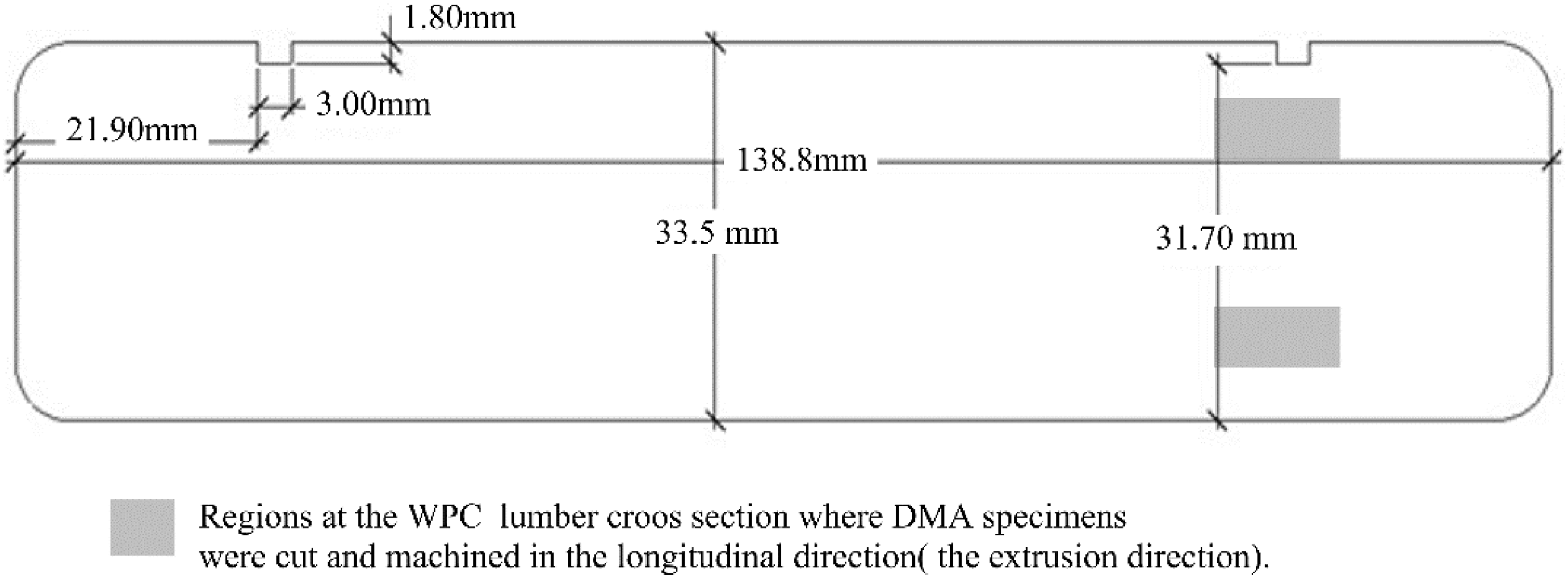
WPC cross section with the highlighted regions where DMTA samples were cut and machined in the longitudinal direction.
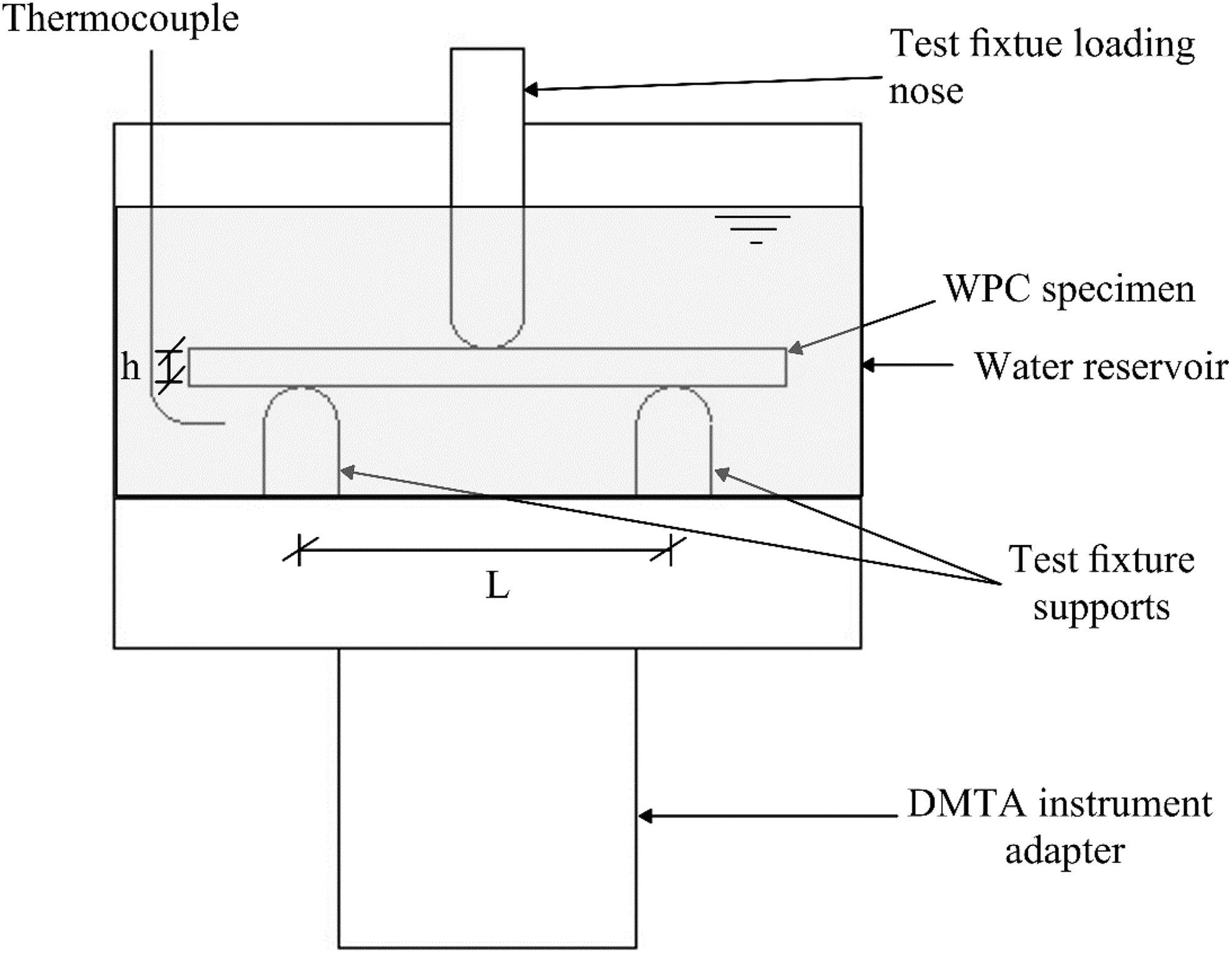
Schematic of the DMTA submersible three-point bending clamp used in the DMTA experiments of WPC specimens with a total specimen span between the supports (L) of 15 mm and a thickness (h) of 2.7 mm.
Elastic modulus and material density
The mean modulus of elasticity (E; three specimens) of the cut and machined WPC specimens was computed for the specimens tested in three-point bending using two different instruments (nondestructive and destructive): the initial compliance of the creep test that was conducted on the WPC specimens using the DMTA instrument; the other WPC specimens were tested using an Instron dual column tabletop electromechanical (10-kN load cell and in strain control testing), which is manufactured in Norwood, MA, USA. This was done in accordance with ASTM D790 16 by a linear regression to the linear region (from 10% to 40%) of the flexural load versus the midspan deflection. A density evaluation along the thickness was performed using a QMS density profiler model QDP-01X for 10 WPC specimens with the dimensions 51.6 mm (length), 50.4 mm (width), and 33.5 mm (thickness) to determine the density variation between the surface layer of the WPC lumber and the region in Figure 1 where the WPC specimens were cut and machined to be used in DMTA experiments. The mean of the E from the three-point bending tests in accordance with ASTM D790, and the WPC density are reported in Table 1.
Mean true E of WPC specimens obtained from three-point bending tests and the mean of the density of the WPC lumber.

E: modulus of elasticity; WPC: wood–plastic composite.
The relationship between the E (apparent) and the length of the WPC specimen
To investigate the effect of span length on the variation in the E, a typical flexural load–midspan deflection relationship was obtained for three WPC specimens with different span lengths, and an analysis of variance was performed for the computed E and the span length, as shown in Figure 3. The flexural load–midspan deflection tests were performed to failure for the specimens with a span of 61.9 mm. For the specimens with spans of 50.0 mm and 15.0 mm, the maximum flexural load of the DMTA instrument did not exceed the linear region of the tested WPC specimens.
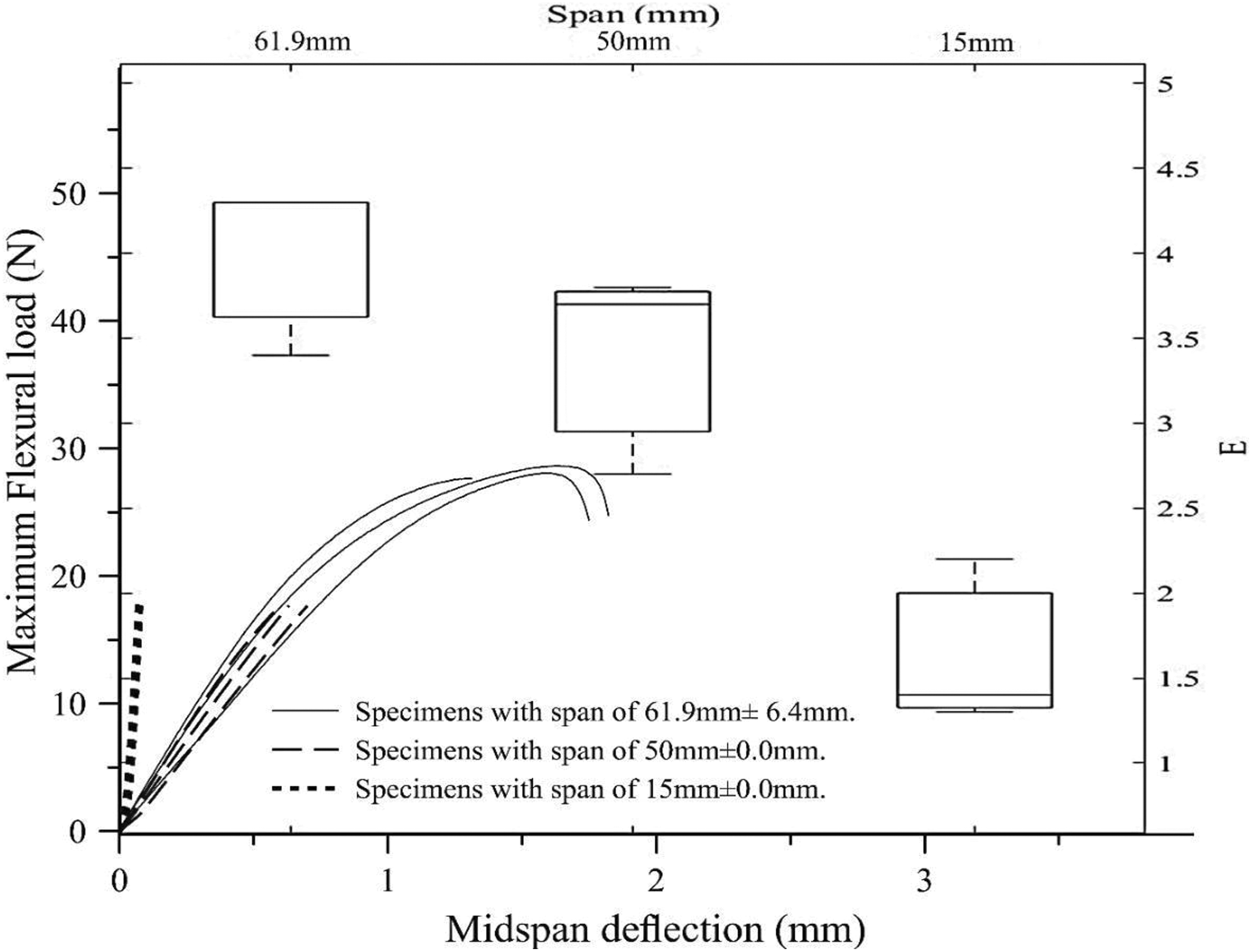
Typical flexural load versus mid-span deflection for WPC specimens at three different span lengths (15, 50, and 61.9 mm) and the ANOVA analysis of the obtained E using equation (1).
Specimen conditioning
One goal of the study was to compare the hygrothermal avg. creep strain of the WPC material in saltwater (SW) and distilled water (DW). Instant Ocean® 17 mix was added to DW to make the SW for the conditioning and the testing of WPC specimens. Then, 0.14 kg of the Instant Ocean powder was added and mixed with a 3.79-L of DW to make the SW.
According to the procedure recommended by ASTM D570, 18 the mean of the water uptake (with standard deviation for five specimens at each time the water uptake was measured) was computed and reported as shown in Figure 4. Prior to the water absorption process to be conducted, the WPC specimens were dried in an oven at 50°C for 24 h. Thereafter, the specimens were immersed in both DW and SW for 1 month, and the measurement was conducted at each condition (DW and SW) at 1 day, 1 week, 2 weeks, 3 weeks, and 4 weeks, respectively. The specimens were then removed from the water vertically to drain the water from the specimen wiped off using a piece of cotton fabric, and each was weighed. During the preconditioning time (30 days), the WPC did not appear to produce any leachate in the absorption container.
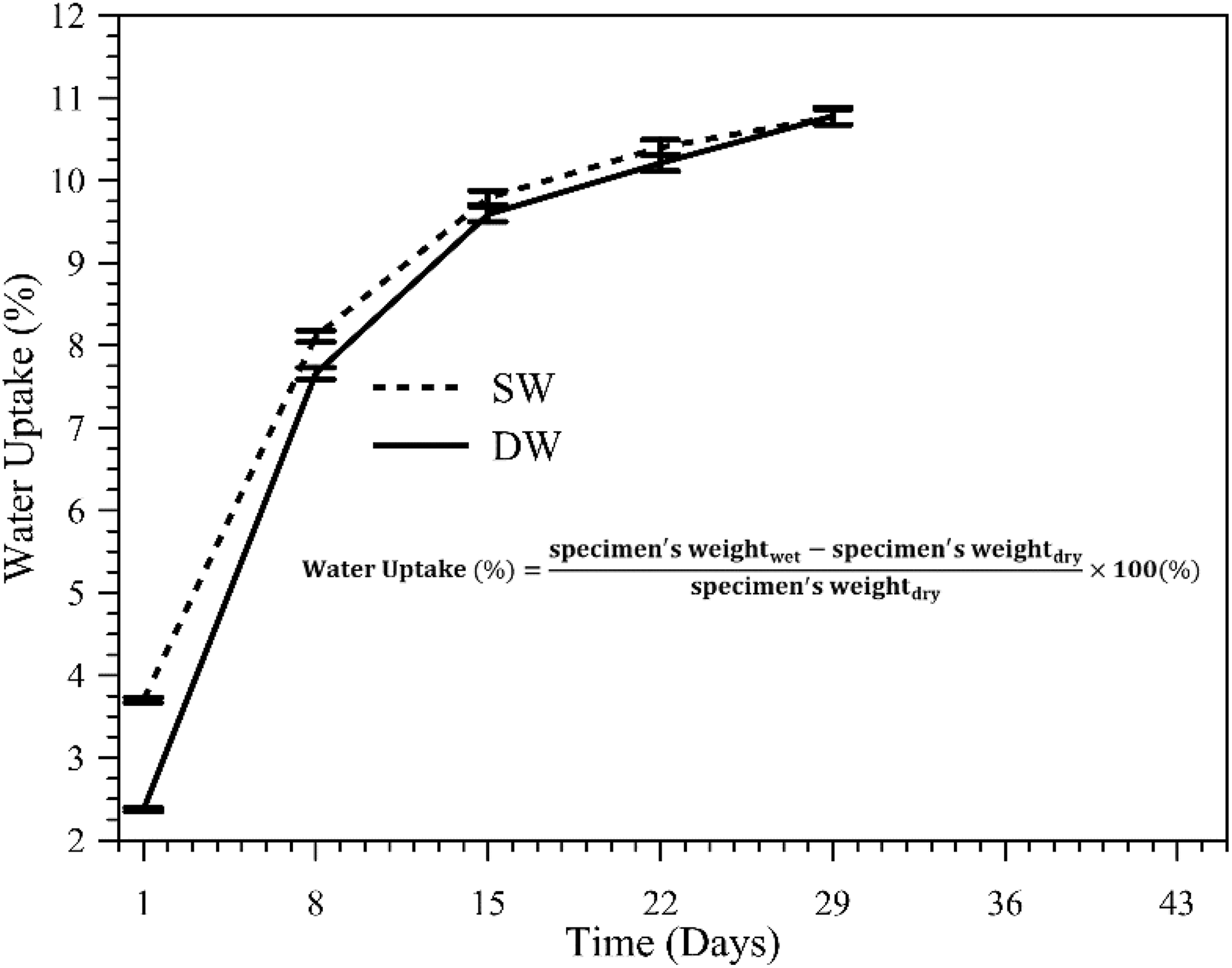
Mean of the water uptake of WPC in DW and SW.
The surface layer of the extruded WPC lumber encapsulates the wood particles with polymer that hinders water uptake by creating a skin layer of polymer at the contact perimeter of the WPC lumber during the extrusion process. 6 In this study, however, WPC specimens were produced without a skin layer by machining (using a milling machine with a special blade for cutting plastic-based materials affixed to the head of the milling machine with 150 r min−1 a rotating speed of the blade) samples far from the surface of the boards. This exposed more wood particles to water during the DMTA tests. In addition, the development of the microcracks on the machined surface of the WPC specimen could also contribute to an increase in water uptake.
Calculations of the maximum flexural stress levels
The three-point bending tests were performed according to ASTM D790 using the Instron electromechanical testing machine. The displacement control method of testing was used with an average strain rate (1.6 ± 0.2 mm min−1) 16,19 was applied during the flexural test of the five tested WPC specimens. Prior to the testing, the five specimens with dimensions (L = 59.7 ± 0.4 mm, w = 7.3 ± 0.3 mm, h = 3.7 ± 0.4 mm) were oven-dried at 50 ± 3°C for 24 h. 18
Dynamic mechanical thermal analysis
Two methods, storage modulus, and heat deflection temperature were used to determine the glassy region of the material behavior by locating the onset of the glassy region by locating the glass transition temperature (Tg) at the onset of the change in the storage modulus curve (E′), as shown in Figure 5(a). A similar approach was used to determine the heat deflection temperature (HDT) by locating the onset of the change in the load–midspan deflection relationship of the specimen in the flexural test, as shown in Figure 5(b). DMTA was carried out using a TA Instrument DMTA Q800 (manufactured in New Castle, DE, USA) and the three-point bending submersible clamp to determine the storage modulus (E′) and tan δ of the WPC at three conditions: dry (D), submerged in DW, and submerged in SW. 20,21 Two lines (TA, TB) were constructed by performing a linear regression of the curve at the regions before and after the change in the curve of storage modulus and the midspan deflection, respectively. The calculation of Tg and HDT was based on the intersection of TA and TB. Specimens with dimensions 15.0 ± 0.0 mm, 7.2 ± 0.2 mm, 2.7 ± 0.2 mm (the uncertainty in measurement of the WPC specimen dimensions was reported based on the computation of standard deviation of 190 WPC specimens) were tested in three-point bending at 1 Hz frequency and with 0.01% constant strain amplitude. Tests were conducted over a range of temperature from 25°C to 80 and at a scanning rate of 3°C min−1.
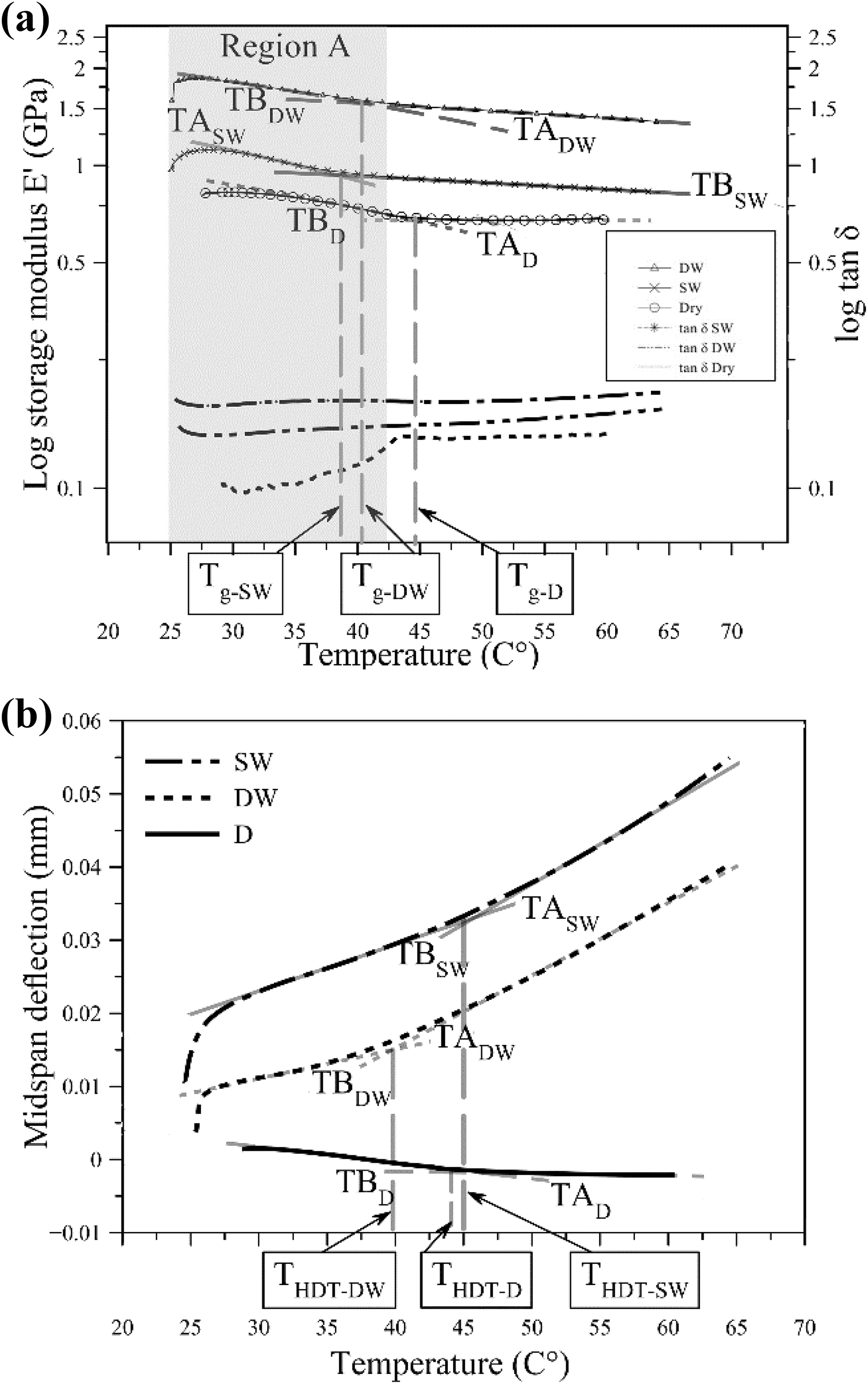
(a) E′ and tan δ versus temperature of WPC under three different testing conditions: D, SW, and DW. (b) Mid-span deflection versus temperature of WPC under three different testing conditions: D, SW, and DW.
The specimens were tested in a fluid environment with a 6:1 span to depth ratio (L/h), 22 and the maximum flexural creep stress and the maximum avg. flexural creep strain were computed and reported accordingly.
Strain and strain recovery
Creep and creep-recovery experiments were performed using the DMTA instrument model Q800 and using the three-point bending submersible clamp. A thermocouple extension on the clamp measured the water temperature at 1 mm distance from the WPC specimen (Figure 2). Two different stress levels and three temperatures were used during the experiments, and five replicates for each test were considered. To avoid exceeding 50% of the maximum capacity of the applied load (18 N) of the DMTA instrument and to keep the maximum applied flexural stress in the linear region, the stress levels were 9.2% and 13.8% of the maximum flexural strength. Ten minutes of soaking time, prior to the creep and creep-recovery experiment, were followed by 30-min creep and 30-min recovery.
Discussion of results
Hygrothermal effect on Tg and E of WPC
The moisture content of each specimen was determined with respect to the oven dry weight of the specimens (dry weight). Figure 4 shows the water uptake of the WPC specimens during the month of conditioning. Tg and HDT of the three conditions (D, SW, and DW) were determined as shown and reported in Figures 6(a) and (b) and Table 2, and their values are 44, 38, and 41°C and 44, 45, and 40°C, respectively. The determination of Tg and HDT for the D and the DW immersed samples showed similar values for all the three conditions (approximately 40 and 44°C, respectively), except for the SW condition where HDT was 17% higher than Tg. This difference can be related to the effect of the cross-linking 23 of the polymer and its effect on the segmental relaxation, which reduces the free volume and increases the HDT, and is believed to occur during the extrusion process of the WPC. 11,24 Since two regions (Figure 1) in the cross section of WPC lumber were selected to produce specimens for DMTA, this difference in regions for the specimens can lead to a difference in their storage modulus (E) produced by the change in the density across the thickness of WPC lumber (Figure 6). 23 This is the reason for having the initial values of storage modulus of the specimens tested in water immersion (distilled and SW) to be relatively higher than the value of storage modulus in dry conditions (varied from 1.59 to 0.81 GPa). In conclusion, the determination of both Tg and HDT has enabled locating a region for the range of temperatures between 25°C and 45°C where the WPC material has the ability to carry loads.
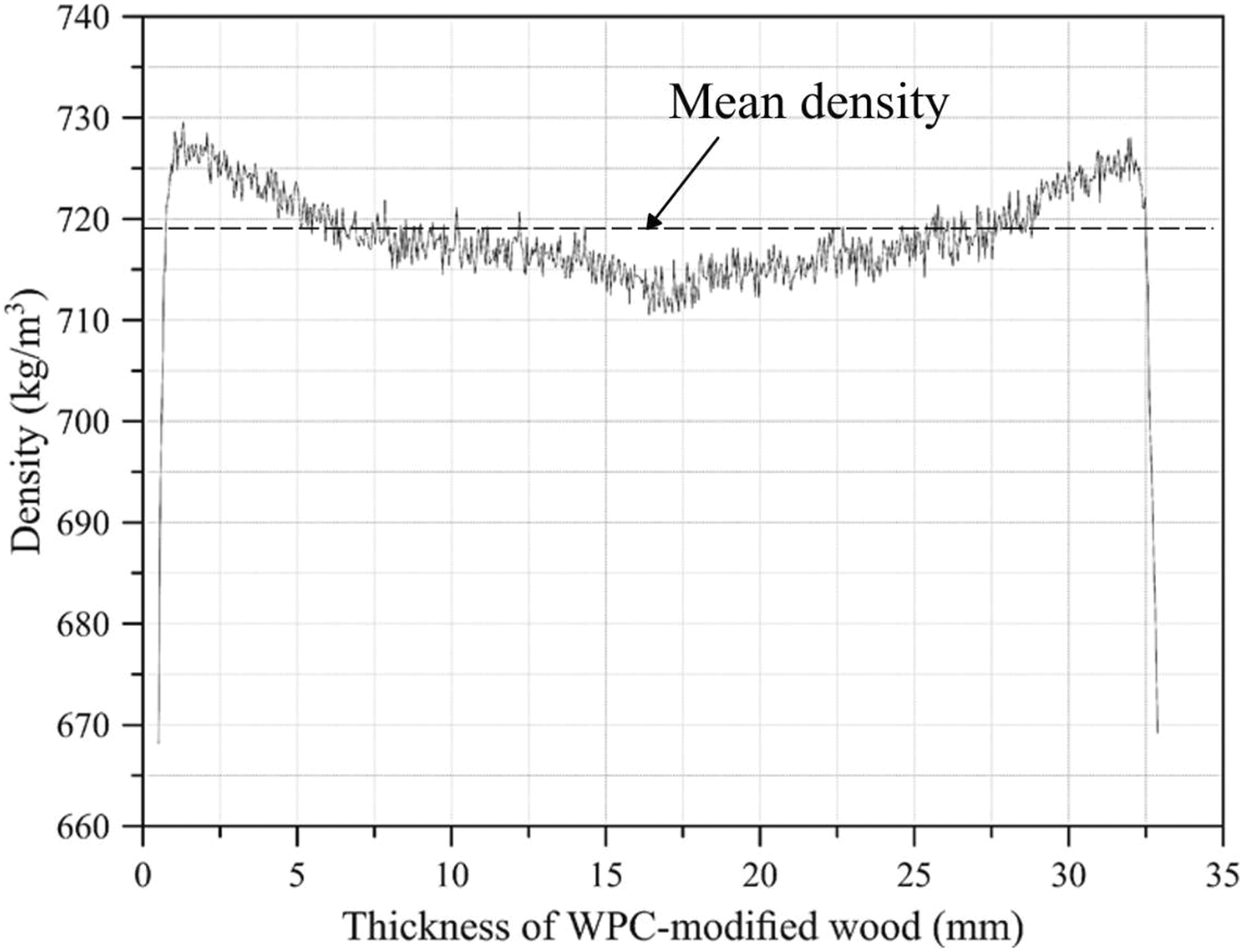
Density profile of the WPC lumber.
Tg and HDT of WPC under three different testing conditions: D, SW, and DW.
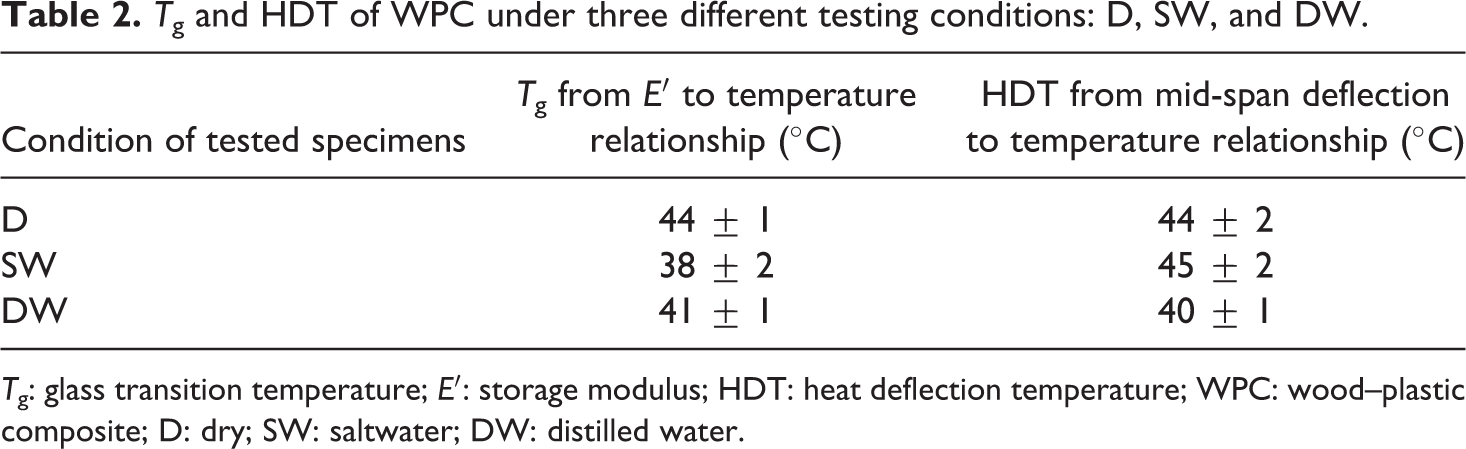
Tg: glass transition temperature; E′: storage modulus; HDT: heat deflection temperature; WPC: wood–plastic composite; D: dry; SW: saltwater; DW: distilled water.
The Tg and E′ of the WPC material decreased because of hygrothermal effects. The glassy region for temperatures below Tg represents the region where the WPC material has rigidity and can be effectively used in structural applications. 24 The hygrothermal effect tends to decrease the glassy region extent by decreasing the value of the Tg. Furthermore, E′ experiences a decrease in its value in this region. This reduction is explained by the motion in the molecules of plastics accompanied with the onset of transition from a glassy to the rubbery region. Furthermore, this reduction in Tg and E′ can be related to weakening the interfacial bond between the wood particles and the plastics of the WPC, when that molecular transition takes place. 24 This study showed that the water uptake of the WPC immersed in SW is faster than the water uptake of the WPC immersed in DW, and according to Chakraverty et al., 23 this fast rate can be related to the ionic interaction that might occur between the dissolved salt and the available hydroxyl groups on the thermally modified wood. However, this rate of water uptake decreased during the immersion time from 56% to 6% to 2% for the periods 1, 7, and 14 days, respectively, until reaching a constant rate at 21 days, as shown in Figure 4. It is known that wood particles are the source of the water uptake in WPC, 25 but in this study, the thermally modified wood of the WPC is less water absorbent because of the reduction in hydroxyl groups resulting from heat treatment. 11 The finding in this study conflicts with what other researchers have reported that more tap water is absorbed in WPC than SW. 7 Nonetheless, Najafi and Kordkheili 26 in their study showed that the type of water has a significant effect on the degree of uptake of WPC (i.e. WPCs absorb more moisture in SW than in DW). Najafiand Kordkheili 26 correlated the increase in the water uptake produced by the increase in the density of the SW compared with the DW and to the existence of the metallic ions in the SW (sea water) and their ability to sediment on the wood flour and hence increase the water uptake of the WPC. Thus, the glassy region of the WPC material immersed in SW is narrower than the glassy region of the dry WPC material and WPC material immersed in DW, as shown in Figure 5, respectively. However, the amorphous polymer used in the WPC of this study showed a significant plateau that indicates the material maintains the storage modulus (E′) as shown in the region A of Figure 5(a) and (b). This response is dependent on the cross-link density 24 or on the well-developed interfacial bonding between the modified wood particles and the polymer matrix in the region below the Tg. 13 However, this feature contradicts with the behavior of the conventional WPCs in the previous studies using semicrystalline polymers. Therefore, this study suggests that the WPC can be used in structural applications over a range of temperatures below the Tg.
The mean E was normalized with respect to the E of the WPC specimens (with span of 15 mm) at 25°C. This E was computed from the initial compliance (reciprocal of the initial compliance) of the creep experiments in D condition at 25°C temperature to be 1.4 GPa, which is 35% of the true E (4 GPa) obtained from the WPC specimens with a span of 59.7 mm in accordance with ASTM D790. This reduction in the E can be related to either the variation in density between the cut and the machined specimens and their location from the top surface of the WPC lumber (i.e. the closer the WPC specimen to the surface layer, the higher the E value) or to the effect of the span to depth ratio (L/h) and the development of shear deformation. A density evaluation across the thickness of the WPC lumber was performed using a QMS density profiler model QDP-01X to indicate the reduction in the E as a function in the reduction in the density, along the thickness of the WPC lumber. Pavel et al. 27 correlated the relationship between the E and the density of the material via the specific modulus. The higher the specific density, the higher E is indicated. Nonetheless, a 2.6% reduction in the density of the WPC lumber between the density of the surface layer and the core layer of the WPC lumber as shown in Figure 6 was not considered the primary cause for the reduction in the E in this study. Mehndiratta et al. 28 reported an approximately 42% reduction in the flexural modulus of bidirectional glass fiber-reinforced polymer laminate when the span increased from 32 mm to 65 mm for specimens tested in three-point bending. Garoushi et al. 29 conducted three-point bending tests on short fiber-reinforced composite resin specimens at six different span lengths: 20, 15, 10, 7, 6, and 5 mm. Danawade et al. 30 conducted a study to investigate the effect of span-to-depth ratio on the obtained value of E of wood-filled steel tubes. Four different values of L/h were investigated: 7.09, 14.17, 13.98, and 27.95. The E was computed in these four different values of L/h for the wood beams, the hollow section rectangular steel tube beams, and the wood-filled steel tube beams. Danawade et al. 30 found that the value of the E was high when the L/h values were 27.95 and 13.98 for all the three tested beams. Danawade et al. 30 findings agreed with the recommended L/h by ASTM. Thus, the E can be obtained from the specimens that meet the recommended L/h by ASTM even if the shear deformation is ignored.
The true modulus of elasticity (Etrue, shear free E) is the material-independent property and should not be considered as a function of the total beam span between the supports (L) or the L/h ratio. 31,32 However, in accordance with ASTM D790, ASTM D2915, and ASTM D6109, the shear deformation can be ignored in the computation of the E, and the resulting E can represent the material-independent property for the specimens with long spans (L/h ≥ 16). 30,33 Equation (1) can be used to compute the apparent E when the shear deformation is ignored and can be used for specimens with L/h greater than or equal to 16. Nevertheless, equation (1) does not consider the shear deformation in the computation of the E. To include the shear deformation (Δs) and the flexural deformation (Δf) in the computation of the E, equation (2) 34 –36 can be used, but the values of (E/G) are difficult to obtain. 37 According to Carlsson et al. 38 , the true modulus (E) of elasticity in the value of E/G is not known, hence, it can be replaced by the tensile modulus and used in the value of E/G. Carlsson et al. 38 reported in their study the computed E (computed using equation (2)) had different values with respect to the values of L/h (from L/h = 20 to L/h = 120). In DMTA experiments, it is recommended to account for the shear deformation when the L/h is smaller than 10. 36 However, with the assumption of the WPC as an isotropic and linearly elastic material, the E/G value can be replaced by an expression that contains Poisson’s ratio (ν). 36,39 –41
Since this study did not conduct experiments to compute the true modulus (shear free modulus) or the shear modulus (G), the “standardized value” 35 (the value of the E obtained using equation (1) for the long span in this study (59.7 mm)) of the E was computed using equation (1) and the value was found to be 4 GPa.

where m is the slope of the tangent to the initial straight line portion of the load deflection (P −) curve and L, w, h are the dimensions of the specimen.

The authors recognize that three replicates is not sufficient to characterize the WPC material (i.e. ASTM D790 suggests more than five specimens). In some studies, 42 –45 three replicates have been used. For instance, Decew 42 conducted a test in accordance with ASTM D638 using three replicates. For the purpose of illustrating that the reduction in E in this study is a function of the span length, three replicates of the relationship between the E and the span length were reported, as shown in Figure 3.
Unlike polyolefin-based WPCs that have been reported in previous studies, the WPC material in dry condition maintained the normalized value of the E over the range of temperatures examined (25, 35, and 45°C) as shown in Figure 7. The rate of decrease in normalized E for the specimens conditioned and tested in SW and DW did not exhibit a linear relationship and the rate of decrease for temperatures higher than 35°C was smaller than the rate of decrease for the temperature below 35°C as shown in Figure 7. This low rate of decrease is related to the properties of the styrenic polymer comprising the WPC and its ability to maintain E at elevated temperatures below the Tg. The hygrothermal effect is attributed to the higher water uptake of the specimens tested in SW compared with the specimens tested in DW, and the degradation decrease in the normalized E of the specimens in SW was higher than the degradation in the specimens tested in DW. However, this degradation reduction produced by SW immersion was higher for the range of temperatures below 35°C, and the reduction was smaller than the specimens tested in DW. This finding can be beneficial for the use of WPC in aquaculture cages (totally submerged structures) in warmer ocean water (temperature below 45°C).
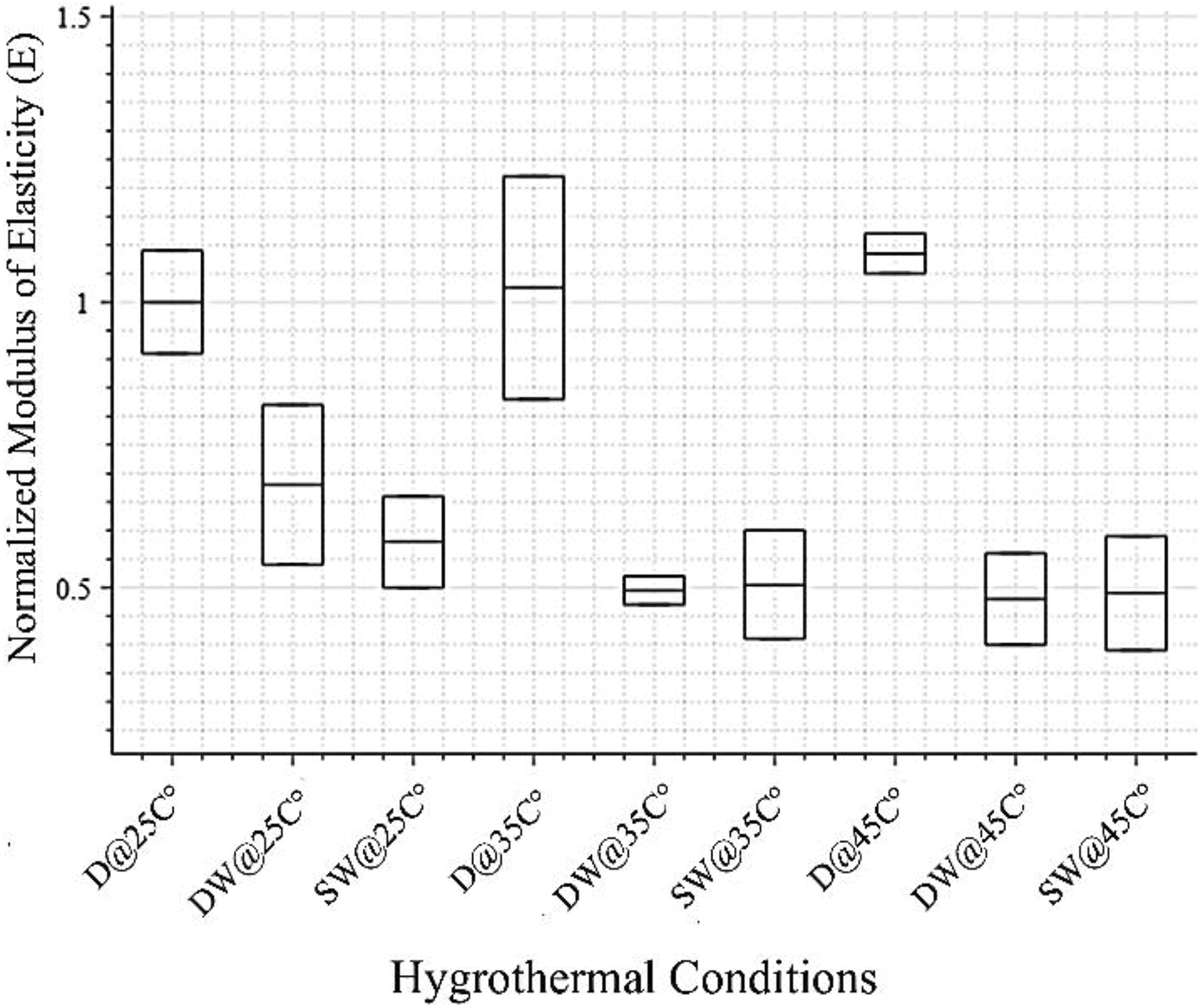
Normalized E versus temperature at three different testing conditions: D, SW, and DW.
Average creep strain and creep strain-recovery of WPC
Strain recovery is governed by the elastic behavior of the viscoelastic material, where the unrecoverable strain is governed by the viscous behavior. For all the strain recovery data shown in Table 3 and Figure 8, the tested WPC specimens under immersion conditions (DW and SW) have shown higher strain recovery percentages when compared with the WPC specimens tested in the dry condition. The immersion in DW and SW increases the recoverability of the viscous response to be greater than 2% for all the creep experiments under the different hygrothermal environmental conditions, and this is attributed to the water uptake (i.e. the higher the water uptake, the higher the strain recovery), and this finding agreed with the findings of Kazemi et al. 9 when WPC with 70% wood flour was immersed in water for 30 days showed higher creep displacement recovery than the WPC immersed in water for 7 days. Figure 9 illustrates the WPC 30 min creep and 30 min recovery under 3.75 MPa of the maximum applied flexural stress at three different values of temperature 25–45°C at three different exposure conditions: D, SW, and DW.
Maximum avg. flexural creep strain and strain recovery of WPC in the three different conditions: values of temperature and two levels of maximum flexural stress.
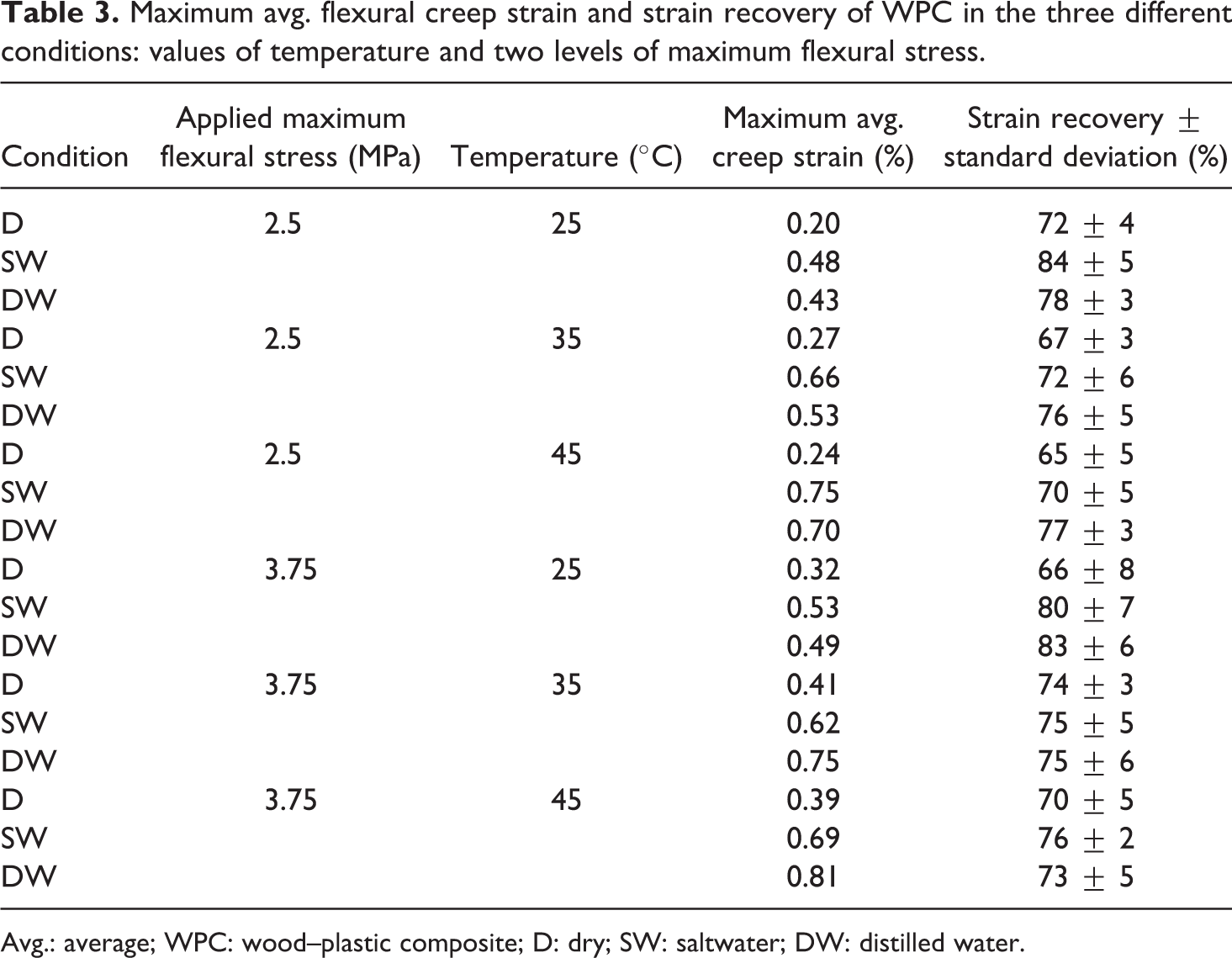
Avg.: average; WPC: wood–plastic composite; D: dry; SW: saltwater; DW: distilled water.
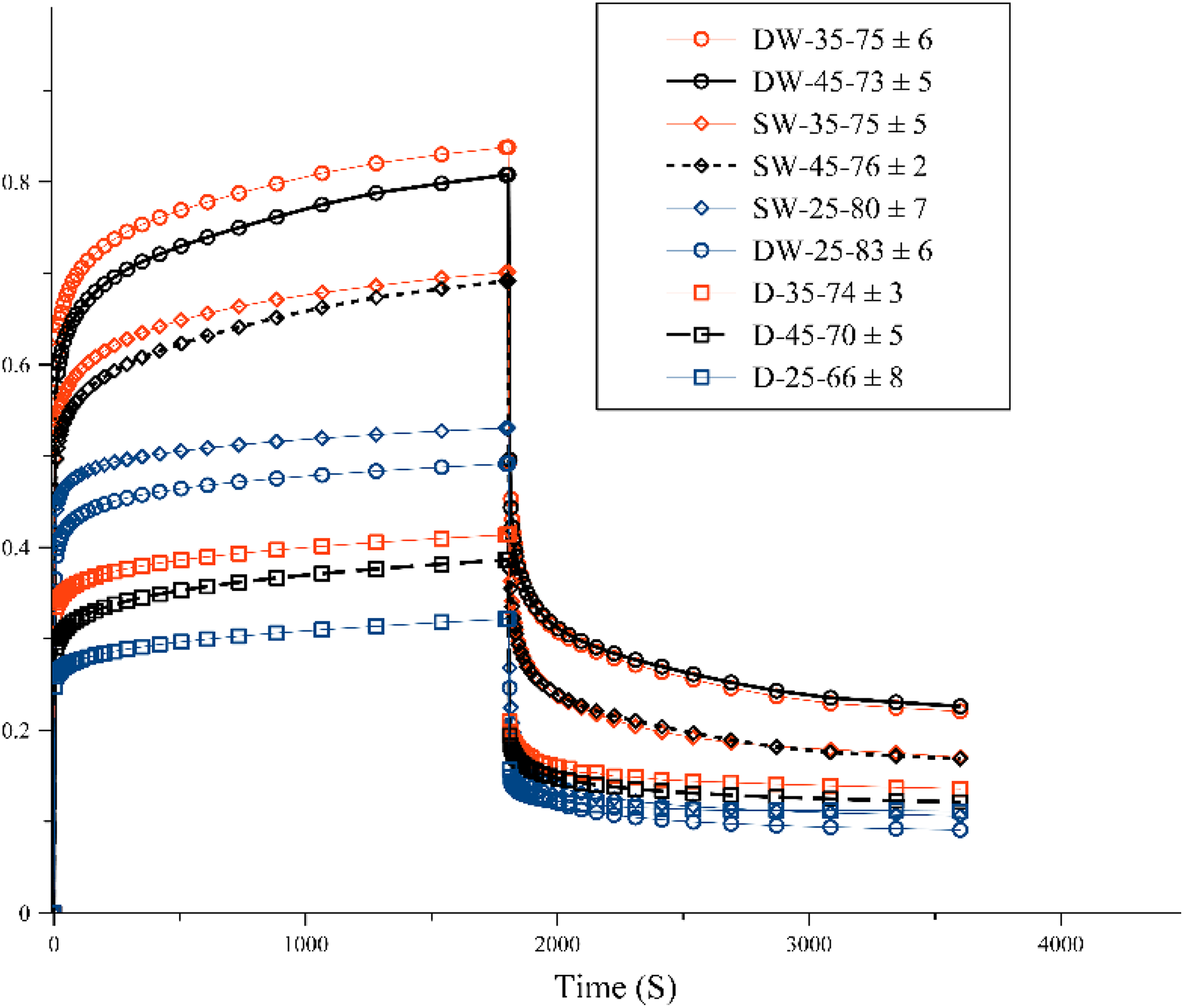
Avg. creep strain and strain recovery of the WPC specimens subjected to a maximum flexural stress of 3.75 MPa at three different temperatures 25, 35, and 45°C and under three testing conditions (D, SW, and DW).
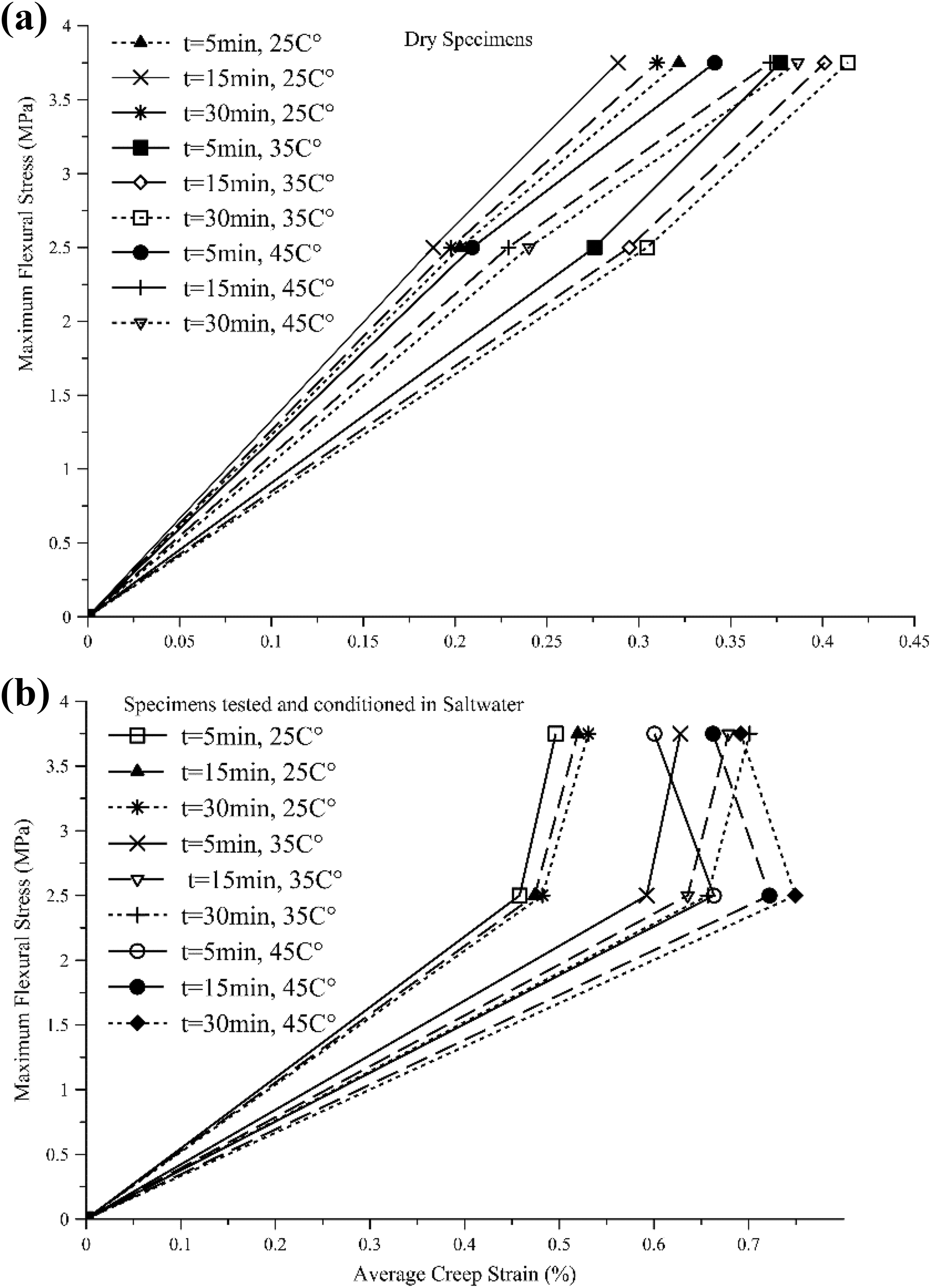
Isochronous stress–strain curves: (a) WPC specimens in the D condition and (b) WPC specimens conditioned and tested in SW.
Since the WPC material maintains stiffness over the evaluated temperature range and unlike the behavior of polyolefin-based WPCs that show a reduction in the E as the temperature increases. Further illustration of the maintained behavior of the creep compliance of the WPC, instead of experiencing high deflection, the specimens exhibit less deformation when the duration of the sustained load increases under an increase in the temperature, as shown in the constructed “isochronous curves” in Figure 9. Isochronous curves were constructed using the applied maximum flexural stress–strain relationship for the strains (average creep strain) at times 5, 15, and 30 min and for two cases of conditioning and testing (D and SW) as shown in Figure 9(a) and (b). 33 However, for the case of SW conditioning and testing, the stress–strain relationship tends to be nonlinear (unlike the linear relationship for the dry condition) at 35 and 45°C. The WPC was studied using 30-min creep and 30-min creep recovery under two different levels of stress and under different hygrothermal conditions (three levels of temperatures and two types of water immersion). For the 2.5-MPa level of stress (at 25, 35, and 45°C), the values of the 30-min creep strain for the WPC specimens conditioned and tested in SW were 12%, 25%, and 7% higher than the avg. creep strain values of the WPC specimens conditioned and tested in DW, whereas at the 3.75 MPa level of stress, the 30-min creep strain value of the WPC tested in SW was 8% higher than the avg. creep strain of the avg. creep strain of the specimens in DW at 25°C, and the avg. creep strain values of the specimens tested in SW were 21% and 17% lower than the creep strain of the specimens tested in DW at 35 and 45°C, respectively. The reason for having lower avg. creep strain for the WPC specimens tested in SW at 3.75 MPa level of stress and at 35 and 45°C than the specimens tested in DW can be attributed to maintaining the E of the WPC at elevated temperatures under this level of stress.
Comparison of the WPC time-dependent behavior (creep strain) with previous studies
The WPC materials in the literature were made with different formulations, for instance, untreated pine wood flour particles and polypropylene as a plastic, 5 or pine wood flour with HDPE plastic. 6 To quantify the performance of the thermally modified WPC in avg. creep strain with other formulations in terms of creep behavior, creep strain fractional increment (CSFI) values were computed for the purpose of comparison as shown in equation (3). For further illustration and comparison purposes, a 250-min creep experiment was conducted at the three conditions under 2.5 MPa of the maximum flexural stress and at 45°C temperature.

It can be concluded from the comparison results reported in Table 4 that the WPC in this study has a lower increase in avg. creep strain for all the conditions: D, SW, DW. Even though previous studies did not test the WPC in an immersed environment over a range of temperatures, this study showed lower CSFI for specimens conditioned and tested in DW compared with the finding by Kazemi et al. 9 Dry specimens showed very low time-dependent deformation for specimens tested for 250 min. The reason for this enhancement in the low time-dependent deformation of the WPC can be related to the thermal treatment of the wood flour and its contribution to increasing the E of the wood wall cells and to the enhanced interfacial bonding between the wood particles and the polymer. This enhanced time-dependent behavior enables the material to be used in structural applications especially when low levels of stress are applied. Furthermore, the material has the potential to be used in marine applications where the material is immersed in warm tropical waters, for instance: the Gulf of California, Mexico, the Pacific Islands, South Padre Island TX (Buoy 42003), San Juan P.R. (Atlantic Site), Virginia Key, FL, Key West FL, and Hawaiian Island Coast. 46
Comparison of WPC creep behavior with previous studies.
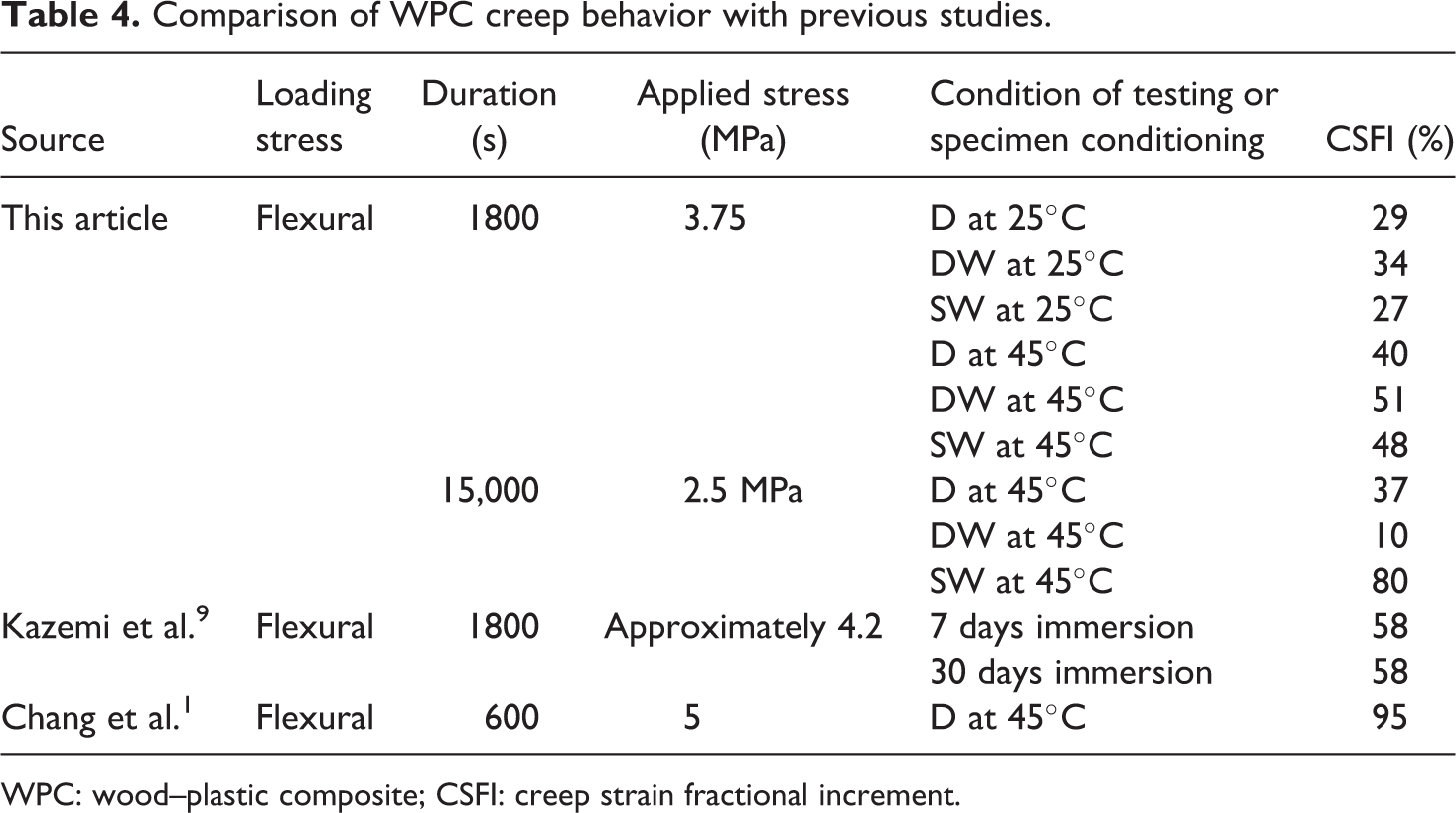
WPC: wood–plastic composite; CSFI: creep strain fractional increment.
Conclusions
The CSFI of the WPC specimens conditioned at the highest level of temperature and under water immersion was 13%, which is 86% lower than the CSFI of the preconditioned and dry specimens reported in previous studies. The WPC material in this study maintained E at elevated temperatures and exhibited relatively low time-dependent deformation compared with polyolefinic WPC materials from the literature, most likely attributed to its strong interfacial bond between the wood and the polymer.
Since water immersion has the ability to mitigate the effect of temperature on the viscous behavior of the viscoelastic WPC, the ability to recover the deformation after the loading source was removed was high for the specimens under the synergistic effect of temperature and immersion, compared with the deformation recovery of the same material under just the temperature effect. That indicates in addition to the deformation recovery attributed to the elastic behavior, a recovery to the viscous part of the viscoelastic WPC occurred.
According to the low variation in density along the thickness of the WPC lumber, it is believed that this material has a unique formulation, hence it has enhanced E by maintaining E at higher temperatures over the range of temperatures below Tg, related to the developed interfacial bonding between the wood particles and the polymer matrix. Furthermore, the low variation in density suggests good dispersion of the wood flour throughout the thickness of the WPC lumber and uniform structure of the composite.
The WPCs in this study have the potential to be used in marine applications (warm water regions) because of the high level of creep recovery after the low sustained load is removed resulting from maintaining the creep compliance at temperatures between 25°C and 45°C, and the reduced water uptake attributed to the thermally treated wood fibers used in the WPCs.
Footnotes
Acknowledgements
The work described in this document was conducted at the Advanced Structures and Composites Center at the University of Maine, Orono, Maine (USA). The wood–plastic composite material is based on a patent-pending formulation (publication number WO2018/142314). The thermally modified wood fiber used in this research was supplied by Stora Enso (Finland).
Funding
The author(s) disclosed receipt of the following financial support for the research, authorship, and/or publication of this article: This work was supported through a scholarship provided by the Higher Committee for Education Development (HCED) in Iraq to MAAA. The University of Maine research reinvestment funds (RRF) Seed Grant entitled (Development of structural wood plastic composite timber for innovative marine application) and the United Stated Department of Agriculture (USDA)-the Agricultural Research Service (ARS) Funding (grant number 58-0202-4-003) provided the financial support for this project.
