




Abstract
We report high mechanical, dielectric, and thermal performance of carbon nanotubes (CNT) reinforced ethylene vinyl acetate (EVA) composites, fabricated using conventional melt extrusion processing. CNT have extremely high stiffness, electrical conductivity, and surface area, ensuring strong interactions with the polymer and effective reinforcement. The addition of CNT to EVA leads to an extremely high yield strength and Young’s modulus of the composites. The EVA composite produced, containing 5 wt% CNT, exhibited an almost 3-fold increase in Young’s modulus and a 2.2-fold improvement of yield strength compared to neat EVA. However, the composite maintained high deformation properties—a ductility of 1300%. Scanning electron microscopy analysis evidences the agglomeration of the CNT in the EVA/CNT composites. The EVA/CNT composites gained excellent electrostatic discharge properties—a surface resistivity in the range of 108 Ω/square. The observed thermal conductivity of the composites was increased by about 30% without losing the electrically insulating performance.
Introduction
Research and development of novel composite materials with functional properties continues to be a very hot research topic in the polymer chemistry and technology field. 1 –3 In the last decades, nanoparticles of carbon nanotubes (CNT), graphene (GR), and carbon nanodiamonds became very popular fillers for plastics for the concerns of their excellent mechanical, electrical, and thermal properties. 4 –9 Broad applications of carbon nanoparticles containing polymer composites have been proposed, which are mostly related to household, 10 automotive, 11 energy storage, 12 biomedical, 13 tissue engineering, 14 and smart materials applications. 15 The right choice of manufacturing strategy plays a crucial role in the achievement of the final properties of the produced carbon nanoparticles-filled polymer materials. 16 Additive manufacturing technology is also applied for the processing of carbon nanoparticles-filled composites. 17
The main aim of the present work is to combine the reinforcing and conductivity characteristics of CNT 18 within the excellent insulating, high flexibility, and chemical inertness properties of ethylene vinyl acetate (EVA) copolymer, 19 and melt extrusion fabrication of EVA/CNT composites to films with superior properties for electronic and electrical applications. EVA is a widely used elastomeric material that competes with rubbers and vinyl polymers for different technical applications where high dielectric insulation, flexibility, and chemical stability are required. 19 Hot melt adhesives, packaging films, insulation coatings, and foam sheets are only some products where EVA is usually utilized. However, its applications for high-performance packaging films and coatings for protection of electrical and electronic equipment and devices could be further extended by filling the polymer with conductive particles. Recently, studies have been focused on the development of EVA filled with CNT 20 and GR 21 and investigation of the mechanical, electric, and dielectric properties of these nanocomposites, because, even at low loading contents, these carbon nanoparticles can drastically modify the properties of the polymer material. 16 Here, we focus on the assumption that the excellent electrical conductivity of CNT has good prospects for use as the extrinsic filler for manufacturing novel polymer composites designed for electrostatic dissipation (ESD) and electromagnetic interference (EMI) shielding, 7 which includes packaging films and coatings for protection of electrical and electronic equipment and devices that are sensitive to electrostatic discharge during shipment, storage, handling, and between field uses. 22 In addition, the electrical industry also has taken advantage of these composites for use in electricity network transformers. 23
It has been reported that EVA copolymers filled with nanotubes can be also characterized by strongly enhanced mechanical properties 24 ; whereas, the vinyl acetate concentrations in EVA copolymer have only slight effect of the composites tensile behavior. 25 In general, the remarkably improved properties are attributed to the formation of the interphase due to the strong interaction between the particles and matrix, their percolation, interactions between the particles and development of spatial interpenetrating networks. 26 –30 In the experiments presented in this study, we demonstrate the extensive role of the CNT on the dielectric, thermal, and mechanical properties of the melt extrusion-blended EVA composites with various CNT contents. Moreover, the composites produced are characterized by remarkably enhanced stiffness properties in addition to observe excellent surface electric charge dissipation, good thermal, and dielectric behavior.
Experiments
Materials
Multiwall Carbon Nanotubes Nanocyl NC7000TM series, produced via the chemical vapor deposition process, were used. They are characterized by average diameter—9.5 nm, average length—1.5 microns, carbon purity—90%, metal oxide—10%, surface area—250–300 m2/g. DuPont™ Elvax® 260 is an ethylene vinyl acetate copolymer resin for conventional thermoplastic processing and use in industrial applications; it is characterized by melt flow rate—6 g/10 min (190°C/2.16 kg), density—0.930 g/cm3, melting point—75°C, and acetate group content—28%.
A twin-screw extruder, ThermoScientific Prism TSE 16 TC, was used for the EVA and the CNT melt compounding. The settings were the following: screw speed of 90 rpm, barrel temperature of 110 C. Altogether, EVA/CNT containing 1, 3, and 5 wt% of the CNT was prepared. For further testing, the prepared EVA/CNT compositions were compression-molded and injection-molded into film, brick, and dumbbell specimens. The specimens were further tested for tension, density, calorimetric, thermal, and dielectric properties.
Testing methods
The tension test was carried out under ambient conditions on the Zwick BDO-FB-020TN equipment according to ISO 527. The specimens of dumbbell shape, length 20 mm and width 5 mm, were stressed at constant crosshead rate of 5 mm/min, which is equal to the start deformation speed of 40%/min. Six parallel samples were tested. The Young’s modulus E was calculated from the stress–strain curves tangent at the beginning of the coordinate axis.
The calorimetric tests were carried out on a Mettler differential scanning calorimetry (DSC)-1 instrument according to ISO 11357 -1. Specimens of about 10 mg in weight were scanned in heating mode, using nitrogen as a purge gas in the temperature range from −100°C to +110°C. It ran at a rate of 10°C/min. The melting enthalpy, melting temperature, and glass transition temperature were calculated from the experimental heating curves. Density determination, after Archimedes’ principle by weighing the material in air and alcohol, was measured with a Sartorius YDK 01 balance. 31
Thermophysical properties of materials, thermal diffusivity, specific heat, and thermal conductivity, were determined with the Netzch LFA 447 NanoFlash System according to ISO 22007-4. The film specimens were heated with a Xenon flash lamp (10 J/pulse) in air. The measurements were taken at three temperatures—20°C, 40°C, and 60°C. The samples were coated with graphite in order to enhance the absorption of light energy and the emission of infra-red radiation to the detector.
Dielectric properties of the films were tested by a Novocontrol Alpha Broadband Dielectric/Impedance Spectrometer. The compression-molded films were cut into small pieces of round samples with diameter of 25 mm. The experiments were carried out using parallel plate electrodes at different frequencies ranging from 0.01 Hz to 10 MHz at room temperature.
Electrical resistivity measurements of the samples were measured by sandwiching the samples between two electrodes using a Keithley 6487 Picoammeter according to EN 1149. A constant voltage equal to 500 V for 60 s at room temperature was applied. Surface resistivity ρs (Ω/square) was calculated by the equation ρ = 53.4 R; where R (Ω)—measured surface resistance of the specimen; 53.4 (mm/mm)—ratio between diameter of electrodes and distance between them.
The dispersion of the filler in the polymer matrix was examined with a scanning electron microscopy (SEM) Tescan, Mira//LMU Schottky, at a voltage of 25 kV. The fractured surfaces of the EVA/CNT were covered with gold–palladium (Emitech, K550X).
Results and discussions
Table 1 presents the physical properties of the neat EVA and EVA/CNT composites. Figure 1 shows the DSC thermograms of the polymer and the composites. As can be seen from the DSC heating curves, the EVA shows a very broad melting endotherm peak, which identifies that the polymer melting starts at almost 25°C and finishes at 90°C. The first peak temperature for neat EVA is 44°C and the second peak is 72°C (see Figure 1). The melting temperatures for the composites are almost the same as that of the neat EVA (Table 1). A broad glass transition of the amorphous phase is also visible. The T g of EVA is equal to −27°C, that is the temperature at which amorphous polymer is converted from a brittle, glasslike form to a rubbery, flexible form. 32 As is visible from Figure 1 and Table 1, adding CNT does not change the shape of the melting endothermic transition and corresponding temperatures, but the second-order phase transition, where relaxation processes proceed, extends noticeably. The transition both starts and ends up at higher temperatures. The temperature T g increases by 12° from −27°C to −15°C with increasing nanotubes content in the EVA till this reaches 5%, which involves freedom restrictions in segmental motions of the polymer chains due to interaction at the interface of the polymer matrix and nanotubes. 33,34 Furthermore, the obtained raise of glass transition temperature from the CNT content indicates an increase of interphase polymer volume fraction; and, thereto, the composite becomes gradually replete with interphase.
Characteristics of EVA/CNT composites.
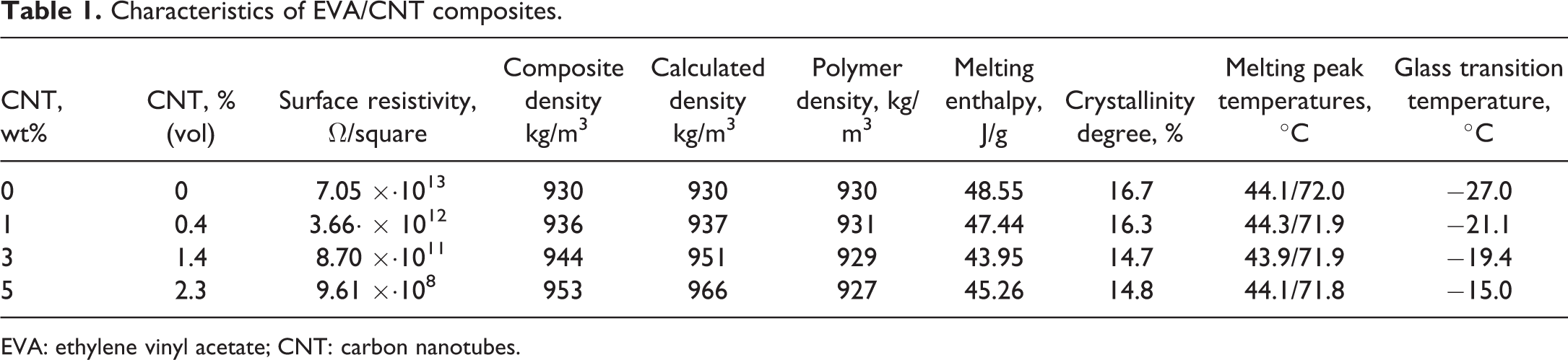
EVA: ethylene vinyl acetate; CNT: carbon nanotubes.
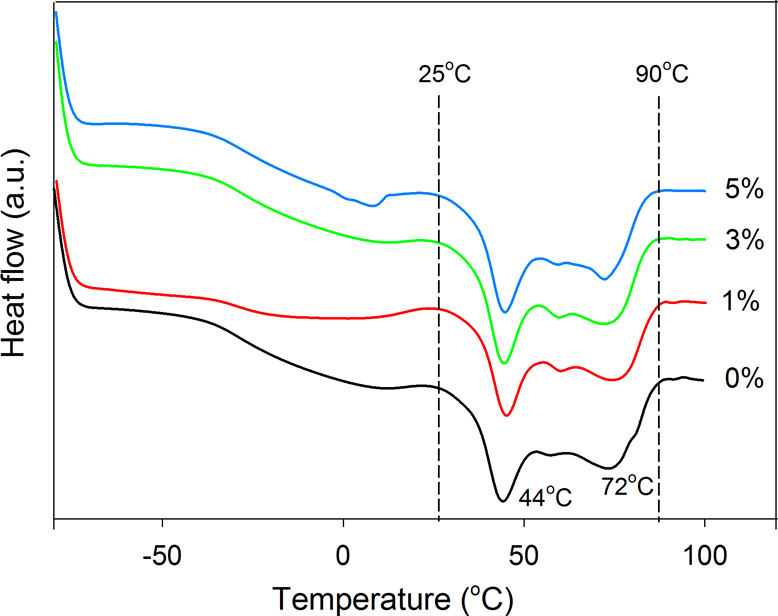
DSC heating curves for EVA/CNT composites.
The heat of fusion of EVA and EVA/CNT composites with various amounts of CNT was calculated from the areas of the melting peaks of the DSC heating curves (Table 1). The polymer crystallinities were computed using the reference of 293 (J/g). 35 The crystallinity degree of the neat EVA is 16.7%; whereas the crystallinity value decreases with increasing CNT content in EVA/CNT because of the strong interaction between polymer and nanotubes and formation of the interphase polymer. 36 However, the action of CNTs on the crystallinity of the polymers is inconsistent. Some authors also report the decrease in the crystallinity of polyolefins after reinforcing with CNT 37 ; however, others report no changes in the crystallinity. 38 There are also publications that show evidence of the increase of crystallinity of a polymer after CNTs addition, for example, in composites of PE/CNT 39 and PP/CNT. 37 CNT addition to EVA forms the interphase with hindered chain mobility that may efficiently disrupt the crystals’ nucleation and growth in the composite as compared with the neat EVA. 35 The interphase development by CNT incorporation corresponds well with the observed glass transition T g increase and polymer density ρpoly decrease (see Table 1). The polymer density in the composite is obtained by the following equation (1): 31

where ρ is the experimentally obtained density of the produced EVA/CNT composites; ρCNT is density of CNT, equal to 2.0 g/cm38; V CNT is the CNT’s volume part. The theoretically computed density ρt of the composites was obtained from the rule of mixtures as shown in equation (2) 40

where ρEVA is density of polymer, equal to 0.93 g/cm3.
It may be observed that at 3 wt% and 5 wt% of CNT, the divergence between the experimental ρ and calculated ρt values grows. The composite’s experimental density depression results from the voids and defects generated in the polymer by CNT addition. It relates well to the extremely high surface area of the CNT; and, in addition, the polymer matrix is unable to coat nanoparticles homogeneously. 8
The surface resistivity ρs (Ω/square) of the composites was tested by the concentric ring probe method. The EVA/CNT composites gained a five-order of magnitude decrease in surface resistivity and novel electrostatic discharge properties. For example, for the EVA, the obtained ρs was 7.05 × 10¹³; whereas for the composites loaded with 3 wt% and 5 wt% of nanotubes, these values were 8.70 × 10¹¹ and 9.61 × 10⁸ Ω/square, respectively. The physical picture of this sharp electrical conductivity enhancement with CNT content may be encountered only at the percolation threshold. 41 The critical content limit is in the range 1–3 wt%. Figure 2 presents the SEM images of the pristine CNT and fractured surfaces of the EVA/CNT specimens. SEM reveals the presence of the CNT agglomeration and percolation with the filler contents of 1 wt% and 3 wt%.
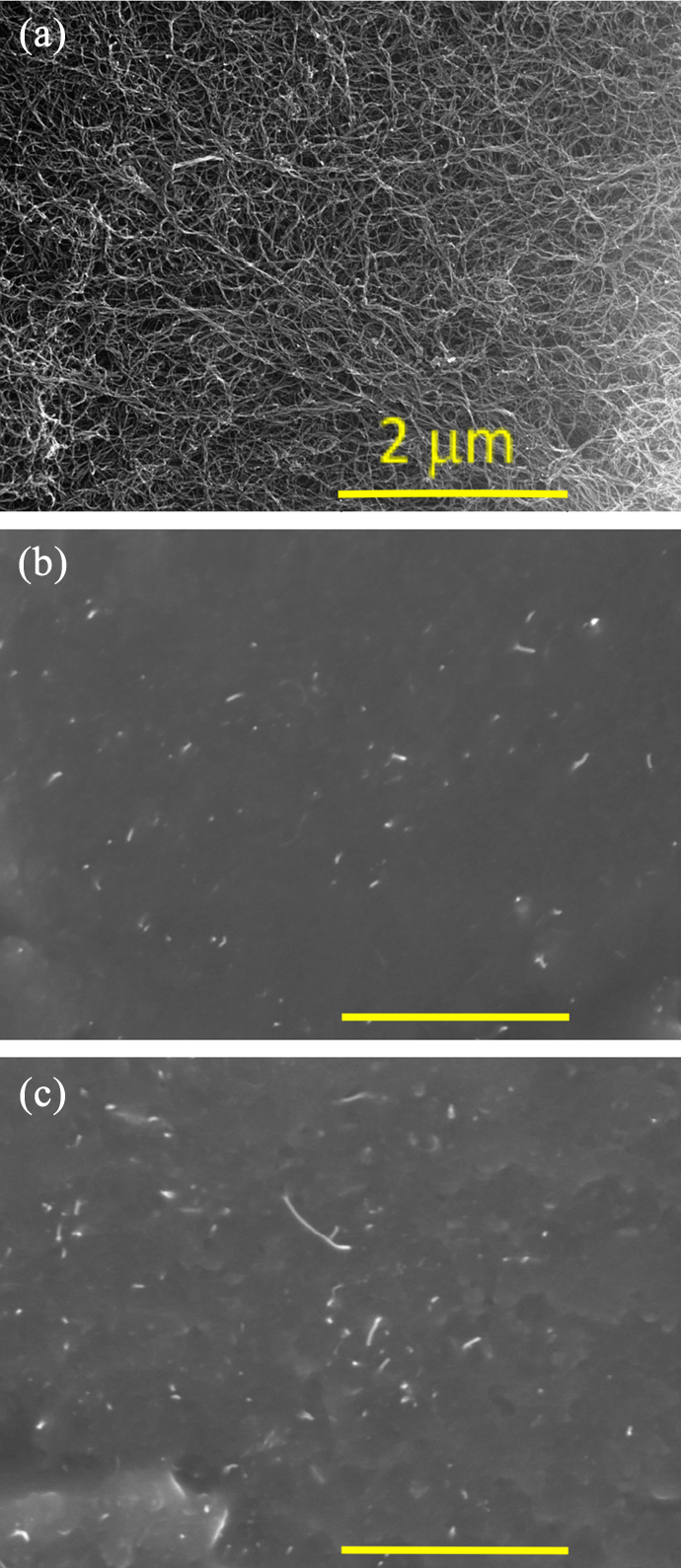
SEM images of the (a) CNT and fractured surfaces of the EVA/CNT composites with (b) 1 wt% and (c) 3 wt%.
Thereby, the EVA/CNT composites produced with surface resistivity in the range of 108 Ω/square can be effectively used for ESD applications including packaging films and coatings for protection of electrical and electronic equipment and devices that are sensitive to electrostatic discharge during shipment, storage, and handling. 22 Several authors have reported that the excellent electrical conductivity of CNT and GR shows good prospects for use as the filler material for production novel polyolefin composites designed for ESD and EMI shielding protection. 7,42
Figure 3 shows the dielectric properties of the EVA loaded with CNT. Predominantly, the complete material dielectric behavior is described by complex permittivity ε* that is interrelated to permittivity ε′, loss permittivity ε′′, conductivity σ, and loss factor tan▵ = ε′′/ε′, which are commonly studied as a function of external field frequency. 43 As the measurements are based on the interaction of an alternating field with the dipole moment of the substance, then the relaxation dynamics of the macromolecular chains mobility can be estimated. The real ε′ part physically interprets the energy stored or “real” part of permittivity, whereas the imaginary part ε′′ describes the energy absorption or loss permittivity.
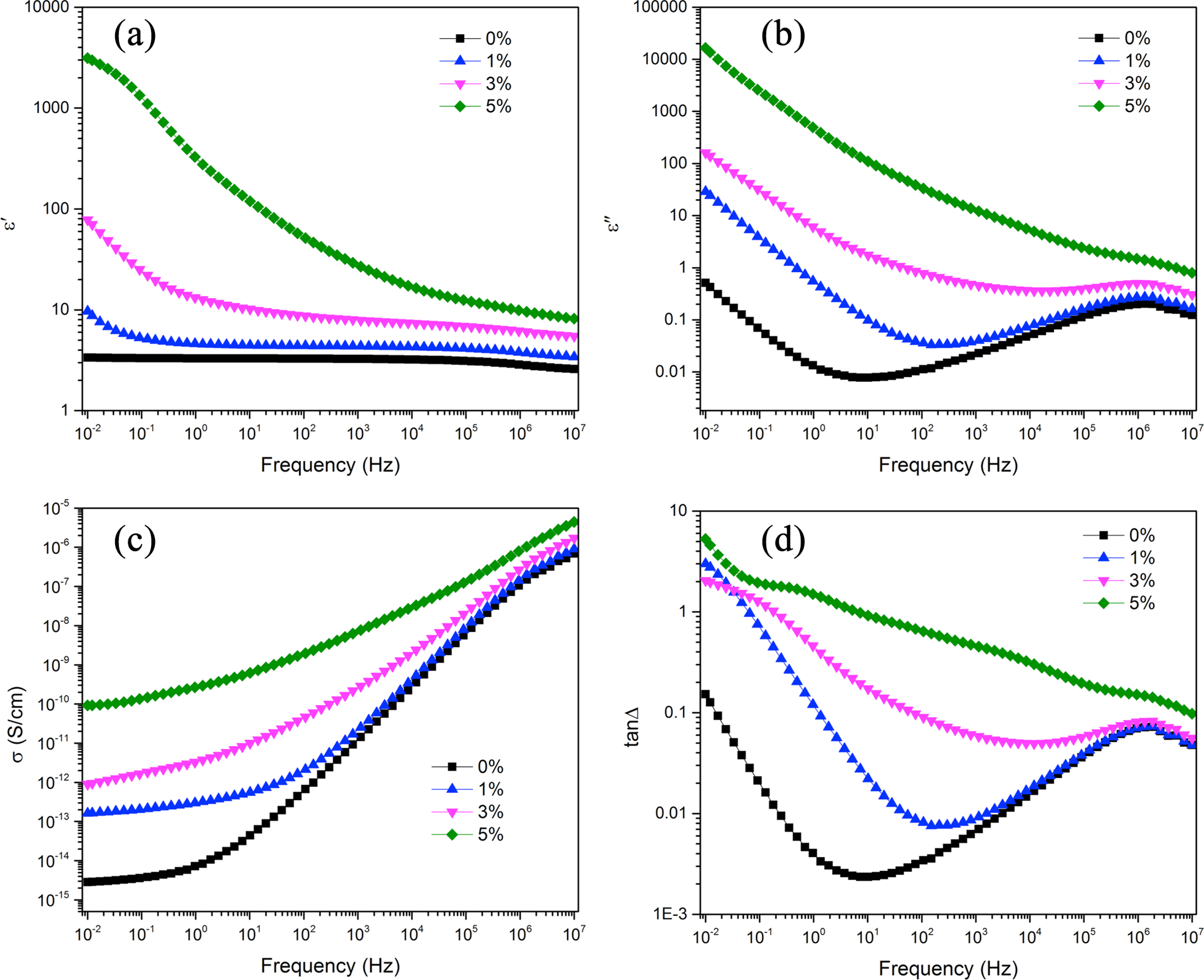
Dielectric properties for EVA/CNT composites: (a) real permittivity ε′; (b) loss permittivity ε′′; (c) conductivity σ; (d) loss factor tan▵.
Figure 3(a) shows that the permittivity ε′ of the neat EVA is very low and is almost unaffected throughout the frequency range. Neat EVA is an electrical insulator, like most polymers. 19 We found that the ε′ tended to increase significantly as greater amounts of CNT are introduced into EVA. As a result, it contributes to accumulation of charges at the interface between the polymer and nanotubes. 44 This process can increase the confined chain polarization in the interphase region that led to the significant increase in ε′. The EVA/CNT composites also showed the ε′ decrease starting from low frequencies and going to higher frequencies, corresponding to a certain type of polymer chains movement relaxation that freezes and even ceases to exist in the interphase. The polarization efficiency of the polar function groups in polymer chains can be decreased by increasing the field frequency. 45
Generally, it is convenient to discuss the chain relaxation by dielectric loss permittivity ε′′ as a function of frequency. 46 It can be seen in Figure 3(b) that the ε′′ showed a significant increase, with the higher loading of CNT at low frequency range because of frozen chain mobility. The ε′′ decreases with increasing of altering field frequency. The minimum ε′′ is observed to move to the higher frequencies with loadings of CNT. For example, the EVA showed the lowest ε′′ at 1 Hz, EVA/CNT 1% at 100 Hz, but EVA/CNT 3% at 10 kHz, whereas the minimum has disappeared for EVA filled with 5% of nanotubes. The EVA has a maximum dielectric loss value of 0.2 at the frequency of 1 MHz corresponding to the chain α-relaxation. The spectrum shows that the ε′′ remarkably increases with increasing the interphase volume that attributed directly to the CNT loading. EVA/CNT composites have ε′′=0.5 for 3% and ε′′=1.5 for 5% of CNT that relates to 2.5-fold and 7.5-fold increase comparing to the neat EVA, correspondingly. Previously, we indicated by the thermal analysis the increase in glass transition temperature attributed to the reduction of the amount of flexible polymer segments from the amorphous phase. This finding is supported by the observation of the significant increase in the rigid amorphous fraction, which was attributed to the polymer molecules that are in close proximity to the nanoparticle surface, as they hinder their mobility in the interphase. 47
In turn, Figure 3(c) shows the increment in the conductivity σ of EVA/CNT composites. The obtained increase of conductivity with CNT loading is related to the increased charge carrier concentration and development of conducting percolated network of nanotubes. 48 Thus, the loading of conductive filler remains the dominant parameter that affects the electrical conductivity of the composites. The conductivity also increases with increase in alternating field frequency that arises out of polarization of accumulated permanent dipoles, induced dipoles, and release of interfacial charges in the interphase polymer. 49
Another important parameter describing the dielectric properties of EVA filled with CNT (Figure 3(d)) is the dielectric loss factor tan▵ which characterize the dissipation value of the electric energy. Moreover, the dielectric loss of the polymer composites may include electric conductivity loss caused by eddy currents, polarization loss caused by relaxation of the dipoles, ionization loss caused by the process of ionization, and configuration loss caused by asymmetry of structures. 50 The tan▵ identifies the peak at high frequencies (10 MHz) due to the chains’ segmental motion or α-relaxation process that corresponds to the dynamic glass transition. 43 The whole polymer chains dynamics in the interphase region of the composites can be observed as a separate relaxation process at low frequencies (1 Hz), which is also called dielectric normal mode α′-relaxation. 43 It evidences the significant increase of the interphase polymer volume fraction with strongly hindered chain mobility at higher nanotubes loadings. 44,47
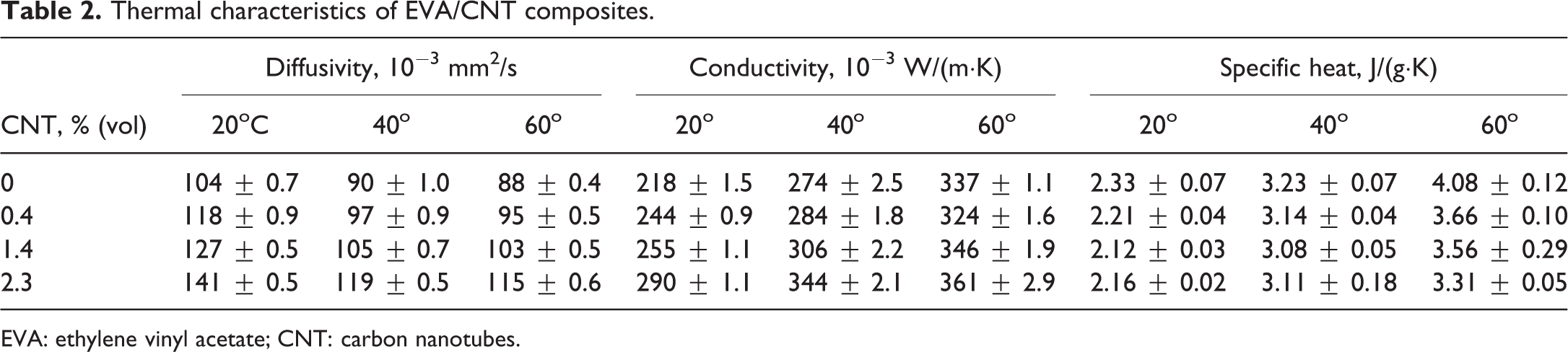
The Xenon flash instrumentation was used to measure the thermal diffusivity, specific heat, and thermal conductivity of compression-molded EVA/CNT composites films. These characteristics for EVA/CNT at 20°C, 40°C, and 60°C are summarized in Table 2. The instantaneous uniform impulse of the light heats the sample and the temperature excursion, which expressed as signal value (V), of the other side of the disk specimen is measured as a function of time using an infrared detector. The typical experimental curves of composites are shown in Figure 4. The curves for EVA/CNT are shifted to higher delta T values, which indicate an increase in the thermal conductivity. The measurements of thermal diffusivity a (mm2/s) and specific heat Cp (J/(g·K)) from these curves allow the calculation of the thermal conductivity λ (W/(m·K)) (see Table 2), with an additional experimental measurement of the density ρ (see Table 1) of the composite samples, as shown in equation (3).

Thermal characteristics of EVA/CNT composites.
EVA: ethylene vinyl acetate; CNT: carbon nanotubes.
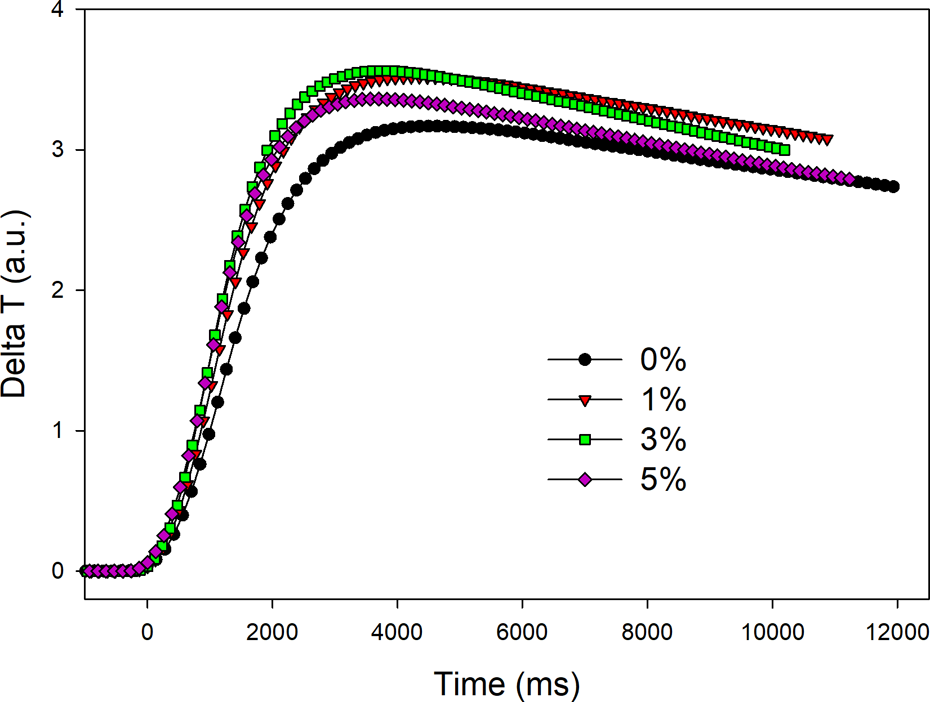
Thermal test curves for EVA/CNT composites.
It was assumed that the density of the material is constant within the temperature rise induced by the light impulse. The diffusivity was calculated according to Cape-Lehman model. 51 Its respective calculations consider transient heat transfer, finite pulse effects, and possible heat losses within the material. The value a increases almost 1.4-fold at 20°C for EVA filled with 5 wt% CNT. The similar raise of thermal diffusivity increasing the nanotubes’ concentration is also obtained for the temperatures 40°C and 60°C. Whether the thermal diffusivity tends to decrease increasing temperature of the flash measurements because of polymer crystals melt; thus, the thermal conductivity decreases since the conductivity of the amorphous regions is generally somewhat smaller. 51 For example, the a decreased almost 20% from 141 (20°C) to 119 (40°C) and to 115 (60°C) mm2/s for EVA filled with 5 wt% CNT. The specific heat Cp , which is defined as the amount of energy required to raise a unit mass of material by one unit of temperature at constant pressure, 32 is needed on its own as an input to calculate thermal conductivity of the material. EVA/CNT compositions showed slightly decreased of Cp values by increasing the content of nanotubes from 1 wt% to 5 wt%. We also found that the thermal conductivity λ tended to increase as greater contents of nanotubes are introduced into the EVA. For example, the λ at 20°C increased almost 1.3-fold, from 218 for EVA to 290 W/(m·K) for EVA/CNT 5%. The similar enhancements in λ values were received performing tests at higher temperatures of 40°C and 60°C, whereas the raise of measurements temperature from 20°C to 60°C also increased composites λ almost 1.5-fold. This is in line with expectations that the conductivity of the amorphous polymers would increase with temperature, which relates to the evolved molecular mobility. 51
The observed enhancement in the thermal conductivity, as shown in Table 2, is mainly attributed to the heat transfer by phonons, electrons during the thermal activation process. 52 Generally, the observed enhancement in the thermal conductivity is also attributed to other heat interaction processes taking place between polymer macromolecules and particles, and to possible formation of heat paths taking place in the composites. 53 Some authors also reported formation of conductive filler networks which also facilitates electrons and phonons motion and contribute to the enhanced thermal conductivity of polymer composites. 54 With an increase in the CNT content, more CNT may be percolated and, as well as, denser particles networks may be formed that leading to higher thermal conductivity. 55 It was reported that the filler arrangements by close-packed, unidirectional, and random networks have great impacts on the thermal conductivity of the composite materials. 56
The temperature dependences of the thermal conductivity for the neat EVA and EVA/CNT composites were analyzed according to the common Arrhenius equation (4). 57

where Ea , λο , T, and k are the activation energy, the pre-exponential factor, the temperature, and the Boltzmann constant, respectively.
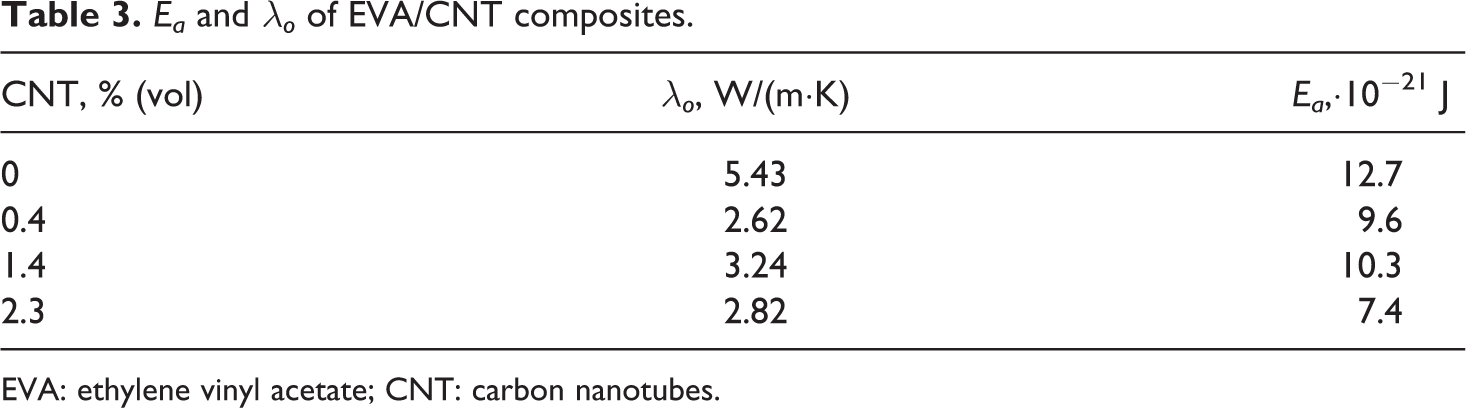
Figure 5 shows a plot of ln(λ) versus 1000/T that gives the thermal conductivity process activation energy Ea (J) and the inherent conductivity value λο W/(m·K)) at the infinite temperature. The Ea values were determined from the slope of the approximate straight lines of the Arrhenius plots (Figure 5). The Ea is defined as the minimum energy required to overcome the potential barrier of the polymer composite system. Table 3 also shows that the calculated Ea and λο values tended to decrease as the CNT loading level increases. For example, the Ea ·10−21 decreases almost 1.7-fold from 12.7 for the EVA to 7.4 J for EVA filled CNT 53 wt%; while the λο decreases almost 2-fold from 5.4 W/(m·K) to 2.8 W/(m·K), correspondingly. It is interesting to note from Table 3 and Figure 5 the subsequent decrease in Ea values with adding CNT content. Henceforth, the polymer composites’ conductivity is enhanced. It may be attributed to nanotubes percolation, particle–matrix interaction, hindered mobility of chains in the interphase, and increased free volume in the composites that can reduce the interfacial phonon scattering between the matrix and fillers. 58 Definitely, the Ea values depend strongly on the composites inherent structure features. 54 This approach indicates that the obtained thermal activation energy is a function to the materials’ density, crystallinity, glass transition temperature, and electrical conductivity (see Figure 6). It revealed that the activation energy drops and thermal conductivity is enhanced owing to an increase of density, glass transition temperature, and reduction in the crystallinity of the polymer composites. These observations are in good agreement with the results derived from other studies. 53 –55
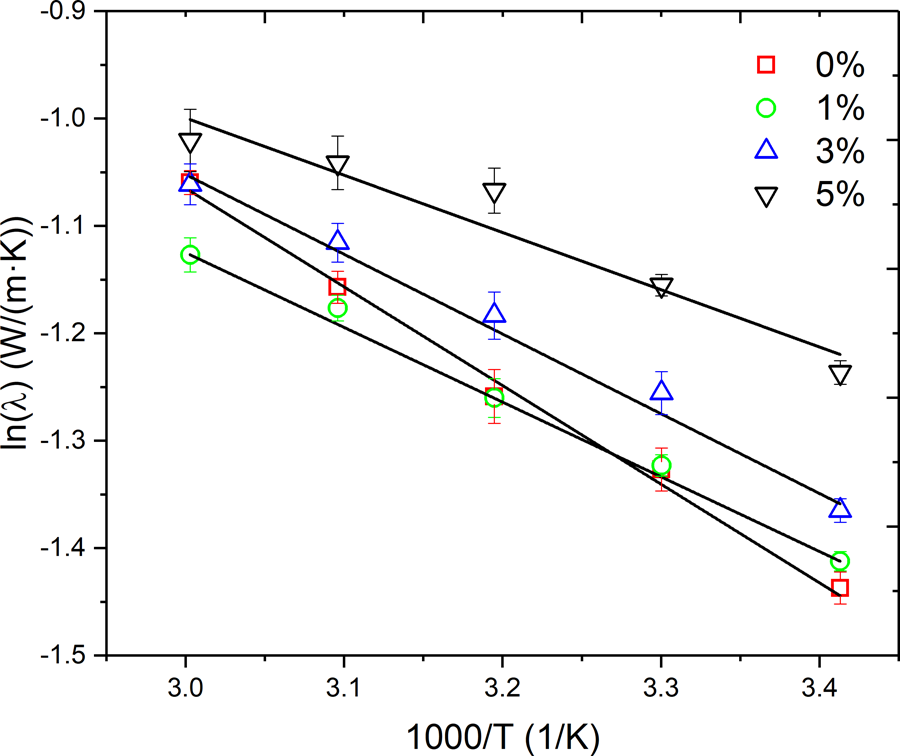
Arrhenius plot: dependence of thermal conductivity on temperature.
Ea and λο of EVA/CNT composites.
EVA: ethylene vinyl acetate; CNT: carbon nanotubes.
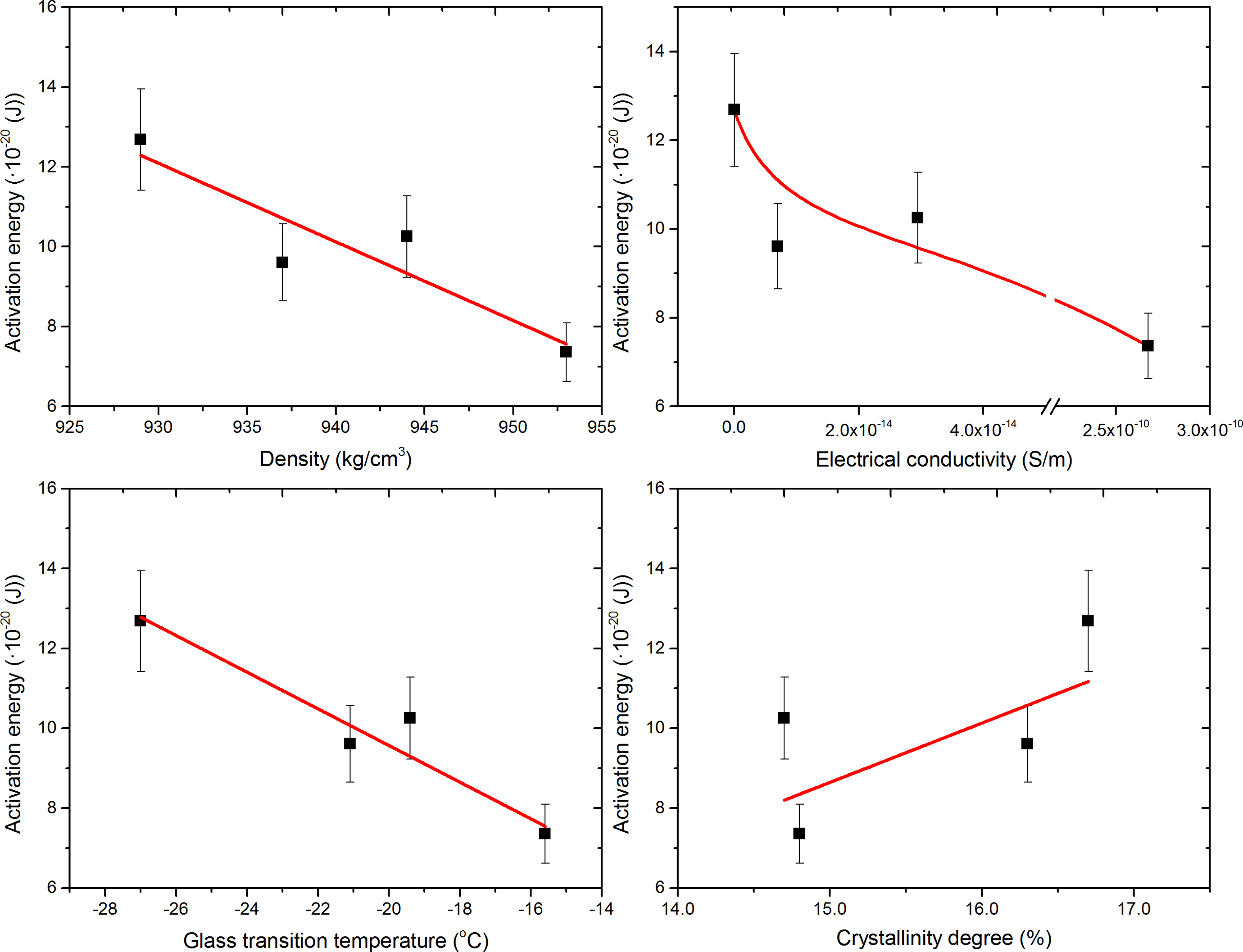
Activation energy dependences from EVA/CNT composites’ density, glass transition temperature, electrical conductivity, and crystallinity degree.
As expected, the tensile properties of the EVA reinforced with CNT are remarkably improved (see Figure 7). The Young’s modulus E rises monotonically with the filler concentration. It indicates an almost 3-fold increase in Young’s modulus E and 2.2-fold increase in yield strength σ y at up to 5 wt% content. The strength at break σ b changes through the maximum value at 1 wt%. The agglomeration of the filler particles decreases the reinforcement efficiency. As it was revealed by the SEM (see Figure 2), CNT develops agglomerates at 1 wt%. The strain at break ∊ (%) decreased from 1650% to 1300% as 5% of CNT was introduced into the composite; thereby, the high ductility of the EVA/CNT composites remained. High strength and strain values for polymer composites are essential for the extrusion of blown films and the biaxial drawing of the packaging films. 59 Effective reinforcement is ensured through effective stress transfer between polymer matrix and filler particles with extremely high stiffness. 26 Along with a proper dispersion quality of the nanotubes, which determines the amount of matrix–filler interface available for interaction, the type and strength of interface interactions are the key parameters for achieving the intended property enhancements. 27 It is reported that the pristine CNT are likely to interact with the ethylene segments by a Van der Waals type interaction rather than by polar interaction with vinyl acetate units. 27 However, a polar interaction with the chain vinyl acetate units is observed upon addition of chemically functionalized CNT bearing acetate or hydroxyl moieties at the nanotubes’ surface. 25 It is worth noting that only a slight increase in stiffness is generally received when the CNT is poorly dispersed in the polymer matrix, hence particles agglomerations limiting the surface available for interfacial interaction and related chain mobility restriction. 29
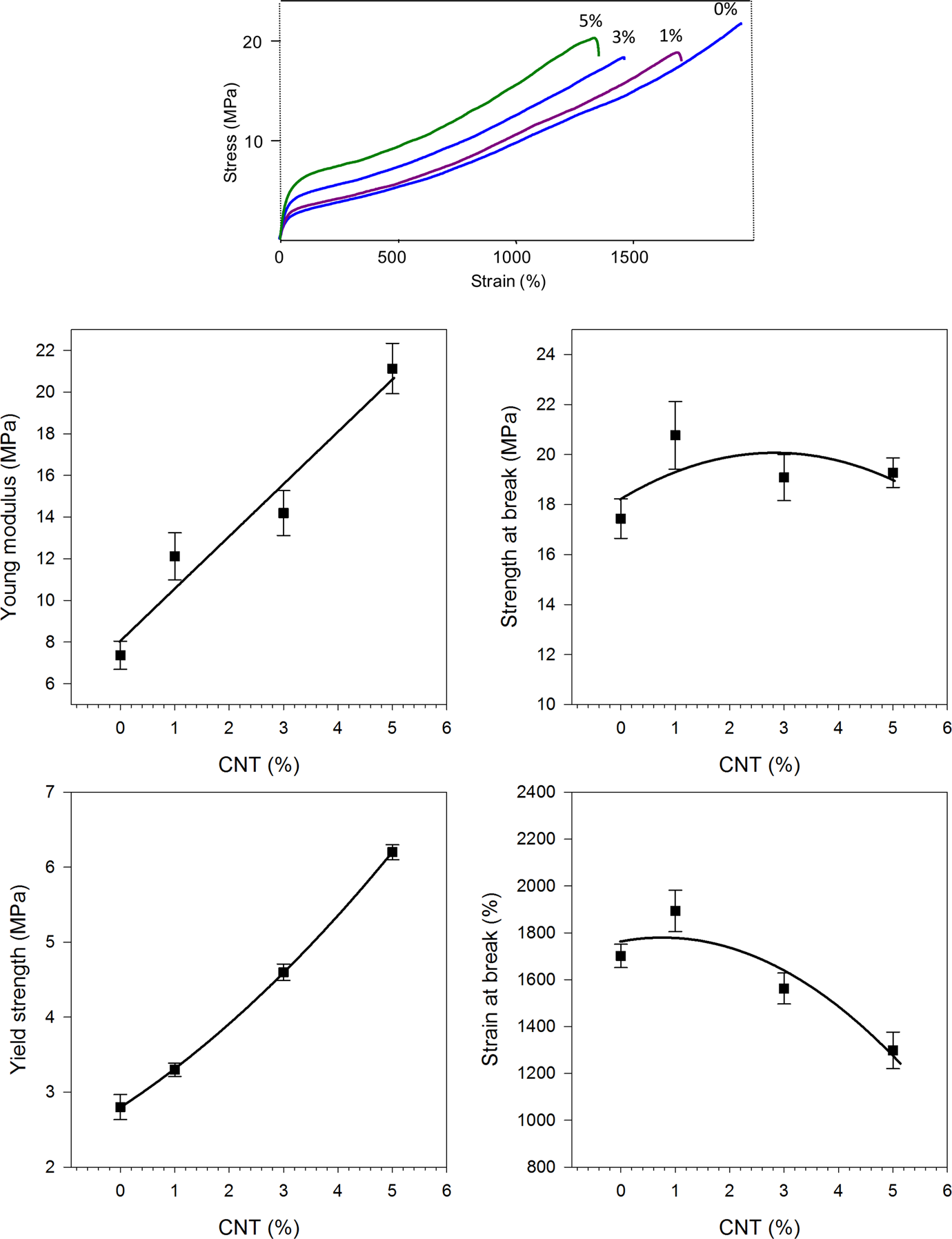
Mechanical properties for EVA/CNT composites loaded with different CNT contents: (a) stress–strain curves; (b) Young’s modulus; (c) strength at break; (d) yield strength, and (e) strain at break.
Conclusions
We report the high mechanical, dielectric, and thermal performance of CNT reinforced EVA composites, fabricated using conventional melt extrusion processing. CNT have extremely high stiffness, electrical conductivity, and surface area, ensuring strong interactions with polymer matrix and effective reinforcement. CNT addition to EVA lead to extremely high yield strength and Young’s modulus of the composites. The EVA composite produced, containing 5 wt% CNT, exhibited an almost 3-fold increase in Young’s modulus and 2.2-fold improvement of yield strength compared to neat EVA. However, the composite maintained high deformation properties—a ductility of 1300%. The SEM revealed agglomeration of CNT in the EVA/CNT composites. The composites gained excellent electrostatic discharge properties—surface resistivity of 108 Ω/square. The thermal conductivity of the composites was increased about 30% without losing the electrically insulating performance concluding from dielectric measurements. We state that the thermal conductivity of the EVA/CNT composites produced is dependent from the content of conductive filler, and also it is governed by the polymer intrinsic features as polymer density, crystallinity, and chain segmental mobility. The dielectric spectroscopy measurements revealed the appearance of the separate chain relaxation process for EVA/CNT loaded with 3 wt% and 5 wt% of CNT. The differential scanning calorimetry testified the increase in glass transition temperature of the polymer; while, the crystallinity degree has decreased. The incorporation of CNT into EVA leads to much enhanced mechanical properties of the composites, in addition to excellent surface electric charge dissipation, good thermal, and dielectric properties. These EVA composites reinforced with CNT are promising as electrically insulating materials with electrostatic discharge properties for various applications, including high-performance packaging films and coatings for protection of electrical and electronic equipment and devices.
Footnotes
Declaration of Conflicting Interests
The author(s) declared no potential conflicts of interest with respect to the research, authorship, and/or publication of this article.
Funding
The author(s) disclosed receipt of the following financial support for the research, authorship, and/or publication of this article: The financial support from the Riga Technical University scientific research project RTU ZP-2016/5 is gratefully acknowledged.