




Abstract
Isotactic polypropylene (iPP) composites containing magnesium oxysulfate whisker (MOSw) or lauric acid-modified MOSw (LA-MOSw) were prepared via melt mixing in a torque rheometer. Scanning electron microscopy pictures showed that the interface between MOSw and iPP matrix was defined, whereas a vague interface was seen in the iPP–LA-MOSw composites. Mechanical properties of these two groups of composites were investigated in terms of tensile, notched impact, and flexural behavior aspects for the purposes of studying toughening effect of MOSw and LA-MOSw. Tensile results showed that yield strength of composites further reduced with the presence of LA, indicating the decrease in interfacial interaction bewteen iPP matrix and MOSw. As such, LA-MOSw performed better than MOSw in toughening of iPP matrix. Flexural strength and modulus of iPP–MOSw composites increased sharply with the increase in MOSw content, while less dependence on the LA-MOSw content indicated that MOSw was deemed beneficial to increase the stiffness. In addition, flammability properties were investigated by cone calorimetry experiment. The results showed that the peak heat release rate apparently reduced with addition of MOSw or LA-MOSw. Besides, iPP–LA-MOSw composites showed higher specific extinction area values than iPP–MOSw composites, which meant the weaker smoke suppression effect of LA-MOSw. It was chiefly because of the incomplete combustion caused by the continuous and complete charred (MgO) shield. The presence of LA was another possible reason.
Introduction
Polypropylene (PP) is a general engineering plastic that can be divided into three kinds for the distribution of methyl: isotactic polypropylene (iPP), syndiotactic polypropylene (sPP), and atactic polypropylene (aPP). 1,2 All the three kinds of PP, especially for iPP, are widely used in numerous fields such as daily equipment, automobile industry, dielectric materials, construction, and so on 3,4 because of many attractive properties such as low density, corrosion resistance, electrical insulating properties, and so on. Nevertheless, the obvious defects limit its application in many professions. For example, PP fails to maintain toughness at low temperature, usually under the glass transition temperature, which is called the cold brittleness. 5 Moreover, PP is inherently flammable and also emits considerable smoke. 6 These two defects seem to be the biggest obstacles which restrict the range of PP application currently.
In order to overcome these two defects, numerous of PP composites have been prepared and studied by scholars. Aiming at the poor toughness behavior of PP, blending with other polymers such as ethylene propylene rubber, 7 polyisobutene, 8 and polybutadiene 9 all showed higher impact strength than neat iPP. Or blending PP with nylon not only increased the toughness but also ameliorated the abrasive resistance and heat resistance properties of matrix. 10 On the other hand, PP/inorganic filler composites also made impressive progress to improve the poor mechanical properties of PP matrix. For example, Zeng et al. 11 studied the effect of tetra-needle-shaped zinc oxide whisker on mechanical properties and crystallization behavior of iPP. They declared that zinc oxide whisker enhanced the mechanical and thermal properties of iPP and played a role of nucleating agent. In fact, there were many reports about PP-matrix composites reinforced with micro- or nano-cellulose. 12,13 Iwamoto et al. 13 announced that only surface-coated microfibrillated cellulose hardly enhanced the Young’s modulus and yield strength of composites. Extra addition of maleic anhydride grafted polypropylene to the composites resulted in 45% higher Young’s modulus and 50% higher yield strength than the neat PP.
To sum up, the current known fillers for PP matrix are hundreds, including fibers, whiskers, montmorillonoid, mica, clay, silica nanoparticles, carbon black, carbon nanotubes, graphene, calcium carbonate, and so on. 14 –18 Among them, magnesium oxysulfate whisker (MOSw, xMgSO4·yMg(OH)2·zH2O) is still impressive because of the outstanding mechanical properties, low density, cheap price, simply preparing and whiteness, and so on. For instance, Jiang et al. 19 studied the tensile properties of iPP–MOSw composites. The results showed that the optimal tensile properties were obtained at 20 wt% content of MOSw modified with zinc stearate, and no chemical bond was formed between iPP matrix and MOSw. What is more, MOSw decomposes endothermically, accompanied by the release of water vapor, which completely meets the requirement of a flame retardant additive. Actually, MOSw has been used in many other polymers, that is, low-density polyethylene, maleated polyethylene (MAPE), acrylonitrile butadiene styrene copolymer, and silicone rubber (SR) as a flame retardant. 20 –22 For example, Lu et al. 21 prepared halogen-free flame retardant MAPE/MOSw composites with organo-modified montmorillonite (OMT) and found a synergistic flame retardant effects of MOSw and OMT. Just for MOSw alone, the peak heat release rate (HRR) of 40 wt% MOSw sample decreased by 73% than that of neat MAPE, while the time to ignition (TTI) and the time to peak heat all increased significantly. Fang et al. 22 studied the flame retardant property of MOSw for the SR with microencapsulated red phosphorus as a synergist. The results showed that MOSw not only have effectively improved flame retardancy of SR but also obviously influenced on the elongation at break.
Therefore, MOSw is considered as an ideal candidate to overcome the two biggest barriers of PP, unlike other flame retardants such as magnesium hydroxide, aluminium hydroxide, and so on, 23,24 which always lead to the dramatic reduction in mechanical properties of iPP matrix. For example, Qu et al. 25 found that addition of Mg(OH)2 and Al(OH)3 into PP matrix apparently improved the flame retardant properties of PP but decreased the mechanical properties at the same time. Wang et al. 26 declared that the flame retardant properties of PP matrix ameliorated with incorporation of melamine formaldehyde resin-coated ammonium polyphosphate (MFAPP) and magnesium hydrate-encapsulated red phosphorus (Mg(OH)2-en-P), while the tensile strength decreased to 24.15 MPa. In this article, iPP–MOSw composites were prepared via melting mixing in a torque rheometer as well as iPP– lauric acid (LA)-MOS composites in which LA acted as a modifier. The mechanical properties including tensile, Charpy notched impact, and flexural behaviors were investigated and discussed in detail. It was aimed at studying the difference effect between MOSw and LA-modified MOSw (LA-MOSw LA-MOSw on toughening of iPP. Moreover, the effect on the fire performance of MOSw or LA-MOSw-filled iPP composites was researched using cone calorimetry.
Experimental
Materials
iPP (T30 S) was purchased from Maoming Petrochemical Co., Ltd., Maoming, China. It has a melt flow rate of 3.7 g/10 min (230°C, 2.16 kg−1). LA (chemically pure) was purchased from Sinopharm Chemical Regent Co., Ltd., Shanghai, China. Antioxidant 1010 (95.0%) was purchased from Tokyo Chemical Industry (TCI), Tokyo, Japan. MOSw with a diameter of 0.5∼1 μm and a length of 10∼50 μm was obtained from a procedure described as follows: magnesium sulfate and sodium hydroxide were mixed in aqueous solution by the molar ratio of 0.8:1 and then heated and vigorous stirred for several hours. Impurities were removed by the step of centrifuging and washing with plenty of water. The product was obtained after drying at 60°C.
Preparation of iPP–MOSw and iPP–LA-MOSw composites
Surface modification of MOSw (Dang et al.) 27
Lauric acid-modified MOSw was prepared according to the procedure describe in our previous work. The MOSw was dispersed in distilled water in the proportion of 1.00 g to 50 mL water and then immersed in an ultrasonic bath at the power of 120 W for 1 h. Subsequently, the slurry of MOSw was obtained after 5 h for magnetic stirring. All these operations were performed at room temperature.
LA (5% weight fraction based on the MOSw) was dissolved in 95% ethanol solution. The LA-ethanol solution was added into the slurry of MOSw which had been heated to 70°C with magnetic stirring for 90 min. The product was cooled to room temperate, then filtered, and washed with plenty of ethanol and distilled water successively to remove excessive LA. The sample was collected and dried at 60°C in an oven for 12 h.
Preparation of PP composites
Before blending, all materials were dried at 70°C for 8 h to eliminate the effect of moisture. And then the iPP pellets, MOSw or LA-MOSw, and antioxidant 1010 were mixed based on a certain percentage with an RM-200C torque rheometer (HAPRO, Harbin, China) at 190°C with a rotor speed of 60 r/min for 15 min. The content of antioxidant 1010 was maintained at 0.2 wt% of iPP matrix, and the weight fractions of unmodified and LA-MOSw were 2.5 wt%, 5 wt%, 10 wt%, 20 wt%, and 30 wt%. Film samples with different thicknesses were obtained by compression molding with a XH-406B press vulcanizer (Xihua, Dongguan, China) at 190°C for 8 min without pressure and 7 min under a pressure of 15 MPa, subsequently. Then, the film samples were cooled to room temperature at the same pressure for 5 min. All the samples were stored in dry and at room temperature (23°C ± 2°C).
Characterization
Scanning electron microscopy
The samples were fractured in liquid nitrogen and the fractured surfaces were observed after sputtering coated with gold with a JSM-6701F (JEOL Ltd., Japan) field emission scanning electron microscope (FESEM) from JEOL using an acceleration voltage of 5.0 kV.
Measurement of mechanical properties
Tensile strength and modulus were measured at room temperature with CMT 6000 Electronic Universal Testing Machine (MTS Ltd., China) according to ISO 527-2: 1993, using dumbbell-shaped specimens (1BB) with length of 30 mm and thickness of 2 mm. The test speed was 10 mm/min for strength test and 1 mm/min for modulus test.
Charpy notched impact strength was measured at room temperature with XJJD-50 Charpy Impact Tester (Chengde Jinjian Ltd., China) using a 7.5 J hammer according to ISO 179-1: 2000. The specimens were cut with the dimensions of 80 × 10 × 4 and V-shaped gap of 2 mm in the middle of samples.
Flexural strength and modulus were measured at ambient temperature with CMT 6000 Electronic Universal Testing Machine according to ISO 178: 2001. The specimens were cut with dimensions of 80 × 10 × 4 mm. The test speed of both strength and modulus were 1 mm/min. The results for each measurement were the average value of six samples test at least.
Measurement of flame retardant properties
The cone calorimetry experiments were carried out using a FTT0030 cone calorimeter (Fire Testing Technology Co., United Kingdom) according to ISO 5660, on a 3-mm thick 100 × 100 mm plaques, under a heat flux of 50 kW/m2. The cone data obtained are reproducible to within ±10%.
Results and Discussion
SEM analysis
It was well known that properties of composites strongly depended on the distribution of fillers, especially for the mechanical properties. Hence, we investigated the dispersed state of MOSw and LA-MOSw in iPP matrix by SEM. Figure 1 showed the SEM pictures of MOSw and LA-MOSw and the cryo-fractured surface of iPP composites in both cases. Our previous study confirmed that modification of MOSw by LA not only altered the surface wettability but also reduced the aggregation of MOSw, which was obviously seen in Figure 1(a) and (b). 27 As a result, the interface between MOSw and iPP matrix was defined, whereas a vague interface was seen in the iPP–LA-MOSw composites for the better compatibility. In particular, this phenomenon was not significant at lower filler content as shown in Figure 1(c) and (d), but the fracture surface of iPP–LA-MOSw composite was still more smooth than iPP–MOSw composite. However, as shown in Figure 1(e), there were abundant neatly arranged whiskers in the 30 wt% MOSw–iPP composite, which might even interdict the continuous phase of iPP matrix, which lead to completely different mechanical properties. It was supposed that the aligned whiskers - resulted from the agglomerations of MOSw. The agglomerated whiskers concentrated stress and acted as the point of initiating crack and finally resulted in the fracture of iPP specimen. 28 By contrast, the whiskers in 30 wt% LA-MOSw–iPP composite were still distributed evenly as shown in Figure 1(f). Therefore, it can be said that LA-MOSw showed better compatibility and dispersity in iPP matrix than MOSw, especially at higher content.
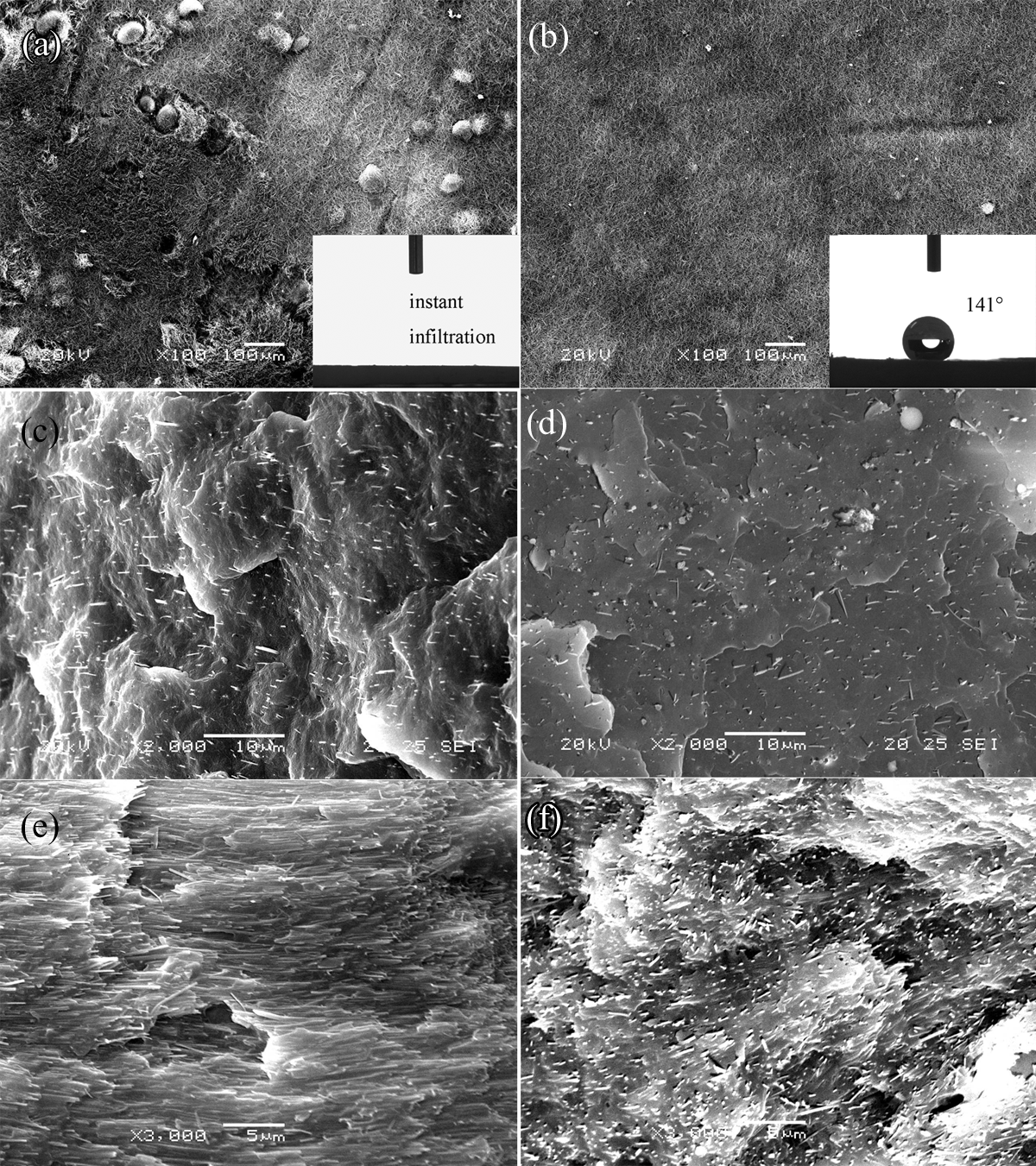
SEM micrographs of (a) MOSw and (b) LA-MOSw; the cryo-fractured surface of 2.5 wt% PP/MOSw and PP/LA-MOSw showed respectively in (c) and (d); the cryo-fractured surface of 30 wt% PP/MOSw and PP/LA-MOSw showed respectively in (e) and (f). SEM: scanning electron microscopy; MOSw: magnesium oxysulfate whisker; LA-MOSw: lauric acid modified MOSw; PP: polypropylene.
Mechanical properties
Tensile properties
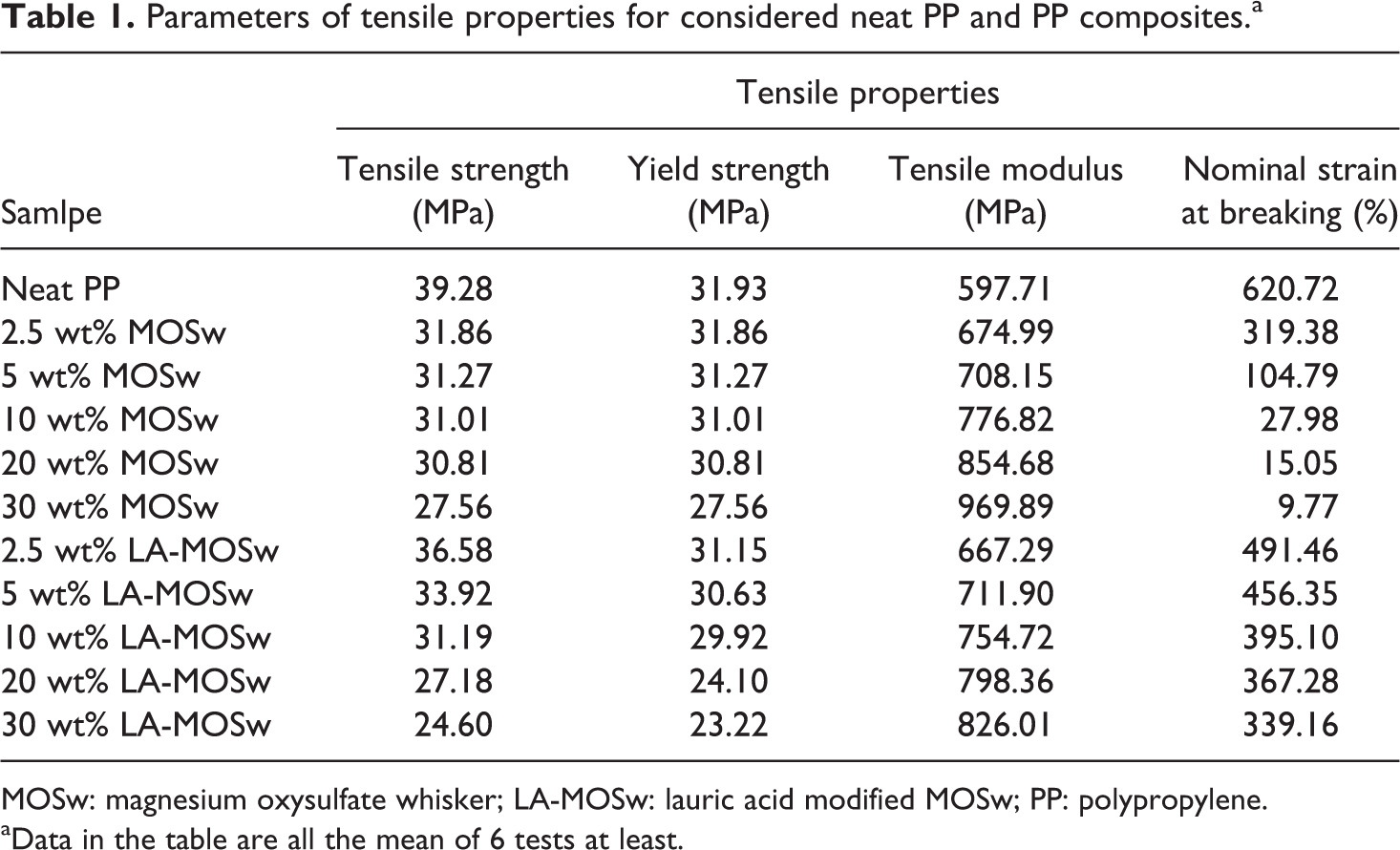
Figure 2 presented the tensile stress–strain curves for PP–MOSw composites and PP–LA-MOSw composites. The parameters of tensile properties for considered neat PP and PP composites are listed in Table 1. It was well known that iPP, as a semi-crystalline polymer, was made up of lamellae with lapped chains. When cold drawing was forced on iPP specimens, the entanglement chains disengaged by initial spherulites destruction and subsequently reorganized the crystalline regions. 29 As a result, the strain increased continuously by a smaller stress than the yield stress which was so-called strain softening. 30 After the initial stage of strain softening, the lamellae were broken down and rearranged along with the tensile direction, resulting in fibrillation of the necking zone of specimens, which was easily observed on the fracture surface. The multiple microfibrillars lead to extremely difficult deformation since the high strength of individual microfibrils. 29 Hence, the tensile stress increased with the increase of strain, even beyond the yield stress. 31 To be specific, for neat iPP, the yield strength was 31.93 MPa, but the tensile strength was up to 39.28 MPa.
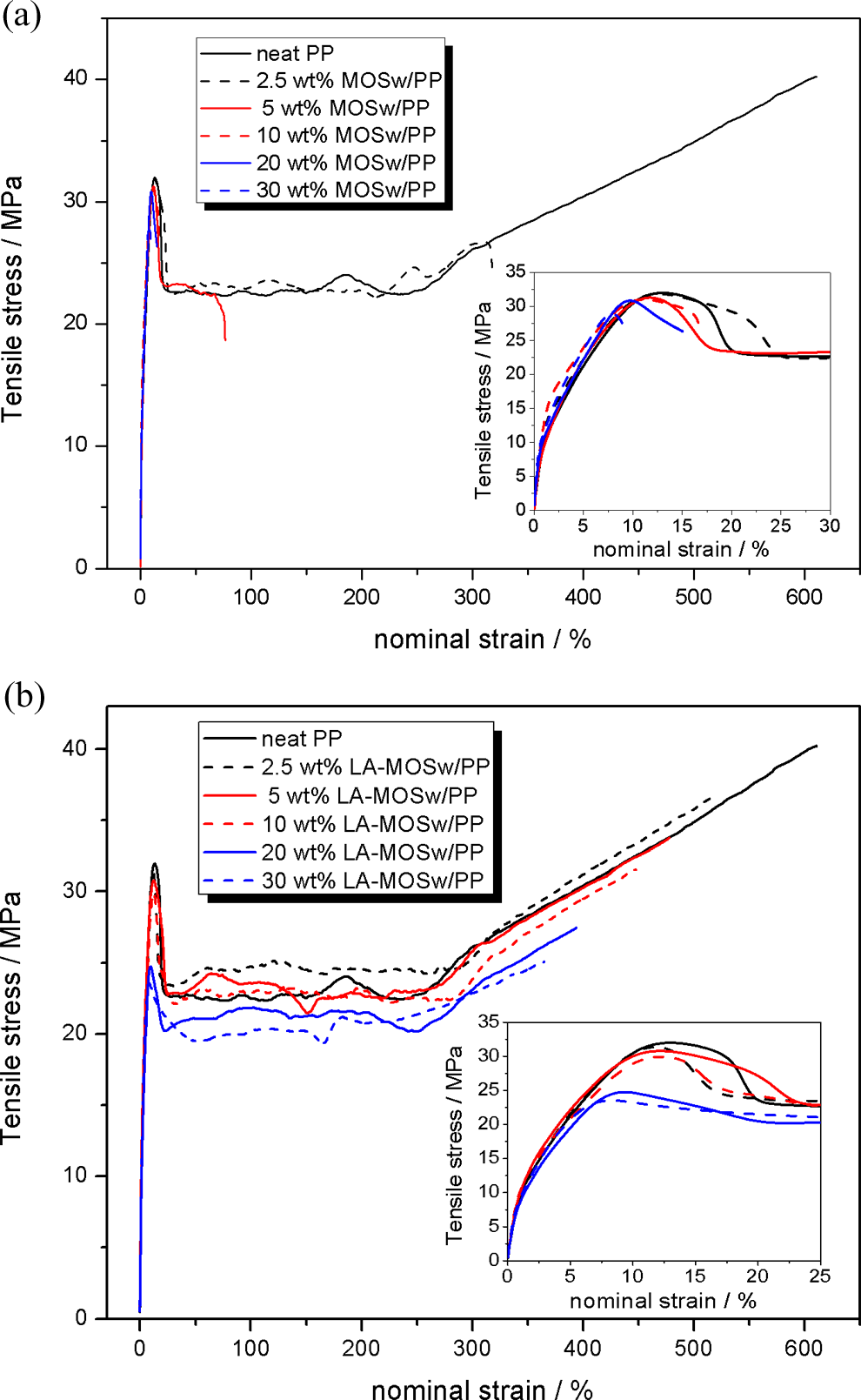
Tensile stress–strain curves of PP composites by varying content of (a) MOSw and (b) LA-MOSw. MOSw: magnesium oxysulfate whisker; LA-MOSw: lauric acid modified MOSw; PP: polypropylene.
Parameters of tensile properties for considered neat PP and PP composites.a
MOSw: magnesium oxysulfate whisker; LA-MOSw: lauric acid modified MOSw; PP: polypropylene.
aData in the table are all the mean of 6 tests at least.
Figure 3 and Table 1 showed that the tensile strength, tensile modulus, and nominal strain at breaking all decreased gradually but tensile modulus increased mildly with MOSw and LA-MOSw loading. It was very interesting to trace the variation in the tensile strength with filler content. Two regions in the curves can be distinguished, the first region occurred before 10 wt% filler content and the second region took place in the 10–30 wt% interval. At lower filler content, the tensile strength of iPP–LA-MOSw composites was always higher than that of iPP–MOSw composites due to the strain-hardening effect of iPP–LA-MOSw composites. In the contrast, iPP–LA-MOSw composites showed lower tensile strength than iPP–MOSw composites at higher filler content because of the much poorer interfacial interaction between LA-MOSw and iPP matrix as well as the smaller yield strength of iPP–LA-MOSw composites.
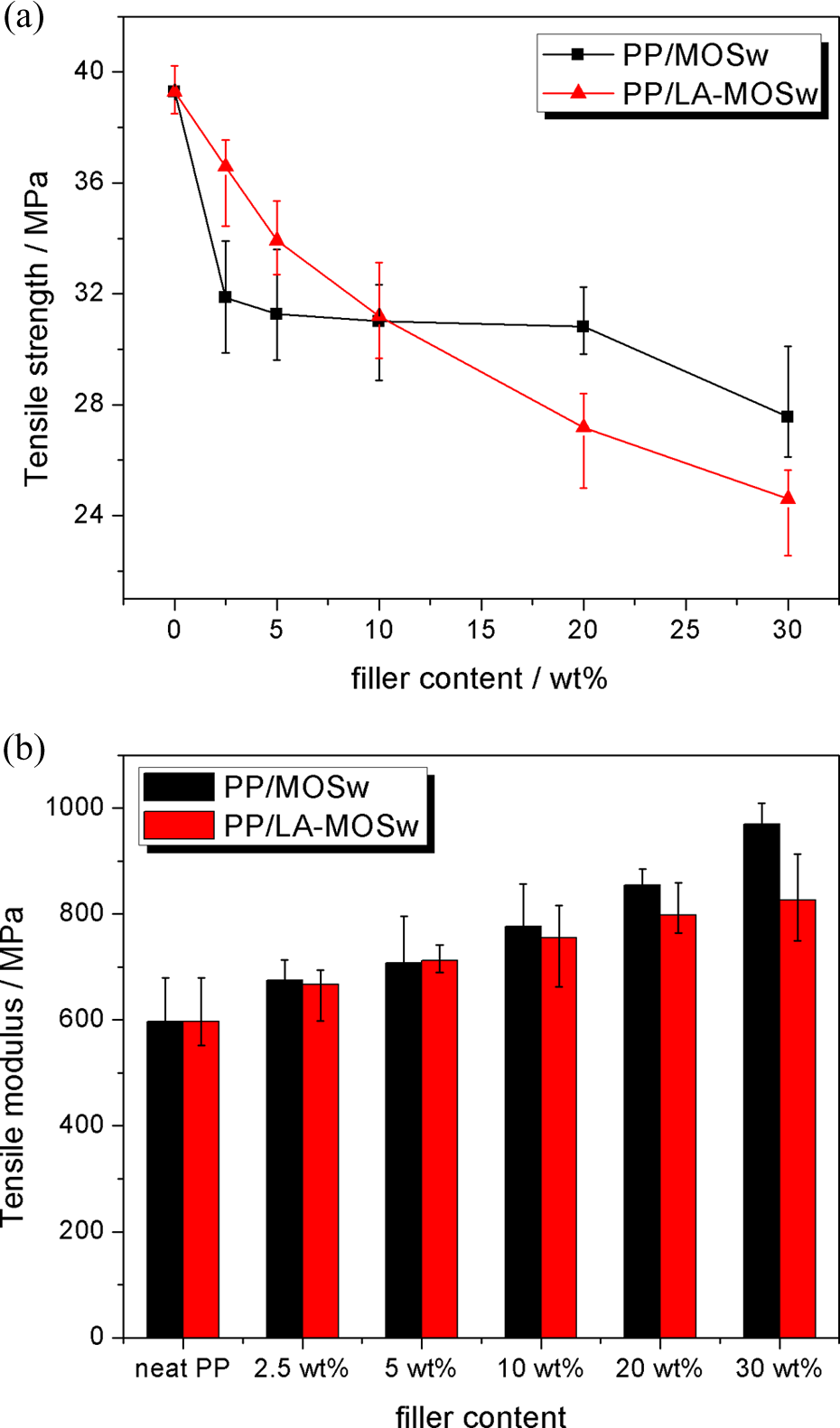
Influence of MOSw and LA-MOSw on (a) tensile strength and (b) tensile modulus of PP composites. MOSw: magnesium oxysulfate whisker; LA-MOSw: lauric acid modified MOSw; PP: polypropylene.
In fact, the extent of the interfacial interaction could be quantitatively characterized by the Turcsányi method as follows 32 :

or

where σ yc and σ yp were yield strength of composite and polymer matrix, respectively; ϕ f was volume fraction of particles; and B was a parameter characterizing interfacial interaction which can be determined by the fitting of equation (2) to experimental points. As far as the Turcsányi method is concerned, a higher B is associated with a stronger interfacial interaction. Figure 4 showed the smaller B of iPP–LA-MOSw composite than iPP–MOSw composite. Hence, the presence of LA decreased the interfacial interaction bewteen iPP matrix and MOSw. The similar results were also reported by Zhang et al. 29 and Turcsányi et al. 32
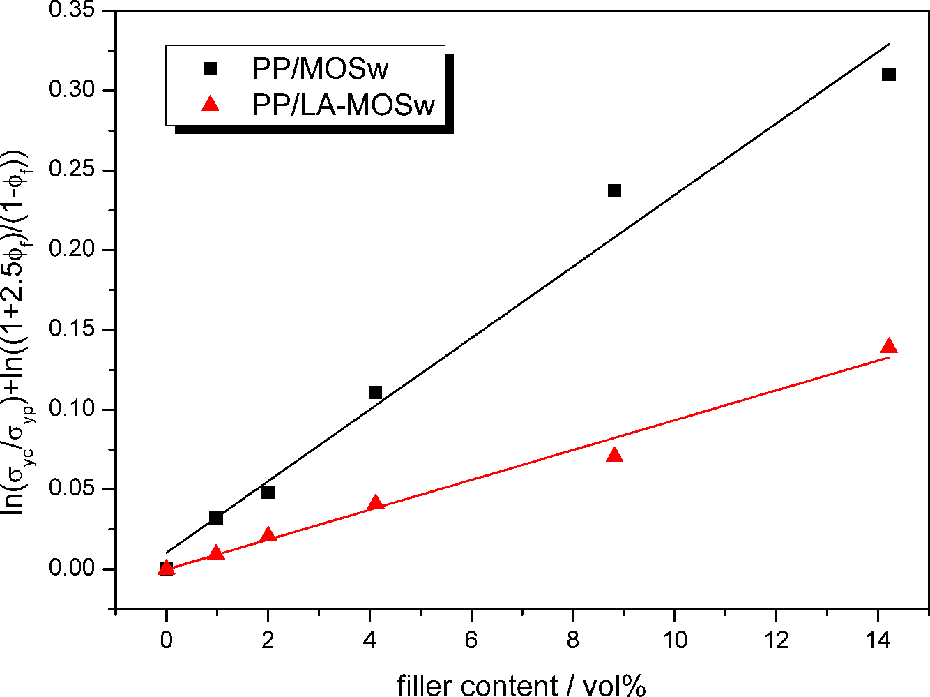
Plots of ln(σ yc /σ yp ) + ln((1 + 2.5φ f )/(1 – φ f )) as a function of φ f .
Figure 3(b) showed that the tensile modulus of iPP–MOSw composites was higher than that of neat iPP and also higher than iPP–LA-MOSw composites. The reasons of this phenomenon were likely due to the rigidity of MOSw themselves and the MOSw–MOSw hydrogen interactions of the aggregations. 33 Despite the inhomogeneous distribution of the MOSw in iPP matrix, it seemed that an effect of the MOSw–MOSw interaction on the tensile modulus could not be ignored.
Charpy notched impact properties
Figure 5 showed the variation in Charpy nothced impact strength of iPP composites with different MOSw or LA-MOSw content at ambient temperature. The strength of both iPP–MOSw and iPP–LA-MOSw composites increased initially and then decreased, and the critical values were achieved at 10 and 20 wt%, up to ca. 2.73 and ca. 4.90 kJ/m2, respectively. The neat iPP was brittle with a notched impact strength of only 1.71 kJ/m2. Obviously, the Charpy notched impact property of iPP matrix was greatly improved by addition of MOSw or LA-MOSw.
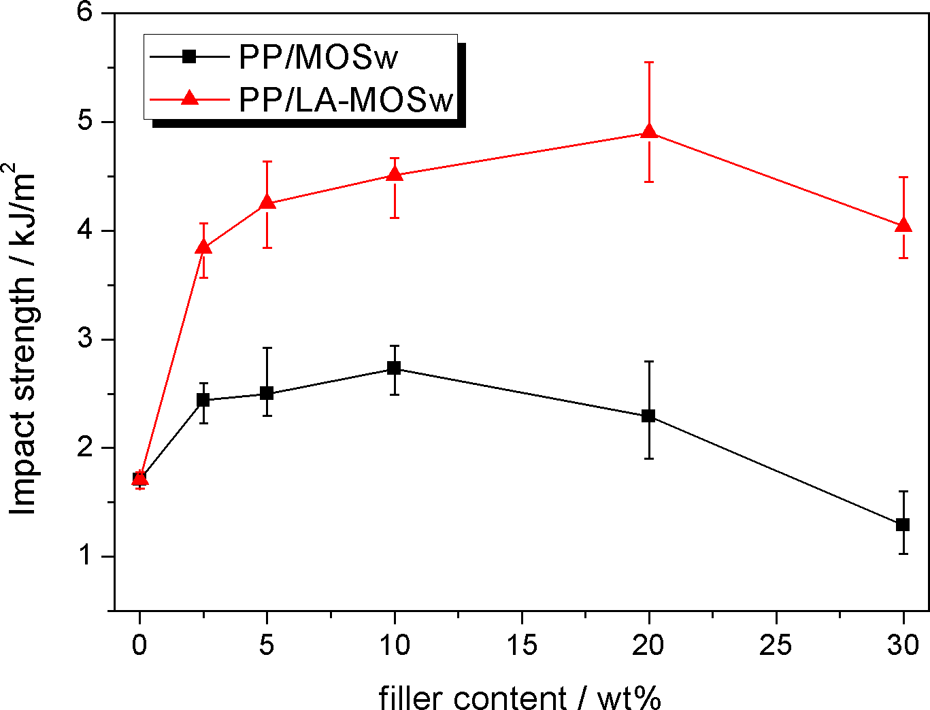
Impact strength variation of PP composites filled with different contents of MOSw and LA-MOSw. MOSw: magnesium oxysulfate whisker; LA-MOSw: lauric acid modified MOSw; PP: polypropylene.
Figure 6 showed the SEM mircographs of the impact-fractured surface of neat iPP and iPP composites. It must be pointed out that all fractured surfaces were relatively flat from a macroscopic view, and no significant stress-whitening zone was seen. The region near the notch root was so called slow crack growth region, which is presented in Figure 6 at high magnification. It can be seen from Figure 6(a) and (b) that neat iPP exhibited remarkable brittle fracture characteristics. Lots of voids appeared in the slow crack growth region of iPP–MOSw composite, which was caused by the debonding around the aggregated MOSw domains as shown in Figure 6(c) and (d). This was much like the cavitation mechanism in rubber-toughed system as far as we knew. 18 It should be noted that the cavitation mechanism was usually appropriate for the particle fillers (under 5 μm), and the aggregated MOSw acted as approximate particles. Gaymans et al. (2003) considered that the cavitation mechanism consisted of three stages: stress concentration, debonding, and shear yielding. As for these composites, MOSw acted as stress concentrators at first, due to the different elastic properties of MOSw and iPP matrix. And then stress concentration gave rise to buildup of three-dimensional stress around the MOSw and led to debonding at the MOSw–iPP interfaces. The voids caused by debonding altered the stress state in iPP matrix which reduced the sensitivity toward crazing, since the volume strain was released. Thus, the composites were able to dissipate large quantities of energy upon fracture. In theory, strong adhesion and interaction between fillers and polymer matrix was not always conducive to toughening. Zhang et al. 29 reported an increase in impact strength by addition Polyoxyethylene Nonyphenol (PN) modifier into iPP–CaCO3 composites with the reduction in interfacial interaction of iPP matrix and CaCO3 particles. Tai et al. 34 also found that a weaker filler–matrix interface was favorable for toughness enhancement. In our previous work, the interfacial interaction between iPP matrix and MOSw was reduced by the presence of LA. Consequently, the Charpy notched impact strength of iPP–LA-MOSw composites was further improved compared to iPP–MOSw composites. However, there were few signs of plastic deformation or debonding as shown in Figure 6(e) and (f). The reason for this phenomenon was likely due to the better dispersion of LA-MOSw in iPP matrix.
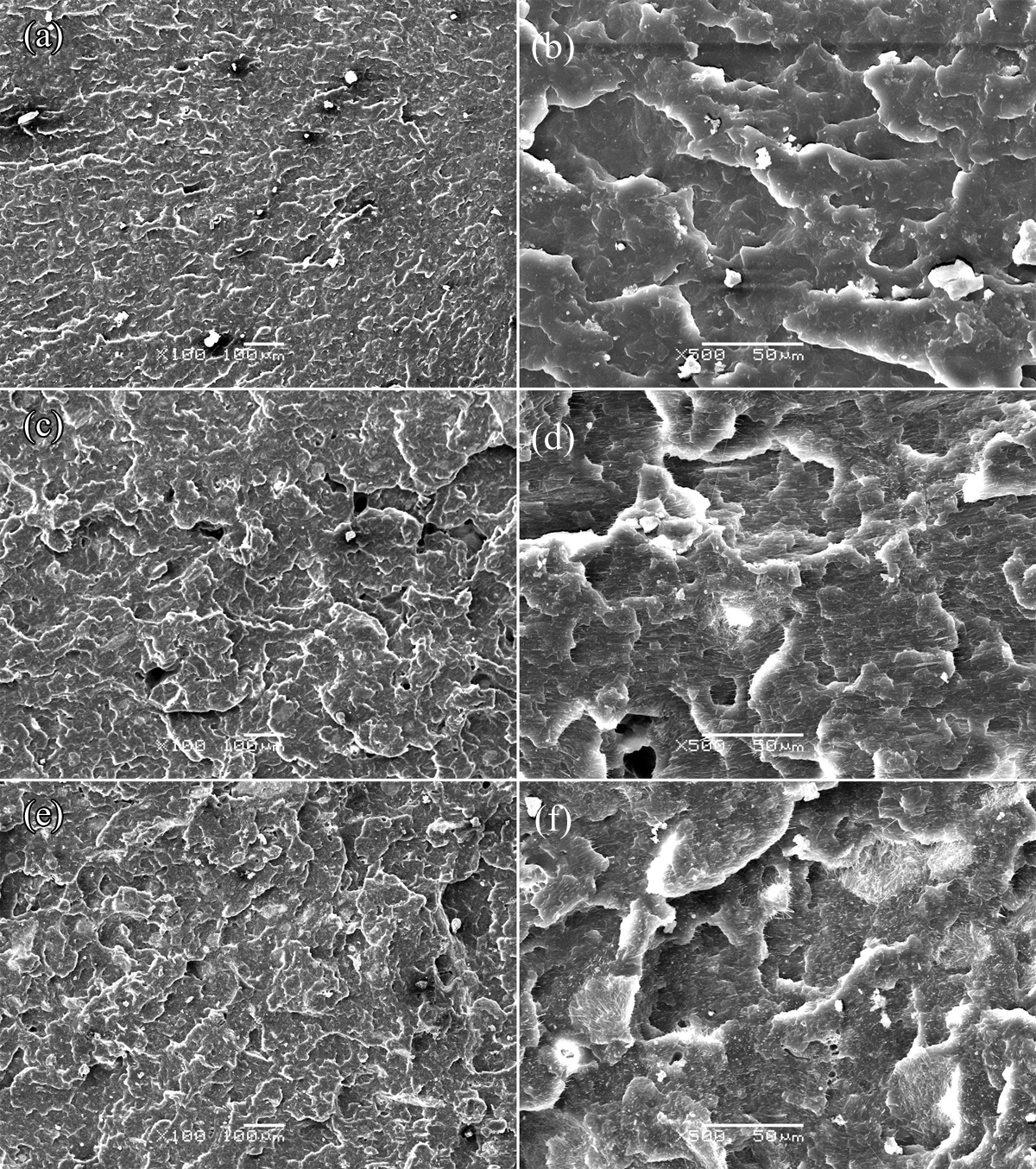
SEM micrographs of impact-fractured surface of (a) neat PP, (c) PP/MOSw and (e) PP/LA-MOSw composites viewed under low magnification. (b), (d) and (f) were corresponded respectively to (a), (c) and (e) viewed under high magnification. (The notch was at the right side of each image and the crack direction was from right to left.) SEM: scanning electron microscopy; MOSw: magnesium oxysulfate whisker; LA-MOSw: lauric acid modified MOSw; PP: polypropylene.
Flexural properties
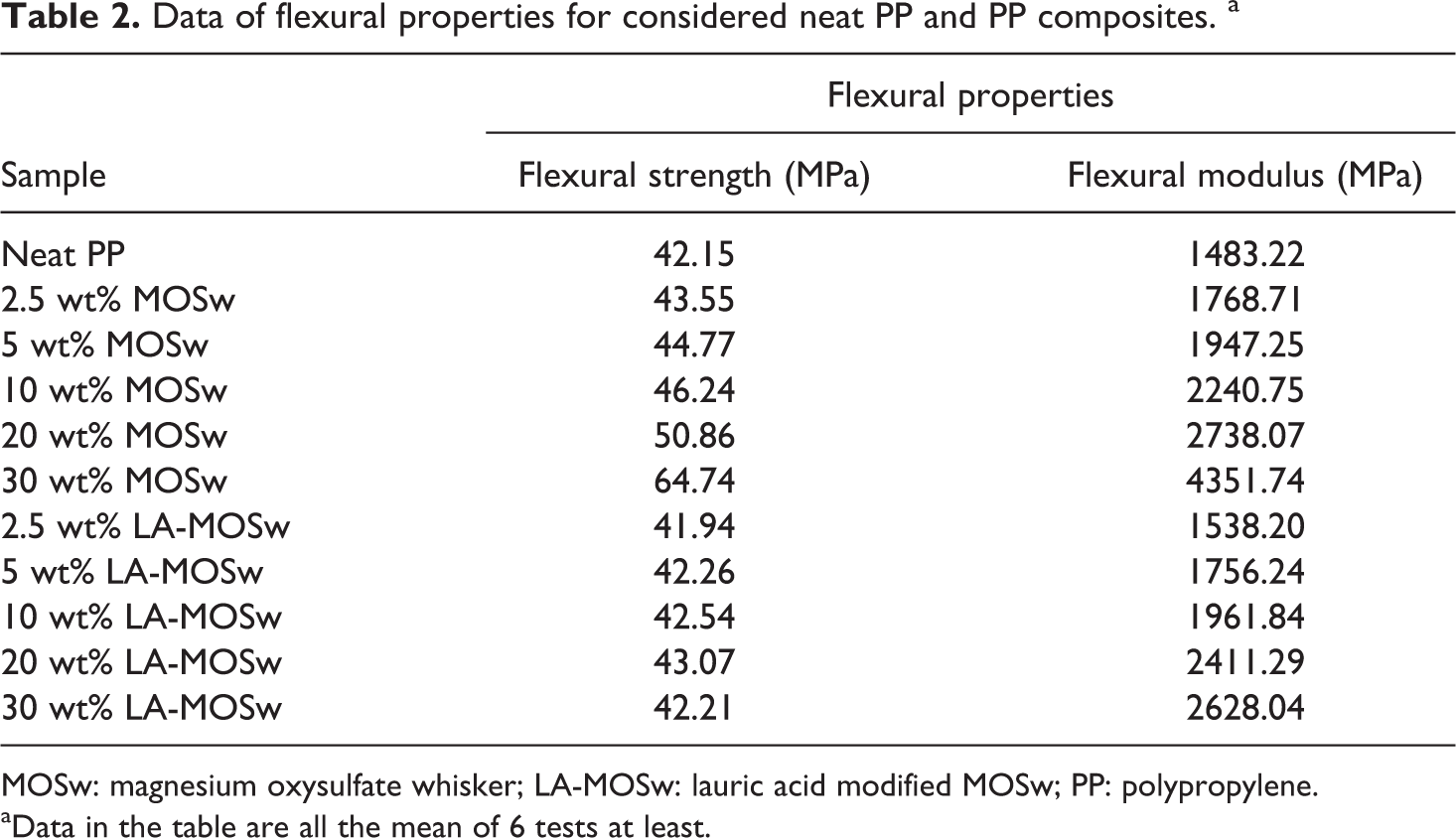
Flexural behaviors of neat PP and PP composites, selected respect to filler content, are reported in Figure 7 in terms of typical stress–strain curves. In all cases, no ultimate breaking was observed except for the composite containing 30 wt% MOSw. Actually, the variation in flexural modulus and strength as a function of the MOSw or LA-MOSw content is depicted in Figure 8(a) and (b), respectively. The corresponding parameter is listed in Table 2. As shown in Figure 8(a), flexural modulus apparently increased in the presence of LA-MOSw with further enhancement of the iPP–MOSw composites, probably due to the rigidity of MOSw themselves and the MOSw–MOSw hydrogen interactions of the aggregations, as mentioned earlier. 32 To be specific, the flexural modulus of composites containing 30 wt% MOSw and 30 wt% LA-MOSw were ca. 4351.74 and ca. 2628.04 MPa, increased by 193.40 and 77.18% than that of neat iPP, respectively.
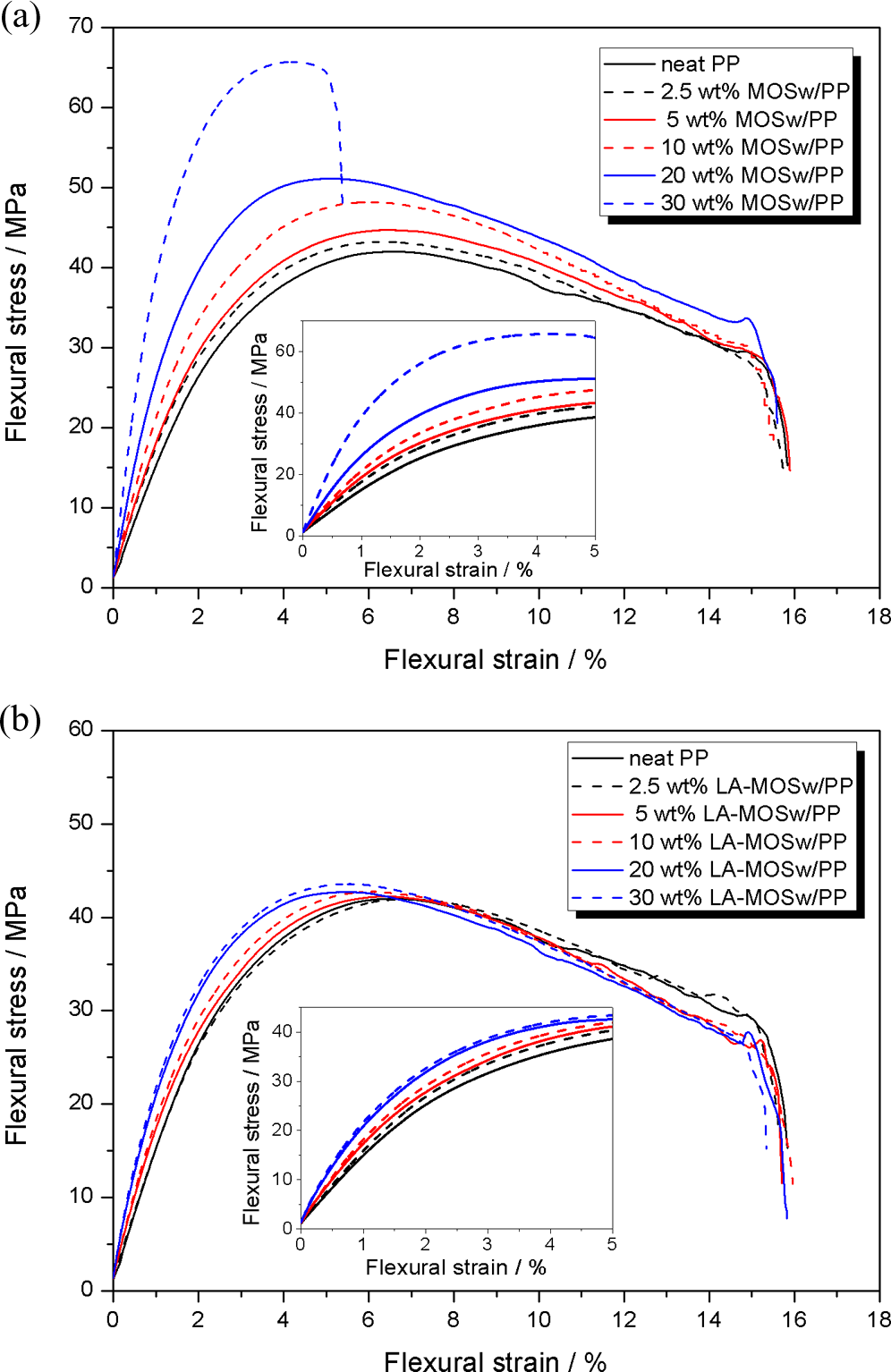
Flexural stress–strain curves of PP composites by varying content of (a) MOSw and (b) LA-MOSw. MOSw: magnesium oxysulfate whisker; LA-MOSw: lauric acid modified MOSw; PP: polypropylene.
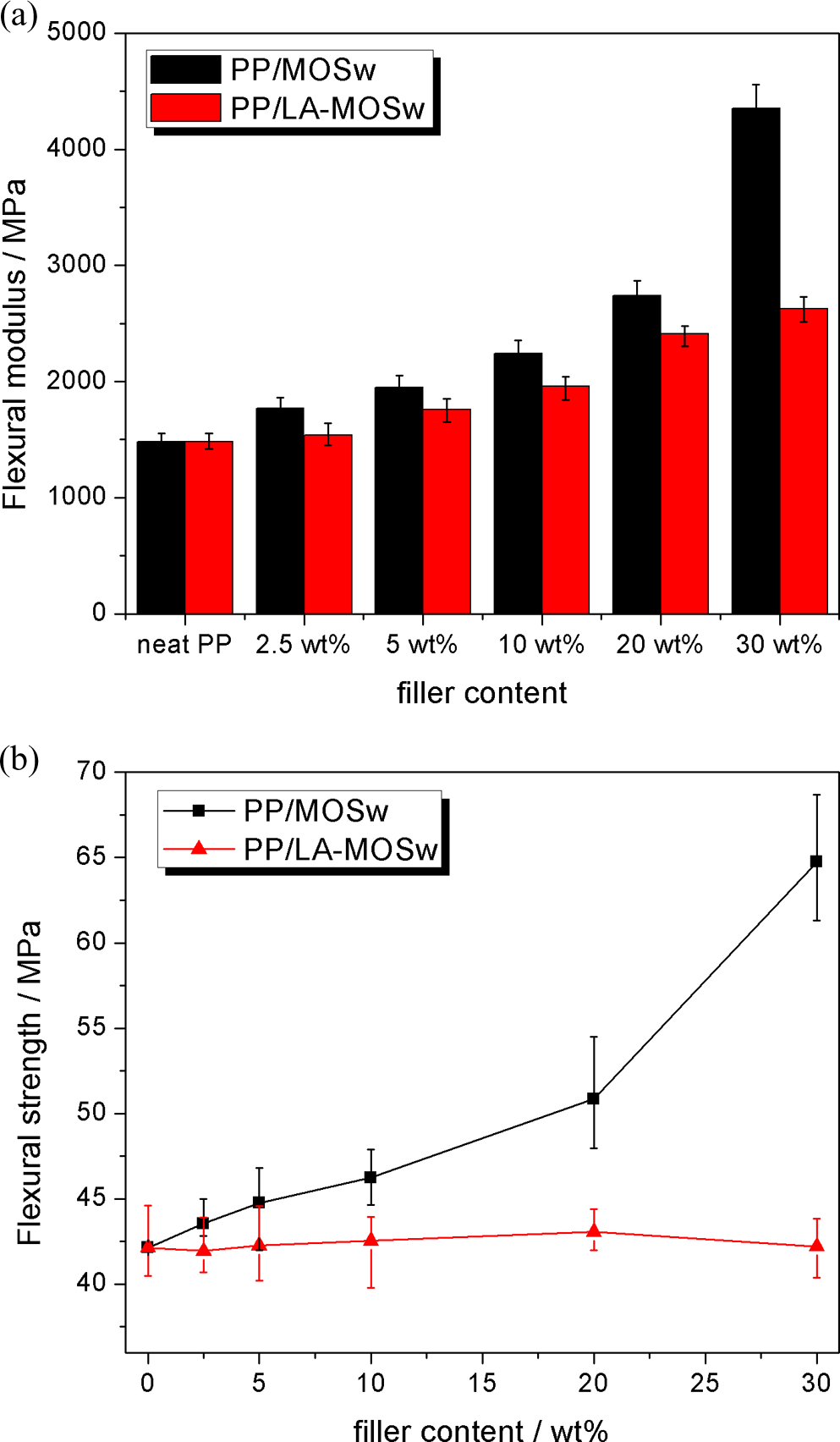
Influence of MOSw and LA-MOSw on (a) flexural modulus and (b) flexural strength of PP composites. MOSw: magnesium oxysulfate whisker; LA-MOSw: lauric acid modified MOSw; PP: polypropylene.
Data of flexural properties for considered neat PP and PP composites. a
MOSw: magnesium oxysulfate whisker; LA-MOSw: lauric acid modified MOSw; PP: polypropylene.
aData in the table are all the mean of 6 tests at least.
It is apparent that flexural strength of iPP–MOSw composites increased sharply with the increase in MOSw content, while the dependence of flexural strength on the LA-MOSw content was less. These two different trends of flexural strength indicated that LA modifier had a negative effect on the reinforcement of iPP matrix, which was in line with the reduction in interfacial interaction between MOSw and iPP matrix. Particularly, the ultimate broke composite containing 30 wt% MOSw was quite rigid so that brittle fracture happened at small strain. In more detail, the maximal flexural strength increased approximately up to 64.74 and 43.07 MPa for 30 wt% MOSw–iPP composite and 20 wt% LA-MOSw–iPP composite, respectively. Hence, it was considered that MOSw performed better than LA-MOSw in enhancement of stiffness of iPP matrix.
Flammability properties
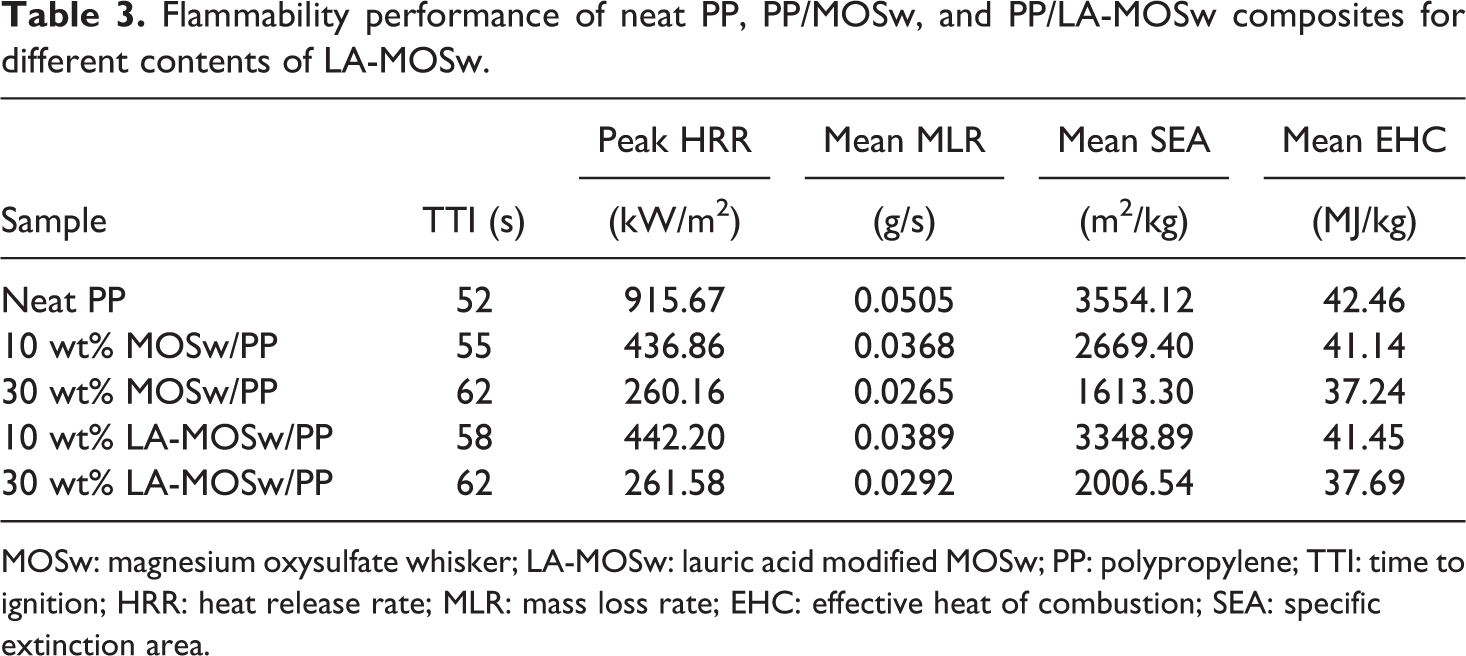
Except for the influence of MOSw or LA-MOSw on mechanical properties of iPP matrix, flammability properties of iPP composites were also worth to consider. Measurement with a cone calorimetry was one of the most universal approaches to study the flame-retardant properties of polymer materials. Specifically, the fire safety behavior was evaluated by HRR, especially for peak HRR. 21,35 Figure 9 showed the HRR curves for neat iPP, 10 wt% MOSw–iPP, and 30 wt% MOSw–iPP composites. The corresponding cone data were summarized in Table 3. Neat iPP was ignited in 52 s and showed a very sharp HRR curve at the time range of 50–350 s with a maximum of 915.67 kW/m 2 at 165 s. In comparison, the 10 wt% MOSw–iPP composite was ignited in 55 s and prolonged the combustion progress to 650 s. What is more, there was a 52% reduction in the peak HRR for 10 wt% MOSw–iPP composite, and the HRR curve showed a plateau around the peak (90–250 s). As for 30 wt% MOSw–iPP composite, the TTI was increased up to 62 s and the combustion progress was prolonged to 870 s. The peak HRR decreased 72% compared with neat iPP. These results suggested that MOSw acted as an effective flame retardant in iPP matrix.
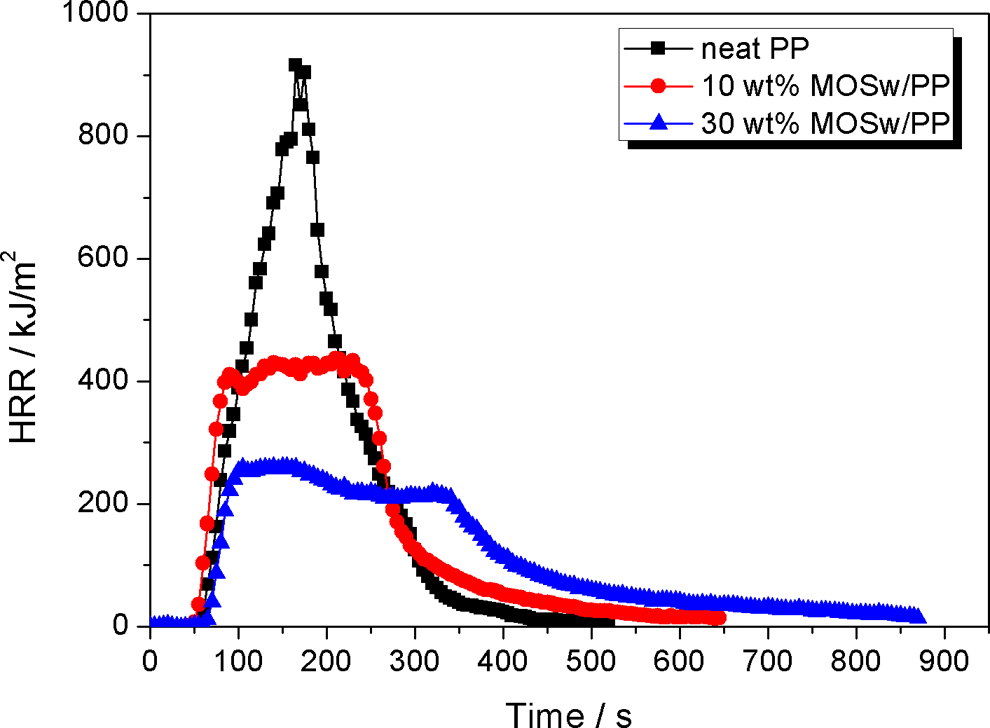
HRR curves for neat PP and its composites with 10 and 30 wt% MOSw. MOSw: magnesium oxysulfate whisker; PP: polypropylene; HRR: heat release rate.
Flammability performance of neat PP, PP/MOSw, and PP/LA-MOSw composites for different contents of LA-MOSw.
MOSw: magnesium oxysulfate whisker; LA-MOSw: lauric acid modified MOSw; PP: polypropylene; TTI: time to ignition; HRR: heat release rate; MLR: mass loss rate; EHC: effective heat of combustion; SEA: specific extinction area.
With reference to the iPP–LA-MOSw composites, they showed few different HRR features in contrast with iPP–MOSw composites at the same loading levels. From Figure 10 and Table 3, the 10 wt% LA-MOSw–iPP composite was ignited in 58 s and showed a plateau around the peak (90–250 s) of HRR curve at the time range of 50–400 s. The peak HRR value of composite containing 10 wt% LA-MOSw (442.20 kW/m2) was slightly more than that of 10 wt% MOSw (436.86 kW/m2).
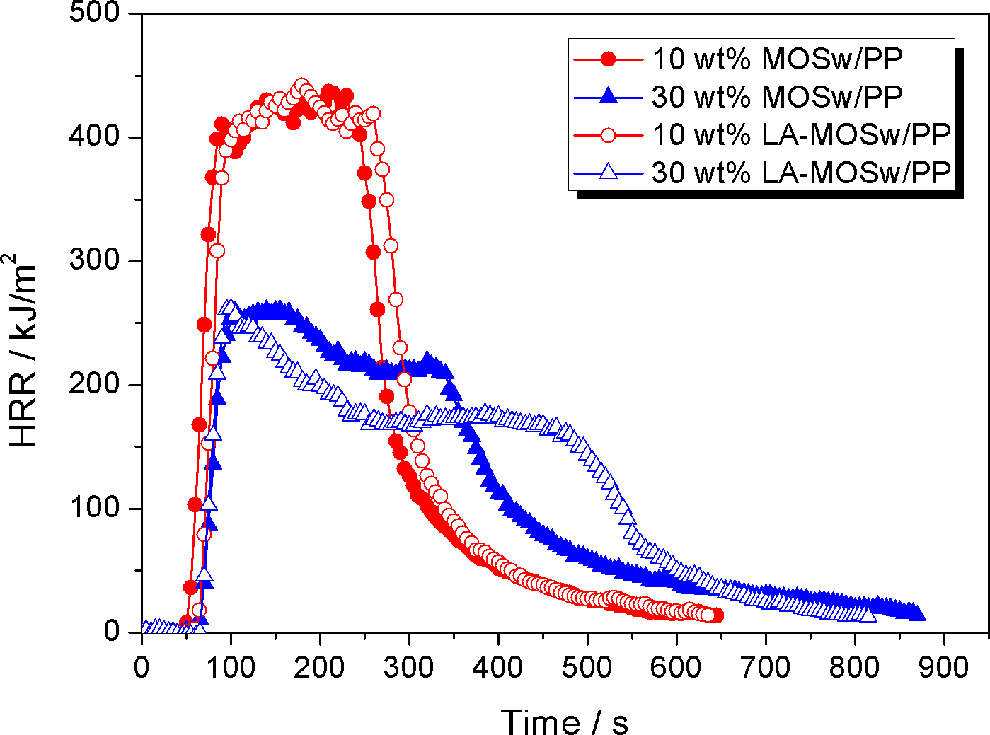
HRR curves for MOSw/PP and LA-MOSw/PP composites. MOSw: magnesium oxysulfate whisker; LA-MOSw: lauric acid modified MOSw; PP: polypropylene; HRR: heat release rate.
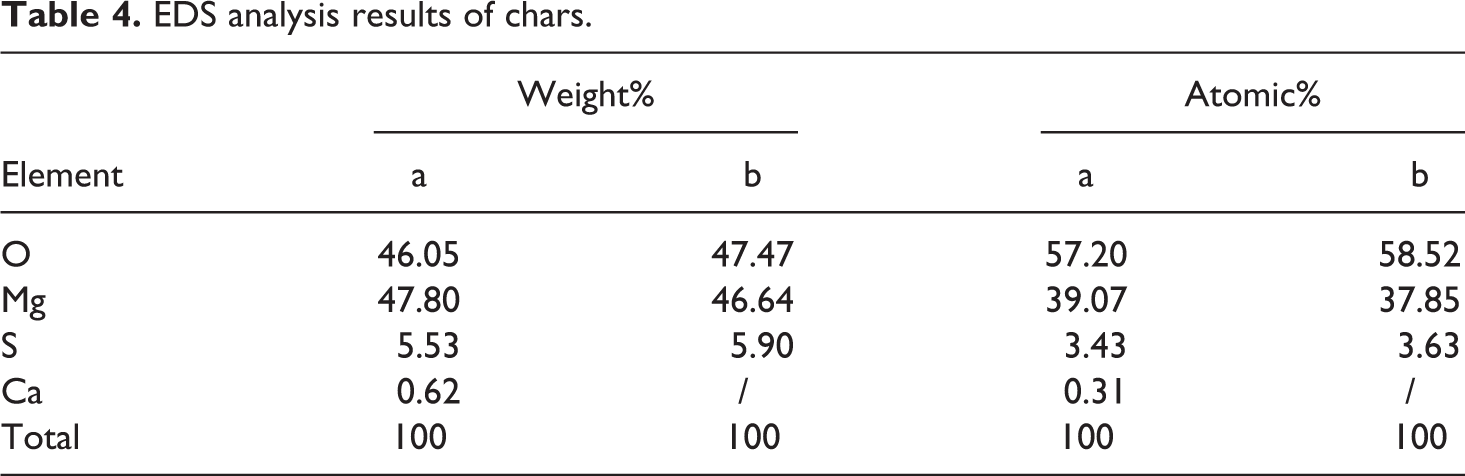
Figure 11 showed the digital photos of residual chars of iPP–MOSw and iPP–LA-MOSw composites after cone calorimeter tests. Obviously, the residual char of iPP–LA-MOSw composite was smooth and compact, while uneven cracks existed in the iPP–MOSw residual char. Hence, LA-MOSw presented more efficient in preventing the transportation of heat and volatile, which was beneficial with regard to the improvement in flammability properties. In order to understand the flame-retardant mechanism of MOSw, the chemical composition of the final residual chars was investigated by Energy Dispersive Spectrum (EDS), and the spectra and results are presented in Figure 11 and Table 4. It was found that the molar ratios of magnesium (Mg) to sulfur (S) were 11.4:1 and 10.4:1 for iPP–MOSw and iPP–LA-MOSw composites after combustion, respectively, with 6:1 for MOSw in theory. This increase in molar ratio of Mg:S indicated the reduction in S, probably released as SO3, according to the Thermogravimetry (TG) results presented in Figure 12. Hence, the residual MgO formed the charred shield and finally played an important role of inflaming retarding process.
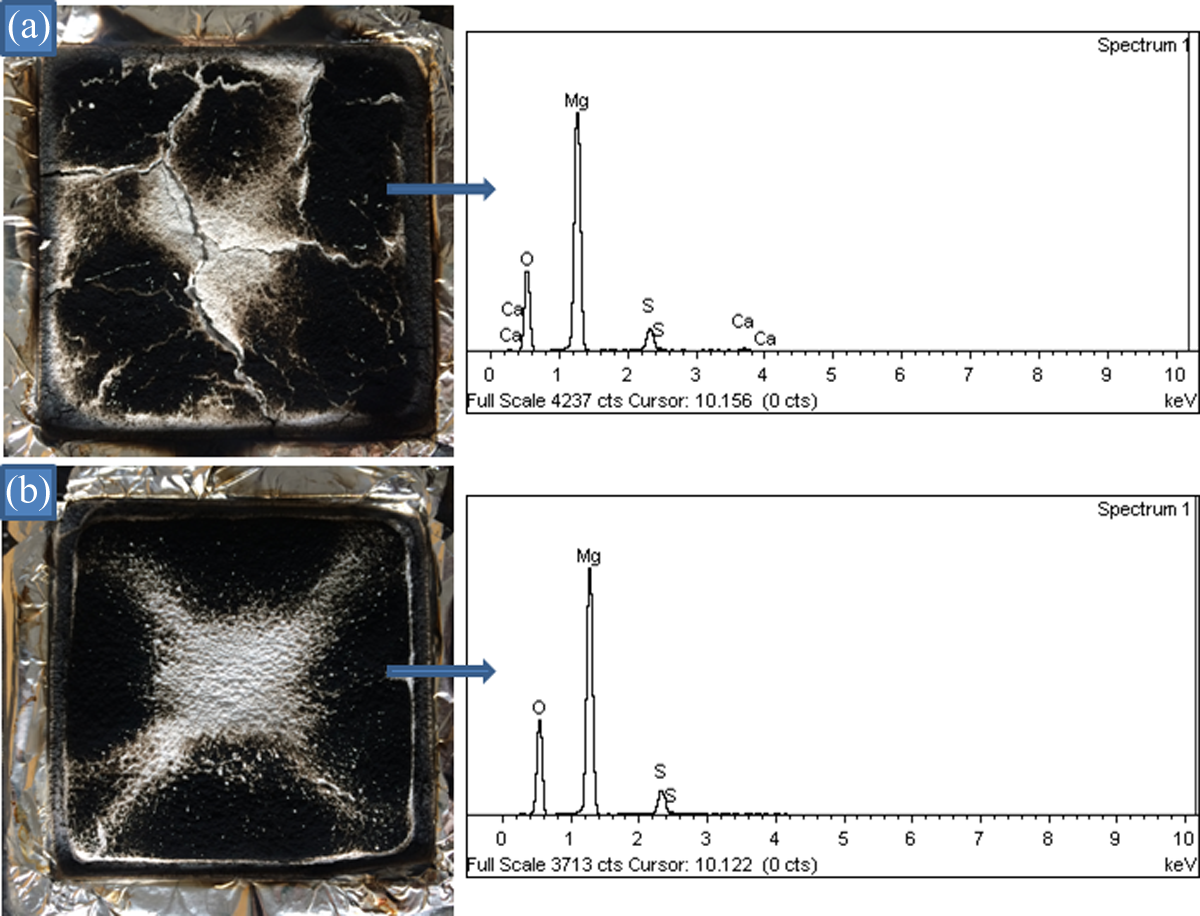
Digital photos and the EDS spectra of chars of (a) 30 wt% MOSw/PP and (b) 30 wt% LA-MOSw/PP composites. MOSw: magnesium oxysulfate whisker; LA-MOSw: lauric acid modified MOSw; PP: polypropylene.
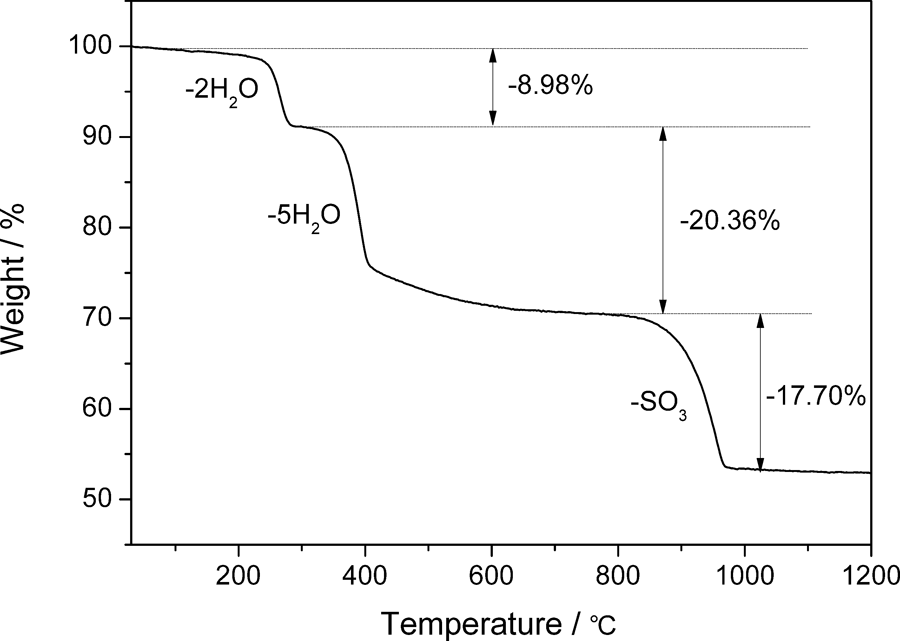
TG curve of magnesium oxysulfate whisker.
EDS analysis results of chars.
As such, the two separated HRR peaks for both 30 wt% iPP–MOSw and iPP–LA-MOSw composites were attributed to the formation and destruction of MgO shield. However, the HRR curve of 30 wt% LA-MOSw–iPP composite showed quite different tendency, especially after the HRR peak. One was the further reduction in HRR after the first peak, and the other was the prolongation of the plateau stage (220–480 s) compared to 30 wt% MOSw–iPP composite. The reason for these phenomena was likely ascribed to the dispersity of whiskers in the iPP matrix. Specifically speaking, it was easy to form numerous agglomerates of unmodified MOSw in the composites preparation progress, especially for the high MOSw loading, as discussed earlier. Hence, the protective charred shield formed from the degradation products of MOSw was not as continuous as possible. However, the evenly distributed LA-MOSw was more likely to form a continuous and complete charred shield, which was more effective in suppressing the heat and mass transfer.
The SEM micrographs of char residue of iPP composites with 30 wt% MOSw and LA-MOSw are presented in Figure 13. Obviously, the whiskers maintained fibrous structure after combustion and were covered by numerous decomposition products on the surface. It was apparent that the residue surface of iPP–LA-MOSw was not as smooth as iPP–MOSw residue. As seen from Figure 13(b), the particles absorbed on the surface of whiskers may be tar and soot particles, indicating incomplete combustion. 20,35,36 In addition, the other flame parameters of LA-MOSw–iPP composites were all little changed compared to MOSw–iPP at a certain loading, except for the obvious increase in specific extinction area (SEA). Generally speaking, the higher the value of SEA, the more the smoke yield. The extra SEA values were mainly due to the incomplete combustion process. And the presence of LA, which was a combustible fatty acid, also generated a part of smoke in the combustion process.
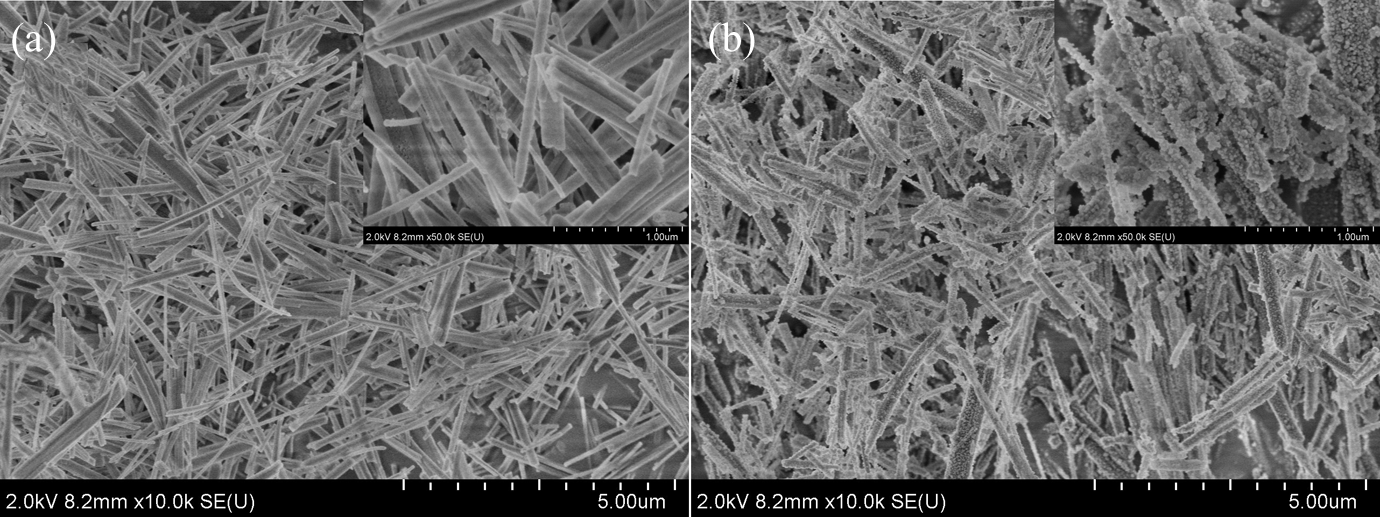
SEM micrographs of the char residue of (a) 30 wt% MOSw/PP and (b) 30 wt% LA-MOSw/PP. SEM: scanning electron microscopy; MOSw: magnesium oxysulfate whisker; LA-MOSw: lauric acid modified MOSw; PP: polypropylene.
Conclusions
Incorporation of MOSw not only increased the stiffness of iPP matrix but also performed as an effective flame retardant in the combustion process as expected. Nevertheless, the increasing of stiffness of iPP matrix became less significant after the modification of MOSw with LA. Instead, the toughness of iPP–LA-MOSw composites was dramatically improved to threefold of neat iPP at 20 wt% LA-MOSw content, and the flame-retardant properties also slightly improved by contrast with iPP–MOSw composites. There were two reasons for the different performance of MOSw and LA-MOSw on mechanical and flame-retardant properties. One was the dispersity of MOSw or LA-MOSw in iPP matrix. The more even distribution of LA-MOSw, the more energy was dissipated upon fracture, and the more continuous and complete charred shield formed after combustion, which more effectively suppressed the heat and mass transfer. The other one was the presence of LA, which actually decreased the interfacial interaction between iPP matrix and MOSw based on the Turcsányi equation. And in theory, too much stronger adhesion and interaction between fillers and polymer matrix always led to brittleness fracture, which was not conducive to toughening.
Compared to the traditional flame retardants for iPP, such as magnesium hydroxide, aluminium hydroxide, MFAPP, and so on, the advantage of MOSw and LA-MOSw as a flame retardant is the improvement in mechanical properties of iPP matrix.
Footnotes
Declaration of Conflicting Interests
The author(s) declared no potential conflicts of interest with respect to the research, authorship, and/or publication of this article.
Funding
The author(s) disclosed receipt of the following financial support for the research, authorship, and/or publication of this article: This work was financially supported by the National Science Foundation for Young Scholars of China (51402323), the “135” Foundation of the Qinghai Institute of Salt Lake of the Chinese Academy of Sciences (Y460321111), the National Natural Science Foundation of China (U1607101) and the Natural Science Foundation of Qinghai Province, China (2014-ZJ-938Q).