




Abstract
In this article, the effect of the incorporation of three inorganic pigments on the properties of coextruded polypropylene-based composites was studied. Three different pigments were incorporated in the shell layer of the composites: iron oxide, titanium dioxide (TiO2) and zinc oxide (ZnO). The tensile properties and Charpy impact strength of the composites were tested. A water immersion test was conducted. The morphology of the fractured surfaces of composites was characterised by scanning electron microscopy. The durability of the composites was assessed by testing colour characteristics and tensile strength after 500 hours of accelerated weathering. The results revealed that the TiO2-containing composite had the highest tensile modulus and Charpy impact strength, while the ZnO-containing composite had the lowest tensile strength and Charpy impact strength. Iron oxide was found to have no effect on either the physical or mechanical properties of the composite. The porosity of composites influences their water absorption and thickness swelling. The TiO2-containing composite exhibited better colour stability.
Introduction
Wood-plastic composites (WPCs) have experienced significant market expansion in recent years as a replacement for solid wood, mainly in outdoor applications such as railings, decking, landscaping timber, fencing, playground equipment, window and door frames and so on. 1,2 Important durability properties for the outdoor application of these construction products include fungal resistance, ultraviolet resistance, moisture resistance and dimensional stability. 3
Both constituents (wood and polymer) of WPCs are susceptible to photodegradation upon exposure to ultraviolet (UV) light; the weathering of WPCs results in severe discolouration and a modest loss of mechanical properties. 4 Current approaches to improving the weathering resistance of WPCs focus on bulk WPCs, i.e. incorporation of additives into the entire product or surface treatment of the wood fibre. 5 Due to the fact that weathering primarily occurs at the surface, it seems to be a cost-effective solution to deal with weathering by adding photostabilizers into the surface of the material instead of the bulk. Coextrusion is one feasible method for providing a protective surface layer.
Coextrusion can produce a multilayered product with different properties in the outer and inner layers, thus offering different properties between the surface and the bulk. 5 Coextrusion in a WPC was first reported with a combination of a WPC core and a pure plastic shell layer. 6 In their comparative research on non-coextruded and coextruded WPC with a pure high density polyethylene (HDPE) or a pure polypropylene (PP) shell, Stark and Matuana 7 showed that the presence of the shell layer reduced the moisture uptake significantly. However, a coextruded profile with an un-reinforced shell consisting of pure polymer may reduce the modulus of the composite. 8
Inorganic pigments, such as titanium dioxide (TiO2), can be used as additives for polymers, similarly to calcium carbonate, to enhance the mechanical properties such as yield stress and modulus of elasticity. 9 –13 Inorganic UV absorbers, such as TiO2 and zinc oxide (ZnO), have attracted great attention in recent years due to the well-known absorption ability of TiO2 and ZnO for UV rays. 14,15 The addition of nano-sized TiO2 in the shell layer showed noticeably enhanced colour stability of coextruded WPC. 16 In this article, the effect of the incorporation of three inorganic submicron-sized pigments on the properties of coextruded polypropylene-based composites is studied.
Experimental
Materials
PP, Eltex P HY001P (Ineos, UK), with density 0.910 g/cm3 and melt mass-flow rate 45 g/10 min (230°C/2.16 kg) was used to produce the composites. Pulp cellulose was delivered by UPM (Finland). The coupling agent was maleated polypropylene (MAPP), OREVAC® CA 100 (Atofina, France). Structol® TPW 113 (Stow, Ohio, USA) was used as lubricant. Brown Remafin® masterbatch (Clariant Masterbatches, Germany) was used as colourant. Three different submicron-sized pigments were used in this study: synthetic iron oxide Fe3O4, Bayferoxx® 318 (Lanxess Deutschland GmbH), ZnO (US Research Nanomaterials, Inc., Houston, Texas, USA), and TiO2 pigment, Sactleben R660 (Sachtleben Chemie GmbH; see Table 1).
Characteristics of inorganic pigments (according to the manufacturer’s datasheet).
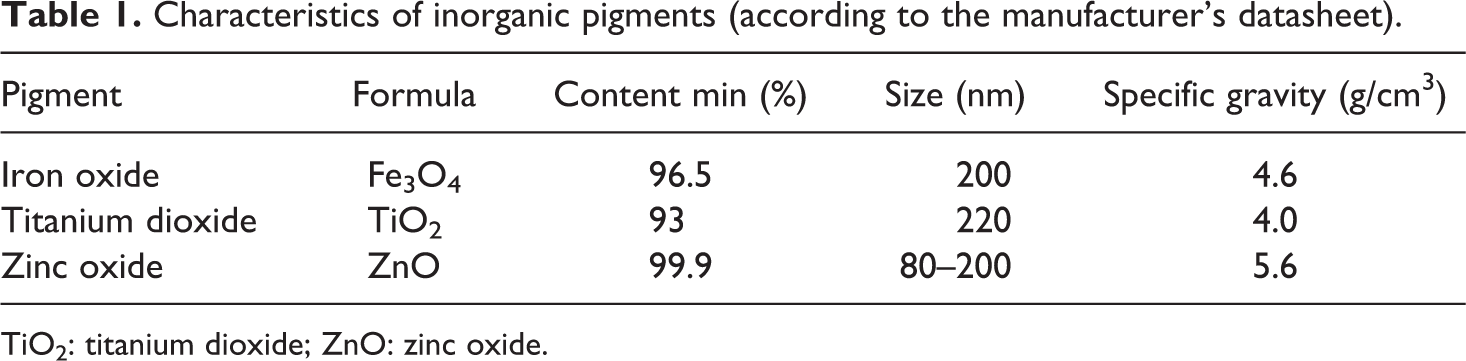
TiO2: titanium dioxide; ZnO: zinc oxide.
Processing of composites
The basic compositions of the core and shell layers were the same for all the studied composites. A blend of 64% wood flour, 10% talc, 22% PP, 3% MAPP, and 1% lubricant was used to produce the core layer. A blend of 33% cellulose pulp, 10% talc, 50% PP, 3% MAPP, 3% lubricant, and 1% of brown Remafin masterbatch was used to produce the shell layer. The submicron-sized inorganic pigments were mixed with a ready-made blend of the shell layer in proportions: 3 parts per 100 parts of the blend. The type and amount of submicron-sized pigments incorporated in the shells are listed in Table 2.
Inorganic pigments in the shell layer of the composites.
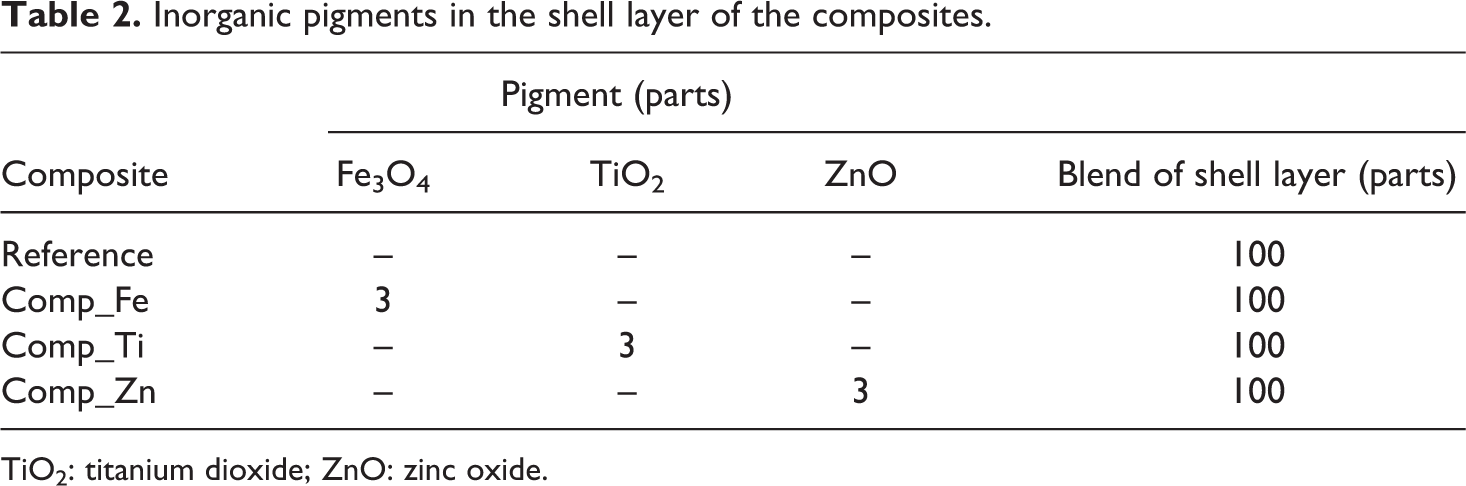
TiO2: titanium dioxide; ZnO: zinc oxide.
A coextrusion system, including a Weber CE 7.2 (Germany) conical twin-screw extruder and a fiberEX extruder, was used to produce the core and shell layer, correspondingly. The processing temperatures in both extrusion processes were between 175°C and 200°C. The schematic coextrusion profile is given in Figure 1.

Profile of coextruded WPC.
Testing of composites
The tensile strength and modulus of the composites were measured in accordance with the EN ISO 527-1:2012 standard using a Zwick/Roell Z20 (Germany) testing machine. The Charpy impact strength for unnotched samples tested in a flatwise position was determined with a Zwick 5102 Model impact tester in accordance with the method ISO 179-1/1f U.
Water absorption was tested according to the procedure described in EN 317, which includes 28 days of immersion of the composites in water. The water absorption was determined as:

where mt is the mass of the sample after treatment, g, and mo is the mass of the sample before treatment, g.
Swelling in the thickness of the test samples was determined as:

where Tt is the thickness of the sample after treatment, m, and To is the thickness of the sample before treatment, m.
The durability of the composites was tested using a Q-SUN Xe-3 tester (Q-Lab Europe, UK). The weathering procedure consisted of 102 min of UV irradiation (with an average irradiance of 0.51 W/m2 at 340 nm) at the temperature of 38°C and (50 ± 10)% relative humidity, followed by 18 min of water spraying, according to the ISO 4892-2:2013 standard.
The surface colour of the treated and untreated composites was measured with a Minolta CM-2500d spectrophotometer (Konika Minolta Sensing, Inc., Japan). The CIELAB colour system was used to measure the surface colour in L, a and b coordinates. The colour difference was calculated as outlined in ISO 7724 according to the following equation:

where ΔL, Δa and Δb represent the differences between the initial and final values of L, a and b, respectively. The surface colour for 15 replicates was measured at five locations on each composite sample.
Scanning electron microscopy (SEM) was performed with a Jeol JSM-5800 LV scanning microscope operating at 10 kV. Prior to the analysis, the fractured surfaces were covered with a layer of gold using a sputter coater. Elemental analysis was performed by an energy-dispersive X-ray spectrophotometer.
To determine the effect of pigment on the properties of the WPCs, a two-sample t-test was carried out with an α significance value of 0.05, comparing the mean values obtained for the reference and pigment-containing composites. All statistical analyses were performed using Statgraphics Plus software (version 4).
Results and discussion
The mean values of tensile strength and tensile modulus of the studied composites and the standard deviations are presented in Table 3. Statistical analysis showed no statistically significant difference between the tensile strength of the reference composite and the composites containing either iron oxide or titanium dioxide. Addition of ZnO reduced the tensile strength of the composite compared to the reference. Chang et al. 17 have shown that the tensile strength of ultra-high molecular weight polyethylene (UHMWPE) decreased after the addition of nano-ZnO. According to Chang et al., 17 the reduction in tensile strength indicates that the adhesion between the nano-ZnO and UHMWPE matrix is not significant to promote greater interfacial bonding which would enhance the tensile strength value.
TS and Et of the composites.
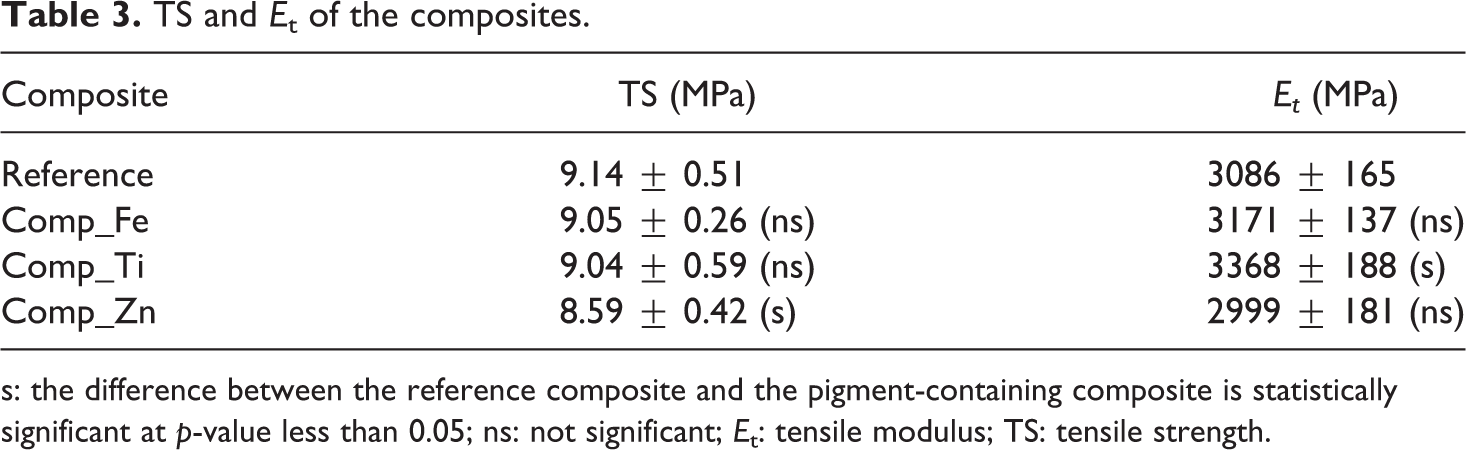
s: the difference between the reference composite and the pigment-containing composite is statistically significant at p-value less than 0.05; ns: not significant; Et: tensile modulus; TS: tensile strength.
The addition of iron oxide and ZnO resulted in insignificant changes in the tensile modulus of the composites in comparison to the reference composite. The composite made with TiO2 had the highest modulus among all composites. Deka and Maji 18 observed increase in the tensile strength and modulus of WPCs after incorporation of TiO2 nanopowder (3 parts per 100 parts of resin). Esthappan et al. 11 have shown that the addition of TiO2 in the PP resulted in an increase in its tensile strength and modulus. In the present study, the addition of TiO2 was found to improve the tensile modulus but it did not have any effect on the tensile strength.
Figure 2 shows the results of the Charpy impact test. The comparison of the Charpy impact strength of the reference composite and the composites made with the addition of inorganic pigment was done with a t-test. The analysis revealed that the addition of TiO2 enhanced the Charpy impact strength of the corresponding composite significantly, while the addition of ZnO decreased it significantly. As in the case of tensile strength and modulus, the addition of iron oxide was found to have no significant effect on the Charpy impact strength. The decrease in the impact strength of the WPCs after the addition of the mineral filler can be explained by the rigid structure of the filler. 19 The impact strength also depends on the bonding strength between the particle and the polymer matrix. The increase in the toughness of the TiO2-containing composite can be a result of improved adhesion between the organic-coated TiO2 and polypropylene matrix.
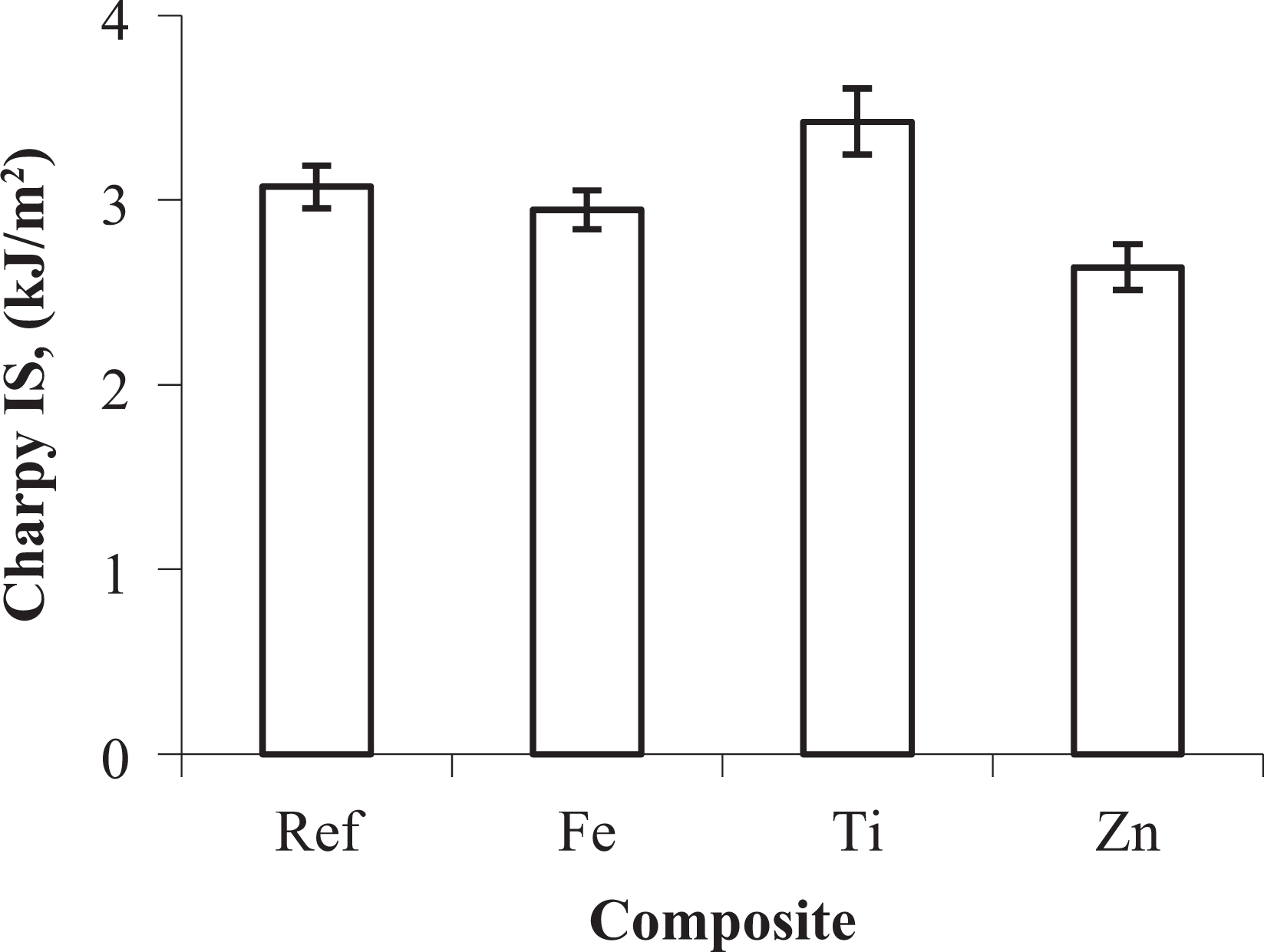
Unnotched Charpy impact strength of the composites.
The morphologies of the composites are shown in Figures 3 and 4. The core layer had a similar morphology for all studied composites, and it can be characterized by the presence of large wood particles and higher porosity (lower density) compared to the shell layer. The cellulose fibre loading in the shell layer was 33% against 64% of the wood flour loading in the core. The same type of polypropylene was used as matrix polymer in both core and shell layers. The differences in the shell layers of the composites can be clearly seen in the SEM micrographs (Figure 4). The fractured surface of shell layer of the TiO2-containing composite was found to be rougher in comparison to the shell layers of the other composites. It had also more openings.
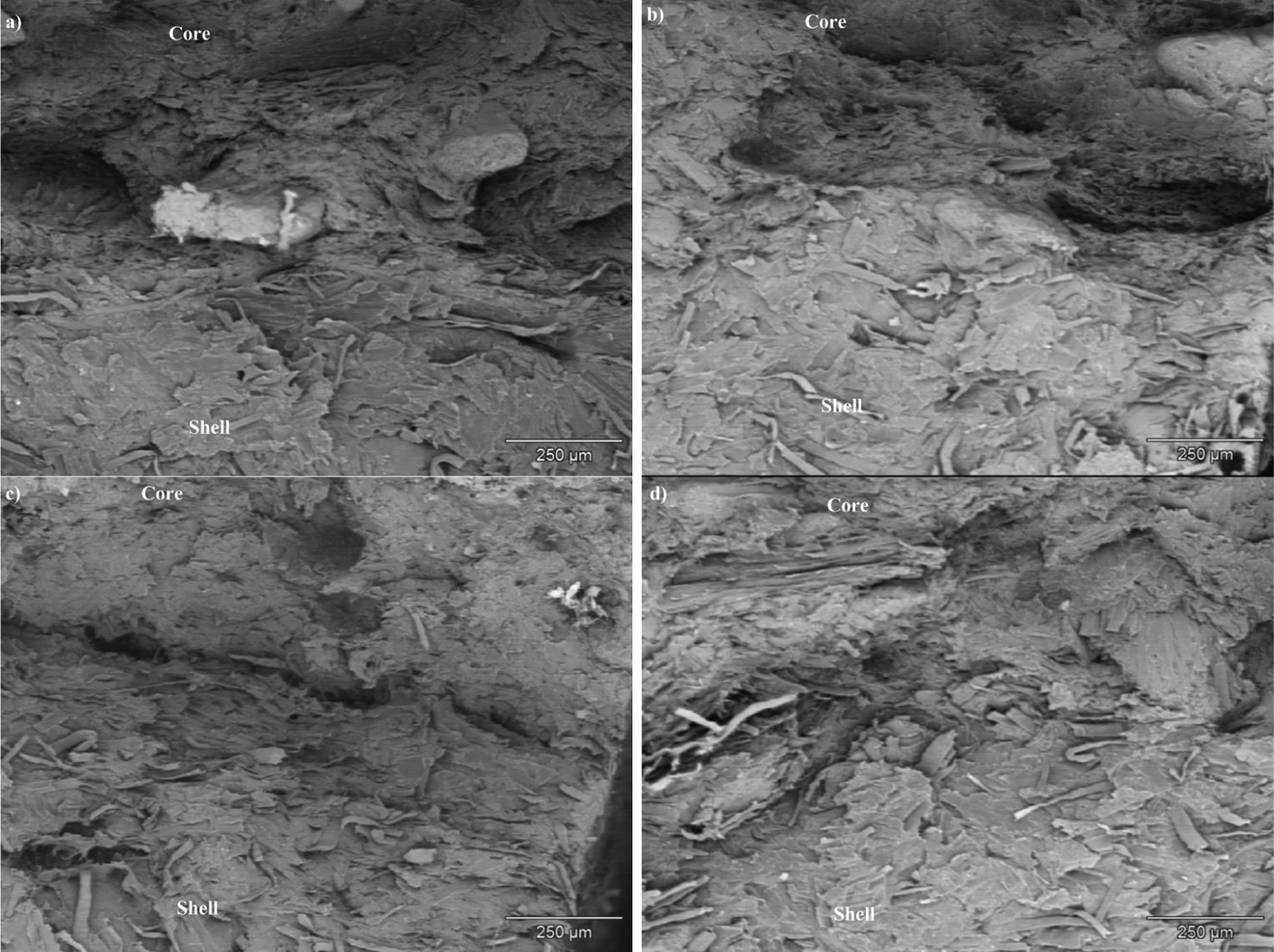
SEM micrographs of the impact fractured surfaces of the composites: (a) reference, (b) Comp_Fe, (c) Comp_Ti and (d) Comp_Zn. Magnification ×160.
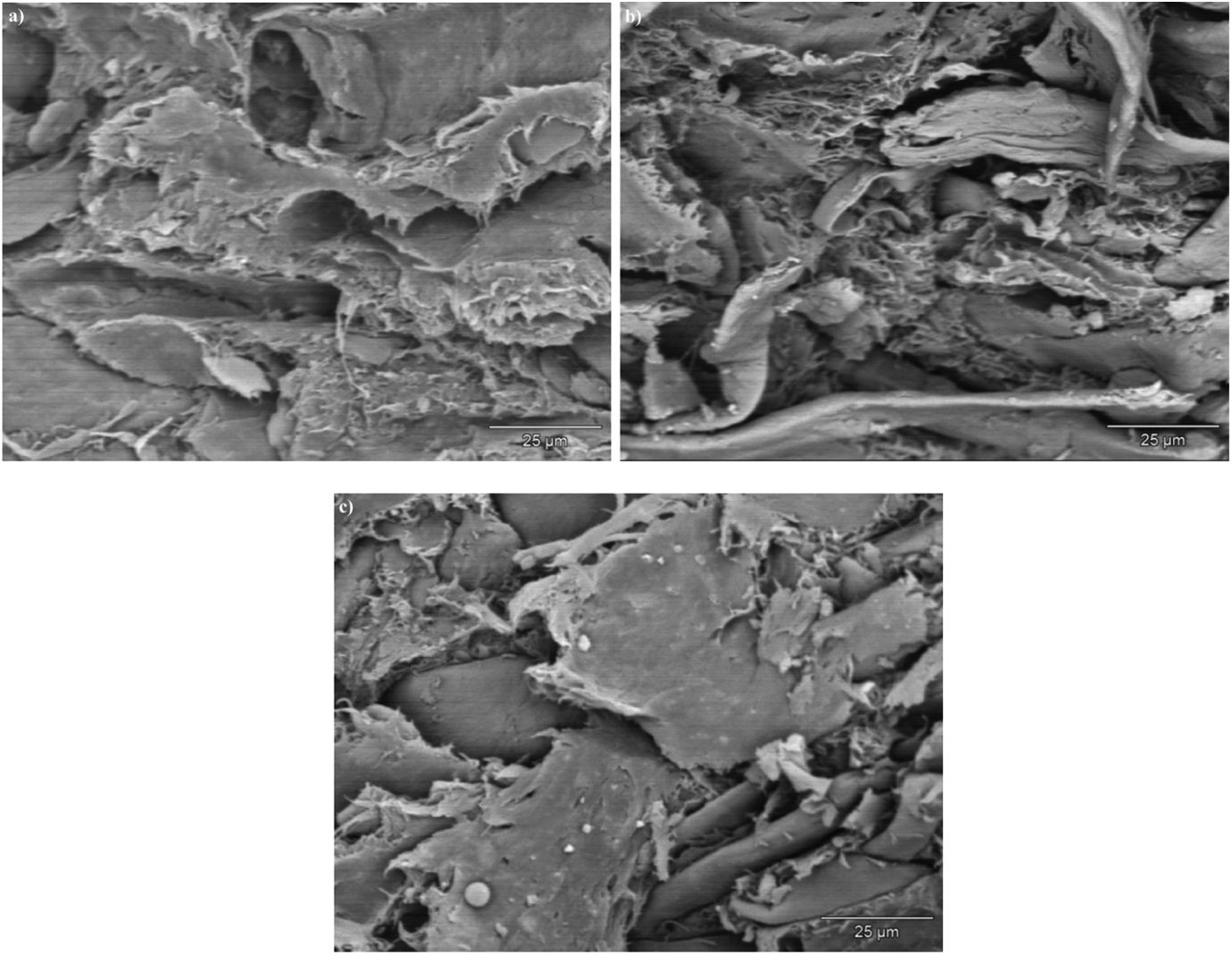
SEM micrographs of the impact fractured surfaces of the shell layer of the composites: (a) reference, (b) Comp_Ti and (c) Comp_Zn. Magnification ×1000.
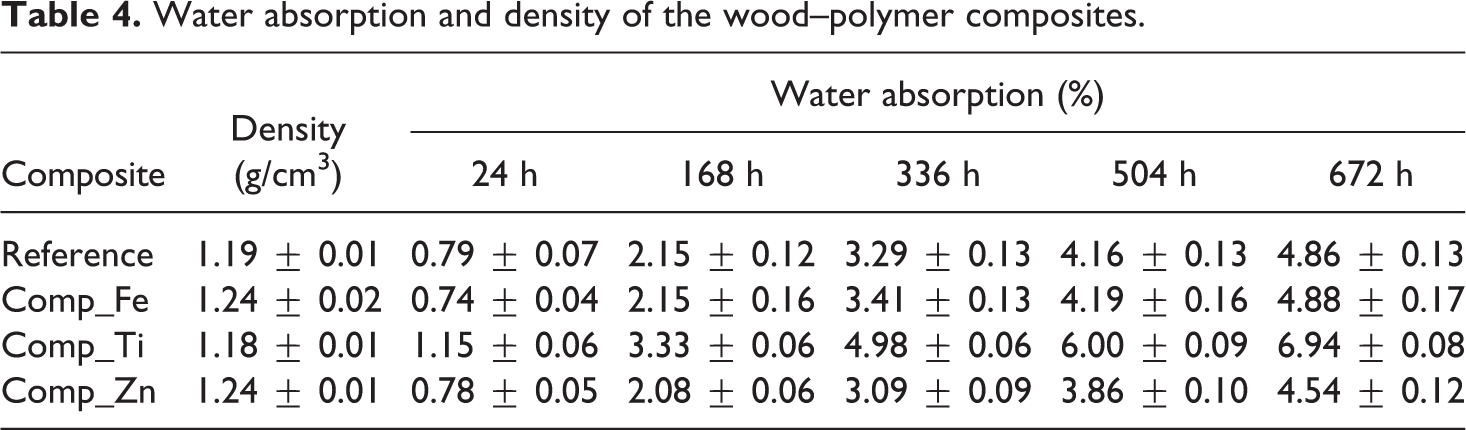
Table 4 and Figures 5 and 6 show the results of the 4-week water immersion test. For all the composites, the water absorption increased with a time. The water absorption values of the reference composite and the iron oxide-containing composite measured in same periods of time were identical. The ZnO-containing composite had slightly lower water absorption compared to the reference composite. The TiO2-containing composite had the highest water absorption; it was about 43% higher than the water absorption of the reference composite.
Water absorption and density of the wood–polymer composites.
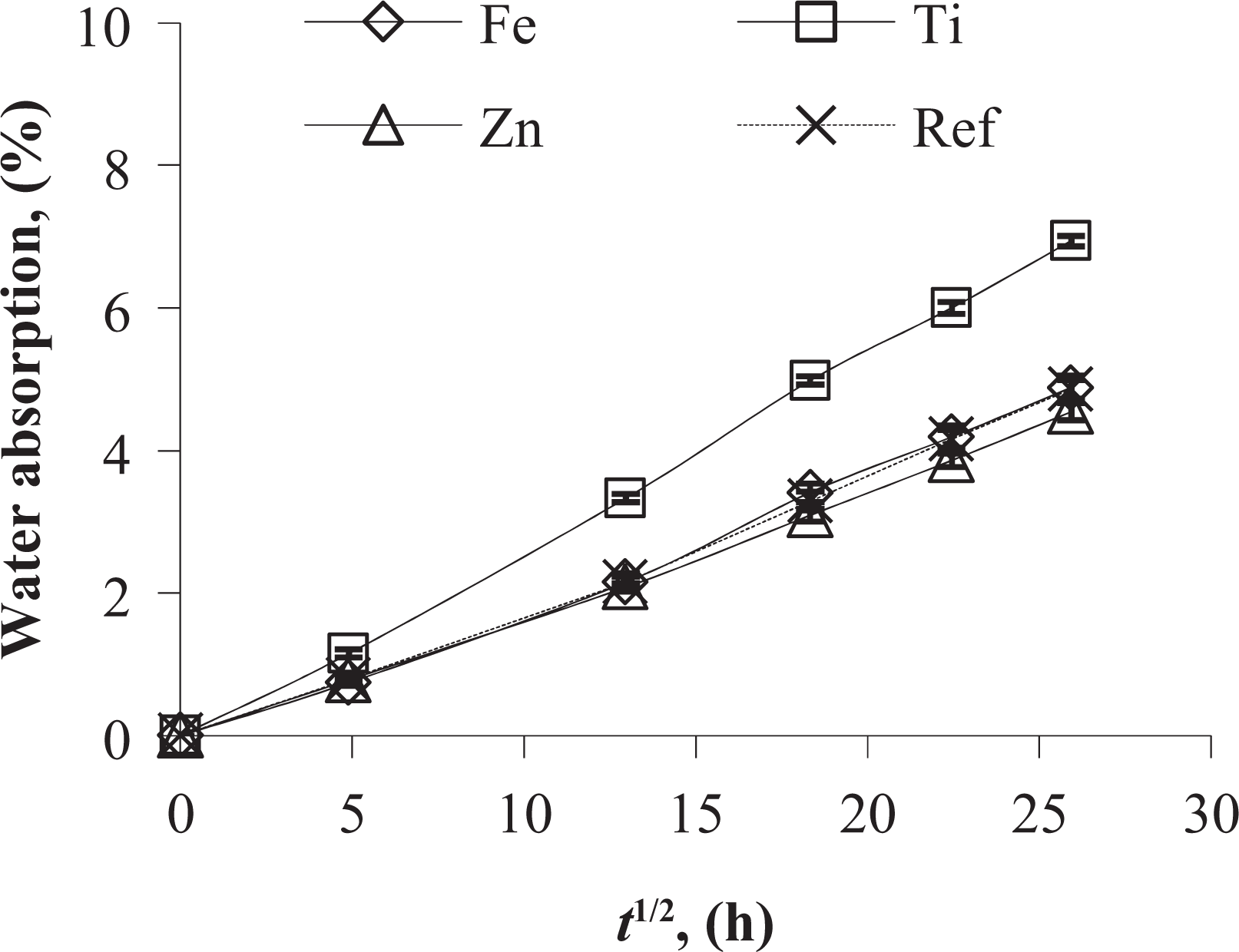
Water absorption versus time1/2.
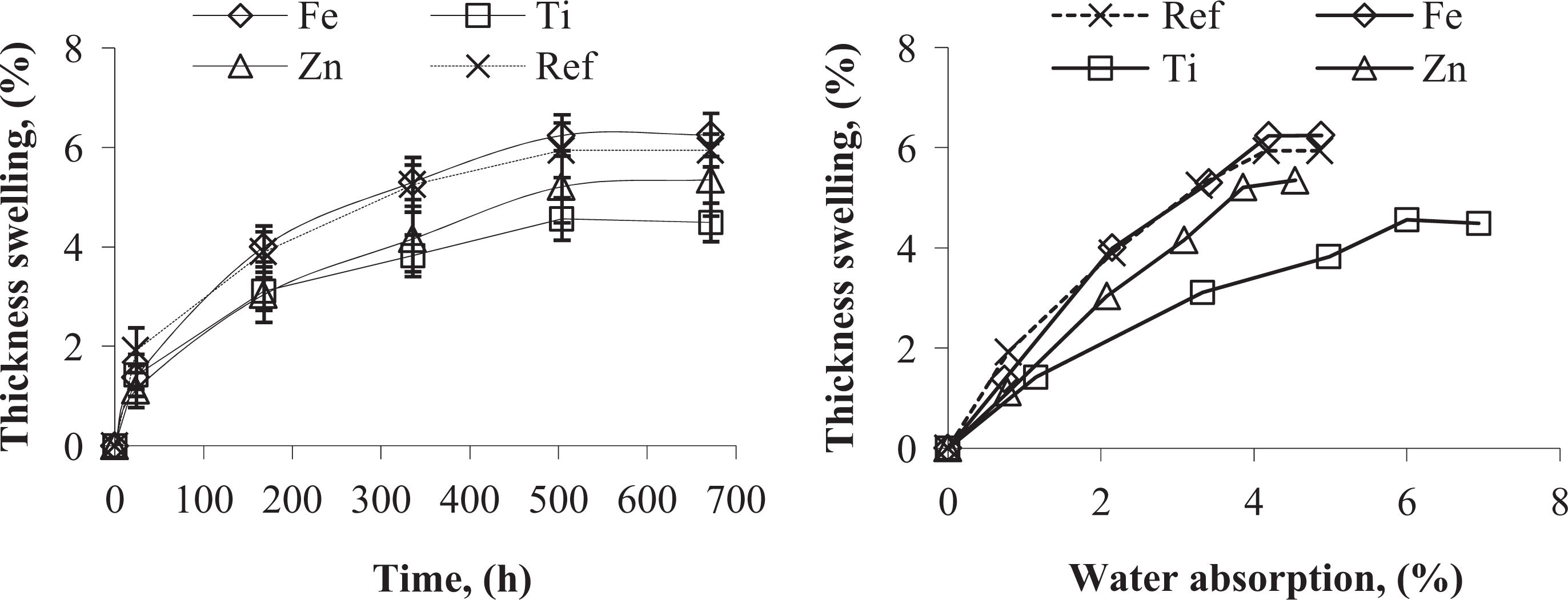
Thickness swelling as a function of time (a) and thickness swelling as a function of water absorption (b).
The hydrophilic nature of wood/cellulose fibres is the main cause for water absorption by WPCs. Both the core and the shell contributed to absorption of water by composite. Because the content of wood fibres (in the core)/cellulose fibres (in the shell) and microstructure of the core layer was the same in all studied composites, the differences in the water absorption of the composites can be explained by a difference of microstructure of the shell layer. Moisture penetration into composite materials occurs by three different mechanisms. The main process consists of diffusion of water molecules inside the microgaps between polymer chains. The other mechanisms are the capillary transport into the gaps and flaws at the interfaces between the fibres and polymer because of incomplete wettability and impregnation, and transport by micro-cracks in the matrix, formed during the compounding process. 20,21 The water absorption was plotted against the square root of exposure time (Figure 5), this approach to data analysis is based on the so-called Fickian diffusion. 22 According to the Fick’s law, the mass of absorbed water increases linearly with square root of time at early stages (short times) of immersion and then gradually slows until it reach equilibrium plateau. Figure 5 shows that during 4 weeks (28 days) of immersion, the water absorption increased linearly with the square root of exposure time. The immersion period of 28 days recommended by the EN 317 standard was not sufficient to reach a saturation point.
As shown in Figure 6, the thickness swelling of the studied composites after 4 weeks of exposure (around 700 h) can be put in the following order: Comp_Ti < Comp_Zn < Comp_Fe = Reference. In the case of the reference composite and the composites containing ZnO and iron oxide, there was good agreement between water absorption and thickness swelling. However, the lowest thickness swelling was found for the TiO2-containing composite, which had the highest water absorption. Low thickness swelling at high water absorption can indicate the presence of voids inside the composite. The high water absorption of the TiO2-containing composite can be explained by its low density (high porosity). In a discussion on the water absorption behaviour of GeoDeck deck boards with different densities, Klyosov 22 concluded that the higher the density, the lower the porosity and the water absorption.
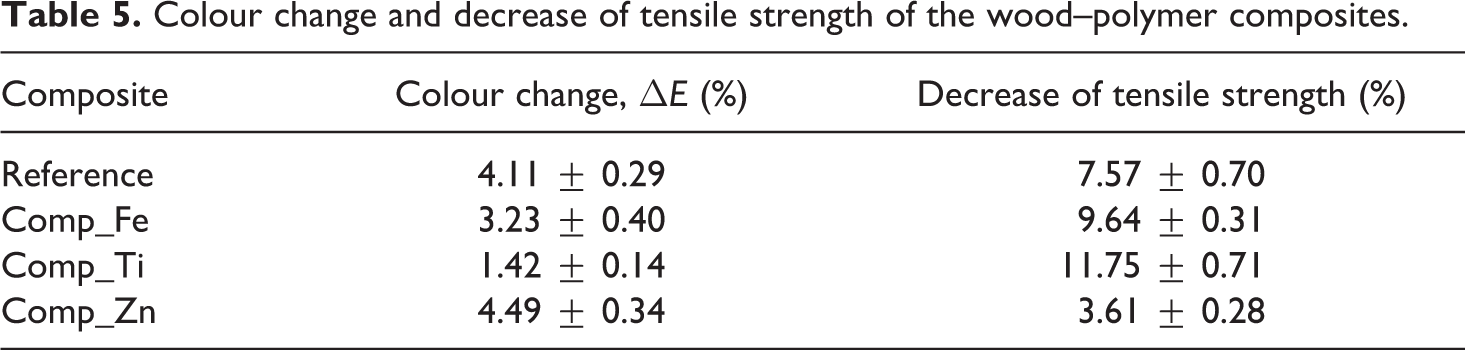
Table 5 shows the change of colour of composites and decrease of their tensile strength which were determined after 500 h of accelerated weathering. Off all the composites, the TiO2-containing composite had the lowest colour change. The colour change of the ZnO-containing composite was similar to that of the reference composite. Accelerated weathering reduced the tensile strength of the composites. The TiO2-containing composite showed the highest decrease of tensile strength after weathering. The slight decrease (3.61%) of tensile strength of the ZnO-containing composite after weathering was estimated to be statistically not significant. Fibre swelling due to moisture absorption is primarily responsible for the loss in mechanical properties after weathering. 4 The loss in strength is due to moisture penetration into the WPC, which degrades the wood–polymer interface, decreasing the stress transfer efficiency from the matrix to the fibre.
Colour change and decrease of tensile strength of the wood–polymer composites.
Conclusion
In this article, the effect of the incorporation of three inorganic submicron-sized pigments on the properties of coextruded polypropylene-based composites was studied. It was found that the addition of inorganic pigments in the shell layer can affect the properties of coextruded PP-based composites. However, the character of changes depends strongly on the type of pigment used. The tensile modulus and Charpy impact strength of the composites were improved by the addition of TiO2. The addition of ZnO decreased the tensile strength and Charpy impact strength of the composite compared to the reference. Iron oxide was found to have no effect on either the physical or mechanical properties of the composite. The water immersion test showed that the density (porosity) of the composite influences its water absorption and thickness swelling characteristics. The changes of colour and tensile strength of composites were strongly affected by type of pigment used. The TiO2-containing composite exhibited better colour stability, but due to its high susceptibility to water absorption, it had highest drop in tensile strength after weathering.
Footnotes
Declaration of conflicting interests
The author(s) declared no potential conflicts of interest with respect to the research, authorship, and/or publication of this article.
Funding
The author(s) disclosed receipt of the following financial support for the research, authorship, and/or publication of this article: The financial support provided for this project by the Jenny and Antti Wihuri Foundation.