




Abstract
Pineapple leaf fiber (PALF) was treated by silane and isocyanate treatments at 0–20% prior to being used as reinforcement in low-density polyethylene (LDPE) and polypropylene (PP) composites. The reactive groups of silane and isocyanate on PALF surface were confirmed by Fourier transform infrared spectroscopy. Scanning electron micrographs also showed the fiber surface coated with layers of treated chemicals as compared with the untreated one. These surface treatments reduced the water absorption of PALF. The physical properties of the PALF-reinforced composites were investigated. The resulting composites possessed higher tensile strength and lower crystallinity than the untreated composites. Silane treatment gave better PALF/LDPE composites in terms of composite strength as compared to isocyanate treatment. For treated PALF/PP composites, fiber pullout was reduced both silane and isocyanate treatments.
Introduction
The development of natural fiber-reinforced polymer composites has gained much attention in the research community during the last decade. The advantages associated with using natural fibers as reinforcement in polymer matrices are related to the attractive properties of natural fibers such as their low density, low pollutant emissions, nonabrasive nature, good thermal properties, acceptable specific properties, low cost and biodegradability. 1 –4 However, the presence of hydroxyl and other polar groups in natural fibers allows high moisture absorption. This hydrophilic nature of natural fibers is thus a major problem for the incorporation of natural fibers in composites. 5 The chemical incompatibility between the hydrophilic fibers and hydrophobic polymer matrices leads to a poor interfacial adhesion of composites. As a result, the composites could experience ineffective stress transfer, dimensional instability, and debonding throughout the interface. 6 –10 In addition, wood-plastic composites can modified to improve quality of composites with adding nano-sized fillers at small amounts in composites. 11
In order to improve the interfacial adhesion between fiber and polymer phases, coupling agents have been used to form a chemical bond between these two phases. 12 While one end of the coupling agent is to react with the fiber surface particularly at the hydroxyl group, the other end is to link with the functional group of the polymer matrix via different interactions such as covalent bond, hydrogen bond, acid–base interaction, and chain entanglement, depending on the type of polymer. 13 –15 Silanes and isocyanates are the most common coupling agents used for natural fiber-reinforced polymer composites. The hydroxyl groups of fiber can form a covalent bond with silanol groups during the silane treatment. 14,16 Similarly, the urethane linkage is formed between the hydroxyl groups of natural fiber and isocyanate groups in the isocyanate treatment. Moreover, higher water resistance is achieved by the additional reaction between isocyanate and moisture on the fiber surface forming urea that can further react with hydroxyl groups of cellulose fibers. 17 After the fiber surface treatment, the nonreactive groups on the other end of silane and isocyanate coupling agents on the treated fiber can increase the compatibility with the hydrocarbon backbone of the polymer matrix such as polyethylene (PE), polypropylene (PP) and poly(lactic acid). 18 –20 George et al. 21 studied the effect of pineapple leaf fiber (PALF) surface treatment with isocyanate and silane treatments on mechanical properties of PALF/PE composites. The results showed that PALF treated by isocyanate yielded the greater strength with a greater extent than the silane-treated PALF and untreated system at 40–80°C due to better bonding between the fiber and the matrix. Surface treatment of fiber also affected on decrease in water absorption, thickness swelling and biodegradation behavior of the fiber/PE composites. 22
PALFs are a by-product of the pineapple canning industry readily available in Thailand. The remaining pineapple leaves after harvesting are about 2.0–2.73 kg per shoot. The pineapple filaments contain about 70–82% cellulose and have a high degree of crystallinity. 23–24 Using pineapple leaves as reinforcement in composites can abundantly reduce agricultural waste and also add value to these pineapple leaves. With all these reasons, PALF was therefore chosen to use in this study. The aim of this work is to study the effect of PALF surface treatment on the interfacial adhesion of the PALF/low-density polyethylene (LDPE) and PALF/PP composites.
Experimental
Materials
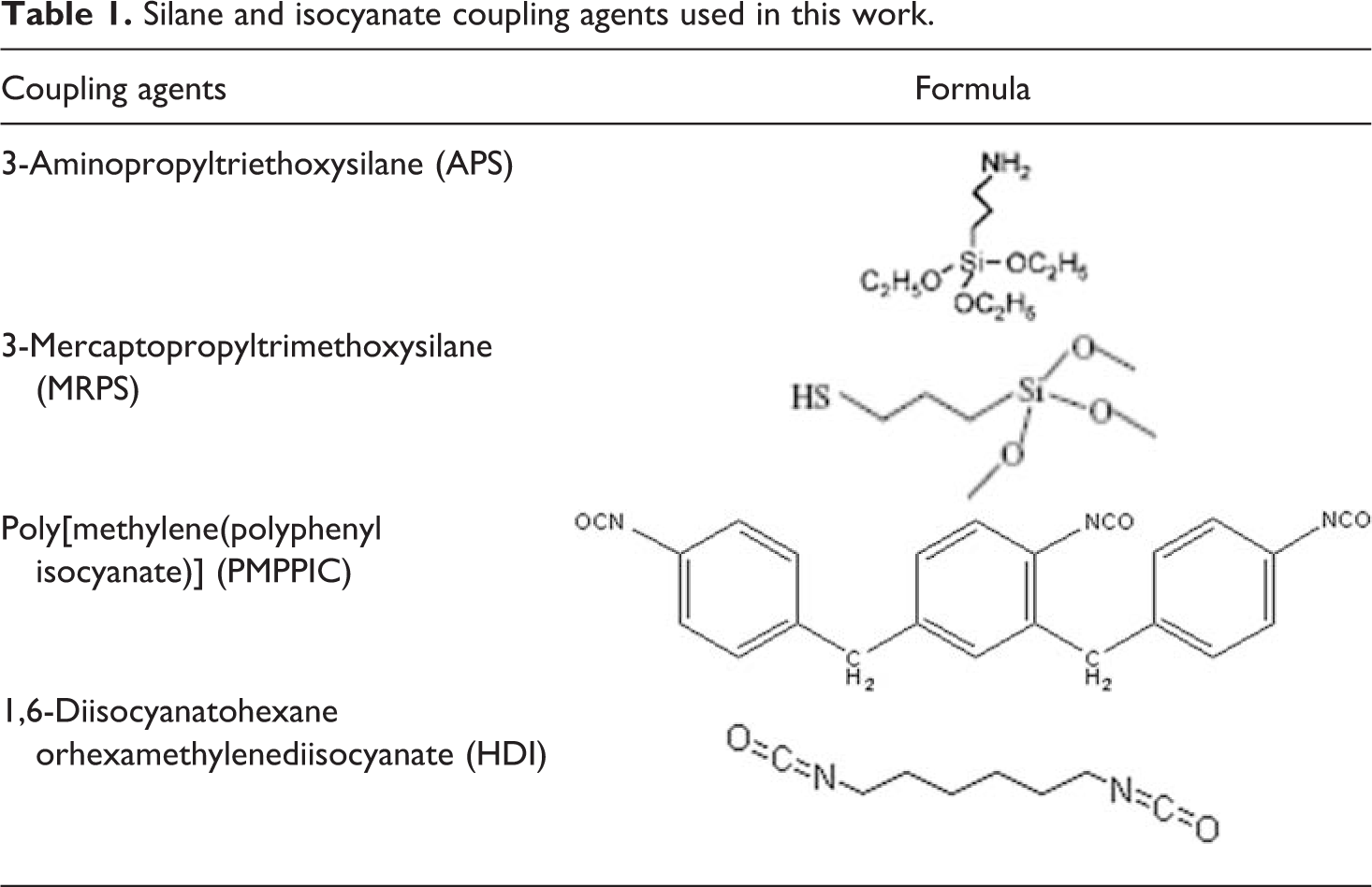
PALF with a cut length of 30 mm was pretreated by alkaline degumming and hydrogen peroxide bleaching as described in the previous study. 25 Two thermoplastic polymers, LDPE and PP, were selected as a polymer matrix. The industrial grade silane and isocyanate coupling agents were purchased from Sigma Aldrich (St Louis, Missouri, USA) and their structures are presented in Table 1.
Silane and isocyanate coupling agents used in this work.
Fiber surface treatment
For silane surface treatment, silane (3 wt%) was first dissolved in a solution (400 ml) of ethanol and water (80:20). PALF (15–20 g) was stirred in the solution for 2 h at room temperature, then filtered, washed with ethanol, and air-dried for 24 h. Subsequently, the PALF was oven-dried at 70°C for12 h. 26
The isocyanate surface treatment was carried out following the method of George et al. 27 Isocyanate coupling agents (3 wt%) were dissolved in toluene (400 ml). PALF (16 g) was stirred in this solution at 50°C for 30 min. The fiber was filtered and air-dried for 24 h before oven-dried at 70°C for 12 h.
The functional groups of treated PALF were analyzed by Fourier transform infrared (FTIR) spectroscopy (PerkinElmer system 2000 FTIR, Waltham, Massachusetts, USA) using potassium bromide technique. Morphology and elemental composition of treated fiber were studied by scanning electron microscopy (SEM) and energy dispersive X-ray spectroscopy (EDS; Phillips 30XL SERIES, Netherlands).
Water retention of untreated and treated PALF was evaluated by a modified method of Tappi UM 256. The PALF samples were dried at 50°C for 24 h before testing. The samples were immersed in distilled water at 25°C for 2 and 24 h. 28 Weight differences between the samples before and after immersing in water were measured to calculate the percentage of water retention for three replicates.
The interfacial interaction between treated PALF and PP composites was measured by a single-fiber pullout test following our previous work. 29 Fibers having a length more than 40 mm were used as test samples. The sample fiber was kept straight and passed through a controlled frame (20 × 20 × 0.5 mm3) with a 1-mm diameter hole. A single fiber was sandwiched between two PP sheets (20 × 20 × 0.25 mm3) and hot pressed at 240°C. The samples of single-fiber bound in PP sheets were then analyzed by a pullout test using an autograph (AGS-J 50 N, Shimadzu, Japan) at a crosshead speed of 1 mm min−1 and the gauge length of 25 mm. The data reported were the average from at least 10 samples. Pullout stress was calculated from the pullout force divided by the fiber cross-sectional area.
Composite preparation
The surface treated fibers were randomly aligned using a mini card machine to form a non-woven mat. The fiber weights per unit of the surface area were controlled at 50–250 g m−2 of the laying mold, corresponding to fiber weights (5–25 wt%). While LDPE and PP sheets with a thickness of 0.25 mm were prepared by a heat press machine at 180 and 240°C, respectively, with a constant pressure of 12.5 MPa. The PALF/LDPE and PALF/PP composites with a thickness of 0.5 mm were prepared by sandwiching a fiber mat between two layers of either LDPE or PP sheets at their melting temperatures of 160 and 185°C, respectively.
Characterization of PALF-reinforced LDPE and PP composites
The mechanical properties, tensile strength and elongation of PALF/LDPE and PALF/PP composites were measured according to ASTM 638 (type II) standard using the Autograph (AGS5kN, Shimadzu, Japan). The gauge length and crosshead speed were 60 mm and 100 mm min−1, respectively. At least eight measurements were taken for each composite.
The morphology of all composites was observed by SEM. The surfaces fractured in liquid nitrogen and the tensile fracture surfaces were also observed with SEM (JEOL JSM-5310, England) at 10 kV acceleration voltages.
The crystallinity of the PALF-reinforced composites was studied by X-ray diffraction (XRD) compared with the pure polymer. The XRD pattern was taken with a JEOL diffractometer (JDX-3530) with the copper K
α radiation operating at 30 kV, 40 mA and a run rate of 30° min−1. The percent crystallinity was calculated by a ratio of intensity curve areas of crystalline and total regions. The crystallite sizes (D) were calculated according to the Scherrer’s equation, as shown in equation (1):

Results and discussion
Silane- and isocyanate-treated PALF
PALF as a reinforcement of LDPE and PP matrices was pretreated with silanes: 3-aminopropyltriethoxysilane (APS) and 3-mercaptopropyltrimethoxysilane (MRPS), and isocyanates: poly(methylene(polyphenyl isocyanate)) (PMPPIC) and hexamethylenediisocyanate (HDI) prior to the composite fabrication. The general chemical reactions of silane and isocyanate coupling agents with cellulose fiber are illustrated in Figure 1. The covalent bond (Si–O–C) is formed between silanols and hydroxyl groups of cellulose fibers, while isocyanates form a covalent bond through the urethane linkage with cellulose. Silane- and isocyanate-treated fibers were characterized by FTIR comparing with the untreated one, as shown in Figure 2. The untreated PALF showed a broad peak at 3200–3600 cm−1 representing –OH stretching vibration from cellulose, 31,32 peaks at 2900 and 1730 cm−1 corresponding to stretching vibration of –CH and –C=O groups of hemicellulose, respectively, and a peak at 1640 cm−1 was from –C–C stretching vibration. 31,33,34 For the treated PALF (Figure 1(b) to (e)), the intensity of –OH stretching peak at 3200–3600 cm−1 was slightly diminished by the chemical reaction of the hydroxyl groups of cellulose with silanes or isocyanates.

Chemical reactions of silane and isocyanate with cellulosic fiber.
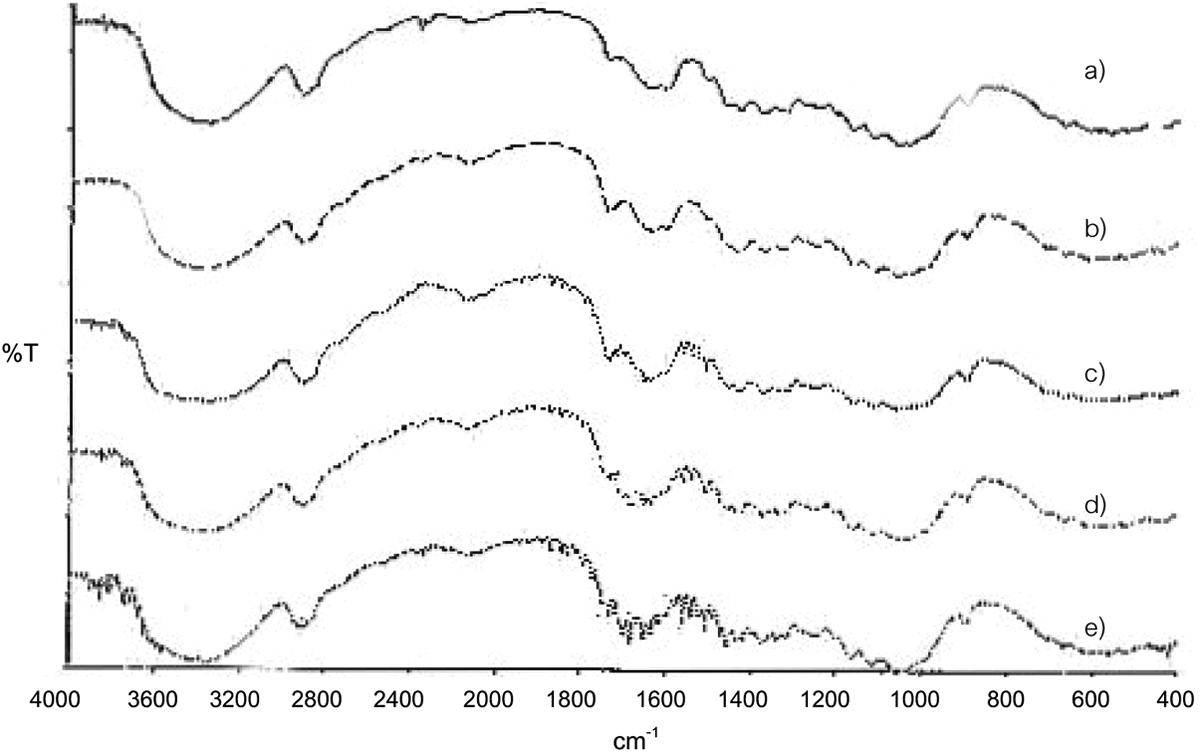
FTIR spectra of PALF: (a) untreated, (b) APS treatment, (c) MRPS treatment, (d) PMPPIC treatment, and (e) HDI treatment. FTIR: Fourier transform infrared; PALF: pineapple leaf fiber; APS: 3-aminopropyltriethoxysilane; MRPS: 3-mercaptopropyltrimethoxysilane; PMPPIC: poly(methylene(polyphenyl isocyanate)); HDI: hexamethylenediisocyanate.
The silane-treated PALF showed characteristic peaks of a Si–O–CH3 group at 850–950 and 1200 cm−1. 35 For isocyanate-treated PALF, small peaks at 1730–1770 cm−1 represented –C=O stretching of the urethane linkage. 36 An aromatic –C=C stretching peak of PMPPIC was at 1608 cm−1. 31
SEM analysis reveals the surface morphology of untreated and treated PALF. The untreated PALF had a regular smooth surface (Figure 3(a)), whereas the treated PALF surfaces were covered with coupling agents (Figure 3(b) to (e)). The APS- and MRPS-treated PALF (Figure 3(b) and (c)) showed the fibrillation on the fiber surface which could enhance the interaction with the polymer. 37 Polysiloxane formed on the fiber surface could induce stronger bonding between fibers and the matrix, hence, the strength of the composite was improved. 6 For the isocyanate-treated PALF, the fiber surface was covered with isocyanate, as shown in Figure 3(d) and (e), resulting in increasing of crystallinity, density, and strength of fibers. Methylene and phenyl groups of PMPPIC are highly reactive with nonpolar polymers such as PE and PP. 6 The results from EDS confirmed the presence of Si and N atoms on PALF treated with silane and isocyanate, respectively (data not shown).
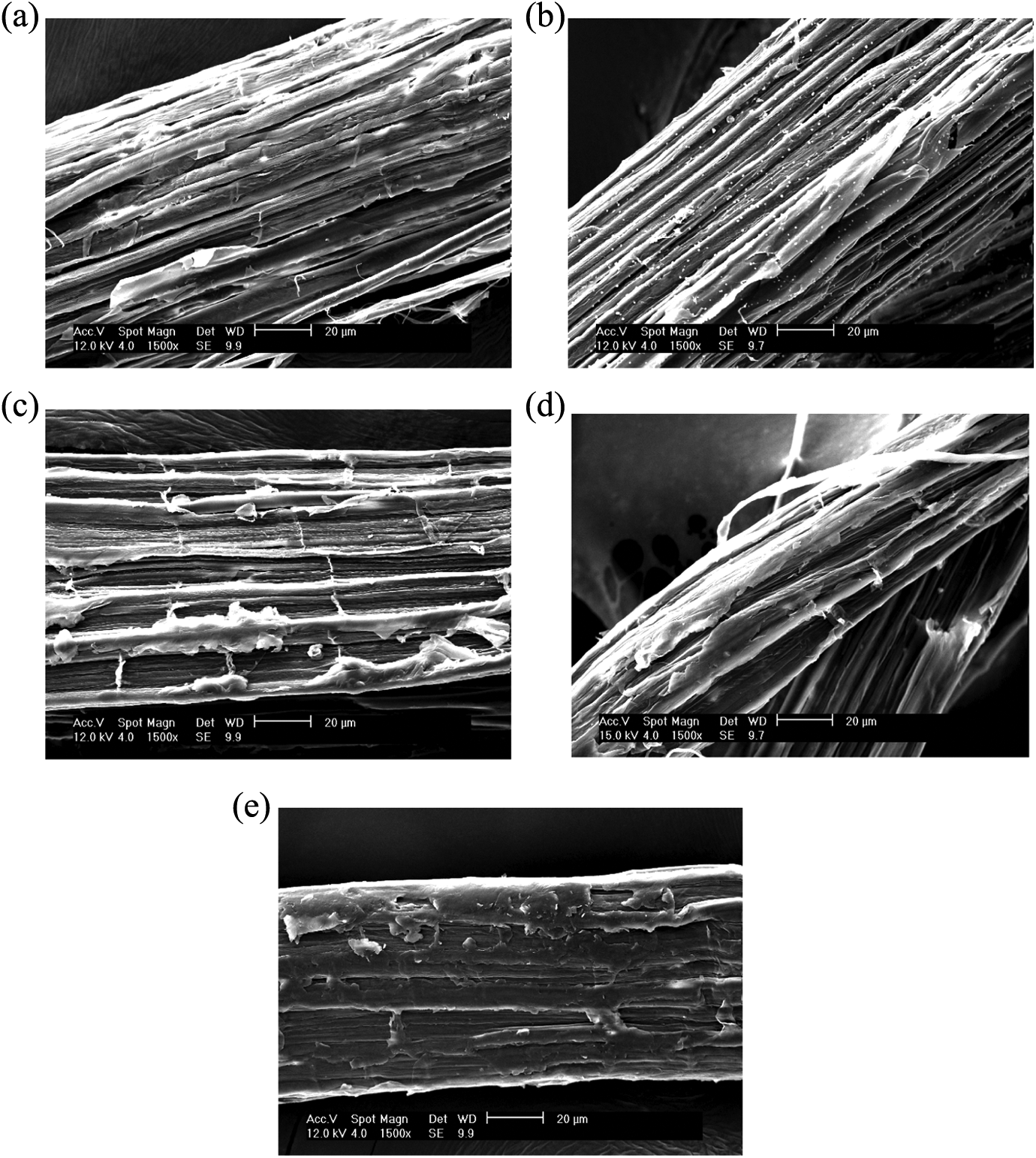
SEM photographs of untreated and treated PALF surfaces (×1500): (a) untreated PALF, (b) APS treatment, (c) MRPS treatment, (d) PMPPIC treatment, and (e) HDI treatment. SEM: scanning electron microscopy; PALF: pineapple leaf fiber; APS: 3-aminopropyltriethoxysilane; MRPS: 3-mercaptopropyltrimethoxysilane; PMPPIC: poly(methylene(polyphenyl isocyanate)); HDI: hexamethylenediisocyanate.
The most disadvantage of using lignocellulosic fibers in composite materials is their sensitivity to water which dramatically affects their mechanical properties. 26,38 The results of water retention for the treated and untreated PALF are presented in Figure 4. The surface treatment can reduce the water absorption of PALF. The hydrophobic characteristics were in the order as follows HDI ∼ APS > MRPS > untreated PALF > PMPPIC. The same trends were observed for both samples that were soaked for 2 and 24 h. The reduction of water absorption of APS- and HDI-treated PALF was due to the –OH group of cellulose interacting with reactive groups of coupling agents, as mention before. Thus hydrophilic nature of fiber decreased. 39 Even though APS and MRPS are silane coupling agents (R–Si–X3), they have different hydrolysable groups (X) that can form silanol being ethoxy and methoxy, respectively, and the organofunctional groups (R) which can bond with polymers being aminopropyl and mercaptopropyl, respectively. Polysiloxane formation on the fiber surface from the APS treatment may cause more hindrance groups than the MRPS treatment. Thus the APS treatment gave PALF that absorbedless water. In the case of PMPPIC and HDI which is aromatic and aliphatic isocyanates, respectively, the fiber treated with PMPPIC gave highest water absorption. This is inconsistent with Rensch and Riedl 40 who found that aromatic isocyanate exhibited less water absorption than aliphatic isocyanate. However, this water retention was from individual fibers, not composites.
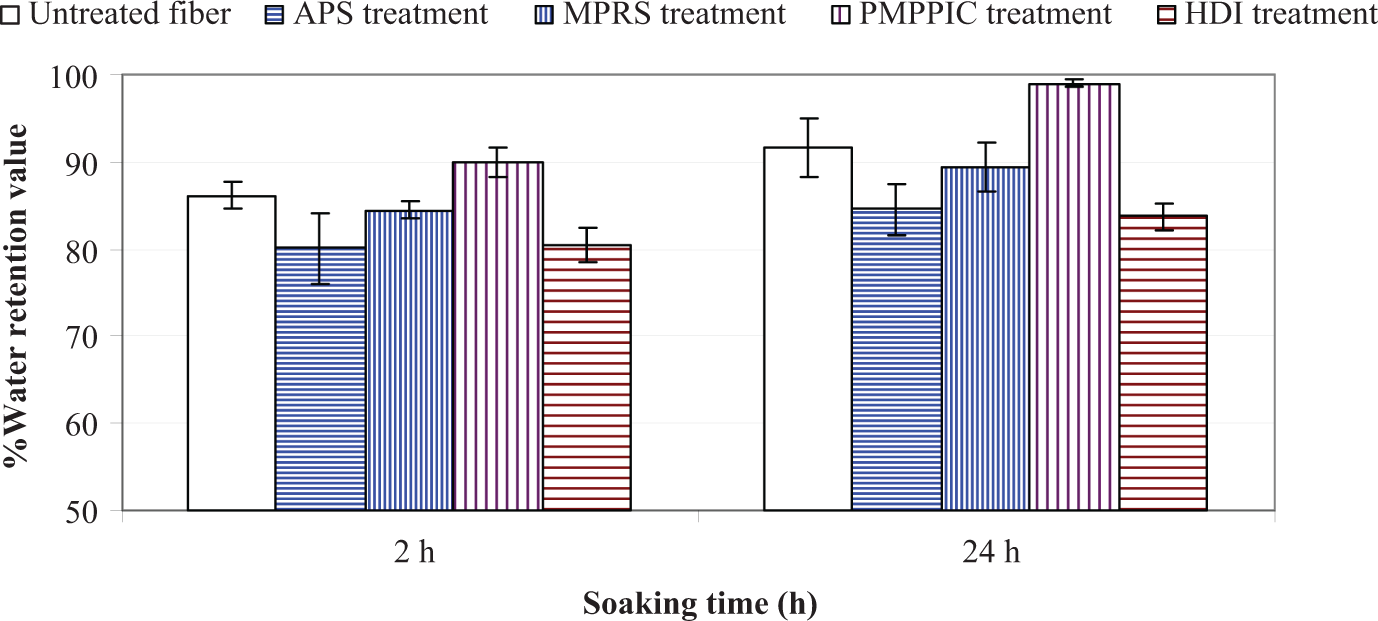
Water retention values of untreated and treated PALF. PALF: pineapple leaf fiber.
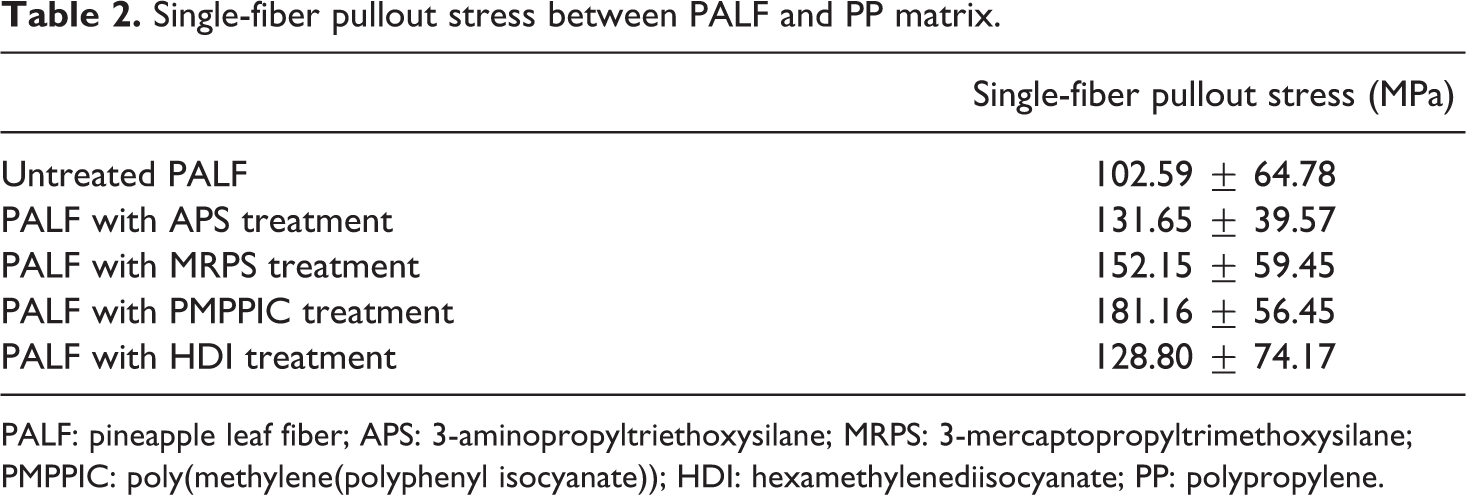
Single-fiber pullout stress between fiber surface and matrix was defined as the maximum tension force per a unit area of a particular surface, as presented in Table 2. The interfacial adhesion force measured between PALF and PP matrix had high standard deviation. Therefore, the mean value of pullout stress between fiber surface and the matrix analyzed by statistic test was not significantly different. However, PMPPIC-treated PALF gave the highest pullout stress. On the other hand, the untreated PALF had the lowest pullout stress with the PP matrix.
Single-fiber pullout stress between PALF and PP matrix.
PALF: pineapple leaf fiber; APS: 3-aminopropyltriethoxysilane; MRPS: 3-mercaptopropyltrimethoxysilane; PMPPIC: poly(methylene(polyphenyl isocyanate)); HDI: hexamethylenediisocyanate; PP: polypropylene.
XRD study
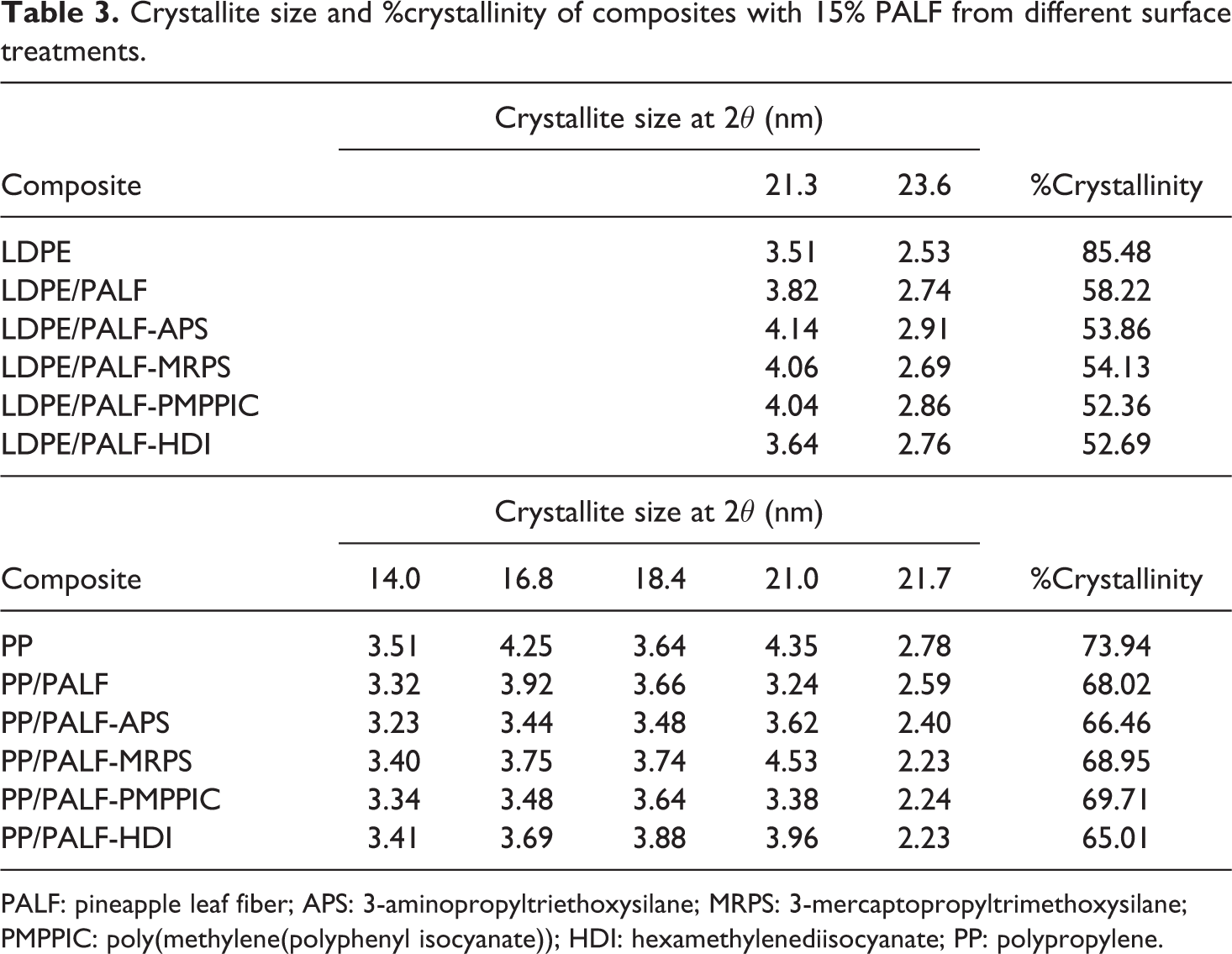
Table 3 shows the crystallite size and %crystallinity of composites with15% untreated and treated PALF. The decrease of %crystallinity of PALF/LDPE composites as compared with the pure polymer was a result of the inclusion of PALF in LDPE matrix as mentioned in a previous work. 41 It was more difficult for polymer to migrate and diffuse to the surface of the growing polymer crystal. 25 The peak intensities of all treated PALF/LDPE composites at 2θ of 21.3° and 23.6° were lower than those of LDPE and untreated PALF/LDPE composites. It was found that the inclusion of treated PALF tended to increase crystalline size of the LDPE composites but decrease %crystallinity. As for silane treatment, silane reacted with hydroxyl group in cellulose, and alkoxysilanes underwent stages of hydrolysis, condensation, and bond formation. This means the addition of reaction of silanols with hydroxyl on fiber surface, forming polysiloxane structure. In case of isocyanate treatment, the crystalline structure of cellulose might be disturbed by the substitution of hydrogen bond with –CN group characterized by decrystallization. 34 That’s why the %crystallinity of the LDPE composites with treated PALF decreased.
Crystallite size and %crystallinity of composites with 15% PALF from different surface treatments.
PALF: pineapple leaf fiber; APS: 3-aminopropyltriethoxysilane; MRPS: 3-mercaptopropyltrimethoxysilane; PMPPIC: poly(methylene(polyphenyl isocyanate)); HDI: hexamethylenediisocyanate; PP: polypropylene.
In the case of PP/PALF composites at 15% fiber content, five peaks at 2θ of 14.0°, 16.8°, 18.4°, 21.0°, and 21.7° are shown in Table 3. The crystalline size and %crystallinity of the treated PALF/PP composites slightly decreased compared to pure PP, but they were similar to the untreated PALF/PP composite. The different crystalline properties observed between PP and LDPE composites could probably be explained by the higher crystallinity of PP than LDPE, therefore loss of cellulose packing was less pronounce for PP composites.
Tensile strength of composites
The tensile strength of composites prepared from different fiber content and surface treatment was investigated. Tensile strength of the LDPE/PALF composites increased with the increase of fiber content in both of untreated and treated fibers (Figures 5 and 6(a)). At these optimum fiber contents, the population of the fibers provides maximum orientation and the fibers actively participate in stress transfer. 42 The effect of fiber treatment on tensile strength of LDPE composites was demonstrated in Figure 6(b). Silane treatment by APS and MPRS provided greater tensile strength to the composites than isocyanate treatment. This is due to −NH2 group in APS or −SH group in MRPS that interacts with the –OH groups of lignocellulosic PALF, forming hydrogen bonds, resulting in more crystallinity. The isocyanates, PMPPIC and HDI, form urethane bonds with –OH group of cellulose on one side and interact with LDPE by van der Waals force on another side. Nevertheless, PMPPIC has steric effect from aromatic group causing less interaction between fiber and LDPE. Poor interfacial bonding between HDI-treated fiber and matrix can be observed by SEM. Therefore, both isocyanate surface treatments gave poor tensile strength.
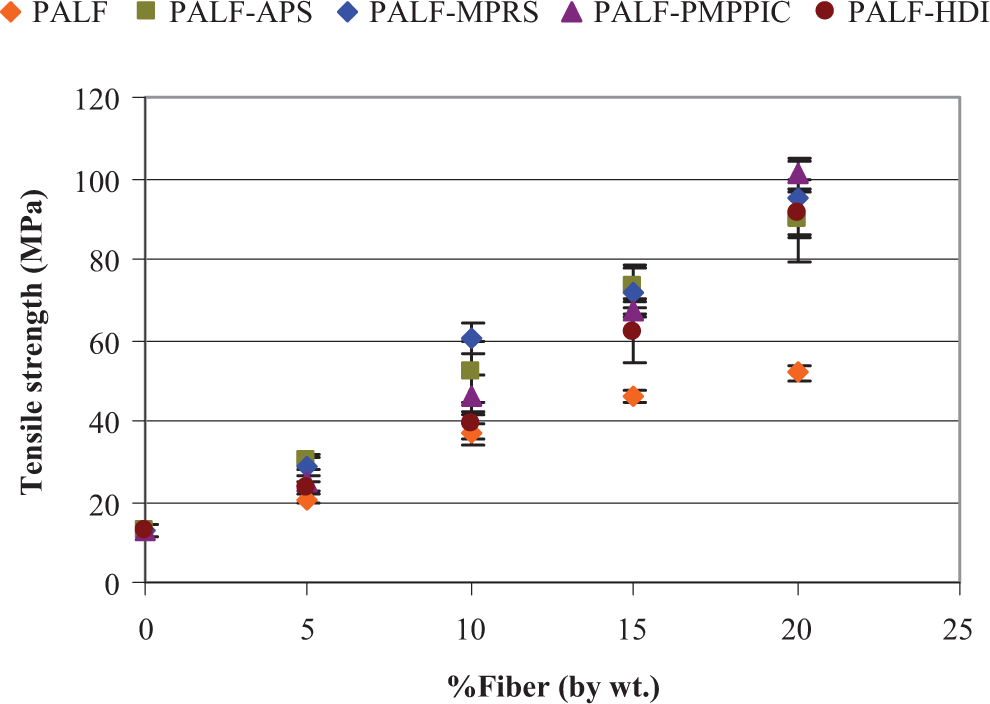
Tensile strength of LDPE/PALF composites with various PALF contents from different surface treatments. PALF: pineapple leaf fiber; LDPE: low-density polyethylene.
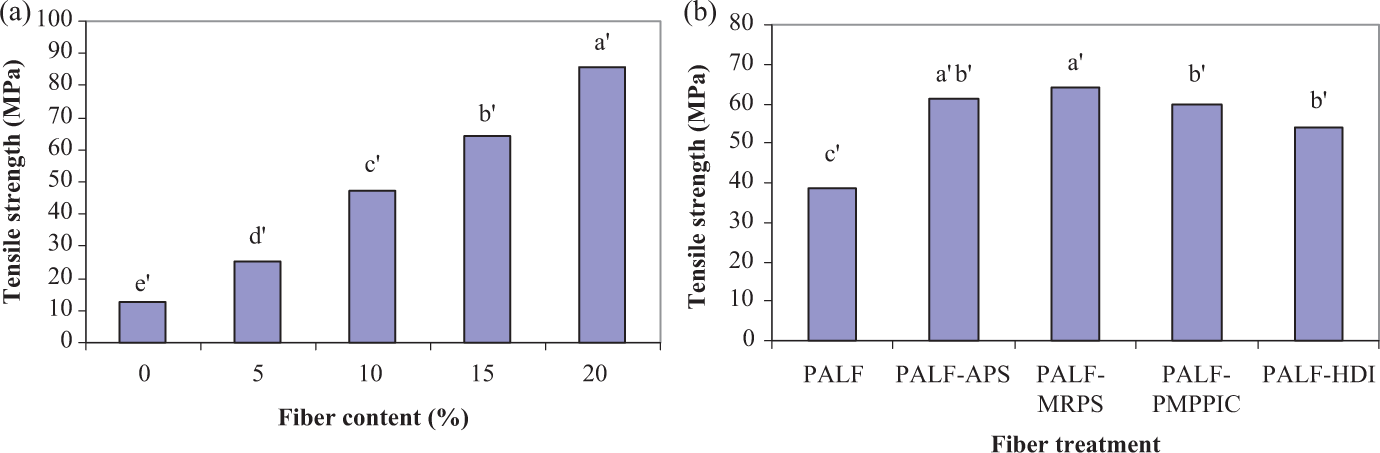
Tensile strength of LDPE/PALF composites: (a) fiber content and (b) surface treatment. Letters (a′, b′, and c′) notify that the results are significantly different at p ≤ 0.05. PALF: pineapple leaf fiber; LDPE: low-density polyethylene.
The tensile strength of PP/PALF composites are shown in Figure 7. It can be seen that tensile strength increased with increasing of fiber content in all surface treatments. In comparison of surface treatment, APS gave the highest strength at low fiber content (5–10%).When the fiber content was more than 15%, tensile strength of all PP/PALF composites from different surface treatments was about the same. From Figure 8(a), the tensile strength of PP/PALF composites as the fiber content increased was similar to that of the LDPE/PALF composites. In case of surface treatment (Figure 8(b)), all surface treatments enhanced tensile strength as compared to the untreated one but no significant difference in all method was found. This can be explained that –CH3 group of PP molecules enhanced van der Waals interaction with polysiloxane for silane surface treatment and with aromatic and aliphatic groups for isocyanate surface treatment. Therefore, surface treatment yielded higher tensile strength of PALF/PP composites.
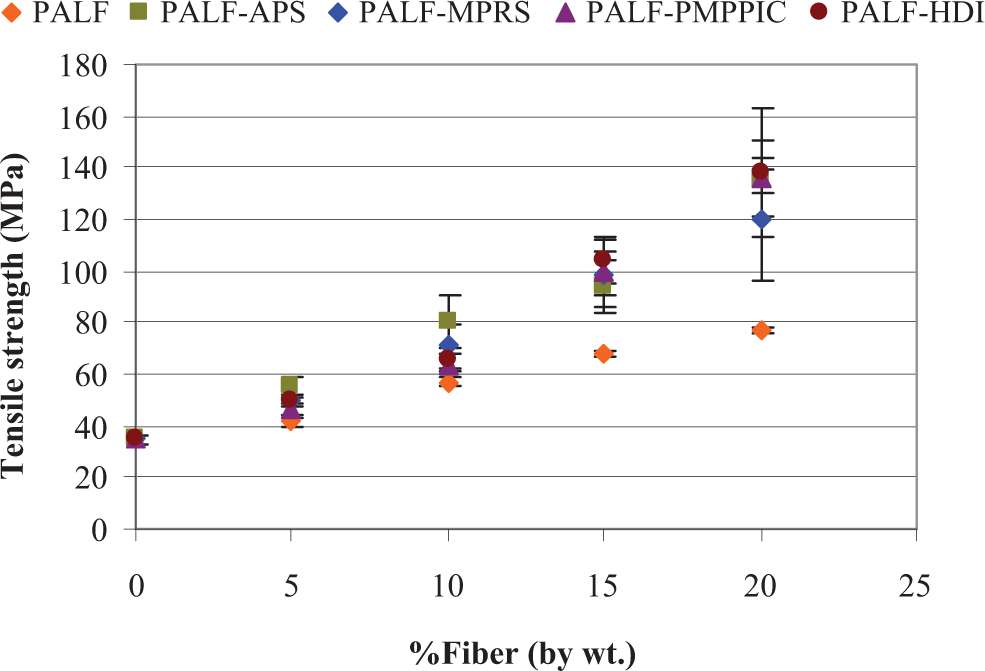
Tensile strength of PP/PALF composites with various PALF contents from different surface treatments. PALF: pineapple leaf fiber; PP: polypropylene.
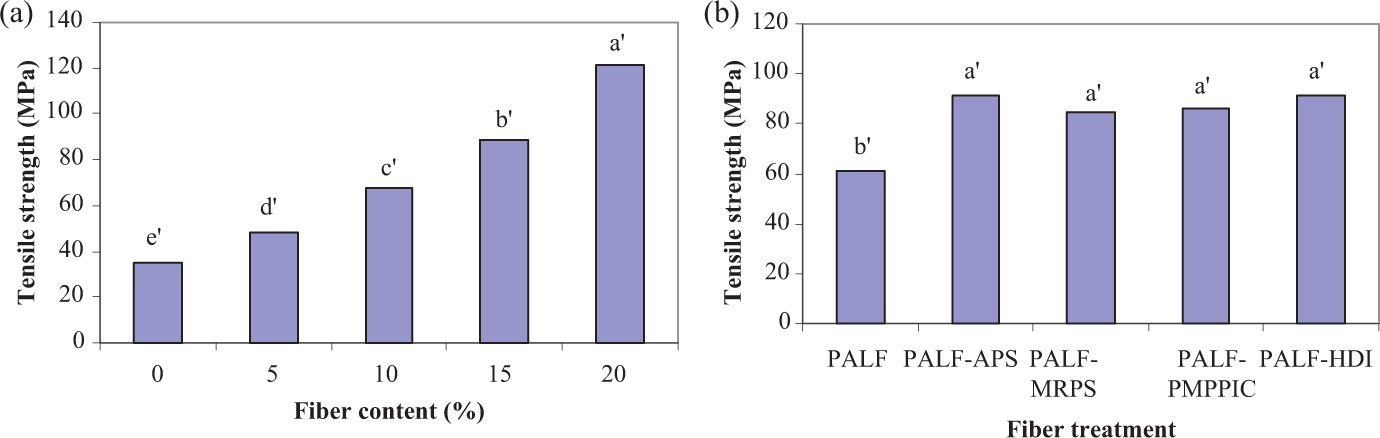
Tensile strength of PP/PALF composites: (a) fiber content and (b) surface treatment. Letters (a′, b′, and c′) notify that the results are significantly different at p ≤ 0.05. PALF: pineapple leaf fiber; PP: polypropylene.
Morphology of tensile fracture surface
SEM photographs of the tensile fracture of LDPE/PALF composites with 15% PALF content of different surface treatments are shown in Figure 9. The LDPE/PALF composite shows fibers pullout, fibrillation, and debonding, suggesting poor adhesion between the fiber and the matrix (Figure 9(a)). For APS surface treatment (Figure 9(b)), the fracture surfaces show few fibers protruding out and the fibrillation can be observed at the top of fibers, nevertheless the LDPE matrix is more bonded with the fibers when compared with untreated fiber. The fibers obtained from MRPS surface treatment (Figure 9(c)) are broken off near the surface and more apparent defibrillation, as a result of the adhesion improvement. For the silane surface treatment, the treatment with MRPS improves the adhesion between the fibers and the matrix than APS. In the case of isocyanate treatment, PMPPIC, which contains hydrophobic aromatic groups, the fibers pullout near the surface was in short lengths, whereas the fibers surface of HDI treatment shows a brittle failure and some also shows debonding of the fibers from the matrix. This suggests that the surface treatment with aromatic isocyanate enhances adhesion. This result is in good agreement with the previous study. 6 The tensile fracture surface of untreated PP composite, given in Figure 10(a), shows pullout, debonding fibers from the matrix, and also brittle failure which means lack of adhesion between the fibers and the matrix. After the surface treatment with silane and isocyanate, the fibers were broken off near the surface and also show a brittle failure but no debonding is observed (Figure 10(b) to (e)), indicating improvement of adhesion between the fibers and the matrix.
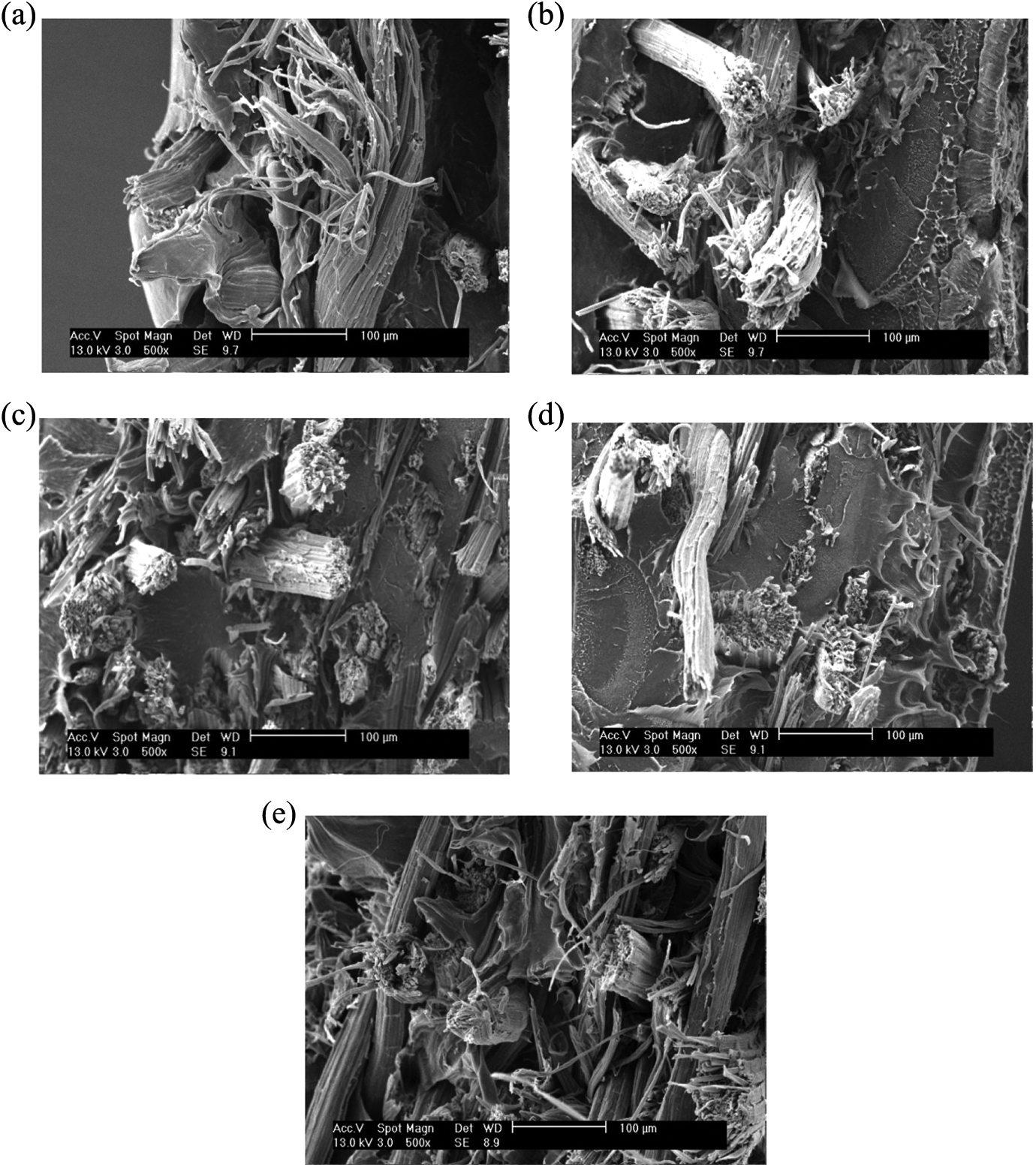
SEM photographs of tensile fracture of LDPE/PALF composites with 15% PALF (×500): (a) untreated PALF, (b) APS treatment, (c) MRPS treatment, (d) PMPPIC treatment, and (e) HDI treatment. SEM: scanning electron microscopy; PALF: pineapple leaf fiber; LDPE: low-density polyethylene; APS: 3-aminopropyltriethoxysilane; MRPS: 3-mercaptopropyltrimethoxysilane; PMPPIC: poly(methylene(polyphenyl isocyanate)); HDI: hexamethylenediisocyanate.
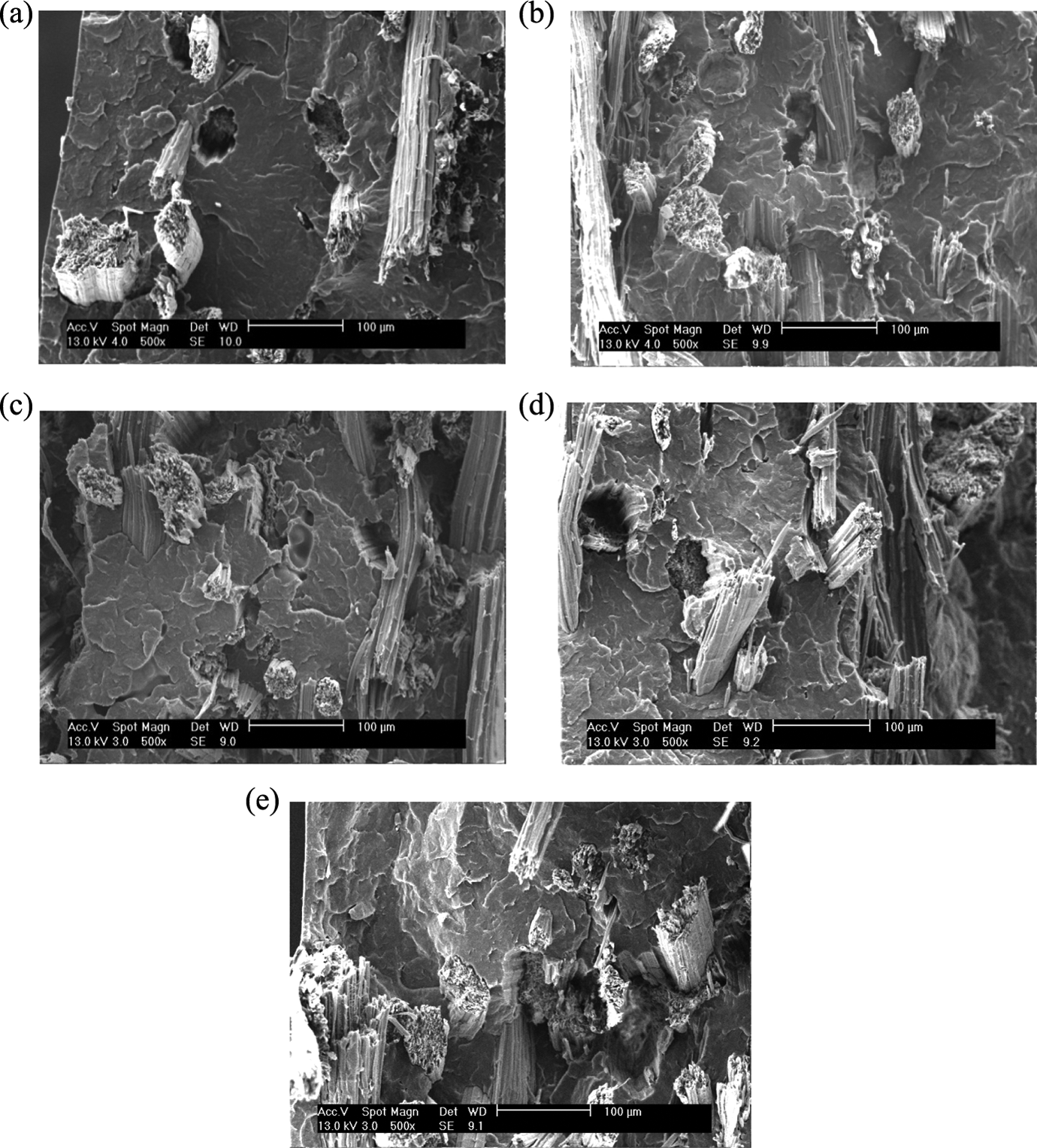
SEM photographs of tensile fracture of PP/PALF composites with 15% PALF (×500): (a) untreated PALF, (b) APS treatment, (c) MRPS treatment, (d) PMPPIC treatment, and (e) HDI treatment. SEM: scanning electron microscopy; PALF: pineapple leaf fiber; LDPE: low-density polyethylene; APS: 3-aminopropyltriethoxysilane; MRPS: 3-mercaptopropyltrimethoxysilane; PMPPIC: poly(methylene(polyphenyl isocyanate)); HDI: hexamethylenediisocyanate; PP: polypropylene.
Conclusions
Fiber modification using silane (APS and MRPS) and isocyanate (PMPPIC and HDI) treatments was investigated on the physical properties of PALF and on the LDPE and PP composites with treated PALF. FTIR results showed the reactive group of silane and isocyanate on surface fiber. The SEM photographs of treated PALF confirmed having film layer of chemical treatment on fiber surface. The EDS results presented Si and N atoms on treated PALF with silane and isocyante treatments, respectively. Water retention of fiber after treatments tended to decrease except for PMPPIC treatment, while the single-fiber pullout stress of treated fiber and PP matrix was increased. In case of fiber-reinforced LDPE and PP composites, it is found that fiber modification provided increasing in tensile strength of both composites compared to untreated fiber. Moreover, tensile strength of the composites increased with fiber content. Fiber modification with silane treatment, APS and MRPS, was appropriated to prepare the LDPE composites determined by the composite strengths. All surface modifications by silanes and isocyanates gave treated PALF that is suitable for composite fabrication with PP. This confirmed by the evidence of the interfacial adhesion between fiber and matrix from the SEM photo. The XRD results of the composites with treated fiber and both polymers showed decreasing in %cystallinity but increasing in crystallinity size compared to those with untreated fiber. Forming of film layer between surface fiber and polymer in the composite deteriorated packing of cellulose molecule in fiber. Thus, crystallinity of the composites was decreased.
Footnotes
Acknowledgements
The authors gratefully acknowledge Kasetsart University Research and Development Institute (KURDI) for the financial support.
Declaration of Conflicting Interests
The author(s) declared no potential conflicts of interest with respect to the research, authorship, and/or publication of this article.
Funding
The author(s) received no financial support for the research, authorship, and/or publication of this article.