



Abstract
In continuation to our previous work, the current investigation focuses on the effect of static applied pressure on the electrical and dielectric properties of multiwalled carbon nanotube (MWCNT)–polystyrene (PS)/2,3-hydroxy-2-naphthoic acid (β-HNA) nanocomposites. Additionally, optical properties of the nanocomposites are also investigated together with other further electrical, dielectric, and mechanical properties. Adding fixed amount of β-HNA (1.0 wt%) to MWCNTs enhances the MWCNT dispersion, reduces the percolation threshold to about 0.8 wt%, and increases the electrical conductivity up to eight orders of magnitude. The direct current (DC) and alternating current (AC) electrical properties of 1.0 wt% MWCNT–PS composites are investigated as a function of applied pressure. It is found that the current level increases while impedance values decrease with applied pressure during the cycle and the loading–unloading cycle has almost followed the same route indicating its reproducibility. Also the obtained results demonstrate that such a composite might act as pressure-sensitive conductive composite. Mechanical results show that the addition of MWCNTs (treated with β-HNA) to the neat PS increases the tensile strength and yield stress of the neat PS by about 12.39% and 12.53%, respectively, while the elastic modulus decreases by about 3.10%. However, further addition of MWCNTs decreases all mechanical parameters of prepared composites and these composites became more brittle. Besides, optical results indicate an enhancement in the neat polymer ultraviolet and visible absorption and a reduction in its optical energy gap (by about 14.1%) upon addition of 1.0 wt% MWCNTs (treated with β-HNA).
Introduction
Recently, many researchers used carbon nanotubes (CNTs) as nanofillers in polymers to prepare new materials with desired properties for industrial demands. For example, new composites in the form of sensor/actuator are used in air vehicles for maintenance purposes. Such “smart composites” can also identify a change in the environment and respond to it by performing both sensing and actuation. 1 –23 The smart composite usually employ pressure, temperature, electricity or vibration as a source of sensing effect. The effect of pressure on electrical resistance or conductivity of MWCNTs-polymer composites was investigated by many researchers. 23,24
Preparing smart composite, for any application, requires well CNT-polymer dispersion that can be achieved by CNT pretreatments and optimum preparation conditions. Unwantedly, CNTs are held together as bundles and ropes, and thus have very low solubility in solvents and tend to remain as entangled agglomerates. 1 Surfactants, sonication, and other mixing methods were investigated to resolve the problem of CNTs-Polymer dispersion. Besides, functionalization of CNTs via wet chemical method, using different strong acids, was also used to enhance CNT–polymer dispersion. However, acid CNT pretreatment causes morphological damages and severe degradation of CNTs. 6,7 Alternatively, dry oxidation such as the use of ozone (O3) in the presence of ultraviolet (UV/O3) or exposing CNTs to UV radiation at ambient atmosphere have been employed to resolve the issues associated with the wet oxidation. 6,7,17,25 –28
Recently, we proposed 2-hydroxyl-3-napthoic acid (2.3 HNA or β-HNA) as dispersing agent for CNT–polymer composite. 1,29 Similarly, the effect of pyrene, as dispersing agent, on the electrical properties of single-walled carbon nanotube–polystyrene (PS) composites or MWCNT–poly(methyl methacrylate) composites was also investigated. 30,31 Besides, several studies were also made in order to enhance physical properties of MWCNT–polymer composite through coating them with polypyrrole, 32 filling them with nickel (Ni), 33 irradiation them with microwave 21 or UV–O3. 6
In continuation to our previous work, 1 the present work demonstrates additional interesting results on the effect of static pressure on the electrical properties of MWCNT–PS/β-HNA nanocomposites. To the best of our knowledge, no investigation has reported the effect of applied static pressure on the electrical properties of MWCNT–PS nanocomposites. Additionally, optical and mechanical properties including: UV–visible (vis) absorption, optical energy gap, elastic modulus, tensile strength, yield stress, and yield strain are also presented and discussed.
Experimental part
Materials
Multiwalled CNTs (MWCNTs) were purchased from Chengdu Organic Chemicals Co. (China). The samples were synthesized by natural gas catalytic decomposition over Ni-based catalyst and were advertised as having >50 nm diameter, 10–20 μm length, and >95% purity. Polystyrene (PS, weight average molecular weight (M w) = 11,000 g/mol) was supplied by Saudi Basic Industries Corporation (SABIC) with brand name PS 126 (Saudi Arabia). Tetrahydrofuran (THF) was analytical grade from Lab-Scan (Dublin, Ireland) with purity >99.8%. β-HNA was purchased from Merck (Germany) with purity >98%.
Films preparation
In our previous work, 1 we reported that the best conditions of MWCNT dispersion in THF and PS matrix were at 1 wt% β-HNA. However, MWCNTs were ultrasonicated together with β-HNA (1 wt%) in THF solvent for 2 min using Heilscher Ultrasonic Processor (Germany) at an amplitude of 85% and cycle of 0.5. PS was then dissolved in the previous solution that contains MWCNTs and β-HNA. All components were ultrasonicated again at the same conditions for 15 min. A casting technique was used to prepare these composites. The mixture was casted into a glass petri dish (diameter of 15 cm). The obtained composite films were dried at room temperature for 24 h. The thickness of the resulting composite films was 0.08 mm. The composites used in this study are 0, 0.25, 0.5, 1, 2, 3, and 5 wt% of functionalized MWCNTs. In our previous work, 1 we confirmed the adsorption of β-HNA on the MWCNTs’ surface and the existence of carboxylic acid functional group using Fourier transform infrared spectroscopy. To confirm the dispersion of MWCNTs in the neat PS, JSM-7600, Jeol field emission scanning electron microscope (Japan) was used. Figure 1 shows the scanning electron microscopy micrograph of 1.0 wt% MWCNT–PS composite. It is obvious from Figure 1 that the MWCNTs are well dispersed in neat PS with good MWCNT–PS interfacial bonds in the network. 5,6
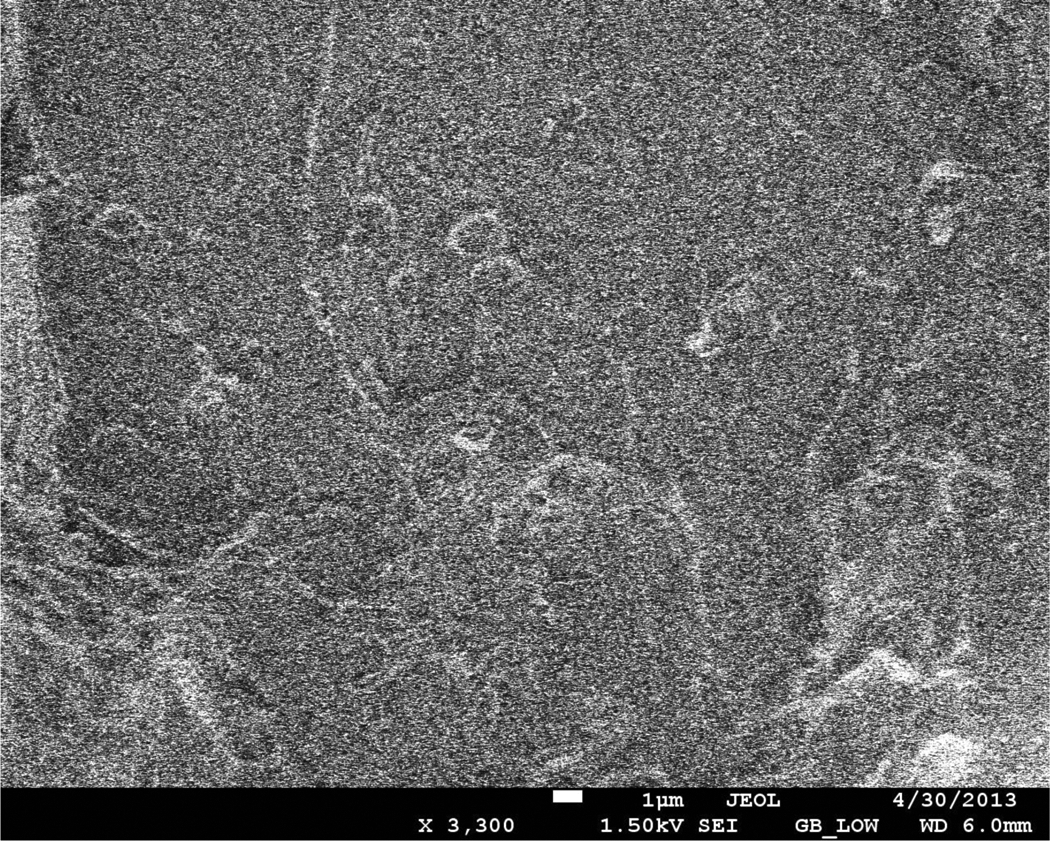
SEM micrograph of 1 wt% MWCNT–PS composite. SEM: scanning electron microscopy; MWCNT: multiwalled carbon nanotube; PS: polystyrene.
Electrical measurements
Electrical measurements with AC and DC applied electric fields were performed using 4200-SCS Semiconductor Characterization System (Keithley Co., Cleveland, Ohio, USA). Samples were shaped into circular discs of area 1.2 cm2 and thickness of 0.08 mm. From current and voltage DC electrical results, resistivity (ρ DC) was calculated at room temperature. Dielectric parameters such as relative permittivity (ε′), dielectric loss (ε″), and AC conductivity (σ AC)) where determined from measured capacitance (C) and phase angle (θ) data 34,35 at room temperature in the frequency range 1 kHz to 1 MHz.
The effect of pressure on the electrical properties of composites was performed by applying a static pressure in the range of 0–6 MPa using a Gunt WP 300 (Herstell –nr, Fabrication:187368, Germany) testing machine. The pressure was increased and after each increment of load, the pressure level was kept constant for an additional 5 min in order to minimize the fluctuation of the experimental data. The AC and DC electrical properties of the prepared films were measured using a 4200-SCS Semiconductor Characterization System at room temperature in the frequency range 1 kHz of 1 MHz.
Deformation of the samples was within elastic region as confirmed by the mechanical measurements. The effect of static pressure on films electrical properties was performed through loading (0–6 MPa) and unloading (6–0 MPa) cyclic measurements.
Mechanical measurements
The stress–strain measurements were carried out on a dynamic mechanical analysis Q800 (TA Instruments LLC, Delaware, USA) instrument with force and strain resolutions of 0.0001 N and 1.0 nm, respectively, using the tension film clamping arrangement. Specimens in the form of films (dimensions: length 15 mm, width 4 mm, thickness 0.08 mm) were used. The measurements for all samples were carried out at 25°C with a force rate of 3.0 N/min.
Optical properties
UV–vis absorption spectra of prepared nanocomposites were measured at room temperature using a Shimadzu UV–vis spectrophotometer (Model UV-3600, Japan) in the wavelength range 200–800 nm. The scan step was 0.5 nm. The measurements were made at room temperature. 5,34
Results and discussion
Electrical properties of MWCNT–PS nanocomposites in the absence of applied static pressure
The DC electrical resistivity values of prepared MWCNT–PS nanocomposites (pretreated with 1.0 wt% β-HNA) at room temperature and 0.0 MPa external pressure are presented in Figure 2 as a function of MWCNT weight fraction. It can be seen from this figure that MWCNT decreases the electrical resistivity of the nanocomposites by about eight orders of magnitude, indicating the formation of MWCNT–PS network structure as previously shown in Figure 1. Such network facilitates the electron transport through tunneling throughout the polymer or by electron hopping along CNT interconnects. 5,6,35 However, electrical resistivity of MWCNT–polymer composites depends on the polymer layer in the internanotube connections that forms highly resistive section in the electrical pathway and acts as a barrier to efficient carrier transport between the nanotubes. Figure 2 also shows that the percolation threshold (i.e. CNT concentration at insulator–conductor transition) is about 0.8 wt% in our composite system.
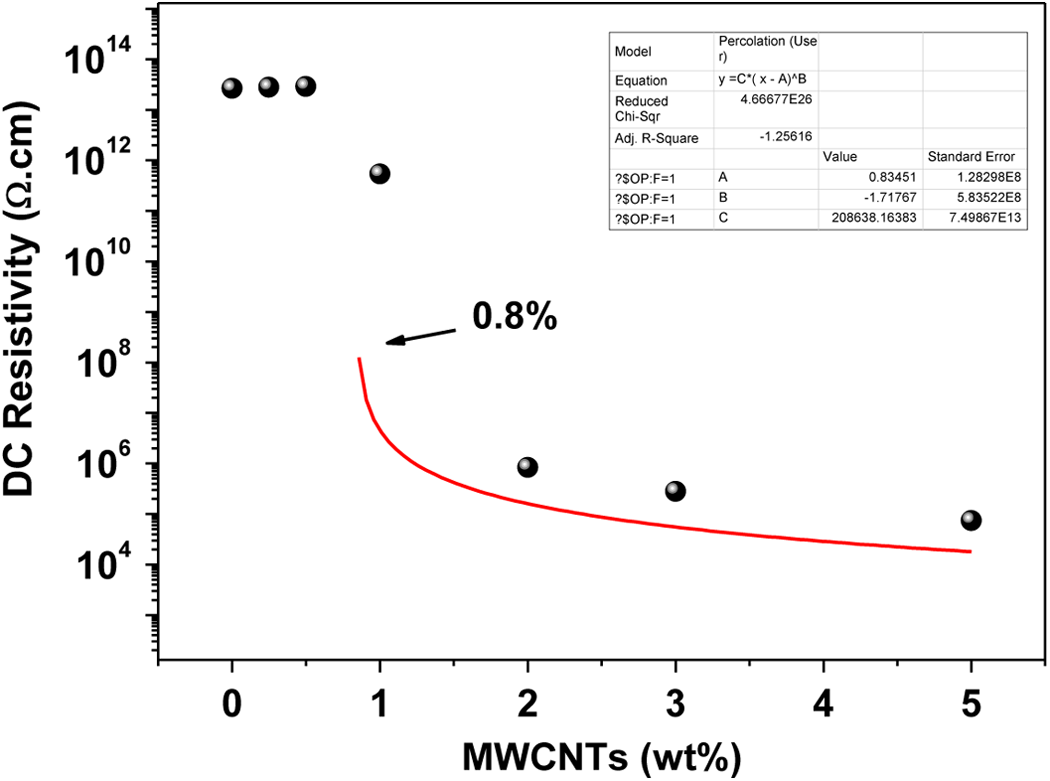
DC electrical resistivity versus MWCNT weight fraction for MWCNT–PS nanocomposites. DC: direct current; MWCNT: multiwalled carbon nanotube; PS: polystyrene.
Comparatively, in our previous work, 7 we showed that the electrical percolation threshold of UV–O3-treated MWCNT–PS composites was also around 0.8 wt% but with an electrical conductivity increase of only six orders of magnitude. Besides, Yu et al, 36 prepared MWCNT–PS composites using the latex technique. Initially, they dispersed MWCNTs in aqueous solution of sodium dodecyl sulfate driven by sonication and then mixed them with different amounts of PS latex. They found that the percolation threshold was about 1.5 wt% MWCNTs. Mathur et al. 37 prepared MWCNT–PS (without any pretreatment) using the casting technique and demonstrated that the electrical conductivity appear to increase significantly only at high level of MWCNT content (up to 10 vol%). It can be seen that pretreatment of MWCNTs is an important factor to improve CNT dispersion, elevate electrical conductivity, and reduce the electrical percolation threshold.
Figure 3(a) and (b) shows the variation of dielectric permittivity (ε′) and ε″ with applied frequency and MWCNTs weight fraction, respectively. Figure 4 illustrates the variation of ε′, ε″, and AC electrical conductivity (σ AC) with MWCNTs weight fraction at 1 KHz, respectively. It is obvious from these figures that incorporation of MWCNTs in neat PS enhances ε′, ε″, and σ AC of the neat PS. Moreover, as it can be seen in Figure 4(c), the σ AC increases up to four orders of magnitude with increasing MWCNT weight fraction up to 5%.
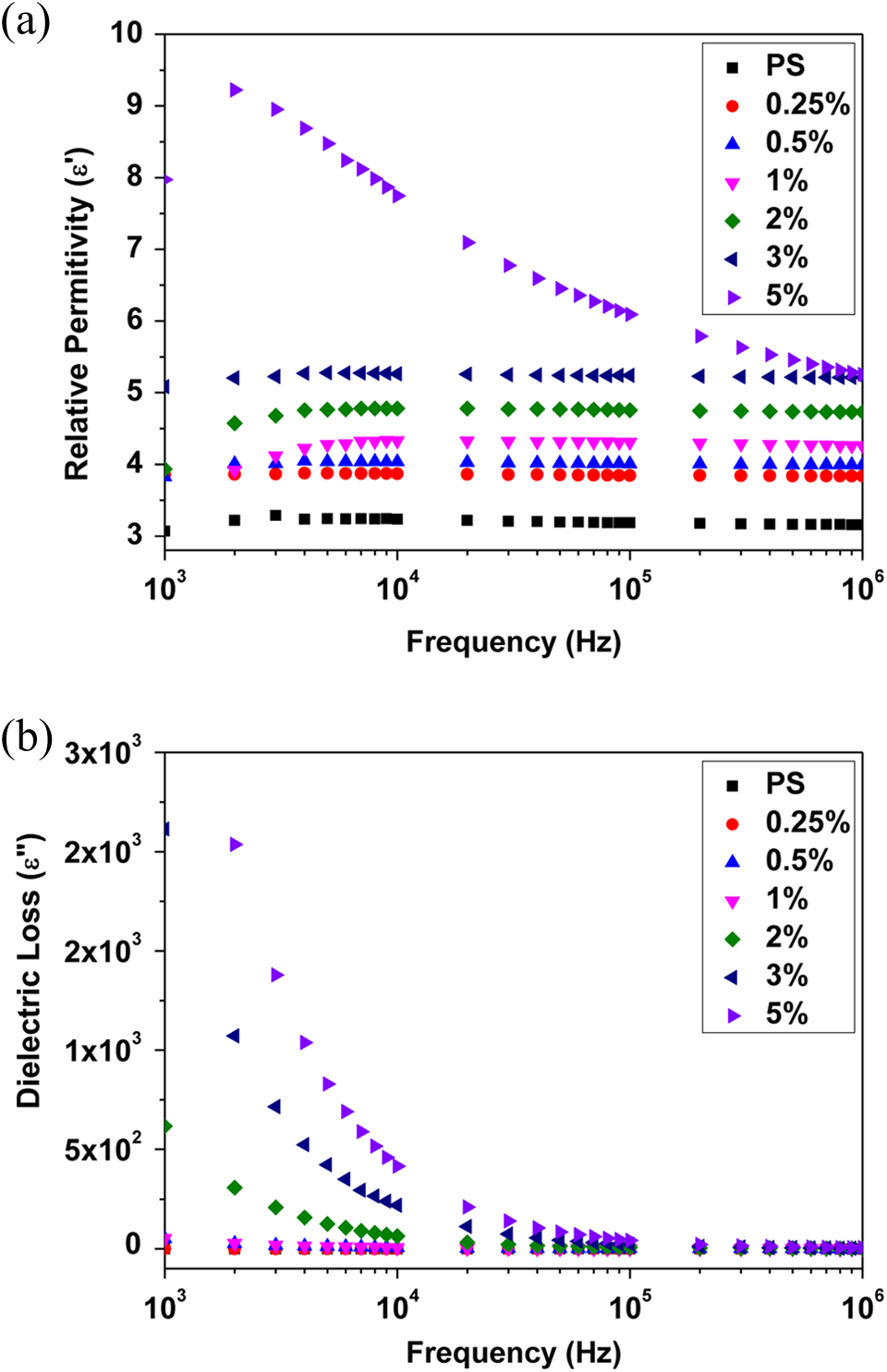
Variation of (a) ε′ and (b) ε″ with applied frequency for MWCNT–PS nanocomposites. ε′: relative permittivity; ε″: dielectric loss; MWCNT: multiwalled carbon nanotube; PS: polystyrene.
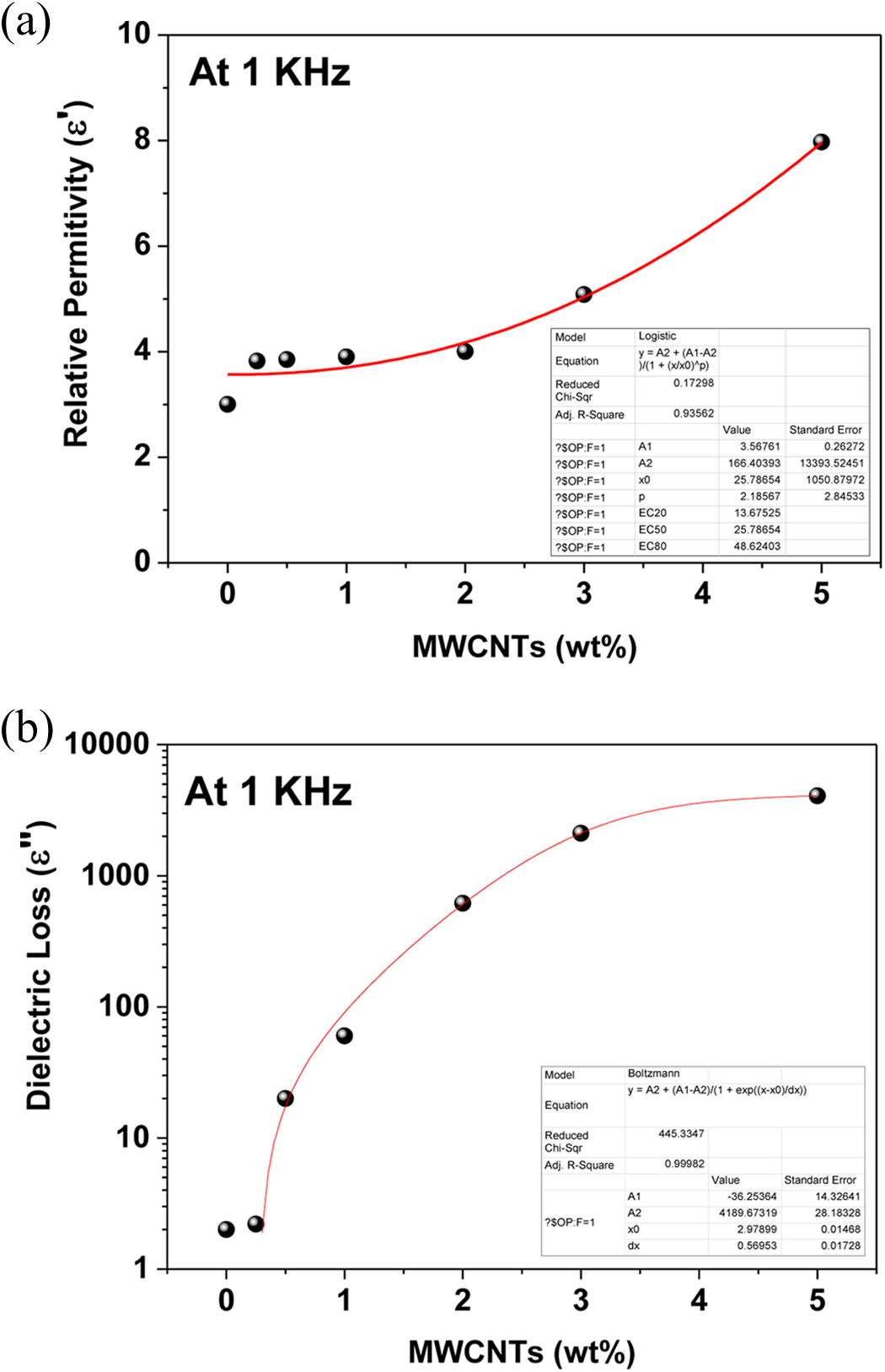
Dependence of (a) ε′, (b) ε″, and (c) σ AC on MWCNTs weight fraction at 1 kHz for MWCNT–PS nanocomposites. ε′: relative permittivity; ε″: dielectric loss; σ AC: AC electrical conductivity; MWCNT: multiwalled carbon nanotube; PS: polystyrene.
Electrical properties of MWCNT–PS nanocomposites in the presence of applied static pressure
The effect of pressure on the electrical properties of β-HNA-pretreated MWCNT–PS nanocomposites was examined for all samples. Prepared films with 1 wt% MWCNTs content in neat PS showed significantly re-cyclic variations in the electrical properties with applied pressure.
The variation of current (I)-voltage (V), and impedance (Z) in the DC and AC applied fields, respectively, with applied pressure of the sample containing 1 wt% MWCNTs is shown in Figure 5. The effect of loading–unloading cycle on the current level and impedance values of 1 wt% MWCNT sample is shown in Figure 6. It can be seen that the current level increases while impedance values decrease with pressure increase during the loading–unloading cycle and the cycle almost follow the same route, indicating its elasticity as will be discussed in the mechanical part. The measured composite total impedance (Z) was resolved into real (Z′) and imaginary (Z″) parts to construct effect of pressure on behavior of the Cole–Cole impedance plot. Figure 7 represents the Cole–Cole plot of 1 wt% MWCNT–PS composite (pretreated with 1.0 wt% β-HNA) at room temperature and different applied pressure values. It can be seen from Figure 7 that the radius of the Cole–Cole plot of composite decreases with increasing applied pressure. This implies that the distance between CNT–CNT in the CNT–polymer network decreases as the applied pressure increases. 5 The obtained results suggest that during loading–unloading cycle, the system has achieved a somehow stable electrical network, which remains unaffected during loading–unloading cycles. In a loading–unloading cycle, conducting paths are formed and break during a cyclic process, so that the composite electrical conductivity remains stable with pressure. The elastic deformation of the sample facilities the transition between conducting and none-conducting paths during the loading–unloading cycle. Pressure decreases the distance between CNTs so they become more tightly, leading to an increase in the electrical properties. The composite elastic properties, on the other hand, ensure the CNTs’ departure at unloading process. Since CNTs and polymer molecules are interlinked, the change in their electrical current level and impedance with applied pressure is determined by three effective processes in the system: (i) compression leads to the formation of new conducting paths or redistribution of existing conducting paths, (ii) compression can cause a substantial decrease of inter-nanotube distance, and (iii) sufficiently high compression can cause a decrease in CNT–CNT contact resistance by squeezing out the matrix from the inter-nanotube gap. Since the investigated composite is already above the percolation threshold, the electrical conductivity of the composites is controlled by the conductivity of the CNTs, their quantity, their quality and the physical contacts between them. Accordingly, the above mentioned three processes are significantly playing a dominant role in determining the change of overall electrical properties of the composite under compression. 23,24 Pressure/electrical results indicate that the 1.0 wt% MWCNT–PS nanocomposites (pretreated with 1.0 wt% β-HNA) acts as pressure-sensitive conductive composite.
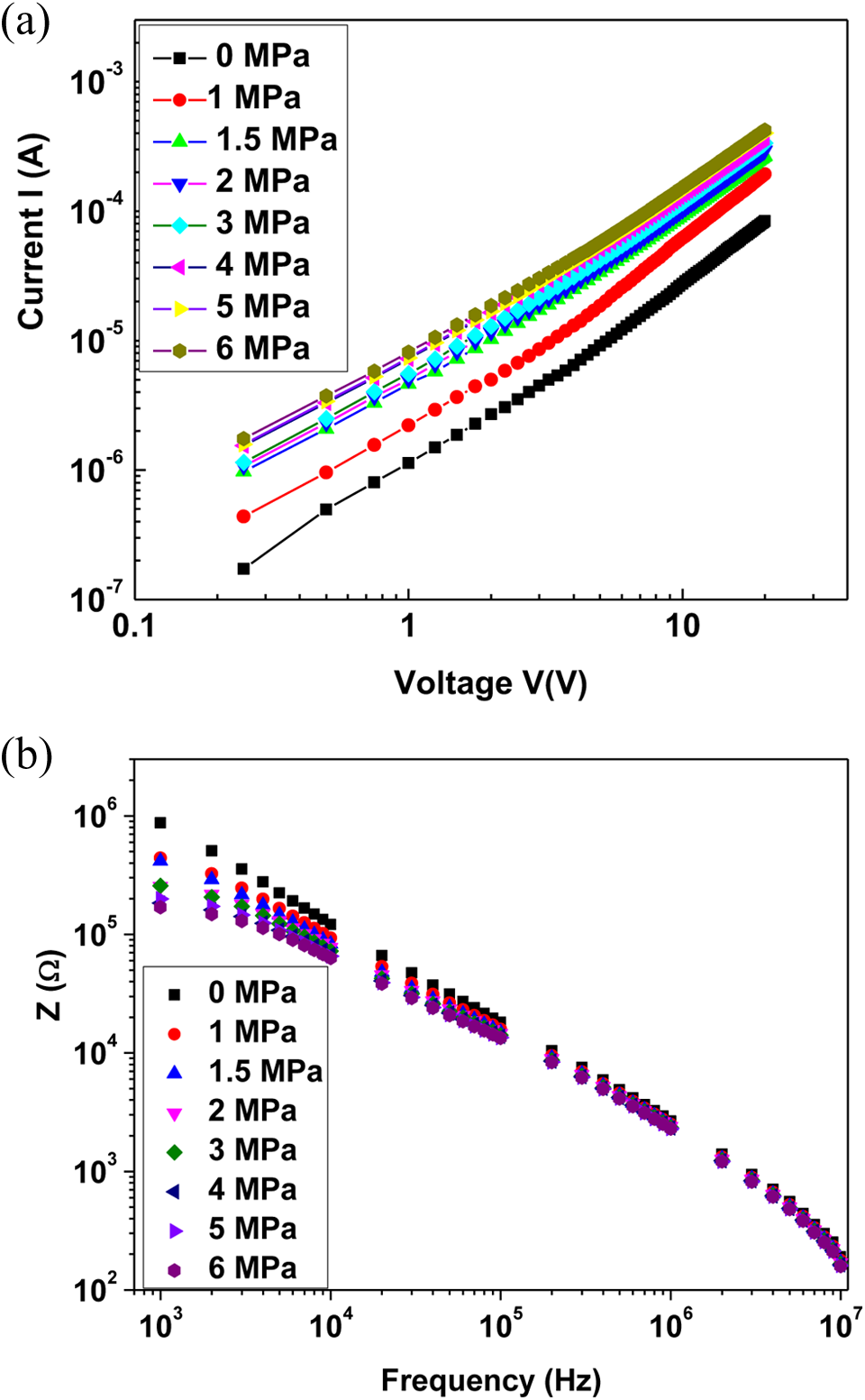
Variation of (a) DC current (I)-voltage (V) and (b) AC impedance (Z)-frequency with pressure for 1.0 wt% MWCNT–PS nanocomposite. DC: direct current; AC: alternating current; MWCNT: multiwalled carbon nanotube; PS: polystyrene.
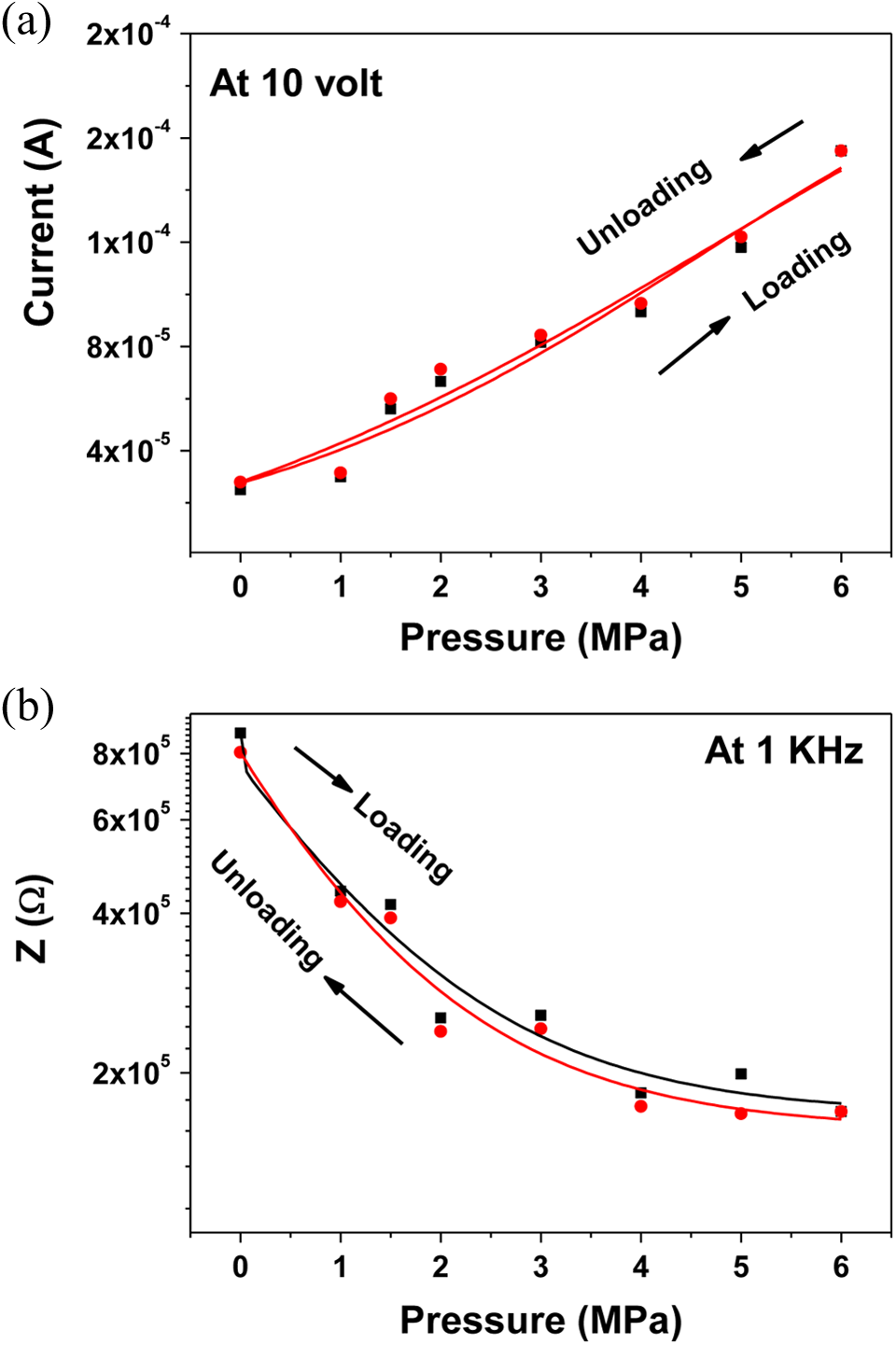
Loading–unloading cycle of (a) DC current versus pressure and (b) AC impedance (Z) versus pressure for 1.0 wt% MWCNT–PS nanocomposite. DC: direct current; AC: alternating current; MWCNT: multiwalled carbon nanotube; PS: polystyrene.
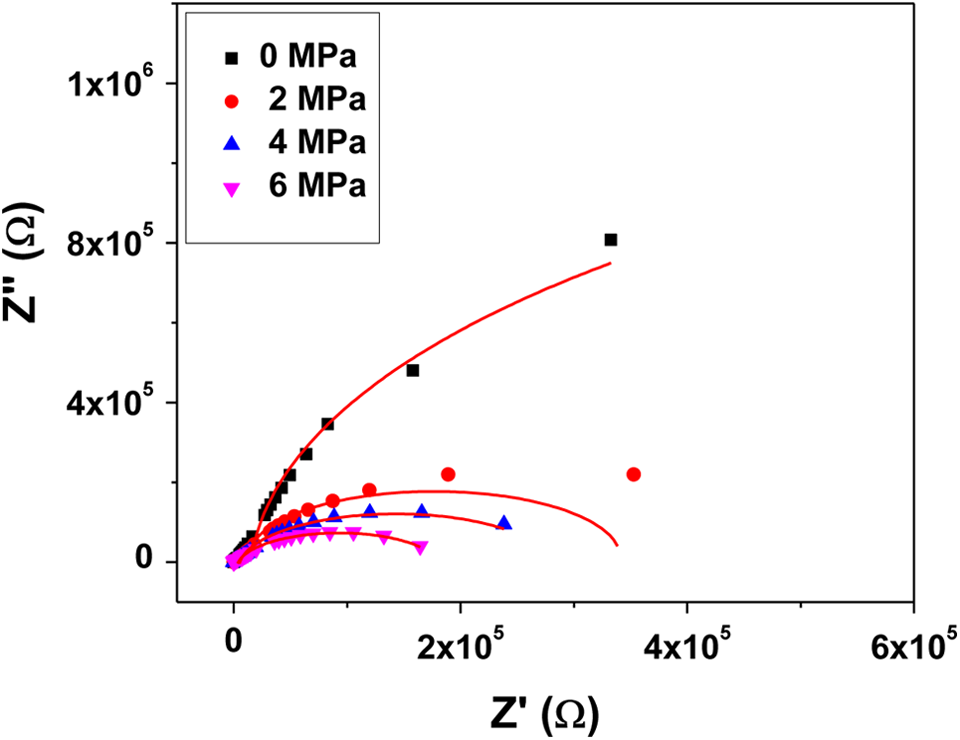
Impedance Cole–Cole plot of 1.0 wt% MWCNT–PS composite at different applied pressure values. MWCNT: multiwalled carbon nanotube; PS: polystyrene.
Mechanical and optical properties
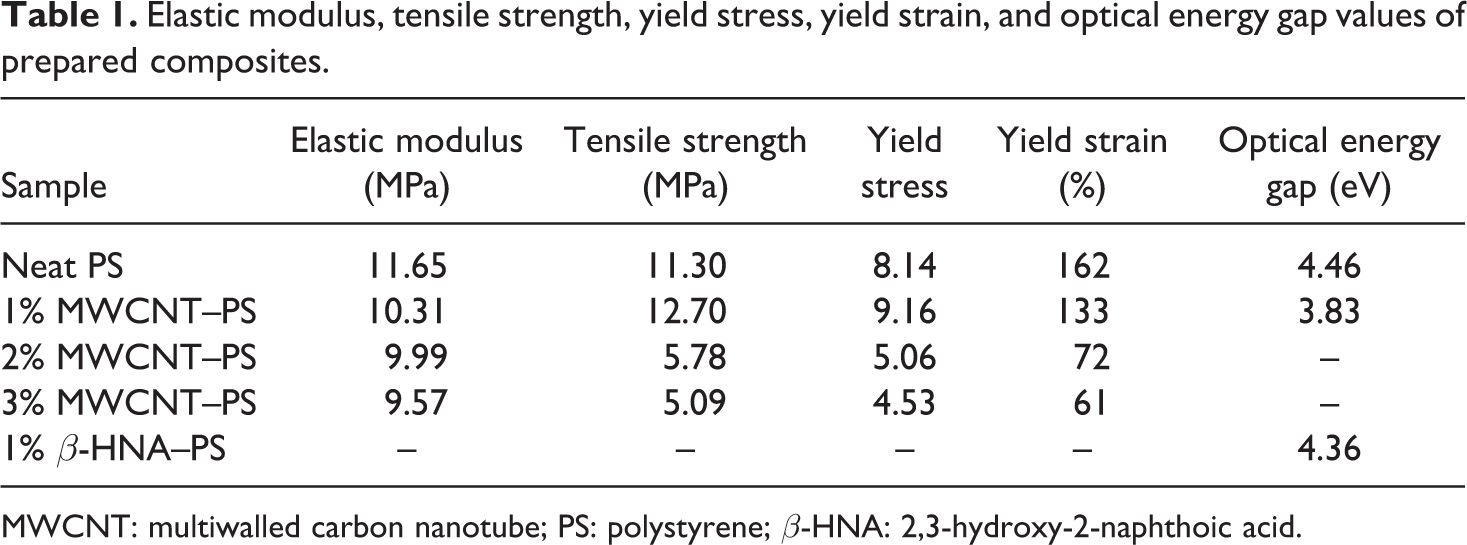
The stress–strain curves of prepared composites are shown in Figure 8. Elastic modulus, tensile strength, yield stress, and yield strain values were determined from the stress–strain curves in Figure 8 and the obtained values are listed in Table 1. Mechanical properties of MWCNT–PS composite (pretreated with 1.0 wt% β-HNA) depend on MWCNT contents. Adding 1.0 wt% MWCNTs to the neat PS increases its tensile strength and yield stress by about 12.39% and 12.53%, respectively. Whereas, the elastic modulus decreases by about 3.10%. At low stress–strain range, mechanical results indicate a linear relation between stress and strain. In such a linear portion, the composite is elastic and satisfy Hook’s law. Mechanical results are in good agreement with the electrical behavior at loading–unloading cycle.
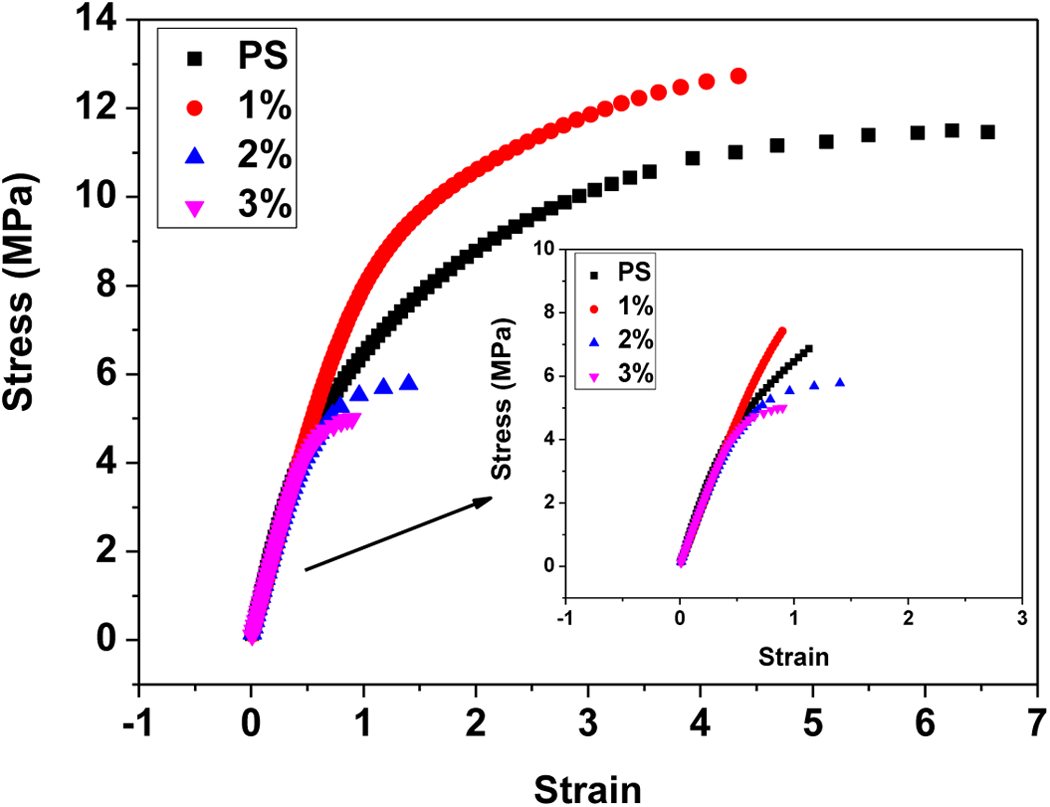
Stress–strain curves of MWCNT–PS composite. MWCNT: multiwalled carbon nanotube; PS: polystyrene.
Elastic modulus, tensile strength, yield stress, yield strain, and optical energy gap values of prepared composites.
MWCNT: multiwalled carbon nanotube; PS: polystyrene; β-HNA: 2,3-hydroxy-2-naphthoic acid.
At high level of MWCNT content (2 wt% and 3 wt%), all mechanical parameters are significantly decreased and the composites become more brittle. The obtained results could be explained in the light of what we had obtained in our previous work. 1 We showed that the pretreatment of MWCNTs with β-HNA (with a fixed concentration of 1.0 wt%) enhanced the interfacial bonds between the MWCNTs and PS chains. Moreover, at 1 wt% MWCNTs (above the percolation threshold) there is a residual amount of β-HNA crystals at the interfacial region between MWCNTs and PS chains leading to an additional elasticity in the composites. At high MWCNT contents (2% and 3% MWCNTs), β-HNA/MWCNTs ratio decreases and hence β-HNA molecules at MWCNT–PS interfacial region become lower. In such situation there will be an increase in the contact between MWCNTs and PS chains so the chain motions will be restricted and the sample becomes more brittle.
Figure 9 shows the UV–vis spectrum of PS, 1% MWCNT/PS, and 1% β-HNA/PS composites. The absence of new absorption peaks for the three samples indicates that there is no significant electronic interaction in the ground state between β-HNA or MWCNTs and PS. 5 However, it is clear that β-HNA enhances the absorption of neat PS at UV region. Also, MWCNT enhances the UV and visible absorption of neat PS. Figure 10 shows a plot between (αhυ)2 versus photon energy (hυ), where α is the absorption coefficient, υ is the frequency of light, and h is the Plank’s constant. The optical energy gap values were determined 5,7,34 from Figure 10 and listed in Table 1. It is obvious that the addition of 1% β-HNA to neat PS will not highly change the optical enegy gap of PS, while addition of 1% MWCNTs to PS will reduce the optical energy gap by about 14.1%. Optically, β-HNA addition to MWCNT–PS composite does not provide valuable information to be correlated with the electrical results.
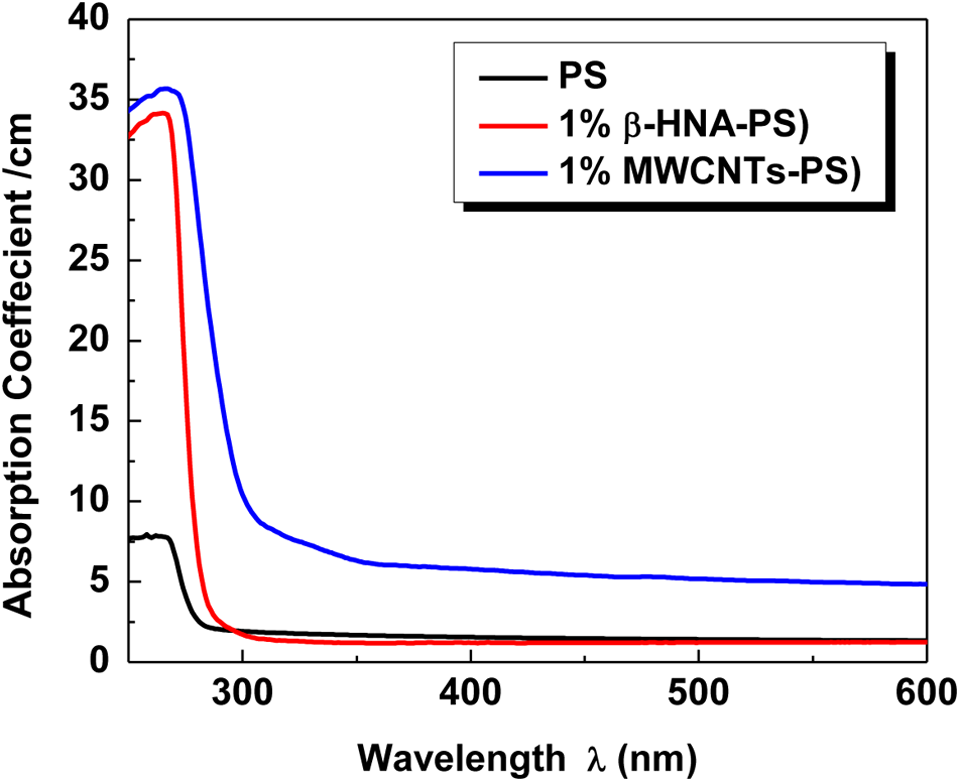
UV–vis absorption spectra of prepared composite. UV: ultraviolet; vis: visible.
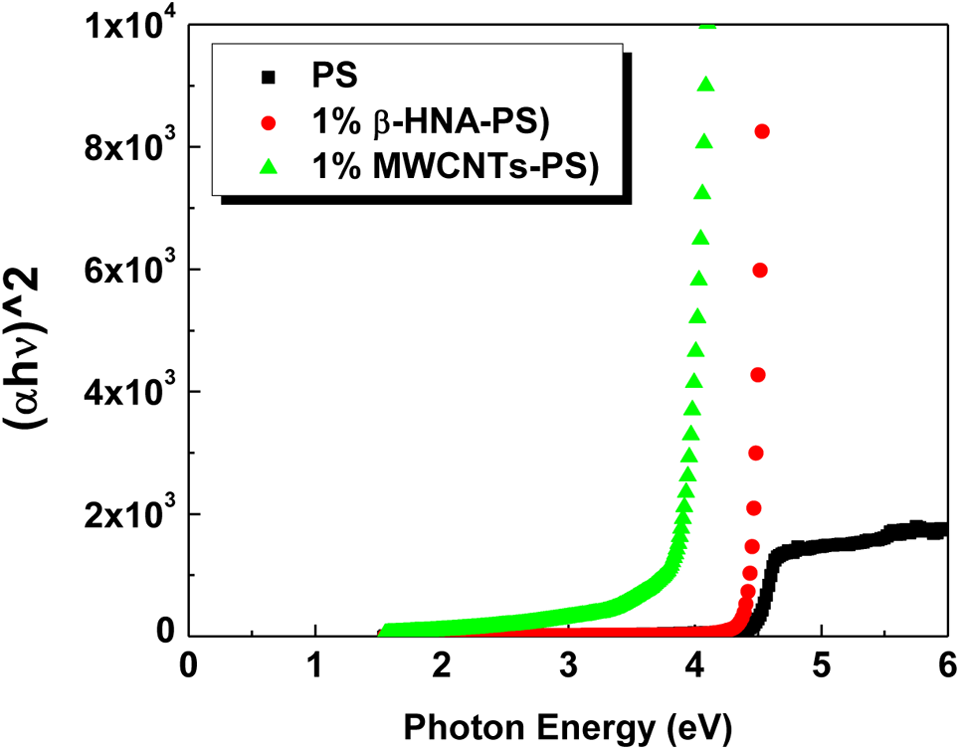
(αhυ)2 versus photon energy of prepared composite.
Conclusions
A series of MWCNT–PS composites were prepared at different MWCNT weight fractions to investigate the electrical properties of these composites and investigate the effect of pressure on the electrical properties of the prepared composites. In the absence of applied static pressure, the percolation threshold of MWCNT–PS composite was around 0.8 wt% MWCNTs and the electrical conductivity increased by about eight orders of magnitude with increasing MWCNTs loading up to 5% MWCNTs. In the presence of applied static pressure, the composite electrical conductivity remains stable with pressure. The MWCNT–PS composite current level increases while impedance values decrease with pressure increase during the loading–unloading cycle and the cycle almost follow the same route indicating its elasticity as was obtained in the mechanical part. β-HNA addition to MWCNT–PS composite did not optically reflect a significant correlation with the electrical results.
Footnotes
Declaration of conflicting interests
The author(s) declared no potential conflicts of interest with respect to the research, authorship, and/or publication of this article.
Funding
The author(s) disclosed receipt of the following financial support for the research, authorship, and/or publication of this article: The authors would like to thank the Deanship of Scientific Research at King Faisal University, Al-Ahsa, KSA, for the financial support for this research, which has a project grant number: 140012.