



Abstract
Poly(lactic acid)/sugarcane bagasse fiber (PLA/SCBF) composites were prepared using melt compounding followed by compression molding. Epoxidized soybean oil (ESO) was selected as plasticizer for the PLA/SCBF composites. SCBF was alkali-treated and ground into powder form with the size of approximately 100 μm (hereafter designated as SCBFP). The properties of the PLA composites were assessed using impact tests, field-emission scanning electron microscopy, and dynamic mechanical analysis (DMA). DMA results showed that the addition of SCBF increased the storage modulus of PLA and the effect is more pronounced for the one containing SCBFP. The impact strength of PLA/SCBF composites was improved significantly by the addition of ESO.
Keywords
Introduction
Poly(lactic acid) (PLA) produced from renewable resources has recently gained growing attention due to its biodegradability, biocompatibility, transparency, high modulus, and strength. PLA promises to be nearly carbon dioxide neutral and reduces dependency on oil for the production of polymeric materials. Green PLA composites can be manufactured by adding various natural resources. The addition of natural fibers into PLA not only helps to reduce environmental impact they could also reduce the manufacturing cost and increase commodity of the product. The industrial use of PLA is targeted toward the packaging, automotive, and biomedical industries. However, there are some factors limiting the application of PLA, such as low toughness and low temperature resistance. 1 –4
Recently, reinforcement of PLA matrix had become the attention of many researchers in order to improve the overall properties of PLA. Natural plants such as bamboo, hemp, kenaf, flax, and Cordenka were some of the fibers used as reinforcement materials in polymer. 5,6 Generally, the natural fibers are light, strong, renewable, and inexpensive. 7 Sugarcane bagasse (SCB) is the residue that remains after sugarcane stalks are crushed to extract their juice. SCB is made up of cellulose, hemicellulose, lignin, ash, and wax in the bagasse. 8 In an attempt to take full advantage of nature potential, blending of PLA and SCB (in fiber and powder form) is a promising approach to produce a green composite.
However, toughening of PLA composites is necessary since it is expected that the impact strength of PLA would be reduced by the addition of SCB fiber (SCBF). According to Nuthong et al. 9 the impact strength of PLA was reduced by the incorporation of bamboo fiber, vetiver grass fiber, and coconut fiber. In this work, epoxidized soybean oil (ESO) was selected as plasticizer for PLA/SCBF green composites. The effects of SCBF, SCBF powder (SCBFP; ground SCBF), and ESO on the mechanical, thermal, and morphological properties of PLA are studied and reported.
Experimental
Materials
Poly(lactic acid)
PLA (IngeoTM 3051D) was purchased from NatureWorks LLC®, (Minnetonka, Minnesota, USA). The specific gravity and melt flow index of the PLA are 1.25 g/10 min and 25 g/10 min (2.16 kg load, 210°C), respectively. The glass transition temperature and melting temperature of PLA are approximately 60°C and 155°C, respectively.
Sugarcane bagasse fiber
Preparation of SCBF
SCB was obtained from local market (Penang, Malaysia). The SCB were dried under sun for 24 h to remove the moisture. Then, the SCB was treated with hot water at 70°C for 2 h to remove residual sugar and dirt. The hot water-treated SCB was cooled at the end of the process to 30°C and washed with water. Further, lignin was removed from the SCB using alkaline treatment (aqueous alkaline with 15% sodium hydroxide (NaOH; w/v) solution, heated to 90°C for 90 min), as described by Moubarik et al. 10 Removal of lignin is an essential step in improving the mechanical properties of polymer/natural fiber composites. Alkaline pretreatment is regarded as a reliable method for delignification process as it breaks ester bonds between lignin, hemicellulose, and cellulose, and avoids fragmentations of hemicellulose polymers. 11 According to Loh et al., 8 untreated bagasse consists of 35% cellulose, 24.5% hemicellulose, and 22.2% lignin. As for alkaline-treated bagasse, Rezende et al. 12 found that after delignification process using NaOH, the bagasse is left with almost 83% of cellulose, 3% hemicellulose, and 9% lignin. The SCB was then filtered and dried using oven and later cut into the length of approximately 5 mm (hereafter designated as SCBF).
Preparation of SCBFP
Alkali-treated SCBF were ground using a miniature grinder (Mill Powder Tech Solutions, model: RT-34, Taiwan). The SCBF in powder form was designated as SCBFP. The SCBFP was then sieved using a sieve shaker (Retsch®, model: AS 200, Germany). The SCBFP with the size of approximately 100 μm was obtained.
Epoxidized soybean oil
ESO with 6.1 wt% epoxy value, 6.0 wt% iodine value, and molecular weight of approximately 950 g mol−1 was supplied by Shandong Longkou Chemical Industry Co., Ltd (China).
Melt compounding and compression molding
Compounding was carried out using a melt mixer (Haake Rheomix 600; Waltham, Massachusetts, USA). The mixing temperature was set at 180°C. PLA were first melted in the mixer, followed by addition of SCBF (with and without ESO). The mixing process takes place for 15 min at 70 r min−1. The loading of SCBF was varied from 5, 10, and 15 wt%. The composites were then compression molded into 3-mm-thickness sheet at 180°C for 10 min. For the SCBFP formulation, similar compounding and compression molding parameter was used.
Characterization
Mechanical characterization
The Charpy impact strength of the samples was determined according to ASTM D6110 standard using a pendulum impact machine (model 5101, Zwick, Germany). The dimension of sample was 65 × 13 × 3 mm3 (length × width × thickness). The testing was performed with pendulum of 7.5 J with a velocity of 3.54 m s−1. Five specimens from each formulation were tested for notched impact tests.
Morphological characterization
Field-emission scanning electron microscope (Zeiss, model: Supra 35VP, Dublin, California, USA) was employed to characterize the fracture surface of the PLA composite specimens. The surfaces of the specimens were coated with gold–palladium to avoid surface charging during the FESEM examination.
Dynamic mechanical analysis
Dynamic mechanical properties of PLA composites were studied under 3-point bending mode on a dynamic mechanical analyzer (Mettler Toledo, model: DMA 861e, Switzerland). Measurements of storage modulus (E′), loss modulus (E′′), and tan δ as a function of temperature (T) were recorded in the range of 20–120°C at a frequency of 1 Hz and a heating rate at 2°C min−1 under nitrogen atmosphere.
Results and discussion
Impact strength
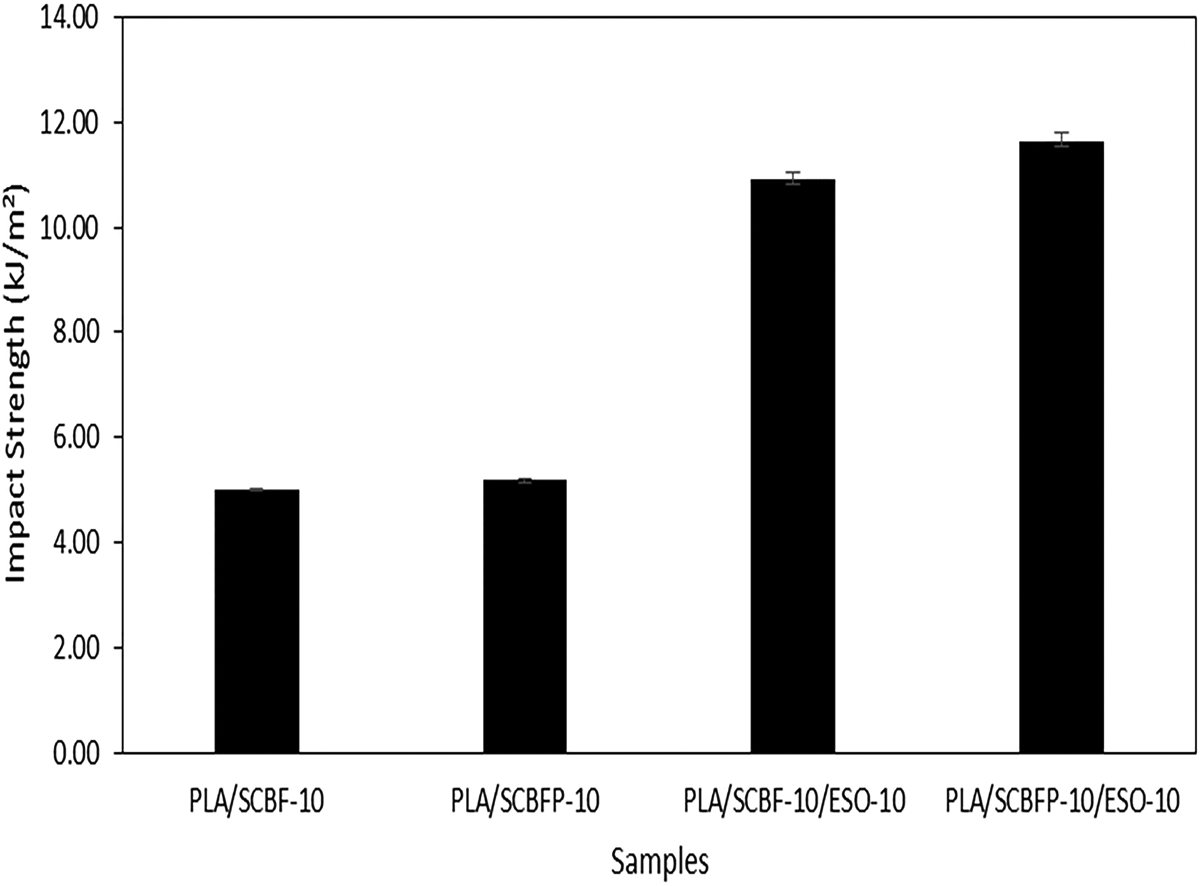
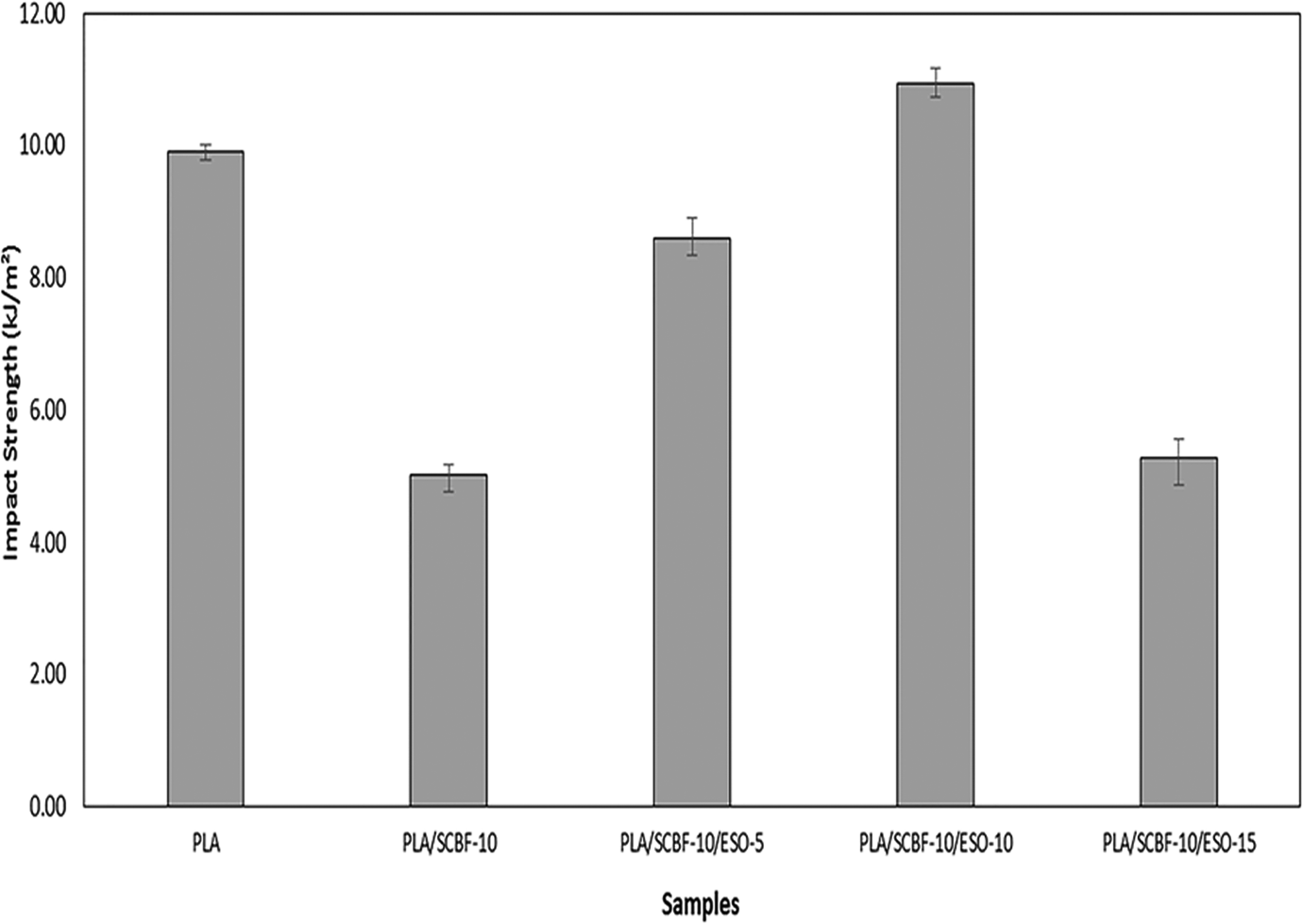
Figure 1 shows the impact strength of PLA and PLA/SCBF (with and without ESO). It can be seen that adding SCBF reduced the impact strength of PLA—as expected. According to Părpăriţă et al., 13 natural fiber may reduce polymer chains’ movement due to its stiffness. Consequently, during fracture deformation, the ability of PLA to absorb impact energy is reduced due to much stiffer SCBF. From Figure 1, one may observe that the impact strength of PLA/SCBF improved in the presence of ESO (especially for the formulation containing 5 and 10 phr ESO). Vijayarajan et al. 14 reported that miscibility plays an important role in toughening of a polymer blend. The solubility parameters of PLA and ESO are 20.2 and 16.8 MPa1/2, respectively. These values show that ESO is partially miscible with PLA. Hence, when ESO is blended with PLA, a second dispersed phase of ESO will form instead of a complete miscible phase. This second phase is responsible for stopping cracks from spreading easily throughout the matrix and subsequently improving the impact strength. Nevertheless, excessive amount of ESO (i.e. 15 phr) did not enhance the impact strength of PLA/SCBF. Xiong et al. 15 prepared ESO-plasticized PLA/maleic anhydride-grafted starch by altering ESO loading from 5 phr to 15 phr. At 15 phr of ESO, impact strength of the composite dropped by 23% compared to 10 wt% ESO composites. According to Chang et al., 16 when the amount of soybean oil increased by up to 15 wt%, phase inversion of soybean oil and PLA occurred, whereby the minor soybean oil phase became the matrix surrounding PLA, causing the reduction in mechanical properties.
Impact strength of PLA/SCBF composites.
Morphological properties
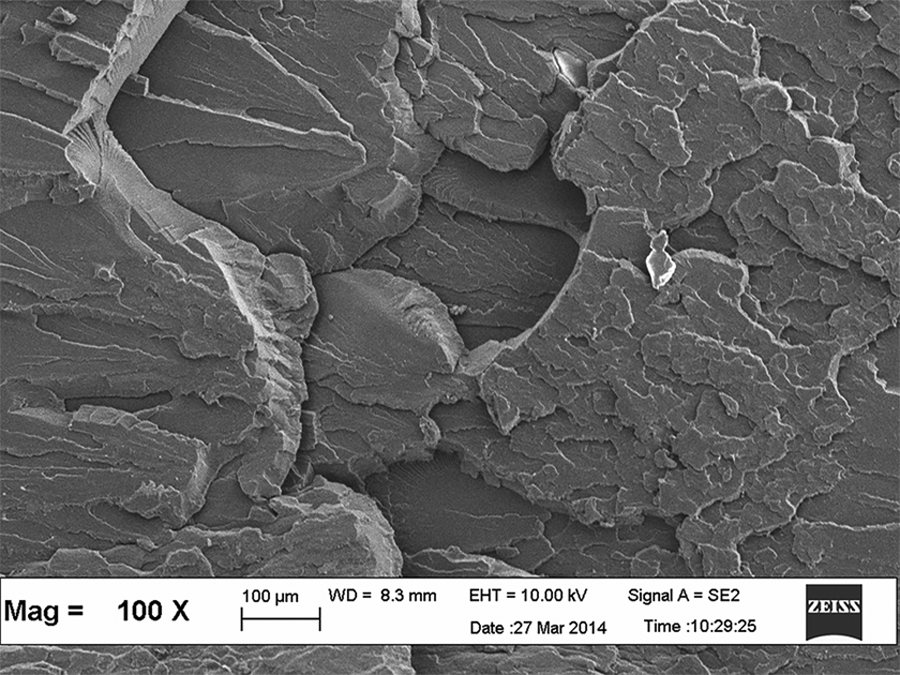
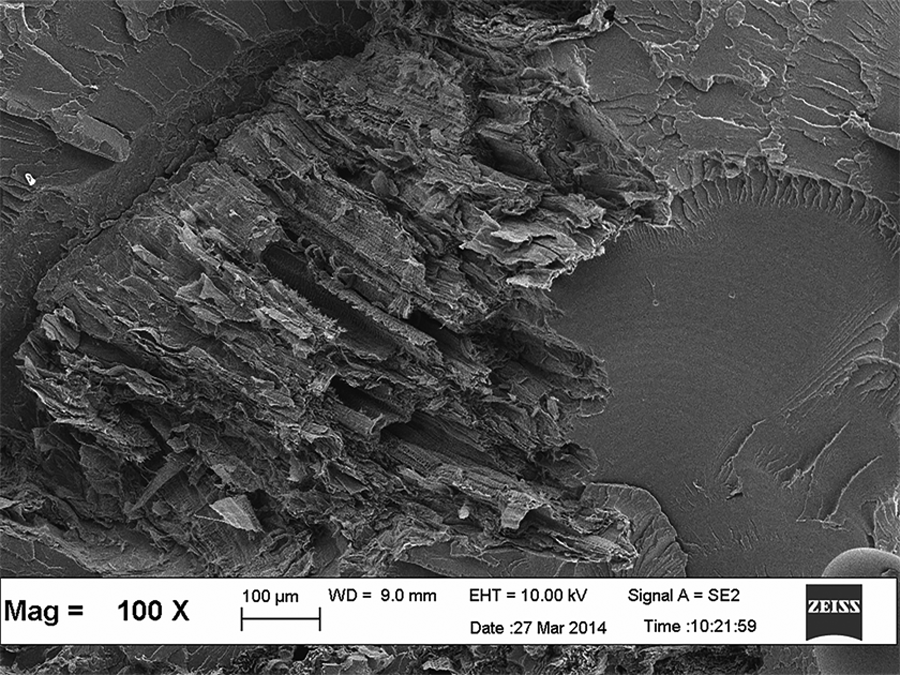
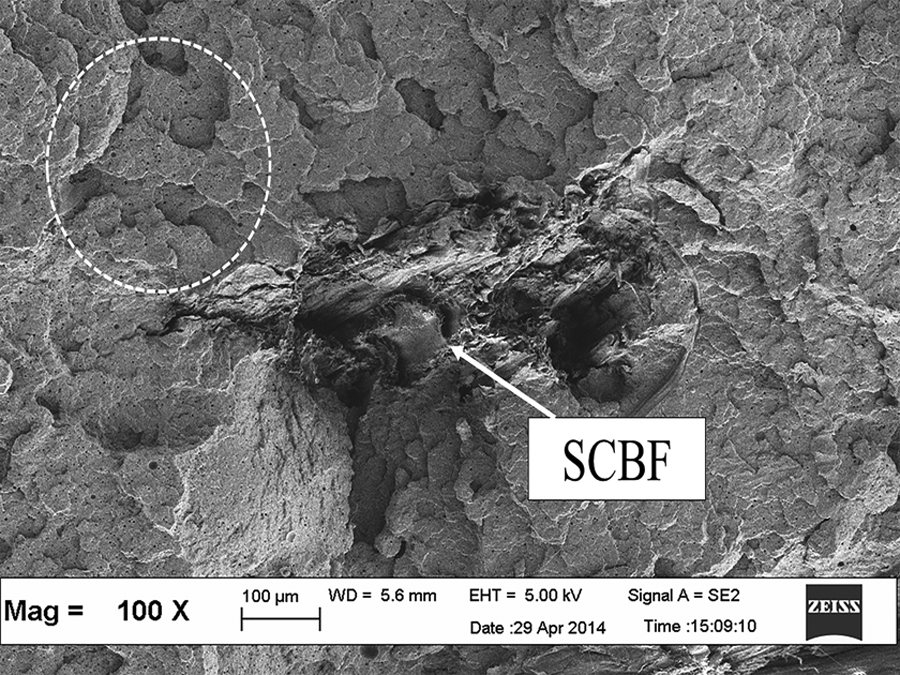
Figures 2 and 3 show the FESEM micrographs taken from the impact fracture surface of PLA and PLA/SCBF composite, respectively. Note that the PLA sample fractured in brittle mode. From Figure 3, interfacial gaps can be observed between the PLA matrix and SCBF. This indicates weak interfacial bonding between PLA and SCBF. The SCBF may act as stress concentrator and as a result reduces the PLA impact strength. In Figure 4, it can be seen that ESO microdroplets scattered across the PLA matrix (see white dotted line circle). The PLA/SCBF/ESO sample exhibit a lot of small crack islands with clear interfaces. Similar observation was reported by Dai et al. 17 Therefore, crack propagation supposedly being inhibited until more energy is being absorbed to break the structure again into small and distinct rupture zones. This can be manifested by the impact strength improvement of PLA/SCBF composites that contain ESO (especially at 5 and 10 phr ESO). According to Ali et al. 18 toughness improvement of PLA/ESO composites maybe due to the local plasticization by microdroplets of low molecular weight ESO dispersed within the PLA matrix.
FESEM micrograph taken from the impact fracture surface of PLA.
FESEM micrograph taken from the impact fracture surface of PLA/SCBF-10 composites.
FESEM micrograph taken from the impact fracture surface of PLA/SCBF-10/ESO-5 composites.
Effects of SCBFP
In this study, comparison is made between SCBF and SCBFP, produced by grinding SCBF into powder form. Figure 5 shows the impact strength of PLA/SCBF and PLA/SCBFP composites (with and without ESO). Clearly there is not much significant difference between the impact strength of PLA/SCBF and PLA/SCBFP. This indicates that the impact strength is not altered by fiber size. Nevertheless, from Figure 5, one can observe that adding ESO improves the impact strength of PLA/SCBFP significantly.
Impact strength of PLA/SCBF and PLA/SCBFP composites (with and without ESO).
Figure 6 illustrates the FESEM micrograph taken from PLA/SCBFP-10 composites. Note that SCBFP dispersed more homogenously (compared to SCBF) and less agglomerates occurred. In addition, PLA/SCBFP-10/ESO-10 composite exhibited similar properties to that of PLA/SCBF-10/ESO-10 composite (see Figure 7). ESO microdroplets (c.f. white dotted line circle) were seen distributed across the matrix. Small and distinct rupture zones can also be detected on the fracture surface. Besides that, SCBFP were seen dispersed more homogeneuosly and this might be the reason that contributes to the slightly higher impact performance of the PLA composite.
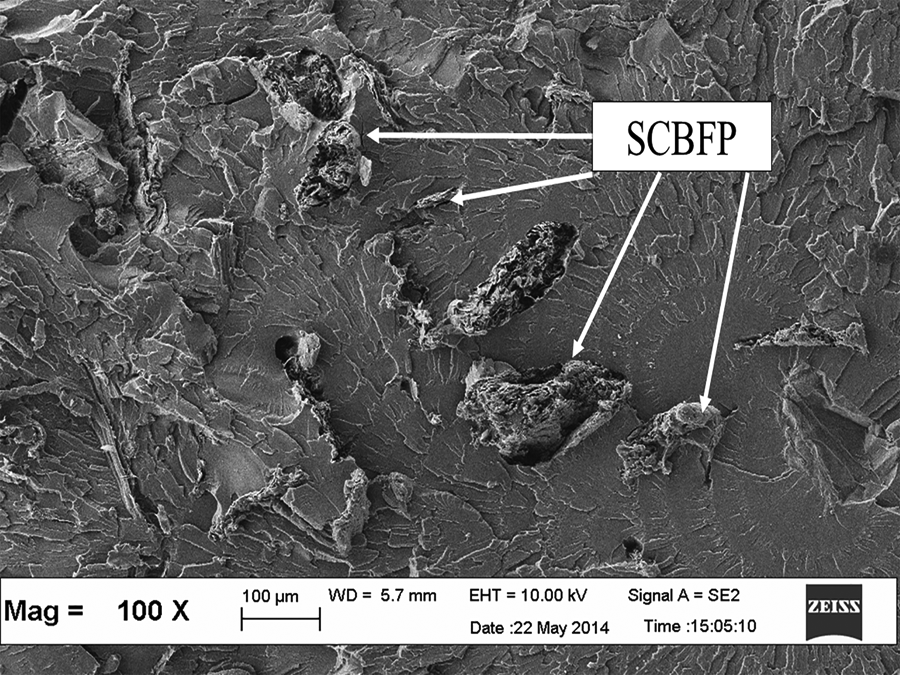
FESEM micrograph taken from the impact fracture surface of PLA/SCBFP-10 composites.
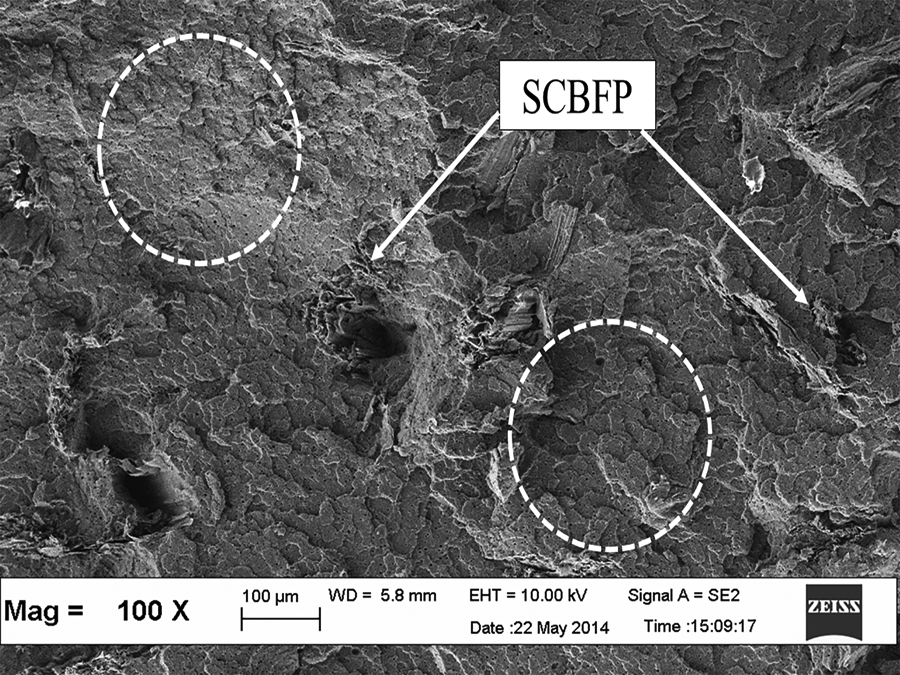
FESEM micrograph taken from the impact fracture surface of PLA/SCBFP-10/ESO-10 composites.
Thermal properties of PLA green composites
Dynamic mechanical analysis
In this study, dynamic mechanical analysis (DMA) is used to characterize the E′, E″, and tan δ of PLA/SCBF/ESO composites. The PLA/SCBF composites exhibited higher E′ value compared with pure PLA (see Figure 8). According to the study of Oksman et al., 19 the improvement in E′ value of PLA/flax fiber (10 wt%) is 3.2%. In this study, the improvement of E′ value of PLA/SCBF (10 wt%) is 3.8%. The presence of SCBF in PLA matrix restricts the mobility of PLA chains and thus increases the stiffness of the composites. This result is in line with the findings by Mofokeng et al. 20 where sisal fibers were used as fillers in PLA and polypropylene (PP) composites. It was found that the presence of 1–3 wt% of sisal fibers in the polymer matrixes increased E′ value of PLA and PP, restricting segmental motion of both polymer chains. Compared to neat PLA, SCBF-reinforced PLA composites showed an increase in the value of E″, indicating viscous response to deformation of PLA is more prominent in the presence of SCBF (see Figure 9).
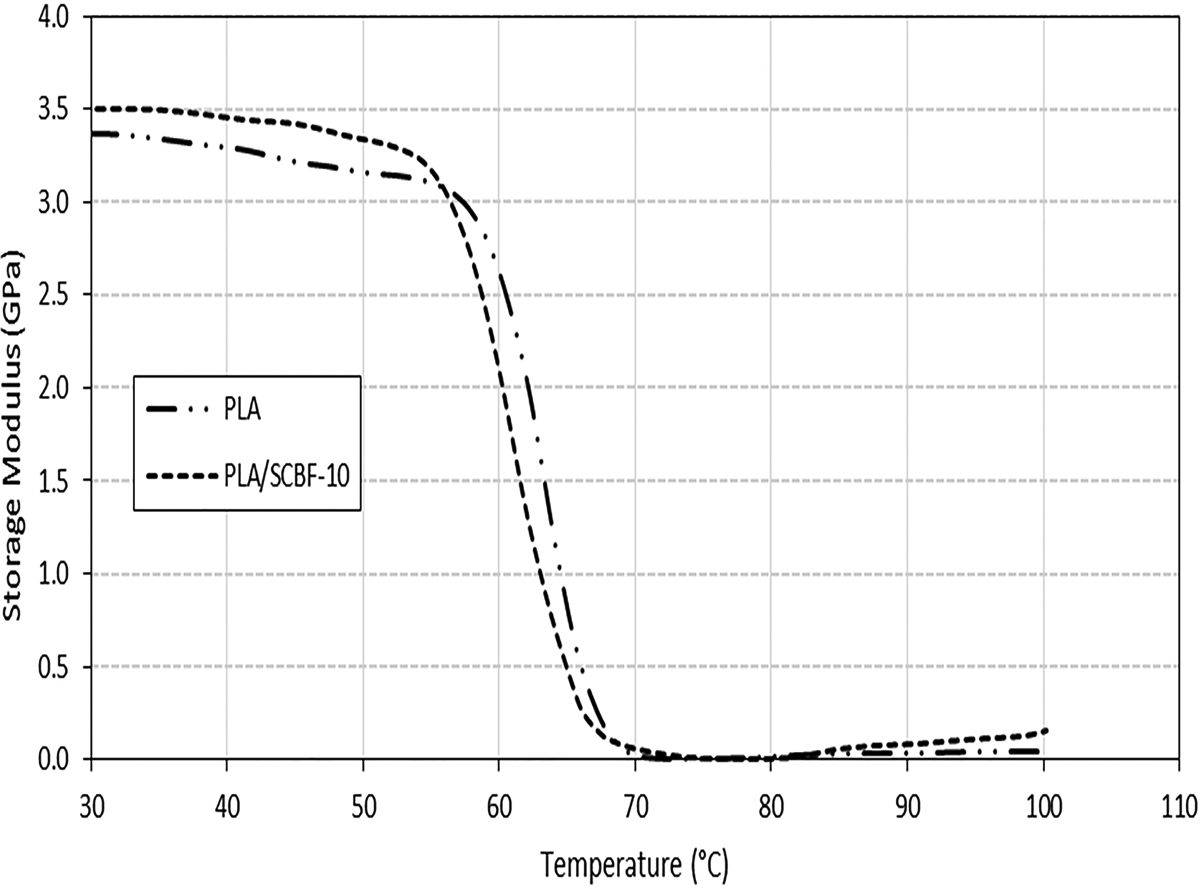
E′–T curves of PLA and PLA/SCBF-10 composites recorded from DMA.
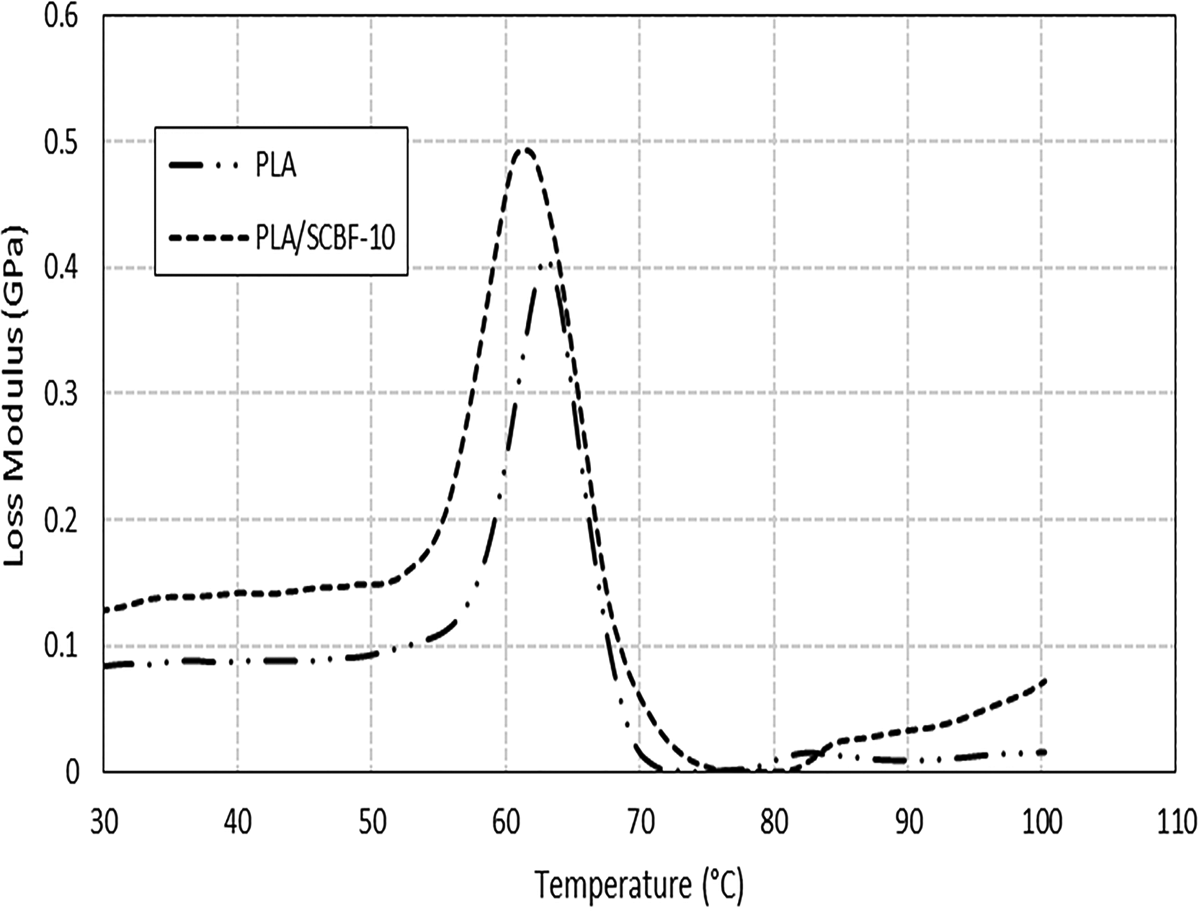
E″–T curves of PLA and PLA/SCBF-10 composites recorded from DMA.
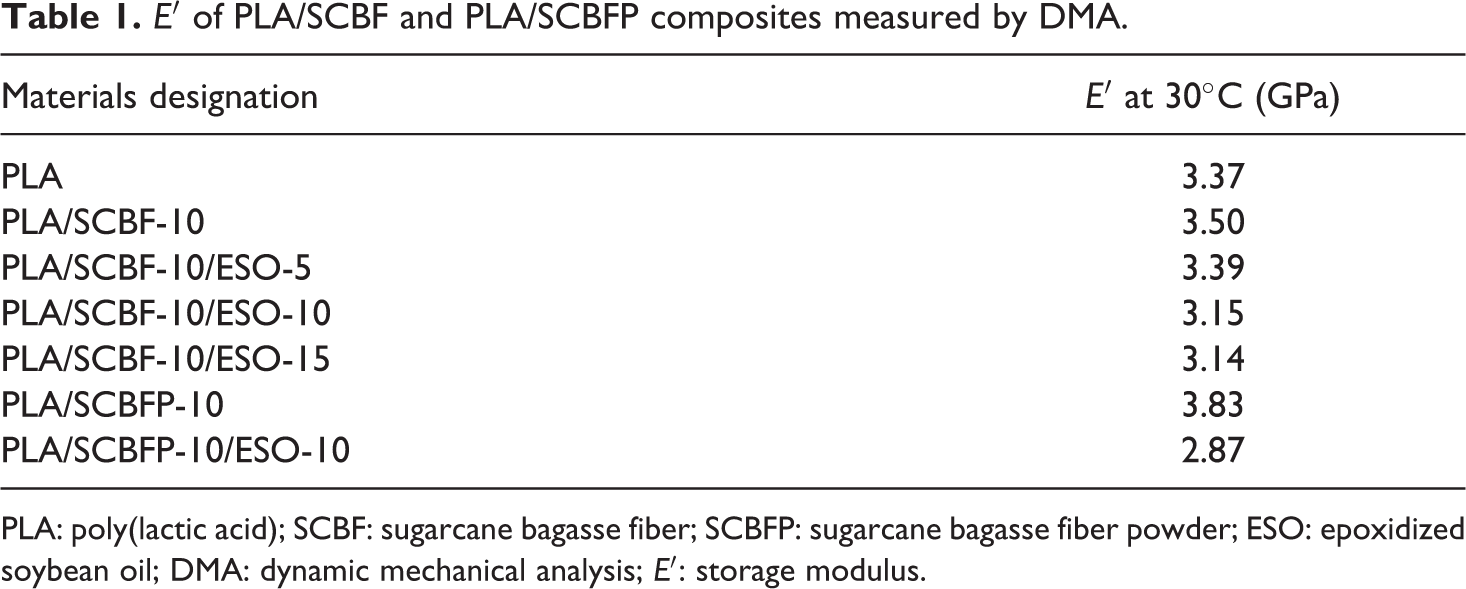
From Table 1, it can be seen that the value of E′ of PLA/SCBF-10 composite reduced by the addition of ESO. This is due to the plasticization effect of ESO. The ESO enables PLA composites to become more flexible and move into a wider packing arrangement in rubbery plateau area. 21 As the ESO loading increases gradually, the value of E′ for the PLA/SCBF/ESO decreases remarkably.
E′ of PLA/SCBF and PLA/SCBFP composites measured by DMA.
PLA: poly(lactic acid); SCBF: sugarcane bagasse fiber; SCBFP: sugarcane bagasse fiber powder; ESO: epoxidized soybean oil; DMA: dynamic mechanical analysis; E′: storage modulus.
At T = 30°C, the value of E′ of PLA/SCBFP-10 > PLA/SCBF-10 > PLA. This indicates that SCBFP (in powder form, approximately 100 μm) is more reinforcing compared to SCBF (fiber length of approximately 5 mm). The PLA/SCBFP composite showed distinctively large increase in E′ value compared to neat PLA (13.6%) and PLA/SCBF-10 (9.4%). The ability of SCBFP to improve the stiffness of PLA up to a higher extent is attributed to the fact that smaller size fiber has larger surface contact area with PLA matrix. This contributes to more efficient stress transfer at the fiber–matrix interface.
As for PLA/SCBFP-10/ESO-10 composite, it exhibited relatively large reduction of E′, compared to PLA/SCBF-10/ESO-10 composite (see Table 1). At T = 30°C, the E′ of PLA/SCBFP-10/ESO-10 < PLA/SCBF-10/ESO-10 < PLA. PLA/SCBFP-10/ESO-10 composite showed remarkable decrease of E′ value compared to PLA (reduction by approximately 14.8%) and PLA/SCBF-10/ESO-10 (reduction by approximately 8.8%).
Conclusions
Based on this study on PLA/SCBF green composites, the following conclusions can be drawn: DMA results showed that the addition of SCBF increased the E′ of PLA and the effect is more pronounced for the one containing SCBFP. Thus, SCBFP is more reinforcing compare to SCBF. Adding ESO increased the impact strength of PLA composites. From FESEM, ESO microdroplets were seen distributed across the PLA matrix. Incorporation of ESO is a good strategy to improve the toughness of PLA/SCBF and PLA/SCBFP composites.
Footnotes
Declaration of Conflicting Interests
The author(s) declared no potential conflicts of interest with respect to the research, authorship, and/or publication of this article.
Funding
The author(s) disclosed receipt of the following financial support for the research, authorship, and/or publication of this article: This study was funded by Universiti Sains Malaysia Research University Grant (grant number 814199) and USM Incentive Grant (grant number 8021013).