




Abstract
Poly(hydroxybutyrate-co-hydroxyvalerate) (PHBV) biocomposites different sisal, containing with the fiber length of 0.25 and 5 mm, and addition of clay particles were prepared by hot compression technique. Silane (Bis(triethoxysilylpropyl)tetrasulfide) treatment has been used to modify, and thus enhance, the properties of related hybrid composites. All composites were subject to water absorption test. The mechanical properties of hybrid composites, such as tensile stiffness and strength, toughness, and hardness, determined tensile, impact, and hardness tests, respectively. It was found that tensile strength, stiffness, and impact strength of long sisal fiber improved with increasing fiber content. Hardness of short sisal fiber improved with increasing fiber content. Treated Silane of long fibers at 20 wt.% loading was found to enhance the tensile strength fiber by 10% and impact strength by 750% as compared with the neat PHBV. Note that this feature was also confirmed by scanning electron microscopy. Moreover, the hardness and water resistance of the PHBV/sisal composites increased with the addition of clay particles. The diffusion coefficient for the PHBV and hybrid composites systems studied was also calculated.
Keywords
Introduction
Nowadays, polymers from renewable resources such as poly(hydroxybutyrate-co-hydroxyvalerate) (PHBV) and polylactide (PLA) are gaining ground over conventional petroleum-based matrices. Among the various available polymers, PHBVs and PLAs have the potential to be used in biobase polymer composites 1–3 because of environmental problems related to their disposal as well as concerns over petroleum availability for the production of polypropylene and polyethylene. Note that PHBV is a polyhydroxyalkanoates (PHAs) family that is widely used in potential applications such as in food packaging and biomedical fields because of its good biocompatibility and biodegradability; however, the widespread application was limited because of its narrow processing window and poor mechanical properties. 4,5 Natural fibers have been receiving considerable attention as substitutes for synthetic fiber reinforcement. The addition of natural fiber reinforcement can markedly improve selected properties of the related biopolymers. 3,6 Džalto et al. 6 reported, for the green composites, that the mechanical performance of furan biopolymer was enhanced by flax fiber textiles that reinforced the furan matrix. In the recent years, PHBV is often reinforced with natural fibers, such as cellulose, abaca kenaf, and bamboo, to improve the mechanical properties (e.g. impact, stiffness, and strength properties). Sanjeev et al. 7 reported on achieving the biocomposites with superior properties by combining the PHBV/bamboo fibers. The results showed that the bamboo fiber-reinforced PHBV composite was able to improve tensile properties of PHBV. The stiffness of PHBV composites at 40 wt% of bamboo fiber was enhanced by 175% compared with neat PHBV. The significantly improved properties were attributed to the length and distribution of bamboo fibers. Qian 8 demonstrated the improved mechanical properties of PHBV/bamboo pulp fiber (BPF) using a surface modification of fibers of the polymeric diphenylmethane diisocyanate (pMDI) as a coupling agent and the grafted maleic anhydride (MA) as a compatibilizer. Both pMDI and MA can improve the interfacial adhesion between BPF and PHBV. The results of related PHBV/BPF composites showed that the tensile, flexural, and modulus strengths substantially increased.
Currently, most studies on natural fibers as reinforcement and the development of hybrid composites with particular regard to its different applications are concerned on the fundamental understanding of their mechanical and barrier behaviors. 9 Recently, Siengchin and Dangtungee pointed out that flax reinforcements of different composite structures may play a role as a controlling factor to optimize the mechanical properties of the hybrid polypropylene and high-density polyethylene composites. 10 Furthermore, nanofillers, such as carbon nanotubes, silica, layered silicate, and clay, have attracted great attention in the past decades for the production of composites based on engineered and biopolymers 11–13
The goal of this work was to demonstrate the feasibility of the fabrication of PHBV reinforced with unmodified and modified sisal fiber (Hupkapong Aqricultural Co-operative Ltd., Phetchaburi, Thailand) using hot compression technique. Note that sisal is a plant that can generate revenue from production to farmers in Thailand. Issues such as fibers of sisal will be left to waste or will be used with low economic values. Thus, it is important to increase the value of sisal output. Therefore, this project introduces the concept of short- and long-fiber sisal-reinforced PHBV polymer. A further aim of this work was to check the effect of the fiber size and clay particles on the impact and mechanical properties of hybrid composites. The dispersion of sisal fiber in PHBV was assessed by optical microscope and scanning electron microscopy (SEM).
Materials and methods
Materials
PHBV, in a fine powder form, was provided by Ningbo Tianan Biologic Material Co. Ltd and was used as polymeric matrix for all composite systems. Its melt flow index (MFI) was 4.35 g/10 min (190°C, 2.16 kg). The density was 1.25 g cm−3, and the glass transition temperature (T g) was 5°C. The sisal fibers were supplied by Hupkapong Aqricultural Co-operative Ltd. Silane (bis(triethoxysilylpropyl)tetrasulfide) was purchased from local commercial sources (Nanjing Capatue Chemical Co., Ltd., China). Nanoclay was supplied by Polymer Innovation Co., Ltd., Nonthaburi, Thailand.
Methods
Fiber treatment
Prior to treatment, the untreated sisal fibers were washed with water, and the fibers were dried in an oven at 60°C for 2 h. A solution of 3 vol% of silane coupling agent (bis(triethoxysilylpropyl)tetrasulfide) was prepared in acetone. Sisal fibers were immersed in the solution for 24 h. The treatment of sisal fibers included removal from the solution and drying in the oven at 60°C for 24 h.
Fabrication of composites
Prior to the composites processing, the fibers were cut into 5-mm length (long fiber—l) and 0.25 mm (short fiber—s). Note that the diameter of the sisal fiber was in the range of 200–400 µm. To avoid moisture, the PHBV and sisal fiber were dried at 80 and 60°C for 24 and 6 h, respectively. The PHBV/sisal fiber/clay composites were mixed by tumbling in a sealed bag and then mixing occurred in a hot compression mold at 180°C into 3-mm thick plates under a pressure of 2500 psi. The duration of compression molding was 10 min. The recipe of composites is listed in Table 1. Note that the proposed use of the PHBV powder (Ningbo Tianan Biologic Material Co., Ltd., Ningbo, China) and continuous application of the hot press technique is a simple and cost-effective process for producing thermoplastic hybrid composites.
Recipe and designation of the biocomposites systems.
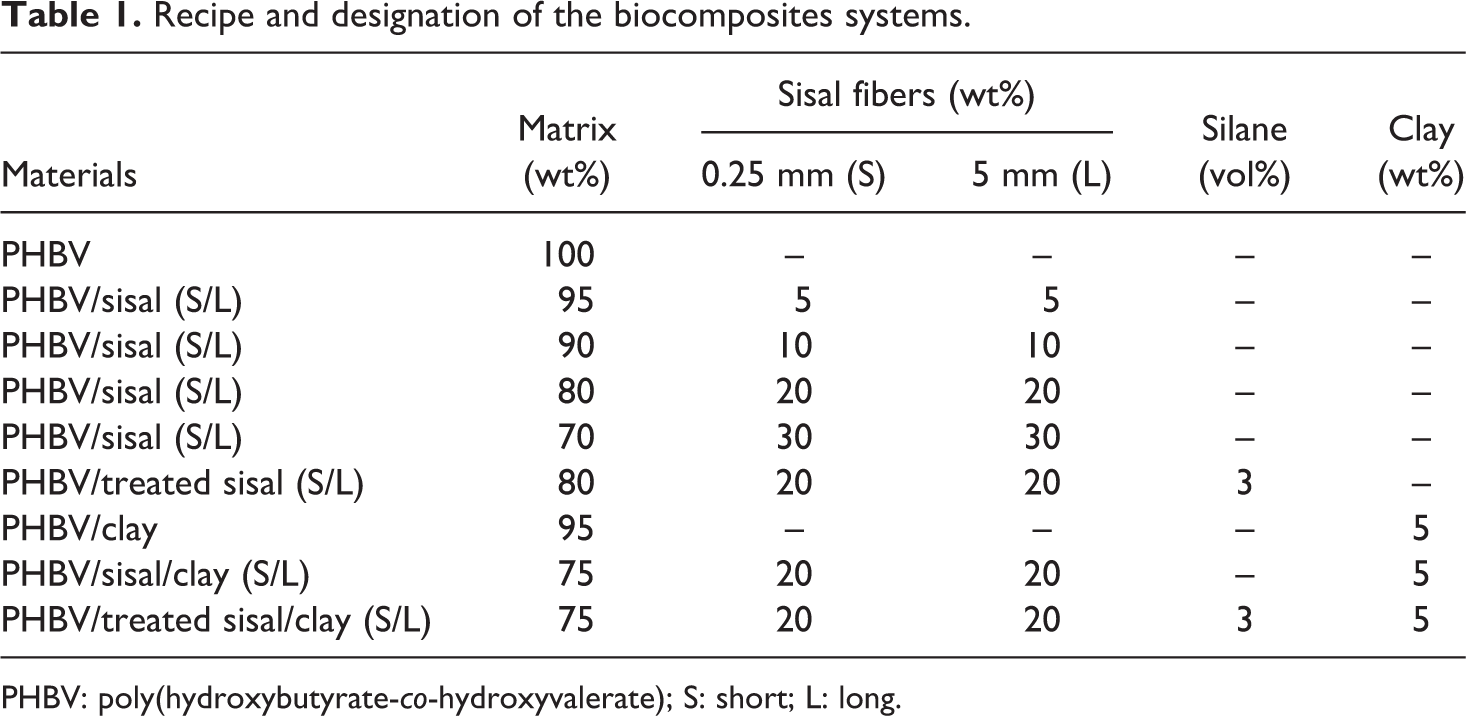
PHBV: poly(hydroxybutyrate-co-hydroxyvalerate); S: short; L: long.
Mechanical properties
Tensile testing was carried out according to ASTM D638-10 standard test method. Five specimens of each type were assessed on a Comtech Tensile Testing Machine M1 TYPE. The crosshead speed was 5 mm/min.
Impact testing was carried out according to the ASTM D 256-10 standard test methods. Ten specimens of each type were assessed on a CEAST RESIL IMPACTOR impact test machine. Impact velocity was 3.5 m/s, and the hammer weight was 2.75 J. Dimension of samples were 64 × 12 × 3 mm3. Notch was introduced by a V type saw blade and the notch length to width ratio (a/w) of the Charpy specimens was constant.
Hardness testing was carried out according to the ASTM D 2240-05 standard test method. Specimens were of 100 × 100 × 3 mm3 dimension. Measurements were taken with the specimens at ambient temperature in 10 positions using an analog dial indicator having a presser foot diameter of 1.27 mm.
Water absorption
Water absorption of PHBV composites was carried out according to ASTM D570-98 standard test method. The PHBV composites were cut into specimens (20 × 20 mm2) and then immersed in a water bath over a period of 14 days (336 h). The percentage gain at any time t (M
t) was calculated from following equation:
where W d and W w denote the initial weight of material and weight of material after exposure to water absorption, respectively.
The average diffusion coefficient D measures the rate of moisture diffusion through all faces of the specimen. For each specimen, from the maximum percent of moisture uptake M m, the initial slope of the line of the moisture content versus square root of time graphs and the specimen thickness, h, were determined using the following equation:

Scanning electron microscope
Scanning electron microscopic (SEM) images of the fracture surfaces of compression-molded specimens were obtained using a low-vacuum SEM (Hitachi model T3000, Japan) operated at 5–15 kV. The surface used for analysis was the fracture surface of the impact testing experiments.
Results and discussions
Tensile properties
The tensile modulus and tensile strength data of PHBV composites containing sisal fibers are showed in Figure 1(a) and (b), respectively. One can recognize that the tensile modulus of the PHBV composites can be improved with sisal fiber loading. For example, with the incorporation of 10 wt% of short and long sisal fibers in PHBV matrix, the stiffness increased by 21 and 14%, respectively. Especially, at 20 wt% of short and long sisal fiber loading, stiffness increased up to 30 and 25% respectively compared with the neat PHBV. A possible explanation of the increased stiffness of composites can be ascribed to dispersion of sisal fibers in the PHBV matrix, which lead to the distribution and transfer of stress from matrix to fiber. One can clearly recognize that the short sisal fiber-reinforced PHBV composites provided higher modulus compared with the long sisal fiber/composites. As reported by Sanjeev et al. the tensile properties of natural fiber/PHBV composites influenced on different factors such as length, distribution, orientation of fibers, and their interfacial bond strength with matrix. 8 Considering the fact that the thickness of tensile specimen itself was lower than the length of long sisal fiber, the reduction of the modulus can be assigned to some reordering of the long fiber reinforcement during hot pressing. This suggestion is in accordance with the experimental results achieved mostly on the fiber orientations. The dispersion stage of short fiber reinforcement indicated better orientation. However, the tensile strength of PHBV composites decreased with the addition of sisal fiber (cf. Figure 1(b)). This can be attributed to the related fiber contents and the poor adhesion between sisal fiber, which lead to low transferred stress from the matrix to the stronger fibers. Moreover, agglomeration of high fiber content leads to a decrease in composite strength due to PHBV matrix cracking.
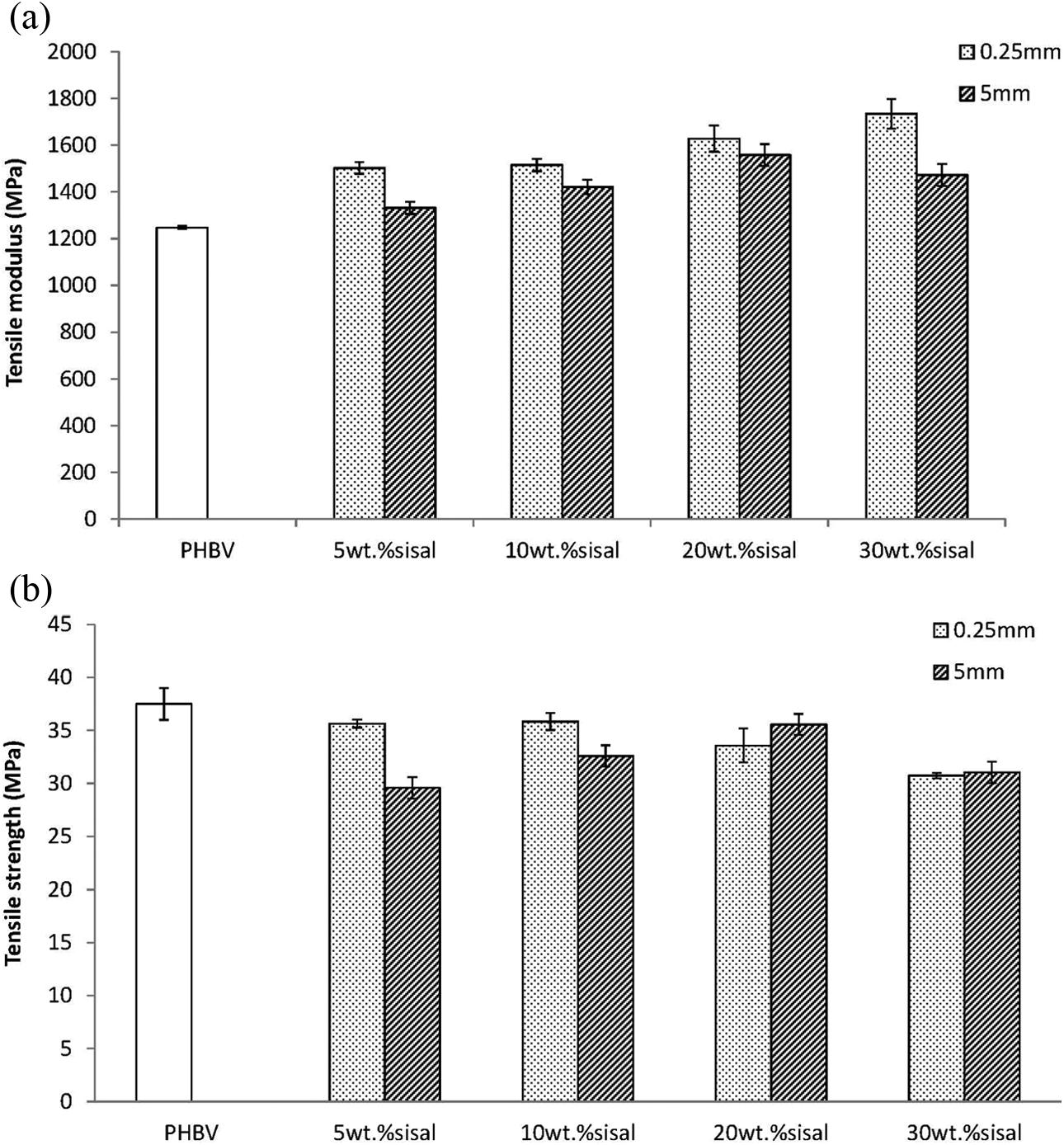
Effect of sisal fiber contents on tensile modulus (a) and tensile strength (b).
It has been reported that adding silane may improve an interfacial interaction of natural fiber polymer composites. 14 This is in accordance with our tensile test observation of PHBV/sisal composites; as shown in Figure 2(a) and (b), the addition of 20 wt.% of silane-treated sisal increased the tensile stiffness and tensile strength of PHBV composites by 10 and 5%, respectively, compared with untreated one. This could be attributed to good adhesion between treated fiber and PHBV (cf. Figure 14). Note that the mobility of PHBV molecule chains may be restrained by the silane.
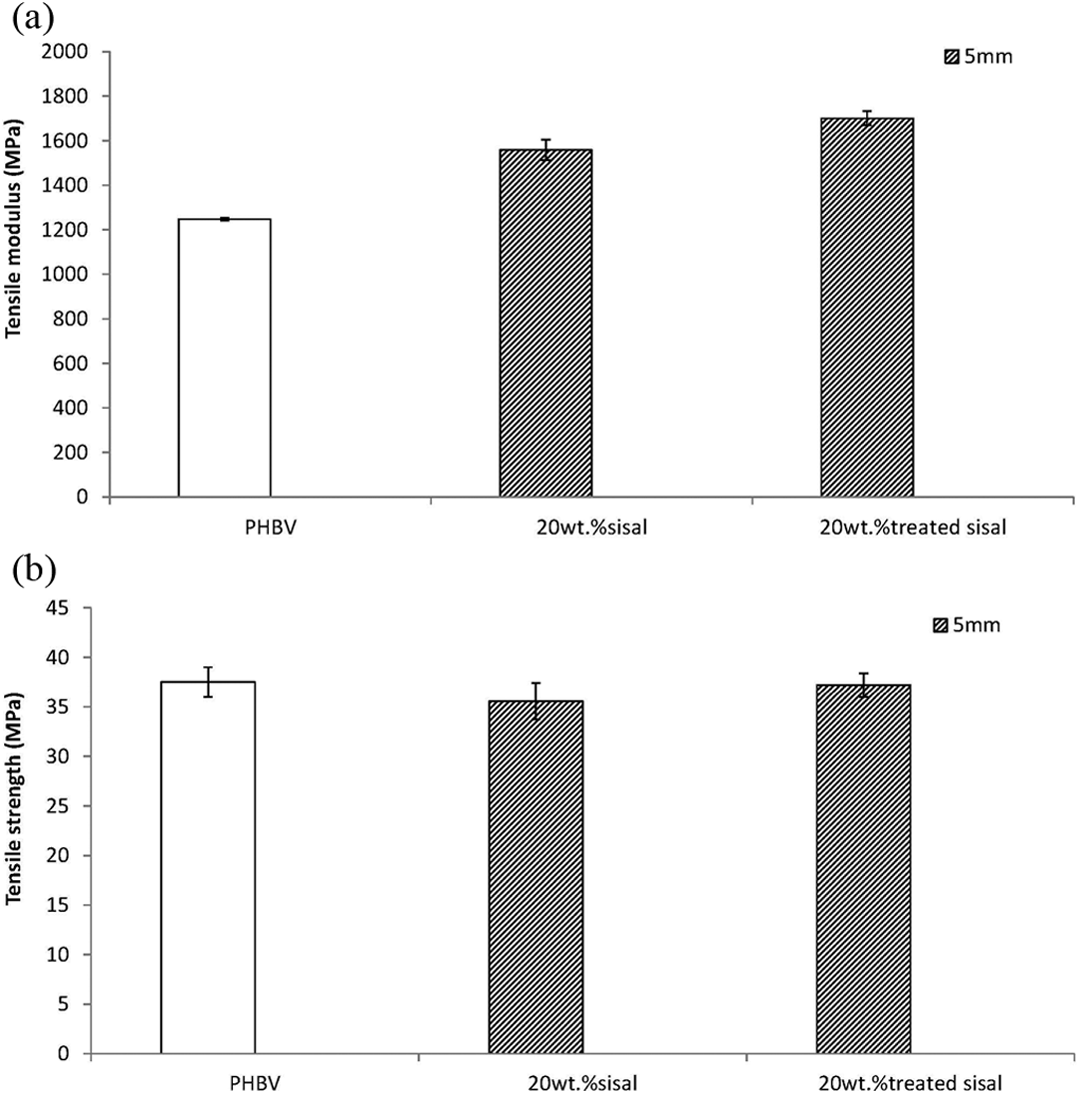
Effect of silane on tensile modulus (a) and tensile strength (b).
Tensile modulus and tensile strength data of PHBV composites and hybrid with the addition of clay particles are shown in Figure 3(a) and (b). Tensile modulus of PHBV/sisal/clay hybrid composites of short and long fiber increased by 20 and 30%, respectively, compared with the neat PHBV. Addition of clay particles reduced the tensile stiffness and strength compared with the PHBV/20 wt.% of short and long sisal fiber composites. A decrease of tensile modulus can be attributed to the incomplete dispersion of clay agglomerate into the PHVB matrix (cf. Figure 15). However, the effect of silane treatment indicated a slight increase in tensile modulus of PHBV/sisal/clay hybrid composites.
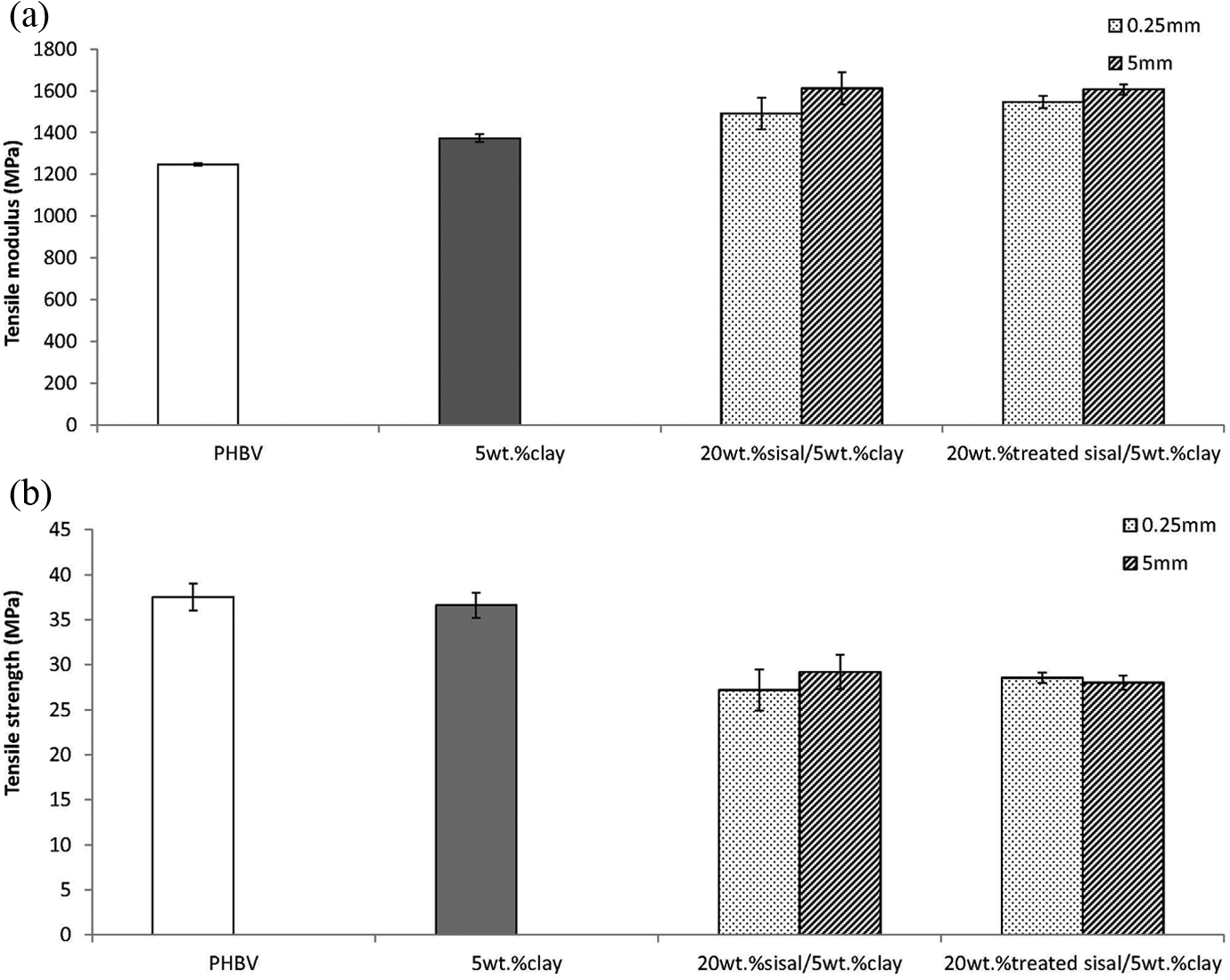
Tensile modulus (a) and tensile strength (b) of sisal fiber/PHBV and hybrid composites. PHBV: poly(hydroxybutyrate-co-hydroxyvalerate)
Impact strength
Generally, the notched Izod impact strength test can measure the energy to propagate existing cracks, which depends on various factors, such as morphology, fiber–matrix adhesion, toughness, and defects, in the packing of polymer composites. The impact strength of short and long sisal fiber-reinforced PHBV composites as a function of fiber content and silane is demonstrated in Figure 4. One can see that the impact strength of all PHBV composites increased with increasing sisal fiber content. Note that fiber content increased an interface on the crack path, and high energy was consumed. Impact strength of short sisal fiber/PHBV composites steadily increased with fiber loading. For PHBV composites containing 30 wt.% sisal fiber, the impact strength improved by 36% compared with the neat PHBV. The most interesting result is that impact strength of PPHBV composites was strongly affected by the long fiber of sisal, and it markedly increased. As expected, the sisal fiber reinforcement leads to increased stiffness and impact strength. It is usually accepted that the fiber length domains first cavitate, provoking locally a stress transition in impact mechanical terms. This supports the development of fiber length entanglement, and superimposition of the stretching of the amorphous and entangled chains occurs with a considerable increase in the impact strength. Owing to inhomogeneous fiber dispersion, the stress concentration effects of fiber agglomerates cannot be released by matrix-related events. Stress concentration induces fiber/matrix debonding, causing an increase in the tensile strength. For example, at 30 wt% long sisal fiber-reinforced PHBV improved up to 800% compared with the neat PHBV. However, the addition of silane did not significantly increase the impact strength at all composites (cf. Figure 4). Furthermore, impact strength data of PHBV composites and hybrid composites with addition of clay particles are shown in Figure 5. The effect of clay particles dispersion on the impact strength value was marginal.
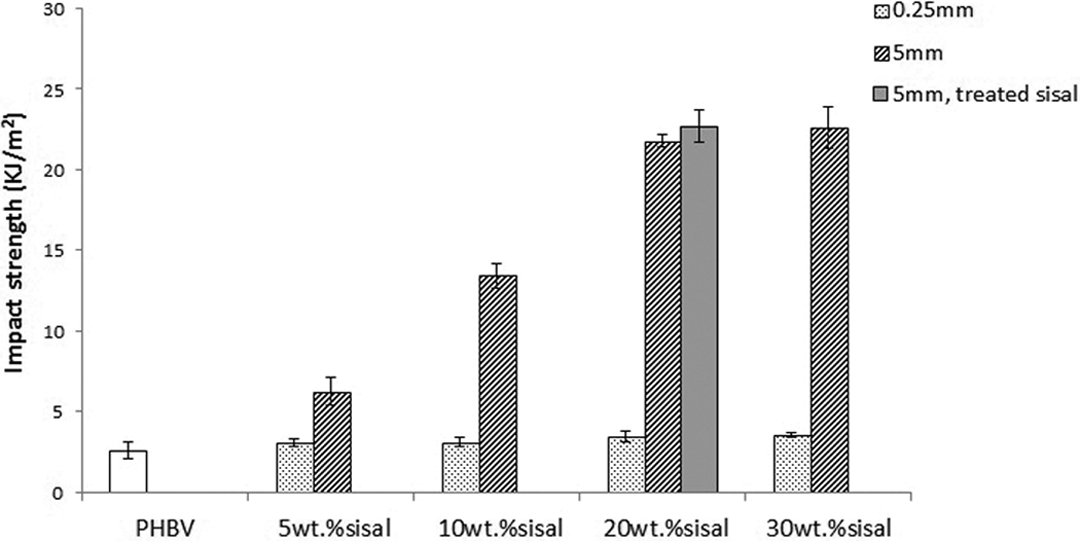
Effect of sisal fiber contents and silane on impact strength.
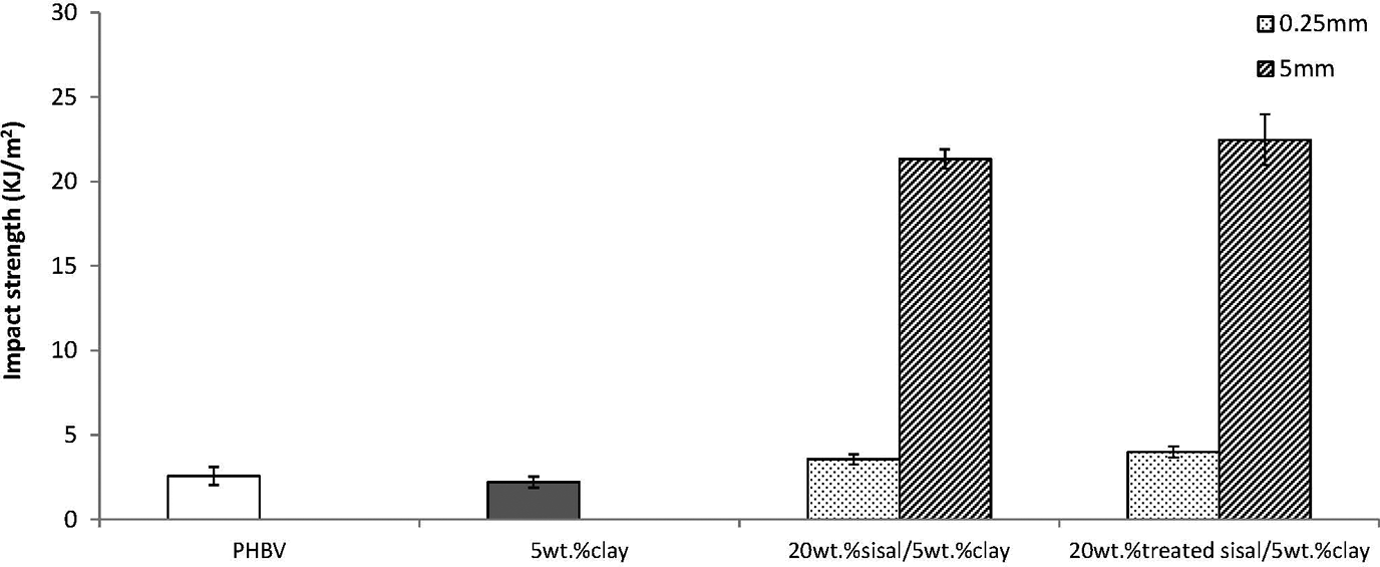
Impact strength of sisal fiber/PHBV and hybrid composites systems. PHBV: poly(hydroxybutyrate-co-hydroxyvalerate).
Hardness resistance
Hardness value of sisal fiber-reinforced PHBV composites is summarized in Figure 6. Hardness value of short sisal fiber composites steadily increased with increasing fiber loading. For the PHBV/30 wt% short sisal composite, the hardness enhanced by 5% compared with the neat PHBV, whereas the hardness value of long sisal fiber composites decreased with fiber loading. It has to be clarified that this behavior is probably due to the energy transfer from PHBV matrix to sisal fiber. Figure 7 shows an increase in the hardness value of PHBV composites with silane-treated sisal fiber. The PHBV/3 vol% silane/20 wt% of short and long sisal fiber composites increased by 3 and 4%, respectively, compared with untreated sisal fiber. This may be linked with some effects due to the sisal fiber dispersion into PHBV matrix and also the adhesion improvement of related PHBV composites as similar result reported for starch-grafted-polypropylene/kenaf fibers composites. 15 On the other hand, addition of clay particles did not significantly improve hardness values of PHBV/sisal composites at all, as shown in Figure 8.
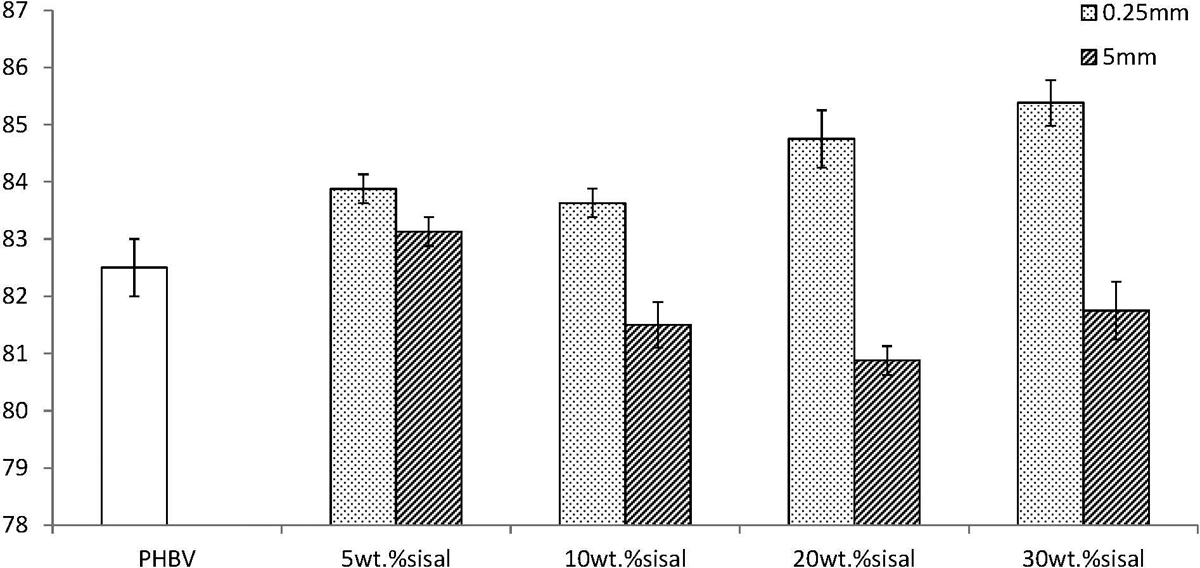
Effect of fiber contents on hardness.
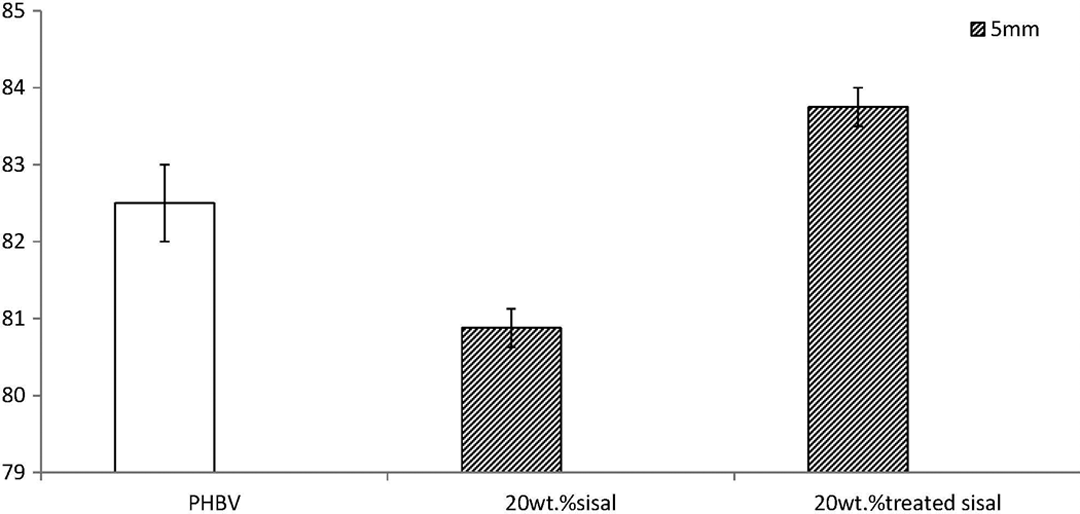
Effect of silane on hardness.
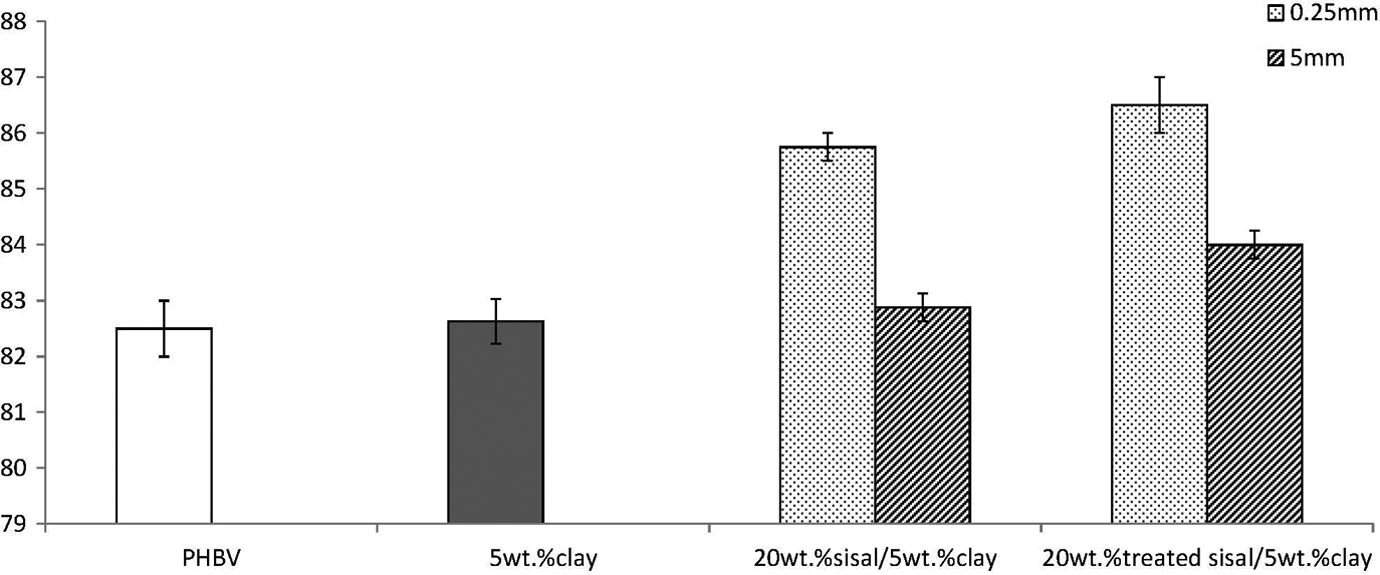
Hardness of sisal fiber/PHBV and hybrid composites systems. PHBV: poly(hydroxybutyrate-co-hydroxyvalerate)
Water absorption
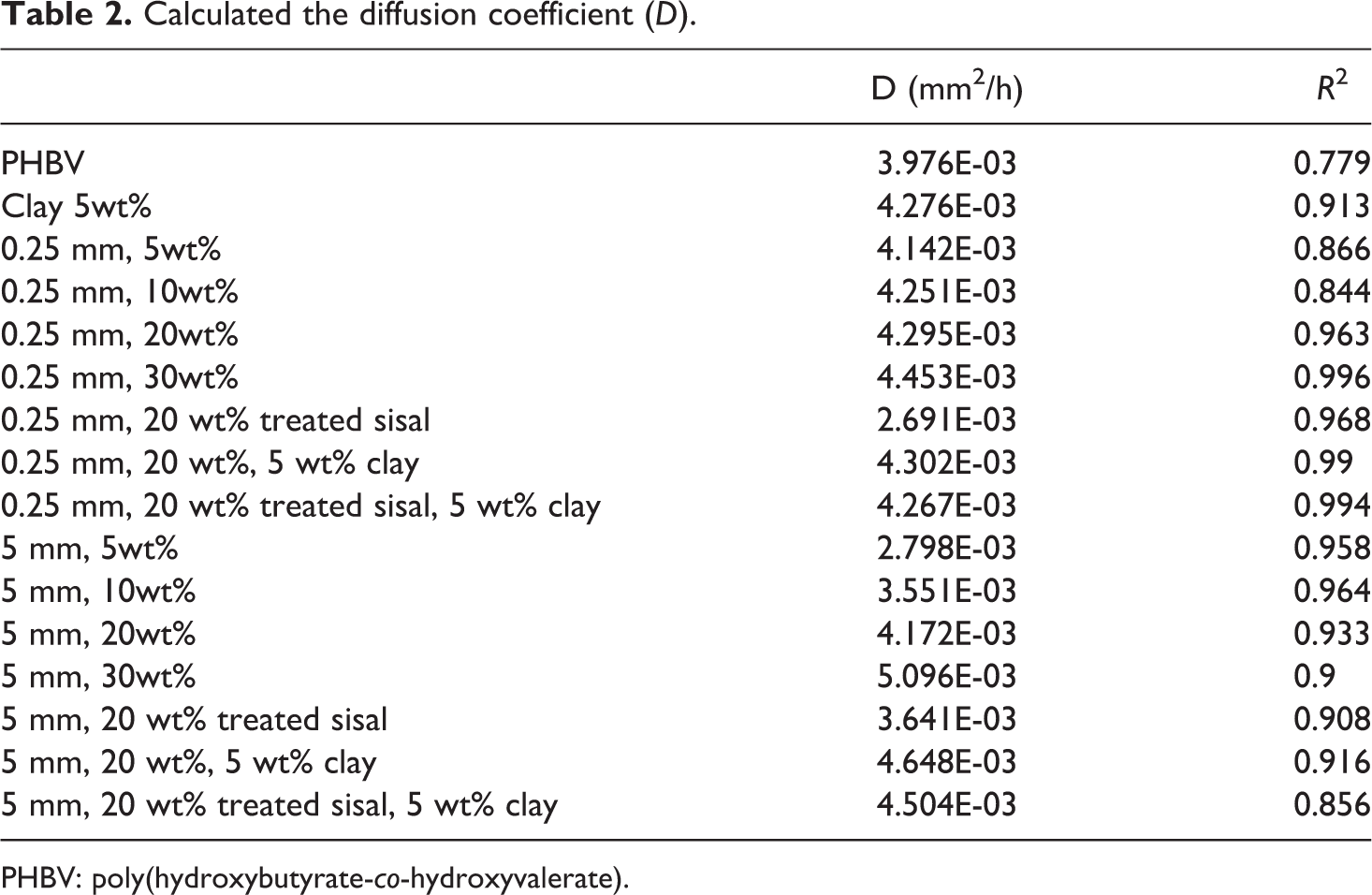
Water absorption as a function of time for the PHBV, containing different amounts of sisal fiber composites, is demonstrated in Figure 9. One can recognize that the water sorption behavior was considered to depend on the sisal fiber content. The neat PHBV recorded water absorption value at 0.8% at 350 h. The PHBV/sisal composites exhibited remarkably large amount of water absorption. Especially, the water absorption of PHBV/30 wt% of short sisal fiber composites during the first 72 and 350 h increased by 4 and 7%, respectively. Note that the long sisal fiber/PHBV composites increased by 11 and 14% respectively compared with the neat PHBV. This was attributed to the chemical nature of cellulose contents in sisal fiber. The water absorption of PHBV/3 vol%-treated silane composites is shown in Figure 10. It is interesting to note that water absorption of PHBV/sisal composites decreased. This can be well explained by the fact that the hydrophilic properties of the sisal fibers reduced with the incorporation of silane, which improved compatibility and adhesion of PHBV/sisal composites. Figure 11 displays the water absorption behavior of PHBV/sisal composites and hybrid systems. The PHBV/clay composite recorded water absorption value at 1.2% upon 350 h. Note that the incorporation of silane and clay particles in the PHBV/sisal composites slightly reduced the water absorption. One may conclude that the water absorption decreased by adding all nanoparticles. Fick’s law in equation (2) is adopted to calculate the diffusion coefficient (D) of the water absorption values. The calculation of diffusion coefficient is shown in Table 2. The D value of the PHBV/sisal composites decreased with the addition of clay particles. This may be linked to an incorporation of silane and clay particles. The results suggested that D value may be sensitive to the nanoparticles’ barrier effect. It has also been observed by Becker et al. 16 that these nanoparticles reacted with water, leading to a decrease in the rate of diffusion.
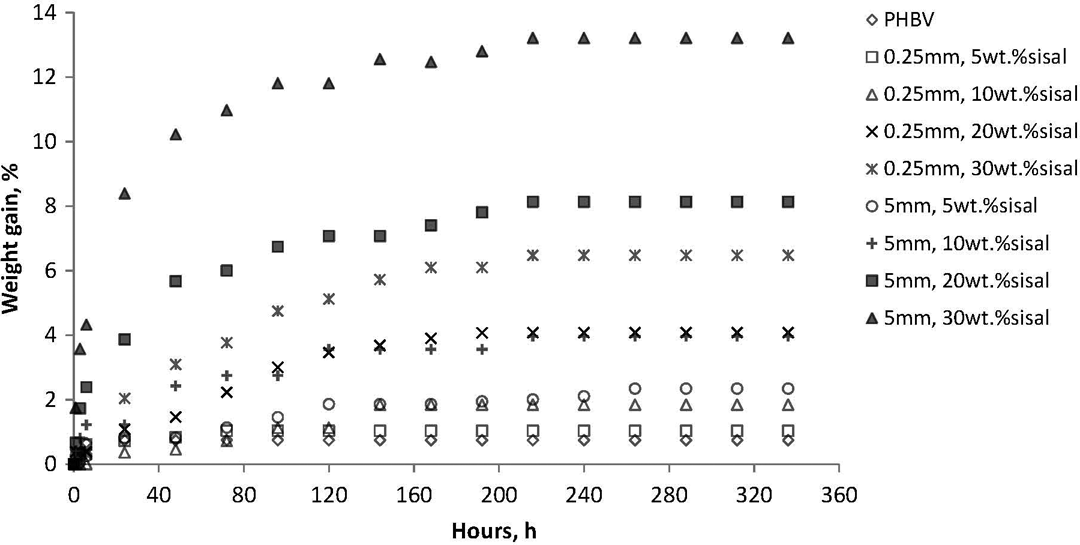
Water absorption of different sisal contents.
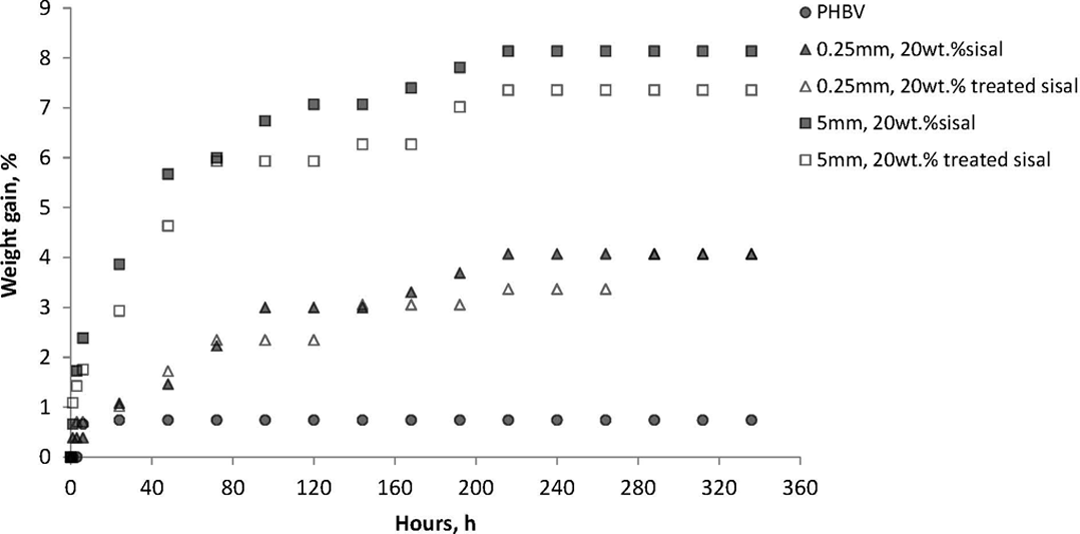
Water absorption of treated and untreated sisal fiber.
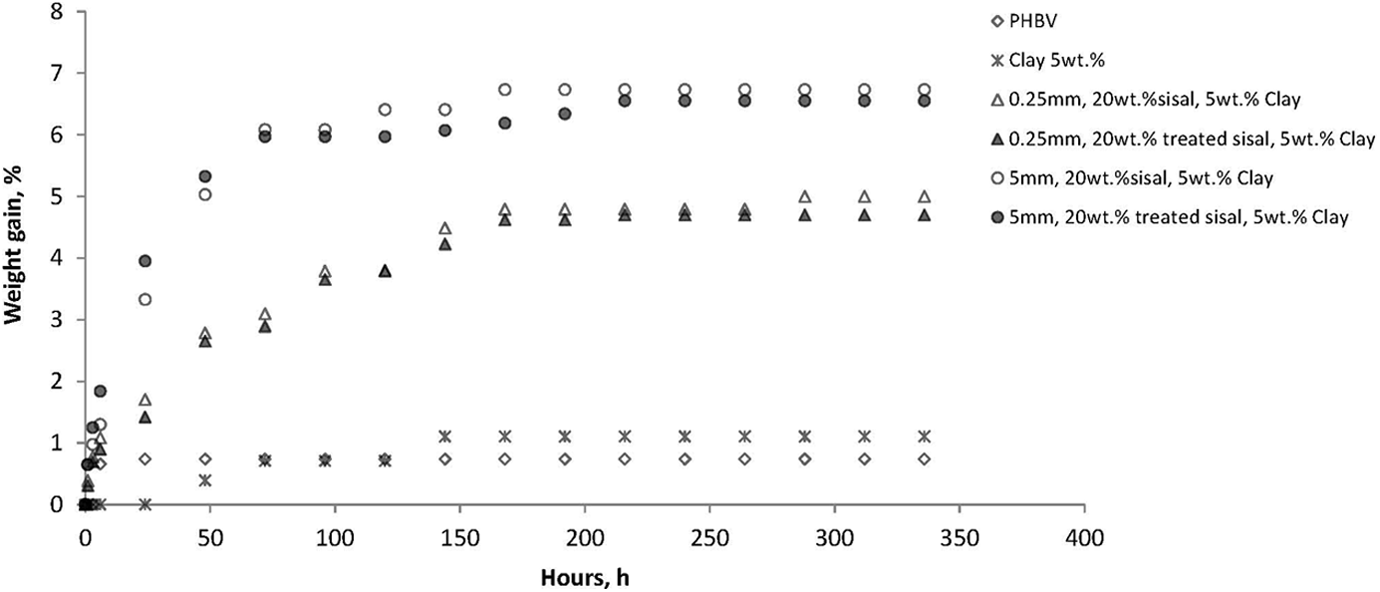
Water absorption of PHBV/sisal composites and hybrid systems. PHBV: poly(hydroxybutyrate-co-hydroxyvalerate)
Calculated the diffusion coefficient (D).
PHBV: poly(hydroxybutyrate-co-hydroxyvalerate).
Morhpology
SEM images of the fracture surfaces for the impact specimen can be seen in Figure 12(a) to (c). It is possible to see an overview of PHBV composites system studied. One can observed that most of the sisal fibers were pulled out from the PHBV matrix. The 5 wt% of long fiber sisal composite was also aligned and dispersed in the PHBV matrix (cf. Figure 12(b)). Note that the sisal fibers were in the form of a single fiber and indicated that the fibers had not been damaged after the compression process. Because of the incompatibility between sisal fibers and PHBV matrix, some gaps can be observed, as shown in Figure 12(c). The gaps were also formed mainly due to the hydrophilic characteristic of the sisal fibers and the high reactivity of the PHBV with moisture. Note that the incompatibility of fiber/matrix interfaces reduced the mechanical properties as in above results. Furthermore, addition of silane-treated sisal fiber was well embedded in the PHBV matrix (cf. Figure 13), which could increase interfacial adhesion of the sisal fiber/PHBV composites. Affected by this way, the stiffness, impact, and hardness properties can increase because of the development of debonding PHBV molecule chains and sisal fiber pull-out. To confirm the modified sisal fiber with silane, the SEM sample was subjected to an energy dispersive X-ray analysis (EDAX). Figure 14 shows EDAX images of the corresponding PHBV-modified sisal fibercomposites. To select different spots of sample, an elemental analysis was performed. EDAX revealed the major constituents of silane. These findings confirm that the sisal fiber was coated by silane. It was also clear in Figure 15 that the clay agglomeration dispersed in the sisal/PHBV composites. Note that the energy absorption reduced when a crack grew through the clay agglomeration, and the crack can be accreted. However, the impact strength was sacrificed in the related structure PHBV composites.
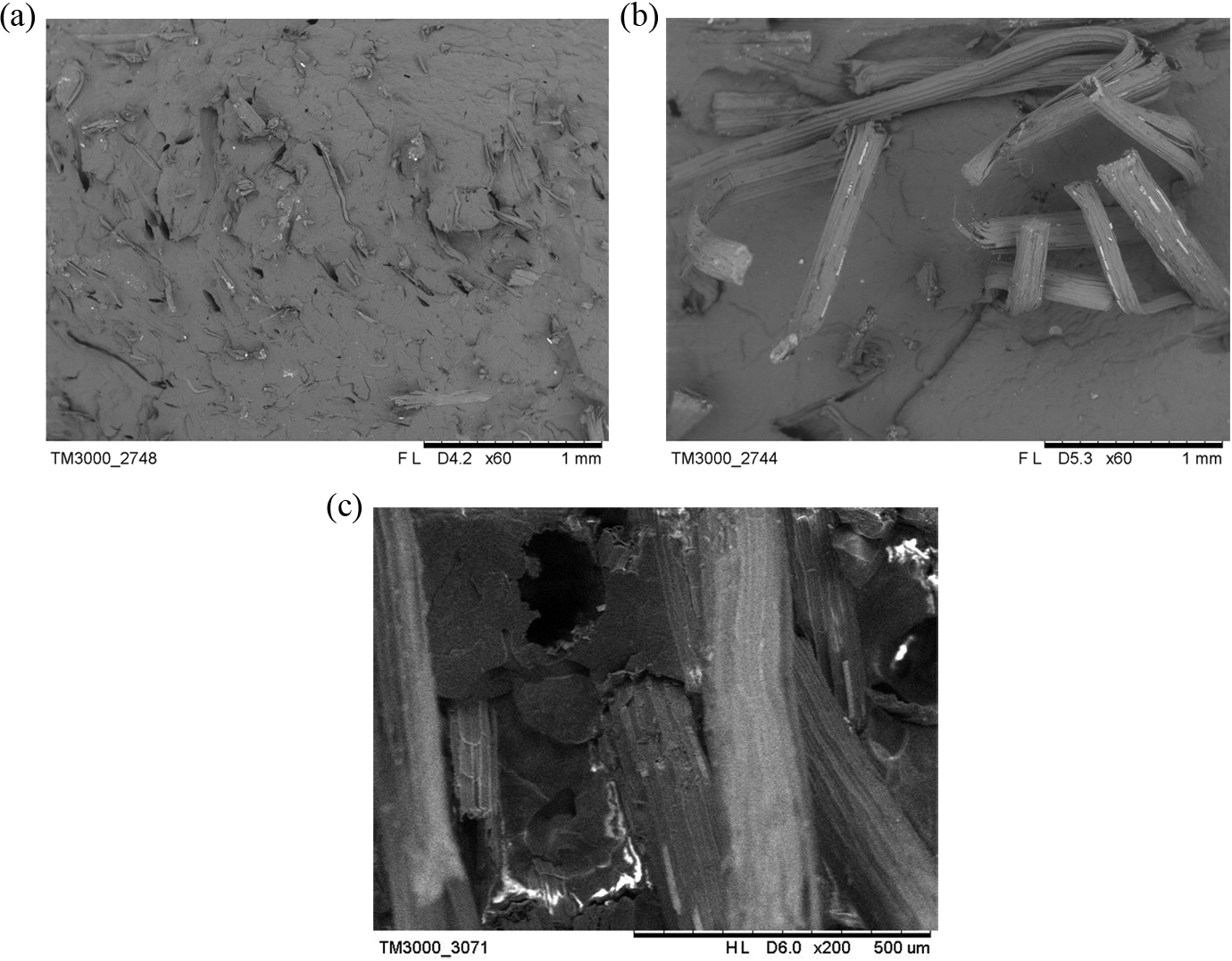
SEM images of PHBV with 5 wt% short sisal fiber (a), long sisal fiber (b), and with 20 wt% long sisal fiber composites (c). SEM: scanning electron microscopy; PHBV: poly(hydroxybutyrate-co-hydroxyvalerate).
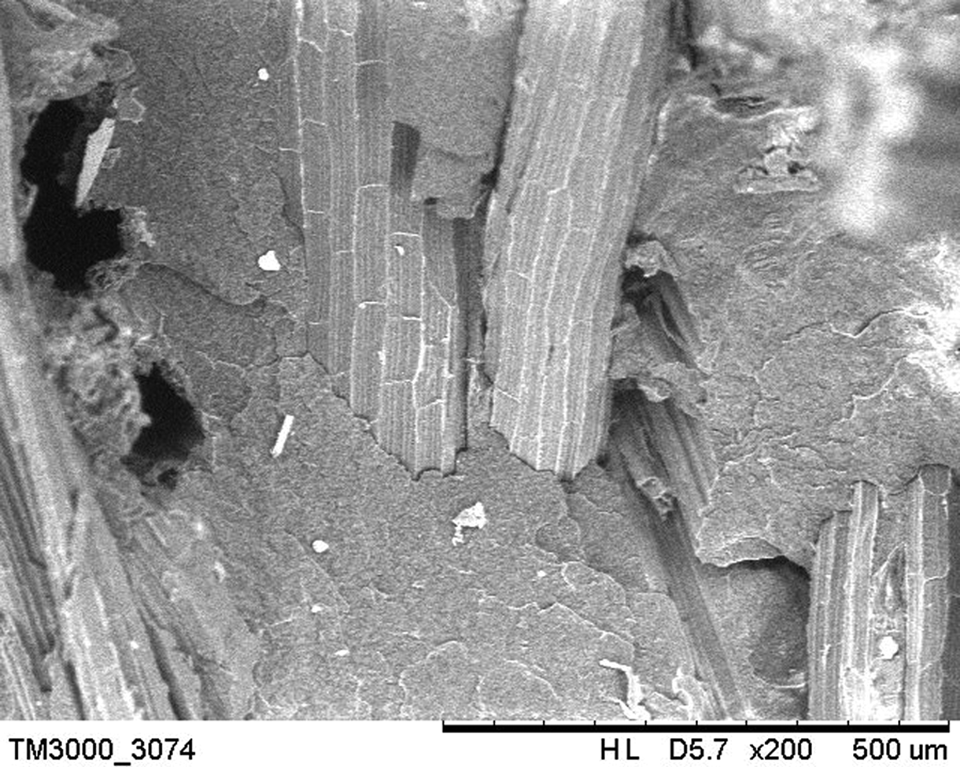
SEM image of PHBV with 20 wt% modified sisal fiber composite. SEM: scanning electron microscopy; PHBV: poly(hydroxybutyrate-co-hydroxyvalerate)
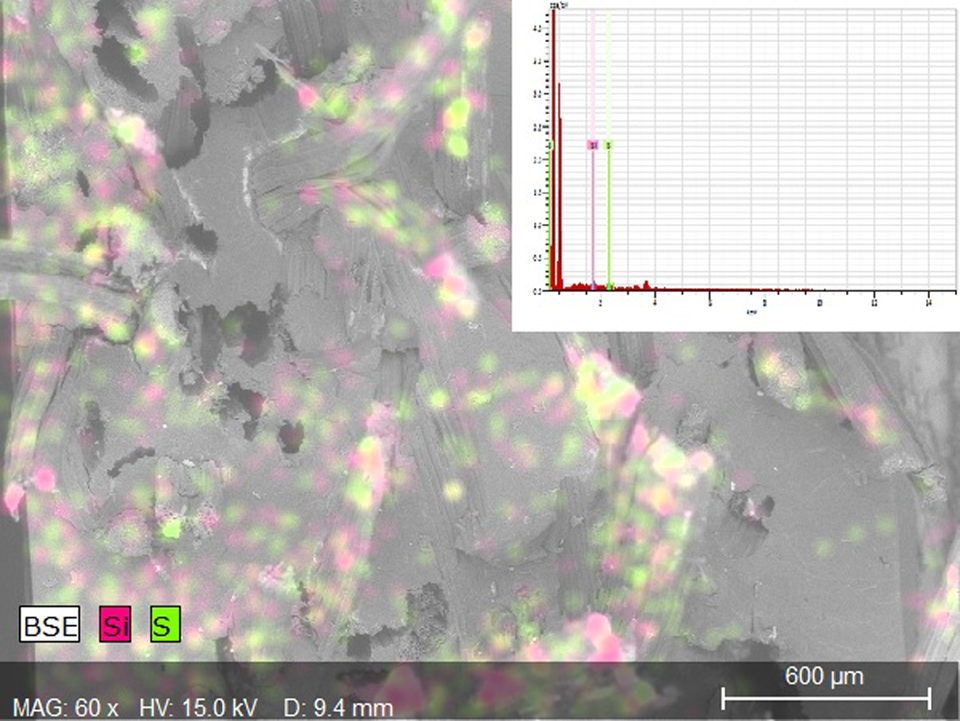
EDAX image of surfaces of the modified sisal fiber/PHBV composite. PHBV: poly(hydroxybutyrate-co-hydroxyvalerate)
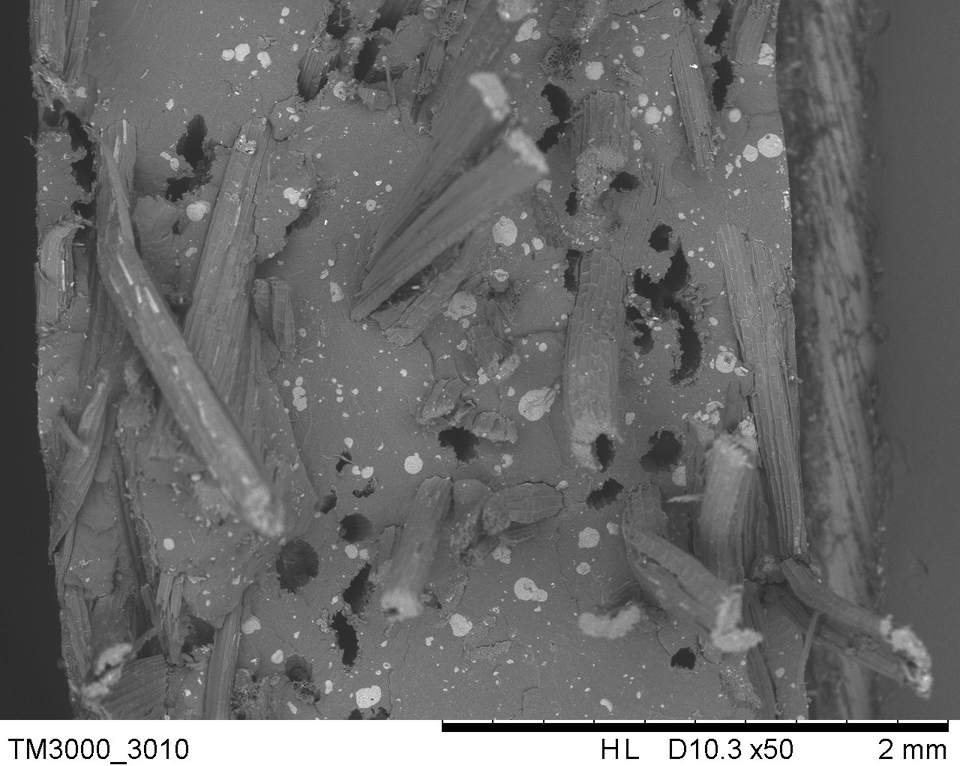
SEM image of PHBV/modified sisal fiber/clay hybrid composite. SEM: scanning electron microscopy; PHBV: poly(hydroxybutyrate-co-hydroxyvalerate).
Conclusions
The objective of this work was to study the effect of proportions of sisal fibers (short sisal fiber of 0.25 mm and long sisal fiber of 5 mm)-reinforced PHBV composites and hybrid with addition of nanoclay particles on mechanical properties, such as tensile, impact, and hardness. The preliminary results showed that, especially, the impact strength of 20 wt% long sisal fiber/PHBV composites increased by 750% compared with that of the neat PHBV. Sisal fiber dispersion was well and still aligned in PHBV matrix as shown in SEM images. The tensile modulus of PHBV composites at 20 wt% for short and long sisal fiber increased slightly by 20 and 18%, respectively. Furthermore, the tensile strength of 20 wt% of silane-treated long fiber was also enhanced by 10%. The hardness of 20 wt% short sisal fiber/PHBV composites improved by 4% compared with that of neat PHBV. Note that the embedding of the short fiber was better than that of the long fiber in the PHBV matrix. Moreover, the silane-treated fiber also improved the hardness of composites. This indicated that the sisal fiber dispersed well into the PHBV matrix and associated with a strong interfacial bonding between sisal fiber and PHBV matrix. Incorporation of clay particles into the PHBV/sisal fiber composites resulted in a considerable increase of the hardness and water resistance. The reduction in tensile and impact properties was attributed to the agglomeration of clay in the PHBV hybrid composites.
Footnotes
Acknowledgements
The research leading to these results has received funding from the King Mongkut's University of Technology North Bangkok (contract no. KMUTNB-GOV-58-44). The authors are grateful to Natural Composites Research Group (NCR) for laboratory support.
Funding
This research was funded by King Mongkut's University of Technology North Bangkok (contract no. KMUTNB-GOV-58-44).