




Abstract
The polypropylene–long glass fiber (PP/LGF) composites were prepared using self-designed impregnation device. The mechanical properties and dynamic mechanical properties of PP/LGF composites with two different compatibilizers including PP grafted with glycidyl methacrylate (PP-g-GMA) and maleic anhydride-grafted PP copolymer (PP-g-MA) were investigated on injection molding standard bars. The experimental results demonstrated that the addition of PP-g-GMA led to decrease in mechanical properties and storage modulus. However, it is found that the maximum mechanical properties and storage modulus are reached for the PP/LGF composites when PP-g-MA are 7 wt%. Moreover, PP-g-MA is better than PP-g-GMA in the PP/LGF composites.
Introduction
Long glass fiber-reinforced thermoplastics (LGFTs) are used increasingly as a structural material because they not only provide superior mechanical properties but also have its remarkable advantages such as its light weight, cost-effectiveness, recyclability, and so on. In general, the mechanical performance of glass fiber-reinforced thermoplastics is closely related to the final length of the glass fiber dispersed in the matrix and interface adhesion between the glass fiber and the matrix resin. 1 –9 To avoid breakage of glass fiber a new technique is adopted to impregnate continuous glass fiber with melt polymer. Using this process, the glass fiber length can be kept the same as that of the pellet size. Cox 10 reported that the effect of orientation of the fibers may be represented completely by the first few coefficients of the distribution function for the fibers. The study demonstrated that the composite strength is more dependent on mean fiber length or mean fiber aspect ratio than on fiber volume fraction, while the composite modulus is more dependent on fiber volume fraction than on mean fiber length. 11 The effect of fiber length on the strength of glass fiber–epoxy resin composites has been examined by beam bending experiments on uniaxially aligned material. The results agree well with theoretical predictions and the critical fiber length is found to be 12.7 mm. 12 Processes developed originally for the alignment of those fibers that exist only in discontinuous form have been applied with advantage to short-length fiber such as carbon even though these are available in continuous form. 13 Thomason 14 found that laminate stiffness increased linearly with a fiber concentration of up to 40% w/w. However, stiffness was virtually independent of the fiber length more than 0.5 mm. The mechanical strength of LGFT, therefore, is enhanced compared to the composites made with conventional twin-screw extruding due to its longer fiber length.
A large number of works have been reported on LGFT preparation. The researcher conducted a detailed study about the impregnation process of long glass fiber-reinforced polypropylene (LFPP). 15 –19 For the sake of obtaining high mechanical properties, the precondition of the interfacial adhesion between the glass fiber and matrix should be improved. The chemical bonding force between the glass fiber and the matrix resin is related to the surface structure of the glass fiber. Xiang 20 investigated the fiber length, orientation, dispersion, and adhesion between fiber and matrix effect of LFPP by adding three assistant agents including octane–ethylene copolymer (POE), maleic anhydride grafted octane–ethylene copolymer (POE-g-MAH), and PP-g-MAH into LFPP. Yang 21 explored the effect of three kinds of polymers grafted by maleic anhydride on the mechanical properties of long glass fiber-reinforced nylon. Laura 22 studied the mechanical properties of PA6/GF composites, where the glass fibers were pretreated by three different reactive silane-coupling agents and an unreactive silane. Frenzel 23 investigated the influence of glass fibers of different sizes on selected mechanical properties of polyethylene terephthalate (PET)/glass composites, the materials used here were E-glass fibers treated with model sizings including aminosilane as a coupling agent and polyurethane and epoxy resin dispersions as film formers and PET as the matrix. The various strength properties of the composites are influenced not only by the silane-coupling agent but also by the type of film former. With an epoxy resin dispersion, the mechanical properties were enhanced compared with a polyurethane dispersion. These results were confirmed by the characterization of the composites by DMA. Agbossou 24 studied the strain rate and coupling agent effects on discontinuous glass fiber-reinforced PP matrix. Samples were prepared by varying fiber/matrix coupling agents. The influence of the strain rate on mechanical properties was analyzed in the low and moderate (10-sec-1 to 10 sec-1) strain rate ranges. It was found that fiber/matrix coupling agents affect particularly the stress–strain behavior in the moderate strain rate range. A strong interfacial bond seems to improve the ability of the fibers to take up load in the regions of matrix cracking, leading to higher tensile strength. Demjen 25 explored the effect of surface coverage of silane-treated CaCO3 on the tensile properties of PP composites. PP composites were prepared with a constant volume fraction of a CaCO3 filler that was treated with eight trialkoxy functional silane-coupling agents and the routinely used stearic acid, as comparison. Significant differences were detected in the effect of the silane-coupling agents on the tensile properties of the composites studied. They could be classified into groups of reactive, nonreactive, and inactive compounds, in accordance with an earlier study. Moreover, tensile properties proved to be very sensitive to surface treatment. Reactive coupling leads to a maximum tensile strength, while the use of nonreactive agents decreases the strength rapidly with increasing surface coverage. Ferreira 26 studied the mechanical properties of PP enhanced by surface treated nanoclays. The study centered on the potential benefits obtained by the addition of specially surface-treated nanoclays on the stiffness, toughness, and also on the static and fatigue strength. The results indicated that surface treatment of the nanoclay promotes a tendency to increase stiffness and tensile strength in comparison with the composites filled by both commercial nanoclay and unfilled material.
It is difficult to obtain high mechanical performance of PP/LGF composites without an appropriate compatibilizer because of the weak adhesion between the glass fiber and matrix resin. In this article, LFPP was prepared using self-designed impregnation device, and two coupling agents such as PP-grafted glycidyl methacrylate (PP-g-GMA) and maleic anhydride-grafted PP copolymer (PP-g-MA) were employed to increase the compatibility between glass fiber and matrix resin to obtain high mechanical performance of PP/LGF composites. Hence, the mechanical and dynamic mechanical properties of PP/LGF composites were studied by a universal testing machine and dynamic mechanical analysis (DMA) testing.
Materials and experimental procedures
Materials
Isotactic PP (grade T30S) was supplied by China Petroleum & Chemical Corporation, Maoming, China. PP-g-GMA (percentage grafting 1%) and PP-g-MA (percent grafting 1%) were obtained from Arkema Group of France, Paris, France. The long glass fibers (grade 988) pretreated with silane was provided by JU SHI Limit Co., China. The diameter of the glass fiber was 10 μm. The antioxidant (B215) for antioxidants 1010 (28.3%) and antioxidants 168 (71.7%) blends with content was obtain from Switzerland Ciba Limit Co.
Preparation of the PP/LGF composites
PP (dried at 60°C for 6 h), PP-g-GMA or PP-g-MA, and antioxidant (B215) were blended in a twin-screw extruder (type TSE-40A/400-44-22, L/D = 40, D = 40 mm, Coperion Keya Machinery Co., Ltd. Nanjing, China). The temperatures from hopper to die at six different zones were 180°C, 190°C, 210°C, 210°C, 220°C, and 210°C, respectively; the screw speed was 200 rpm and the impregnation temperature was 300°C. The resultant composites were dried in a vacuum oven at 90°C for 8 h and were then injection molded (type CJ80M3 V, Chen De Plastics Machinery Co., Ltd. Guangdong, China) at 215°C into various specimens for testing and characterization.
Preparation process schematic of the PP/LGF composites was depicted in Figure 1. The distribution of glass fiber in the composites was unidirectional, which had a length similar to that of the pellet in Figure 2.
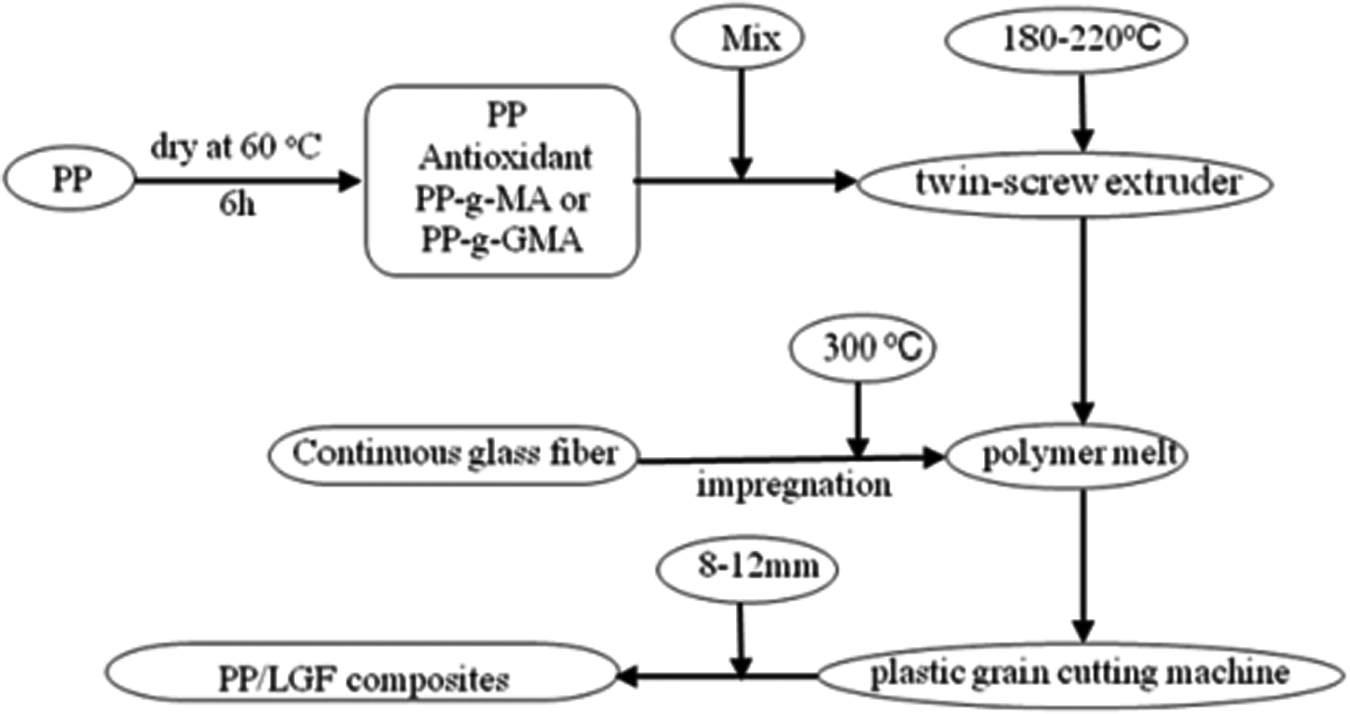
Preparation process schematic of the PP/LGF composites. PP/LGF: polypropylene–long glass fiber.
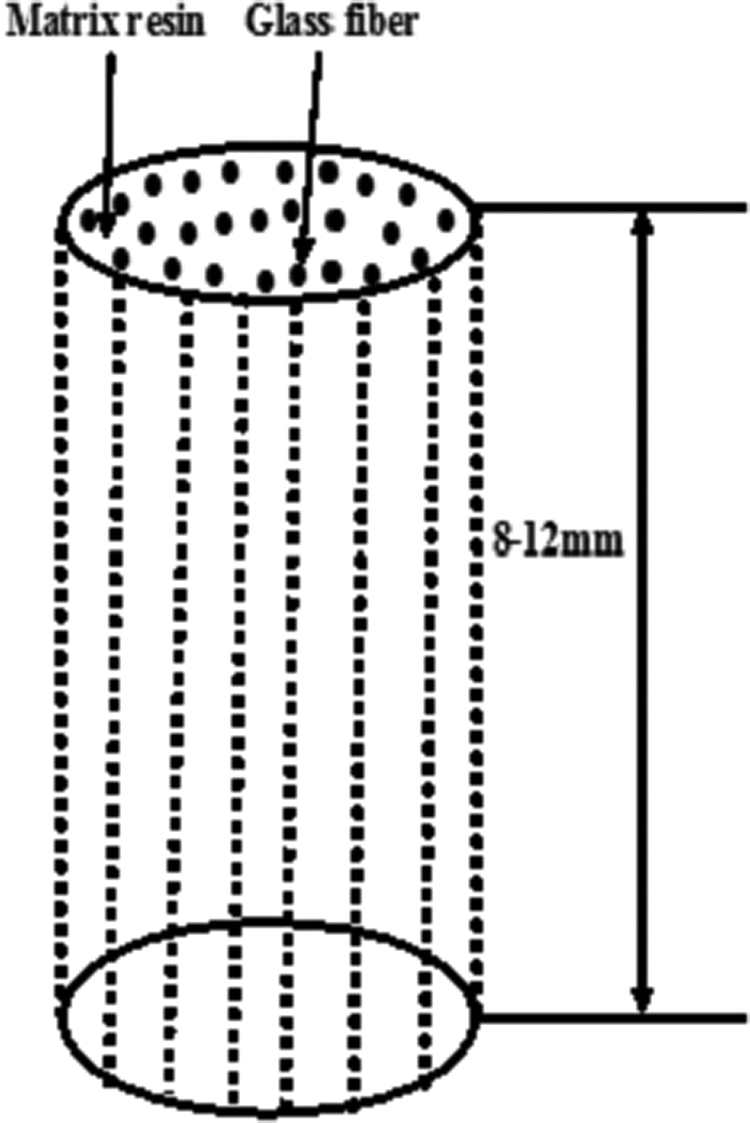
Scheme of long fiber reinforced pellet.
Mechanical properties testing
The tensile and flexural tests were performed using a universal testing machine (WDW-10C, Shanghai Hualong Test Instruments Co., Ltd., Shanghai, China), according to ASTM D-638 and ASTM D-790, at room temperature. The dog-bone-shaped specimens were prepared by injection molding using an injection molding machine (CJ80M3V, Chen De Plastics Machinery Co., Ltd.); The movements of crossheads were 50 mm/min for tensile and 2 mm/min for flexural tests, respectively. For each sample, 5–7 specimens were repeated.
Notched Izod impact tests were performed on a ZBC-4 Impact Pendulum (Shenzhen SANS Co., China) at 23°C according to the ASTM D-256 standard. The notches (depth 2.5 mm and radius 0.25 mm) were machined after injection molding. For each sample, five specimens were repeated.
Dynamic mechanical analysis (DMA) testing
The dynamic mechanical analysis (DMA) was performed on a TA Q800 DMA (TA Instruments, USA). The measurements were carried out at 1 Hz under a heating rate of 10 K/min. The temperature range was from −50°C to 150°C
Results and discussion
The mechanical properties of PP/LGF composites
Because of the reaction between maleic anhydride and hydroxyl of the glass fiber, the adhesion between glass fiber and PP was enhanced by PP-g-GMA or PP-g-MA. To study the effect of compatilizers on the performance of the composites, the mixture proportion of blend resins preparation of composites was shown in the Table 1. The effect of compatilizers on the mechanical properties of PP/LGF (wt 30%) composites are displayed in Figures 3 to 5. The notched Izod impact strength, tensile strength, and flexural strength of PP/LGF (30%) composites gradually decreased, with increasing content of PP-g-GMA. However, the notched Izod impact strength, tensile strength, and flexural strength of PP/LGF (30%) composites firstly increased and then lowered with increasing the content of PP-g-MA. The mechanical properties of PP/LGF composites with 7% PP-g-MA achieved optimal results (Figures 3 to 5). Compared to PP-g-GMA, compatibilizer PP-g-MA seems to have a greater ability to increase adhesion because more resin remains on the surface of glass fiber due to better compatibility between PP-g-MA and PP.
Mixture proportion of blend resins.
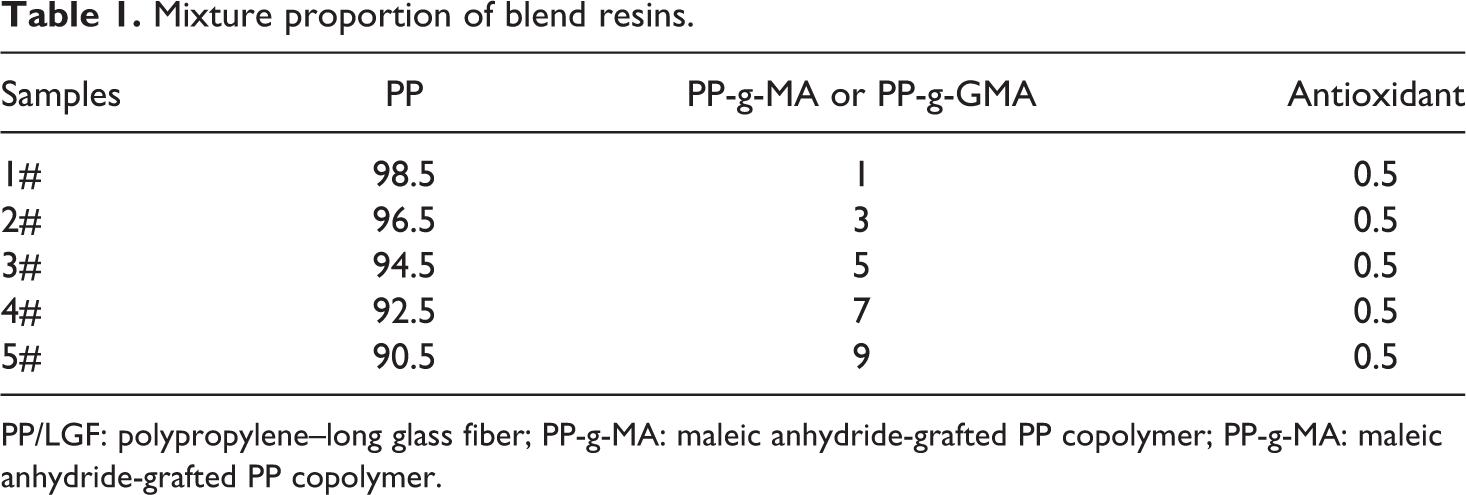
PP/LGF: polypropylene–long glass fiber; PP-g-MA: maleic anhydride-grafted PP copolymer; PP-g-MA: maleic anhydride-grafted PP copolymer.
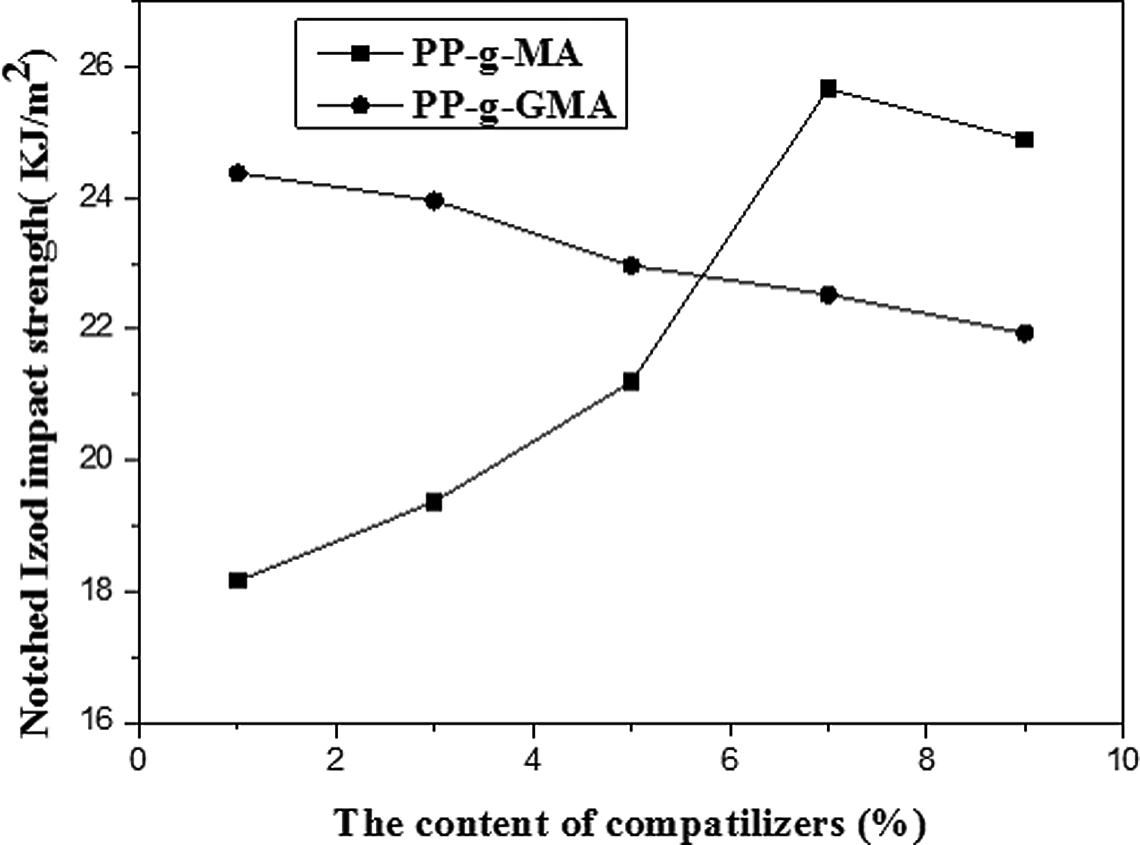
Effect of the content of compatilizers on the notched Izod impact strength of PP/LGF (30%) composites. PP/LGF: polypropylene–long glass fiber.
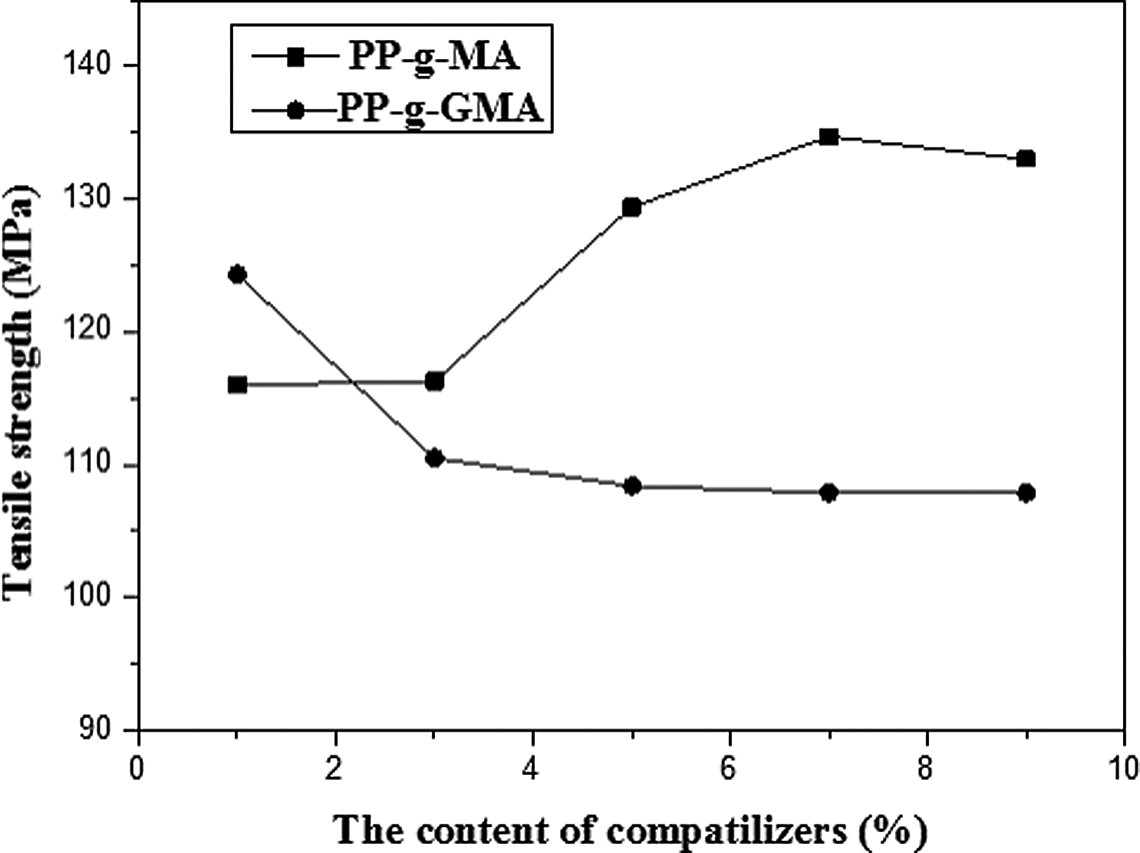
Effect of the content of compatilizers on the tensile strength of PP/LGF (30%) composites. PP/LGF: polypropylene–long glass fiber.
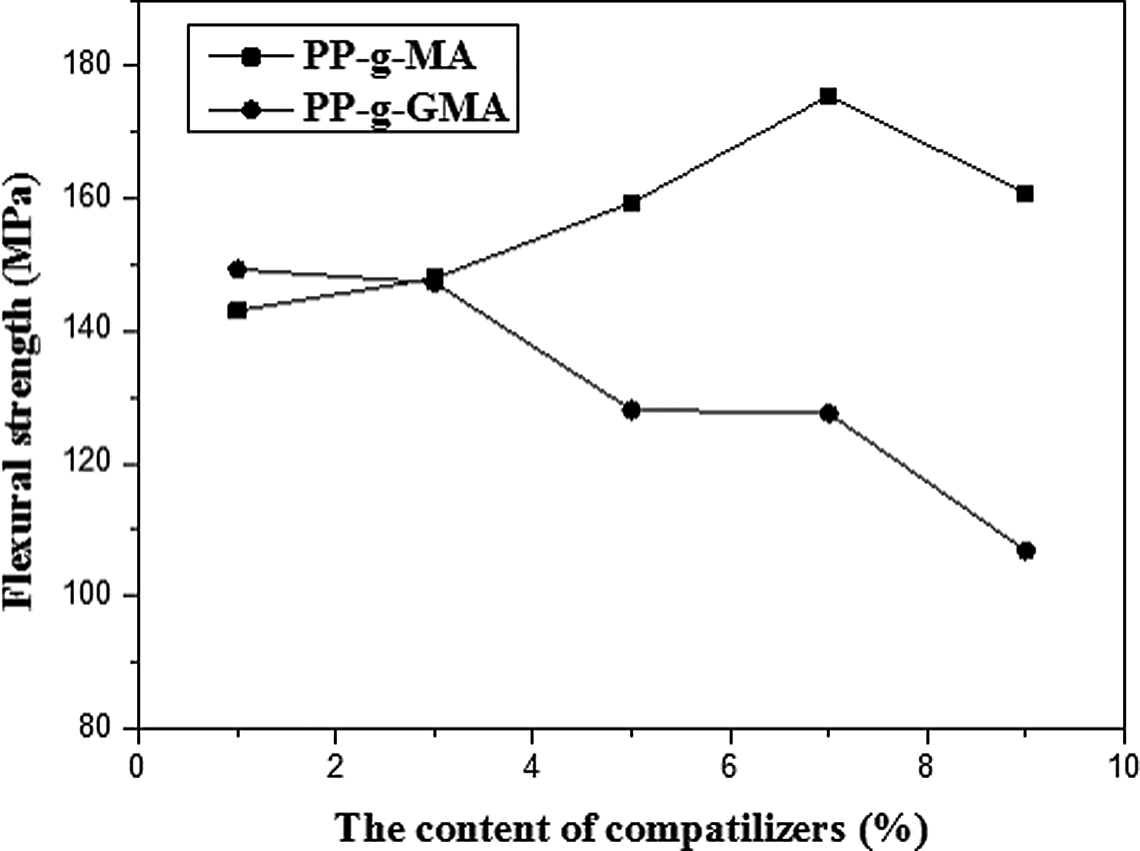
Effect of the content of compatilizers on the flexural strength of PP/LGF (30%) composites. PP/LGF: polypropylene–long glass fiber.
Wang 27 studied the mechanical properties and crystal morphological structures of short glass fiber (SGF) reinforced dynamically photoirradiated PP/ethylenepropylenediene terpolymer (EPDM) composites. The results suggested that photoirradiation significantly improves the interface adhesion of different phases by photografting reaction to form grafted copolymer, such as SGF-grafted PP, SGF-grafted EPDM, and PP-grafted EPDM. The interface adhesion plays a decisive role in determining the mechanical properties of the resultant composites, ensuring effective stress transfer from the matrix to the SGF phase during impact or tensile deformation, which gives rise to enhanced tensile and impact properties of composites. Sharma 28 studied the effect of surface modified clay on physicomechanical, thermal and morphological properties of PP nanocomposites. The effects of organically modified clay on the physical and mechanical properties of the prepared nanocomposites were studied; the results showed that the orientation of nanoparticle in presence of PP-g-MA was more due to the higher diffusion of compatibilizer into the galleries of silicate layers, so 95% enhancement in tensile strength and 152% increase in tensile modulus were observed.
Dynamic mechanical properties
The influence of PP-g-GMA on storage modulus as a function of temperature in PP/LGF composites is presented in Figure 6. The storage modulus of PP/LGF composites was decreased by increasing the content of PP-g-GMA. While the content of PP-g-GMA was 1, the storage modulus of PP/LGF composites was higher than those PP/LGF composites. This is attributed to the stronger interfacial adhesion among matrix resin and glass fiber. The storage modulus of PP/LGF composites improved by reducing PP-g-GMA, which explains the enhanced mechanical properties of PP/LGF composites.
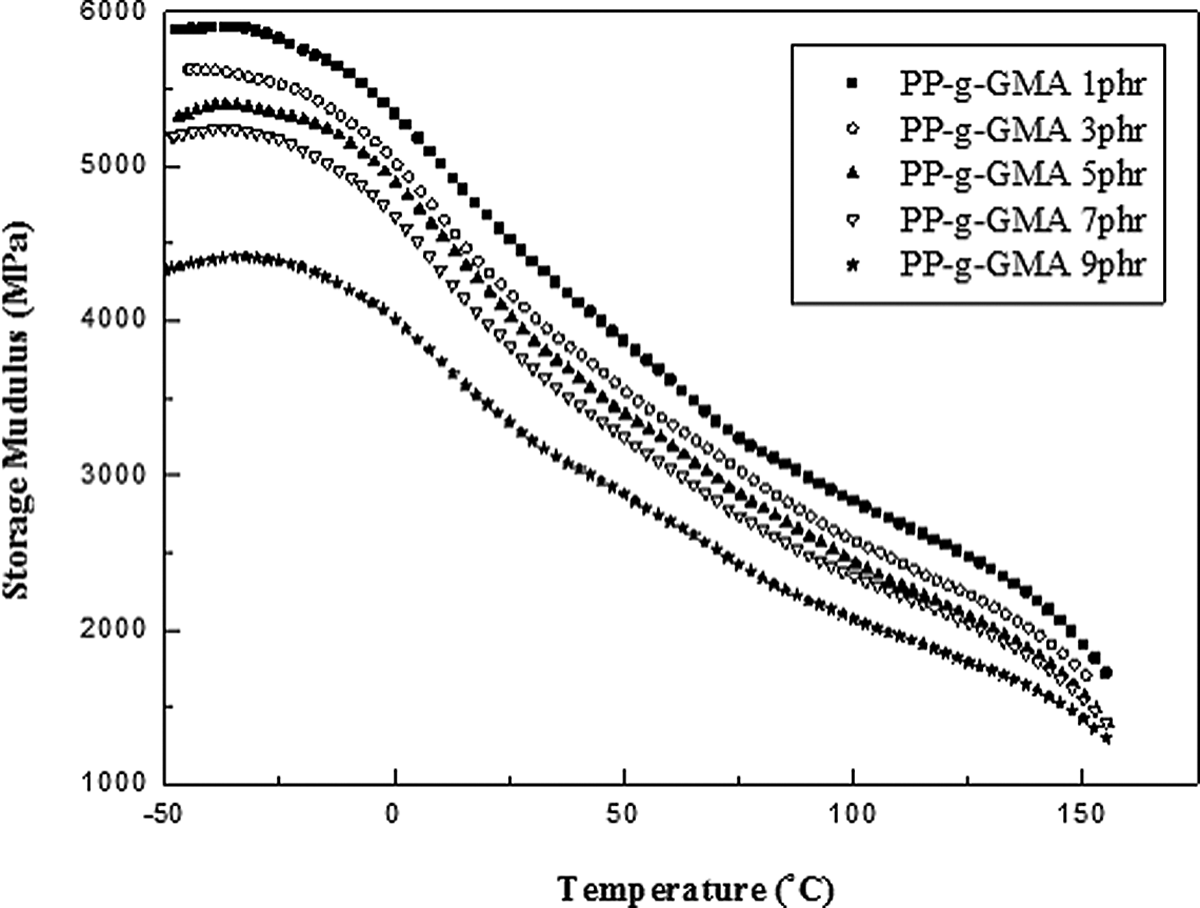
Effect of the content of PP-g-GMA on storage for PP/LGF (30%) composites. Scanning frequency is 1 Hz. PP/LGF: polypropylene–long glass fiber; PP-g-GMA: PP grafted with glycidyl methacrylate.
The effect of PP-g-GMA on tan σ versus temperature cures at 1 Hz for PP/LGF composites are shown in Figure 7. All curves of the PP/LGF composites showed two damping peaks, the first peak at the lower temperature was corresponding to the glass transition temperature (Tg ) of matrix resin. Ashida et al. 29 reported that the relation between tan σ and interface adhesion can indirectly show the interface adhesion status, a smaller peak value of matrix resin means the stronger interfacial adhesion among matrix resin and glass fiber. From Figure 7 it can be seen that the peak value of matrix resin was minimum in curve A, meaning that the interfacial adhesion among matrix resin and glass fiber was stronger, which explains the enhanced mechanical properties of PP/LGF composites, when the content of PP-g-GMA was 1.
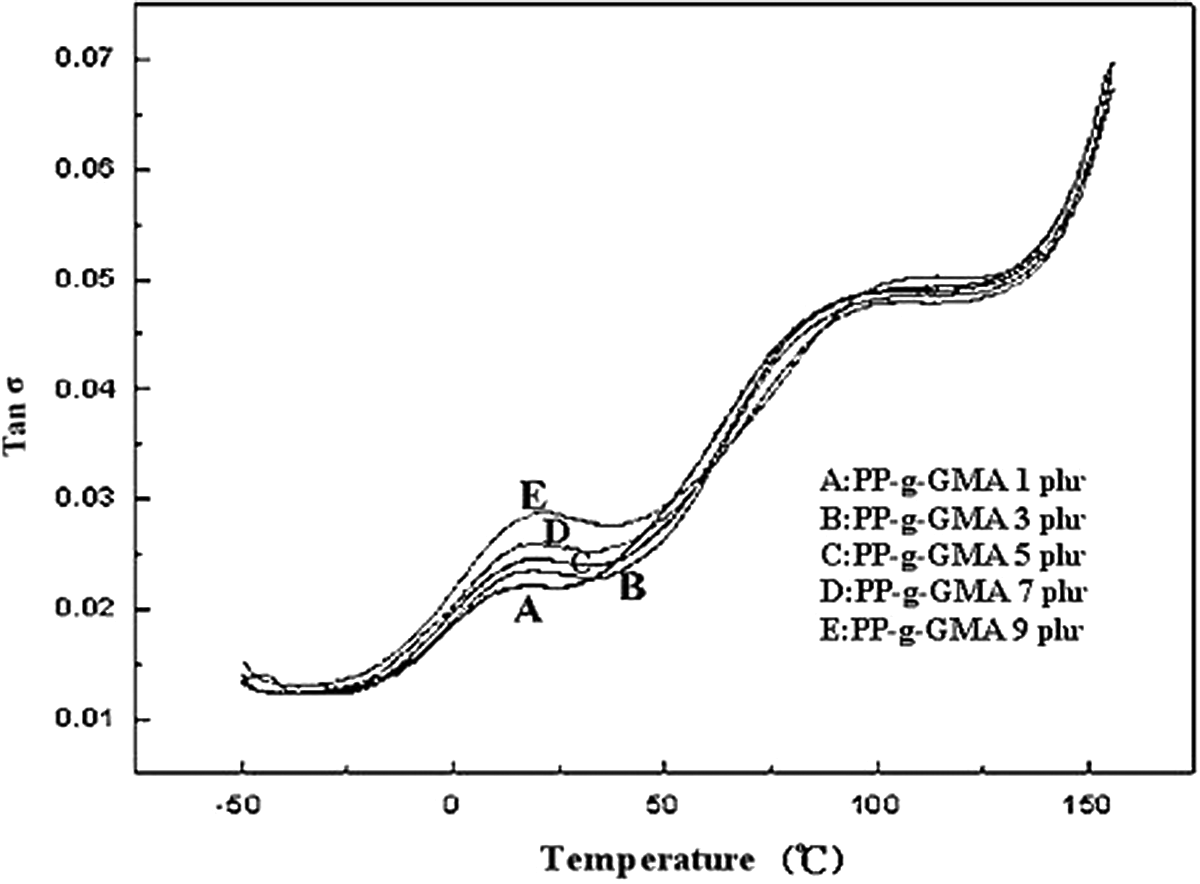
Effect of the content of PP-g-GMA on tan σ for PP/LGF (30%) composites. Scanning frequency is 1 Hz. PP/LGF: polypropylene–long glass fiber; PP-g-GMA: PP grafted with glycidyl methacrylate.
The effect of the content of PP-g-MA on storage modulus as a function of temperature in PP/LGF composites is shown in Figure 8. By increasing the content of PP-g-MA, the storage modulus of PP/LGF composites was increased and then decreased, which demonstrates that the interfacial adhesion among matrix resin and glass fiber was related with the compatibility among matrix resin and glass fiber. It can be seen from Figure 8 that the compatibility among matrix resins and glass fiber was best, wherein the storage modulus of PP/LGF composites was highest, while the content of PP-g-MA was 7.
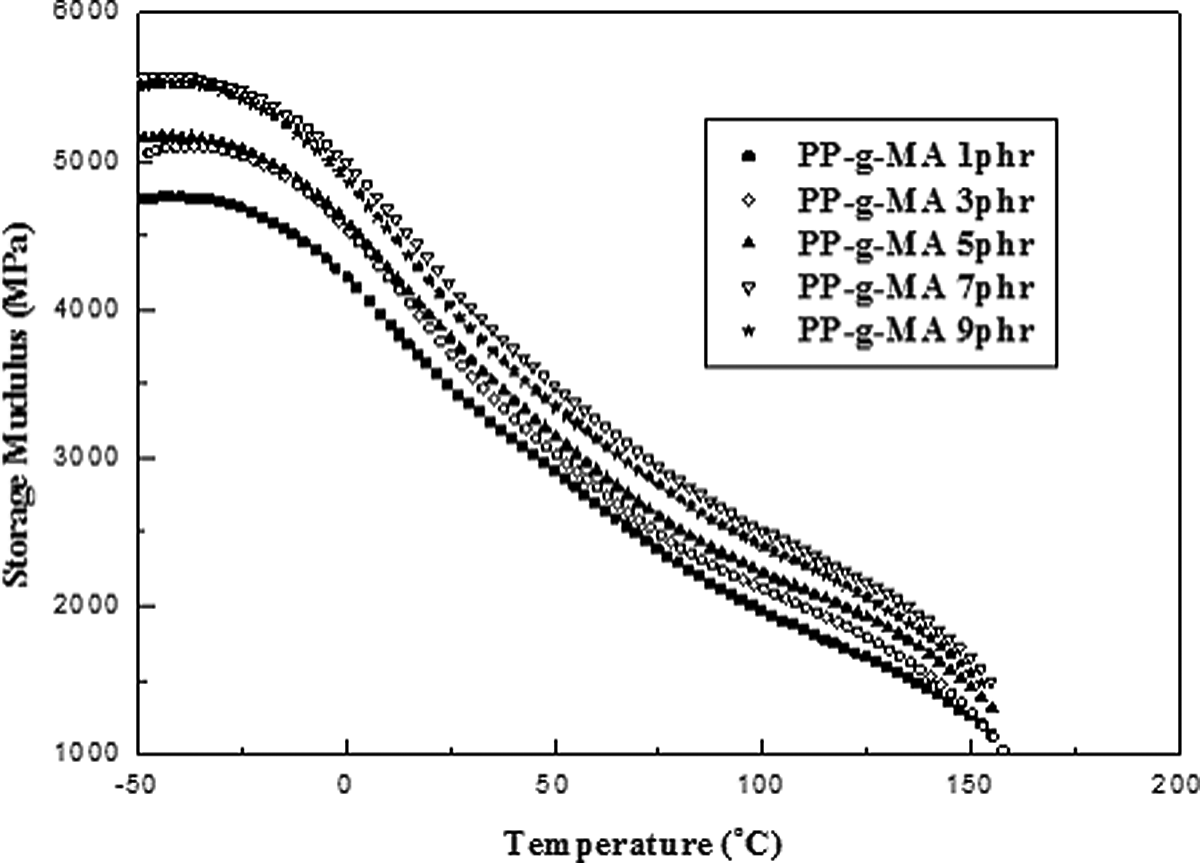
Effect of the content of PP-g-MA on storage for PP/LGF (30%) composites. Scanning frequency is 1 Hz. PP/LGF: polypropylene–long glass fiber; PP-g-MA: maleic anhydride-grafted PP copolymer.
The effect of PP-g-MA on tan σ versus temperature cures at 1 Hz for PP/LGF composites is shown in Figure 9. All cures of the PP/LGF composites showed two damping peaks, the first peak at lower temperature was corresponding to the glass transition temperature (Tg ) of matrix resin. The value of tan σ gradually decreased with aggrandizing the content of PP-g-MA, when the content of PP-g-MA was 7, the value of tan σ was the least, which explains that the composites achieve better compatibility. However, when the content of PP-g-MA was 9, the value of tan σ increased, and the compatibility of the composites get bad. The optimum dosage of PP-g-MA, therefore, was 7; the composites possessed the best mechanical properties.
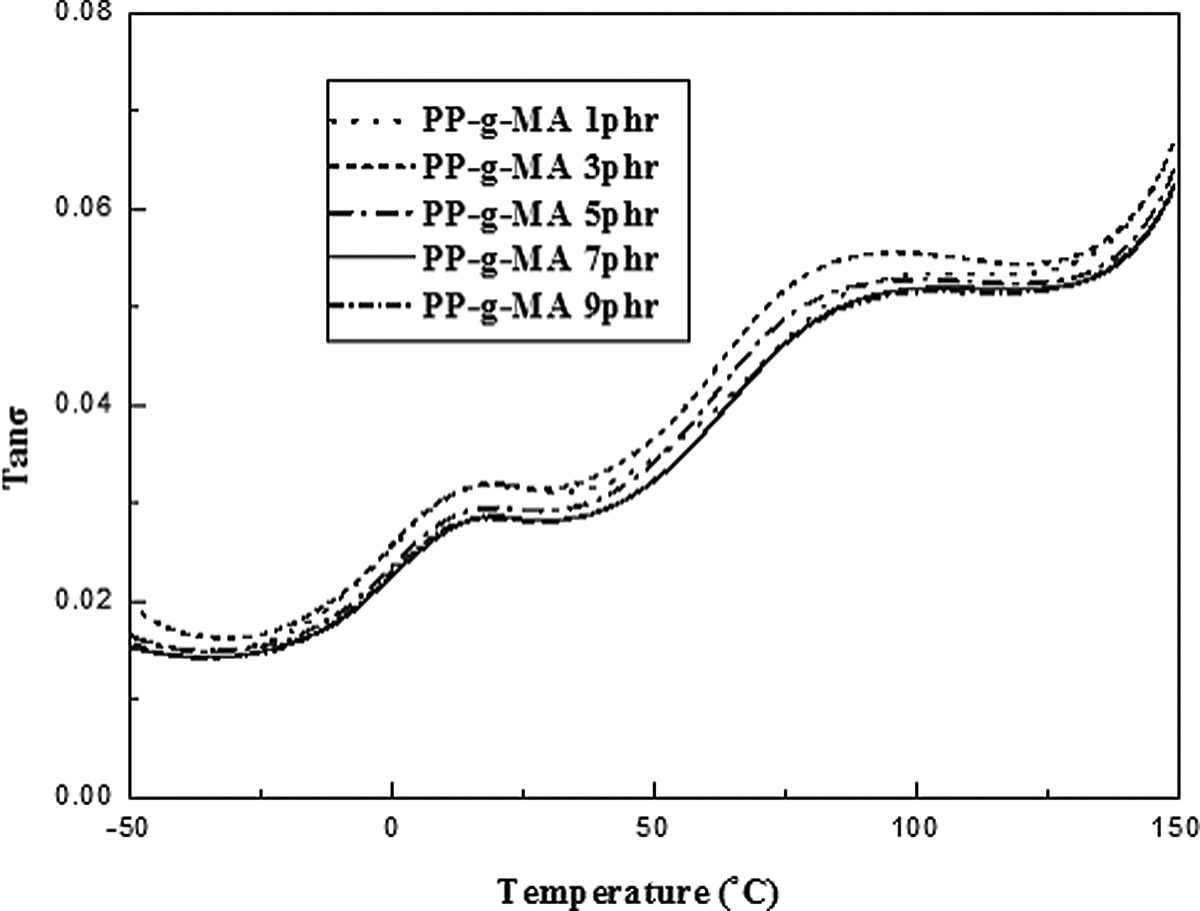
Effect of the content of PP-g-MA on tan σ for PP/LGF (30%) composites. Scanning frequency is 1 Hz. PP/LGF: polypropylene–long glass fiber; PP-g-MA: maleic anhydride-grafted PP copolymer.
In the temperature range of −50 to −25°C, all composites had a higher storage modulus (E’), suggesting an amorphous rigid network that results from the fact that the chain conformations are frozen. In addition, over the temperature range of −25 to 150°C, the storage of all composites becomes even more pronounced as the temperature increases. In terms of the tan σ spectra, two transitions can be clearly seen. The β transition, occurring at about 10 to 25°C, is associated with the glassy–rubbery transition of the amorphous chains of the polymer. The α transition, occurring at about 75 to 110°C, is related to the crystallites, but the relaxation occurs due to the presence of “rigid” amorphous molecules present in the crystal. These regions disrupt the purity of the crystals and thus can be termed as defects.
Conclusions
Influences of the content of PP-g-GMA and PP-g-MA on properties of PP/LGF composites were researched by mechanical properties and DMA. The following conclusions can be drawn:
The content of PP-g-GMA and PP-g-MA largely affected the properties of PP/LGF composites. The tensile strength, Notched Izod impact strength, flexural strength, and modulus of the composites gradually decreased, with increasing the content of PP-g-GMA. The mechanical properties of PP/LGF (30%) composites first increased and then decreased with increasing the content of PP-g-MA. The storage modulus of PP/LGF composites were decreased with increasing the content of PP-g-GMA. By increasing the content of PP-g-MA, the storage modulus of PP/LGF composites increased and then decreased. When the content of PP-g-MA was 7, the value of tan σ was the least, explaining that the composites achieve better compatibility. The change in tendency of mechanical properties, storage modulus, and tan σ of the composites was the same, proving that mechanical properties of the composites related with dynamic mechanical properties of the composites.
Footnotes
Funding
The study received grant support from the national 863 plan, contract grant numbers 2012AA03A601; Industrial revitalization of science Projects, contract grant numbers 2012 (1-7).