




Abstract
Solution-blended hybrid composites with carbon black (CB) as the second conducting filler in polyethersulfone (PES)-graphite have been prepared by first dissolving PES in dichloro methane. Addition of 1 wt% CB to solution-blended PES-7 wt% graphite results in decrease in the direct current electrical resistivity by four orders compared to the addition of 0 wt% CB. The particle size of graphite is reduced from few micron to nano level as evidenced by transmission electron microscopy analysis resulting in better dispersion. Without the addition of CB, the binary composite namely PES-7 wt% graphite exhibits finite conductivity due to increase in the contact between graphite particles as a result of reduction in the particle size. Comparison of electrical conductivity of PES-7 wt% graphite-2 wt% CB composites prepared by both solution-blending and powder-mixing routes proves the above-mentioned point. The alternating current behaviour, both conductance and effective dielectric constant studies shows that solution-blended composites exhibit higher value of conductance and effective dielectric constant at 0.01 Hz. This can only be attributed to better graphite dispersion in solution-blended composites. The enhancement is due to only particle size reduction of graphite that decreases the interparticular distance as the solution-blended binary composites with CB act as insulators up to 10 wt%. The charge transport at low concentrations of CB in solution-blended hybrid composites is dominated by the interfacial barriers and capacitance effects, while at higher concentrations it is mainly of hopping type at room temperature. The interfacial capacitance increases from 37.6 pF with 0 wt% CB addition to 96 pF with 2 wt% CB addition in PES-7 wt% graphite. Differential scanning calorimetry result suggests that more than 10°C enhancement in the glass transition temperature of PES is obtained for PES-7 wt% graphite-1 wt% CB.
Keywords
Introduction
Conducting polymer composites (CPCs) have been in focus in recent years for their potential applications in the areas such as fuel cells, 1 sensors and actuators, 2,3 electromagnetic interference (EMI) shielding devices, 4 and so on, depending on the level of conductivity required for a specific application. These composites mainly consist of polymer–matrix and conducting fillers, such as metal particles, graphite, carbon black (CB) etc., which lead to a new class of materials with good electrical and mechanical properties. These properties cannot be achieved completely with pure components alone. The electrical conductivity depends on the weight fraction, dispersion, aspect ratio, orientation of fillers, and processing routes for binary composites. For many applications it is required that the filler content should be as minimum as possible without affecting the electrical properties. In this regard, nanofillers like carbon nanotubes, 5 carbon nanofibers, 6 and graphene 7 have received much attention.
The electrical conductivity of conducting polymer composites (CPCs) vary nonlinearly and can be understood through percolation theory, 8 according to which there exists a threshold concentration (φ C) of fillers at which the conductivity starts to shoot up many orders. This concentration of fillers is known as percolation threshold. As far as the microscopic conduction phenomenon is concerned, many models 9 have been proposed to describe the conductivity of the material.
The frequency-dependent behavior of CPCs needs to be understood for EMI shielding and antistatic applications. In this regard, polymer-CB composites have been studied extensively.
10,11
With the addition of the conducting filler, the onset frequency of increase in alternating current (AC) conductivity shifts to higher value. The AC conductivity varies with frequency as given in Equation (1).

where σ 0 is the direct current (DC) conductivity, Aωn indicates the AC component, with A being a constant and n is the critical exponent signifying the type of charge transport and both depend on temperature and composition. Generally for hopping transport, the value of n lies between 0 and 1. 12 In some cases, hopping conduction is coupled with capacitive effects as reported elsewhere, 13 which is signified from ‘n’ value greater than one.
There are reports in the literature regarding polymer-based hybrid composites. In our group, 14 we have shown that the addition of small amount of CB in polyethersulfone (PES)-graphite system enhances electrical conductivity significantly. Sumfleth et al. 15 have proved the synergistic effect in titania-doped multiwalled carbon nanotube (MWCNT)-epoxy composites. Raja et al. 16 investigated epoxy-graphite nanoplatelet-CB hybrid composites, and they showed that the thermal conductivity of these composites is significantly higher than that of pure epoxy. Zhang et al. 17 investigated the synergistic effect in polypropylene (PP)-MWCNT-CB hybrid composites. They showed enhanced electrical conductivity when two conducting fillers were used. Few reports are found for conducting hybrid composites especially polyphenylene sulfide (PPS)–graphite 18 and PP-graphite 19 based, and very high loading of graphite and CB have been employed to make the composites highly conducting to be used for bipolar plates. Ramanujam et al. 20 have studied impedance analysis of PPS-graphite–expanded graphite hybrid composites.
Though work related to polymer-based hybrid composites can be found in the literature, no systematic studies have been carried out to comment on the AC behavior of PES-graphite hybrid composites. Thus, the objective of the present work is to understand the effect of addition of CB in solution-blended PES-7 wt% graphite on the electrical conductivity by studying its DC, AC behavior especially impedance, and dielectric behaviour. Differential scanning calorimetry (DSC) analysis of PES-graphite-based hybrid system is also reported. The formation of nanographite due to solution blending is addressed.
Experimental
Materials
PES (3600P) powder was procured from Gharda chemicals, Mumbai, India (now sold by Solvay Advaned Polymers). The viscosity of this solution grade is 275 cP. Graphite is a natural flake graphite powder (200 mesh) supplied by Carbon enterprises, Pune, India. CB is a conducting grade supplied by Carbon enterprises (Pune, India).
Composite preparation
The composites were prepared by solution-blending method. In this method, a known quantity of PES was dissolved in 100 ml dichloro methane (DCM) and stirred well until all polymers got dissolved. As per weight fraction calculation corresponding to 10 g of hybrid composite, a known amount of CB was added with the dissolved polymer in a stoppered conical flask and stirred continuously for 2 h. Then the required amount of graphite was added and the stirring continued for another 12 h. After stirring, the hybrid composites were poured in a petri dish and vacuum dried. The resulting cake was crushed, sieved (100 mesh), and the powder was used for making pellets. Pellets were made by taking 1 g of the composite by applying 3 ton load for 3 min at room temperature. Powder-mixed composites were prepared by first mixing sieved PES (100 mesh) with the required amount of CB for 15 min. To this mixture, the calculated amount of graphite was added and the mixing was continued for another 15 min in a mortar with the help of a pestle.
Measuring electrical properties
DC resistance of different hybrid composites prepared was measured using programmable electrometer (Model: 6514; Keithley Instruments, Cleveland, Ohio, USA) by applying a constant load (8 kg/cm2) to reduce the contact resistance. Platinum electrodes of 1 cm2 area were used as electrodes. AC measurements (impedance and dielectric studies) were done on samples in a specially constructed cell with platinum electrodes of area 1 cm2 as contact electrodes using frequency response analyzer SI1255 (Solartron Analytical, Hampshire, UK) with dielectric interface 1296. The impedance plots were fit with ZVIEW® software.
Sample preparation for TEM and SEM studies
A small amount of PES-graphite composite was put in DCM to dissolve the polymer and stirred for a minute. A drop of the solution was transferred to copper grid and mounted in transmission electron microscopy (TEM) Model JEOL-1200 EX (JEOL, Tokyo, Japan). Scanning electron microscopy (SEM) pictures of pure graphite powder were taken using SEM Leica-440.
Thermal analysis
DSC studies were carried out with Q-10 model from TA instruments (New Castle, Delaware, USA) in nitrogen atmosphere. Nitrogen flow rate was 50 ml/min and the heating rate was 10°C/min.
Results and discussion
DC conductivity studies
Figure 1(a) depicts the variation in through thickness resistance of solution-blended PES-CB, PES-graphite composites. The electrode area and thickness of the sample were kept the same, that is, 1 cm2 and 5 mm, respectively. It is clear from the figure that the resistances of PES-CB composites are higher than that of PES-graphite composites. The electrical conductivity of graphite is higher than that of CB, and CB particles might have formed agglomeration in DCM. Further the percolation threshold of PES-CB composites can be identified at 10 wt% after which the resistance starts decreasing; whereas for PES-graphite composites, it is between 5–10 wt%. The solution-blended PES-10 wt% graphite exhibits a resistance of approximately 13.1 MΩ, whereas PES-5 wt% graphite exhibits a value of 4.3 × 10¹⁰ Ω which is in the insulating range. So it is logical to think of hybrid composites to improve the level of conductivity, keeping the percolation threshold as low as possible and hence we have used CB as the second conducting filler. Very small amount of CB is sufficient to cause higher conductivity in the PES-graphite composites. Further the density of CB is much lesser than that of natural graphite (1.8–2.1 g/cm3). In order to understand the effect of CB, the variation in resistance was measured by keeping the graphite concentration same. Figure 1(b) depicts the variation in through thickness resistance (5 mm thick and 1 cm2 area) of PES-x wt% graphite-y wt% CB (x = 0, 10, 20, 38, 60 and y = 0, 1, 3, 7, 10), and it is clear that the addition of CB to PES-graphite composites decreases the resistance drastically. Further the resistance change is maximum for 10 wt% graphite with the addition of CB, and this is due to minimum number of contacts between the conducting species before CB addition. The change in resistance decreases with increase in graphite concentration as the network would have already been formed without CB addition. So addition of CB does not drastically change the resistance as compared to what has been observed in the insulating PES-graphite composites. The value saturates at 60 wt% graphite. To understand the effect of CB, one particular composition namely PES-7 wt% graphite has been chosen as the percolation threshold lies after 5 wt% graphite for solution-blended sample. In the solution-blending method, the particle/crystallite size of the original natural graphite is reduced to nano level as clearly evidenced in the TEM pictures shown in Figure 2(b) as compared to the original natural graphite shown in Figure 2(a), which is a cluster of particles with few microns diameter. With higher magnification, graphite planes can be clearly seen after solution blending as revealed in Figure 2(c) (scale 5 nm). It is to be noted that the particle size of graphite after solution blending is in the range of 20–30 nm. The reduction in particle size of graphite results in better dispersion and hence the conductivity increases.
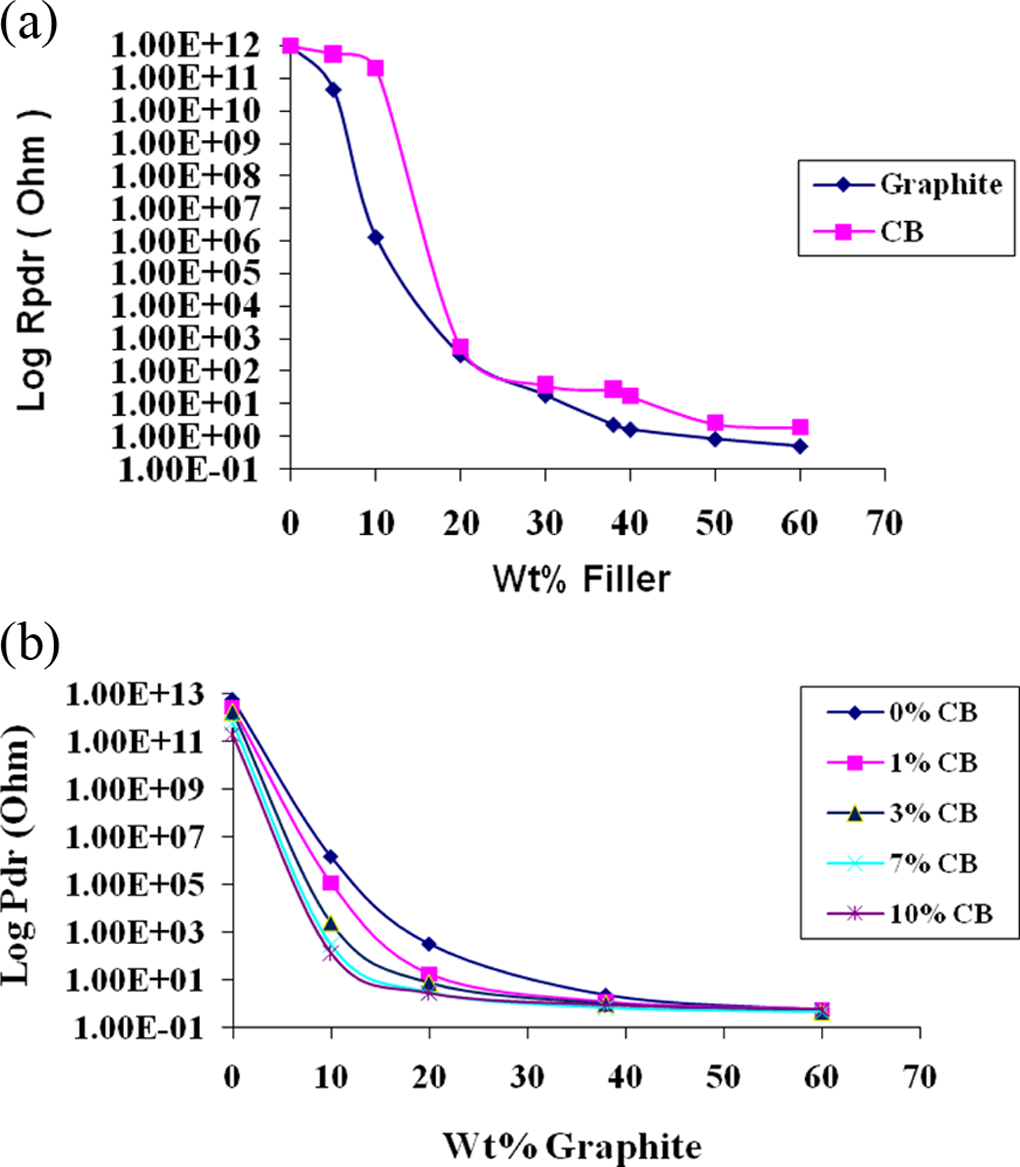
DC through thickness resistance (sample thickness: 5 mm; area: 1 cm2) variation in solution-blended (a) PES-CB and PES-graphite binary composites (b) PES-graphite-CB hybrid composites. DC: direct current; PES: polyethersulfone; CB: carbon black. CB: carbon black.
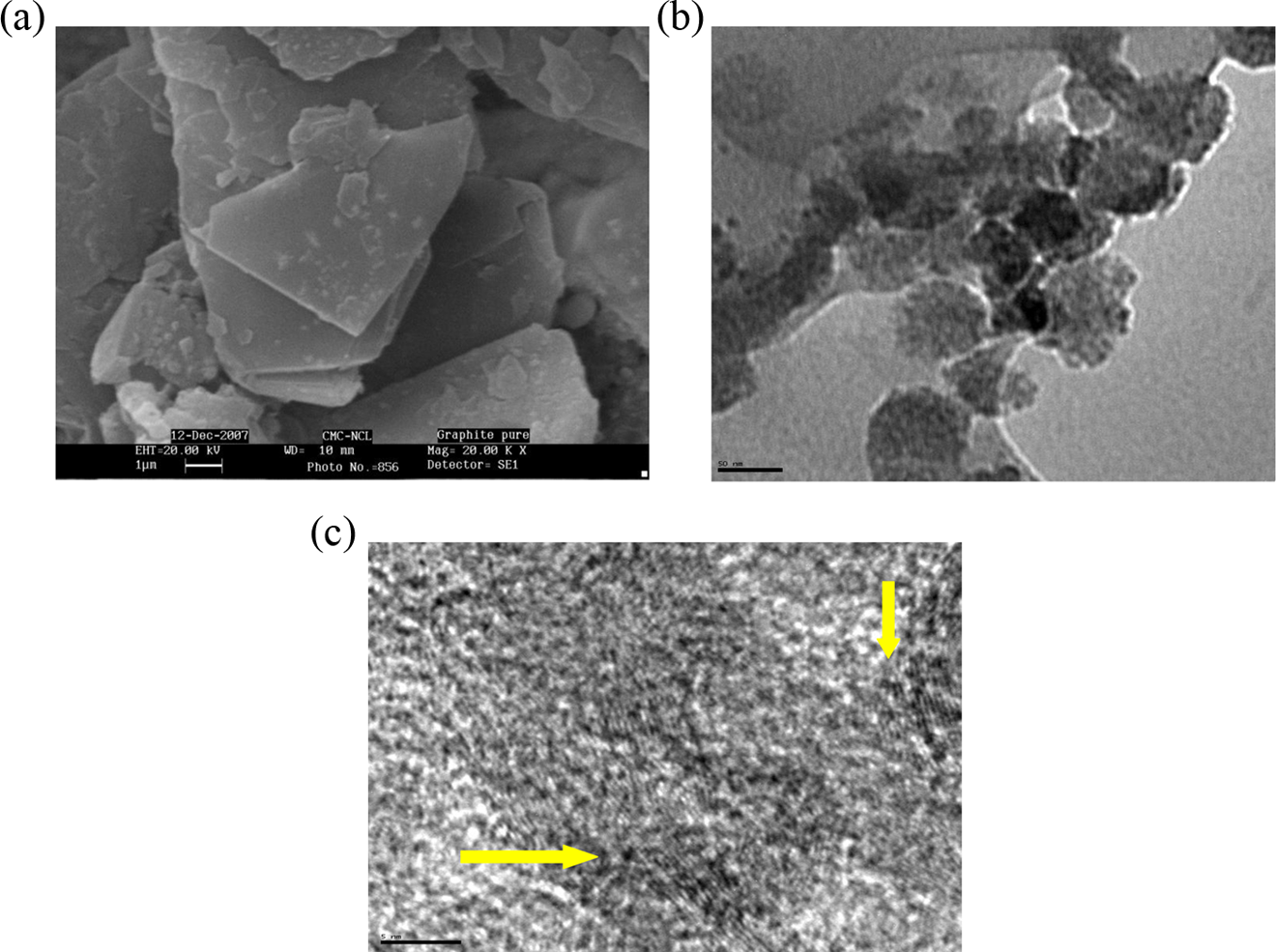
(a) SEM picture of graphite (b) and (c) TEM pictures of PES-7 wt% graphite solution-blended sample. SEM: scanning electron microscopy; TEM: transmission electron microscopy; PES: polyethersulfone.
Frequency-dependent conductance
Figure 3(a) shows the variation in log conductance with log frequency (log F ) of solution-blended PES-7 wt% graphite-CB composites where the frequency was swept from 0.01 Hz to approximately 106 Hz. Up to certain frequency, the conductance remains low and after that there exits drastic increase in the conductance. In the plot, for composite with 0 wt% CB, the turning point appears at low frequency compared to other loadings of CB in PES-7 wt% graphite. With the addition of CB, the conductance increases because of the reduction in the barrier for the charge transport. It is vivid that there exists three orders of enhancement in DC conductance (plateau region) for the addition of 1 wt% CB when compared to 0 wt% CB addition in PES-7 wt% graphite solution-blended samples. At higher loading, there is no significant improvement in the conductance because the network would have already been formed with 1 wt% CB addition itself. This happens with the addition of 2 wt% CB. The turning point where the capacitive effect dominates is switched to higher frequency values with increase in the concentration of CB. This is a very clear indication of switching over to conducting regime as reported for various other polymer composites. 21 In order to understand charge transport in these hybrid composite systems, the exponent n has been calculated corresponding to the slope of high-frequency variation in conductance. The value of n obtained proves that hopping conduction takes place only at high concentration of CB (between 2 and 2.5 wt%) as the exponent is less than one. Table 1 gives details of the exponent variation with the addition of CB in hybrid composites. At lower concentration, n value is greater than one which signifies capacitive effect. 13 In order to understand the effect of processing routes, the frequency dependent conductance of PES–7 wt% graphite–2 wt% CB prepared by both solution-blending and powder-mixing route has been measured and shown in Figure 3(c). One can clearly see almost four orders of enhancement in conductance for composites prepared by solution-blending route when compared to that of powder mixed one. The enhancement is due to reduction in the particle size of graphite in the former process, which results in increased surface area and decreased interparticular distance. It is worth to remember that the percolation threshold in PES-CB composites is 10 wt% and hence CB dispersion alone could not have resulted in enhancement in the conductance to that extent.
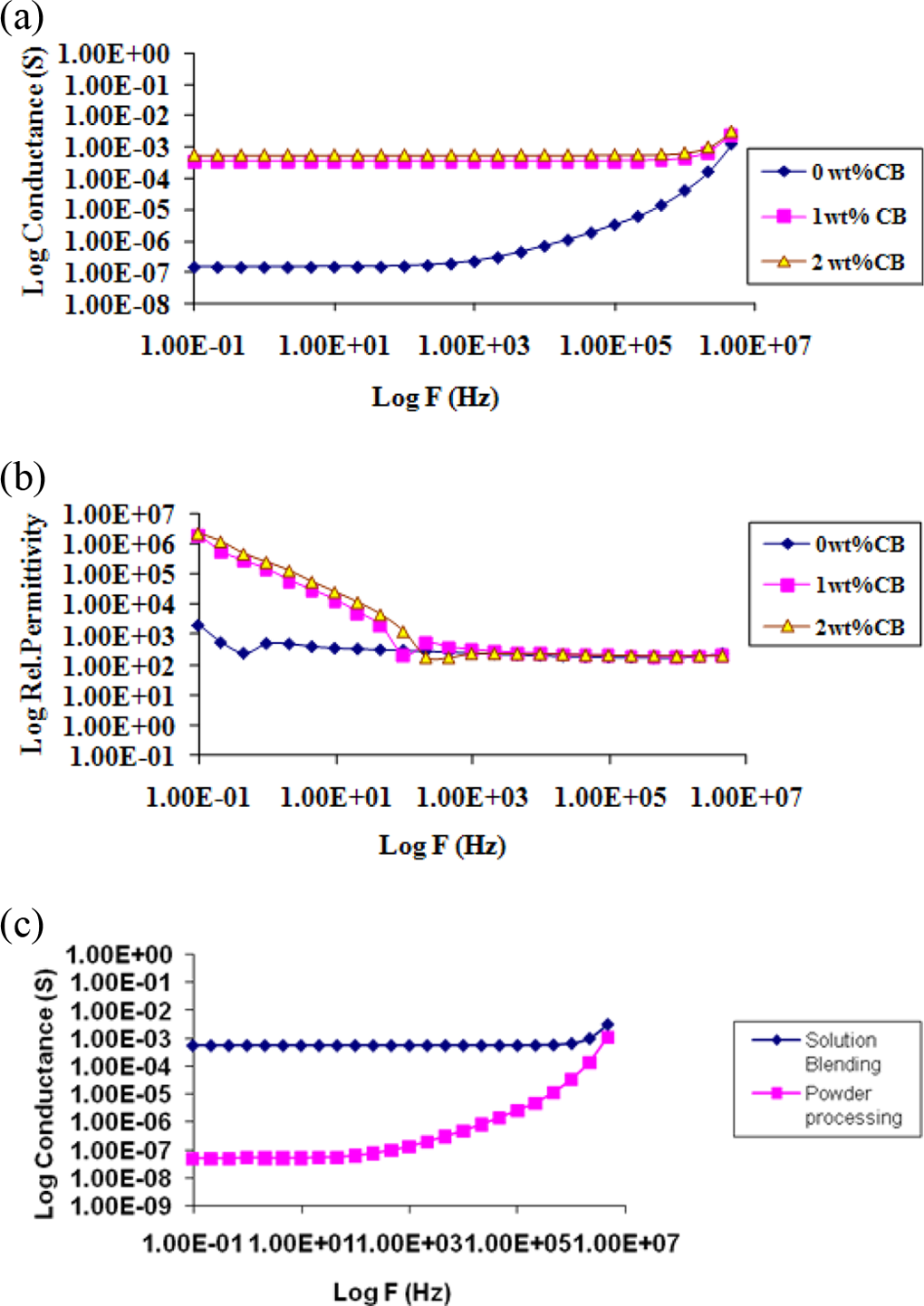
(a) AC conductance (b) effective dielectric constant variation in PES-7 wt% graphite-x wt% CB (x = 0, 1, 2) solution-blended composites, and (c) comparison of processing routes of PES-7 wt% graphite-2 wt% CB. AC: alternating current; PES: polyethersulfone; CB: carbon black.
Exponent “n” values extracted from AC conductance of hybrid composites.
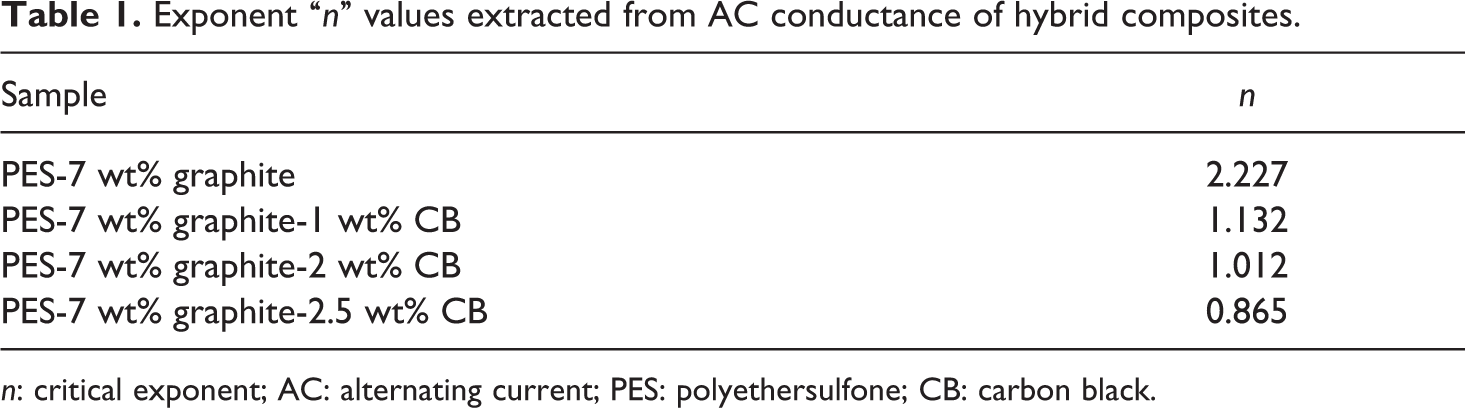
n: critical exponent; AC: alternating current; PES: polyethersulfone; CB: carbon black.
Figure 4(a) and 4(b) depicts a model that helps to understand the enhancement in the conductance of hybrid composites. The second conducting component forms network between graphite particles so that the barrier is decreased for the electrons to jump from one particle to the other. If our model is true then the interfacial capacitance should increase because of the occupation of CB particles in the interspace of graphite particles as this will lead to decrease in the interparticular distance for the charge transport. Considering conducting particle-polymer-conducting particle configuration as parallel plate capacitors, decrease in the interparticular distance will lead to increase in the interfacial capacitance. Through impedance measurements, it is possible to evaluate interfacial capacitance that is explained in the following section. The validity of this model can be checked by studying the dielectric properties of the hybrid composites as the interfacial capacitance is related to effective dielectric constant (∊) of polymer composites as given by the following Equation (2)

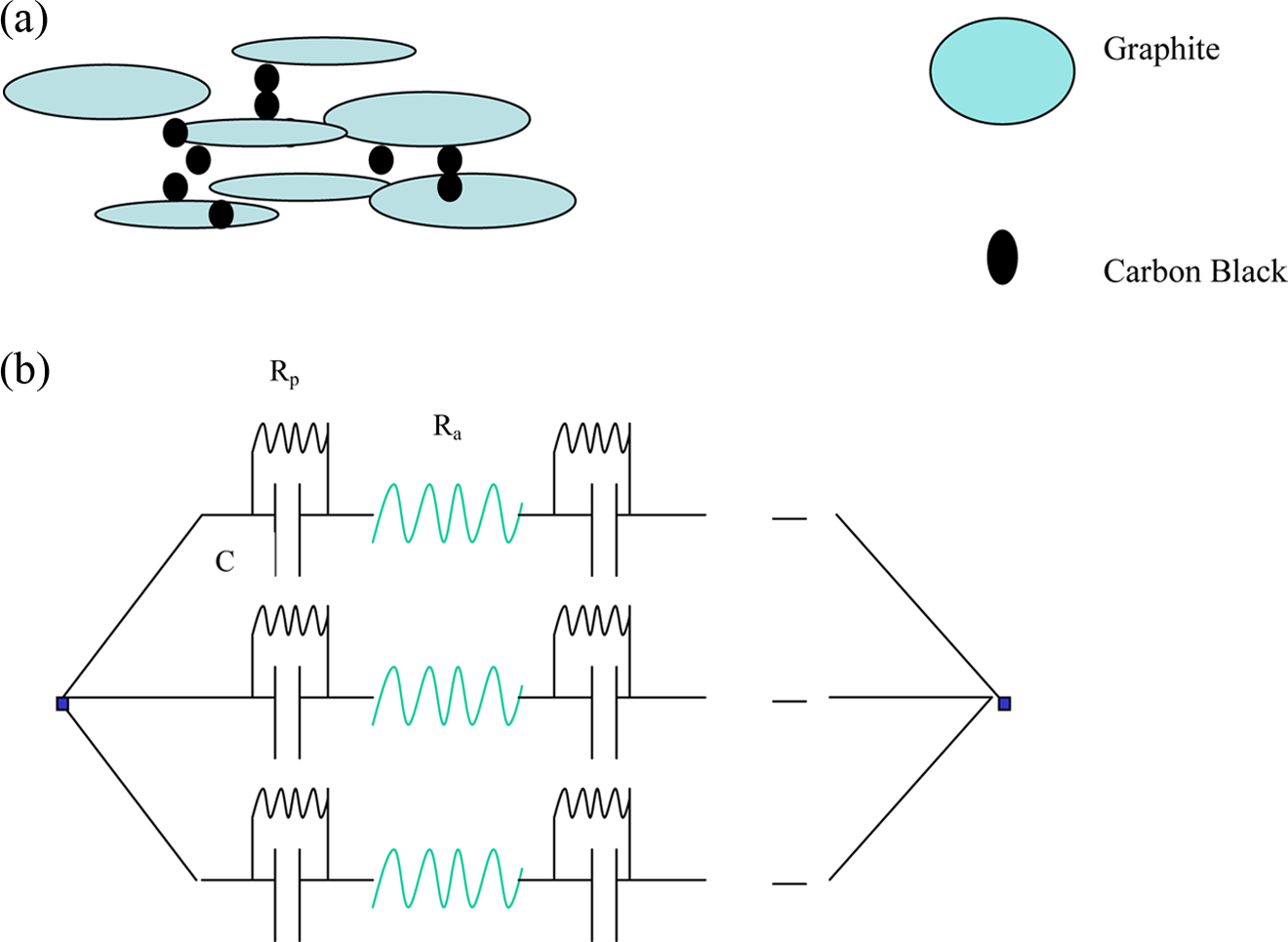
(a) Model of hybrid composites (b) equivalent circuit diagram of conducting polymer composites.
where A is the area of the parallel plate, d is the distance between the parallel plates in a parallel plate capacitor, and C is the capacitance. For the hybrid composites, if CB particles predominantly occupy intergraphite space, the interfacial capacitance should increase along with ∊. To confirm this, we have measured ∊ of those hybrid composites at room temperature.
Dielectric studies
Figure 3(b) depicts the variation in ∊ with frequency for solution-blended PES-7 wt% graphite-CB hybrid composites. It is evident that ∊ increases with the addition of CB. On comparing 0 wt% CB with 1 wt% CB addition, ∊ increases by three orders at 0.01 Hz and around 1.5 orders at 1 Hz. Higher loading of CB (2 wt%) does not show significant enhancement in ∊ because saturation would have occurred as far as the occupation of CB particles in the intergraphite space is concerned. It is important to remember that with the addition of CB up to 10 wt% in PES without graphite, the composites behaved as insulator (Figure 1(a)). Thus, the enhancement in ∊ cannot be due to CB dispersion alone. In these hybrid composites, a maximum of 2 wt% CB is added, which without graphite is an insulator. Hence, ∊ enhancement with the addition of CB in the investigated range proves that CB particles predominantly occupy intergraphite space. When CB particles occupy interspace of graphite, the interparticular distance, and hence the barrier for the charge transport is decreased. The variation in AC conductance with the addition of conducting filler is similar to that of what has been published for PP-MWCNT binary composites. 22 In order to evaluate C, impedance measurements have been carried out on those samples and the results are discussed below.
Impedance analysis
Impedance spectroscopy is used to understand corrosion,
23
degree of dispersion of filler,
24
and so on, and it is a nondestructive technique. The details of impedance spectroscopy measurements have been described elsewhere.
25
The parameters, which are useful to comment on the conduction process, are aggregate resistance (R
a), ohmic or non-ohmic resistance (R
p), and interfacial/junction capacitance (C). These parameters can be extracted from the experimental data by fitting them to an appropriate theoretical model. In general, polymer composites can be modeled as parallel combination of resistor (Rp) and capacitor (C) with series resistor (Ra) as shown in Figure 4(b). Impedance studies have been made on several CB-based conducting composites, where real part of impedance (Z′) is plotted against the imaginary component of impedance (Z′′) of the sample. This impedance plot or Cole-Cole plot is used to extract various parameters. Often one observes a semicircular plot in Argand plane whose diameter gives the DC resistance of the sample. C is extracted by equating Z′ and Z′′ at a particular frequency ωmax, where
Figure 5(a) and 5(b) shows the room temperature impedance plots of PES-7 wt% graphite and PES-7 wt% graphite-1 wt% CB hybrid composite prepared by solution-blending route. Various model parameters extracted from the impedance plots in Figure 5 are shown in Table 2. It is clear that with the addition of 1 wt% CB in solution-blended PES-7 wt% graphite increases C from 37.6 to 61 pF with the R a dropping down from 370 to 90 Ω for 0 wt% CB. Further, addition of 2 wt% CB to PES-7 wt% graphite composites leads to increase in interfacial capacitance to 96 pF with R a dropping down to 5 Ω. Bulk resistance of those composites decreases with the addition of CB. The DC resistance value extracted from the model matches with that obtained from DC measurements. The decrease in the R a with the addition of CB in PES-7 wt% graphite can be understood qualitatively in terms of work function of respective species as shown in Figure 6. The work function of polysulfone is 4.95 eV 26 and that of graphite is taken as 4.6 eV. 27 The work function of CB is taken as 4.8 eV, which depends up on the grade. 28 In order to understand R a decrease, single polymer-CB-graphite junction is considered, which can be assumed to be connected in series. In the absence of CB, for the charge transfer from polymer to graphite, a barrier of 0.35 eV needs to be crossed as the barrier is essentially the difference in the work function of materials in contact. In the case of hybrid composites, when CB occupies space between polymer and graphite, the barrier is only 0.15 eV. Thus, the charges can be transferred to graphite via CB. When the CB concentration is increased, more CB particles occupy the interspace and hence more charges will be transferred to graphite via CB resulting in decrease in the R a.
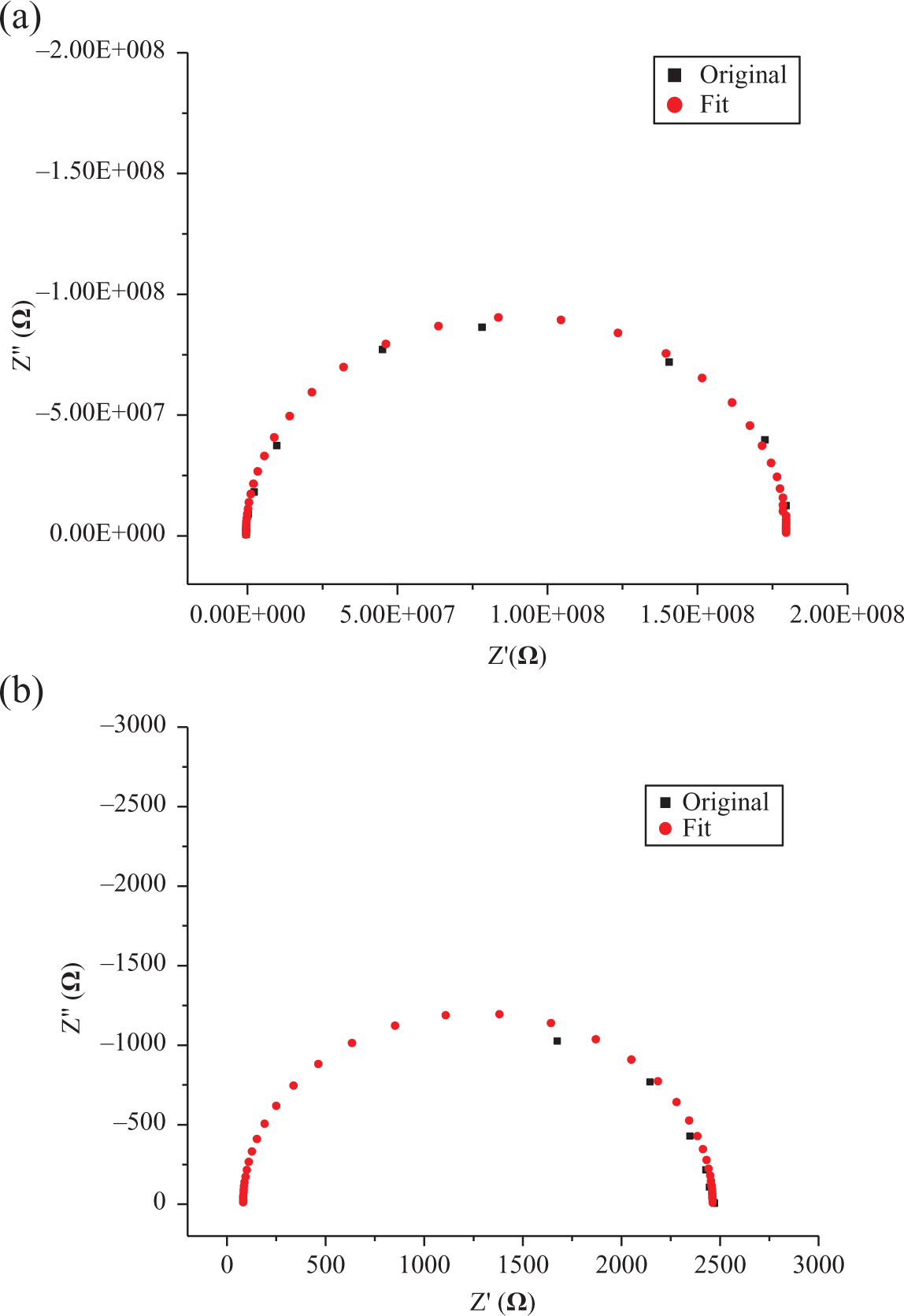
Impedance plots of (a) PES-7 wt% graphite (b) PES-7 wt% graphite-1 wt% CB solution-blended composites. PES: polyethersulfone; CB: carbon black.
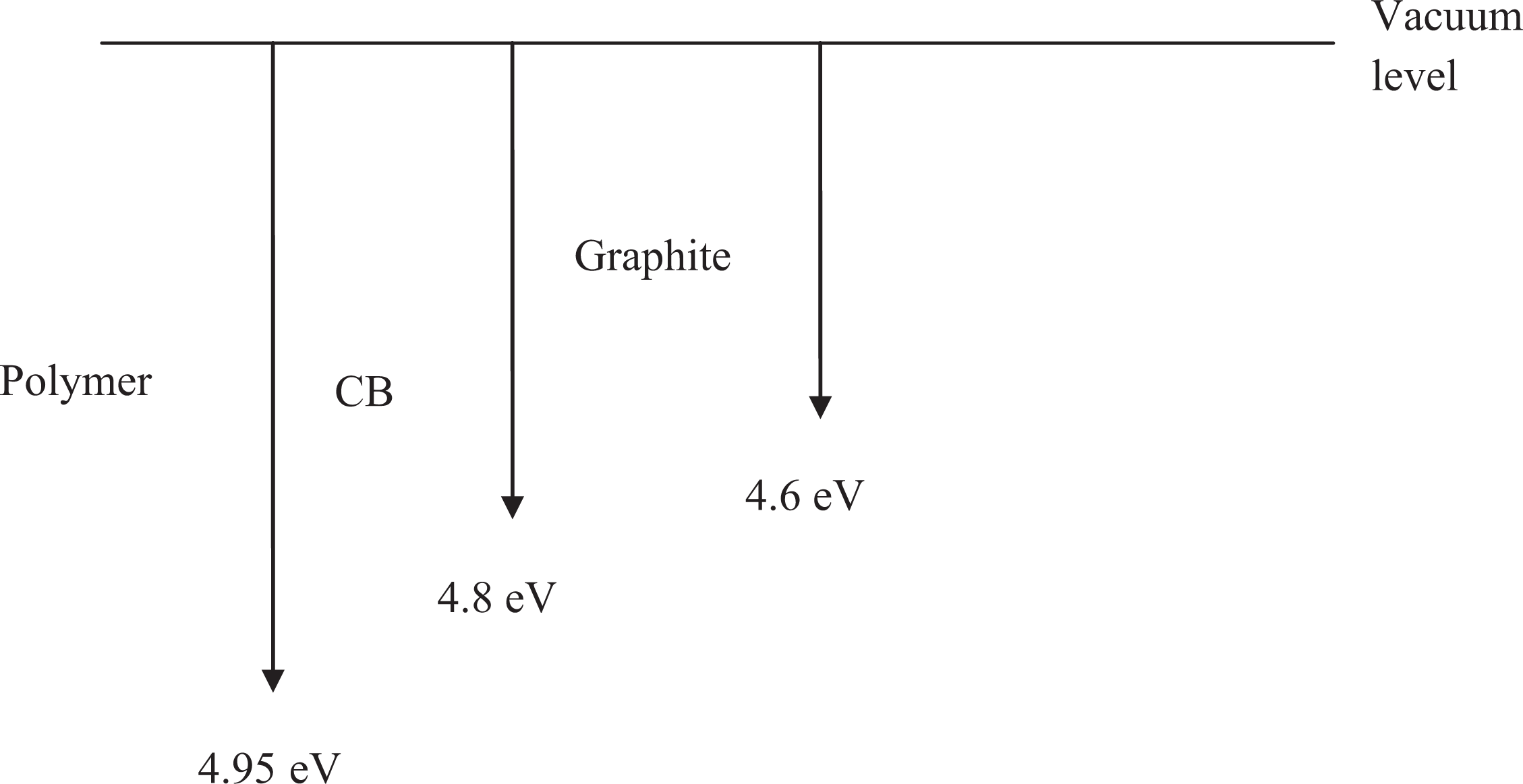
Work function diagram of PES-graphite-CB hybrid composites. PES: polyethersulfone; CB: carbon black.
Model parameters extracted from impedance measurement.
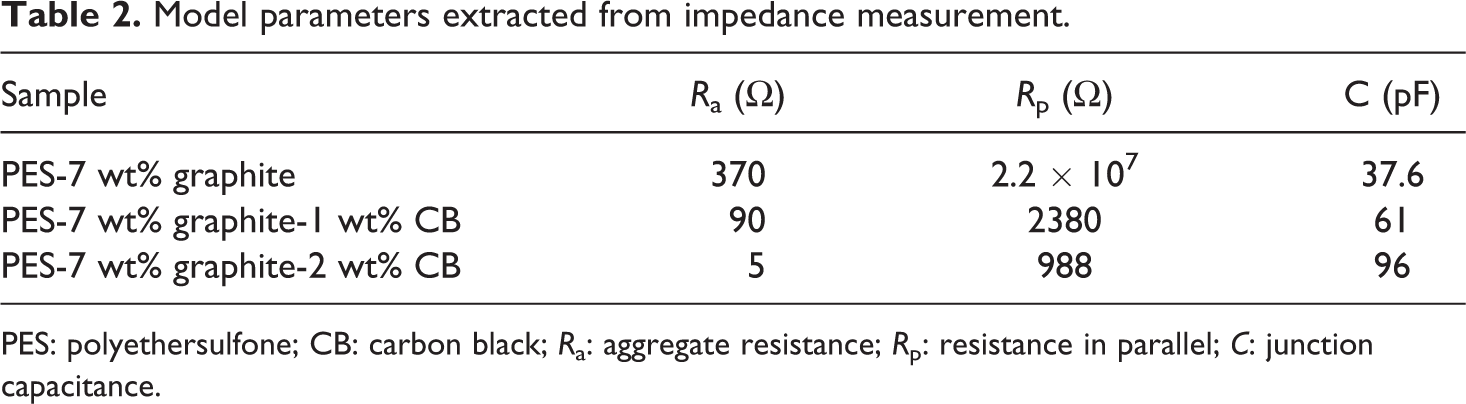
PES: polyethersulfone; CB: carbon black; R a: aggregate resistance; R p: resistance in parallel; C: junction capacitance.
DSC analysis
DSC plots of pure PES and solution blended PES-7 wt% graphite- 1 wt% CB are shown in Figure 7(a) and 7(b) respectively. It is clear that the glass transition temperature (T g) of pure PES is enhanced by more than 10°C when carbonaceous fillers are added. This proves that there exists interaction between matrix and the filler.
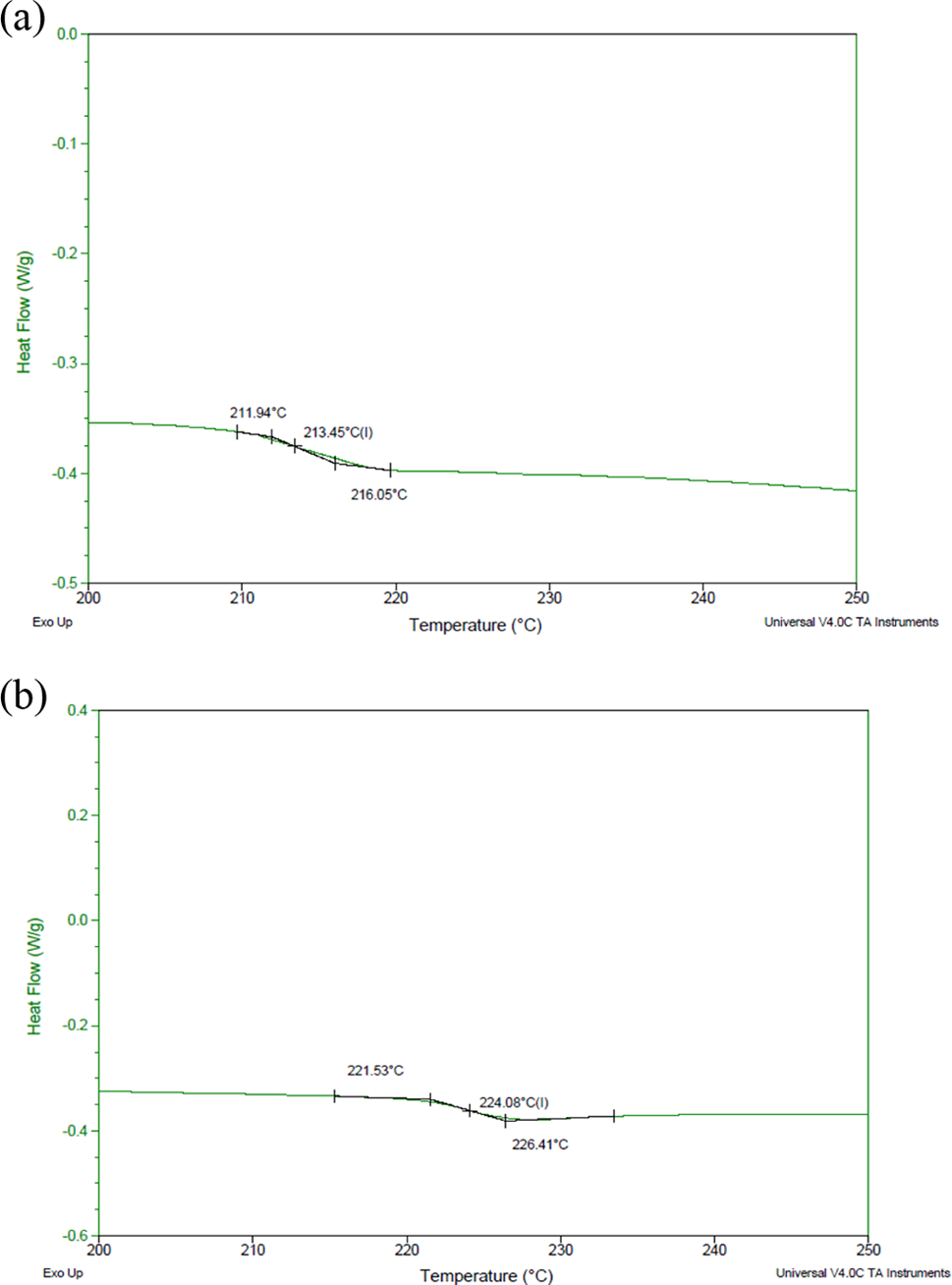
DSC curves of (a) pure PES and (b) PES-7 wt% graphite-1 wt% CB solution-blended composite. DSC: differential scanning calorimetry; PES: polyethersulfone; CB: carbon black.
Conclusions
The electrical properties of PES-graphite-CB hybrid composites prepared by solution-blending method have been studied in detail. It has been experimentally observed that the percolation threshold of PES-graphite composites lies between 5 and 10 wt%; whereas for PES-CB composites, it is at 10 wt%. One particular composition, PES-7 wt% graphite, nearer to the percolation threshold has been chosen to study the effect of addition of CB. With the addition of CB, the DC resistance of solution-blended sample decreases. In the solution-blended samples, graphite particle size is reduced to nano level as suggested by TEM results. The AC conductance studies support the DC results and the charge transport occurs by hopping mechanism for CB loading greater than 2 wt% in PES-7 wt% graphite solution-blended sample. For lesser loading, the capacitance effect dominates.
A model has been proposed in which graphite-polymer-CB type parallel plate capacitor configuration dominates. The validity of the model has been checked by dielectric measurements, which show that the effective dielectric constant increases at low frequency, implying increase in the C. Through impedance measurements, the C has been extracted, which increases from 37.6 pF for 0 wt% CB to 96 pF for 2 wt% CB addition in PES-7 wt% graphite to make hybrid composites. The T g of PES-7 wt% graphite-1 wt% CB hybrid composite is 10°C higher than that of pure PES.
It is worth mentioning here that the value of conductivity obtained for PES-7 wt% graphite- 1 wt% CB hybrid composite prepared by solution blending route will match the value obtained for binary composites when the loading of graphite lies between 10-20 wt%. Thus, the hybrid composites are so effective in bringing down the percolation threshold and also in this case, the density of the composite shall be reduced if special applications like bipolar plates for fuel cells are to be developed where the weight, cost, and performance of the plates are so critical for commercialization.
Footnotes
Funding
This research received no specific grant from any funding agency in the public, commercial, or not-for-profit sectors.