




Abstract
An experimental study was carried out to investigate the effect of temperature on the mechanical properties and the fracture mechanism of wood–plastic composites (WPCs) under tension. The specimens were prepared via injection molding of various weight fractions of pine wood particles and high-density polyethylene (with and without coupling agent, maleic anhydride-grafted polyethylene (MAPE)). The deformation and fracture behaviors of the samples at different temperatures were studied using a portable microscope setup during the test. The results indicated the significant effect of the test temperature on the fracture mechanism of WPC specimens. At room temperature, the dominant fracture mechanism for the samples without MAPE was debonding, whereas wood cracking was the dominant fracture mechanism in the presence of MAPE. At high temperatures, debonding was prominent over wood cracking in all samples (with and without MAPE), whereas at low temperatures (below 0°C) wood cracking was the dominant fracture mechanism.
Introduction
Wood–plastic composites (WPCs) consisting of thermoplastic polymers filled with lignocellulosic materials have applications in various industries, such as construction, automotive, packing, and transportation. 1,2 In general, WPCs possess both the desirable performance and the cost benefits of thermoplastics and wood. In practice, in terms of density, thermal insulation, availability, cost, biodegradability, tool wear, strength, and stiffness, wood is beneficial over organic fillers such as kenaf and flax. Thus, wood fillers are overwhelmingly employed in thermoplastic-based composites with polypropylene, polyethylene, and polyvinylchloride as the matrix. 3–5 WPCs, as the part of structural components, might be exposed to environmental temperature variation. Regarding the fact that temperature significantly affects the mechanical properties of polymer-based composites, considering variation of WPCs mechanical properties has been a subject of interest to investigation, although not being extensively explored.
The effect of temperature on some mechanical properties of polymer-based composites has been the subject of several investigations. Wade and Cantwell 6 investigated the effect of test temperature and loading rate on sliding mode of fracture toughness of end-notch flexural test specimen of plasma-treated glass fiber-reinforced nylon-6,6 composite bonded using a silica-reinforced epoxy adhesive. The temperature increase reduced the mode II fracture toughness and raised the crosshead displacement rate. They also observed a similar trend in compression tests and demonstrated that mode II fracture energy of adhesive system is related to the yield stress of adhesive. They used double-end flexure geometry to understand the effect of temperature and loading rate on the failure mechanism caused by changes in matrix shear yielding and particle–matrix debonding. Ray 7 evaluated the effects of matrix weight fraction and interfacial area at ultralow temperatures with different loading rates on interlaminar shear failure mechanism of glass/epoxy composites. Keller and coworkers 8 investigated the tensile behavior of adhesively bonded double-lap joints composed of pultruded glass fiber-reinforced adherents and an epoxy adhesive, under different temperatures. They showed that strength and stiffness decreased under temperatures above the adhesive glass transition. Besides, with increasing temperature, the failure mechanism changed from fiber tear of adhesive failure mode. However, the crack initiation loads were unaffected due to temperature change below the glass transition temperature, and the crack propagation rate was increased by decreasing the temperature. On the other hand, with increasing the temperature, the critical strain energy release rate for crack initiation and propagation consistently increased.
Liu et al. 9 studied the effect of high temperature exposure on bending properties and damage mechanism of carbon fiber composite sandwich panel with pyramidal truss cores. They found that degradation of matrix and fiber–matrix interface property at the high temperature caused a decrease in residual bending strength of the composite sandwich panel. Interfacial interactions and the strength of adhesion determine the micromechanical deformation processes and the failure mode of the composites. Hu and coworkers 10 reported the effect of temperature on the failure mechanism and bending properties of three-dimensional E-glass/epoxy braided composite. They demonstrated that bending properties decreased significantly with a temperature increase and failure mechanism changed from fiber fracture and brittle mode at room temperature to the matrix microcracking and fiber–matrix debonding at the elevated temperatures.
The effect of temperature on the mechanical properties of hemp fiber polypropylene composites was studied by Tajvidi et al. 11 They reported that impact resistance was independent of temperature, while flexural and tensile properties (specially modulus of elasticity) were severely affected. However, they did not consider the effect of temperature on WPCs fracture mechanism. Some researchers 12,13 characterized the WPC formulation to describe nonlinear response of time and temperature dependence. Bajwa et al. 14 evaluated the changes of WPC physical and mechanical properties under accelerated aging process. Although mechanical properties of various composites have been widely investigated in literature, no published work has been reported on variations of the fracture mechanism of WPCs with temperature.
The goal of this research was to investigate the influence of temperature as well as compatibilizer and wood weight fraction on the fracture mechanism and mechanical properties of WPC samples. In particular, the fracture pattern of WPC at various temperatures was observed in situ using a portable mechanical testing machine equipped with an optical microscope.
Materials and methods
Materials
As the polymeric matrix, high-density polyethylene (HDPE) grade 5620 with melt flow index of 20 g/10 min and density of 0.9 g/cm3 was used. Pine wood flour was employed as the filler sieved to obtain 40–80 mesh sizes (i.e. 170–400 μm). Polyethylene-grafted-maleic anhydride (MAPE) was used as the coupling agent.
Sample preparation
Wood flour and HDPE granules were first dried at 80°C for 24 h to minimize the moisture content and then injection molded with selected compositions. A 70-tone injection machine was utilized, and the temperatures at all zones were set at 170°C. The injection pressure was 6 MPa and the injection time was 2s. The specimens were made in two steps: first, by injection into a 0.42-mm thick rectangular mold and second, by cutting with a punch tool to an hourglass shape.
Experimental set-up
Tensile tests were conducted on the hourglass wood–plastic specimens using a portable mechanical testing set up shown in Figure 1. The set up was equipped with a microscope capable of magnifying up to 200×. The crack initiation and crack growth in the irregular-shaped wood particle–plastic composites were studied using this microscope via capturing the crack growth path. In the set up, the traction was provided by a servo motor coupled with a pair of ball screw system. The displacement rate was set at 0.1 mm/s, and the load was recorded via a load cell with the maximum capacity of 2 kN. The load values were recorded in real time to enable matching camera frames with the load data. The test temperature was maintained using an environmental chamber.
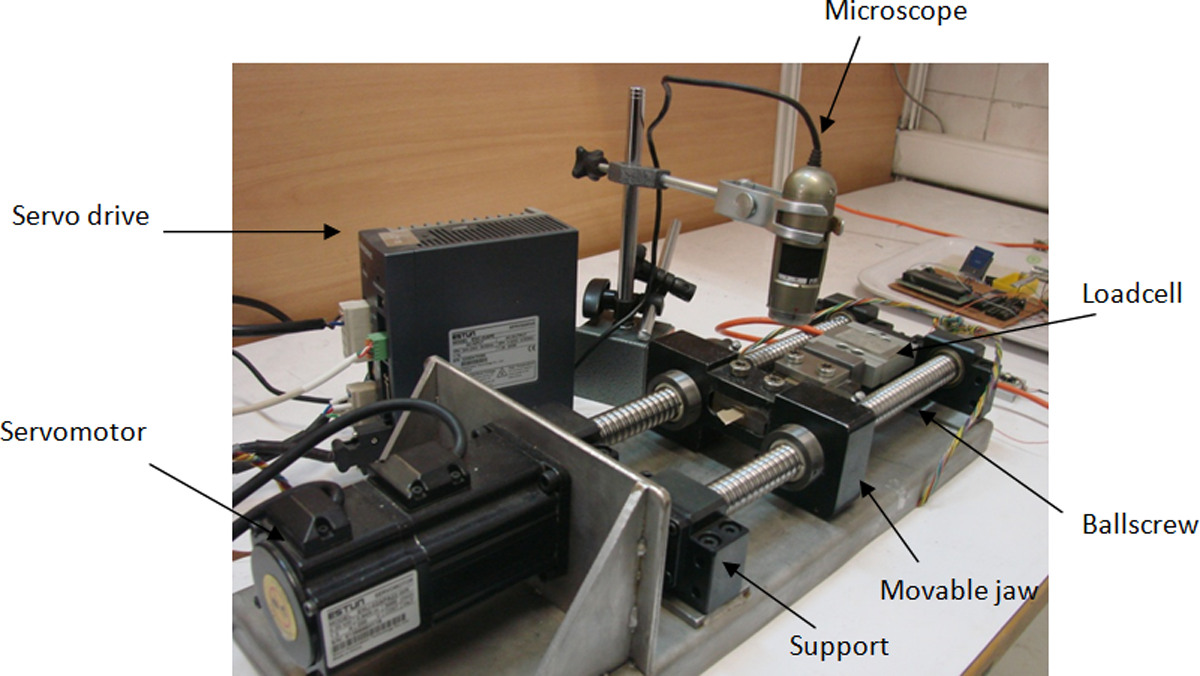
Manufactured portable mechanical test setup.
Design of experiments
In this work, the temperature, the wood weight fraction, and the presence of compatibilizer (with and without MAPE) were the main parameters. Five levels of temperatures were selected as: −30, −6, 6, 25, and 53°C. The samples were made with three different wood contents (5, 10, and 20 wt.%) as shown in Table 1. The amount of the coupling agent (MAPE) was 2 wt%. The weight fraction was kept below 20% to enhance the visibility of the interface of wood particles and matrix. Therefore, 35 experimental runs were conducted. Each experimental run was replicated 3 times to attain confident data.
Compositions of the produced samples.
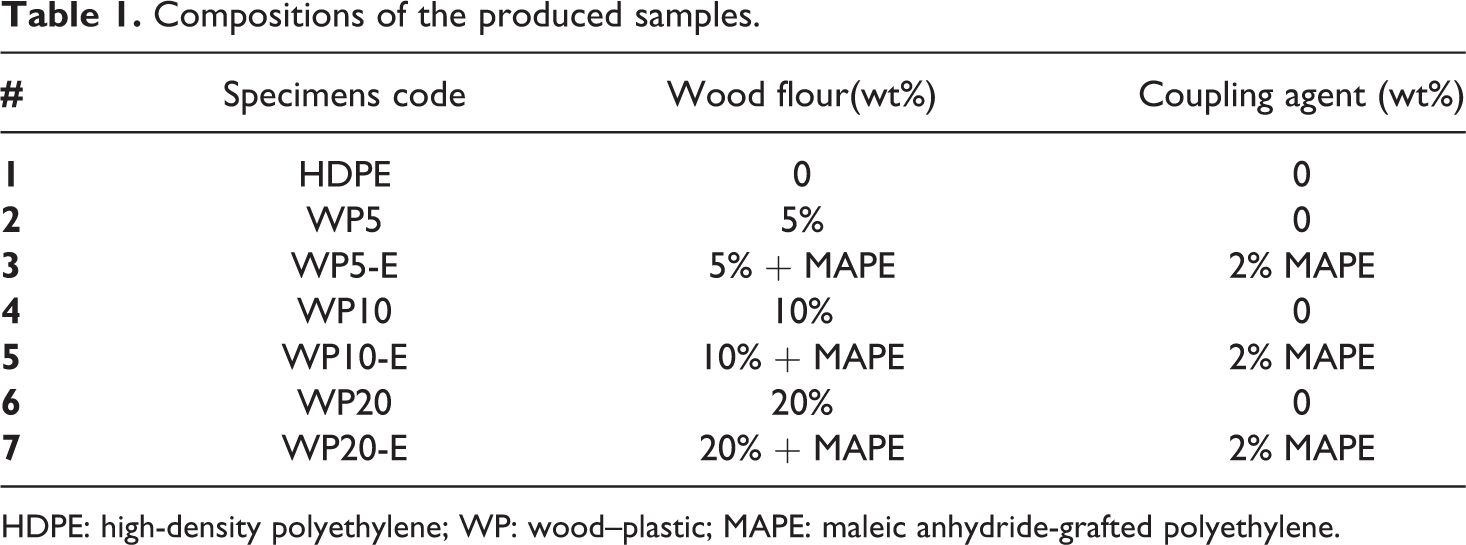
HDPE: high-density polyethylene; WP: wood–plastic; MAPE: maleic anhydride-grafted polyethylene.
Results and discussion
Mechanical behavior
The force–displacement diagrams of the test samples are illustrated in Figure 2. The results revealed that by increasing the temperature, the strength of the WPC samples decreases, while the fracture energy increases. The latter is due to the changes in failure mechanism with temperature. Figure 2(a) shows the force–displacement curves of the samples at room temperature. It is clear that the WPC sample with compatibilizer shows a higher strength at room temperature because it is well known that the coupling agent (maleic anhydride) boosts the interfacial interaction between the wood particles and the matrix. On the other hand, due to polar nature of wood flour and nonpolar behavior of polymer matrices, wood plays the role of filler in WPC (not necessarily a reinforcing role). Thus, there is a decrease in strength with increasing the amount of wood (Figure 2(a)). It is also clear that the WP5-E and WP20 samples give the highest and the lowest strengths, respectively. Moreover, the maximum difference of strengths among various compositions at this temperature (25°C) is about 38.5%. In addition, it can be seen from Figure 2(a) that adding MAPE and increasing wood content promote brittleness in WPC fracture behavior. Moreover, adding MAPE, as well as increasing the amount of wood, noticeably affects the modulus of elasticity (MOE) of WPC samples.
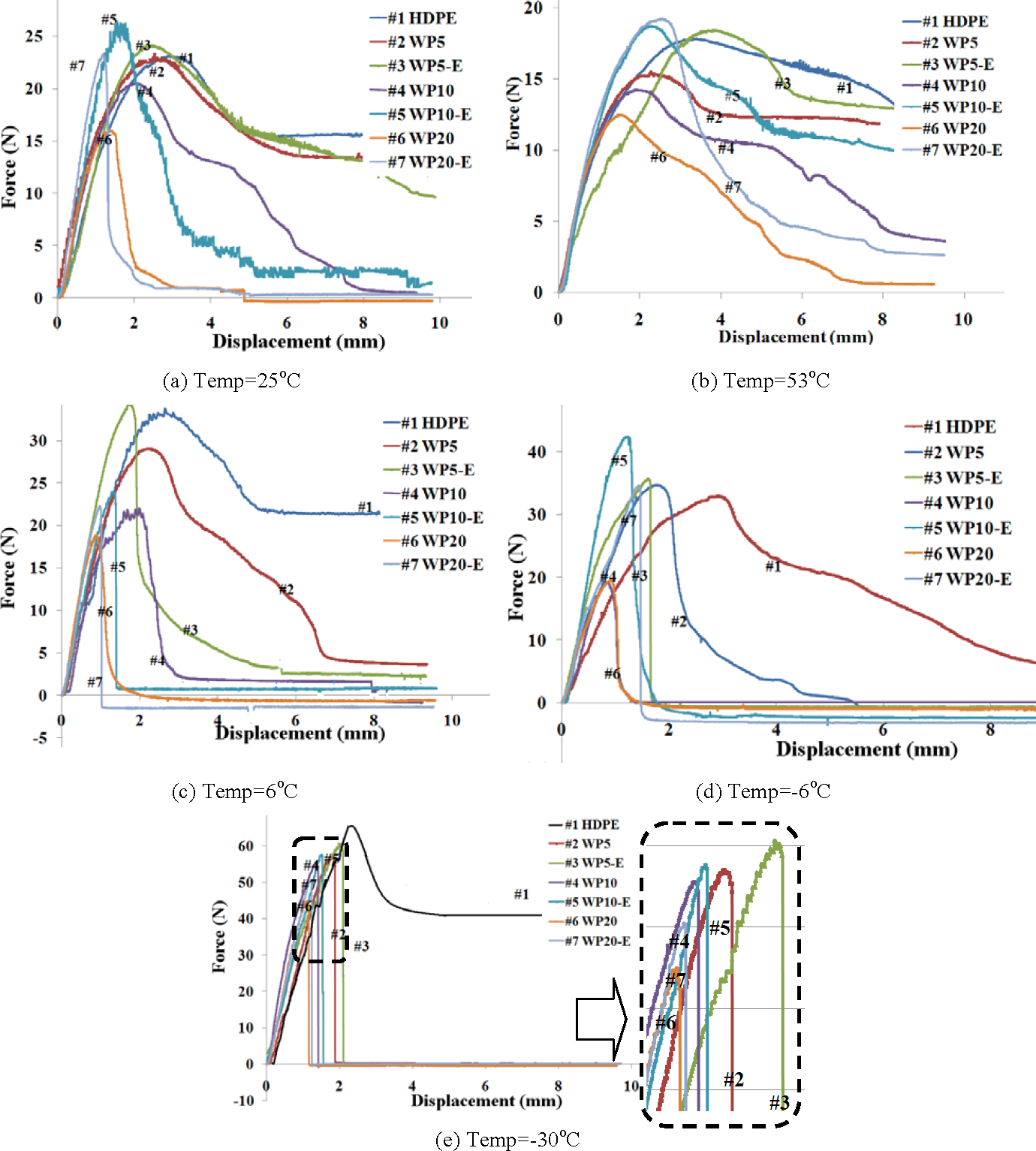
Force–displacement curves of the specimens tested at five different temperatures.
Figure 2(b) illustrates the force–displacement diagrams for the samples tested at 53°C. At this temperature, all samples exhibit ductile fracture behavior. Therefore, it can be stated that increasing the temperature suppresses the effect of wood content, such that at 53°C no significant impact of wood content on brittleness is observed. Besides, the order of the strength and MOE at this temperature in the presence of MAPE is observed to be contradictory to the trend observed at lower temperature such that WP20-E and WP5-E present the highest and the lowest strengths and MOEs at this temperature, respectively. At higher temperatures, HDPE loses more strength and stiffness than wood. As the presence of MAPE highlights the role of wood in overall properties of the material, those samples which contain more wood would have more strength and stiffness. At this temperature, and in the absence of MAPE, the effect of wood content is similar to the one at room temperature.
Figure 2(c) illustrates the mechanical behavior of WPC samples at a low temperature of 6°C. Although it was observed in Figure 2(a) and (b) that the effect of MAPE on strength is dominant over that of wood content, it can be seen from Figure 2(c) that the strength of WP10-E is less than those of HDPE and WP5. The rest of samples are ordered in terms of their strength similar to those tested at room temperature. Thus, it can be stated that lowering the temperature reduces the strengthening effect of MAPE on WPC. Compared to the results obtained at room temperature, most compositions such as WP20-E, WP10-E, WP20, WP5-E, and WP10 are placed in the group of brittle fracture. Moreover, the largest difference of strengths measured at this temperature (6°C) is about 44% which is larger than the difference of strengths measured at room temperature.
Figure 2(d) shows the tensile behavior of the specimens tested at a further lower temperature of −6°C. Further brittle fracture as a result of temperature reduction is observed in the examined compositions. In addition, the difference of strengths resulted at this temperature is about 53%, which is larger than the difference of strengths of those tested at 6°C.
Figure 2(e) shows the force–displacement curves for the specimens tested at a very low temperature of −30°C. At this temperature, HDPE presents the highest strength. Comparing the results given in Figure 2(a)–(e), it is evident that the effect of MAPE is further weakened against that of HDPE, as the test temperature reduces. At higher temperatures, MAPE significantly increases the strength of WPC, while at lower temperatures the strength of samples is mainly governed by the HDPE content. Since the effect of HDPE is bolded at the lower temperatures, it can be stated that, except for HDPE, variation in strength with varying wood content and the presence (or absence) of MAPE is significantly suppressed. In other words, MAPE and wood weight fraction play marginal roles in changing the strength of WPCs at the lower temperatures. In addition, decreasing temperature down to −30°C severely promotes the brittleness of the specimens, such that only unfilled HDPE preserves its ductile fracture behavior.
Effect of temperature on mechanical properties
Figure 3 presents the variation of fracture behavior with temperature for each composition. The HDPE behavior under tension at five temperature levels is shown in Figure 3(a). It is clearly seen that decreasing the test temperature down to −30°C does not influence the fracture behavior as the elongation at break remains significant. In fact, this behavior was expected because the glass transition point of HDPE (−120°C) is far below this temperature. The variation of HDPE strengths at the examined temperature interval was found to be about 71%. However, adding a low amount of wood (5 wt.%) had a noticeable impact on the fracture behavior as illustrated in Figure 3(b). For this composition, the maximum elongation is significant except at −30°C. It is also evident that the WP5 sample shows less ductility at the test temperature of −6°C. This reveals the effect of wood addition on the fracture behavior of the composites. On the other hand, the strength and MOE are increased with reducing temperature. The variation of WP5 strengths at the examined temperature interval was found to be about 77%.
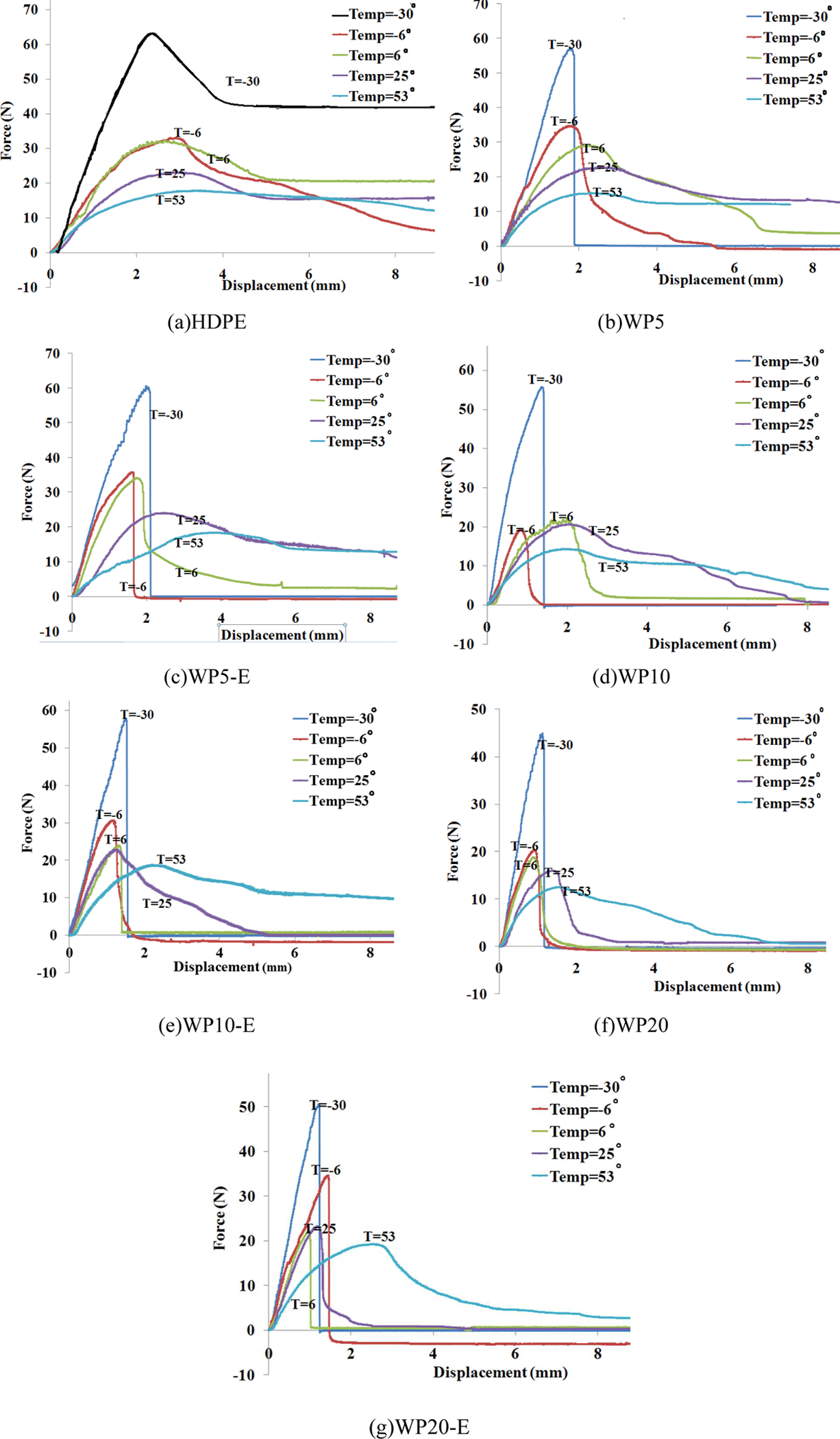
Force–displacement curves samples in various thermal loads.
The mechanical behavior of the WP5-E sample is depicted in Figure 3(c). It is interesting to see that, as compared to composition WP5, the tensile behavior at −6°C is brittle (similar to that tested at −30°C. It can be inferred that the presence of MAPE promotes brittle fracture in WPCs. The strength of WP5-E was observed to vary about 70% at the examined temperature interval, which shows less variation compared to that of composition WP5. Consequently, it may be stated that in the presence of MAPE, the strength of WPC is insisted more to temperature reduction. This observation can be explained by the fact that the strength of wood is less affected by temperature than that of HDPE, and addition of MAPE strengthens the interface and thus makes the wood play a more significant role; samples with MAPE are observed to have less strength fluctuation.
Figure 3(d) illustrates the tensile behavior of WP10 at the test temperatures. The trend of strength and MOE increase with the temperature decrease as expected. The fracture behaviors of this composition at the tested temperatures are similar to those of the WP5-E composition. Although the wood content was doubled, the brittle fracture occurred at −30 and −6°C, and a less brittle behavior was observed at 6°C. The variation of WP10 strengths at the examined temperature interval was found to be about 76%.
Figure 3(e) and (f) illustrate the tensile behaviors of the WP10-E and WP20 samples, respectively. Similar to the trends for WP5-E and WP10, the presence of MAPE and doubling the wood content have similar effects on the fracture behavior of WPCs. For WP10-E and WP20 compositions, along with the specimens tested at the two lowest temperatures of −30 and −6°C, a brittle fracture is observed for the specimens tested at 6°C. The strength variation for the WP10-E composition is 68%, which is less than that of the WP10 and WP5-E compositions. This can be attributed to the presence of MAPE and more wood weight fraction. Moreover, the strengths variation for the WP20 composition is about 73% which is less than that of the WP5 and WP10 compositions. It can be inferred that WPCs with a higher weight fraction experience less strength variation. Thus, it is recommended to use WPCs with higher wood content in environments with severe temperature fluctuations to lower the sensitivity of the material strength to the temperature changes. The tensile behavior of the WP20-E composition is depicted in Figure 3(g). It shows that WP20-E gives the most brittle fracture modes, such that it only shows a ductile behavior at a high test temperature of 53°C. This composition presented the lowest strengths variation compared to the other compositions, due to the higher wood content and the MAPE presence.
Visualizing the effect of temperature on fracture mechanism
Figure 4 shows the fracture evolution for the compositions WP10 and WP10-E tested at the room temperature. Close examination shows that “debonding” is the dominant fracture mechanism for the sample without MAPE (Figure 4(a) to (c)). In other words, the fracture path travels through the interfacial surface of the particles and matrix. It is reasonable to state that the lack of MAPE introduces the interface as the weakest zone for the fracture. However, as shown in Figure 4(d) to (f), with the presence of MAPE, the wood–plastic matrix interface is strengthened to resist the applied load, so that the preferred fracture path runs through the wood particles. In other words, the dominant fracture mechanism becomes “wood cracking” in the presence of MAPE.
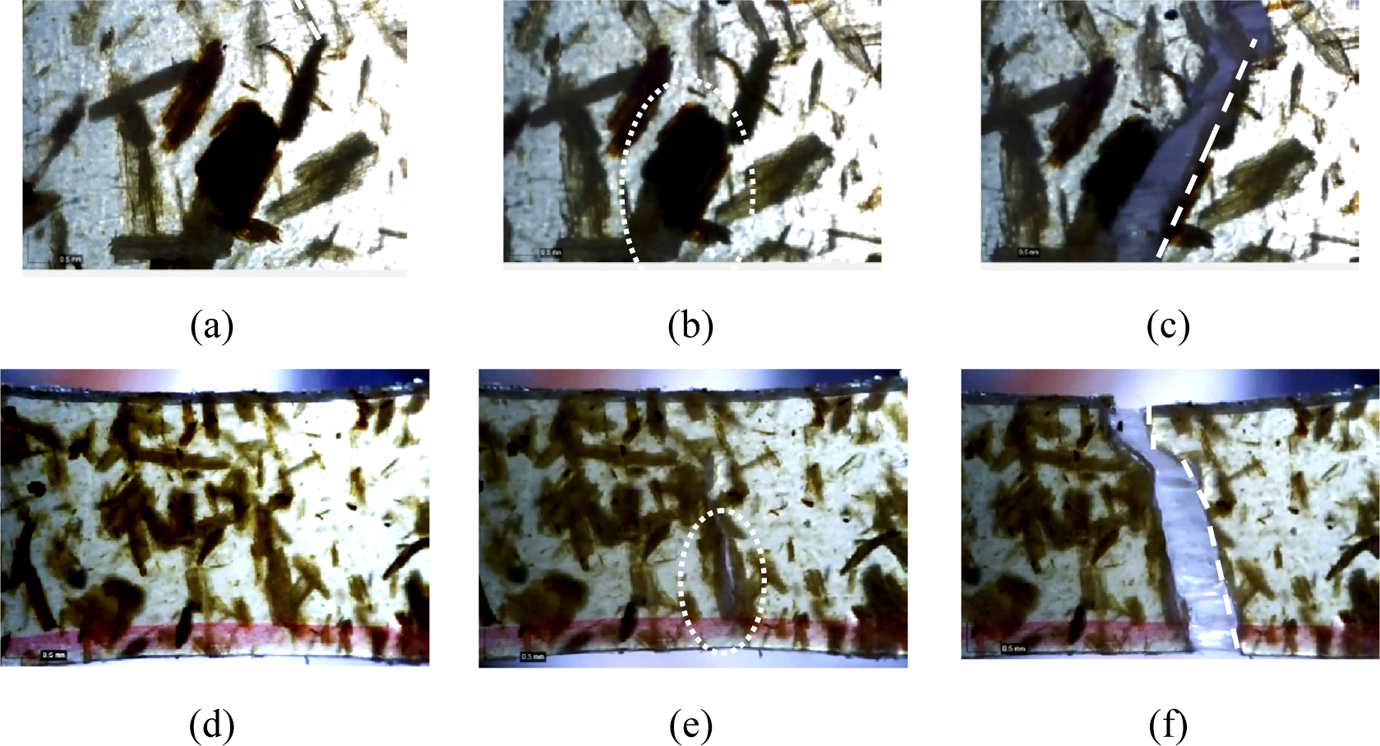
Fracture evolution of the WPC composites at room temperature (a) to (c) WP10 and (d) to (f) WP10-E. WPC: wood–plastic composite.
Figure 5 shows the captured images of fracture evolution for WP5 and WP5-E at a high temperature of 53°C. In general, it is known that the strength of materials decrease with temperature increase. The same concept is expected to be valid for the interface strength. Consequently, the temperature rise would also affect the fracture mechanism, so that due to the weakened interface, the fracture mode changes from wood cracking to debonding for the composition containing MAPE. As shown in Figure 5(d) to (f), for the WP5-E sample with MAPE, the failure mechanism is debonding (similar to WP5 shown in Figure 5(a) to (c)). Thus, debonding is the dominant fracture mechanism of all compositions (in presence and absence of MAPE) at this temperature. In this figure, the debonding mode can be clearly inferred from the separation quality where the polymer matrix is pulled into strands (like pizza-cheese extension).
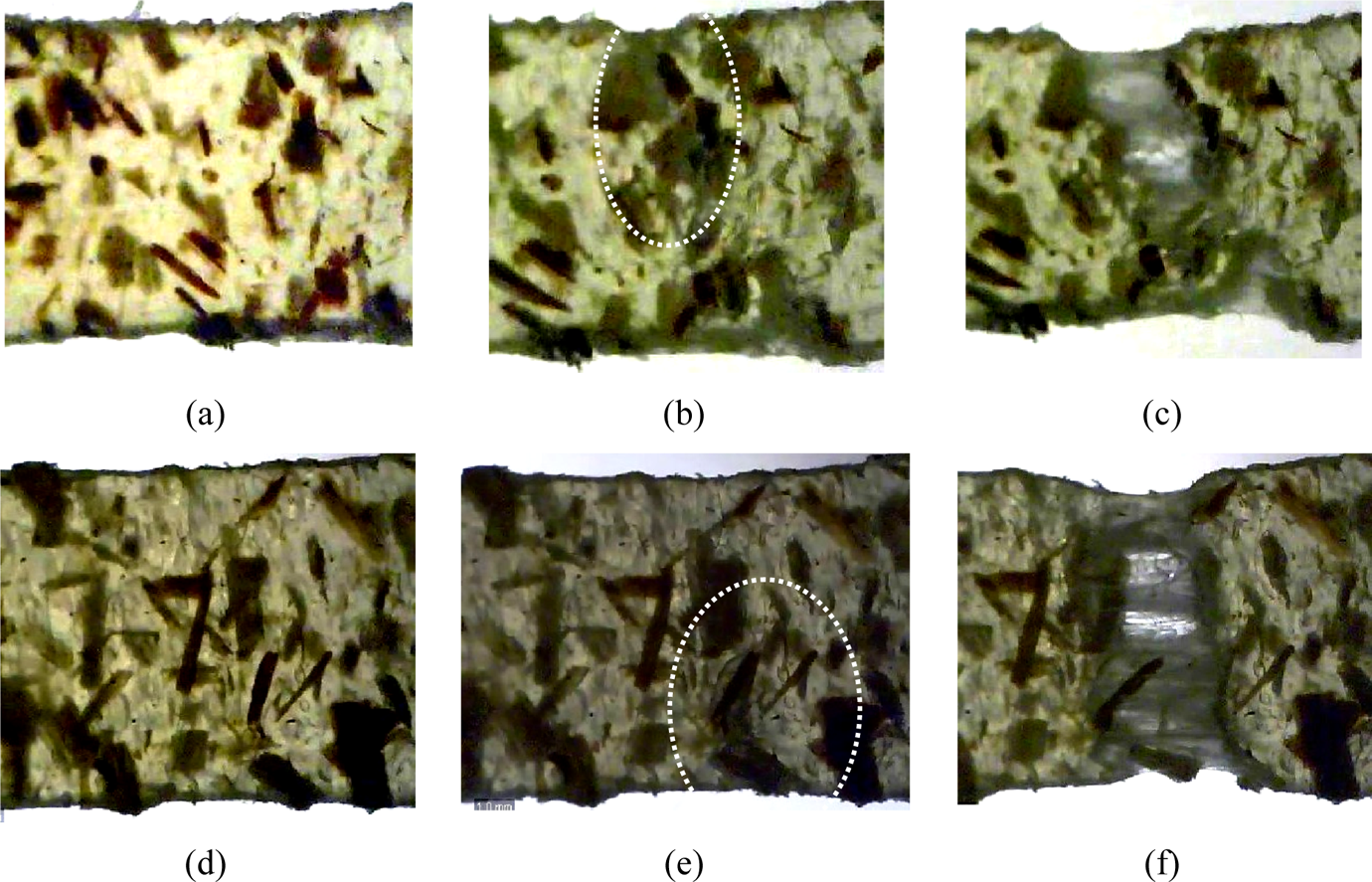
Fracture evolution of the compositions with presence of MAPE at 53°C, (a) to (c) WP5 and (d) to (f) WP5-E. WP: wood–plastic; MAPE: maleic anhydride-grafted polyethylene.
Figure 6 illustrates the captured images of fracture evolution in compositions WP10 and WP10-E (as the representative compositions) tested at −30°C. As seen in the images, wood cracking is the dominant fracture mechanism. It is interesting to note that the lack of MAPE could make the wood cracking a favorable fracture mode (from Figure 6(a) to (c)). This demonstrates that at this low temperature (−30°C), the interface between wood particles and polymer is stronger than wood particles, even in the absence of MAPE. Moreover, Figure 6(d) to (f) illustrates the fracture evolution in a WP10-E sample in which wood cracking occurs.
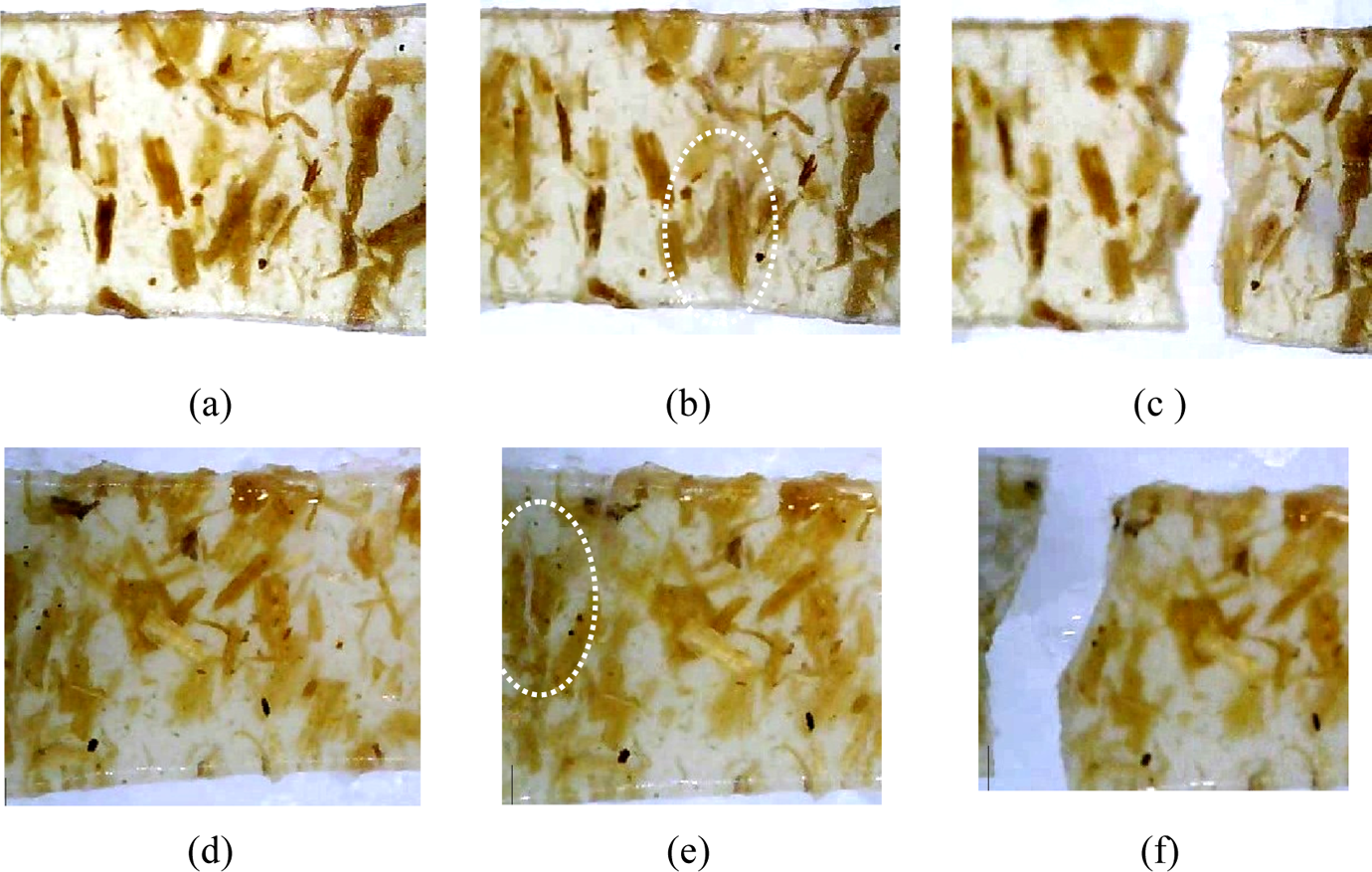
Fracture evolution of the composites at −30°C: (a) to (c) WP10 and (d) to (f) WP10-E. WP: wood–plastic.
Due to the difficulties in visualizing the fracture evolution for the compositions with a high amount of wood content (higher than 10 wt%), no clear information was collected for the WP20 and WP20-E compositions. Thus, instead of close examination of the fracture mechanism, specially in oriented particle configuration, examination was directed toward a single particle composite. Therefore, samples were prepared with a single particle in the absence of MAPE as shown in Figures 7 and 8. At room temperature, debonding was the dominant fracture in the samples containing the vertical and inclined wood particles, as shown in Figure 7(a) to (c) and (d) to (f), respectively. The tests were continued at below 0°C temperatures (−6 and −30). Figure 8(a) to (c) show the captured images of the fracture evolution in the sample with a vertical single particle examined at a temperature of −6°C. Figure 8(d) to (f) and (g) to (i) shows the images of the fracture evolution in the samples with vertical and inclined particle tested at a temperature of −30°C, respectively. At the low temperatures of −6 and −30°C, wood cracking is seen to be the dominant fracture mechanism.
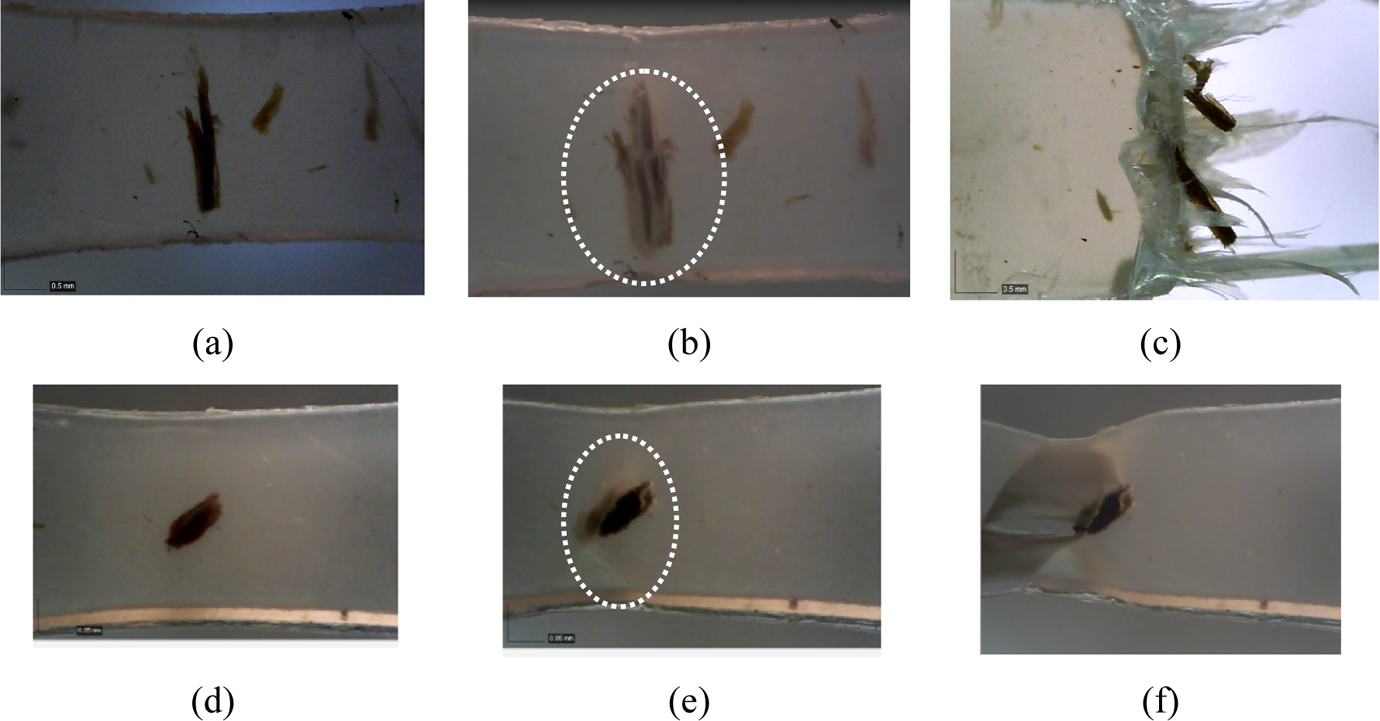
Fracture evolution of vertical and inclined single-particle samples at room temperature.
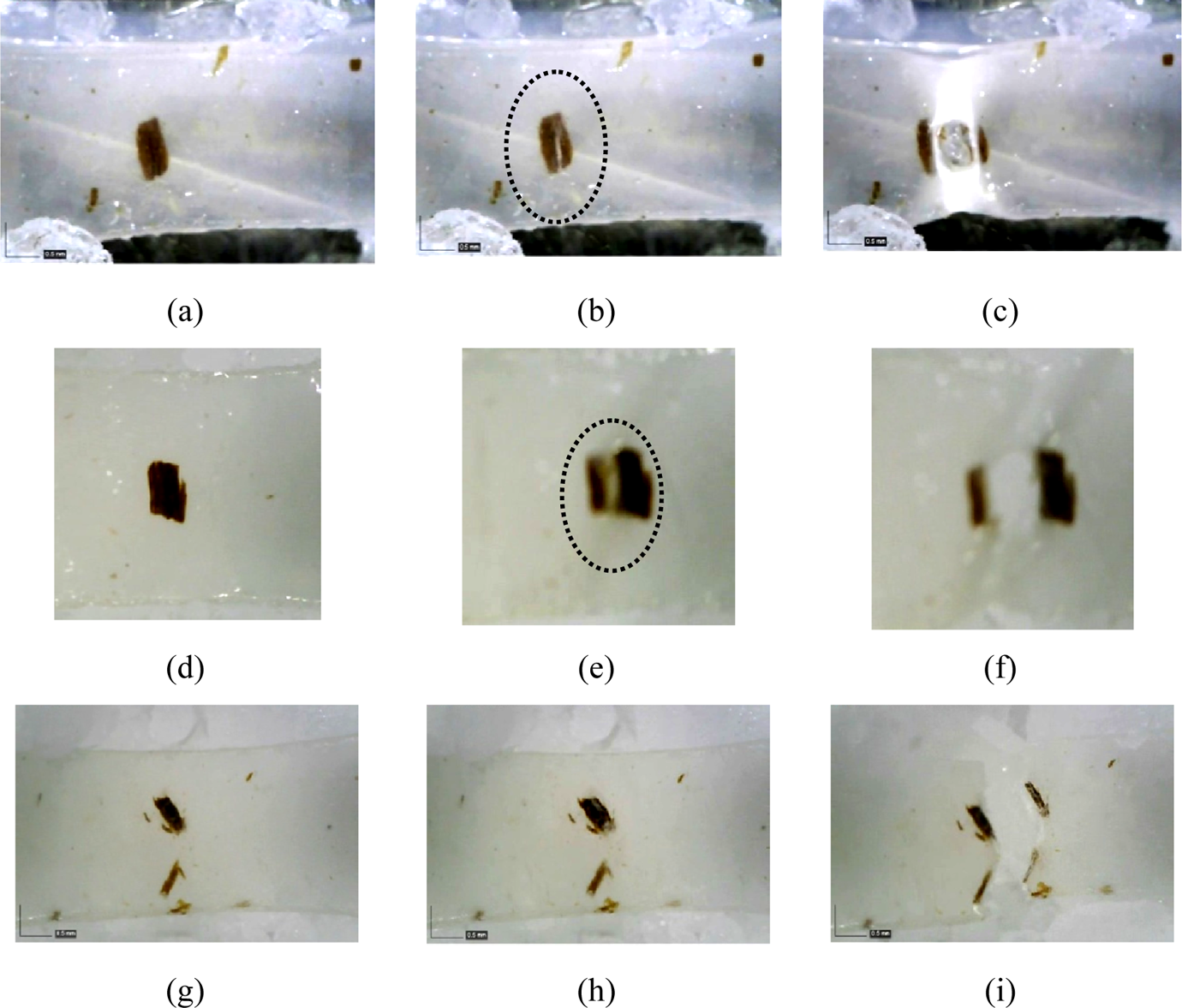
Fracture evolution of vertical and inclined single-particle samples (a) to (c) T = −6°C, (d) to (i) T = −30°C.
Conclusions
An experimental investigation was carried out on variation of the fracture mechanisms of WPC samples (with the specified compositions, 0–20 wt%) under tension at different temperatures. The tests were performed utilizing a miniature tensile machine equipped with a light microscope to visualize the fracture behavior at various temperatures from −30 to 53°C. The effects of temperature, MAPE, and wood content caused distinct fracture mechanisms form debonding to wood cracking. Based on these observations, it was concluded that the temperature reduction weakened the effect of MAPE on the WPC strength. In general, the strength of the examined compositions increased by decreasing the temperature. However, the samples with higher weight fraction experienced less strength variations. It was demonstrated that temperature has a significant effect on the interfacial wood–plastic properties such that at room temperature and only in the absence of MAPE debonding dominates wood cracking. However, this was not the case at higher temperatures, even at the presence of MAPE. In contrast, at lower temperatures wood cracking was the prominent fracture mechanism.
Footnotes
Declaration of Conflicting Interests
The author(s) declared no potential conflicts of interest with respect to the research, authorship, and/or publication of this article.
Funding
The author(s) received no financial support for the research, authorship, and/or publication of this article.