




Abstract
An efficiently brominated flame-retardant system which is composed of decabromodiphenyl oxide (DB) and antimonous oxide (AO) was used for long glass fiber-reinforced polypropylene (LGFPP), and the thermal stability, flame retardancy, and mechanical properties of DB-AO/LGFPP composites were investigated. When 12 wt% of DB-AO flame retardant was added into LGFPP, the limiting oxygen index of composites could reach 24.8 and pass the V-0 rating in UL-94 test. The results showed that DB and AO improved the flame retardancy of LGFPP more efficiently which could be proved by thermogravimetric test that had less effect on mechanical properties than widely used intumescent flame retardant to flame-retardant LGFPP. What’s more, analysis of cone calorimeter tests data indicated that gas phase flame-retardant mechanism exists in the DB-AO/LGFPP composites.
Keywords
Introduction
Polypropylene (PP) is one of the widely used thermoplastic composites because of its advantages of rich source, cheap, facilitate processing, and so on. 1 On the contrary, it has some disadvantages, such as lower impact and tensile strength, which greatly reduce its application. Using glass fiber-reinforced thermoplastics is a key way to improve the properties of thermoplastics composites. 2 –6 Generally, a series of properties of longglass fiber-reinforced PP (LGFPP) can be improved several times than those of PP, such as higher strength, lower density, lower temperature toughness, and better heat resistance. Therefore, LGFPP composites have been widely used in engine hood, battery tray, and so on. 7 –11 But LGFPP is easily flammable, releases unsaturated gas under heating, and promotes combustion conversely; moreover, the “candlewick effect” caused by glass fiber not only can transport but feedback the fuel from the polymer matrices, speed heat flowing back to polymer matrices and make the composites burn faster, 12,13 and reduce flame retardancy of LGFPP composites. 14 –16 So, improving the flame retardancy of LGFPP has become more and more important.
Many research workers had reported a large number of works studied on the flame retardancy of PP. Zhang et al. 17 have studied on thermal decomposition of intumescent fire-retardant PP. Chen et al. 18 have carried out extensive studies on flame-retardant PP composites based on magnesium hydroxide. Wu et al. 19 have focused on flammable and mechanical effects of silica on intumescent flame-retardant (IFR)/ethylene–octene copolymer/PP composites. However, the reports on flame-retardant LGFPP system are rare. In only one literature, an efficient halogen-free flame-retardant LGFPP system 13 was reported. When the addition of IFRs used as halogen-free flame retardants was 20 wt%, the system just passed UL-94 V-0 rating and the mechanical properties decreased by 6.97% for tensile, 3% for flexural, and 12.09% for impact strength respectively, compared with pure LGFPP. However, the more additives of IFRs are added, the more poor mechanical properties of the composites are. Instead, halogen flame retardants are effective, usually represented by brominated flame retardants, which only need a little amount to improve the flame retardancy and thermal stability and slightly affect the other properties of composites. 20 –23 What’s more, brominated flame retardants synergistic antimonous oxide (AO) can have a better flame retardancy. 24
In the article, in order to achieve an efficient flame retardancy and slight affect on mechanical properties, we chose an efficient brominated flame-retardant system composed of decabromodiphenyl oxide (DB), and AO was used for LGFPP and designed 30 wt% LGFPP with 0, 4, 8, and 12 wt% content of DB-AO masterbatch. The thermal stability behaviors, flame retardancy, flame-retardant mechanism, and mechanical properties of DB-AO on LGFRPP were discussed.
Materials and experimental procedures
Materials
Long glass fiber (diameter was 17 μm) was purchased from ECT4301H-2400 (Chongqing, China). Co-PP (grade 3920) was supplied by SK global chemical (South Korea). DB was provided by Wenchang Chemical Industry (Zhengzhou, China). The theoretical bromine content is 83.3%. AO was purchased from Hsikwangshan Twinkling Star Co. Ltd (Hunan, China).
Preparation of the DB-AO/LGFPP composites
PP, DB, and AO (dried at 60°C for 6 h) were prepared using flame-retardant masterbatches by mixing 50 wt% of PP with 50 wt% of DB-AO (DB:AO = 5:1) and using a twin-screw extruder at a temperature of approximately 180–210°C. Then, cut the extruded strands into pellets.
The DB-AO/LGFPP composites were prepared by adding flame-retardant masterbatch into LGFPP. The content of DB and AO were kept at 0, 4, 8, and 12 wt%, and the content of long glass fiber was kept at 30 wt%. Then, the composites were injection molded (type CJ80M3V, Chen De Plastics Machinery Co. Ltd, China) into standard testing bars.
Measurements
Thermogravimetric analysis (TGA) was conducted using a TG analyzer (model Q50; TA Instruments, New Castle, USA). The mass of specimens was from 5 to 20 mg, and the specimens were heated from 60 to 850°C with a heating rate of 20 C min−1 under nitrogen (N2) atmosphere at a flow rate of 60 ml min−1.
Limiting oxygen index (LOI) value was surveyed on LOI instrument (JF-3-type; Jiangning, China). The size of the specimens was 100 × 10 × 4 mm3, according to ASTM D2863 standard.
Vertical burning test (UL-94) was performed on vertical burning instrument (SH-5300-type; Guangzhou, China). The size of the specimens was 100 × 12.7 × 3.2 mm3, according to ASTM D3801 standard.
Cone calorimeter test was carried out by the cone (dual CONE calorimeter-type, Fire testing Technology Ltd, England), following the procedure with ISO 5660. The specimen size was 100 × 100 × 6 mm3 and obtained the cone data with the heat flux of 50 kW m−2.
Mechanical properties include tensile, flexural, and impact tests. The tensile and flexural tests were performed by a testing machine (WDW-10C, Shanghai Hualong Test Instruments Co. Ltd, China), and the movements of crossheads were at a speed of 50 mm min−1 according to GB/T 1040-1992 for tensile and 2 mm min−1 for flexural test according to GB/T 9341-88. Notched Izod impact was performed on a ZBC-4 impact pendulum (Shenzhen SANS Co., China) according to the ASTM D-256 standard, and the depth of nick was 2 mm. For each sample, five specimens were tested.
Results and discussion
Thermal stability behaviors
The thermal stability behaviors and char yield of DB-AO flame-retardant LGFPP can be obtained from TGA test. The TG and differential TG (DTG) curves in N2 atmosphere are presented in Figures 1 and 2. Some detailed data for the temperature at which 5% thermal degradation (T 5%) and maximum mass loss rate (T max) occurs and char yield are given in Table 1. There is one degradation process for pure LGFPP, two degradation processes for DB-AO/LGFPP composites yet. On heating the DB-AO/LGFPP composites within the temperature range of approximately 200–600°C: the first stage (approximately 200–380°C) corresponds to the decomposition of DB chains and the second stage (approximately 380–600°C) is attributed to the thermal degradation of PP. It is easy to find that the decomposition of DB chains is earlier than PP so that DB can protect PP matrix effectively. From Figures 1 and 2 and Table 1, it can be found that all the samples have similar thermal stability behaviors. However, the T 5% of DB-AO/LGFPP composites decrease from 423.59 to 345.55°C compared with pure LGFPP ones respectively, which suggests that DB-AO/LGFPP composites start to degrade at a lower temperature compared with pure LGFPP due to the decomposition of DB. While T max of DB-AO/LGFPP composites are lower about 10°C than that of pure LGFPP, corresponding to the maximum mass loss rate (MLR) of PP during the second degradation stage for DB-AO/LGFPP samples, which attributed to the decomposition of DB-AO flame-retardant masterbatch. The pure LGFPP starts to decompose at 423.59°C, ends at about 500°C and mainly consists of glass fiber at the end of TGA test. While those composites within DB-AO flame-retardant masterbatch do not decompose completely, leading to the formation of char as a significant barrier to inhabit the heat and oxygen transfer. The char yield values for 4, 8, and 12 wt%DB-AO/LGFPP composites are 31.7, 31.81, and 32.07%, respectively.
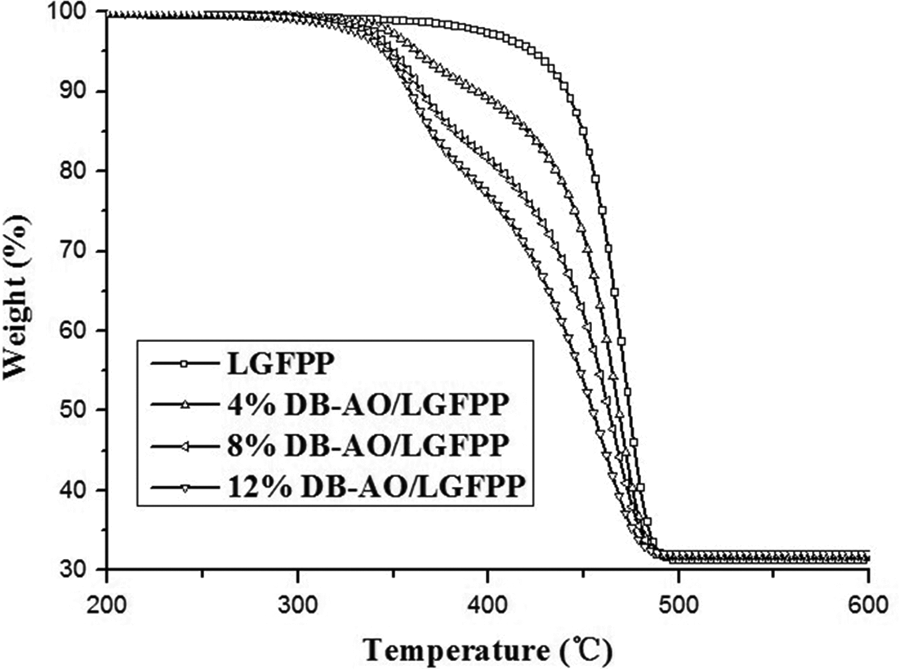
TG curves for DB-AO/LGFPP composites. TG: thermogravimetric; DB: decabromodiphenyl oxide; AO: antimonous oxide; LGFPP: long glass fiber-reinforced polypropylene.
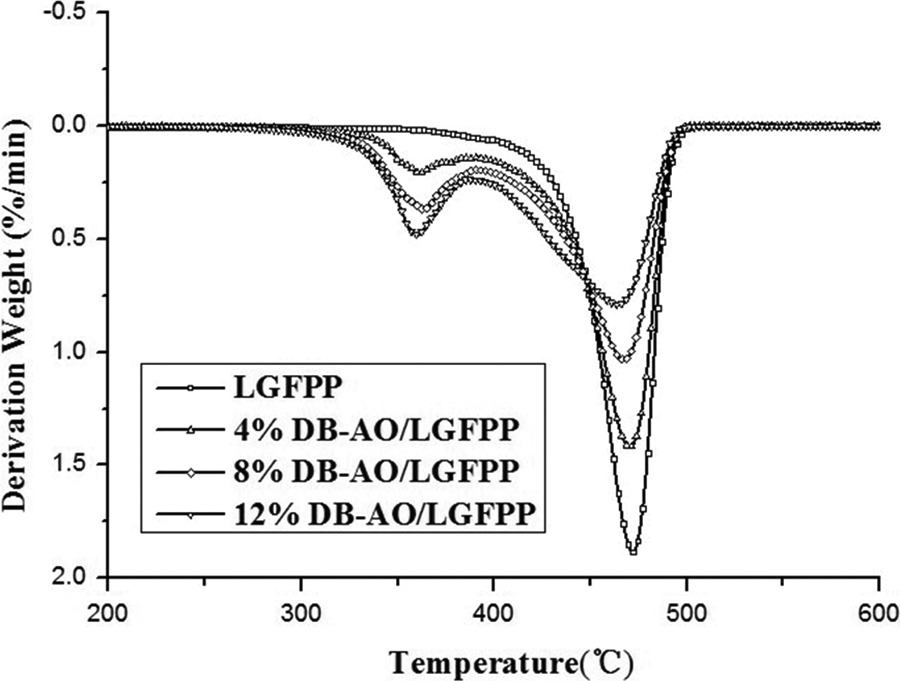
DTG curves for DB-AO/LGFPP composites. DTG: differential thermogravimetric; DB: decabromodiphenyl oxide; AO: antimonous oxide; LGFPP: long glass fiber-reinforced polypropylene.
Main data of DB-AO/LGFPP composites in TG and DTG tests.
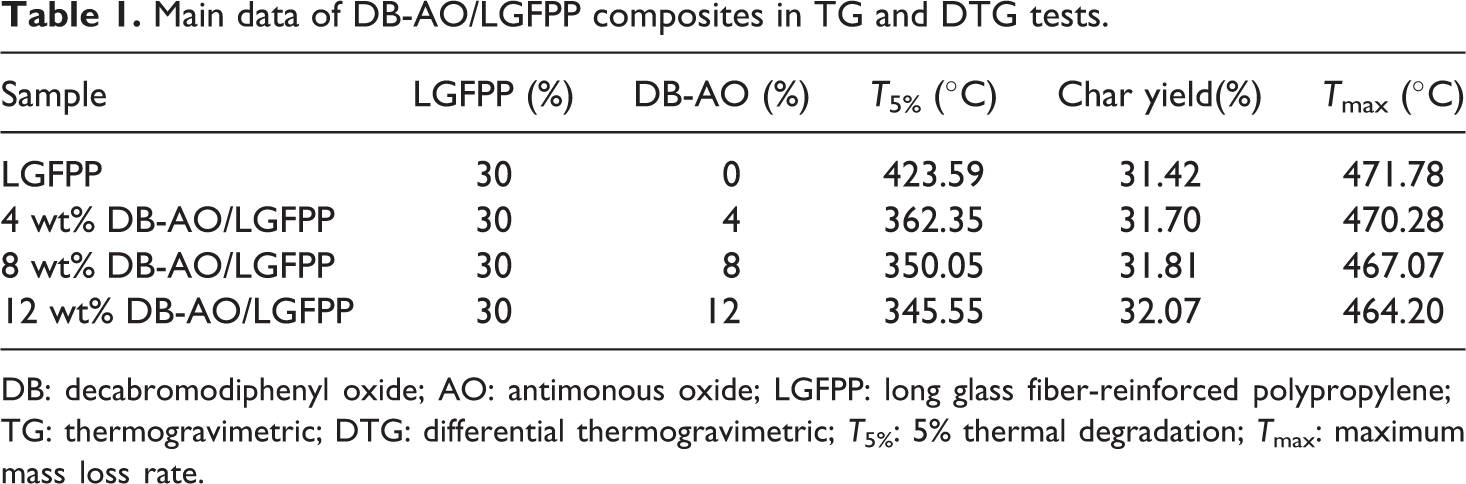
DB: decabromodiphenyl oxide; AO: antimonous oxide; LGFPP: long glass fiber-reinforced polypropylene; TG: thermogravimetric; DTG: differential thermogravimetric; T 5%: 5% thermal degradation; T max: maximum mass loss rate.
The results from TG and DTG curves and main data can be summarized that the decomposition of DB-AO is earlier than PP, retarding the decomposition of PP, so that it can protect PP matrix effectively. In other words, the effects of DB-AO flame retardant on LGFPP occur in two aspects, on one hand, it makes T 5% and T max values of DB-AO/LGFPP composites to decrease, while on the other hand, it makes char yield to increase.
LOI and UL-94 rating
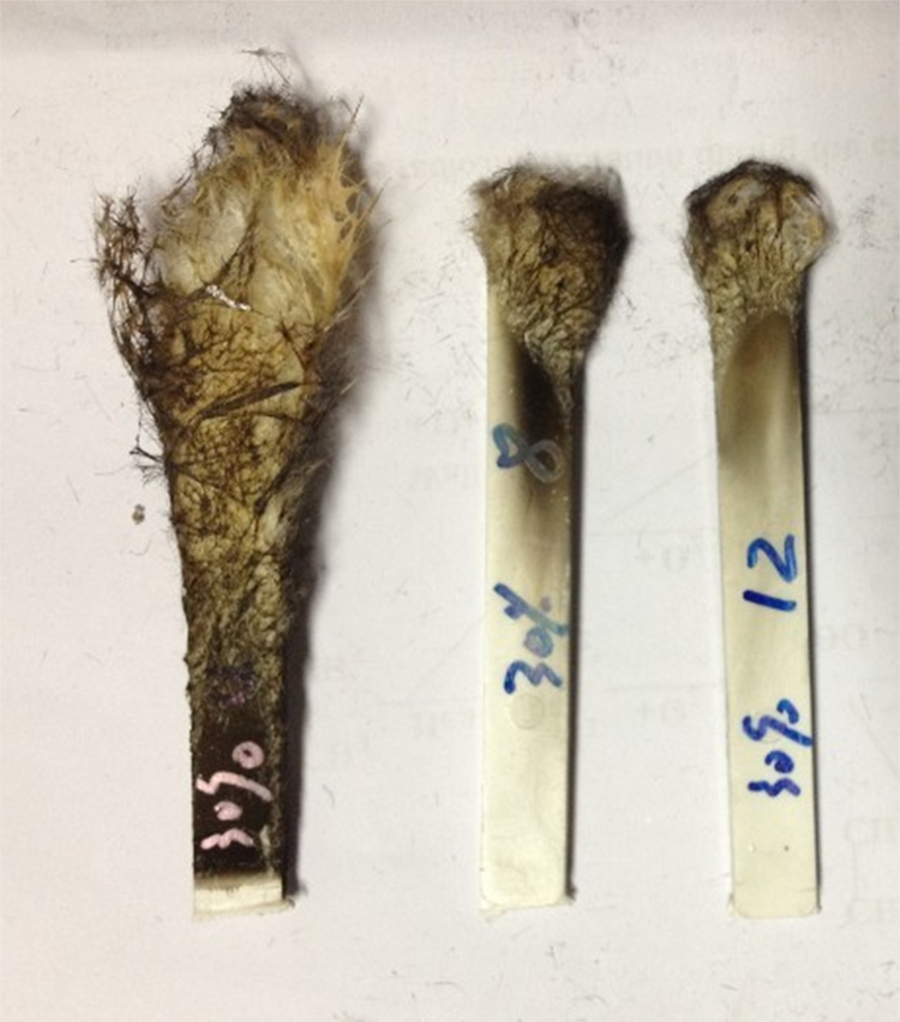
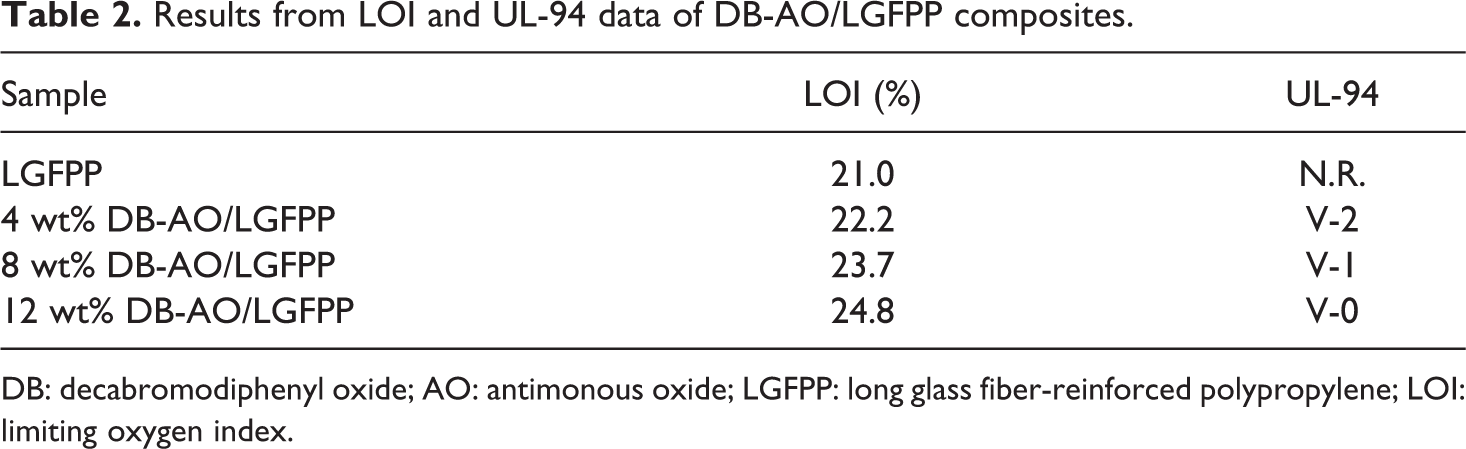
In order to evaluate the flame retardancy of LGFPP/DB-AO composites, LOI and vertical burn ratings (UL-94) were tested and some details are shown in Figures 3 and 4 and Table 2, respectively. The value of LOI is that minimum concentration of oxygen volume percent at which the samples burn for 5 cm or 180 s whichever occurs first. The UL-94 ratings are that the samples expose vertically for 10 s, and if it flames out, another 10 s is tested. From Figure 3 and Table 2, it can be observed that pure LGFPP is an easily ignited plastic with low value (only 21.0), and no rating in UL-94 test due to its flammability. There are two reasons for the phenomenon: (1) glass fiber has a larger heat conduction coefficient than PP, which can transfer heat to LGFPP easily; (2) the “candlewick effect” caused by glass fiber forms a continuous path so that it can transport and feed back the fuel, speed heat flowing back to polymer matrices, and make the composites burn faster. For LGFPP, as DB-AO increases, the flame retardancy is improved, which is reflected by the increased LOI values. For 12 wt% DB-AO/LGFPP composites, the LOI value is 4.6% higher than 8 wt% DB-AO/LGFPP, 11.7% higher than 4 wt% DB-AO/LGFPP, and 18.1% higher than pure LGFPP. A marked LOI value is obtained when the content of flame retardant is 4 wt%, which can reach 22.2. The LOI and UL-94 rating of LGFPP reached 24.8 and pass UL-94 V-0 rating at only 12 wt% of flame-retardant loading, respectively. As mentioned before, the “candlewick effect” caused by glass fiber makes composites more flammable, and thus 30 wt% content of glass fiber need a larger amount of flame retardant than 20 wt% to pass UL-94 V-0 rating. However, 20 wt% IFR flame retardant added into LGFPP that contains 20% glass fiber to pass UL-94 V-0 rating. 13 Therefore, DB-AO flame retardant has much better efficient flame retardancy than IFR on LGFPP.
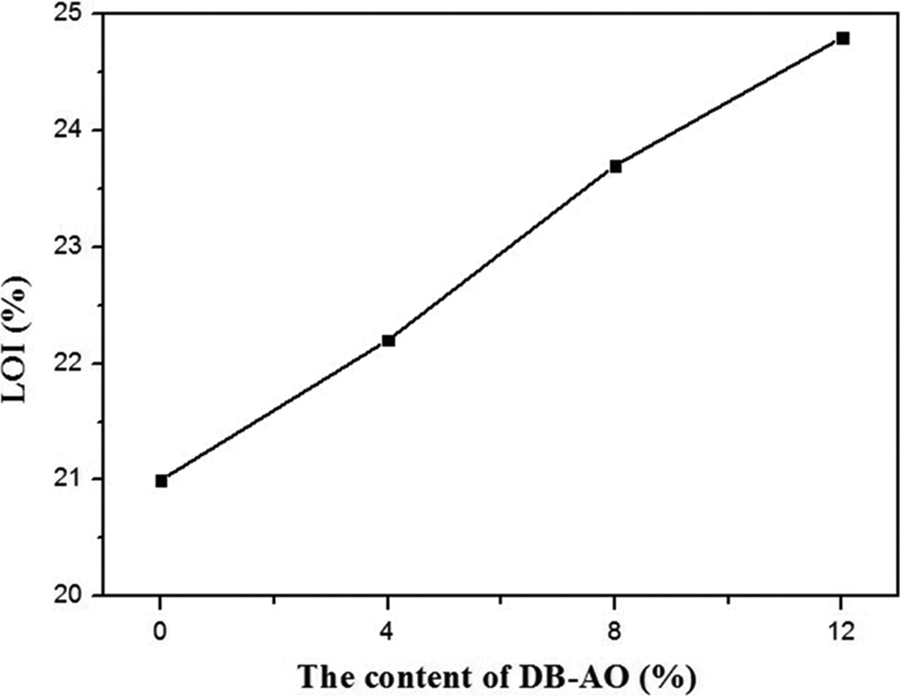
LOI values for DB-AO/LGFPP composites. LOI: limiting oxygen index; DB: decabromodiphenyl oxide; AO: antimonous oxide; LGFPP: long glass fiber-reinforced polypropylene.
Photograph for DB-AO/LGFPP composites after UL-94 test. DB: decabromodiphenyl oxide; AO: antimonous oxide; LGFPP: long glass fiber-reinforced polypropylene.
Results from LOI and UL-94 data of DB-AO/LGFPP composites.
DB: decabromodiphenyl oxide; AO: antimonous oxide; LGFPP: long glass fiber-reinforced polypropylene; LOI: limiting oxygen index.
Meanwhile, in UL-94 tests, all the flame-retardant specimens have no dripping, but the pure LGFPP burns quickly after ignition so that it has no rating. With the increasing additive amount of DB-AO, the burning time is shorter largely. The UL-94 rating passes V-0 rating when the content of DB-AO is 12 wt% in DB-AO/LGFPP composites. It indicates that DB-AO improves the flame retardancy of LGFPP. During UL-94 tests of the composites, the char is observed in Figure 4: it can be found that there is no obvious char on the surface of the UL-94 test bar for pure LGFPP; on the contrary, for DB-AO/LGFPP composites, there forms a protective char on the surface of the UL-94 test bar, which can protect unburned polymer matrix and thus improve the flame retardancy of LGFPP.
From the above analysis, we can conclude that DB-AO flame retardancy has more significant and efficient flame retardancy than IFR flame retardancy on LGFPP.
Cone calorimetric analysis
The cone calorimetric analysis is being an efficient method to evaluate the flammability of materials and can be used to investigate the effects of DB-AO on flame retardancy and combustion behaviors of DB-AO/LGFPP composites. From cone calorimeter, not only the heat release rate (HRR), the peak heat release rate (PHRR) but also the time to ignition (TTI), MLR, total heat release (THR), specific extinction area (SEA), and many other parameters can be obtained.
Heat release rate
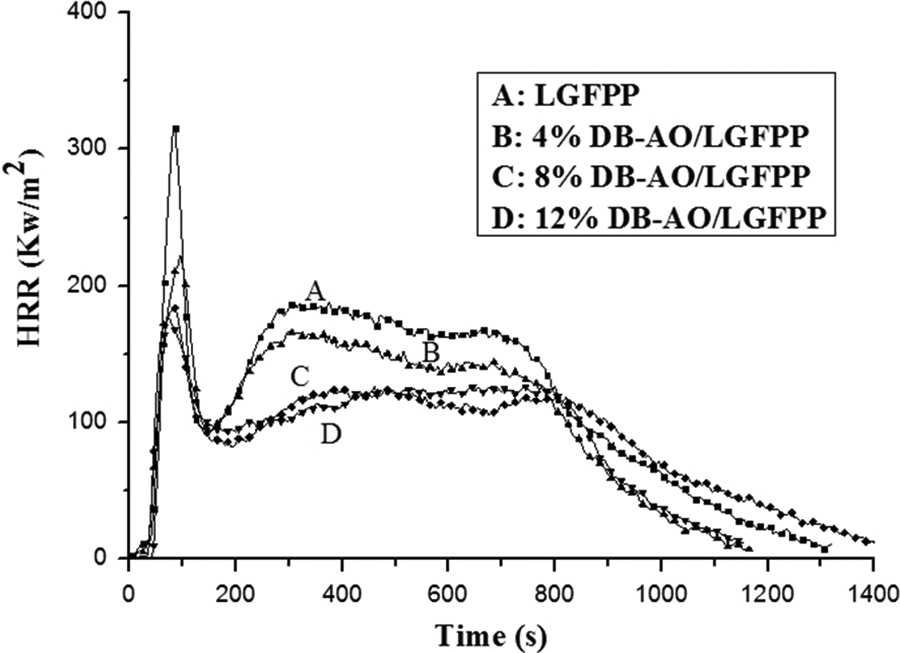
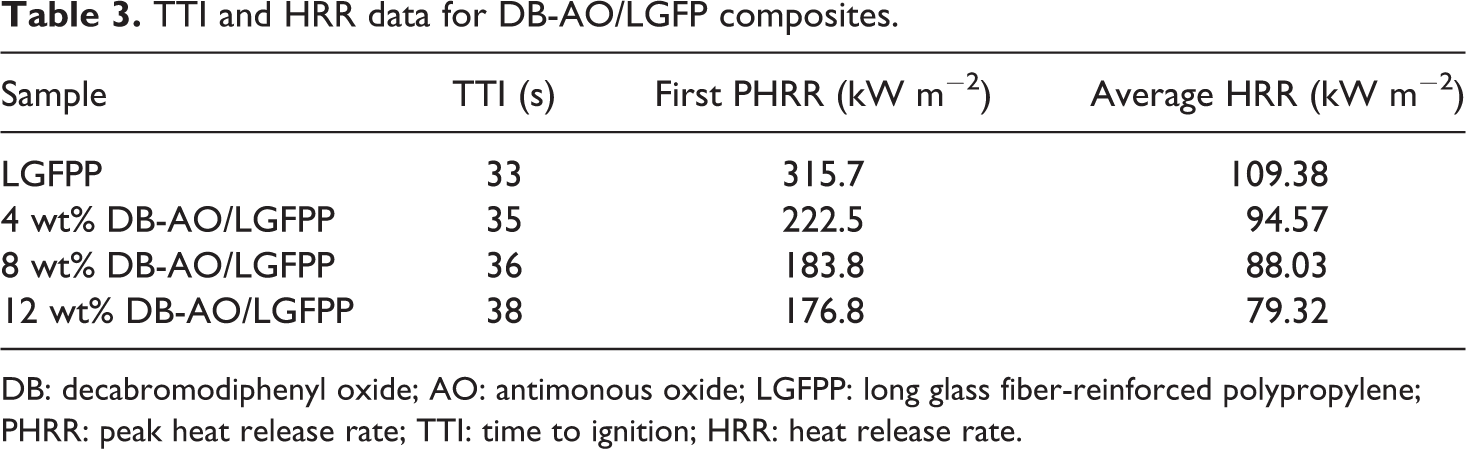
It was found the HRR and PHRR were the most significant parameters to evaluate fire safety. 25,26 The TTI, PHRR, and average HRR (APHRR) data for cone calorimeter of DB-AO/LGFPP composites are given in Table 3. The curves of HRR are shown in Figure 5. It can be found from Table 3, the TTI of DB-AO/LGFPP composites with different DB-AO contents are a little longer than that of pure LGFPP, which indicates that the DB-AO flame retardancy does not deteriorate the thermal stability of composites. And, for DB-AO/LGFPP composites, TTI increases with increasing DB-AO loading, which is due to the degradation of DB-AO. It can be observed from Figure 5 that the HRR curve of pure LGFPP and those of DB-AO/LGFPP composites are similar. The HRR curve of pure LGFPP increases more rapidly than those of DB-AO/LGFPP composites after ignition, and DB-AO/LGFPP composites appear two PHRR, reaching peaks of 315.7 and 190.2 kW m−2, respectively. The first PHRR is caused by the outermost PP and long glass fiber, and the second peak is the combustion of PP resin. The PHRR of 12 wt% DB-AO/LGFPP displays 44, 20.5, and 3.8% reductions with respect to pure LGFPP, 4 wt% DB-AO/LGFPP, and 8 wt% DB-AO/LGFPP, respectively. The reduction in time at which PHRR occurs is due to the degradation of DB-AO. APHRR, which is the average of HRR value of DB-AO/LGFPP, decreases with DB-AO increasing from ignition to flameout.
HRR curves for DB-AO/LGFPP composites. HRR: heat release rate; DB: decabromodiphenyl oxide; AO: antimonous oxide; LGFPP: long glass fiber-reinforced polypropylene.
TTI and HRR data for DB-AO/LGFP composites.
DB: decabromodiphenyl oxide; AO: antimonous oxide; LGFPP: long glass fiber-reinforced polypropylene; PHRR: peak heat release rate; TTI: time to ignition; HRR: heat release rate.
The fact that the HRR of the DB-AO/LGFPP composites reduced is caused by the presence of DB and AO. As it well known that the vapor phase flame retardant action is due to the presence of DB, and gas phase flame retardant is due to the presence of AO. 24 When DB coordinates with AO, a bettter flame retardancy due to the generation of gas flame-retardant antimony tribromide (SbBr3) can be produced, and another possibile complex (SbBr3−RNH3Br) was generated by DB-AO, which can be a more efficient flame retardant than single DB or AO for composites. 27,28 In other words, DB-AO flame retardant improves the flame retardancy due to the generated SbBr3, which not only covers the surface to isolate the oxygen and air but also inhibits the chain reaction of composites combustion.
The total heat rate
The THR can be defined as the heat rate from beginning to the end of burning. The different THR of LGFPP and its composites are shown in Figure 6. As can be found from Figure 6, The THR of pure LGFPP has reached 147.3 MJ m−2, while 4, 8, and 12 wt% DB-AO/LGFPP are just about 127.3, 117, and 106.7 MJ m−2, respectively. The THR of 12 wt% DB-AO/LGFPP is a little lower than 4 and 8 wt% DB-AO/LGFPP at the same burning time. For DB-AO/LGFPP composites, the THR curves decrease with the increase of DB-AO content, which are in correspondencewith the HRR curves so that the reduction of THR are primarily responsible for lower HRR of composites.
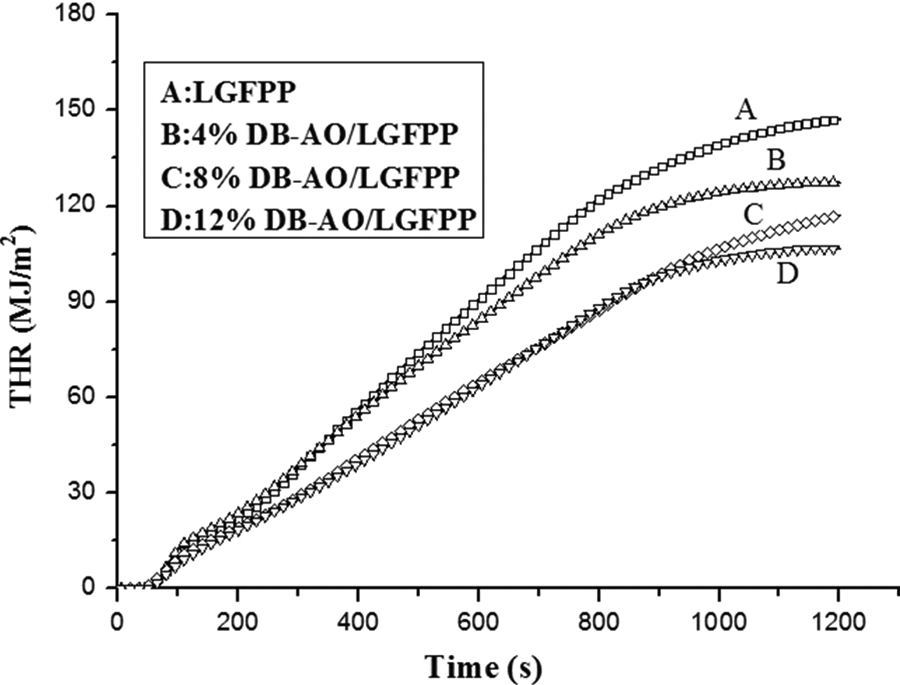
THR curves for DB-AO/LGFPP composites. THR: total heat release; DB: decabromodiphenyl oxide; AO: antimonous oxide; LGFPP: long glass fiber-reinforced polypropylene.
MLR, SEA, and EHC
MLR values for LGFPP and its composites are shown in Table 4. The MLR of DB-AO/LGFPP composites are in accordance with HRR and THR, which means that the reduction of MLR results from the reduction of HRR and THR values. From Table 4, all DB-AO/LGFPP samples are higher in SEA than pure LGFPP, which is caused by DB-AO terminates of the radicals in the gas phase, and then results in incomplete combustion of composites, releasing larger amount of smoke. The effective heat of combustion (EHC) of DB-AO/LGFPP composites, which is decided by dividing the HRR and the MLR, is lower compared to that of pure LGFPP. The EHC is the effective heat of combustion of the volatile portion of the polymer, increased EHC is the combustion of combustible gases in the gas phase, and decreased EHC corresponding to a higher content of materials confirms the existence of gas-phase flame-retardant mechanism. 28 As Table 4 shows that the EHC decreases during DB-AO loading, which can further prove the existence of gas-phase flame-retardant mechanism of DB-AO. DB-AO improves the flame retardancy by chemical reactivity and physical effects of radical reactions.
MLR, SEA, and EHC curves for DB-AO/LGFPP composites.
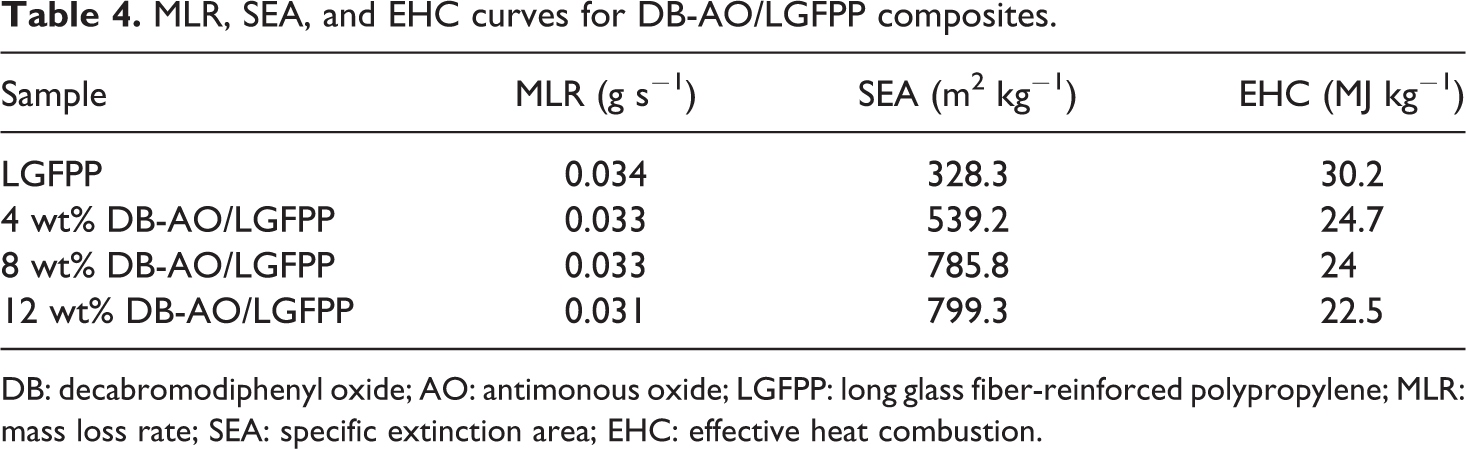
DB: decabromodiphenyl oxide; AO: antimonous oxide; LGFPP: long glass fiber-reinforced polypropylene; MLR: mass loss rate; SEA: specific extinction area; EHC: effective heat combustion.
It is noteworthy that all the analysis in cone calorimeter tests data indicate that DB-AO as efficient gas-phase flame-retardant mechanism in the DB-AO/LGFPP composites. It terminates the active radicals in the gas phase so that it improves flame retardancy of DB-AO/LGFPP composites. In other words, the degradation products of DB-AO promote the generation of SbBr3 as an efficient gas-phase flame retardant, and thus improve the flame retardancy of DB-AO/LGFPP composites.
Mechanical properties
Mechanical properties like tensile properties, flexural properties, and notched Izod impact strength of the pure LGFPP and DB-AO/LGFPP composites are shown in Figures 7 to 9. It is very clearly seen from Figures 7 to 9 that the addition of DB-AO slightly decreases the mechanical properties of DB-AO/LGFPP composites. When the content of DB-AO is 4 wt%, the tensile strength reaches the highest value of about 139.5 MPa. And with the increase of DB-AO content in DB-AO/LGFPP composites, the flexural strength increases at first, but then falls down with the addition of DB-AO when it is over 8 wt%. From the Figures 7 to 9, it also can be found the addition of DB-AO decreases the impact strength of DB-AO/LGFPP composites slightly. The tensile strength, flexural strength, and impact strength of 12 wt% DB-AO/LGFPP composites (passes the V-0 rating in UL-94 test) is 128.5 MPa, 201.2 MPa, and 23.05 kJ m−2, respectively. The mechanical properties decrease by 5.99% for tensile strength, 0.74% for flexural strength, and 9% for impact strength compared with pure LGFPP. The mechanical properties of DB-AO on LGFPP are much lower than those of IFR on LGFPP. 13
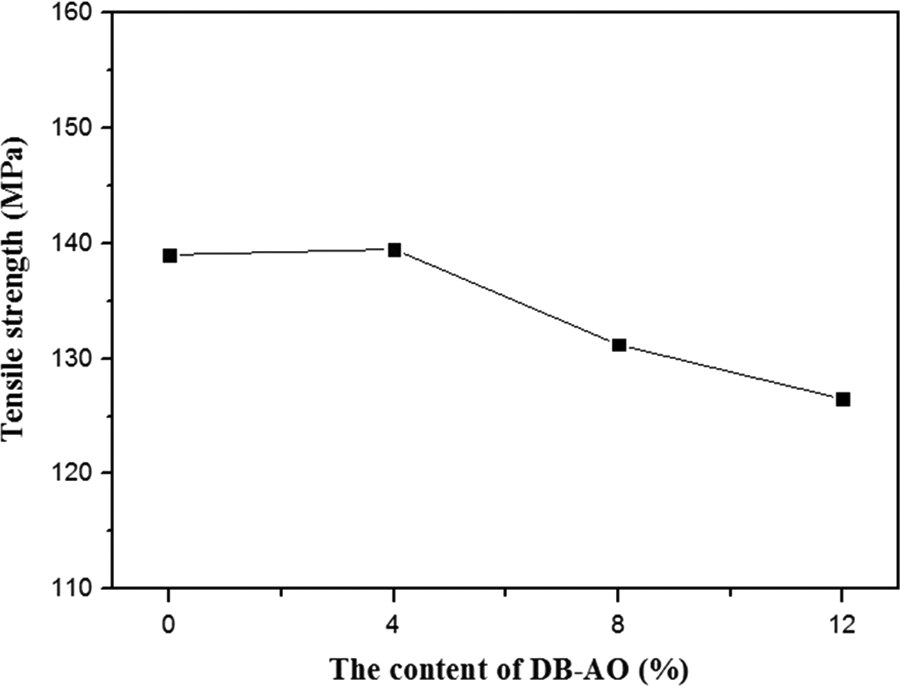
Tensile strength curves for DB-AO/LGFPP composites. DB: decabromodiphenyl oxide; AO: antimonous oxide; LGFPP: long glass fiber-reinforced polypropylene.
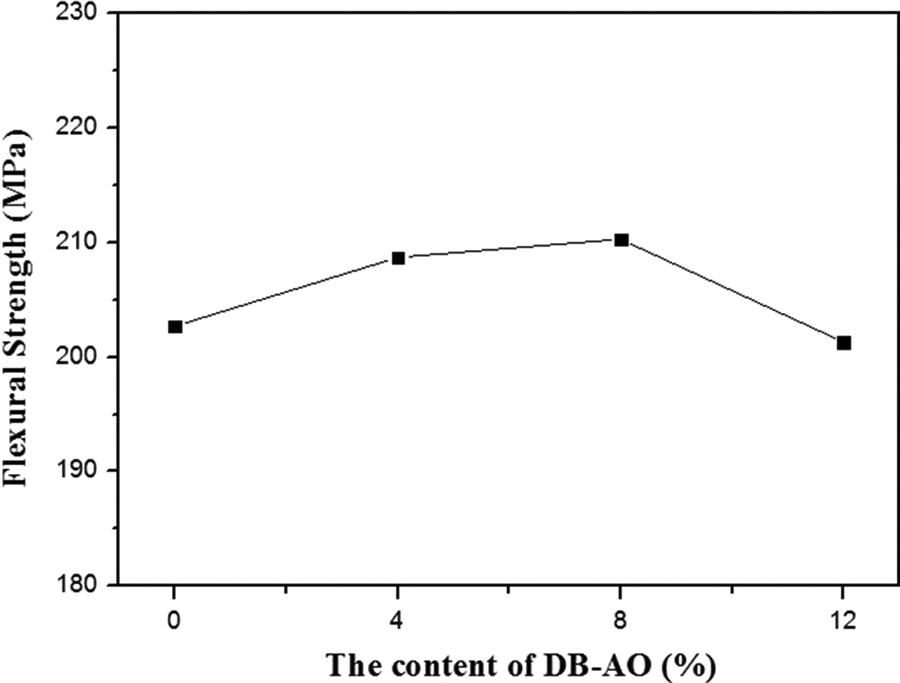
Flexural strength curves for DB-AO/LGFPP composites. DB: decabromodiphenyl oxide; AO: antimonous oxide; LGFPP: long glass fiber-reinforced polypropylene.
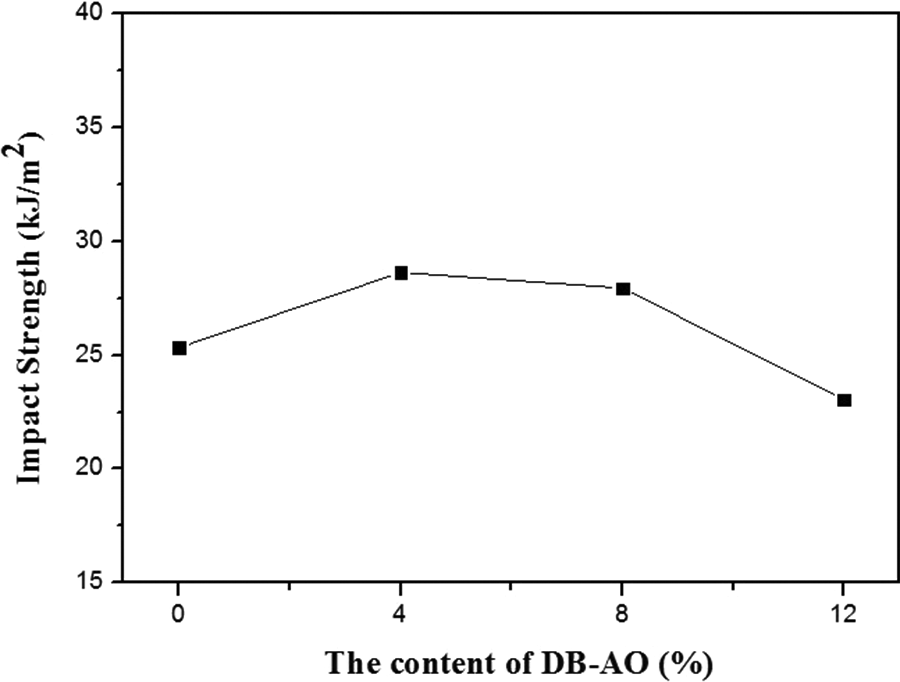
Notched Izod impact strength curves for DB-AO/LGFPP composites. DB: decabromodiphenyl oxide; AO: antimonous oxide; LGFPP: long glass fiber-reinforced polypropylene.
From the above analysis, it can be concluded that 12 wt% additive amount of DB-AO is suitable for flame retardancy, thermal stability, and mechanical properties of DB-AO/LGFPP composites compared with other composites and pure LGFPP. What’s more, the DB-AO has less effect on mechanical properties than IFR to flame retardant LGFPP.
Conclusions
An efficiently brominated flame-retardant system which is composed of DB and AO was used to flame retardant LGFPP. The influences of DB-AO flame retardant on properties of LGFPP were researched by LOI, UL-94 rating, TGA, cone calorimetric test, and mechanical properties. The following conclusions can be drawn:
DB-AO flame retardant could endow LGFPP with better flame retardant-property. With the increasing content of DB-AO, the LOI increased from to 24.8, and the UL-94 was improved to V-0 rating from no rating. And, TG and DTG data indicated that DB-AO added into LGFPP made T 5% and T max of composites decreased, char yield increased, even proved the decomposition of DB-AO was earlier than PP, retarding the decomposition of PP, protecting PP matrix effectively. Cone calorimeter showed that the addition of DB-AO decreased the THR, HRR, MLR, and EHC of DB-AO/LGFPP composites and could prove gas-phase flame-retardant mechanism with the presence of DB-AO. What’s more, DB-AO had little influence on mechanical properties of LGFPP, 12 wt% DB-AO added to pass UL-94 V-0 rating, and only decreased by 5.99% for tensile strength, 0.74% for flexural strength, and 9% for impact strength compared with pure LGFPP, which were better than IFR-LGFPP system.
Therefore, all the results showed that DB-AO improved the flame retardancy of LGFPP more efficiently and had less effect on mechanical properties than the widely used IFR to flame retardant LGFPP. And, 12 wt% LGFPP with DB-AO flame retardant composite had the best properties.
Footnotes
Declaration of Conflicting Interests
The author(s) declared no potential conflicts of interest with respect to the research, authorship, and/or publication of this article.
Funding
The author(s) disclosed receipt of the following financial support for the research, authorship, and/or publication of this article: The present work was financially supported by contract grant sponsor: the Science and Technology Plan of Guizhou, contract grant numbers [2013] 3026; Industrial revitalization of science Projects, contract grant numbers 2012 (1-7); and the Science and Technology Funds of Guizhou, contract grant numbers[2013] 2122.