



Abstract
This study uses coir from agricultural waste, electromagnetic shielding carbon fiber, impact-resistant polypropylene (PP), and methylmaleic anhydride-grafted PP (MA-g-PP) to make wood plastic composites (WPCs). According to the experimental results, when coir and carbon fiber are at a ratio of 3:12, the resulting WPC exhibits an maximum electromagnetic shielding effectiveness (EMSE) of −25 dB, which reaches the protective grade of staple merchandise. At fibers ratio of 3:12, the tensile strength is improved by 10% more than at ratio of 15:0; and the increased flexural strength is by 20% accordingly. A multiblending process is used to simulate the recycling and explores its thermodestruction of the resulting WPC. With a ratio of 3:12, the WPC still has an EMSE of −25 dB at nine cycles of multiblending; however, its tensile and flexural strengths both decrease by 10%.
Keywords
Introduction
Wood plastic composite (WPC) is made by melt blending plastic and wood powder or plant fibers as reinforcing material or filling. Plastic is common and cheap and can be obtained from the recycling of plastic waste. This greatly promotes the application of WPC. Since the 21st century, the processing technique of WPC has been introduced to India, Singapore, Malaysia, Japan, and China, where the WPC is commercially available, and it has a large market. The marketing growth of WPC in the US and Europe are 18% and 14%, respectively. 1,2 Rozman et al. explored the influence of lignin content in plant fibers on the mechanical properties of WPC, refining the lignin in coir with sulfuric acid. They found that the flexural strength of WPC is proportional with the lignin content. 3 Cantero et al. modified the coir surface with methylmaleic anhydride (MA), MA-grafted polypropylene (MA-g-PP), and vinyltrimethylsilane, to increase the compatibility between coir and PP. They found that these three surface modifiers were able to increase the mechanical properties and reduce the water absorption of WPC, determining 10 wt% MA-g-PP to be the optimal parameter. 4
Electromagnetic radiation causes induction current in the human body and creates heat in local area. This heat effect can be more clearly observed at microwave bands and thus injures health in many ways. For example, it can cause functional disorder of the central nervous system, fatigue of the sympathetic nerve, and disorder of the sympathetic nerve. 5 –7 In addition, its clinical symptoms include neurasthenia, dizziness, insomnia, fatigue, memory weakness, and cardiopalmus, cephalalgia, limb pain, loss of appetite, and hair loss. 5 –8 Drubetski et al. 9 –11 and Tzeng and Chang found that the addition of carbon black (4 phr) and carbon fiber (10 phr) gave the resulting composites electrical conduction network and a high electric conductivity; moreover, the greater the carbon fibers, the lower the electrical resistance. Therefore, this study creates the WPC using coir, carbon fiber, and impact-resistant PP, as coir is beneficial for the tensile and flexural strengths of the PP, while carbon fiber enables the PP to shield electromagnetic waves.
Experimental
Materials
Carbon fiber (Toray Industries Inc., Osaka, Japan), modified by the silicone coupling agent, has a filament count of 6000 per bundle, a length of 6.2 mm, and a diameter of 7 μm. The impact-resistant PP (FCFC Co., Ltd, Taiwan, Republic of China) has a tensile strength of 30.06 MPa, an elongation at break of 415%, a flexure strength of 32.86 MPa, and an impact strength of 1088 J/m. Coir has a fiber length of 4 ± 2 mm and a diameter of 1 mm. Sodium hydroxide (NaOH, Bafo Enterprise Co., Ltd, Taiwan, Republic of China) is granular and has a purity of 99%.
Tests
Tensile, flexural, and Izod impact strengths
Tensile, flexural, and Izod impact strength tests are performed by an Instron Universal Testing Machine (Model 5566, Instron, Norwood, MA, USA), and samples are prepared as specified in ASTM-D618; the number of samples prepared is five. The tensile strength test is performed as specified in ASTM-D638; the flexural strength test is performed according to ASTM-D790; and the Izod impact test is performed as specified in ASTM-D256.
Electromagnetic shielding effectiveness
Samples are mounted in the coaxial transmission clamps and tested for electromagnetic shielding effectiveness (EMSE) as specified in ASTM D4935-99 by an EMSE electromagnetic waves generator (E-Instrument Tech Ltd, Taiwan, Republic of China), which is equipped with a spectrum analyzer. The scanning frequency range is between 300 kHz and 3 GHz.
Resistivity
A surface resistance test instrument (RT-100, OHM-STAT, Static Solutions Inc., USA) is employed to test the sample as specified according to JIS L1094. Samples are mounted on the Teflon lamina to ensure complete insulation and a 5 lb weight is loaded on the tester, bringing the two parallel electrode plates in good contact with surface of the samples. Samples are prepared as specified in ASTM-D618 and the number of the samples is five.
Fractured-surface observation
A scanning electron microscope (SEM, S3000N, Hitachi, Japan) is used to observe the fractured WPC after the tensile strength test.
Preparation of sample
In order to create high rigidity, high tensile strength, and conductive WPC, this study uses constant 2 wt% MA-g-PP, constant 83 wt% PP, alkali-treated coir, and carbon fiber. The weight ratios of the coir to carbon fiber (wt%/wt%) are 15:0, 12:3, 9:6, 6:9, 3:12, and 0:15. Coir is cut into 4 mm long pieces by a pulverizer and then alkali treated with a 17.5% NaOH solution for 60 min. The ratio of coir to NaOH solution is 1:20. The alkali-treated coir is heated in an oven at 100°C for 6 h. Then MA-g-PP, PP, coir, and carbon fibers undergo the melt blending and pelletization process on a single-screw extrusion machine (SEVC-45, Re-Plast Extruder Corp., Taiwan, Republic of China), forming the masterbatches. There are three tanks attached to this machine. One tank is kept at 190°C, while the other two are kept at 195°C. The temperature of the die is 200°C. The rotor speed is 24 r/min. On an injection molding machine (Ve-80, Victor Taichung Machinery Works Co., Ltd, Taiwan, Republic of China), dried masterbatches are then made into WPC. The temperature of its first tank is 200°C, while its two other tanks are kept at 205°C. The temperature of the die is 210°C.
Results and discussion
Effect of the ratios of coir to carbon fiber on the mechanical properties of the WPC
Figure 1 shows that at a coir to carbon fiber ratio of 12:3 and 9:6, the tensile strengths of the WPC are 35.6 and 36.25 MPa, respectively, and are close to that of the maximum ratio of 15:0 (36.5 MPa). This is due to the significant difference in the tensile strength between coir and carbon fiber, the stress is conveyed to them via impact-resistant PP, making coir more brittle. The breakage of coir results in a stress concentration, and the small amount of carbon fiber does not add to the tensile strength. When the content of carbon fiber exceeds 9 wt%, the tensile strength increases, as the amount of carbon fiber is greater than that of coir and thus prevents the stress concentration.
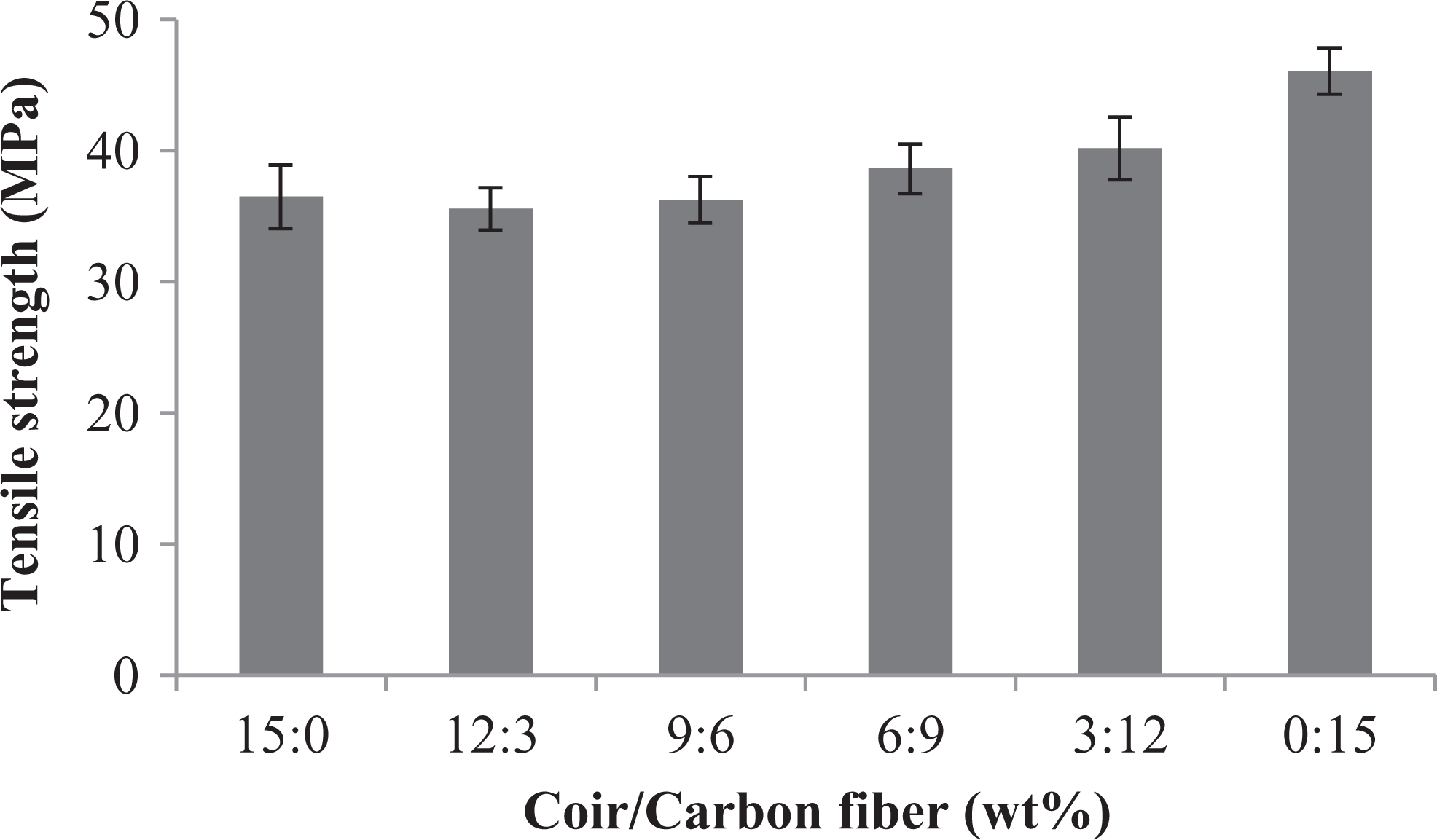
The tensile strength of wood plastic composite as related to various ratios of coir to carbon fiber.
Figure 2 reveals that the flexural strength of WPC of 15:0 (44.82 MPa) is lower than that of 0:15 (59.57 MPa), indicating coir has lower flexural strength. Figure 2 shows that the flexural strength of WPC increases with an increase in the amount of carbon fiber; however, with the addition of both coir and carbon fiber, the increase in flexural strength is not significant. As WPC bears stress by its reinforcing material, and if the variation in flexural strength between the two reinforcing materials is too high, the weaker one (coir) is easily damaged by stress, leaving the stronger one (carbon fiber) invalid.
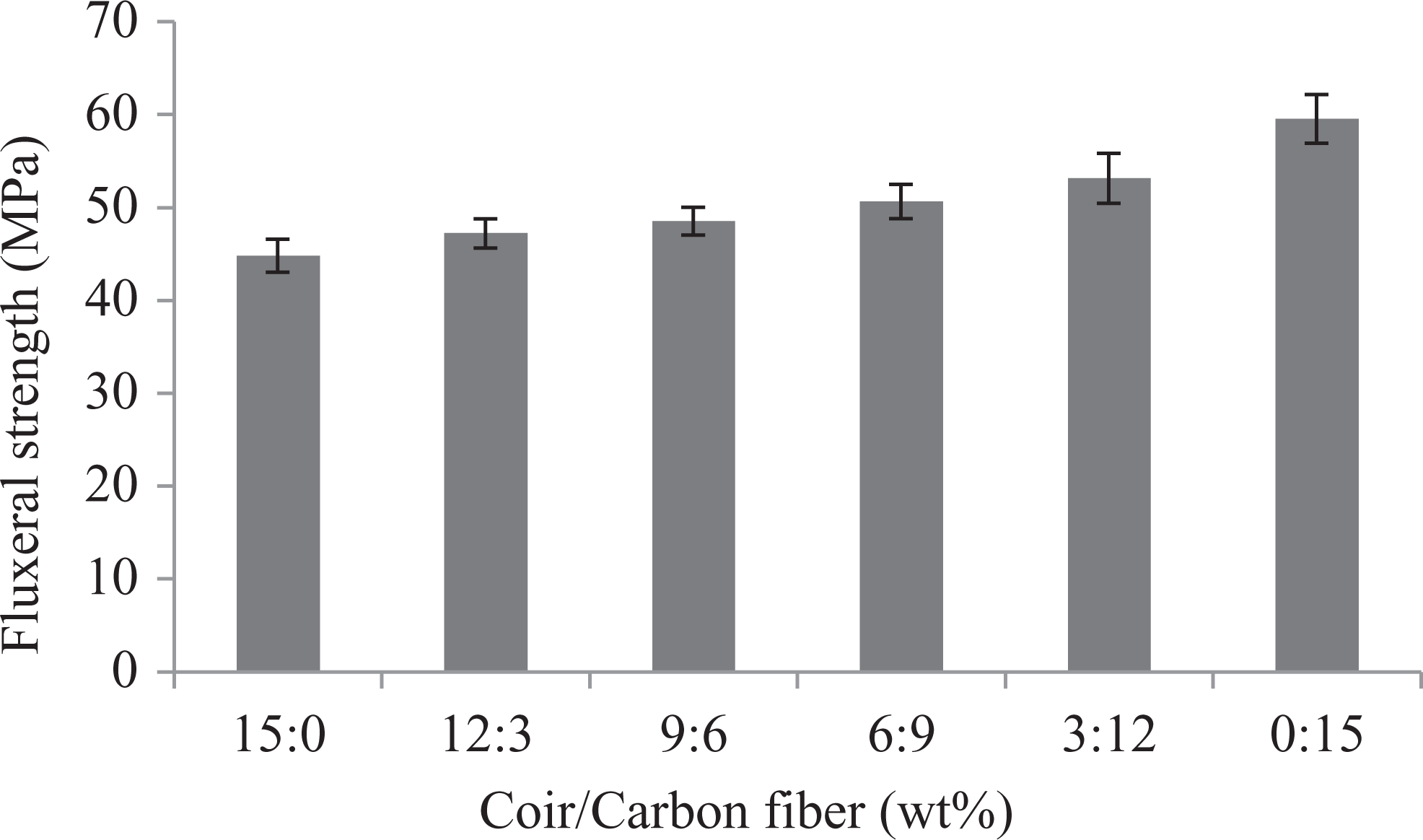
Flexural strength of the wood plastic composite as related to various ratios of coir to carbon fiber.
Figure 3 reveals that the impact strengths of WPC at a ratio of 15:0 is 366.5 J/m and that at a ratio of 0:15 is 258.9 J/m, showing that the impact strength decreases when the content of carbon fiber increases. Compared to carbon fiber, coir is soft and WPC can transform via coir to consume energy.
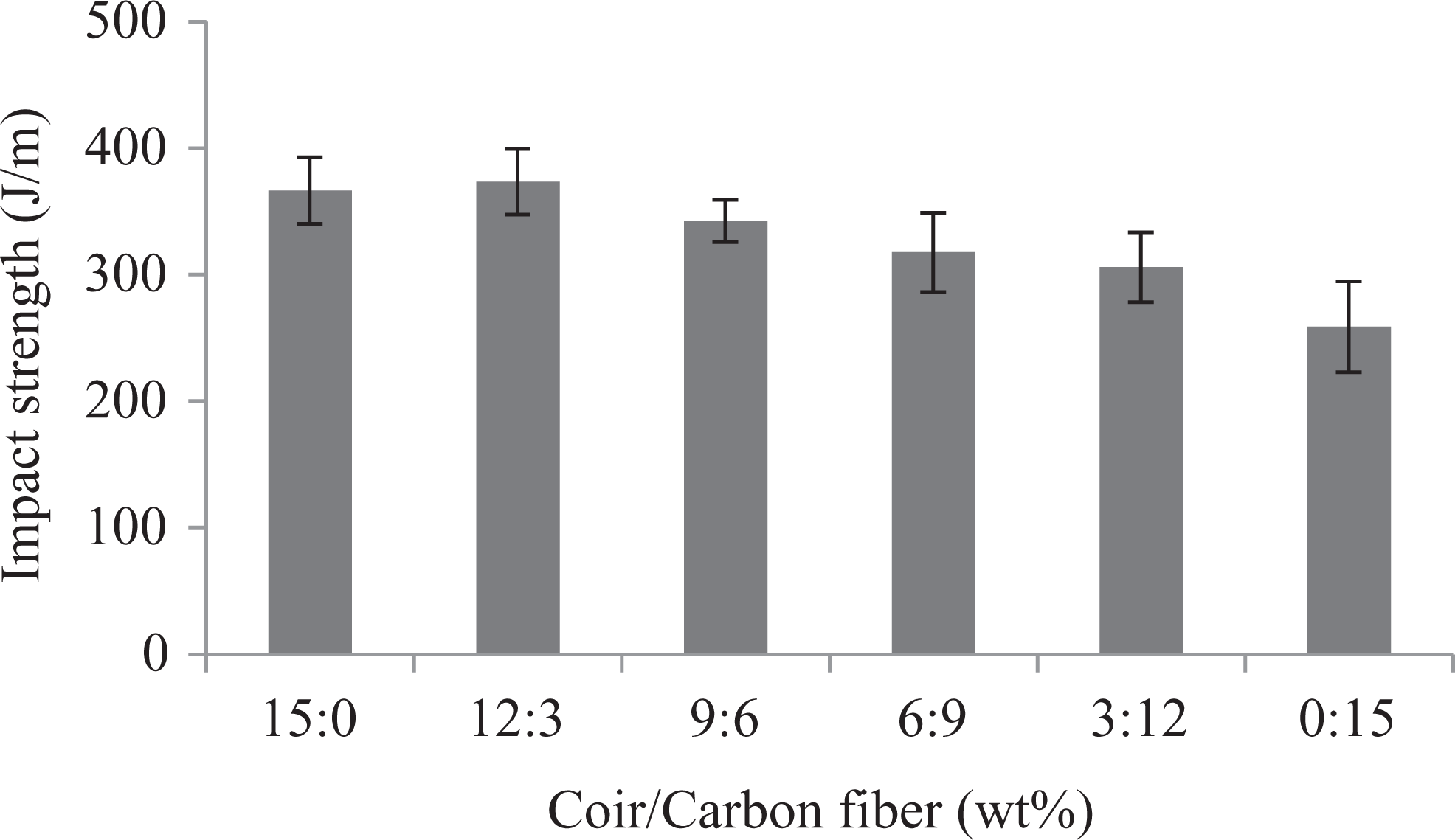
The impact strength of the wood plastic composite as related to various ratios of coir to carbon fiber.
Effect of the ratios of coir to carbon fiber on the electrical properties of the WPC
Figure 4 shows that with a ratio of 0:15, WPC exhibits an optimal conductivity of 2000 ohm/square; when the content of coir increases, the conductivity of WPC decreases. At a ratio of 9:6, the resistivity of WPC is largely increased to above 12 × 1012 ohm/square. Coir is not conductive, and the addition of a large amount of coir prevents the conductive network composed by carbon fiber, giving rise to a significant increase in resistivity of the resulting WPC.
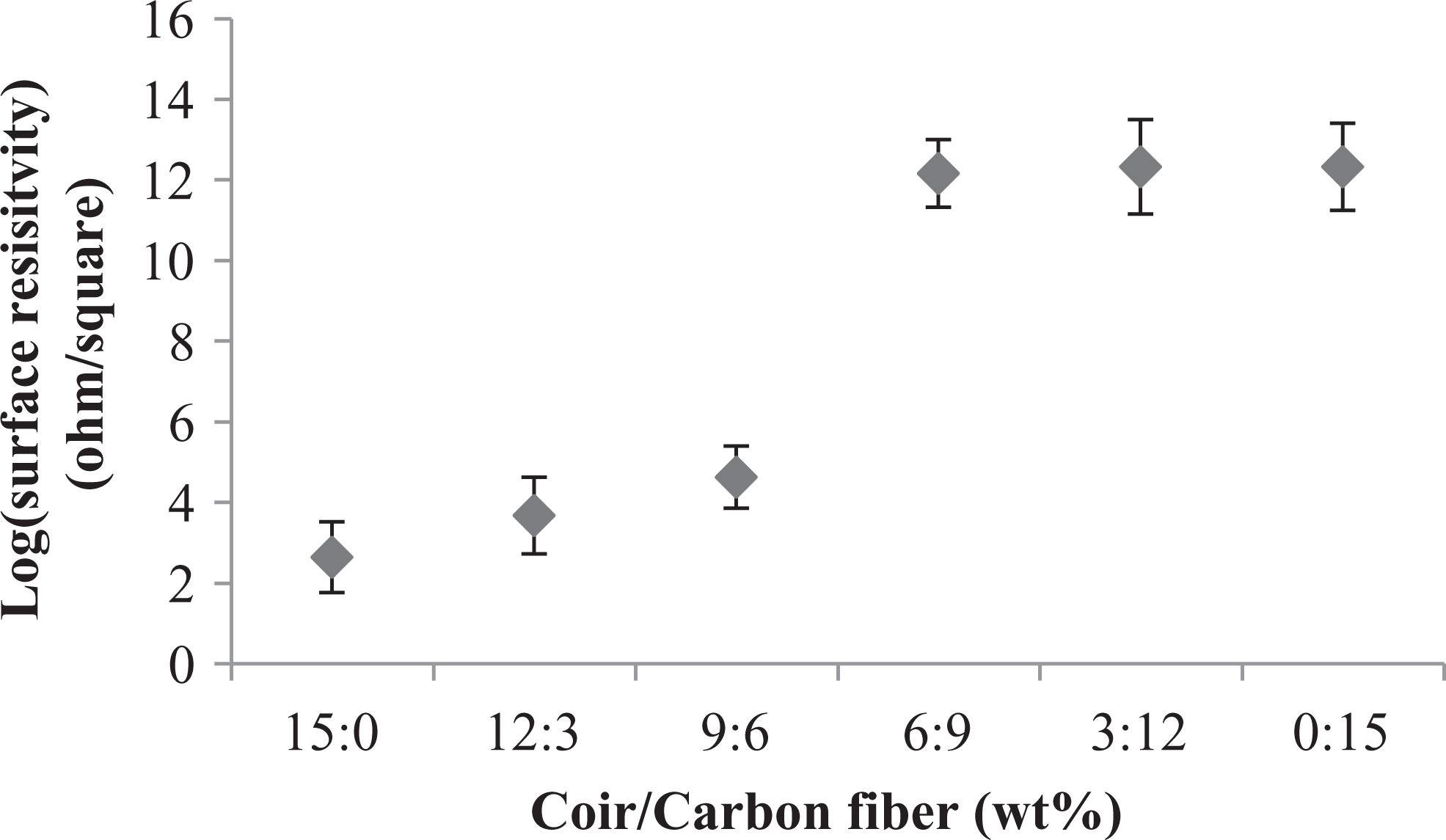
The resistivity of the wood plastic composite as related to various ratios of coir to carbon fiber.
Figure 5 reveals that the greater the amount of the carbon fiber, the higher the EMSE of the WPC; in particular, the EMSE reaches optimum when the ratio is 0:15. In addition, the content of coir influences the EMSE of the WPC. When at a ratio of 12:3, EMSE is close to 0. Therefore, coir has no EMSE; however, the resistivity of pure PP is too high, which is unable to shield the electromagnetic waves, leading to a flat level of the yielded values. In sum, the resistivity and EMSE of a material are negatively correlated because low resistivity of the WPC can damage electromagnetic waves by electrical conduction. At a ratio of 12:3, the resistivity and EMSE of the WPC are 2.88 × 10³ ohm/square and −25 dB, respectively, which reaches the “protective grade” of staple merchandise.
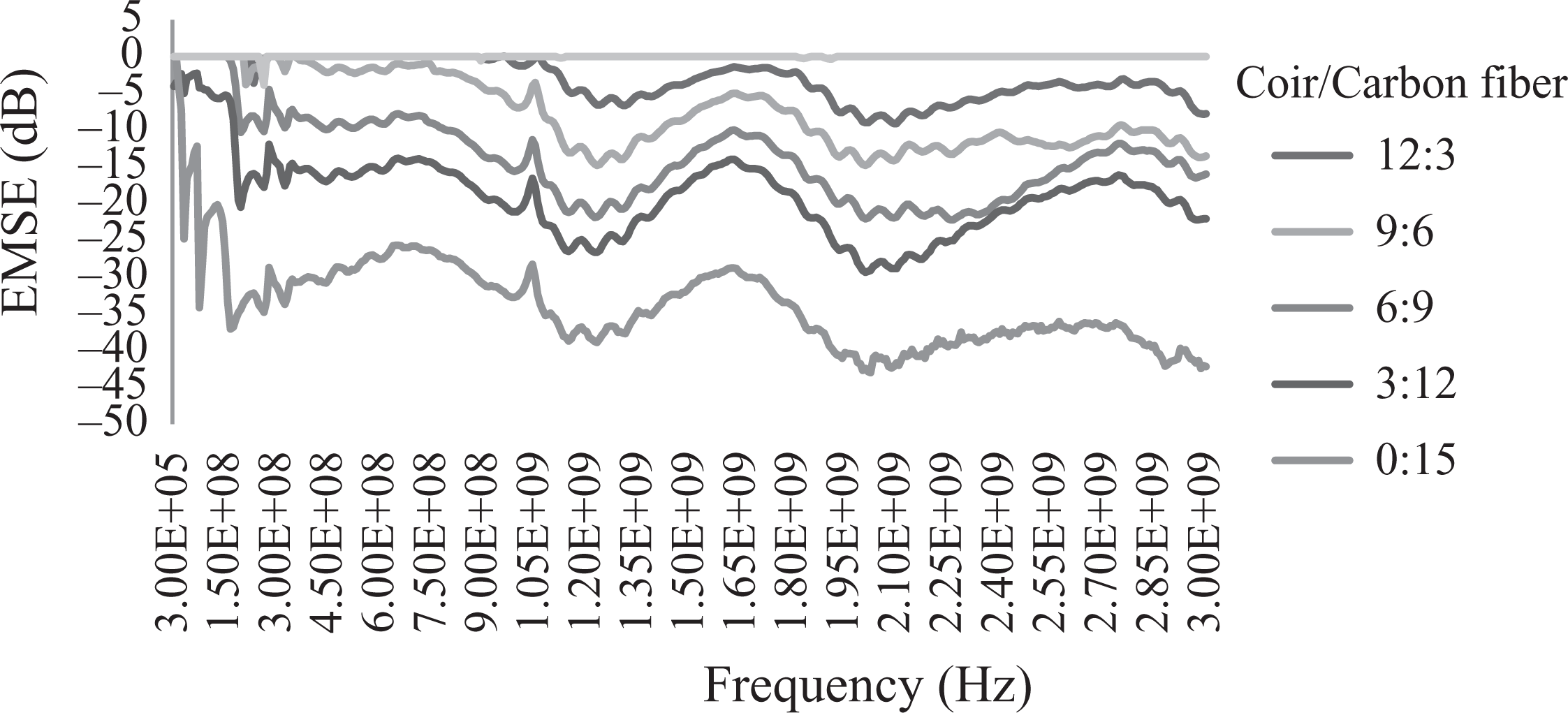
The EMSE of the WPC as related to various ratios of coir to carbon fiber. EMSE: electromagnetic shielding effectiveness; WPC: wood plastic composite.
SEM observation of the cross-section of the fractured WPC as related to various ratios of coir to carbon fiber
Figure 6(a) to (e) shows that the ratios of coir to carbon fiber significantly influences the cross-section of the fractured WPC, which becomes smooth when the amount of the carbon fiber increases. As the coir tends to be grouped together in clusters and is generally weaker than carbon fiber, it results in a smooth fractured cross-section break. Figure 6(c) shows that there are some carbon fibers attached to the coir. This is because MA-g-PP improves their interfacial bonding force. This explains that the mechanical properties of the WPC increase when the amount of carbon fiber increases. In addition, coir and carbon fiber are intertwined within the PP, obstructing the conductive net of the WPC and thus decreasing its resistivity and EMSE.
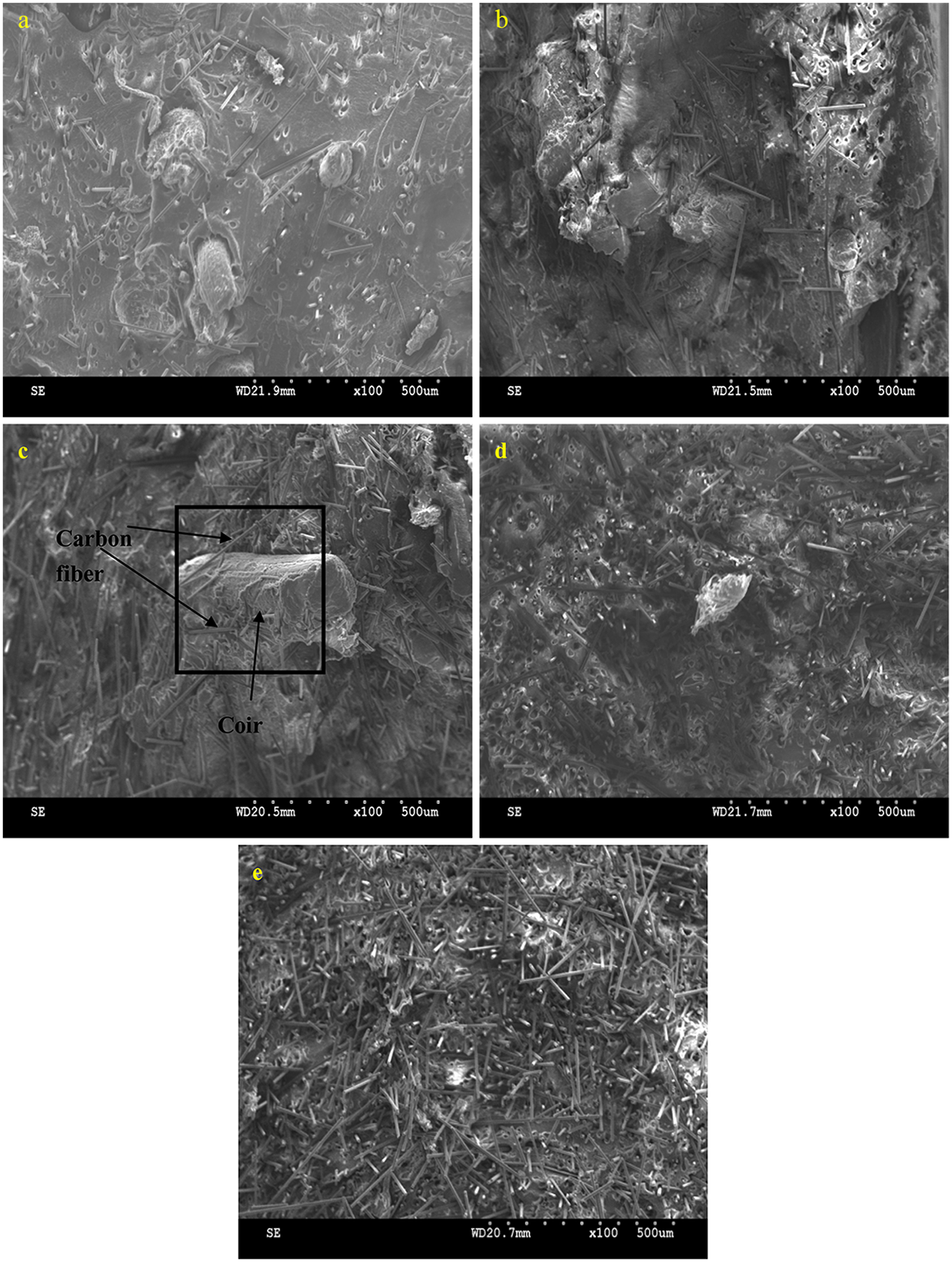
Scanning electron microscopic images of the fractured wood plastic composite at ratios: (a) 12:3, (b) 9:6, (c) 6:9, (d) 3:12, and (e) 0:15.
Effect of the number of multiblending cycles on the mechanical properties of the WPC
According to the experimental results discussed in “Effect of the ratios of coir to carbon fiber on the mechanical properties of the WPC” section, when the ratio of coir to carbon fiber is 12:3 and 3:12, the variation in the mechanical properties of the resulting WPC is significant; therefore, these two parameters are used in this section. As seen in Figures 7 to 9, with an increase in the number of multiblending cycles, the tensile and flexural strengths of the WPC does not change conspicuously; however, its impact strength significantly decreases. The multiblending process repetitively uses high temperatures to turn thermoplastic polymers into liquid state. The cooling solidification process solidifies the liquid into a solid state. Therefore, this repeated transition from solid state to liquid state easily damages the segments of the molecular chains in polymers passing through high-shearing actions. It also makes the molecular chains shortened and molecular weight distribution uneven, which weakens the entanglement between molecular chains and thus reducing the impact strength of PP. Furthermore, the structure of the coir and carbon fiber is also damaged by the shearing process. Figures 7 and 8 show that at one cycle, the tensile and flexural strengths of the WPC are 40.18 and 53.17 MPa, respectively. This result is similar to the results of nine cycles and the tensile and flexural strength of 35.78 and 47.23 MPa, respectively, indicating the effect of multimelting process on tensile and flexural strengths is negligible.
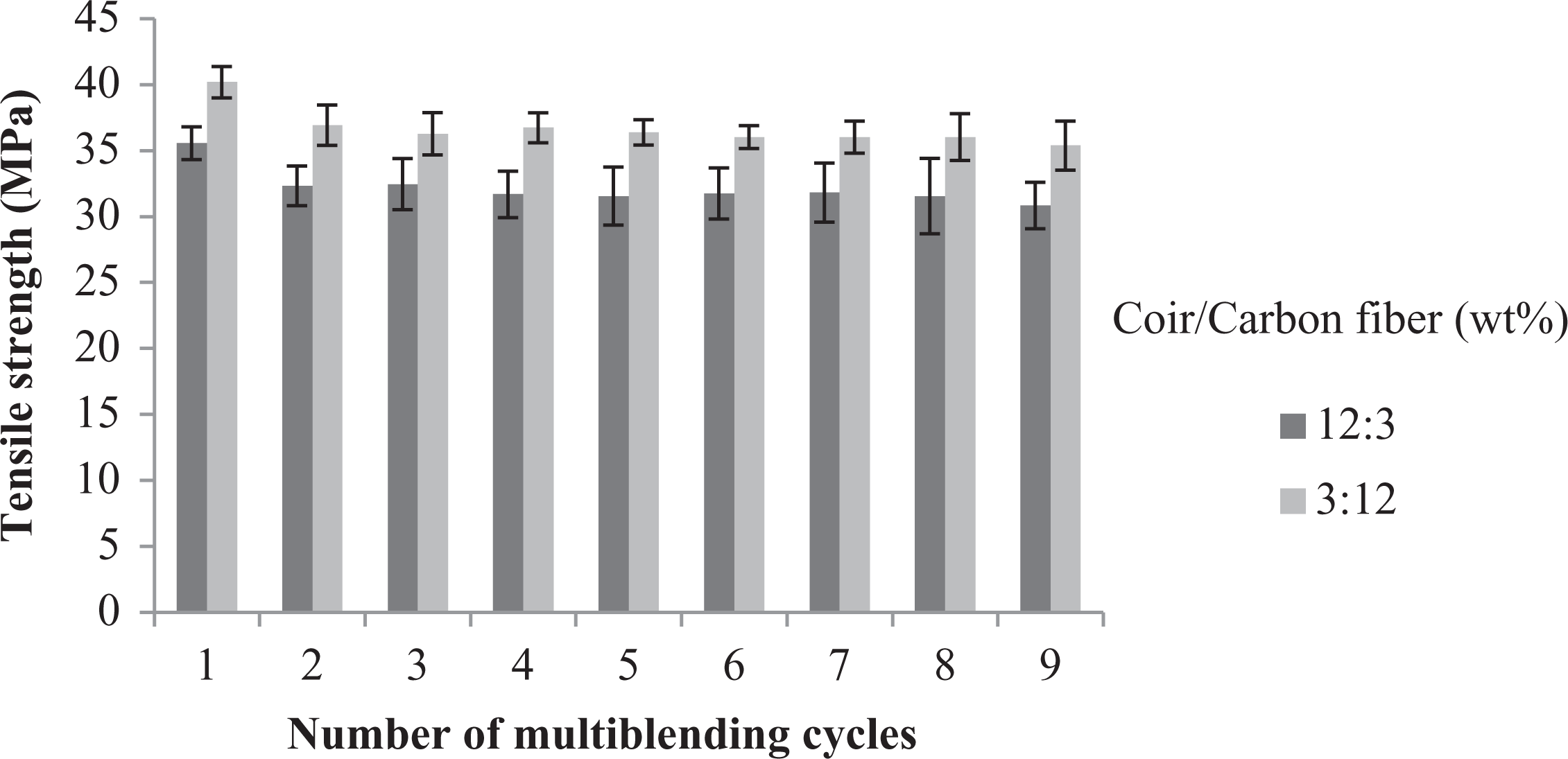
The tensile strength of wood plastic composite as related to various multiblending cycles.
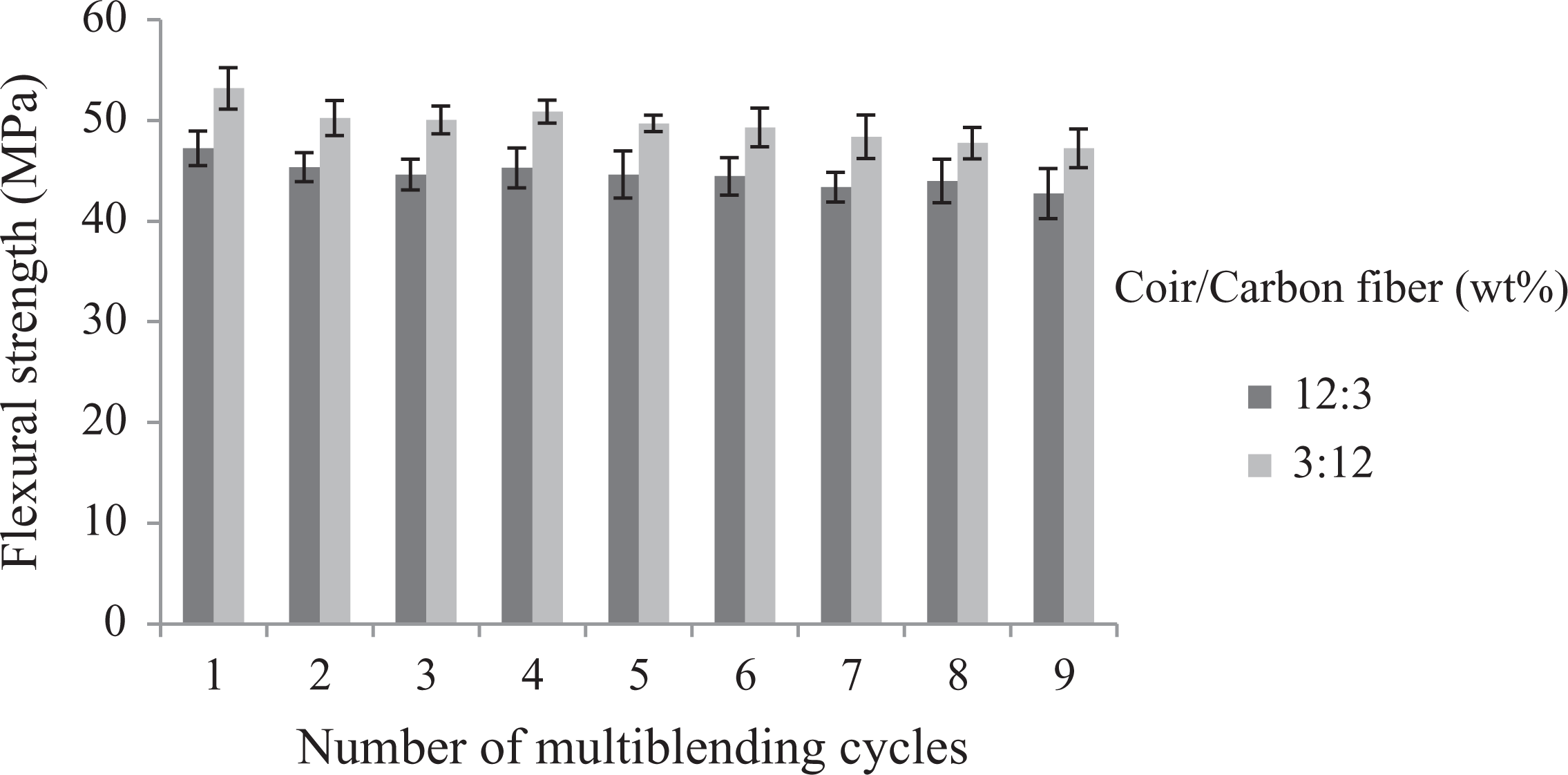
The flexural strength of the wood plastic composite as related to various multiblending cycles.
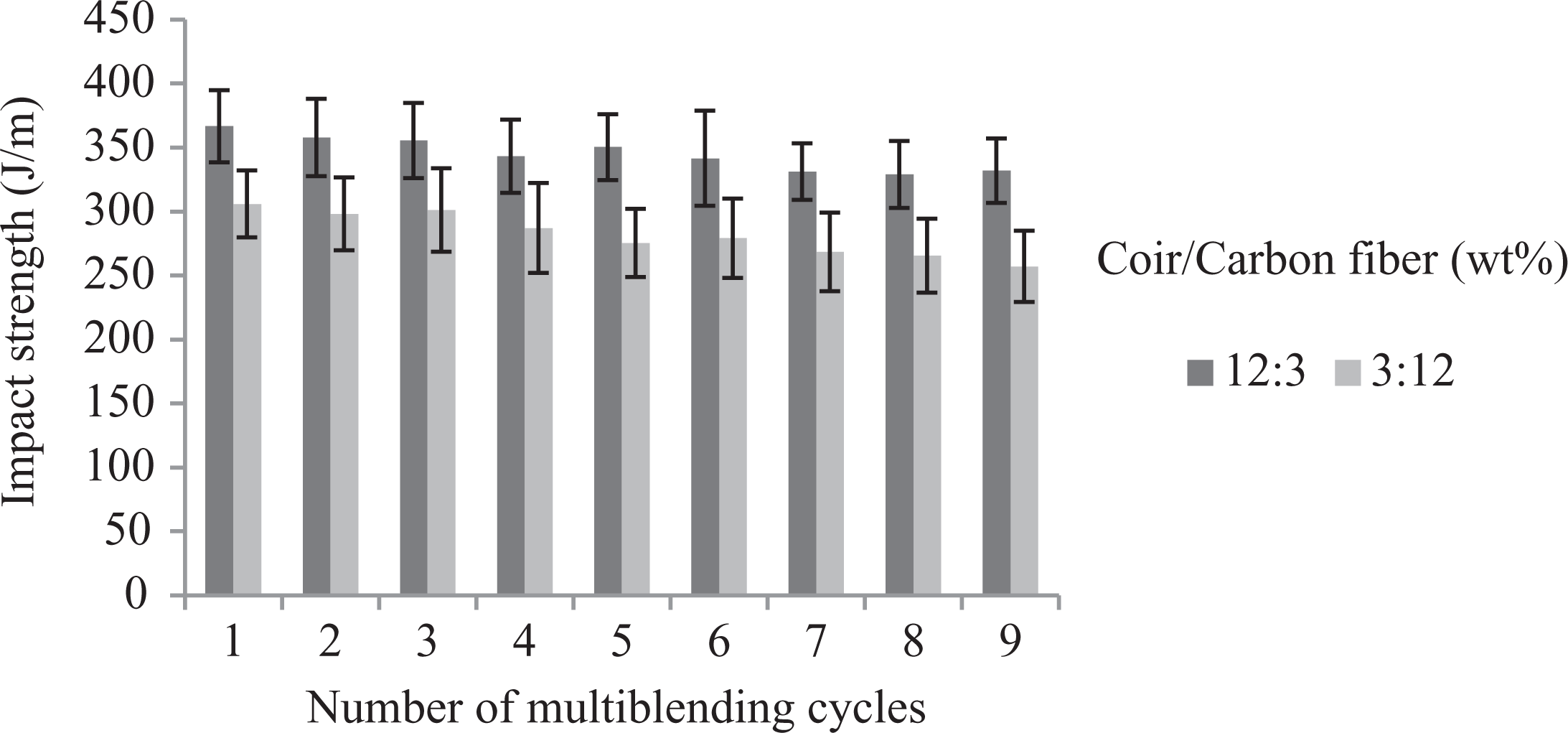
The impact strength of the wood plastic composite as related to various multiblending cycles.
Effect of the number of multiblending cycles on the electrical properties of WPC
According to the results found in “Effect of the ratios of coir to carbon fiber on the electrical properties of the WPC” section, only the WPC containing coir and carbon fiber at a ratio of 3:12 has EMSE. Therefore, the ratio of 3:12 is used to explore the influence of the multiblending process on the EMSE of the WPC. Figure 10 reveals that at one and nine cycles, the resistivity of WPC is 3.63 and 4.5 ohm/square, respectively, indicating that multiblending process increases the resistivity of the WPC. This is possibly due to the fact that during multiblending, a small amount of carbon fiber and coir may remain in the single screw extruder and further mix with minor impurities, obstructing carbon fiber from forming a conductive network. Resistivity is inversely proportional to EMSE; Figure 11 shows that the greater the number of multiblending cycles, the lower is the EMSE for the WPC containing 3 wt% coir fibers and 12 wt% carbon fibers. This is due to an increase in the carbon fiber during the multiblending process, preventing the carbon fiber from forming the conductive network. However, through nine cycles blending, the minimum EMSE remains, proving that the resulting WPC retains desirable EMSE after multiblending process; thus, demonstrating its recycling value.
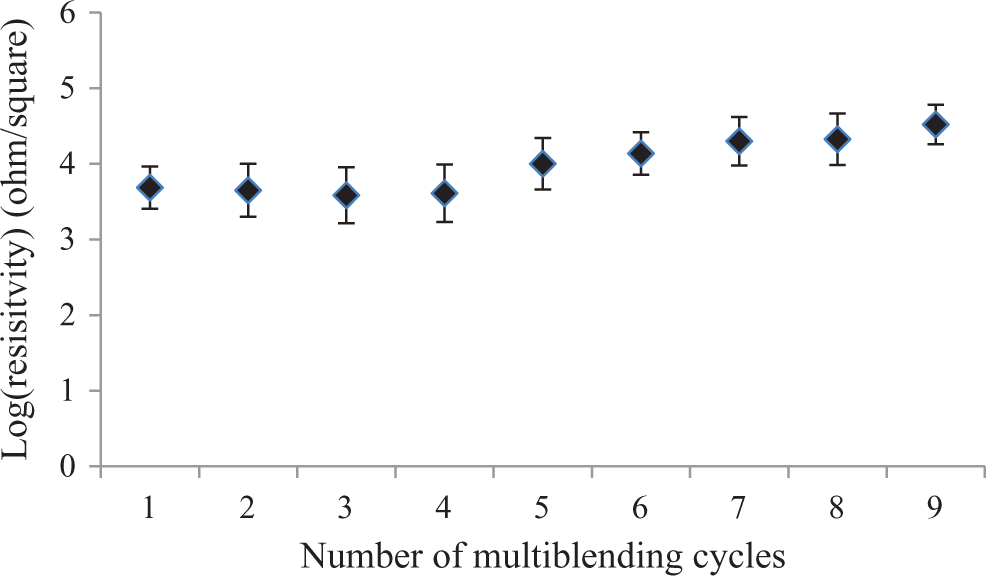
The resistivity of the wood plastic composite as related to various multiblending cycles.
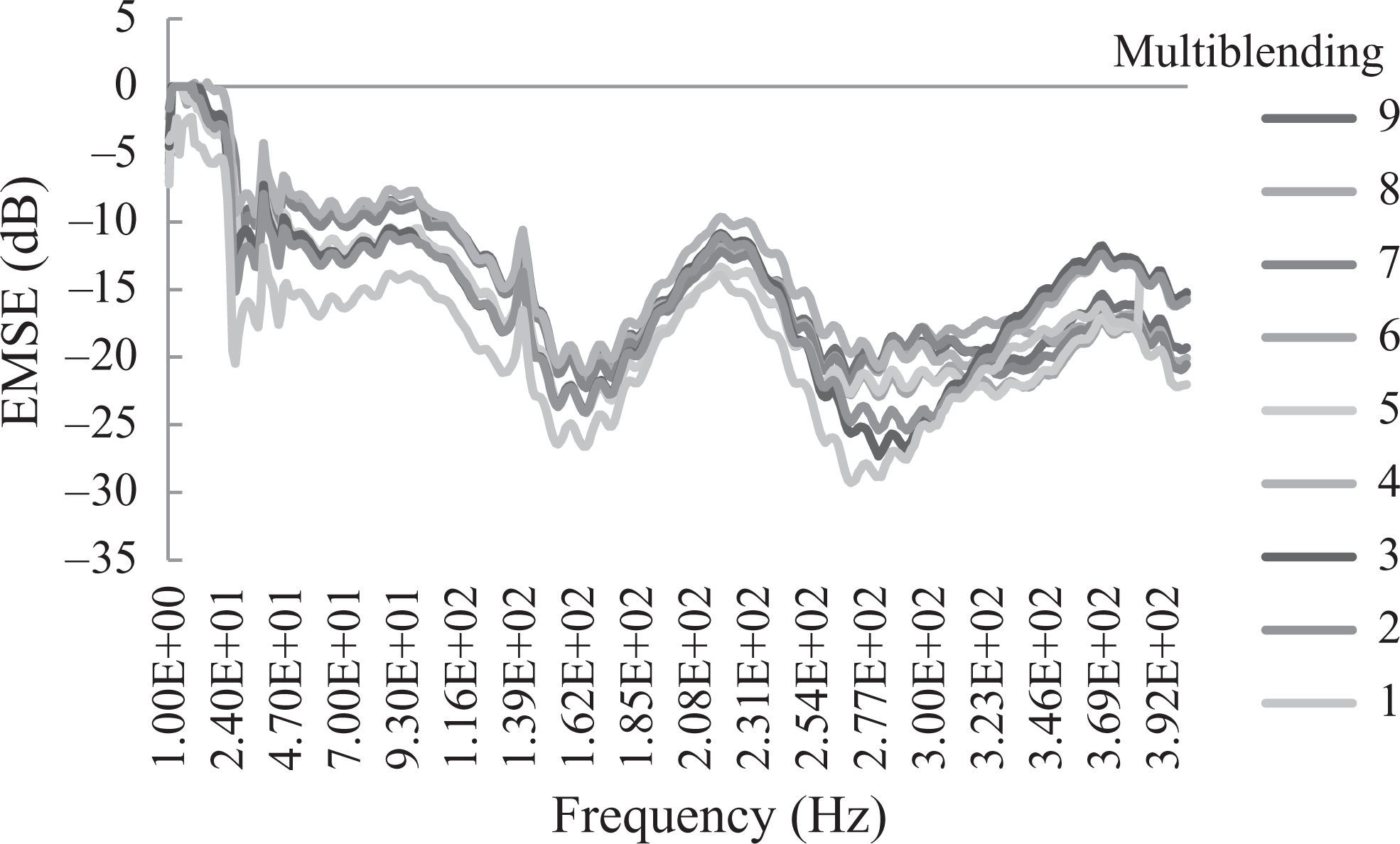
The EMSE of the WPC as related to various multiblending cycles. EMSE: electromagnetic shielding effectiveness; WPC: wood plastic composite.
Conclusion
This study combines impact-resistant PP, coir, and electrically conductive carbon fiber to form the WPC. The EMSE of WPC of a ratio of 12:3 is −25 dB, reaching the “protective grade” of staple merchandise. Although WPCs at ratios 12:3, 3:12, and 15:0 undergo the multimelting process, their mechanical and electrical properties are not influenced by the number of cycles, indicating the thermodestruction and force from shearing have negligible influences on them. The prepared WPC is electromagnetic shielding and recyclable; as a result, it reduces the production cost and broadens the applications of WPC.
Footnotes
Funding
This research received no specific grant from any funding agency in the public, commercial, or not-for-profit sectors.