




Abstract
A novel β-nucleating agent of isotactic polypropylene (iPP), the potassium salt of 1,4,5,6,7,7-hexachlorobicyclo[2.2.1]hept-5-ene-2,3-dicarboxylic acid (CA-19), was found and its effects on the mechanical properties, content of β-crystal, and crystallization behavior of iPP were investigated. The results showed the content of β-crystals of nucleated iPP (k β value) can reach 46.3% with 0.25 wt% CA-19. The impact strength and crystallization peak temperature of nucleated iPP greatly increased. Compared with pure iPP, the impact strength of nucleated iPP shows two times increase, and the crystallization peak temperature (T p) of nucleated iPP increased by 7°C. The spherulite size of the nucleated iPP dramatically decreased compared with that of pure iPP. The Caze et al. method was used to investigate the nonisothermal crystallization kinetics of nucleated iPP and the crystallization activation energy was obtained by the Kissinger method.
Keywords
Introduction
Isotactic polypropylene (iPP) is a polymorphic material with several crystal modifications including the monoclinic (α), trigonal (β), and orthorhombic (γ) forms. 1 In the past decades, β-nucleated iPP (β-iPP) has attracted extensive attention due to its excellent thermal and mechanical performance. 1 –21 The toughness and the elongation at break of β-iPP are much higher than that of α-iPP, which is very important from the viewpoint of industrial application. However, β-iPP is thermodynamically less stable and is therefore more difficult to obtain under the conditions typically found in industrial processes. Numerous methods have been developed to produce significant quantities of β-phase, such as quenching the melt to a certain temperature range, 5,6 directional crystallization in a thermal gradient field, 7,8 shearing or elongation of the melt during crystallization, 9 vibration-induced crystallization, 10,11 or using β-nucleating agents (β-NAs). 12 –21
Of these methods, the addition of β-NAs has proved to be the most efficient way to obtain iPP particles with high content of β-iPP. Until now, only three classifications of compounds have been mainly used as β-form NAs: the first ones are organic pigments, 12 –14 such as γ-quinacridone (Dye Permanent Red E3B), Indigosol Grey/IBL, Indigosol Golden Yellow IGK, and Cibantine Blue 2B; the second one includes a few aromatic amide compounds, 15 –17 such as N,N′-dicyclohexylterephthalamide and N,N′-dicyclohexyl-2,6-naphthalene dicarboxamide (trade name NJStar NU-100); the third group comprises groups IIA and IIB metal salts or their mixtures with some specific dicarboxylic acids. 18 –21 Of the third classification, almost all the β-NAs that have been found were bivalent carboxylic acid metal salts. So far, there is only one report we know, of a monovalent carboxylic acid metal salt (sodium benzoate) that was discovered to induce the creation of β-phase iPP under certain crystallization conditions. 22 In our study described here, we found that the potassium salt of 1,4,5,6,7,7-hexachlorobicyclo[2.2.1] hept-5-ene-2,3-dicarboxylic acid (CA-19) was a novel β-NA for iPP. The finding indicated that monovalent metal carboxylates also could induce the formation of β-phase iPP, except dibasic carboxylic acid metal salts, and add a new member to β-NAs family. In addition, its relatively simple chemical structure should be helpful to explore the nucleation mechanism of β-NA for iPP, when compared with other organic β-NAs.
In this article, the effects of the novel β-NA CA-19 on the mechanical properties, content of β crystals, crystallization peak temperature (T p), and the crystal morphology of iPP were investigated. In addition, the nonisothermal crystallization kinetics of both pure iPP and iPP/CA-19 were investigated using the Caze et al. method. 23 The crystallization activation energy was evaluated by Kissinger’s method. 24
Experimental
Materials
The iPP (trade name T30S) used in this study was kindly provided as a powder by Jiujiang Petroleum Chemical Co. (Jiujiang City, China); it had a melt flow index of 2.9 g/10 min (230/2.16 kg), M w = 24.4 × 10⁴ g/mol, and M w/M n = 4.05. The β-NA was the potassium salt of 1,4,5,6,7,7-hexachlorobicyclo[2.2.1]hept-5-ene-2,3-dicarboxylic acid, also described as the potassium salt of chlorendic acid (CA-19), which was prepared from chlorendic anhydride with potassium hydroxide by a double decomposition reaction. The reaction equation is shown in Figure 1. The solvent used was deionized water. When the reaction was completed, the water was removed from the synthetic products by rotary evaporation. Then, the product was put in an oven to dry for 12 h at 105°C. The synthetic products were white crystals (Figure 2).
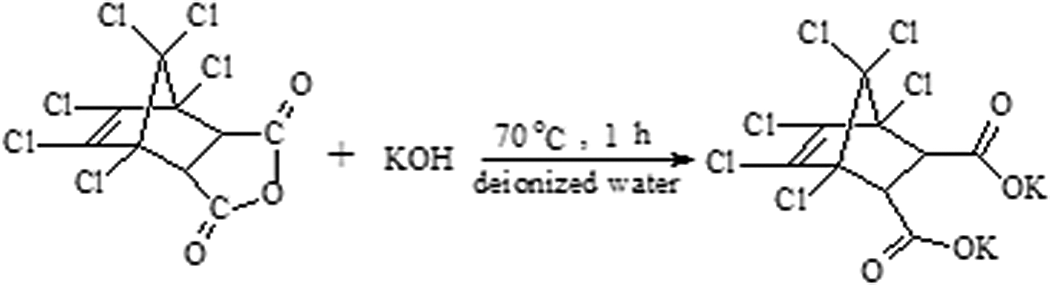
Synthesis reaction of CA-19. CA-19: 1,4,5,6,7,7-hexachlorobicyclo[2.2.1]hept-5-ene-2,3-dicarboxylic acid.
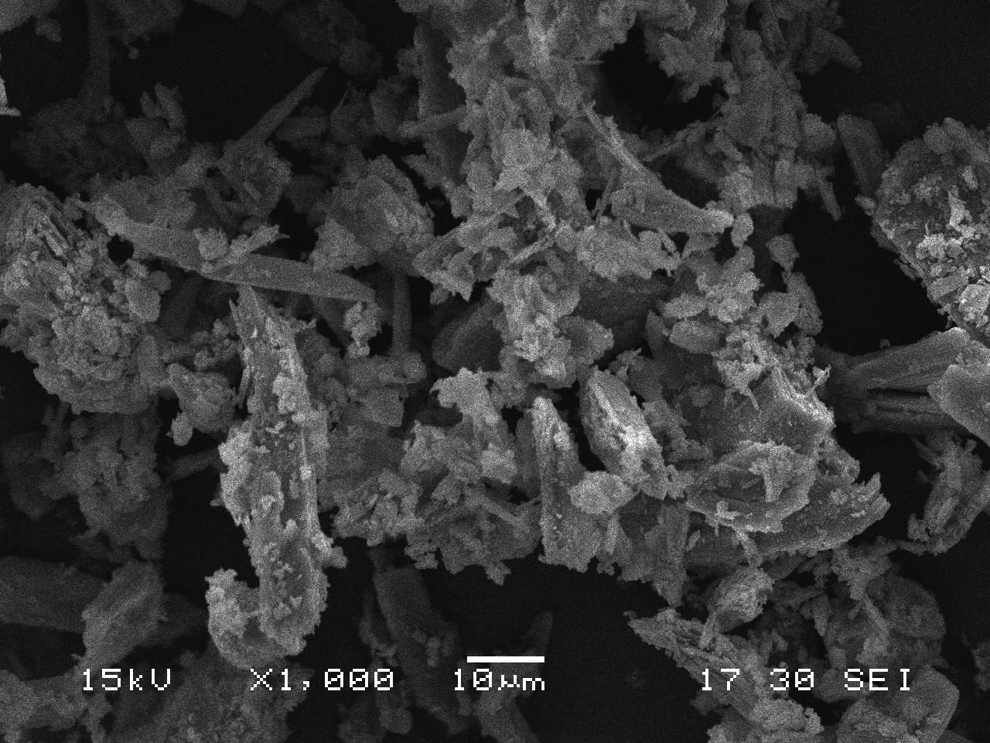
Morphology of the nucleating agent CA-19. CA-19: 1,4,5,6,7,7-hexachlorobicyclo[2.2.1]hept-5-ene-2,3-dicarboxylic acid.
Thermal properties of CA-19 were measured using a Perkin-Elmer Pyris 1 thermogravimetric analyzer (PerkinElmer, Shelton, CT, USA) in flowing nitrogen atmosphere (Figure 3). The result indicated that there was no crystal water in the molecules. According to the thermogravimetric analysis result, CA-19 has excellent thermal stability (the temperature of loss of 5 wt% of CA-19 was 275°C).
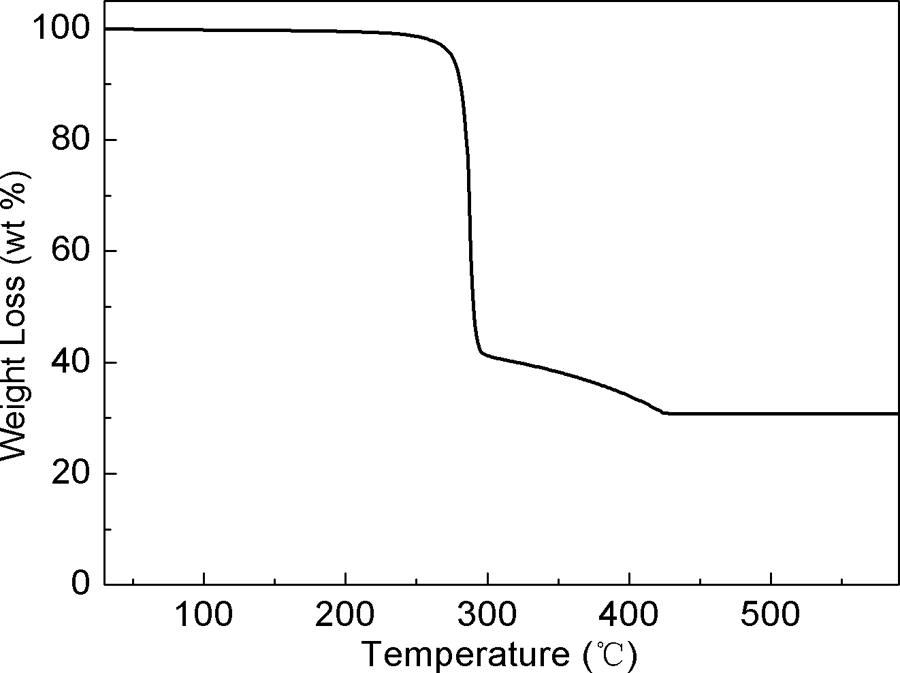
Thermogravimetric analysis profile of CA-19 measured in nitrogen atmosphere. Heating rate: 10°C/min. CA-19: 1,4,5,6,7,7-hexachlorobicyclo[2.2.1]hept-5-ene-2,3-dicarboxylic acid.
Sample preparation
The nucleating agent CA-19 and the iPP powders were dry blended in a high-speed mixer for 5 min. Then, the mixture was extruded by a twin-screw extruder (HT-30, Nanjing Rubber and Plastics Machinery Plant Co., Ltd, Nanjing City, China) through a strand die and pelletized. The pellets were molded into standard test specimens by an injection-molding machine (CJ-80E, Guangdong Zhende Plastics Machinery Plant Co., Ltd, Foshan City, China). The concentrations of the nucleating agent polypropylene were 0.05, 0.1, 0.25, 0.5, 0.75, and 1 wt%, and these samples were denoted as PP0.05, PP0.1, PP0.25, PP0.5, PP0.75, and PP1, respectively. The pure iPP sample was designated as PP0, which was prepared by the same method for comparison.
Mechanical properties
The mechanical properties were measured according to ASTM test methods, such as D-638 for the tensile strength and D-790 for the flexural modulus, using a universal testing machine (MTS Systems Co., Ltd, Foshan City, China). The Izod impact strength was tested on the basis of D-256, using an impact tester (MTS Systems Co., Ltd, Shenzhen City, China.). The reported values of the mechanical properties were averaged from five independent measurements.
Differential scanning calorimetry
Differential scanning calorimetry (DSC; Diamond, Perkin-Elmer, Shelton, CT, USA) was carried out to study the crystallization peak temperature and analyze the nonisothermal crystallization kinetics. Temperature was calibrated before the measurements using indium as a standard medium. The slices, 3–5 mg, were cut from the injection-molded samples.
Samples were heated to 200°C at a rate of 10°C/min under a nitrogen atmosphere and held for 5 min to eliminate their thermal and mechanical history before cooling at the specified cooling rate (2.5, 5, 10, 20, and 40°C/min). The exothermal curves of heat flow as a function of temperature were recorded to analyze the nonisothermal crystallization process.
Polarized optical microscopy
The morphology studies of pure iPP and nucleated iPP were performed with the aid of an Olympus BX51 (Olympus, Tokyo, Japan) polarized optical microscope with a DP70 digital camera, and it attached THMS600 hot stage. The extruded samples were placed between two microscope slides, melted, and pressed at 200°C for 5 min to erase any trace of crystals, and then rapidly cooled to a predetermined crystallization temperature. The samples were kept isothermally until the crystallization process was completed (for pure iPP, the isothermal crystallization time was 60 min; while for nucleated iPP, it was 30 min), while photographs were taken.
Wide-angle x-ray diffraction
The extruded samples were placed between two cover glasses on a hot stage (Figure 4: Hot stage 1) at 200°C. The melted specimen was then quickly placed onto another hot stage (Figure 4: Hot stage 2) set to the desired temperature in the range 90–140°C. The samples were held isothermally until the crystallization process was completed. Then the crystal structure of the samples was investigated by wide-angle x-ray diffraction (WAXD). The WAXD patterns were recorded in transmission with a Rigaku D/max-2550VB/PC apparatus (Japan). Using Cu Kα (λ = 1.54 Å) radiation, the spectra were recorded in the 2θ range of 5–35° (8°/min). The content of the β-crystal modification was determined according to the standard procedures described in the literature,
25
employing the relation The preparation process of the samples for WAXD. WAXD: wide-angle x-ray diffraction.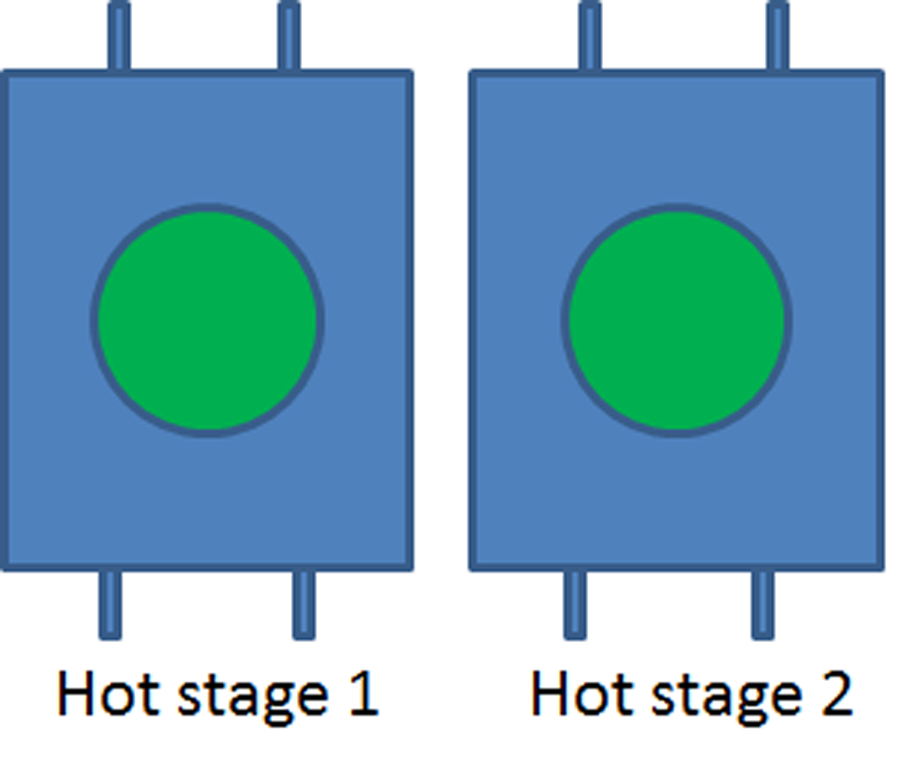

where k β denotes the relative content of β-crystal form (WAXD), H Ω(hkl) denotes the intensity of the respective (hkl) peak belonging to phase Ω (α or β; always with respect to the amorphous halo).
Theory of nonisothermal crystallization
The Avrami equation
26,27
widely used to describe polymer isothermal crystallization of polymers is given by

where Xt is the relative crystallinity at time t, n is a constant whose value depends on the mechanism of nucleation and on the form of crystal growth, and Z(T) is a constant containing the nucleation and growth parameters.
The Avrami equation has been extended by Ozawa
28
to develop a simple method to study nonisothermal experiments. The general form of the Ozawa theory can be written as follows

where Xv (T) is the volume fraction of the transformed polymer at a temperature T, U is the cooling rate, and K(T) is the cooling function. Ozawa extended the mathematical derivation proposed by Evans to the case of nonisothermal crystallizations. However, the theory has a certain number of limits. For instance, secondary crystallization of the products is not taken into account and the exponent n is considered to be constant, whatever the temperature may be. Moreover, effects such as transcrystallization are not considered in the Ozawa theory. It so happens that this particular phenomenon accelerates the average kinetics of transformation and tends to make up for the volume restriction effects that, on the contrary, slow down crystallization kinetics. As a result, the Avrami exponent, n, has no physical significance any more when strong surface nucleation occurs, because its evolution involves factors with contradictory effects. Therefore, the way it varies when fibers or nucleating agents are added to the bulk polymer become problematic and not easily interpretable. 23
Caze et al. 23 put forward a method to modify the Ozawa equation. They assumed an exponential increase in KT with T upon cooling. On the basis of this, the temperature at the peak and the two inflexion points of the exotherm with skew Gaussian shape are linearly related to lnφ and can be used to estimate the exponent n.
On the basis of their findings on the crystallization behavior of poly(ethylene terephthalate) and polypropylene (PP), Kim et al. proposed
29

where a and T
1 are empirical constants. If the extreme point of the pertinent

Combination of equations (3)
to (5) yields

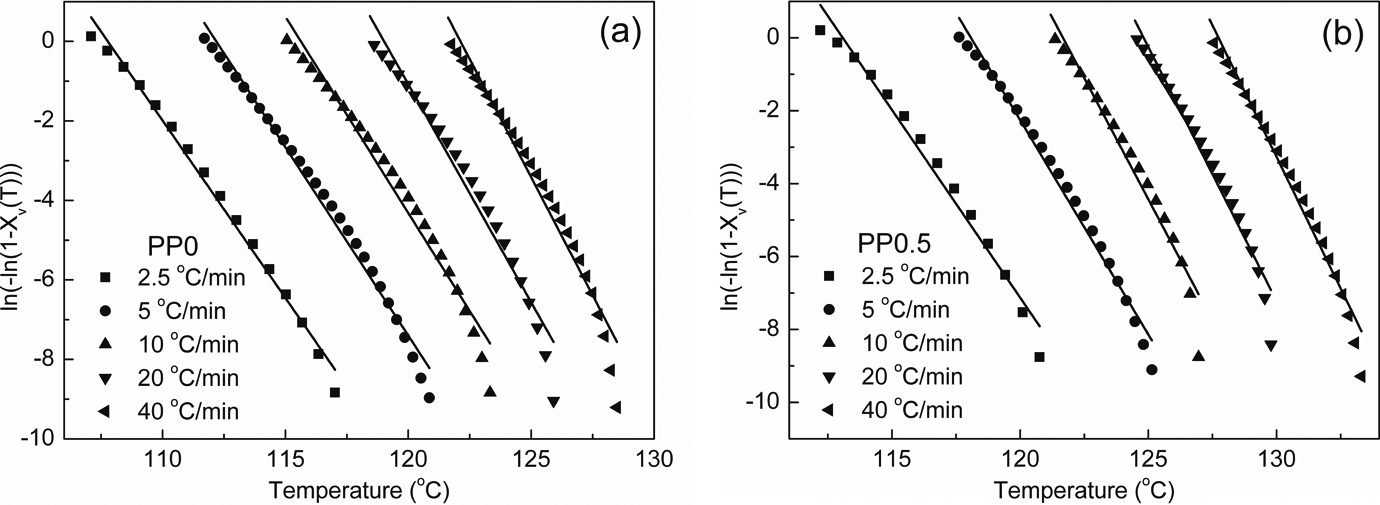
Hence, a linear plot of ln[−ln(1 − Xv
(T))] against T should yield the constant a and the product −aTq
from the gradient and intercept, respectively. At T = Tq
obtained from the foregoing algorithm, equations (5) and (6) lead to

As such, the parameter n can be obtained from the linear plot of Tq against lnφ/a in accordance with equation (7).
Results and discussion
Mechanical properties
From the viewpoint of industrial application, it is necessary to investigate the effects of a nucleating agent on the mechanical properties. The mechanical properties of iPP are known to be strongly affected by the amount of a nucleating agent. Therefore, the effects of the novel nucleating agent CA-19 on mechanical properties of iPP were investigated as a function of concentration of CA-19. The results are shown in Figure 5.
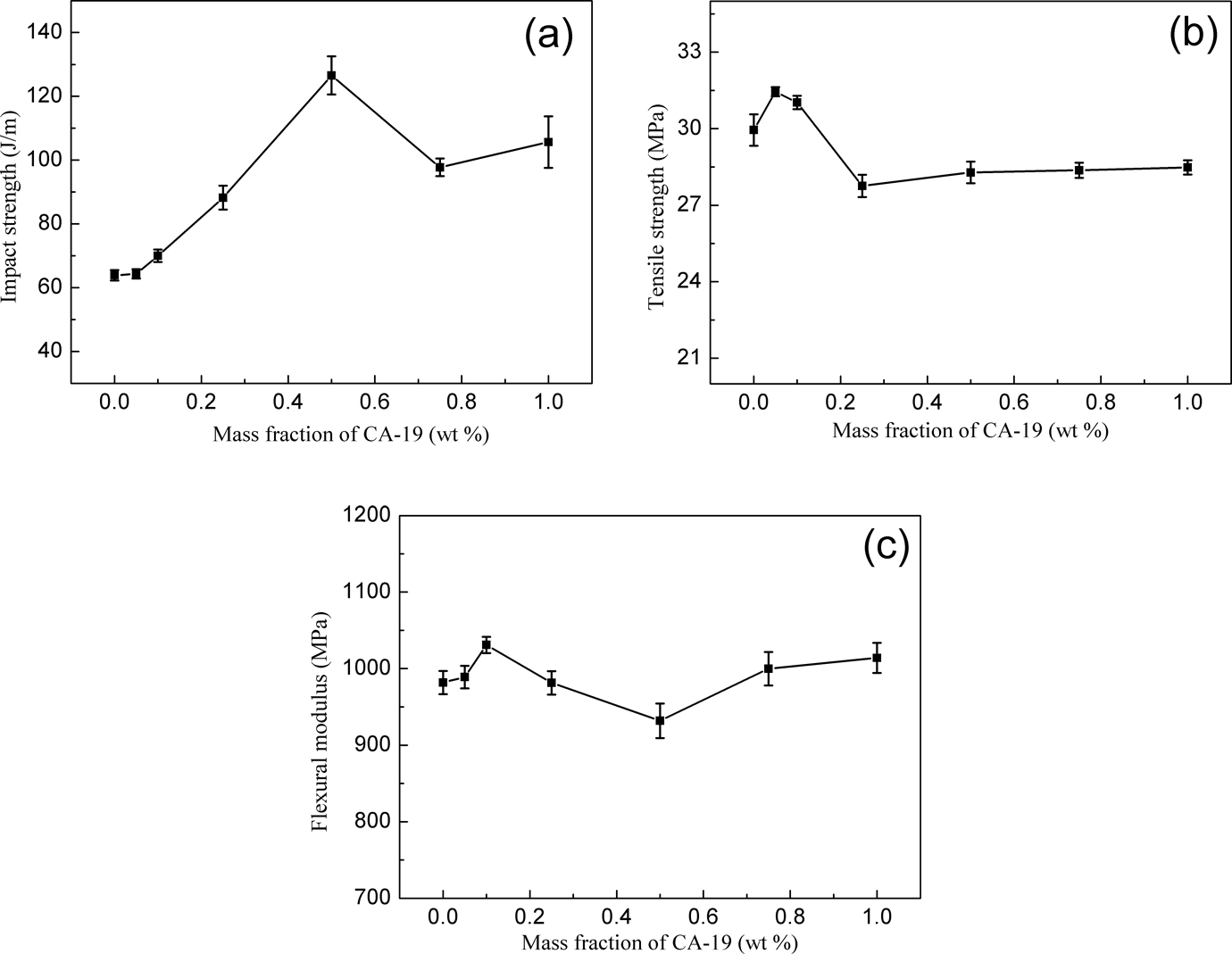
The mechanical properties of iPP nucleated with different content of CA-19, (a) impact strength; (b) tensile strength; and (c) flexural modulus. iPP: isotactic polypropylene. CA-19: 1,4,5,6,7,7-hexachlorobicyclo[2.2.1]hept-5-ene-2,3-dicarboxylic acid.
Figure 5(a) shows that the impact strength of nucleated iPP increased rapidly with increasing CA-19 when it was less than 0.5 wt%, then decreased until the CA-19 contents reached 0.75 wt%, and then basically remained constant with the further increase in CA-19. When the content of CA-19 was 0.5 wt%, the impact strength of the nucleated iPP improved about two times compared with that of pure iPP, indicating that CA-19 could significantly improve the toughness of iPP. In Figure 5(b), the tensile strength of nucleated iPP slightly increased and then decreased rapidly until the concentration of CA-19 reached about 0.25 wt%, and then remained essentially constant with further increase in concentration. In Figure 5(c), flexural modulus of nucleated iPP slightly increased and then decreased until the concentration of CA-19 reached about 0.5 wt%; it then increased with a further increase in concentration. Thus, 0.5 wt% seems to be the best concentration for CA-19 in terms of mechanical properties.
Effect of the nucleating agent on the content of β-crystals of iPP
DSC and WAXD are usually used to characterize the content of β-crystals of iPP. However, the β-crystal content of iPP cannot be accurately calculated from DSC melting curves. One reason is that the exact determination of the β-content is difficult because the melting peaks of the α- and β-modification overlap each other. Another reason is the existence of βα-recrystallization of β-crystals during melting process. Therefore, WAXD is more accurate than DSC to characterize the content of β-crystals of iPP, which is what we used for the quantification of β-phase content in the isothermally crystallized iPP samples. The β-crystal contents of iPP are known to be strongly affected by the crystallization temperature. 21 Therefore, the effects of the isothermal crystallization temperature on the content of β-crystals of iPP nucleated with 0.5 wt% CA-19 were investigated by WAXD. The WAXD scans are shown in Figure 6.
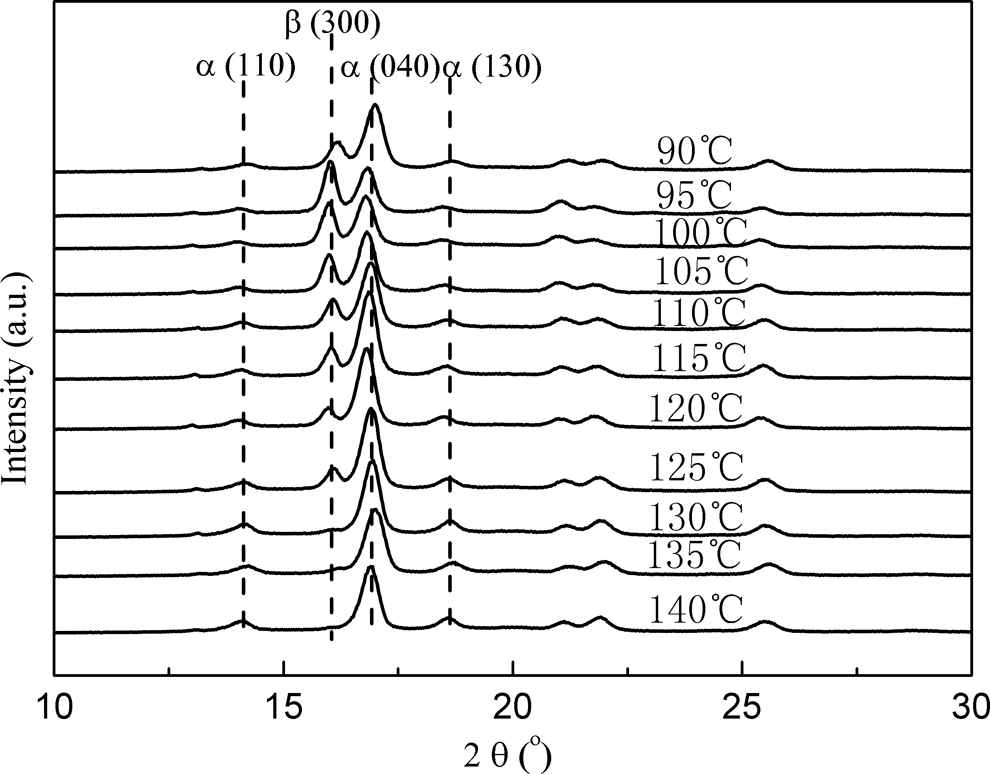
WAXD patterns of sample PP0.5 with different isothermal crystallization temperatures under quiescent conditions. WAXD: wide-angle x-ray diffraction; PP: polypropylene.
In Figure 6, (110) at 2θ = 14.1°, (040) at 16.9°, and (130) at 18.5° are the principal reflections of the α-crystals of iPP, while (300), at about 16°, is the principle reflection of the β-crystals. They are considered as the marker peaks for α-crystals and β-crystals, respectively. As described above, the content of the β-crystal modification was determined according to the standard procedures described in the literature, 25 employing equation (1).
The effect of the isothermal crystallization temperature on the k β values is shown in Figure 7. The results show that the k β value rapidly increased with the initial increase in temperature, reaching 45.4% when the temperature was 95°C, and then gradually decreased with further increase in temperature. When the temperature was 140°C, the k β value reached zero. The above results indicate that the β-crystals content of iPP nucleated with CA-19 were strongly affected by the crystallization temperature. For the nucleating agent CA-19, the most appropriate temperature was 95°C, where the nucleating efficiency of CA-19 was the highest. This is different for other β-NAs whose most appropriate temperatures are 100–140°C. 20,21,30
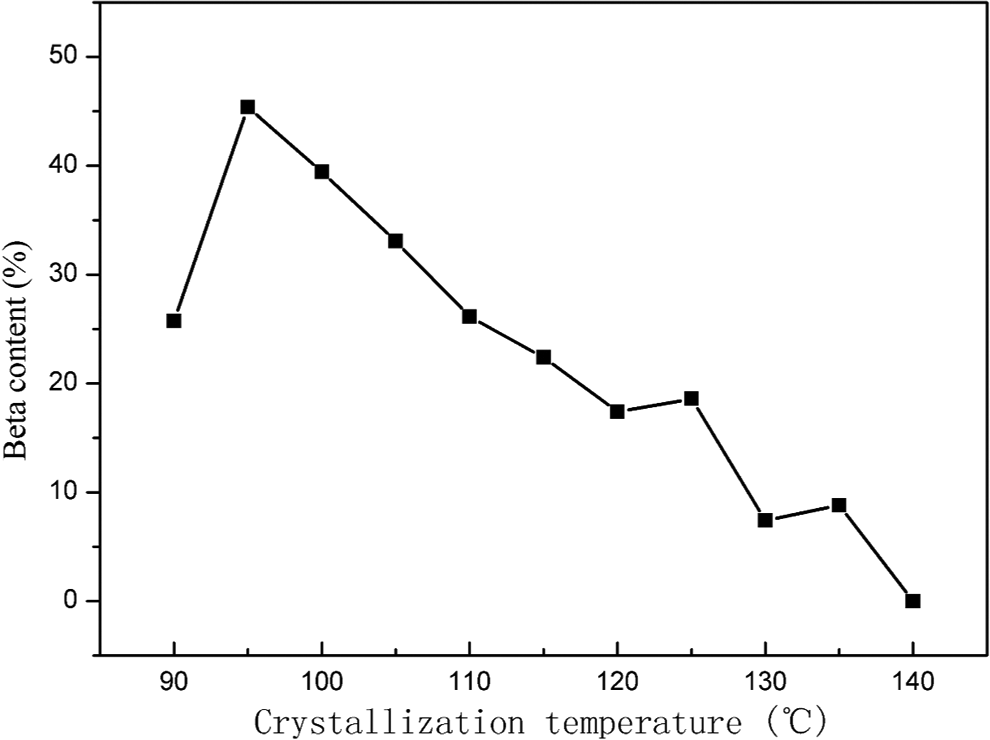
k β value as a function of the crystallization temperature.
It is well known that the nucleating efficiency of β-NAs depends on not only crystallization temperature but also their concentration. 21,31 Therefore, the nucleating efficiency of CA-19 with different concentrations was also investigated. The WAXD patterns of nucleated iPP with different concentrations of CA-19 crystallized at 95°C under static conditions are shown in Figure 8. The k β values as a function of the content of the β-NAs are reported in Figure 9. The results show that the k β values increased with the presence of CA-19, reaching a maximum value (46.3%) when the CA-19 percentage was 0.25 wt%, and then decreased until constant with a further increase in CA-19 percentage. Feng and Chen 18 reported a new β-NA (the mixed additive of lanthanum stearate and stearic acid, denoted as LaC), which induce 33.1% β-crystals in a PP containing 2.5 wt% of the additive. Thus, compared with LaC, CA-19 is an effective β-NA. However, CA-19 is not a completely selective β-NA, as the related samples always contained both α- and β-modification of iPP. The changing trend of the k β values is basically consistent with that of the impact strength of iPP/CA-19, which indicates that the improvement in impact strength of iPP was most likely due to the increased content of β-crystal form. However, it is noted that the most effective concentration of CA-19 from the results of mechanical properties and WAXD were different, which may result from the difference of crystallization conditions for the two measurements.
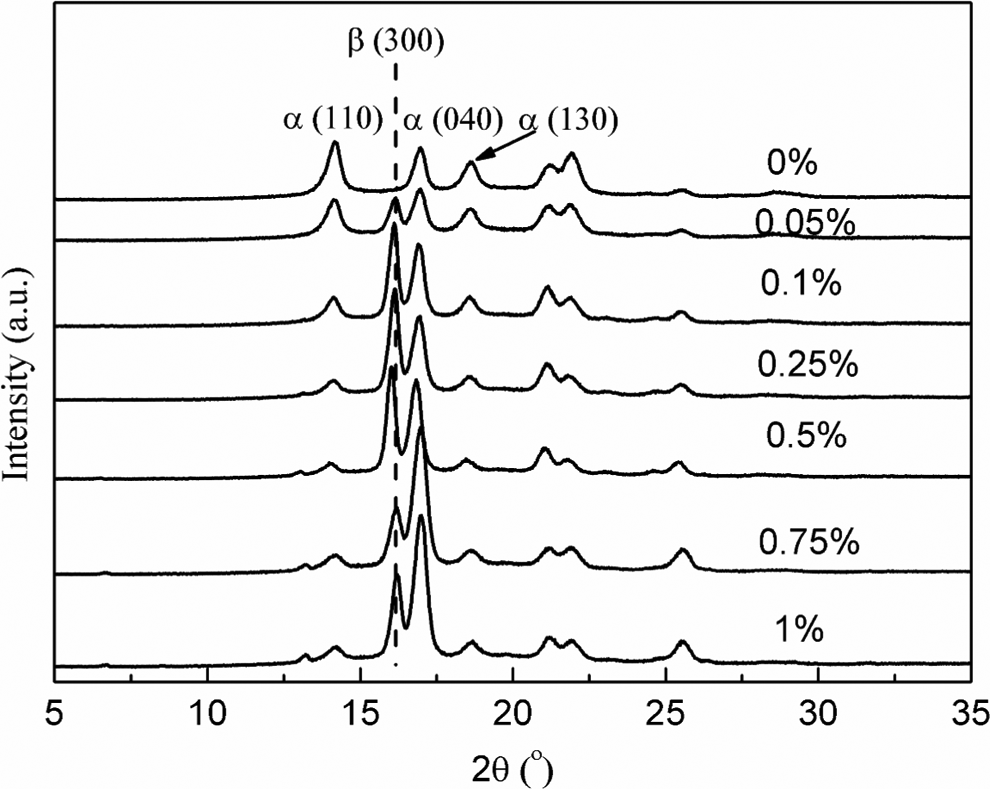
WAXD patterns of sample PP0 (pure iPP) and nucleated iPP with different CA-19 contents crystallized at 95°C under quiescent conditions. WAXD: wide-angle x-ray diffraction; iPP: isotactic polypropylene; PP: polypropylene; CA-19: 1,4,5,6,7,7-hexachlorobicyclo[2.2.1]hept-5-ene-2,3-dicarboxylic acid.
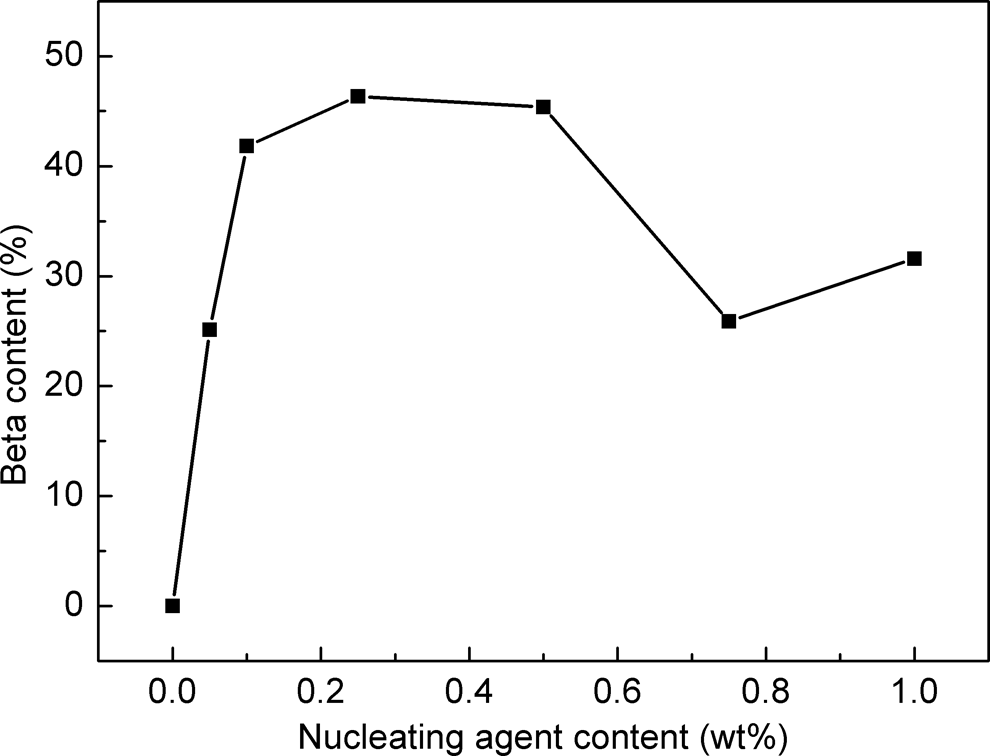
k β value as a function of CA-19 content. CA-19: 1,4,5,6,7,7-hexachlorobicyclo[2.2.1]hept-5-ene-2,3-dicarboxylic acid.
Crystallization behavior
In order to check the effect of the nucleating agent on the crystallization behavior, the DSC nonisothermal crystallization curves (the cooling rate is 10°C/min) of iPP with different CA-19 contents are plotted in Figure 10.
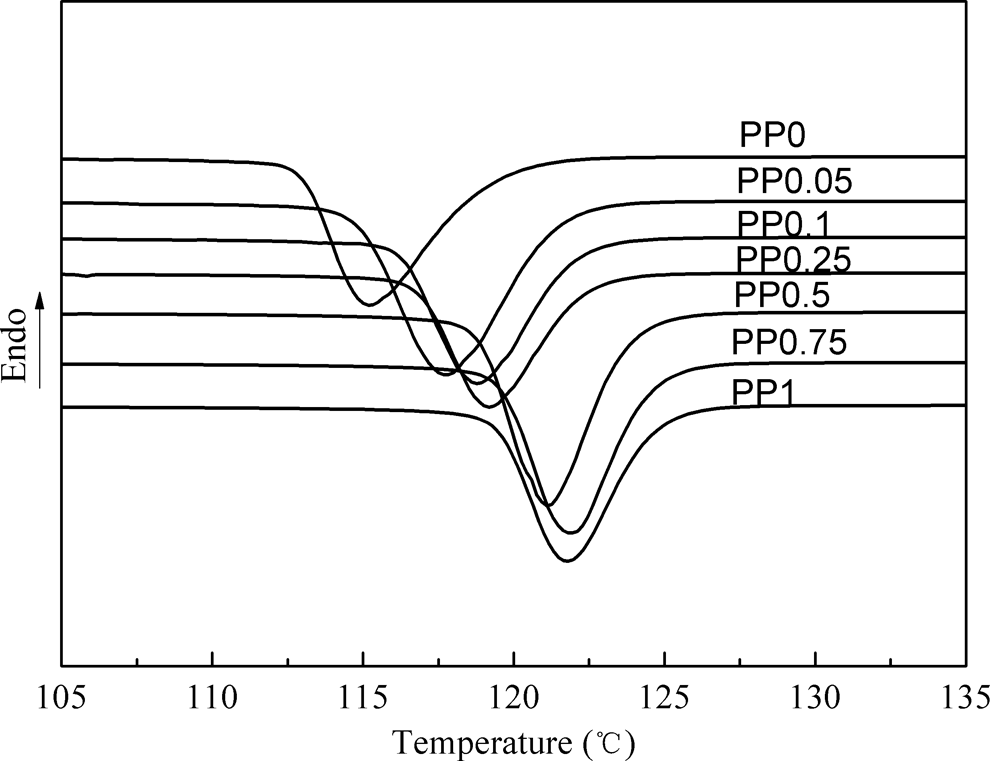
Differential scanning calorimetry crystallization curves of iPP with the different content of CA-19. iPP: isotactic polypropylene; CA-19: 1,4,5,6,7,7-hexachlorobicyclo[2.2.1]hept-5-ene-2,3-dicarboxylic acid.
For the pure iPP (PP0), T p was around 115°C. With the incorporation of increasing CA-19 content, T p of iPP shifted to higher temperature. Figure 11 shows a plot of T p as a function of CA-19 content. The initial increase in T p was very strong when the content of CA-19 was lower than 0.75 wt%, but T p remained constant with further increase in the CA-19 content. T p of iPP nucleated with 0.75 wt% increased by 7°C compared with pure iPP. The results indicate that nucleating agent exceeding 0.5 wt% was less effective in increasing the crystallization peak temperature further.
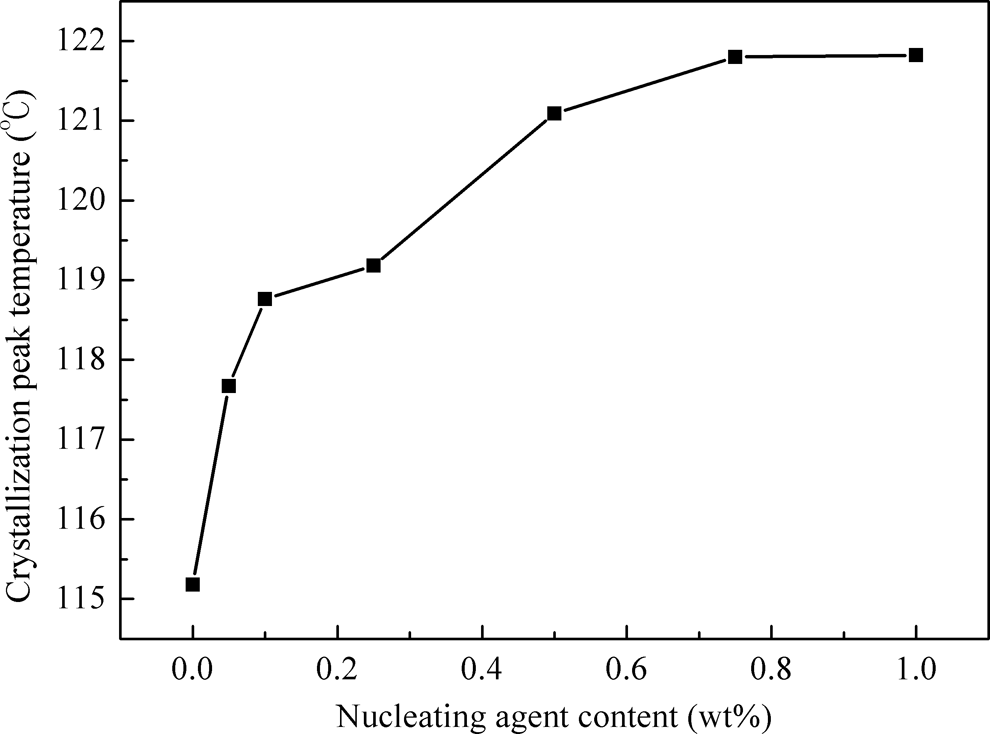
The effect of the content of CA-19 on crystallization peak temperature of iPP. iPP: isotactic polypropylene; CA-19: 1,4,5,6,7,7-hexachlorobicyclo[2.2.1]hept-5-ene-2,3-dicarboxylic acid.
β-NA affects not only the crystal form but also the morphology of iPP. Polarized optical microscopy (POM) was applied to study the effect of CA-19 on the morphology of iPP. Polarized optical micrographs of pure iPP and nucleated iPP crystallized at 140°C are shown in Figure 12. The spherulite diameter of pure iPP was more than 50 μm, and the incorporation of CA-19 decreased the spherulite sizes. Because of the existence of plenty of nuclei in the iPP/CA-19, the spherulites grow so fast that they rapidly impinge with each other before they grow bigger. Therefore, the spherulite size of nucleated iPP was much smaller than that of virgin iPP. Furthermore, the spherulite size gradually decreased until the concentration of nucleating agent reached 0.75 wt% and then decreased slightly with a further increase in CA-19. This is in good agreement with the results of the crystallization peak temperatures.
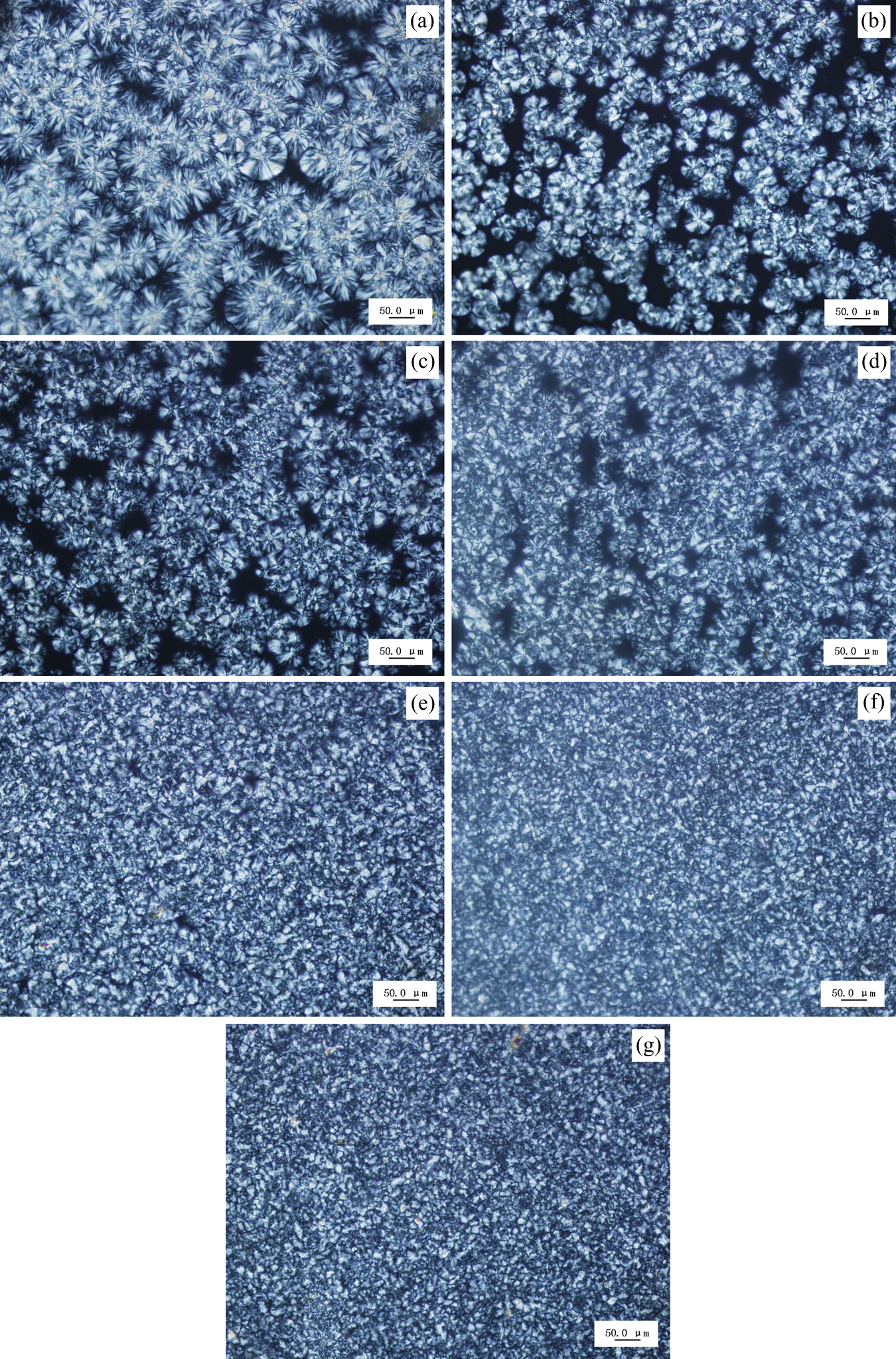
Micrographs for pure iPP sample crystallized at 140°C for 60 min and nucleated iPP sample crystallized at 140°C for 30 min: (a) pure iPP, (b) 0.05 wt%, (c) 0.10 wt%, (d) 0.25 wt%, (e) 0.50 wt%, (f) 0.75 wt%, and (g) 1.0 wt%. iPP: isotactic polypropylene; PP: polypropylene.
Nonisothermal crystallization kinetics
The crystallization process of semicrystalline polymers can have a dramatic impact on their mechanical properties and hence its understanding is important for final applications. Practical processes usually proceed under nonisothermal crystallization conditions. In order to search for the optimum conditions in the industrial process and obtain products with better properties, it is necessary to have quantitative evaluations of the nonisothermal crystallization process. The 0.5 wt% content of CA-19 was chosen considering the fact that nucleated iPP with that content showed better comprehensive mechanical properties. The nonisothermal crystallization of iPP and nucleated iPP was carried out by DSC with cooling rates from 2.5°C/min to 40°C/min. The thermograms of neat iPP and nucleated iPP are plotted in Figure 13. It is evident that the crystallization temperature was affected by the cooling rate: the higher the cooling rate, the lower the crystallization peak temperature. Furthermore, it can be recognized that, at the same cooling rates, T p of nucleated iPP increased compared with that of virgin iPP.
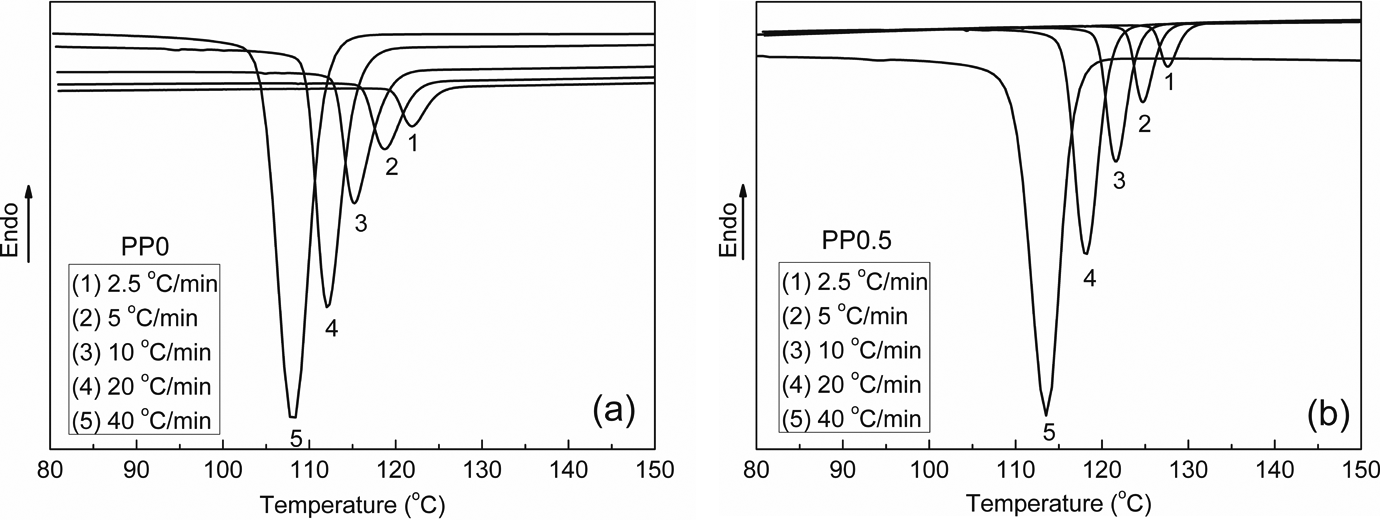
Differential scanning calorimetry cooling curves of (a) PP0 and (b) PP0.5. PP: polypropylene.
By means of integrating the partial areas under the DSC endotherms, the values of the crystalline weight fraction X w(T) can be obtained, as shown in Figure 14.
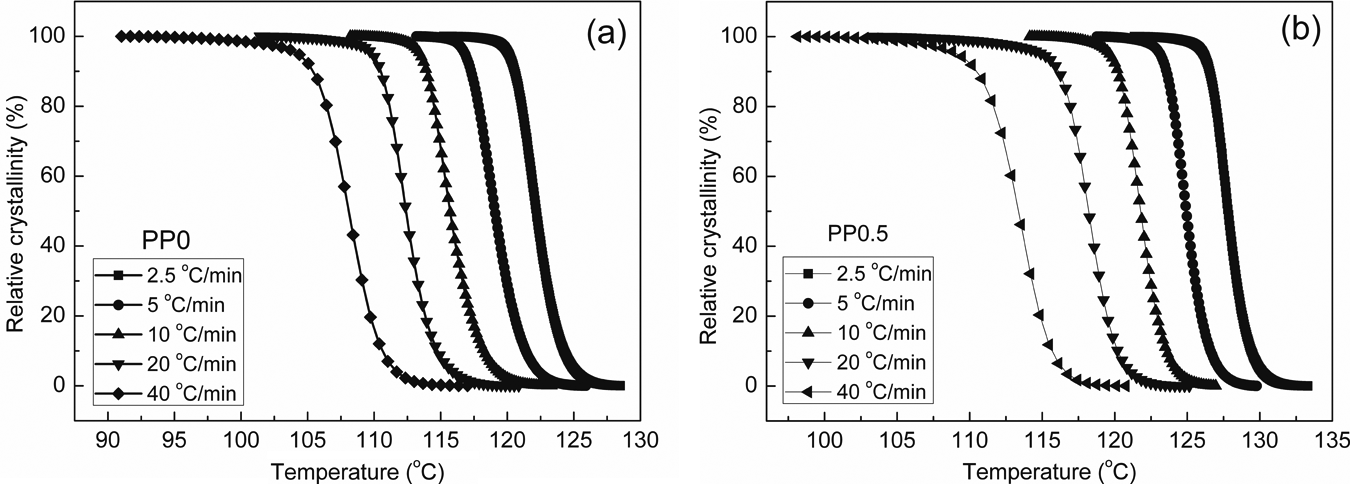
Relative crystallinity of (a) PP0 and (b) PP0.5. PP: polypropylene.
The crystallization half-times, t
1/2, can be obtained from Figure15 by the equation
Plots of
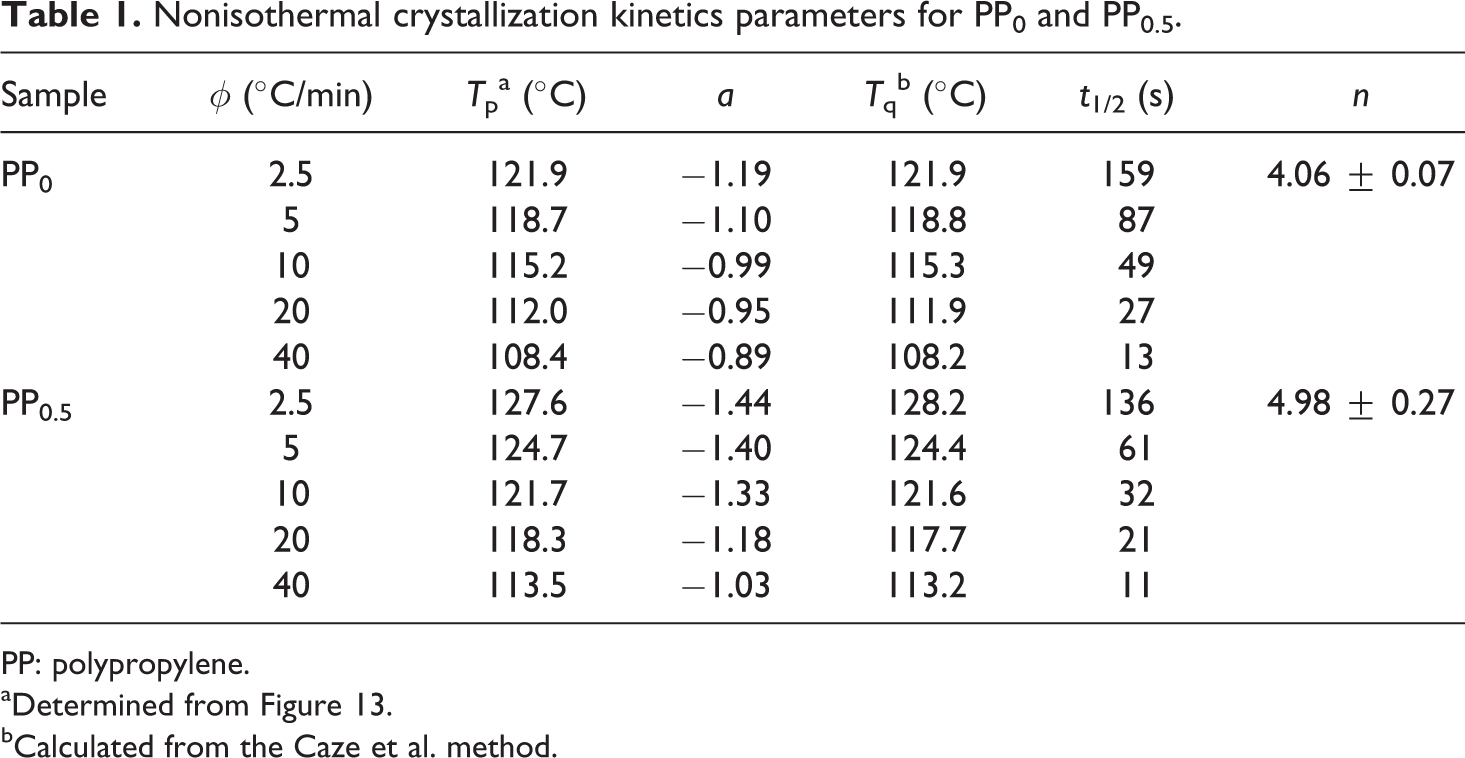
Nonisothermal crystallization kinetics parameters for PP0 and PP0.5.
PP: polypropylene.
aDetermined from Figure 13.
bCalculated from the Caze et al. method.
Now X w(T) can be converted into X v(T) by equation (8) 29

where ρ
a and ρ
c are the bulk densities of the polymer in the amorphous and pure α- or β-crystalline states, respectively. For iPP, the density of the amorphous phase is ρ
a = 0.852, and those of the pure crystalline phase is ρ
c = 0.936.
32,33
Accordingly, plots of
Straight lines can be obtained from plots of T q versus lnφ/a under different cooling rates (Figure 16), and Avrami exponents of iPP and nucleated iPP can be determined from the slope of each straight line. The results are also listed in Table 1. The Avrami exponent n of pure iPP was 4.06, which indicates that the spherulite growth occurred with homogeneous nucleation and three-dimensional spherical growth. The Avrami exponent n for nucleated iPP is 4.98, suggesting that the growth geometry is a dominated sheaf-like structure. 34 Therefore, the type of nucleation and growth geometry of iPP is changed in the presence of nucleating agent CA-19.
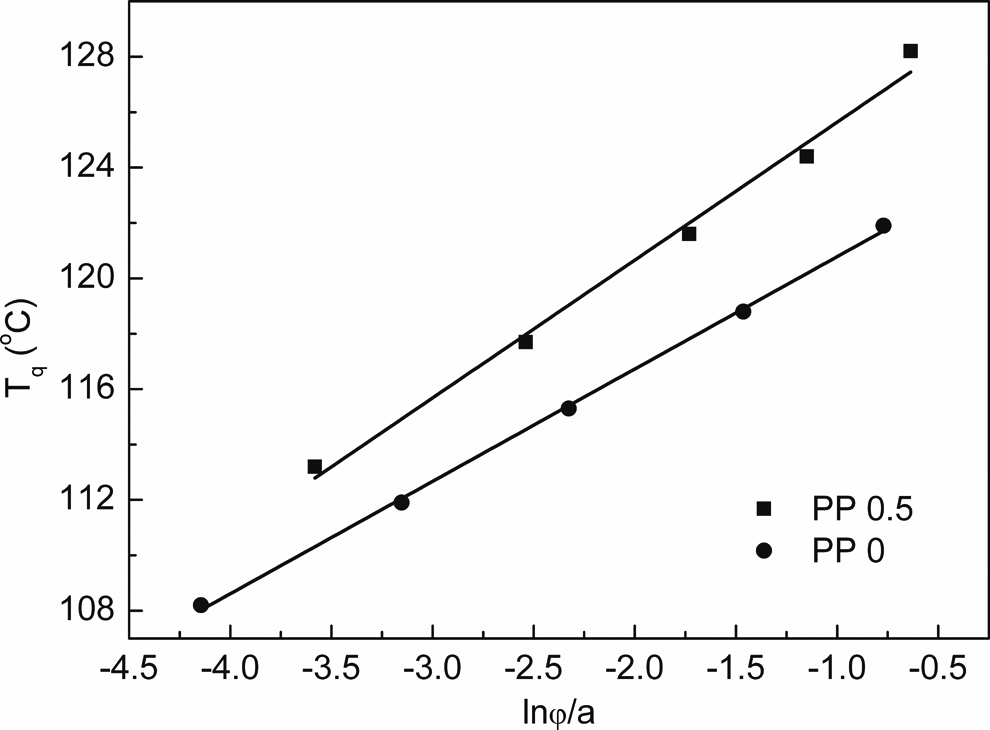
Plots of T q versus lnφ/a for virgin PP0 and PP0.5. PP: polypropylene.
Crystallization activation energy
Considering the influence of the cooling rates on the nonisothermal crystallization process, Kissinger proposed that the activation energy could be determined by calculating the variation in the crystallization peak with the cooling rate. 23

where φ is the cooling rate, T
p is the crystallization peak temperature, and R is the gas constant. The crystallization activation energy (ΔE) is calculated from the slope of
As shown in Figure 17, the ΔE of PP0 and PP0.5 during nonisothermal crystallization was determined to be 264.1 and 261.2 kJ/mol, respectively. Thus, ΔE of the nucleated iPP was slightly lower than that of pure iPP. From the kinetics viewpoint, the activation energy can be correlated with the crystallization rate. Generally, low crystallization activation energy can promote the crystallization and result in an increase in crystallization rate. The results suggested that the addition of CA-19 had little influence on the crystallization activation energy of iPP, but it did accelerate the crystallization of iPP. This seems to be contradictory. It has been considered that the effect of nucleating agent on polypropylene crystallization is twofold. On the one hand, nucleating agents can serve as heterogeneous nucleating sites and favor crystallization of molecules at the interface; on the other hand, nucleating agents may interfere with the transfer of macromolecular segments from iPP melts to the crystal growth surface due to the weak interaction between nucleating agents and segments of iPP. The baffling effect may lead to an increase in ΔE. However, nucleation is the controlling step during crystallization and the increase in nucleation rate results in an increase in the overall crystallization rate and crystallization temperature. The nucleating effect of CA-19 was shown by POM (Figure 12).
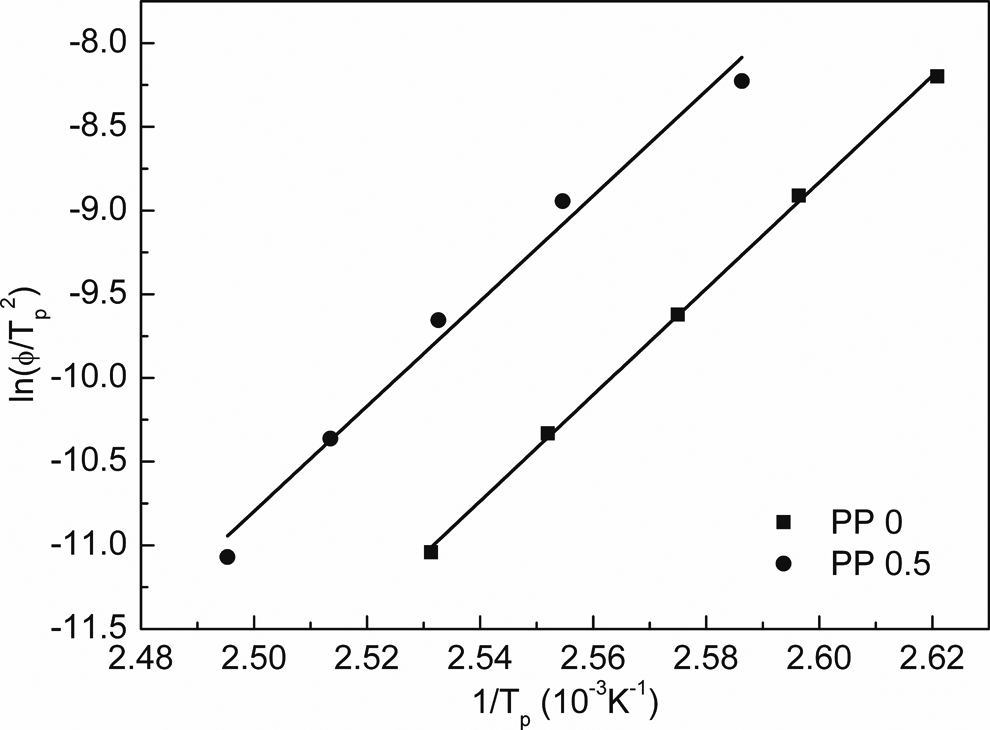
Kissinger plot for calculating the nonisothermal crystallization activation energies for PP0 and PP0.5. PP: polypropylene.
Conclusions
In this work, the effects of the novel β-NA CA-19 on the mechanical properties, content of β-crystals, crystallization behavior, and nonisothermal crystallization kinetics of iPP were investigated. The main conclusions can be summarized as follows: With the increase in CA-19 concentration, the impact strength of iPP first increased up to 0.5 wt% and then decreased. At the concentration of 0.5 wt%, the impact strength of nucleated iPP was about two times higher than that of pure iPP. Meanwhile, the tensile strength and flexural modulus slightly decreased. The results show that CA-19 could significantly improve the toughness of iPP. The k
β values of iPP nucleated with CA-19 first increased and then decreased until constant with a further increase in CA-19 percentage. The maximum value (46.3%) was reached when the CA-19 percentage was 0.25 wt%. The results showed that CA-19 is an effective β-NA for iPP. The crystallization behavior studied by DSC and POM showed that the nucleating agent CA-19 can increase the crystallization peak temperature of iPP and gradually decrease the spherulite sizes with increase in the content of nucleating agent. The Caze et al. method was used to study the nonisothermal crystallization kinetics of nucleated iPP. The results indicate that the type of nucleation and growth geometry of iPP changed in the presence of nucleating agent CA-19. The crystallization activation energy was determined by the Kissinger method, which showed that the addition of CA-19 slightly decreased the crystallization activation energy of iPP.
Footnotes
Funding
This work was financially supported by National Natural Science Foundation of China (Grant No. 21106042), Research Fund for the Doctoral Program of Higher Education of China (Grant No. 20110074120012), and “the Fundamental Research Funds for the Central Universities.”