




Abstract
The mechanical properties of composites from recycled waste plastic and waste sawdust are of interest in trying to convert these waste streams to useful products. The development of these composites from natural fiber is therefore receiving widespread attention due to the growing environmental awareness. The effects of compositions were investigated including different grades of plastic (virgin and recycled) and amounts of wood flour, coupling agent, and ultraviolet (UV) stabilizer on mechanical and physical properties of polypropylene/rubberwood flour (RWF) composites. Virgin polypropylene gave better mechanical properties than recycled (recycled polypropylene (rPP)), both in composites and as unfilled plastic. RWF content exceeding 25 wt% enhanced the strength of RWF-reinforced rPP composites. The modulus and hardness of composites increased linearly with wood flour loadings. Maleic anhydride-grafted polypropylene (MAPP) as a coupling agent increased the strength, modulus, and hardness of the composites. However, addition of 1 wt% UV stabilizer degraded the mechanical properties. Therefore, 4 wt% MAPP content is recommended to achieve good mechanical properties of rPP/RWF composites, while the amount of UV stabilizer should be as small as possible to avoid its negative influence.
Keywords
Introduction
Nowadays, wood–plastic composites (WPCs) have become popular. They are extensively used in automotive industry as door inner panels, seat backs, and headliners; in construction business as decking, cladding, and fencing; and in infrastructure as marina and boardwalk. This is due to recyclability, low density, low cost, low maintenance, and eco-friendliness with good mechanical properties. Moreover, softwood lumber is increasingly replaced as WPCs and plastic lumber in applications of deck building because of its better durability than softwood lumber,1,2 and the demand for WPCs is also expected to expand nearly 12% each year between 2000 and 2010 in the United States. 2
Numerous investigators have recently studied the thermal and mechanical properties of virgin plastics filled with cellulosic fibers in an attempt to reduce the cost and improve the properties of plastics,3,4 whereas the utilization of postconsumer plastics in WPCs has been studied little. Lisperguer et al. 5 compared the WPCs manufactured from wood flour and virgin and/or recycled polystyrene (rPS). They reported that the mechanical properties of the composites based on virgin polystyrene were not better than those based on rPS. Najafi et al. 6 studied the mechanical properties of WPCs produced from sawdust and virgin or recycled plastics, namely high-density polyethylene (HDPE) and polypropylene (PP). The composites containing HDPE (recycled and virgin) exhibited lower stiffness and strength than those made from PP. Ashori and Sheshmani 7 investigated the effects of weight fraction of fibers in hybrid composites made from combinations of recycled newspaper fiber, poplar wood flour, and recycled polypropylene (rPP). The composites with a high fraction of recycled newspaper fiber showed maximum water absorption during the whole duration of immersion. Nourbakhsh et al. 8 also concluded that waste PP and waste wood are promising alternative raw materials for making low-cost WPCs.
Plastic wastes are the major constituent of municipal solid waste and a promising raw material source for WPCs. 6 Using recycled plastics to produce WPCs would not only decrease the consumption of energy and natural resources but also offer an effective and safe method of disposing plastic waste. 9 The development of new composites from postconsumer polymers, and a better understanding of the effects of composition on the physical and mechanical properties, will facilitate economic application of these composites in consumer products and accordingly decrease environmental impacts.10,11
Application of waste fiber as reinforcement or filler is increasing in WPCs. These fibers offer several advantages including biodegradability, renewable character, low cost, easy fiber surface modification, absence of associated health hazards, and low equipment wear during their processing.10,12 Natural fibers have been extensively popularized and successfully used to improve the mechanical properties of plastic composites, with bagasse, bamboo, banana, flax, hemp, jute, kenaf, oil palm, pineapple, sisal, wood, and other wastes as examples.13,14 Yemele et al. 15 mixed bark and HDPE and examined the effects of wood species on mechanical properties. They found that black spruce bark composites had better strength than aspen bark composites. Rahman et al. 16 also investigated the effects of jute fiber content on the mechanical properties of reinforced PP. The tensile strength of the composites decreased with an increasing jute fiber loading, but the Young’s modulus decreased only slowly. Reddy et al. 17 reported that an increase in the wheat straw and clay contents in a PP hybrid composite increased the flexural modulus and water absorption. Despite extensive research in the area of natural fiber-reinforced plastics, few studies have used rubberwood flour (RWF) to reinforce virgin plastics, and there is no prior report on RWF-reinforced postconsumer PP.
The rubberwood (Hevea brasiliensis) flour is a waste fiber generated from sawmills and furniture industries, such as local factories in Thailand. These industries generally produced waste wood of about 36% and small branches of about 54%. Only 10% of the rubberwood ends up as the goods. 18 Most of the waste wood can be used as raw material to manufacture particle board and medium-density fiberboard. However, there is a great deal of interest in utilizing the waste fibers as reinforcement of plastic composites. The fillers (wood flour or wood fiber) are also a more important factor affecting the mechanical properties of the WPCs because the different wood species consisted of different contents and components, such as cellulose, hemicellulose, lignin, and extractants. 19 Hence, the effect of filler (RWF) and grade of plastic (virgin and rPP) on the composites are needed to be further studied. In the current work, the effects of material compositions (including different grades of plastic and the contents of RWF, coupling agent, and ultraviolet (UV) stabilizer) on the mechanical and physical properties of composites were investigated. The goal of this research was to determine the effects of composition on the mechanical and physical properties of RWF-reinforced rPP. The new information will facilitate informed decisions regarding manufacture of such composites.
Materials and methods
Materials
rPP pellets were obtained from Withaya Intertrade Co., Ltd (Samutprakarn, Thailand) under the trade name WT170. The material has a melt flow index of 11 g/10 min at 230°C. Virgin polypropylene (vPP), HIPOL J600 with a melt flow index of 7 g/10 min at 230°C was supplied by Mitsui Petrochemical Industries Co., Ltd (Tokyo, Japan). RWF, used as a lignocellulosic filler, was supplied by S.T.A. Furniture Group Co., Ltd (Songkhla, Thailand). Its chemical composition (by weight) was cellulose 39%, hemicellulose 29%, lignin 28%, and ash 4%. 18 The interfacial adhesion between filler and matrix was also modified using a coupling agent maleic anhydride-grafted polypropylene (MAPP), supplied by Sigma-Aldrich, Missouri, USA: 427845 Aldrich (8–10% of maleic anhydride, M w = 9100, M n = 3900). Hindered amine light stabilizer additive, chosen as the UV stabilizer, was supplied by TH Color Co., Ltd (Samutprakarn, Thailand) under the trade name MEUV008. A lubricant (Lub), paraffin wax, was purchased from Nippon Seiro Co., Ltd (Yamaguchi, Japan).
Preparation of the composites
Prior to compounding, the RWF was sieved (80 mesh) and dried in an oven at 110°C for 8 h. WPCs were then produced in a two-stage process. In the first stage, WPC pellets were produced: PP and wood particles were compounded into WPC pellets using a twin-screw extruder (Model SHJ-36 from En Mach Co., Ltd, Nonthaburi, Thailand). The barrel with 10 temperature zones was controlled at 130–170°C to reduce the degradation of the compositions, while the screw rotation speed was fixed at 70 r/min. In the second stage, WPC panels were produced and the WPC pellets were dried at 110°C for 8 h. WPC pellets, MAPP, UV stabilizer, and lubricant (formulations in Table 1) were then dry mixed and fed into a twin-screw extruder. The temperature profile in the extruding process was 130–190°C, with 50 r/min. Melt pressure at the die varied between 0.10 MPa and 0.20 MPa, depending on the wood flour content. Vacuum venting at nine temperature zones was also used to purge volatile compounds. The samples were then extruded through a rectangular 9 × 22 mm2 die and cooled in atmospheric air. Subsequently, the specimens were machined according to American Society for Testing and Materials (ASTM) for mechanical and physical testing.
Wood–plastic composite formulation (percentage by weight).a
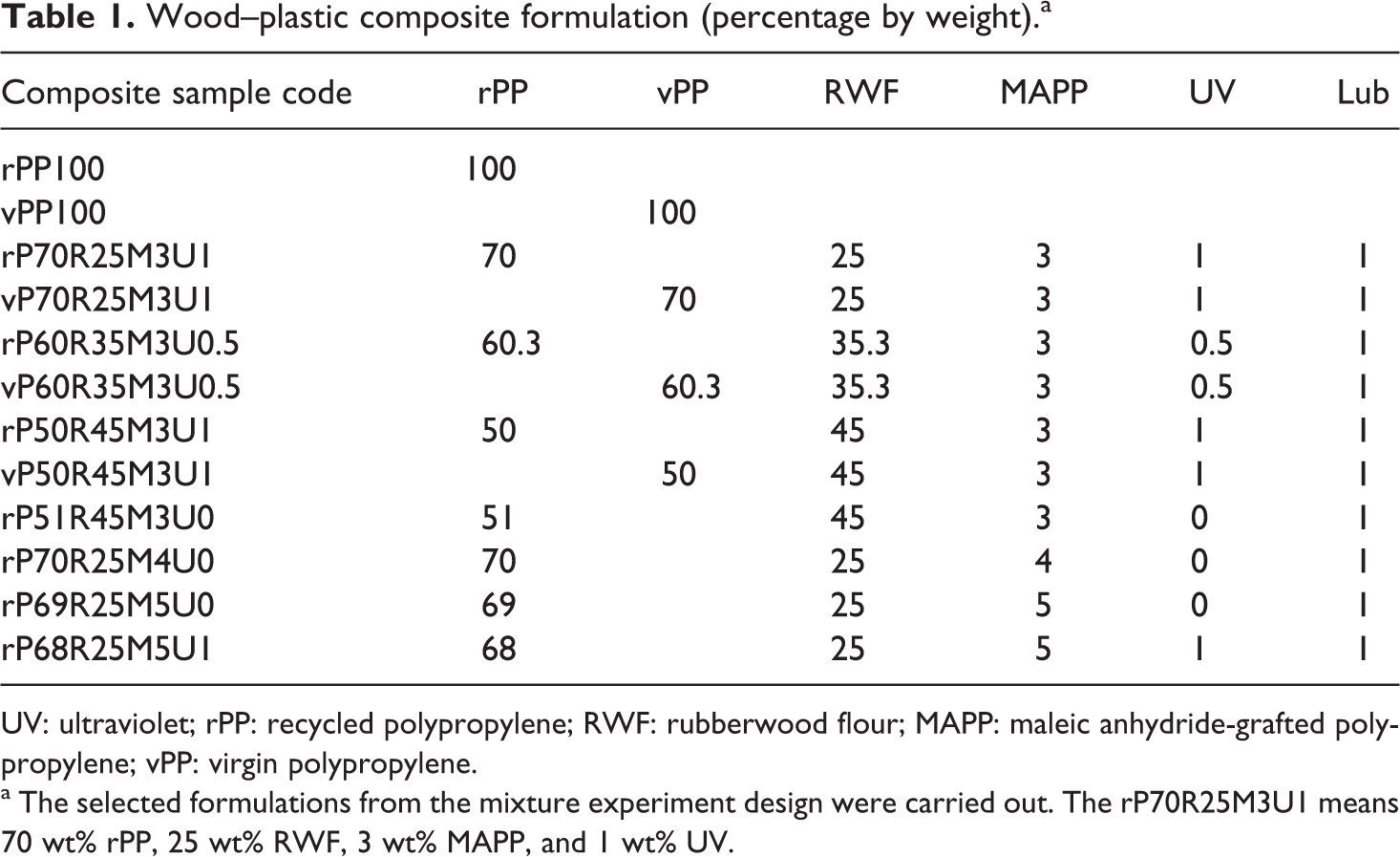
UV: ultraviolet; rPP: recycled polypropylene; RWF: rubberwood flour; MAPP: maleic anhydride-grafted polypropylene; vPP: virgin polypropylene.
a The selected formulations from the mixture experiment design were carried out. The rP70R25M3U1 means 70 wt% rPP, 25 wt% RWF, 3 wt% MAPP, and 1 wt% UV.
Testing
Mechanical properties
Tensile, compressive, and flexural tests were carried out in an Instron Universal Testing Machine (Model 5582, Instron Corporation, Massachusetts, USA), according to ASTM standards D638, D6108, and D790, respectively. The crosshead speed used for the type IV tensile specimens was 5 mm/min. The compressive test was also conducted using a constant displacement rate of 0.5 mm/min, and the prism specimens were used to determine the compressive strength and modulus. For the flexural test, specimens with nominal dimensions of 4.8 × 13 × 100 mm3, a span of 80 mm, and a crosshead speed of 2 mm/min were used. All the mechanical tests were performed at room temperature (25°C) with five replications.
Hardness testing
Hardness measurements were performed according to ASTM D2240 specification, using two durometers (Shore D scales) for the composites. The dimensions of the specimens tested were approximately 16 × 16 × 6.5 mm3. The measurements were performed at room temperature (25°C).
Analysis
Morphological analysis
The interfacial morphology and phase dispersion of the wood flour in the polymeric matrix were analyzed with a scanning electron microscope. Scanning electron microscopic (SEM) imaging was performed using an FEI Quanta 400 microscope (FEI Company, Oregon, USA) at an accelerating voltage of 20 kV. The samples were sputter coated with gold to prevent electrical charging during the observation. Specimens were imaged at magnifications of 150× and 1000×.
Statistical analysis
Results, such as mean values and standard deviations, from five samples of each test were statistically analyzed. The effects of composition on the WPCs’ properties were evaluated by analysis of variance (ANOVA) and student’s t test. ANOVA indicated the significant differences between wood flour contents, and then a comparison of the means was done with Tukey's multiple comparison test. A two-sample t test was also used to detect significant differences between the levels of additives. All the statistical analyses used a 5% significance level (α = 0.05).
Results and discussion
The specimens produced from the blends of PP and RWF were characterized. The mechanical and physical properties of WPCs are summarized in Tables 2 and 3. The average values and standard deviations of the flexural strength and modulus, compressive strength and modulus, tensile strength and modulus, and hardness were calculated from five replications.
Effects of RWF content on mechanical and physical properties of WPCs.a
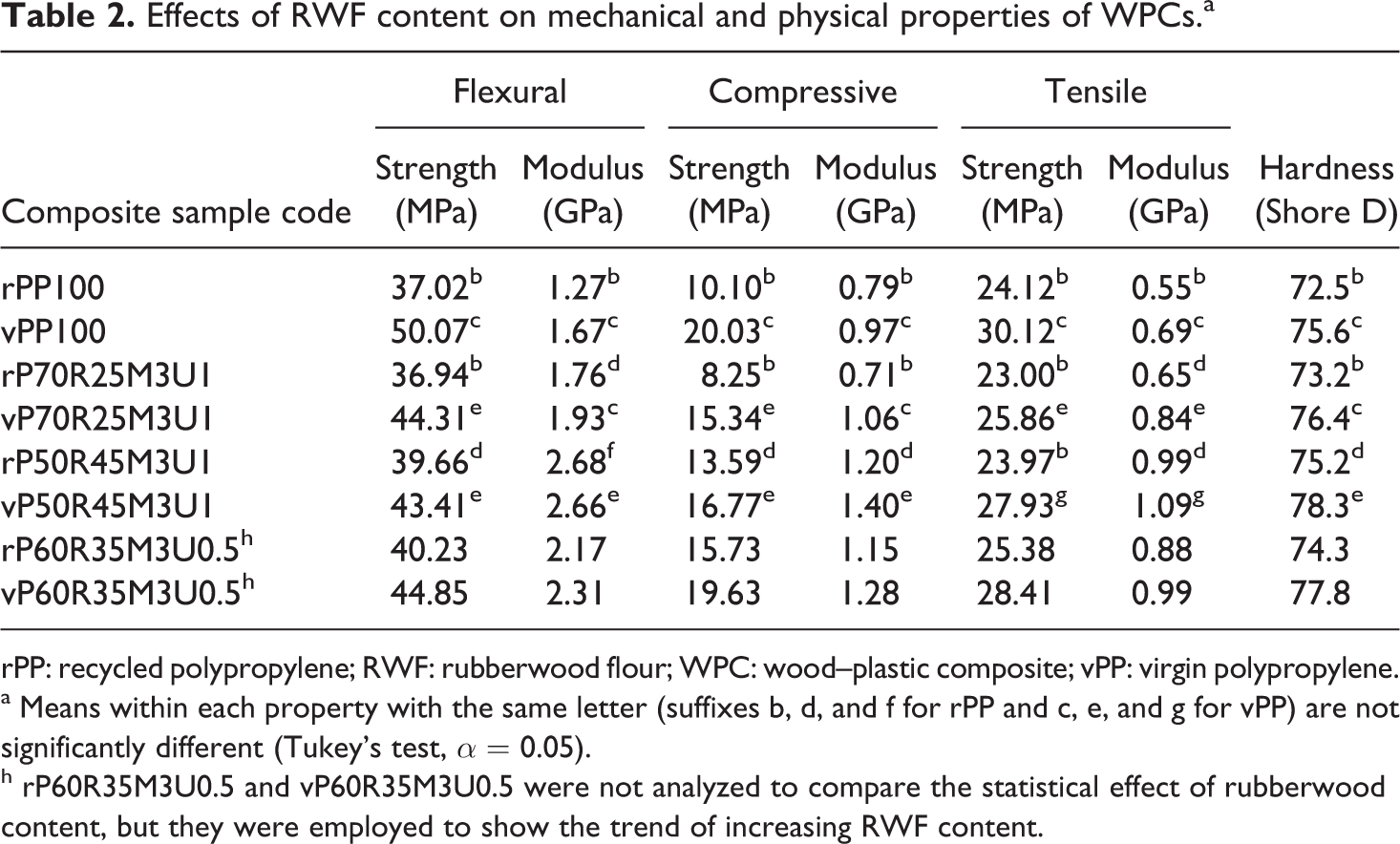
rPP: recycled polypropylene; RWF: rubberwood flour; WPC: wood–plastic composite; vPP: virgin polypropylene.
a Means within each property with the same letter (suffixes b, d, and f for rPP and c, e, and g for vPP) are not significantly different (Tukey’s test, α = 0.05).
h rP60R35M3U0.5 and vP60R35M3U0.5 were not analyzed to compare the statistical effect of rubberwood content, but they were employed to show the trend of increasing RWF content.
Effect of MAPP and UV stabilizer content on mechanical and physical properties of WPCs.a
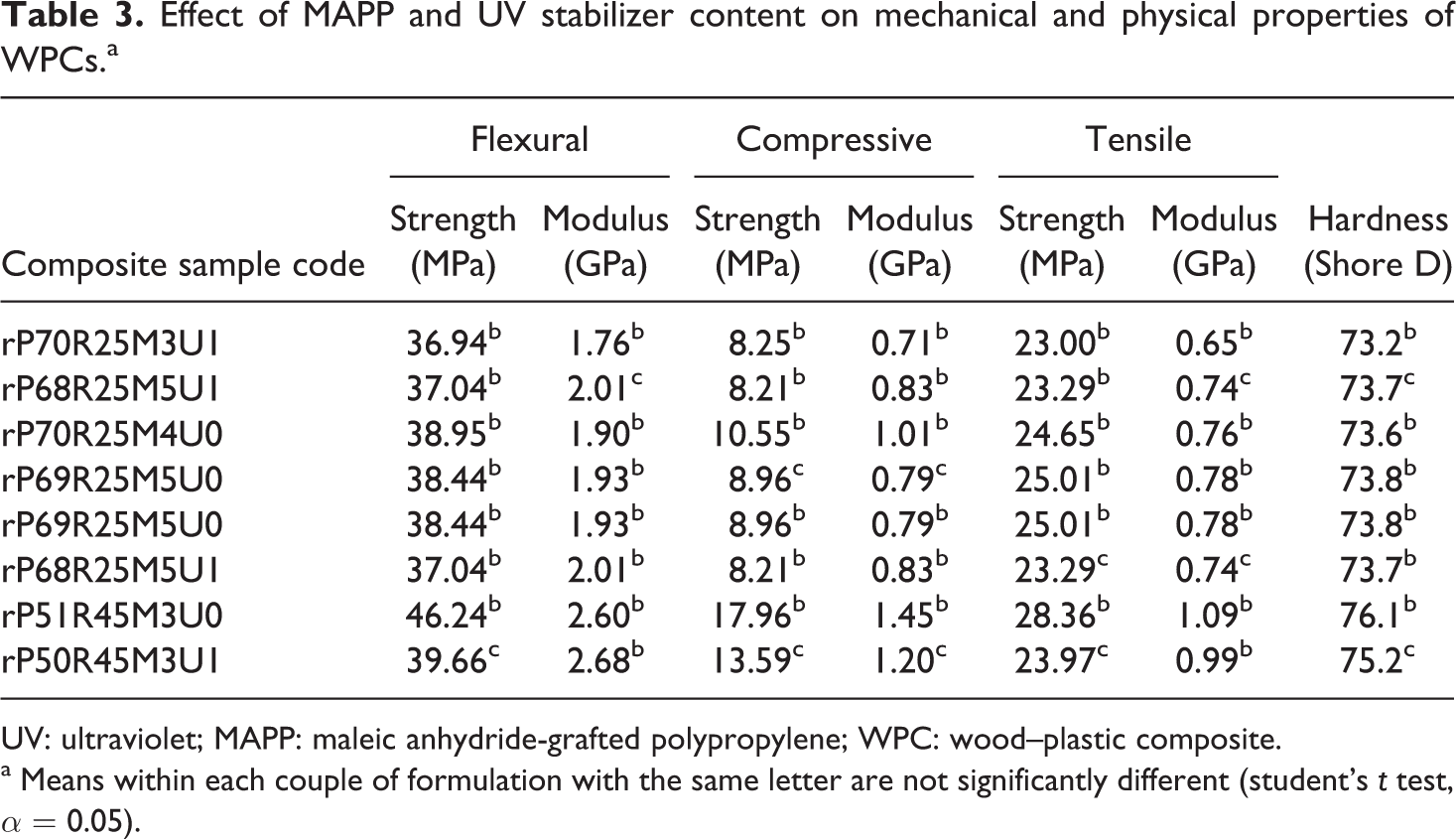
UV: ultraviolet; MAPP: maleic anhydride-grafted polypropylene; WPC: wood–plastic composite.
a Means within each couple of formulation with the same letter are not significantly different (student’s t test, α = 0.05).
Flexural properties
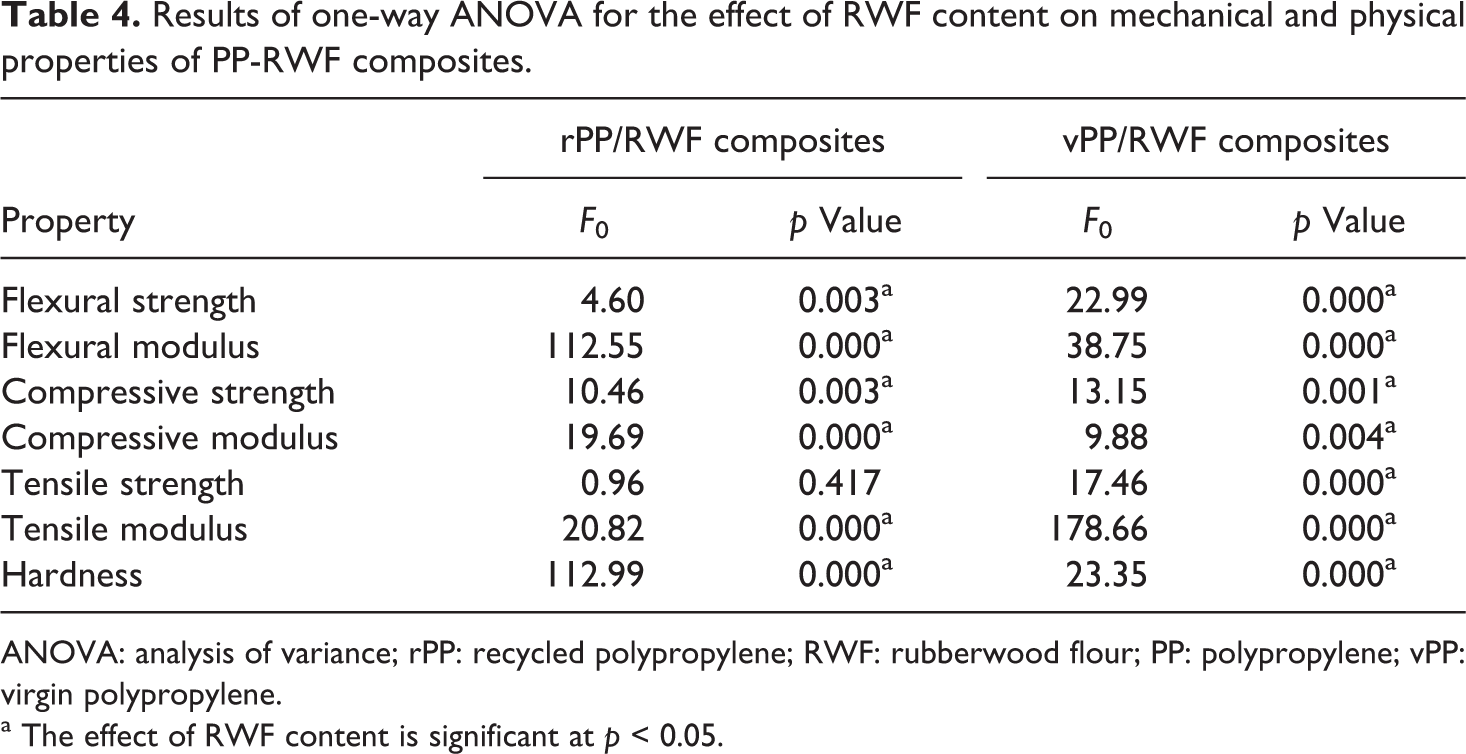
The flexural properties are important factors in decision making of WPCs’ applications. Figure 1(a) and (b) shows the flexural strength and modulus, respectively, of the composites with virgin or rPP and different amounts of RWF. Generally, an increase in the wood flour content (without the coupling agent) clearly decreases the flexural strength, but the flexural modulus slightly increases.20,21 It was found in the present work that an increase in RWF content in rPP increased the flexural strength. This is because of the reinforcing effect of the wood flour that distributes a uniform stress from a continuous plastic matrix to a dispersed wood flour phase.22,23 Likewise, the flexural modulus of composites (both virgin and recycled plastics) linearly increased with wood flour loadings. Since RWF is a high modulus material compared to the plastic matrix, composites with higher wood flour concentration require a higher stress for the same deformation. 16 These results are verified by the statistical ANOVA. According to the one-way ANOVA of the composites between RWF and rPP or vPP in Table 4, the RWF content significantly (p = 5%) affects the flexural strength and modulus of the composite materials. Tukey’s test in Table 2 also indicates that unfilled rPP (suffix b) has insignificantly higher flexural strength than rPP composites with 25 wt% RWF (suffix b), but unfilled rPP and composites with 25 wt% RWF have significantly lower flexural strength than rPP composites with 45 wt% RWF (suffix d). Furthermore, unfilled vPP and composites based on vPP exhibit higher flexural properties than those based on rPP, for the same plastic to wood ratio. This is probably due to the virgin plastic being stiffer than recycled plastic. The recycled plastic has the capacity to lower the melt viscosity, which is attributed to the decrease in molecular weight. 24
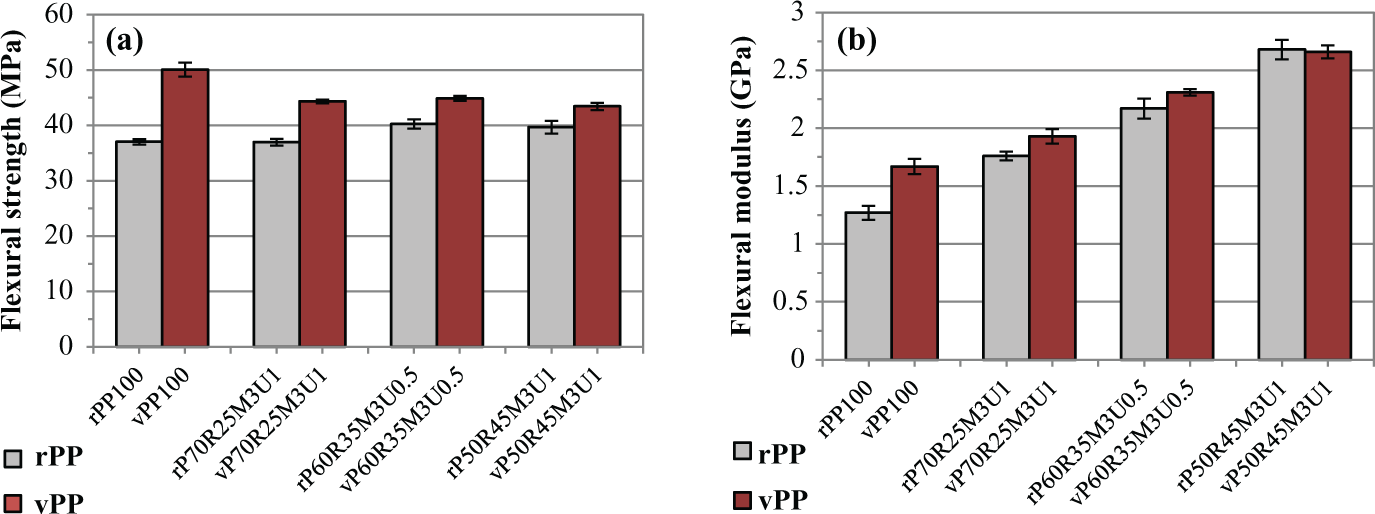
Effect of RWF content and plastic grade on (a) flexural strength and (b) flexural modulus for PP-RWF composites. RWF: rubberwood flour; PP: polypropylene.
Results of one-way ANOVA for the effect of RWF content on mechanical and physical properties of PP-RWF composites.
ANOVA: analysis of variance; rPP: recycled polypropylene; RWF: rubberwood flour; PP: polypropylene; vPP: virgin polypropylene.
a The effect of RWF content is significant at p < 0.05.
The effects of different amounts of MAPP and UV stabilizer on the flexural strength and modulus are shown in Figure 2(a) and (b), respectively. The effects of 3 and 5 wt% MAPP additions on the flexural properties of rPP/RWF composites containing 25 wt% RWF show that the addition of 5 wt% MAPP gives higher flexural strength (not statistically significant) and modulus (significantly) than the 3 wt% MAPP addition. This was expected because MAPP can improve the compatibility between wood flour and rPP matrix,8,21,22 improving the stress transfer from polymer to wood particles. 22 However, comparing additions of 4 and 5 wt% MAPP, the composites adding 4 wt% MAPP shows higher strength (not statistically significant) than composites adding 5 wt% MAPP in accordance with prior research.22,25 Too much MAPP relative to wood flour causes self-entanglement and results in slippage with the PP molecules. 22 These trends conclude that addition of 3 wt% MAPP in composites shows lower flexural properties than those based on the addition of 4 and 5 wt% MAPP, and addition of 5 wt% MAPP exhibits lower flexural strength than those added with 4 wt% MAPP. Furthermore, adding 1 wt% UV stabilizer affects the flexural properties of the composites with 25 wt% RWF so that the strength is reduced (not statistically significantly), but the modulus increases slightly. Again, composites with 45 wt% RWF showed a significant decrease in strength with UV stabilizer content. This may be attributed to the nonhomogeneous spatial distribution of wood flour, polymer, and UV stabilizer. 26
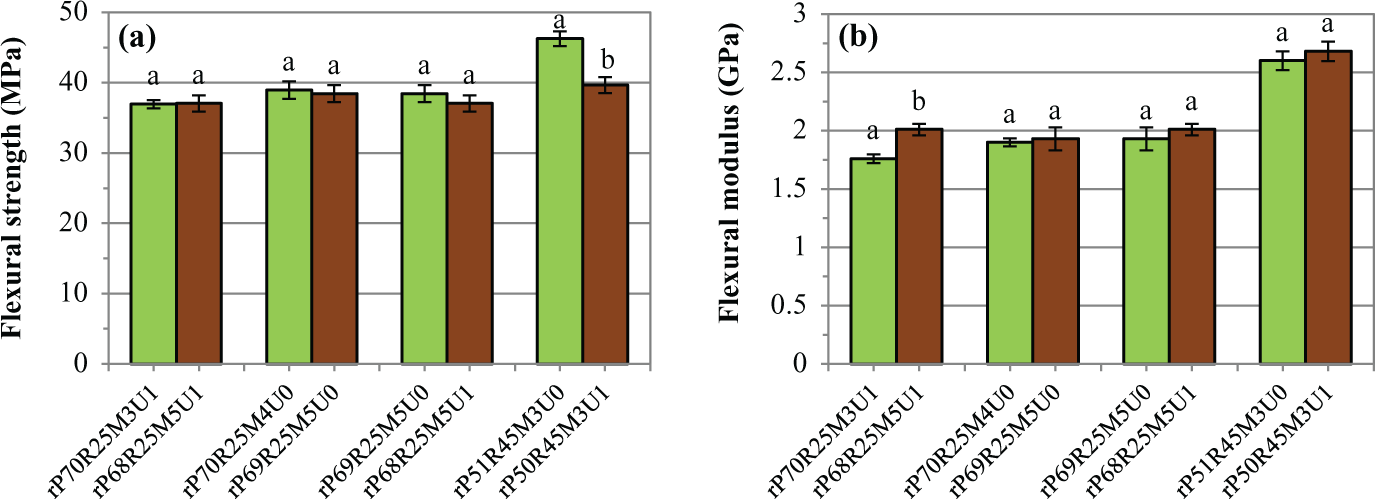
Influence of MAPP and UV stabilizer concentration on (a) flexural strength and (b) flexural modulus of rPP-rubberwood flour composites. UV: ultraviolet; rPP: recycled polypropylene; MAPP: maleic anhydride-grafted polypropylene.
Compressive properties
Figure 3(a) and (b) shows variation in the compressive strength and modulus with different wood flour loadings, for PP/RWF composites with both virgin and recycled PP. Compressive strength of the composites decreases with the addition of 25 wt% RWF but increases clearly with the further addition of 35.3 wt% RWF. However, it was observed that the increase in RWF content to 45 wt% exhibits a slight reduction in the compressive strength. This decrease is probably because of weak interfacial bonding of the wood within the polymer, with microcrack formation at the interface. 22 Besides, the compressive modulus exhibited a similar trend to the flexural modulus: the modulus increased progressively with wood flour content. Similar results were found by Garcia et al., 27 reporting that the increase in compressive modulus caused the wood flour being stiffer than the neat plastics. In addition, composites based on vPP exhibit a trend similar to rPP/RWF composites with increased wood flour loading. The ANOVA results in Table 4 demonstrate that the effects of the wood flour concentration on the compressive properties are statistically significant, for both virgin and recycled PP composites.
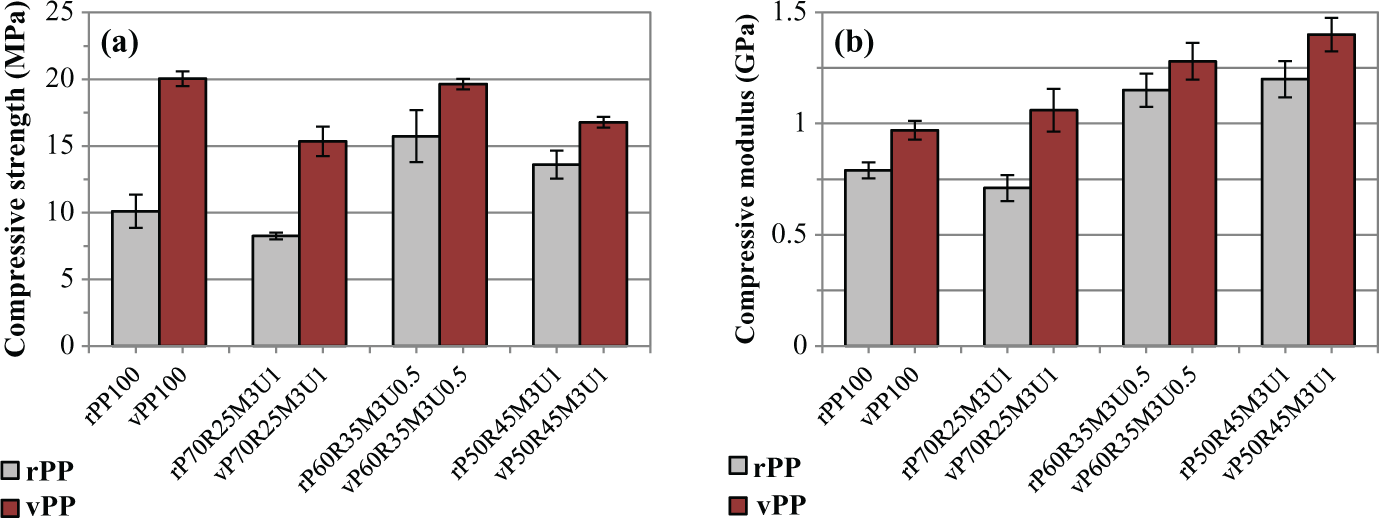
Effect of RWF content and plastic grade on (a) compressive strength and (b) compressive modulus for PP-RWF composites. RWF: rubberwood flour; PP: polypropylene.
The effects of MAPP and UV stabilizer contents on the compressive strength and modulus of WPCs are shown in Figure 4(a) and (b), respectively. As can be seen, the compressive properties (both strength and modulus) of composites with MAPP between 3 wt% and 5 wt% showed a similar trend to the flexural properties. However, for the coupling agent the MAPP between 4 wt% and 5 wt%, both the strength and the modulus of composites decreased significantly. Furthermore, the change in the compressive strength and modulus with different UV stabilizer concentrations, for 25 wt% RWF, is similar to that found in the flexural properties. The composites with 45 wt% RWF show a significant decrease in both strength and modulus with an increase (from 0 wt% to 1 wt%) in UV stabilizer. The reason for this phenomenon is probably similar to that shown in the flexural properties. Using 1 wt% of UV stabilizer may be unnecessary, and to reduce the negative effects on the mechanical properties, the amount of UV stabilizer should be minimized. 26
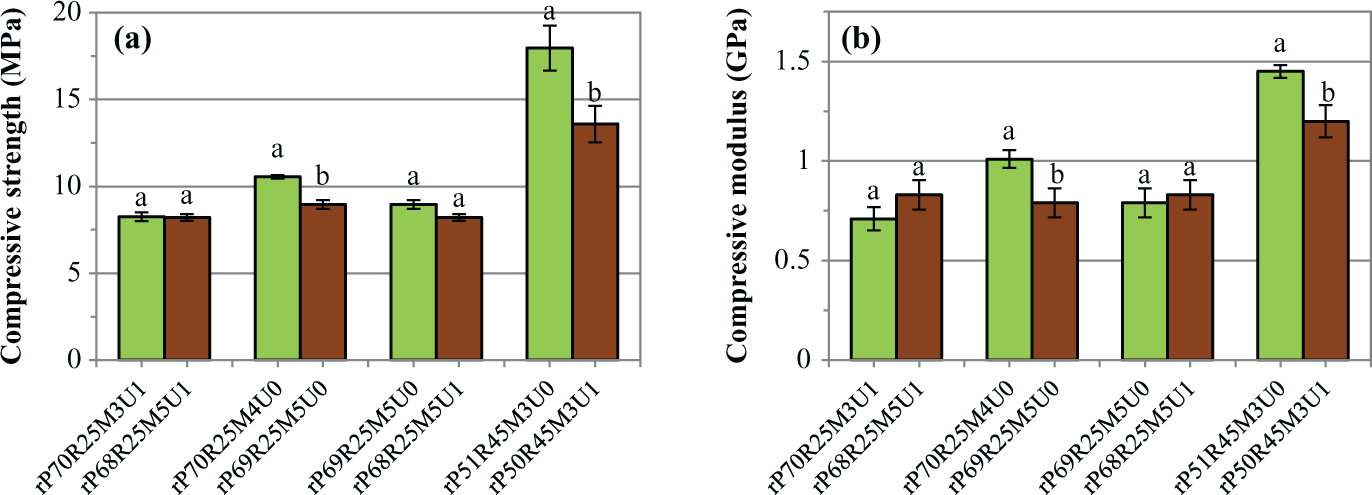
Influence of MAPP and UV stabilizer concentration on (a) compressive strength and (b) compressive modulus of rPP-rubberwood flour composites. UV: ultraviolet; rPP: recycled polypropylene; MAPP: maleic anhydride-grafted polypropylene.
Tensile properties
Figure 5(a) and (b) shows the tensile strength and modulus of PP/wood flour composites with different rubberwood contents. Both the tensile strength and modulus exhibited a behavior similar to the flexural properties, increasing slightly with wood flour content. These results can be substantiated by considering the scanning electron micrographs in Figure 6 (Figure 6(a) and (b) for 25 wt% RWF and Figure 6(c) and (d) for 45 wt% RWF). The composites are comprised of irregular short fibers. The composites containing 25 wt% and 45 wt% RWF had few voids, good dispersion of the fibers in the matrix, and strong interfacial adhesion between the wood flour and the PP matrix. Hence, stress transfer is supported by these high wood flour contents. According to this SEM study, the coupling agent used in the composites improves the compatibility between the wood flour and the PP matrix of all the formulations, resulting in the good interfacial bonding and enhancement of mechanical properties. In contrast, the previous work 20 found that rPP/RWF composites without the compatibilizer showed numerous cavities and weak interfacial adhesion, and these results in a decrease in the mechanical properties of the composites. Besides, the unfilled vPP and composites based on vPP exhibit higher tensile properties than those based on rPP, for the same plastic to wood flour ratio. Moreover, unfilled vPP has a higher tensile strength than the composites based on vPP. This is because high melt viscosity or low melt flow index (about 7 g/10 min) of vPP reduces the encapsulation of wood flour into the resin, resulting in poor dispersion and weak interfacial bonding between wood particles and polymer. The ANOVA results in Table 4 show a statistically significant effect of RWF content on the tensile properties of reinforced rPP or vPP, although the tensile strength effects on composites with rPP are not significant at 5% level.
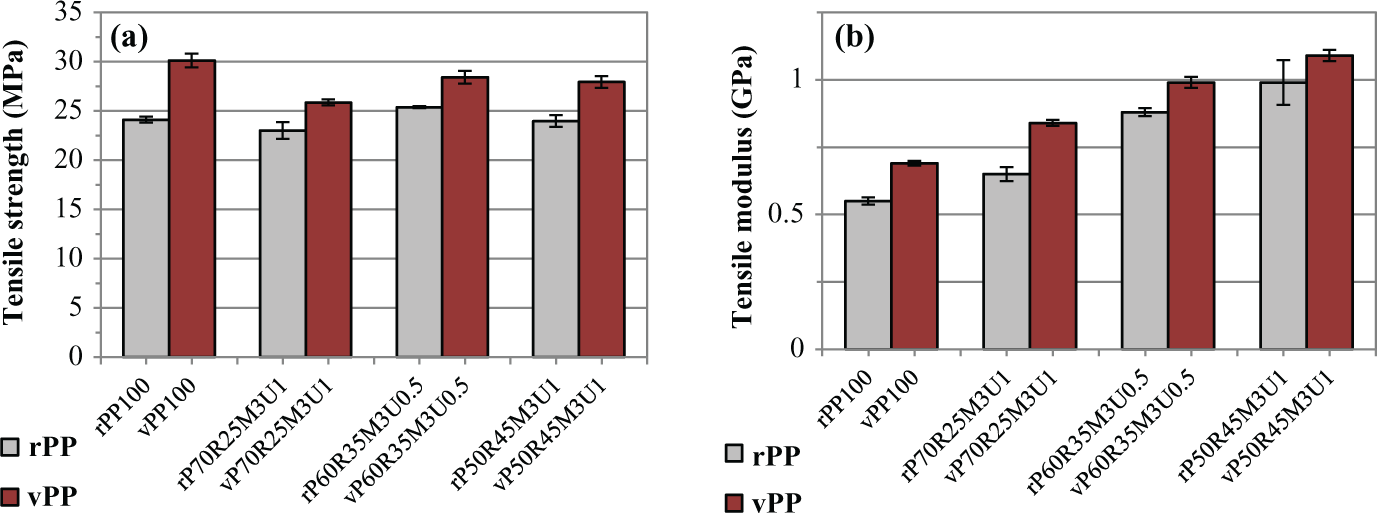
Effect of RWF content and plastic grade on (a) tensile strength and (b) tensile modulus for PP-RWF composites. RWF: rubberwood flour; PP: polypropylene.
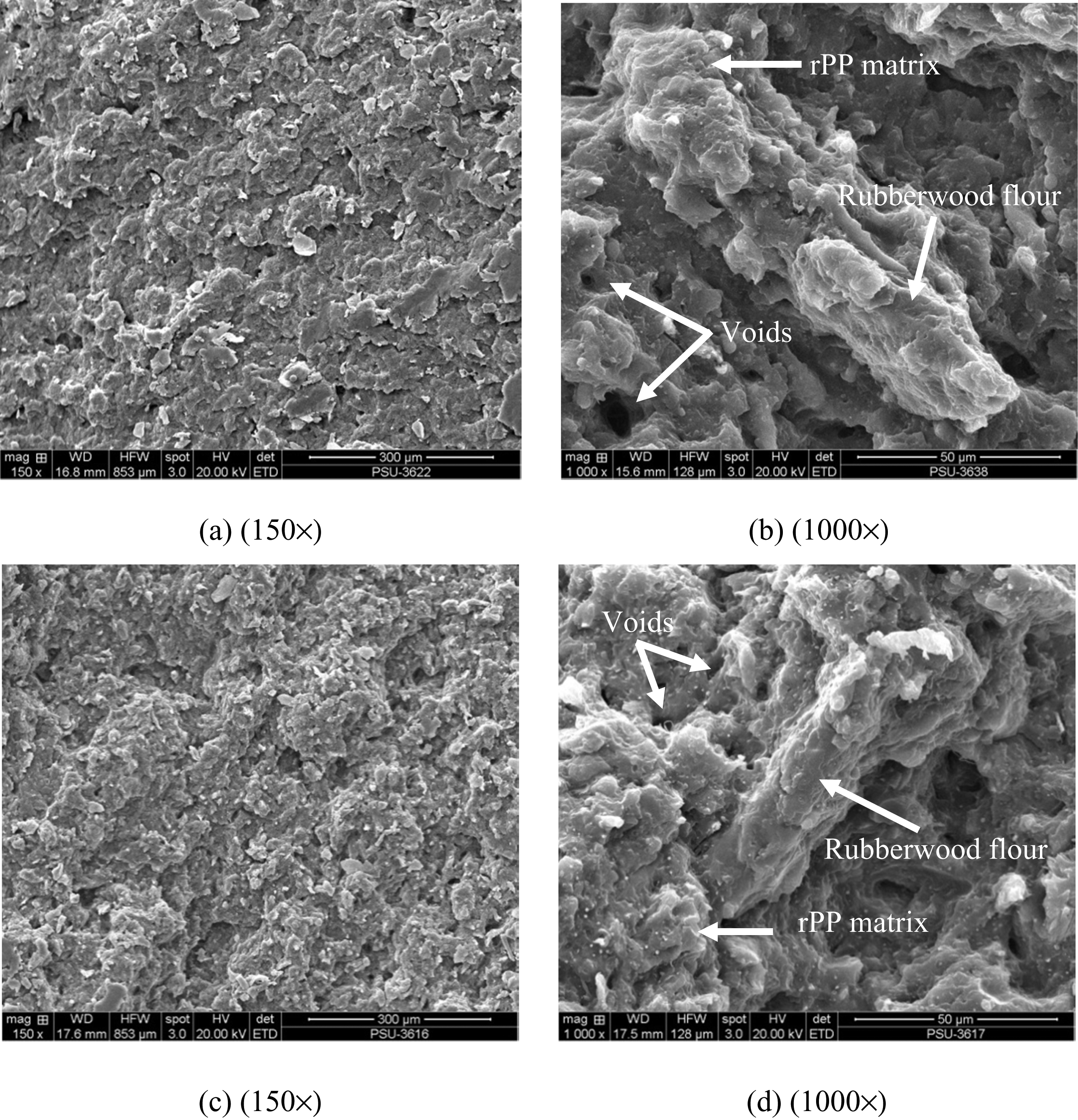
Scanning electron micrographs of rPP-rubberwood flour composites showing voids, dispersion of the fibers in the matrix, and interfacial adhesion based on various formulations (magnification ×150 and ×1000): (a and b) rP70R25M3U1 and (c and d) rP50R45M3U1. rPP: recycled polypropylene.
Figure 7(a) and (b) (tensile strength and modulus, respectively) shows the influence of MAPP and UV concentrations on the tensile properties of rPP/RWF composites. The effects of these concentrations have similar trends as in the flexural and compressive properties. Increasing MAPP content does not significantly increase the tensile properties, until between 3 wt% and 5 wt% MAPP, it significantly enhanced the tensile modulus. In contrast, an increase in UV stabilizer content reduced the tensile properties (both strength and modulus). Potential mechanisms causing these trends were discussed earlier for flexural properties.
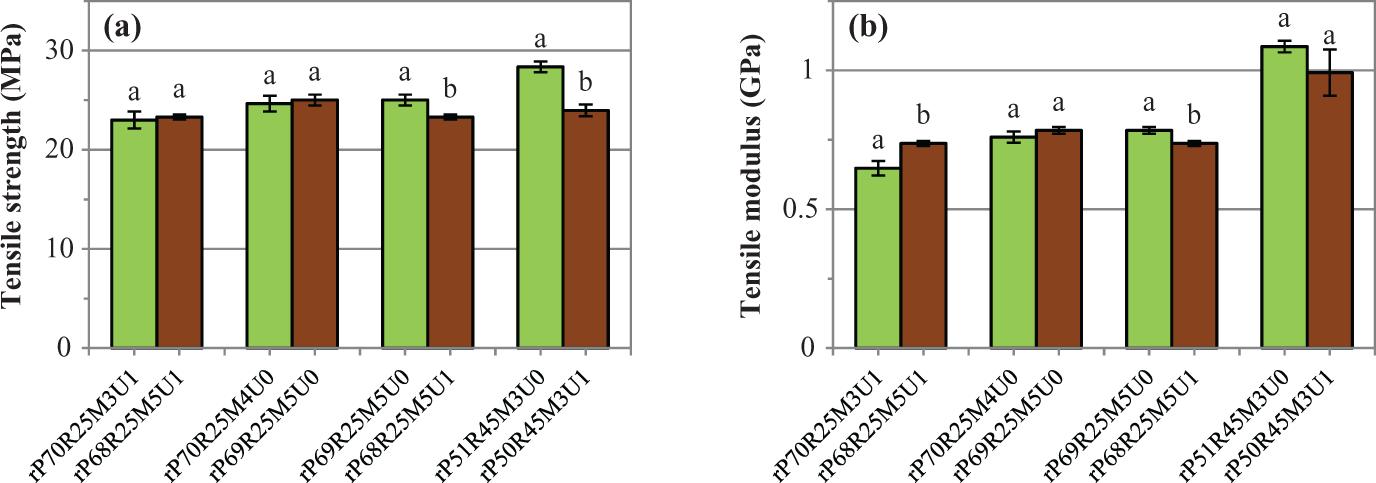
Influence of MAPP and UV stabilizer concentration on (a) tensile strength and (b) tensile modulus of rPP-rubberwood flour composites. UV: ultraviolet; rPP: recycled polypropylene; MAPP: maleic anhydride-grafted polypropylene.
Hardness
Figure 8 shows the hardness of both virgin and recycled PP/RWF composites with different amounts of wood flour. The average hardness (both for virgin and for recycled PP) greatly increased with the reinforcing filler. This is caused by the fact that the wood filler has a considerably higher hardness than the weak plastic matrix, 28 and adding RWF decreases flexibility, resulting in more rigid composites.16,29 The virgin PP/RWF composites seem to have much higher hardness compared to the recycled PP since vPP has lower melt flow index than that of the rPP, leading to lower flexibility composites. Usually, composites with a less flexible matrix have a higher hardness. 29 Moreover, results of the ANOVA (Table 4) show that the hardness of PP/RWF composites was significantly affected by wood flour content.
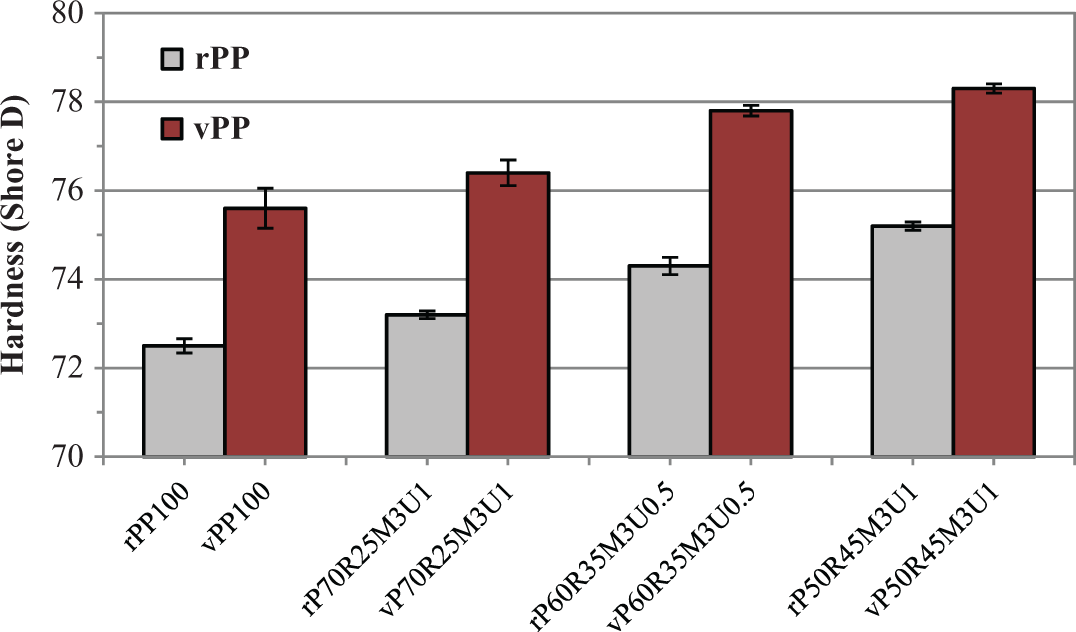
Effect of RWF content and plastic grade on hardness for PP-RWF composites. RWF: rubberwood flour; PP: polypropylene.
Hardness of rPP/RWF composites with different coupling agents and UV stabilizer contents are presented in Figure 9. The addition of coupling agent to composites based on 25 wt% RWF showed a significant increase in hardness with MAPP concentration. This could be attributed to both better dispersion of the wood flour into the polymer with minimum voids and stronger coupling between the RWF and rPP.16,29 When the UV stabilizer was added into the composites containing 45 wt% RWF, the hardness decreased significantly. This decrease is probably due to the negative interaction of mixtures (namely wood flour and UV stabilizer).
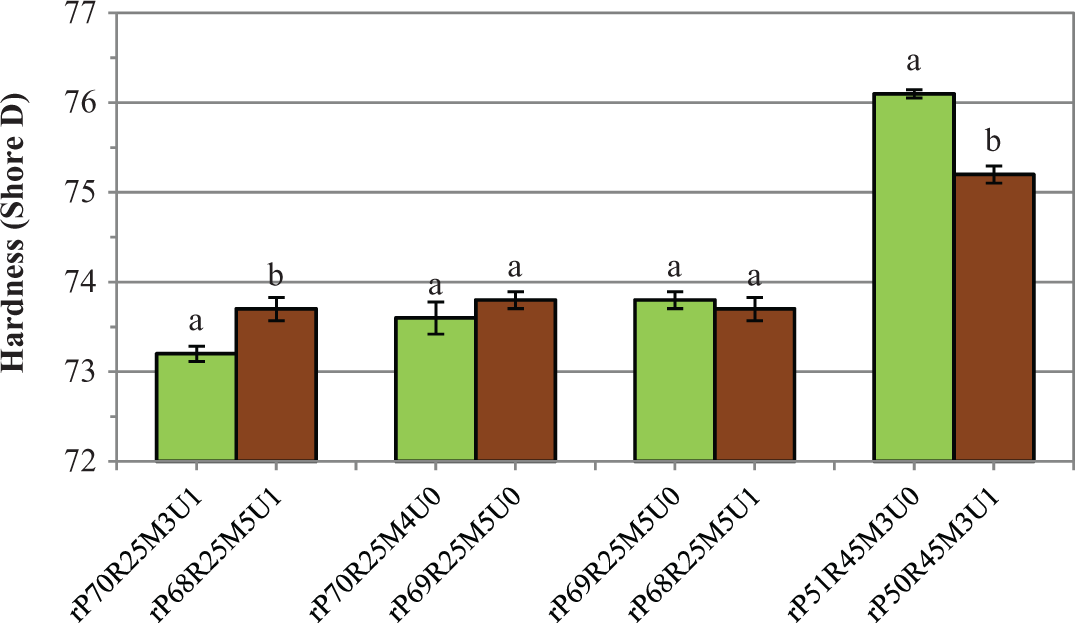
Influence of MAPP and UV stabilizer concentration on hardness of rPP-rubberwood flour composites. UV: ultraviolet; rPP: recycled polypropylene; MAPP: maleic anhydride-grafted polypropylene.
Conclusions
The influence of plastic grades (virgin and recycled) and contents of wood flour, coupling agent, and UV stabilizer on the mechanical and physical properties of PP/RWF composites was examined. The results demonstrated that the strengths (flexure, compression, and tension) of RWF-reinforced rPP composites could be enhanced with increasing wood flour contents beyond 25 wt%, whereas those composites based on vPP show lower strengths than the unfilled vPP due to poorer encapsulation of wood flour into the resin. The modulus and hardness of composites (both virgin and recycled plastics) increased linearly with wood flour loadings due to the fact that wood flour is much stiffer than the PP matrices. The unfilled rPP and composites based on rPP exhibit lower mechanical properties than those based on vPP for the same plastic to wood ratio. The MAPP content affected on the mechanical and physical properties of the composites; however, the addition level of 4.0 wt% MAPP in the rPP/wood flour composites is suggested for economical benefit and good mechanical properties. The strength, modulus, and hardness of composites were reduced by an addition of 1 wt% UV stabilizer content. To limit the negative effects of the UV stabilizer on the mechanical properties of the composites, its use should be minimized. The overall result highlights the effects of composition and new information to facilitate the development of engineering performance of composite materials, making use of wastes and by-products from industry and lending technology toward another effective environmental conservation.
Footnotes
Acknowledgements
We would like to thank the Research and Development Office (RDO) and Assoc. Prof. Seppo Karrila for editing this article.
Funding
This work was financially supported from the graduate school of Prince of Songkla University, the Government budget Fund (Research Grant Code: 2555A11502062), and Rubberwood Technology and Management Research Group (ENG-54-27-11-0137-S) of Faculty of Engineering, Prince of Songkla University, Thailand.