




Abstract
Composites composed of polylactide (PLA), modified PLA and woven flax fiber textiles (flax weave style of 2 × 2 twill and 4 × 4 hopsack) were produced by hot press technique. Two structurally different additives were used to modify PLA. The dispersion of the flax in the composites was studied by scanning electron microscopy and computed microtomography system (µCT). The PLA composites were subjected to water absorption and instrumented falling weight impact tests. The thermomechanical and creep properties of the composites were determined using thermogravimetric analysis, dynamic-mechanical thermal analysis and short-time creep tests. It was found that the modified PLA and its composite increased the impact resistance compared with the unmodified PLA. Incorporation of flax decreased resistance to thermal degradation and increased water uptake. The impact energy and stiffness value of PLA/flax composites were markedly higher than that of PLA but reflect the effects of composite structures and flax content. The storage modulus master curves were constructed by applying the time–temperature superposition principle. From the master curve data, the effect of modified PLA on the storage modulus was more pronounced in the low frequency range.
Introduction
Natural fibers have been receiving considerable attention as substitutes for synthetic fiber reinforcement. Their advantageous properties when compared with other materials are low cost and density, acceptable specific strength, good thermal insulation properties and renewable resources. 1 The expanded use of natural thermoplastic composites has attracted considerable attention in research and development activities due to the promise of simultaneous improvements in stiffness and toughness characteristics of the corresponding thermoplastic composites. 2,3 Polylactide (PLA) is widely used in medical and automotive applications, due to its good biocompatibility, biodegradability and mechanical properties. PLA is often modified with natural fibers, such as cellulose, kenaf and abaca to improve the thermal and physical–mechanical properties 4 – 7 (e.g. impact, stiffness at high temperature and strength properties). Although natural fibers have outstanding properties, a major problem of using them with PLA is the poor interfacial bonding between the natural fiber and thermoplastic. However, the modification of PLA with natural fibers can enhance strength and stiffness. 8,9 Recently, Zhao et al. showed that the rice straw fiber (RSF) coated with poly(methyl methacrylate) thin film showed better compatibility with the PLA matrix. 9 The significantly improved thermal and mechanical properties were attributed to the interfacial adhesion improvement between treated RSF and PLA. The tensile strength and thermal stability of treated RSF–PLA were improved compared with untreated RSF–PLA composite.
Flax fibers are tough and found to be potential reinforcements in PLA because they are inexpensive and environmentally friendly. The flax fiber reinforcement indicated a better improvement in the modulus of PLA. 10 PLA/flax composite became an ecologically beneficial alternative to natural-reinforced composites with petrochemical matrices in the future. It is noteworthy that a variety of composite structures are also associated with an increase in the mechanical properties of composites. 11 The mechanical behaviors of composite materials have a strong impact on the composite structures of the reinforcing phase. The goal of this study was to demonstrate the feasibility of the production of unmodified and modified PLA with different flax composite structures and to compare the morphology, water absorption, impact, thermal and mechanical properties of the related composites. The woven flax fiber was used as reinforcement. The dispersion of woven flax fiber in PLA was assessed by scanning electron microscopy and computed microtomography system (µCT). The unmodified and modified PLA/flax composites were compression molded and compared the structure–property relationships of the resulting composites.
Experimental
Materials and preparation of composites
Woven flax fiber textiles (weave style of 2 × 2 twill and 4 × 4 hopsack) were used as reinforcement, which had a yarn size of 250 tex. Biotex flax was supplied by Composites Evolution (Chesterfield, UK). Figure 1 shows two woven flax textiles that are used to study the effect of weave type. The density was 1.24 g/cm3 (according to suppliers’ information). PLA (Polylactide 2002 D; NatureWorks, Minnetonka, Minnesota, USA) was utilized as polymeric matrix for composite systems. Its melt flow rate (at 210°C/2.16 kg) was 6 g/10 min. Two commercial additives were used as modifiers for PLA. Biomax Thermal 300 (DuPont, Neu-Isenburg, Germany) (composition of nonregulated wax/ethylene acrylate copolymer/butyl acrylate) and Palaroid BPM-500 (Dow Chemical Company, Berlin, Germany) served as thermal and acrylic impact modifier, respectively.
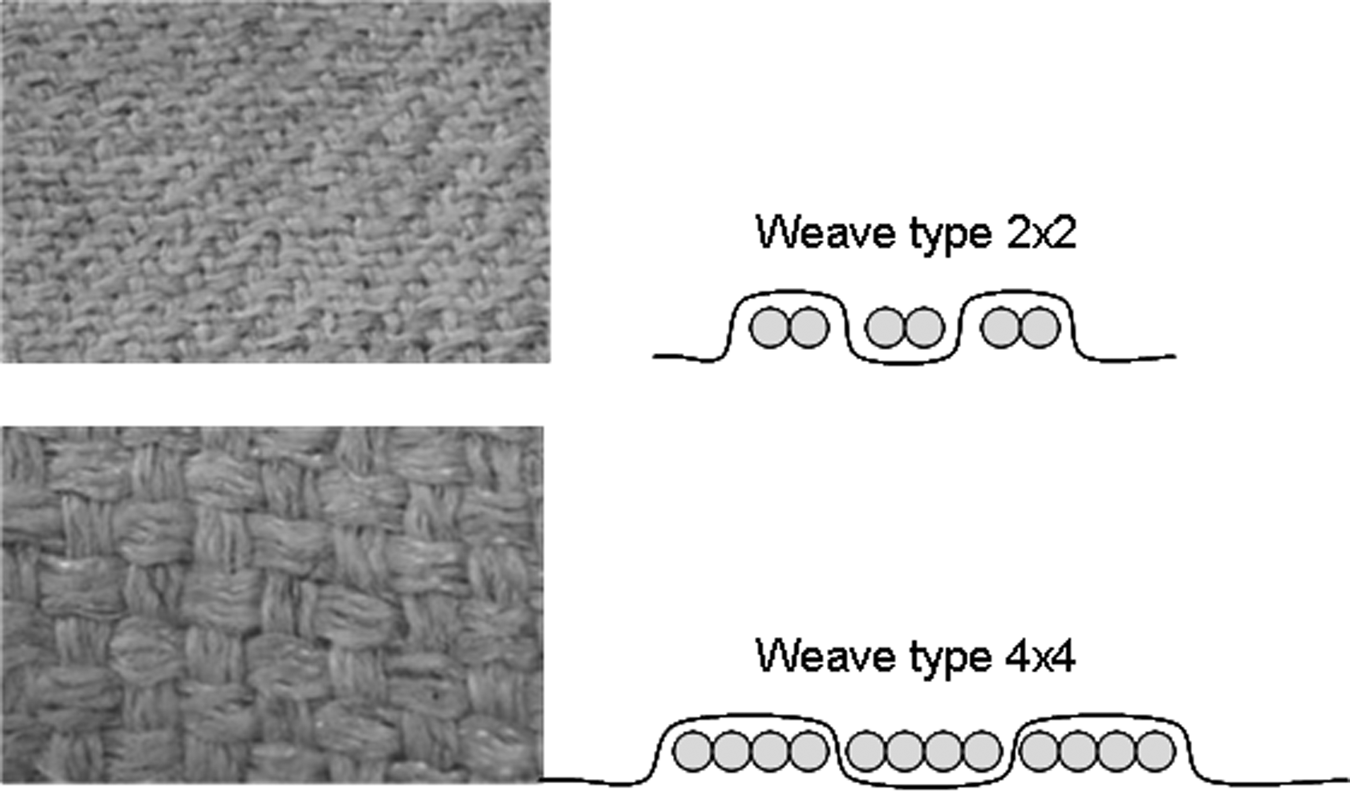
Schematic representation of weave style 2 × 2 twill and 4 × 4 hopsack.
The PLA and modified PLA sheets were prepared by twin-screw extruder (Leistritz, Nuremberg, Germany). The modified PLA was compounded by setting the barrel temperatures between 100 (zone 1) and 190–200°C (from zone 2–9), rotor speed of 225 r/min and pressure of 50 bar. The contents of thermal and impact modifier in the PLA system investigated were set to 5 and 3 wt%, respectively (according to suppliers’ recommendation). The additives and PLA granulates were charged in feeder in the first zone of the extruder using the above conditions. The PLA composites were produced by hot press methods. The PLA composites placed by hand laying up a layer of woven flax fibers and then by a layer of PLA or modified PLA sheet. The PLA/woven flax fibers composites were produced into a 1-mm-thick sheets by hot pressing in a laboratory press (P/O/Weber, Maschienen und Apparatebau, Remschalden, Germany) at a temperature of 200°C with a fixed holding time of 7 min under a pressure of 10 MPa. The composites produced are listed in Table 1.
Recipe and designation of the unmodified and modified PLA-based systems studied.
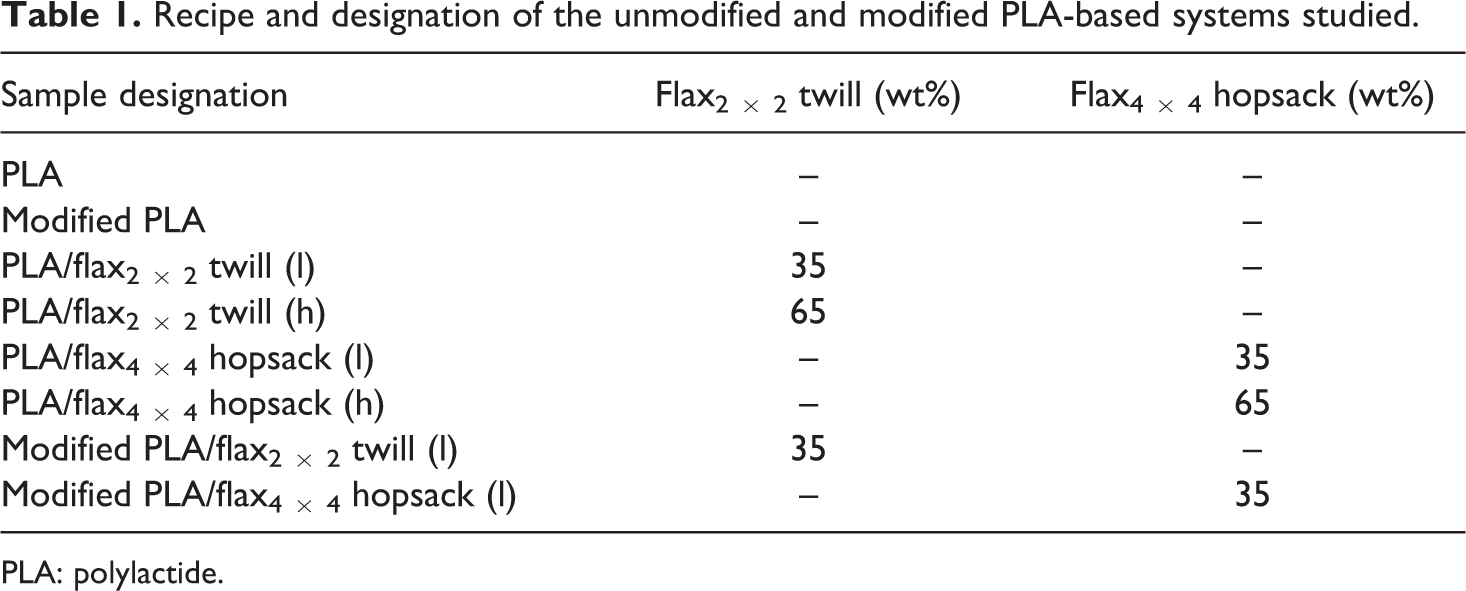
PLA: polylactide.
Morphology detection
The fracture surface of compression-molded specimens was subjected to scanning electron microscopic (SEM) inspection in a Supra™ 40VP SEM (Carl Zeiss GmbH, Oberkochen, Germany). The surface was gold coated prior to SEM inspection performed at low acceleration voltage. The voids in the composites were investigated with a µCT (nanotom 180 NF; phoenixIx-ray Systems, Wunstorf, Germany).
Water absorption
Water absorption of the composites was investigated over a period of 30 days. The composites were cut into specimens (20 × 20 mm2) and then immersed in a water bath at room temperature. Weight gains were recorded by periodic removal of the specimens from the water bath and weighing on a balance. The percentage gain at any time t (Mt
) as a result of moisture absorption was calculated from the following equation
where W d and W w denote the weight of dry material (initial weight of materials) and weight of materials after exposure to water absorption, respectively.
Instrumented falling dart impact
Instrumented falling weight impact (IFWI) tests were performed on a Fractovis 6785 (Ceast, Pianezza, Italy) using the following settings: incident impact energy, 20 J; diameter of the dart, 20 mm; diameter of the support rig, 40 mm; weight of the dart, 10.357 kg; drop velocity, 1.97 m/s. IFWI tests were performed on quadratic specimens of 60 × 60 mm2 at room temperature.
Thermal and thermomechanical response
Thermogravimetric analysis (TGA) was performed on a DTG-60 Shimadzu device (Shimadzu, Kyoto, Japan). TGA experiments were conducted in the temperature range from 30 to 500°C under nitrogen at a heating rate of 10°C/min.
Dynamic mechanical thermal analysis was performed in a tensile mode at the frequencies of 0.1, 1 and 10 Hz at all isothermal temperatures, using a DMA Q800 apparatus (TA Instruments, New Castle, New Jersey, USA). The storage modulus (E′) was determined as a function of the temperature (T = −100°C + 130°C). The strain applied was 0.1%. The specimen was cooled to −100°C. The temperature was allowed to stabilize and then increased by 5°C, kept 2 min in isothermal condition until it reaches 130°C. The dimensions of the specimen were 50 × 10 × 1 mm3 (length × width × thickness).
Creep response
Short-time creep test was made in tensile mode at different temperatures using the above DMA apparatus. The applied stress was 3 MPa. The temperature dependence of the creep response of the PLA and PLA/flax composites was studied in the range from 15 to 50°C. Isothermal tests were run on the same specimen in the above temperature range by increasing the temperature stepwise by 5°C and equilibrating the specimen at each temperature for 2 min. During the isothermal tests, the duration of the creep testing was 15 min.
Results and discussion
Morphology
The SEM pictures in Figure 2(a) and (b) present the morphological characteristics of the PLA/flax2 × 2 and PLA/flax4 × 4 composites. One can see that the composites containing flax2 × 2 and flax4 × 4 displayed slightly different fracture surface appearances. While the flax structures prevented from spreading out of the molted PLA during hot pressing. The molten PLA could spread out uniformly in the related composites. Note that the flax had a diameter of 15–25 µm. The cross-section of the flax fibers displayed clear lumina that were not filled with PLA. The computed microtomographs of the unmodified PLA/flax4 × 4 and modified PLA/flax4 × 4 composites are shown in Figure 3. It can be seen that the impregnation quality of PLA and modified PLA composites were similar due to their small difference in voids. The porosities of unmodified and modified PLA composites were between 8 and 9%, and there was no obvious dependence on the type of the matrices modification. This was a fairly to compare the observed change in the thermal and mechanical properties of both unmodified and modified PLA composites in further investigations.
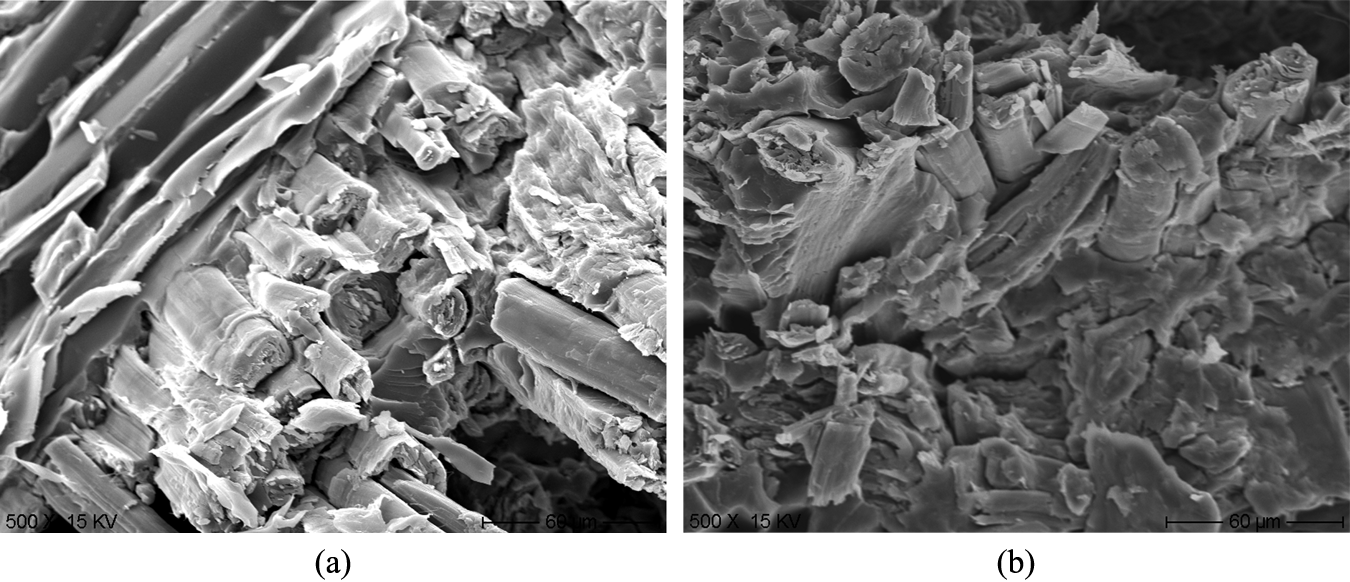
SEM pictures taken from PLA/flax2 × 2 (a) and PLA/flax4 × 4 (b) composites. PLA: polylactide; SEM: scanning electron microscopic.
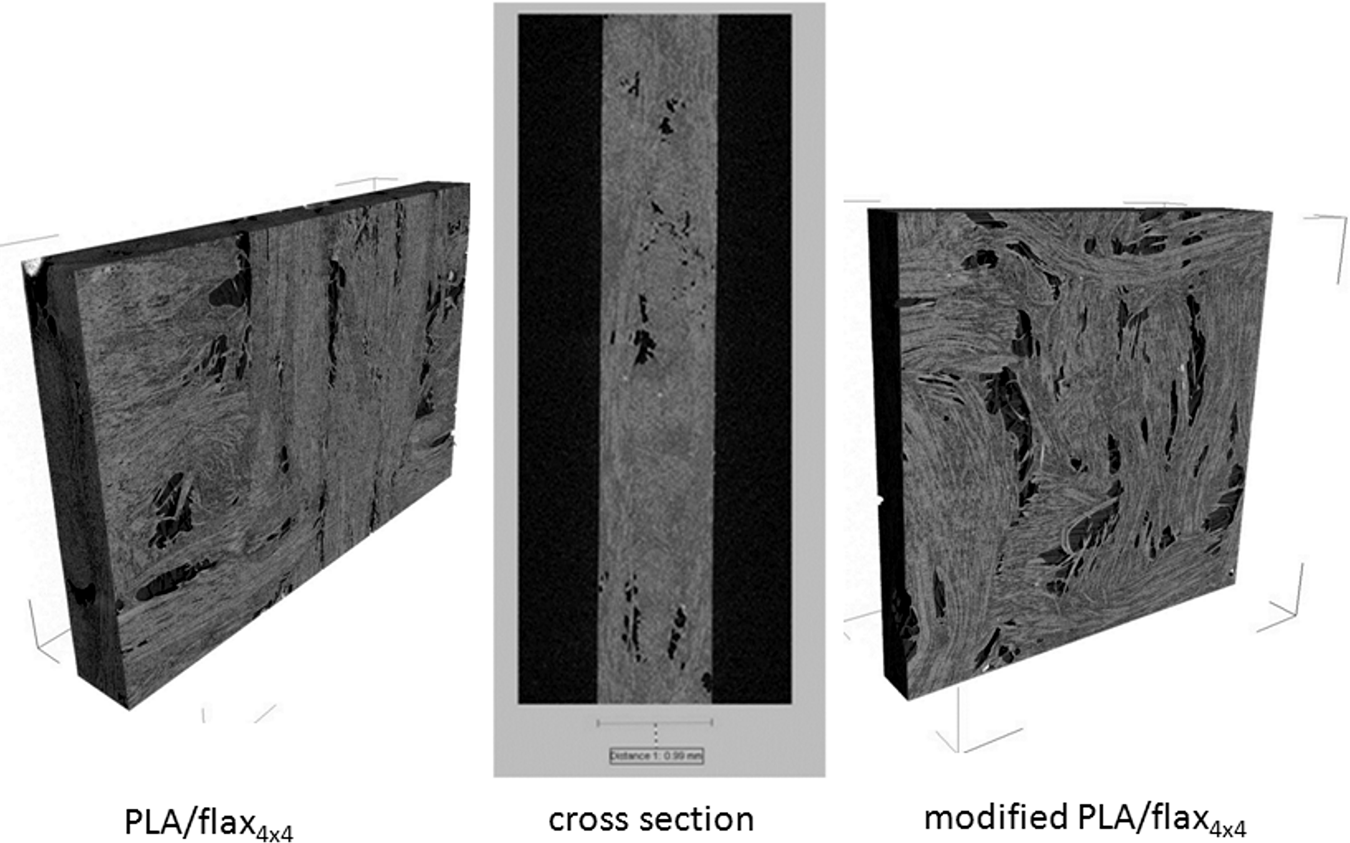
Computed microtomographic scans of the PLA/flax4 × 4 and modified PLA/flax4 × 4 composites. PLA: polylactide.
Falling dart impact response
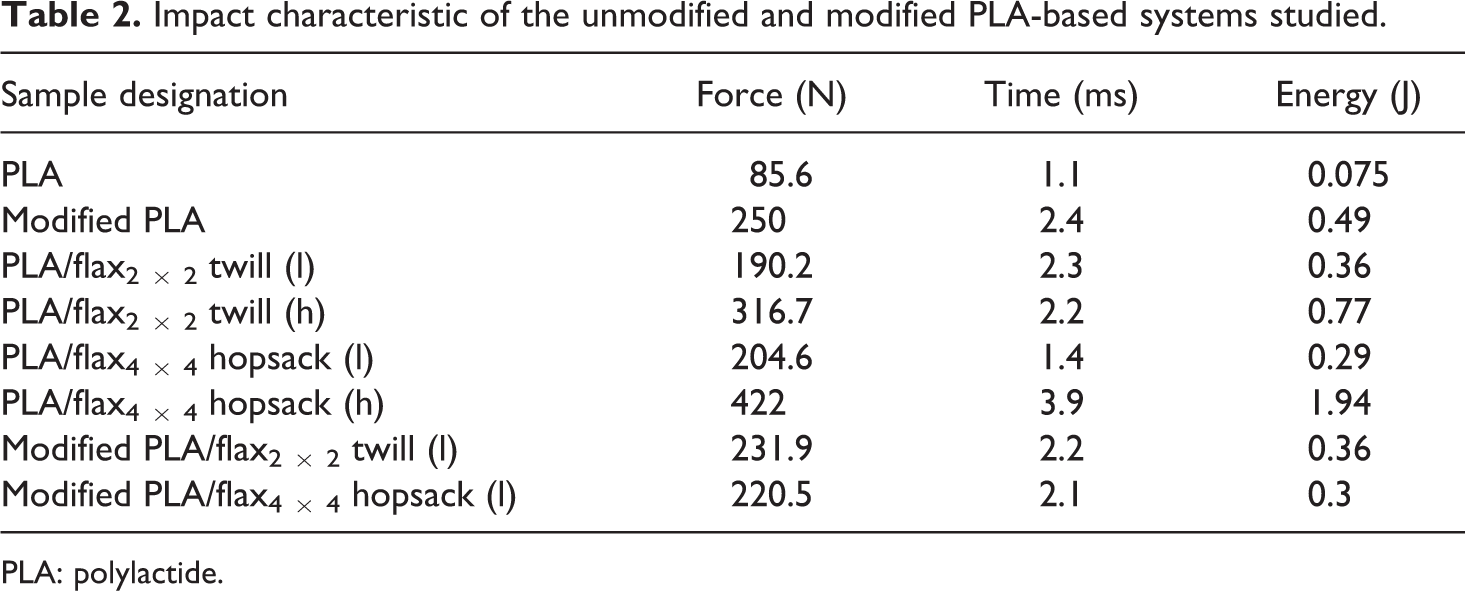
Results of the falling dart impact tests and data are given in Figure 4 and Table 2, respectively. One can recognize that the impact resistance of the modified PLA increased markedly compared to the PLA. This toughness modification of PLA was accompanied with a shift of the force peak toward higher force and longer time (compare Table 2). It is clearly seen that the incorporation of flax structures strongly affected the impact behavior of PLA. Note that the resistance to impact increased with increasing amount of flax content. The reinforcing effect of the structures of PLA containing 65 wt% of flax2 × 2 and flax4 × 4 indicated an increase in the impact energy by approximately 9.7% and 39.7%, respectively, compared with the neat PLA. The related change suggested not only enhanced energy absorption in the fiber orientation but also indicated the character of flax fiber weave style. It is well resolved that the impact resistance of the modified PLA composites in both the flax structures was always inferior to that of the PLA composites. The modified PLA/flax2 × 2 composite specimen recorded the peak force value at about 232 N upon 2.2 ms. The peak force was increased by approximately 23% compared to the unmodified PLA/flax2 × 2 composite. This can be explained by the consideration of the highly increased mobility of the flexible chains in the modified PLA matrix. The photograph of typical failure behavior of the related composites after the falling dart impact tests is clearly shown in Figure 5 that the change in the matrix failure occurred in the modified PLA/flax composites compared to the unmodified PLA/flax composites. This is the typical feature of tough fracture in the modified PLA/flax composites. The fracture surface became a whitened zone around the crack.
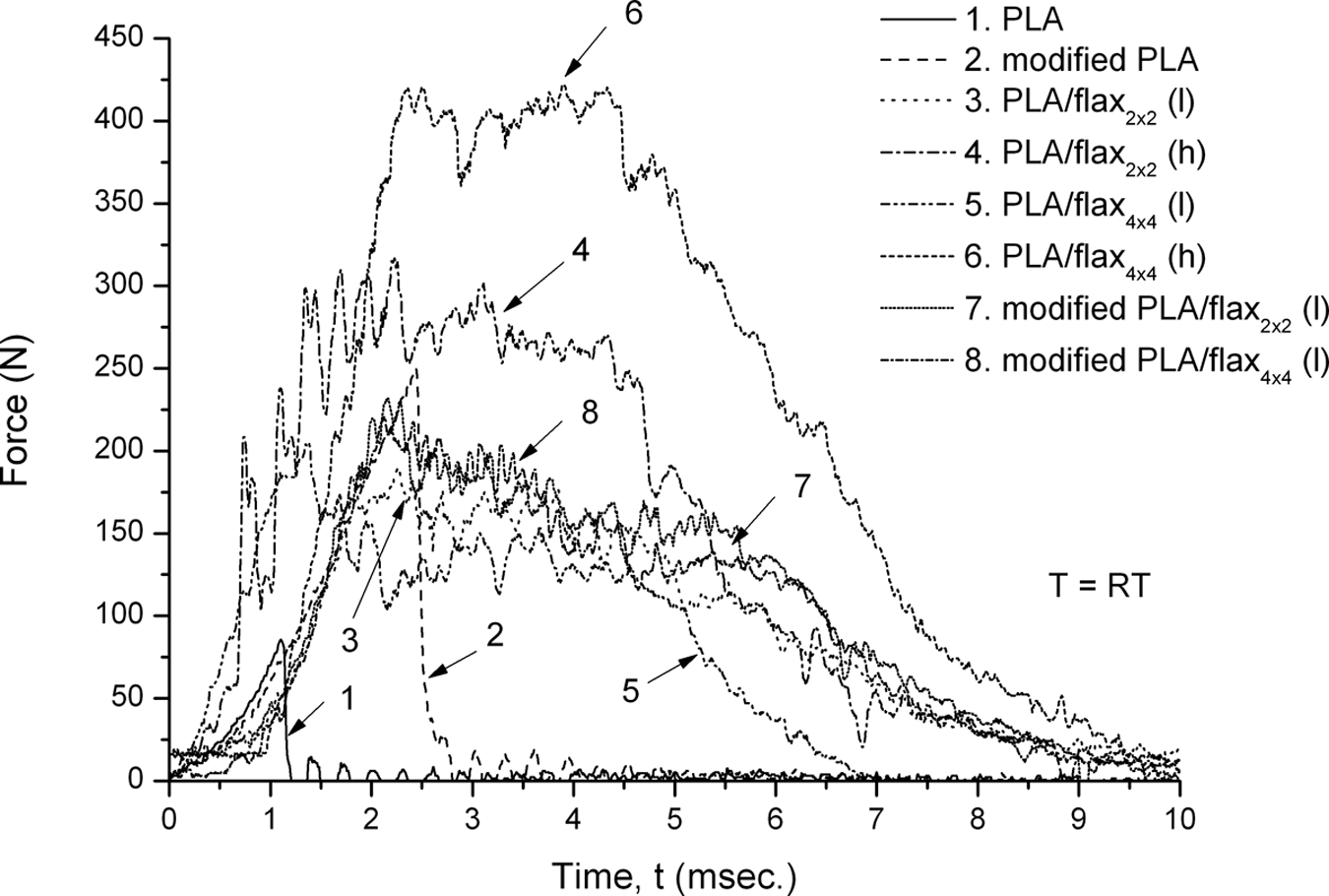
Characteristic force–time curves for the unmodified and modified PLA-based systems. PLA: polylactide.
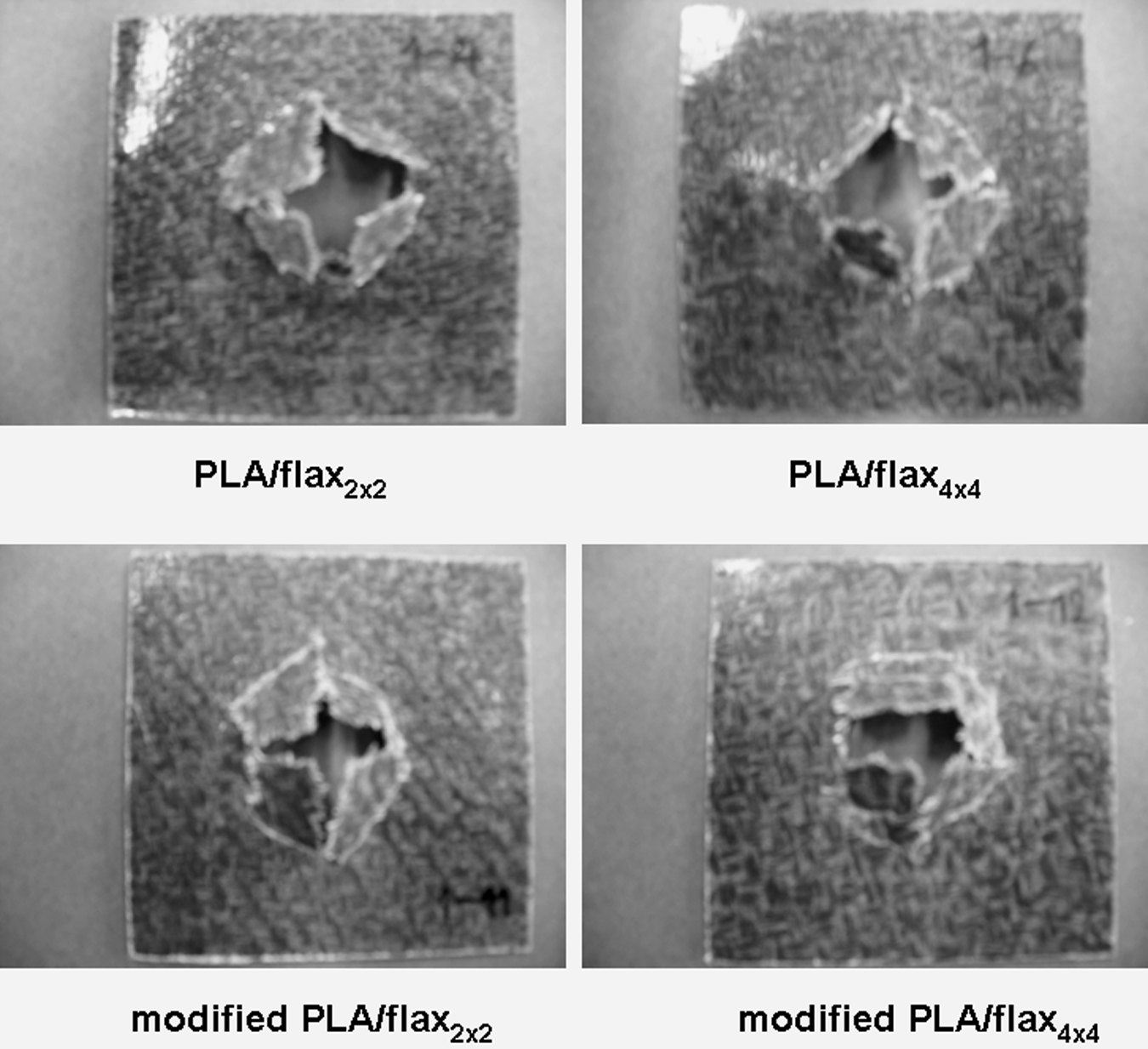
Failure of the specimens of the unmodified and modified PLA composite systems studied after IFWI. PLA: polylactide; IFWI: instrumented falling weight impact.
Impact characteristic of the unmodified and modified PLA-based systems studied.
PLA: polylactide.
Water uptake
The water uptake as a function of time for the PLA, modified PLA and its composites is demonstrated in Figure 6. It is interesting to note that the PLA recorded water absorption value at 0.8% upon 30 days, while the modified PLA did not absorb water within a month. The flax composites exhibited remarkably large amount of water absorption within in first 3 days. This is attributed due to the chemical nature of cellulose content in flax composites. The water sorption behavior was considered to depend on the flax content. The water uptake of composites increased with increasing flax content in PLA. The water uptake of the PLA/flax2 × 2 65 wt% composite was 14%, whereas the composite containing 35 wt% flax2 × 2 was 9% after 30 days of immersion. Other studies have also reported a similar trend for pineapple-leaf fiber-reinforced low-density polyethylene composites. It was found that the moisture absorption increases linearly with the fiber loading. 12 On the other hand, the effect of modified PLA in the composites on the water uptake value was marginal.
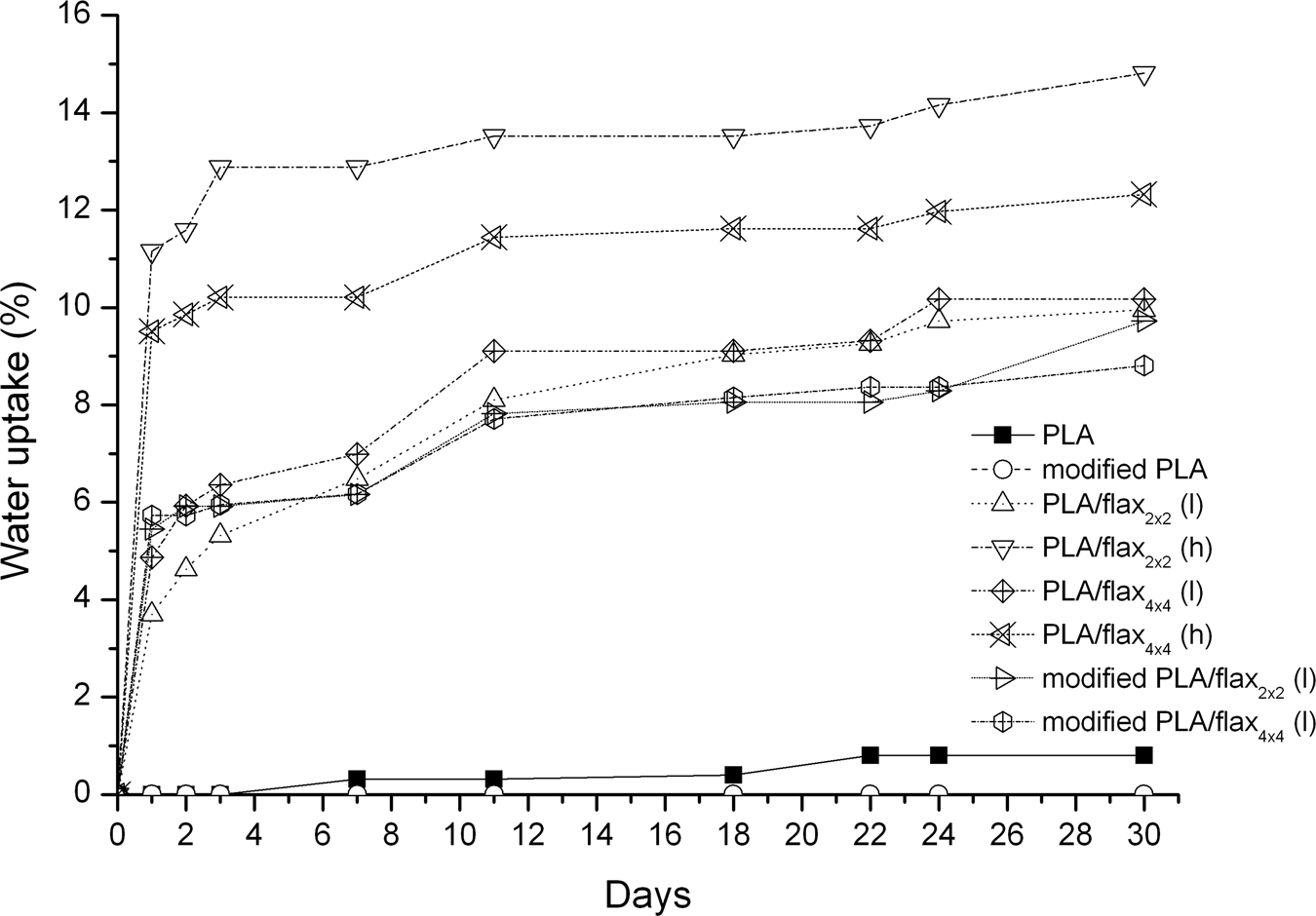
Water uptake on the unmodified and modified PLA systems studied. PLA: polylactide.
Thermogravimetric analysis
Figure 7 presents the overall thermogravimetric decomposition process for the PLA, modified PLA, flax and its composites at a heating rate of 10°C/min. The TGA data are listed in Table 3. It is well known that the thermal stability effects in natural fiber and the natural composites exhibited three stages from its TGA spectra. Initial stage at low temperature is usually for the removal of absorbed moisture. The second and third stages observed at high temperature are usually attributed to the degradation of hemicelluloses and noncellulosic materials. 13 This is in accordance with flax—TGA observation. It is clearly seen in Figure 7 that the thermal decomposition process of all PLA composites had similar characteristics as a result of one-step procedure representing depolymerization. Due to the thermal decomposition of hemicelluloses and the degradation of lignin, the weight loss of flax composites decreased markedly. As shown in Table 3, the thermal decomposition of modified PLA and its composites observed with a slight improvement at least below 250°C, compared to PLA and PLA composites. This indicates the effect of thermal modifier on PLA. One can conclude in Figure 7 that the thermal stability of composites decreased with increasing amount of flax content. The resistance of thermal effect was better with the modified PLA.
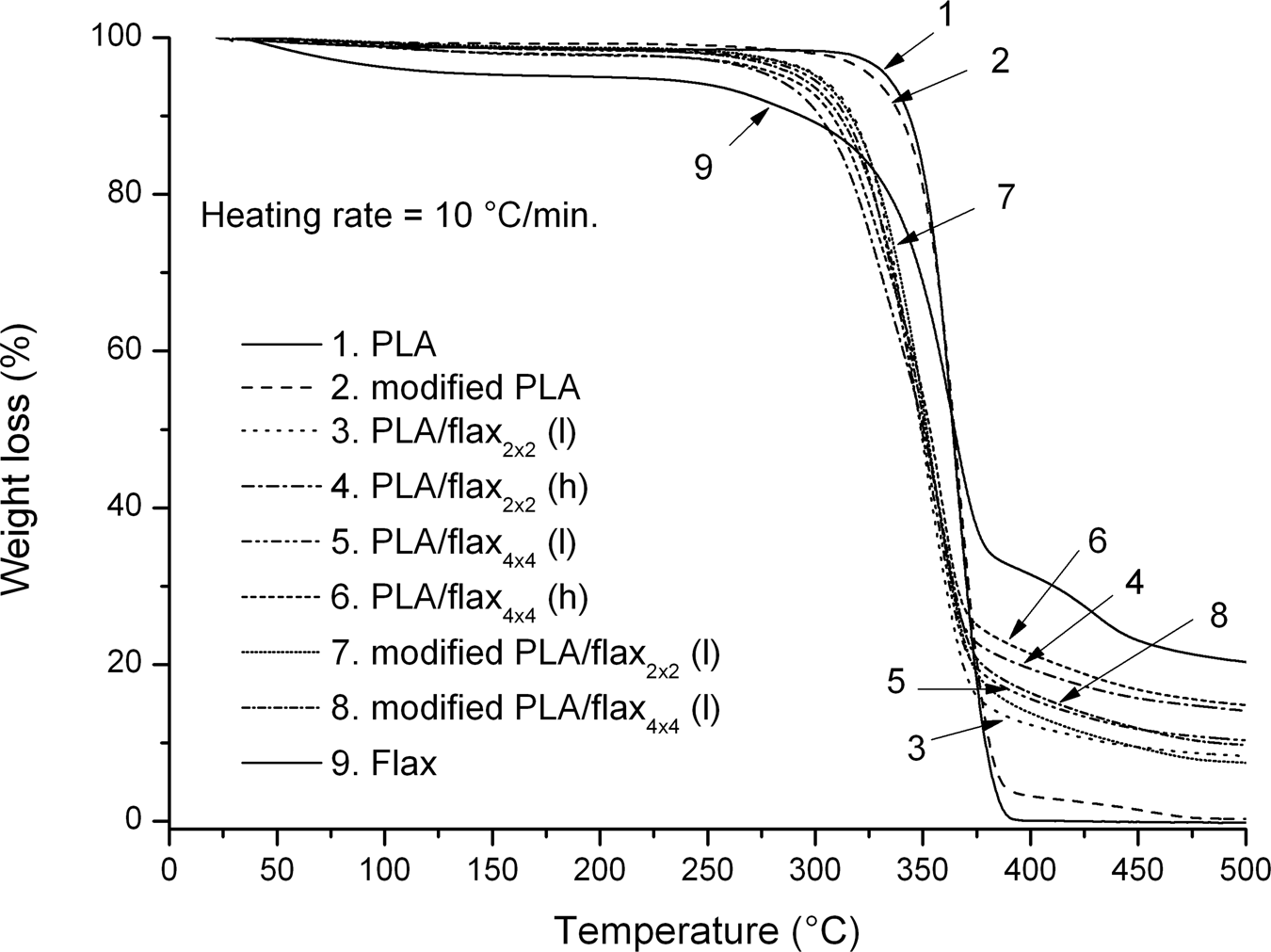
Weight loss versus temperature for the unmodified and modified PLA systems studied. PLA: polylactide.
TGA characteristic of the unmodified and modified PLA-based systems studied.
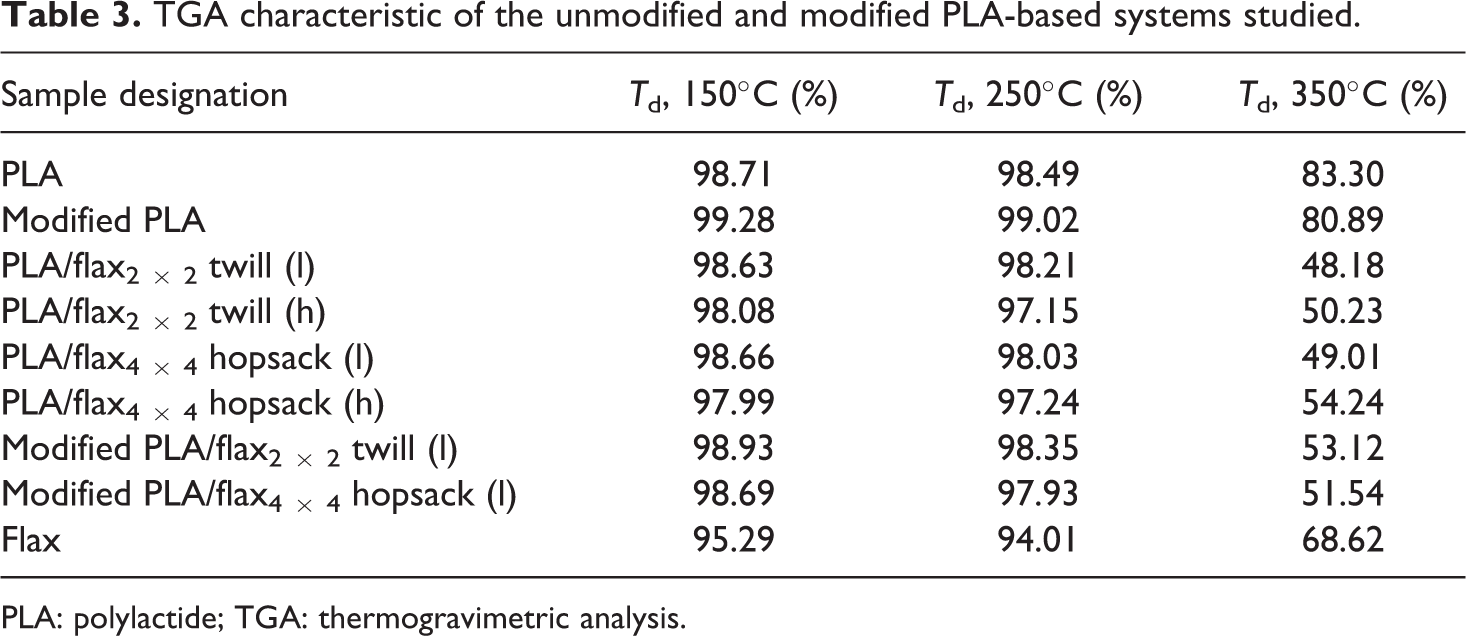
PLA: polylactide; TGA: thermogravimetric analysis.
Creep response
Figure 8(a) and (b) demonstrates the effects of increased temperature on the creep compliance of PLA and modified PLA. One can recognize that the modified PLA exhibited higher creep compliance than the PLA one, especially at high temperature. This was due to the enhancement of the mobility of PLA chains with the toughness agent that would make the PLA softer and the orientation movement of amorphous chains easier. Note that a tertiary range of modified PLA (fracture creep) has been achieved at a temperature of 50°C. In practical term, the creep compliance is generally expressed as consisting of two components, the elastic (D
e, instantaneous, time independent) and the viscoelastic components (D
v, reversible, time dependent)
14

where σ 0 is the applied stress, T is the temperature and t is the time.
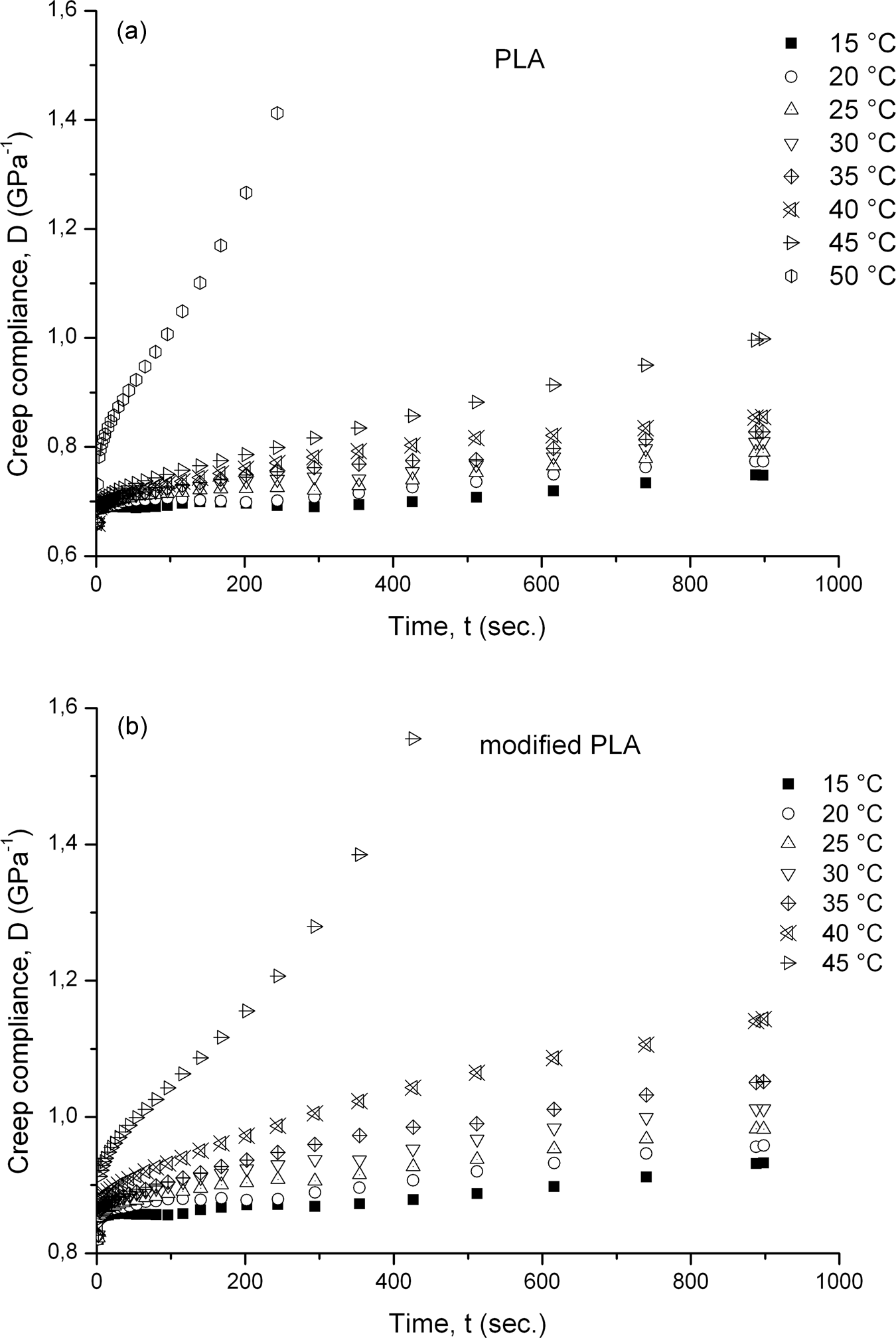
Effect of temperature on the creep compliance of the PLA (a) and modified PLA (b). PLA: polylactide.
The results of the elastic (D e) and viscoelastic (D v) parts of creep compliance data with increased temperature are listed in Table 4. The D e and D v have been associated with the stiffness and flow of amorphous polymer chains in the short-term creep, respectively. The results in Table 4 for the PLA and modified flax composites system studied showed that D e and D v increased with an increase in the temperature. This was due to the softening of the bulk materials at elevated temperature. With the introduction of flax, it was observed that D e and D v decreased under each condition. One can notice that the effect of flax-reinforcing structures on the D e and D v value was marginal. However, both D e and D v creep compliance were enhanced markedly with an increased amount of reinforcing flax.
Elastic (D e) and viscoelastic (D v) parts of the creep response of the unmodified and modified PLA-based systems studied.
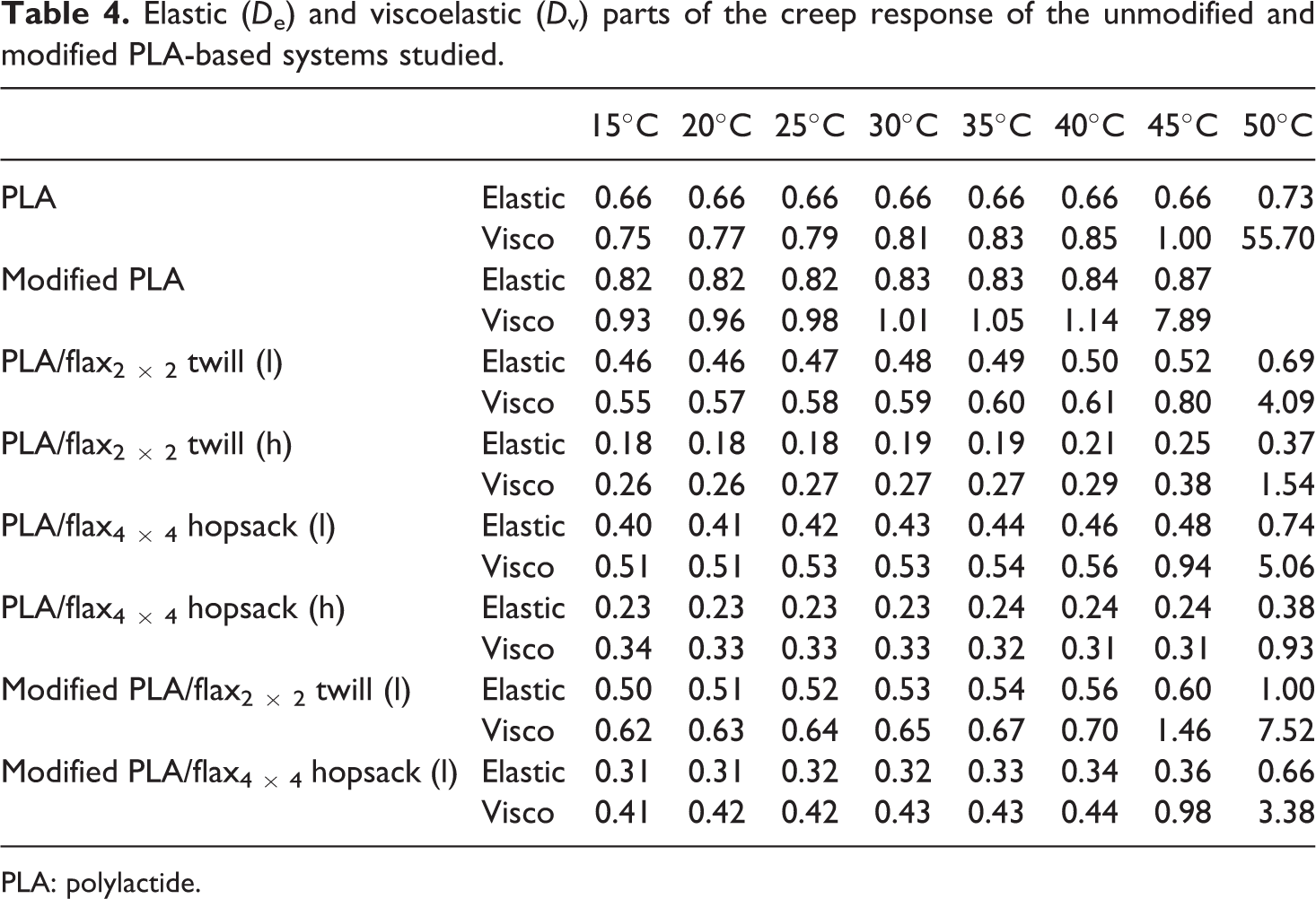
PLA: polylactide.
The time–temperature superposition (TTS) method can be used in order to obtain the polymeric material lifetime. This method can be used to shift in a short-time results under normal application conditions and the results obtained can be extrapolated to longer times. According to the TTS principle, the response time (t) or frequency (f) as a function of creep (D) or storage modulus (E′) at one temperature T
0 is similar in shape to the same functions at neighboring temperatures (T). The curve of D or E′ at one temperature can be horizontally shifted along the t- or f-axis then overlapped on the curves at neighboring temperatures
The Arrhenius equation is generally acknowledged as suitable to describe the relationship between the shift factors using TTS of master curve and the reference temperature. The Arrhenius equation is generally used to calculate the activation energy (ΔH) via
15

where R is the universal gas constant.
In Figure 9, the creep master curves of the PLA, modified PLA and its composites at the reference temperature of 25°C are plotted as a function of the creep time, t. One can see in Figure 9 that the creep master curves of PLA and modified PLA covered only a period of 14 and 8 h, respectively. However, the curve of the flax composites covered a duration of 50 h. The creep behavior of flax composites increased sharply at first and then almost kept constant. For pure PLA and modified PLA, the creep also increased sharply at first and then the rapid creep was observed with the increase in time. For the master curves from short-term creep TTS in Figure 9, the PLA and modified PLA exhibited the primary, secondary and tertiary stages of creep (initial, steady state and fracture creep respectively), whereas only primary and secondary creep stages were observed for flax composites. Recall, the onset of the tertiary creep stage of PLA and modified PLA was detected at approximately 14 h and 8 h, respectively, of creep time.
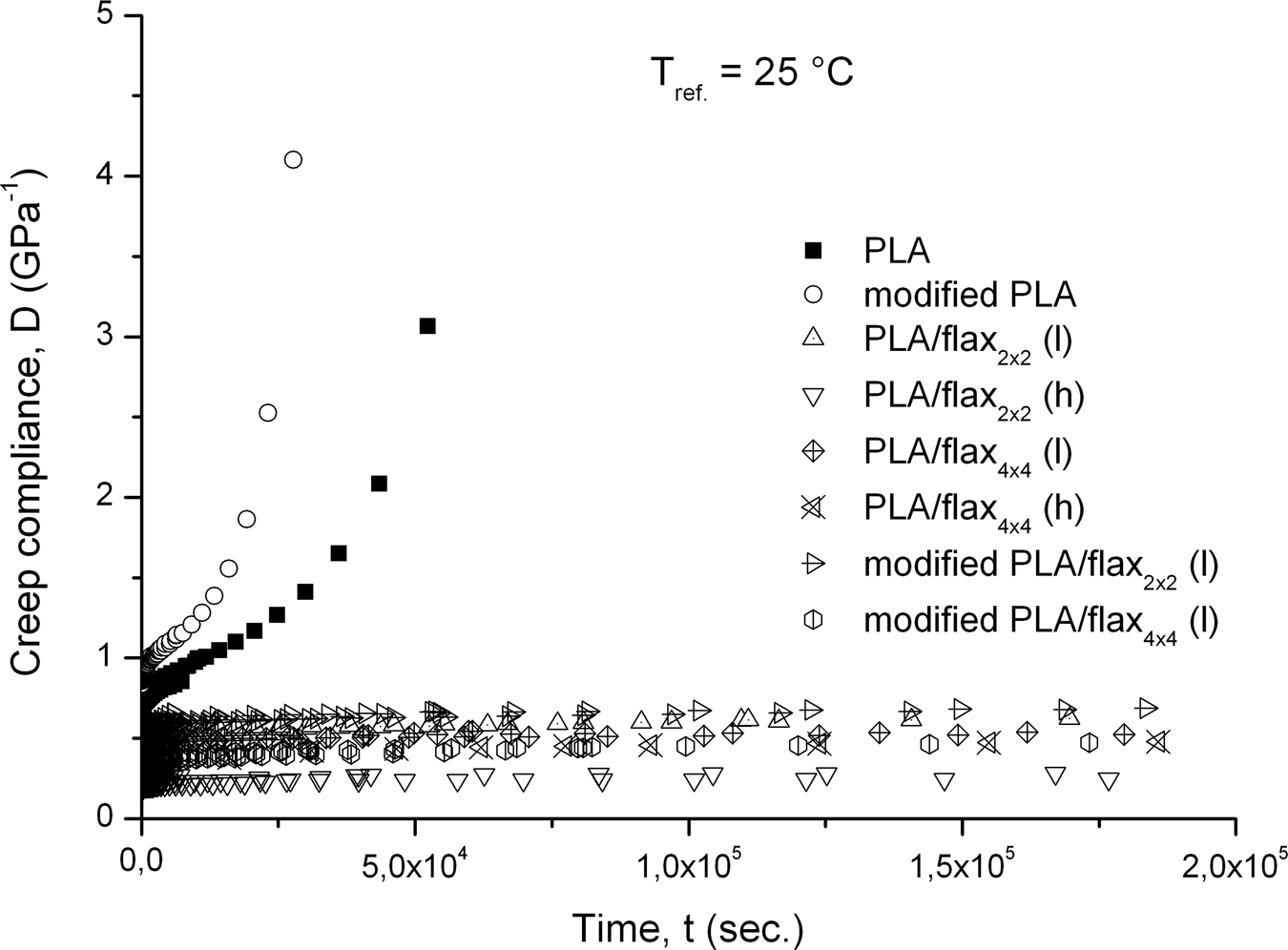
Creep master curves (compliance vs. time) constructed by considering the TTS and selecting T ref = 25°C. TTS: time–temperature superposition.
Dynamic mechanical thermal response
Figure 10 displays the traces of storage modulus (E′) as function of temperature for the PLA, modified PLA and its composites. One can notice that the modified PLA showed a lower storage modulus in the whole temperature range investigated compared with the unmodified PLA. The presence of flax increased the storage modulus and with a shift in the glass transition temperature (T g) of PLA toward higher temperature. The storage modulus of PLA/flax4 × 4 65 wt% composite was increased by approximately 150% below the T g when compared with the neat PLA. On the other hand, the E′ decreased with increasing temperature. Note that due to the cold crystallization of the amorphous PLA, the E′ of composites was increased above 100°C, as expected. Regarding the effect of composite structures, the incorporation of flax4 × 4 enhanced the E′ compared with the composite containing flax2 × 2, while the E′ also increased by increasing the flax content. Different changes in the stiffness occurred between the PLA/flax2 × 2 and PLA/flax4 × 4 composites due to the effect of fiber undulation. According to the literature, Paessler et al. reported that the effects of fiber waviness due to the fiber crossing, such as warp and weft crossover points, lead to a reduction in the in-plane properties of such a laminate. Clear differences regarding strength and stiffness of the laminates without and with undulations could be observed for carbon fiber/epoxy composites. 16,17
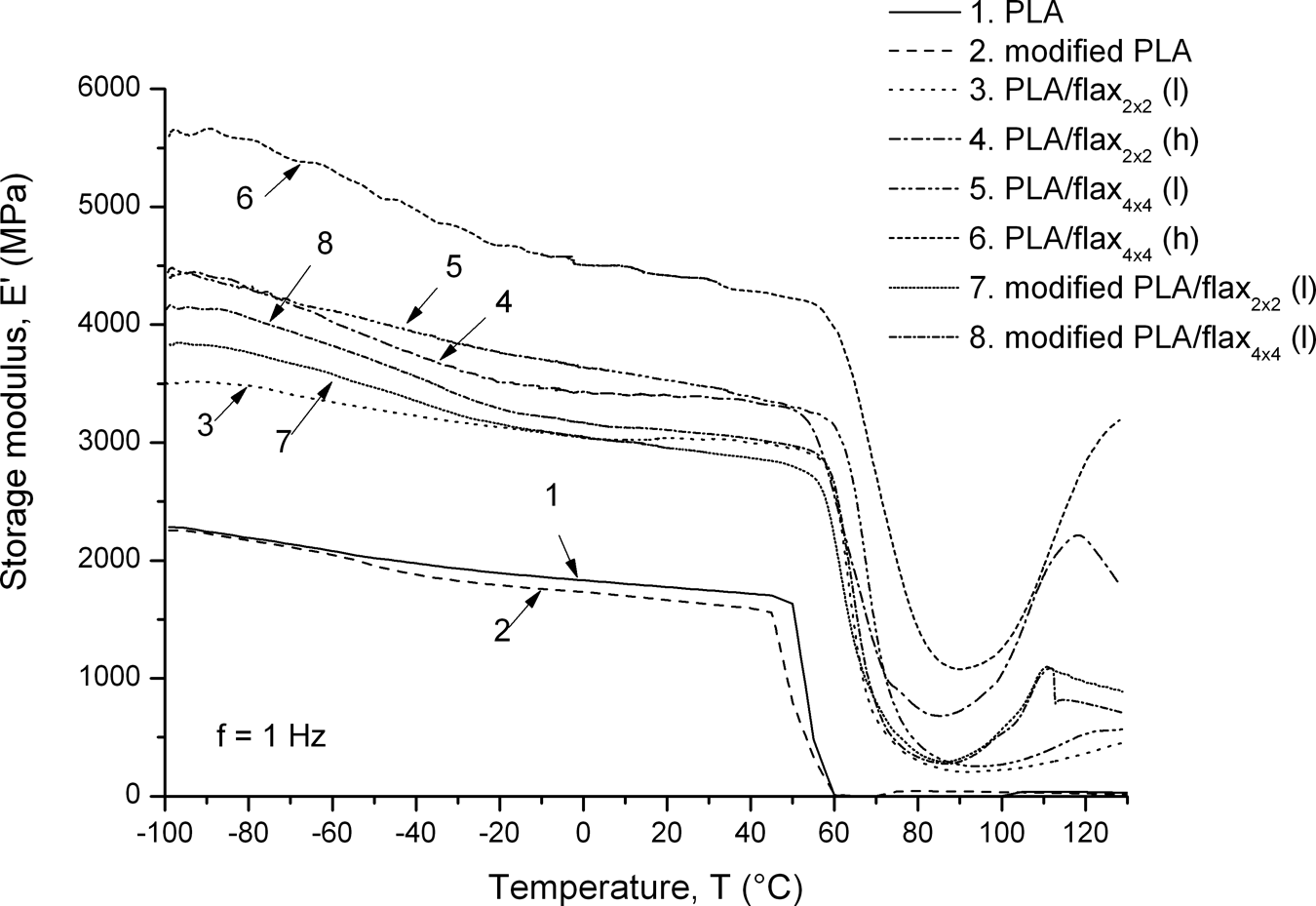
E′ versus T trace for the unmodified and modified PLA systems studied. PLA: polylactide.
A remarkable difference in the influence of frequencies is observed for the storage modulus of the PLA and its composites. An increase in the frequency was accompanied with a shift on the E′ toward higher temperature (not reported here). DMA master curves were performed to study how the stiffness of PLA/flax composites and modified PLA are affected by exposure at elevated frequencies. The shift factor (aT ) using the TTS principle for the generation of storage modulus master curve is according to equation (3). A reference temperature (T ref = 25°C) was used for this shifting process. The values of storage modulus (E′) for the PLA, modified PLA and flax composites are compared in Figure 11. It is seen from this figure that pure PLA had a lower E′ than PLA/flax composites at whole over loading frequencies. It was also demonstrated that the addition of flax improved the stiffness of PLA and modified PLA. Note that in the terminal region at lower frequencies, the storage modulus master curve was more dependent on the reinforcement effect of the flax. In this analysis, the stress can be transferred from PLA matrix to flax, so the chain mobility of the matrix is reduced. From the master curve data, the effect of modified PLA on the storage modulus was more pronounced in frequencies ranging from 10−4 to 10−13 Hz. The E′ shifted to lower frequencies when the modified PLA was used. This can be attributed to the heat-stabilizing effect of the modified PLA. The combined thermal modifier PLA, which formed relative steady-free radicals produced in low frequency process, could improve the progression of thermal resistance. By comparing the activation energies (compare Figure 11), one may conclude that the E a increased with modified PLA. This result suggests that E a may be sensitive to the thermal modifier. Incorporation of flax into the PLA matrix also yielded an increase in E a that can be traced to the restricted PLA chains.
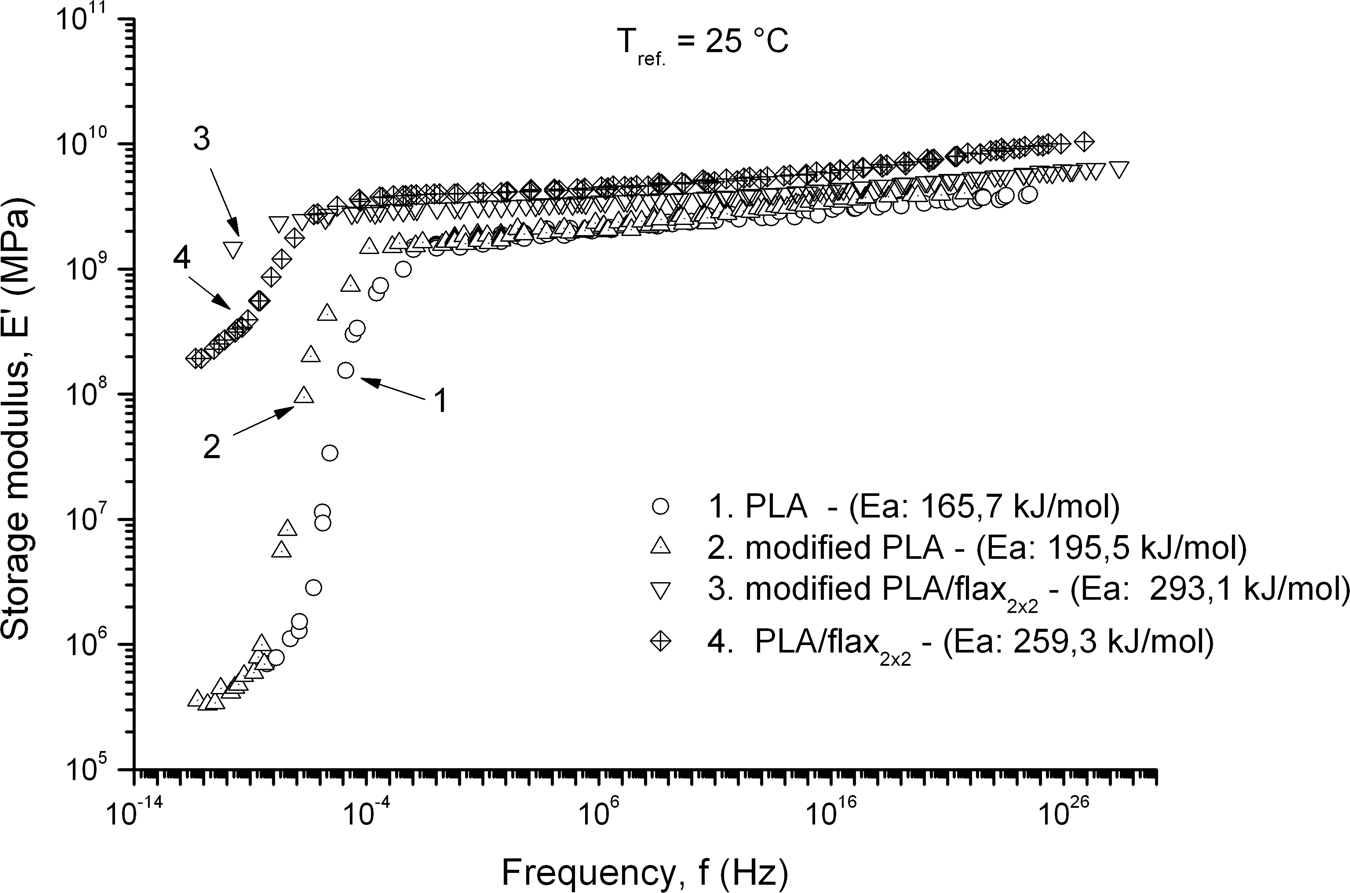
Storage modulus master curves were constructed by considering the TTS and selecting T ref = 25°C. E a was calculated by the Arrhenius equation, that is: aT = E r(t, T)/(E(t, T ref). TTS: time–temperature superposition.
Conclusion
This work devoted to study the morphology, water absorption, falling weight impact, thermal and mechanical properties of a PLA and its flax2 × 2- and flax4 × 4-reinforced composites. Toughened PLA and composite have been successfully produced by direct-modified matrix. The flax fibers displayed clear lumina, which were not filled with PLA. This was demonstrated by SEM investigation. The impact resistance of PLA was highly enhanced by the addition of flax composite structures and acrylic impact modifier. The storage modulus value of modified PLA was slight lower than that of neat PLA. Incorporation of flax increased markedly the stiffness and water uptake of PLA. However, increase in storage modulus had a strong impact on the composite structures. The thermal degradation of PLA/flax composites decreased markedly compared with the neat PLA. The creep and storage modulus master curves were constructed by applying the TTS principle. The calculated data indicated that an improvement in the creep compliance and stiffness can be achieved with incorporation of flax. From the master curve data, the effect of modified PLA on the storage modulus was more pronounced in the low frequencies range. The proposed direct-modified PLA is an effective, simple and cost efficient way for producing PLA/flax composite.
Footnotes
Funding
This work was financially supported by the Office of the Higher Education Commission under the grant agreement KMUTNB-NRU-55-19.